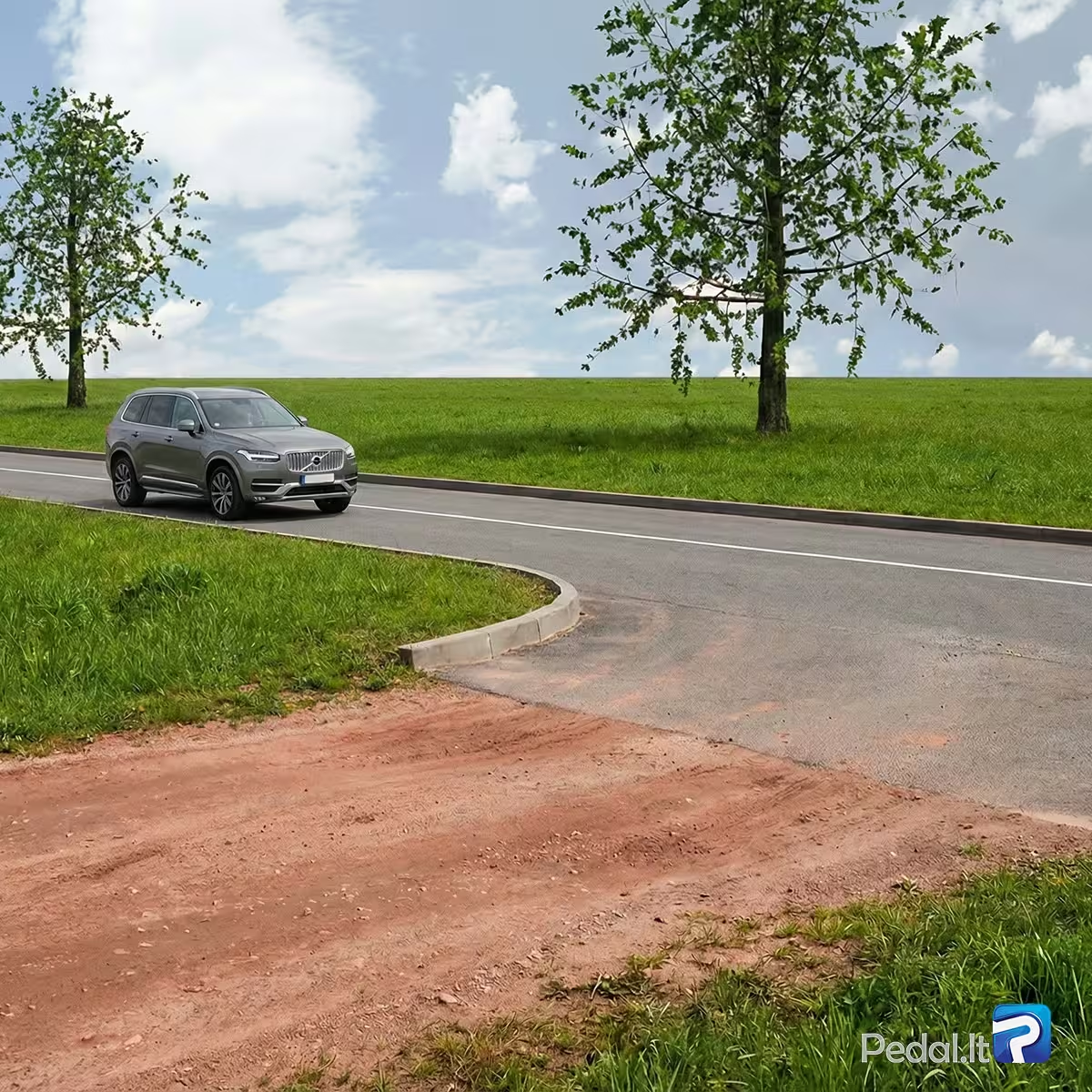
Which road is the main road at this intersection?
RTR 3.14. The main (priority) road is: a road marked with the 'Priority Road' sign, an 'Intersection with a Side Road' sign, a 'Side Road from the Right' or 'Side Road from the Left' sign, or designated as a 'Motorway' or 'Road for Motor Vehicles' in relation to the intersecting or joining road; a road in relation to another road marked with 'Give Way', 'STOP', or 'End of Residential Area' signs; a paved road (concrete, asphalt, or cobblestone) in relation to an improved unpaved road (macadam or gravel) or a dirt road (forest, field, or similar road); and an improved unpaved road in relation to a dirt road. A paved or improved unpaved section of a side road immediately before an intersection does not make that side road equivalent to the intersecting or joining road. There is no priority road at intersections controlled by traffic signals. JB
1. The road with a gravel surface.
2. Both roads are equivalent.
3. The road with an asphalt surface.
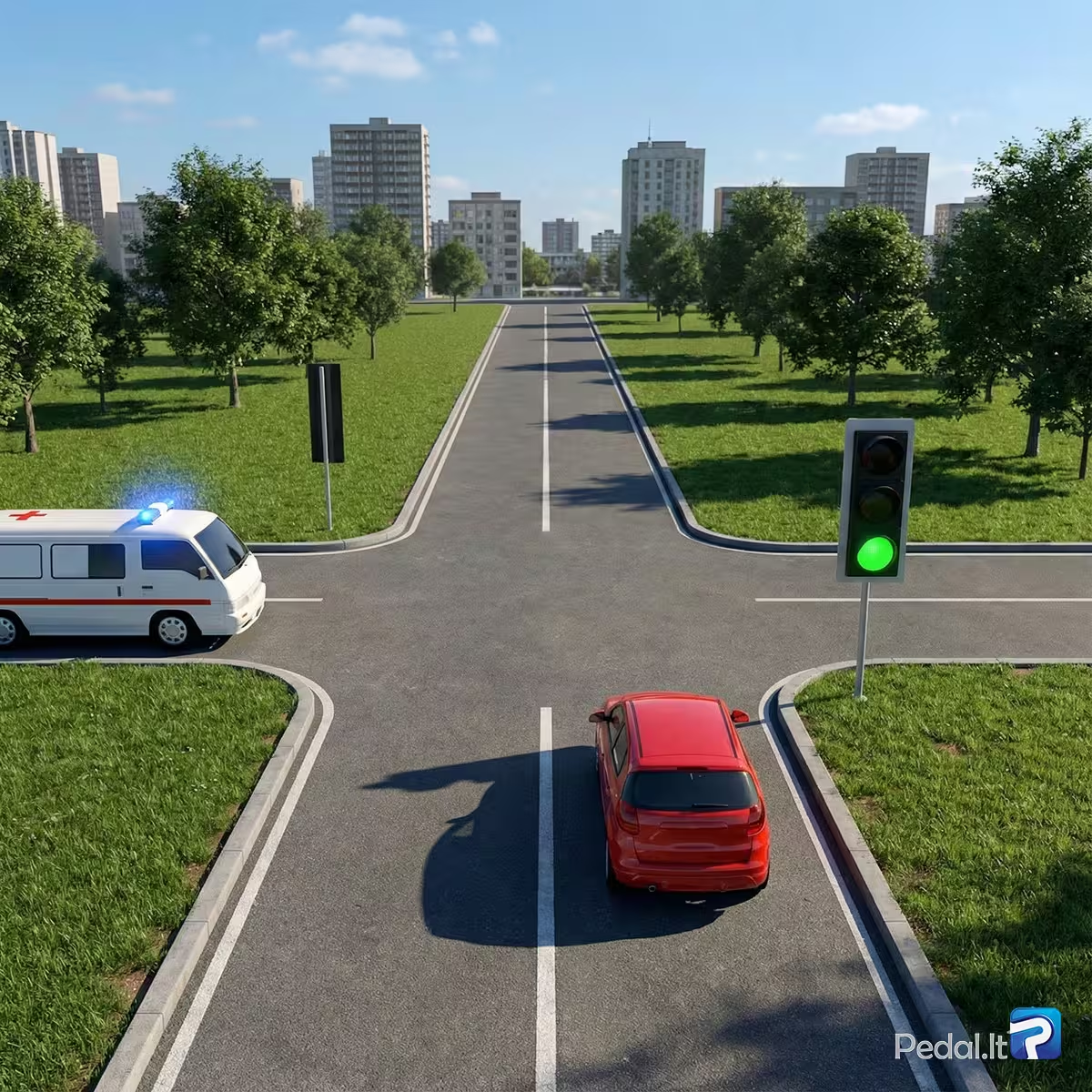
If, in this situation, a vehicle approaches the intersection with blue and red flashing lights and its special audible signals activated, the driver of the red car:
RTR 12. Road users must immediately yield to approaching special vehicles that are using blue-and-red (or only blue) flashing lights and special audible signals, and to vehicles escorted by them. Road users shall form an emergency corridor and yield as follows: 12.1 On a road with a single lane in one direction, drivers must stop on the right hard shoulder if available; if there is no hard shoulder, they must stop close to the right-hand edge of the carriageway. 12.2 On a road with two or more lanes in the same direction, vehicles in the far-left lane shall move as close to the left (the appropriate edge of the carriageway designated for that direction) as possible and stop; vehicles in lanes to the right of the far-left lane shall move as close to the right (toward the right-hand edge of the carriageway or the hard shoulder) as possible and stop. 12.3 On a road with a central reservation, only drivers travelling in the same direction must comply with the requirements specified in paragraphs 12.1 and 12.2. JB
1. He will proceed without yielding to anyone because he has a green light.
2. He must yield to the special vehicle.
When making a turn, a vehicle is more stable when it is moving:
Compared with coasting (driving in neutral), driving with a gear engaged provides better control because, even without pressing the accelerator, the engine maintains steady rotational force on the driven wheels. Rapidly reducing speed during a turn can make the vehicle less stable, while increasing speed can make it harder to complete the turn smoothly due to the higher centrifugal force. Choose and maintain an appropriate speed before entering the turn.
1. With the gearbox engaged.
2. With the gearbox disengaged (in neutral).
3. By increasing speed.
4. By reducing speed.
When must cargo be marked with identification signs and illuminated during darkness or reduced visibility?
Any part of a load that protrudes beyond the vehicle's lateral profile, however slightly, must be marked. Specifically, loads extending more than 0.5 m beyond the vehicle's sides must be identified (Annex 4, §12). Extremities projecting more than 1 m beyond the front or rear of the vehicle, any parts extending laterally beyond the vehicle, and the extremities of vehicles wider than 2.6 m must display distinctive markers: square plates 400 mm on a side with alternating diagonal reflective stripes 50 mm wide in white and red. These plates must be mounted between 0.4 m and 1.6 m above ground level. During darkness or poor visibility, vehicles with protruding points must also show lights on those points: white at the front, amber on the sides, and red at the rear. JB
1. When the load projects more than 0.5 m beyond the rear of the vehicle.
2. When the load projects more than 1 m beyond the front or rear of the vehicle.
3. When the load projects more than 0.5 m beyond the side of the vehicle.
4. When the load projects any distance beyond the vehicle's sides.
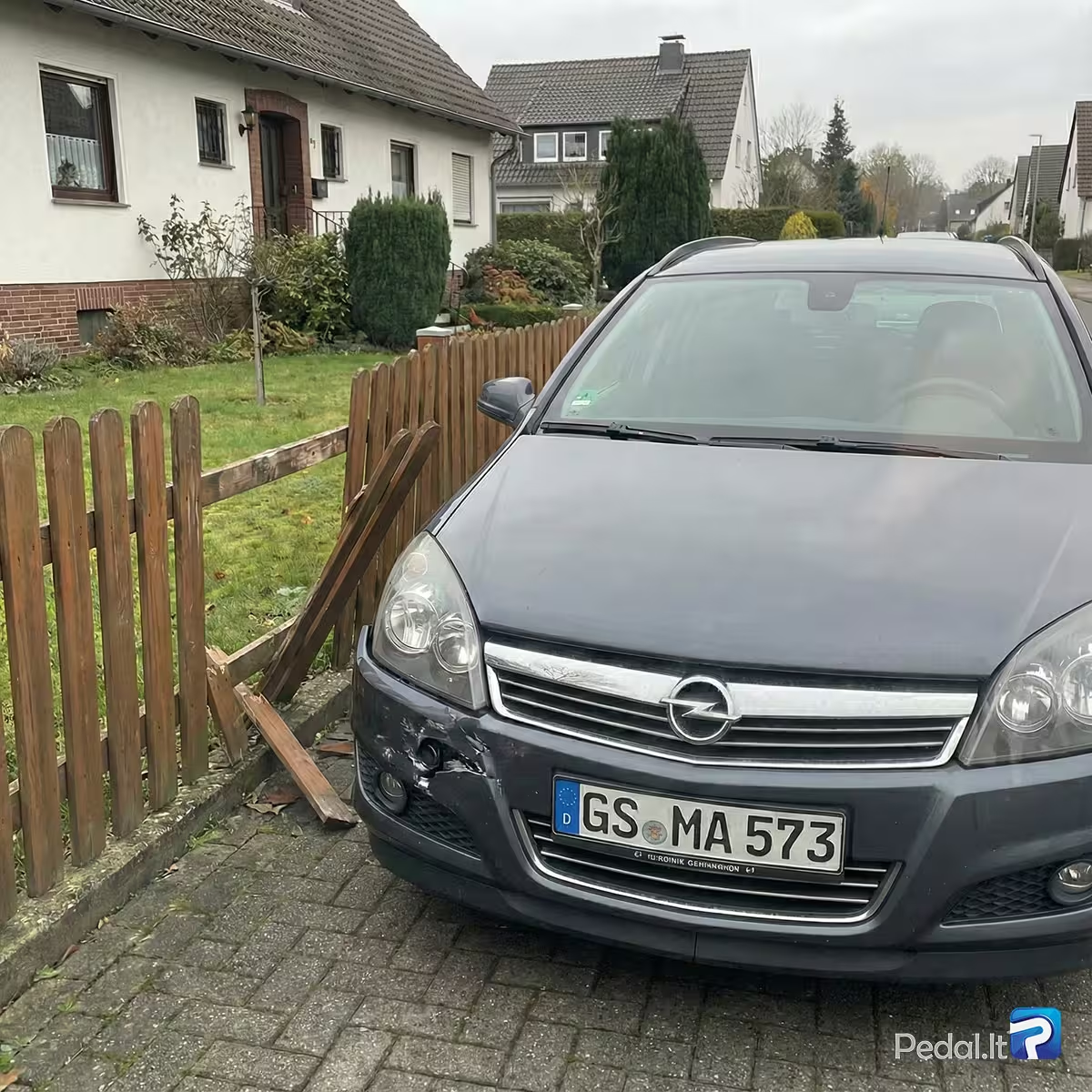
You have damaged the fence of a private property with your vehicle while the owner is absent. What must you do?
1. Leave a note with your contact information and then leave the scene.
2. Attempt to repair the damage yourself if it is safe and feasible.
3. Notify the police and remain at the scene until instructed otherwise.
4. Drive away from the scene because the property owner is absent.
.avif)
Which vehicle will pass through the intersection first? (The green traffic light applies to the red car.)
RTR 163. When driving in the direction indicated by an arrow displayed in the supplementary section of a traffic light together with an amber or red signal, the driver must yield to road users coming from other directions who have a traffic signal permitting them to proceed, except as provided in Paragraph 163-1. 163-1. When making a U-turn at an intersection controlled by traffic lights, the driver must yield to road users from other directions who are permitted to proceed by a traffic signal. JB
1. The red car will pass the intersection first.
2. The black car will pass the intersection first.
Which of the following are warning signals?
RTR 81. Warning signals include: using turn and brake lights (arm signals may be used), sounding the horn, switching the headlights on and off, activating hazard warning lights or flashing amber beacons, and placing a warning triangle on the road or attaching it to the vehicle.
1. Brake light signal.
2. Indicating a turn using an arm signal.
3. Horn signal.
4. Switching the headlights on and off.
5. Placing a warning triangle on the road.
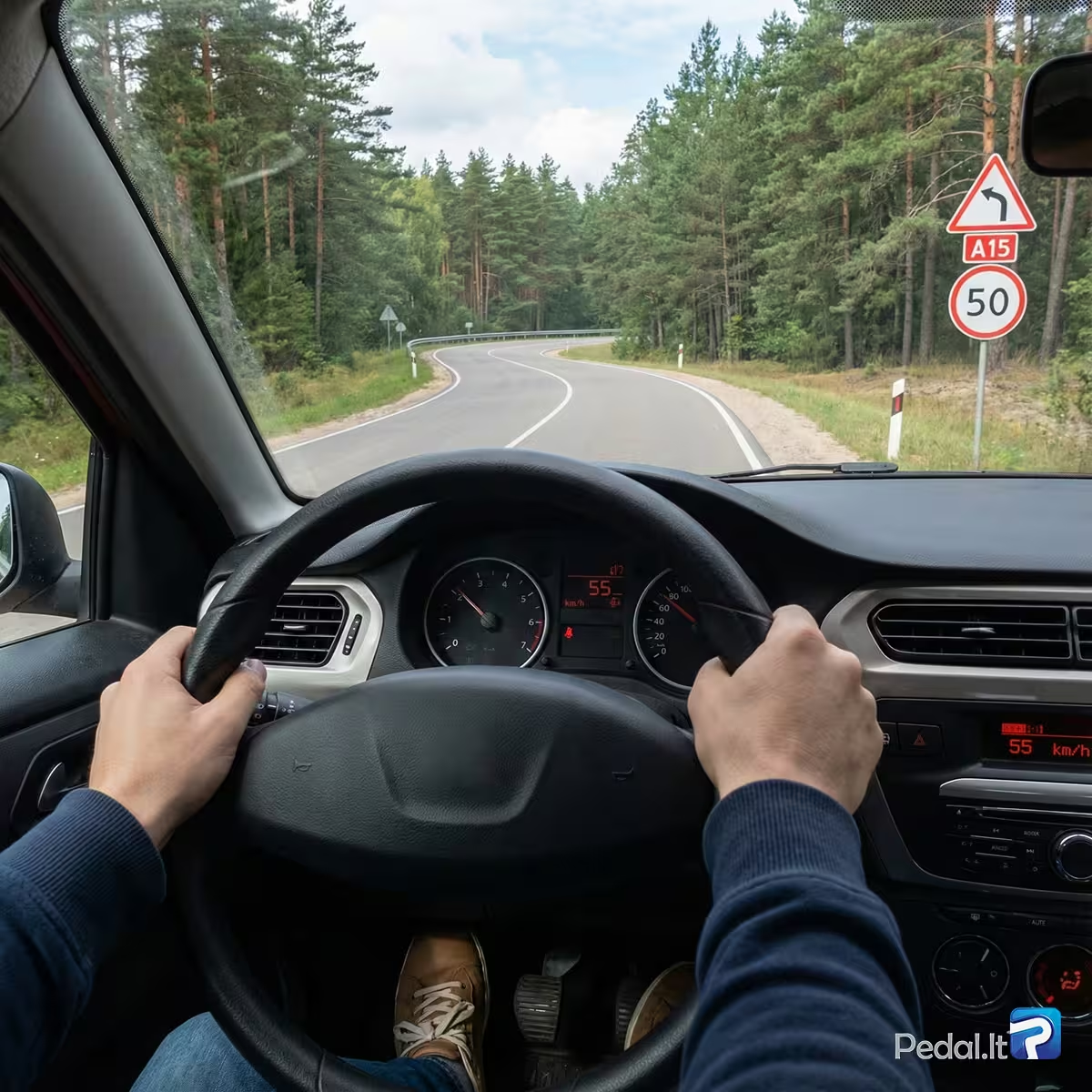
You are approaching a bend in the road. You should:
Drivers approaching a bend should be aware that the curve may be sharper than it appears. Therefore they must select a safe speed and adopt an appropriate position on the road to avoid entering the oncoming traffic lane. A safe speed depends on all circumstances: weather conditions, the technical condition of the road and the vehicle, the vehicle's load, the driver's experience and physical condition. RTR 127. Drivers must not exceed the permitted speed limit. When choosing a driving speed, drivers should consider the driving conditions — in particular the terrain — the condition of the road and the vehicle (including its load), weather conditions and traffic density so that they can stop safely before any foreseeable obstruction. Drivers must slow down or stop if circumstances require, especially when visibility is poor.
1. Reduce your speed.
2. Position your vehicle to avoid crossing into the oncoming traffic lane.
3. Use your turn signal.
What must the driver of a vehicle do before starting to drive, before stopping, before changing lanes, before turning right or left, and before making a U-turn?
RTR 82. A driver must indicate intended manoeuvres by using the vehicle's left or right turn indicators, or by arm signals if the indicators are unavailable or inoperative. 82.1. Signals must be given before starting to move and before stopping. RTR 86. Warning signals must be given to other road users with sufficient advance notice before the manoeuvre (including any braking related to the manoeuvre) and must be discontinued immediately after the manoeuvre (hand signals may be stopped before the manoeuvre is completed). Signals must be given in a way that does not mislead other road users. Turn indicators are not used when entering a roundabout where traffic circulates in a circle. JB
1. Signal in advance using the appropriate turn indicator.
2. Check mirrors and glance over your shoulder to ensure the manoeuvre will not endanger or obstruct other road users.
3. Sound the horn briefly.
Cyclists must not:
RTR 38. Persons moving in a wheelchair, or guiding a motorcycle, moped, bicycle, motorised two‑wheeled vehicle, electric micromobility device, or pulling (pushing) a sledge or handcart along the shoulder or edge of the carriageway must proceed in single file and only in the direction of traffic. RTR 64. Cyclists must not: 64.1. ride on the carriageway, except in cases permitted by the Rules. RTR 57. Bicycles may be ridden only on cycle tracks, combined footpath/cycle tracks, or cycle lanes; if none of these are available, bicycles may be ridden on a suitable hard shoulder (with asphalt or concrete surfacing). When a right‑side cycle track, combined footpath/cycle track, cycle lane, or suitable hard shoulder is not available or is unsuitable for cycling (for example, pitted), cyclists may use the pavement or ride in single file on the right‑hand lane of the carriageway, keeping to the right edge of the lane, except in the cases specified in paragraph 106 of these Rules and except when cyclists must bypass an obstruction or continue straight where turning right from the first lane is the only permitted manoeuvre. When riding on a hard shoulder, footpath, cycle track, or pavement, a cyclist must yield to pedestrians, must not obstruct or endanger them, and should pass pedestrians at a speed close to walking pace (3–7 km/h), leaving sufficient lateral clearance to ensure safety.
1. Ride on the carriageway except when no cycle track, cycle lane, or suitable hard shoulder is available.
2. Ride against the flow of traffic.
3. Walk (push) their bicycle in the same direction as vehicular traffic.
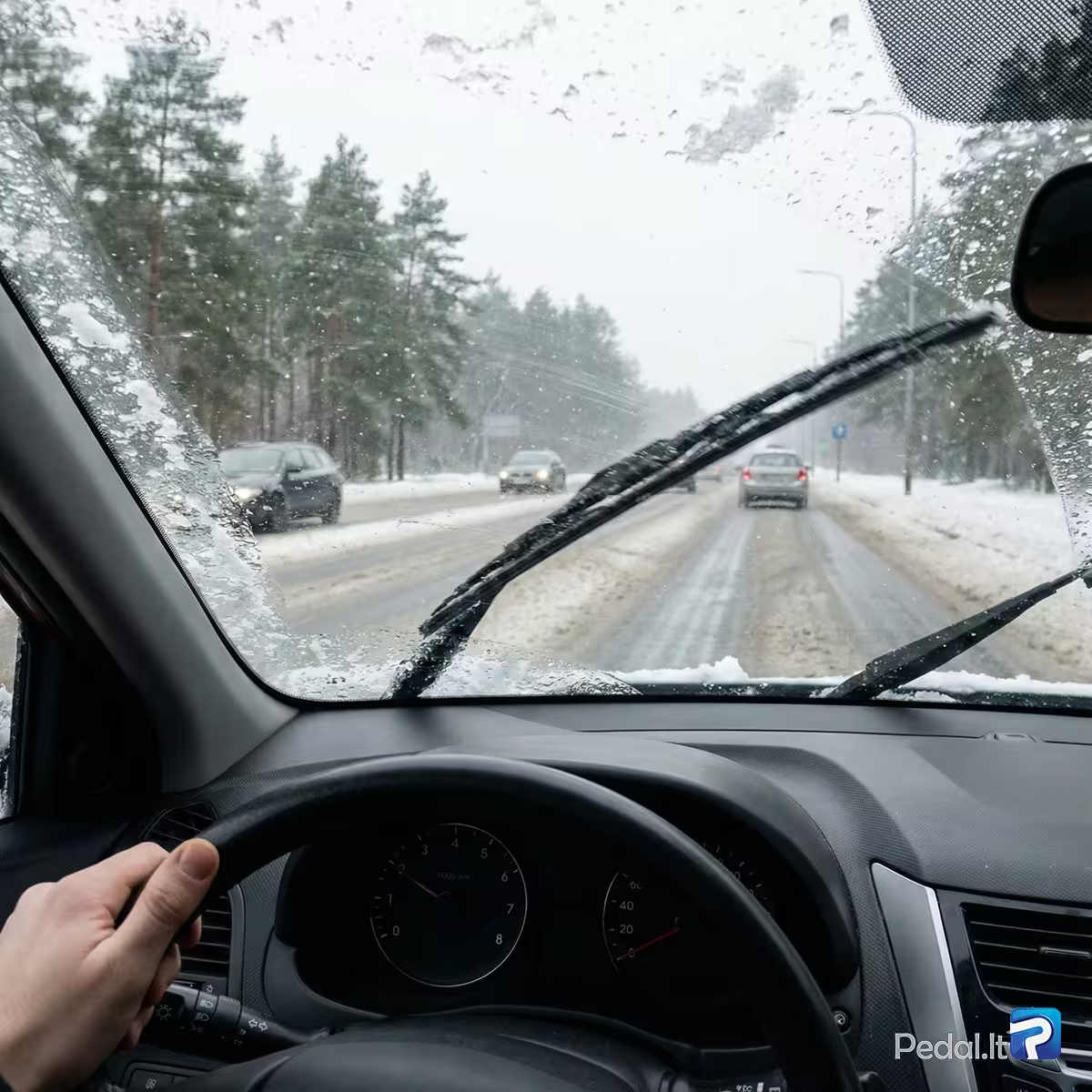
When should you switch on your windscreen wipers while driving in sleet?
A driver must maintain clear forward visibility in all weather conditions. Use the windscreen wipers according to the intensity of precipitation, traffic, presence of pedestrians and other circumstances. Waiting until "the windscreen is covered in snow and you are unable to see anything" is too late.
1. Only when the windscreen is completely covered with snow and you cannot see anything.
2. Before another vehicle driving alongside you can splash dirty water onto your windscreen.
3. Before an oncoming vehicle can splash dirty water onto your windscreen.
4. In advance, so you are not distracted while searching for the windscreen wiper control.
What factors determine the severity of aquaplaning (a layer of water that can form between the tyre and the road surface during rain on asphalt)?
When vehicle speed increases, the layer of water on the road becomes deeper. Heavier rainfall also increases the water layer during driving. On roads with a transverse crown (where the carriageway is higher in the centre), the water layer is thinner because rainwater drains off the surface toward the edges more quickly. On asphalt, a tyre can displace only as much water as the volume available in its tread.
1. Vehicle speed.
2. Rainfall intensity.
3. Tyre tread depth.
4. Tyre height.
Are people using a wheelchair considered pedestrians?
LAW ON ROAD TRAFFIC SAFETY — Article 2, clause 42. "Pedestrian" means a person present on the road who is not inside a vehicle, including a person using a wheelchair, on roller/inline skates, on a skateboard or scooter, walking while leading or pushing a bicycle, moped, or motorcycle, or pulling/pushing a sledge, pram, or other type of carriage. A person performing work on the road shall not be considered a pedestrian.
1. Yes — they are considered pedestrians.
2. No — they are not considered pedestrians.
Are vehicles permitted to drive on the pavement (sidewalk)?
RTR 124. Drivers of motor vehicles, tractors, self‑propelled machines, and animal‑drawn vehicles must not drive or manoeuvre on lawns, pavements (sidewalks), footpaths, cycle tracks, or cycle lanes. An exception applies where road signs permit (partial) parking at the pavement edge and a cycle track or lane is delineated by the horizontal marking line 1.14. Driving on central reservations, embankment slopes, excavations, or in ditches is prohibited. Drivers must also not enter or leave the roadway except at locations designated for that purpose.
1. They may do so provided they do not obstruct pedestrians.
2. They are permitted only where road signs indicate that (partial) parking on the pavement edge is allowed.
3. Driving on pavements is prohibited.
.avif)
To whom must a motorcyclist yield?
RTR 12. Road users must immediately yield to approaching emergency vehicles that display blue and red (or only blue) flashing lights and use special audible signals, as well as to vehicles escorted by them. Road users shall form an emergency corridor as follows: 12.1 On a road with a single lane in one direction, drivers must stop on the right hard shoulder if one exists; if there is no hard shoulder, they must stop as close as possible to the right edge of the carriageway. 12.2 On a road with two or more lanes in the same direction, vehicles in the far-left lane must move and stop as close as possible to the left edge of the carriageway designated for that direction, while vehicles in the lanes to the right must move and stop as close as possible to the right edge of the carriageway (or the hard shoulder). 12.3 On a road with a central reservation, only drivers travelling in the same direction must comply with the requirements in paragraphs 12.1 and 12.2. RTR 154. At a controlled intersection, drivers on a side (minor) road must yield to vehicles approaching on the priority road.
1. The red car.
2. The police vehicle.
3. The bus.
4. The motorcyclist is not required to yield to anyone.
A load projects up to 1 metre beyond the front or rear of a vehicle. It will be transported at night or in conditions of poor visibility. How should this load be marked?
If the load projects less than 1 m beyond the front or rear of the vehicle, marking is not required (RTR 2.10). Any motor vehicle carrying a load that extends more than 1 m beyond the front or rear, or beyond the sides of the vehicle, must have the extremities of the load marked as specified in Annex 4 to these Rules (RTR 4.12). The extremities of loads protruding more than 1 m in front or rear, any projection to the side, and extremities of vehicles wider than 2.6 m must bear distinguishing marks — 400 mm square plates covered with alternating diagonal reflective white and red stripes 50 mm wide. These plates must be mounted not lower than 0.4 m and not higher than 1.6 m above ground level. During hours of darkness or when visibility is poor, such vehicles must have lights at the projecting points: white at the front, amber at the sides and red at the rear. JB
1. Using brightly coloured flags.
2. Distinctive markers — square plates with alternating diagonal reflective white and red stripes.
3. Marked with lights: white at the front, amber at the sides and red at the rear.
4. Marking is not required.
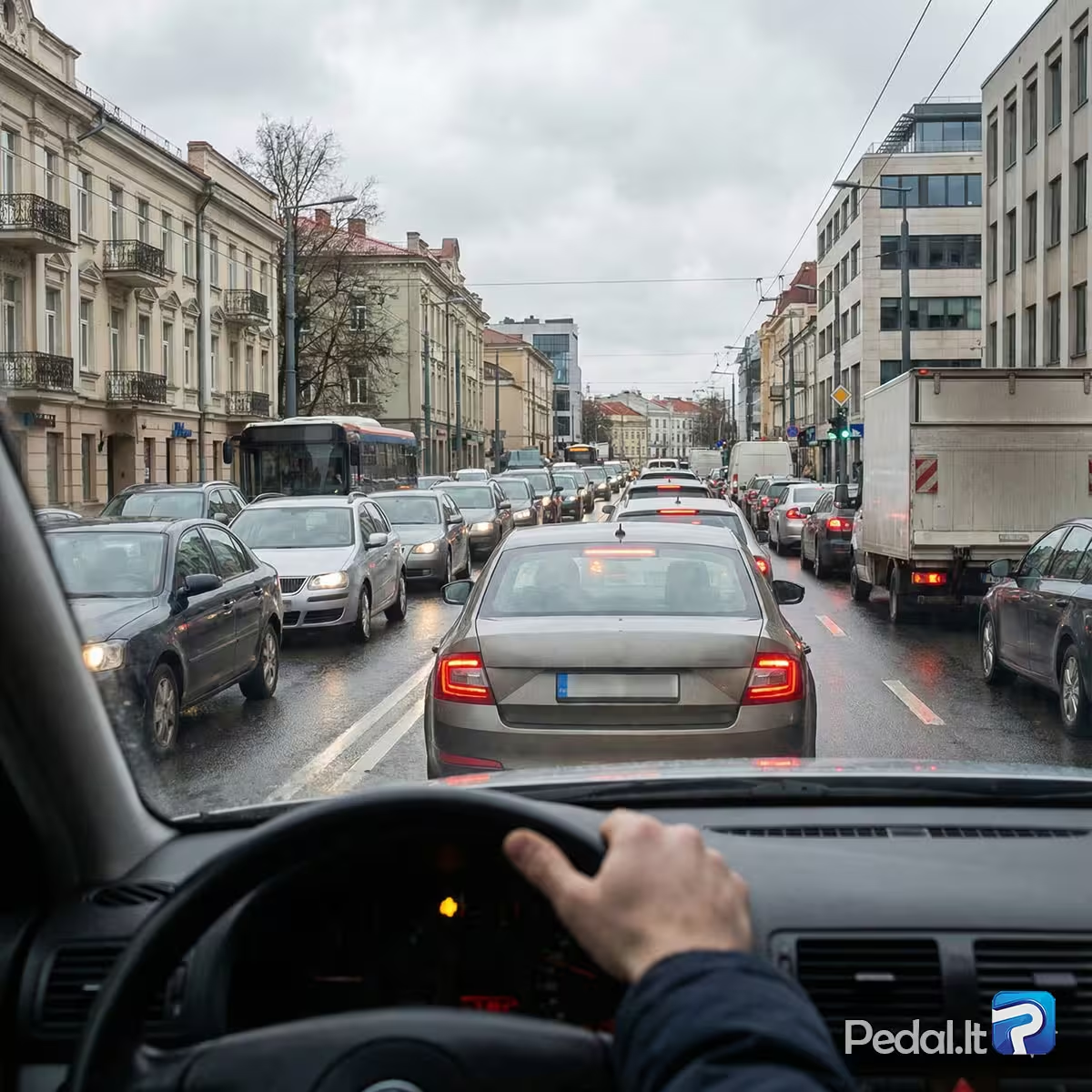
Is a driver permitted to change lanes in heavy traffic when all lanes are occupied?
RTR 11D. In heavy traffic, when all lanes are occupied by vehicles, changing lanes is permitted only when necessary to make a turn, make a U‑turn, or stop. JB
1. Changing lanes to stop is permitted when necessary.
2. Changing lanes to make a U‑turn is permitted when necessary.
3. Changing lanes to make a turn is permitted when necessary.
4. Changing lanes is prohibited.
.avif)
Which vehicle may proceed in the direction indicated by the arrow?
RTR 77.1. When the traffic officer's arms are extended sideways or pointed downward: 77.1.1. Vehicles located to the officer's left and right may proceed straight ahead or turn right; pedestrians may cross the carriageway. 77.1.2. Vehicles and pedestrians positioned in front of or behind the officer must not proceed. JB
1. First vehicle
2. Second vehicle
3. Third vehicle
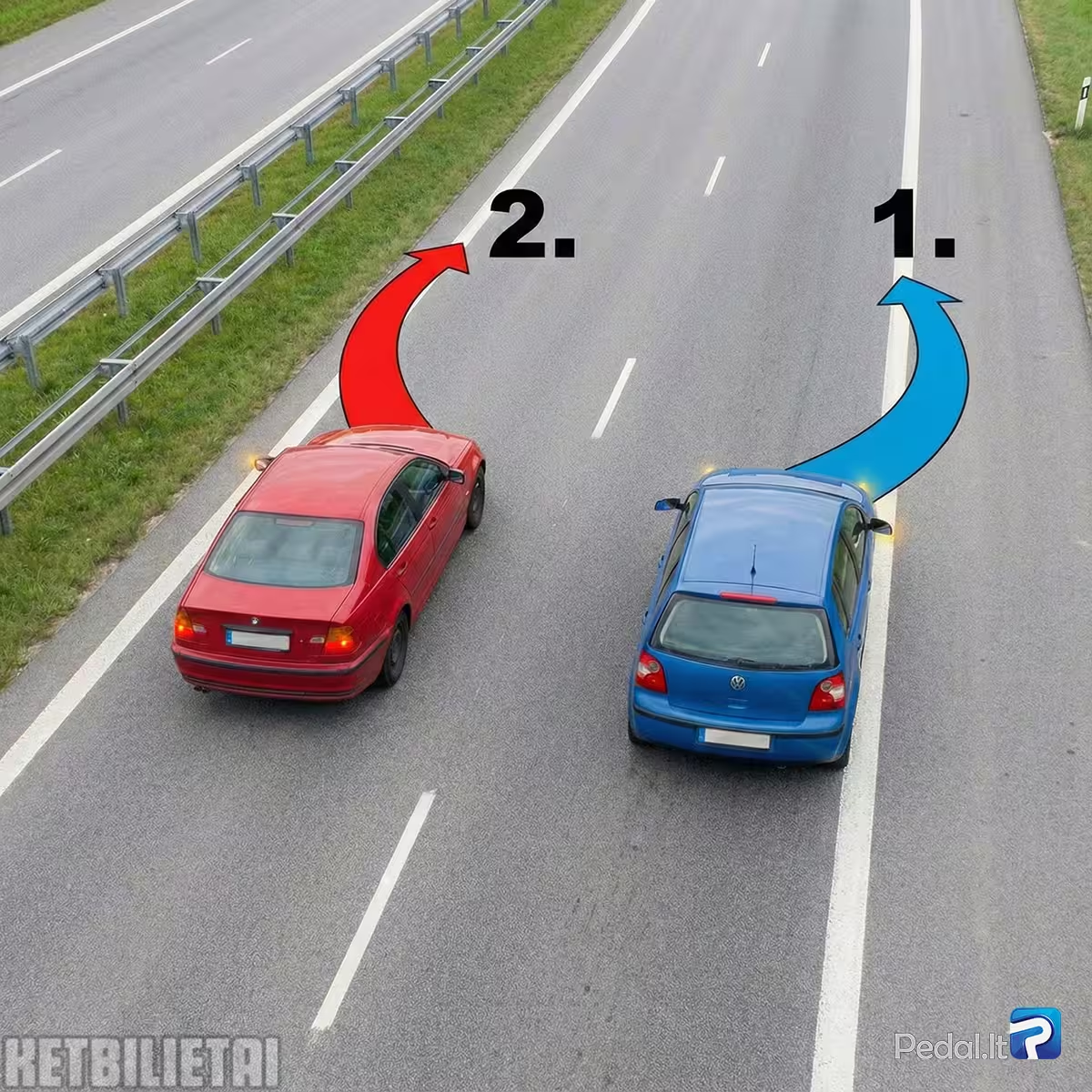
On which side of the road is stopping permitted?
RTR 141. Vehicles may stand or park on the right-hand side of the road, as close as possible to the right edge of a hard shoulder, or at the carriageway edge if no hard shoulder exists. When entering or leaving the hard shoulder, the driver must not endanger other road users. If a cycle lane is installed along the right edge of the carriageway, drivers may stand or park adjacent to that cycle lane.
1.1. A NARROW CONTINUOUS LINE separates traffic flows in opposite directions and prohibits driving in the lane for oncoming traffic on the marked section of road; it also marks the edges of traffic lanes, sections of the carriageway into which entry is prohibited, the limits of vehicle parking spaces and the carriageway edge. At road sign No. 413 "Pedestrian and bicycle path" it separates the part of the path intended for bicycle traffic from the part intended for pedestrian traffic. Crossing this line is prohibited, except where it marks the carriageway edge or the boundary of a parking space.
1. On the right side of the road.
2. On the left side of the road.
3. Stopping is prohibited.
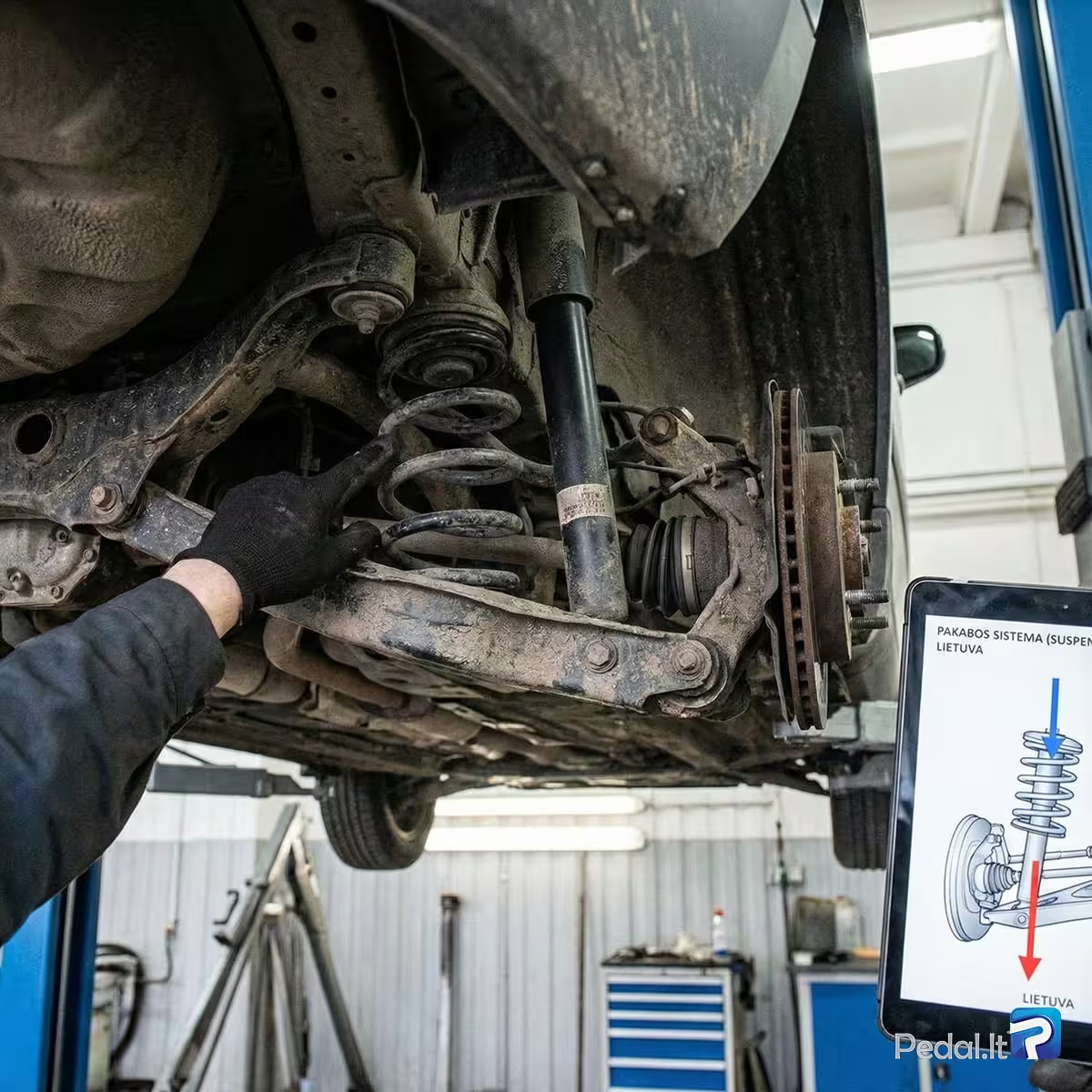
What is the function of a vehicle's suspension system?
The function of a vehicle suspension system is to convert bumps and shocks transmitted to the wheels, with the aid of shock absorbers, into minor oscillations of the vehicle body, providing comfort for driver and passengers. The suspension reduces body oscillations, and when functioning properly it enhances driving safety.
1. To improve ride comfort for the driver and passengers.
2. To convert bumps and shocks transmitted to the wheels into minor oscillations of the vehicle body.
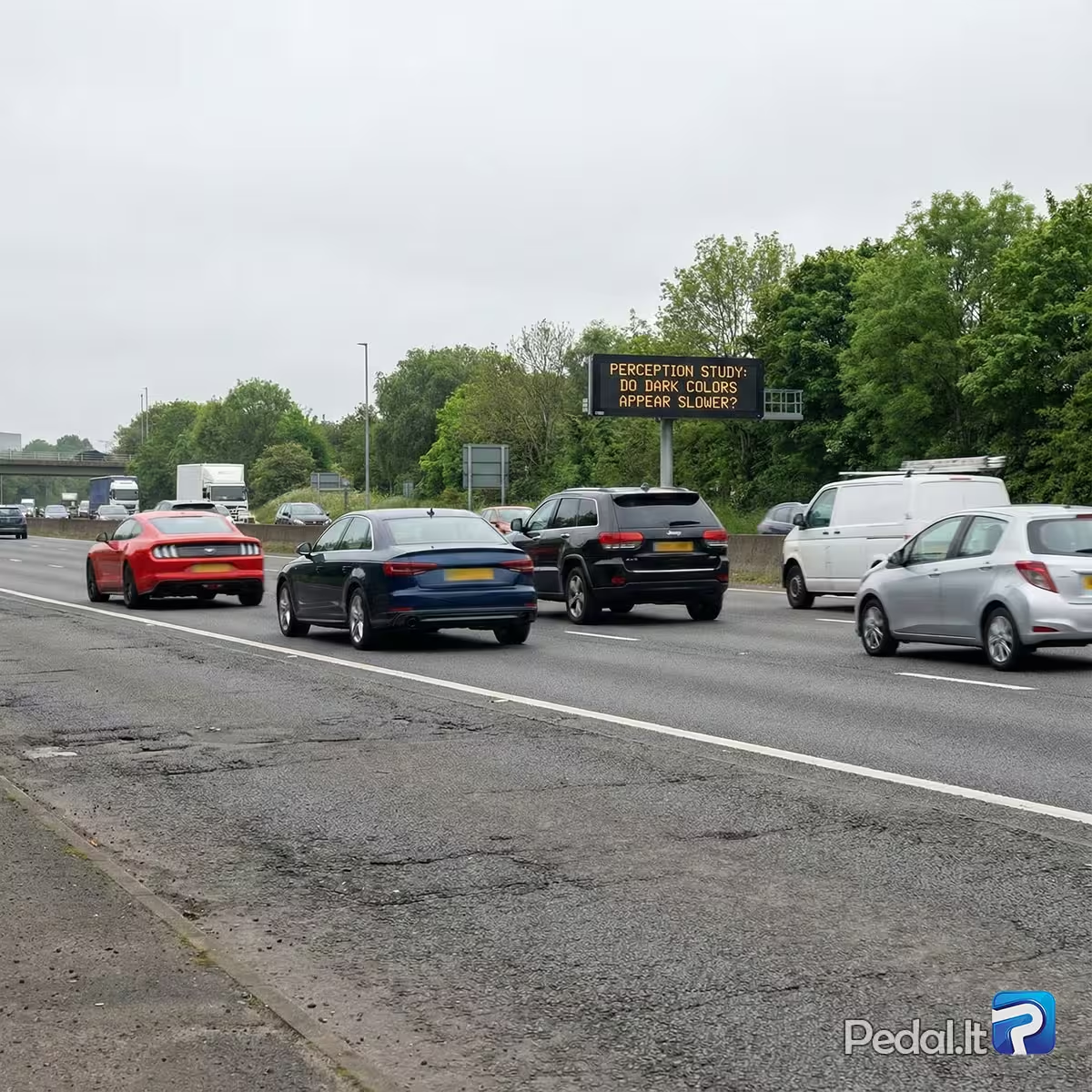
Which colour of vehicle tends to appear to be moving more slowly than it actually is?
Oncoming vehicles painted in dark colours often create the illusion that they are moving more slowly than they actually are.
1. Light-coloured vehicles.
2. Dark-coloured vehicles.
What is the maximum permitted blood alcohol concentration (in ‰) for a driver with one year of driving experience operating a passenger car?
Under amendments to the Law on Road Traffic Safety that took effect on 1 January 2015, novice drivers (those with less than two years' driving experience) are considered intoxicated if the alcohol concentration in their breath or bodily fluids exceeds 0. LAW ON ROAD TRAFFIC SAFETY, Article 2, clause 43 defines 'condition under the influence of alcohol' as the state when the concentration of ethyl alcohol in a biological medium of the body (breath, blood, urine, saliva, or other bodily fluids) exceeds the statutory permissible limit. The general maximum permitted concentration of ethyl alcohol in breath, blood, urine, saliva, or other bodily fluids while driving is 0.4 per mille. However, novice drivers, taxi drivers, drivers of mopeds, motorcycles, tricycles, light quadricycles, quadricycles, powerful quadricycles, drivers of vehicles with a maximum permissible mass exceeding 3.5 tonnes or with more than nine seats, and drivers carrying dangerous goods are considered intoxicated when the ethyl alcohol concentration in their breath, blood, urine, saliva, or other bodily fluids is more than 0 per mille.
1. 0.0 ‰
2. 0.2 ‰
3. 0.4 ‰
4. 0.8 ‰
What is the minimum number of accompanying persons required to escort an organised group of children under the age of 16 walking along a hard shoulder?
RTR 40. An organised group of children consisting of persons under the age of 16 must be accompanied by at least two accompanying persons. Such a group should use pavements, footpaths or combined footpaths and cycle tracks (on the pedestrian side) if available; if these are not available, the group may use the hard shoulder but only in daylight, with good visibility, in no more than two abreast and against the flow of traffic when it is safe to do so. Accompanying persons must be positioned at the front and the rear of the column and wear high-visibility vests. It is recommended that all children in the organised group who walk along the hard shoulder also wear high-visibility vests.
1. One accompanying person.
2. Two accompanying persons.
3. Four accompanying persons.
4. Six accompanying persons.
.avif)
If, when starting to move, your vehicle's wheels spin while the vehicle remains stationary:
To drive a motor vehicle economically and sensibly, begin moving smoothly and steadily. Where possible, reduce your speed gradually and avoid unnecessary abrupt actions unless they are essential (e.g., emergency braking because of an unexpected obstacle on the road).
1. It is uneconomical — it increases fuel consumption and accelerates tyre wear.
2. The tyre squeal or wheel spin disturbs other road users.
3. It is regarded as normal and acceptable.
Who must give way on a signed slope when an obstruction is present?
On slopes marked with the appropriate road signs, the vehicle traveling downhill must give way when an obstruction is present, regardless of which side the obstruction occupies (RTR 139). However, if it is difficult for two vehicles to pass each other, the driver whose side has the obstruction should give way.
1. The driver traveling uphill.
2. The driver whose side of the road has an obstruction.
3. The driver traveling downhill.
4. The driver whose side of the road has no obstruction.
.avif)
What does a continuous yellow line painted along the edge of the carriageway indicate?
RTR Annex 3.1.4: A continuous yellow line along the carriageway edge indicates areas where stopping or parking is prohibited; it may also be used to mark lanes affected by roadworks. Vehicles must not cross this line. When a yellow continuous line is used together with white lane markings, drivers must obey the yellow line. RTR Annex 3.1.27: A yellow zigzag line marks a section or side of the road where stopping and parking are prohibited along the entire length of the zigzag.
1. Areas where only parking is prohibited.
2. Areas where both stopping (standing) and parking are prohibited.
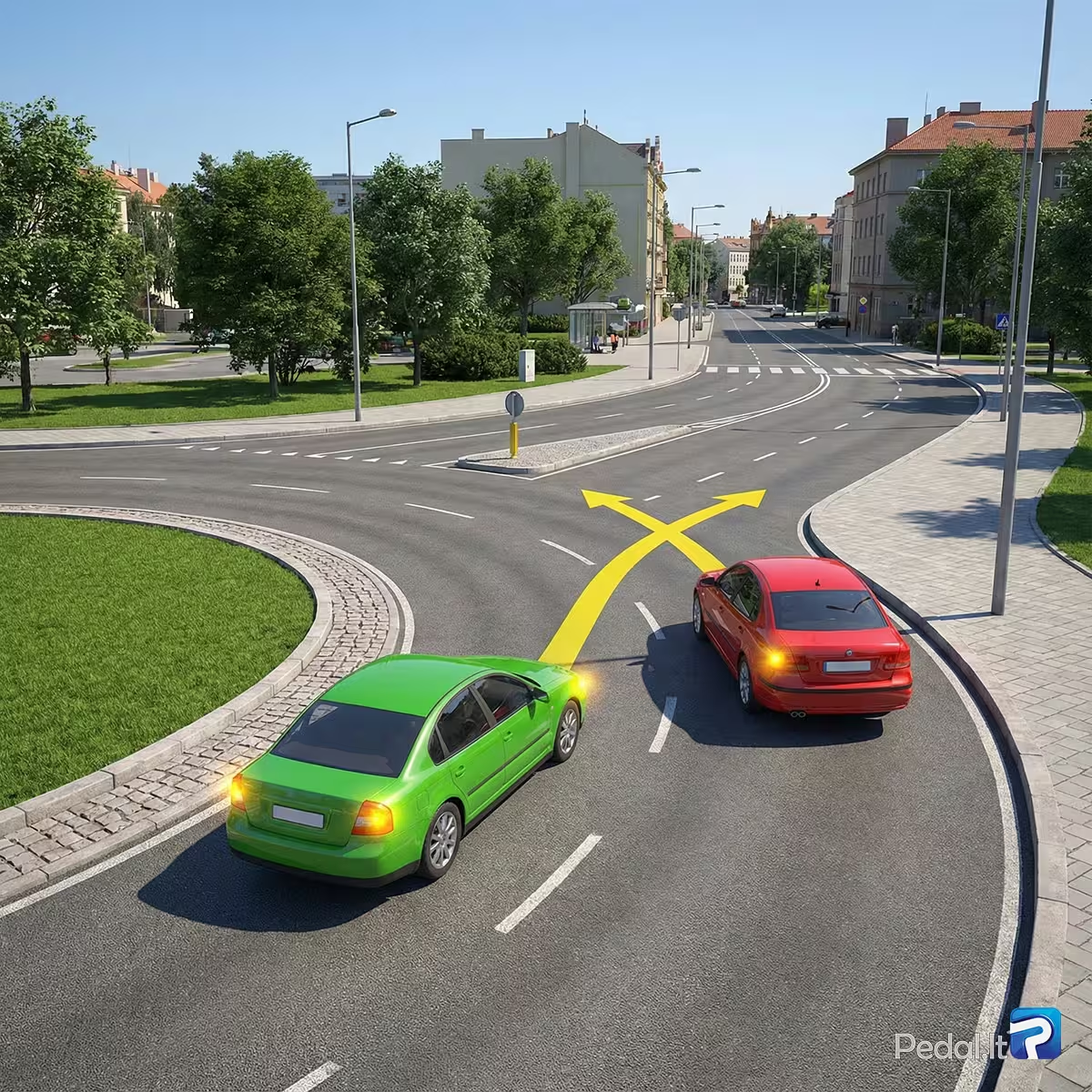
Which driver is violating the traffic rules?
There are no lane direction signs; therefore the driver of the red vehicle may go straight or turn right. When changing lanes, the driver of the green vehicle must yield. RTR 104. When changing lanes, a driver must yield to vehicles moving in the same direction in the adjacent lane. If vehicles moving in the same direction change lanes simultaneously, a driver must yield to the vehicle on the right, except in the cases specified in Paragraph 112 of the Rules. RTR 112. If an acceleration lane is provided for entering the road, the driver must use that lane and merge into the main traffic flow (change lanes and move into the adjacent lane), yielding to vehicles already in that flow or to vehicles changing lanes toward the deceleration lane. RTR 106. Before turning right, left, or making a U-turn (except when entering an intersection with circular traffic), a driver must move in advance to the edge of the carriageway designated for that direction. Road signs and/or road markings may indicate otherwise.
1. The driver of the red vehicle.
2. The driver of the green vehicle.
The service brake has failed while you are driving on a motorway. What should you do?
Maintain a speed that allows you to stop the vehicle with the parking brake if necessary. Switch on your hazard warning lights to warn other road users. Drive to the nearest safe place to stop and call roadside assistance.
1. Reduce your speed and switch on the hazard warning lights. If necessary, apply the parking brake gradually. Carefully drive to the nearest safe place to stop and call roadside assistance.
2. Reduce your speed and notify the road police. Continue driving cautiously to your destination. If possible, add brake fluid.
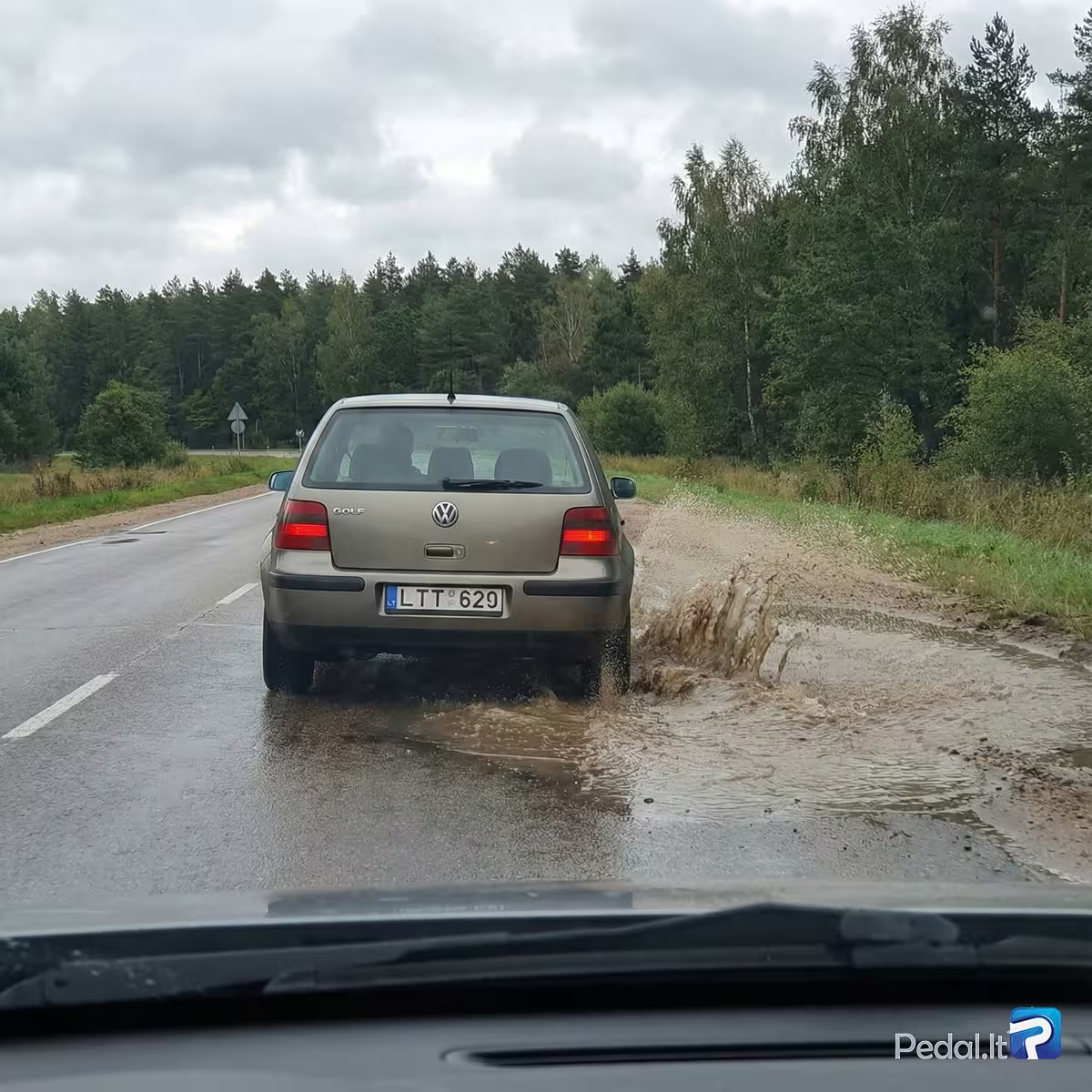
If either the left or right wheel of your vehicle has entered a body of water (for example, a puddle), you must:
When a wheel travels through standing water, the vehicle can aquaplane (ride on a layer of water), causing loss of traction and possible skidding. Hold the steering wheel firmly and gradually reduce speed to regain traction and maintain control.
1. Apply the brakes immediately.
2. Grip the steering wheel firmly.
3. Increase your speed.
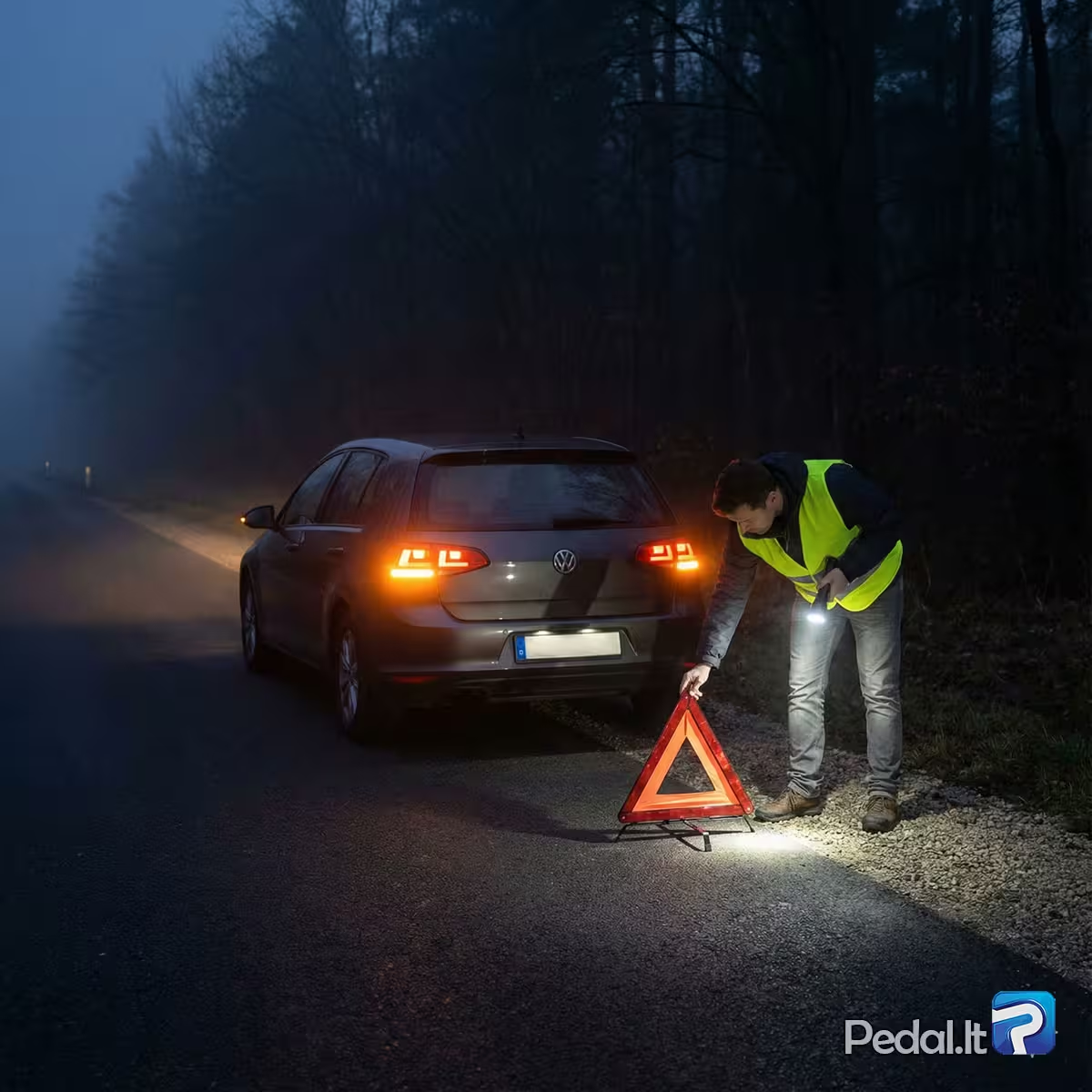
If you are forced to stop on an unlit section of road at night or in poor visibility because your position and brake lights have failed, what should you do?
RTR 92. If the emergency light signaling system is not fitted or is defective and an emergency stop is required where stopping or parking is prohibited, in the event of an accident, or where the stopped vehicle would be visible to other road users from less than 100 metres, the driver of a motor vehicle (other than a motor moped or a motorcycle without a trailer), a tractor, or a self‑propelled machine must immediately place an emergency stop sign on the carriageway side opposite the direction of travel: in built‑up areas not less than 25 m from the stopped vehicle, and outside built‑up areas not less than 50 m. If at least one rear position lamp is defective and the hazard warning lights are not working when driving at night or in poor visibility, an emergency stop sign must be affixed to the rear of the vehicle in order to continue driving.
RTR 151. When a vehicle is forced to stop where standing or parking is forbidden, drivers must switch on their hazard warning lights if available and/or place a warning triangle on the road as specified in Paragraph 92 of the Rules and remove their vehicle from the road as soon as possible. If drivers intend to stop their vehicle on unlit sections of the road during darkness or when visibility is poor, and hazard warning lights are not available or are inoperative, the vehicle must be parked off the carriageway. If this is impossible, the location must be marked as specified in Paragraph 92 of the Rules. JB
1. Turn the vehicle around and switch on the low beam headlights.
2. If it is not possible to park off the carriageway, switch on your hazard warning lights; if these are not available or are inoperative, place a warning triangle.
3. Indicate the stopped vehicle with bright flags.
1 of 30 Task
Time left: 00:00:00
1
2
3
4
5
6
7
8
9
10
11
12
13
14
15
16
17
18
19
20
21
22
23
24
25
26
27
28
29
30