At what age can you obtain a category A (motorcycle) driving licence?
Under Article 23 of the Law on Road Traffic Safety, there are two ways to obtain a category A (motorcycle) driving licence. You may obtain category A from the age of 24 without prior experience. Alternatively, from the age of 20 you may obtain category A if you have at least two years' qualifying experience riding category A2 motorcycles. The two-year A2 experience requirement does not apply to applicants aged 24 or older. Separately, the right to drive tricycles (three-wheelers) with power exceeding 15 kW is granted from the age of 21.
1. From the age of 24.
2. From the age of 20, provided you have two years' experience riding category A2 motorcycles.
When must you use the turn signal?
RTR 86. Warning signals must be given sufficiently in advance of a manoeuvre (including any braking related to it) and must be discontinued immediately after the manoeuvre is completed (hand signals may be stopped just before the manoeuvre). A signal must be given so that it does not mislead other road users. Turn signals are not used when entering a roundabout.
1. Before completing your overtaking manoeuvre.
2. Before beginning your overtaking manoeuvre.
3. Before passing an obstruction.
Persons holding a school-issued certificate are permitted to ride bicycles on roads starting at what age?
Persons under 14 years of age are not permitted to ride bicycles on roads. However, those who complete an additional training course and obtain a school-issued certificate may ride on roads from age 12. Within residential areas, there is no minimum age restriction for cyclists.
1. 12 years of age.
2. 14 years of age.
3. 16 years of age.
Is it permitted to drive on winter tyres during the summer season?
According to the traffic regulations, vehicles fitted with studded tyres must not be used from April 10 to October 31. Therefore, winter tyres without studs are permitted during that period. However, using summer tyres is recommended in warm conditions. If winter conditions persist, the Minister of Transport and Communications may issue an order extending the permitted use of studded tyres.
1. Yes — winter tyres without studs are permitted.
2. No — that is prohibited.
Which of the following are warning signals?
RTR 81. Warning signals include: using turn and brake lights (arm signals may be used), sounding the horn, switching the headlights on and off, activating hazard warning lights or flashing amber beacons, and placing a warning triangle on the road or attaching it to the vehicle.
1. Brake light signal.
2. Indicating a turn using an arm signal.
3. Horn signal.
4. Switching the headlights on and off.
5. Placing a warning triangle on the road.
Why is it safer to brake without depressing the clutch while driving downhill?
After releasing the accelerator (engine braking), place your foot on the brake pedal and stop without pressing the clutch. This is the most effective braking method, especially in winter when roads are slippery. Braking with the clutch disengaged reduces stopping effectiveness and vehicle stability, increasing the risk of skidding to the side. JB
1. Braking is more effective.
2. The vehicle remains more stable during braking.
3. The tires will not wear out as quickly.
How does alcohol affect a driver's abilities?
When driving under the influence of alcohol, attention and comprehension are reduced; critical thinking and memory are impaired; coordination of movements deteriorates; reflexes are weakened or lost; drivers take longer to perceive signals and interpret situations; overall driving performance declines, reaction times slow, and vehicle control worsens or may be lost.
1. Reaction time is delayed.
2. Reaction times become shorter.
3. Attention diminishes.
4. Alcohol has no effect on a driver's reactions.
The effect of inertia on the vehicle (risk of sliding sideways) when cornering is reduced by:
The higher the vehicle's speed when cornering, the greater the effect of inertia and the higher the risk of the car sliding sideways. Lower speeds reduce inertia and the risk of sliding. A larger turning radius (a gentler curve) also reduces lateral inertial forces.
1. By decreasing the turning radius (making the turn tighter).
2. By reducing vehicle speed.
3. By increasing the turning radius (making the curve gentler).
What is the minimum number of accompanying persons required to escort an organised group of children under the age of 16 walking along a hard shoulder?
RTR 40. An organised group of children consisting of persons under the age of 16 must be accompanied by at least two accompanying persons. Such a group should use pavements, footpaths or combined footpaths and cycle tracks (on the pedestrian side) if available; if these are not available, the group may use the hard shoulder but only in daylight, with good visibility, in no more than two abreast and against the flow of traffic when it is safe to do so. Accompanying persons must be positioned at the front and the rear of the column and wear high-visibility vests. It is recommended that all children in the organised group who walk along the hard shoulder also wear high-visibility vests.
1. One accompanying person.
2. Two accompanying persons.
3. Four accompanying persons.
4. Six accompanying persons.
Are you required to signal before changing lanes?
RTR 82. A driver must indicate intended maneuvers using the vehicle's right or left direction indicators, or by arm signals if the indicator lights are unavailable or inoperative. Specifically: 82.1 before starting to move and before stopping; 82.2 before changing lanes, before and after overtaking, before and after passing an obstruction, before turning right or left, before making a U‑turn, and before leaving an intersection where vehicles must circulate around a central point. JB
1. Yes — you must signal.
2. No — you are not required to.
3. Only if other road users are nearby.
If your vehicle gets a flat tyre while crossing an intersection and vehicles are approaching from both directions, what should you do?
128. If there is an obstruction or traffic safety is endangered, the driver must reduce speed, stop if necessary, or avoid the obstruction (if it can be detected) without creating danger for other road users. 135. Drivers must not: 135.4. decelerate abruptly except for safety reasons.
1. You will stop in the middle of the intersection.
2. You will accelerate to clear the intersection quickly and then stop beyond it.
3. You will reduce your speed and stop beyond the intersection at a safe location.
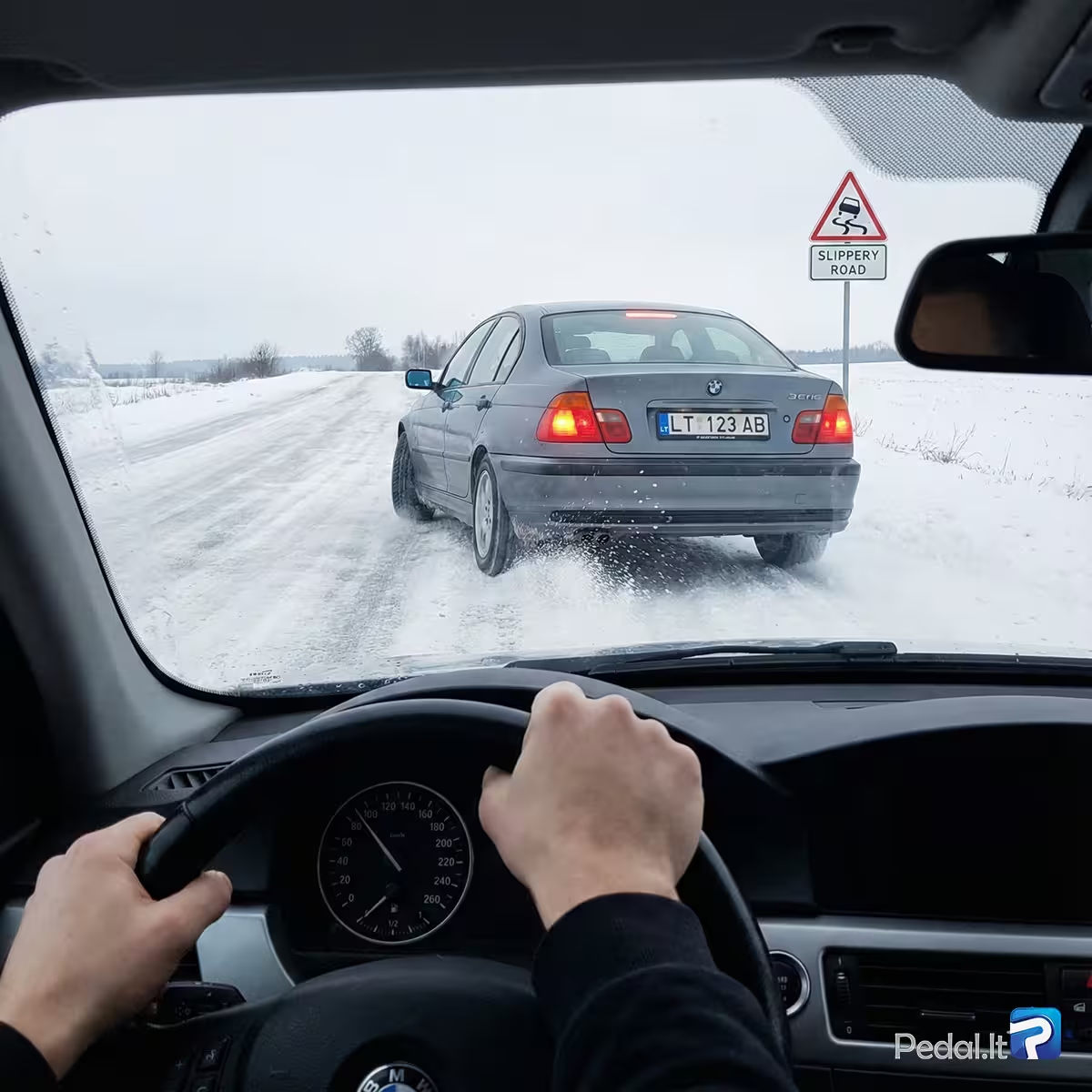
How dangerous is a sudden increase in engine RPM while driving on a slippery road?
If the road surface is slippery or the engine delivers strong torque and the revs increase abruptly, the driven wheels can spin. When the driven wheels are at the rear, the rear axle may lose traction; when they are at the front, the front axle may lose traction, which can cause the vehicle to lose stability and skid.
1. The fuel filter may fail.
2. The fuel pump may fail.
3. If the tractive force of the wheels exceeds the available grip with the road, the vehicle can lose stability and begin to slide.
What is the maximum permissible concentration of ethyl alcohol in the blood for a passenger car driver who has three years of driving experience?
LAW ON ROAD TRAFFIC SAFETY, Article 2, item 43. Intoxication — the state of a person who has consumed ethyl alcohol, when the concentration of that alcohol in the body's biological media (exhaled air, blood, urine, saliva or other bodily fluids) exceeds the legal limit. The maximum permitted concentration of ethyl alcohol in the exhaled air, blood, urine, saliva or other bodily fluids of persons driving vehicles is 0.4 per mille. Novice drivers, taxi drivers, and drivers of mopeds, motorcycles, tricycles, light quadricycles, four-wheel power quadricycles, vehicles with a maximum permissible weight over 3.5 t or with more than 9 seats, and drivers transporting dangerous goods are considered intoxicated when the concentration of ethyl alcohol in their exhaled air, blood, urine, saliva or other bodily fluids is greater than 0 per mille. JB
1. 0.2 ‰
2. 0.3 ‰
3. 0.4 ‰
4. 0 ‰
In which situations must a driver report a road accident to the police?
If a road accident results only in property damage and the owner of the damaged property is not present at the scene and cannot be contacted, the road user involved must immediately notify the owner or, if that is not possible, report the accident to the police.
XXIX. Obligations of Road Users in the Event of a Road Accident (paras. 219–222)
219. In the event of a road accident, every driver involved or any other road user must:
219.1. stop immediately without creating further danger to other road users and mark the accident scene as required by subparagraph 91.2 and paragraph 92 of these Rules;
219.2. take all possible measures to ensure safety at the scene, and if the police are called, avoid (without endangering traffic) altering the circumstances of the accident and preserve the traces and evidence of the collision;
219.3. at the request of other road users involved, present a valid identity document or driving licence and a certificate (policy) of compulsory motor third-party liability insurance to identify the insurer;
219.4. if a person has been injured or has died in the accident, report the accident to the police and remain at the scene, or after notifying the police return and wait for them, except where the police permit departure or where the casualties or the person reporting the accident require immediate first aid;
219.5. take all necessary measures to provide first aid to the casualties, call an ambulance or, if calling an ambulance or transporting casualties to a medical facility by other means is impossible, carry them to the nearest medical facility in a private vehicle unless such transport would endanger their life or health.
222. If a road accident causes only property damage and the victim is not present at the scene, the road user involved must immediately notify the victim or, if that is not possible, the police.
1. When the accident caused only property damage and the owner of the damaged property is not present at the scene and cannot be reached.
2. When there is a dispute or disagreement about the circumstances of the accident.
3. When a person has been injured as a result of the accident.
4. When a person has died as a result of the accident.
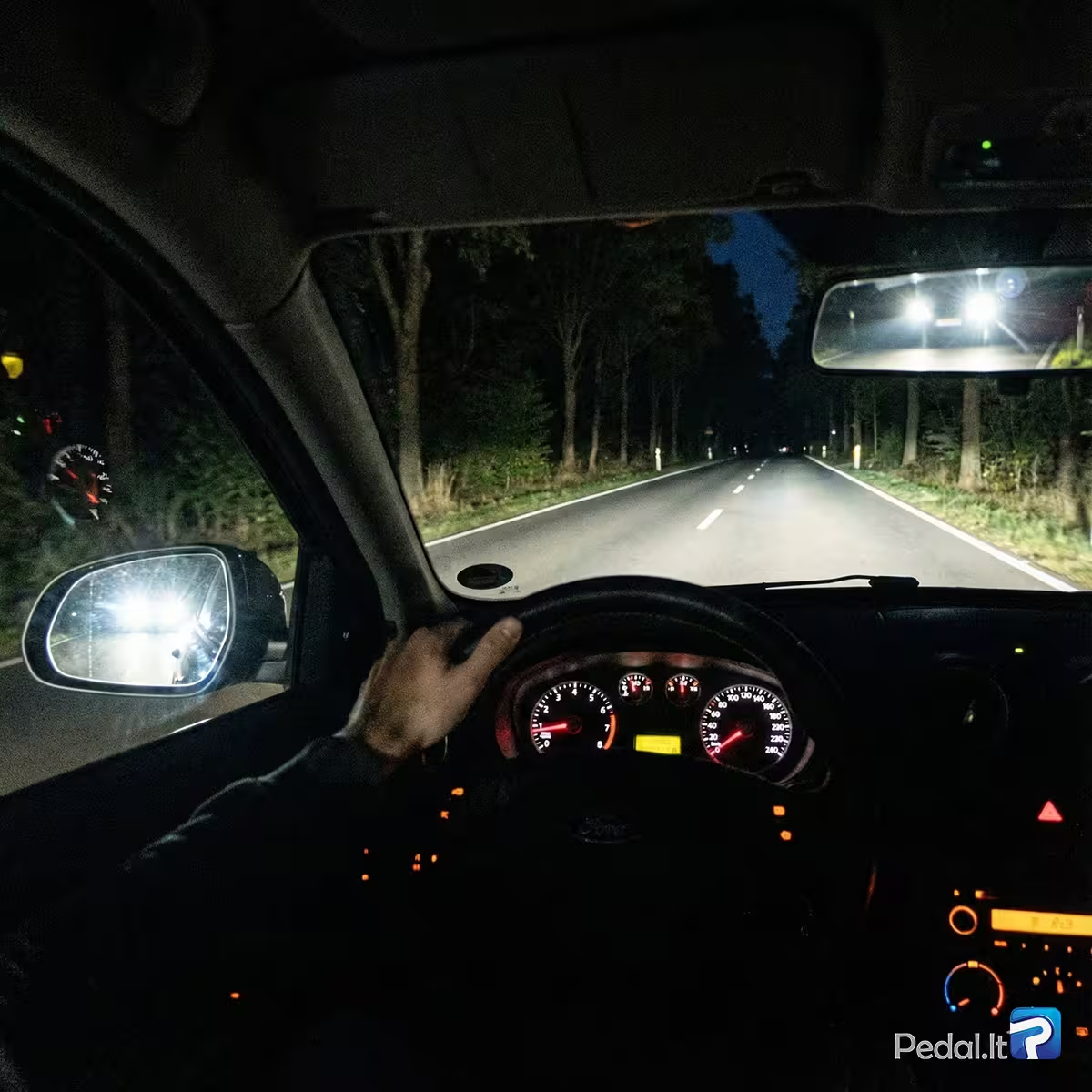
What must the drivers do if one vehicle catches up to the other while both are driving outside a settlement with their headlights on high beam?
The driver of the following vehicle must dip their headlights so as not to dazzle the driver ahead. The vehicle in front should switch to low beam only if the following vehicle begins to overtake, to avoid dazzling that driver. RTR 95. During darkness or in poor visibility, main beam headlights must be switched to low beam: 95.1 on illuminated roads; 95.2 when the distance to a vehicle approaching from the opposite direction is at least 150 m; 95.3 in other cases when main beam lights can dazzle other drivers (even travelling in the same direction). JB
1. The driver of the vehicle ahead must switch from high beam to low beam when the following vehicle begins to overtake.
2. The driver of the vehicle ahead must activate the hazard warning lights.
3. The driver of the following vehicle must switch from high beam to low beam.
You are driving in heavy rain and the steering wheel suddenly becomes very light to turn. What should you do?
If the steering wheel becomes very easy to turn, the vehicle's tyres have likely lost traction on the slippery road surface. In this situation, you must reduce your speed gradually — abrupt throttle changes or hard braking can cause the vehicle to skid or lose control.
1. You will slightly increase your speed.
2. You will gradually release the accelerator.
3. You will brake suddenly to reduce your speed.
4. You will move towards the hard shoulder.
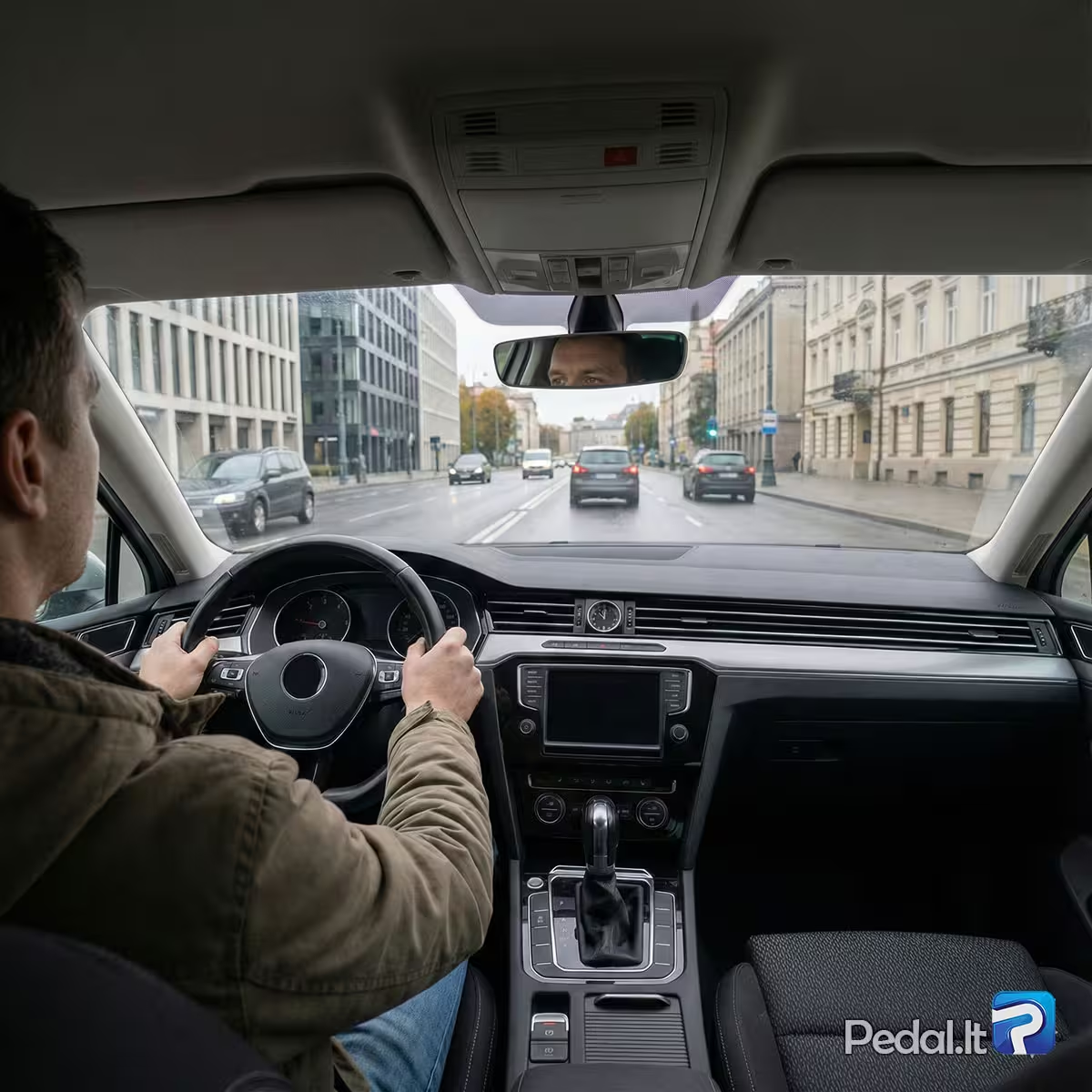
When should a driver move back into the right-hand lane after overtaking another vehicle?
RTR 136. Drivers should avoid unnecessary overtaking maneuvers. Before overtaking, drivers must take extra precautions and ensure that: 136.1. no driver behind them has already started to overtake; 136.2. the driver of the vehicle to be overtaken is not indicating a left turn; 136.3. the section of lane required for overtaking is clear, and the overtaking vehicle will not obstruct oncoming traffic or pedestrians on the roadway; 136.4. a safe distance from the vehicle being overtaken can be maintained during the maneuver; 136.5. after completing the overtaking maneuver, they will be able to return to the same lane safely without obstructing the overtaken vehicle.
1. Immediately after overtaking.
2. When the driver is more than 100 metres ahead of the overtaken vehicle.
3. When the overtaking driver can see the overtaken vehicle in the rear‑view mirror.
When may the front fog lamps be used?
Regulation RTR 98: Fog lamps may be used only when visibility is severely reduced. Front fog lamps may also be used if the left front dipped-beam headlamp has failed. According to the Law on Road Traffic Safety, Article 2(5), 'poor visibility' means a situation caused by weather or other phenomena in which road visibility is less than 300 metres, regardless of road characteristics.
1. In fog, when road visibility is 400 metres.
2. When visibility is severely reduced.
3. During rain or snow, when road visibility exceeds 300 metres.
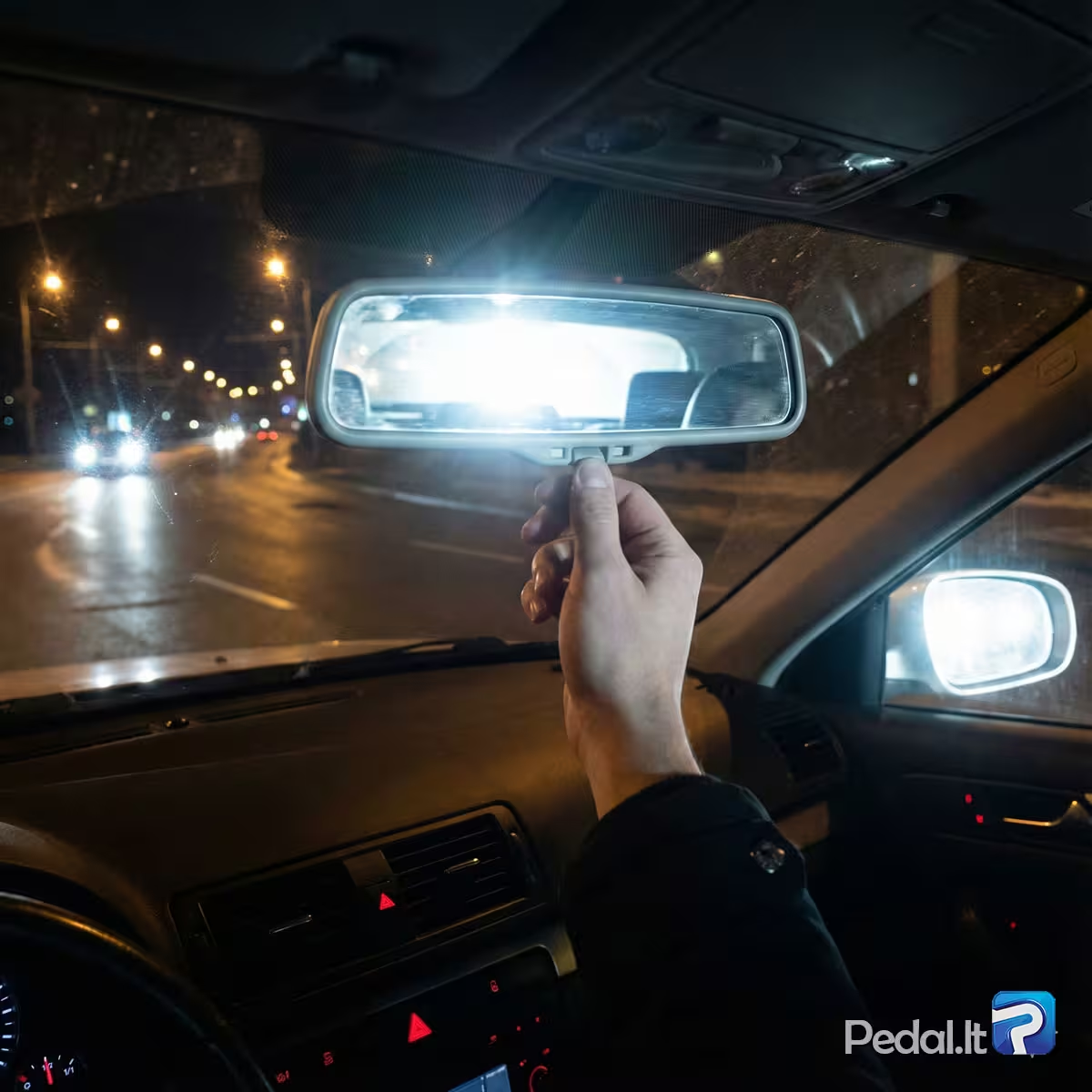
What should you do if a vehicle behind you is dazzling you with its lights?
If bright headlights are reflected in your rearview mirror, in addition to the measures listed in Paragraph 96 you can quickly activate the mirror's anti‑dazzle setting by flipping the switch at its base (if fitted). This engages the automatic dimming function and reduces glare. According to RTR 96, a dazzled driver must turn on the hazard warning lights, reduce speed without changing direction, and stop if necessary.
1. You will look away.
2. If possible, activate the rearview mirror's automatic dimming function.
3. You will turn on your hazard warning lights.
4. You will reduce speed and stop if necessary.
What should guide road users' behaviour?
Road users should adhere to the principles of mutual respect and safety.
1. Their income.
2. The position they hold.
3. Their social status.
4. Mutual respect and safety.
Why does a vehicle need a generator?
A generator charges the battery and supplies electrical current to the vehicle's electrical systems and other consumers only while the engine is running, i.e. while the engine's crankshaft is turning. Via the drive pulley and belt, the crankshaft turns the generator, which produces electricity.
1. It supplies electrical current to the vehicle's electrical systems when the engine is not running.
2. It supplies electrical current to the vehicle's electrical systems while the engine is running.
3. It provides current to the starter motor when starting the engine.
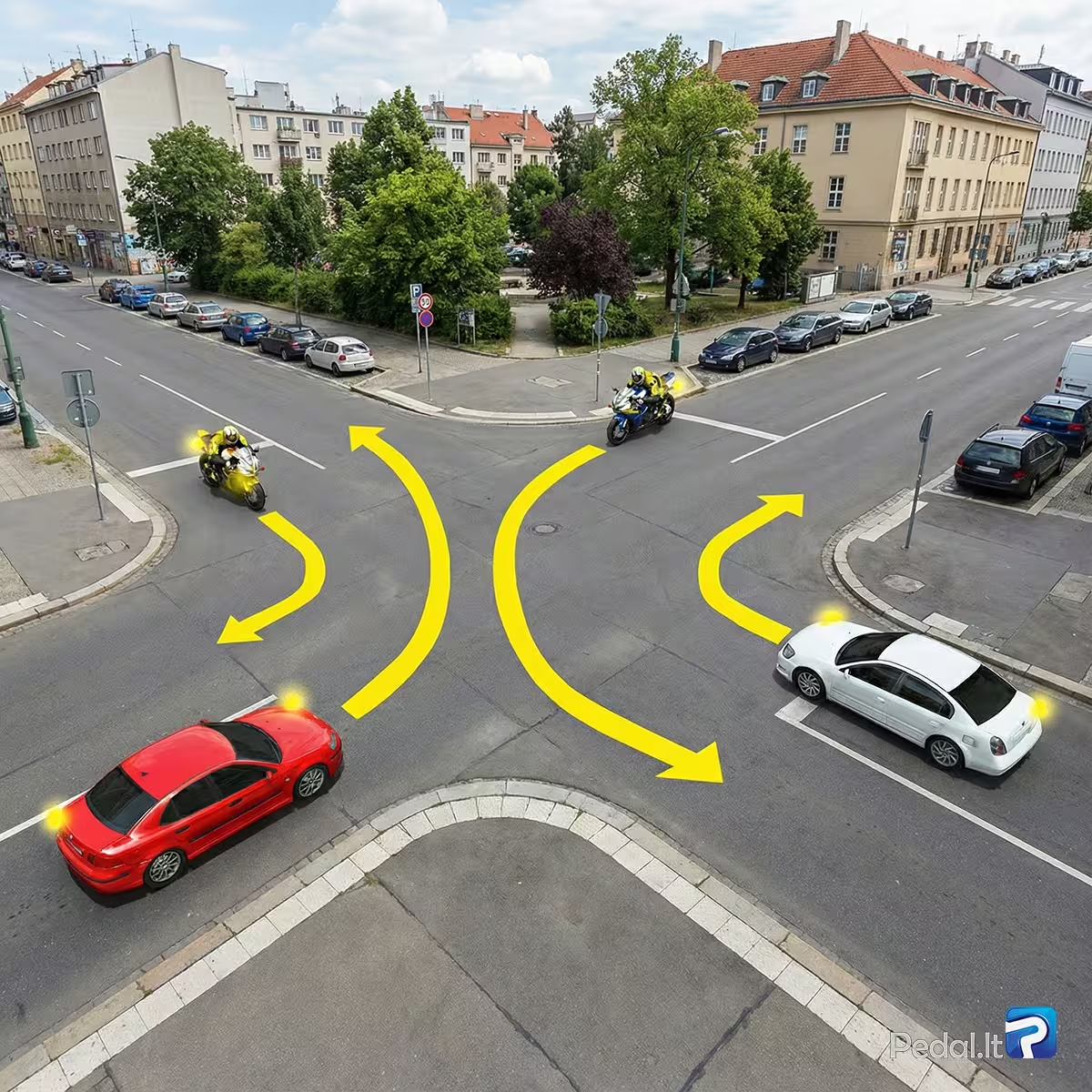
At an uncontrolled intersection, if the paths of the vehicles do not cross, which vehicle has the right of way?
If the vehicles' paths do not intersect, they may proceed simultaneously.
1. The vehicle approaching from the right.
2. The vehicle approaching from the left.
3. All vehicles may proceed simultaneously.
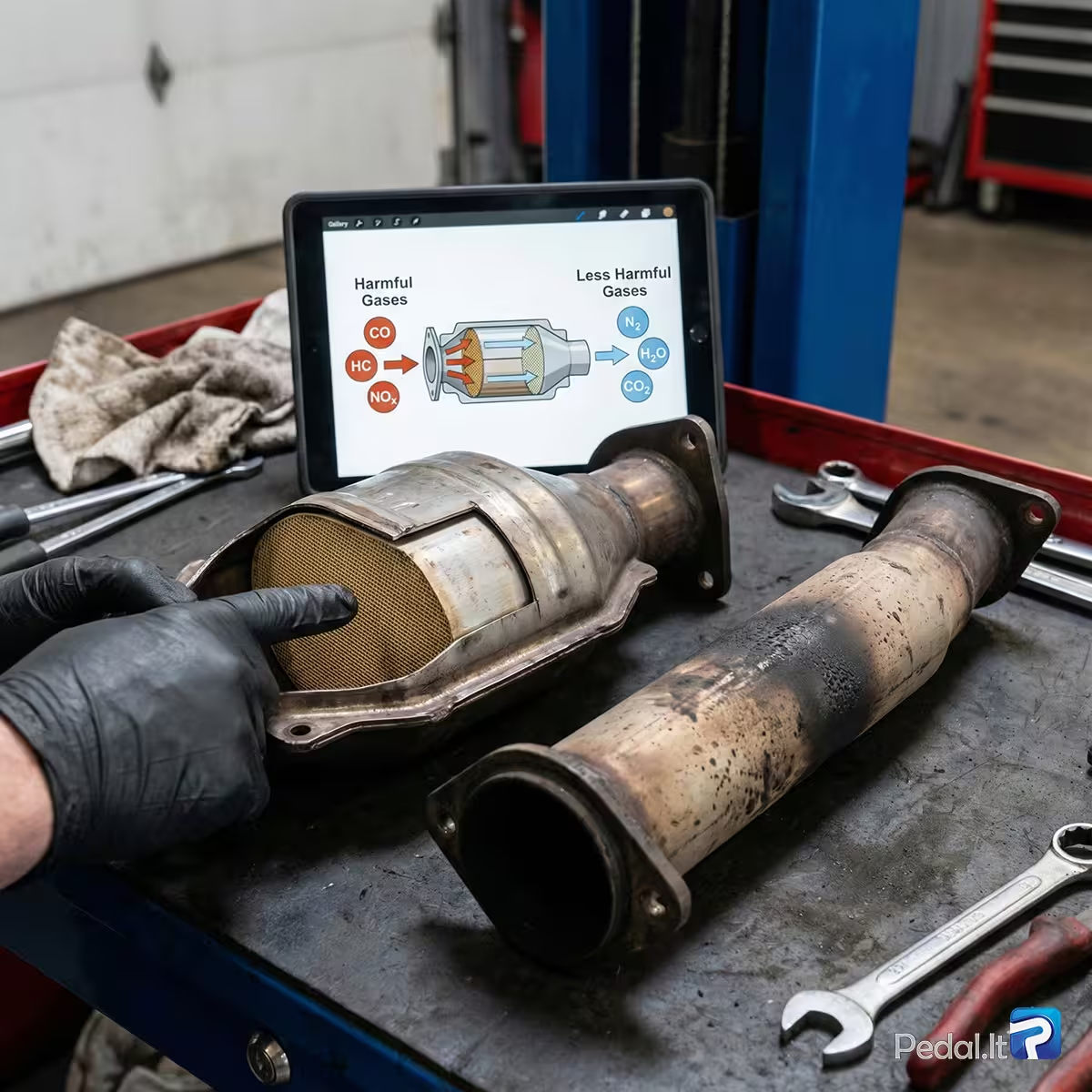
What is the function of a cardan shaft?
A cardan shaft is a mechanical component with a universal joint at one or both ends. It transmits torque and rotational motion. It is used for the following reasons: - To accommodate misalignment between shafts; - To allow changes in shaft position (for example, when driving over uneven terrain); - To transmit torque.
1. To transmit rotational motion to the drive wheels.
2. To transmit torque to the drive wheels.
3. To transmit inertia forces.
Operating a vehicle is prohibited if any of the following applies:
RTR 14. Persons who are not authorized to drive, who are intoxicated, under the influence of narcotic or psychotropic drugs or other psychoactive substances, or who have not taken the legally required daily rest must not drive. Additionally, a person who is fatigued or ill must not drive if doing so could endanger road safety. A vehicle must not be entrusted to anyone affected by the above factors or who is not authorized to operate that class of vehicle. When driving, the driver must comply with any restrictions or conditions indicated on the driving licence.
1. The driver is not authorized to do so.
2. The driver holds valid documents required by the Road Traffic Rules.
3. The driver is intoxicated.
4. The driver is not under the influence of psychoactive substances (e.g., narcotics, medications, or other intoxicating substances).
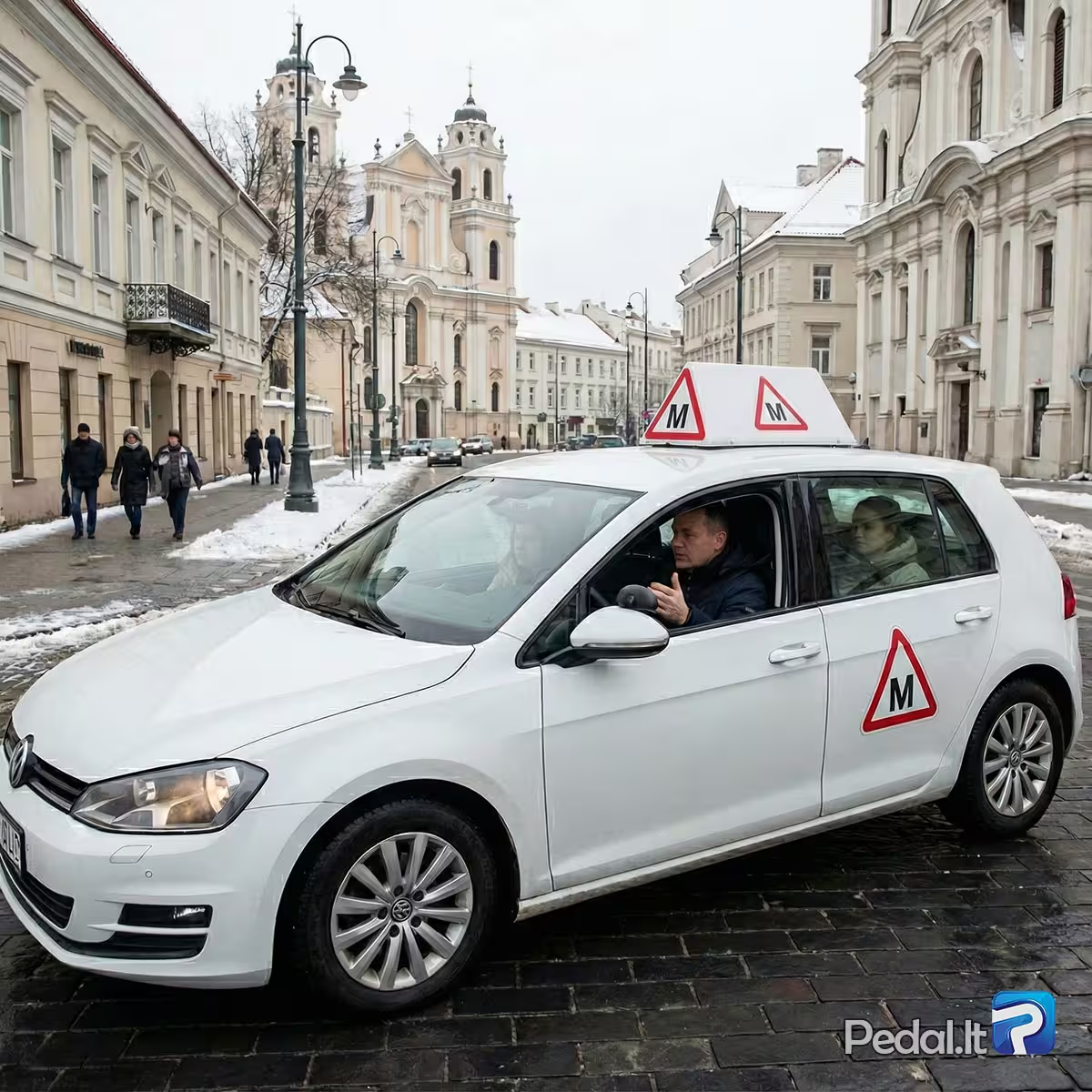
Is it permitted to transport passengers while teaching someone to drive?
RTR 195. Drivers must not: 6) teach another person to drive or transport children under 14 years of age; JB
1. Prohibited.
2. Permitted.
3. Permitted, but only for passengers aged 14 years or older.
If you are forced to stop outside a built-up area where stopping is prohibited and your hazard warning lights are not working, what must you do?
RTR 92. If the vehicle's hazard warning lights are absent or defective and an emergency stop is required where stopping or parking is prohibited, in the event of an accident, or when the stopped vehicle would be visible to other road users from less than 100 metres, the driver of a motor vehicle (excluding a motor moped and motorcycles without a trailer), a tractor, or a self-propelled machine must immediately place an emergency stop sign on the side of the carriageway opposite the direction of travel: within settlements not less than 25 m, and outside settlements not less than 50 m from the stopped vehicle. If at least one rear position lamp is defective and the hazard warning signal is not working when driving in darkness or poor visibility, an emergency stop sign must be affixed to the rear of the vehicle in order to continue driving.
1. Attach a red flag to your vehicle.
2. Place a warning triangle 50 m behind the stopped vehicle.
3. Stop another vehicle and request assistance.
4. Turn on your dipped-beam headlights.
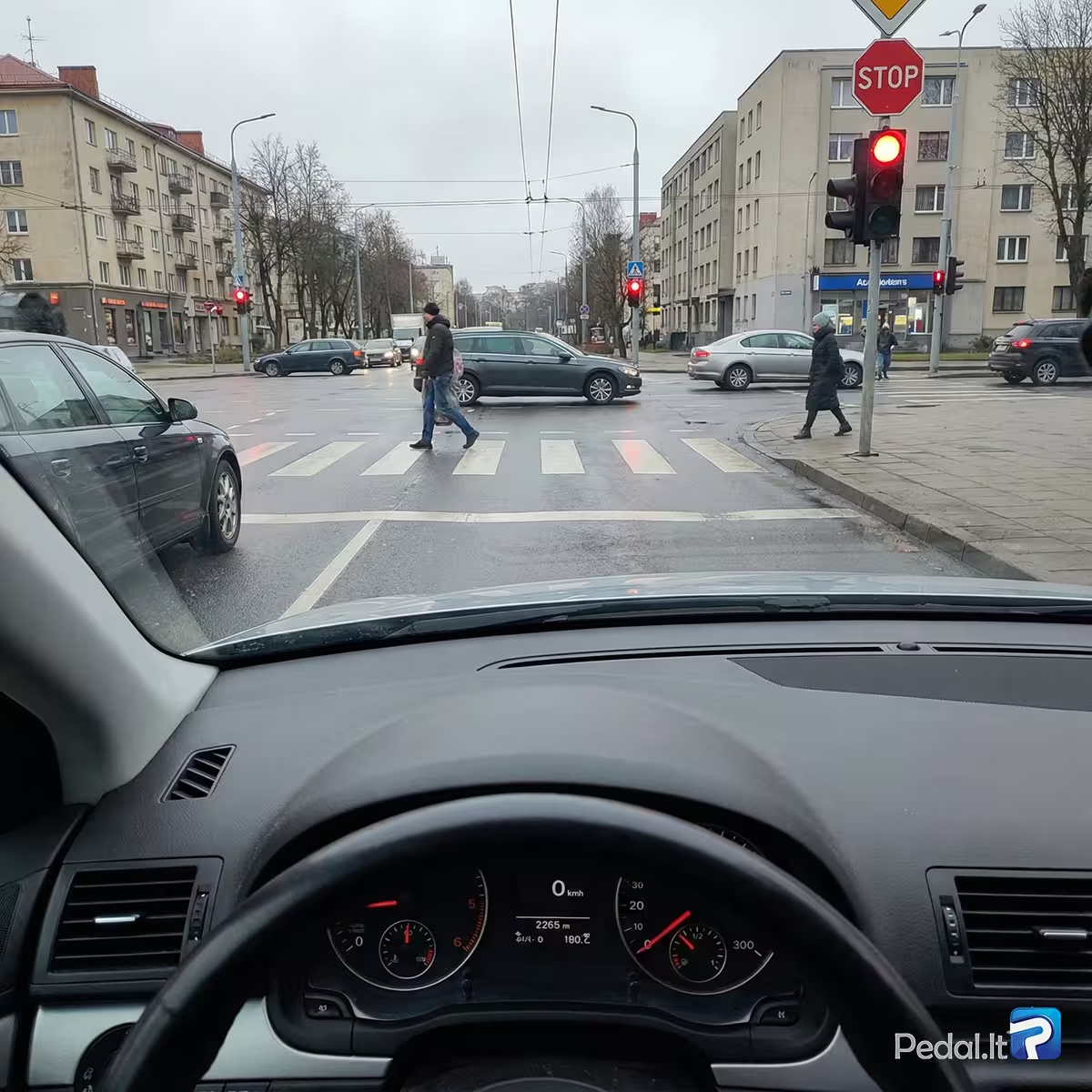
Where must the driver stop, according to traffic rules, when a prohibitory traffic signal or a traffic regulator's signal is in effect?
RTR 165 p. When a prohibitory traffic signal or a traffic regulator's signal is displayed, the driver must stop before the 'Stop line' road sign and/or before the marked stop line. If neither is present, the driver must stop before the traffic light, before the junction or the connecting carriageway, before a pedestrian crossing, or before a bicycle crossing, in such a position that does not obstruct vehicular or pedestrian traffic.
1. Before the 'Stop line' road sign and/or before the marked stop line.
2. So as not to obstruct vehicular traffic.
3. So as not to obstruct pedestrian traffic.
If an inspecting officer stops you, what must you switch on?
RTR 91. If the vehicle is fitted with hazard warning lights, they must be switched on: 91.3 when the vehicle is stopped by an inspecting officer. JB
1. The horn (audible warning).
2. Hazard warning lights (emergency flashers).
When is the road surface most slippery?
The road surface is most slippery at the start of rain because accumulated dust and oil on the pavement combine with the first drops to form a slippery film.
1. When rain begins.
2. After heavy rain.
3. After puddles have formed on the road.
What types of liability apply to reckless driving while intoxicated?
Drivers with a blood alcohol concentration (BAC) exceeding 1.5 per mille are subject to a fine, arrest, or imprisonment for up to one year (since 01/01/2017). Drink-driving may give rise to both criminal and administrative liability. The applicable type of liability depends on the specific circumstances and the seriousness of the offence:
- Administrative liability: applies when the offences are of lesser severity.
- Criminal liability: applies when the offence is particularly serious or when driving endangers road safety, or the health or life of others.
Code of Administrative Offences of the Republic of Lithuania, Article 420(2): Reckless driving, i.e. a violation of the Road Traffic Rules that endangers road safety or the safety of oneself or others for hooligan motives, incurs a fine ranging from EUR 450 to EUR 550 for drivers and from EUR 750 to EUR 1,000 for persons not entitled to drive vehicles.
Code of Administrative Offences of the Republic of Lithuania, Article 420(4): The acts referred to in paragraph 2 committed by an intoxicated person (mild intoxication: more than 0.4 per mille but not exceeding 1.5 per mille), by a person under the influence of drugs, psychotropic or other psychoactive substances, by a person who avoided performing a field sobriety test, or by a person who consumed alcohol, drugs, psychotropic or other psychoactive substances before the test, shall incur a fine ranging from EUR 850 to EUR 1,200 for drivers.
Criminal Code of the Republic of Lithuania, Article 281(7): Persons who drive a road vehicle or instruct a learner driver while under the influence of alcohol with a BAC exceeding 1.5 per mille shall be punished by a fine, arrest, or imprisonment for up to one year.
1. Criminal liability.
2. Administrative liability.
3. Civil liability.
1 of 30 Task
Time left: 00:00:00
1
2
3
4
5
6
7
8
9
10
11
12
13
14
15
16
17
18
19
20
21
22
23
24
25
26
27
28
29
30