In which situations may drivers of emergency vehicles exercise priority when operating with blue and red flashing lights and special audible signals?
Drivers of special (emergency) vehicles — such as ambulances, police, and fire service vehicles — may use blue and red (or only blue) flashing lights and special audible signals when necessary to: (1) save human life or health; (2) protect property; (3) ensure public order and traffic safety; (4) apprehend persons suspected of offences; or (5) escort or accompany official delegates and protected persons. Flashing lights must be visible in all directions (360°). While using these signals, drivers of special vehicles may disregard certain traffic rules specified in the Regulations, provided they do not jeopardize traffic safety and only after ensuring that other road users are giving way. They must drive cautiously and avoid creating danger to other road users. Other road users are required to give way immediately to such vehicles so they can pass safely and quickly. The right of way also applies to drivers of vehicles being escorted by special vehicles.
1. When doing so does not endanger traffic safety.
2. After confirming that other road users are yielding to them.
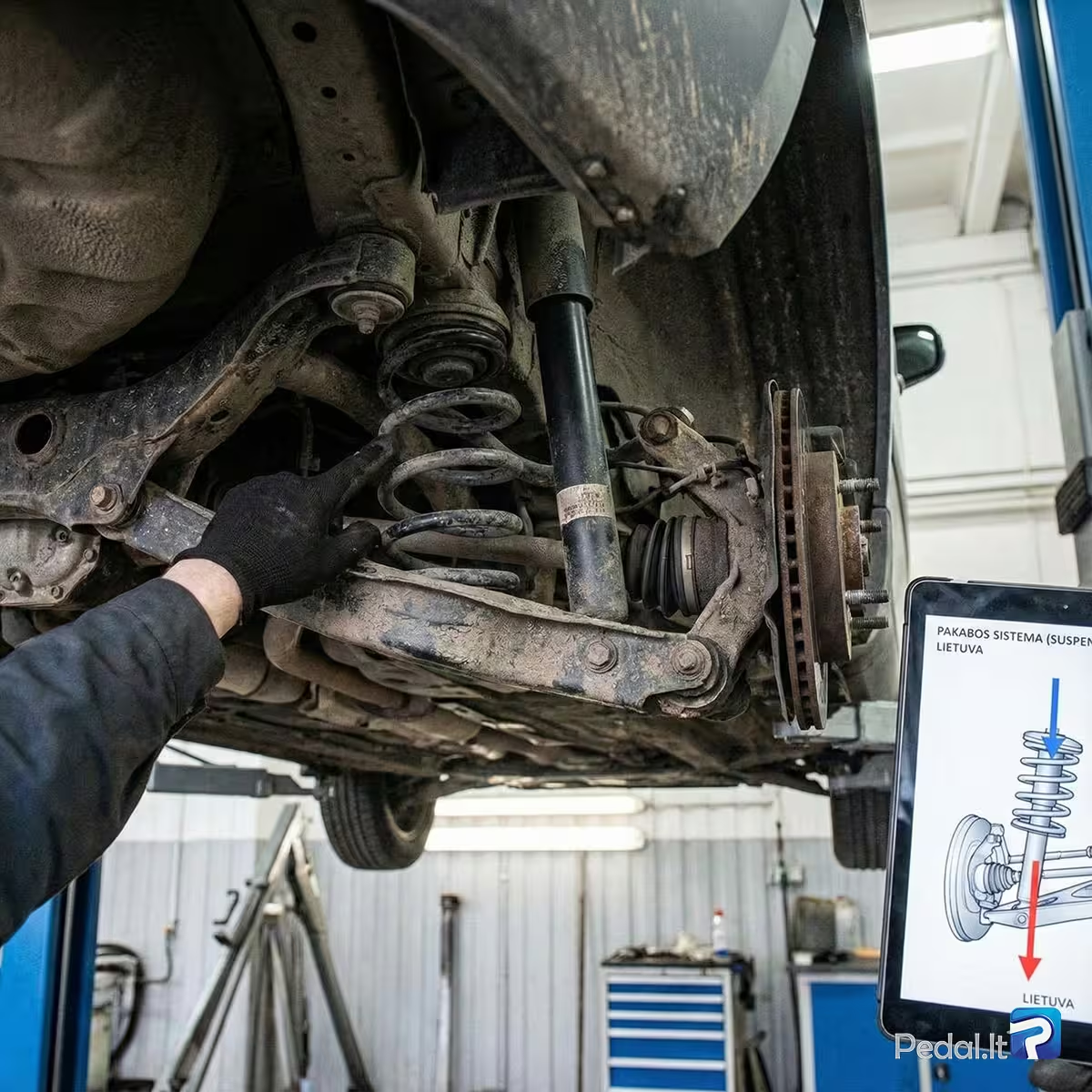
What is the function of a vehicle's suspension system?
The function of a vehicle suspension system is to convert bumps and shocks transmitted to the wheels, with the aid of shock absorbers, into minor oscillations of the vehicle body, providing comfort for driver and passengers. The suspension reduces body oscillations, and when functioning properly it enhances driving safety.
1. To improve ride comfort for the driver and passengers.
2. To convert bumps and shocks transmitted to the wheels into minor oscillations of the vehicle body.
On which road sections can exceeding the speed limit cause a road accident?
Exceeding the speed limit on any section of road is dangerous: it increases braking distance and thereby raises the likelihood of a road accident.
1. At pedestrian crossings.
2. On curves and turns.
3. At intersections.
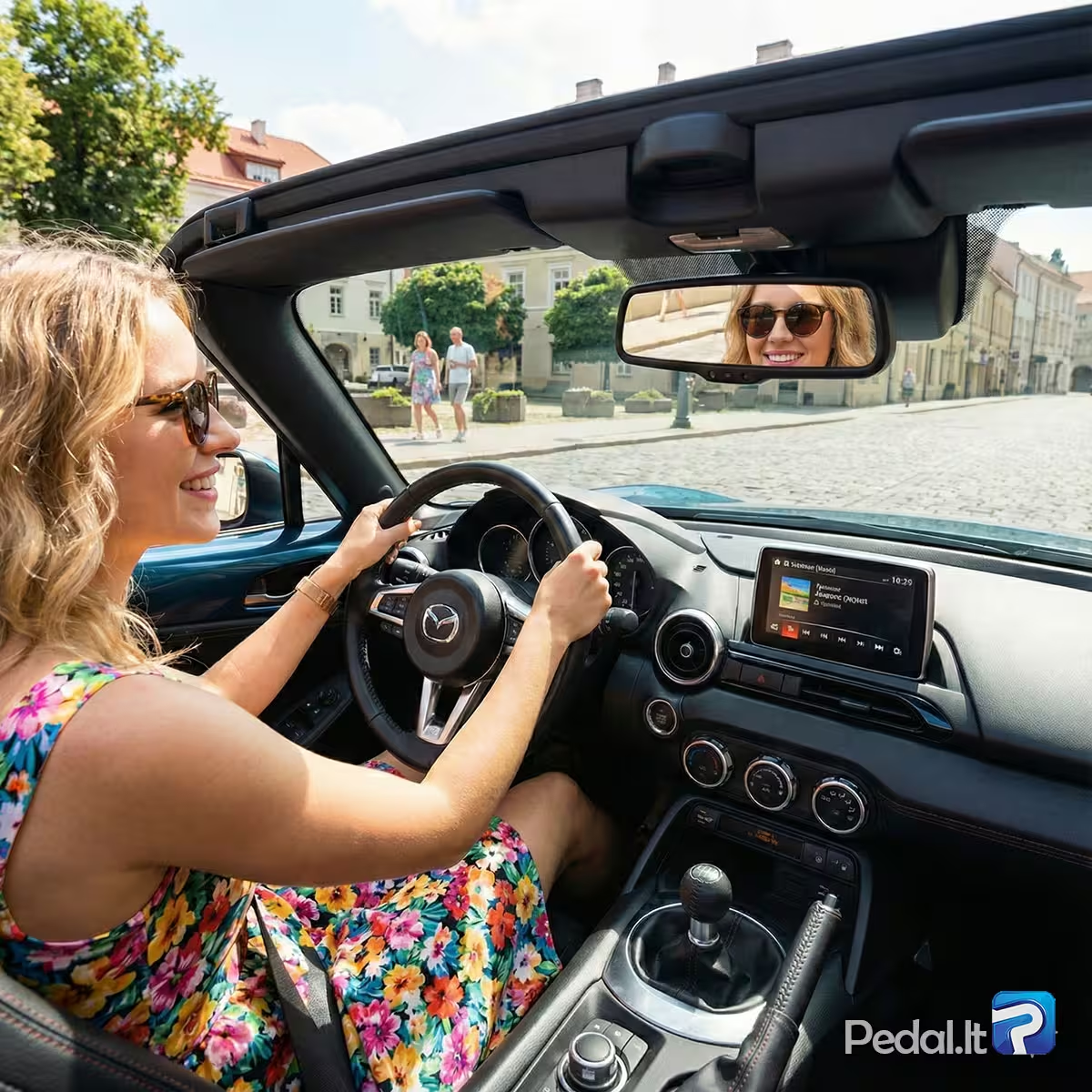
When driving safely, you must:
Always make safety your priority. That means thinking ahead, planning your actions, and anticipating the behavior of other road users.
1. Anticipate the actions of other road users.
2. Driving slightly above the speed limit.
3. Stay closer to the edge of the road.
4. Driving well below the maximum permitted speed.
If, because of its large size or for other reasons, a vehicle cannot turn (or turn around) from the edge position, it may perform the turn:
RTR 107. If, because of large dimensions or other reasons, a vehicle cannot turn (or make a U‑turn) from the edge position, it may execute the turn from a location other than the lane edge designated for travel in that direction, provided the manoeuvre does not obstruct other vehicles or create hazards for other road users.
1. At a location other than an intersection.
2. Outside a built-up (urban) area.
3. Not from the edge of the carriageway, provided the manoeuvre does not obstruct other vehicles or create hazards for other road users.
Does a category B driving licence permit the holder to drive a light quadricycle?
A category B driving licence entitles the holder to drive vehicles of category AM (mopeds and light quadricycles). LAW ON ROAD TRAFFIC SAFETY Article 23. 1. Categories of motor vehicles and their combinations with trailers are as follows: 1) Category AM: mopeds and light quadricycles; 5) Category B1: quadricycles. 4. A driving licence that entitles a person to drive: 1) vehicles referred to in Subparagraphs 2–16 of Paragraph 2 of this Article also entitles the holder to drive vehicles of category AM; 4) vehicles of categories B, C, or D also entitle the holder to drive vehicles of categories B1, C1, or D1.
1. Yes. A category B driving licence allows the holder to drive a light quadricycle.
2. No. A category B driving licence does not permit driving a light quadricycle.
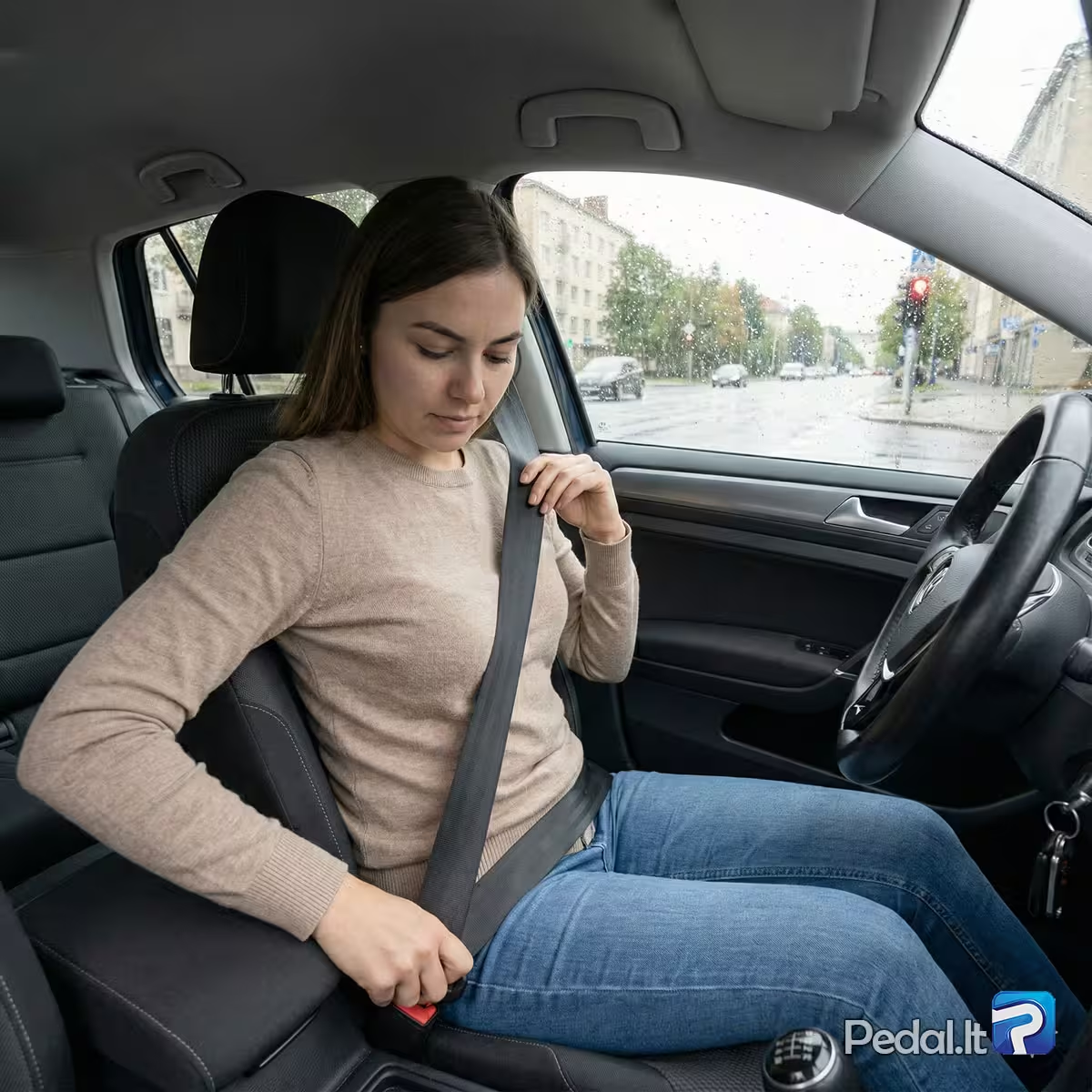
How should the seat belt be fastened correctly?
RTR p. 197. Seat belts must be worn over the shoulder and across the lap, or in the manner specified by the vehicle manufacturer. JB
1. Seat belts must be worn over the shoulder and across the lap, or as specified by the vehicle manufacturer.
2. It is not necessary to wear a seat belt.
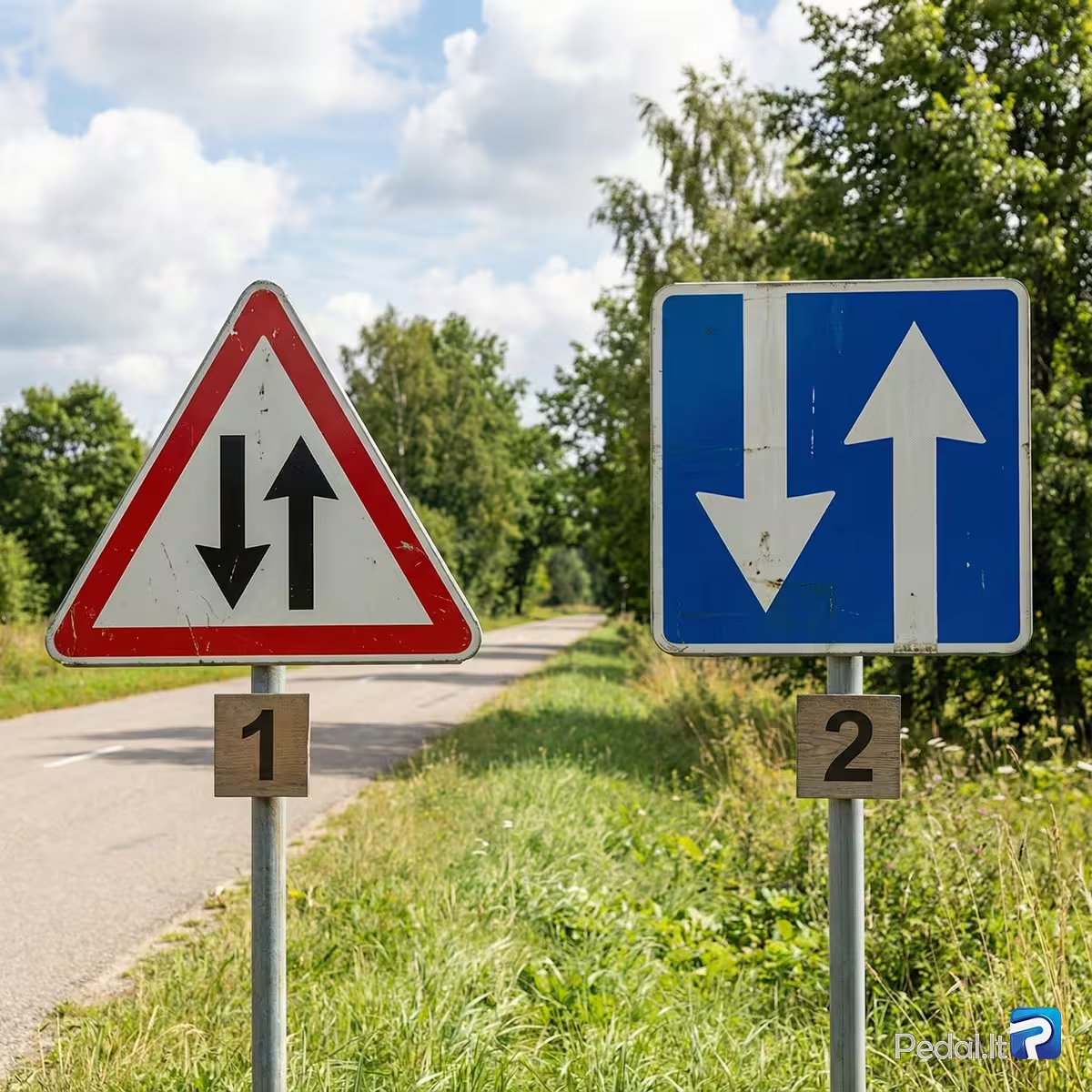
Which sign indicates that the road ahead carries two-way (opposing) traffic?
Warning signs alert drivers to upcoming changes in traffic conditions. Sign 126, 'Two-Way Traffic', indicates the start of a carriageway section with opposing traffic. Sign 504, 'End of One-Way Traffic', is a regulatory sign that marks the end of a one-way traffic section. (RTR Annex 1: 126 and 504.)
1. Sign 1.
2. Sign 2.
What must drivers do if stopped by an inspecting officer?
RTR 16. A driver must stop the vehicle when ordered by an inspecting officer. The driver of a motor vehicle, tractor or self-propelled vehicle shall carry, and upon request of the inspecting officer present, a valid driving licence or a document certifying the right to drive tractors and/or self-propelled vehicles or military equipment (including tactical and logistical vehicles) or their combinations with trailers; the vehicle registration documents; the certificate of the compulsory roadworthiness test and the report of the most recent technical inspection for vehicle categories M2, M3, N2, N3, O3, O4 and wheeled tractor categories T1b, T2b, T3b, T4.1b, T4.2b, T4.3b, T5; the certificate (policy) of compulsory motor third-party liability insurance; and any other documents required by the laws of the Republic of Lithuania and these Rules (except in cases where the Law on Road Traffic Safety exempts the driver from carrying certain documents). The driver must also allow the inspecting officer to check the readings of validated meters that record driving time and rest periods. Documents shall be presented without leaving the vehicle. The driver may leave the vehicle only with the inspecting officer's permission. RTR 91. If hazard warning lights are fitted in a vehicle, they must be switched on: 91.3. when the vehicle is stopped by an inspecting officer;
1. Exit the vehicle only with the inspecting officer's permission.
2. Present the requested documents to the inspecting officer without leaving the vehicle.
3. Exit the vehicle and deliver the documents to the inspecting officer.
4. Stop the vehicle at the location indicated.
5. Turn on the vehicle's hazard warning lights.
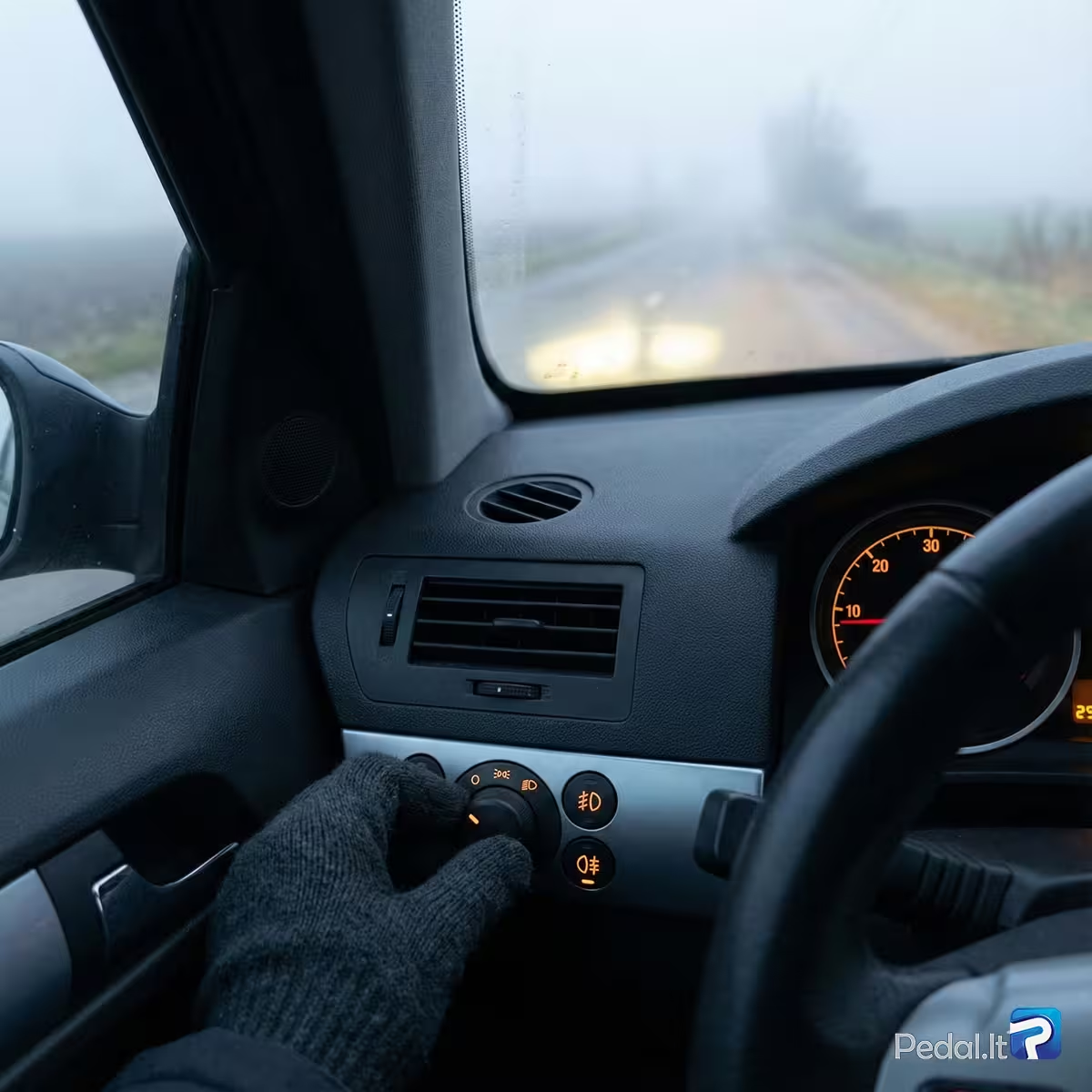
Fog lamps must be capable of being switched on:
Technical requirements for vehicles operated on a road, Chapter IV, Paragraph 22: If fog lamps are fitted, they must only be capable of being switched on and off using an appropriate switch when the position lamps are switched on. Additionally, fog lamps must be capable of being switched off independently of any other lights.
1. When the main-beam (high‑beam) headlamps are switched on.
2. When the position (parking) lamps are switched on.
3. Only when the position lamps are switched on; they must be able to be turned off independently of any other lights.
4. When the dipped‑beam (low‑beam) headlamps are switched on.
What is meant by "crossroads"?
RTR 3.17. "Crossroads" means the area bounded by imaginary lines drawn from the outer edges of the intersecting carriageways, regardless of whether those edges are widened or rounded.
1. An area bounded by imaginary lines drawn from the outer edges of the intersecting carriageways.
2. An area bounded by imaginary lines connecting the outer edges of pavements or road shoulders.
Which type of skid is most difficult to control?
Sudden braking on a slippery road can cause a vehicle to begin sliding. In such a situation the driver should stop braking and then take specific actions depending on which wheels are driven. For front-wheel-drive cars, the driver should gently apply the accelerator and correct the vehicle’s path with the steering wheel. For rear-wheel-drive cars, the driver should release the accelerator and, after a slight reduction in speed, steer into the direction of the slide to correct the trajectory. The most difficult situation is when both axles begin to slide; this requires very precise and decisive actions from the driver. JB
1. When the front axle is slipping.
2. When the rear axle is slipping.
3. When both axles are slipping.
Is it permitted to transport dogs in a motor vehicle?
206. The driver must ensure the safety of pets in the vehicle and make sure they are transported in a way that does not interfere with driving and does not cause injury to the animals or to vehicle occupants if the vehicle stops suddenly.
1. Permitted, provided the animals are secured or restrained so they do not interfere with driving and do not pose a risk of injury to themselves or to the vehicle’s occupants in the event of a sudden stop.
2. Permitted only when the dogs are placed on the vehicle’s front seat.
3. Permitted only when the dogs are placed on the vehicle’s rear seat.
4. Prohibited.
What factors affect road surface quality and traffic safety?
Manhole covers for underground information and communication systems can be more slippery than the surrounding road surface and may also be uneven.
1. Potholes.
2. Manhole covers for underground information and communication systems.
3. Oil stains on the roadway.
4. Loose gravel or stone chippings on the road.
5. Wet road surface (slippery conditions).
Reflectors fitted to the rear of a vehicle must be:
Order No. 2B-14 of the Lithuanian Transport Safety Inspection, dated 16 January 2013, regarding amendments to the technical requirements for motor vehicles and their trailers, Chapter IV, point 4.10: Rear non-triangular reflector — red; Rear triangular reflector — red. JB
1. Yellow.
2. Red.
3. White.
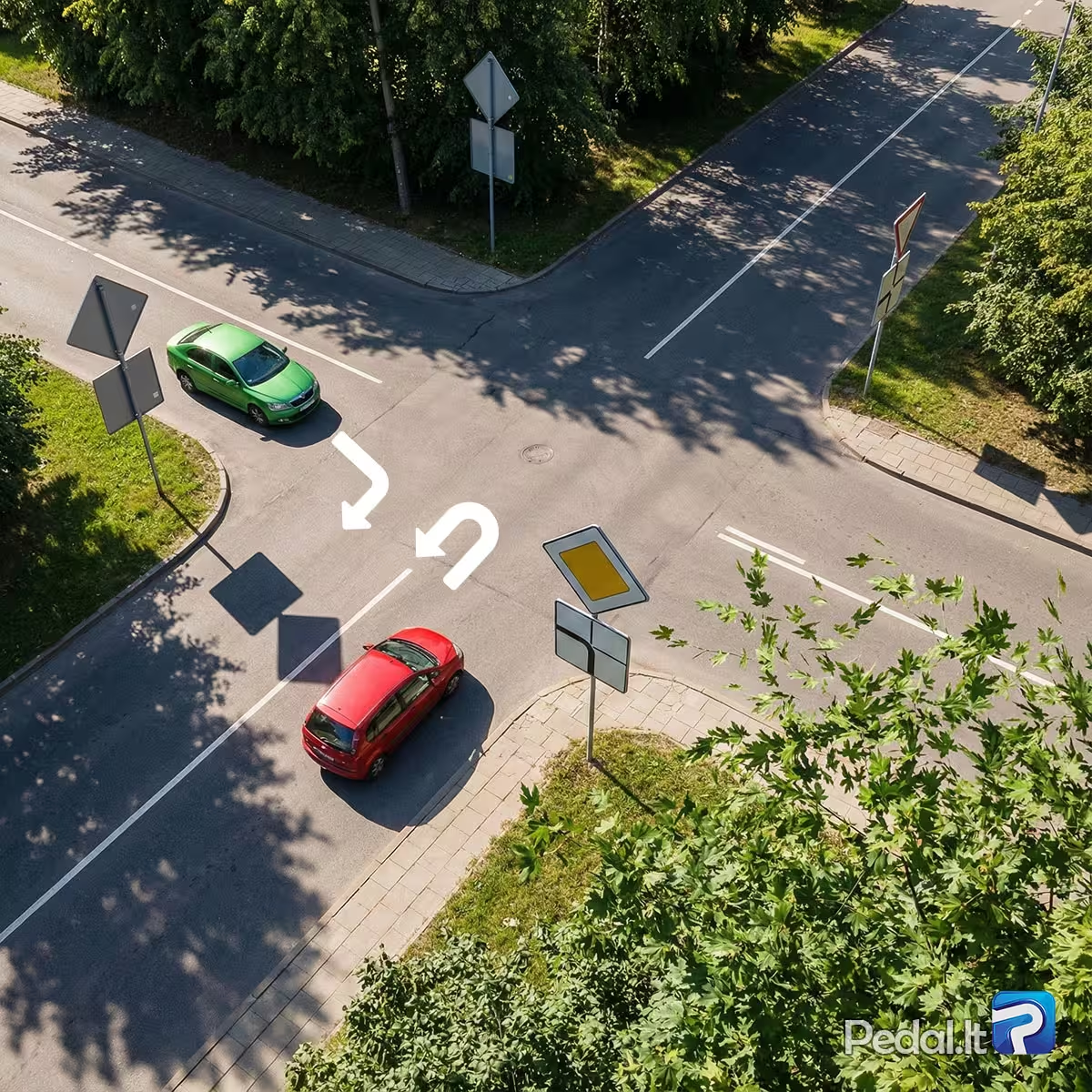
The driver of the red car is about to make a U-turn. Does he have the right of way?
When turning, the driver of the red car must yield to any vehicle coming from the opposite direction on a road of equal priority that is approaching from the right (the green car). Once the red car has already entered the intersection, the green car is considered an obstacle. At intersections where the main road changes direction, the priority-to-the-right rule applies (RTR 157). When turning left or making a U-turn, a driver must yield to oncoming vehicles on an equally important road that are going straight or turning right — and, where overtaking is permitted, also to vehicles that are overtaking.
1. Yes — he has the right of way.
2. No — he does not have the right of way.
Before making a turn, drivers must ensure that:
Before making a turn, drivers must reduce speed and ensure their vehicle does not enter the lane of oncoming traffic or that the rear wheels do not mount the pavement. RTR 108. The turning manoeuvre must be executed so that vehicles do not encroach on the oncoming-traffic lane when entering or leaving the intersection. If a turn is made from a single lane, the driver may choose any lane of the carriageway into which they are turning. If turning is permitted from multiple lanes, drivers must remain in their lane and must not obstruct a vehicle turning from an adjacent lane.
1. Their vehicle does not enter the lane designated for oncoming traffic.
2. The rear wheels of their vehicle do not mount the pavement.
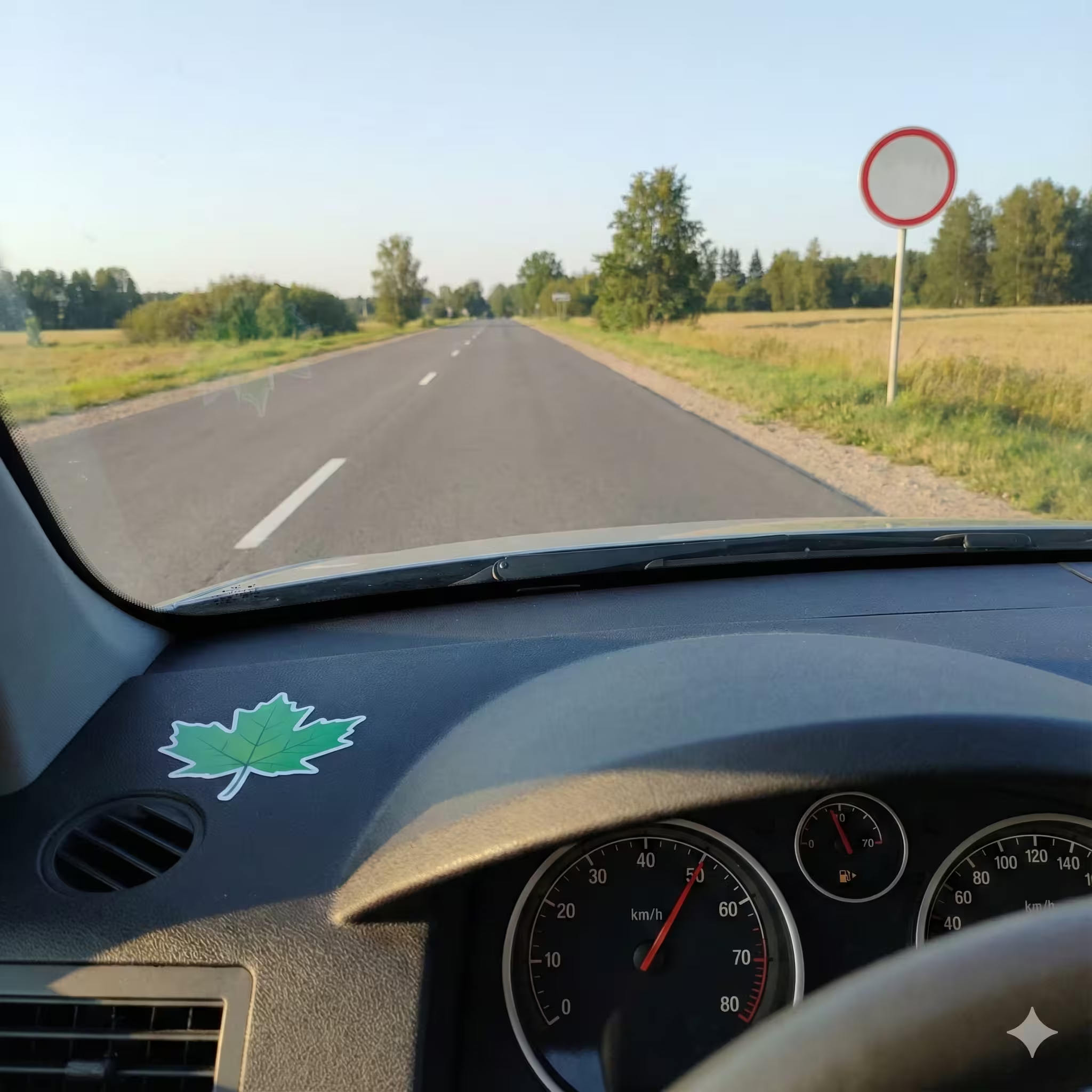
What is the maximum permitted speed on asphalt or concrete roads outside built-up areas for drivers with less than two years' driving experience?
131. The following speed limits apply outside built-up areas: 131.2. Vehicles of categories A1, A2, A or B driven by novice drivers, persons learning to drive or taking a practical driving test, and buses (including school buses) are subject to the following maximum speeds: 100 km/h on motorways, 90 km/h on highways, 80 km/h on roads with asphalt or concrete pavement, and 70 km/h on other roads.
1. 50 km/h
2. 80 km/h
3. 70 km/h
4. 90 km/h
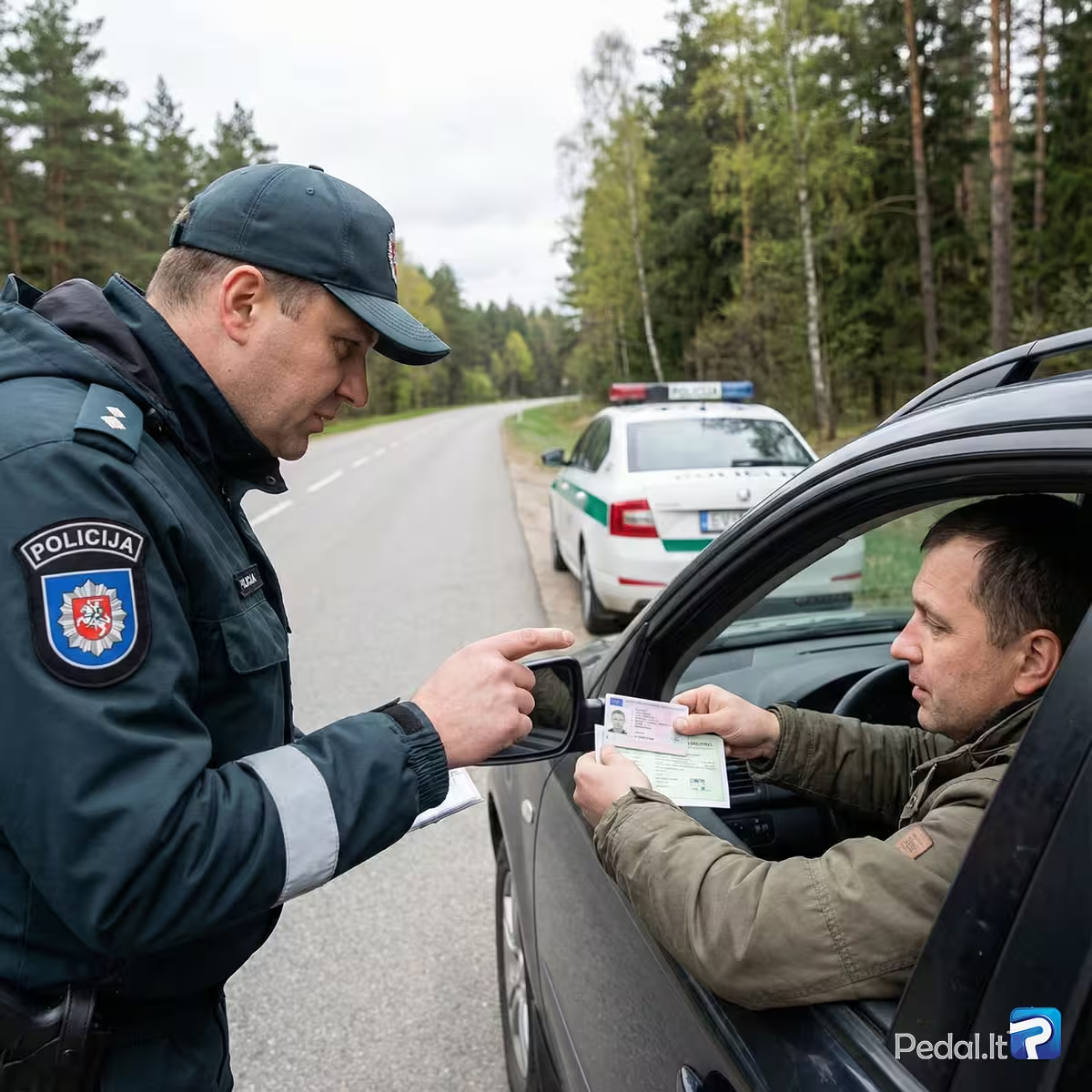
What checks must a driver allow when requested by a police officer?
RTR 17. At the request of a police officer, a driver must submit to tests for alcohol intoxication or for intoxication caused by narcotic drugs, psychotropic substances, or other psychoactive substances, in the manner prescribed by the Government of the Republic of Lithuania. RTR 14. It is prohibited to drive a vehicle if you are not authorized to do so, if you are under the influence of alcohol, narcotic drugs, psychotropic substances or other psychoactive substances. A person who is fatigued or ill must not drive if driving may endanger road safety. A vehicle must not be entrusted to a person who is under the influence of such factors or who is not authorized to drive that type of vehicle. When operating a vehicle, the driver must comply with the conditions specified on the driving licence. JB
1. Alcohol intoxication.
2. Irritability.
3. Fatigue.
4. Intoxication by narcotic drugs.
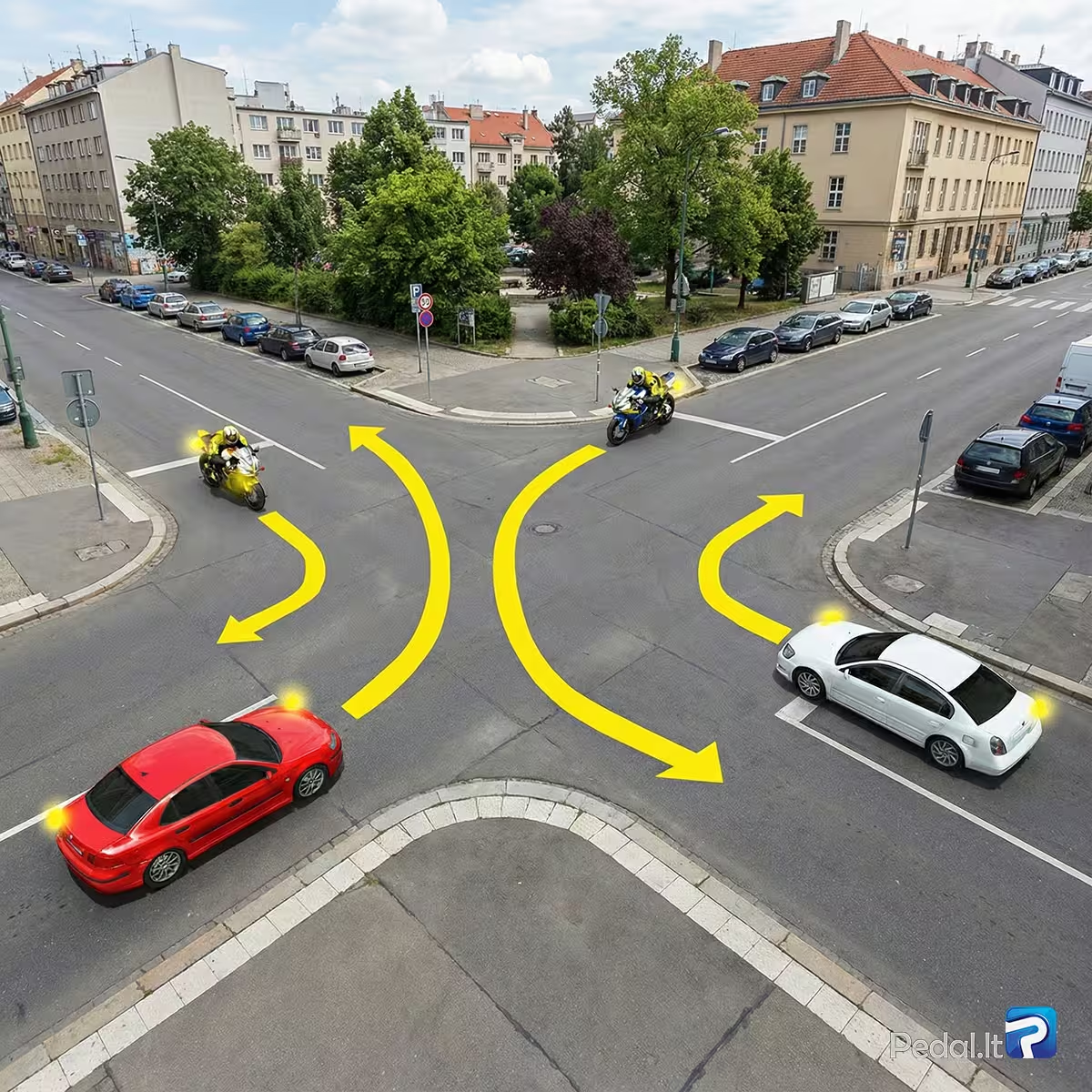
At an uncontrolled intersection, if the paths of the vehicles do not cross, which vehicle has the right of way?
If the vehicles' paths do not intersect, they may proceed simultaneously.
1. The vehicle approaching from the right.
2. The vehicle approaching from the left.
3. All vehicles may proceed simultaneously.
If your vehicle gets a flat tyre while crossing an intersection and vehicles are approaching from both directions, what should you do?
128. If there is an obstruction or traffic safety is endangered, the driver must reduce speed, stop if necessary, or avoid the obstruction (if it can be detected) without creating danger for other road users. 135. Drivers must not: 135.4. decelerate abruptly except for safety reasons.
1. You will stop in the middle of the intersection.
2. You will accelerate to clear the intersection quickly and then stop beyond it.
3. You will reduce your speed and stop beyond the intersection at a safe location.
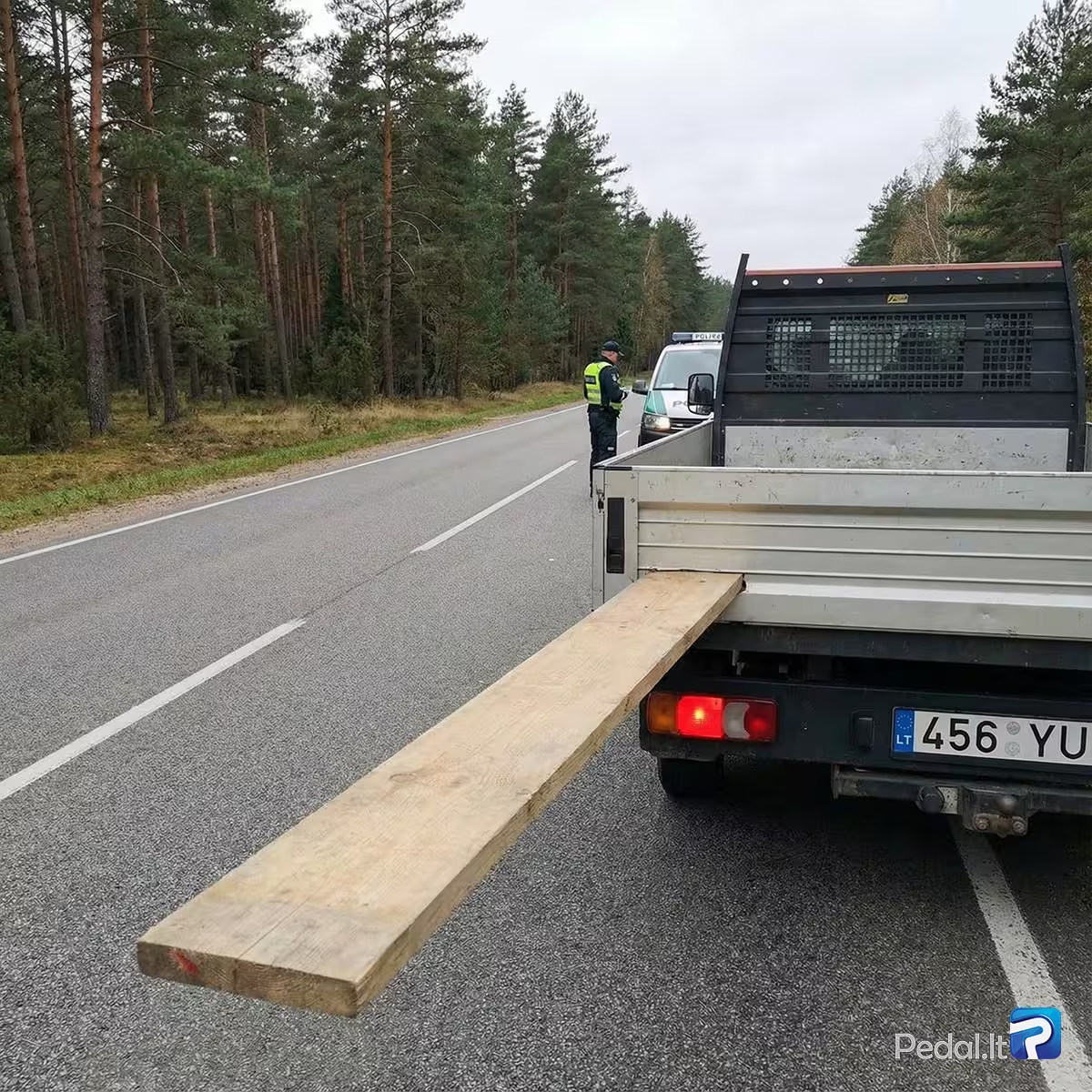
What is the maximum distance a load may extend beyond the rear of a vehicle without requiring marking?
Paragraph 210 of the Road Traffic Rules states that a load must be marked if it extends more than 1 metre beyond the front or rear of the vehicle. A load that extends up to and including 1 metre may remain unmarked; any extension beyond 1 metre must be marked. RTR 210: Any motor vehicle carrying a load which extends beyond the front and rear of the vehicle by more than 1 m or beyond the side of the vehicle must have the extremities of the load marked as provided for in Annex 4 to these Rules.
1. 0.5 m.
2. 1 m.
3. 1.5 m.
Which vehicles may a driver with a category B driving licence operate?
LAW ON ROAD TRAFFIC SAFETY Article 23. Categories of motor vehicles and the minimum driving age: 1. Categories of motor vehicles and their combinations with trailers are as follows: 6) Category B: vehicles with a maximum permissible mass not exceeding 3,500 kg designed and constructed to carry no more than eight passengers, excluding the driver; these vehicles may be coupled with a trailer whose maximum permissible mass does not exceed 750 kg; they may also be coupled with a trailer whose maximum permissible mass exceeds 750 kg, provided that the maximum permissible mass of the combined vehicle does not exceed 4,250 kg; a vehicle combination with a maximum permissible mass exceeding 3,500 kg (including a trailer with a maximum permissible mass exceeding 750 kg) may be driven only after passing a skills and behaviour test at the state enterprise "Regitra". LAW ON ROAD TRAFFIC SAFETY Article 22. Granting the right to drive motor vehicles, tractors, self-propelled machines: 12. Persons who are at least 24 years old, who have at least 2 years of driving experience in category B vehicles and who have completed practical driving training for category A1 vehicles in accordance with the procedure established by the Ministry of Transport or its authorised institution, are granted the right to drive category A1 vehicles in the territory of the Republic of Lithuania. As a result, the driver's licence does not explicitly state entitlement to drive category A1 vehicles; instead, the national code set by the Ministry of the Interior is shown next to the category B marking.
1. Passenger cars and motorcycles.
2. Passenger cars only.
3. Any vehicle with a maximum permissible weight up to 3,500 kg designed and built to carry no more than eight passengers (excluding the driver).
4. A category A1 motorcycle after completion of the required practical training.
You are driving on the road when a vehicle rapidly approaches from behind. The driver has switched on the left-turn indicator and is signaling by flashing the headlights. What will you do?
Even if another driver breaks the rules by overtaking or exceeding the speed limit, you must not endanger other road users — allow that driver to overtake you. 4. Road users shall follow the principle of mutual respect and safety.
1. You will accelerate to increase the distance between the vehicles.
2. You will maintain your speed and prevent the other driver from overtaking you.
3. You will allow the approaching vehicle to overtake you.
4. You will apply the brake pedal to activate the brake lights.
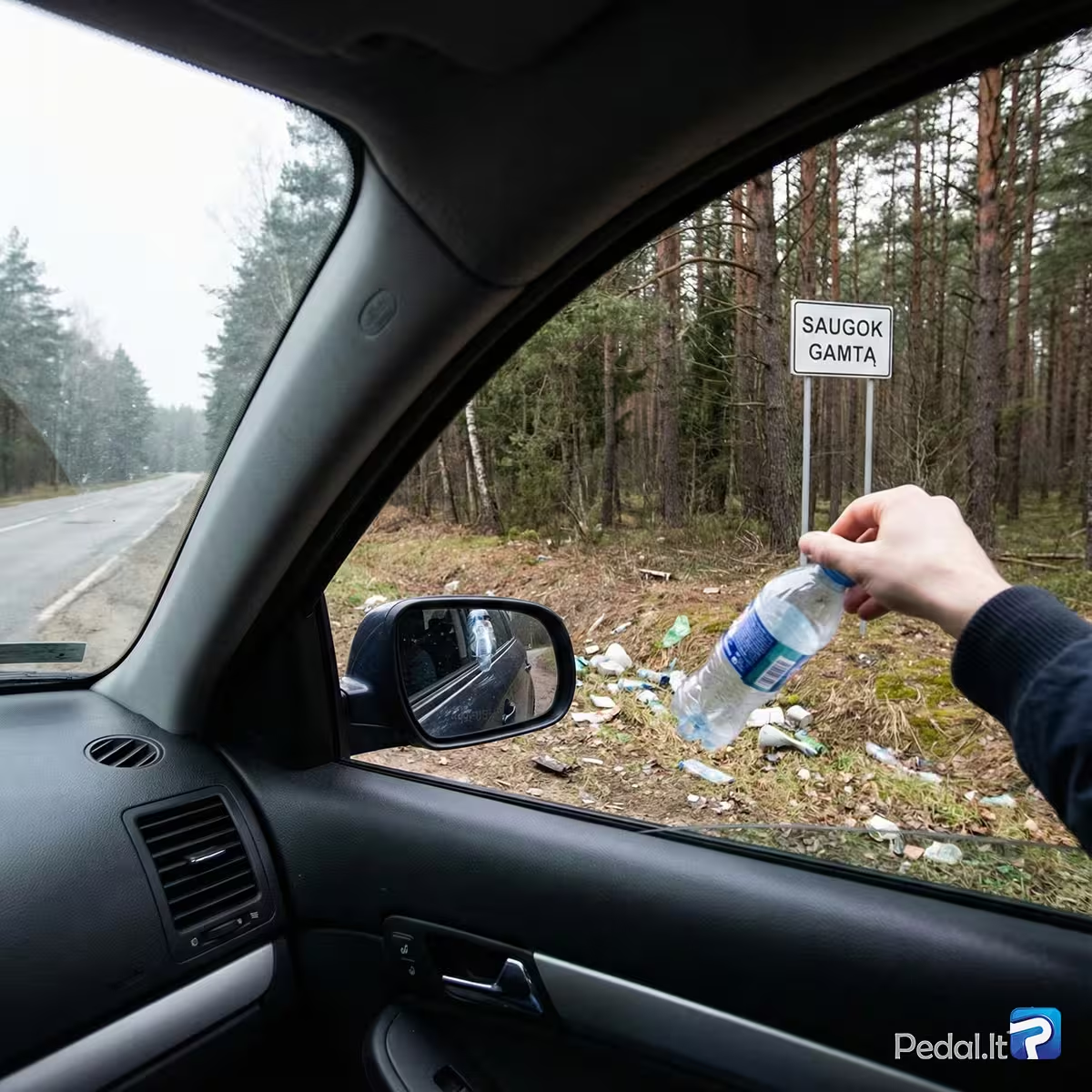
What should we avoid to protect nature?
Carrying unnecessary luggage increases fuel consumption and causes additional harmful emissions. Loud music from a vehicle contributes to noise pollution and can scare wildlife. For short trips, people can walk, cycle, or use public transport, because during brief journeys the engine often does not reach its optimal operating temperature, the vehicle runs less efficiently, and pollution is higher.
1. Leaving a vehicle's engine running while stationary (idling).
2. Playing loud music from a vehicle with the windows open.
3. Using a car for short trips.
4. Carrying unnecessary cargo or luggage.
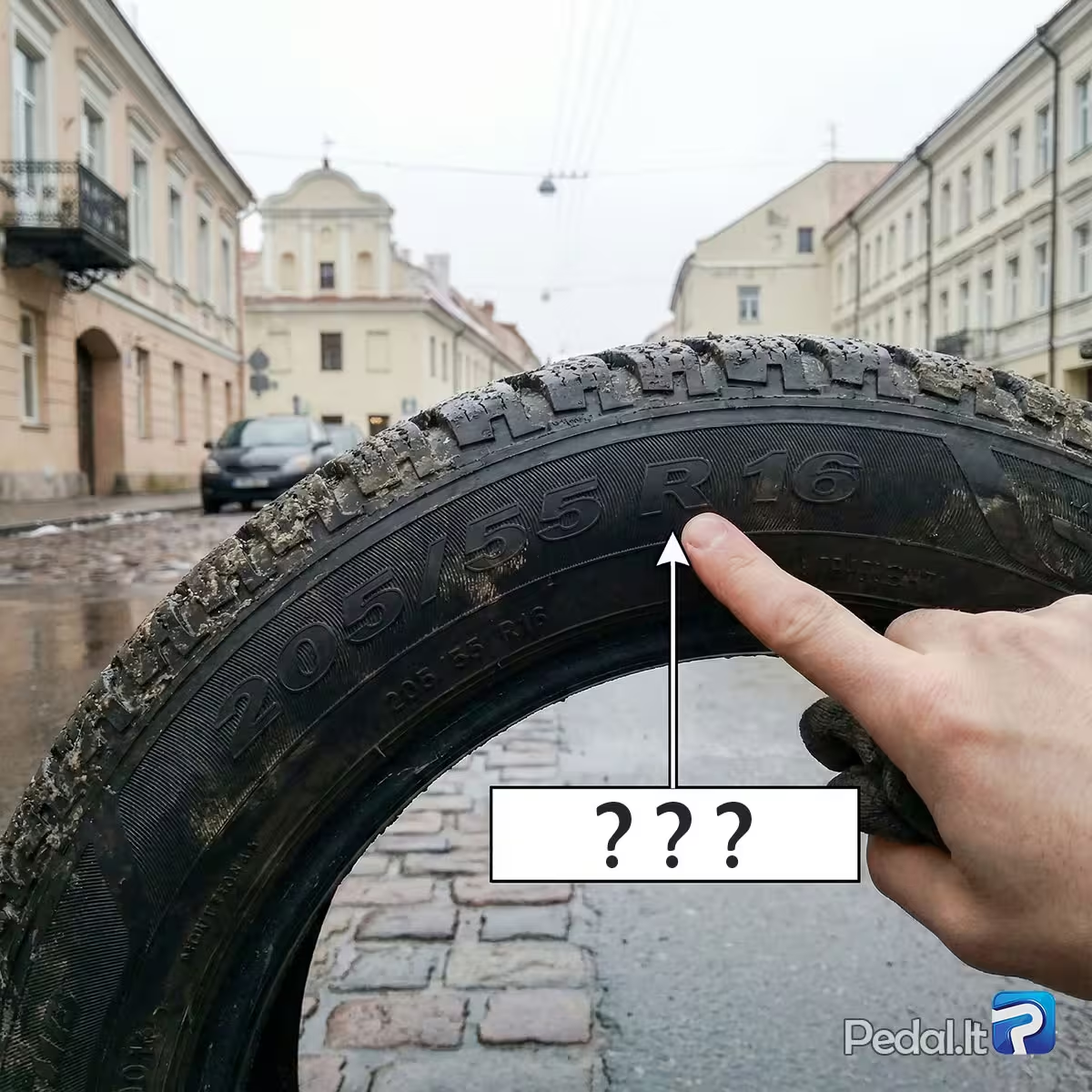
What does the letter 'R' indicate in tyre markings?
The letter 'R' denotes a radial tyre construction. In a radial tyre, the carcass cords run from one bead to the other in a radial direction instead of being wrapped around the bead cores. Thin, flexible crown plies provide the tread area with the required rigidity and flexibility while minimizing elastic deformation.
1. The tyre's construction (radial construction).
2. Tyre diameter.
3. Tyre load index.
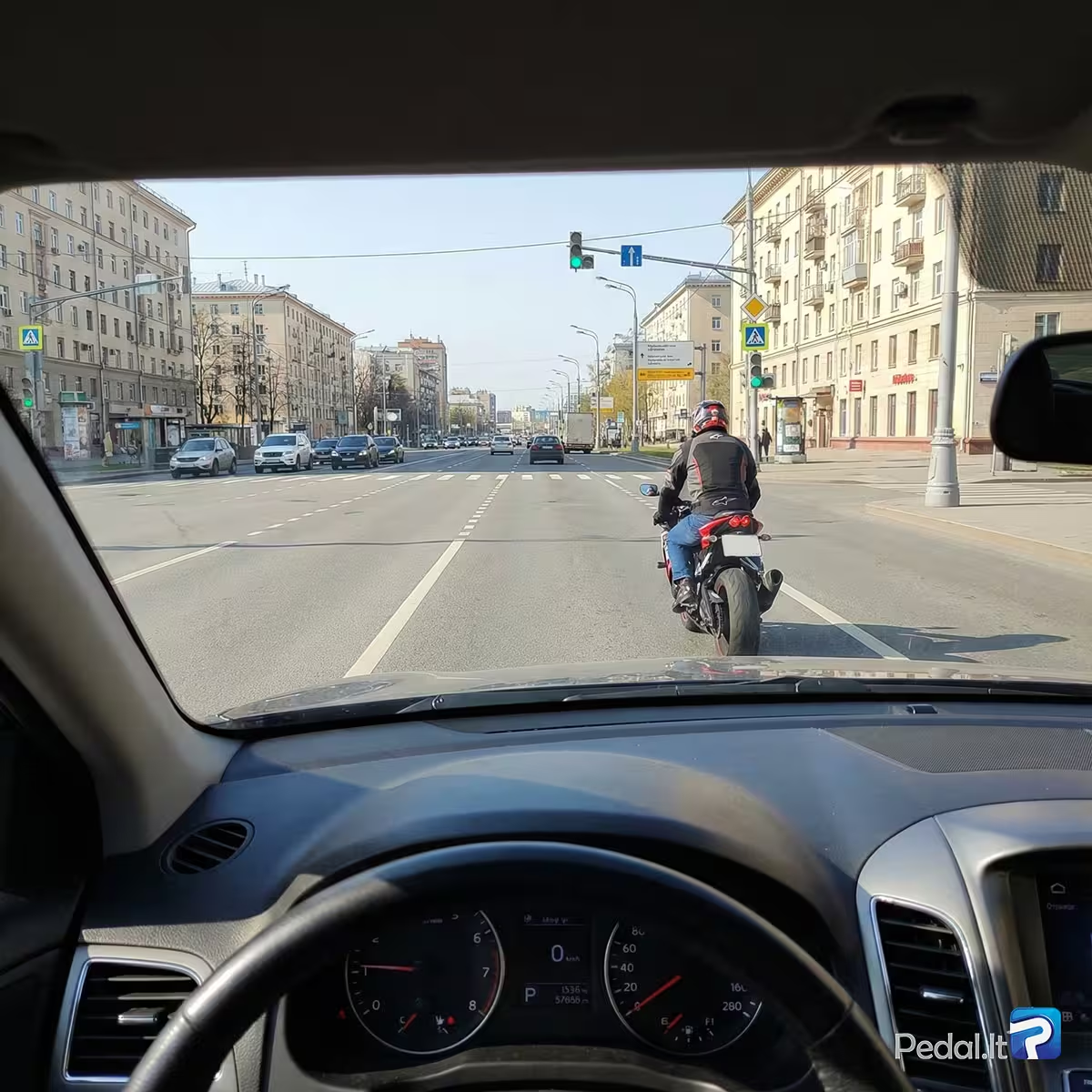
Are you allowed to ride a motorcycle with only a category B driving licence?
LAW ON ROAD TRAFFIC SAFETY — Article 22(12). Persons aged 24 or older who have at least two years' driving experience with a category B licence and who have completed practical training for category A1 vehicles in accordance with the procedure established by the Ministry of Transport and Communications or its authorised institution are granted the right to drive category A1 vehicles within the territory of the Republic of Lithuania.
1. Driving category A1 motorcycles is permitted for persons aged at least 24 who have held a category B licence for at least two years and have completed special practical motorcycle training at a driving school.
2. It is permitted to drive all motorcycles.
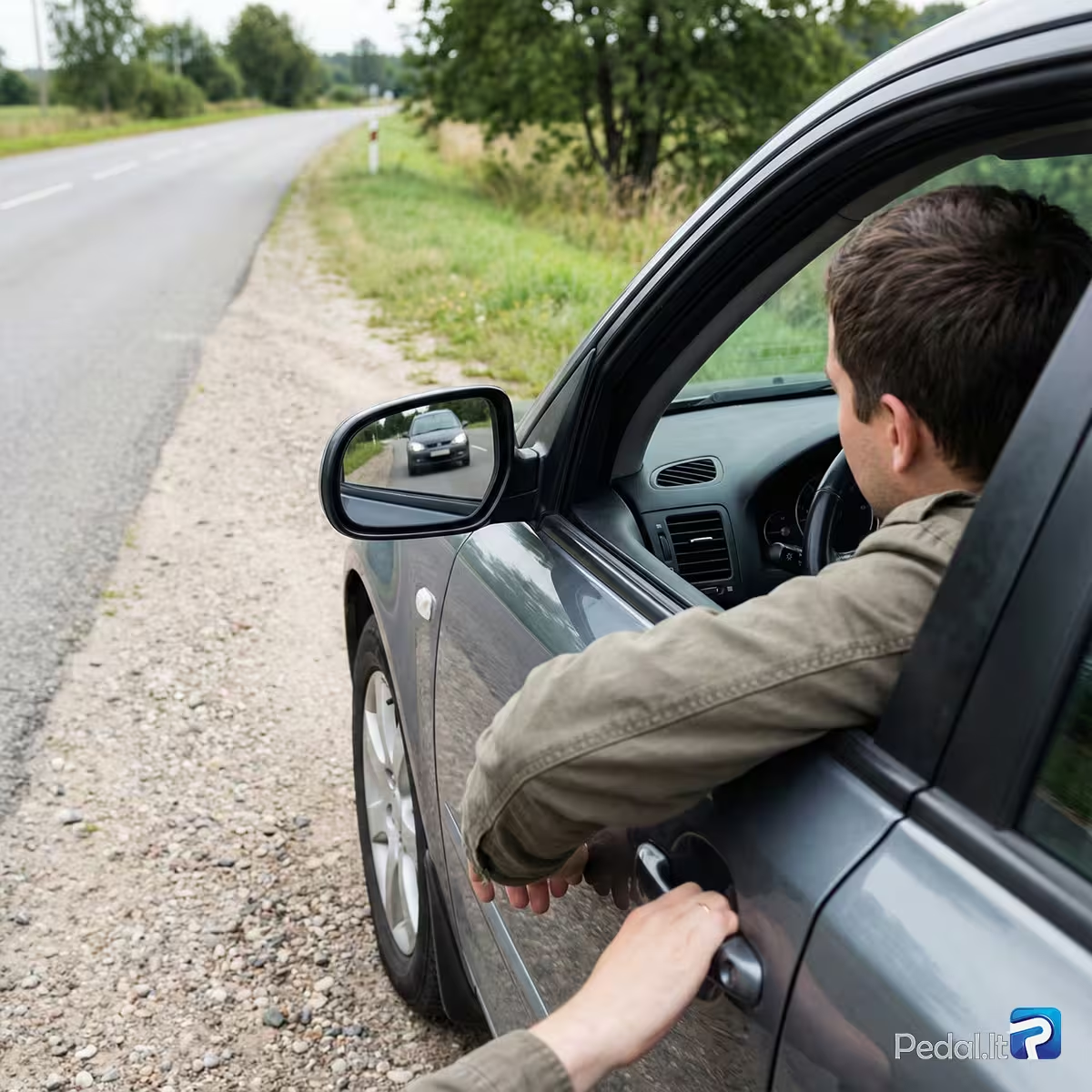
After stopping on the right-hand shoulder, what should a driver check before opening the door?
Vehicles may be approaching from the rear on the left-hand side, so opening the door could be unsafe. (RTR 148) Do not open the doors of a parked vehicle if doing so would create an obstruction or pose a hazard to other road users.
1. Vehicles approaching from behind on the left-hand side.
2. Vehicles approaching from behind on the right-hand side.
3. They do not need to pay attention to anything specific.
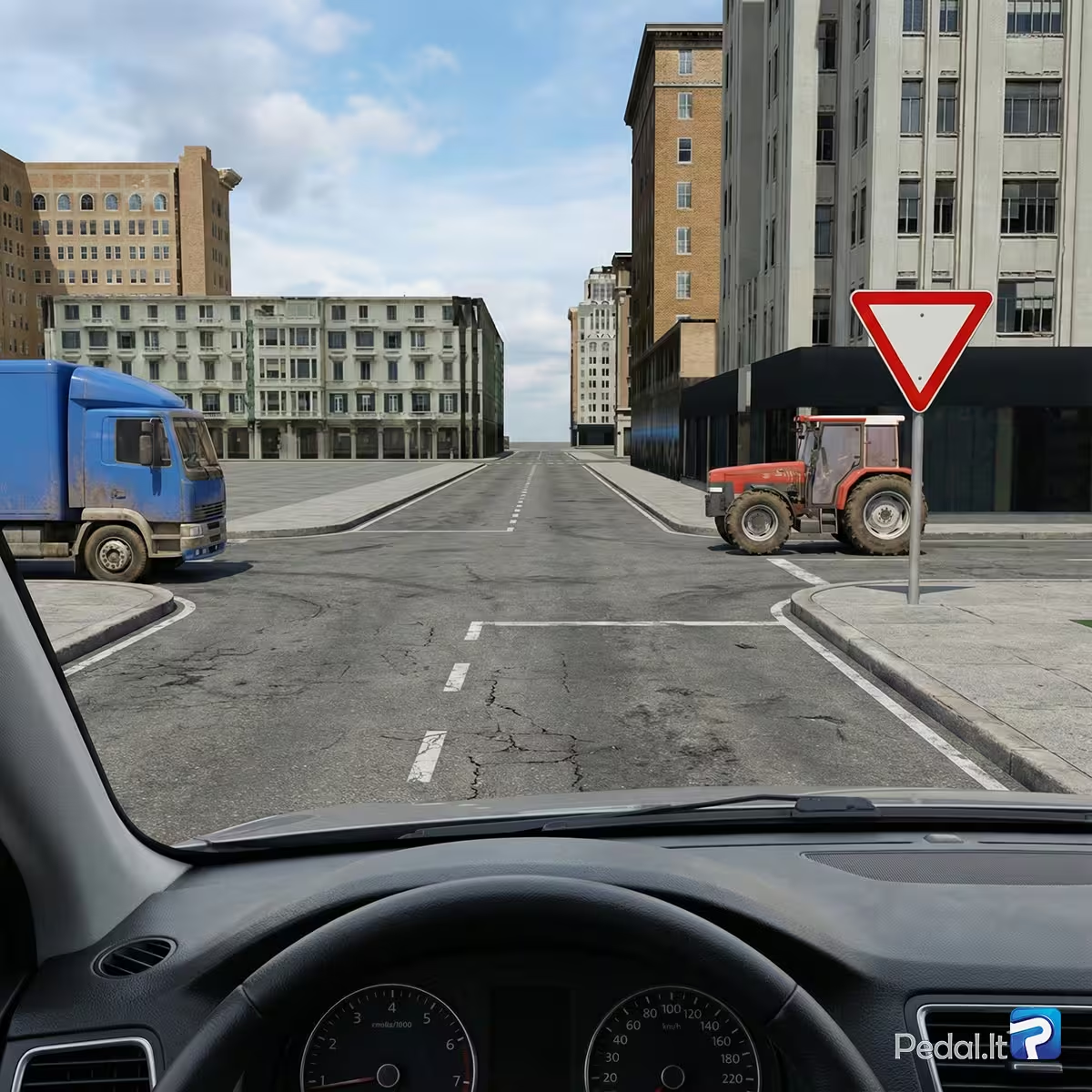
You intend to drive straight through the junction. In this situation:
1. I will yield to the commercial vehicle.
2. I will yield to the tractor.
3. I will proceed through the junction first.
A driver is operating a goods vehicle with a permissible maximum weight under 3,500 kg. Which driving‑licence category must the driver hold?
In this situation the driver must hold at least a category B driving licence; the driver is not required to hold a category C licence. LAW ON ROAD TRAFFIC SAFETY — Article 23. Categories of motor vehicles and the minimum driving age. 1. Categories of motor vehicles and their combinations with trailers are: 6) Category B: vehicles with a permissible maximum weight not exceeding 3,500 kg and designed and constructed to carry no more than eight passengers, excluding the driver; these vehicles may be combined with a trailer whose permissible maximum weight does not exceed 750 kg; they may also be combined with a trailer whose permissible maximum weight exceeds 750 kg, provided that the permissible maximum weight of the vehicle combination does not exceed 4,250 kg; a vehicle combination with a permissible maximum weight exceeding 3,500 kg (including a trailer with a permissible maximum weight exceeding 750 kg) may be driven only after passing a practical skills and behaviour test at the state enterprise "Regitra".
1. C.
2. B.
3. A.
1 of 30 Task
Time left: 00:00:00
1
2
3
4
5
6
7
8
9
10
11
12
13
14
15
16
17
18
19
20
21
22
23
24
25
26
27
28
29
30