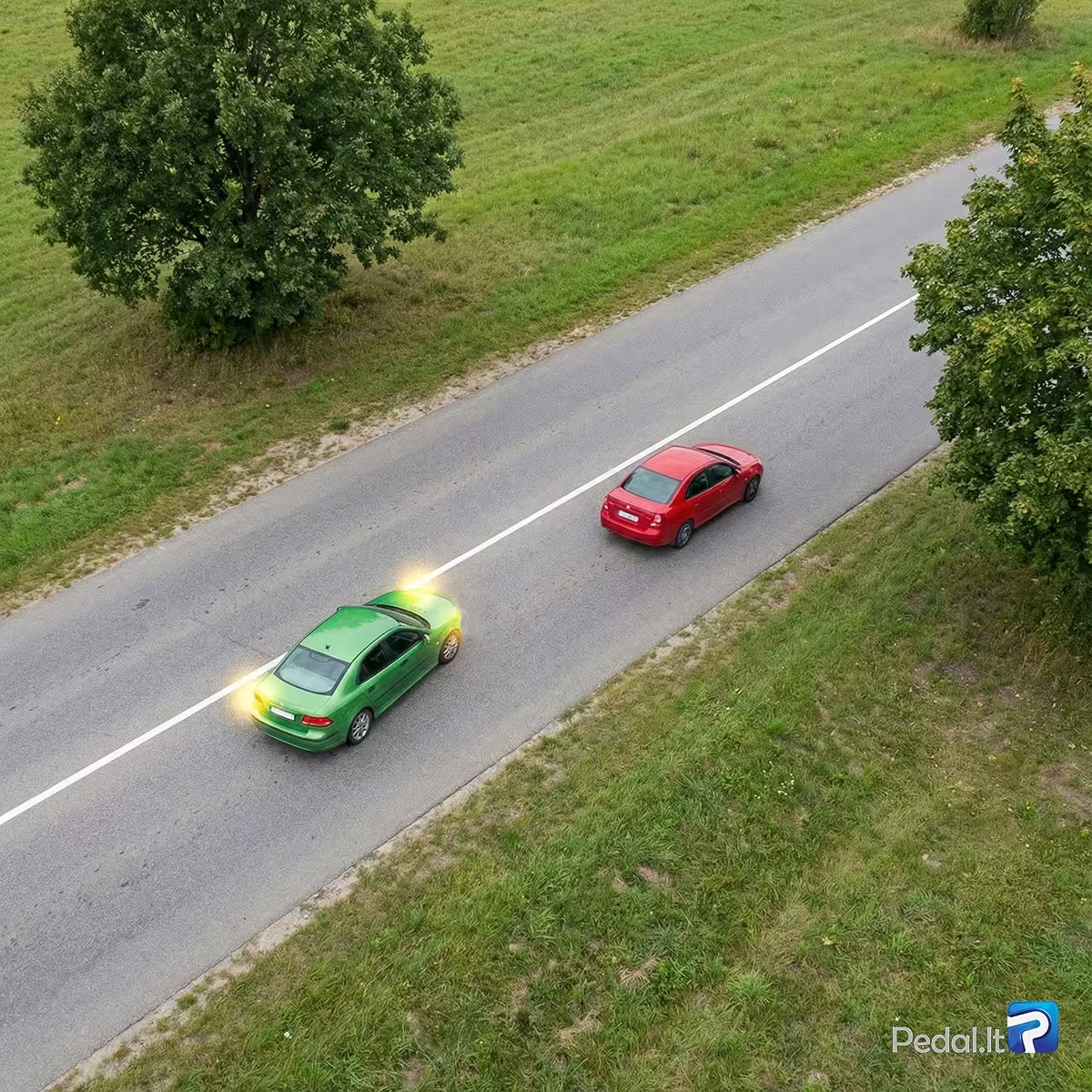
Is the driver of the green vehicle permitted to overtake?
The Road Traffic Rules prohibit crossing a solid line; it does not matter how fast the vehicle you wish to overtake is traveling. Overtaking slow-moving vehicles (traveling under 30 km/h) is allowed only where the 'No Overtaking' sign is in force (within its zone of validity) and there is no solid lane line. http://www.keliueismotaisykles.info/pakeitimai-ir-patarimai/ar-lenkiant-galima-kirsti-istisine-linija RTR Annex 3.1.1. A narrow solid line separates traffic flows in opposite directions and prohibits the use of the oncoming lane on the marked road section; it marks lane edges, areas where access is prohibited, parking space boundaries and the edge of the carriageway; in the case of road sign No 413 'Pedestrian and cycle path', it separates the section reserved for cyclists from the section reserved for pedestrians. It must not be crossed except where it marks the edge of the carriageway or a parking space. RTR Annex 1.325 'Overtaking Prohibited'. Overtaking is prohibited except for single vehicles or single vehicle combinations traveling at less than 30 km/h.
1. Overtaking is permitted.
2. Overtaking is prohibited.
3. Overtaking is permitted if the vehicle being overtaken is traveling at less than 30 km/h.
4. Overtaking is permitted if the vehicle being overtaken is traveling at less than 15 km/h.
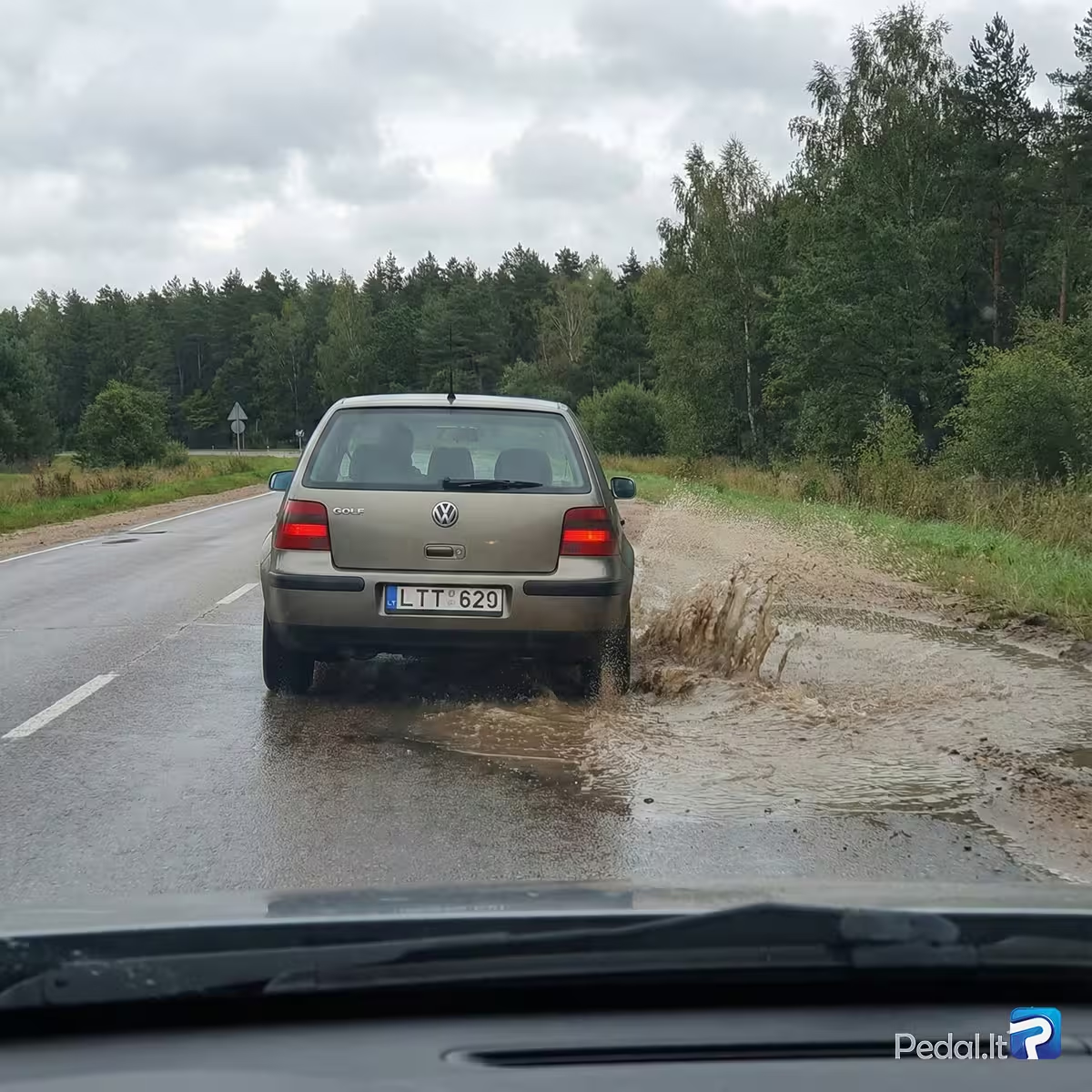
If either the left or right wheel of your vehicle has entered a body of water (for example, a puddle), you must:
When a wheel travels through standing water, the vehicle can aquaplane (ride on a layer of water), causing loss of traction and possible skidding. Hold the steering wheel firmly and gradually reduce speed to regain traction and maintain control.
1. Apply the brakes immediately.
2. Grip the steering wheel firmly.
3. Increase your speed.
.avif)
How should you drive on a slippery road?
A safe speed depends on all circumstances, including weather, road surface and vehicle condition, as well as the driver's experience and level of alertness. (RTR 127) Drivers must not exceed the permissible speed limits. A driver must choose a speed appropriate to the conditions — taking into account terrain, road and vehicle condition (including load), weather, and traffic density — so that they can stop safely before any foreseeable obstruction. The driver must reduce speed or stop when conditions require, particularly when visibility is poor. JB
1. Maintain a larger-than-usual following distance from other vehicles.
2. When necessary, apply the brakes very gently.
3. Avoid sudden movements of the steering wheel or abrupt changes to the accelerator.
4. Select a safe driving speed.
During hours of darkness or in conditions of poor visibility, a load projecting up to 1 metre beyond the side of a vehicle must be marked:
Any load that projects laterally, even slightly, must be marked. During hours of darkness such a load must be indicated by lights. Loads projecting beyond the sides of the vehicle must always be marked; loads projecting beyond the front or rear do not always require marking. According to RTR 210 and Annex 4: loads extending more than 1 m beyond the front or rear of the vehicle, or projecting laterally beyond the vehicle's outer edge, must be marked as specified in Annex 4.12. Extreme edges of loads that extend more than 1 m beyond the vehicle's dimensions, or that project even minimally to the side, as well as extreme edges of vehicles wider than 2.6 m, shall be marked with distinguishing panels — 400 mm square plates with alternating reflective white and red diagonal stripes 50 mm wide. These panels must be mounted between 0.4 m and 1.6 m above ground level. During hours of darkness or in poor visibility such vehicles must also display lights in the designated positions: white at the front, orange at the sides, and red at the rear.
1. Marked with high-visibility flags.
2. Marked with lights: white at the front, orange at the sides, and red at the rear.
3. Marking is not required.
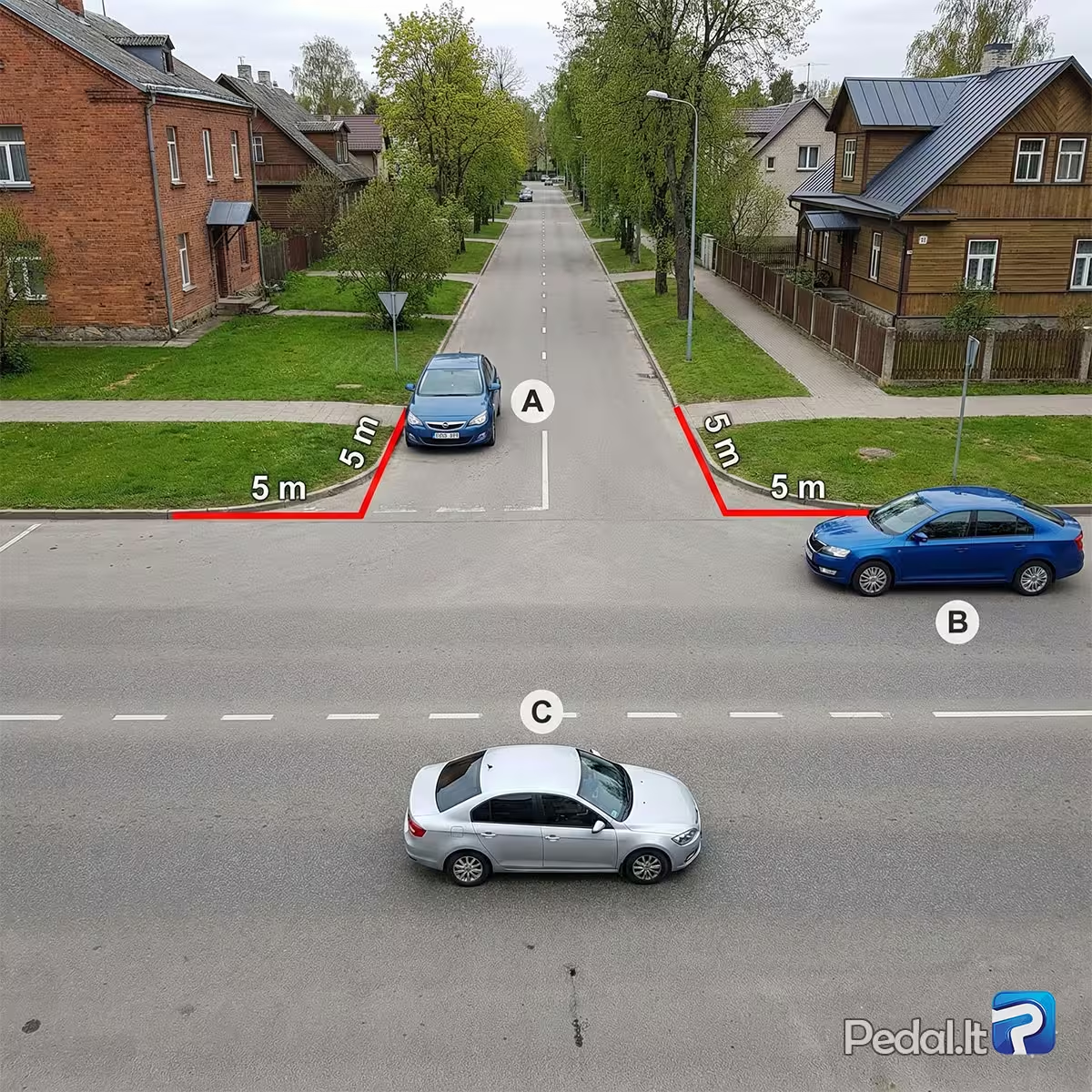
Which vehicles have violated the Road Traffic Rules by stopping at the entrance to the yard?
This is not an intersection but the entrance to a yard. Therefore, vehicle C is not prohibited from parking in this way. RTR 150. Standing and parking shall be prohibited: 150.15 at crossroads and in places where vehicles enter the road from adjacent areas and exit the road to adjacent areas, and within a 5-metre distance from those points (on the side of the road where the entrance/exit is located), except where road signs permit parking.
1. Vehicle A
2. Vehicle B
3. Vehicle C
4. All vehicles are parked correctly.
The effect of inertia on the vehicle (risk of sliding sideways) when cornering is reduced by:
The higher the vehicle's speed when cornering, the greater the effect of inertia and the higher the risk of the car sliding sideways. Lower speeds reduce inertia and the risk of sliding. A larger turning radius (a gentler curve) also reduces lateral inertial forces.
1. By decreasing the turning radius (making the turn tighter).
2. By reducing vehicle speed.
3. By increasing the turning radius (making the curve gentler).
Persons holding a school-issued certificate are permitted to ride bicycles on roads starting at what age?
Persons under 14 years of age are not permitted to ride bicycles on roads. However, those who complete an additional training course and obtain a school-issued certificate may ride on roads from age 12. Within residential areas, there is no minimum age restriction for cyclists.
1. 12 years of age.
2. 14 years of age.
3. 16 years of age.
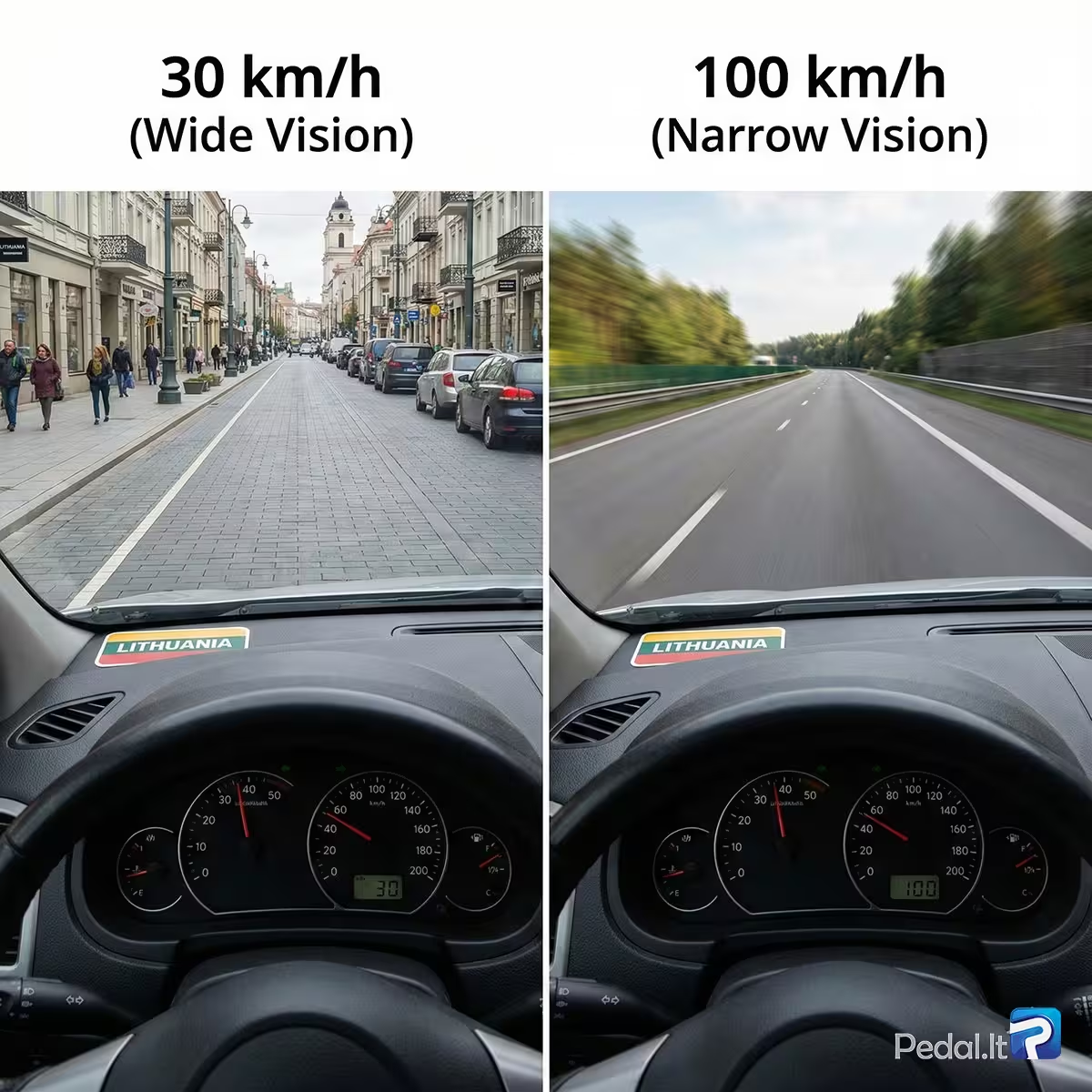
How does your field of vision change as your driving speed increases?
The field of vision is affected by driving speed, visual acuity (e.g., short-sightedness), fatigue, the color and brightness of objects, their contrast with the background, and other factors. As speed increases, a driver’s area of attention narrows and shifts forward: although drivers tend to look farther ahead, the effective dimensions of attention decrease inversely with speed. For example, at 50 km/h it is usually sufficient to focus about 150 m ahead to detect an obstacle; at 140 km/h an oncoming vehicle may not be noticed until it is only 15–20 m from the point of passing.
1. It becomes narrower.
2. It becomes wider.
3. It does not change.
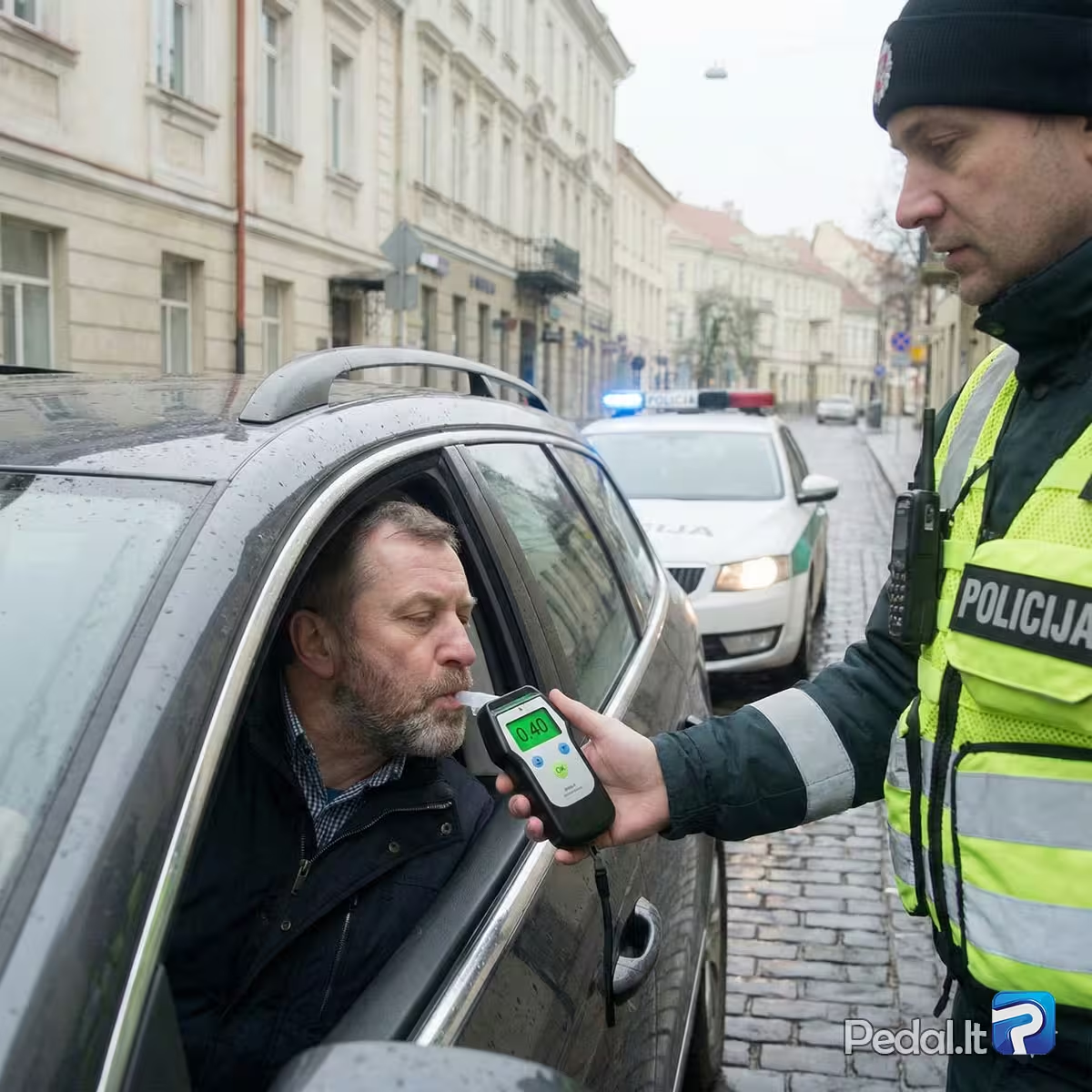
What is the maximum permitted alcohol concentration (in per mille, ‰) for a driver with 20 years of driving experience?
According to the Law on Road Traffic Safety, Article 2, point 43: “Drunkenness” means a state in which a person has consumed ethyl alcohol and the concentration of that alcohol in the body's biological media (exhaled air, blood, urine, saliva or other bodily fluids) exceeds the legal limit. The maximum permitted concentration of ethyl alcohol in the exhaled air, blood, urine, saliva or other bodily fluids of persons operating vehicles is 0.4 per mille (‰). Novice drivers, taxi drivers, and drivers of mopeds, motorcycles, tricycles, light quadricycles, four-wheelers, motorized quadricycles, vehicles with a maximum permissible weight over 3.5 t or with more than 9 seats, and drivers transporting dangerous goods are considered intoxicated when the concentration of ethyl alcohol in their exhaled air, blood, urine, saliva or other bodily fluids is greater than 0 ‰. JB
1. 0.2 ‰
2. 0.3 ‰
3. 0.4 ‰
4. 0.8 ‰
What is the primary difference between winter diesel and summer diesel fuel?
In winter, air temperatures can easily drop to -25 °C or lower, causing diesel vehicles to experience starting problems. When temperatures fall below 0 °C, water in diesel fuel can freeze; failing to prepare a diesel vehicle for such conditions may lead to breakdowns. At service stations you can choose “summer” diesel, typically suitable from May through October, or “winter” diesel, formulated for use from November through April and adapted to low sub-zero temperatures.
1. Winter diesel fuel does not gel or freeze at -25 °C.
2. Winter diesel fuel begins to gel or freeze at temperatures below -5 °C.
Your car begins to skid sideways while braking. What should you do?
If the wheels lock and the car begins to skid while braking, you must release the brake pedal. For example, if you brake hard before a bend and lock the wheels, the vehicle will continue moving in its original direction (straight ahead) despite steering input. That can cause you to run off the road or collide with an obstacle. In that situation you must stop braking — which can be difficult, especially for inexperienced drivers.
1. Press the clutch pedal.
2. Release the brake pedal (stop applying the brakes).
3. Apply the brakes more firmly.
Where does fog typically form?
Fog typically forms over and near bodies of water, and in humid, low-lying areas.
1. Near lakes.
2. Near rivers.
3. In marshy or swampy areas.
4. In low-lying sections of roads.
Who has the right of way when the traffic lights at the intersection are not functioning?
Regulation RTR 167: When an intersection is controlled by traffic lights, drivers must obey the light signals regardless of any priority indicated by road signs. If the traffic lights are not operating or the amber (yellow) light is flashing, drivers must follow the priority indicated by the road signs.
1. No one has the right of way.
2. Drivers on the main (priority) road.
3. Drivers making a right turn.
4. Drivers on the side (secondary) road.
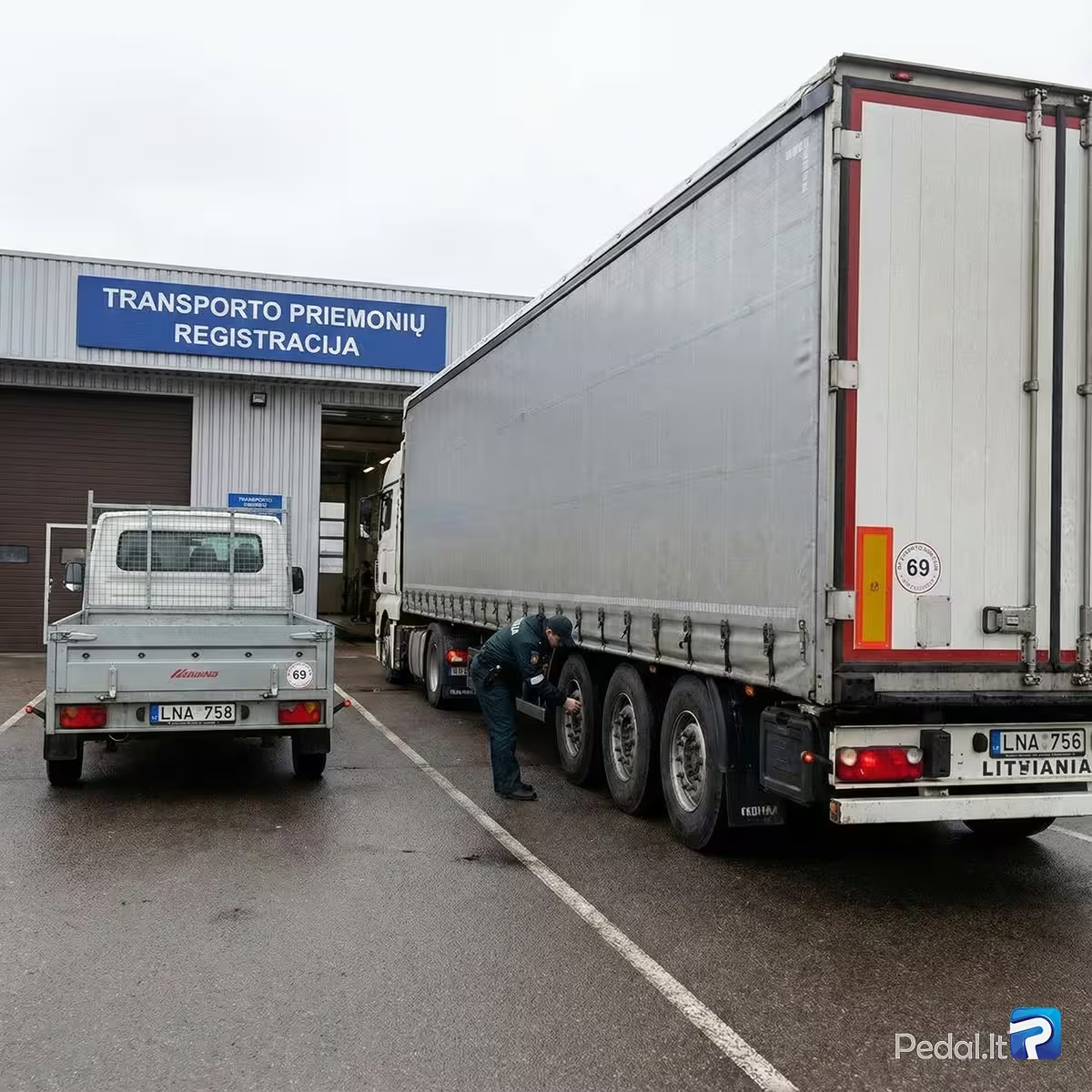
Are trailers and semi-trailers considered vehicles?
48. A trailer is a vehicle designed to be towed by a motor vehicle. Semi-trailers are also regarded as trailers. 52. A semi-trailer is a trailer coupled to a motor vehicle in such a way that part of its weight and the weight of its load are borne by the motor vehicle.
1. No.
2. Yes.
Under what circumstances are drivers prohibited from operating a vehicle?
IV 15. It is prohibited to drive vehicles that are not in good condition or that fail to meet the applicable technical requirements. Before setting off, the driver of a motor vehicle, tractor, or self-propelled vehicle must ensure the vehicle is in proper condition and is equipped with a warning triangle, fire extinguisher, first-aid kit, and any other items mandated for that vehicle type. The driver must also monitor the vehicle's technical condition during the trip. If the vehicle breaks down while driving and ceases to meet technical requirements, and repairs on-site are impossible, the driver may proceed—taking all necessary precautions—to the nearest parking area or repair facility, except in cases specified in paragraph 234 of these Rules.
1. When the engine has not yet warmed up to its optimal operating temperature.
2. When the vehicle's fuel tank is not full.
3. When the vehicle is not in roadworthy condition.
4. When the vehicle does not meet the required technical standards.
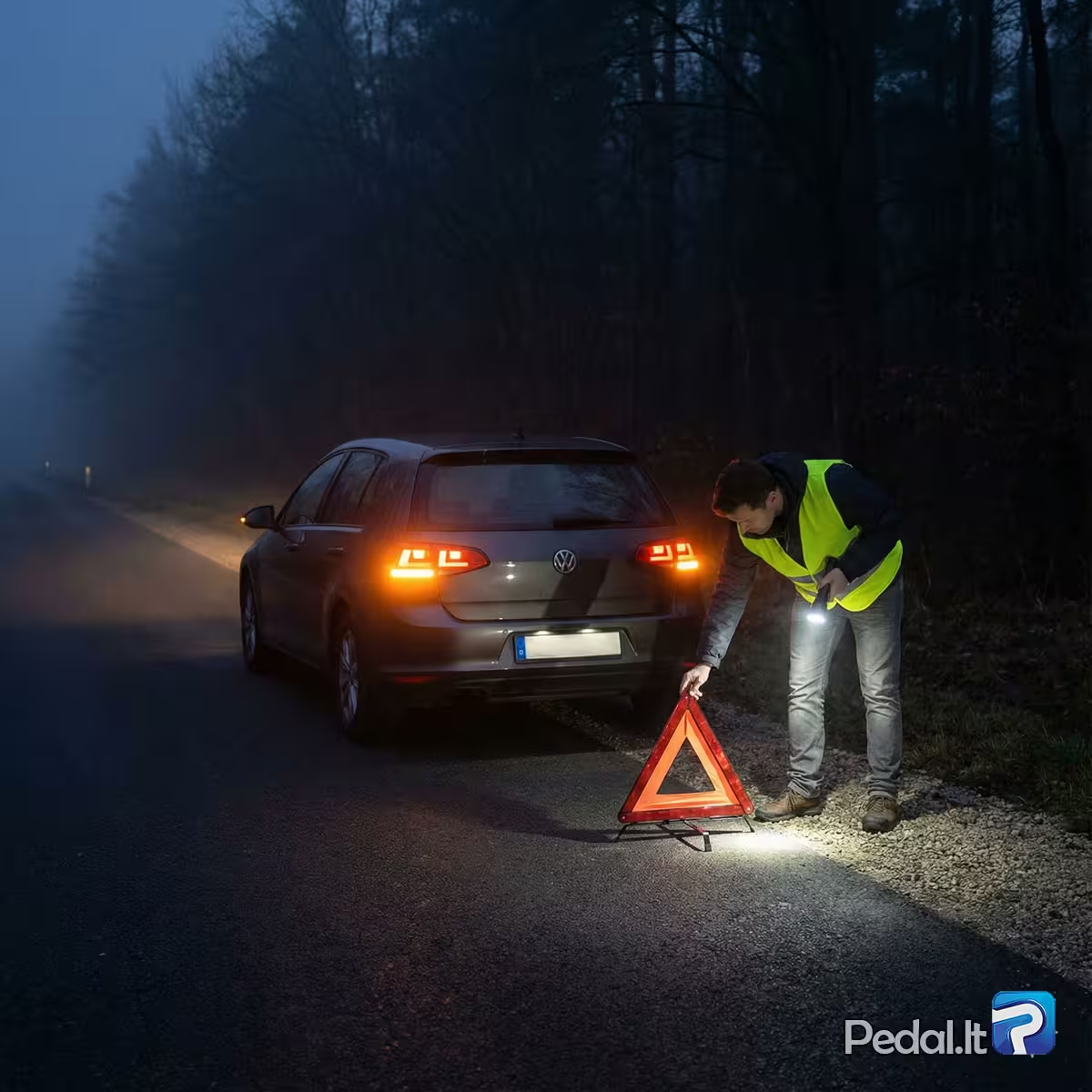
If you are forced to stop on an unlit section of road at night or in poor visibility because your position and brake lights have failed, what should you do?
RTR 92. If the emergency light signaling system is not fitted or is defective and an emergency stop is required where stopping or parking is prohibited, in the event of an accident, or where the stopped vehicle would be visible to other road users from less than 100 metres, the driver of a motor vehicle (other than a motor moped or a motorcycle without a trailer), a tractor, or a self‑propelled machine must immediately place an emergency stop sign on the carriageway side opposite the direction of travel: in built‑up areas not less than 25 m from the stopped vehicle, and outside built‑up areas not less than 50 m. If at least one rear position lamp is defective and the hazard warning lights are not working when driving at night or in poor visibility, an emergency stop sign must be affixed to the rear of the vehicle in order to continue driving.
RTR 151. When a vehicle is forced to stop where standing or parking is forbidden, drivers must switch on their hazard warning lights if available and/or place a warning triangle on the road as specified in Paragraph 92 of the Rules and remove their vehicle from the road as soon as possible. If drivers intend to stop their vehicle on unlit sections of the road during darkness or when visibility is poor, and hazard warning lights are not available or are inoperative, the vehicle must be parked off the carriageway. If this is impossible, the location must be marked as specified in Paragraph 92 of the Rules. JB
1. Turn the vehicle around and switch on the low beam headlights.
2. If it is not possible to park off the carriageway, switch on your hazard warning lights; if these are not available or are inoperative, place a warning triangle.
3. Indicate the stopped vehicle with bright flags.
Are vehicles permitted to drive on the pavement (sidewalk)?
RTR 124. Drivers of motor vehicles, tractors, self‑propelled machines, and animal‑drawn vehicles must not drive or manoeuvre on lawns, pavements (sidewalks), footpaths, cycle tracks, or cycle lanes. An exception applies where road signs permit (partial) parking at the pavement edge and a cycle track or lane is delineated by the horizontal marking line 1.14. Driving on central reservations, embankment slopes, excavations, or in ditches is prohibited. Drivers must also not enter or leave the roadway except at locations designated for that purpose.
1. They may do so provided they do not obstruct pedestrians.
2. They are permitted only where road signs indicate that (partial) parking on the pavement edge is allowed.
3. Driving on pavements is prohibited.
When are pedestrians permitted to step onto the carriageway?
RTR 44. Pedestrians may enter the carriageway only after assessing the distance to and speed of approaching vehicles and ensuring it is safe to proceed. Before stepping onto or while moving along the carriageway, pedestrians must refrain from actions (such as using mobile devices) that would distract them from observing the surroundings and traffic conditions and would prevent them from confirming it is safe to continue.
1. After evaluating the distance to approaching vehicles.
2. After evaluating the speed of approaching vehicles and ensuring it is safe to cross at the pedestrian crossing.
3. Provided they refrain from actions (e.g., using mobile devices) that could distract them from observing the surroundings and the traffic situation.
4. If they are not looking at the carriageway.
To begin driving uphill, when should the parking brake be released?
If the parking brake is used when starting on an uphill gradient, release it simultaneously with moving off.
1. After you have started moving.
2. Before you start moving.
3. Simultaneously with starting to move.
.avif)
Is it permitted to use high‑beam headlights after dark on an unlit road within a settlement?
On unlit roads it is permitted to use high‑beam headlights. According to regulation RTR 95, during hours of darkness or in conditions of poor visibility high beams must be switched to low beam on illuminated roads (see 95.1).
1. Yes — it is permitted.
2. No — it is prohibited.
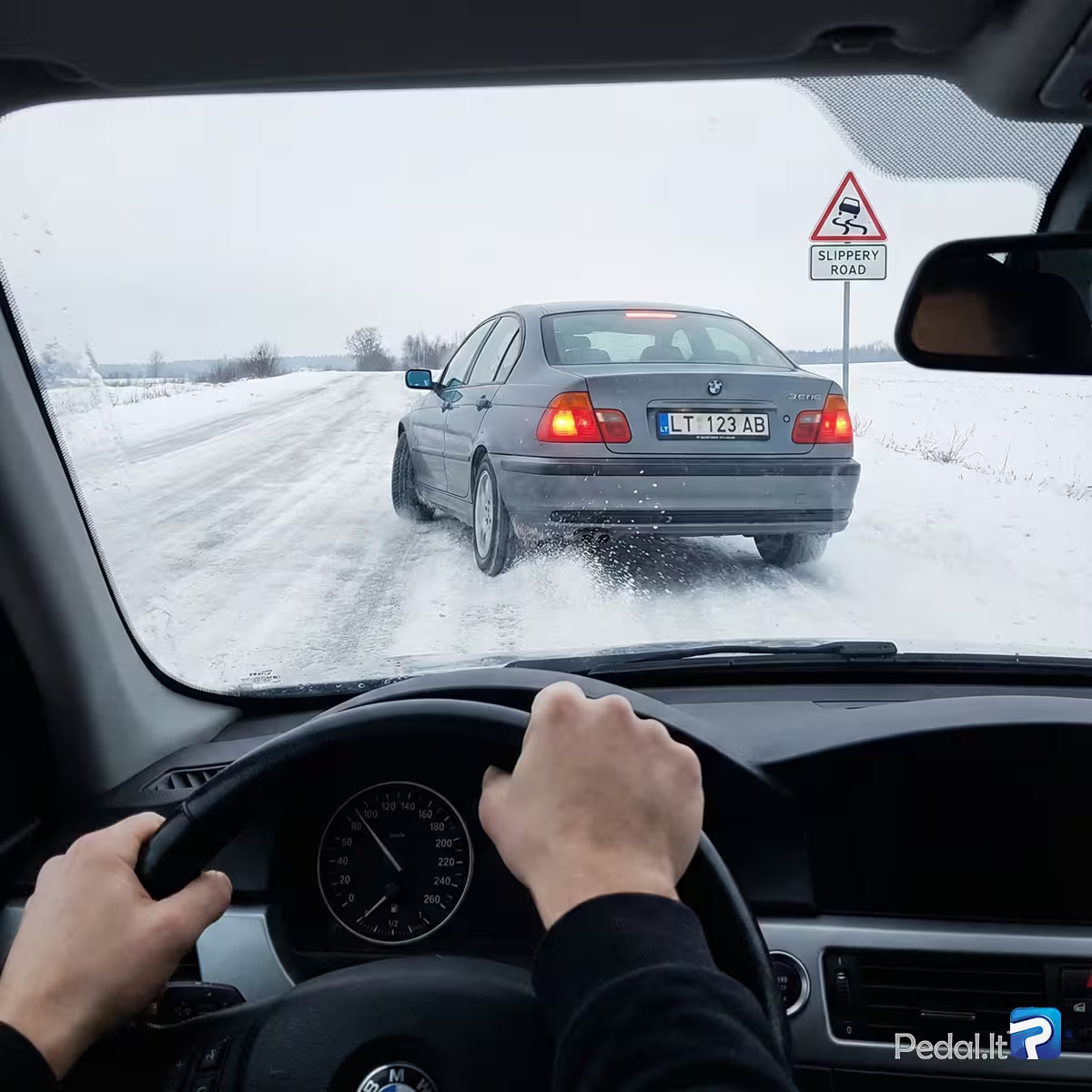
How dangerous is a sudden increase in engine RPM while driving on a slippery road?
If the road surface is slippery or the engine delivers strong torque and the revs increase abruptly, the driven wheels can spin. When the driven wheels are at the rear, the rear axle may lose traction; when they are at the front, the front axle may lose traction, which can cause the vehicle to lose stability and skid.
1. The fuel filter may fail.
2. The fuel pump may fail.
3. If the tractive force of the wheels exceeds the available grip with the road, the vehicle can lose stability and begin to slide.
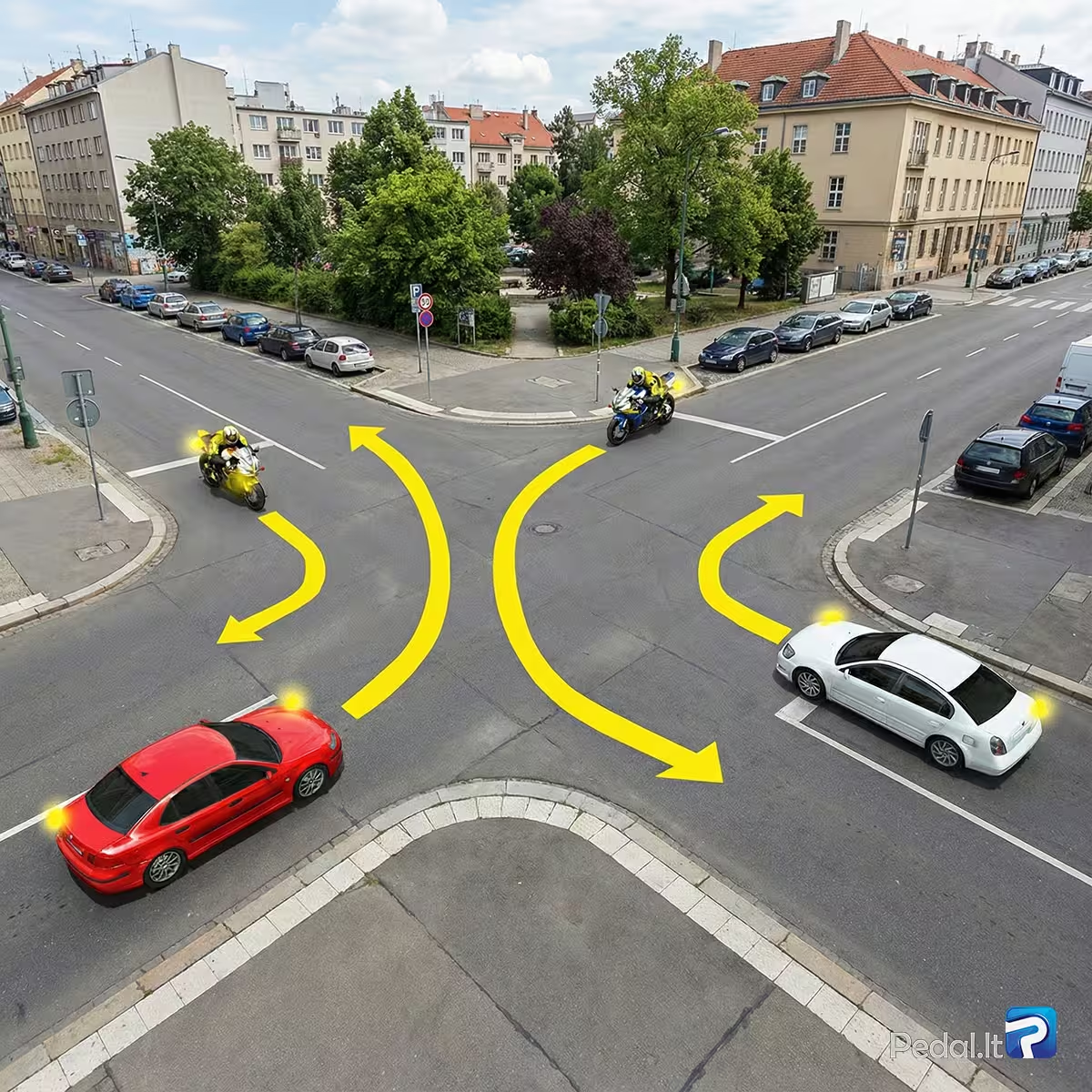
At an uncontrolled intersection, if the paths of the vehicles do not cross, which vehicle has the right of way?
If the vehicles' paths do not intersect, they may proceed simultaneously.
1. The vehicle approaching from the right.
2. The vehicle approaching from the left.
3. All vehicles may proceed simultaneously.
Which features ensure a vehicle's active safety?
Difference between active and passive safety:
- Active safety: systems and features that help prevent accidents by improving vehicle control, handling and stability before a collision occurs. These measures operate before an impact and commonly include technologies such as Anti-lock Braking System (ABS), Electronic Brakeforce Distribution (EBD), traction control, correct tyre pressure and adequate tread depth, among others. Active safety also depends on the driver’s condition and behavior — for example, poor ventilation or heating can cause drowsiness or nausea and reduce attention on the road.
- Passive safety: systems and equipment designed to reduce injury and damage during or after a collision. These features are activated in a crash to protect occupants and other road users and include seat belts, airbags, motorcycle helmets, seat-belt reminders, head restraints, crumple zones and other structural or restraint systems that absorb impact and lower the risk of injury.
1. Proper ventilation and heating.
2. Tyre pressure and tread depth.
3. Anti-lock Braking System (ABS).
4. Electronic Brakeforce Distribution (EBD).
What documents must the driver of a motor vehicle bring when summoned by the police to appear at the specified time?
8. After receiving a summons from the police, the road user must appear at the police station at the specified time. He must bring an identity document and any other documents listed in the summons. JB
1. In all cases, the person must present an identity document. Additionally, if specified in the summons, they should bring the vehicle's state technical inspection certificate, the compulsory civil insurance policy for the vehicle, and the driver's licence.
2. A driver's licence in every case.
3. A valid medical fitness certificate for driving.
4. A certificate of completion of the mandatory first-aid training.
.avif)
In what order will the vehicles pass through the intersection?
If a 'STOP' road sign is present, drivers must stop before the sign and yield to vehicles traveling on the road they are about to cross. RTR 154. At a controlled intersection, drivers entering from a side road must yield to vehicles on the priority road. RTR Annex 1. 204. 'STOP'. Drivers must not proceed without stopping before the stop line or, if there is no stop line, before the sign. A driver must give way to vehicles on the road being crossed. If additional plate No. 843 'Direction of Priority Road' is mounted below the sign, the driver must yield to vehicles on the priority road.
1. Yellow and red vehicles proceed together, followed by the blue vehicle.
2. Blue and red vehicles proceed together, followed by the yellow vehicle.
3. Blue vehicle first, then the red vehicle, and finally the yellow vehicle.
4. Yellow vehicle first, then the blue vehicle, and finally the red vehicle.
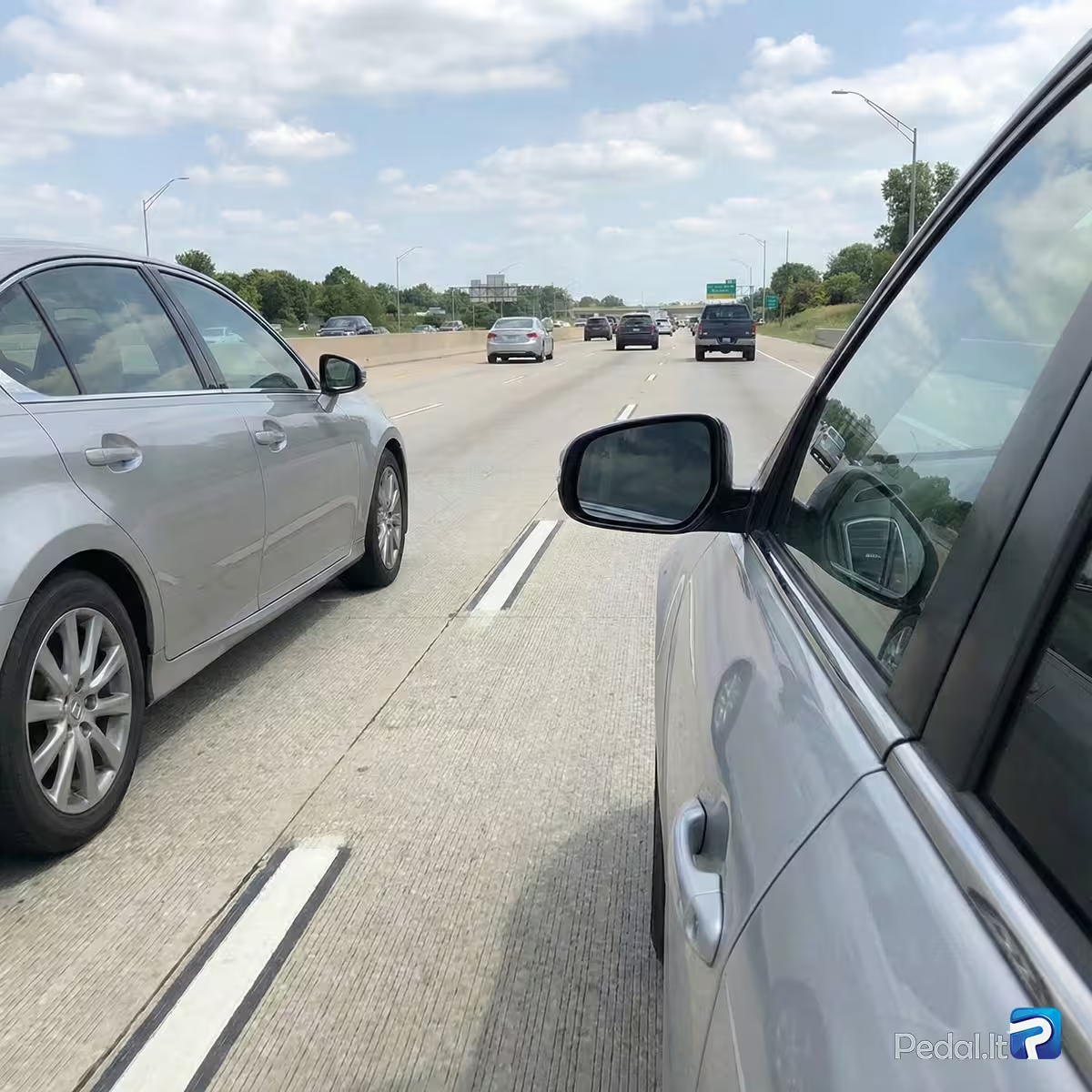
What lateral distance from nearby vehicles is considered safe?
3.17 Choosing a safe distance: operate the vehicle so that: 3.17.3. the distance to other vehicles, whether moving or stationary, is safe relative to any parked vehicle — maintain sufficient clearance to prevent parked vehicles or other obstacles from causing interference. When the vehicle is parked in a parking space, the lateral clearance should permit opening the vehicle's doors.
1. A lateral clearance sufficient to allow the vehicle's doors to be opened.
2. 1 m.
3. 50 cm.
4. 30 cm.
If there are no posted speed limit signs, when must you drive at a speed not exceeding 50 km/h?
129. The maximum speed limit within built-up areas for all vehicles is 50 km/h.
1. If diversion signs are present.
2. If a solid yellow line is present.
3. If pedestrian refuge islands are present.
4. Within built-up (urban) areas.
.avif)
In this situation, is the driver of the green vehicle permitted to cross the indicated double horizontal line when completing the overtaking maneuver?
He is allowed because the driver of the green vehicle must complete the overtaking maneuver. RTR Annex 3.1.10: A double line composed of two narrow parallel lines — one solid and one broken — separates traffic moving in opposite directions or in the same direction on road sections where lane changing is permitted only from one lane. It also marks locations for U-turns and the entrances and exits of parking areas where travel is allowed in only one direction. Drivers may cross this line from the side of the broken line, and they may also cross it from the side of the solid line only when finishing an overtaking or passing maneuver.
1. No — he is not allowed.
2. Yes — he is allowed.
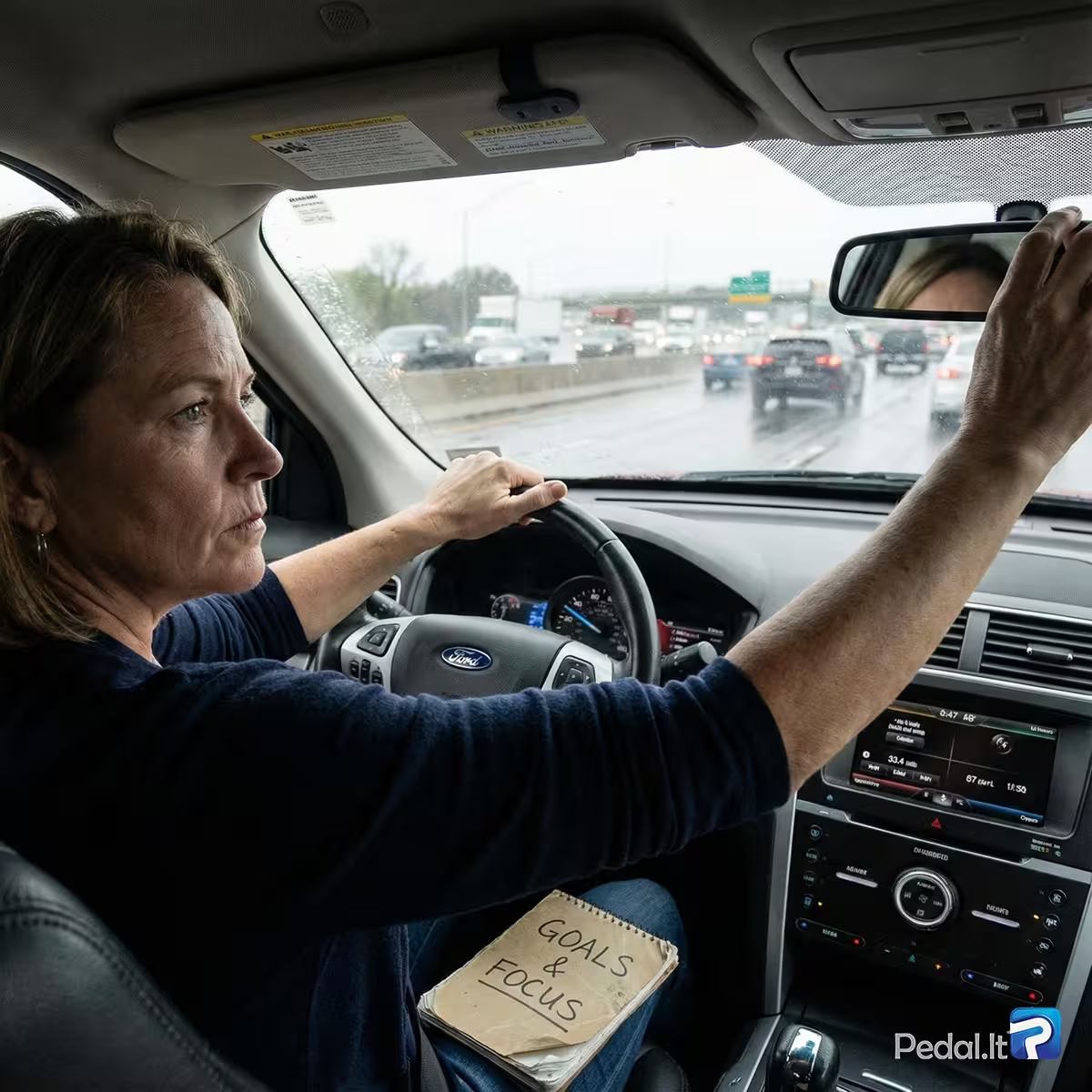
What are the primary characteristics of a driver's will?
The primary characteristics of a driver's will are discipline, determination, self-control, and perseverance. Disciplined drivers consistently obey the rules of the road (RTR). Determined drivers do not hesitate about decisions they make while operating a vehicle. A driver's self-control is demonstrated by remaining calm in complex traffic situations and by showing respect for other road users. Perseverance is the ability to overcome difficulties encountered on the road.
1. Discipline and determination.
2. Aggression and anger.
3. Self-control and calm temperament.
4. Indifference.
In which situations may drivers of emergency vehicles exercise priority when operating with blue and red flashing lights and special audible signals?
Drivers of special (emergency) vehicles — such as ambulances, police, and fire service vehicles — may use blue and red (or only blue) flashing lights and special audible signals when necessary to: (1) save human life or health; (2) protect property; (3) ensure public order and traffic safety; (4) apprehend persons suspected of offences; or (5) escort or accompany official delegates and protected persons. Flashing lights must be visible in all directions (360°). While using these signals, drivers of special vehicles may disregard certain traffic rules specified in the Regulations, provided they do not jeopardize traffic safety and only after ensuring that other road users are giving way. They must drive cautiously and avoid creating danger to other road users. Other road users are required to give way immediately to such vehicles so they can pass safely and quickly. The right of way also applies to drivers of vehicles being escorted by special vehicles.
1. When doing so does not endanger traffic safety.
2. After confirming that other road users are yielding to them.
1 of 30 Task
Time left: 00:00:00
1
2
3
4
5
6
7
8
9
10
11
12
13
14
15
16
17
18
19
20
21
22
23
24
25
26
27
28
29
30