.avif)
If, when starting to move, your vehicle's wheels spin while the vehicle remains stationary:
To drive a motor vehicle economically and sensibly, begin moving smoothly and steadily. Where possible, reduce your speed gradually and avoid unnecessary abrupt actions unless they are essential (e.g., emergency braking because of an unexpected obstacle on the road).
1. It is uneconomical — it increases fuel consumption and accelerates tyre wear.
2. The tyre squeal or wheel spin disturbs other road users.
3. It is regarded as normal and acceptable.
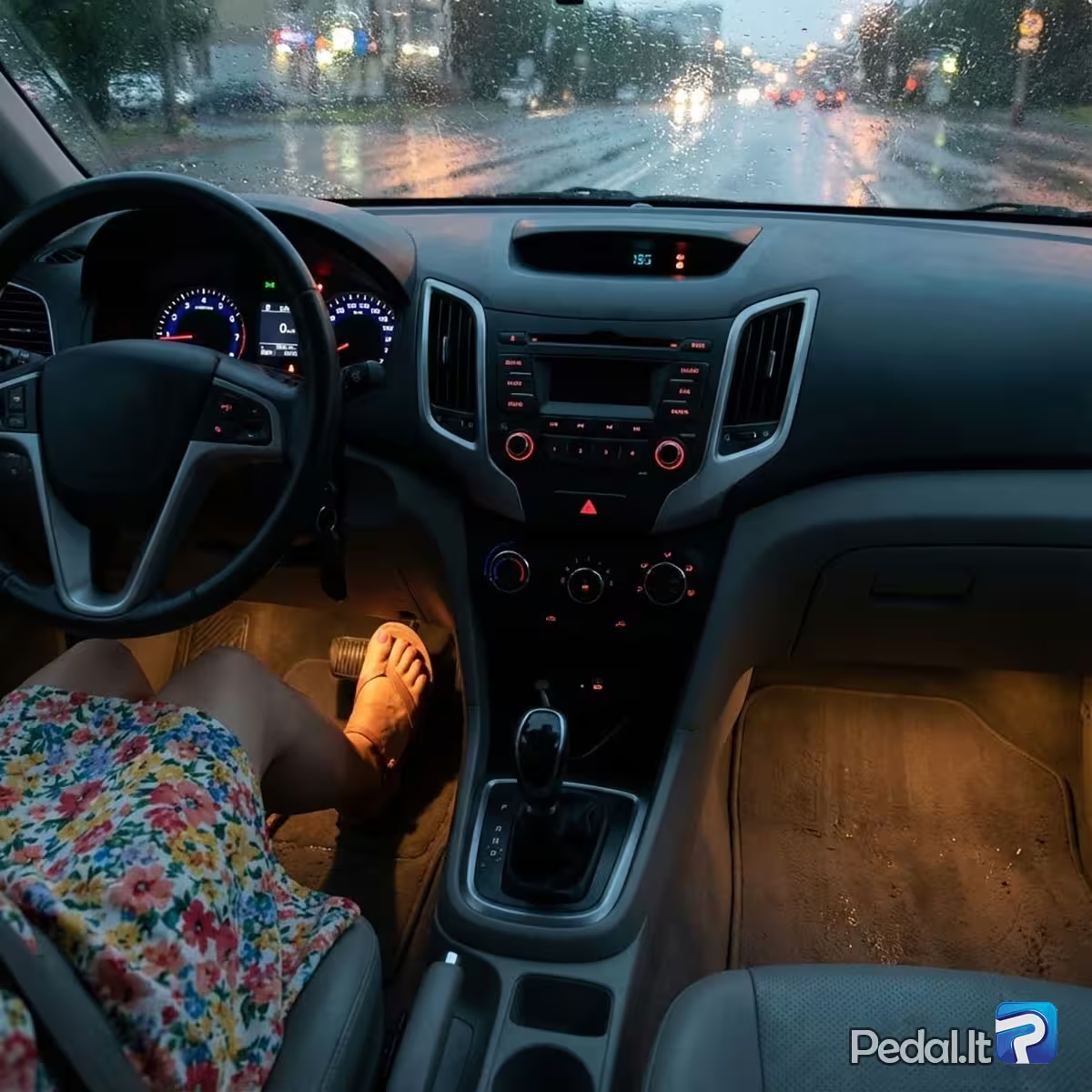
If water gets into the brake pads and reduces braking effectiveness, what will you do?
After driving through a deep puddle or a body of water, drive at low speed for a short while and gently apply the brakes several times to dry the brake discs or drums and the pads or shoes. Friction will heat the components, helping the water to evaporate and restoring braking performance.
1. You would repeatedly apply the brakes while the vehicle is stationary.
2. You would ignore it because they will dry on their own within a few minutes.
3. You would gently apply the brakes several times while driving slowly.
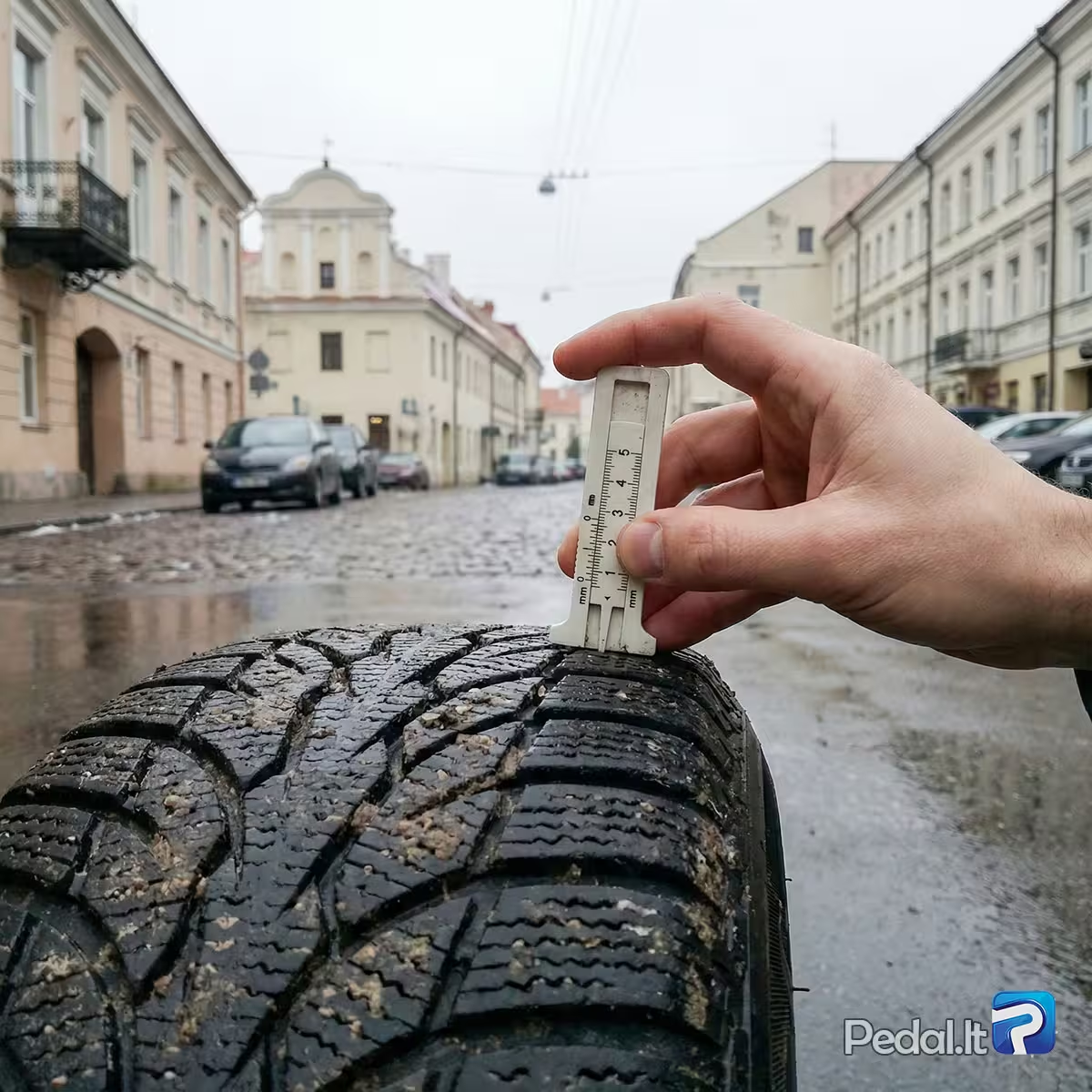
What is the minimum allowable winter tread depth for a passenger car tyre?
Passenger car tyre tread depth must be at least 1.6 mm in general and 3.0 mm during the winter period. Source: Technical requirements for motor vehicles and their trailers — Section V: Vehicle axles, wheels, tyres and suspension. 5.7. The tread depth of the tyres used must be at least: 5.7.1. M1 category — 1.6 mm (from November 10 to March 31 — 3.0 mm); JB
1. 1.6 mm.
2. 2.0 mm.
3. 3.0 mm.
What should the driver do first to stop a braking car from skidding?
If the vehicle begins to slide while braking, you must stop braking. For example, if you brake suddenly and lock the wheels before a turn, even after steering into the desired direction the car will continue moving in its previous direction (straight), which can cause you to leave the road or collide with an obstacle. Therefore, in this situation you must consciously release the brakes — a maneuver that can be especially difficult for an inexperienced driver. JB
1. Release the clutch and the brake pedal.
2. Release the brake pedal.
3. Increase vehicle speed.
What should you do when you see a speed limit sign ahead in the distance?
Explanation of terms:
• To brake — press the brake pedal; the vehicle decelerates quickly and stops before the expected obstacle.
• To release the accelerator pedal — lift your foot off the gas; the vehicle will slow down gradually without stopping completely and will continue moving.
• To maintain your current speed — keep the accelerator pedal in the same position; the vehicle continues at a constant speed.
RTR 127. Drivers must not exceed the permissible speed limit. The driver must select a driving speed appropriate to the driving conditions, in particular the terrain, the condition of the road and the vehicle (including the load), weather conditions and traffic density, so that the vehicle can be stopped safely before any foreseeable obstacle. The driver must slow down and stop when driving circumstances require it, especially when visibility is poor.
RTR 135. Drivers must not:
135.2. exceed the speed limit specified on the vehicle marking plate;
135.3. drive unnecessarily slowly and impede the normal flow of traffic for other road users;
135.4. slow down abruptly for reasons other than safety.
1. I will apply the brakes.
2. I will release the accelerator pedal.
3. I will maintain my current speed.
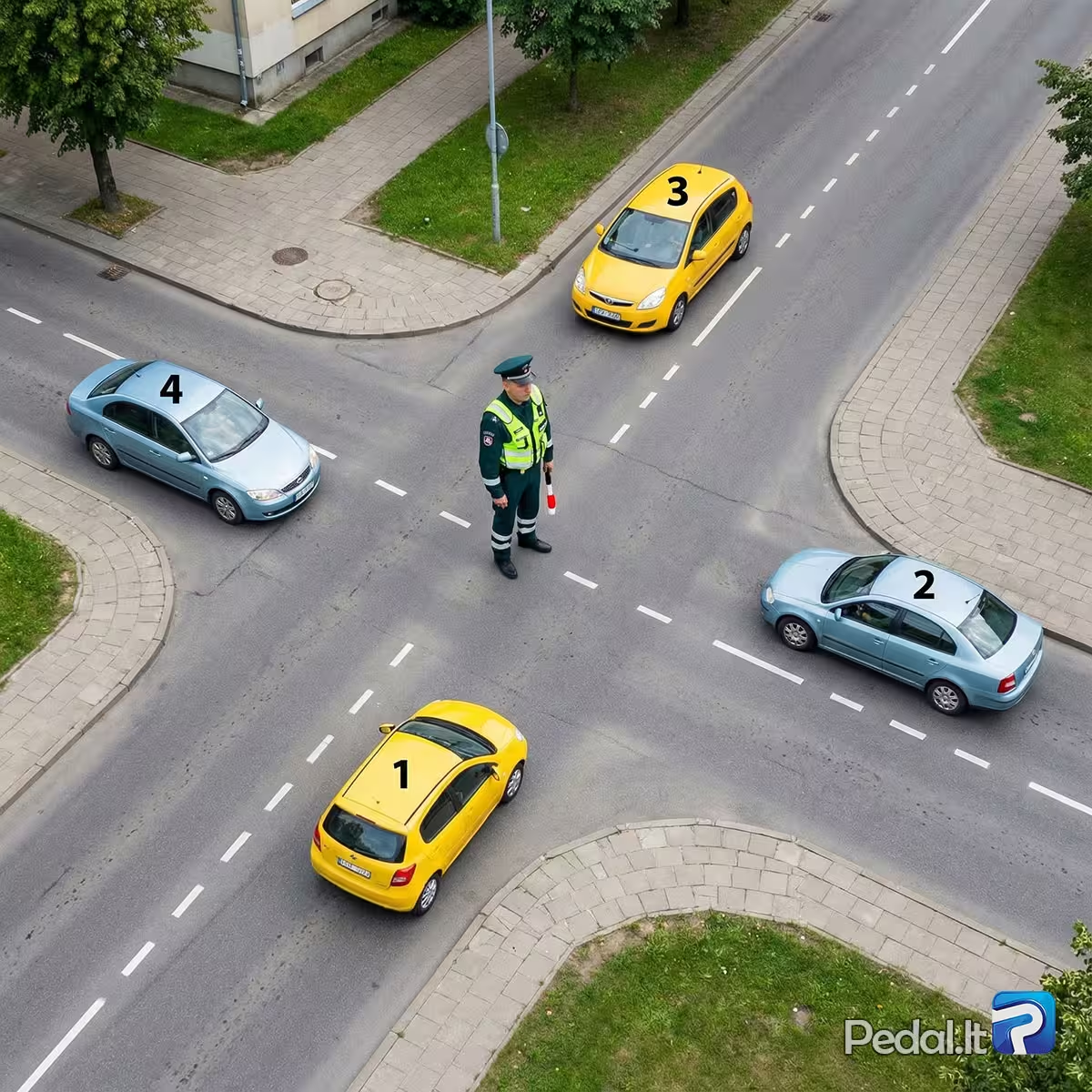
Is the third vehicle permitted to make a U‑turn?
The leading vehicle is not permitted to turn left and therefore may not make a U‑turn (RTR 77.1). When the signal arm is extended sideways or downward: 77.1.1 vehicles to the left and right may proceed straight or turn right; pedestrians may cross the carriageway; 77.1.2 vehicles and pedestrians ahead of and behind the signaling vehicle must not proceed. JB
1. Yes — it may.
2. No — it is not permitted.
3. Yes — but only after yielding to the first vehicle proceeding straight.
Are you required to signal before starting to move?
RTR 82. A driver must indicate intended actions by using the right or left direction indicators, or by arm signals if the indicators are not available or are inoperative: 82.1 before starting to move off and before stopping; 82.2 before changing lanes, before and after overtaking, before and after bypassing an obstruction, before turning right or left, before making a U-turn, and before leaving a roundabout or an intersection where traffic circulates in a circle. JB
1. Yes — you must signal before starting to move.
2. No — you are not required to signal.
What is the purpose of antifreeze in a vehicle?
1. It is used to fill the brake system.
2. It is used to fill the windscreen washer reservoir.
3. It is used to fill the engine cooling system.
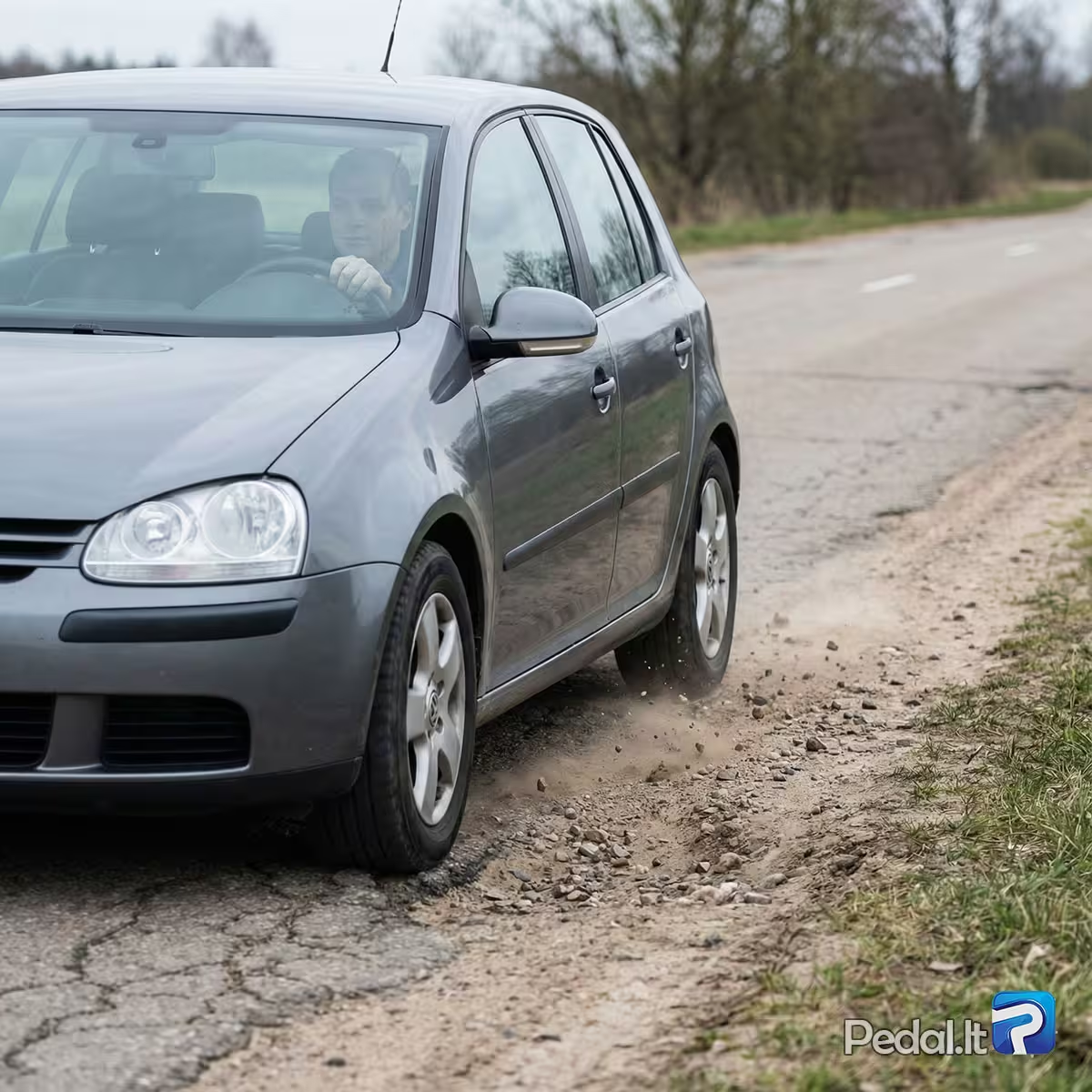
If two wheels of your vehicle move onto the road shoulder while driving, what should you do?
Avoid sudden steering or braking to prevent further instability. Gently accelerate — increasing the driven wheel's RPM will help the wheel regain traction and make it easier to return to the paved road.
1. Apply the brakes and steer back onto the carriageway.
2. Gently accelerate and steer back onto the carriageway.
A road user must not:
Dipped-beam headlights are not required when daytime running lights are illuminated (not all vehicles have them). RTR 10. Road users must not deliberately move, cover, remove, or install traffic control devices that regulate traffic; obstruct the carriageway; leave objects on the road or otherwise interfere with traffic; damage the road surface, traffic control devices, outdoor emergency communication systems, or planted lawns; block access to a fire hydrant or other rescue equipment or otherwise prevent access to them; throw any items from a vehicle or litter; discharge lubricants in undesignated areas; or otherwise pollute the environment.
1. Discard litter from a moving vehicle.
2. Release oils or other lubricants in undesignated areas or otherwise pollute the environment.
3. Use dipped-beam (low-beam) headlights during daylight hours.
4. Drive at a speed significantly lower than the vehicle's specified limits when it does not obstruct traffic.
Where may drivers park their vehicles on unlit sections of road during hours of darkness?
RTR 143. Stopping on unlit sections of road during hours of darkness or when visibility is poor is permitted only with hazard warning lights activated. Parking is allowed only in designated car parks or in areas off the carriageway.
1. On the hard shoulder.
2. On the carriageway.
3. In car parks.
4. In off-road areas.
What is the colour of the road sign labelled 'Place of Interest'?
629. 'Place of Interest' sign. Indicates the name of a cultural or historical site of interest. The sign has a brown background.
1. Blue.
2. Green.
3. Yellow.
4. Brown.
Drivers may be arrested or imprisoned for up to one year if their blood alcohol concentration (BAC) is:
Criminal Code of the Republic of Lithuania, Article 281‑1: A person who, while operating a motor vehicle, tractor, or self-propelled machine, or instructing a learner driver, is under the influence of alcohol with a blood alcohol concentration of 1.51 per mille or higher; or who refused a sobriety test when showing signs of intoxication; or who consumed alcohol after a road accident before the circumstances were established and was found to have a blood alcohol concentration of 1.51 per mille or higher, shall be punished by a fine, arrest, or imprisonment for up to one year.
1. 0.41 per mille.
2. 2.51 per mille.
3. 1.51 per mille.
4. 0.2 per mille.
How is a motorized bicycle defined?
Note that a motorized bicycle must have at least two wheels and an auxiliary internal combustion engine or an electric motor — it is not sufficient for it to have only an internal combustion engine. SEAK Art. 2.40. "Motorized bicycle" — a vehicle with at least two wheels that is powered by the rider’s muscular force using pedals or handlebars and is equipped with an auxiliary internal combustion engine or electric motor with a maximum net power of no more than 1 kW and a maximum design speed of no more than 25 km/h. The auxiliary engine stops providing power when the vehicle reaches 25 km/h. Wheelchairs for persons with disabilities are not classified as motorized bicycles.
1. A vehicle whose maximum net power does not exceed 1 kW and whose maximum design speed does not exceed 25 km/h.
2. A vehicle that is primarily propelled by the rider’s muscular power using pedals or handlebars and is equipped with an auxiliary internal combustion engine or an electric motor.
The requirement to 'Give Way' means:
3. Terms used in the Road Traffic Rules: 3.2. 'Give way' means that drivers must stop, or must not begin to drive or manoeuvre, if doing so would require other vehicle drivers to change their direction of travel or their speed.
1. That drivers on a side road must yield to vehicles approaching the intersection on a priority road.
2. That drivers must stop, or must not begin to drive or manoeuvre, if doing so would force other vehicle drivers to change their direction of travel or their speed.
3. That at an uncontrolled intersection drivers must yield to vehicles approaching from the right.
Why does a vehicle pull to one side during braking?
If a vehicle pulls to one side only during braking, the fault lies in the braking system. If the wheel alignment is incorrect or there is a malfunction in the steering system, the vehicle may also pull to one side while driving.
1. Because the wheels are misaligned.
2. Because the braking system is applying unevenly.
3. Because of a malfunction in the steering mechanism.
.avif)
Which driver will proceed through the intersection first?
RTR 154. At a controlled intersection, drivers on a side road must yield to vehicles on the priority road.
1. The driver of the blue car.
2. The driver of the red car.
How many motor vehicles are you permitted to tow at one time?
RTR 217. The following vehicle towing and transport practices are prohibited: 217.6. Towing more than one motor vehicle, tractor, or self-propelled vehicle.
1. One vehicle.
2. Two vehicles.
3. Three vehicles.
What can cause a vehicle to skid?
Sudden steering wheel movements, improper use of the accelerator, or other actions that do not take the road surface and driving speed into account can cause a vehicle to skid. In general, it is the driver's own actions (for example, sudden braking), not the actions of another driver, that lead to skidding. The driver must choose an appropriate speed and following distance so that the actions of other road users do not endanger the vehicle. 126. The driver must maintain a distance appropriate to the speed, sufficient to avoid hitting the vehicle in front if it brakes, and must leave a lateral gap to ensure traffic safety. It is recommended that the distance to the vehicle ahead be at least the distance covered in two seconds or at least half the speedometer reading converted into metres (for example, at 70 km/h the distance should be at least 35 m), unless traffic conditions require otherwise. Drivers of motor vehicles, tractors and self-propelled machinery shall, when overtaking pedestrians or when overtaking or passing cyclists or drivers of electric micro-mobility vehicles, leave a lateral distance of at least 1.0 m when their speed does not exceed 50 km/h and at least 1.5 m when their speed exceeds 50 km/h. The requirement to maintain the specified lateral distance does not apply on a single-lane road.
1. The driver's actions.
2. An emergency caused by another driver.
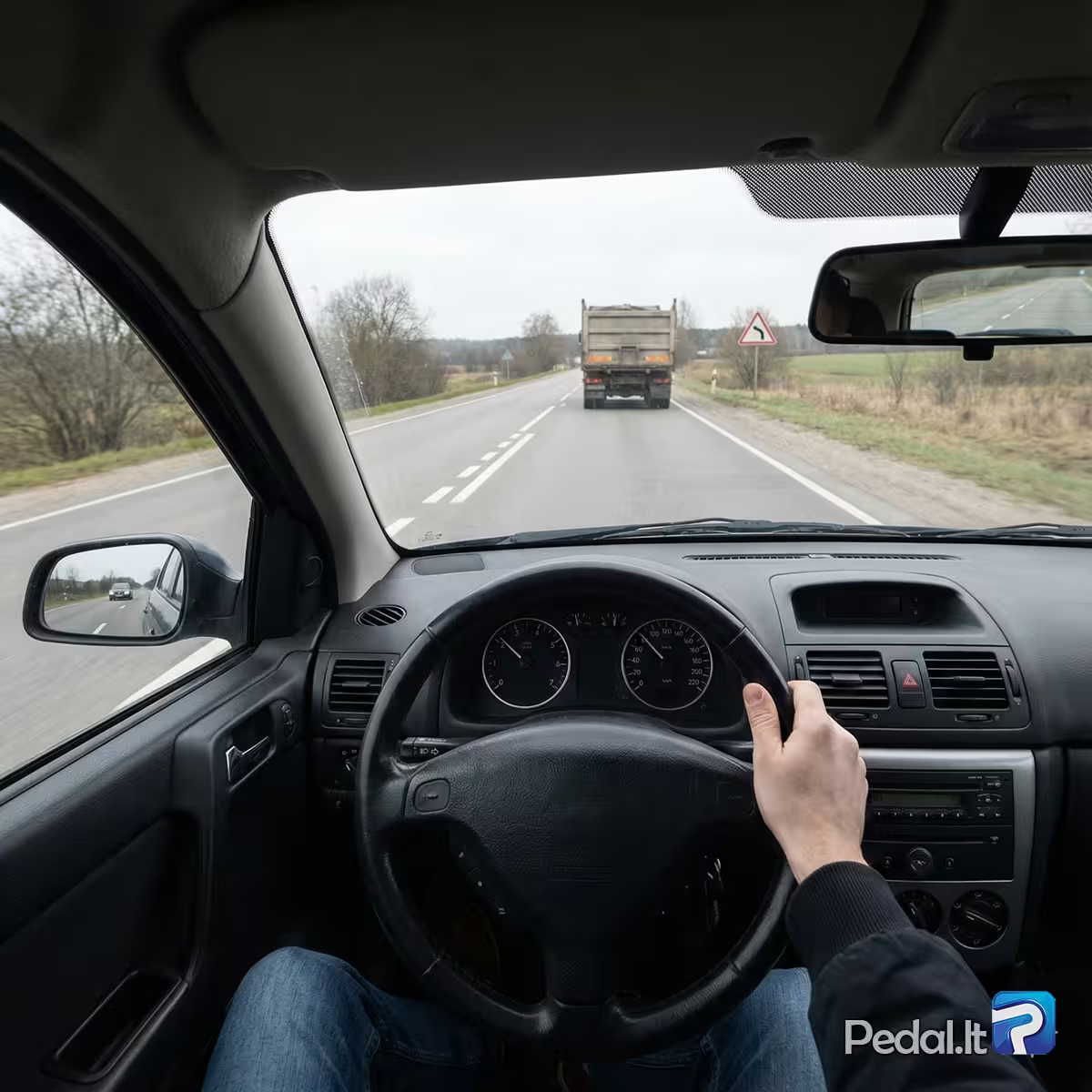
Before overtaking, drivers must ensure that:
RTR 136. Drivers should avoid unnecessary overtaking manoeuvres. Before overtaking, drivers must exercise extra caution and ensure that: 136.1 no driver following has already begun to overtake them; 136.2 the driver of the vehicle to be overtaken is not indicating a left turn; 136.3 the section of lane required for the overtaking manoeuvre is clear and the manoeuvre will not obstruct oncoming traffic or pedestrians on the carriageway; 136.4 a safe distance from the vehicle being overtaken can be maintained during the manoeuvre; 136.5 after completing the overtaking manoeuvre they will be able to return safely to the original traffic lane without obstructing the overtaken vehicle.
1. The road ahead is clear and the overtaking manoeuvre can be completed safely
2. No vehicle is approaching from the opposite direction
3. No vehicle behind has already begun overtaking
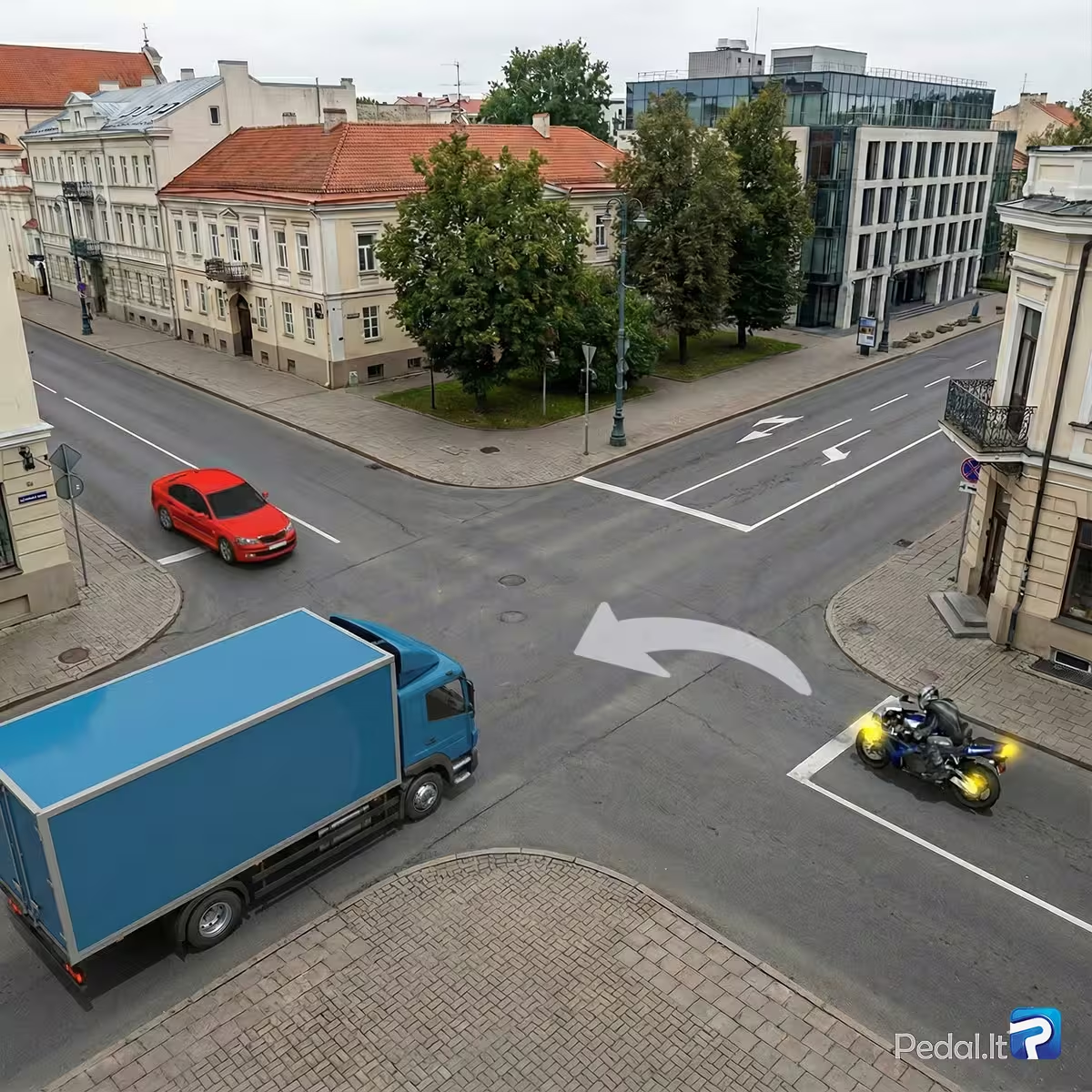
Which vehicle will be the last to pass through the intersection?
The motorcycle, being the only vehicle with no approaching traffic from the right, will enter the intersection first but will stop in the middle to give way to the passenger car (see Paragraph 157 of the Road Traffic Rules). After that, the goods vehicle will proceed through the intersection, as there will no longer be any vehicles approaching it from the right. The passenger car will go second, and the motorcycle will be last. A driver must comply with the requirement of Paragraph 155 of the Road Traffic Rules when driving straight ahead, turning left, or making a U-turn. RTR 155. At an uncontrolled intersection, drivers must give way to vehicles approaching from the right if the vehicle trajectories intersect. RTR 157. When turning left or making a U-turn, the driver shall give way to oncoming vehicles on a road of equal importance that are driving straight ahead or turning right, and—at an intersection where overtaking is allowed—to overtaking vehicles as well.
1. Passenger car.
2. Motorcycle.
3. Goods vehicle.
Where does fog typically form?
Fog typically forms over and near bodies of water, and in humid, low-lying areas.
1. Near lakes.
2. Near rivers.
3. In marshy or swampy areas.
4. In low-lying sections of roads.
Is a driver involved in a road accident required to transport injured persons to the nearest healthcare facility in a private vehicle when the accident occurs within a built-up area?
XXIX. Obligations of Road Users in the Event of a Road Accident (paras. 219–222) 219. In the event of a road accident, every driver involved or any other road user must: 219.5. take all necessary measures to provide first aid to the injured, call an ambulance, or — when calling an ambulance or transporting the injured to a healthcare institution by other means is impossible — convey them to the nearest healthcare institution in a private vehicle, unless such transportation would endanger their life or health.
1. Yes — but only if calling an ambulance or transporting the injured to a medical facility by other means is impossible.
2. No — the driver is not required to do so.
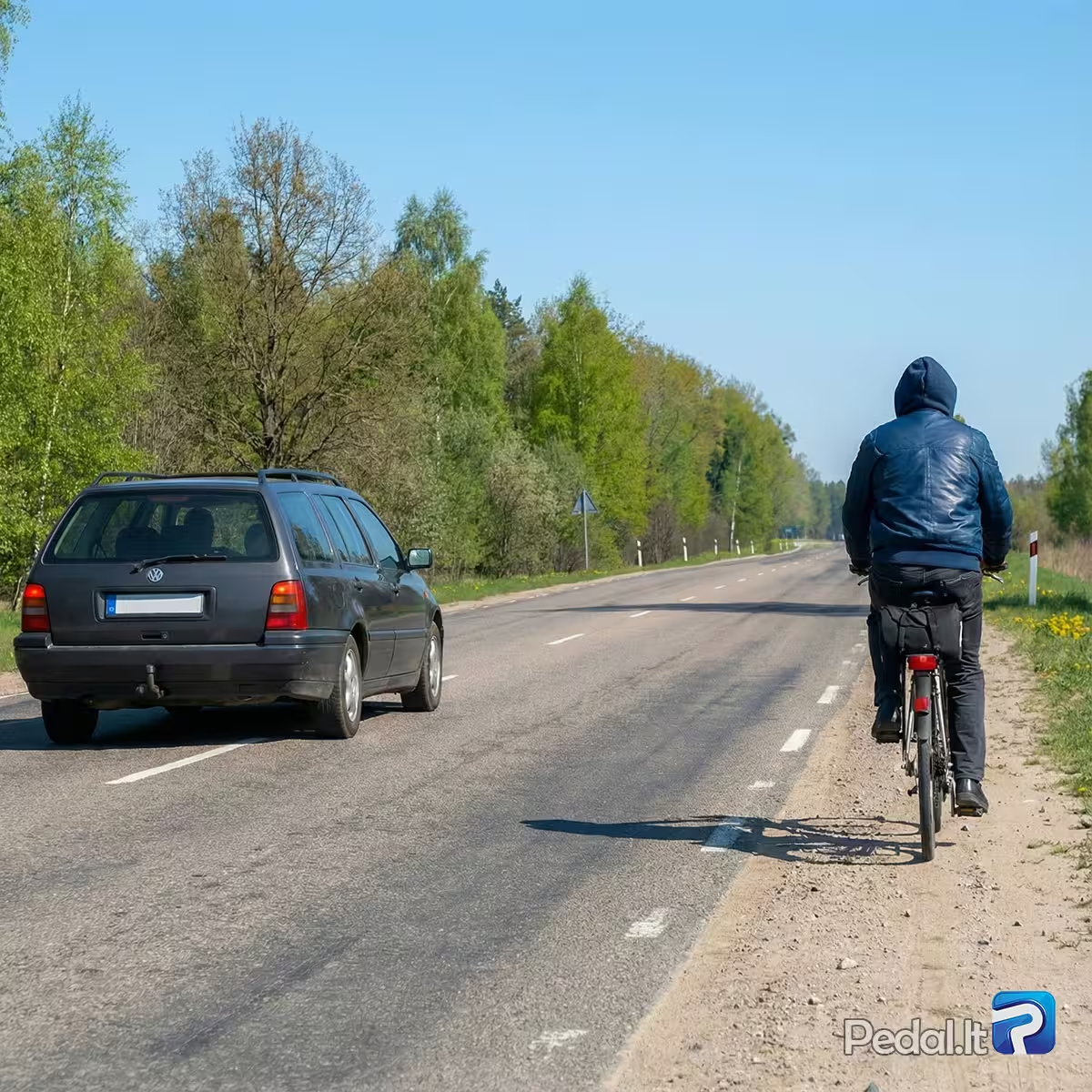
Cyclists must not perform any of the following:
RTR VIII. Rules for Cyclists
64. Cyclists must not:
64.1 Ride on the carriageway except in cases expressly permitted by these Rules.
64.2 Ride on motorways and expressways.
64.3 Ride without holding the handlebars with their hands.
64.4 Carry passengers if the bicycle is not fitted with a designated passenger seat.
64.5 Carry, tow, or push loads that impede control of the bicycle or pose a hazard to other road users.
64.6 Be towed by other vehicles.
64.7 Tow other vehicles, except for trailers specially designed for bicycles.
64.8 Hold on to a moving vehicle while cycling.
64.9 Cross the carriageway by riding over a pedestrian crossing. JB
1. Carrying, towing, or pushing any load that impairs control of the bicycle or endangers other road users.
2. Riding on bicycle paths after dark.
3. Riding in bicycle lanes marked on the sidewalk.
4. Riding at the edge of the carriageway during daylight hours.
Which type of skid is most difficult to control?
Sudden braking on a slippery road can cause a vehicle to begin sliding. In such a situation the driver should stop braking and then take specific actions depending on which wheels are driven. For front-wheel-drive cars, the driver should gently apply the accelerator and correct the vehicle’s path with the steering wheel. For rear-wheel-drive cars, the driver should release the accelerator and, after a slight reduction in speed, steer into the direction of the slide to correct the trajectory. The most difficult situation is when both axles begin to slide; this requires very precise and decisive actions from the driver. JB
1. When the front axle is slipping.
2. When the rear axle is slipping.
3. When both axles are slipping.
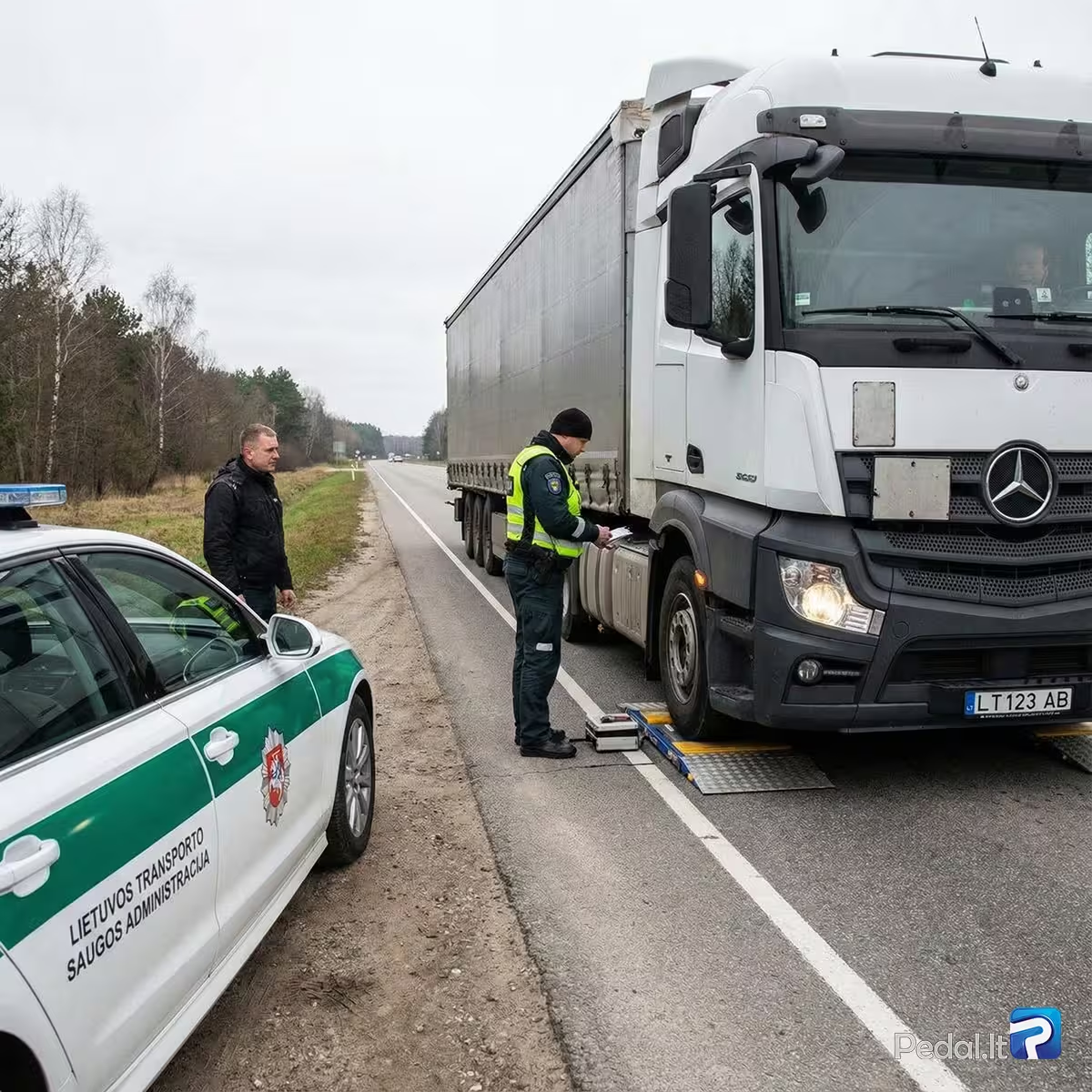
What is the permissible maximum weight for a combination of vehicles?
A vehicle's permissible maximum weight (hereinafter 'permissible maximum weight') means the maximum authorized operating weight of a fully laden vehicle or combination of vehicles, including the driver, passengers, and cargo, as specified by the vehicle manufacturer or the competent government authority.
1. The maximum authorized operating weight of a fully loaded vehicle or combination of vehicles.
2. The total payload of a vehicle and its trailer.
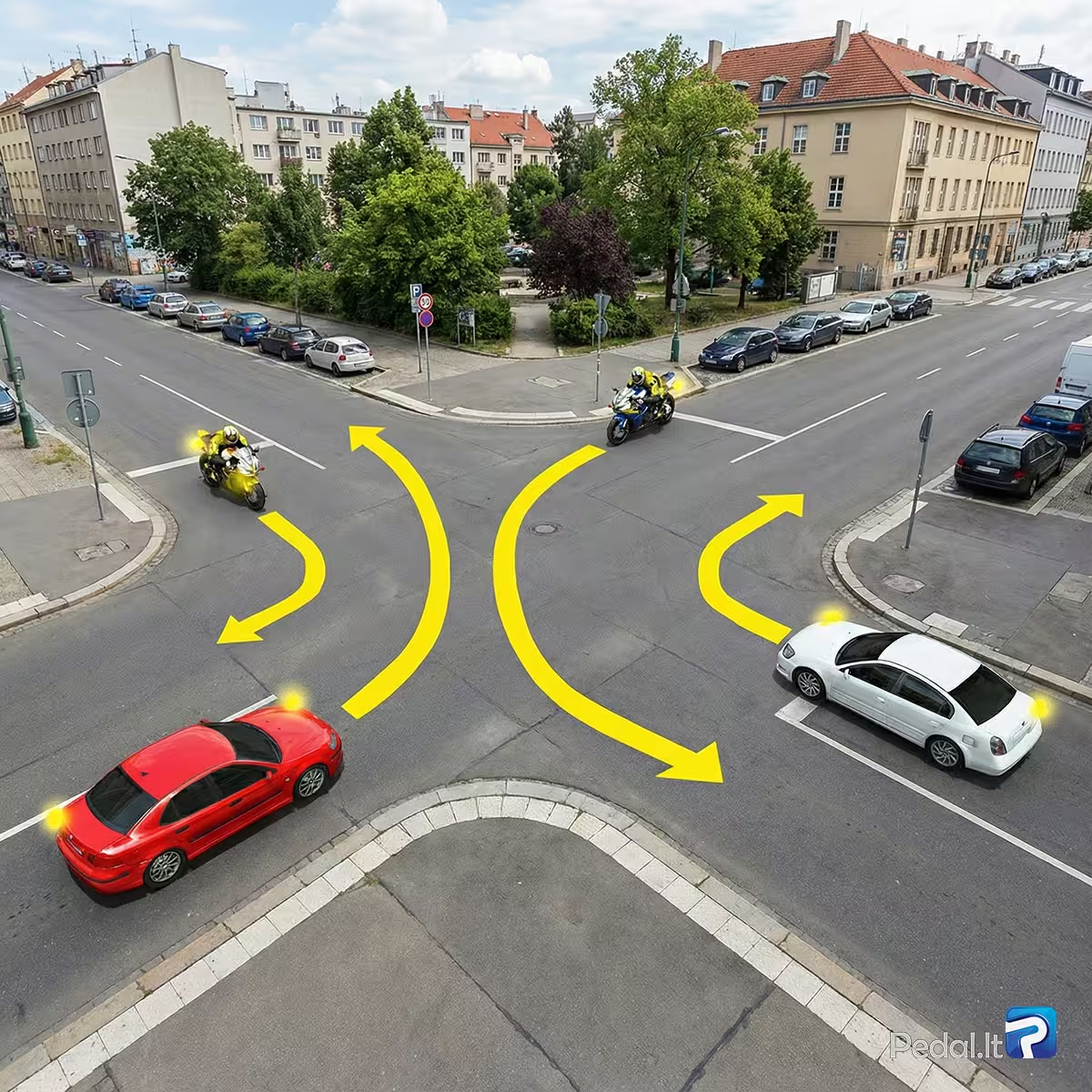
At an uncontrolled intersection, if the paths of the vehicles do not cross, which vehicle has the right of way?
If the vehicles' paths do not intersect, they may proceed simultaneously.
1. The vehicle approaching from the right.
2. The vehicle approaching from the left.
3. All vehicles may proceed simultaneously.
How does fatigue affect a driver?
When a driver operates a vehicle while fatigued, their memory and attention are impaired. They take longer to notice signals and assess situations, driving performance declines, reaction times are delayed, and vehicle control deteriorates.
1. Attention diminishes.
2. Fatigue has no effect on driving.
3. Reaction time is delayed.
Reflectors fitted to the rear of a vehicle must be:
Order No. 2B-14 of the Lithuanian Transport Safety Inspection, dated 16 January 2013, regarding amendments to the technical requirements for motor vehicles and their trailers, Chapter IV, point 4.10: Rear non-triangular reflector — red; Rear triangular reflector — red. JB
1. Yellow.
2. Red.
3. White.
If you are forced to stop outside a built-up area where stopping is prohibited and your hazard warning lights are not working, what must you do?
RTR 92. If the vehicle's hazard warning lights are absent or defective and an emergency stop is required where stopping or parking is prohibited, in the event of an accident, or when the stopped vehicle would be visible to other road users from less than 100 metres, the driver of a motor vehicle (excluding a motor moped and motorcycles without a trailer), a tractor, or a self-propelled machine must immediately place an emergency stop sign on the side of the carriageway opposite the direction of travel: within settlements not less than 25 m, and outside settlements not less than 50 m from the stopped vehicle. If at least one rear position lamp is defective and the hazard warning signal is not working when driving in darkness or poor visibility, an emergency stop sign must be affixed to the rear of the vehicle in order to continue driving.
1. Attach a red flag to your vehicle.
2. Place a warning triangle 50 m behind the stopped vehicle.
3. Stop another vehicle and request assistance.
4. Turn on your dipped-beam headlights.
1 of 30 Task
Time left: 00:00:00
1
2
3
4
5
6
7
8
9
10
11
12
13
14
15
16
17
18
19
20
21
22
23
24
25
26
27
28
29
30