Which actions are permitted for a driver to attract the attention of other road users when overtaking them outside built-up areas?
Outside built-up areas, a driver may warn others when overtaking by flashing the high or low beams (provided this does not dazzle other road users) or by sounding the horn. Within built-up areas, flashing the lights is permitted if it does not dazzle others; sounding the horn is prohibited except when necessary to avoid a traffic accident. RTR — 89.
1. A driver may repeatedly switch the headlights on and off to attract attention.
2. A driver may sound the vehicle's horn to attract attention.
3. A driver may switch on the hazard warning lights.
When approaching a traffic-light-controlled intersection and you notice the green light has been on for a long time, what should you do?
A green light that has been lit for an extended period may change to yellow shortly. You may proceed, but remain vigilant and be prepared to stop safely. 73. Traffic light signals mean: 73.1. A steady circular green light permits movement in all directions (straight ahead, to the right, to the left, or a U-turn); 73.3. A flashing green light permits movement but warns that its time is ending and the signals are about to change.
1. Stop immediately.
2. Increase your speed.
3. Continue driving but be prepared to stop.
Are other vehicles permitted to enter the space between a motorcyclist and the driving instructor who is accompanying the motorcyclist in a car?
RTR 26. Drivers of other vehicles must not enter the space between a learner driver—who is learning to operate a moped, motorcycle, tricycle, or any type of quadricycle—and the driving instructor who is accompanying the learner in a vehicle. During the training period the learner must wear a high-visibility vest marked with the distinguishing sign 'M' on both the front and the back. A driving instructor who accompanies the learner on a motorcycle must also wear a vest of the same type bearing the words 'DRIVING INSTRUCTOR'. If the instructor accompanies the learner in a car, the car must display the identifying marking specified in Annex 4 of these Rules.
1. It is permitted.
2. It is prohibited.
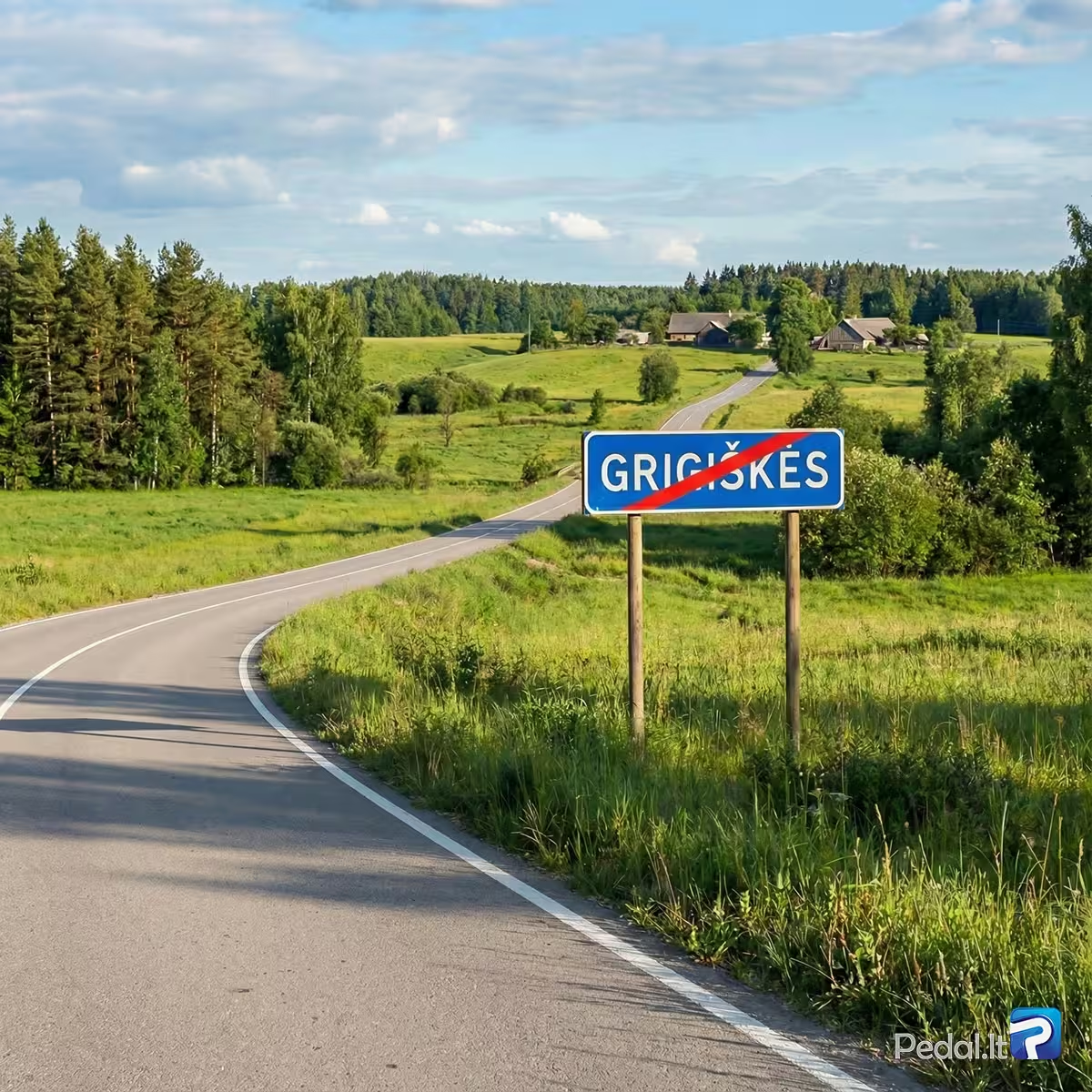
What is the maximum permitted speed for a passenger car on an asphalt- or concrete-surfaced road where this sign applies?
According to the Road Traffic Rules (RTR), a blue sign showing the settlement name in white letters indicates the start of a settlement where the special traffic regulations that normally apply within built-up areas do NOT apply. By contrast, a sign with the settlement name in black letters on a white background marks the start of a settlement where built-up-area traffic rules are in force (RTR 131). The following maximum speeds apply outside built-up areas (RTR 131.1): for passenger cars, light goods vehicles with a permissible maximum mass up to 3.5 tonnes, motorcycles and tricycles — on motorways: 130 km/h from April to October and 110 km/h from November to March; on expressways/highways: 120 km/h from April to October and 110 km/h from November to March; on roads with asphalt or concrete pavement: 90 km/h; on other roads: 70 km/h. See road sign 612: Beginning of a built-up area where special built-up-area rules do not apply. Road sign 613: End of a built-up area (marked by sign 616); it may show the name of another settlement and the distance to it.
1. 70 km/h
2. 80 km/h
3. 90 km/h
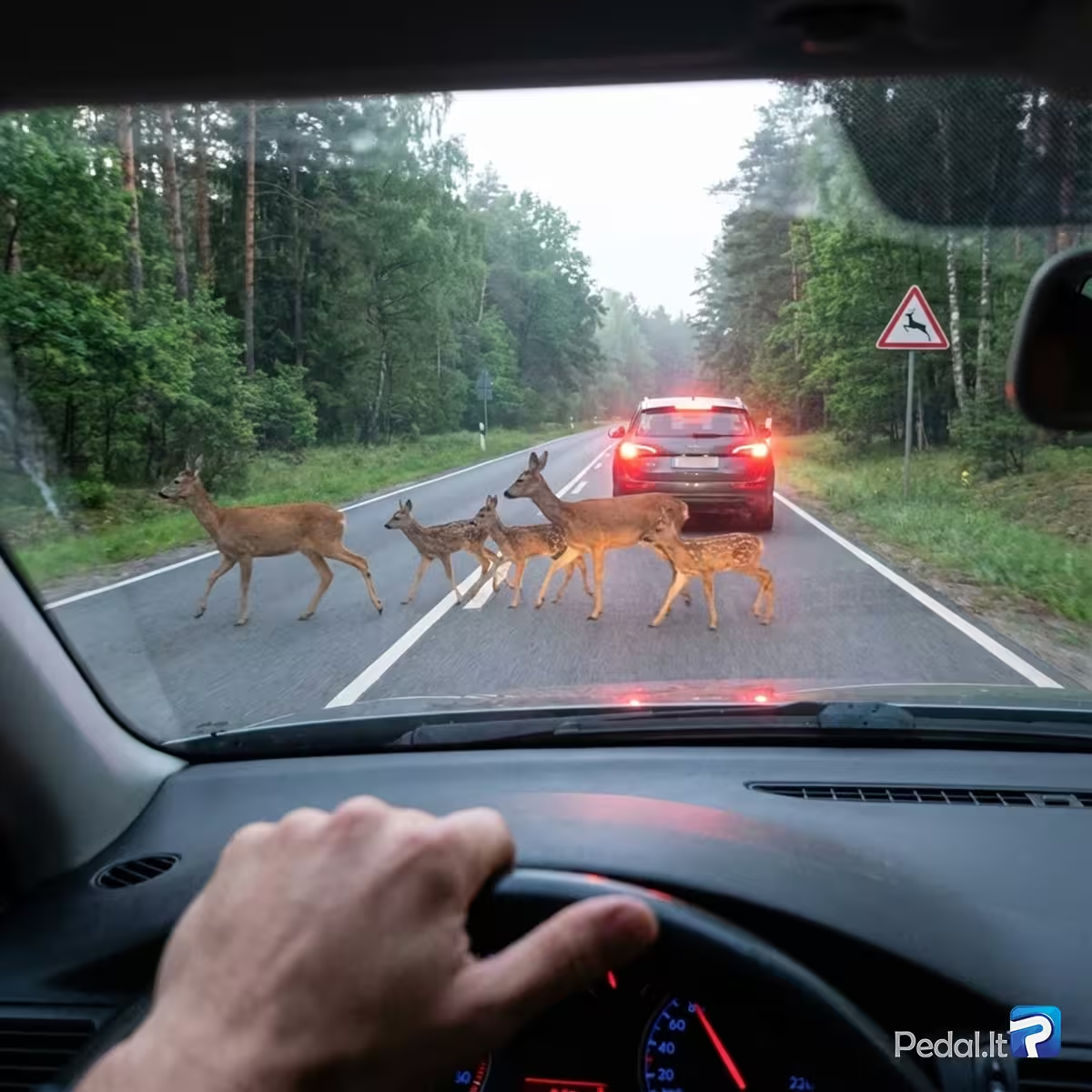
While driving, a group of roe deer crossed the road in front of your vehicle. What should you expect?
Wild animals typically travel in groups. If you see a lone roe deer, deer, or wild boar, others are likely nearby. Herding instincts lead animals to cross roads together rather than individually.
1. The animals may return to the road.
2. A solitary animal may follow the group.
3. It is unlikely that there will be any solitary animals.
What is the maximum permissible concentration of ethyl alcohol in the blood for a passenger car driver who has three years of driving experience?
LAW ON ROAD TRAFFIC SAFETY, Article 2, item 43. Intoxication — the state of a person who has consumed ethyl alcohol, when the concentration of that alcohol in the body's biological media (exhaled air, blood, urine, saliva or other bodily fluids) exceeds the legal limit. The maximum permitted concentration of ethyl alcohol in the exhaled air, blood, urine, saliva or other bodily fluids of persons driving vehicles is 0.4 per mille. Novice drivers, taxi drivers, and drivers of mopeds, motorcycles, tricycles, light quadricycles, four-wheel power quadricycles, vehicles with a maximum permissible weight over 3.5 t or with more than 9 seats, and drivers transporting dangerous goods are considered intoxicated when the concentration of ethyl alcohol in their exhaled air, blood, urine, saliva or other bodily fluids is greater than 0 per mille. JB
1. 0.2 ‰
2. 0.3 ‰
3. 0.4 ‰
4. 0 ‰
Is the term "Pavement" included within the definition of "Road"?
RTR 3.7. 'Road' means the surface of a strip of ground or a superstructure intended for, and used by, road traffic across its full width; this includes the carriageway, intersections, pavements, roadsides, pedestrian and bicycle paths, and dividing strips. RTR 3.8. 'Shoulder' means a road area adjacent to the carriageway (from the carriageway edge to the roadbed edge) that is paved with the same or different material as the carriageway and/or separated from the carriageway by an edge line, but is not regarded as a pavement or as a pedestrian or bicycle track. JB
1. Yes, it is.
2. No, it is not.
Is it permitted to drive on winter tyres during the summer season?
According to the traffic regulations, vehicles fitted with studded tyres must not be used from April 10 to October 31. Therefore, winter tyres without studs are permitted during that period. However, using summer tyres is recommended in warm conditions. If winter conditions persist, the Minister of Transport and Communications may issue an order extending the permitted use of studded tyres.
1. Yes — winter tyres without studs are permitted.
2. No — that is prohibited.
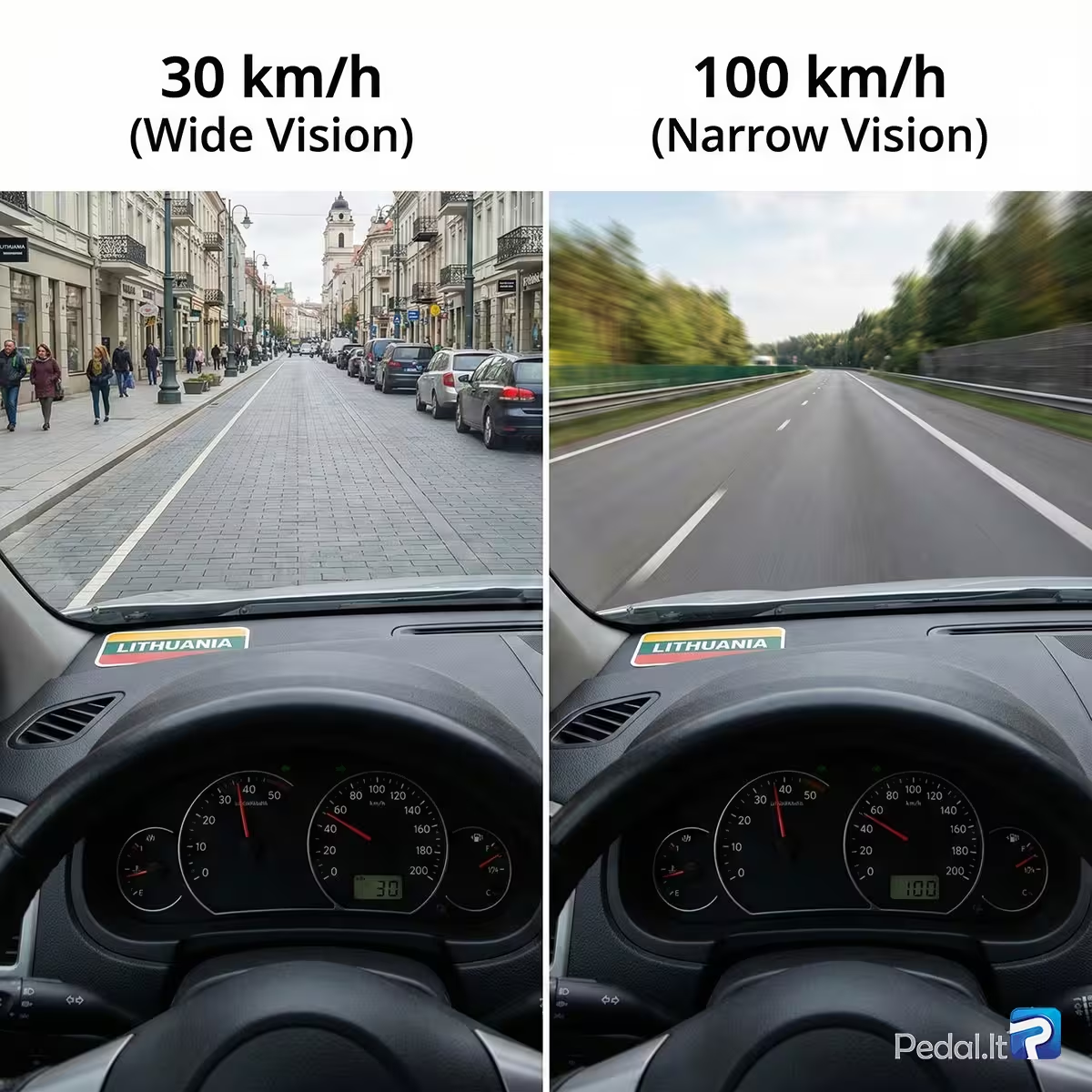
How does your field of vision change as your driving speed increases?
The field of vision is affected by driving speed, visual acuity (e.g., short-sightedness), fatigue, the color and brightness of objects, their contrast with the background, and other factors. As speed increases, a driver’s area of attention narrows and shifts forward: although drivers tend to look farther ahead, the effective dimensions of attention decrease inversely with speed. For example, at 50 km/h it is usually sufficient to focus about 150 m ahead to detect an obstacle; at 140 km/h an oncoming vehicle may not be noticed until it is only 15–20 m from the point of passing.
1. It becomes narrower.
2. It becomes wider.
3. It does not change.
What are the common signs that a car battery is dead?
Select the signs that indicate the car battery may be dead.
1. When attempting to start the car, the starter motor does not engage or cranks very slowly.
2. When attempting to start the car, the dashboard lights dim or go out.
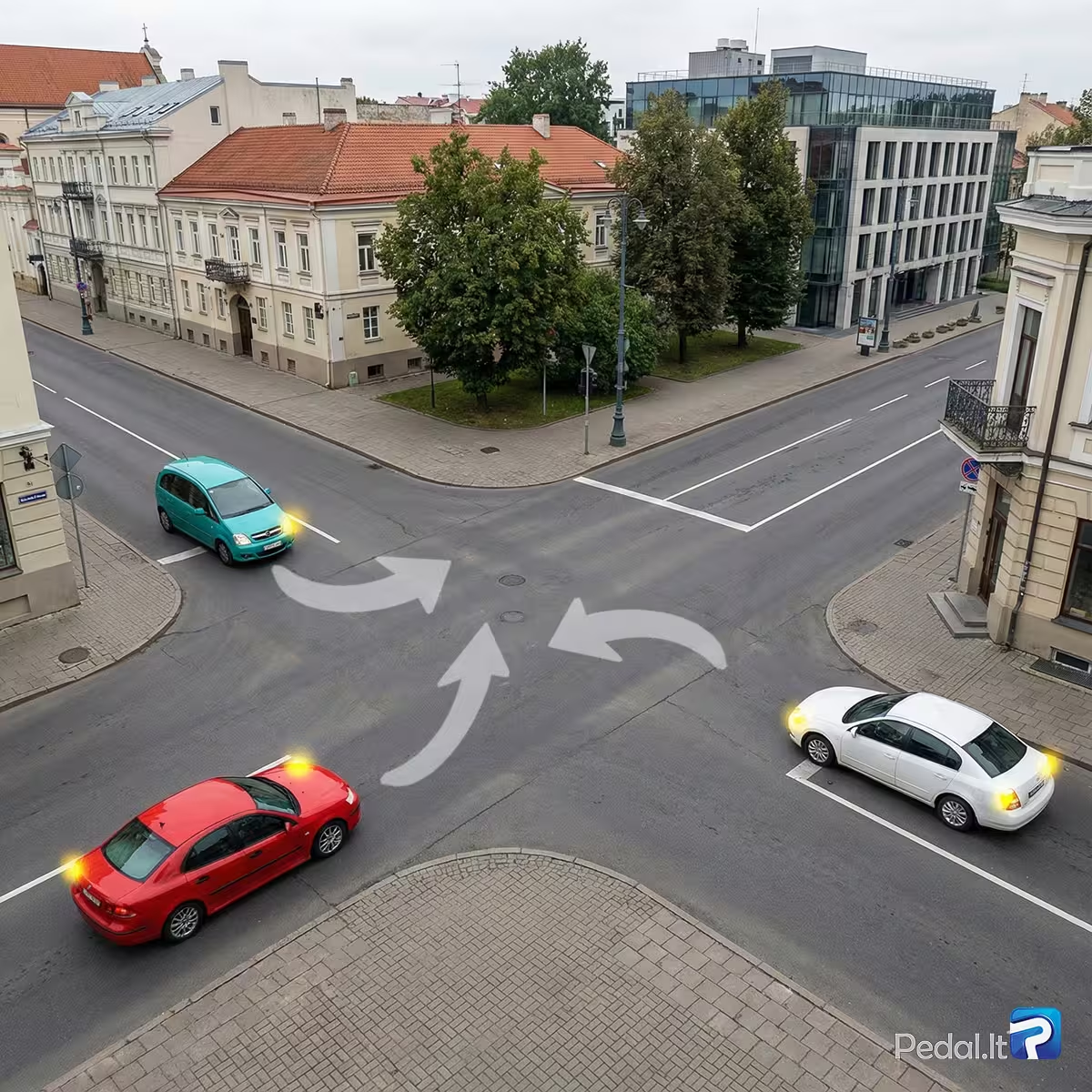
The correct sequence of vehicles to proceed through this intersection is:
The white car goes first because it has no vehicle on its right. It does not need to stop in the middle of the intersection because the green car, which is turning left, does not obstruct it. Next, the red car proceeds because the white car is no longer to its right. Finally, the green car goes. The white and green cars cannot go at the same time because the green car must yield to the red car on its right. (RTR 155) At an uncontrolled intersection, drivers must yield to vehicles approaching from the right when their paths intersect.
1. The white car goes first, then the red car, and finally the green car.
2. The red car goes first, then the green car, and finally the white car.
3. The white and green cars proceed simultaneously, followed by the red car.
Your vehicle's dipped-beam headlamps are on during daylight. Drivers in the oncoming lane keep switching their main beams to dipped beams (flashing their headlights). What does this indicate?
If other drivers switch their headlights from high beam to low beam (flash) during the day, it may indicate that your low beams are excessively bright or misaligned and are dazzling other road users. This is dangerous because dazzled drivers can become disoriented and cause accidents. If you notice that drivers often flash their lights as they pass you, it is a sign to have your vehicle's lighting checked and, if necessary, adjusted. 81. The warning signals are as follows: using turn and brake light signals (signals may also be indicated by hand); sounding the horn; switching headlights on and off; using hazard warning lights; turning on flashing orange hazard lights; and placing a warning triangle on the road or attaching it to a vehicle.
1. You must switch on your main-beam (high) headlamps.
2. You must switch on your position (parking) lamps.
3. Your vehicle's headlamps are misaligned or aimed too high and are dazzling other road users.
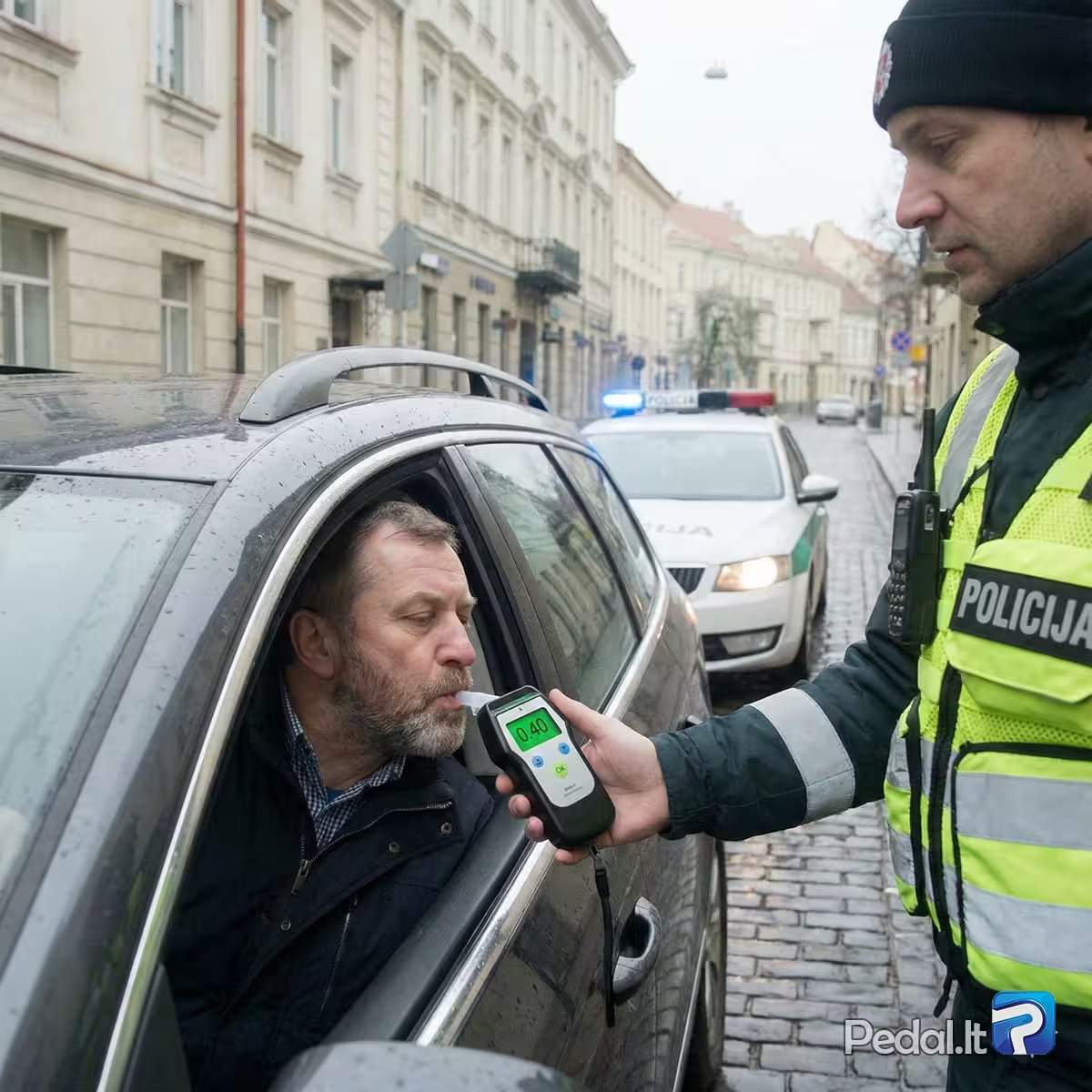
What is the maximum permitted alcohol concentration (in per mille, ‰) for a driver with 20 years of driving experience?
According to the Law on Road Traffic Safety, Article 2, point 43: “Drunkenness” means a state in which a person has consumed ethyl alcohol and the concentration of that alcohol in the body's biological media (exhaled air, blood, urine, saliva or other bodily fluids) exceeds the legal limit. The maximum permitted concentration of ethyl alcohol in the exhaled air, blood, urine, saliva or other bodily fluids of persons operating vehicles is 0.4 per mille (‰). Novice drivers, taxi drivers, and drivers of mopeds, motorcycles, tricycles, light quadricycles, four-wheelers, motorized quadricycles, vehicles with a maximum permissible weight over 3.5 t or with more than 9 seats, and drivers transporting dangerous goods are considered intoxicated when the concentration of ethyl alcohol in their exhaled air, blood, urine, saliva or other bodily fluids is greater than 0 ‰. JB
1. 0.2 ‰
2. 0.3 ‰
3. 0.4 ‰
4. 0.8 ‰
Is a driver involved in a road accident required to transport injured persons to the nearest healthcare facility in a private vehicle when the accident occurs within a built-up area?
XXIX. Obligations of Road Users in the Event of a Road Accident (paras. 219–222) 219. In the event of a road accident, every driver involved or any other road user must: 219.5. take all necessary measures to provide first aid to the injured, call an ambulance, or — when calling an ambulance or transporting the injured to a healthcare institution by other means is impossible — convey them to the nearest healthcare institution in a private vehicle, unless such transportation would endanger their life or health.
1. Yes — but only if calling an ambulance or transporting the injured to a medical facility by other means is impossible.
2. No — the driver is not required to do so.
What should the driver do first to stop a braking car from skidding?
If the vehicle begins to slide while braking, you must stop braking. For example, if you brake suddenly and lock the wheels before a turn, even after steering into the desired direction the car will continue moving in its previous direction (straight), which can cause you to leave the road or collide with an obstacle. Therefore, in this situation you must consciously release the brakes — a maneuver that can be especially difficult for an inexperienced driver. JB
1. Release the clutch and the brake pedal.
2. Release the brake pedal.
3. Increase vehicle speed.
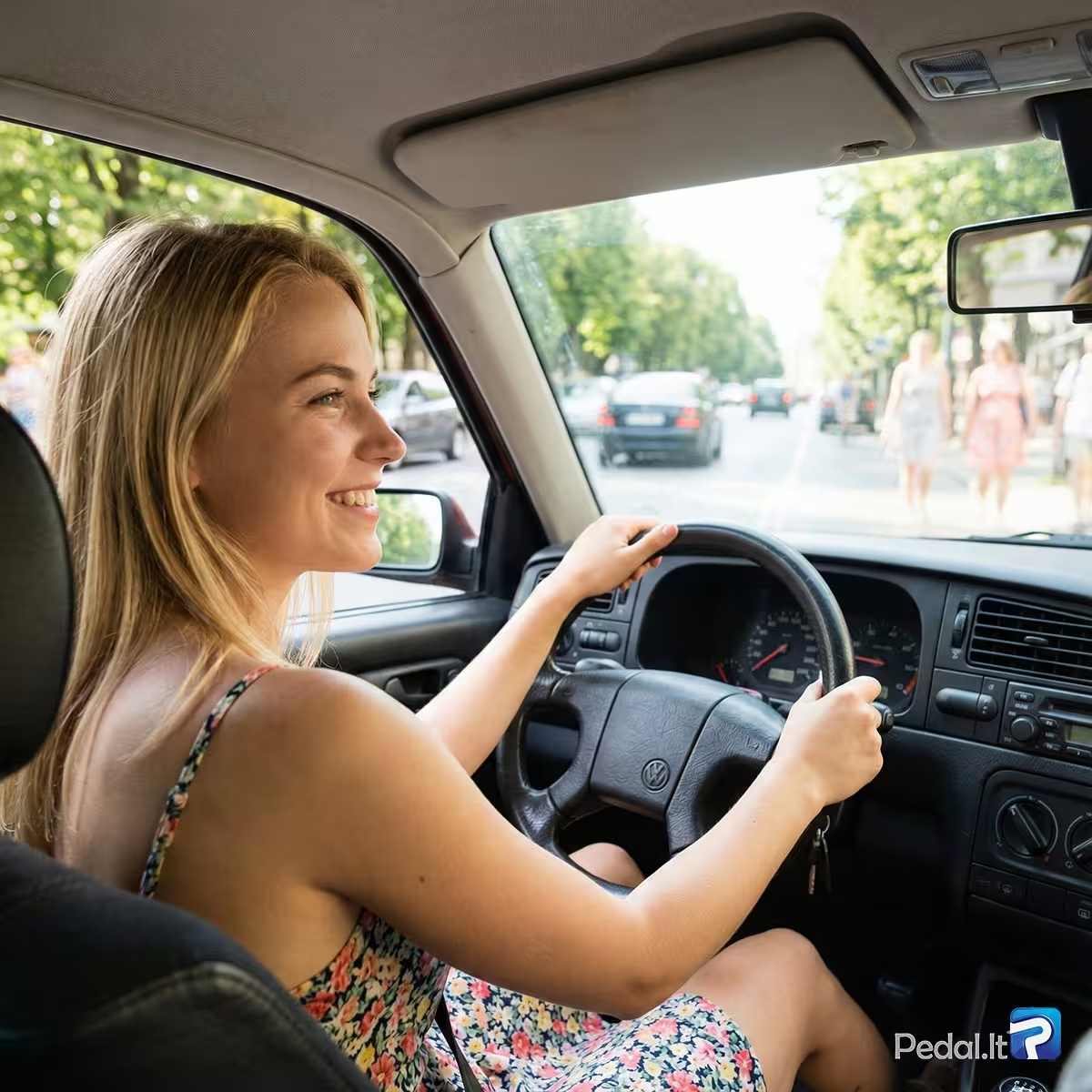
What are common causes of increased fuel consumption while driving?
Underinflated tires are the most common factor directly affecting fuel consumption; incorrect tire pressure can increase consumption by up to about 4%—both too little and too much pressure can have an effect. Check tire pressure when the tires are cold, because driving warms the rubber and raises the pressure. Carrying luggage on the roof increases aerodynamic drag and therefore fuel consumption. Frequent stop-and-go driving also increases fuel use. JB
1. Low tire pressure.
2. Driving with luggage mounted on the roof.
3. Short trips with frequent stops and starts.
Operating a vehicle is prohibited if any of the following applies:
RTR 14. Persons who are not authorized to drive, who are intoxicated, under the influence of narcotic or psychotropic drugs or other psychoactive substances, or who have not taken the legally required daily rest must not drive. Additionally, a person who is fatigued or ill must not drive if doing so could endanger road safety. A vehicle must not be entrusted to anyone affected by the above factors or who is not authorized to operate that class of vehicle. When driving, the driver must comply with any restrictions or conditions indicated on the driving licence.
1. The driver is not authorized to do so.
2. The driver holds valid documents required by the Road Traffic Rules.
3. The driver is intoxicated.
4. The driver is not under the influence of psychoactive substances (e.g., narcotics, medications, or other intoxicating substances).
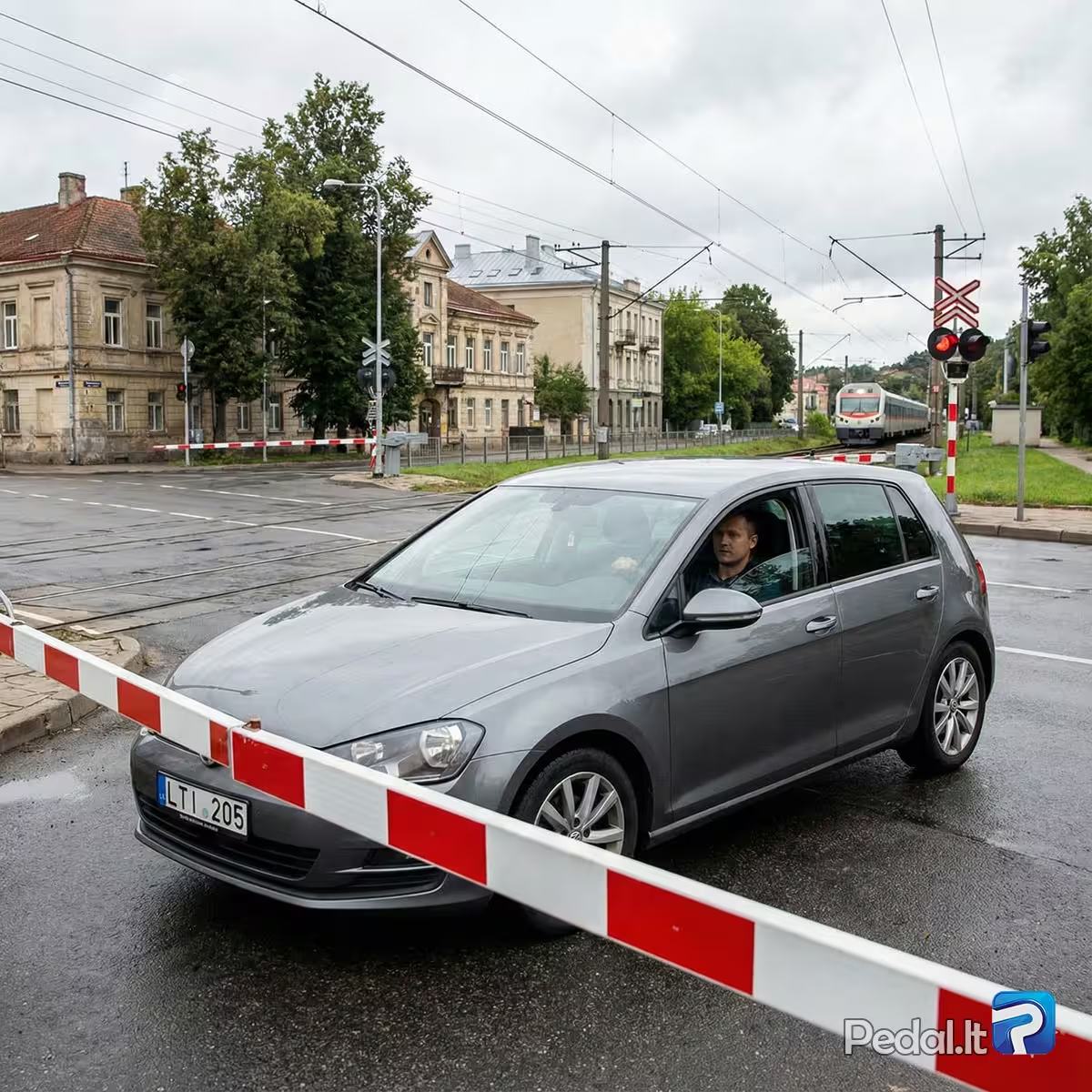
At a railway crossing, the vehicle driver must not:
Regulation RTR 173. Drivers must not: 173.3. enter a level crossing after the barrier has been lowered or is in the process of being lowered; deliberately lift the barrier; or drive around the barriers.
1. Deliberately lifting the barrier.
2. Entering the crossing after the barrier has been lowered or is in the process of being lowered.
3. Driving around the barrier.
Can the parking brake be used to slow the vehicle while braking?
The parking brake may be used to help slow the vehicle if the service (main) brakes fail.
1. No — it cannot be used.
2. Yes — in any circumstance.
3. Yes — in an emergency, if the service (main) brakes fail.
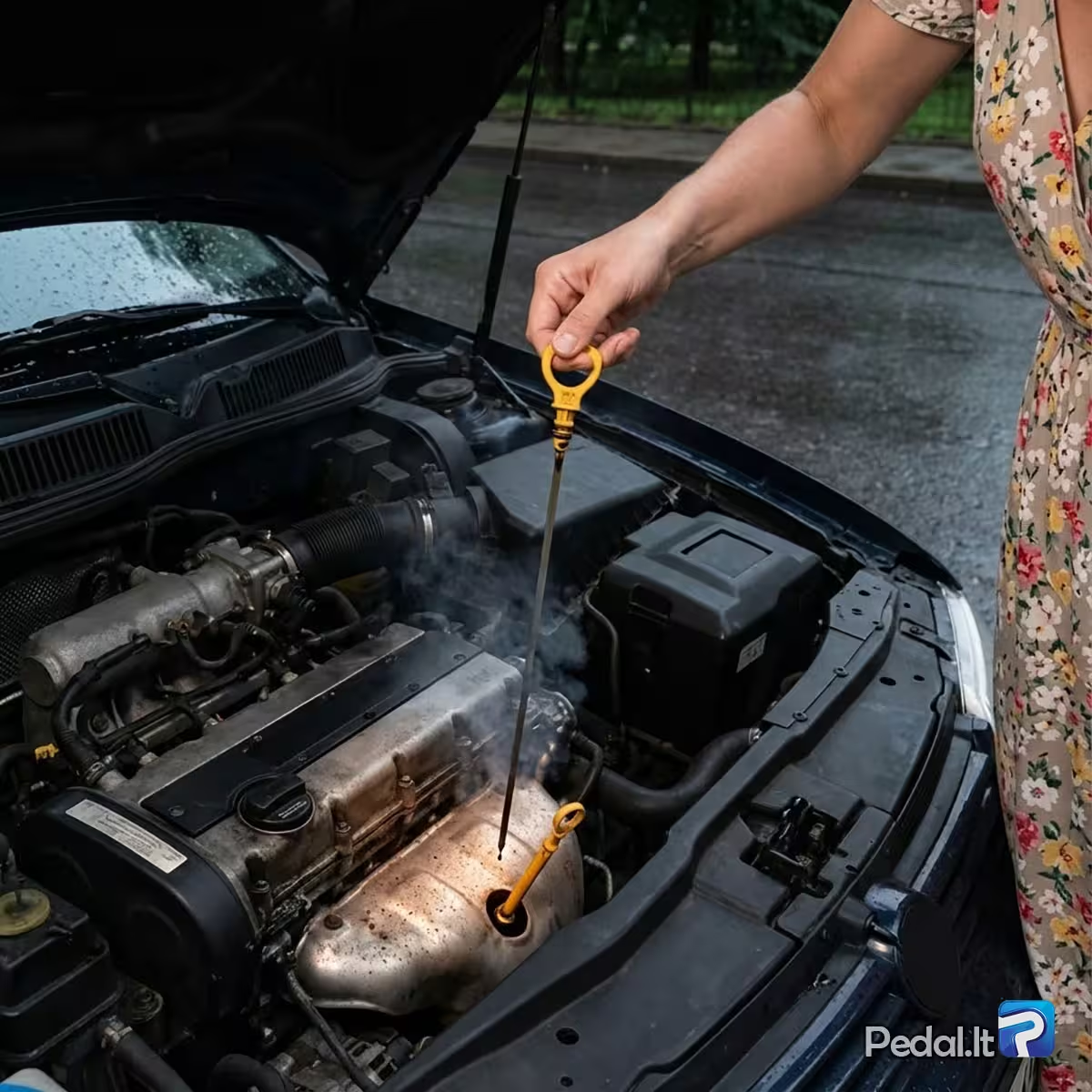
How dangerous is a low engine oil level?
When engine oil is low, internal components receive less lubrication, causing increased wear and overheating; this accelerates deterioration and can lead to engine failure.
1. Fuel consumption will be reduced.
2. The engine may suffer serious damage or fail.
When are drivers permitted to brake on a pedestrian crossing?
According to traffic regulations, there are no specific locations where braking is prohibited. Braking is necessary to ensure road safety; therefore drivers must brake whenever required.
1. When it is necessary to prevent a traffic accident.
2. When they see the brake lights of the vehicle ahead.
3. When they need to stop after the pedestrian crossing on the right-hand side of the road.
4. It is forbidden to brake on a pedestrian crossing in all circumstances.
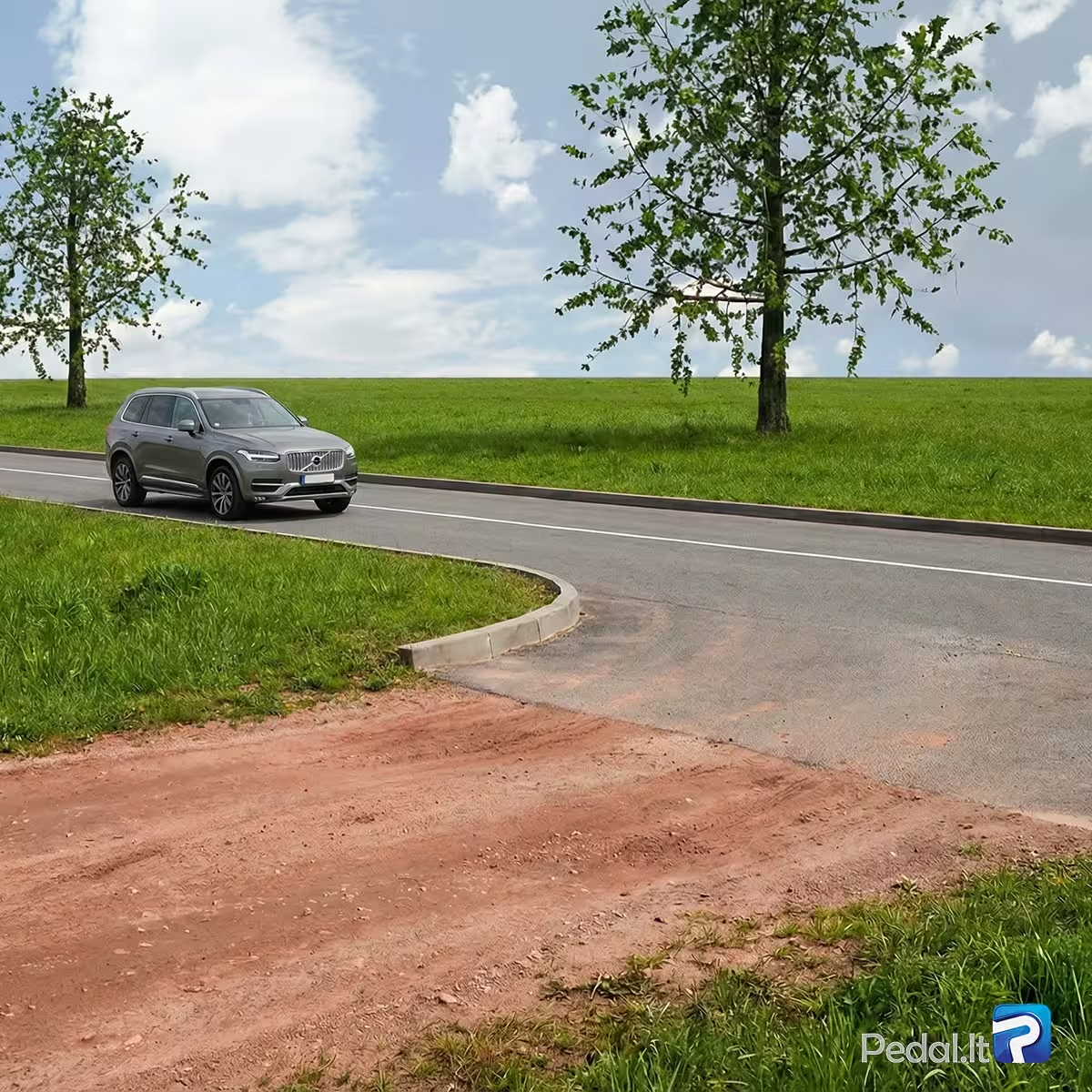
Which road is the main road at this intersection?
RTR 3.14. The main (priority) road is: a road marked with the 'Priority Road' sign, an 'Intersection with a Side Road' sign, a 'Side Road from the Right' or 'Side Road from the Left' sign, or designated as a 'Motorway' or 'Road for Motor Vehicles' in relation to the intersecting or joining road; a road in relation to another road marked with 'Give Way', 'STOP', or 'End of Residential Area' signs; a paved road (concrete, asphalt, or cobblestone) in relation to an improved unpaved road (macadam or gravel) or a dirt road (forest, field, or similar road); and an improved unpaved road in relation to a dirt road. A paved or improved unpaved section of a side road immediately before an intersection does not make that side road equivalent to the intersecting or joining road. There is no priority road at intersections controlled by traffic signals. JB
1. The road with a gravel surface.
2. Both roads are equivalent.
3. The road with an asphalt surface.
How can you confirm that all the lights on your vehicle are functioning?
Drivers should check that all vehicle lights are working before every long journey and at least once every six months. Properly functioning lights help you assess road conditions accurately and reduce the risk of accidents.
1. Turn on all vehicle lights and, each time you exit the car, walk around it to verify that they are illuminated.
2. You do not need to inspect your car's lights; instead, replace the bulbs every six months.
When should you release the throttle and rely on the vehicle's inertia to conserve fuel?
Note: Releasing the throttle is not the same as freewheeling. See 3.4 Control the throttle: 3.4.9 Release the throttle and use the vehicle's inertia before coming to a stop at a predetermined location (for example, at an intersection with a traffic light or at a stop sign) or in similar situations. JB
1. When approaching an intersection with a red traffic light.
2. When driving downhill on a steep slope.
3. When approaching a stop sign.
4. Before coming to a stop at a predetermined location.
What is the primary purpose of a vehicle's main brakes?
A vehicle's braking system is intended to slow the vehicle, bring it to a complete stop, and hold it stationary. Braking distance should be kept as short as possible, and you must maintain control of the vehicle while braking.
1. Slow the vehicle to bring it to a complete stop and hold it stationary on a downhill slope.
2. Maintain a safe, controlled speed when driving downhill.
Another person may drive your vehicle if:
A driving licence of categories B and BE entitles the holder to drive a passenger car (RTR 14). It is prohibited to operate a vehicle if you do not have the legal right to do so, or if you are under the influence of alcohol, narcotic drugs, psychotropic substances, or other psychoactive substances. A person who is fatigued or ill must not drive if driving could endanger road safety. A vehicle must not be entrusted to anyone who is under the influence of the aforementioned factors or who is not authorized to drive that type of vehicle. When operating a vehicle, the driver must comply with the restrictions and endorsements indicated on the driving licence.
1. The person is at least 18 years old but does not possess a driving licence.
2. The person holds a category BE driving licence.
3. The person holds a category B driving licence.
4. The person holds only a category A driving licence.
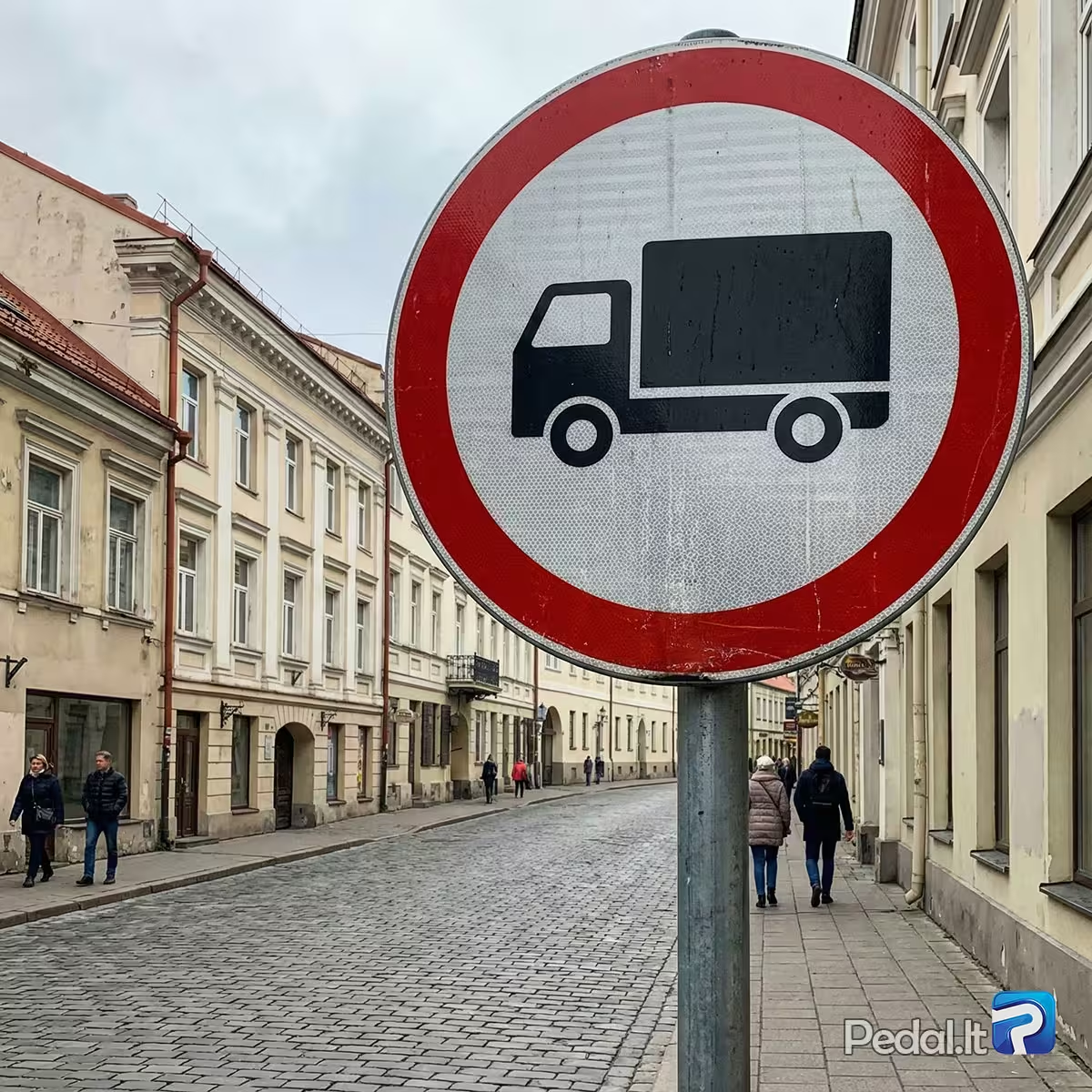
Are tractors or self-propelled vehicles permitted to pass this road sign?
Road sign 304 — "No entry for goods vehicles." Entry is prohibited for goods vehicles and vehicle combinations whose permissible maximum mass exceeds 3.5 tonnes or the weight shown on the sign. Tractors and self‑propelled vehicles are also prohibited, except for service vehicles.
1. Yes — passage is permitted.
2. No — passage is prohibited.
3. Passage is allowed only on working days.
What must you do first before overtaking?
RTR 136. Drivers should avoid unnecessary overtaking maneuvers. Before overtaking, drivers must take extra precautions and ensure that: 136.1 no driver following has already begun to overtake them; 136.2 the driver of the vehicle to be overtaken is not signaling a left turn; 136.3 the portion of the lane required for overtaking is clear and the maneuver will not obstruct oncoming traffic or pedestrians on the carriageway; 136.4 a safe distance from the vehicle being overtaken will be maintained throughout the maneuver; 136.5 after overtaking, the driver can safely return to the original lane without obstructing the overtaken vehicle.
1. Ensure the road ahead is clear.
2. Shift to a lower gear.
3. Increase your speed.
4. Reduce your speed.
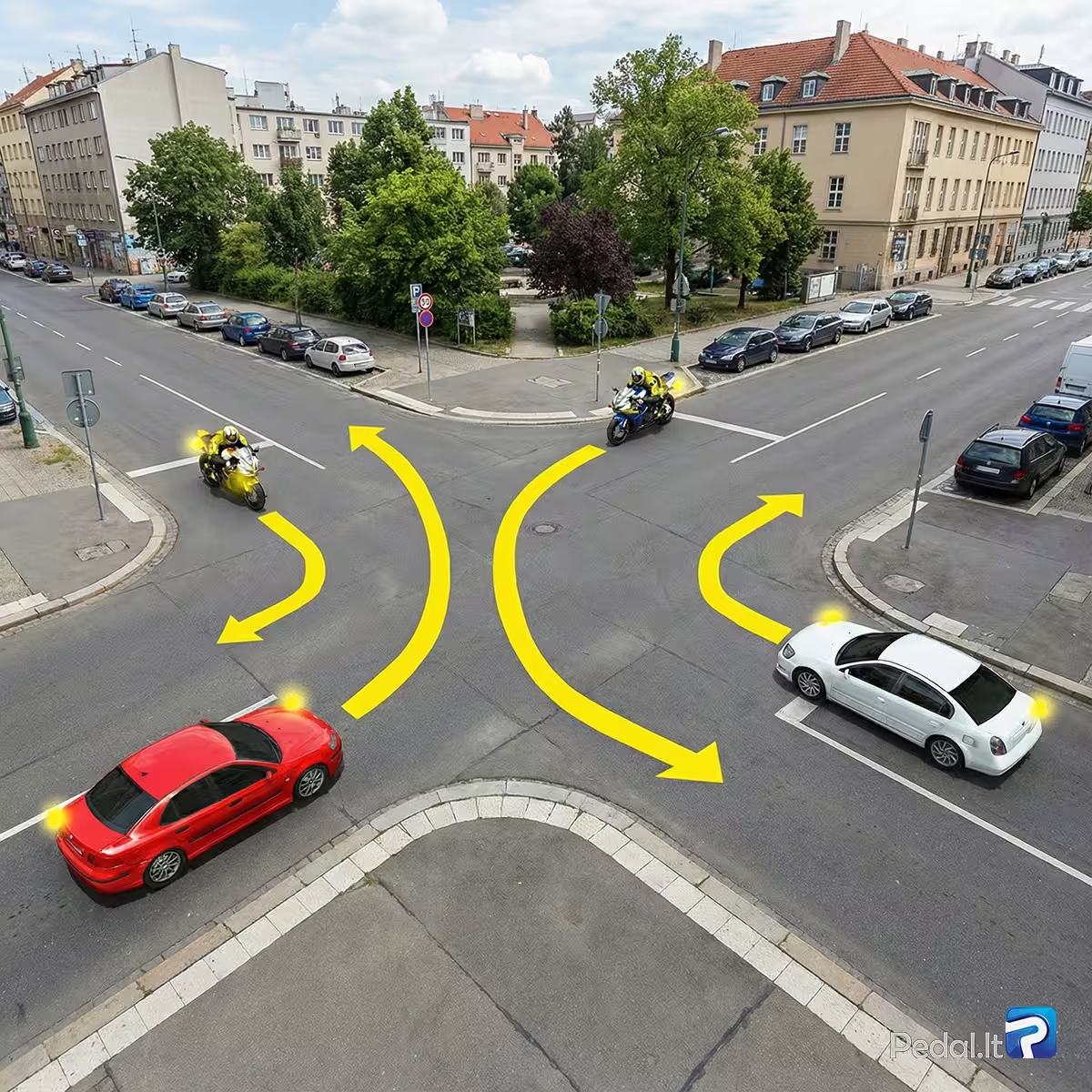
At an uncontrolled intersection, if the paths of the vehicles do not cross, which vehicle has the right of way?
If the vehicles' paths do not intersect, they may proceed simultaneously.
1. The vehicle approaching from the right.
2. The vehicle approaching from the left.
3. All vehicles may proceed simultaneously.
What should you do if you break another car's headlamp while manoeuvring in a car park?
This is considered a road traffic accident. First, try to locate the vehicle's owner and, together with them, complete the Road Accident Report Form. If you cannot find the owner, call the police — they can help locate the owner or come to the scene to record the accident. Also notify your insurance company of the accident as soon as possible. RTR 220. If there are no deaths or injuries and the involved road users agree on the circumstances and do not call the police to the scene, the parties must draw the accident sketch on the Road Accident Report Form, describe the circumstances in writing, and have the form signed by all involved. If none of the parties has the Road Accident Report Form, the circumstances and sketch may be recorded on a blank sheet of paper listing all involved road users, their vehicles and any witnesses, and confirmed by the signatures of all involved. If the circumstances are contested, the police must be called to the scene. RTR 221. Participants in a road accident must refrain from consuming alcoholic beverages, medicines, narcotic drugs or other intoxicating substances immediately after the accident until they have undergone, or have refused, testing for alcohol or impairment by narcotic, psychotropic or other substances. RTR 222. If the accident caused only property damage and the victim is not present at the scene, the person involved in the accident must immediately notify the victim, and if this is not possible — the police.
1. Locate the vehicle's owner; if you cannot find them, call the police.
2. If nobody notices, you may continue driving.
3. Fill in the Road Accident Report Form together with the car owner, if possible.
4. Notify your insurance company about the accident.
1 of 30 Task
Time left: 00:00:00
1
2
3
4
5
6
7
8
9
10
11
12
13
14
15
16
17
18
19
20
21
22
23
24
25
26
27
28
29
30