.avif)
Is it permitted to use high‑beam headlights after dark on an unlit road within a settlement?
On unlit roads it is permitted to use high‑beam headlights. According to regulation RTR 95, during hours of darkness or in conditions of poor visibility high beams must be switched to low beam on illuminated roads (see 95.1).
1. Yes — it is permitted.
2. No — it is prohibited.
Who is responsible for ensuring that children transported in a motor vehicle use the appropriate installed and correctly fitted restraint systems?
RTR 203. A driver must ensure that children transported in a motor vehicle use the appropriate installed and correctly fitted restraint systems. JB
1. The children being transported.
2. The parents or legal guardians.
3. The foster parents.
4. The driver of the vehicle.
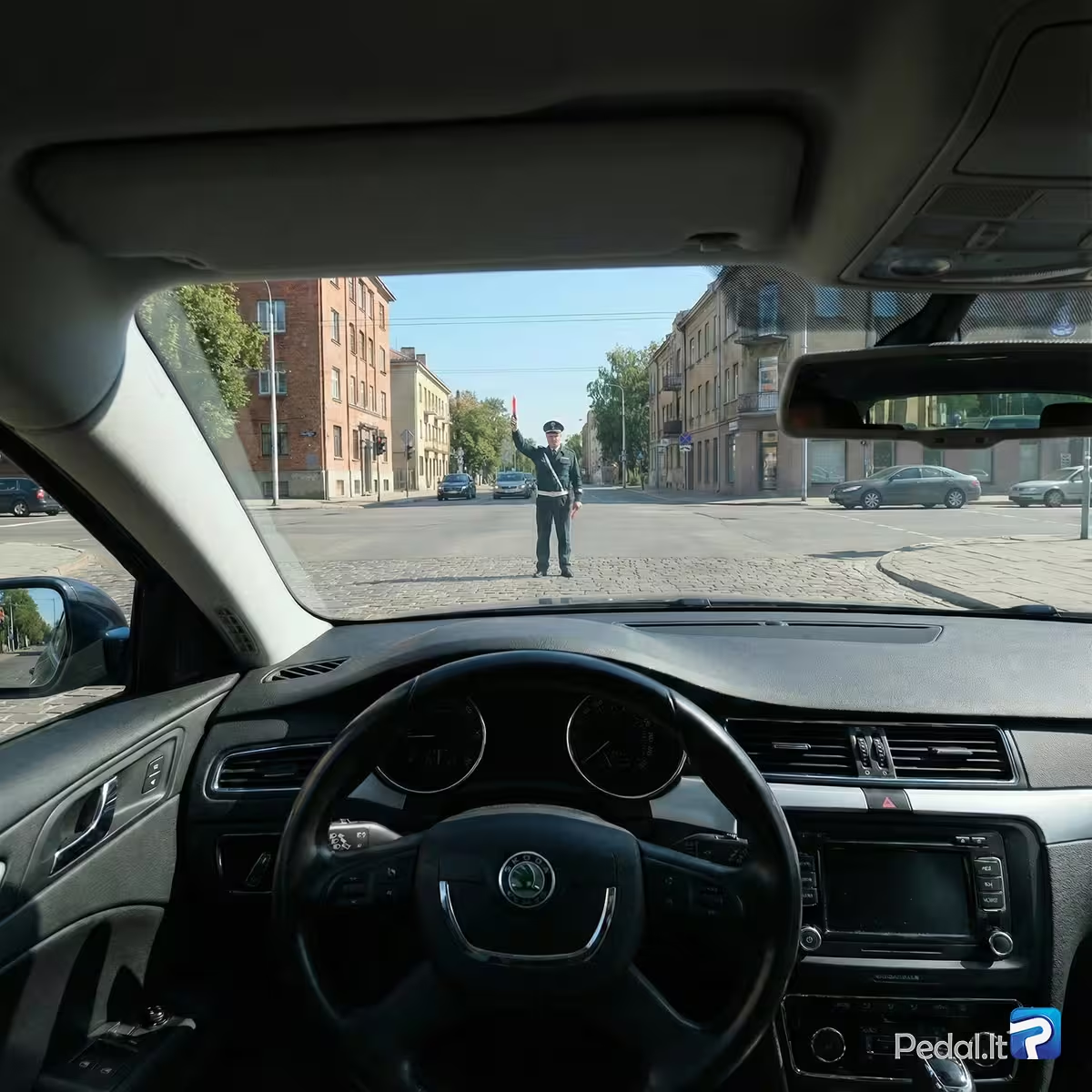
Are you permitted to proceed in this situation?
RTR 77. Signals given by traffic officers have the following meanings: 77.3. Arm raised upward: 77.3.1. All road users must not proceed in any direction.
1. Yes — you may proceed.
2. No — you must not proceed.
When approaching a traffic-light-controlled intersection and you notice the green light has been on for a long time, what should you do?
A green light that has been lit for an extended period may change to yellow shortly. You may proceed, but remain vigilant and be prepared to stop safely. 73. Traffic light signals mean: 73.1. A steady circular green light permits movement in all directions (straight ahead, to the right, to the left, or a U-turn); 73.3. A flashing green light permits movement but warns that its time is ending and the signals are about to change.
1. Stop immediately.
2. Increase your speed.
3. Continue driving but be prepared to stop.
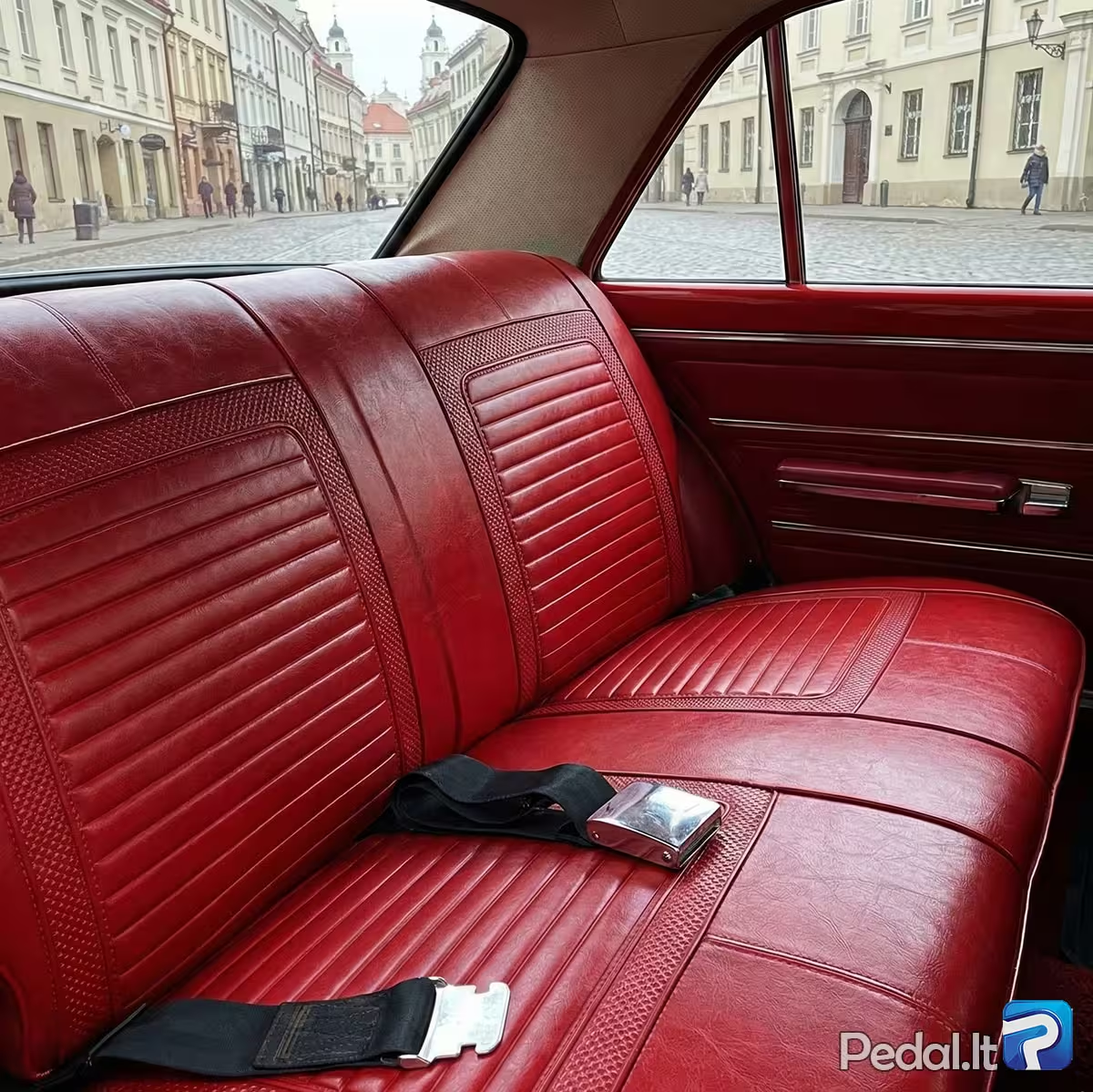
Must a rear-seat passenger wear a seat belt while the vehicle is in motion?
Drivers and all passengers must wear seat belts in vehicles that are equipped with them. In buses fitted with seat belts, a "Fasten Your Seat Belt" notice must be displayed in a clearly visible location in front of each seat, on the seat, or adjacent to it. It is recommended that all bus passengers be informed of the seat belt requirement — either verbally or by audiovisual means — before the journey begins.
1. Yes — you are required to wear a seat belt.
2. No — you are not required to wear a seat belt.
Is turning around permitted on the bridge?
Traffic Regulations (RTR) 116. Turning around is prohibited under clause 116.4: on and under bridges, overpasses, and viaducts. JB
1. Yes, it is permitted.
2. No, it is not permitted.
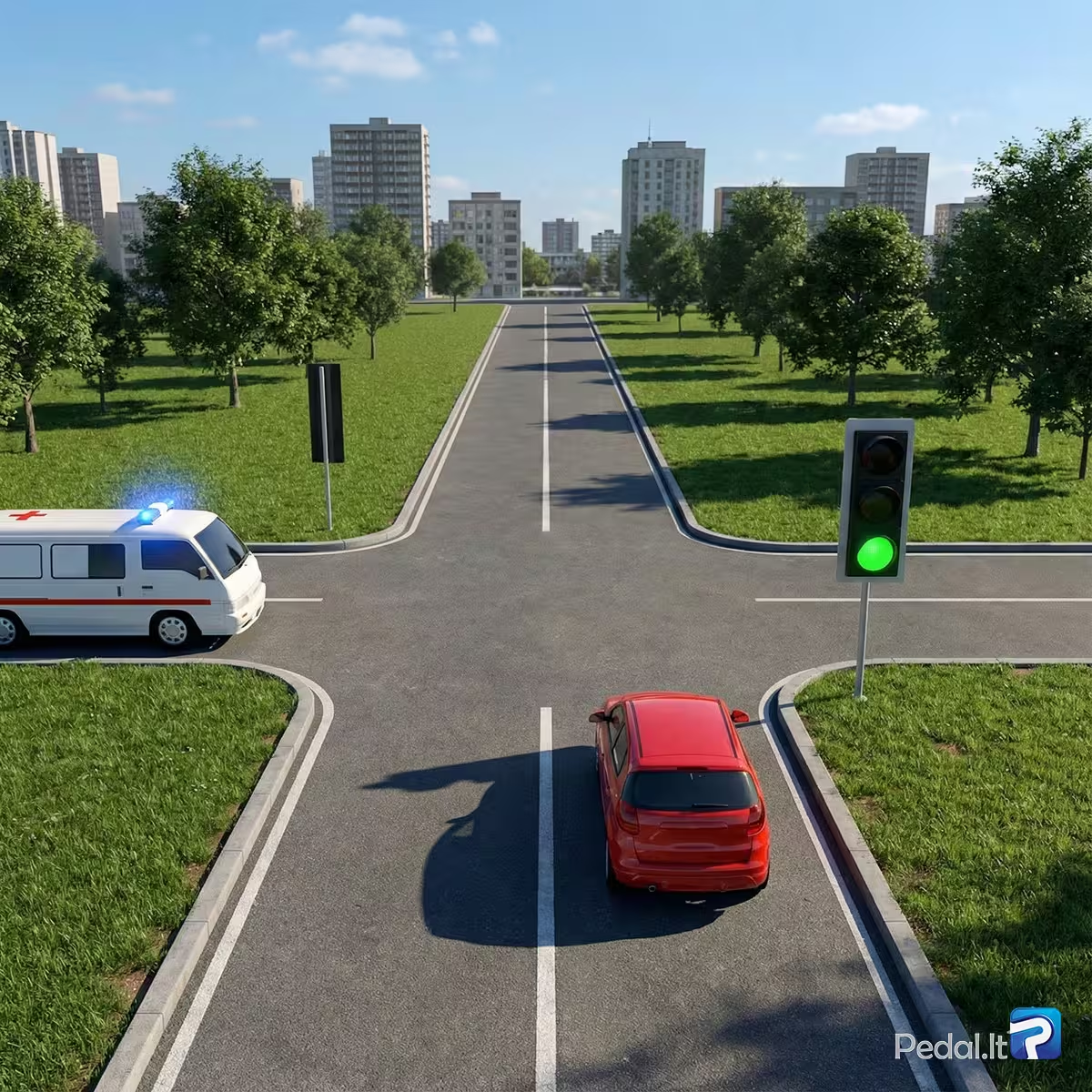
If, in this situation, a vehicle approaches the intersection with blue and red flashing lights and its special audible signals activated, the driver of the red car:
RTR 12. Road users must immediately yield to approaching special vehicles that are using blue-and-red (or only blue) flashing lights and special audible signals, and to vehicles escorted by them. Road users shall form an emergency corridor and yield as follows: 12.1 On a road with a single lane in one direction, drivers must stop on the right hard shoulder if available; if there is no hard shoulder, they must stop close to the right-hand edge of the carriageway. 12.2 On a road with two or more lanes in the same direction, vehicles in the far-left lane shall move as close to the left (the appropriate edge of the carriageway designated for that direction) as possible and stop; vehicles in lanes to the right of the far-left lane shall move as close to the right (toward the right-hand edge of the carriageway or the hard shoulder) as possible and stop. 12.3 On a road with a central reservation, only drivers travelling in the same direction must comply with the requirements specified in paragraphs 12.1 and 12.2. JB
1. He will proceed without yielding to anyone because he has a green light.
2. He must yield to the special vehicle.
At what times of day are wild animals most likely to cross the road?
Wild animals commonly appear on roads at dusk and in the late evening (approximately 17:00–23:00), and also in the early morning hours around 4:00–5:00.
1. At dawn (early morning).
2. During the night.
3. At dusk (twilight, when it is getting dark).
4. During the middle of the day.
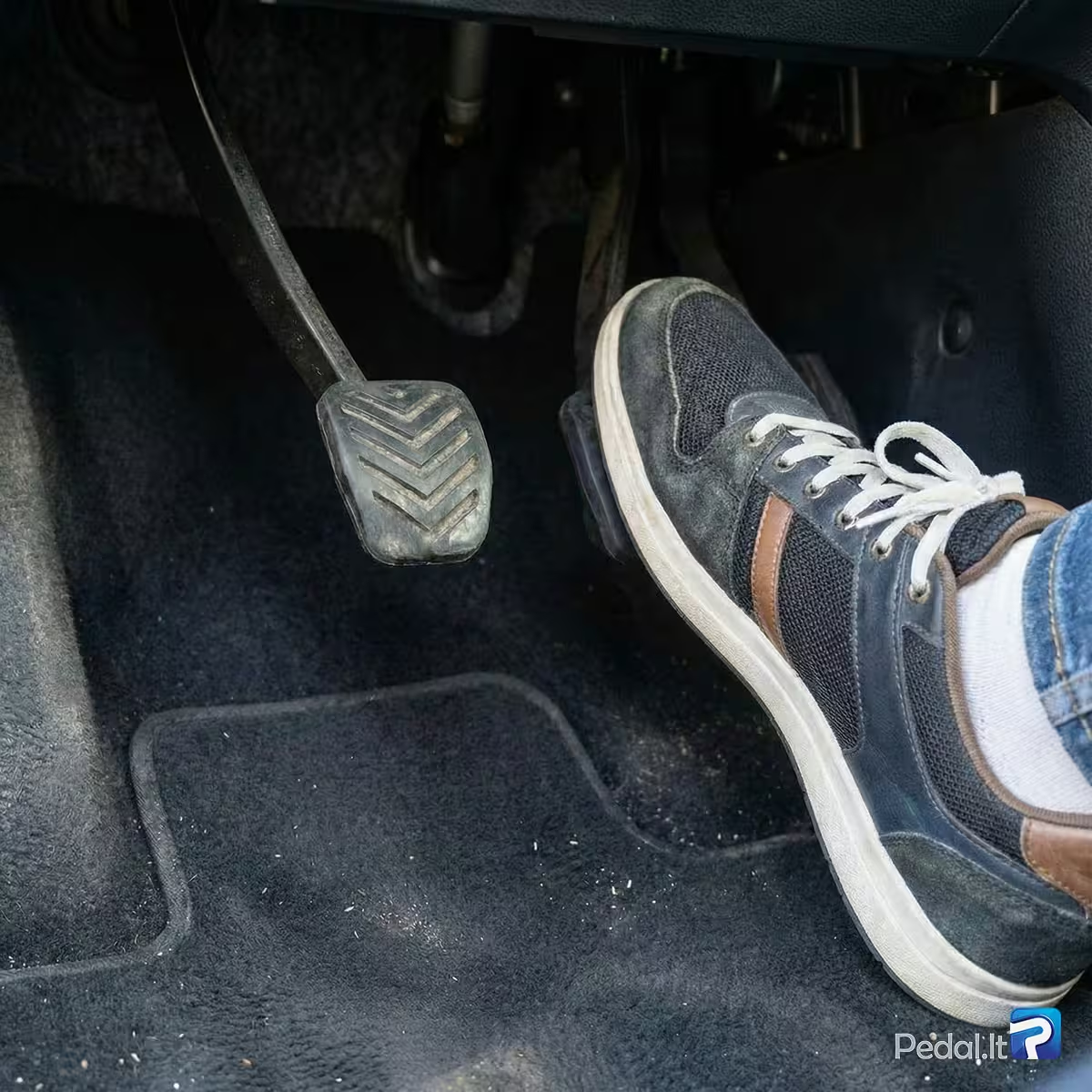
Which factors can cause the clutch to wear out more quickly?
Causes of premature clutch wear include an improperly adjusted clutch release mechanism, loose clutch mounting screws, weakened clutch springs, or a worn gearbox primary shaft.
1. Incorrectly adjusted clutch release mechanism.
2. Loose clutch mounting screws.
3. Weakened clutch springs.
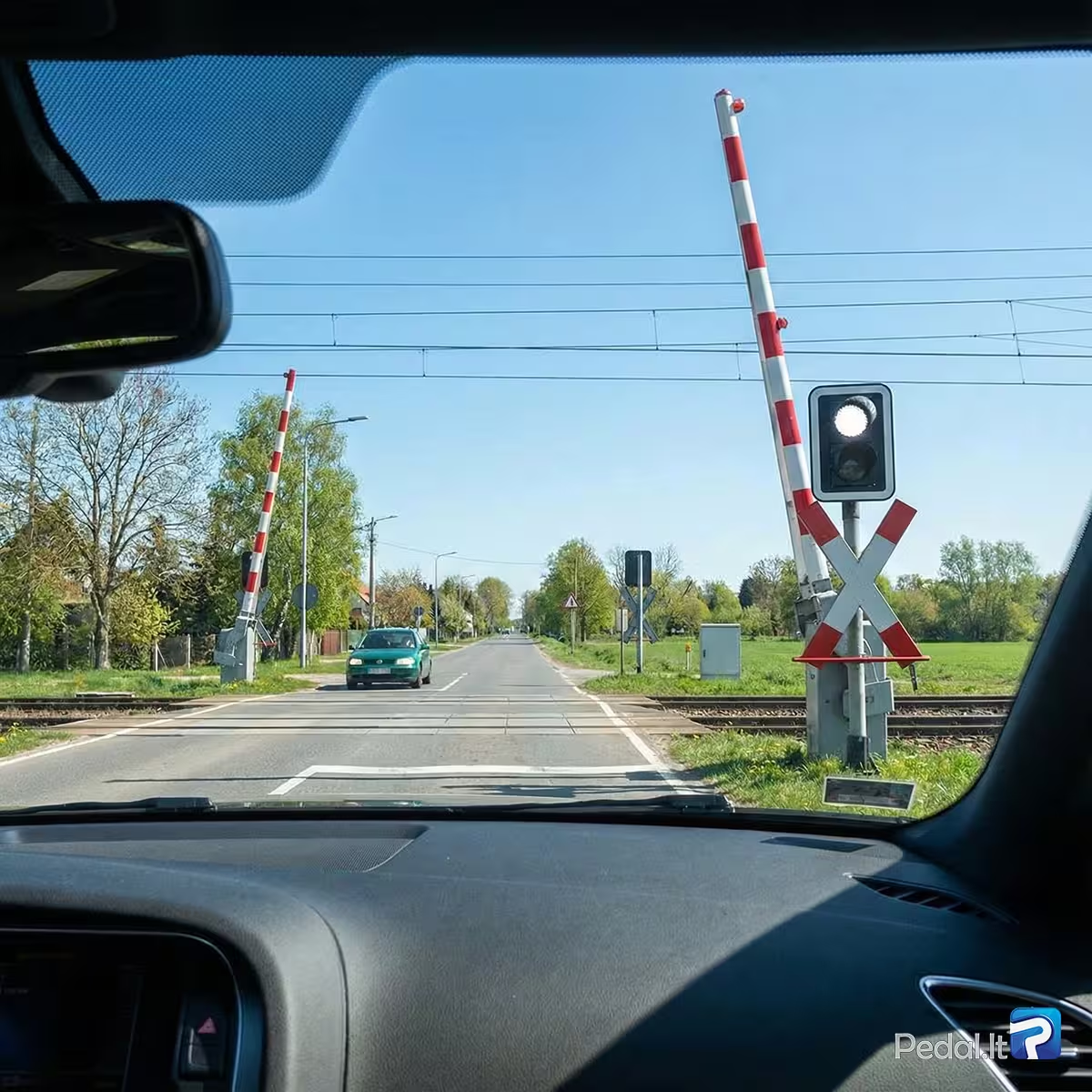
You see a flashing white light and the barrier is fully raised. Are you permitted to cross the level crossing in this situation?
RTR 73. Traffic light signals: 73.10. A flashing white light used at level crossings indicates that vehicles may proceed only after confirming that no rail-borne vehicle is approaching the crossing.
1. Yes — but only after you have verified that no train or other rail vehicle is approaching the level crossing.
2. No — you may not proceed.
You should avoid accelerating abruptly from a standstill because:
To drive economically and sensibly, begin moving smoothly and progressively. Reduce your speed gradually within your capabilities, and avoid unnecessary abrupt maneuvers unless they are essential (for example, emergency braking to avoid an unexpected obstacle). When you accelerate suddenly from a standstill, tyres experience increased wear during rotation.
1. Tires wear out faster.
2. It causes a significant increase in environmental pollution.
3. Squealing tyres and increased engine noise can disturb others.
When must the driver begin displaying the warning signal?
RTR 86. Warning signals must be given to other road users sufficiently in advance of a maneuver (including braking associated with the maneuver) and must be discontinued immediately after the maneuver. Hand signals may be ceased before the maneuver begins. JB
1. At the beginning of the maneuver.
2. While the maneuver is in progress.
3. Well in advance of the maneuver (including braking connected to the maneuver).
4. No signal is required if there are no vehicles following.
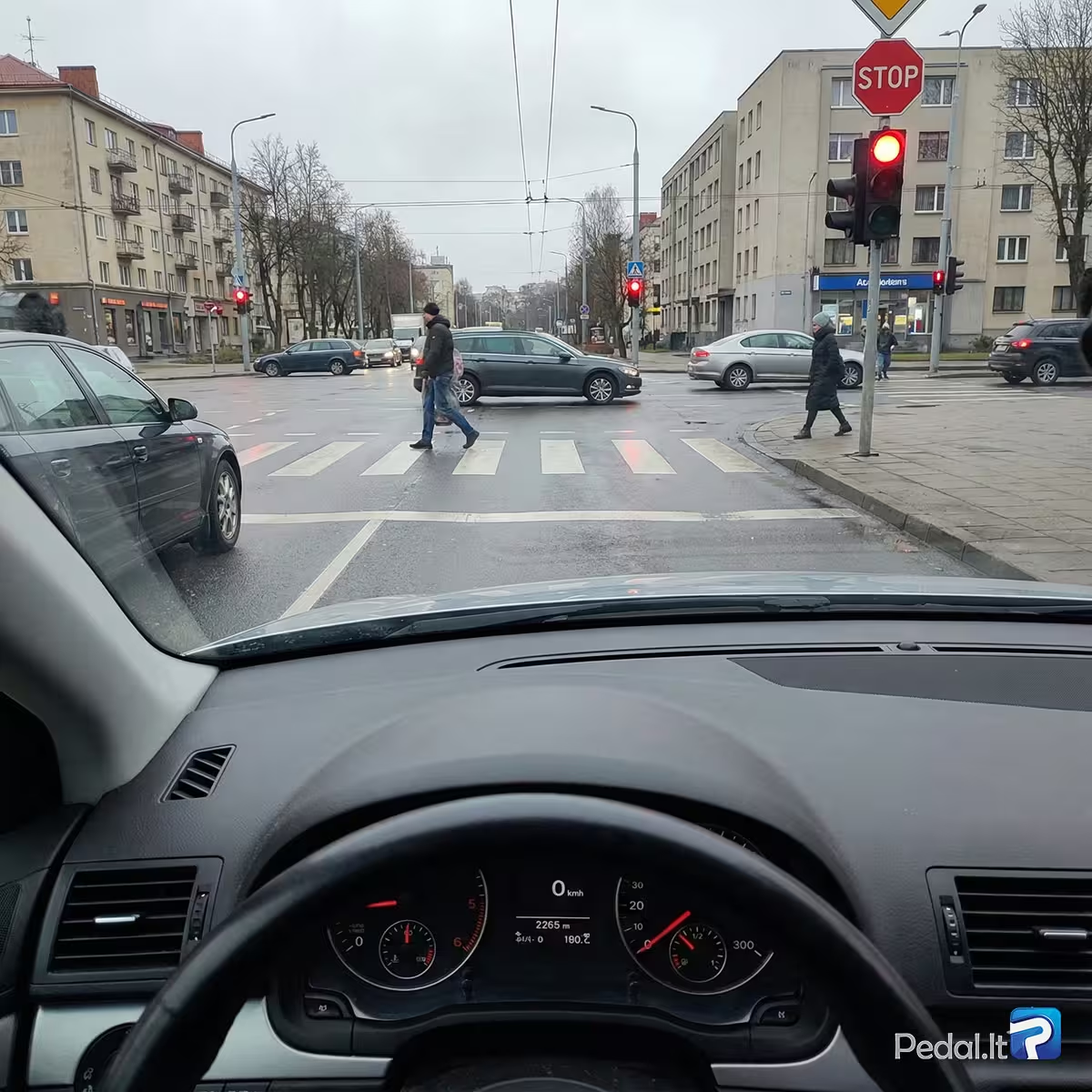
Where must the driver stop, according to traffic rules, when a prohibitory traffic signal or a traffic regulator's signal is in effect?
RTR 165 p. When a prohibitory traffic signal or a traffic regulator's signal is displayed, the driver must stop before the 'Stop line' road sign and/or before the marked stop line. If neither is present, the driver must stop before the traffic light, before the junction or the connecting carriageway, before a pedestrian crossing, or before a bicycle crossing, in such a position that does not obstruct vehicular or pedestrian traffic.
1. Before the 'Stop line' road sign and/or before the marked stop line.
2. So as not to obstruct vehicular traffic.
3. So as not to obstruct pedestrian traffic.
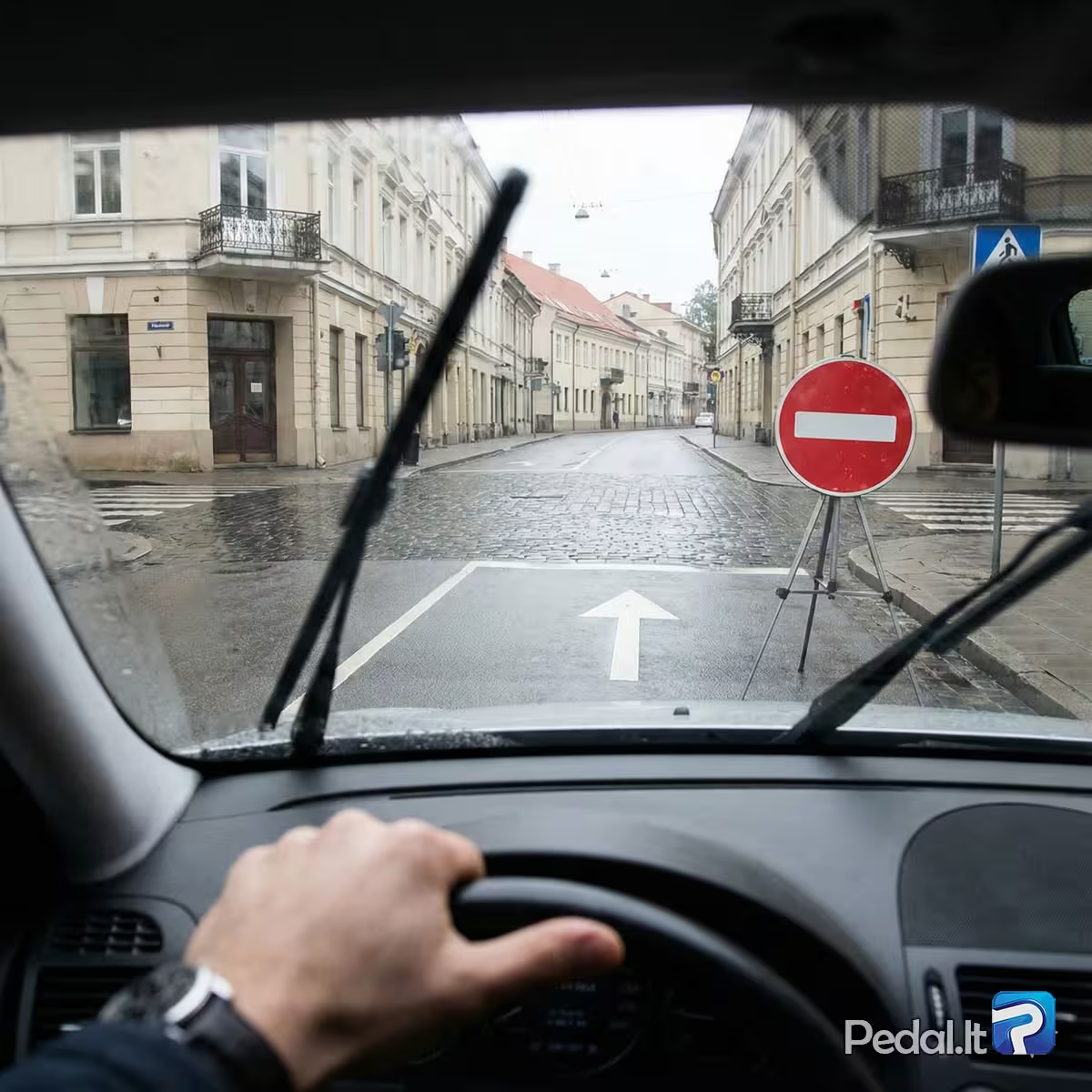
What should you do if road signs contradict the horizontal road markings?
RTR 8. In the Republic of Lithuania, traffic may be regulated only by road signs listed in Annex 1 to the Rules, by variable message signs treated as road signs (examples are given in Annex 2), by road markings specified in Annex 3, by traffic lights, and by signals from traffic officers, as provided for in these Rules and other legal acts governing traffic control. If the requirements of a road sign conflict with those of a road marking, the road sign must be obeyed. When variable message signs are in use, their indications must be followed. Signals given by traffic officers take precedence over traffic lights, road signs, road markings, and the provisions of these Rules. Road users must comply with the signs that apply to them.
1. You should follow the road signs.
2. You should follow the horizontal road markings.
To begin driving uphill, when should the parking brake be released?
If the parking brake is used when starting on an uphill gradient, release it simultaneously with moving off.
1. After you have started moving.
2. Before you start moving.
3. Simultaneously with starting to move.
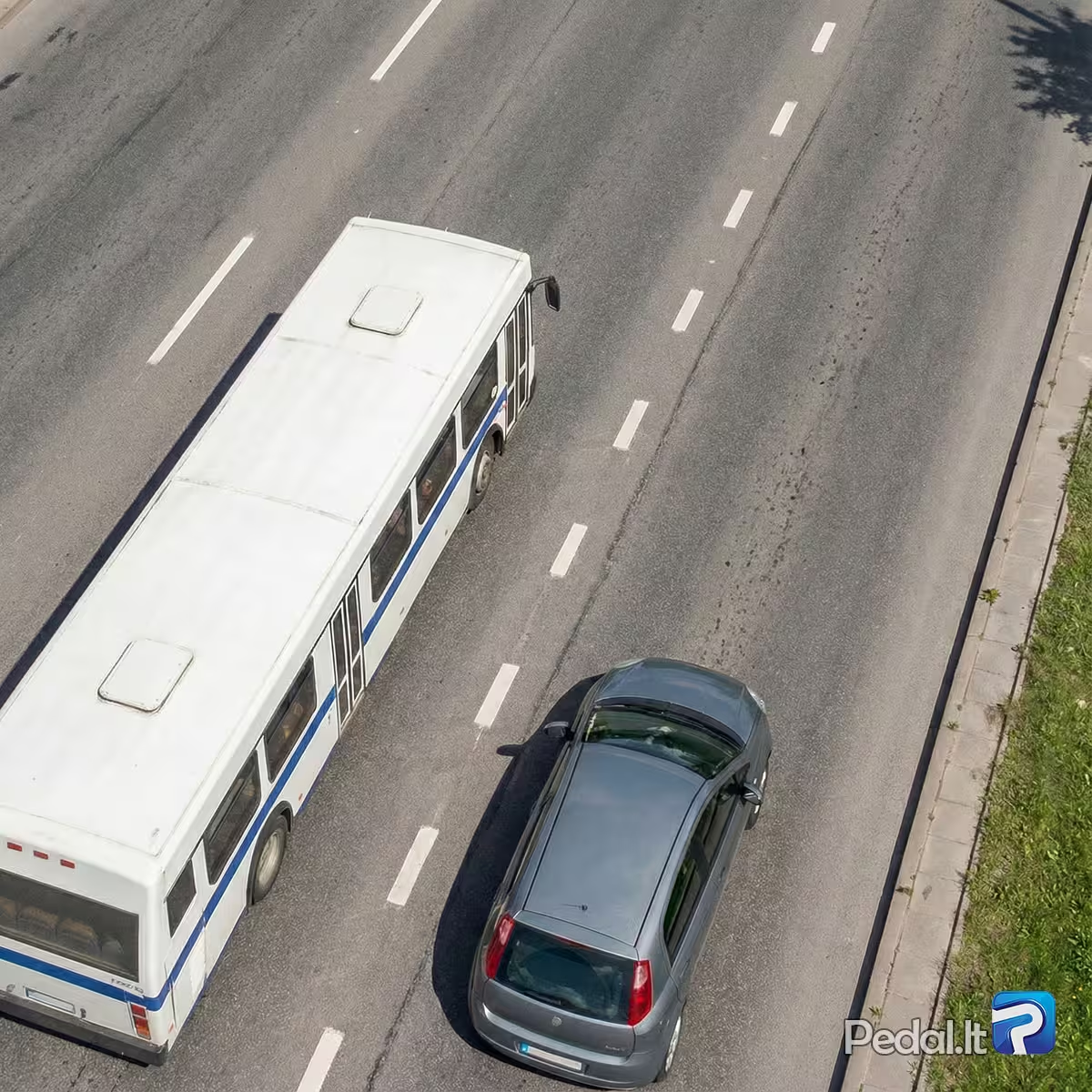
An acceleration lane is used to:
RTR 112. When an acceleration lane is provided for entering a roadway, the driver must use it to gain speed and merge into the main traffic flow, yielding to vehicles already on the road. The driver may change lanes as necessary or enter a deceleration lane when appropriate. JB
1. To accelerate to the speed of traffic and merge into the main flow, yielding to vehicles already on the road.
2. For use by general traffic when the roadway is too narrow.
3. For parking when no nearby parking facilities are available.
Which of the following statements is correct?
During the summer season, it is permitted to drive on winter tyres that do not have studs. Such winter tyres are often used in summer when their tread depth is approximately 3 mm; during the winter season winter tyres may be used if their tread depth is at least 3 mm. The tread depth of tyres used in the summer season must not be less than 1.6 mm. RTR XXX. REQUIREMENTS FOR VEHICLES (p. 223-235) 229. Vehicles with studded tyres must not be used from April 10 to October 31. During the warm season, it is recommended to use vehicles with summer tyres. If winter conditions are prolonged, an order of the Minister of Transport and Communications may extend the permitted period for using studded tyres. 230. From November 10 to March 31, motor vehicles other than mopeds, motorcycles, tricycles, all types of quadricycles, and trailers must not be operated with summer tyres. Mopeds, motorcycles, tricycles, and all types of quadricycles fitted with summer tyres must not be operated in December–February, and also from March to November if any part of the carriageway is covered with snow or ice. JB
1. Summer tyres may be used in winter.
2. During the summer season, you may drive using winter tyres without studs.
3. You are only allowed to use summer tyres in summer and winter tyres in winter.
Is using the parking brake to slow down permitted?
The parking brake may be used only in emergency situations (to prevent a collision) or if the foot brake fails.
1. It is permitted in emergency situations.
2. It is permitted if the foot brake fails.
3. It is permitted if the driver needs to brake suddenly.
4. It is not permitted.
Indicate the maximum permitted speed for learner drivers when driving outside a built-up area on a road with an asphalt surface.
RTR 131. The following speed limits apply outside built-up areas: 131.2. The maximum speed for A1, A2, A or B category vehicles driven by novice drivers, persons learning to drive or taking a practical driving test, and buses (including school buses) is: 100 km/h on motorways; 90 km/h on highways; 80 km/h on roads with asphalt or concrete pavement; and 70 km/h on other roads. JB
1. 50 km/h.
2. 80 km/h.
3. 70 km/h.
4. 90 km/h.
What is the maximum permitted blood alcohol concentration (in ‰) for a driver with one year of driving experience operating a passenger car?
Under amendments to the Law on Road Traffic Safety that took effect on 1 January 2015, novice drivers (those with less than two years' driving experience) are considered intoxicated if the alcohol concentration in their breath or bodily fluids exceeds 0. LAW ON ROAD TRAFFIC SAFETY, Article 2, clause 43 defines 'condition under the influence of alcohol' as the state when the concentration of ethyl alcohol in a biological medium of the body (breath, blood, urine, saliva, or other bodily fluids) exceeds the statutory permissible limit. The general maximum permitted concentration of ethyl alcohol in breath, blood, urine, saliva, or other bodily fluids while driving is 0.4 per mille. However, novice drivers, taxi drivers, drivers of mopeds, motorcycles, tricycles, light quadricycles, quadricycles, powerful quadricycles, drivers of vehicles with a maximum permissible mass exceeding 3.5 tonnes or with more than nine seats, and drivers carrying dangerous goods are considered intoxicated when the ethyl alcohol concentration in their breath, blood, urine, saliva, or other bodily fluids is more than 0 per mille.
1. 0.0 ‰
2. 0.2 ‰
3. 0.4 ‰
4. 0.8 ‰
What should the driver do first to stop a braking car from skidding?
If the vehicle begins to slide while braking, you must stop braking. For example, if you brake suddenly and lock the wheels before a turn, even after steering into the desired direction the car will continue moving in its previous direction (straight), which can cause you to leave the road or collide with an obstacle. Therefore, in this situation you must consciously release the brakes — a maneuver that can be especially difficult for an inexperienced driver. JB
1. Release the clutch and the brake pedal.
2. Release the brake pedal.
3. Increase vehicle speed.
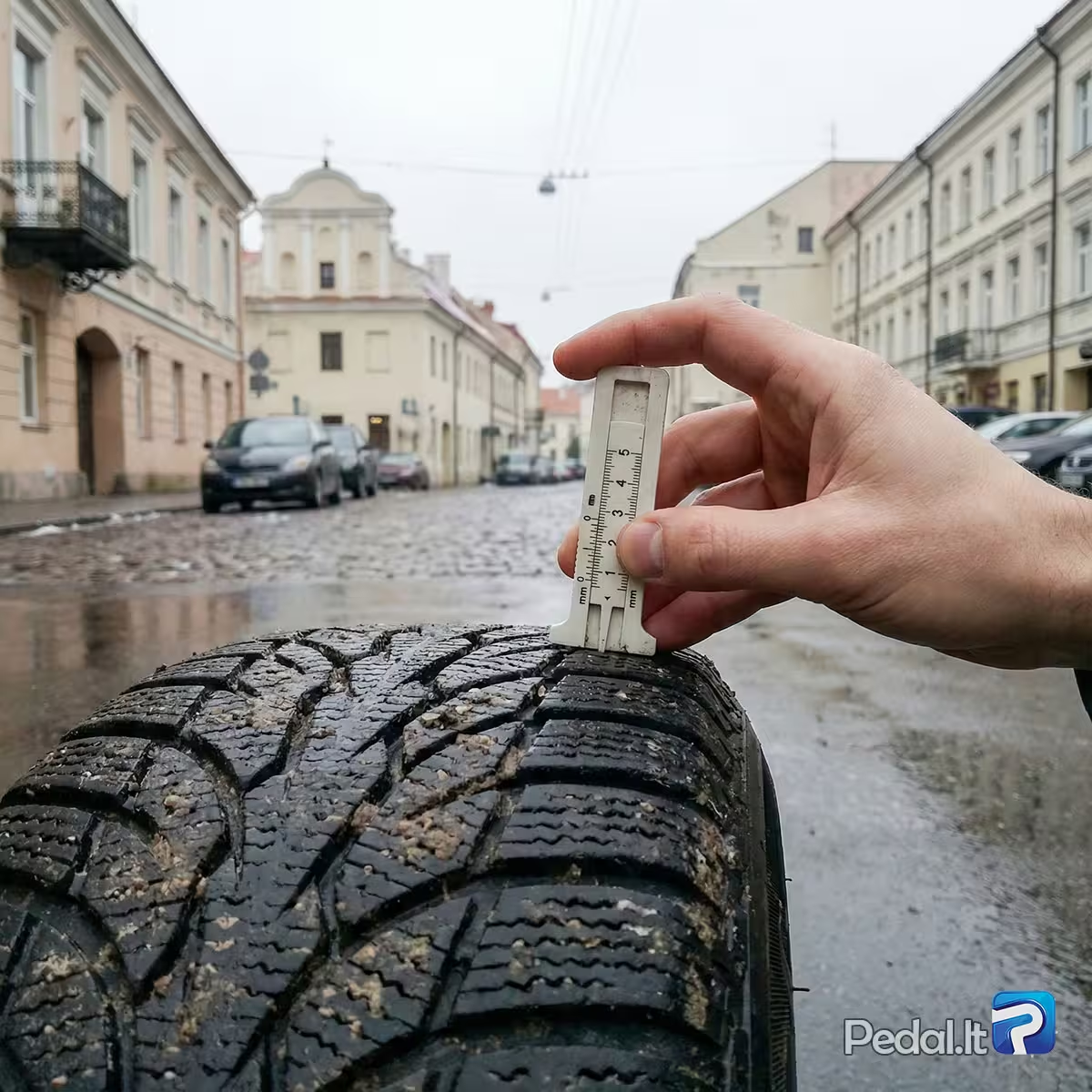
What is the minimum allowable winter tread depth for a passenger car tyre?
Passenger car tyre tread depth must be at least 1.6 mm in general and 3.0 mm during the winter period. Source: Technical requirements for motor vehicles and their trailers — Section V: Vehicle axles, wheels, tyres and suspension. 5.7. The tread depth of the tyres used must be at least: 5.7.1. M1 category — 1.6 mm (from November 10 to March 31 — 3.0 mm); JB
1. 1.6 mm.
2. 2.0 mm.
3. 3.0 mm.
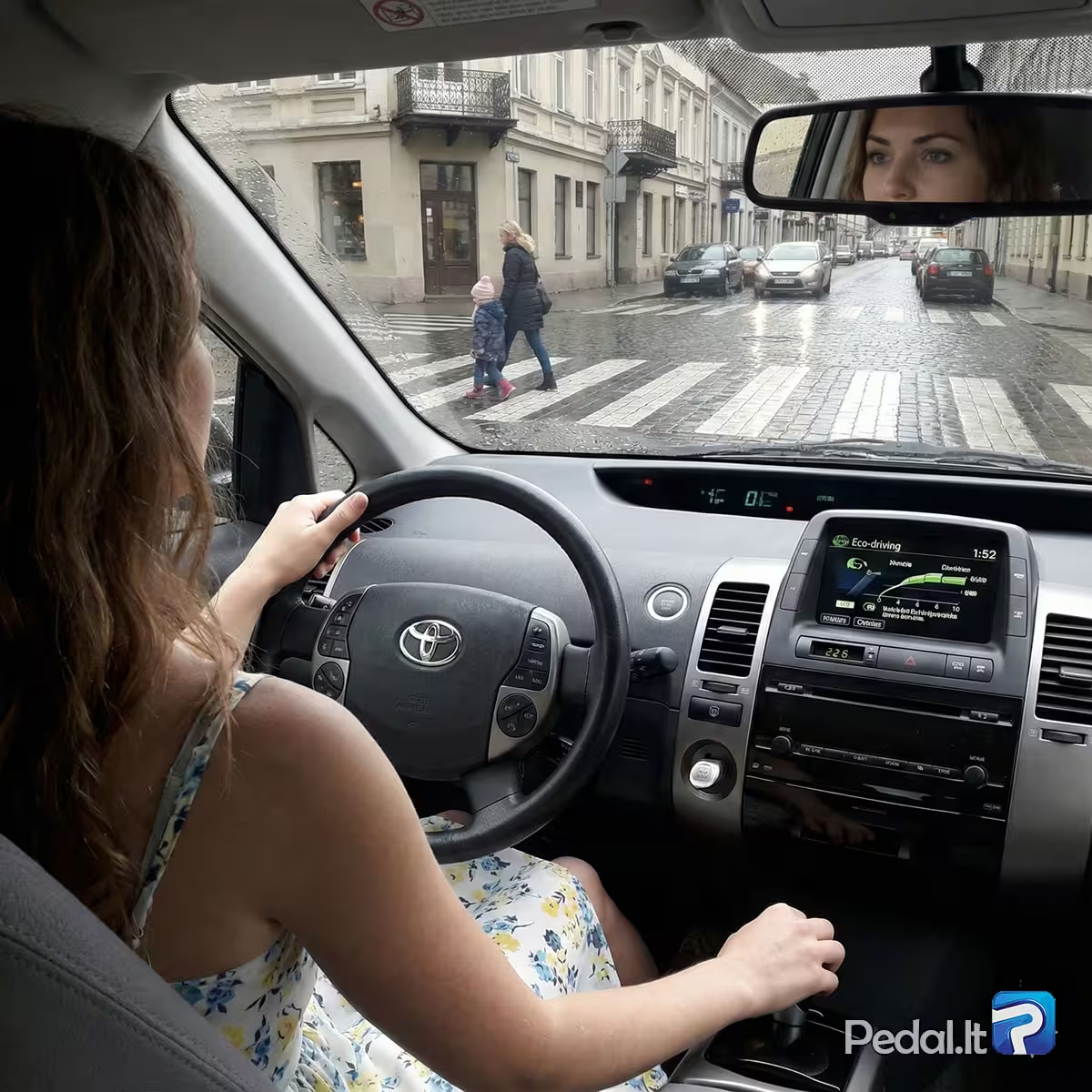
What should you do when approaching the pedestrian crossing?
Stationary vehicles positioned before a pedestrian crossing restrict visibility. Drivers must exercise extra caution and may continue only after confirming that no pedestrians entitled to right of way are at the crossing. (RTR 30.) When approaching an uncontrolled pedestrian crossing, a driver must reduce speed or stop before the crossing to give way to pedestrians who have already entered any lane, are walking in any lane, or were standing immediately at the carriageway edge waiting to step into a lane in the direction of the vehicle’s travel—or into any lane on a road with one lane in each direction. Drivers must be especially careful at night, in poor visibility, or whenever the crossing is not clearly visible from the driver’s position, and must ensure there are no pedestrians who should be given way.
1. You should reduce your speed.
2. If necessary to verify that no pedestrians are present, you will stop before the crossing.
3. You will pass the stationary vehicle at the permitted speed because you do not see any pedestrians on the crossing.
What should guide road users' behaviour?
Road users should adhere to the principles of mutual respect and safety.
1. Their income.
2. The position they hold.
3. Their social status.
4. Mutual respect and safety.
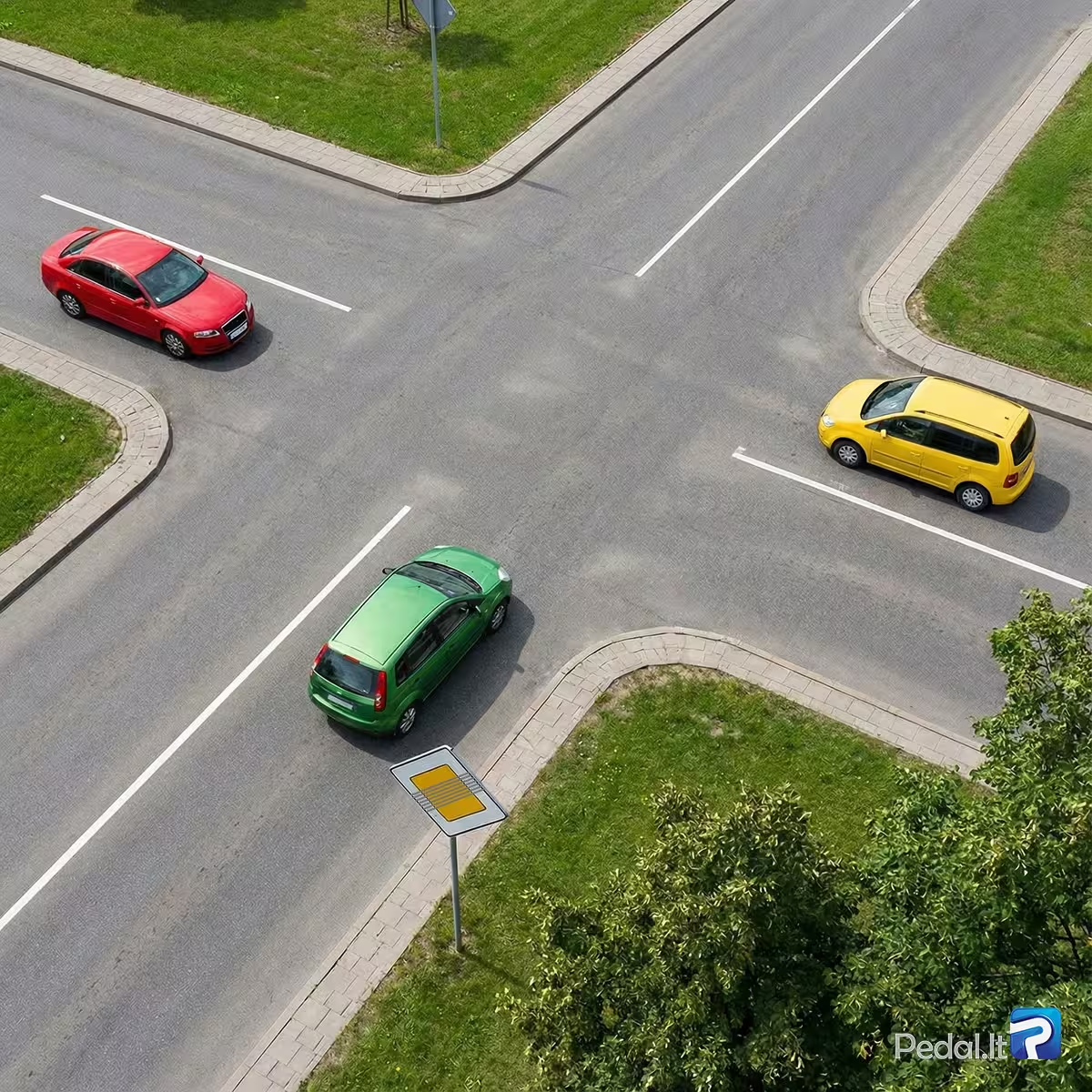
In what order will the vehicles pass through the intersection?
The yellow vehicle goes first because it is the only one without a vehicle to its right obstructing its path. Next comes the green vehicle, and last is the red vehicle. RTR 155. At an uncontrolled intersection, drivers must yield to vehicles approaching from the right when their trajectories intersect.
1. The yellow vehicle first, followed by the green vehicle, and finally the red vehicle.
2. The green vehicle first, then the red vehicle, and finally the yellow vehicle.
3. The red and yellow vehicles together first, followed by the green vehicle.
4. The green vehicle first, then the red and yellow vehicles together.
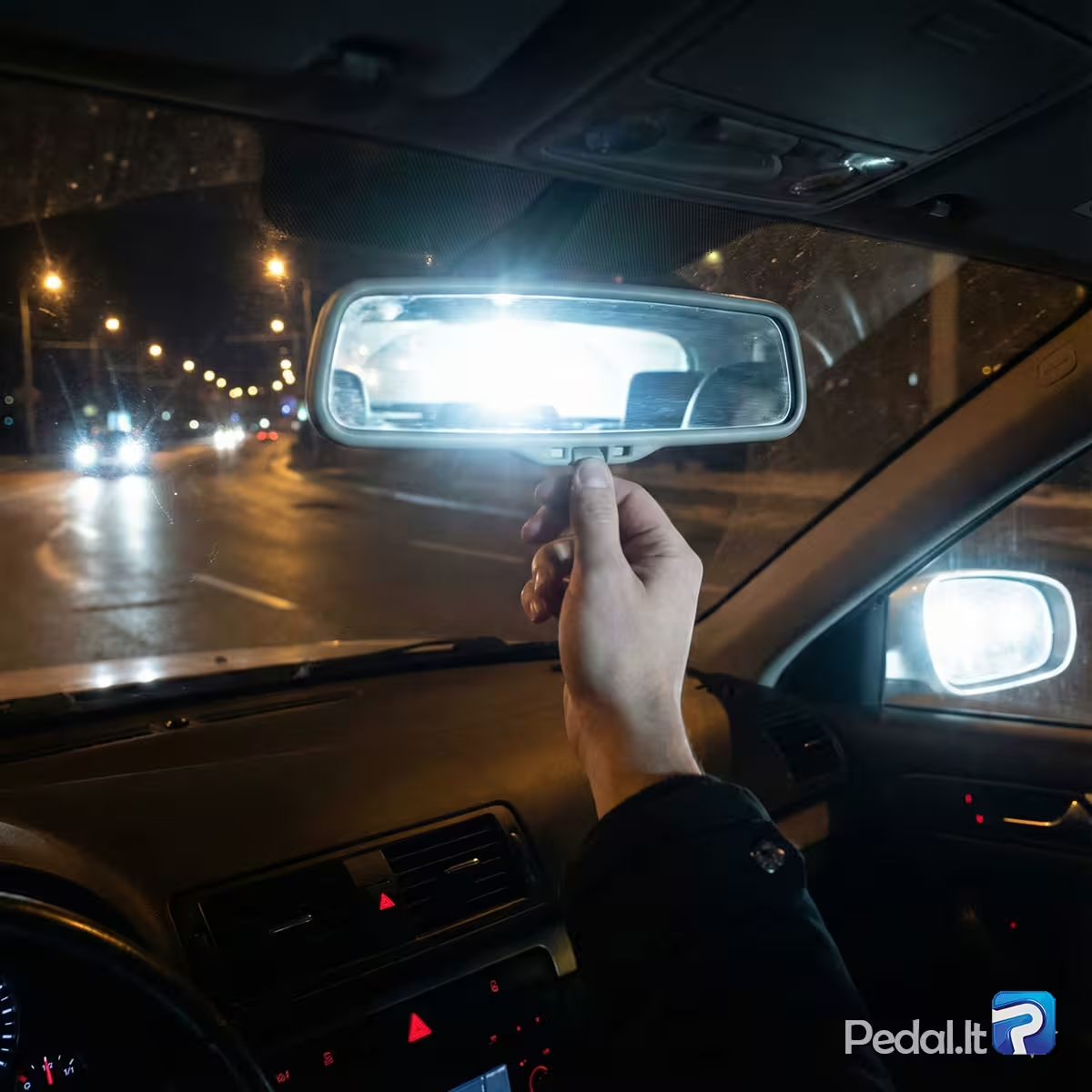
What should you do if a vehicle behind you is dazzling you with its lights?
If bright headlights are reflected in your rearview mirror, in addition to the measures listed in Paragraph 96 you can quickly activate the mirror's anti‑dazzle setting by flipping the switch at its base (if fitted). This engages the automatic dimming function and reduces glare. According to RTR 96, a dazzled driver must turn on the hazard warning lights, reduce speed without changing direction, and stop if necessary.
1. You will look away.
2. If possible, activate the rearview mirror's automatic dimming function.
3. You will turn on your hazard warning lights.
4. You will reduce speed and stop if necessary.
What must the driver of a vehicle do before starting to drive, before stopping, before changing lanes, before turning right or left, and before making a U-turn?
RTR 82. A driver must indicate intended manoeuvres by using the vehicle's left or right turn indicators, or by arm signals if the indicators are unavailable or inoperative. 82.1. Signals must be given before starting to move and before stopping. RTR 86. Warning signals must be given to other road users with sufficient advance notice before the manoeuvre (including any braking related to the manoeuvre) and must be discontinued immediately after the manoeuvre (hand signals may be stopped before the manoeuvre is completed). Signals must be given in a way that does not mislead other road users. Turn indicators are not used when entering a roundabout where traffic circulates in a circle. JB
1. Signal in advance using the appropriate turn indicator.
2. Check mirrors and glance over your shoulder to ensure the manoeuvre will not endanger or obstruct other road users.
3. Sound the horn briefly.
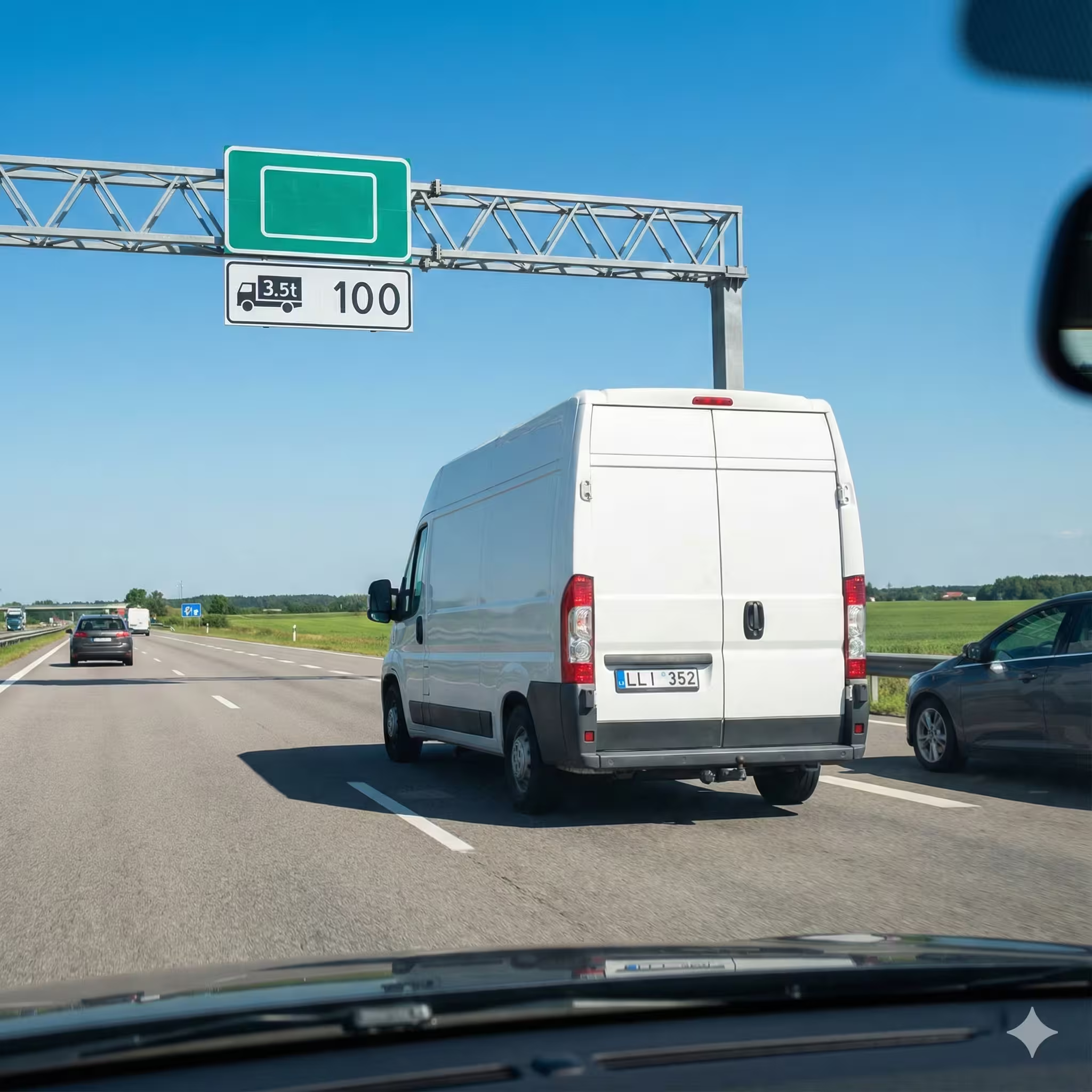
What is the maximum speed limit on motorways in summer for goods vehicles with a permissible maximum weight of 3.5 tonnes?
According to rule 131.1: On motorways, from April to October the maximum speed for passenger cars, goods vehicles with a permissible maximum weight up to 3.5 tonnes, motorcycles, and tricycles is 130 km/h, and from November to March it is 110 km/h. On expressways (highways) the limit is 120 km/h from April to October and 110 km/h from November to March. On roads with asphalt or concrete pavement the limit is 90 km/h, and on other roads it is 70 km/h.
1. 90 km/h
2. 100 km/h
3. 110 km/h
4. 130 km/h
In which situations must a driver signal their intended actions using the vehicle's turn signal?
82. A driver must signal intended maneuvers using the vehicle's turn signals, or by arm signals if the electrical indicators are inoperative or unavailable: 82.1 before starting to move and before stopping; 82.2 before changing lanes, before and after overtaking, before and after passing an obstruction, before turning right or left, before making a U-turn, and before exiting a roundabout.
1. Before entering a roundabout.
2. Before exiting a roundabout.
3. Prior to making a right or left turn.
4. Before making a U-turn.
How is a "built-up area" defined?
Law on Road Traffic Safety, Article 2, Clause 19: A "built-up area" means an area containing buildings whose roads are marked at the entrances with the road sign "Beginning of Built-Up Area" and at the exits with the road sign "End of Built-Up Area".
1. An area containing buildings whose roads are marked at the entrances with the regulatory sign "Residential Area".
2. An area containing buildings to which additional traffic rules apply and whose roads are marked at the entrances with the sign "Beginning of Built-Up Area" and at the exits with the sign "End of Built-Up Area".
1 of 30 Task
Time left: 00:00:00
1
2
3
4
5
6
7
8
9
10
11
12
13
14
15
16
17
18
19
20
21
22
23
24
25
26
27
28
29
30