When operating electric scooters, choppers, or electric mopeds with a maximum design speed of 25–45 km/h and power between 1 kW and 4 kW:
The AM category is sufficient to drive these vehicles, but it is not the only entitlement that allows you to do so. Possessing another driving category that authorises operation of such vehicles also permits you to drive them. LAW ON ROAD TRAFFIC SAFETY — Article 2. Basic concepts of the Law: 30. Light quadricycle means a four-wheeled motor vehicle with an unladen mass (excluding batteries if it is an electric vehicle) not exceeding 350 kg, a maximum design speed not exceeding 45 km/h, an engine capacity not exceeding 50 cm3 (for a spark-ignition engine), a maximum net power not exceeding 4 kW (for another type of internal combustion engine), and a maximum rated power not exceeding 4 kW (for an electric motor). 33. Moped means a two-wheeled motor vehicle with a maximum design speed exceeding 25 km/h and not exceeding 45 km/h, an engine capacity not exceeding 50 cm3 (for an internal combustion engine), and a maximum net power not exceeding 4 kW (for an electric motor); or a three-wheeled motor vehicle with a maximum design speed exceeding 25 km/h and not exceeding 45 km/h, an engine capacity not exceeding 50 cm3 (for a spark-ignition engine), a maximum net power not exceeding 4 kW (for another type of internal combustion engine), and a maximum net power not exceeding 4 kW (for an electric motor). LAW ON ROAD TRAFFIC SAFETY — Article 23. Categories of motor vehicles and the minimum driving age: 1. Categories of motor vehicles and their combinations with trailers: 1) Category AM: mopeds and light quadricycles;
1. A driving licence is not required to operate these vehicles.
2. The driver must hold a valid driving licence entitling them to operate AM‑category vehicles, or a licence of another category that permits driving such vehicles.
What is the colour of the road sign labelled 'Place of Interest'?
629. 'Place of Interest' sign. Indicates the name of a cultural or historical site of interest. The sign has a brown background.
1. Blue.
2. Green.
3. Yellow.
4. Brown.
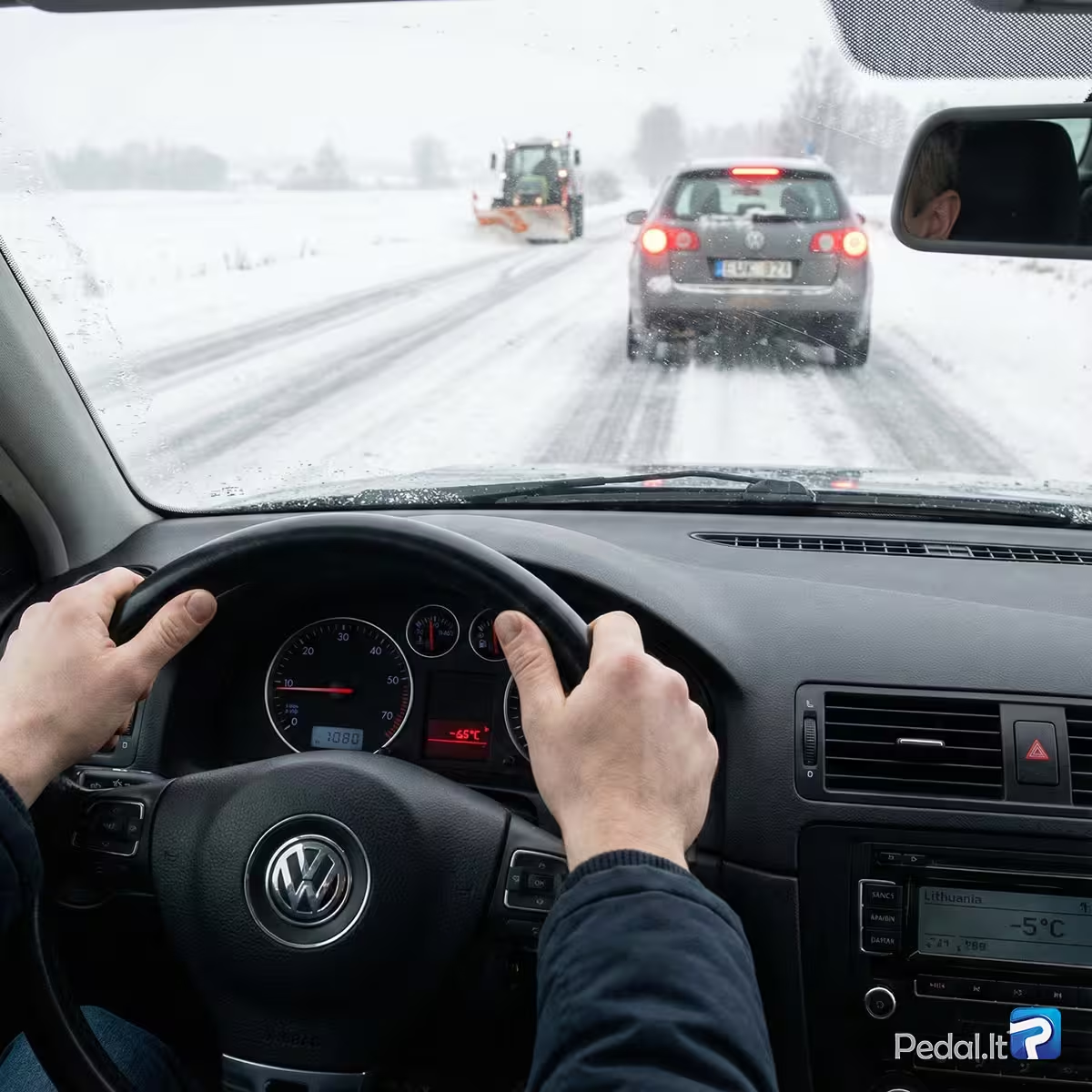
Which factor is considered the primary risk when driving on snowy roads?
1. Driver error (human factor)
2. Adverse weather conditions
3. Slippery road surface
When is it permitted to teach someone to drive a motor vehicle on the roads?
RTR 21. Driving training. 4. Driving instruction on roads is permitted only when the student possesses sufficient driving skill. Instruction may be carried out only on roads where the owner has not prohibited it.
1. When the student has sufficient driving skills, understands the traffic rules, and complies with their requirements.
2. When the student can drive a vehicle but does not know the traffic rules.
3. Driving instruction on public roads is permitted only after the student has completed driving school.
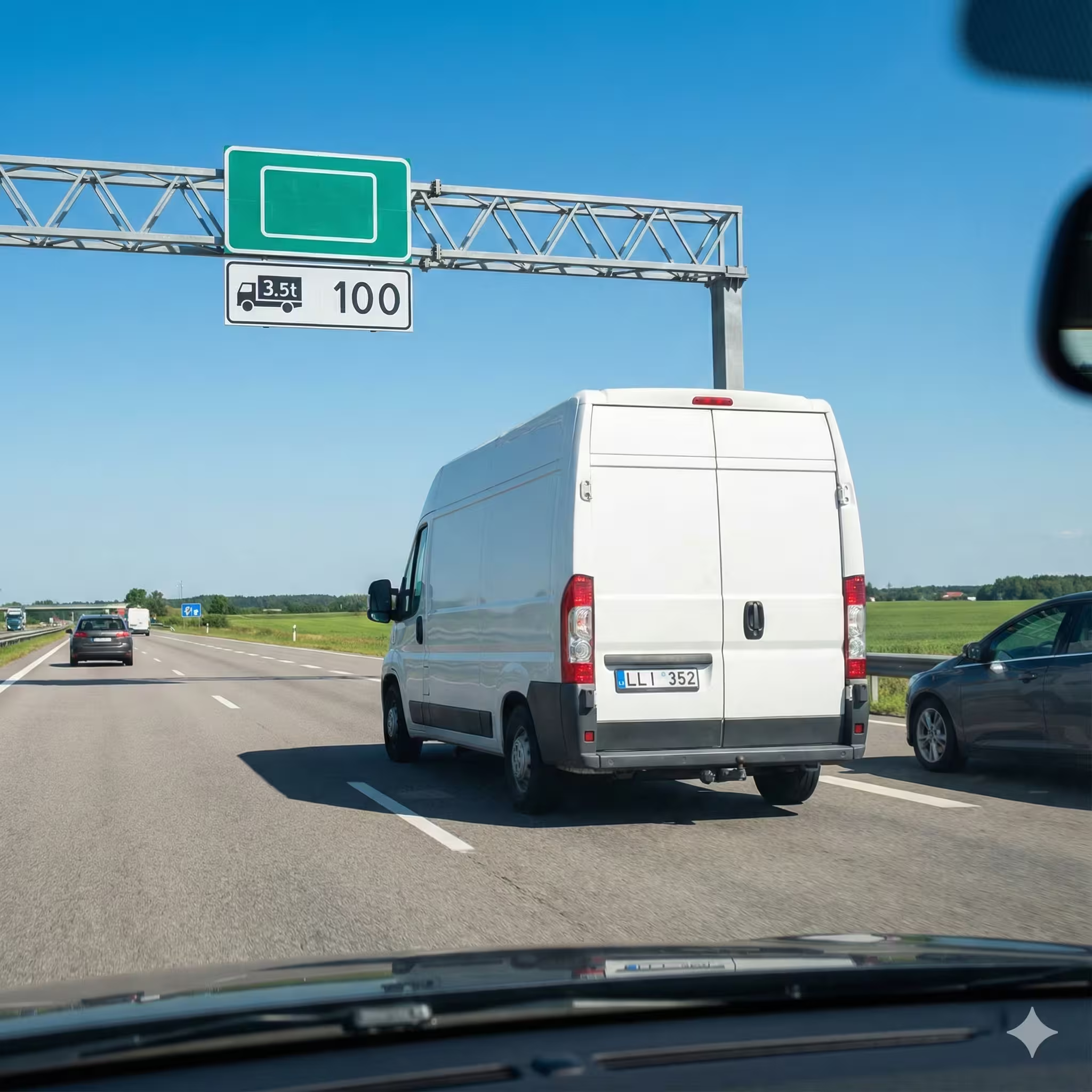
What is the maximum speed limit on motorways in summer for goods vehicles with a permissible maximum weight of 3.5 tonnes?
According to rule 131.1: On motorways, from April to October the maximum speed for passenger cars, goods vehicles with a permissible maximum weight up to 3.5 tonnes, motorcycles, and tricycles is 130 km/h, and from November to March it is 110 km/h. On expressways (highways) the limit is 120 km/h from April to October and 110 km/h from November to March. On roads with asphalt or concrete pavement the limit is 90 km/h, and on other roads it is 70 km/h.
1. 90 km/h
2. 100 km/h
3. 110 km/h
4. 130 km/h
Is using the parking brake to slow down permitted?
The parking brake may be used only in emergency situations (to prevent a collision) or if the foot brake fails.
1. It is permitted in emergency situations.
2. It is permitted if the foot brake fails.
3. It is permitted if the driver needs to brake suddenly.
4. It is not permitted.
The effect of inertia on the vehicle (risk of sliding sideways) when cornering is reduced by:
The higher the vehicle's speed when cornering, the greater the effect of inertia and the higher the risk of the car sliding sideways. Lower speeds reduce inertia and the risk of sliding. A larger turning radius (a gentler curve) also reduces lateral inertial forces.
1. By decreasing the turning radius (making the turn tighter).
2. By reducing vehicle speed.
3. By increasing the turning radius (making the curve gentler).
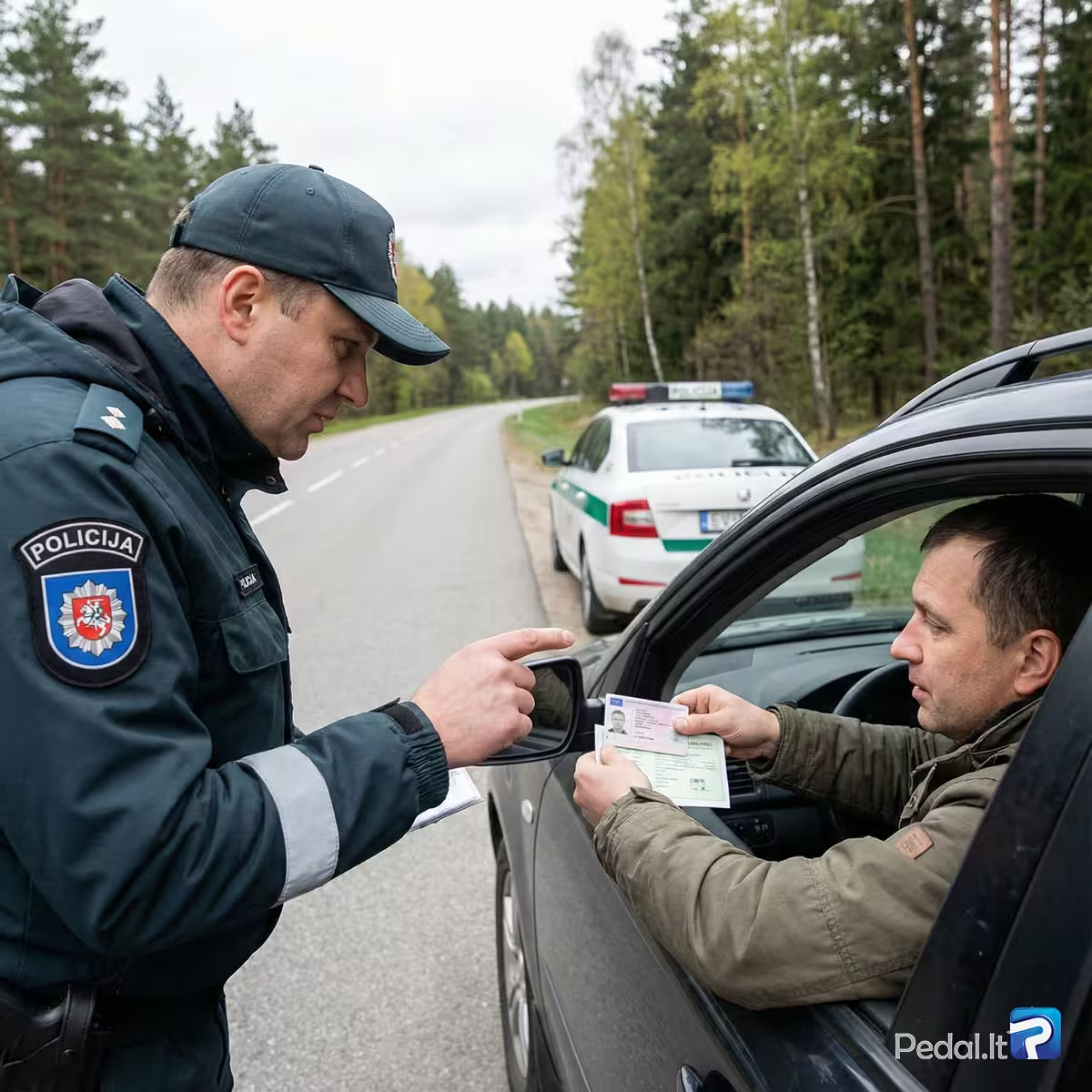
What checks must a driver allow when requested by a police officer?
RTR 17. At the request of a police officer, a driver must submit to tests for alcohol intoxication or for intoxication caused by narcotic drugs, psychotropic substances, or other psychoactive substances, in the manner prescribed by the Government of the Republic of Lithuania. RTR 14. It is prohibited to drive a vehicle if you are not authorized to do so, if you are under the influence of alcohol, narcotic drugs, psychotropic substances or other psychoactive substances. A person who is fatigued or ill must not drive if driving may endanger road safety. A vehicle must not be entrusted to a person who is under the influence of such factors or who is not authorized to drive that type of vehicle. When operating a vehicle, the driver must comply with the conditions specified on the driving licence. JB
1. Alcohol intoxication.
2. Irritability.
3. Fatigue.
4. Intoxication by narcotic drugs.
When driving at night, a car's dipped-beam (low-beam) headlamps may dazzle oncoming drivers if:
Your vehicle may dazzle oncoming drivers for one or more of the following reasons: the headlamps are incorrectly aimed (too high); the headlamps are improperly fitted (not seated correctly in their sockets or the wrong type has been fitted); or the vehicle is carrying a heavy load in the boot or is fully loaded and the headlamps have not been lowered using the headlamp aiming/levelling control (if fitted).
1. The vehicle's headlamps are incorrectly adjusted (aimed too high).
2. The headlamps are improperly installed or the wrong type has been fitted.
3. The vehicle is carrying a heavy load in its boot.
When approaching a traffic-light-controlled intersection and you notice the green light has been on for a long time, what should you do?
A green light that has been lit for an extended period may change to yellow shortly. You may proceed, but remain vigilant and be prepared to stop safely. 73. Traffic light signals mean: 73.1. A steady circular green light permits movement in all directions (straight ahead, to the right, to the left, or a U-turn); 73.3. A flashing green light permits movement but warns that its time is ending and the signals are about to change.
1. Stop immediately.
2. Increase your speed.
3. Continue driving but be prepared to stop.
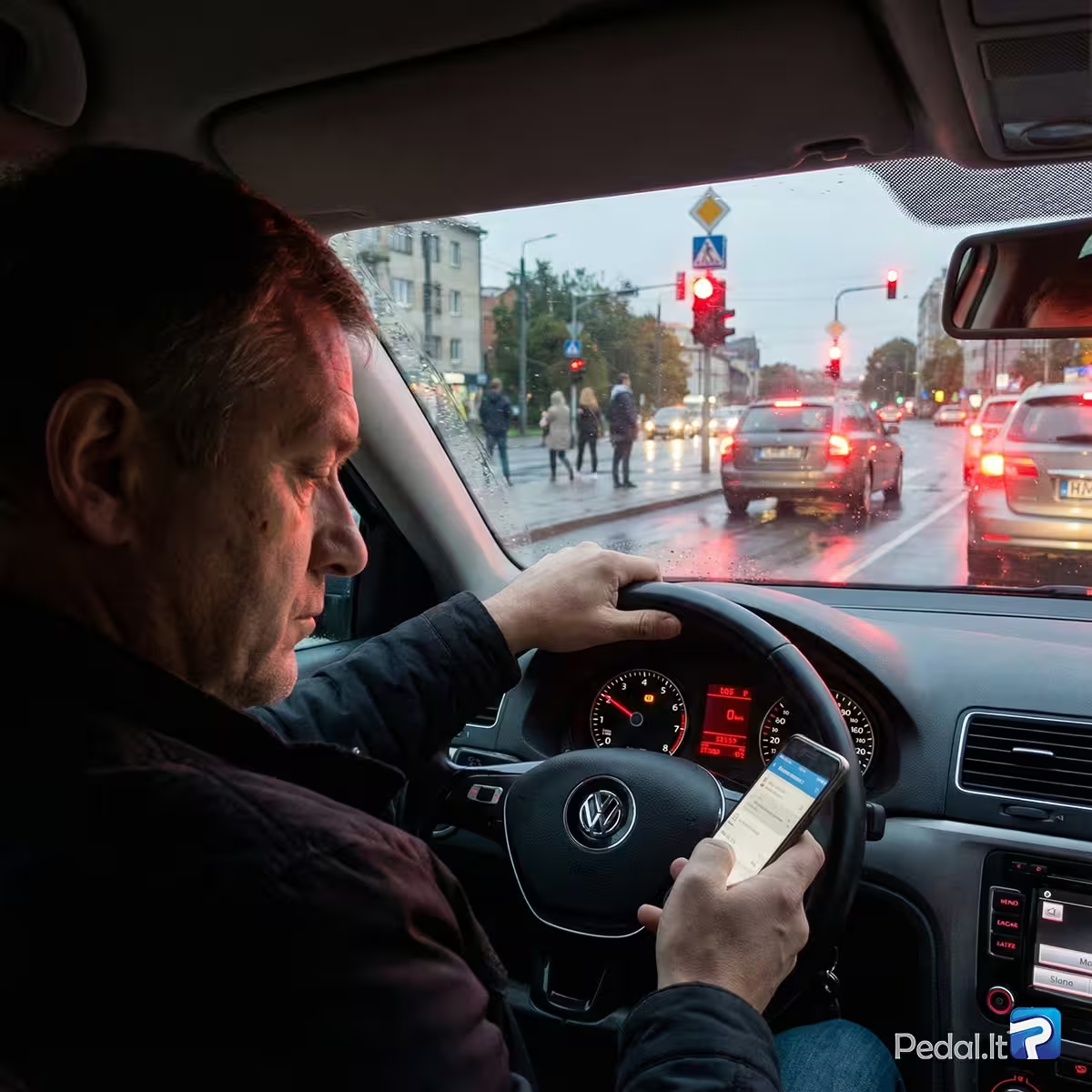
A driver's reaction time is affected by:
The driver's reaction time is delayed by illness, fatigue, or the influence of alcohol or drugs. Distraction and poor concentration while driving also lengthen reaction time, and reaction speed typically decreases with age. RTR 14. Driving is prohibited if you are not authorized to operate the vehicle, or if you are intoxicated or under the influence of narcotic, psychotropic or other psychoactive substances. A person who is tired or ill must not drive if doing so could endanger road safety. A vehicle must not be entrusted to anyone affected by these factors or without the required authorization for that vehicle type. When operating a vehicle, the driver must comply with the requirements shown on their driving licence.
1. Illness.
2. Fatigue.
3. Alcohol consumption.
4. Emotional state.
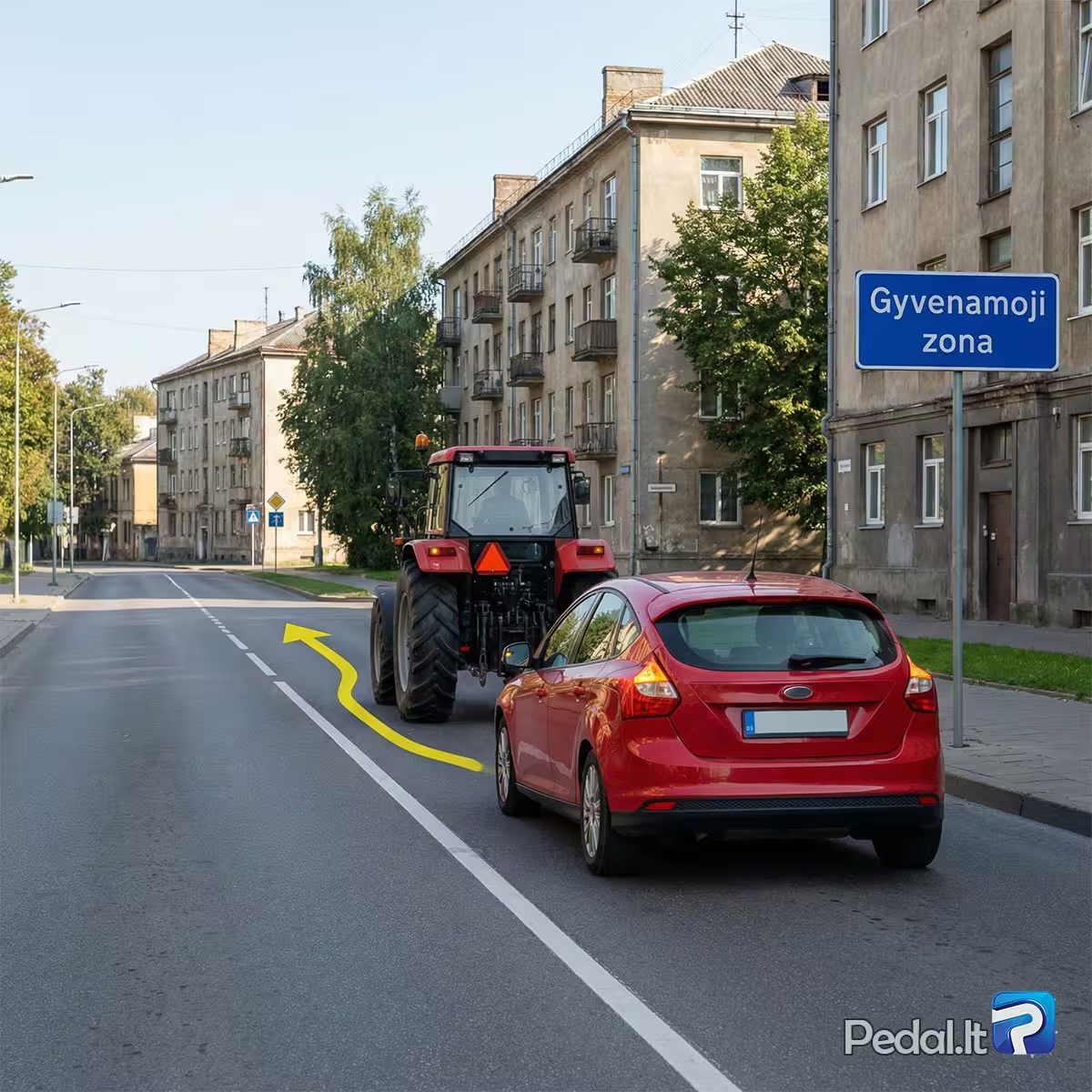
Is overtaking permitted in this situation?
A narrow continuous (solid) line prohibits overtaking. There is an exception when the road has both a narrow solid line and the road sign "Overtaking Prohibited" (RTR Annex 1.325): that sign indicates overtaking is prohibited except for single vehicles or single-vehicle combinations traveling slower than 30 km/h, which means very slow-moving vehicles (e.g., tractors) may be passed. In the pictured case there is no such sign—only a continuous line—so overtaking, even of a very slowly moving tractor, is not permitted.
RTR Annex 1.805 "The Validity Zone Ahead" indicates the length of the zone to which a sign applies beyond the sign itself.
Horizontal Marking 1.1: A narrow solid line separates opposing traffic and forbids drivers from using the oncoming lane on the marked section; it also marks lane boundaries, carriageway areas vehicles are prohibited from entering, parking-space limits, and the carriageway edge. Vehicles must not cross this line except where it marks the edge of the carriageway or a parking space.
1. Overtaking is prohibited.
2. Overtaking is permitted.
.avif)
Which vehicle will pass through the intersection first? (The green traffic light applies to the red car.)
RTR 163. When driving in the direction indicated by an arrow displayed in the supplementary section of a traffic light together with an amber or red signal, the driver must yield to road users coming from other directions who have a traffic signal permitting them to proceed, except as provided in Paragraph 163-1. 163-1. When making a U-turn at an intersection controlled by traffic lights, the driver must yield to road users from other directions who are permitted to proceed by a traffic signal. JB
1. The red car will pass the intersection first.
2. The black car will pass the intersection first.
What is the lowest speed at which a collision can be fatal?
Even at 30 km/h, a collision can seriously endanger the health or life of drivers and passengers. For example, in a head-on collision between two vehicles travelling in opposite directions.
1. 50 km/h.
2. 30 km/h.
3. 80 km/h.
Which legal act establishes the legal framework governing road traffic safety in the Republic of Lithuania?
Article 1. Purpose and scope. This Law establishes the legal framework for road traffic safety in the Republic of Lithuania. It defines the duties of state and municipal bodies in implementing road safety policy, sets requirements for the training of road users, and specifies the principal rights and obligations of road users, road maintenance authorities, the police, customs officers, and other supervisory officials. The Law also establishes basic requirements for vehicle technical condition, vehicle inspection and registration, and safety standards for road infrastructure, with the objective of protecting the lives, health, and property of road users and others, and of improving conditions for motorized and pedestrian traffic.
1. The Civil Code of the Republic of Lithuania.
2. The Criminal Code of the Republic of Lithuania.
3. The Law on Road Traffic Safety of the Republic of Lithuania.
4. The Code of Administrative Offences of the Republic of Lithuania.
.avif)
A child is saying goodbye to a friend. What should you anticipate in this situation?
Children close to the road can behave unpredictably. Exercise extreme caution when driving near them — they may run into the carriageway without looking and may not respond to a horn.
1. The child may step into the carriageway without looking.
2. The child may be looking toward the road but still step into the carriageway.
3. The child may step into the carriageway even if you sound the horn to warn them.
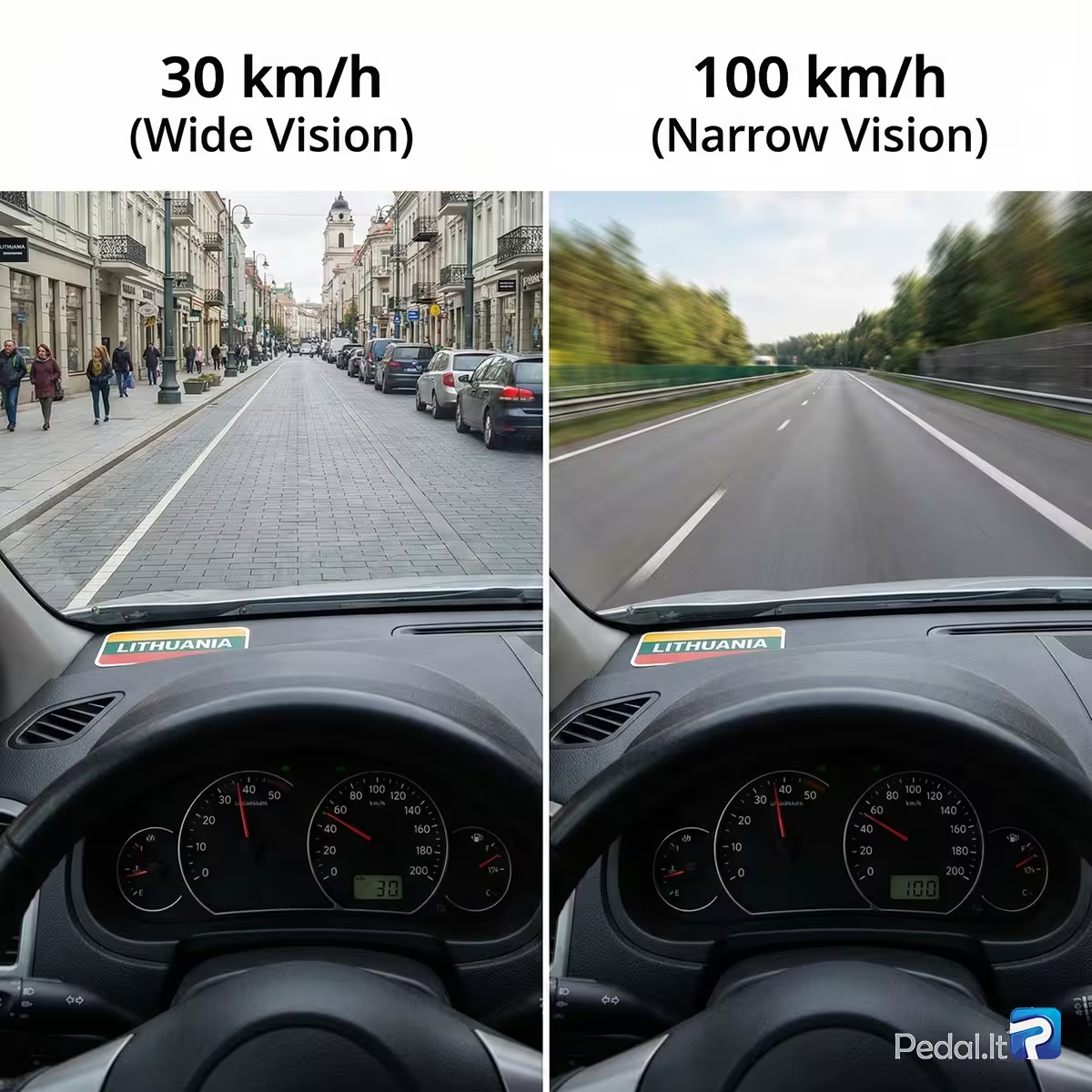
How does your field of vision change as your driving speed increases?
The field of vision is affected by driving speed, visual acuity (e.g., short-sightedness), fatigue, the color and brightness of objects, their contrast with the background, and other factors. As speed increases, a driver’s area of attention narrows and shifts forward: although drivers tend to look farther ahead, the effective dimensions of attention decrease inversely with speed. For example, at 50 km/h it is usually sufficient to focus about 150 m ahead to detect an obstacle; at 140 km/h an oncoming vehicle may not be noticed until it is only 15–20 m from the point of passing.
1. It becomes narrower.
2. It becomes wider.
3. It does not change.
You are driving at the maximum permitted speed. A vehicle is approaching rapidly from behind and its driver is flashing their headlights. What should you do?
Even if the overtaking vehicle will exceed the speed limit while overtaking and thus violate the rules, you must not endanger yourself or others; you should allow the overtaking to take place. Road users must follow the principle of mutual respect and safety. 138. The driver of the vehicle being overtaken must not obstruct drivers who wish to overtake that vehicle by accelerating or by any other actions.
1. You will maintain your current speed and prevent the other driver from overtaking you.
2. You will apply the brake so that your brake lights illuminate.
3. You will accelerate to increase the gap to the vehicle behind you.
4. You will not obstruct a driver attempting to overtake you.

What driving licence category is required to operate a motorized bicycle?
There is a minimum age requirement to operate a motorized bicycle, but no driving test or driving licence is required. LAW ON ROAD TRAFFIC SAFETY I 2. 40. Motorized bicycle - a vehicle with at least two wheels that is propelled by the rider's muscular effort using pedals or handlebars and equipped with an auxiliary internal combustion engine or electric motor with a maximum net power not exceeding 1 kW and a maximum design speed not exceeding 25 km/h. The auxiliary engine ceases to provide power when the vehicle reaches 25 km/h. Wheelchairs for persons with disabilities are not classified as motorized bicycles. RTR 55. Persons older than 14 are permitted to ride bicycles on the carriageway; if they have completed the training course established by the Ministry of Education, Science, and Sport of the Republic of Lithuania and hold a certificate issued by the school, the minimum age is 12. Persons over 8 may ride bicycles on the carriageway under adult supervision. No age limit is established for cyclists within a residential area. RTR 66. Drivers of motorized bicycles must also comply with the rules and requirements applicable to cyclists.
1. Category AM.
2. Category A.
3. Category B.
4. You do not have to have a driving licence.
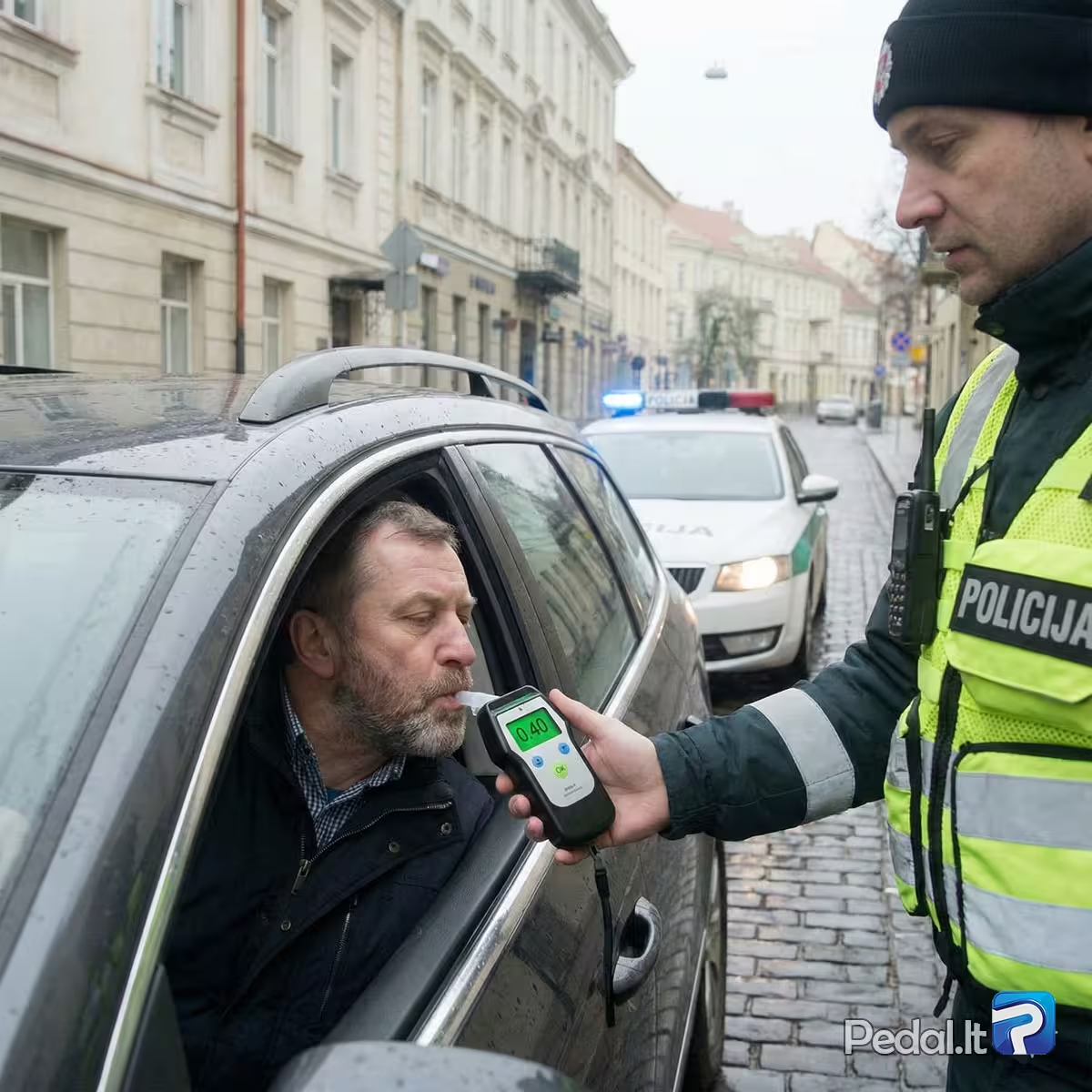
What is the maximum permitted alcohol concentration (in per mille, ‰) for a driver with 20 years of driving experience?
According to the Law on Road Traffic Safety, Article 2, point 43: “Drunkenness” means a state in which a person has consumed ethyl alcohol and the concentration of that alcohol in the body's biological media (exhaled air, blood, urine, saliva or other bodily fluids) exceeds the legal limit. The maximum permitted concentration of ethyl alcohol in the exhaled air, blood, urine, saliva or other bodily fluids of persons operating vehicles is 0.4 per mille (‰). Novice drivers, taxi drivers, and drivers of mopeds, motorcycles, tricycles, light quadricycles, four-wheelers, motorized quadricycles, vehicles with a maximum permissible weight over 3.5 t or with more than 9 seats, and drivers transporting dangerous goods are considered intoxicated when the concentration of ethyl alcohol in their exhaled air, blood, urine, saliva or other bodily fluids is greater than 0 ‰. JB
1. 0.2 ‰
2. 0.3 ‰
3. 0.4 ‰
4. 0.8 ‰
How many motor vehicles are you permitted to tow at one time?
RTR 217. The following vehicle towing and transport practices are prohibited: 217.6. Towing more than one motor vehicle, tractor, or self-propelled vehicle.
1. One vehicle.
2. Two vehicles.
3. Three vehicles.
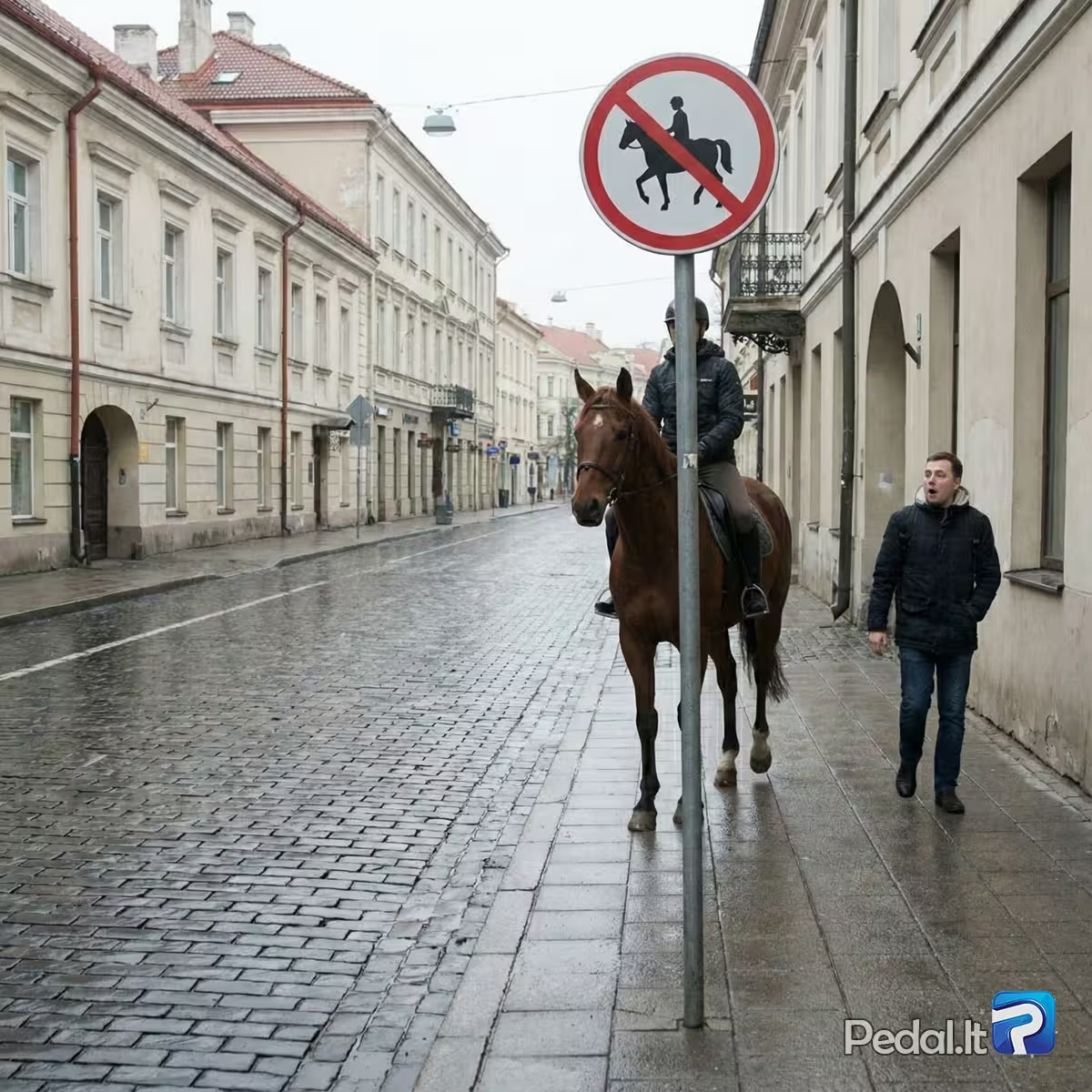
Persons riding animals are prohibited from:
67. Only persons aged 14 or older may drive an animal-drawn vehicle, herd animals or birds, or ride an animal on a road. 72. Drivers of animal-drawn vehicles, those herding animals or birds, riders, and other persons must not: 72.1. leave animals or birds unattended on a road or near a road; 72.2. tie animals so that they could enter a road; 72.3. herd animals or birds along a cobbled road or roads with asphalt or concrete pavement without the road owner's consent; 72.4. herd animals or birds across railway tracks or a road where there are no specially designated crossings; 72.5. ride an animal on the carriageway during hours of darkness; 72.6. drive animal-drawn vehicles, herd animals or birds, or ride animals on motorways and highways; 72.7. drive animal-drawn vehicles, herd animals or birds, or ride animals while under the influence of alcohol or psychoactive substances.
1. Riding an animal while under the influence of alcohol or psychoactive substances.
2. Riding an animal on the carriageway during hours of darkness, and riding on motorways and highways.
3. Riding an animal on roads if the rider is under 14 years old.
4. Riding an animal on the carriageway during daylight hours.
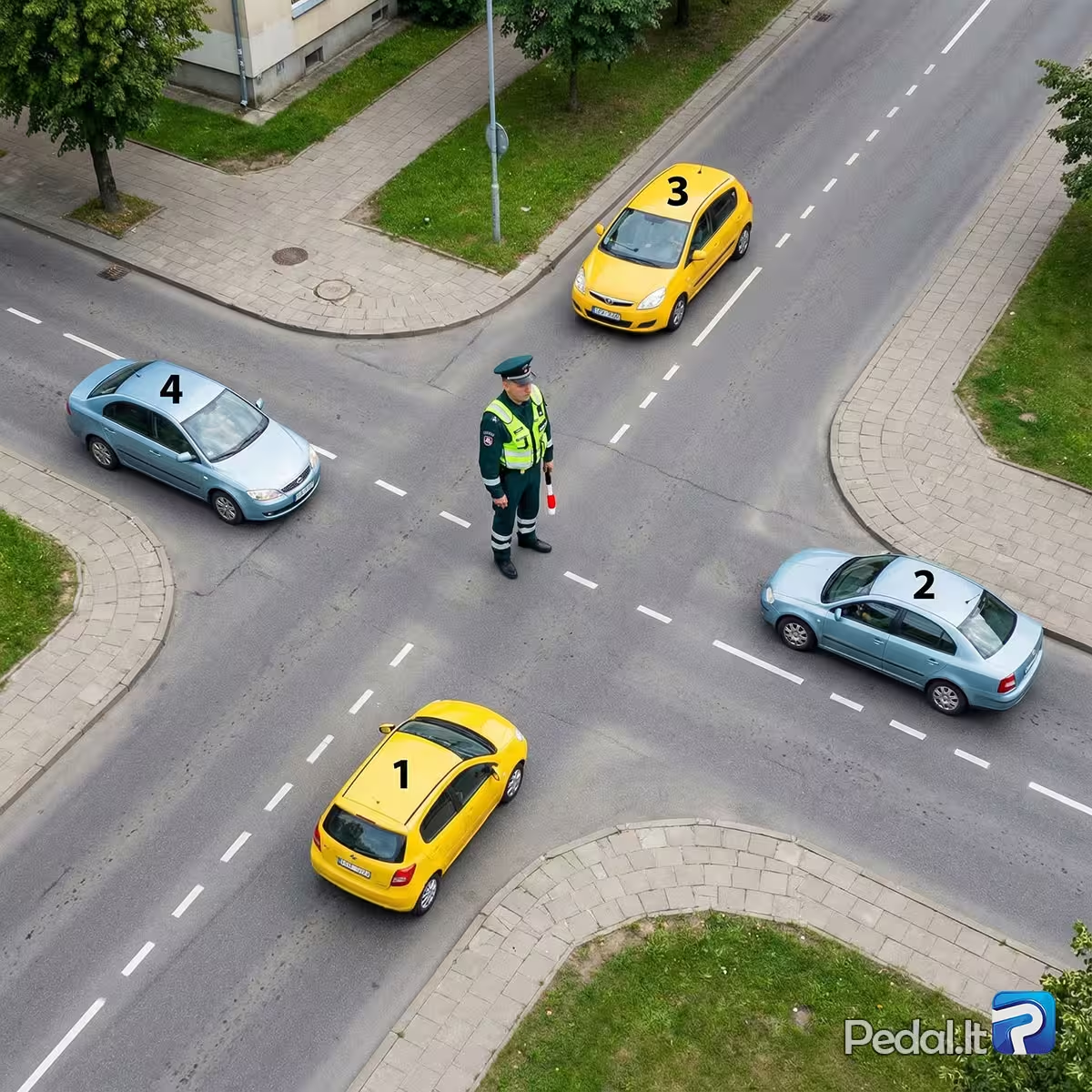
Is the third vehicle permitted to make a U‑turn?
The leading vehicle is not permitted to turn left and therefore may not make a U‑turn (RTR 77.1). When the signal arm is extended sideways or downward: 77.1.1 vehicles to the left and right may proceed straight or turn right; pedestrians may cross the carriageway; 77.1.2 vehicles and pedestrians ahead of and behind the signaling vehicle must not proceed. JB
1. Yes — it may.
2. No — it is not permitted.
3. Yes — but only after yielding to the first vehicle proceeding straight.
Is turning around permitted on the bridge?
Traffic Regulations (RTR) 116. Turning around is prohibited under clause 116.4: on and under bridges, overpasses, and viaducts. JB
1. Yes, it is permitted.
2. No, it is not permitted.
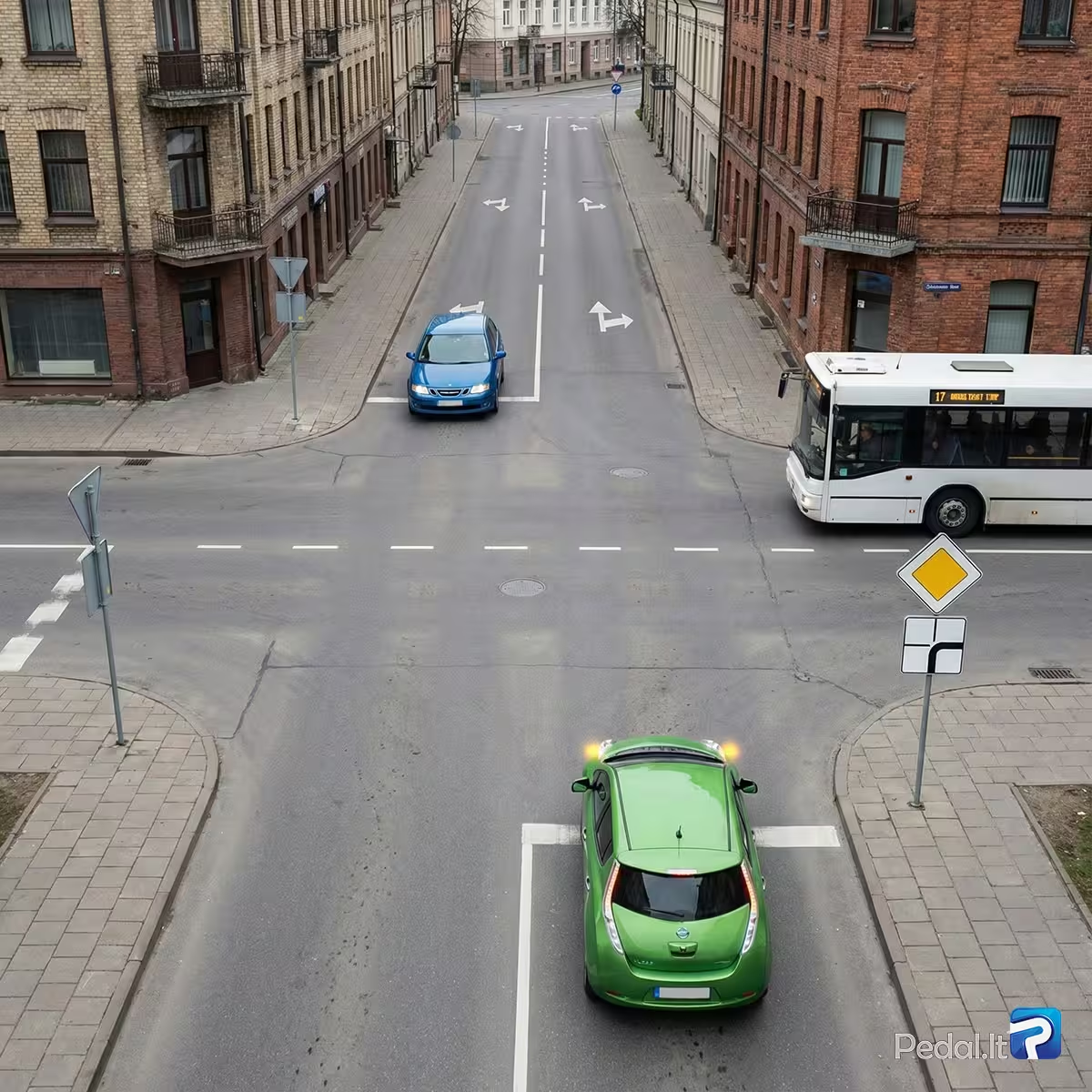
You are driving the green vehicle. When turning left, must you yield to the blue vehicle?
The green vehicle is on the main (priority) road, so it does not need to give way to the blue vehicle when turning left. Right-of-way rules vary depending on whether an intersection is controlled: at a controlled intersection, drivers entering from a side road must yield to traffic on the priority road. See rule 154.
1. Yes — you must yield.
2. No — you do not have to yield.
If there are no posted speed limit signs, when must you drive at a speed not exceeding 50 km/h?
129. The maximum speed limit within built-up areas for all vehicles is 50 km/h.
1. If diversion signs are present.
2. If a solid yellow line is present.
3. If pedestrian refuge islands are present.
4. Within built-up (urban) areas.
A vehicle driving ahead of you on the motorway has switched on its hazard warning lights and keeps driving. What does this indicate?
91. If a vehicle is equipped with hazard warning lights, they must be used: 91.7 when other road users should be warned of an obstruction or hazard.
1. There is an obstruction or hazard ahead.
2. Police are ahead.
3. They are indicating that they intend to turn around.

A traffic officer directing vehicles stands with their arms lowered. Are you permitted to proceed straight through the intersection when the traffic light displays a red signal?
1. Yes
2. No
Which factors can reduce a driver's attention while driving?
1. Engaging in a heated or intense conversation with a passenger.
2. Experiencing strong emotions (e.g., joy, anger, or hatred).
3. Listening to an engaging radio programme.
A driver whose vehicle is being overtaken must not:
Using the horn may distract the driver being overtaken but will not prevent the overtaking; they may still accelerate to complete the manoeuvre. Obstructing an overtaking vehicle includes actions such as accelerating, steering toward the overtaking vehicle, blocking the lane, or any other behaviour intended to prevent another driver from passing. RTR 138. The driver of a vehicle being overtaken must not obstruct drivers who wish to pass by speeding up or by any other action. RTR 136. Drivers are advised to avoid unnecessary overtaking manoeuvres. Before overtaking, drivers must take extra precautions and ensure that: 136.1. no driver behind them has already begun to overtake; 136.2. the driver of the vehicle to be overtaken is not signalling a left turn; 136.3. the section of lane required for overtaking is clear and the manoeuvre will not obstruct oncoming vehicles or pedestrians on the carriageway; 136.4. a safe distance from the vehicle being overtaken can be maintained during the overtaking; 136.5. after the overtaking manoeuvre they will be able to return to the same traffic lane safely without obstructing the overtaken vehicle. JB
1. Speeding up or otherwise obstructing a driver who is attempting to overtake.
2. Slowing down.
3. Using the horn.
1 of 30 Task
Time left: 00:00:00
1
2
3
4
5
6
7
8
9
10
11
12
13
14
15
16
17
18
19
20
21
22
23
24
25
26
27
28
29
30