When are drivers permitted to brake on a pedestrian crossing?
According to traffic regulations, there are no specific locations where braking is prohibited. Braking is necessary to ensure road safety; therefore drivers must brake whenever required.
1. When it is necessary to prevent a traffic accident.
2. When they see the brake lights of the vehicle ahead.
3. When they need to stop after the pedestrian crossing on the right-hand side of the road.
4. It is forbidden to brake on a pedestrian crossing in all circumstances.

A traffic officer directing vehicles stands with their arms lowered. Are you permitted to proceed straight through the intersection when the traffic light displays a red signal?
1. Yes
2. No
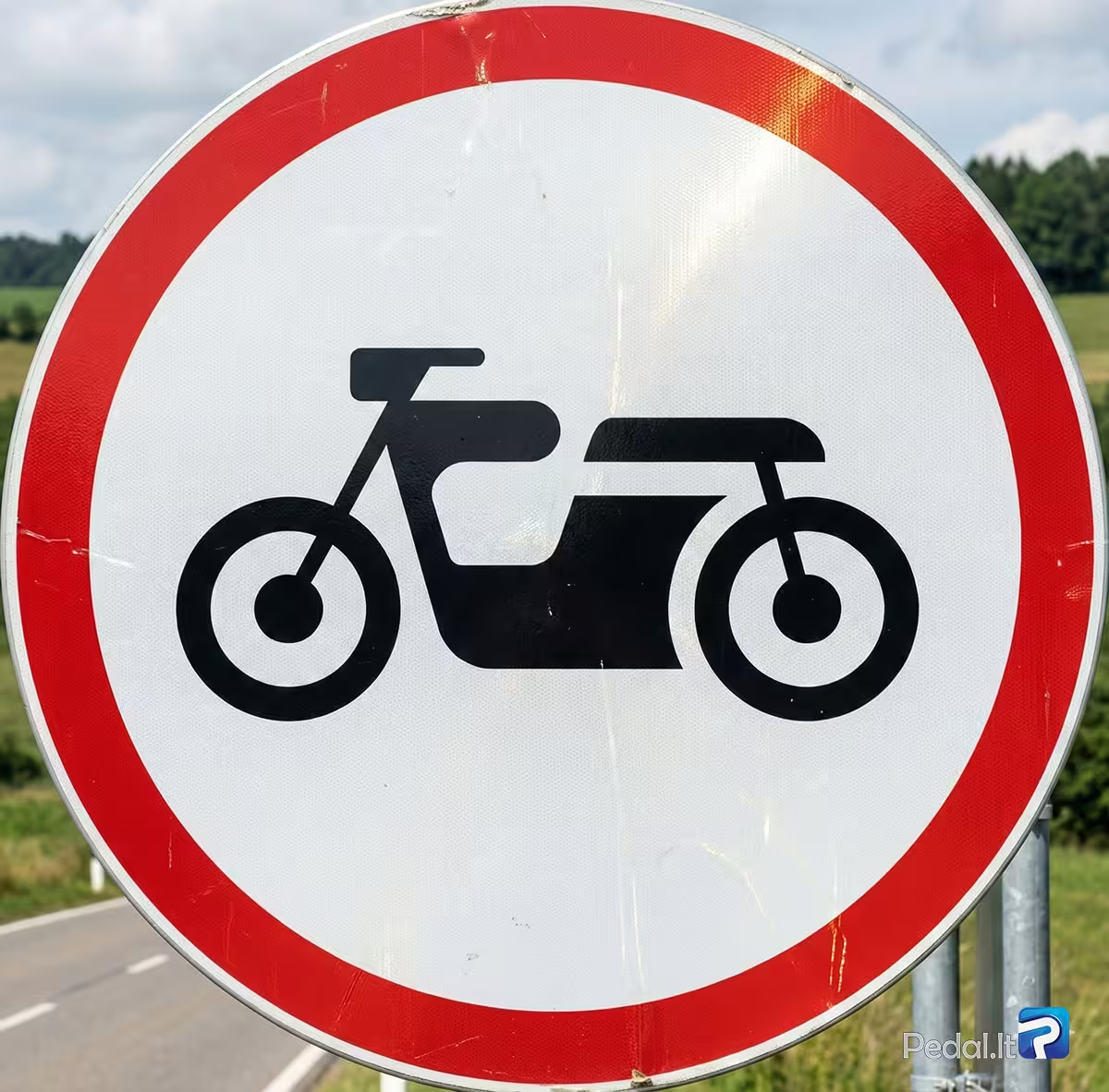
Which motor vehicles are prohibited from entering the area designated by this road sign?
1. Motorcycles (two‑wheeled motor vehicles)
2. Light quadricycles (small four‑wheeled motor vehicles)
3. Mopeds (low‑powered two‑wheel motor vehicles)
4. Bicycles (pedal‑powered two‑wheel vehicles)
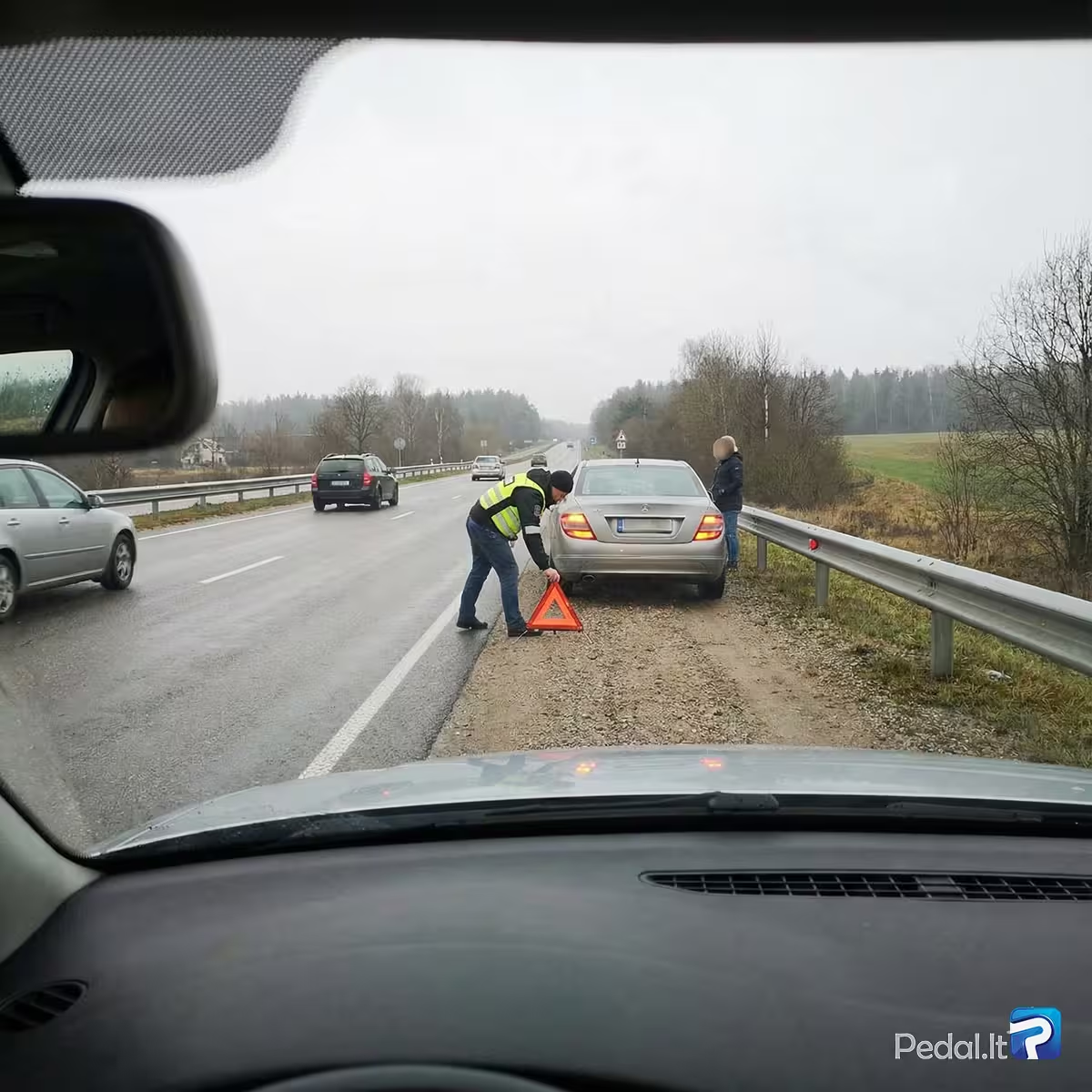
A vehicle has broken down on the road. What is the safest action to take?
1. Have the vehicle removed from the roadway as soon as possible using a tow truck (rigid towing).
2. Turn on your hazard lights and wait beside the vehicle.
3. Try to push the vehicle to the side of the road.
4. Stop and attempt to repair the vehicle while still on the roadway.
Why is it dangerous to drive fast on an asphalt road during heavy rain?
Heavy rain creates a layer of water on the asphalt surface (especially in longitudinal ruts) that cannot drain quickly to the roadside. At high speeds, a tire's tread cannot displace this water from beneath the wheel, and aquaplaning (hydroplaning) can occur. In other words, the wheels lose contact with—or have reduced grip on—the road surface, and the vehicle may become uncontrollable.
1. Water will enter the engine and cause it to stall.
2. The vehicle may lose control due to aquaplaning.
3. The windshield wipers will stop working.
What size handcart carrying a load that is pushed or pulled at the roadside must be equipped with reflectors?
The option "More than 1 meter long" is incorrect because the RTR do not specify any marking requirement based on the cart's length. Under RTR 41: pedestrians moving along an unlit hard shoulder or along the edge of the carriageway, or standing there during hours of darkness or when visibility is poor, must carry a torch visible to other road users, wear a high-visibility vest, or carry a reflector visible to other road users. A pulled or pushed handcart wider than 1 m must have reflectors affixed on its left side: a white reflector at the front and a red reflector at the rear. JB
1. More than 1 meter wide.
2. More than 1 meter long.
Where may drivers park their vehicles on unlit sections of road during hours of darkness?
RTR 143. Stopping on unlit sections of road during hours of darkness or when visibility is poor is permitted only with hazard warning lights activated. Parking is allowed only in designated car parks or in areas off the carriageway.
1. On the hard shoulder.
2. On the carriageway.
3. In car parks.
4. In off-road areas.
Which car colors are most visible to other road users?
Light, bright-colored vehicles are most visible to other road users. (JB)
1. Black, gray, or blue.
2. White, orange, or red.
3. Purple or brown.
4. Vehicle color has no effect on visibility.
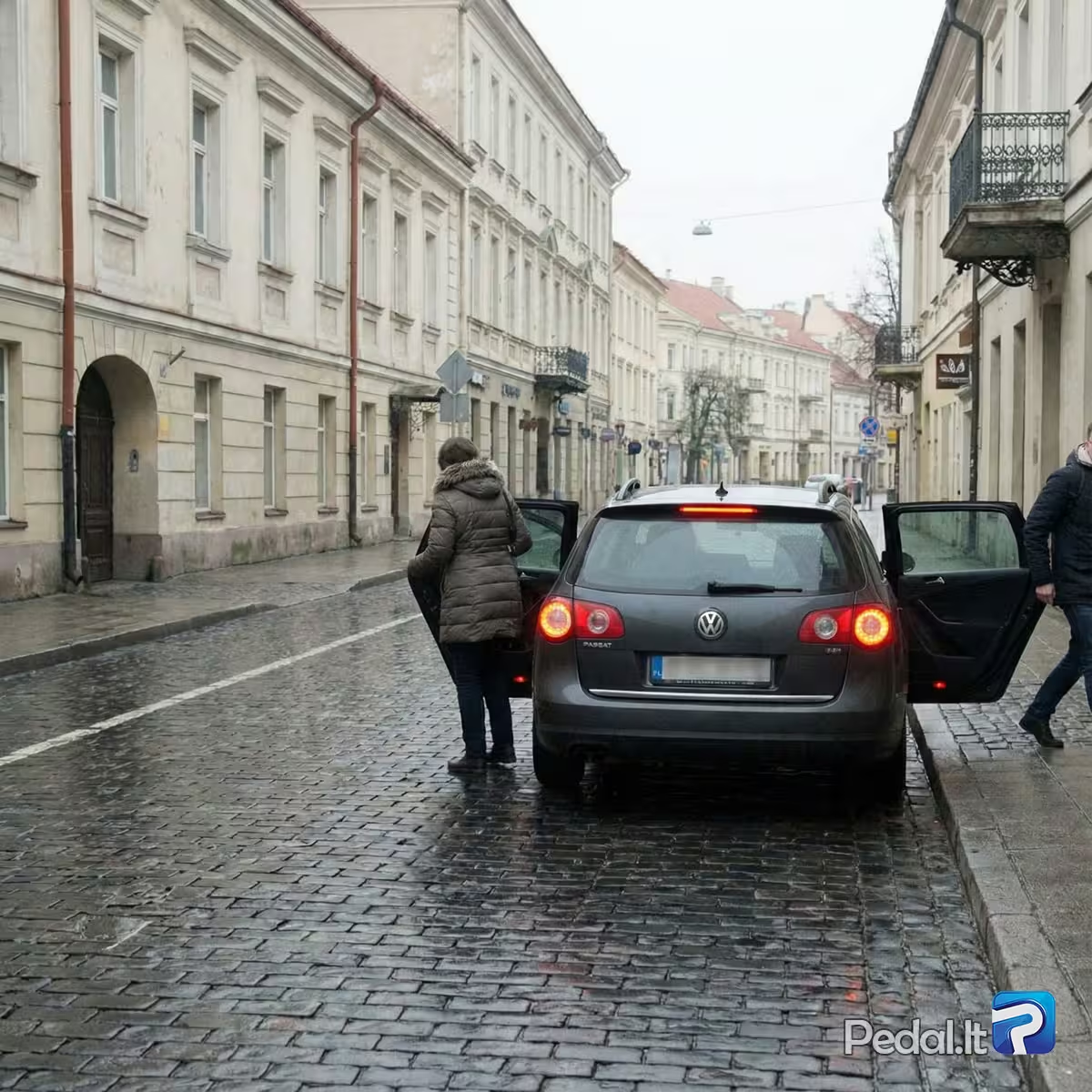
Is it permitted for passengers to board or alight from a vehicle from the roadway side?
Passengers may board or alight from the roadway side only when it is impossible to do so from the pavement (sidewalk) or hard shoulder, and only if it can be done safely without obstructing other road users.
1. It is prohibited.
2. It is allowed.
3. Yes — permitted only when boarding or alighting from the pavement (sidewalk) or hard shoulder is not possible.
When approaching a traffic-light-controlled intersection and you notice the green light has been on for a long time, what should you do?
A green light that has been lit for an extended period may change to yellow shortly. You may proceed, but remain vigilant and be prepared to stop safely. 73. Traffic light signals mean: 73.1. A steady circular green light permits movement in all directions (straight ahead, to the right, to the left, or a U-turn); 73.3. A flashing green light permits movement but warns that its time is ending and the signals are about to change.
1. Stop immediately.
2. Increase your speed.
3. Continue driving but be prepared to stop.
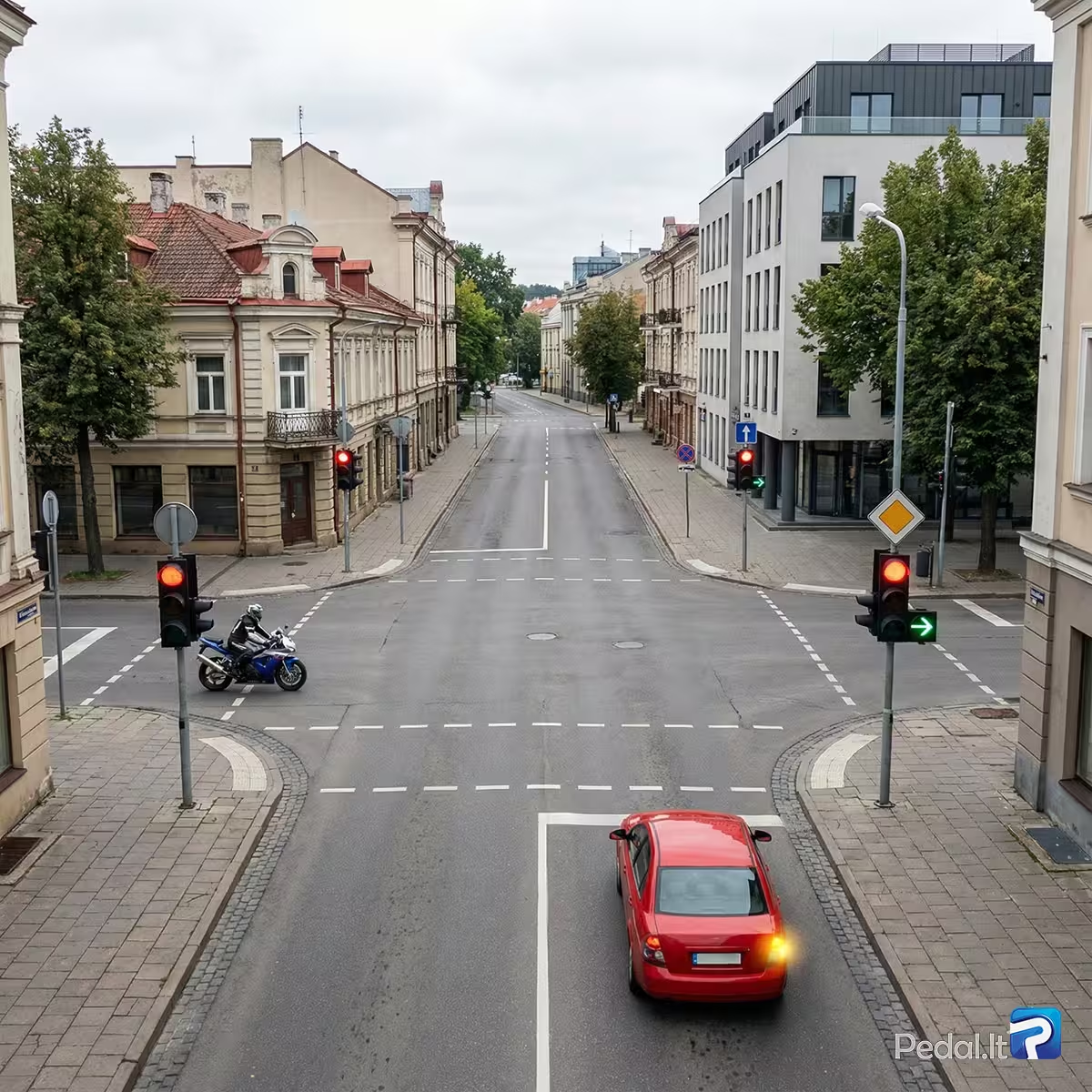
Who has the right of way? (the traffic light is green for the motorcyclist)
RTR 163. When driving in the direction indicated by an arrow illuminated in an auxiliary section of the traffic light together with an amber or red main signal, the driver must yield to road users coming from other directions who have a traffic-light signal permitting them to proceed, except as provided in Paragraph 163-1 of the Rules. RTR 163-1. When making a U-turn at an intersection controlled by traffic lights, the driver must yield to road users coming from other directions who are permitted to proceed by the traffic-light signal. JB
1. The driver of the red car.
2. The motorcyclist.
The service brake has failed while you are driving on a motorway. What should you do?
Maintain a speed that allows you to stop the vehicle with the parking brake if necessary. Switch on your hazard warning lights to warn other road users. Drive to the nearest safe place to stop and call roadside assistance.
1. Reduce your speed and switch on the hazard warning lights. If necessary, apply the parking brake gradually. Carefully drive to the nearest safe place to stop and call roadside assistance.
2. Reduce your speed and notify the road police. Continue driving cautiously to your destination. If possible, add brake fluid.
Are other vehicles permitted to enter the space between a motorcyclist and the driving instructor who is accompanying the motorcyclist in a car?
RTR 26. Drivers of other vehicles must not enter the space between a learner driver—who is learning to operate a moped, motorcycle, tricycle, or any type of quadricycle—and the driving instructor who is accompanying the learner in a vehicle. During the training period the learner must wear a high-visibility vest marked with the distinguishing sign 'M' on both the front and the back. A driving instructor who accompanies the learner on a motorcycle must also wear a vest of the same type bearing the words 'DRIVING INSTRUCTOR'. If the instructor accompanies the learner in a car, the car must display the identifying marking specified in Annex 4 of these Rules.
1. It is permitted.
2. It is prohibited.
Are you allowed to drive across a level crossing when the traffic lights are switched off and the barrier is raised or absent?
Driving across a level crossing where the traffic lights are switched off and the barrier is raised or absent is permitted, but only if you obey traffic regulations and ensure that no train is approaching. 168. Before entering and crossing a level crossing, a road user must comply with road signs, road markings, the position of the barrier, traffic lights, audible warnings, and the signals given by level crossing attendants/controllers. Before entering a level crossing, a road user must always verify that no rail-borne vehicle is approaching the level crossing. It is recommended that children under 12 be accompanied when crossing a level crossing. 173. Drivers must not: 173.3. enter a level crossing after the barrier has been lowered or has begun to be lowered, willfully lift the barrier or manoeuvre around the barriers;
1. Yes — permitted, provided you follow road rules and confirm that no train is approaching.
2. No — not permitted.
Why might a vehicle skid or move sideways during braking?
Braking with uneven tire wear between the left and right sides is dangerous because it can cause the vehicle to slide off the road and overturn.
1. Uneven wear between the vehicle's left and right tires.
2. Irregularities in the road surface.
3. A brake on one wheel is not working, or braking force is uneven between sides.
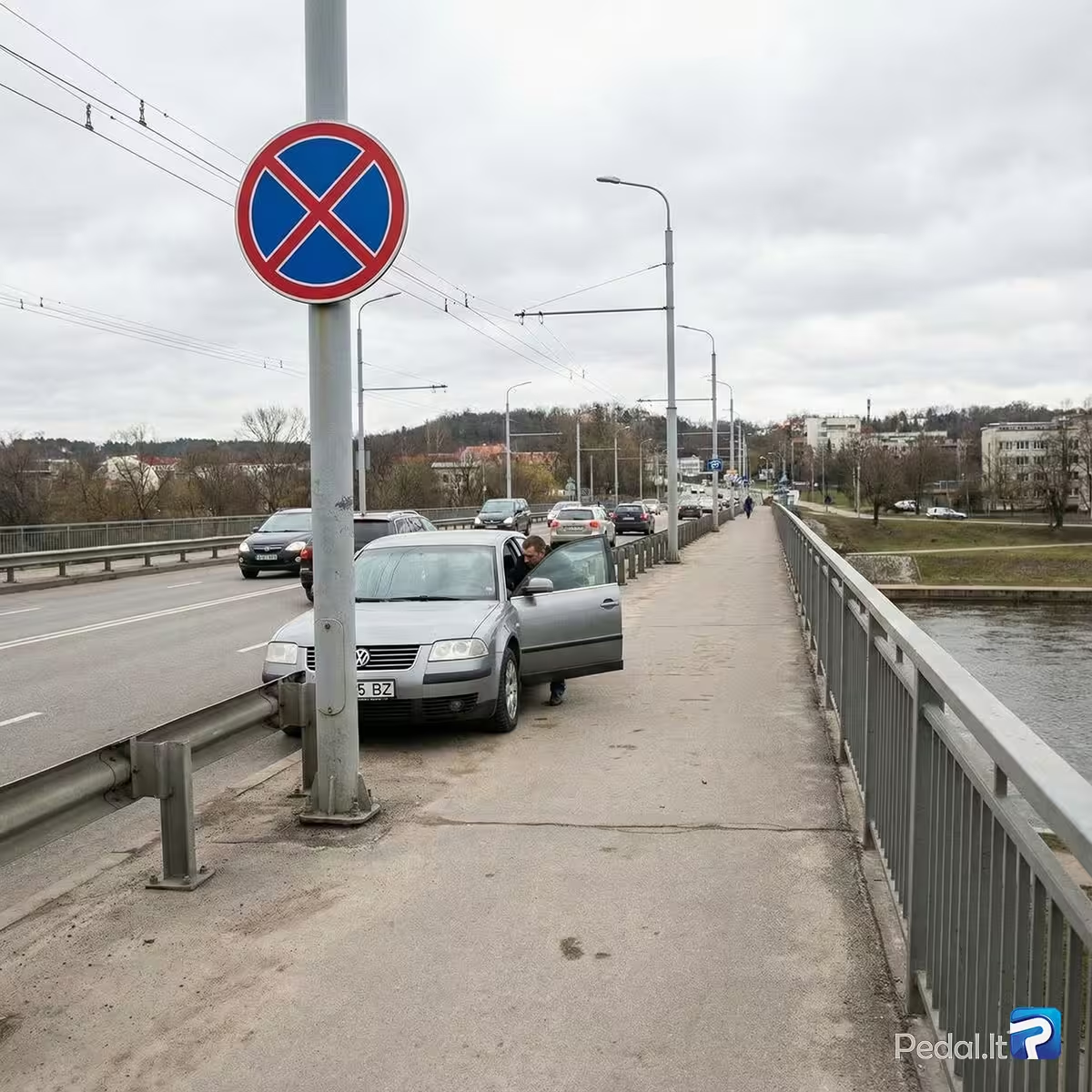
Are drivers permitted to stop or park their vehicles on a bridge if they do not obstruct traffic flow?
RTR – 150. Standing and parking are prohibited: 150.3 on and under bridges, viaducts and flyovers — except where parking is expressly permitted by road signs indicating a parking space — and in tunnels.
1. Yes — it is permitted.
2. Parking is permitted only where road signs explicitly designate a parking space.
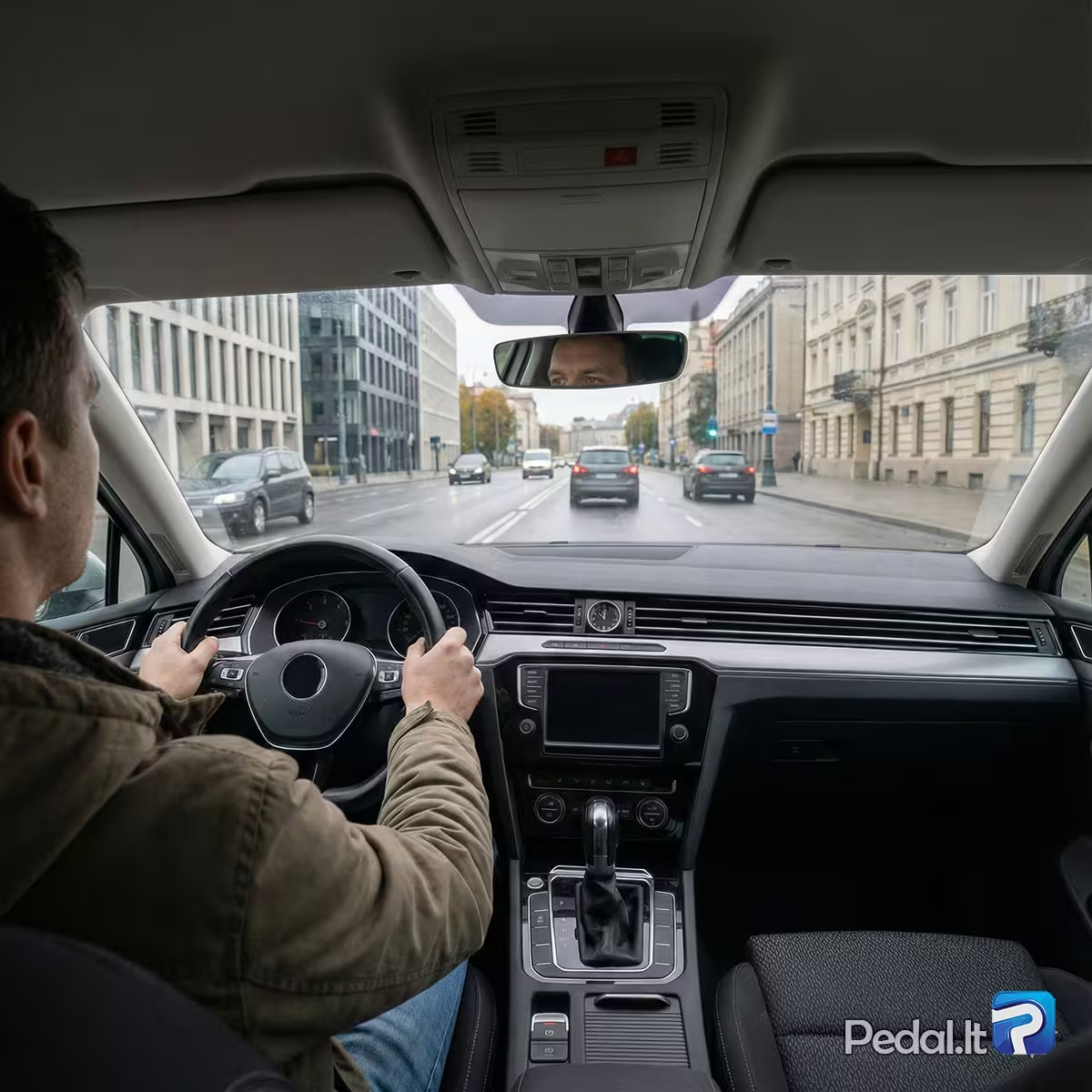
When should a driver move back into the right-hand lane after overtaking another vehicle?
RTR 136. Drivers should avoid unnecessary overtaking maneuvers. Before overtaking, drivers must take extra precautions and ensure that: 136.1. no driver behind them has already started to overtake; 136.2. the driver of the vehicle to be overtaken is not indicating a left turn; 136.3. the section of lane required for overtaking is clear, and the overtaking vehicle will not obstruct oncoming traffic or pedestrians on the roadway; 136.4. a safe distance from the vehicle being overtaken can be maintained during the maneuver; 136.5. after completing the overtaking maneuver, they will be able to return to the same lane safely without obstructing the overtaken vehicle.
1. Immediately after overtaking.
2. When the driver is more than 100 metres ahead of the overtaken vehicle.
3. When the overtaking driver can see the overtaken vehicle in the rear‑view mirror.
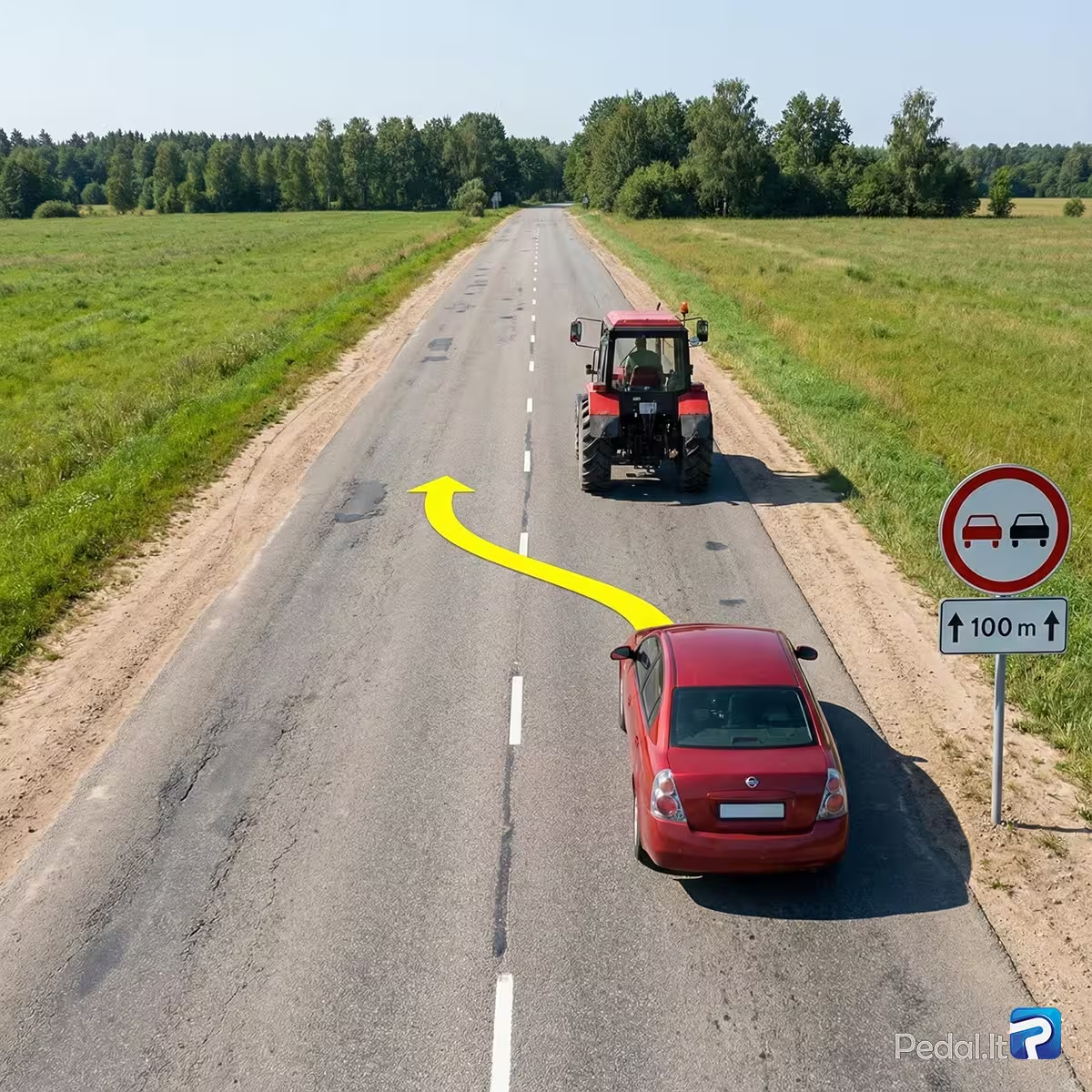
Is overtaking permitted?
Although the road sign normally prohibits overtaking, overtaking vehicles traveling at speeds under 30 km/h is permitted provided it can be done safely. Road sign 325 — “Overtaking prohibited” forbids overtaking, except for individual vehicles (or individual vehicle combinations) traveling at speeds under 30 km/h. Road sign 805 — “Validity zone ahead” indicates the length of the zone beyond the sign during which a hazardous road section or other associated signs remain in effect.
1. No — overtaking is prohibited.
2. Yes — overtaking is permitted if the tractor is traveling at less than 30 km/h.
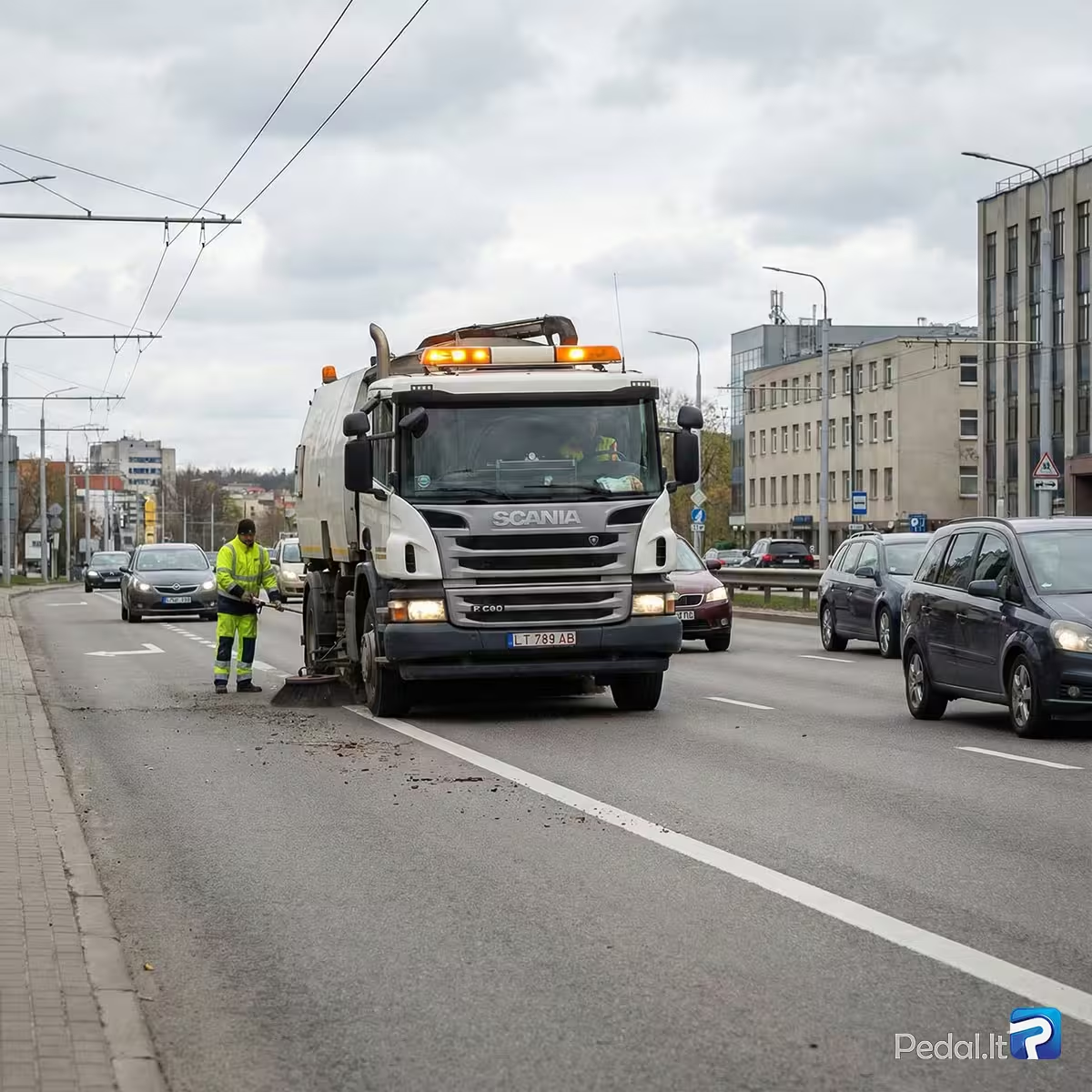
Are drivers of motor vehicles equipped with orange flashing lights permitted to disregard road-marking lines while performing work on the roadway?
Regulation RTR 188: An orange flashing light may be used only when the vehicle obstructs other road users—for example, when the vehicle's loaded or unloaded dimensions exceed permitted limits; when performing work on the roadway; when stopping or standing; when moving at very low speed; when escorting an organized group of cyclists; or when transporting hazardous goods. An orange flashing light does not confer priority; it merely attracts attention and warns other road users of a potential hazard. While driving, standing, or working on the road, drivers of vehicles displaying orange flashing lights must ensure they do not compromise traffic safety.
1. Yes — provided doing so does not jeopardize traffic safety.
2. No — they are not allowed to do so.
You are driving at night on a narrow road. The vehicle ahead, traveling slowly, has its left turn signal on. What will you do?
You cannot overtake on the right because you are on a narrow road. Overtaking on the right of a vehicle that is turning left is permitted only if there is sufficient space on the carriageway. RTR 136. Drivers are advised to avoid unnecessary overtaking maneuvers. Before overtaking, drivers must exercise extra caution and ensure that: 136.1 none of the drivers behind has already begun to overtake; 136.2 the driver of the vehicle to be overtaken is not indicating a left turn; 136.3 the portion of lane required for overtaking is clear and the maneuver will not obstruct oncoming vehicles or pedestrians using the carriageway; 136.4 a safe distance from the vehicle being overtaken will be maintained during the maneuver; 136.5 after overtaking they will be able to return to the same traffic lane safely without obstructing the overtaken vehicle. RTR 137. If the vehicle in front is indicating a left turn and has changed lanes to make that left turn (or to turn around), vehicles following must pass the turning vehicle on the right or wait until it leaves the traffic lane.
1. You will pass the vehicle on the right.
2. You will not overtake the vehicle while its left turn signal remains on.
3. You will switch on your high-beam headlights before overtaking the vehicle.
4. You will activate your left turn signal and sound the horn.
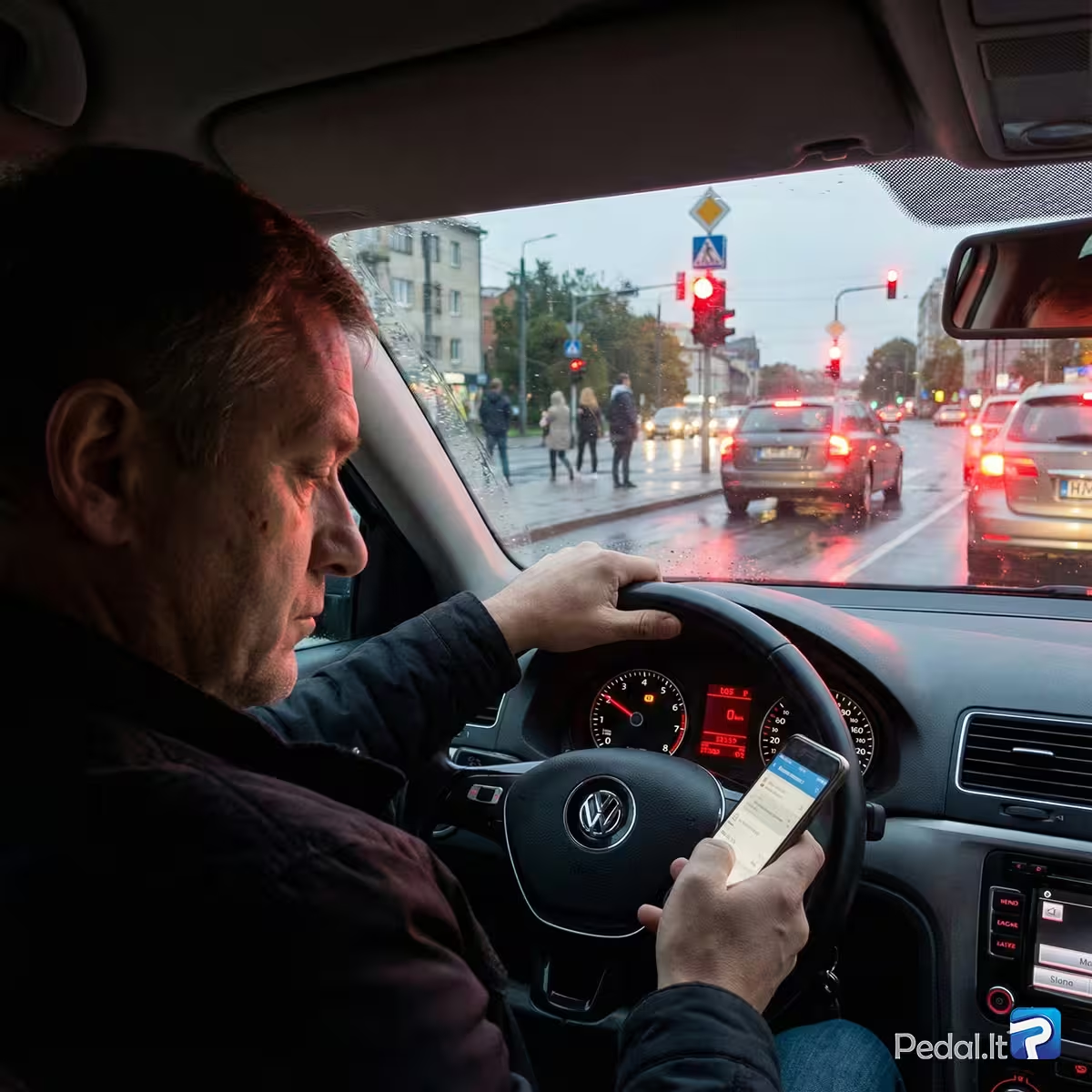
A driver's reaction time is affected by:
The driver's reaction time is delayed by illness, fatigue, or the influence of alcohol or drugs. Distraction and poor concentration while driving also lengthen reaction time, and reaction speed typically decreases with age. RTR 14. Driving is prohibited if you are not authorized to operate the vehicle, or if you are intoxicated or under the influence of narcotic, psychotropic or other psychoactive substances. A person who is tired or ill must not drive if doing so could endanger road safety. A vehicle must not be entrusted to anyone affected by these factors or without the required authorization for that vehicle type. When operating a vehicle, the driver must comply with the requirements shown on their driving licence.
1. Illness.
2. Fatigue.
3. Alcohol consumption.
4. Emotional state.
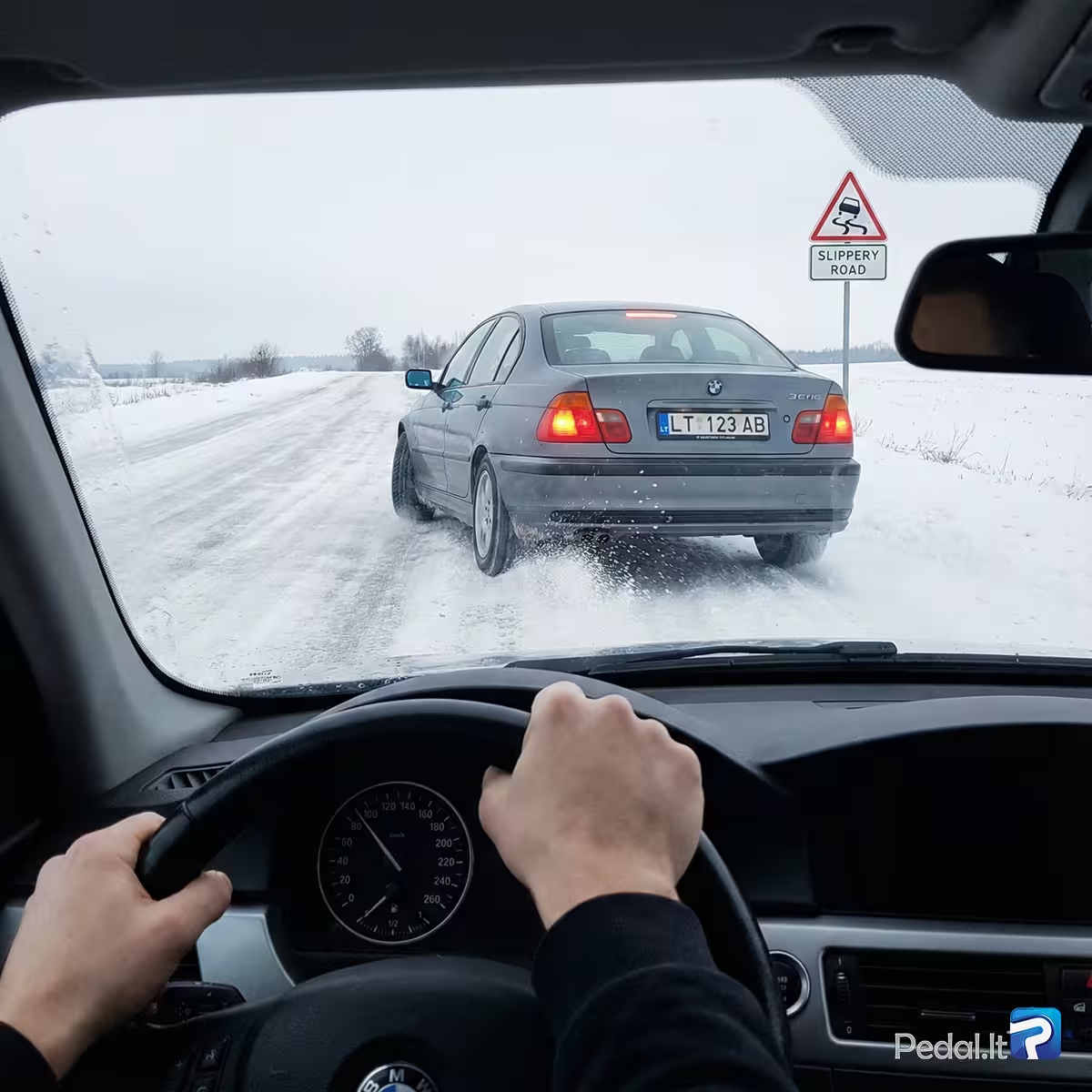
How dangerous is a sudden increase in engine RPM while driving on a slippery road?
If the road surface is slippery or the engine delivers strong torque and the revs increase abruptly, the driven wheels can spin. When the driven wheels are at the rear, the rear axle may lose traction; when they are at the front, the front axle may lose traction, which can cause the vehicle to lose stability and skid.
1. The fuel filter may fail.
2. The fuel pump may fail.
3. If the tractive force of the wheels exceeds the available grip with the road, the vehicle can lose stability and begin to slide.
After you pass your first driving test for category B, the driving licence you receive will be valid for:
LAW ON ROAD TRAFFIC SAFETY Article 22.5. Novice drivers are issued a driving licence valid for three years. In accordance with the procedure established by the Minister of the Interior or their authorised institution, this licence may be replaced with a 10-year licence after two years from the date of issue without completing additional driver training, provided that during those two years the driver has not committed any violations of the Road Traffic Rules (RTR) that would require additional driver training under this Law and has not caused a road traffic accident resulting in bodily injury to road users (except where the accident occurred under circumstances that exclude criminal liability or where the person is not subject to administrative liability). A novice driver who commits any RTR violation that triggers additional driver training under this Law, or who causes a road traffic accident resulting in bodily injury to road users (except as noted above), must complete additional driver training within one year from the date a court judgment (or order) recognising the person as having committed an offence takes effect, or from the date of execution of an administrative order issued after the administrative offence. If a court judgment or penal order imposes arrest or a term of imprisonment and the execution of the sentence is not suspended, the additional driver training must be completed within one year after serving the imposed sentence.
1. 10 years.
2. 15 years.
3. Unlimited validity.
4. 3 years.
What would you do if your engine suddenly failed and stopped running?
Towing a vehicle whose engine has failed or stopped running is not prohibited. However, if the engine is not operating, the brakes may not function correctly because the brake servo will not work, and steering will be more difficult because the power steering will not operate. When using a dolly to tow a vehicle, towing is prohibited if only part of the vehicle rests on the dolly; it is permitted only when the entire vehicle rests on the dolly. RTR 217. The following vehicle towing and transporting practices are prohibited: 217.1 towing a vehicle with a broken steering mechanism using a tow rope or a rigid tow bar; 217.10 carrying a vehicle with part of it resting on a dolly.
1. You will tow the vehicle using a rigid tow bar at the earliest safe opportunity.
2. You will tow the vehicle with only part of it supported on a dolly.
3. You will exercise caution when towing the vehicle with a tow rope, because the brakes and power steering will not function properly.
When is the road surface most slippery?
The road surface is most slippery at the start of rain because accumulated dust and oil on the pavement combine with the first drops to form a slippery film.
1. When rain begins.
2. After heavy rain.
3. After puddles have formed on the road.
What are the benefits of eco-driving?
You improve road safety by planning your journey and anticipating traffic situations. Eco-driving reduces air pollution: the more fuel you consume, the more emissions you produce; by using less fuel you lower air pollution. Fuel savings are the primary objective of eco-driving. Drivers also experience less stress because maintaining steady acceleration, avoiding abrupt braking, and staying aware of traffic conditions simplifies decision-making. Eco-driving improves driving skills by encouraging anticipation and focus on the road. It also reduces noise levels: smoother acceleration and braking produce less engine and tire noise than aggressive driving.
1. You improve road safety by planning your journey and anticipating traffic situations.
2. You reduce air pollution by using less fuel.
3. You save fuel.
4. You experience less stress while driving due to smoother acceleration, gentler braking, and better anticipation.
5. You enhance your driving skills by learning to anticipate traffic and focus on the road.
6. You reduce noise levels because smoother acceleration and braking generate less engine and tire noise.
Which legal act establishes the legal framework governing road traffic safety in the Republic of Lithuania?
Article 1. Purpose and scope. This Law establishes the legal framework for road traffic safety in the Republic of Lithuania. It defines the duties of state and municipal bodies in implementing road safety policy, sets requirements for the training of road users, and specifies the principal rights and obligations of road users, road maintenance authorities, the police, customs officers, and other supervisory officials. The Law also establishes basic requirements for vehicle technical condition, vehicle inspection and registration, and safety standards for road infrastructure, with the objective of protecting the lives, health, and property of road users and others, and of improving conditions for motorized and pedestrian traffic.
1. The Civil Code of the Republic of Lithuania.
2. The Criminal Code of the Republic of Lithuania.
3. The Law on Road Traffic Safety of the Republic of Lithuania.
4. The Code of Administrative Offences of the Republic of Lithuania.
What factors should you consider when choosing a safe distance?
A safe distance is the distance a vehicle travels from the moment the driver notices a hazard until the vehicle comes to a complete stop. It depends on vehicle speed, size, braking performance, road type and surface condition, visibility, driver reaction time, and personal characteristics such as temperament. To choose an appropriate distance, you need to know the vehicle's stopping distance.
1. Visibility.
2. The condition of a road surface.
3. Speed.
What should you do when approaching an intersection where you must give way?
The correct action is to apply the brakes and release the accelerator pedal, because you must be prepared to stop if necessary. Road sign 203 — "Give Way" — indicates that drivers must yield to vehicles travelling on the road being crossed. If supplementary panel No. 843 "Direction of Priority Road" is mounted beneath the sign, you must yield to vehicles on the priority road.
1. You will apply the brakes.
2. You will release the accelerator pedal.
3. You will maintain your current speed.
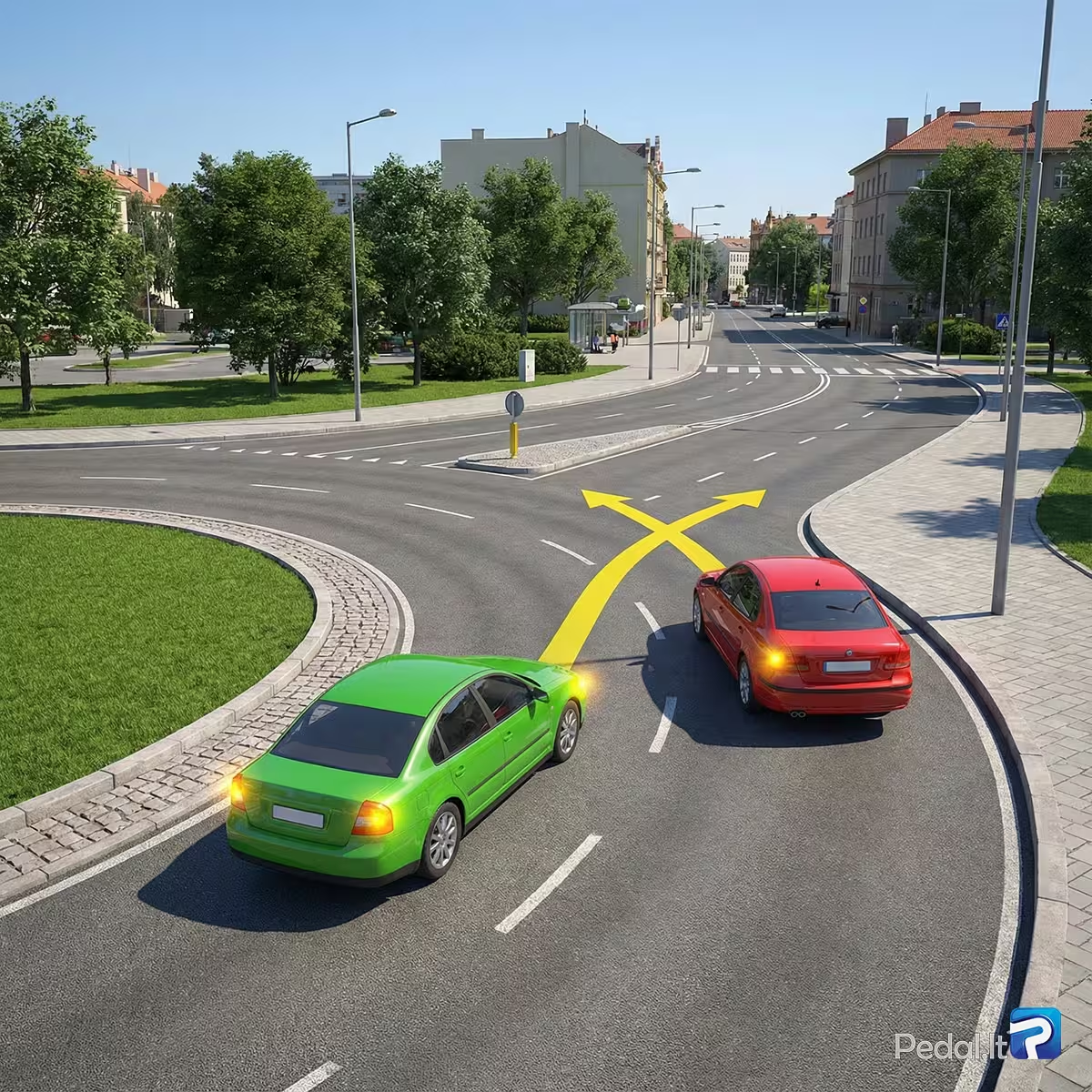
Which driver is violating the traffic rules?
There are no lane direction signs; therefore the driver of the red vehicle may go straight or turn right. When changing lanes, the driver of the green vehicle must yield. RTR 104. When changing lanes, a driver must yield to vehicles moving in the same direction in the adjacent lane. If vehicles moving in the same direction change lanes simultaneously, a driver must yield to the vehicle on the right, except in the cases specified in Paragraph 112 of the Rules. RTR 112. If an acceleration lane is provided for entering the road, the driver must use that lane and merge into the main traffic flow (change lanes and move into the adjacent lane), yielding to vehicles already in that flow or to vehicles changing lanes toward the deceleration lane. RTR 106. Before turning right, left, or making a U-turn (except when entering an intersection with circular traffic), a driver must move in advance to the edge of the carriageway designated for that direction. Road signs and/or road markings may indicate otherwise.
1. The driver of the red vehicle.
2. The driver of the green vehicle.
1 of 30 Task
Time left: 00:00:00
1
2
3
4
5
6
7
8
9
10
11
12
13
14
15
16
17
18
19
20
21
22
23
24
25
26
27
28
29
30