
What driving licence category is required to operate a motorized bicycle?
There is a minimum age requirement to operate a motorized bicycle, but no driving test or driving licence is required. LAW ON ROAD TRAFFIC SAFETY I 2. 40. Motorized bicycle - a vehicle with at least two wheels that is propelled by the rider's muscular effort using pedals or handlebars and equipped with an auxiliary internal combustion engine or electric motor with a maximum net power not exceeding 1 kW and a maximum design speed not exceeding 25 km/h. The auxiliary engine ceases to provide power when the vehicle reaches 25 km/h. Wheelchairs for persons with disabilities are not classified as motorized bicycles. RTR 55. Persons older than 14 are permitted to ride bicycles on the carriageway; if they have completed the training course established by the Ministry of Education, Science, and Sport of the Republic of Lithuania and hold a certificate issued by the school, the minimum age is 12. Persons over 8 may ride bicycles on the carriageway under adult supervision. No age limit is established for cyclists within a residential area. RTR 66. Drivers of motorized bicycles must also comply with the rules and requirements applicable to cyclists.
1. Category AM.
2. Category A.
3. Category B.
4. You do not have to have a driving licence.
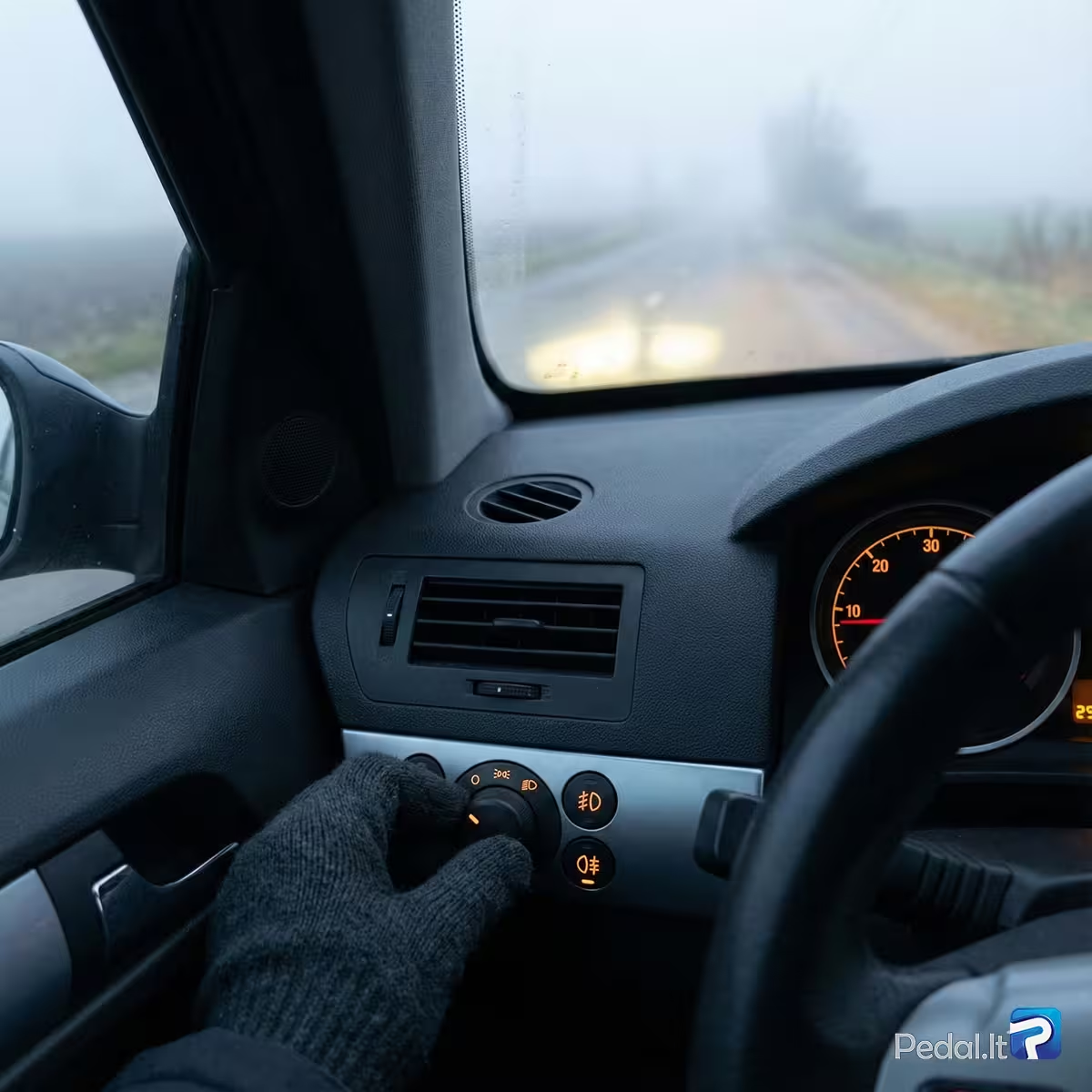
Fog lamps must be capable of being switched on:
Technical requirements for vehicles operated on a road, Chapter IV, Paragraph 22: If fog lamps are fitted, they must only be capable of being switched on and off using an appropriate switch when the position lamps are switched on. Additionally, fog lamps must be capable of being switched off independently of any other lights.
1. When the main-beam (high‑beam) headlamps are switched on.
2. When the position (parking) lamps are switched on.
3. Only when the position lamps are switched on; they must be able to be turned off independently of any other lights.
4. When the dipped‑beam (low‑beam) headlamps are switched on.
Which of the following correctly describes stopping distance?
Stopping distance is the distance a vehicle travels from the moment the driver notices an obstruction until the vehicle comes to a complete stop. Braking distance is the distance the vehicle travels from the moment the brakes are fully applied until it stops. Reaction distance is the distance the vehicle travels from the moment the driver detects an obstruction until the driver begins to apply the brakes.
1. The distance a vehicle travels from the moment the driver detects an obstacle until the vehicle comes to a complete stop.
2. The distance a vehicle travels until the braking force is transmitted to the wheels.
3. The distance a vehicle travels from the moment braking begins until the vehicle comes to a complete stop.
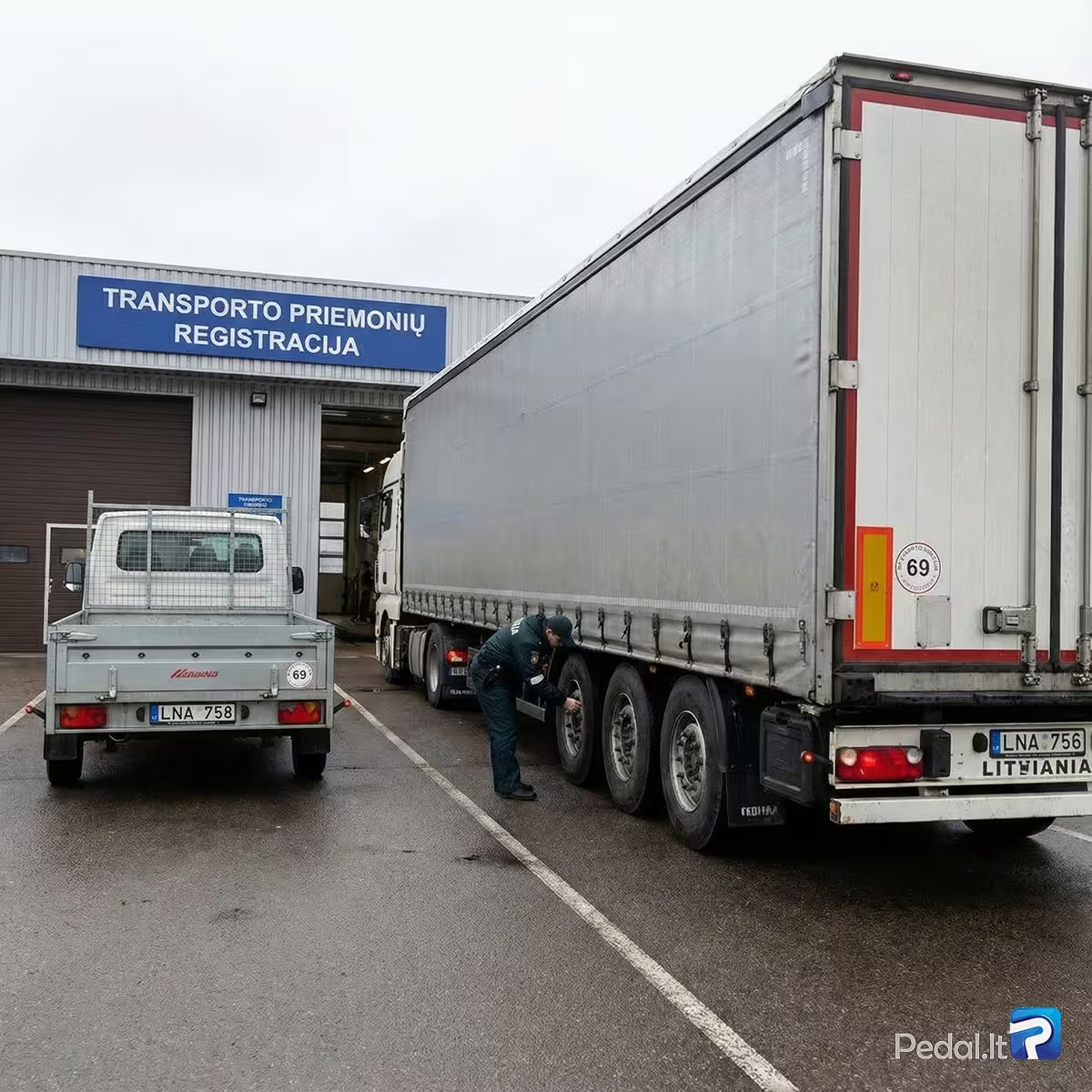
Are trailers and semi-trailers considered vehicles?
48. A trailer is a vehicle designed to be towed by a motor vehicle. Semi-trailers are also regarded as trailers. 52. A semi-trailer is a trailer coupled to a motor vehicle in such a way that part of its weight and the weight of its load are borne by the motor vehicle.
1. No.
2. Yes.
What can cause the vehicle's cabin windows to fog up?
If the windows fog up (for example after washing the vehicle), the heating/ventilation setting may be incorrect.
1. Residual moisture remaining after washing the vehicle.
2. The engine coolant level is too high.
3. Incorrect heating/ventilation setting.
4. An excessive number of occupants in the cabin.
While stopped uphill at a traffic signal, the best method to keep a manual-transmission car stationary is to:
When stopped uphill at a red traffic light, the recommended way to keep a manual-transmission car stationary is to use the parking brake. This is especially advised for inexperienced drivers, as it makes starting away easier and reduces the risk of rolling backward.
1. Apply the parking brake.
2. Select first gear and partially release the clutch to hold the vehicle.
3. Leave the vehicle in gear and switch off the engine.
4. Apply and hold the service (foot) brake.
Which of the following distances to a vehicle ahead would be unsafe?
RTR 126. The driver must maintain a following distance at speed sufficient to avoid colliding with the vehicle ahead if it brakes, and must leave a lateral gap to ensure traffic safety. It is recommended that the following distance be at least the distance covered in two seconds, or at least half the speedometer reading converted into metres; for example, at 70 km/h the distance should not be less than 35 m, unless traffic conditions require otherwise. Drivers of motor vehicles, tractors and self‑propelled machinery, when overtaking pedestrians or when overtaking or passing cyclists or drivers of electric micromobility vehicles, must leave a lateral clearance of at least 1.0 m if their speed does not exceed 50 km/h, and at least 1.5 m if their speed exceeds 50 km/h. The requirement to maintain the specified lateral distance does not apply on single‑lane roads.
1. Less than the distance covered in two seconds.
2. Less than the distance covered in five seconds.
3. 30 m
4. 50 m
To begin driving uphill, when should the parking brake be released?
If the parking brake is used when starting on an uphill gradient, release it simultaneously with moving off.
1. After you have started moving.
2. Before you start moving.
3. Simultaneously with starting to move.
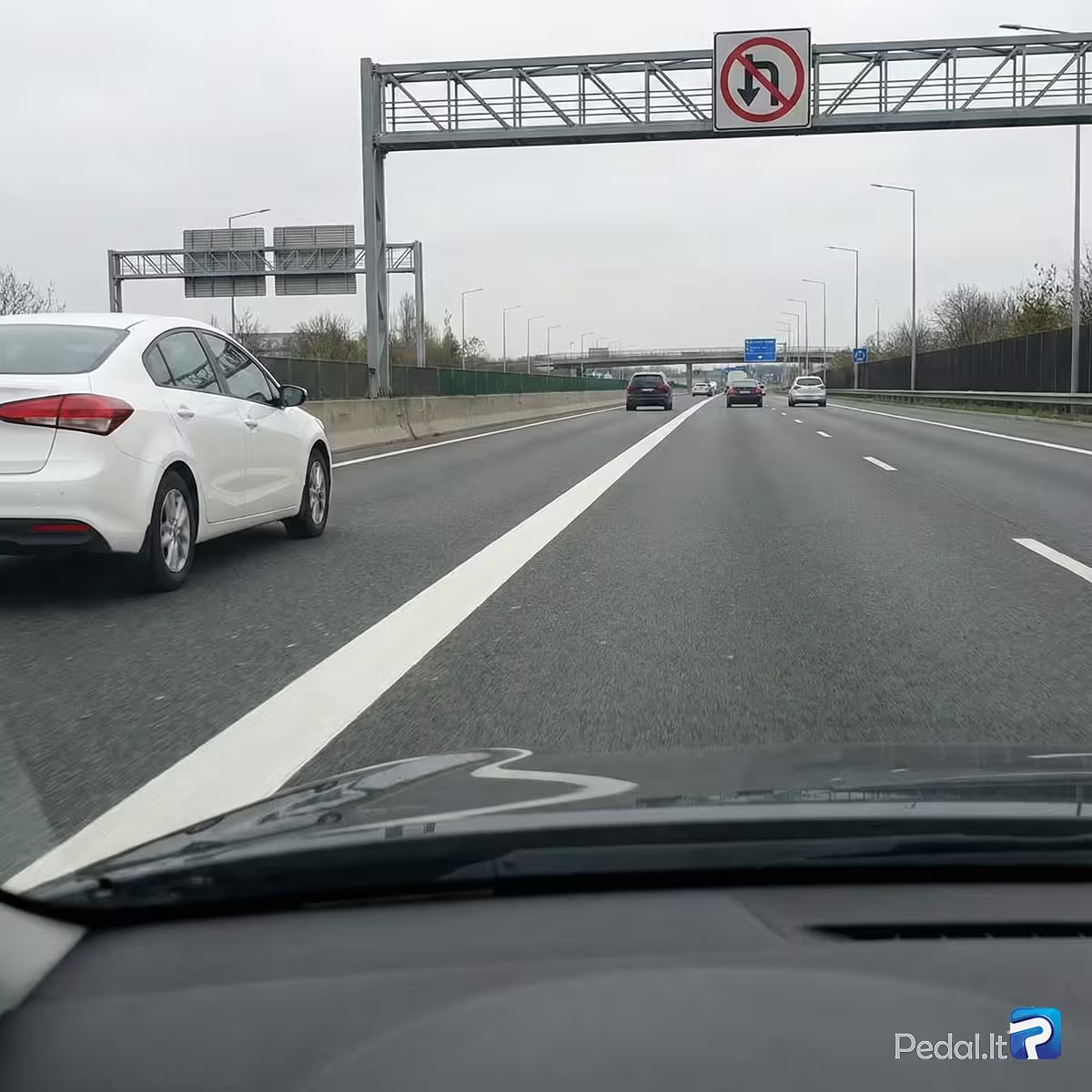
Is it permitted to cross a wide continuous road marking?
RTR 174. On roads designated as Motorway or Motor Vehicle Road the following are prohibited: 174.2 standing or parking except in designated parking areas; RTR Annex 3 1.2. A BROAD CONTINUOUS LINE marks the edge of the carriageway and the boundaries of sections where entry is prohibited on motorways and highways; it separates traffic lanes reserved for public-service vehicles and delineates lanes from bus stops. Vehicles must not cross this line unless it marks the edge of the carriageway. JB
1. Crossing is permitted.
2. Crossing is permitted only when the line denotes the edge of the carriageway.
3. Crossing is permitted to bypass an obstacle when the line separates a lane reserved for shuttle (route) transport.
What are the benefits of eco-driving?
You improve road safety by planning your journey and anticipating traffic situations. Eco-driving reduces air pollution: the more fuel you consume, the more emissions you produce; by using less fuel you lower air pollution. Fuel savings are the primary objective of eco-driving. Drivers also experience less stress because maintaining steady acceleration, avoiding abrupt braking, and staying aware of traffic conditions simplifies decision-making. Eco-driving improves driving skills by encouraging anticipation and focus on the road. It also reduces noise levels: smoother acceleration and braking produce less engine and tire noise than aggressive driving.
1. You improve road safety by planning your journey and anticipating traffic situations.
2. You reduce air pollution by using less fuel.
3. You save fuel.
4. You experience less stress while driving due to smoother acceleration, gentler braking, and better anticipation.
5. You enhance your driving skills by learning to anticipate traffic and focus on the road.
6. You reduce noise levels because smoother acceleration and braking generate less engine and tire noise.
Why does a vehicle pull to one side during braking?
If a vehicle pulls to one side only during braking, the fault lies in the braking system. If the wheel alignment is incorrect or there is a malfunction in the steering system, the vehicle may also pull to one side while driving.
1. Because the wheels are misaligned.
2. Because the braking system is applying unevenly.
3. Because of a malfunction in the steering mechanism.
When approaching a traffic-light-controlled intersection and you notice the green light has been on for a long time, what should you do?
A green light that has been lit for an extended period may change to yellow shortly. You may proceed, but remain vigilant and be prepared to stop safely. 73. Traffic light signals mean: 73.1. A steady circular green light permits movement in all directions (straight ahead, to the right, to the left, or a U-turn); 73.3. A flashing green light permits movement but warns that its time is ending and the signals are about to change.
1. Stop immediately.
2. Increase your speed.
3. Continue driving but be prepared to stop.
Your car begins to skid sideways while braking. What should you do?
If the wheels lock and the car begins to skid while braking, you must release the brake pedal. For example, if you brake hard before a bend and lock the wheels, the vehicle will continue moving in its original direction (straight ahead) despite steering input. That can cause you to run off the road or collide with an obstacle. In that situation you must stop braking — which can be difficult, especially for inexperienced drivers.
1. Press the clutch pedal.
2. Release the brake pedal (stop applying the brakes).
3. Apply the brakes more firmly.
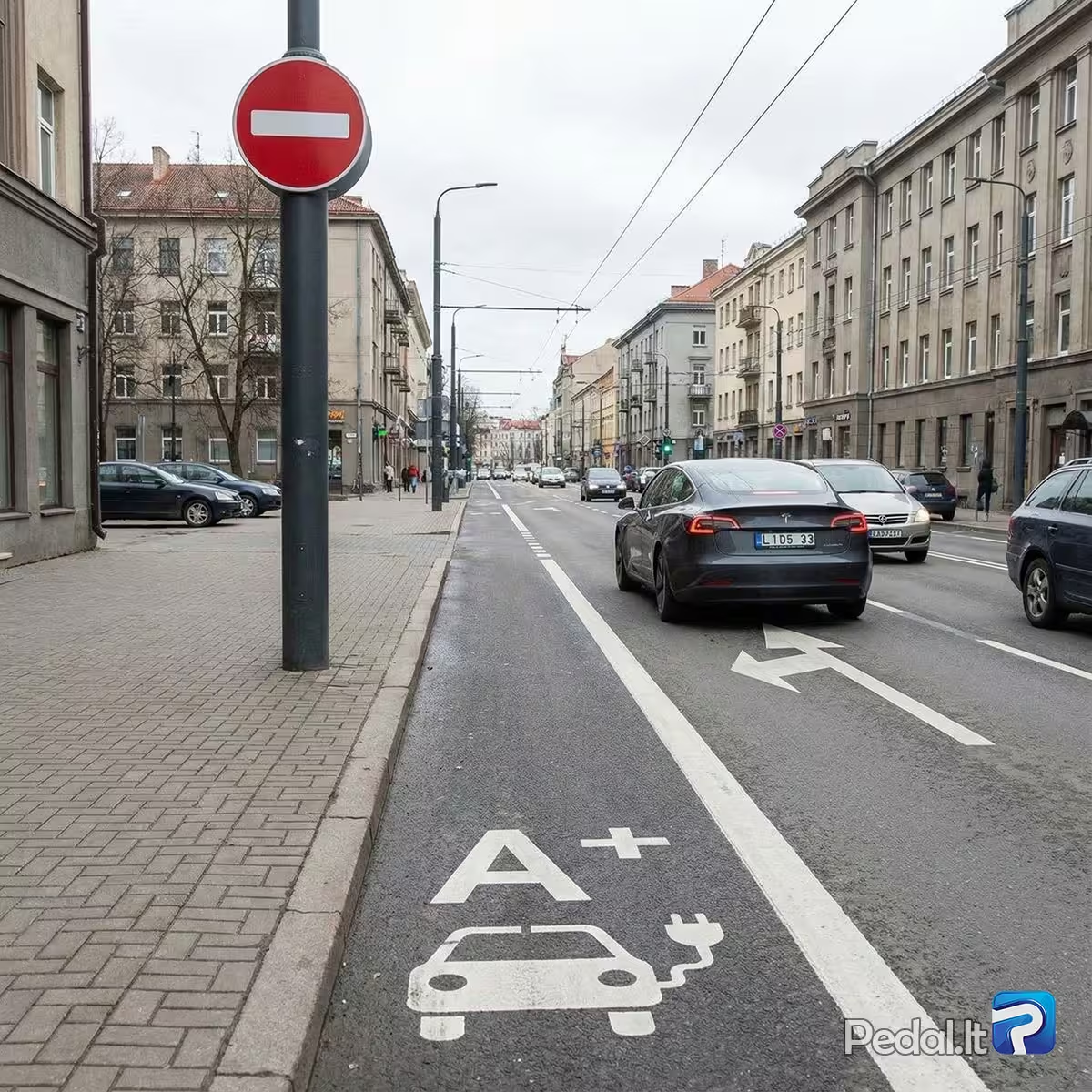
When driving in a lane marked 'A+' and bearing an electric vehicle symbol, and the lane's road sign indicates 'No Entry', what should the driver of an electric vehicle do if they intend to go straight ahead?
In this situation, the 'No Entry' sign applies to the lane and is not limited solely to public-service vehicles. Therefore, if the electric vehicle driver intends to continue straight ahead, they must change lanes and move into a lane that permits driving straight. Legal basis: RTR 181 — Non-public-service vehicles must not drive in lanes marked 'Lane Reserved for Public Service Vehicles' and the letter 'A'. 1811 — Non-public-service vehicles must not drive in lanes marked 'A+' except for the following: 1811.1 bicycles, electric micromobility devices, mopeds, and light quadricycles; 1811.2 vehicles marked with the distinguishing sign 'A person with a disability' or displaying a parking card that transport a person with a disability to/from an educational institution or a day-care centre for people with disabilities if the route is agreed with the road owner according to the established procedure; 1811.3 taxis if the lane reads 'TAXI'; 1811.4 cars carrying four or more road users if the lane is marked with the symbol '4+'; 1811.5 electric vehicles if the lane is marked with an electric vehicle symbol; 1811.6 motorcycles if the lane is marked with a motorcycle symbol. RTR Annex 1. 301 — Road sign 'No Entry': Entry is prohibited for all vehicles except public-service vehicles.
1. Continue straight ahead without changing lanes.
2. Change lanes and move into the lane from which it is allowed to drive straight ahead.
Who has the right of way when the traffic lights at the intersection are not functioning?
Regulation RTR 167: When an intersection is controlled by traffic lights, drivers must obey the light signals regardless of any priority indicated by road signs. If the traffic lights are not operating or the amber (yellow) light is flashing, drivers must follow the priority indicated by the road signs.
1. No one has the right of way.
2. Drivers on the main (priority) road.
3. Drivers making a right turn.
4. Drivers on the side (secondary) road.
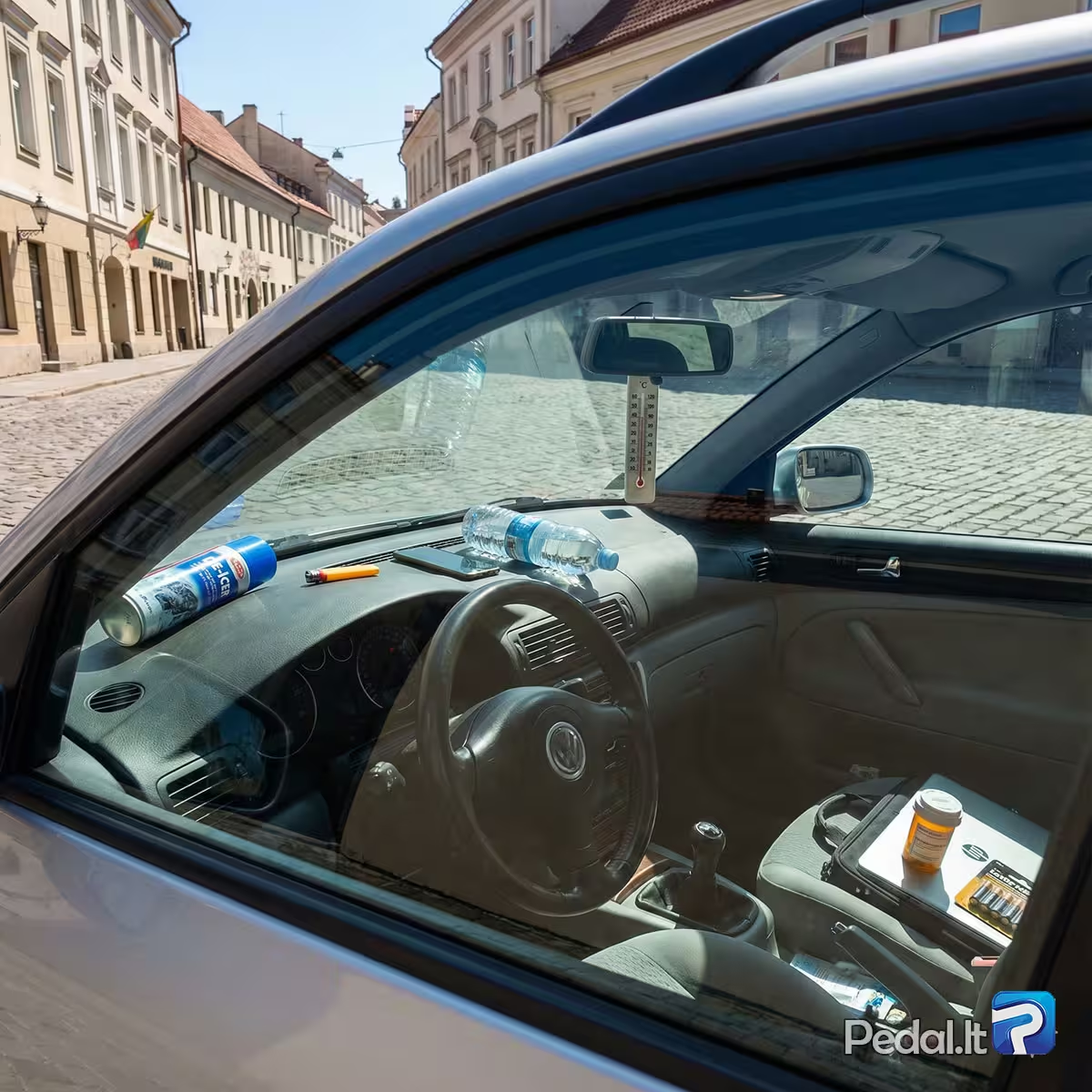
Which items must not be left in a vehicle?
Vehicle documents should not be left in the vehicle, as they can be readily used by thieves. Valuable items must not be left in plain view inside the vehicle because they may attract opportunistic burglaries. Leaving liquids, such as soft drinks, inside the vehicle does not compromise its safety. (RTR 147) A driver may leave the vehicle unattended only after ensuring it cannot move on its own and that unauthorised use is prevented.
1. Vehicle documents (registration and insurance papers).
2. Valuable items left in plain view inside the vehicle.
3. Liquids (e.g., soft drinks).
The requirement to 'Give Way' means:
3. Terms used in the Road Traffic Rules: 3.2. 'Give way' means that drivers must stop, or must not begin to drive or manoeuvre, if doing so would require other vehicle drivers to change their direction of travel or their speed.
1. That drivers on a side road must yield to vehicles approaching the intersection on a priority road.
2. That drivers must stop, or must not begin to drive or manoeuvre, if doing so would force other vehicle drivers to change their direction of travel or their speed.
3. That at an uncontrolled intersection drivers must yield to vehicles approaching from the right.
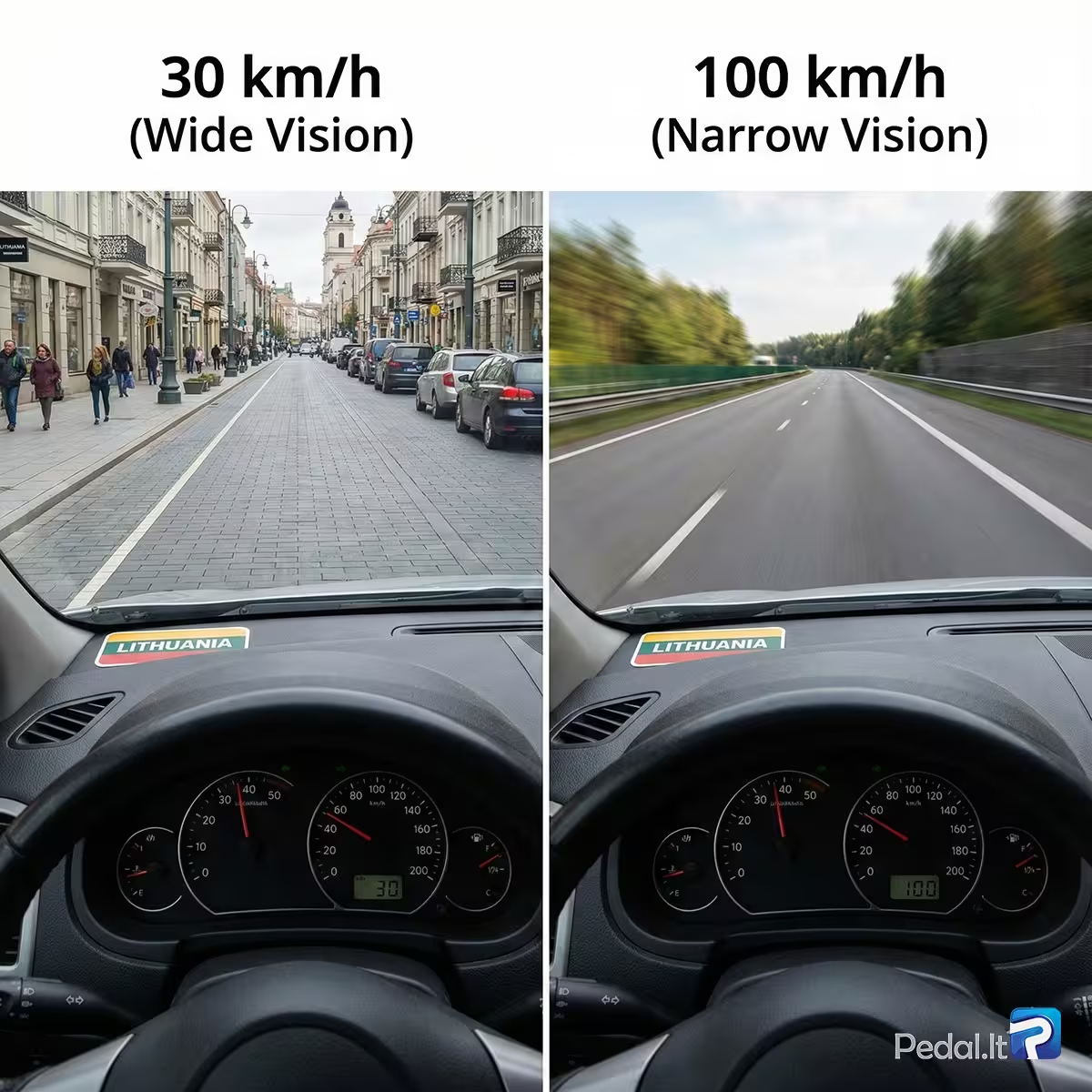
How does your field of vision change as your driving speed increases?
The field of vision is affected by driving speed, visual acuity (e.g., short-sightedness), fatigue, the color and brightness of objects, their contrast with the background, and other factors. As speed increases, a driver’s area of attention narrows and shifts forward: although drivers tend to look farther ahead, the effective dimensions of attention decrease inversely with speed. For example, at 50 km/h it is usually sufficient to focus about 150 m ahead to detect an obstacle; at 140 km/h an oncoming vehicle may not be noticed until it is only 15–20 m from the point of passing.
1. It becomes narrower.
2. It becomes wider.
3. It does not change.
Carrying passengers is permitted in:
Towing a vehicle with a trailer is not prohibited, and carrying passengers in a towed passenger car is allowed. According to RTR 195 and clause 195.4, drivers must not carry passengers inside a towed bus, trolleybus, or in the cargo body of a goods vehicle. If the front or rear of a vehicle rests on a supporting device, no passengers may be inside or in the body of the towed vehicle.
1. Inside a towed bus.
2. Inside a car being towed together with its trailer.
3. Inside a passenger car being towed without a trailer.
4. Inside a car that is being towed with its front lifted on a special support device.
What should drivers do when approaching an intersection where the green traffic light is flashing?
According to the Road Traffic Rules (RTR 73.3), a flashing green light permits traffic to proceed but indicates that the green phase is ending and that a prohibitive signal will soon appear. Drivers who try to speed through the intersection — by accelerating or overtaking — take unnecessary risks and may cause an accident. Other drivers may brake suddenly; therefore, to pass the intersection safely while the green light is flashing, drivers must ensure their actions will not obstruct other vehicles and must consider the behavior of drivers behind them, since sudden braking can also lead to collisions. Anticipating the need to stop before the intersection, drivers should reduce their speed.
1. Observe and take into account the actions of vehicles ahead.
2. Accelerate to the maximum allowable speed.
3. Be aware of and consider the actions of drivers behind you.
4. Reduce your speed.
What should you do when approaching an intersection where you must give way?
The correct action is to apply the brakes and release the accelerator pedal, because you must be prepared to stop if necessary. Road sign 203 — "Give Way" — indicates that drivers must yield to vehicles travelling on the road being crossed. If supplementary panel No. 843 "Direction of Priority Road" is mounted beneath the sign, you must yield to vehicles on the priority road.
1. You will apply the brakes.
2. You will release the accelerator pedal.
3. You will maintain your current speed.
.avif)
To whom must a motorcyclist yield?
RTR 12. Road users must immediately yield to approaching emergency vehicles that display blue and red (or only blue) flashing lights and use special audible signals, as well as to vehicles escorted by them. Road users shall form an emergency corridor as follows: 12.1 On a road with a single lane in one direction, drivers must stop on the right hard shoulder if one exists; if there is no hard shoulder, they must stop as close as possible to the right edge of the carriageway. 12.2 On a road with two or more lanes in the same direction, vehicles in the far-left lane must move and stop as close as possible to the left edge of the carriageway designated for that direction, while vehicles in the lanes to the right must move and stop as close as possible to the right edge of the carriageway (or the hard shoulder). 12.3 On a road with a central reservation, only drivers travelling in the same direction must comply with the requirements in paragraphs 12.1 and 12.2. RTR 154. At a controlled intersection, drivers on a side (minor) road must yield to vehicles approaching on the priority road.
1. The red car.
2. The police vehicle.
3. The bus.
4. The motorcyclist is not required to yield to anyone.
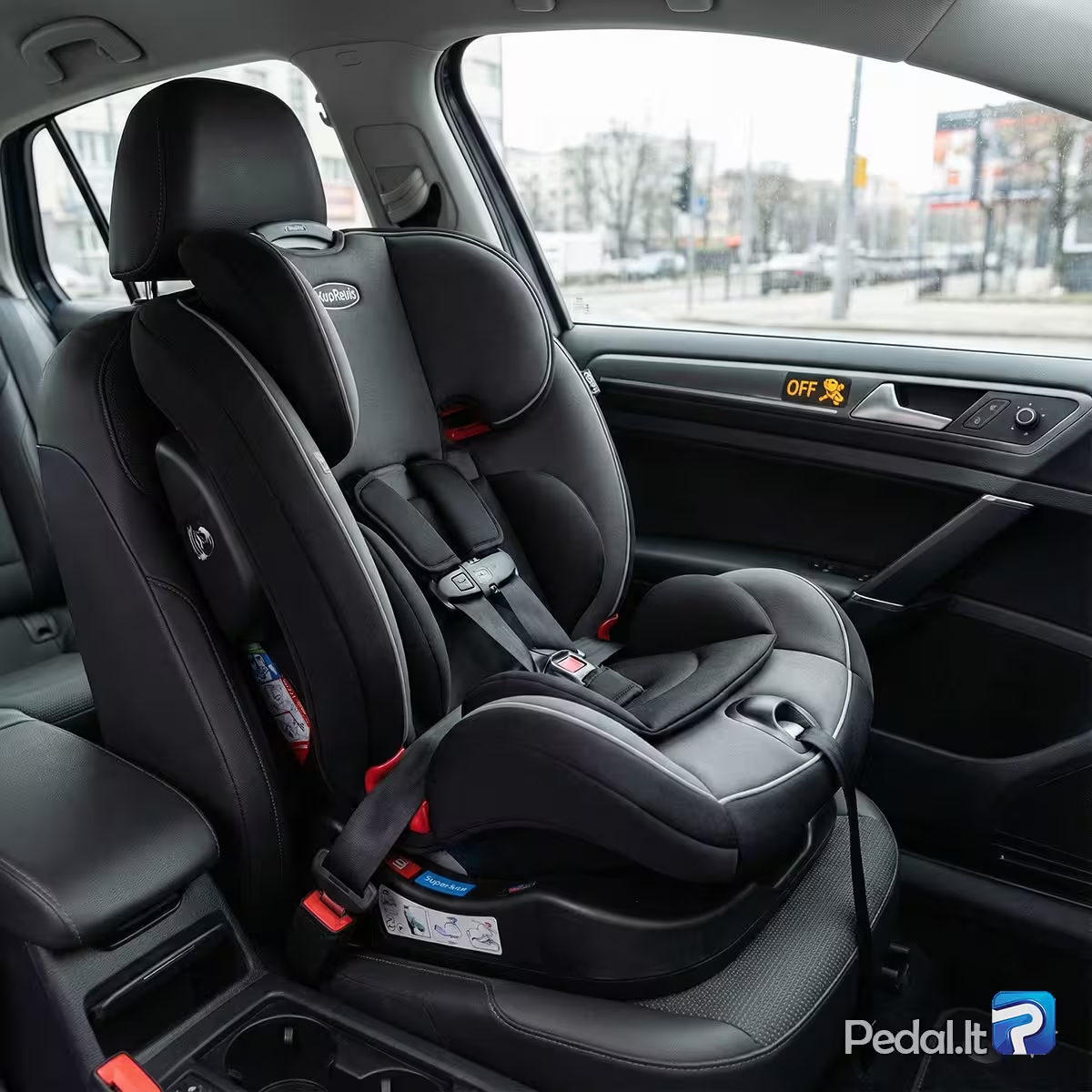
When is a child allowed to be transported in a child restraint (appropriate for their size and weight) on the front passenger seat of a motor vehicle?
RTR 201. Do not place a rear-facing child restraint suitable for the child's size on the front passenger seat if that seat is protected by an active airbag. This prohibition does not apply when the front passenger airbag is deactivated. It is recommended that children remain as long as possible in a rear-facing child restraint adapted to their height and weight, in accordance with the child seat manufacturer's instructions.
1. Only in a forward-facing child seat.
2. A child may be transported in a rear-facing child restraint on the front passenger seat if the vehicle has no front passenger airbag.
3. A child may be transported in a rear-facing child restraint on the front passenger seat if the front passenger airbag has been deactivated.
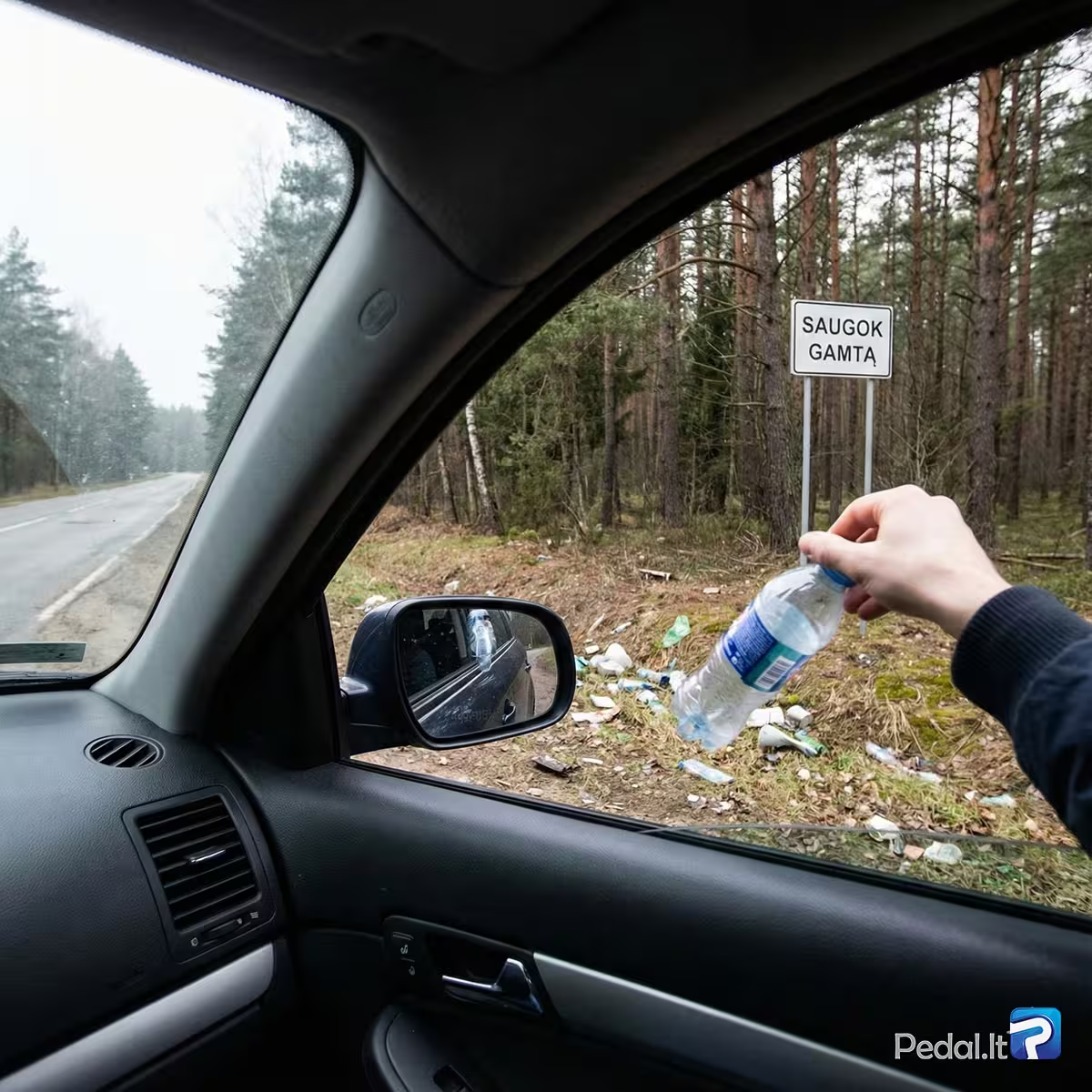
What should we avoid to protect nature?
Carrying unnecessary luggage increases fuel consumption and causes additional harmful emissions. Loud music from a vehicle contributes to noise pollution and can scare wildlife. For short trips, people can walk, cycle, or use public transport, because during brief journeys the engine often does not reach its optimal operating temperature, the vehicle runs less efficiently, and pollution is higher.
1. Leaving a vehicle's engine running while stationary (idling).
2. Playing loud music from a vehicle with the windows open.
3. Using a car for short trips.
4. Carrying unnecessary cargo or luggage.
How must a load that projects more than 1 m beyond the front or rear of a vehicle's dimensions be marked?
According to RTR Annex 4.12: Any load whose extreme edge projects more than 1 m beyond the front or rear of the vehicle—or which projects even minimally to the side—or any vehicle wider than 2.6 m must be marked with distinctive signs: squares 400 mm on a side with diagonal alternating reflective white and red stripes 50 mm wide. These signs must be mounted between 0.4 m and 1.6 m above ground level. During hours of darkness or when visibility is poor, such vehicles must also display lights in designated positions: white at the front, amber (orange) on the sides, and red at the rear.
1. With reflectors or lights: white at the front, amber on the sides, and red at the rear.
2. With distinctive signs — squares with diagonal alternating reflective white and red stripes.
3. With high-visibility flags.
4. During hours of darkness or poor visibility: with white lights at the front, amber on the sides, and red at the rear.
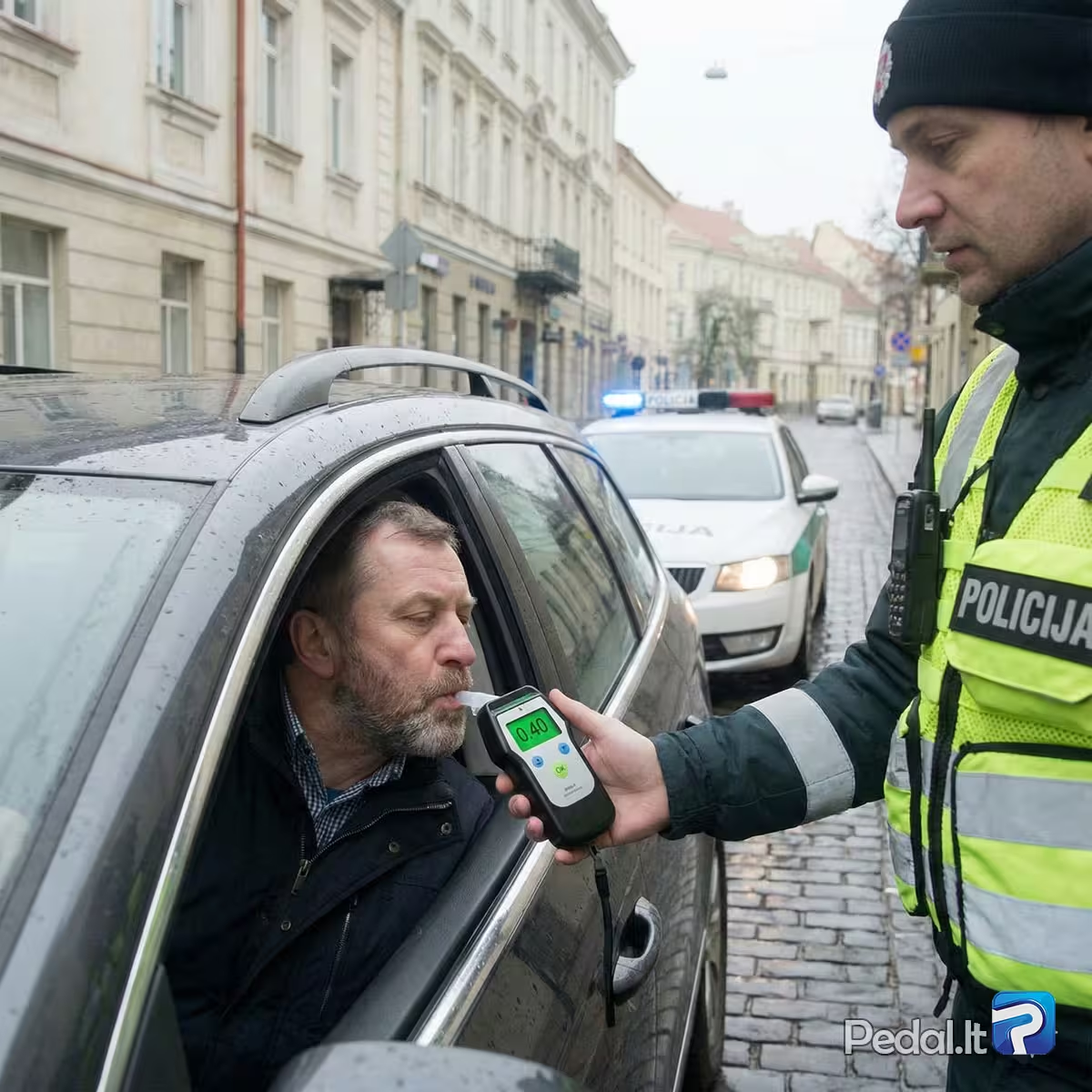
What is the maximum permitted alcohol concentration (in per mille, ‰) for a driver with 20 years of driving experience?
According to the Law on Road Traffic Safety, Article 2, point 43: “Drunkenness” means a state in which a person has consumed ethyl alcohol and the concentration of that alcohol in the body's biological media (exhaled air, blood, urine, saliva or other bodily fluids) exceeds the legal limit. The maximum permitted concentration of ethyl alcohol in the exhaled air, blood, urine, saliva or other bodily fluids of persons operating vehicles is 0.4 per mille (‰). Novice drivers, taxi drivers, and drivers of mopeds, motorcycles, tricycles, light quadricycles, four-wheelers, motorized quadricycles, vehicles with a maximum permissible weight over 3.5 t or with more than 9 seats, and drivers transporting dangerous goods are considered intoxicated when the concentration of ethyl alcohol in their exhaled air, blood, urine, saliva or other bodily fluids is greater than 0 ‰. JB
1. 0.2 ‰
2. 0.3 ‰
3. 0.4 ‰
4. 0.8 ‰
At what age can you obtain a category A (motorcycle) driving licence?
Under Article 23 of the Law on Road Traffic Safety, there are two ways to obtain a category A (motorcycle) driving licence. You may obtain category A from the age of 24 without prior experience. Alternatively, from the age of 20 you may obtain category A if you have at least two years' qualifying experience riding category A2 motorcycles. The two-year A2 experience requirement does not apply to applicants aged 24 or older. Separately, the right to drive tricycles (three-wheelers) with power exceeding 15 kW is granted from the age of 21.
1. From the age of 24.
2. From the age of 20, provided you have two years' experience riding category A2 motorcycles.
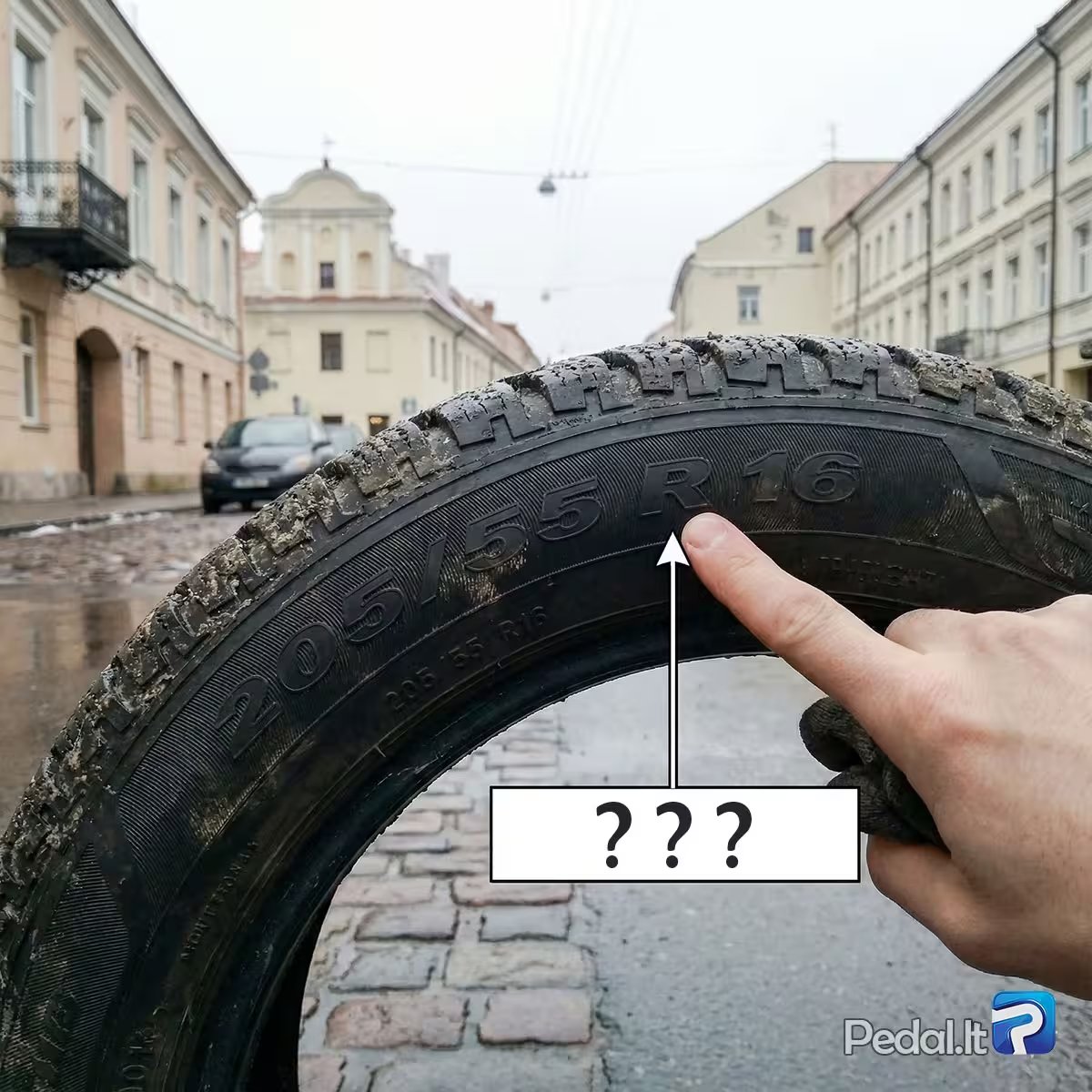
What does the letter 'R' indicate in tyre markings?
The letter 'R' denotes a radial tyre construction. In a radial tyre, the carcass cords run from one bead to the other in a radial direction instead of being wrapped around the bead cores. Thin, flexible crown plies provide the tread area with the required rigidity and flexibility while minimizing elastic deformation.
1. The tyre's construction (radial construction).
2. Tyre diameter.
3. Tyre load index.
In which situations must a driver report a road accident to the police?
If a road accident results only in property damage and the owner of the damaged property is not present at the scene and cannot be contacted, the road user involved must immediately notify the owner or, if that is not possible, report the accident to the police.
XXIX. Obligations of Road Users in the Event of a Road Accident (paras. 219–222)
219. In the event of a road accident, every driver involved or any other road user must:
219.1. stop immediately without creating further danger to other road users and mark the accident scene as required by subparagraph 91.2 and paragraph 92 of these Rules;
219.2. take all possible measures to ensure safety at the scene, and if the police are called, avoid (without endangering traffic) altering the circumstances of the accident and preserve the traces and evidence of the collision;
219.3. at the request of other road users involved, present a valid identity document or driving licence and a certificate (policy) of compulsory motor third-party liability insurance to identify the insurer;
219.4. if a person has been injured or has died in the accident, report the accident to the police and remain at the scene, or after notifying the police return and wait for them, except where the police permit departure or where the casualties or the person reporting the accident require immediate first aid;
219.5. take all necessary measures to provide first aid to the casualties, call an ambulance or, if calling an ambulance or transporting casualties to a medical facility by other means is impossible, carry them to the nearest medical facility in a private vehicle unless such transport would endanger their life or health.
222. If a road accident causes only property damage and the victim is not present at the scene, the road user involved must immediately notify the victim or, if that is not possible, the police.
1. When the accident caused only property damage and the owner of the damaged property is not present at the scene and cannot be reached.
2. When there is a dispute or disagreement about the circumstances of the accident.
3. When a person has been injured as a result of the accident.
4. When a person has died as a result of the accident.
.avif)
What are the fundamental principles of driver conduct?
1. Responsibility and courtesy.
2. Aggressive behavior.
3. Anger.
4. Disrespect toward other road users.
1 of 30 Task
Time left: 00:00:00
1
2
3
4
5
6
7
8
9
10
11
12
13
14
15
16
17
18
19
20
21
22
23
24
25
26
27
28
29
30