What must you do first before overtaking?
RTR 136. Drivers should avoid unnecessary overtaking maneuvers. Before overtaking, drivers must take extra precautions and ensure that: 136.1 no driver following has already begun to overtake them; 136.2 the driver of the vehicle to be overtaken is not signaling a left turn; 136.3 the portion of the lane required for overtaking is clear and the maneuver will not obstruct oncoming traffic or pedestrians on the carriageway; 136.4 a safe distance from the vehicle being overtaken will be maintained throughout the maneuver; 136.5 after overtaking, the driver can safely return to the original lane without obstructing the overtaken vehicle.
1. Ensure the road ahead is clear.
2. Shift to a lower gear.
3. Increase your speed.
4. Reduce your speed.
Cyclists must not:
RTR 38. Persons moving in a wheelchair, or guiding a motorcycle, moped, bicycle, motorised two‑wheeled vehicle, electric micromobility device, or pulling (pushing) a sledge or handcart along the shoulder or edge of the carriageway must proceed in single file and only in the direction of traffic. RTR 64. Cyclists must not: 64.1. ride on the carriageway, except in cases permitted by the Rules. RTR 57. Bicycles may be ridden only on cycle tracks, combined footpath/cycle tracks, or cycle lanes; if none of these are available, bicycles may be ridden on a suitable hard shoulder (with asphalt or concrete surfacing). When a right‑side cycle track, combined footpath/cycle track, cycle lane, or suitable hard shoulder is not available or is unsuitable for cycling (for example, pitted), cyclists may use the pavement or ride in single file on the right‑hand lane of the carriageway, keeping to the right edge of the lane, except in the cases specified in paragraph 106 of these Rules and except when cyclists must bypass an obstruction or continue straight where turning right from the first lane is the only permitted manoeuvre. When riding on a hard shoulder, footpath, cycle track, or pavement, a cyclist must yield to pedestrians, must not obstruct or endanger them, and should pass pedestrians at a speed close to walking pace (3–7 km/h), leaving sufficient lateral clearance to ensure safety.
1. Ride on the carriageway except when no cycle track, cycle lane, or suitable hard shoulder is available.
2. Ride against the flow of traffic.
3. Walk (push) their bicycle in the same direction as vehicular traffic.
The vehicle may transport passengers:
RTR 195. Drivers must not: 195.1. carry more passengers than are permitted by the vehicle's technical specifications; JB
1. Only to the extent necessary for urgent matters or when transporting persons en route for serious reasons.
2. No more than the number permitted by the vehicle's technical specifications.
When operating electric scooters, choppers, or electric mopeds with a maximum design speed of 25–45 km/h and power between 1 kW and 4 kW:
The AM category is sufficient to drive these vehicles, but it is not the only entitlement that allows you to do so. Possessing another driving category that authorises operation of such vehicles also permits you to drive them. LAW ON ROAD TRAFFIC SAFETY — Article 2. Basic concepts of the Law: 30. Light quadricycle means a four-wheeled motor vehicle with an unladen mass (excluding batteries if it is an electric vehicle) not exceeding 350 kg, a maximum design speed not exceeding 45 km/h, an engine capacity not exceeding 50 cm3 (for a spark-ignition engine), a maximum net power not exceeding 4 kW (for another type of internal combustion engine), and a maximum rated power not exceeding 4 kW (for an electric motor). 33. Moped means a two-wheeled motor vehicle with a maximum design speed exceeding 25 km/h and not exceeding 45 km/h, an engine capacity not exceeding 50 cm3 (for an internal combustion engine), and a maximum net power not exceeding 4 kW (for an electric motor); or a three-wheeled motor vehicle with a maximum design speed exceeding 25 km/h and not exceeding 45 km/h, an engine capacity not exceeding 50 cm3 (for a spark-ignition engine), a maximum net power not exceeding 4 kW (for another type of internal combustion engine), and a maximum net power not exceeding 4 kW (for an electric motor). LAW ON ROAD TRAFFIC SAFETY — Article 23. Categories of motor vehicles and the minimum driving age: 1. Categories of motor vehicles and their combinations with trailers: 1) Category AM: mopeds and light quadricycles;
1. A driving licence is not required to operate these vehicles.
2. The driver must hold a valid driving licence entitling them to operate AM‑category vehicles, or a licence of another category that permits driving such vehicles.
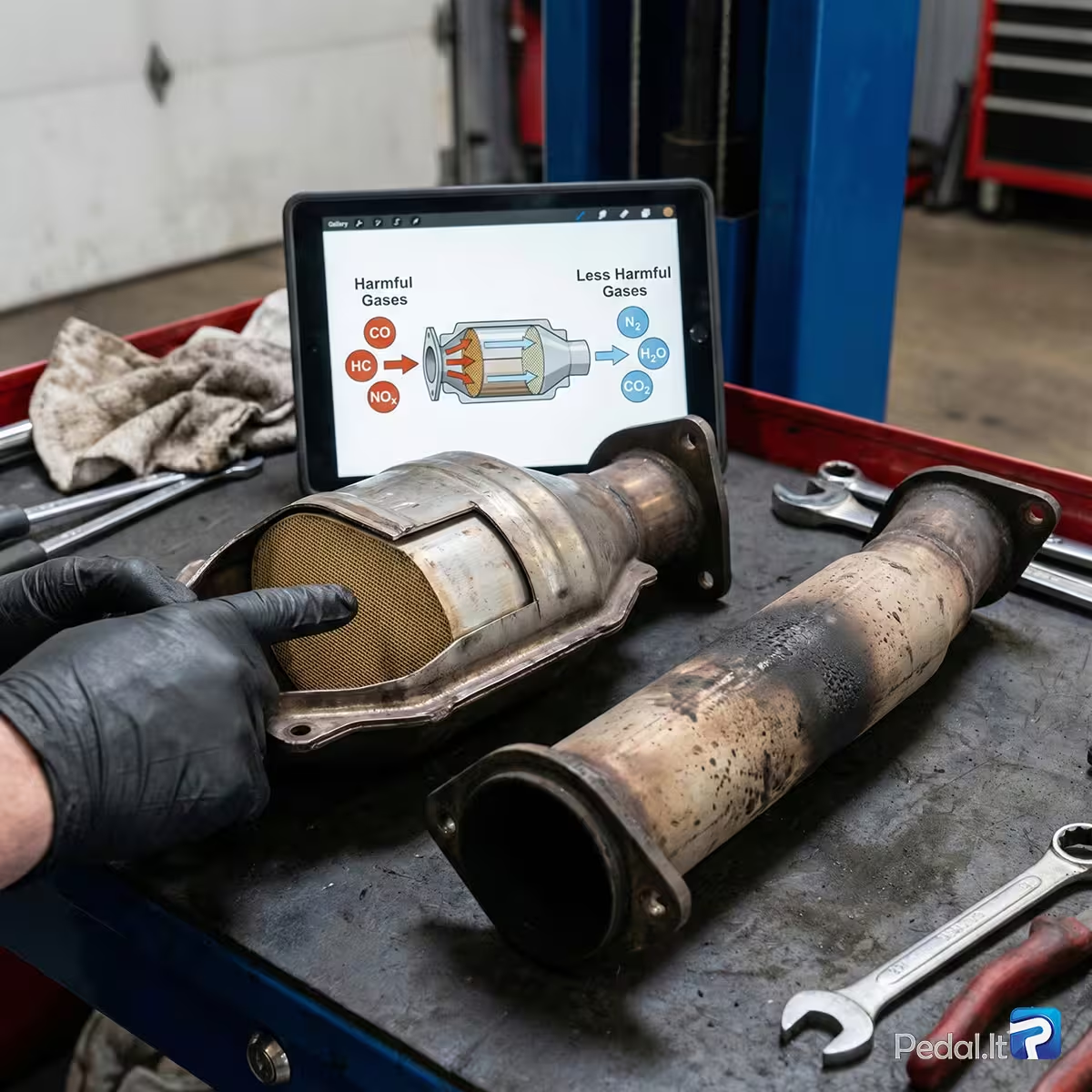
What is the function of a cardan shaft?
A cardan shaft is a mechanical component with a universal joint at one or both ends. It transmits torque and rotational motion. It is used for the following reasons: - To accommodate misalignment between shafts; - To allow changes in shaft position (for example, when driving over uneven terrain); - To transmit torque.
1. To transmit rotational motion to the drive wheels.
2. To transmit torque to the drive wheels.
3. To transmit inertia forces.
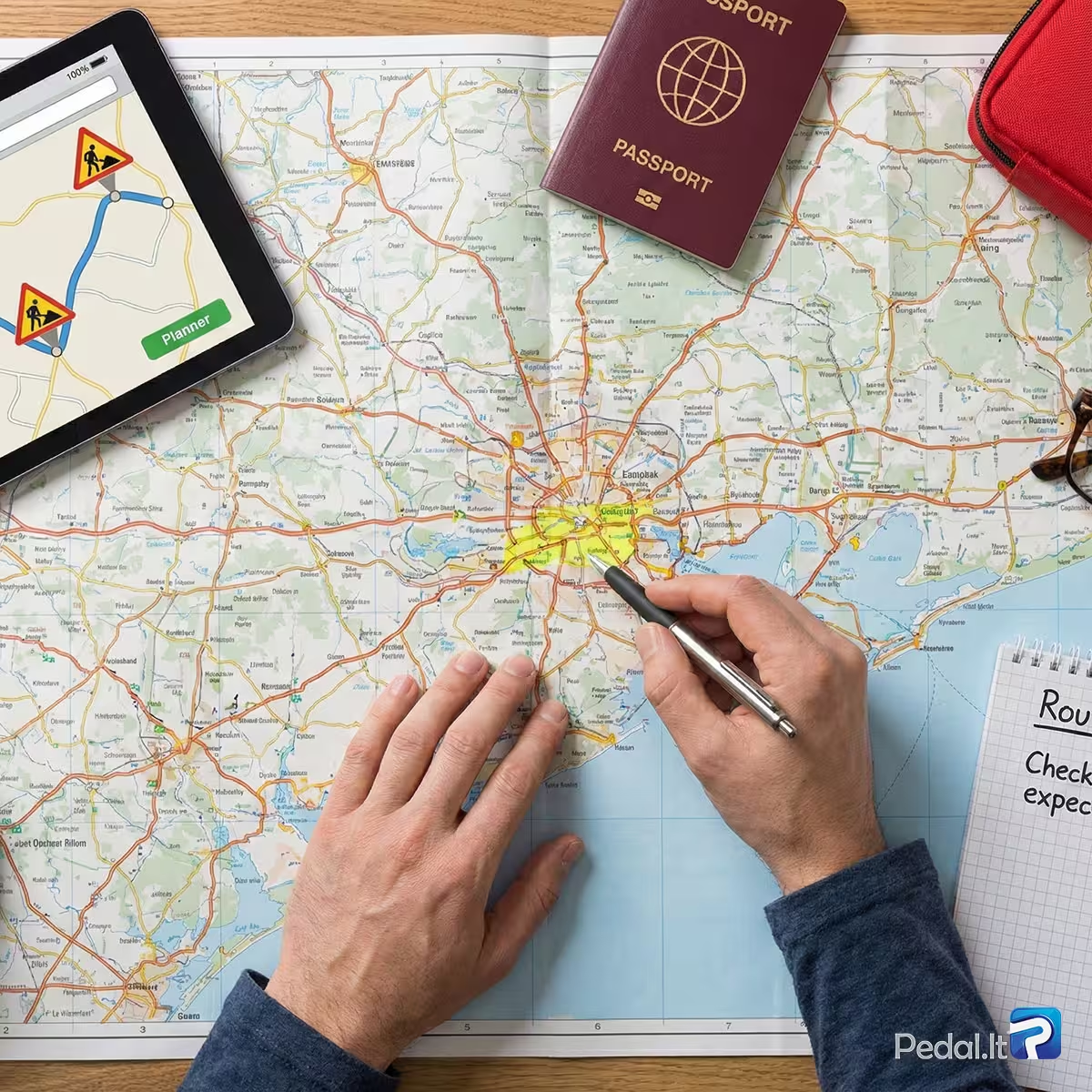
How should you plan your route when travelling a long distance that may include roadworks, border crossings and unexpected events?
JB
1. Estimate the additional fuel required for your journey and plan appropriate refuelling stops.
2. No planning is necessary.
3. Plan your departure time, stops and rest breaks, parking arrangements, and the route your vehicle will follow to the destination.
4. Check the traffic laws and legal requirements of any countries you will pass through.
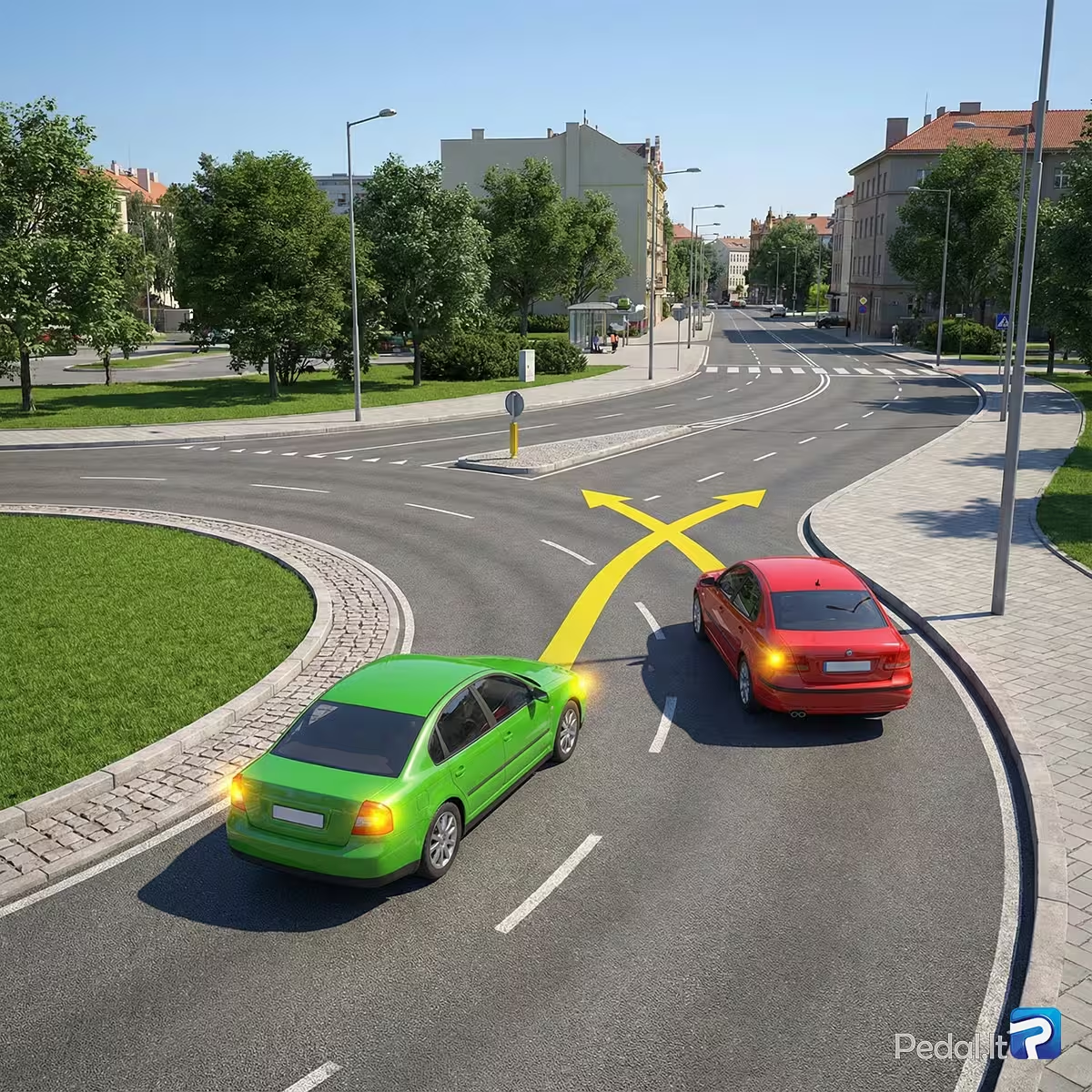
Which driver is violating the traffic rules?
There are no lane direction signs; therefore the driver of the red vehicle may go straight or turn right. When changing lanes, the driver of the green vehicle must yield. RTR 104. When changing lanes, a driver must yield to vehicles moving in the same direction in the adjacent lane. If vehicles moving in the same direction change lanes simultaneously, a driver must yield to the vehicle on the right, except in the cases specified in Paragraph 112 of the Rules. RTR 112. If an acceleration lane is provided for entering the road, the driver must use that lane and merge into the main traffic flow (change lanes and move into the adjacent lane), yielding to vehicles already in that flow or to vehicles changing lanes toward the deceleration lane. RTR 106. Before turning right, left, or making a U-turn (except when entering an intersection with circular traffic), a driver must move in advance to the edge of the carriageway designated for that direction. Road signs and/or road markings may indicate otherwise.
1. The driver of the red vehicle.
2. The driver of the green vehicle.
In which situations must a driver report a road accident to the police?
If a road accident results only in property damage and the owner of the damaged property is not present at the scene and cannot be contacted, the road user involved must immediately notify the owner or, if that is not possible, report the accident to the police.
XXIX. Obligations of Road Users in the Event of a Road Accident (paras. 219–222)
219. In the event of a road accident, every driver involved or any other road user must:
219.1. stop immediately without creating further danger to other road users and mark the accident scene as required by subparagraph 91.2 and paragraph 92 of these Rules;
219.2. take all possible measures to ensure safety at the scene, and if the police are called, avoid (without endangering traffic) altering the circumstances of the accident and preserve the traces and evidence of the collision;
219.3. at the request of other road users involved, present a valid identity document or driving licence and a certificate (policy) of compulsory motor third-party liability insurance to identify the insurer;
219.4. if a person has been injured or has died in the accident, report the accident to the police and remain at the scene, or after notifying the police return and wait for them, except where the police permit departure or where the casualties or the person reporting the accident require immediate first aid;
219.5. take all necessary measures to provide first aid to the casualties, call an ambulance or, if calling an ambulance or transporting casualties to a medical facility by other means is impossible, carry them to the nearest medical facility in a private vehicle unless such transport would endanger their life or health.
222. If a road accident causes only property damage and the victim is not present at the scene, the road user involved must immediately notify the victim or, if that is not possible, the police.
1. When the accident caused only property damage and the owner of the damaged property is not present at the scene and cannot be reached.
2. When there is a dispute or disagreement about the circumstances of the accident.
3. When a person has been injured as a result of the accident.
4. When a person has died as a result of the accident.
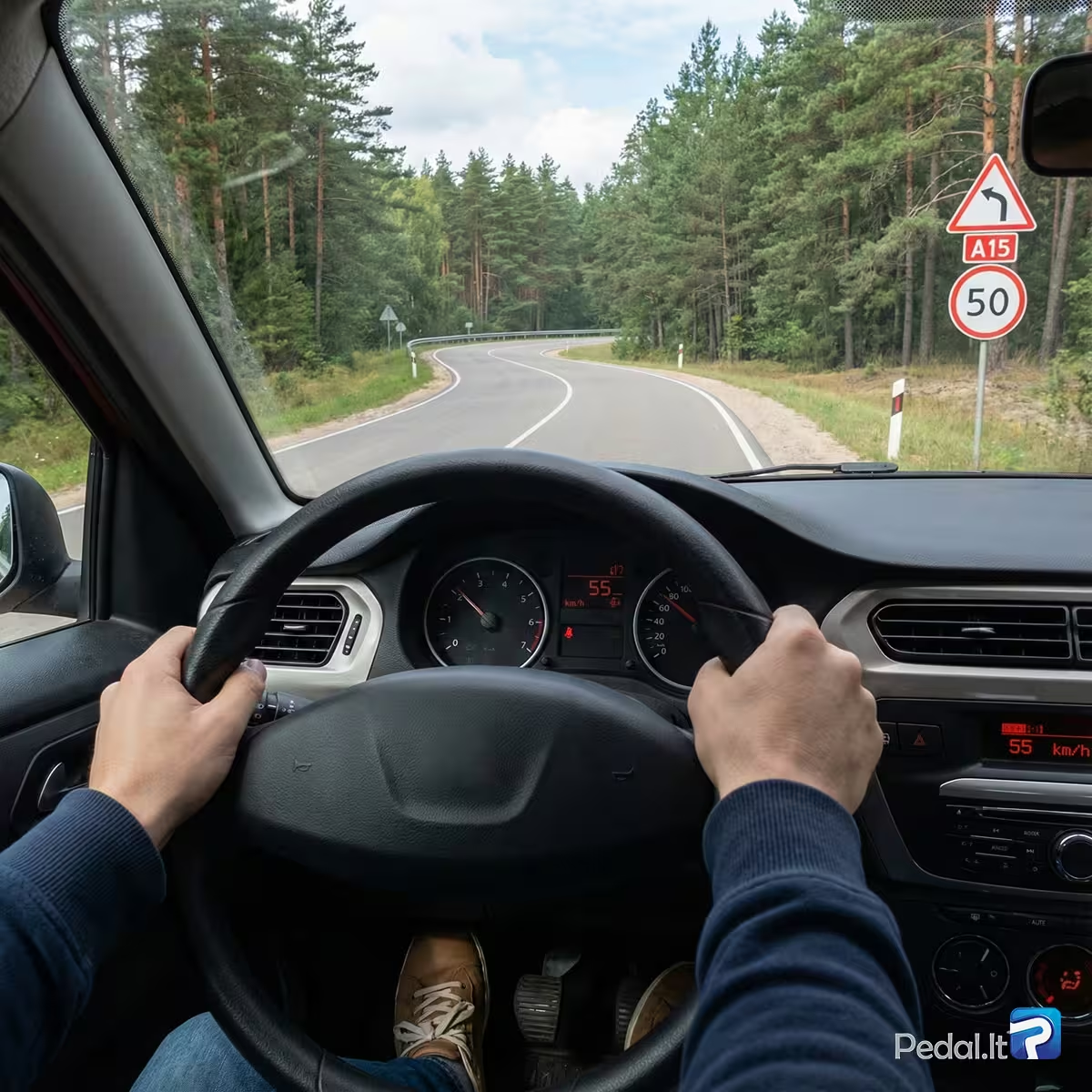
You are approaching a bend in the road. You should:
Drivers approaching a bend should be aware that the curve may be sharper than it appears. Therefore they must select a safe speed and adopt an appropriate position on the road to avoid entering the oncoming traffic lane. A safe speed depends on all circumstances: weather conditions, the technical condition of the road and the vehicle, the vehicle's load, the driver's experience and physical condition. RTR 127. Drivers must not exceed the permitted speed limit. When choosing a driving speed, drivers should consider the driving conditions — in particular the terrain — the condition of the road and the vehicle (including its load), weather conditions and traffic density so that they can stop safely before any foreseeable obstruction. Drivers must slow down or stop if circumstances require, especially when visibility is poor.
1. Reduce your speed.
2. Position your vehicle to avoid crossing into the oncoming traffic lane.
3. Use your turn signal.
What should you do when approaching an intersection where you must give way?
The correct action is to apply the brakes and release the accelerator pedal, because you must be prepared to stop if necessary. Road sign 203 — "Give Way" — indicates that drivers must yield to vehicles travelling on the road being crossed. If supplementary panel No. 843 "Direction of Priority Road" is mounted beneath the sign, you must yield to vehicles on the priority road.
1. You will apply the brakes.
2. You will release the accelerator pedal.
3. You will maintain your current speed.
Which features ensure a vehicle's active safety?
Difference between active and passive safety:
- Active safety: systems and features that help prevent accidents by improving vehicle control, handling and stability before a collision occurs. These measures operate before an impact and commonly include technologies such as Anti-lock Braking System (ABS), Electronic Brakeforce Distribution (EBD), traction control, correct tyre pressure and adequate tread depth, among others. Active safety also depends on the driver’s condition and behavior — for example, poor ventilation or heating can cause drowsiness or nausea and reduce attention on the road.
- Passive safety: systems and equipment designed to reduce injury and damage during or after a collision. These features are activated in a crash to protect occupants and other road users and include seat belts, airbags, motorcycle helmets, seat-belt reminders, head restraints, crumple zones and other structural or restraint systems that absorb impact and lower the risk of injury.
1. Proper ventilation and heating.
2. Tyre pressure and tread depth.
3. Anti-lock Braking System (ABS).
4. Electronic Brakeforce Distribution (EBD).
How many motor vehicles are you permitted to tow at one time?
RTR 217. The following vehicle towing and transport practices are prohibited: 217.6. Towing more than one motor vehicle, tractor, or self-propelled vehicle.
1. One vehicle.
2. Two vehicles.
3. Three vehicles.
When approaching a traffic-light-controlled intersection and you notice the green light has been on for a long time, what should you do?
A green light that has been lit for an extended period may change to yellow shortly. You may proceed, but remain vigilant and be prepared to stop safely. 73. Traffic light signals mean: 73.1. A steady circular green light permits movement in all directions (straight ahead, to the right, to the left, or a U-turn); 73.3. A flashing green light permits movement but warns that its time is ending and the signals are about to change.
1. Stop immediately.
2. Increase your speed.
3. Continue driving but be prepared to stop.
A driver is operating a goods vehicle with a permissible maximum weight under 3,500 kg. Which driving‑licence category must the driver hold?
In this situation the driver must hold at least a category B driving licence; the driver is not required to hold a category C licence. LAW ON ROAD TRAFFIC SAFETY — Article 23. Categories of motor vehicles and the minimum driving age. 1. Categories of motor vehicles and their combinations with trailers are: 6) Category B: vehicles with a permissible maximum weight not exceeding 3,500 kg and designed and constructed to carry no more than eight passengers, excluding the driver; these vehicles may be combined with a trailer whose permissible maximum weight does not exceed 750 kg; they may also be combined with a trailer whose permissible maximum weight exceeds 750 kg, provided that the permissible maximum weight of the vehicle combination does not exceed 4,250 kg; a vehicle combination with a permissible maximum weight exceeding 3,500 kg (including a trailer with a permissible maximum weight exceeding 750 kg) may be driven only after passing a practical skills and behaviour test at the state enterprise "Regitra".
1. C.
2. B.
3. A.
Are vehicles permitted to drive on the pavement (sidewalk)?
RTR 124. Drivers of motor vehicles, tractors, self‑propelled machines, and animal‑drawn vehicles must not drive or manoeuvre on lawns, pavements (sidewalks), footpaths, cycle tracks, or cycle lanes. An exception applies where road signs permit (partial) parking at the pavement edge and a cycle track or lane is delineated by the horizontal marking line 1.14. Driving on central reservations, embankment slopes, excavations, or in ditches is prohibited. Drivers must also not enter or leave the roadway except at locations designated for that purpose.
1. They may do so provided they do not obstruct pedestrians.
2. They are permitted only where road signs indicate that (partial) parking on the pavement edge is allowed.
3. Driving on pavements is prohibited.
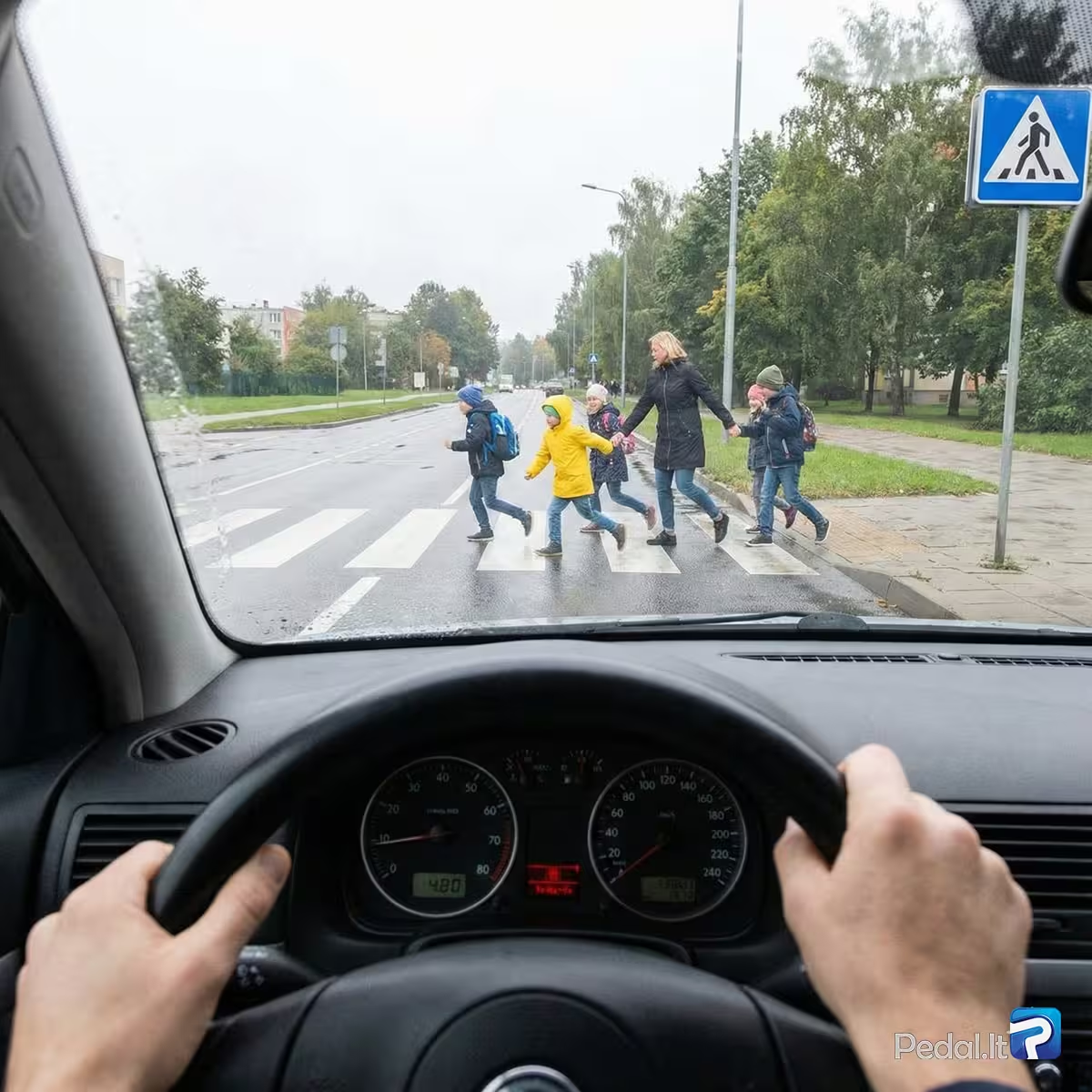
What should a driver be aware of about children's behavior when they cross a pedestrian crossing?
Drivers should be prepared for unexpected behavior from children at pedestrian crossings. When children act predictably and responsibly, it improves road safety.
1. Children may suddenly step onto the pedestrian crossing.
2. Children may stop or hesitate while on the pedestrian crossing.
3. Children behave predictably and in an orderly manner.
What should you do if you break another car's headlamp while manoeuvring in a car park?
This is considered a road traffic accident. First, try to locate the vehicle's owner and, together with them, complete the Road Accident Report Form. If you cannot find the owner, call the police — they can help locate the owner or come to the scene to record the accident. Also notify your insurance company of the accident as soon as possible. RTR 220. If there are no deaths or injuries and the involved road users agree on the circumstances and do not call the police to the scene, the parties must draw the accident sketch on the Road Accident Report Form, describe the circumstances in writing, and have the form signed by all involved. If none of the parties has the Road Accident Report Form, the circumstances and sketch may be recorded on a blank sheet of paper listing all involved road users, their vehicles and any witnesses, and confirmed by the signatures of all involved. If the circumstances are contested, the police must be called to the scene. RTR 221. Participants in a road accident must refrain from consuming alcoholic beverages, medicines, narcotic drugs or other intoxicating substances immediately after the accident until they have undergone, or have refused, testing for alcohol or impairment by narcotic, psychotropic or other substances. RTR 222. If the accident caused only property damage and the victim is not present at the scene, the person involved in the accident must immediately notify the victim, and if this is not possible — the police.
1. Locate the vehicle's owner; if you cannot find them, call the police.
2. If nobody notices, you may continue driving.
3. Fill in the Road Accident Report Form together with the car owner, if possible.
4. Notify your insurance company about the accident.
Who is authorized to teach someone to drive a category B vehicle?
For more information about learning to drive with a family member: http://www.teises.lt/kaip-gauti-teises/mokymasis-vairuoti-su-seimos-nariu
1. A person who fulfills the requirements for a driving instructor and is authorized, under the prescribed procedure, to work as an instructor at a driving school.
2. A person who has passed the category B practical driving test at the state enterprise "Regitra" in accordance with the prescribed procedure.
3. A person with at least five years of category B driving experience.
4. A family member of the learner who has at least five years of category B driving experience and is not disqualified from driving.
If, because of its large size or for other reasons, a vehicle cannot turn (or turn around) from the edge position, it may perform the turn:
RTR 107. If, because of large dimensions or other reasons, a vehicle cannot turn (or make a U‑turn) from the edge position, it may execute the turn from a location other than the lane edge designated for travel in that direction, provided the manoeuvre does not obstruct other vehicles or create hazards for other road users.
1. At a location other than an intersection.
2. Outside a built-up (urban) area.
3. Not from the edge of the carriageway, provided the manoeuvre does not obstruct other vehicles or create hazards for other road users.
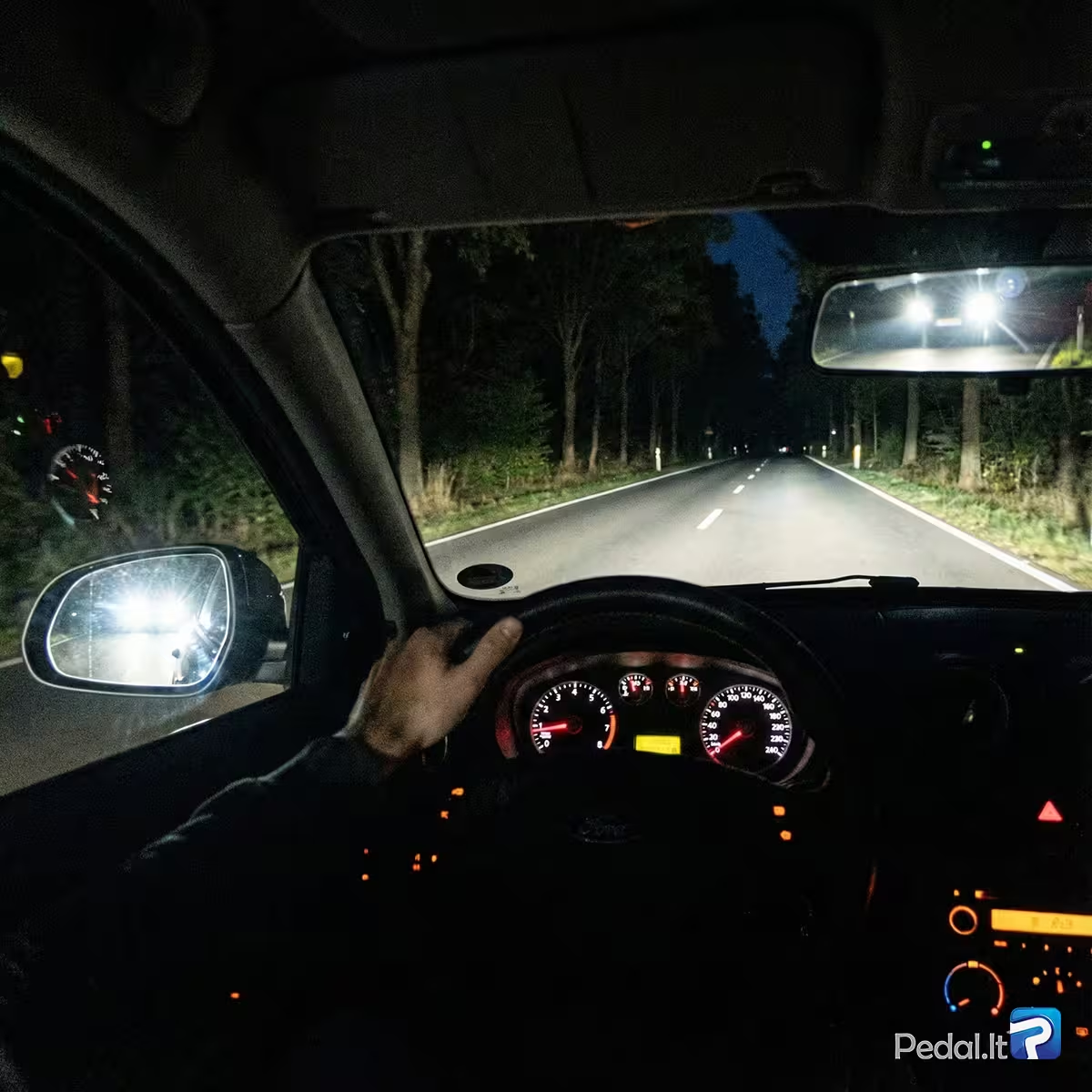
What must the drivers do if one vehicle catches up to the other while both are driving outside a settlement with their headlights on high beam?
The driver of the following vehicle must dip their headlights so as not to dazzle the driver ahead. The vehicle in front should switch to low beam only if the following vehicle begins to overtake, to avoid dazzling that driver. RTR 95. During darkness or in poor visibility, main beam headlights must be switched to low beam: 95.1 on illuminated roads; 95.2 when the distance to a vehicle approaching from the opposite direction is at least 150 m; 95.3 in other cases when main beam lights can dazzle other drivers (even travelling in the same direction). JB
1. The driver of the vehicle ahead must switch from high beam to low beam when the following vehicle begins to overtake.
2. The driver of the vehicle ahead must activate the hazard warning lights.
3. The driver of the following vehicle must switch from high beam to low beam.
A vehicle has nearly completed an overtaking maneuver while another vehicle is approaching in the oncoming lane. What should you do?
The Driver Behaviour Manual states: If another vehicle's overtaking endangers or inconveniences traffic in the oncoming lane, the driver of the vehicle being overtaken must try to prevent a hazardous situation by: (1) reducing speed; (2) moving to the side; (3) stopping if necessary. Section 128: If there is an obstruction or traffic safety is at risk, the driver must slow down and, if required, bring the vehicle to a complete stop or go around the obstruction (if it can be seen), provided this can be done without endangering other road users. Section 135: Drivers must not: 135.4. decelerate sharply for reasons other than safety.
1. Apply the brakes.
2. Maintain your current speed.
3. Ease off the accelerator.
4. Increase your speed.
If you are forced to stop outside a built-up area where stopping is prohibited and your hazard warning lights are not working, what must you do?
RTR 92. If the vehicle's hazard warning lights are absent or defective and an emergency stop is required where stopping or parking is prohibited, in the event of an accident, or when the stopped vehicle would be visible to other road users from less than 100 metres, the driver of a motor vehicle (excluding a motor moped and motorcycles without a trailer), a tractor, or a self-propelled machine must immediately place an emergency stop sign on the side of the carriageway opposite the direction of travel: within settlements not less than 25 m, and outside settlements not less than 50 m from the stopped vehicle. If at least one rear position lamp is defective and the hazard warning signal is not working when driving in darkness or poor visibility, an emergency stop sign must be affixed to the rear of the vehicle in order to continue driving.
1. Attach a red flag to your vehicle.
2. Place a warning triangle 50 m behind the stopped vehicle.
3. Stop another vehicle and request assistance.
4. Turn on your dipped-beam headlights.
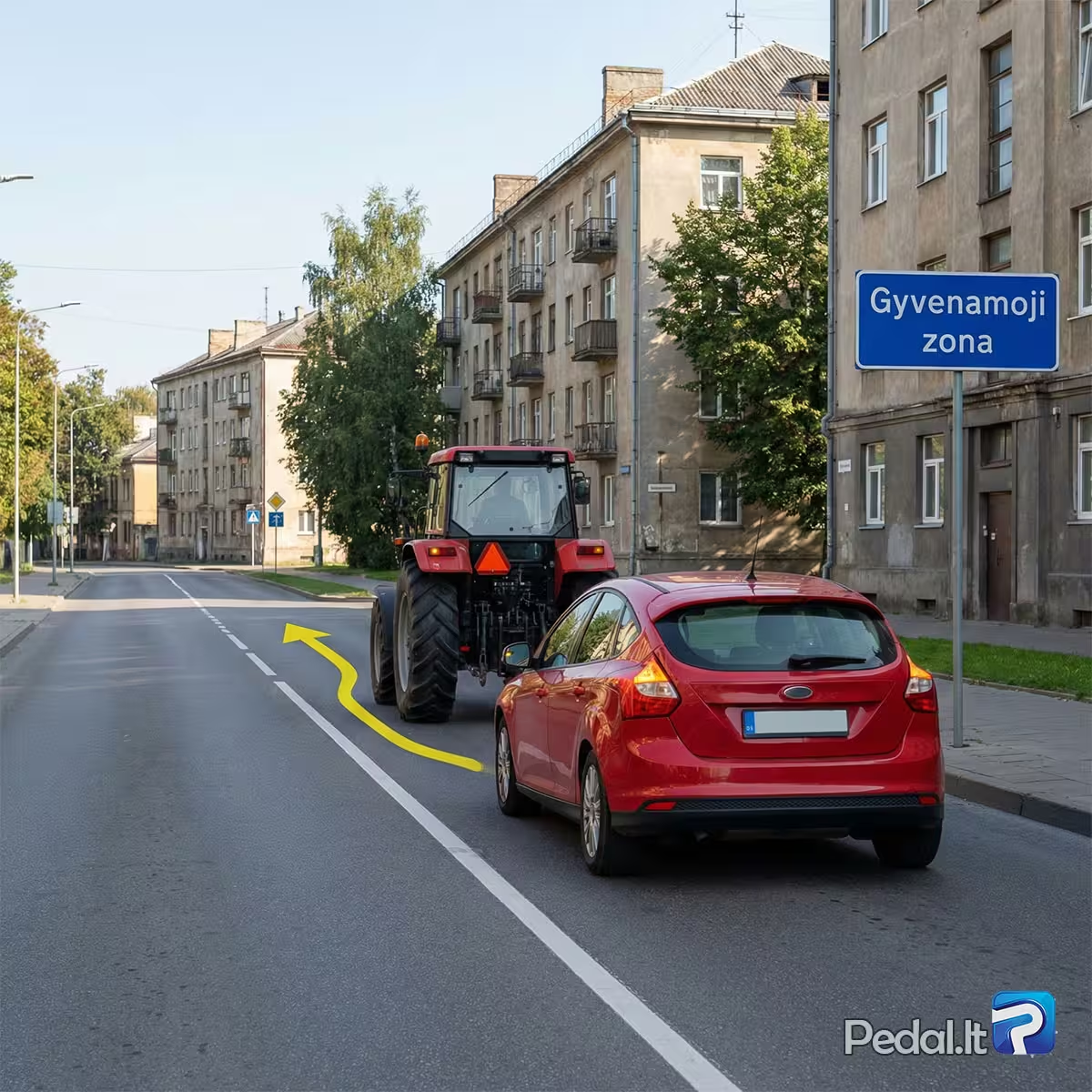
Is overtaking permitted in this situation?
A narrow continuous (solid) line prohibits overtaking. There is an exception when the road has both a narrow solid line and the road sign "Overtaking Prohibited" (RTR Annex 1.325): that sign indicates overtaking is prohibited except for single vehicles or single-vehicle combinations traveling slower than 30 km/h, which means very slow-moving vehicles (e.g., tractors) may be passed. In the pictured case there is no such sign—only a continuous line—so overtaking, even of a very slowly moving tractor, is not permitted.
RTR Annex 1.805 "The Validity Zone Ahead" indicates the length of the zone to which a sign applies beyond the sign itself.
Horizontal Marking 1.1: A narrow solid line separates opposing traffic and forbids drivers from using the oncoming lane on the marked section; it also marks lane boundaries, carriageway areas vehicles are prohibited from entering, parking-space limits, and the carriageway edge. Vehicles must not cross this line except where it marks the edge of the carriageway or a parking space.
1. Overtaking is prohibited.
2. Overtaking is permitted.
How would you react if the vehicle began to skid on a wet surface (i.e., started to aquaplane)?
On roads (especially those with ruts) during heavy rain, water can accumulate on the asphalt because it cannot drain quickly toward the edges. If you accelerate under these conditions, the tire treads may be unable to disperse the accumulated water. The vehicle can aquaplane when a wedge of water lifts the tires off the road surface, reducing traction and making the vehicle difficult to control. If a vehicle begins to aquaplane, the driver should reduce speed to regain traction and stability.
1. You would immediately apply the brakes.
2. You would ease off the accelerator to reduce your speed.
3. You would increase your speed.
During hours of darkness or in conditions of poor visibility, a load projecting up to 1 metre beyond the side of a vehicle must be marked:
Any load that projects laterally, even slightly, must be marked. During hours of darkness such a load must be indicated by lights. Loads projecting beyond the sides of the vehicle must always be marked; loads projecting beyond the front or rear do not always require marking. According to RTR 210 and Annex 4: loads extending more than 1 m beyond the front or rear of the vehicle, or projecting laterally beyond the vehicle's outer edge, must be marked as specified in Annex 4.12. Extreme edges of loads that extend more than 1 m beyond the vehicle's dimensions, or that project even minimally to the side, as well as extreme edges of vehicles wider than 2.6 m, shall be marked with distinguishing panels — 400 mm square plates with alternating reflective white and red diagonal stripes 50 mm wide. These panels must be mounted between 0.4 m and 1.6 m above ground level. During hours of darkness or in poor visibility such vehicles must also display lights in the designated positions: white at the front, orange at the sides, and red at the rear.
1. Marked with high-visibility flags.
2. Marked with lights: white at the front, orange at the sides, and red at the rear.
3. Marking is not required.
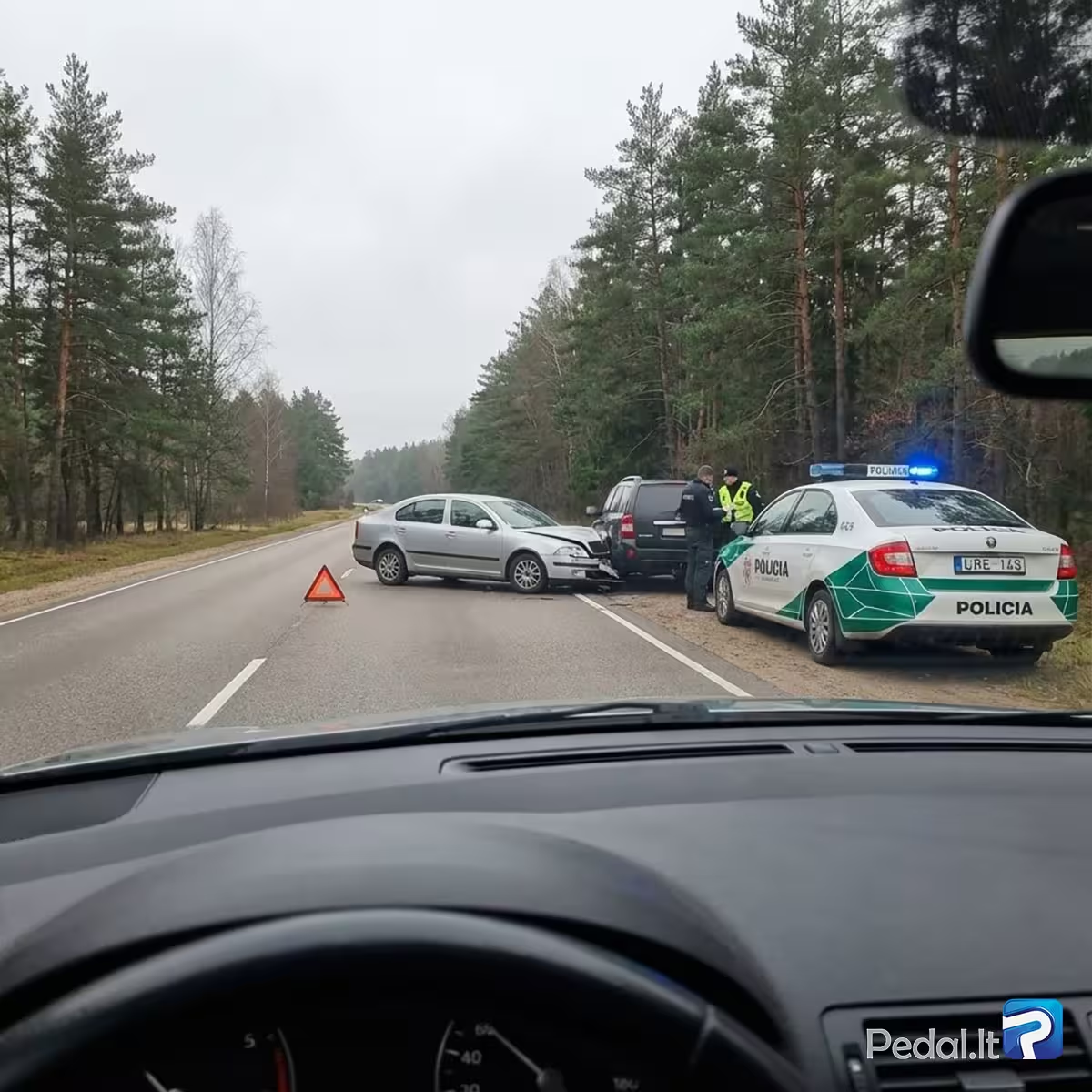
In most cases, those responsible for road accidents in Lithuania are:
According to data from the Lithuanian Road Administration, in 2017 drivers accounted for 68.83% of all individuals found responsible for road accidents.
1. Drivers of motor vehicles.
2. Cyclists (bicyclists).
3. Pedestrians (people on foot).
4. Drivers of animal-drawn vehicles.
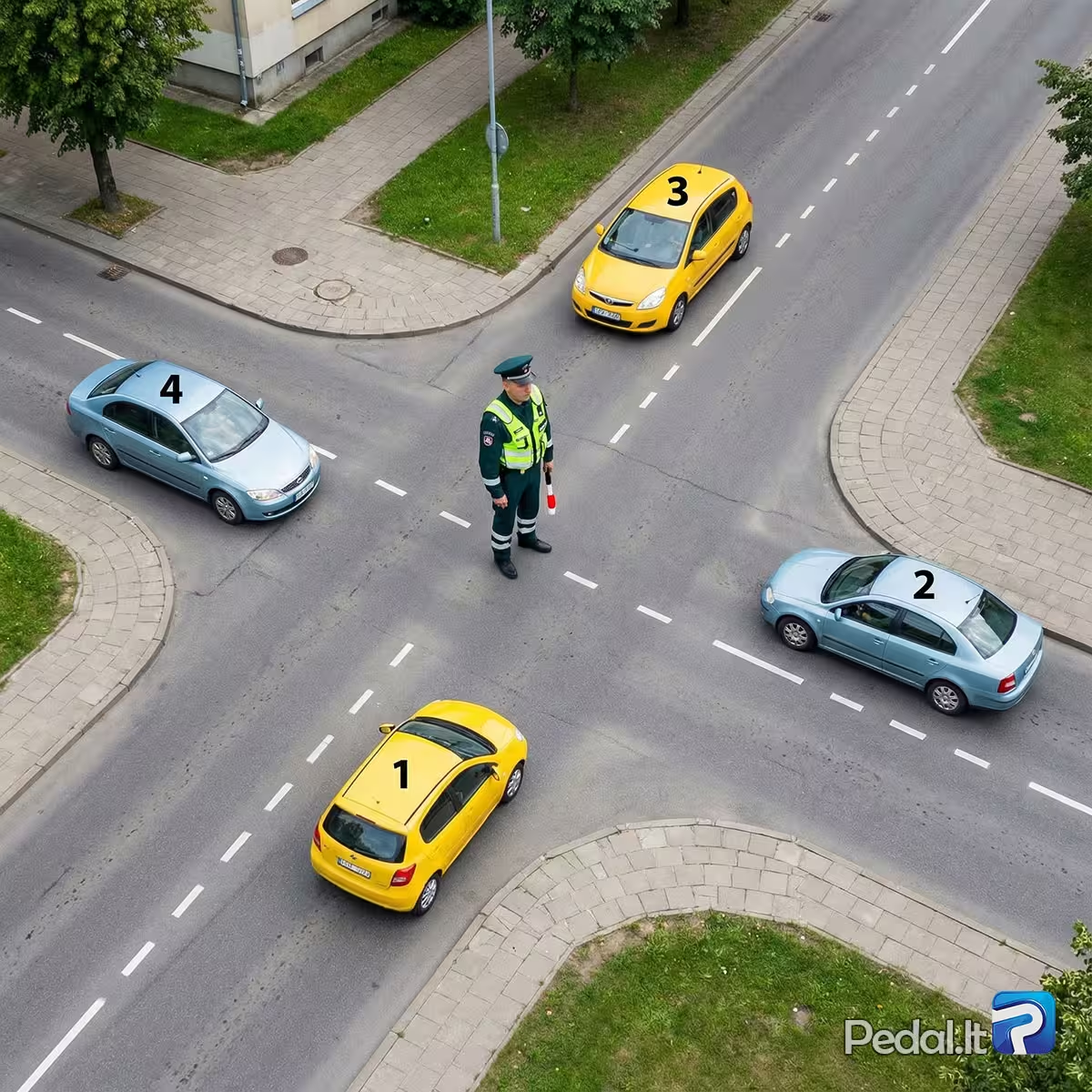
Is the third vehicle permitted to make a U‑turn?
The leading vehicle is not permitted to turn left and therefore may not make a U‑turn (RTR 77.1). When the signal arm is extended sideways or downward: 77.1.1 vehicles to the left and right may proceed straight or turn right; pedestrians may cross the carriageway; 77.1.2 vehicles and pedestrians ahead of and behind the signaling vehicle must not proceed. JB
1. Yes — it may.
2. No — it is not permitted.
3. Yes — but only after yielding to the first vehicle proceeding straight.
Under what circumstances are drivers prohibited from operating a vehicle?
IV 15. It is prohibited to drive vehicles that are not in good condition or that fail to meet the applicable technical requirements. Before setting off, the driver of a motor vehicle, tractor, or self-propelled vehicle must ensure the vehicle is in proper condition and is equipped with a warning triangle, fire extinguisher, first-aid kit, and any other items mandated for that vehicle type. The driver must also monitor the vehicle's technical condition during the trip. If the vehicle breaks down while driving and ceases to meet technical requirements, and repairs on-site are impossible, the driver may proceed—taking all necessary precautions—to the nearest parking area or repair facility, except in cases specified in paragraph 234 of these Rules.
1. When the engine has not yet warmed up to its optimal operating temperature.
2. When the vehicle's fuel tank is not full.
3. When the vehicle is not in roadworthy condition.
4. When the vehicle does not meet the required technical standards.
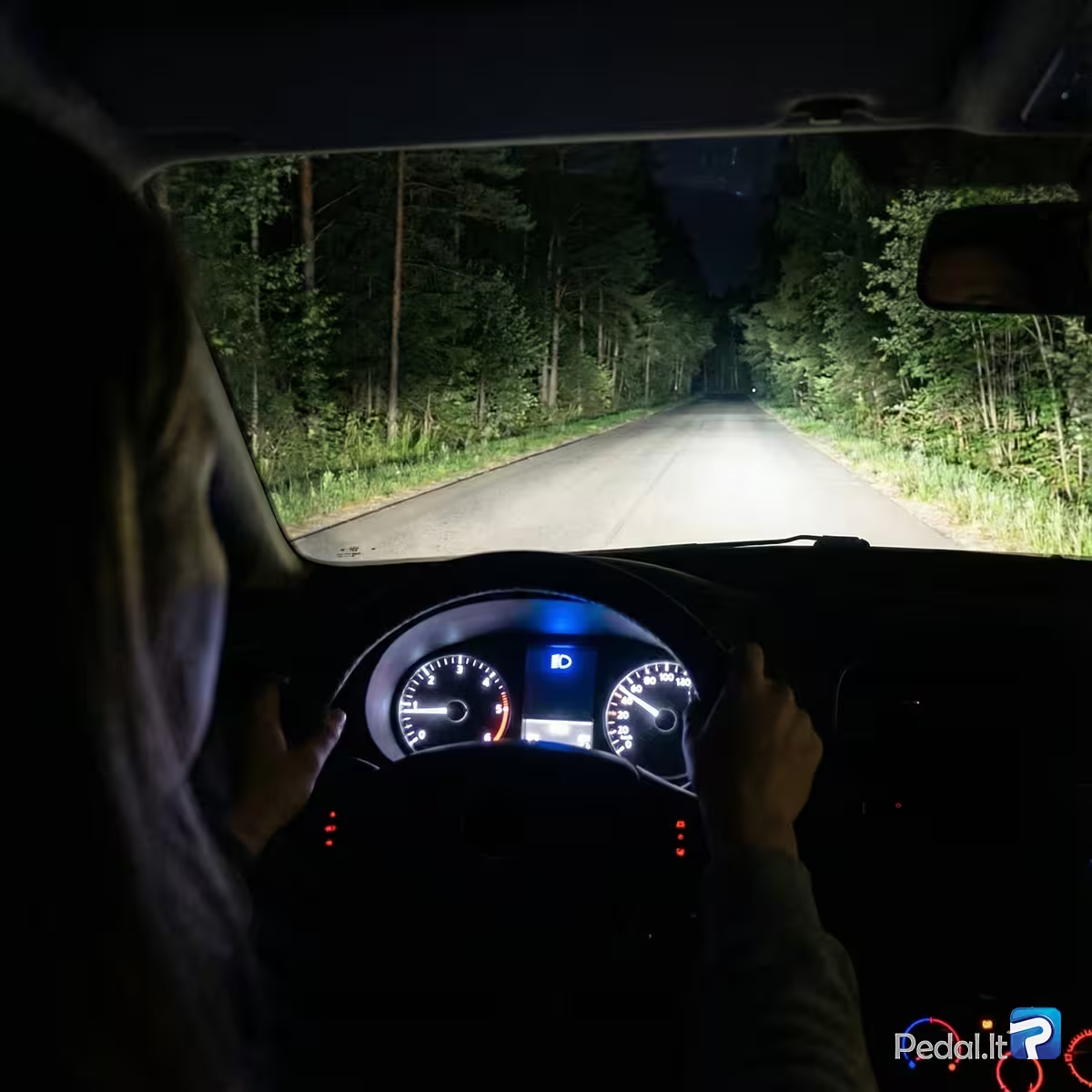
When driving at night on unlit stretches of road, a vehicle driver must drive with:
RTR 94. When traveling on roads at night or in conditions of poor visibility, motor vehicles, tractors, and self‑propelled vehicles must be driven with either dipped (low‑beam) or main (high‑beam) headlamps switched on.
1. Only the main (high‑beam) headlamps are switched on.
2. Only the dipped (low‑beam) headlamps are switched on.
3. Either the dipped (low‑beam) or the main (high‑beam) headlamps must be switched on.
How is a motorized bicycle defined?
Note that a motorized bicycle must have at least two wheels and an auxiliary internal combustion engine or an electric motor — it is not sufficient for it to have only an internal combustion engine. SEAK Art. 2.40. "Motorized bicycle" — a vehicle with at least two wheels that is powered by the rider’s muscular force using pedals or handlebars and is equipped with an auxiliary internal combustion engine or electric motor with a maximum net power of no more than 1 kW and a maximum design speed of no more than 25 km/h. The auxiliary engine stops providing power when the vehicle reaches 25 km/h. Wheelchairs for persons with disabilities are not classified as motorized bicycles.
1. A vehicle whose maximum net power does not exceed 1 kW and whose maximum design speed does not exceed 25 km/h.
2. A vehicle that is primarily propelled by the rider’s muscular power using pedals or handlebars and is equipped with an auxiliary internal combustion engine or an electric motor.
1 of 30 Task
Time left: 00:00:00
1
2
3
4
5
6
7
8
9
10
11
12
13
14
15
16
17
18
19
20
21
22
23
24
25
26
27
28
29
30