Are non-public-service vehicles allowed to drive in a lane marked with the letter 'A'?
A lane marked with the letter 'A' is reserved exclusively for public service vehicles. Non-public-service vehicles may only change into or use this lane when preparing to turn right. An exception exists for lanes marked with the 'A+' symbol. (See RTR Annex 3, §1.21; RTR 181 and Paragraph 182 of the Rules.) Non-public-service vehicles must not drive in lanes marked with the 'Lane Reserved for Public Service Vehicles' sign and the letter 'A'.
1. Yes — non-public-service vehicles are permitted to use that lane.
2. No — non-public-service vehicles are not permitted to use that lane.
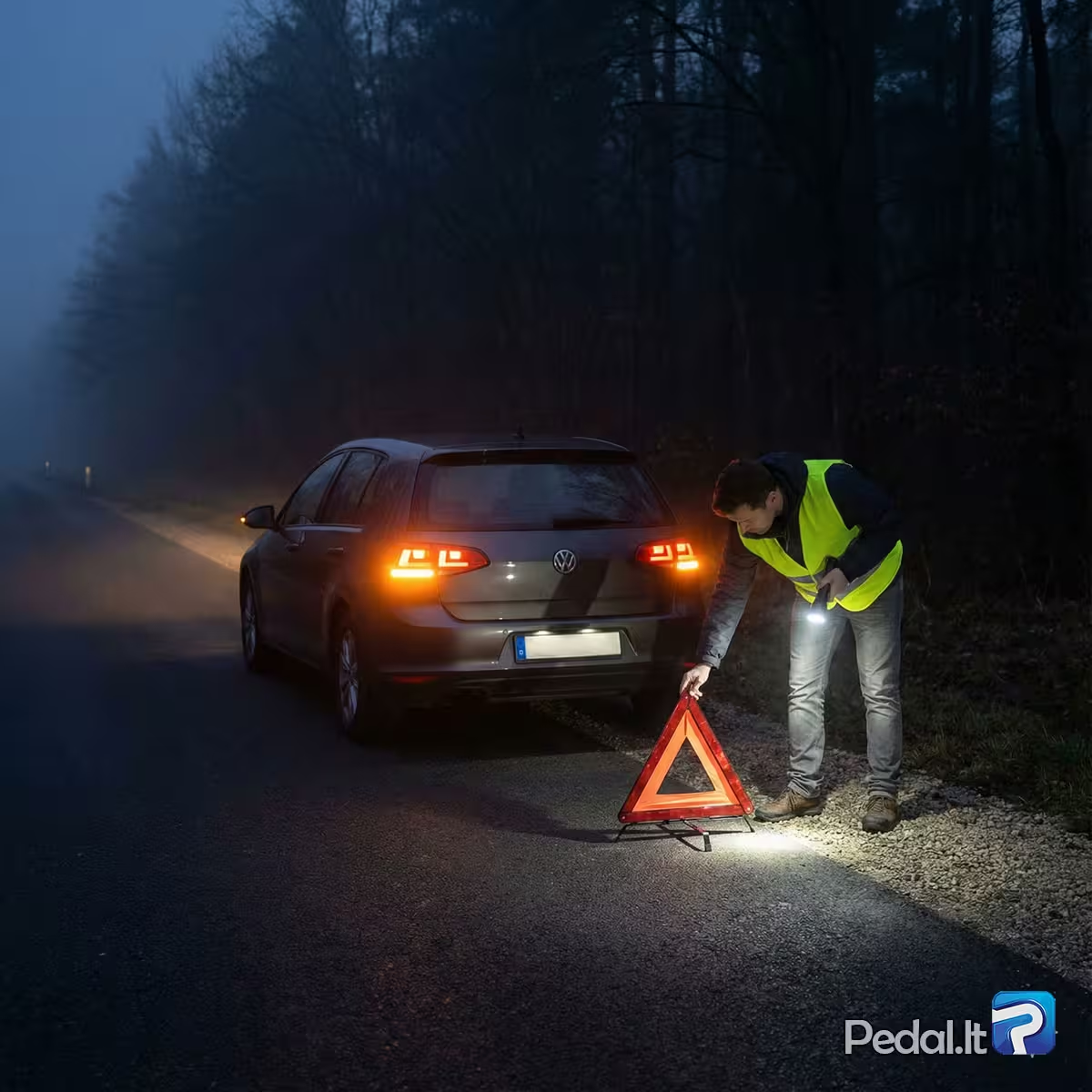
If you are forced to stop on an unlit section of road at night or in poor visibility because your position and brake lights have failed, what should you do?
RTR 92. If the emergency light signaling system is not fitted or is defective and an emergency stop is required where stopping or parking is prohibited, in the event of an accident, or where the stopped vehicle would be visible to other road users from less than 100 metres, the driver of a motor vehicle (other than a motor moped or a motorcycle without a trailer), a tractor, or a self‑propelled machine must immediately place an emergency stop sign on the carriageway side opposite the direction of travel: in built‑up areas not less than 25 m from the stopped vehicle, and outside built‑up areas not less than 50 m. If at least one rear position lamp is defective and the hazard warning lights are not working when driving at night or in poor visibility, an emergency stop sign must be affixed to the rear of the vehicle in order to continue driving.
RTR 151. When a vehicle is forced to stop where standing or parking is forbidden, drivers must switch on their hazard warning lights if available and/or place a warning triangle on the road as specified in Paragraph 92 of the Rules and remove their vehicle from the road as soon as possible. If drivers intend to stop their vehicle on unlit sections of the road during darkness or when visibility is poor, and hazard warning lights are not available or are inoperative, the vehicle must be parked off the carriageway. If this is impossible, the location must be marked as specified in Paragraph 92 of the Rules. JB
1. Turn the vehicle around and switch on the low beam headlights.
2. If it is not possible to park off the carriageway, switch on your hazard warning lights; if these are not available or are inoperative, place a warning triangle.
3. Indicate the stopped vehicle with bright flags.
To begin driving uphill, when should the parking brake be released?
If the parking brake is used when starting on an uphill gradient, release it simultaneously with moving off.
1. After you have started moving.
2. Before you start moving.
3. Simultaneously with starting to move.
When driving a motor vehicle equipped with seat belts, may a rear-seat passenger travel without wearing a seat belt?
Only the driver may be exempt from wearing a seat belt within built-up or residential areas (for example, when maneuvering in a parking lot). RTR 196. All drivers and passengers must wear seat belts when travelling in vehicles equipped with them. If a bus is fitted with seat belts, visible informational signs reading "Fasten Your Seat Belt" must be displayed in front of, on, or next to every seat. It is recommended that all bus passengers be informed of the seat belt requirement verbally or by audiovisual means before the journey begins. RTR 198. Persons driving a vehicle in reverse or manoeuvring in a parking area within a built-up area are exempt from wearing seat belts. RTR 205. Persons who, for serious medical reasons, hold special permits issued by competent authorities are exempt from wearing seat belts; these permits must include an expiry date. JB
1. Yes — but only if the passenger holds a special medical exemption certificate issued by the competent authorities.
2. Permitted when driving within built-up areas.
3. Permitted only with the driver's consent.
4. Permitted when driving in residential zones.
You should select a speed so that the stopping distance is:
If the stopping distance is longer than the visible portion of the road, you may collide with an obstacle. Therefore, the distance visible ahead must always exceed the stopping distance.
1. Longer than the visible distance ahead.
2. Shorter than the visible distance ahead.
When driving a passenger car with a trailer, what should you take into account when descending a hill?
The stopping distance increases when towing a trailer downhill because the trailer’s mass pushes the towing vehicle forward, adding momentum. Conversely, when driving uphill the trailer’s weight helps slow the vehicle and reduces the stopping distance.
1. A trailer will help the car stop more quickly.
2. The stopping distance will be reduced.
3. The stopping distance will increase.
4. The stopping distance will remain unchanged.
Where may drivers park their vehicles on unlit sections of road during hours of darkness?
RTR 143. Stopping on unlit sections of road during hours of darkness or when visibility is poor is permitted only with hazard warning lights activated. Parking is allowed only in designated car parks or in areas off the carriageway.
1. On the hard shoulder.
2. On the carriageway.
3. In car parks.
4. In off-road areas.
A vehicle has nearly completed an overtaking maneuver while another vehicle is approaching in the oncoming lane. What should you do?
The Driver Behaviour Manual states: If another vehicle's overtaking endangers or inconveniences traffic in the oncoming lane, the driver of the vehicle being overtaken must try to prevent a hazardous situation by: (1) reducing speed; (2) moving to the side; (3) stopping if necessary. Section 128: If there is an obstruction or traffic safety is at risk, the driver must slow down and, if required, bring the vehicle to a complete stop or go around the obstruction (if it can be seen), provided this can be done without endangering other road users. Section 135: Drivers must not: 135.4. decelerate sharply for reasons other than safety.
1. Apply the brakes.
2. Maintain your current speed.
3. Ease off the accelerator.
4. Increase your speed.
Which of the following most accurately defines a vehicle keeper?
LAW ON ROAD TRAFFIC SAFETY Article 2. §84. "Vehicle keeper" shall mean a person in possession of and using a vehicle by virtue of ownership, trust, lease, hire, or another lawful basis.
1. A person driving a vehicle owned by someone else while the vehicle owner (the document holder) occupies the passenger seat.
2. A person who possesses a vehicle and uses it by virtue of ownership, trust, lease, hire, or another lawful basis.
3. A person driving someone else’s vehicle when the vehicle owner (the document holder) is not present.
4. Any individual who is simply driving a vehicle.
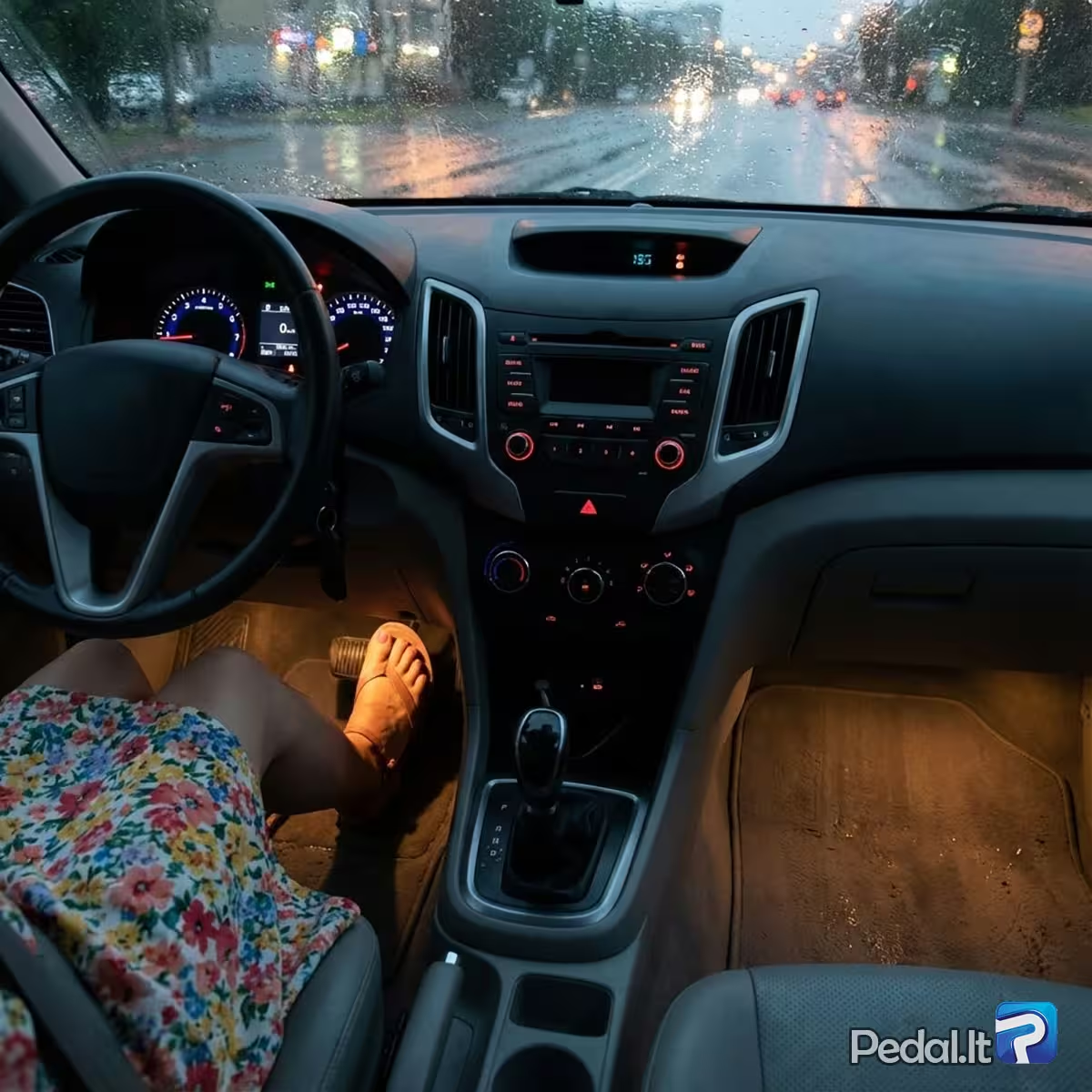
If water gets into the brake pads and reduces braking effectiveness, what will you do?
After driving through a deep puddle or a body of water, drive at low speed for a short while and gently apply the brakes several times to dry the brake discs or drums and the pads or shoes. Friction will heat the components, helping the water to evaporate and restoring braking performance.
1. You would repeatedly apply the brakes while the vehicle is stationary.
2. You would ignore it because they will dry on their own within a few minutes.
3. You would gently apply the brakes several times while driving slowly.
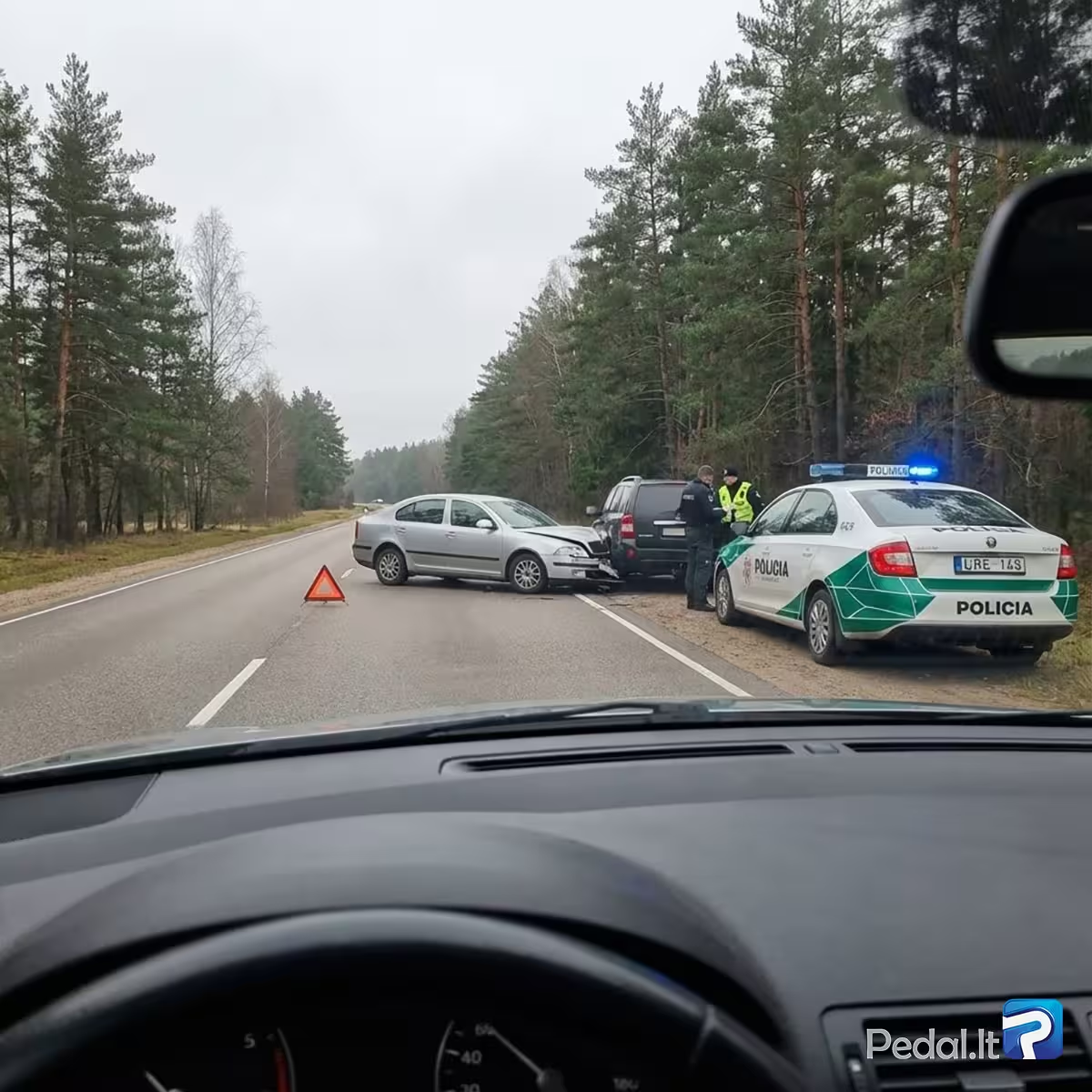
In most cases, those responsible for road accidents in Lithuania are:
According to data from the Lithuanian Road Administration, in 2017 drivers accounted for 68.83% of all individuals found responsible for road accidents.
1. Drivers of motor vehicles.
2. Cyclists (bicyclists).
3. Pedestrians (people on foot).
4. Drivers of animal-drawn vehicles.
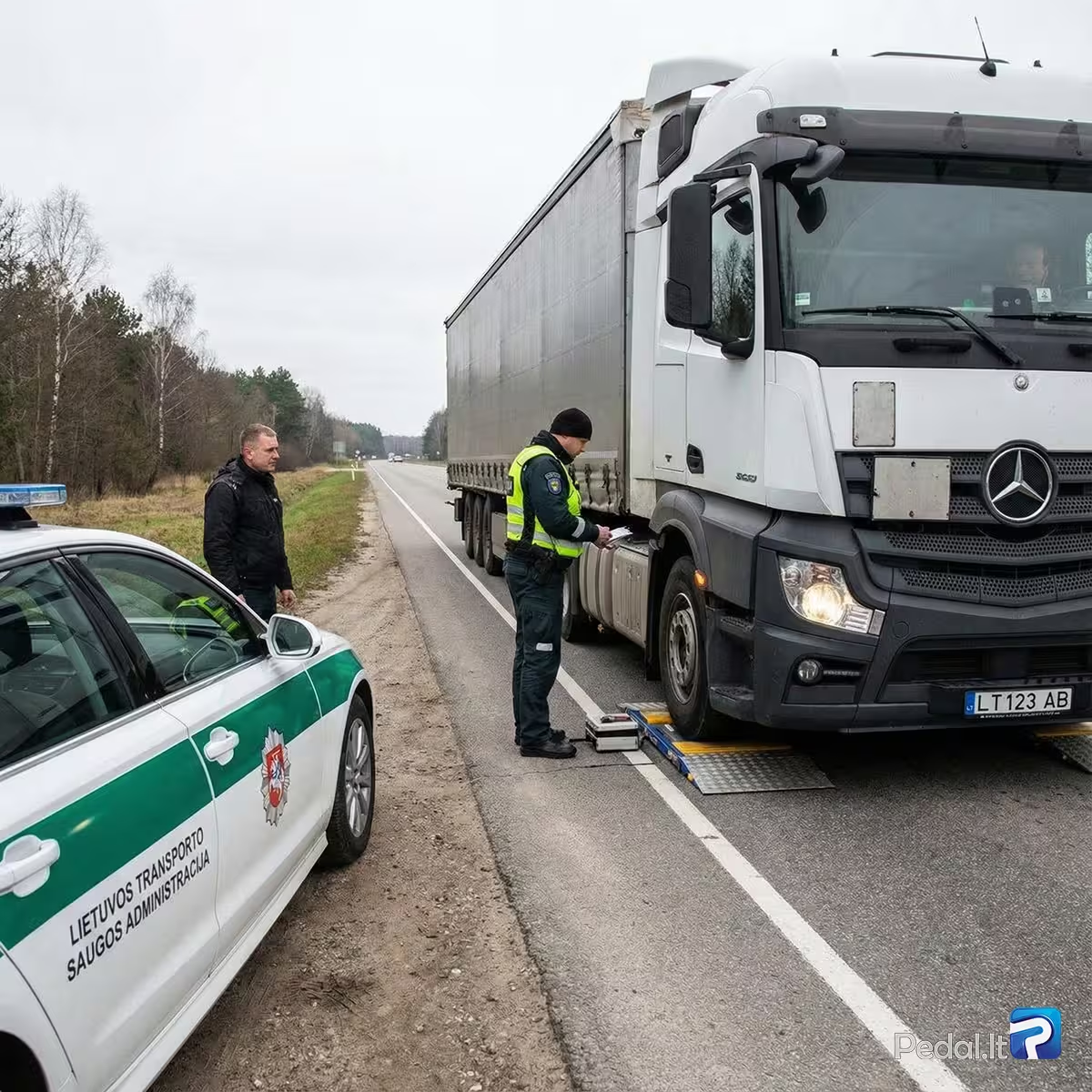
What is the permissible maximum weight for a combination of vehicles?
A vehicle's permissible maximum weight (hereinafter 'permissible maximum weight') means the maximum authorized operating weight of a fully laden vehicle or combination of vehicles, including the driver, passengers, and cargo, as specified by the vehicle manufacturer or the competent government authority.
1. The maximum authorized operating weight of a fully loaded vehicle or combination of vehicles.
2. The total payload of a vehicle and its trailer.
Where is overtaking prohibited?
RTR XVI.140. Overtaking is prohibited. Clause 140.8: in residential areas, courtyards of apartment buildings, parking lots, and bicycle streets. JB
1. In parking lots.
2. In the courtyards of multi-apartment residential buildings.
3. In residential areas.
4. On bicycle streets.
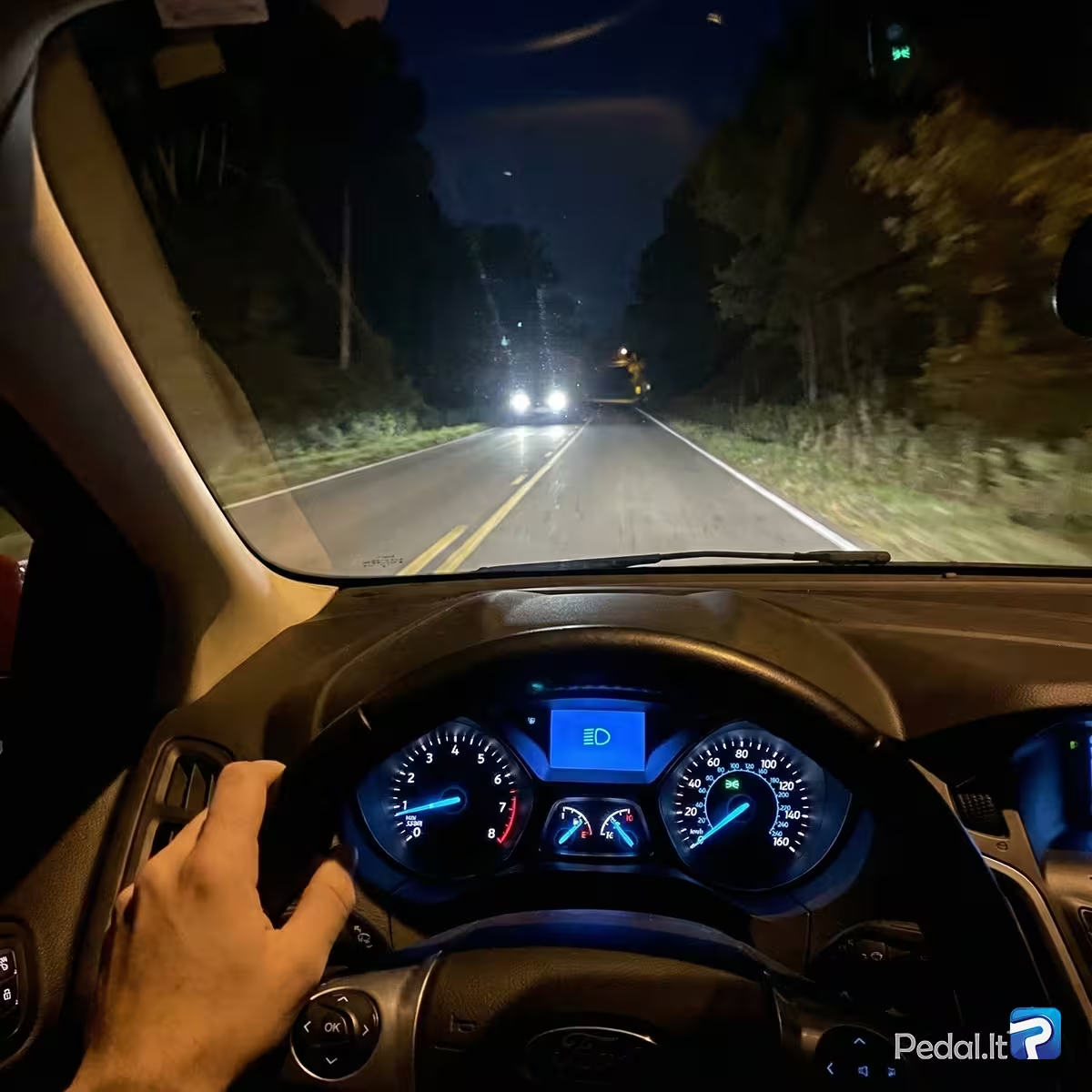
In which situations during hours of darkness must the vehicle's high-beam headlights be switched to low beam?
Regulation RTR 95. During hours of darkness or in conditions of poor visibility, main-beam headlights must be switched to low beam in the following cases: 95.1 on illuminated roads; 95.2 when the distance to an oncoming vehicle is at least 150 m. JB
1. When driving on illuminated roads within built-up areas.
2. When an oncoming vehicle is at least 150 m away.
3. Switching to low beam is optional.
4. When driving on illuminated roads outside built-up areas.
What can cause a vehicle to skid?
Sudden steering wheel movements, improper use of the accelerator, or other actions that do not take the road surface and driving speed into account can cause a vehicle to skid. In general, it is the driver's own actions (for example, sudden braking), not the actions of another driver, that lead to skidding. The driver must choose an appropriate speed and following distance so that the actions of other road users do not endanger the vehicle. 126. The driver must maintain a distance appropriate to the speed, sufficient to avoid hitting the vehicle in front if it brakes, and must leave a lateral gap to ensure traffic safety. It is recommended that the distance to the vehicle ahead be at least the distance covered in two seconds or at least half the speedometer reading converted into metres (for example, at 70 km/h the distance should be at least 35 m), unless traffic conditions require otherwise. Drivers of motor vehicles, tractors and self-propelled machinery shall, when overtaking pedestrians or when overtaking or passing cyclists or drivers of electric micro-mobility vehicles, leave a lateral distance of at least 1.0 m when their speed does not exceed 50 km/h and at least 1.5 m when their speed exceeds 50 km/h. The requirement to maintain the specified lateral distance does not apply on a single-lane road.
1. The driver's actions.
2. An emergency caused by another driver.
What types of liability apply to reckless driving while intoxicated?
Drivers with a blood alcohol concentration (BAC) exceeding 1.5 per mille are subject to a fine, arrest, or imprisonment for up to one year (since 01/01/2017). Drink-driving may give rise to both criminal and administrative liability. The applicable type of liability depends on the specific circumstances and the seriousness of the offence:
- Administrative liability: applies when the offences are of lesser severity.
- Criminal liability: applies when the offence is particularly serious or when driving endangers road safety, or the health or life of others.
Code of Administrative Offences of the Republic of Lithuania, Article 420(2): Reckless driving, i.e. a violation of the Road Traffic Rules that endangers road safety or the safety of oneself or others for hooligan motives, incurs a fine ranging from EUR 450 to EUR 550 for drivers and from EUR 750 to EUR 1,000 for persons not entitled to drive vehicles.
Code of Administrative Offences of the Republic of Lithuania, Article 420(4): The acts referred to in paragraph 2 committed by an intoxicated person (mild intoxication: more than 0.4 per mille but not exceeding 1.5 per mille), by a person under the influence of drugs, psychotropic or other psychoactive substances, by a person who avoided performing a field sobriety test, or by a person who consumed alcohol, drugs, psychotropic or other psychoactive substances before the test, shall incur a fine ranging from EUR 850 to EUR 1,200 for drivers.
Criminal Code of the Republic of Lithuania, Article 281(7): Persons who drive a road vehicle or instruct a learner driver while under the influence of alcohol with a BAC exceeding 1.5 per mille shall be punished by a fine, arrest, or imprisonment for up to one year.
1. Criminal liability.
2. Administrative liability.
3. Civil liability.
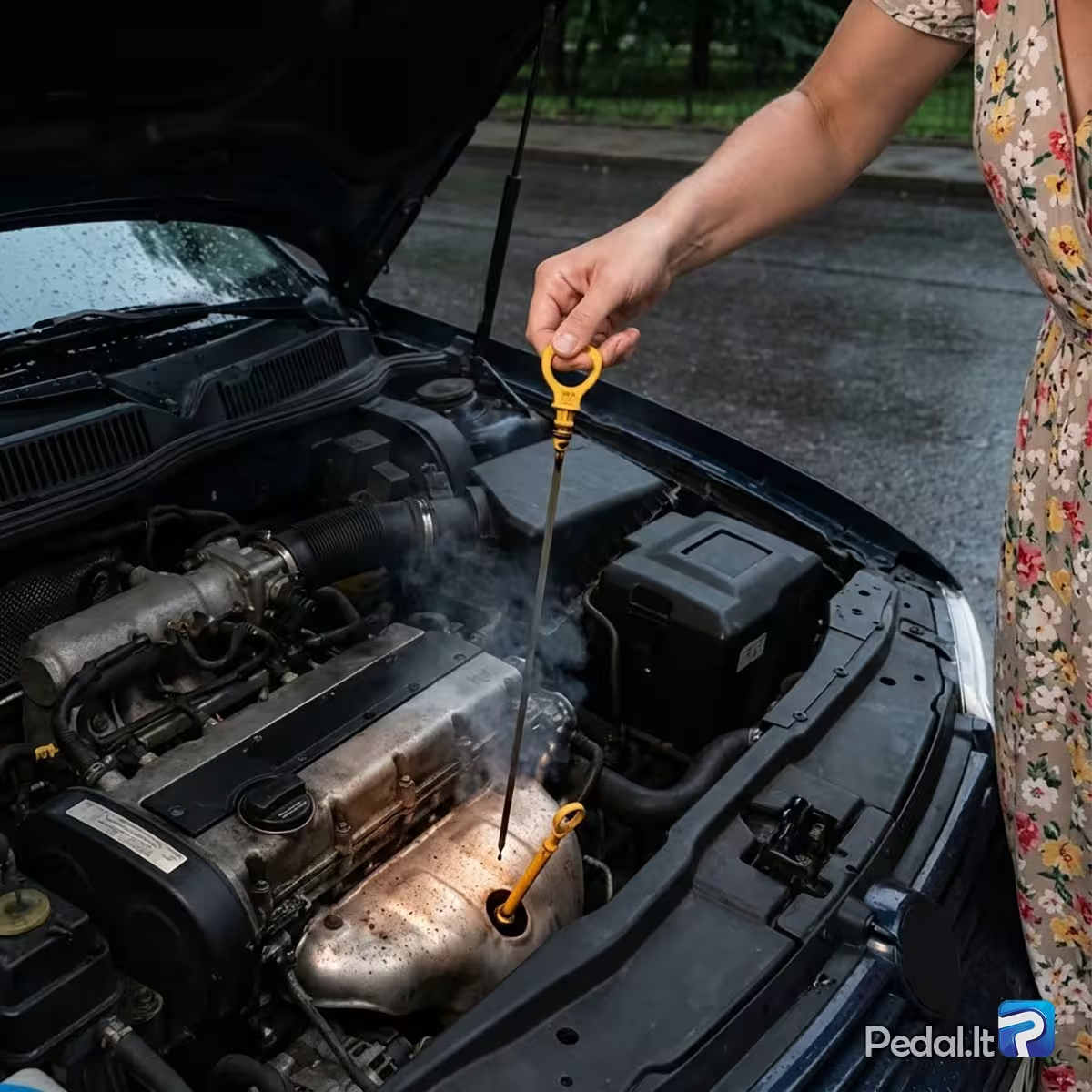
How dangerous is a low engine oil level?
When engine oil is low, internal components receive less lubrication, causing increased wear and overheating; this accelerates deterioration and can lead to engine failure.
1. Fuel consumption will be reduced.
2. The engine may suffer serious damage or fail.
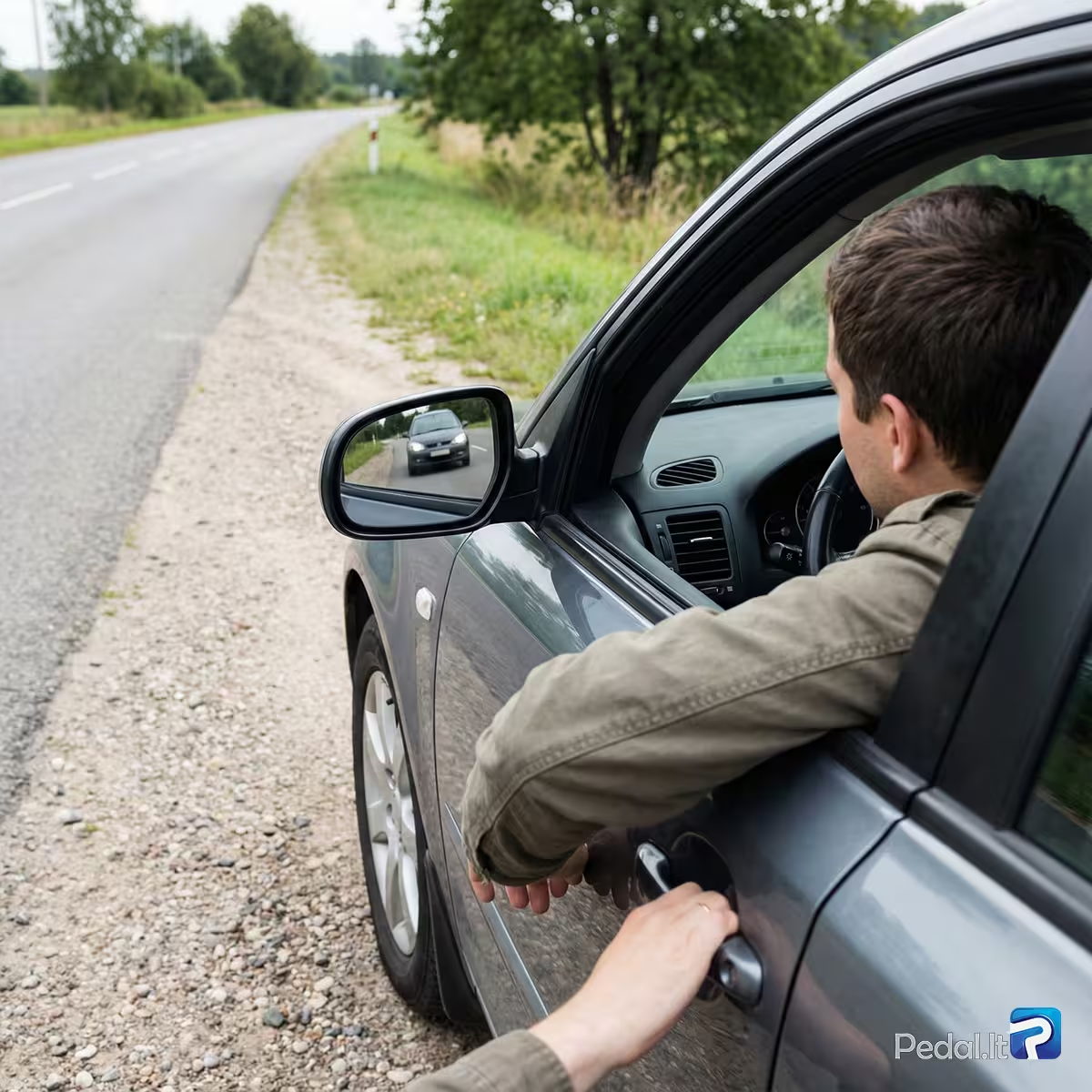
After stopping on the right-hand shoulder, what should a driver check before opening the door?
Vehicles may be approaching from the rear on the left-hand side, so opening the door could be unsafe. (RTR 148) Do not open the doors of a parked vehicle if doing so would create an obstruction or pose a hazard to other road users.
1. Vehicles approaching from behind on the left-hand side.
2. Vehicles approaching from behind on the right-hand side.
3. They do not need to pay attention to anything specific.
When must cargo be marked with identification signs and illuminated during darkness or reduced visibility?
Any part of a load that protrudes beyond the vehicle's lateral profile, however slightly, must be marked. Specifically, loads extending more than 0.5 m beyond the vehicle's sides must be identified (Annex 4, §12). Extremities projecting more than 1 m beyond the front or rear of the vehicle, any parts extending laterally beyond the vehicle, and the extremities of vehicles wider than 2.6 m must display distinctive markers: square plates 400 mm on a side with alternating diagonal reflective stripes 50 mm wide in white and red. These plates must be mounted between 0.4 m and 1.6 m above ground level. During darkness or poor visibility, vehicles with protruding points must also show lights on those points: white at the front, amber on the sides, and red at the rear. JB
1. When the load projects more than 0.5 m beyond the rear of the vehicle.
2. When the load projects more than 1 m beyond the front or rear of the vehicle.
3. When the load projects more than 0.5 m beyond the side of the vehicle.
4. When the load projects any distance beyond the vehicle's sides.
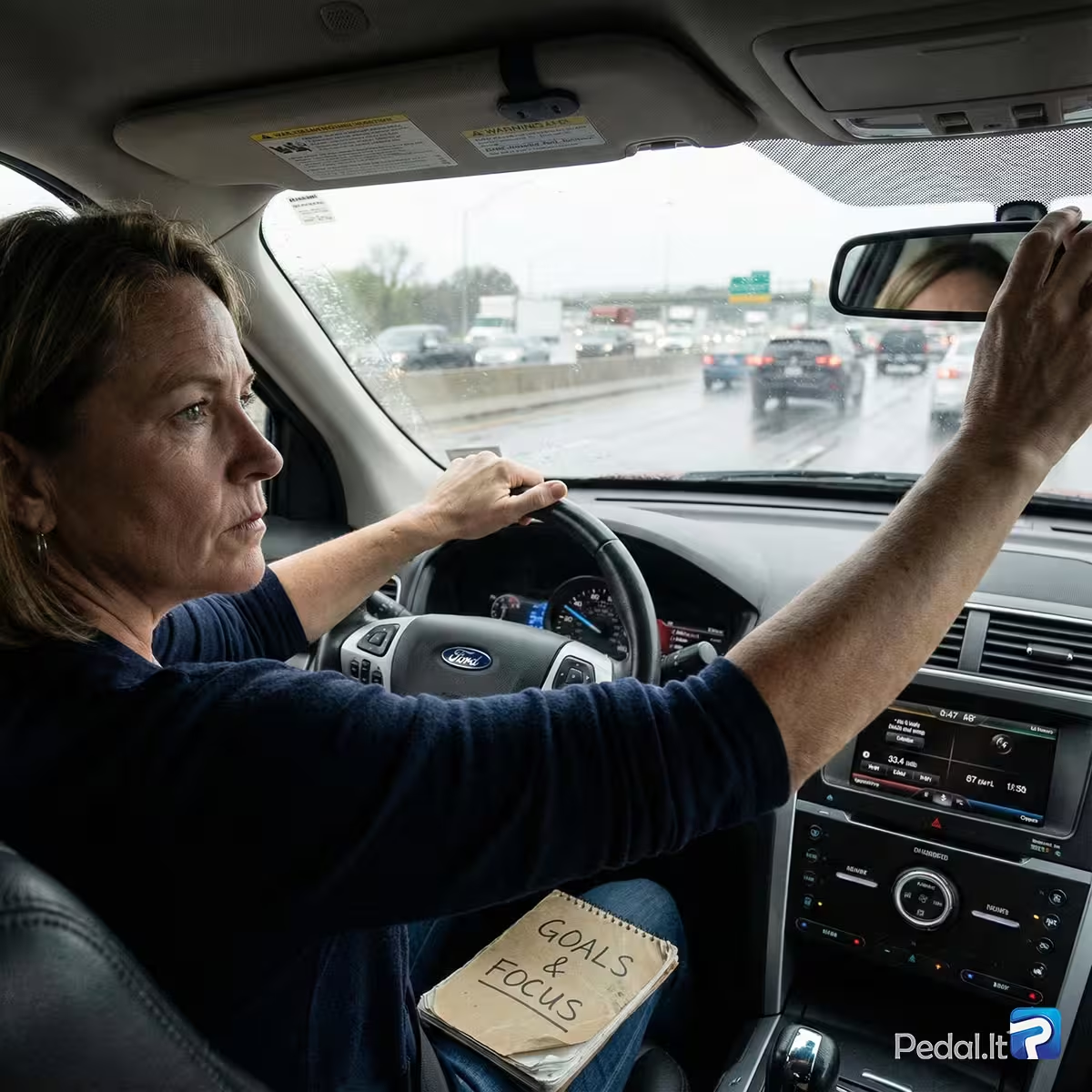
What are the primary characteristics of a driver's will?
The primary characteristics of a driver's will are discipline, determination, self-control, and perseverance. Disciplined drivers consistently obey the rules of the road (RTR). Determined drivers do not hesitate about decisions they make while operating a vehicle. A driver's self-control is demonstrated by remaining calm in complex traffic situations and by showing respect for other road users. Perseverance is the ability to overcome difficulties encountered on the road.
1. Discipline and determination.
2. Aggression and anger.
3. Self-control and calm temperament.
4. Indifference.
Is it permitted to park a vehicle with a mass of 2.6 tonnes in the yard of an apartment building?
RTR 176. In residential areas road users must not: 176.3. leave parked lorries with a maximum permissible weight of more than 3.5 tonnes, buses with more than 12 seats, tractors, self-propelled machinery and trailers with a maximum permissible weight of more than 3.5 tonnes; RTR 178. The requirements of this Chapter also apply to the yards of apartment blocks. The provisions of Paragraph 175 and Subparagraph 176.4 of the Rules apply to car parks.
1. Yes, it is permitted.
2. No, it is not permitted.
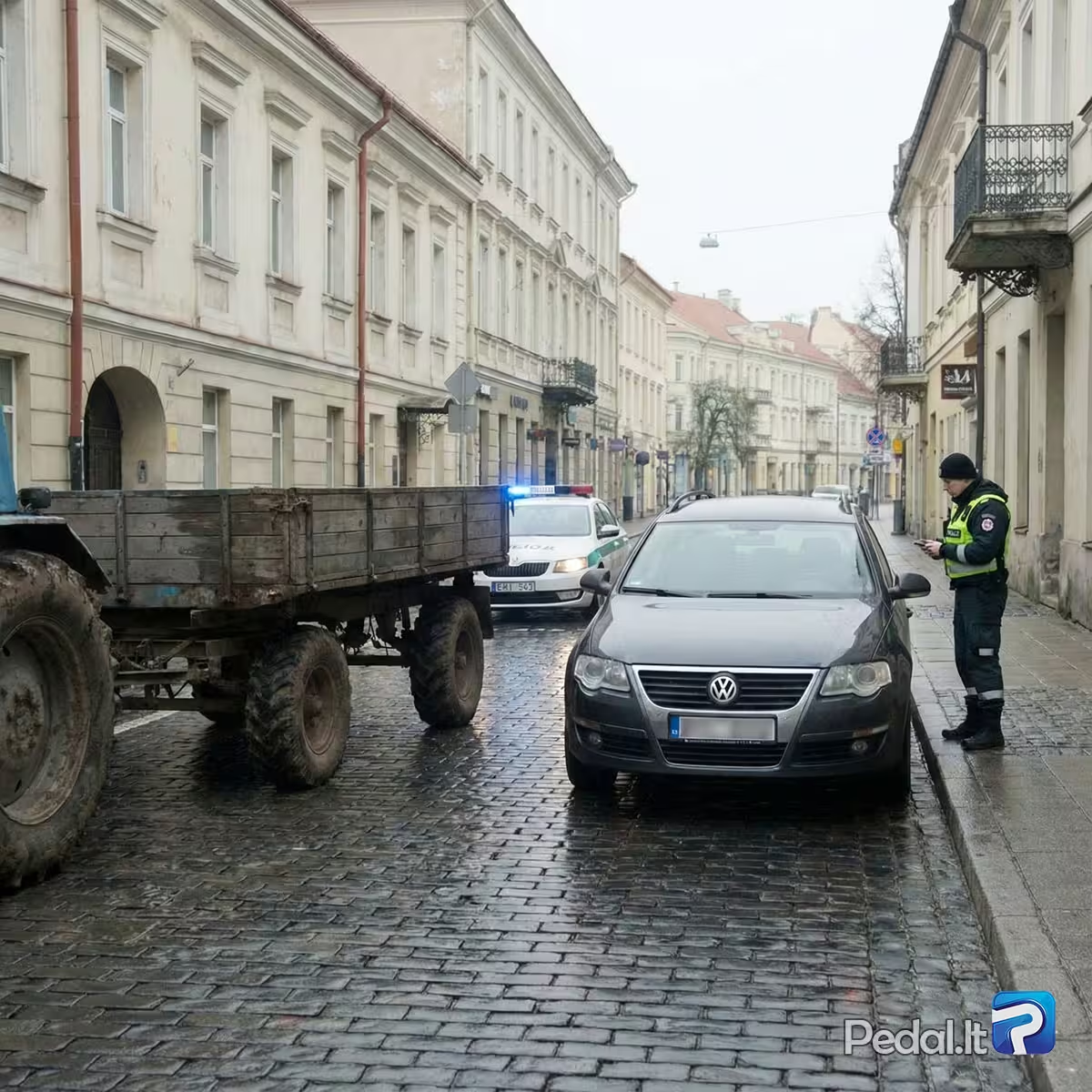
Are motor vehicles permitted to tow trailers intended for agricultural tractors?
Motor vehicles are not permitted to tow trailers intended for agricultural tractors due to safety requirements and technical incompatibilities. The term "motor vehicle" excludes non-road rail vehicles, tractors, and self-propelled machines. Per RTR 207, the total weight of carried cargo and passengers and the axle loads must not exceed the gross vehicle weight and axle load limits specified for that vehicle by the Ministry of Transport and Communications of the Republic of Lithuania and by the vehicle manufacturer. The gross weight of a towed trailer (laden or unladen) must not exceed the maximum permissible tow weight established by the Ministry and the manufacturer. Consequently, motor vehicles are prohibited from towing trailers of non-motor vehicles, and non-motor vehicles are prohibited from towing trailers of motor vehicles.
1. Only sport utility vehicles (SUVs) are permitted to tow trailers designed for agricultural tractors.
2. Motor vehicles are prohibited from towing trailers intended for agricultural tractors.
3. Only Category C commercial vehicles are permitted to tow trailers designed for agricultural tractors.
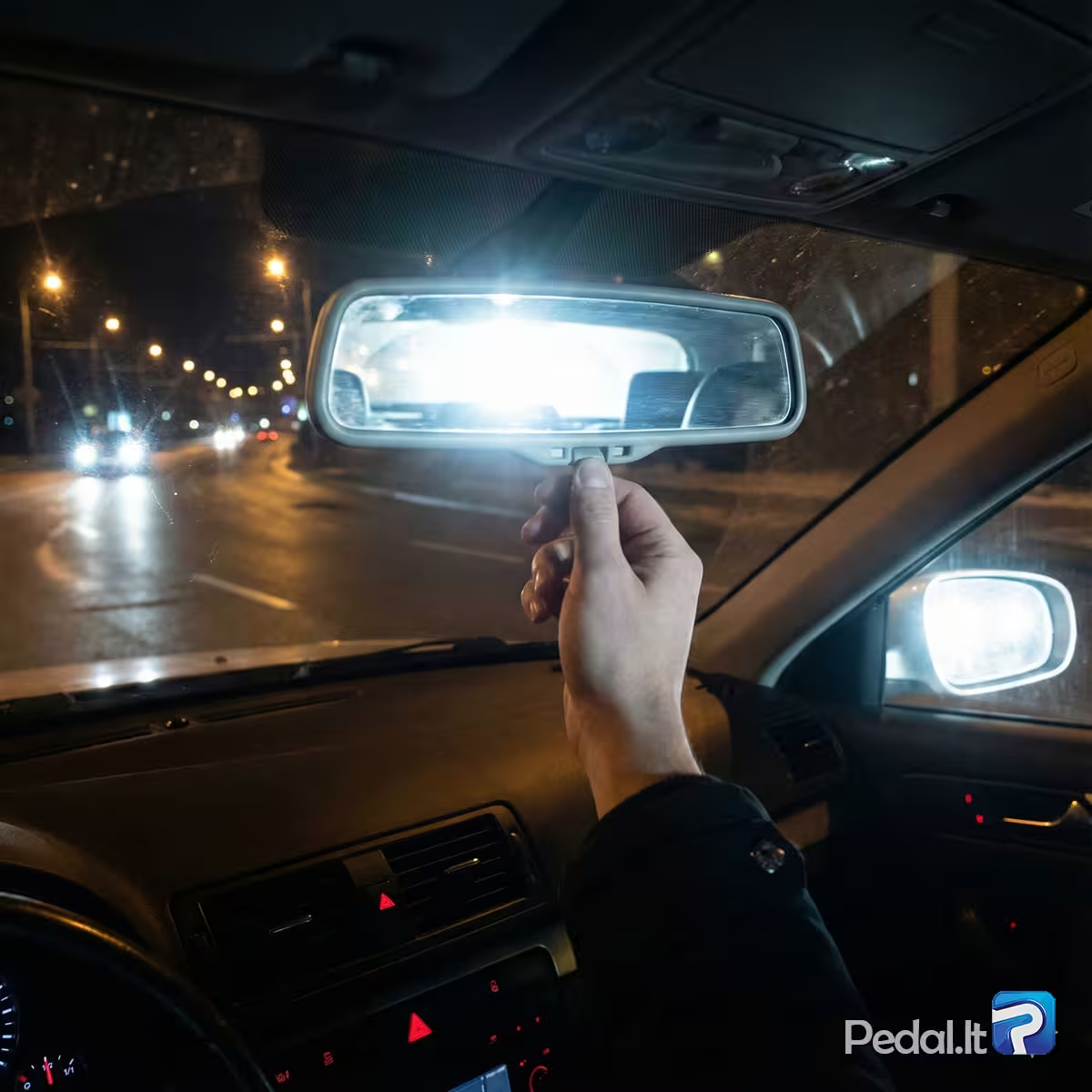
What should you do if a vehicle behind you is dazzling you with its lights?
If bright headlights are reflected in your rearview mirror, in addition to the measures listed in Paragraph 96 you can quickly activate the mirror's anti‑dazzle setting by flipping the switch at its base (if fitted). This engages the automatic dimming function and reduces glare. According to RTR 96, a dazzled driver must turn on the hazard warning lights, reduce speed without changing direction, and stop if necessary.
1. You will look away.
2. If possible, activate the rearview mirror's automatic dimming function.
3. You will turn on your hazard warning lights.
4. You will reduce speed and stop if necessary.
Why is it dangerous to suddenly increase engine speed while driving on a slippery road?
If you press the accelerator suddenly on a slippery road, the driving wheels may start to spin, further smoothing and polishing the wheel track on the slippery surface. This reduces traction; as a result the tires can lose grip more quickly and the vehicle may skid or slide sideways.
1. The vehicle may skid sideways.
2. The engine may stall.
When approaching a traffic-light-controlled intersection and you notice the green light has been on for a long time, what should you do?
A green light that has been lit for an extended period may change to yellow shortly. You may proceed, but remain vigilant and be prepared to stop safely. 73. Traffic light signals mean: 73.1. A steady circular green light permits movement in all directions (straight ahead, to the right, to the left, or a U-turn); 73.3. A flashing green light permits movement but warns that its time is ending and the signals are about to change.
1. Stop immediately.
2. Increase your speed.
3. Continue driving but be prepared to stop.
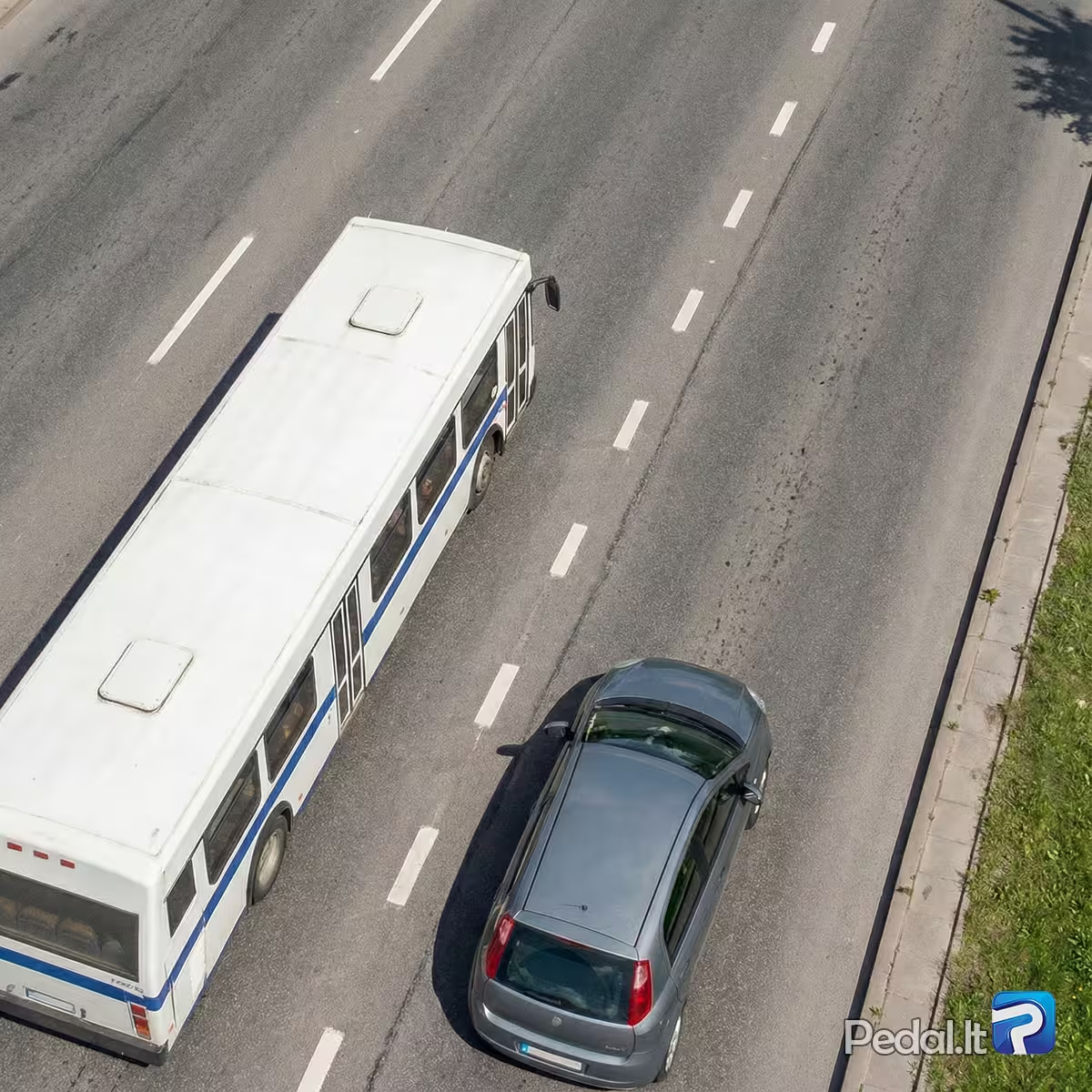
An acceleration lane is used to:
RTR 112. When an acceleration lane is provided for entering a roadway, the driver must use it to gain speed and merge into the main traffic flow, yielding to vehicles already on the road. The driver may change lanes as necessary or enter a deceleration lane when appropriate. JB
1. To accelerate to the speed of traffic and merge into the main flow, yielding to vehicles already on the road.
2. For use by general traffic when the roadway is too narrow.
3. For parking when no nearby parking facilities are available.
What does a flashing white traffic light at a level crossing indicate?
RTR 73. Traffic light signals have the following meanings: 73.10. A flashing white light used at level crossings means that vehicles may proceed after ensuring that no rail-borne vehicle is approaching the level crossing;
1. It prohibits traffic from proceeding.
2. It permits traffic to proceed after ensuring that no rail-borne vehicle is approaching the level crossing.
3. It permits traffic only if you can cross the level crossing before the approaching train arrives.
What is the primary difference between winter diesel and summer diesel fuel?
In winter, air temperatures can easily drop to -25 °C or lower, causing diesel vehicles to experience starting problems. When temperatures fall below 0 °C, water in diesel fuel can freeze; failing to prepare a diesel vehicle for such conditions may lead to breakdowns. At service stations you can choose “summer” diesel, typically suitable from May through October, or “winter” diesel, formulated for use from November through April and adapted to low sub-zero temperatures.
1. Winter diesel fuel does not gel or freeze at -25 °C.
2. Winter diesel fuel begins to gel or freeze at temperatures below -5 °C.
How is a road accident defined?
LAW ON ROAD TRAFFIC SAFETY — Article 2, Section 14. A 'road accident' means an incident occurring on a road in public or private areas where a moving vehicle causes death or injury to persons, or damages or destroys at least one vehicle, a load, the roadway, its structures, or any other property at the scene.
1. When the driver of an animal-drawn vehicle falls from the carriage while traveling on a road in public or private territory.
2. When two cyclists collide on a road in public or private territory and one or both sustain injuries.
3. When a pedestrian is struck and injured by a moped on a road in public or private territory.
4. When a vehicle's chassis is damaged after striking a pothole.
5. When property at the scene of a road incident on a road in public or private territory is damaged or destroyed in the presence of a moving vehicle.
Which actions are permitted for a driver to attract the attention of other road users when overtaking them outside built-up areas?
Outside built-up areas, a driver may warn others when overtaking by flashing the high or low beams (provided this does not dazzle other road users) or by sounding the horn. Within built-up areas, flashing the lights is permitted if it does not dazzle others; sounding the horn is prohibited except when necessary to avoid a traffic accident. RTR — 89.
1. A driver may repeatedly switch the headlights on and off to attract attention.
2. A driver may sound the vehicle's horn to attract attention.
3. A driver may switch on the hazard warning lights.
1 of 30 Task
Time left: 00:00:00
1
2
3
4
5
6
7
8
9
10
11
12
13
14
15
16
17
18
19
20
21
22
23
24
25
26
27
28
29
30