Are people using a wheelchair considered pedestrians?
LAW ON ROAD TRAFFIC SAFETY — Article 2, clause 42. "Pedestrian" means a person present on the road who is not inside a vehicle, including a person using a wheelchair, on roller/inline skates, on a skateboard or scooter, walking while leading or pushing a bicycle, moped, or motorcycle, or pulling/pushing a sledge, pram, or other type of carriage. A person performing work on the road shall not be considered a pedestrian.
1. Yes — they are considered pedestrians.
2. No — they are not considered pedestrians.
Before making a turn, drivers must ensure that:
Before making a turn, drivers must reduce speed and ensure their vehicle does not enter the lane of oncoming traffic or that the rear wheels do not mount the pavement. RTR 108. The turning manoeuvre must be executed so that vehicles do not encroach on the oncoming-traffic lane when entering or leaving the intersection. If a turn is made from a single lane, the driver may choose any lane of the carriageway into which they are turning. If turning is permitted from multiple lanes, drivers must remain in their lane and must not obstruct a vehicle turning from an adjacent lane.
1. Their vehicle does not enter the lane designated for oncoming traffic.
2. The rear wheels of their vehicle do not mount the pavement.
How can you confirm that all the lights on your vehicle are functioning?
Drivers should check that all vehicle lights are working before every long journey and at least once every six months. Properly functioning lights help you assess road conditions accurately and reduce the risk of accidents.
1. Turn on all vehicle lights and, each time you exit the car, walk around it to verify that they are illuminated.
2. You do not need to inspect your car's lights; instead, replace the bulbs every six months.
Why is it dangerous to suddenly increase engine speed while driving on a slippery road?
If you press the accelerator suddenly on a slippery road, the driving wheels may start to spin, further smoothing and polishing the wheel track on the slippery surface. This reduces traction; as a result the tires can lose grip more quickly and the vehicle may skid or slide sideways.
1. The vehicle may skid sideways.
2. The engine may stall.
How should you choose an appropriate driving speed?
Order of the General Director of the state company "Regitra" approving the description of the criteria and methods for evaluating driving skills and abilities (23 December 2013, No. V-223): 3.18 Speed selection — accelerate steadily, choose a speed appropriate to the traffic situation and do not exceed the permitted limit. 3.18.1 Control the vehicle's speed while performing maneuvers: 3.18.1.1 If necessary, maintain a sufficiently low speed to compensate for any errors; 3.18.1.2 The vehicle must move evenly and smoothly. JB
1. Accelerate smoothly and steadily.
2. Drive at a speed appropriate for the traffic conditions and do not exceed the legal speed limit.
3. Drive faster to reach your destination sooner.
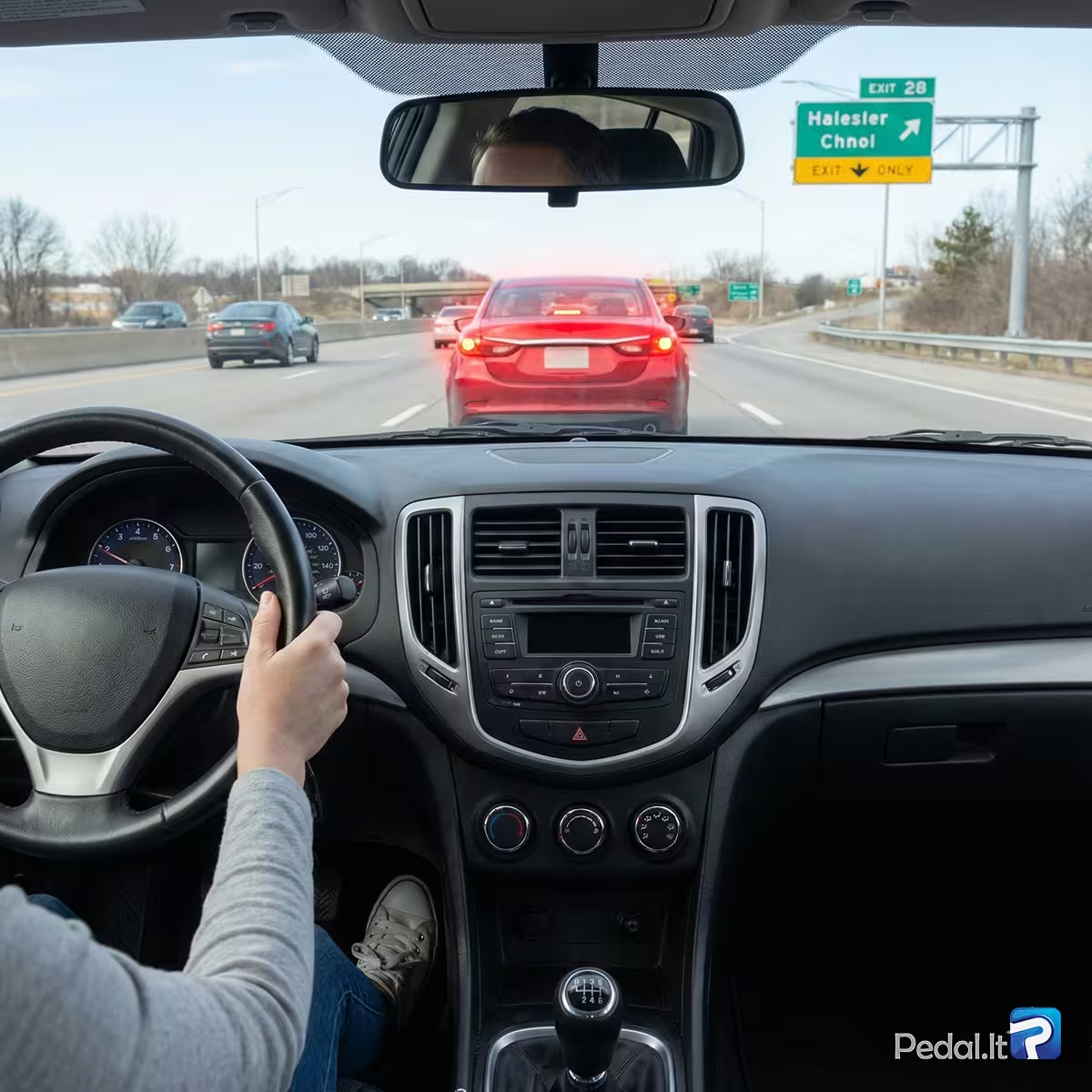
What should you do if you notice a vehicle braking in the distance ahead?
Explanation of terms: • To brake – press the brake pedal; the car slows down rapidly and stops before the expected obstacle. • To release the accelerator pedal – take your foot off the gas; the car gradually slows on its own but does not come to a complete stop and continues moving. • To drive without changing speed – keep the accelerator position the same; the car continues at a constant speed. RTR 128. If there is an obstruction or traffic safety is at risk, the driver must reduce speed or, if necessary, bring the vehicle to a complete stop or steer around the obstruction (if it can be seen) without creating a hazard for other road users.
1. Apply the brakes.
2. Take your foot off the accelerator and be prepared to brake.
3. Maintain your current speed.
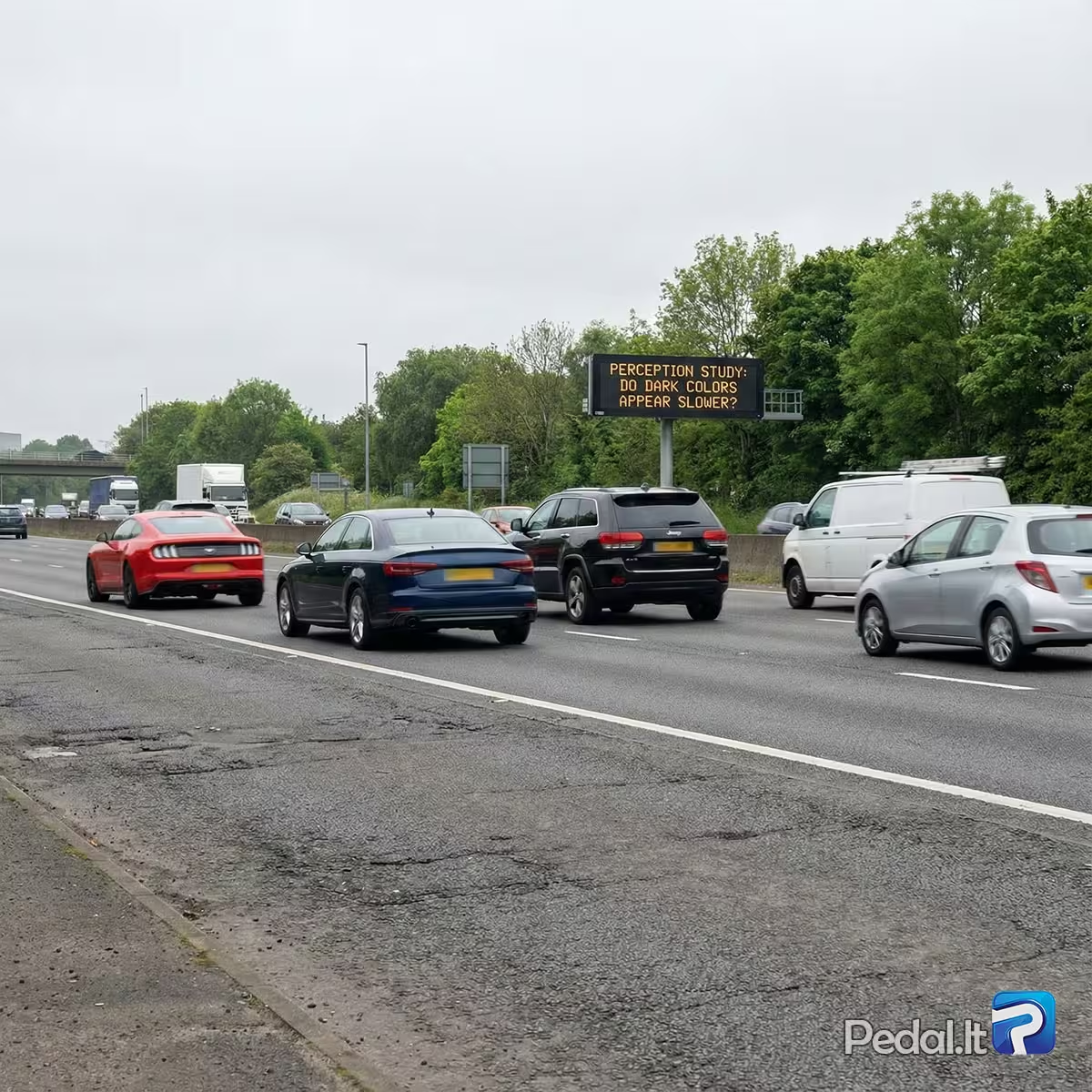
Which colour of vehicle tends to appear to be moving more slowly than it actually is?
Oncoming vehicles painted in dark colours often create the illusion that they are moving more slowly than they actually are.
1. Light-coloured vehicles.
2. Dark-coloured vehicles.
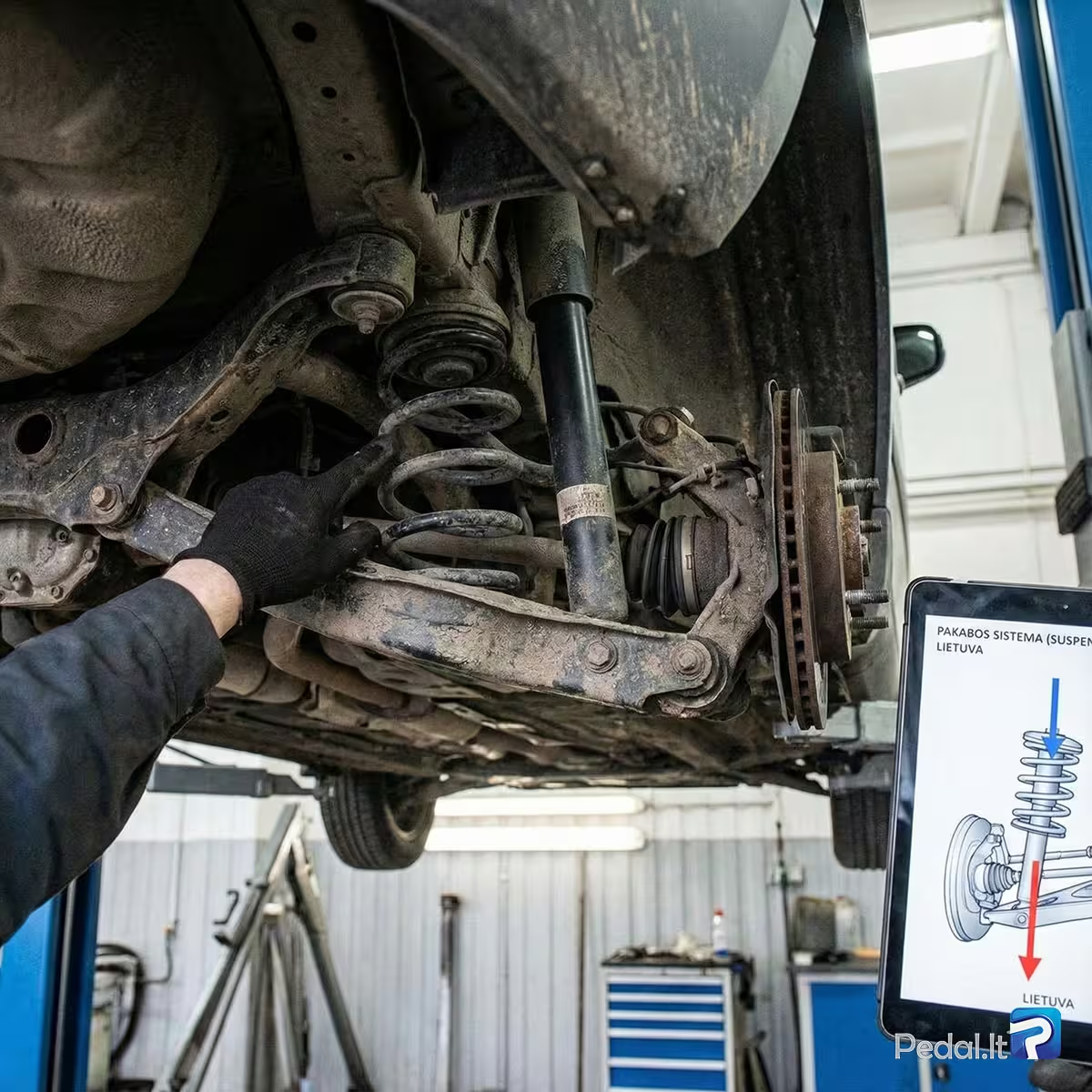
What is the function of a vehicle's suspension system?
The function of a vehicle suspension system is to convert bumps and shocks transmitted to the wheels, with the aid of shock absorbers, into minor oscillations of the vehicle body, providing comfort for driver and passengers. The suspension reduces body oscillations, and when functioning properly it enhances driving safety.
1. To improve ride comfort for the driver and passengers.
2. To convert bumps and shocks transmitted to the wheels into minor oscillations of the vehicle body.
The effect of inertia on the vehicle (risk of sliding sideways) when cornering is reduced by:
The higher the vehicle's speed when cornering, the greater the effect of inertia and the higher the risk of the car sliding sideways. Lower speeds reduce inertia and the risk of sliding. A larger turning radius (a gentler curve) also reduces lateral inertial forces.
1. By decreasing the turning radius (making the turn tighter).
2. By reducing vehicle speed.
3. By increasing the turning radius (making the curve gentler).
Why must you wear a seat belt when driving?
RTR 196. The driver and all passengers must wear seat belts when the vehicle is equipped with them. If a bus is fitted with seat belts, visible notices reading 'Fasten Your Seat Belt' must be displayed in front of every seat, on the seat, or next to it. It is recommended that all bus passengers be informed—verbally or by audio‑visual means—about the requirement to wear seat belts before the journey begins. RTR 197. A seat belt must be fastened over the shoulder and around the waist, or as specified by the vehicle manufacturer.
1. To reduce the risk of injury in a road traffic collision.
2. Because wearing a seat belt makes driving more comfortable.
3. Because the road traffic regulations require it.
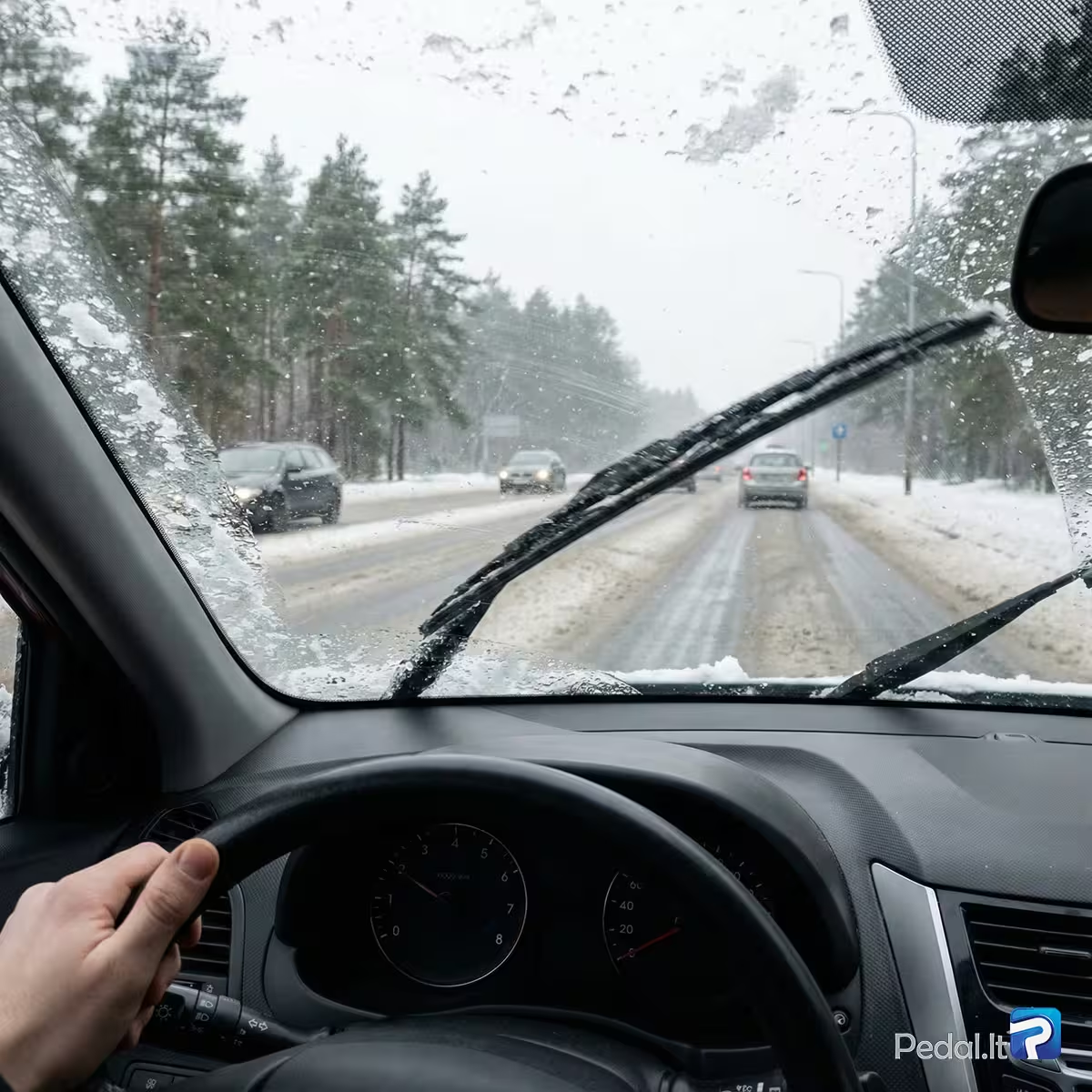
When should you switch on your windscreen wipers while driving in sleet?
A driver must maintain clear forward visibility in all weather conditions. Use the windscreen wipers according to the intensity of precipitation, traffic, presence of pedestrians and other circumstances. Waiting until "the windscreen is covered in snow and you are unable to see anything" is too late.
1. Only when the windscreen is completely covered with snow and you cannot see anything.
2. Before another vehicle driving alongside you can splash dirty water onto your windscreen.
3. Before an oncoming vehicle can splash dirty water onto your windscreen.
4. In advance, so you are not distracted while searching for the windscreen wiper control.
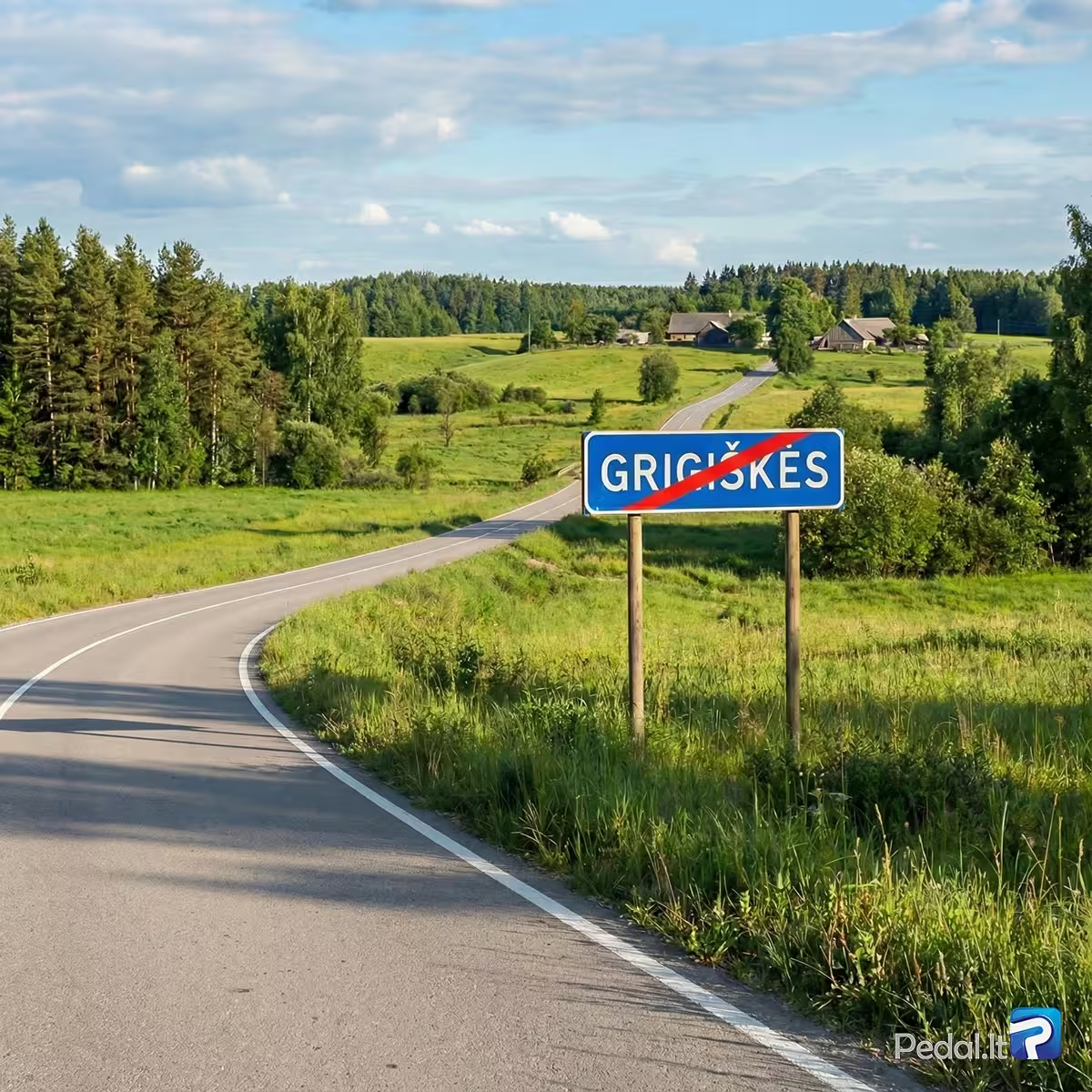
What is the maximum permitted speed for a passenger car on an asphalt- or concrete-surfaced road where this sign applies?
According to the Road Traffic Rules (RTR), a blue sign showing the settlement name in white letters indicates the start of a settlement where the special traffic regulations that normally apply within built-up areas do NOT apply. By contrast, a sign with the settlement name in black letters on a white background marks the start of a settlement where built-up-area traffic rules are in force (RTR 131). The following maximum speeds apply outside built-up areas (RTR 131.1): for passenger cars, light goods vehicles with a permissible maximum mass up to 3.5 tonnes, motorcycles and tricycles — on motorways: 130 km/h from April to October and 110 km/h from November to March; on expressways/highways: 120 km/h from April to October and 110 km/h from November to March; on roads with asphalt or concrete pavement: 90 km/h; on other roads: 70 km/h. See road sign 612: Beginning of a built-up area where special built-up-area rules do not apply. Road sign 613: End of a built-up area (marked by sign 616); it may show the name of another settlement and the distance to it.
1. 70 km/h
2. 80 km/h
3. 90 km/h
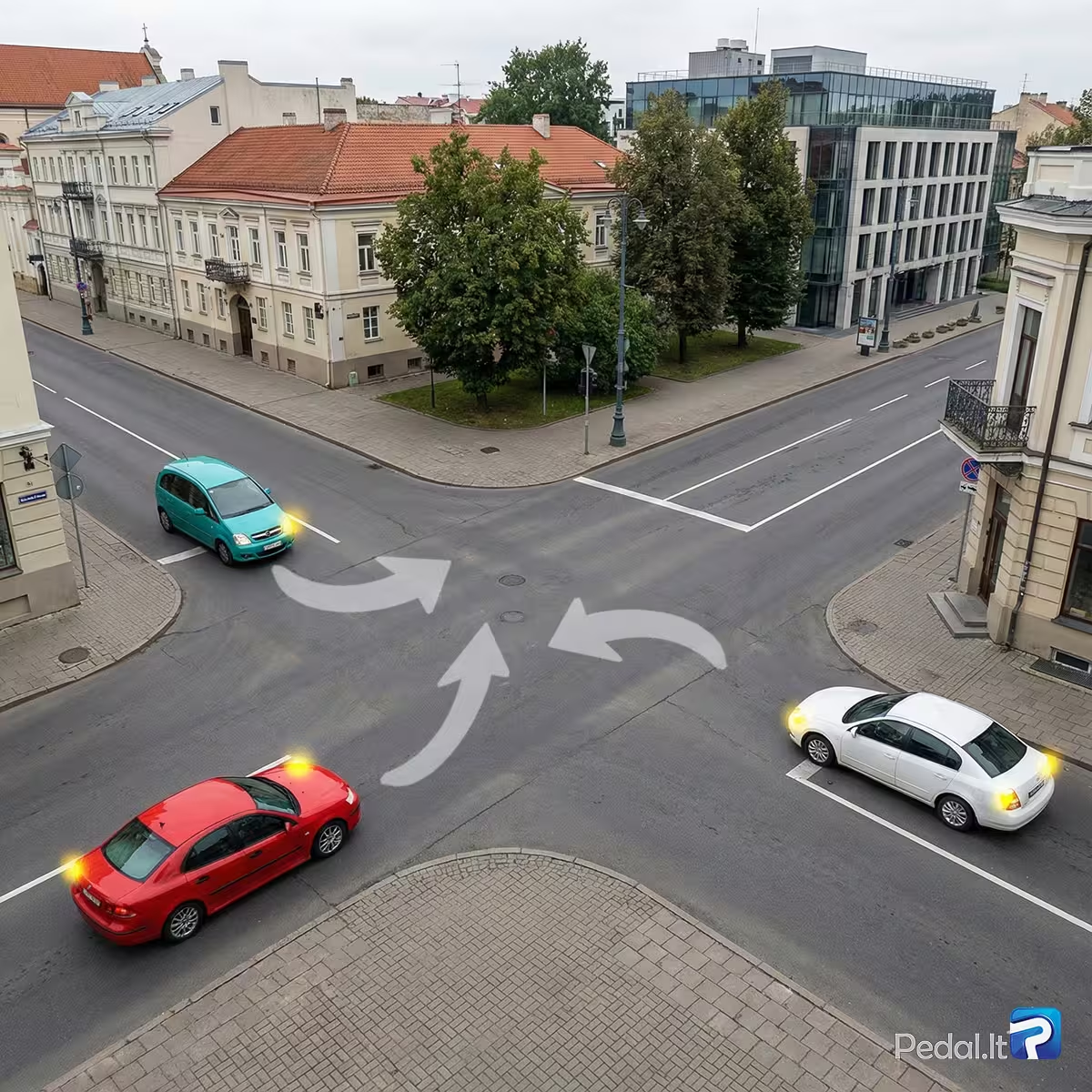
The correct sequence of vehicles to proceed through this intersection is:
The white car goes first because it has no vehicle on its right. It does not need to stop in the middle of the intersection because the green car, which is turning left, does not obstruct it. Next, the red car proceeds because the white car is no longer to its right. Finally, the green car goes. The white and green cars cannot go at the same time because the green car must yield to the red car on its right. (RTR 155) At an uncontrolled intersection, drivers must yield to vehicles approaching from the right when their paths intersect.
1. The white car goes first, then the red car, and finally the green car.
2. The red car goes first, then the green car, and finally the white car.
3. The white and green cars proceed simultaneously, followed by the red car.
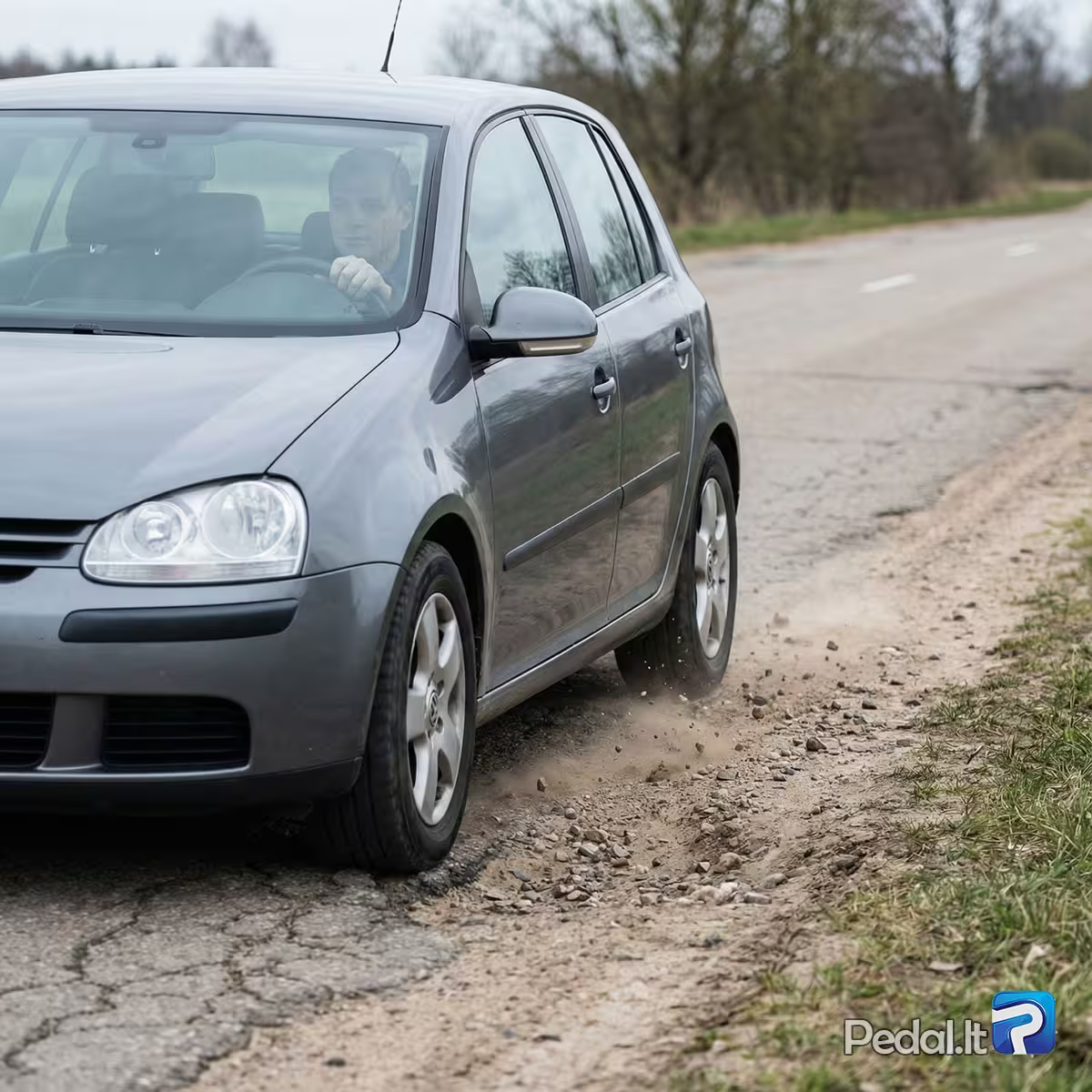
If two wheels of your vehicle move onto the road shoulder while driving, what should you do?
Avoid sudden steering or braking to prevent further instability. Gently accelerate — increasing the driven wheel's RPM will help the wheel regain traction and make it easier to return to the paved road.
1. Apply the brakes and steer back onto the carriageway.
2. Gently accelerate and steer back onto the carriageway.
What should you do if you break another car's headlamp while manoeuvring in a car park?
This is considered a road traffic accident. First, try to locate the vehicle's owner and, together with them, complete the Road Accident Report Form. If you cannot find the owner, call the police — they can help locate the owner or come to the scene to record the accident. Also notify your insurance company of the accident as soon as possible. RTR 220. If there are no deaths or injuries and the involved road users agree on the circumstances and do not call the police to the scene, the parties must draw the accident sketch on the Road Accident Report Form, describe the circumstances in writing, and have the form signed by all involved. If none of the parties has the Road Accident Report Form, the circumstances and sketch may be recorded on a blank sheet of paper listing all involved road users, their vehicles and any witnesses, and confirmed by the signatures of all involved. If the circumstances are contested, the police must be called to the scene. RTR 221. Participants in a road accident must refrain from consuming alcoholic beverages, medicines, narcotic drugs or other intoxicating substances immediately after the accident until they have undergone, or have refused, testing for alcohol or impairment by narcotic, psychotropic or other substances. RTR 222. If the accident caused only property damage and the victim is not present at the scene, the person involved in the accident must immediately notify the victim, and if this is not possible — the police.
1. Locate the vehicle's owner; if you cannot find them, call the police.
2. If nobody notices, you may continue driving.
3. Fill in the Road Accident Report Form together with the car owner, if possible.
4. Notify your insurance company about the accident.
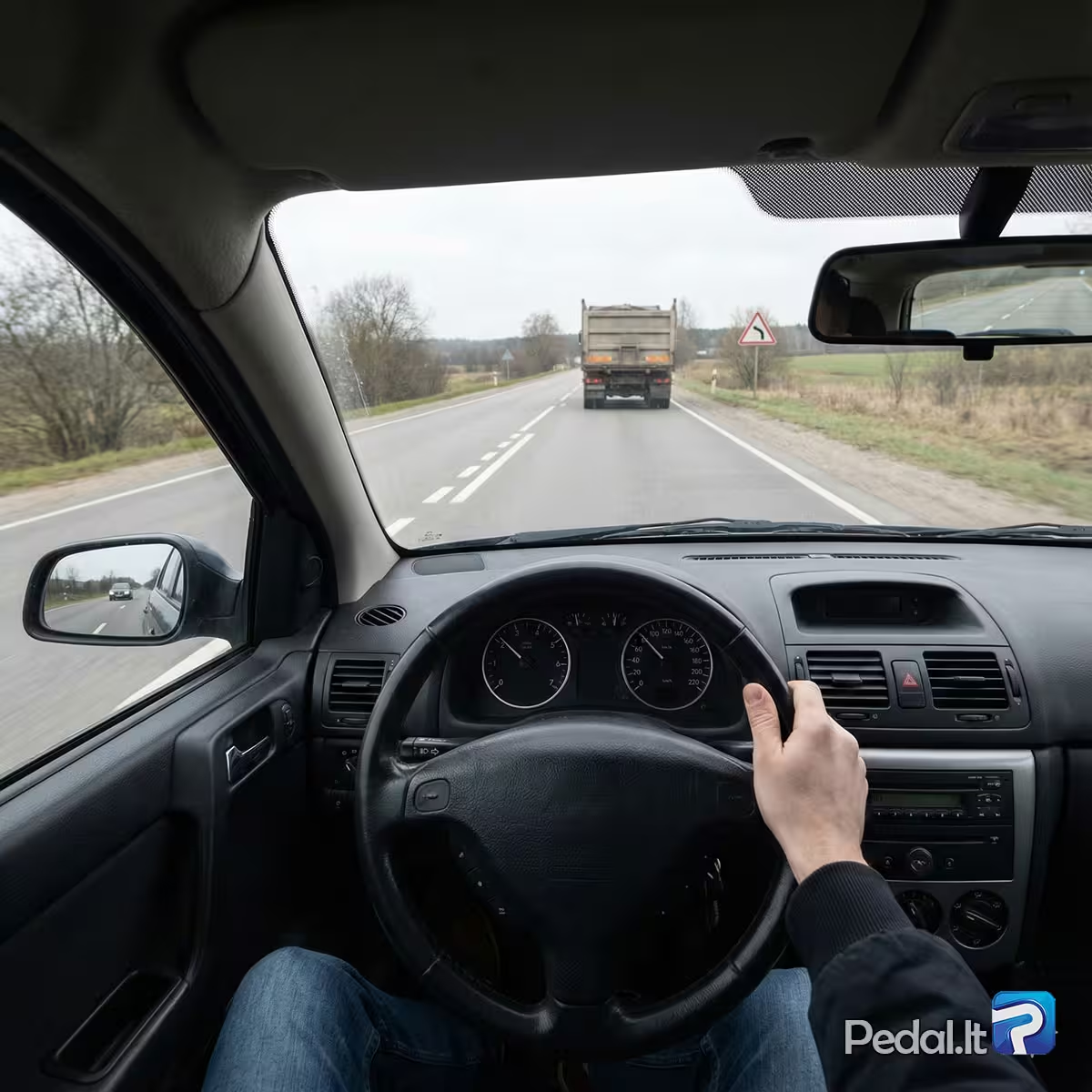
Before overtaking, drivers must ensure that:
RTR 136. Drivers should avoid unnecessary overtaking manoeuvres. Before overtaking, drivers must exercise extra caution and ensure that: 136.1 no driver following has already begun to overtake them; 136.2 the driver of the vehicle to be overtaken is not indicating a left turn; 136.3 the section of lane required for the overtaking manoeuvre is clear and the manoeuvre will not obstruct oncoming traffic or pedestrians on the carriageway; 136.4 a safe distance from the vehicle being overtaken can be maintained during the manoeuvre; 136.5 after completing the overtaking manoeuvre they will be able to return safely to the original traffic lane without obstructing the overtaken vehicle.
1. The road ahead is clear and the overtaking manoeuvre can be completed safely
2. No vehicle is approaching from the opposite direction
3. No vehicle behind has already begun overtaking
Is it permitted to carry passengers in a towed vehicle when a flexible towing link is used?
Passengers may be carried in a towed vehicle except when the vehicle is being towed with its front or rear supported on a towing platform or other support device. Regulation 195 states that drivers must not: 195.4. carry passengers inside a bus, trolleybus, or the body of a goods vehicle that is being towed; if the front or rear of a vehicle is resting on a support device, passengers must not be inside the vehicle or in its cargo body.
1. Yes — it is allowed.
2. No — it is not allowed.
When is the road surface most slippery?
The road surface is most slippery at the start of rain because accumulated dust and oil on the pavement combine with the first drops to form a slippery film.
1. When rain begins.
2. After heavy rain.
3. After puddles have formed on the road.
After depressing the clutch lever, you should hold it down only as long as necessary to:
3.3. Clutch control: 3.3.3. Keep the clutch lever depressed only for the time necessary to engage, change, or disengage a gear, to start moving, to stop, or to maneuver at low speed;
1. Engage a gear.
2. Engage or disengage a gear.
3. Start moving the vehicle.
4. Stop the vehicle or maneuver at low speed.
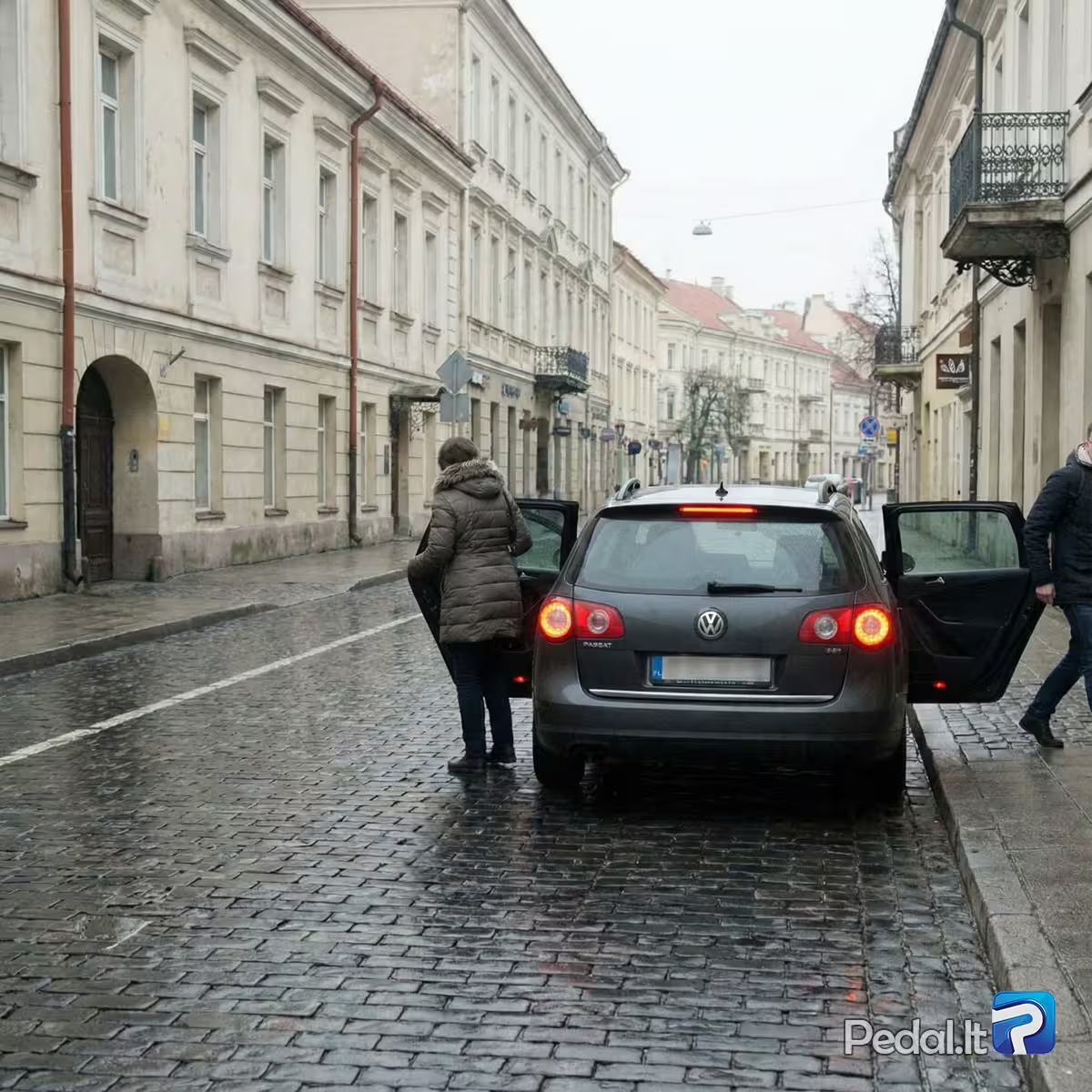
Is it permitted for passengers to board or alight from a vehicle from the roadway side?
Passengers may board or alight from the roadway side only when it is impossible to do so from the pavement (sidewalk) or hard shoulder, and only if it can be done safely without obstructing other road users.
1. It is prohibited.
2. It is allowed.
3. Yes — permitted only when boarding or alighting from the pavement (sidewalk) or hard shoulder is not possible.
If there are no posted speed limit signs, when must you drive at a speed not exceeding 50 km/h?
129. The maximum speed limit within built-up areas for all vehicles is 50 km/h.
1. If diversion signs are present.
2. If a solid yellow line is present.
3. If pedestrian refuge islands are present.
4. Within built-up (urban) areas.
.avif)
Which vehicle may proceed in the direction indicated by the arrow?
RTR 77.1. When the traffic officer's arms are extended sideways or pointed downward: 77.1.1. Vehicles located to the officer's left and right may proceed straight ahead or turn right; pedestrians may cross the carriageway. 77.1.2. Vehicles and pedestrians positioned in front of or behind the officer must not proceed. JB
1. First vehicle
2. Second vehicle
3. Third vehicle
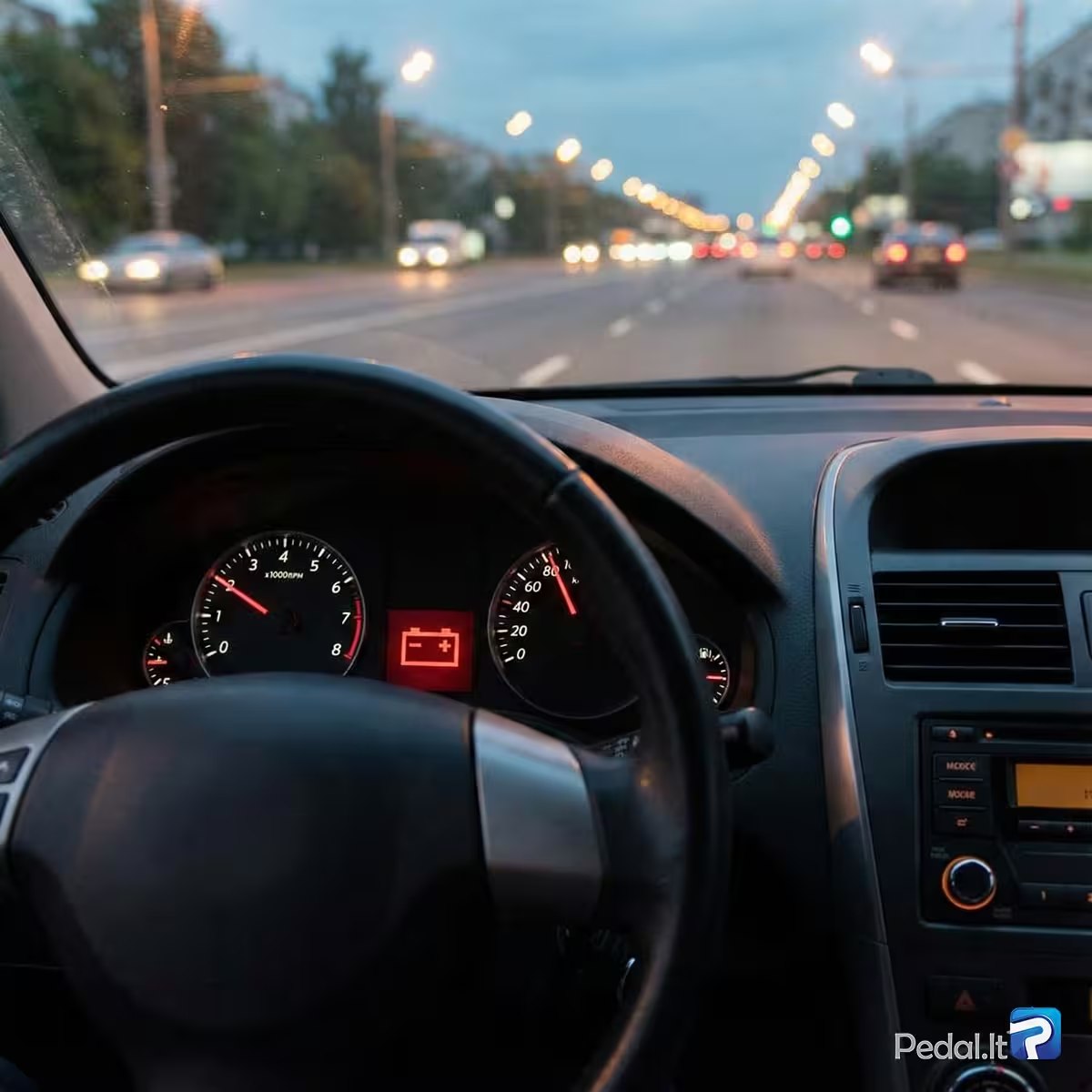
When the engine is running, a red battery warning light on the dashboard indicates:
If the red battery warning light illuminates while the engine is running, it indicates the alternator (generator) has failed and the battery is not being charged.
1. The battery is being overcharged.
2. The battery is completely discharged.
3. The battery is not being charged.
4. The battery's electrolyte level is too low.
What should drivers do if they encounter a pothole on the road that cannot be avoided while traveling at high speed?
When you see a pothole, reduce your speed and try to steer around it. If avoidance is impossible and an impact cannot be prevented, release the brakes just before the pothole and straighten the steering — this reduces the chance of damaging the tire or suspension components.
1. Release the brakes just before hitting the pothole.
2. Accelerate before hitting the pothole.
Your car begins to skid sideways while braking. What should you do?
If the wheels lock and the car begins to skid while braking, you must release the brake pedal. For example, if you brake hard before a bend and lock the wheels, the vehicle will continue moving in its original direction (straight ahead) despite steering input. That can cause you to run off the road or collide with an obstacle. In that situation you must stop braking — which can be difficult, especially for inexperienced drivers.
1. Press the clutch pedal.
2. Release the brake pedal (stop applying the brakes).
3. Apply the brakes more firmly.
Why is it safer to brake without depressing the clutch while driving downhill?
After releasing the accelerator (engine braking), place your foot on the brake pedal and stop without pressing the clutch. This is the most effective braking method, especially in winter when roads are slippery. Braking with the clutch disengaged reduces stopping effectiveness and vehicle stability, increasing the risk of skidding to the side. JB
1. Braking is more effective.
2. The vehicle remains more stable during braking.
3. The tires will not wear out as quickly.
Who has the right of way when the traffic lights at the intersection are not functioning?
Regulation RTR 167: When an intersection is controlled by traffic lights, drivers must obey the light signals regardless of any priority indicated by road signs. If the traffic lights are not operating or the amber (yellow) light is flashing, drivers must follow the priority indicated by the road signs.
1. No one has the right of way.
2. Drivers on the main (priority) road.
3. Drivers making a right turn.
4. Drivers on the side (secondary) road.
Which of the following distances to a vehicle ahead would be unsafe?
RTR 126. The driver must maintain a following distance at speed sufficient to avoid colliding with the vehicle ahead if it brakes, and must leave a lateral gap to ensure traffic safety. It is recommended that the following distance be at least the distance covered in two seconds, or at least half the speedometer reading converted into metres; for example, at 70 km/h the distance should not be less than 35 m, unless traffic conditions require otherwise. Drivers of motor vehicles, tractors and self‑propelled machinery, when overtaking pedestrians or when overtaking or passing cyclists or drivers of electric micromobility vehicles, must leave a lateral clearance of at least 1.0 m if their speed does not exceed 50 km/h, and at least 1.5 m if their speed exceeds 50 km/h. The requirement to maintain the specified lateral distance does not apply on single‑lane roads.
1. Less than the distance covered in two seconds.
2. Less than the distance covered in five seconds.
3. 30 m
4. 50 m
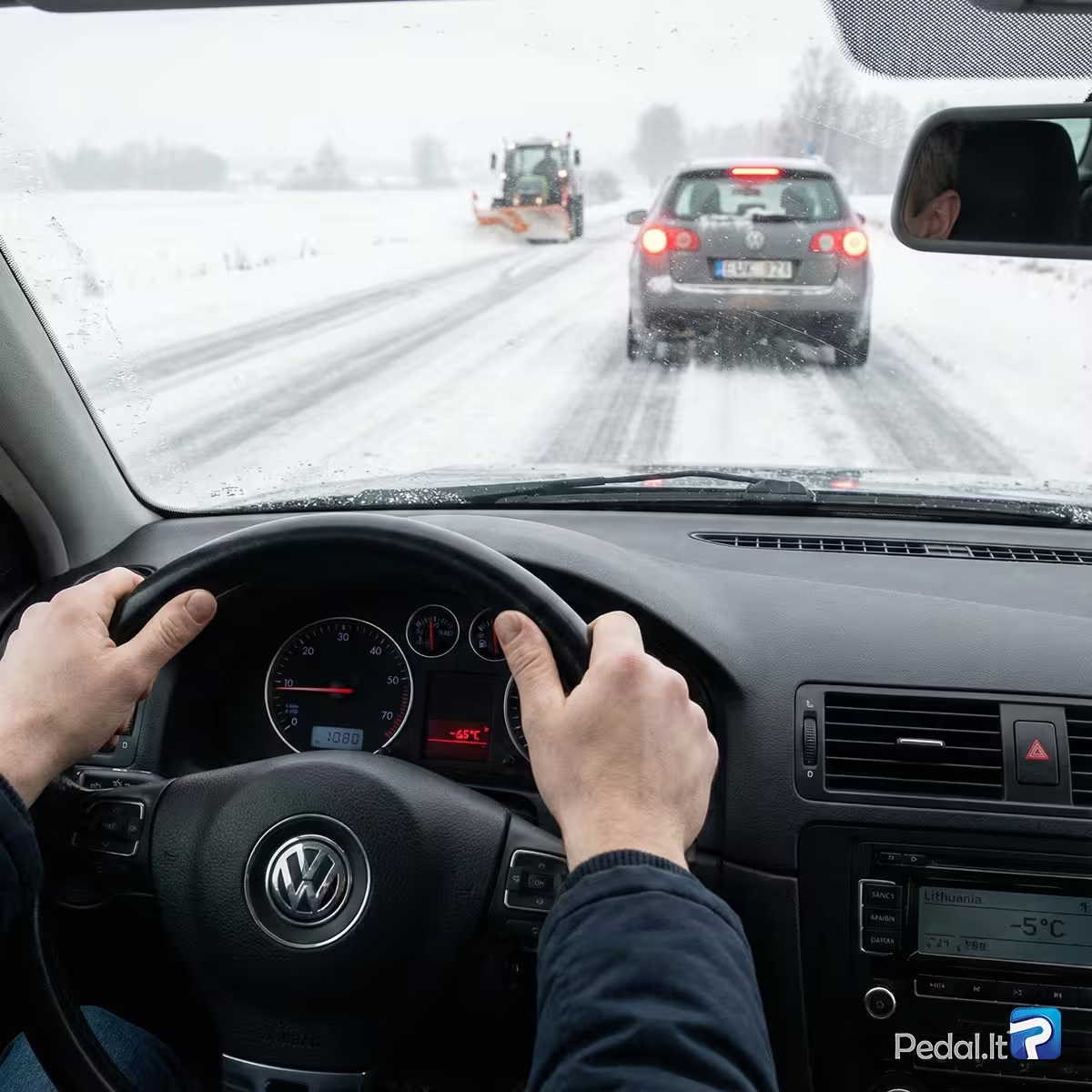
Which factor is considered the primary risk when driving on snowy roads?
1. Driver error (human factor)
2. Adverse weather conditions
3. Slippery road surface
If you brake sharply while driving in heavy traffic:
Braking sharply in heavy traffic is dangerous because drivers following you often do not maintain a safe distance and may collide with your vehicle when you brake suddenly.
1. A vehicle following you may collide with your vehicle.
2. Your brakes could be damaged.
3. That would be a normal braking method.
4. The brake pads might become stuck.
1 of 30 Task
Time left: 00:00:00
1
2
3
4
5
6
7
8
9
10
11
12
13
14
15
16
17
18
19
20
21
22
23
24
25
26
27
28
29
30