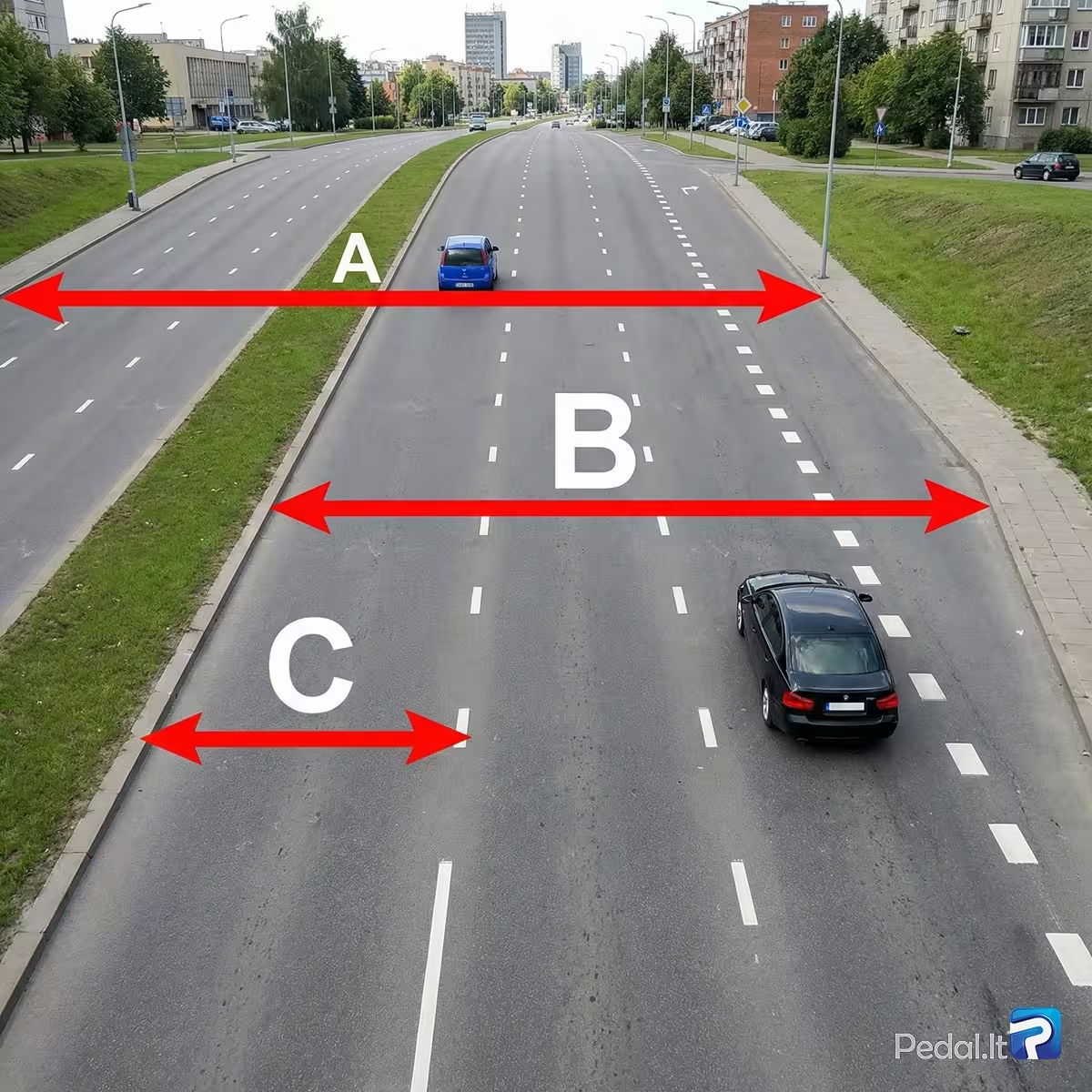
Which letter designates the entire carriageway of the road?
A central reservation is not part of the carriageway. A carriageway is the portion of a road intended for vehicular traffic.
1. A.
2. B.
3. C.
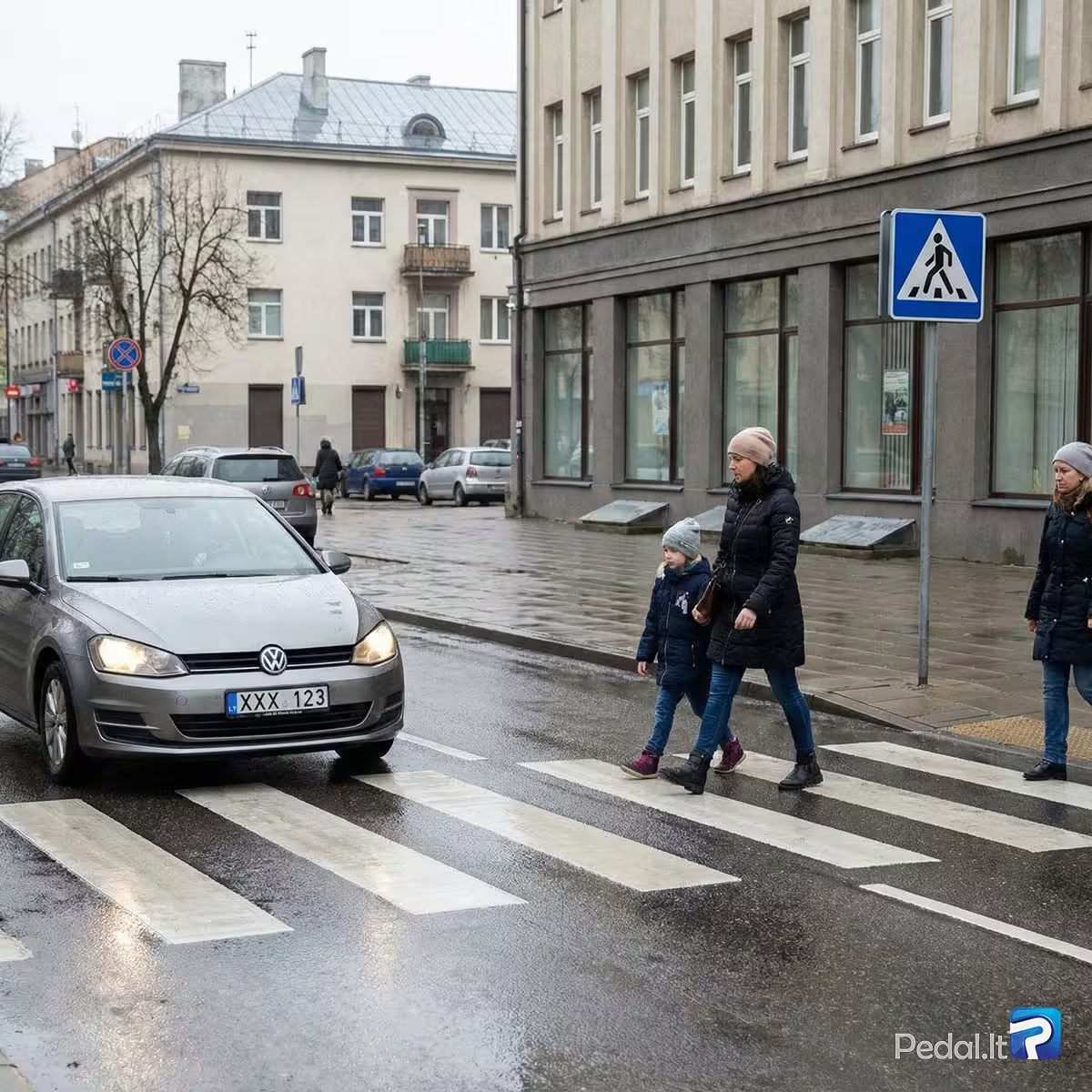
At this pedestrian crossing, you must yield to:
RTR 30. When approaching an uncontrolled pedestrian crossing, a driver must slow down or stop before the crossing to yield to pedestrians who have stepped into any lane, are walking in any lane, or are standing at the edge of the carriageway waiting to step into a lane in the direction of the vehicle's travel (or into any lane on a single-lane road with traffic in both directions). Drivers must exercise extra caution at night, in poor visibility, or when the crossing is not clearly visible from the driver's position, and must ensure there are no pedestrians entitled to priority at the crossing.
1. Pedestrians who have stepped into the lane carrying oncoming traffic.
2. Pedestrians standing at the curb adjacent to the crossing.
3. Pedestrians who have stepped into the lane in which you are travelling.
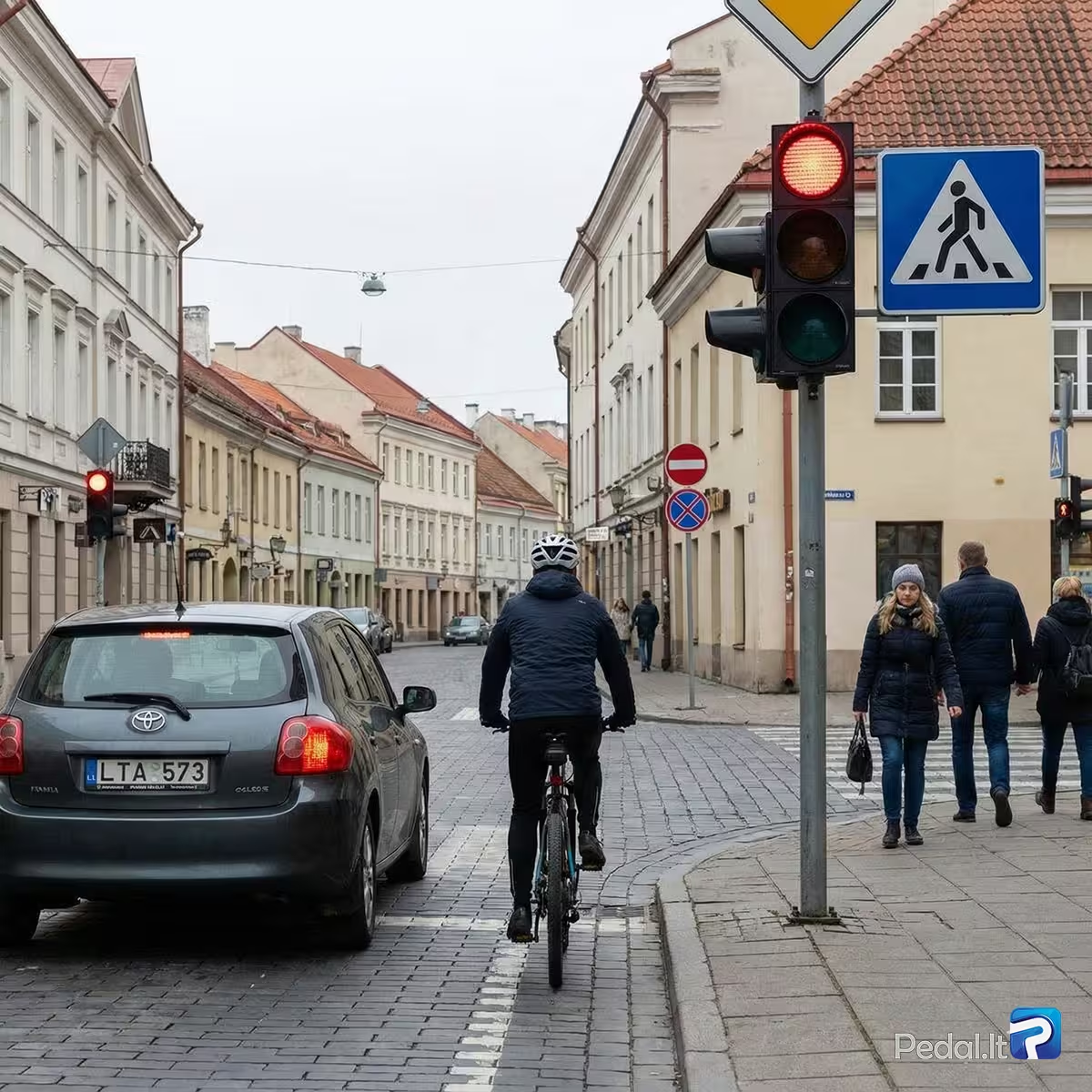
Road users are required to:
RTR 5. Road users must be familiar with the Law on Road Traffic Safety of the Republic of Lithuania, be acquainted with these Rules, and comply with them. JB
1. Be familiar with the directives of the General Commissioner of Police.
2. Know and comply with the traffic rules.
3. Be familiar with the Law on Road Traffic Safety.
4. Know the regulations of the Lithuanian Transport Safety Administration.
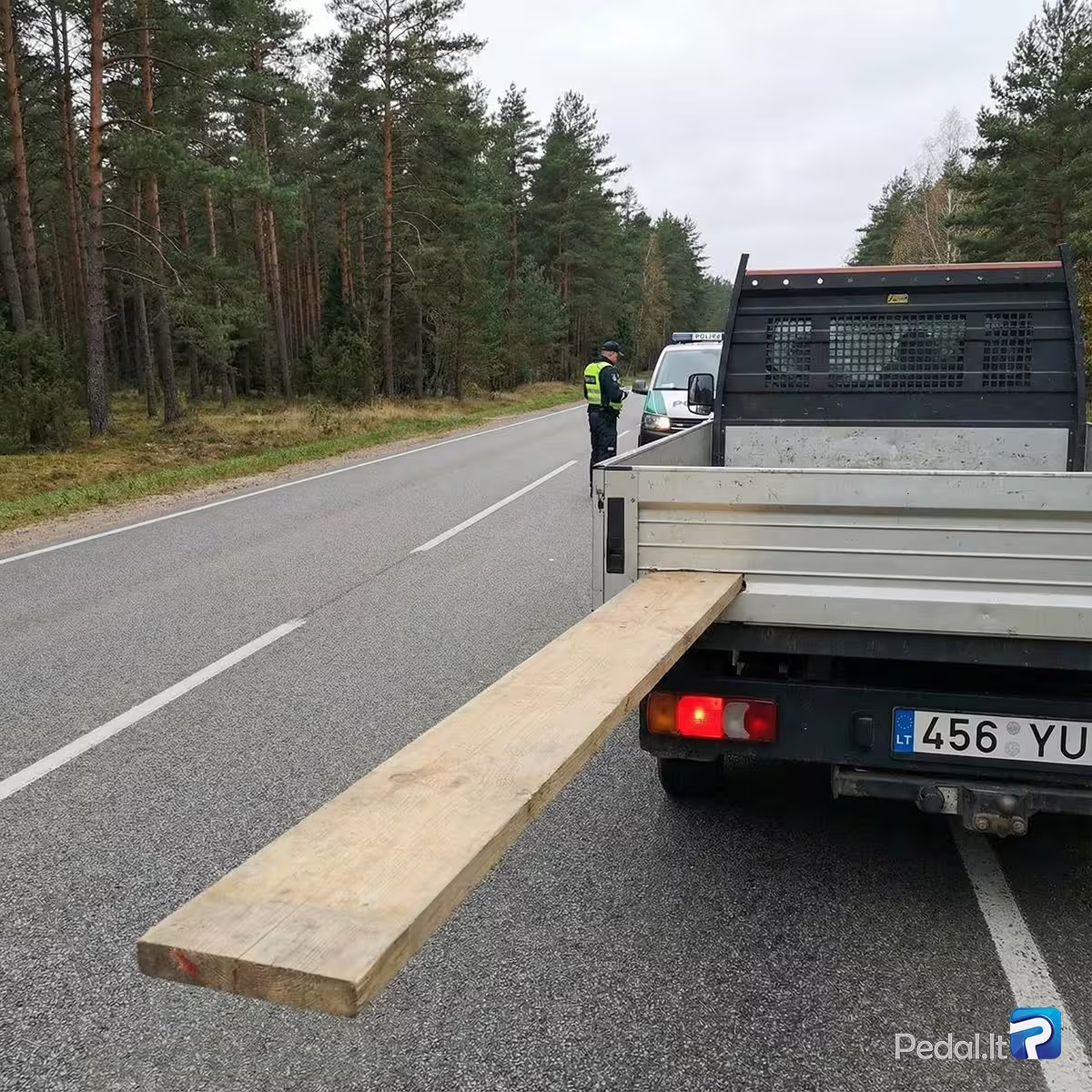
What is the maximum distance a load may extend beyond the rear of a vehicle without requiring marking?
Paragraph 210 of the Road Traffic Rules states that a load must be marked if it extends more than 1 metre beyond the front or rear of the vehicle. A load that extends up to and including 1 metre may remain unmarked; any extension beyond 1 metre must be marked. RTR 210: Any motor vehicle carrying a load which extends beyond the front and rear of the vehicle by more than 1 m or beyond the side of the vehicle must have the extremities of the load marked as provided for in Annex 4 to these Rules.
1. 0.5 m.
2. 1 m.
3. 1.5 m.
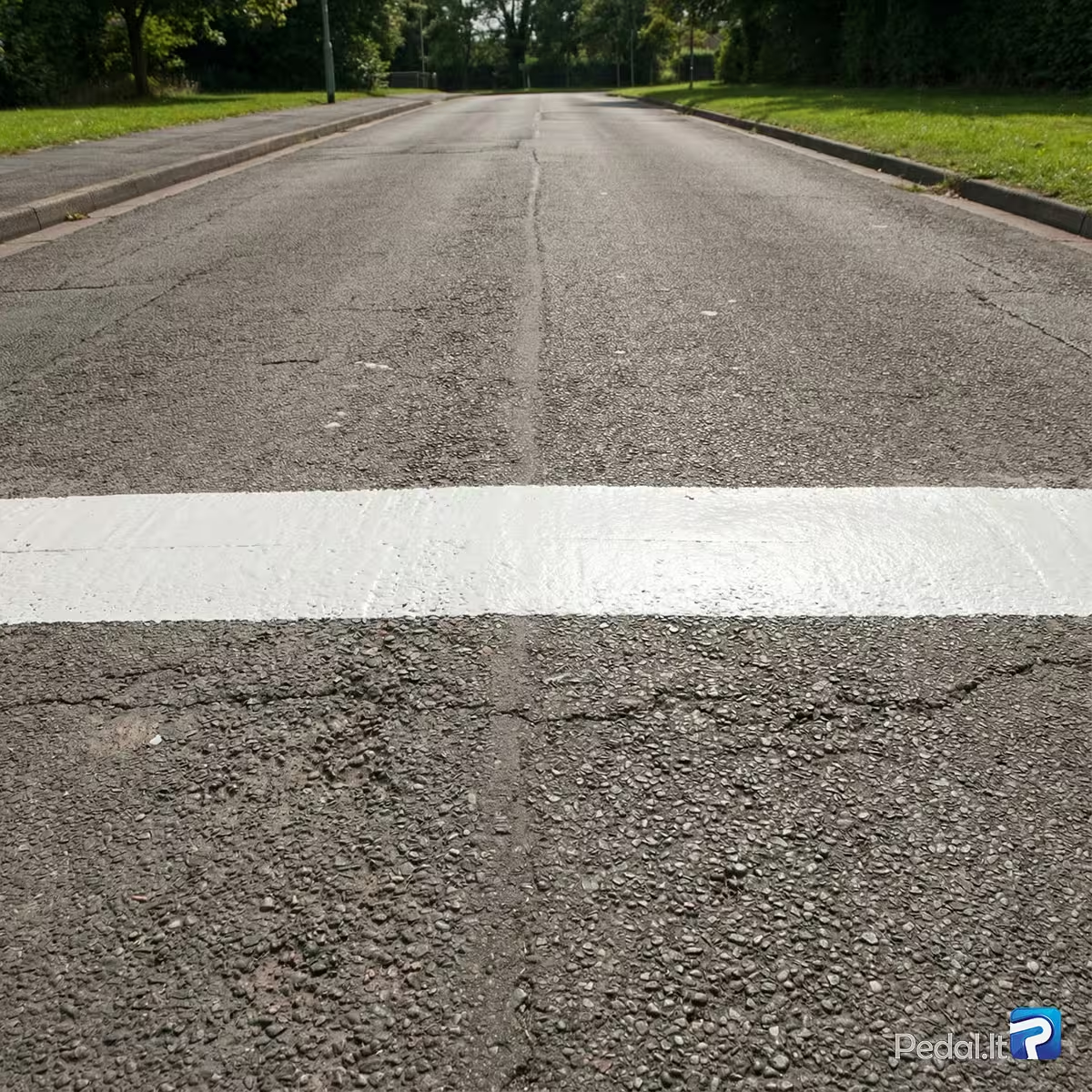
What is the name of the wide line drawn across the carriageway?
I. Horizontal marking: 1.11. A WIDE LINE is drawn across the carriageway (the 'Stop' line) and indicates the location where drivers must stop before a 'STOP' sign (at uncontrolled intersections), a red traffic light, or a stop signal given by a traffic officer.
1. The 'Stop' line.
2. A wide solid line.
3. A solid line.
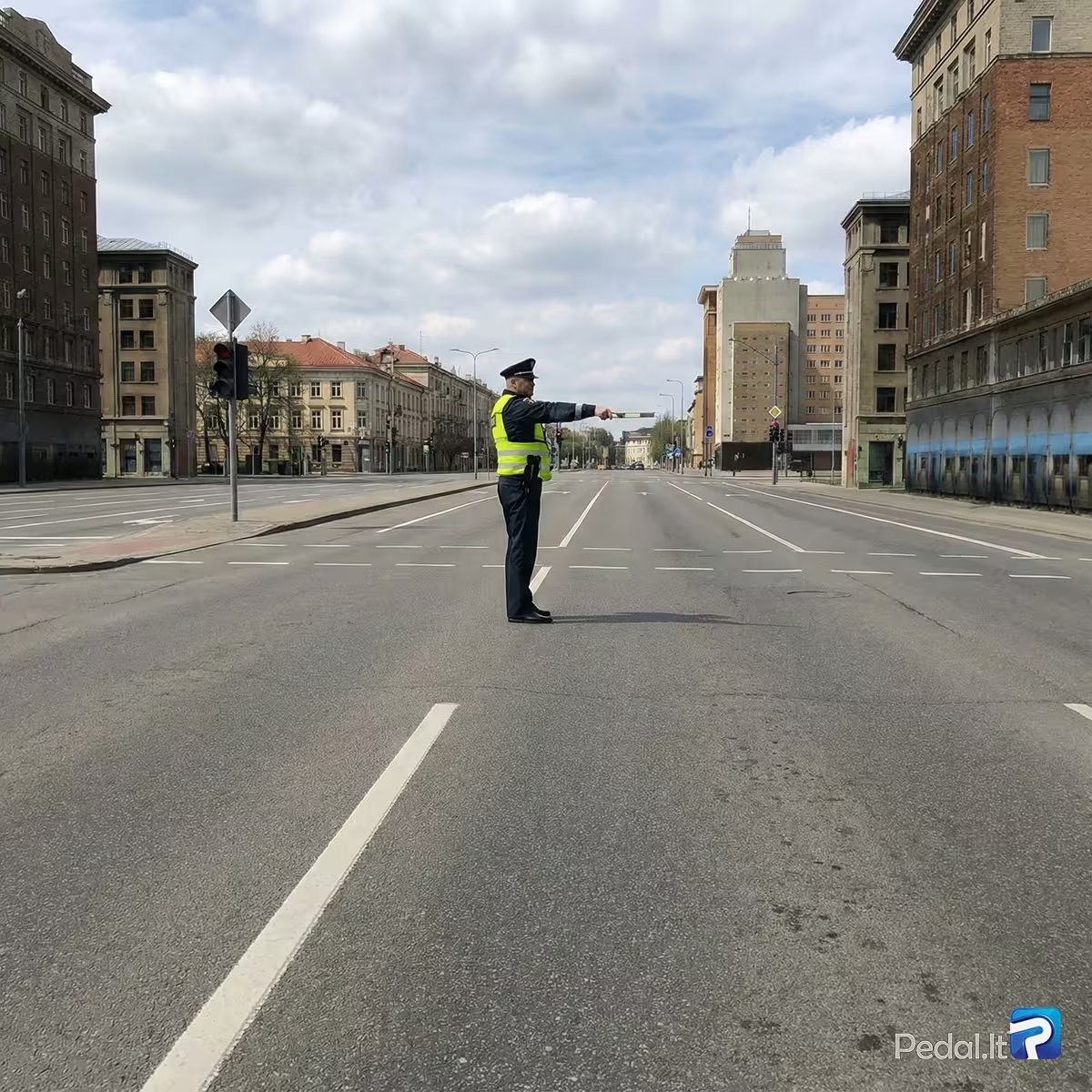
If you are located to the traffic officer's right and the officer's right arm is extended forward, which directions are you permitted to proceed in?
77.2. Right arm extended forward: 77.2.1. Vehicles to the officer's left may proceed in any direction; 77.2.2. Vehicles in front of the officer may proceed only to the right; 77.2.3. Vehicles behind the officer and those on his right must not proceed.
1. To the right.
2. Straight ahead.
3. You are not permitted to proceed.
4. To the left or make a U-turn.
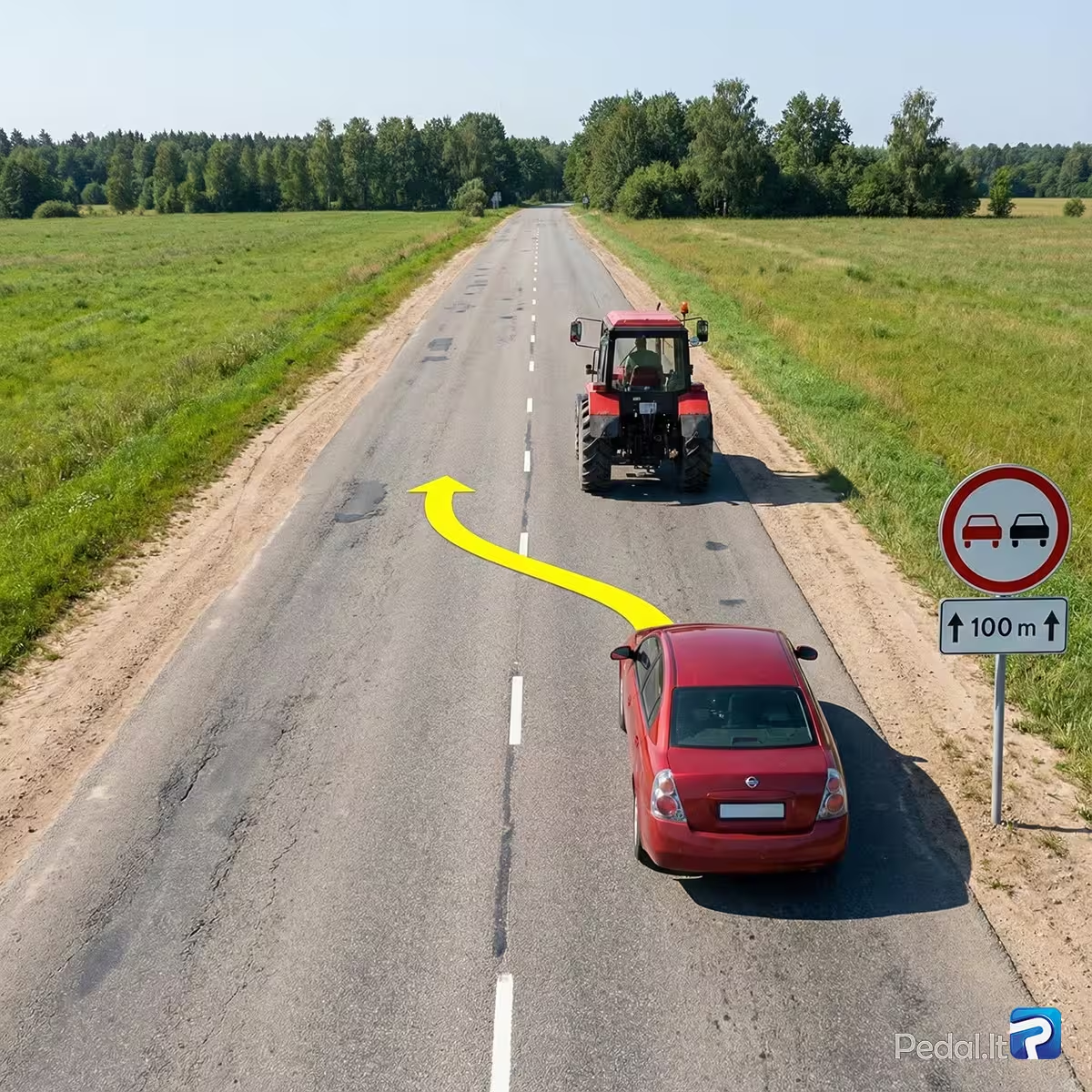
Is overtaking permitted?
Although the road sign normally prohibits overtaking, overtaking vehicles traveling at speeds under 30 km/h is permitted provided it can be done safely. Road sign 325 — “Overtaking prohibited” forbids overtaking, except for individual vehicles (or individual vehicle combinations) traveling at speeds under 30 km/h. Road sign 805 — “Validity zone ahead” indicates the length of the zone beyond the sign during which a hazardous road section or other associated signs remain in effect.
1. No — overtaking is prohibited.
2. Yes — overtaking is permitted if the tractor is traveling at less than 30 km/h.
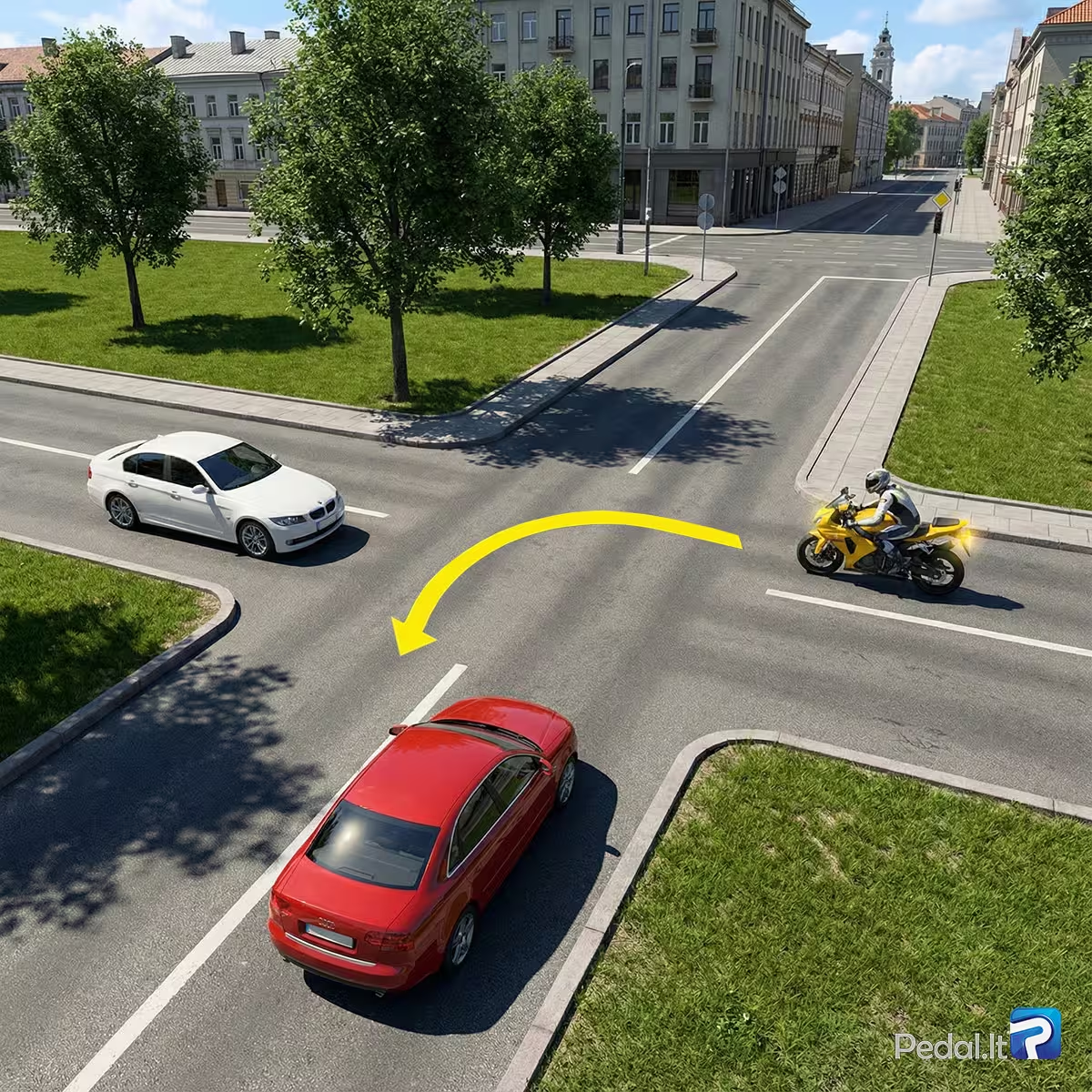
What is the motorcycle's order of passage through the intersection? The rider is turning left.
At an uncontrolled intersection of roads with equal priority, drivers must yield to vehicles approaching from the right when their paths intersect. A vehicle turning left must give way to oncoming traffic that is going straight or turning right. In this scenario, the red car goes first because the motorcycle, which had entered the intersection, stopped to yield. The white car proceeds next, since it no longer has a vehicle to its right, and finally the motorcyclist completes the maneuver — the motorcycle goes third. (RTR 155; RTR 157.)
1. First.
2. Third.
3. Second.
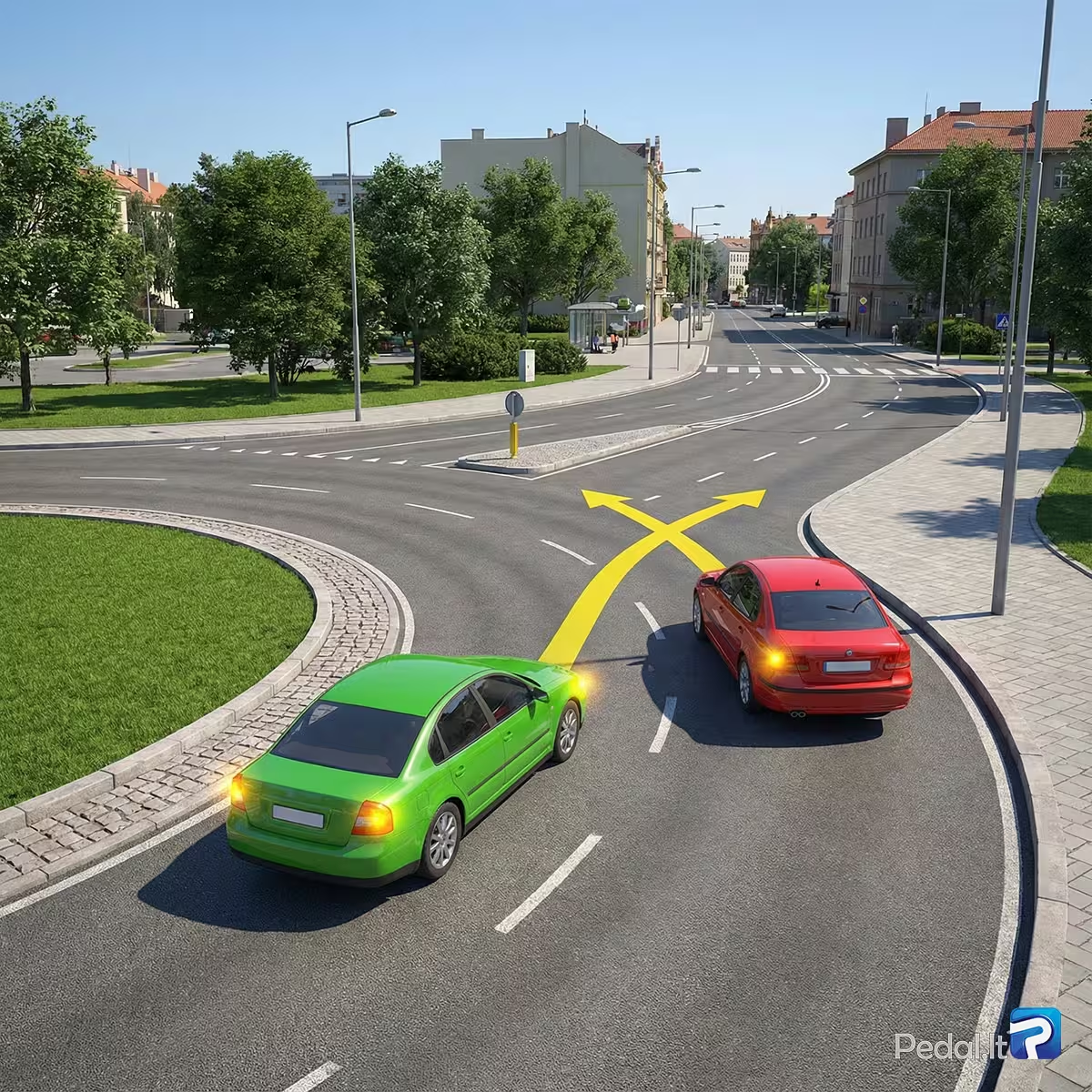
Which driver is violating the traffic rules?
There are no lane direction signs; therefore the driver of the red vehicle may go straight or turn right. When changing lanes, the driver of the green vehicle must yield. RTR 104. When changing lanes, a driver must yield to vehicles moving in the same direction in the adjacent lane. If vehicles moving in the same direction change lanes simultaneously, a driver must yield to the vehicle on the right, except in the cases specified in Paragraph 112 of the Rules. RTR 112. If an acceleration lane is provided for entering the road, the driver must use that lane and merge into the main traffic flow (change lanes and move into the adjacent lane), yielding to vehicles already in that flow or to vehicles changing lanes toward the deceleration lane. RTR 106. Before turning right, left, or making a U-turn (except when entering an intersection with circular traffic), a driver must move in advance to the edge of the carriageway designated for that direction. Road signs and/or road markings may indicate otherwise.
1. The driver of the red vehicle.
2. The driver of the green vehicle.
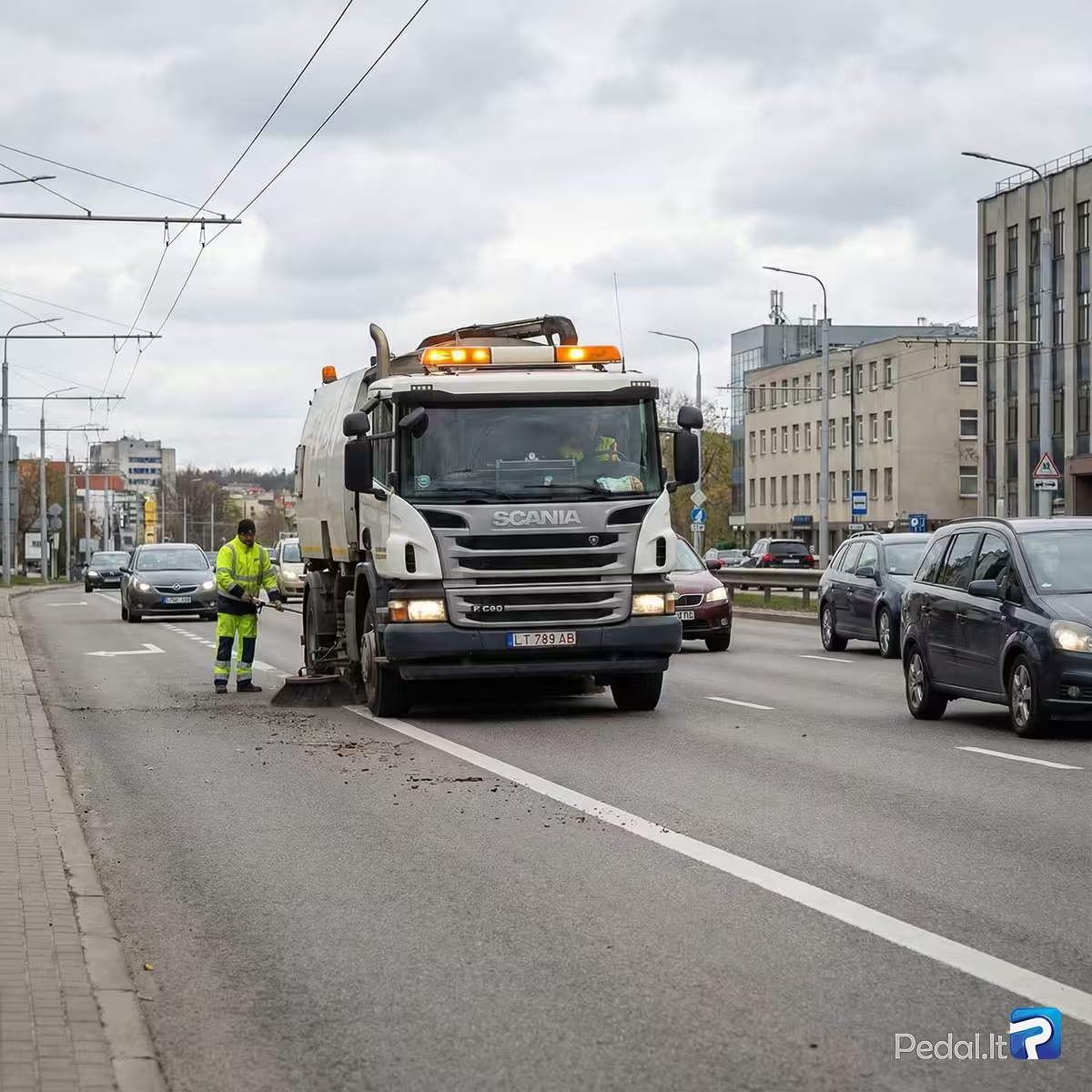
Are drivers of motor vehicles equipped with orange flashing lights permitted to disregard road-marking lines while performing work on the roadway?
Regulation RTR 188: An orange flashing light may be used only when the vehicle obstructs other road users—for example, when the vehicle's loaded or unloaded dimensions exceed permitted limits; when performing work on the roadway; when stopping or standing; when moving at very low speed; when escorting an organized group of cyclists; or when transporting hazardous goods. An orange flashing light does not confer priority; it merely attracts attention and warns other road users of a potential hazard. While driving, standing, or working on the road, drivers of vehicles displaying orange flashing lights must ensure they do not compromise traffic safety.
1. Yes — provided doing so does not jeopardize traffic safety.
2. No — they are not allowed to do so.
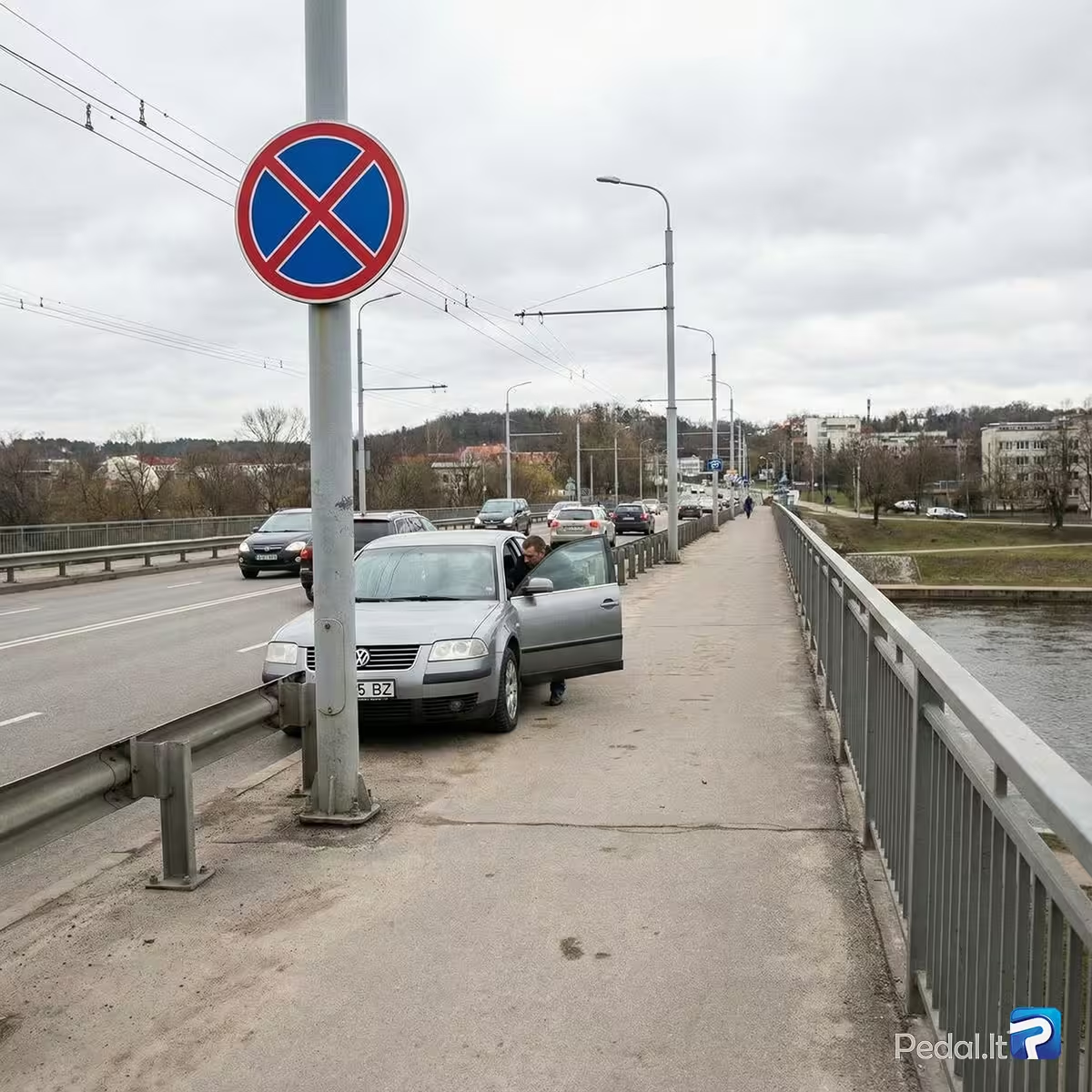
Are drivers permitted to stop or park their vehicles on a bridge if they do not obstruct traffic flow?
RTR – 150. Standing and parking are prohibited: 150.3 on and under bridges, viaducts and flyovers — except where parking is expressly permitted by road signs indicating a parking space — and in tunnels.
1. Yes — it is permitted.
2. Parking is permitted only where road signs explicitly designate a parking space.
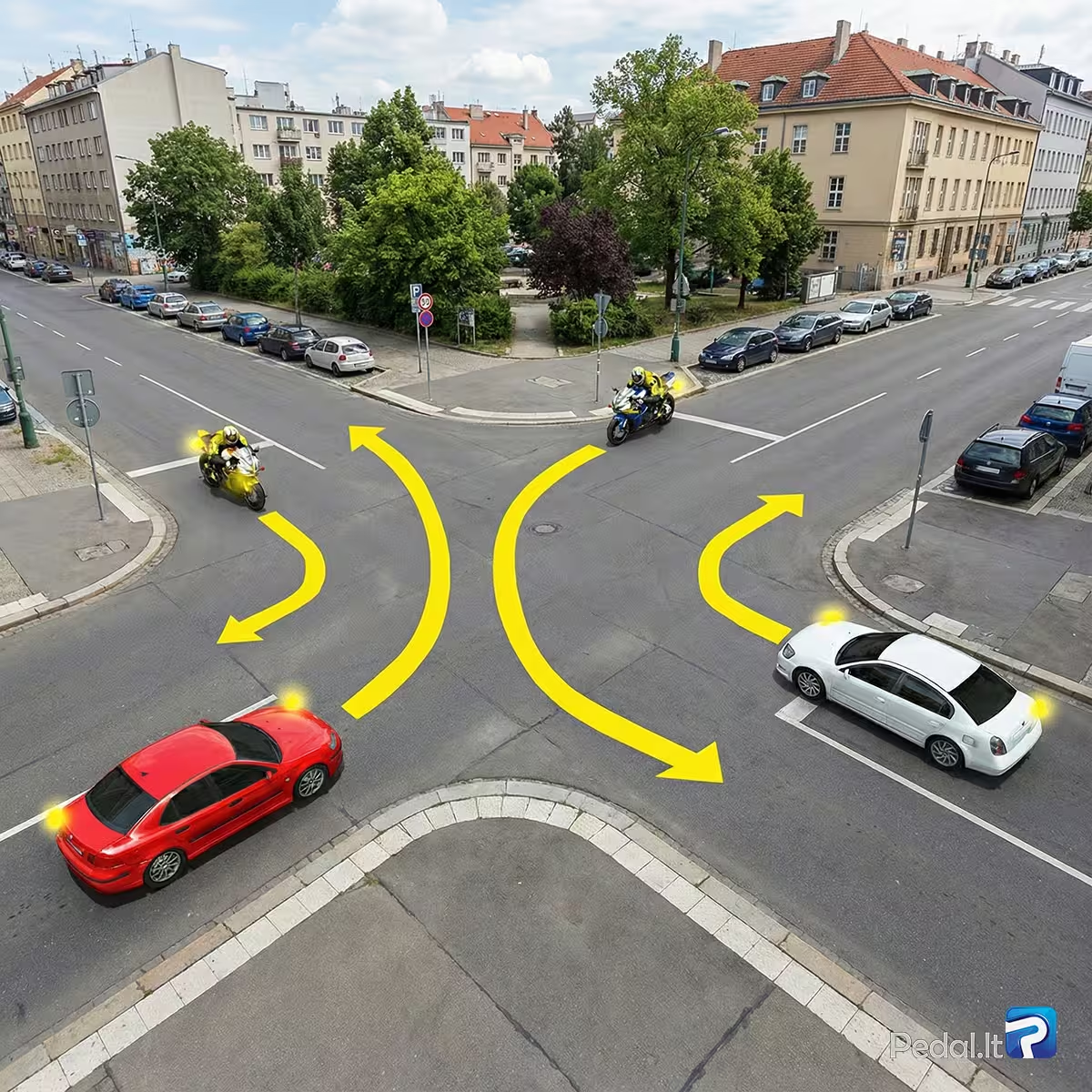
At an uncontrolled intersection, if the paths of the vehicles do not cross, which vehicle has the right of way?
If the vehicles' paths do not intersect, they may proceed simultaneously.
1. The vehicle approaching from the right.
2. The vehicle approaching from the left.
3. All vehicles may proceed simultaneously.
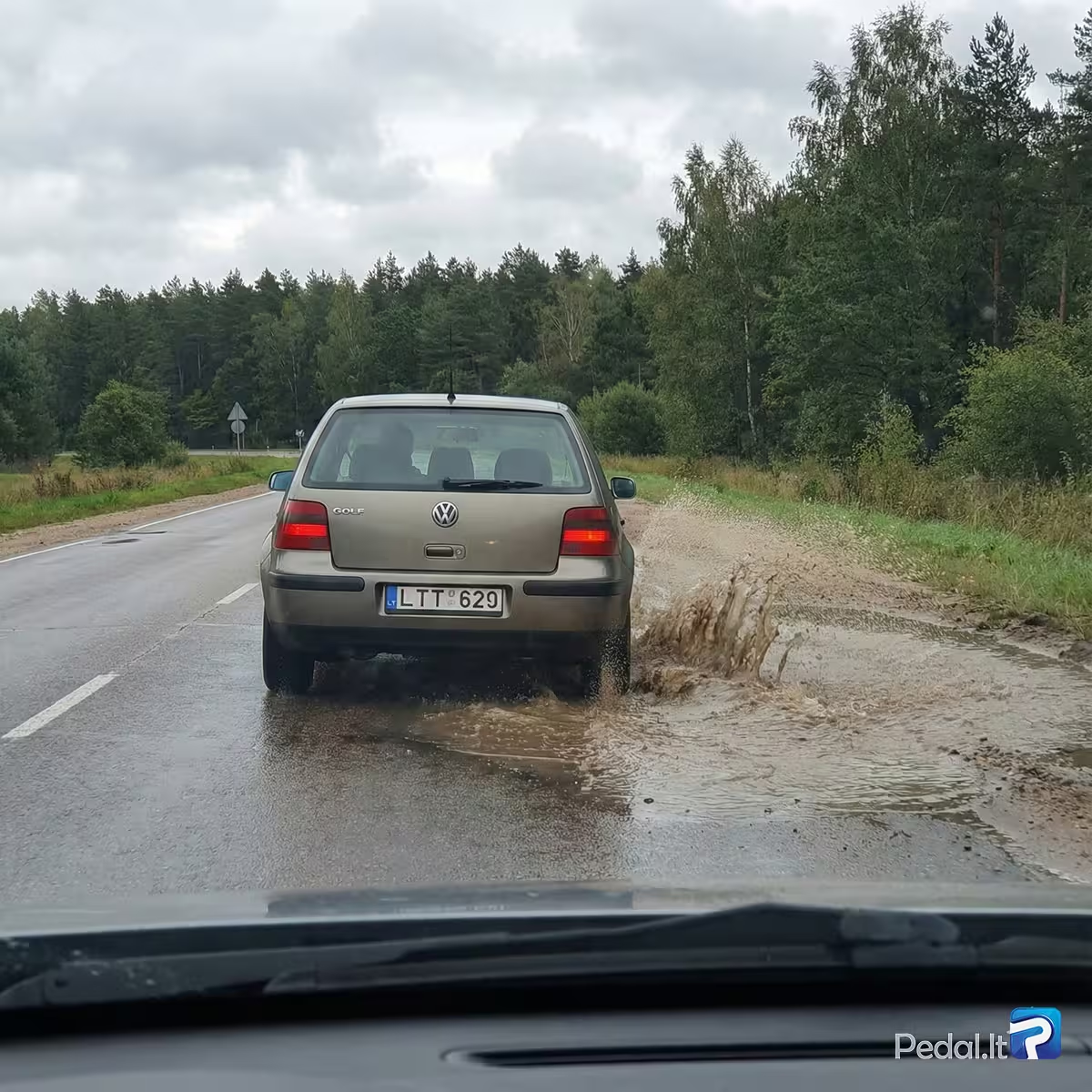
If either the left or right wheel of your vehicle has entered a body of water (for example, a puddle), you must:
When a wheel travels through standing water, the vehicle can aquaplane (ride on a layer of water), causing loss of traction and possible skidding. Hold the steering wheel firmly and gradually reduce speed to regain traction and maintain control.
1. Apply the brakes immediately.
2. Grip the steering wheel firmly.
3. Increase your speed.
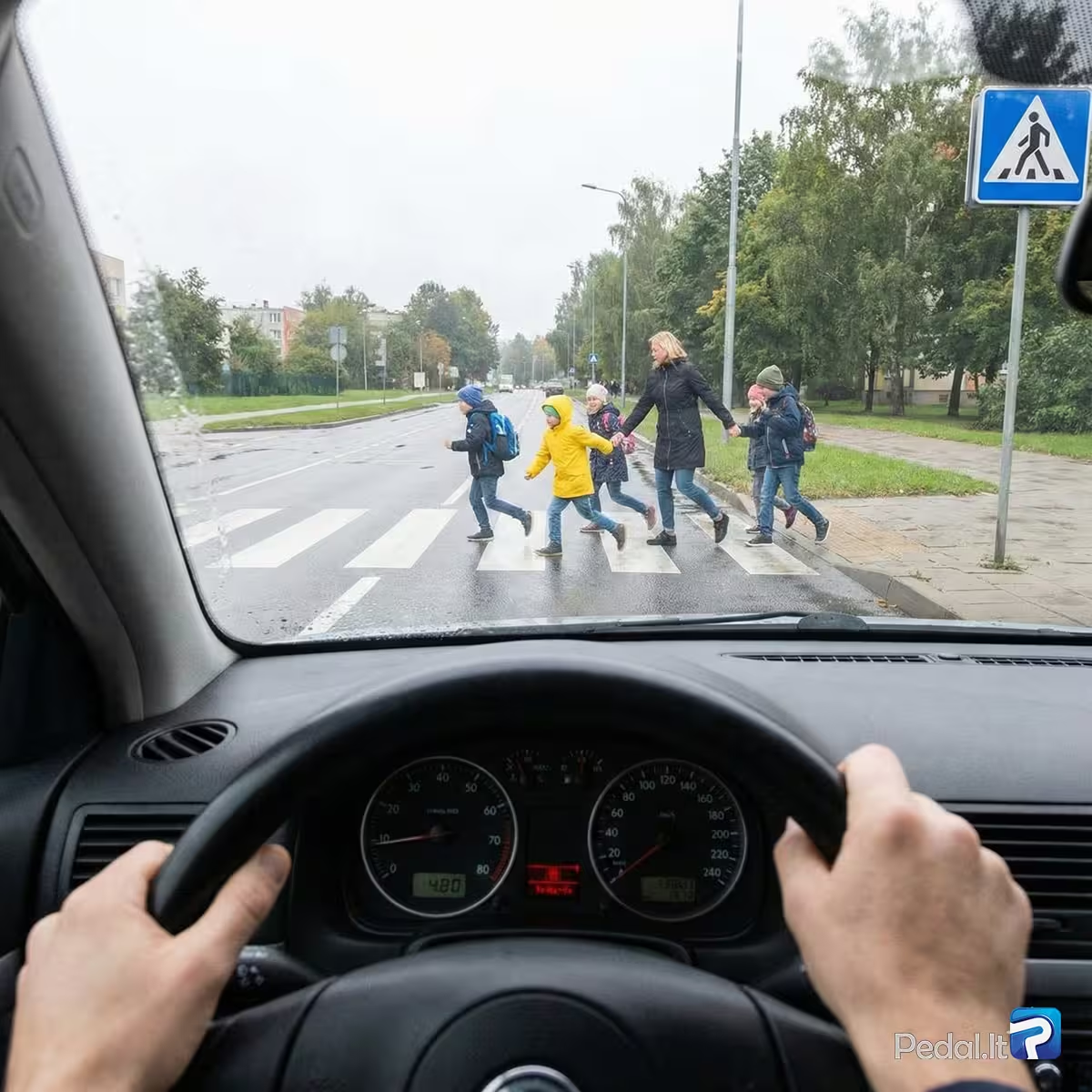
What should a driver be aware of about children's behavior when they cross a pedestrian crossing?
Drivers should be prepared for unexpected behavior from children at pedestrian crossings. When children act predictably and responsibly, it improves road safety.
1. Children may suddenly step onto the pedestrian crossing.
2. Children may stop or hesitate while on the pedestrian crossing.
3. Children behave predictably and in an orderly manner.
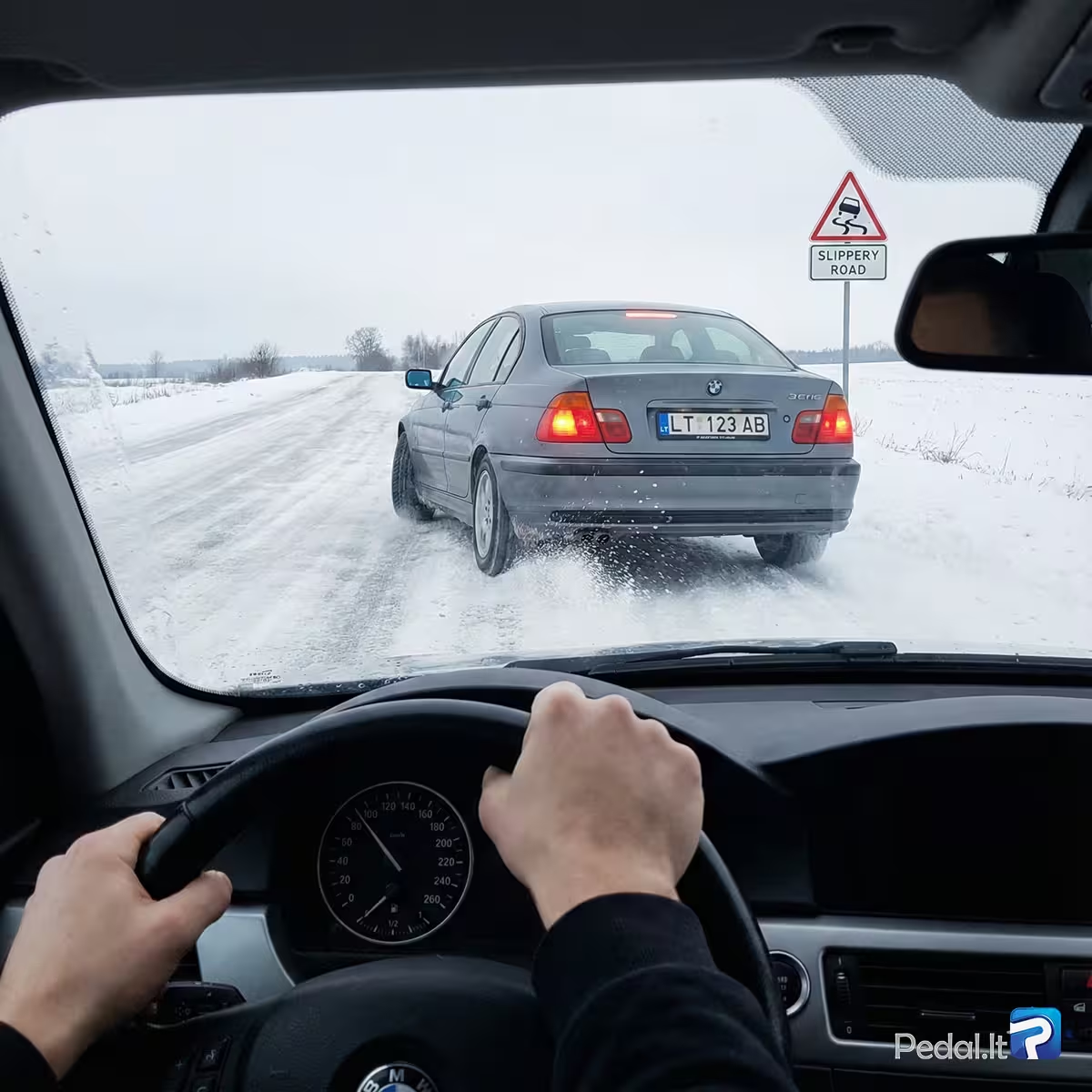
How dangerous is a sudden increase in engine RPM while driving on a slippery road?
If the road surface is slippery or the engine delivers strong torque and the revs increase abruptly, the driven wheels can spin. When the driven wheels are at the rear, the rear axle may lose traction; when they are at the front, the front axle may lose traction, which can cause the vehicle to lose stability and skid.
1. The fuel filter may fail.
2. The fuel pump may fail.
3. If the tractive force of the wheels exceeds the available grip with the road, the vehicle can lose stability and begin to slide.
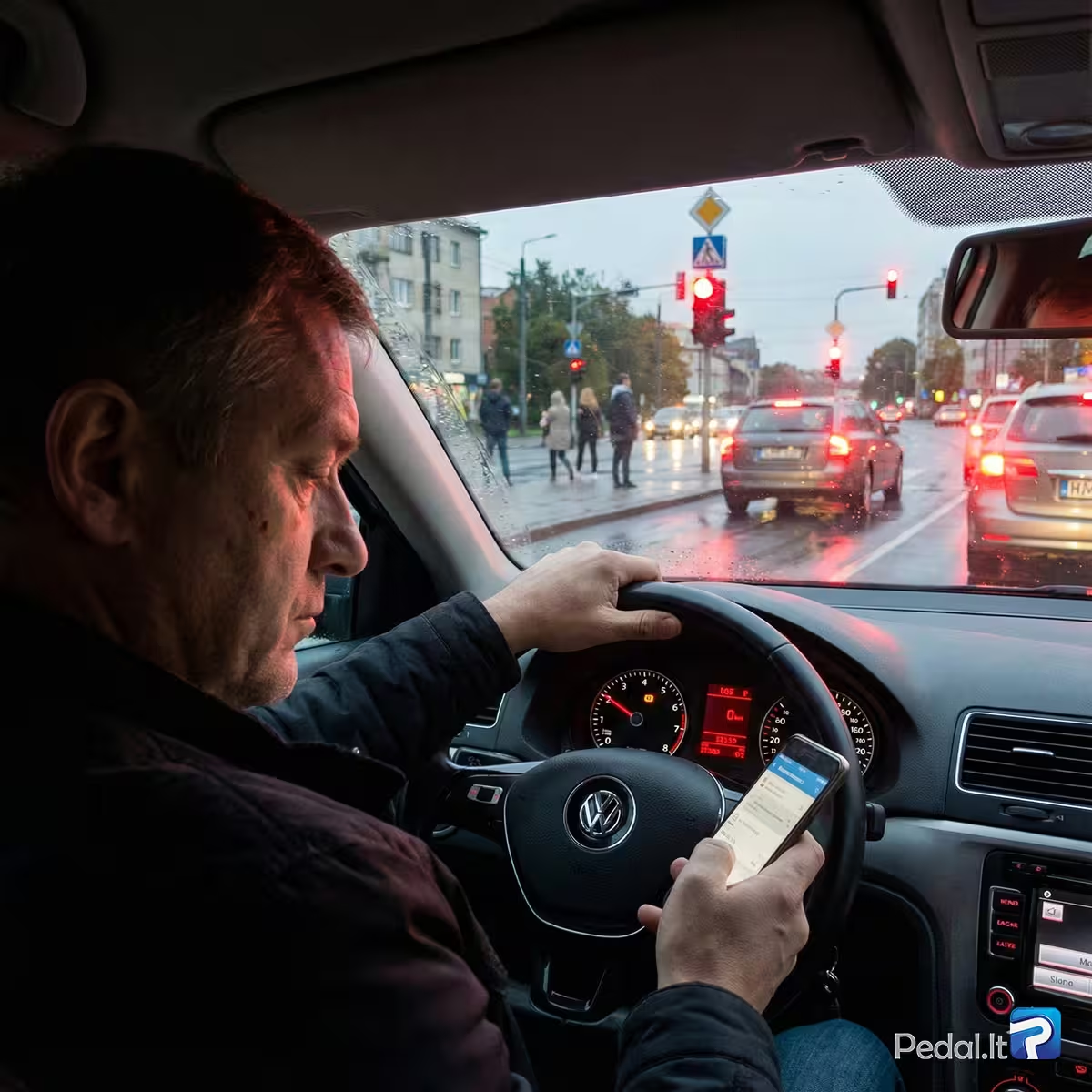
A driver's reaction time is affected by:
The driver's reaction time is delayed by illness, fatigue, or the influence of alcohol or drugs. Distraction and poor concentration while driving also lengthen reaction time, and reaction speed typically decreases with age. RTR 14. Driving is prohibited if you are not authorized to operate the vehicle, or if you are intoxicated or under the influence of narcotic, psychotropic or other psychoactive substances. A person who is tired or ill must not drive if doing so could endanger road safety. A vehicle must not be entrusted to anyone affected by these factors or without the required authorization for that vehicle type. When operating a vehicle, the driver must comply with the requirements shown on their driving licence.
1. Illness.
2. Fatigue.
3. Alcohol consumption.
4. Emotional state.
.avif)
If, when starting to move, your vehicle's wheels spin while the vehicle remains stationary:
To drive a motor vehicle economically and sensibly, begin moving smoothly and steadily. Where possible, reduce your speed gradually and avoid unnecessary abrupt actions unless they are essential (e.g., emergency braking because of an unexpected obstacle on the road).
1. It is uneconomical — it increases fuel consumption and accelerates tyre wear.
2. The tyre squeal or wheel spin disturbs other road users.
3. It is regarded as normal and acceptable.
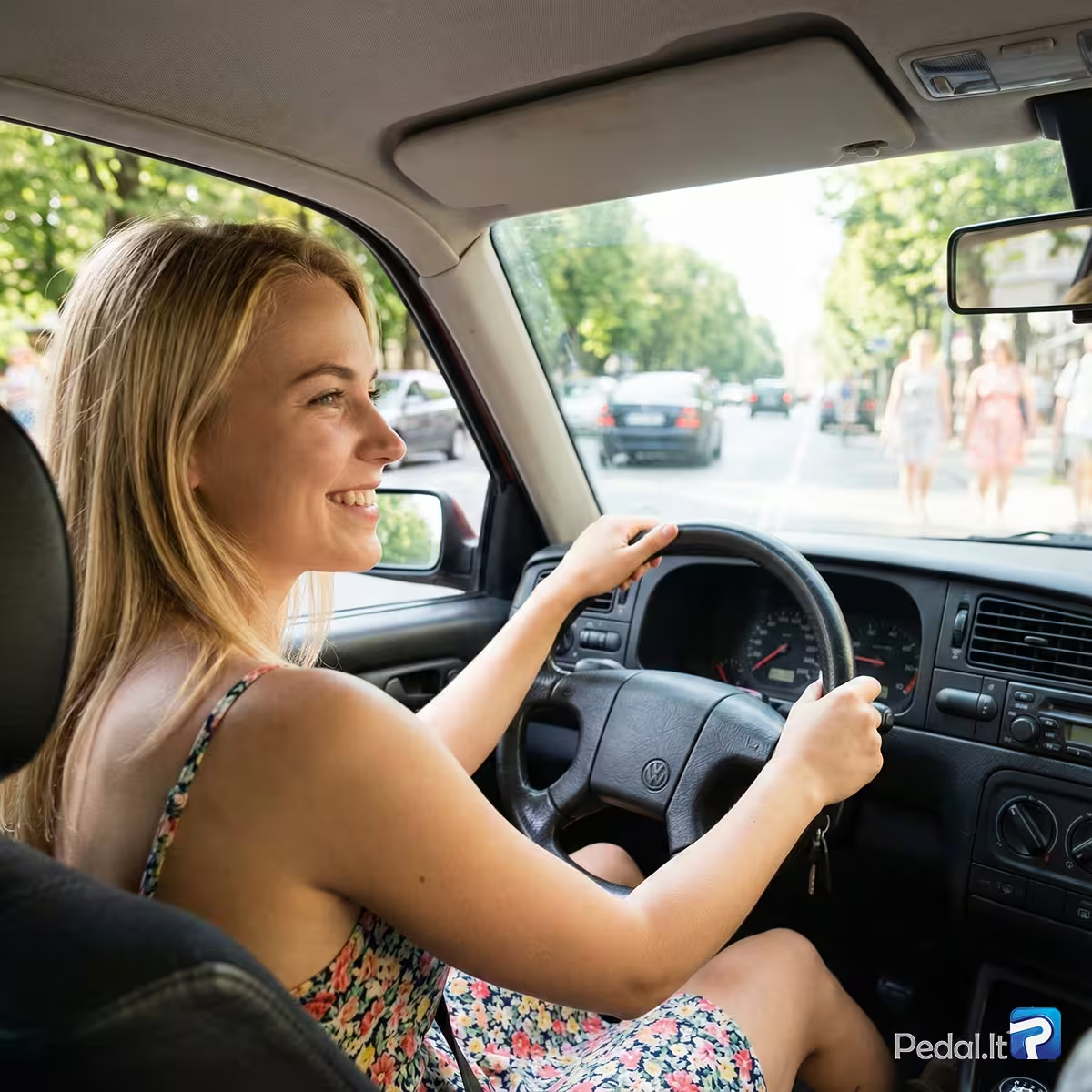
What are common causes of increased fuel consumption while driving?
Underinflated tires are the most common factor directly affecting fuel consumption; incorrect tire pressure can increase consumption by up to about 4%—both too little and too much pressure can have an effect. Check tire pressure when the tires are cold, because driving warms the rubber and raises the pressure. Carrying luggage on the roof increases aerodynamic drag and therefore fuel consumption. Frequent stop-and-go driving also increases fuel use. JB
1. Low tire pressure.
2. Driving with luggage mounted on the roof.
3. Short trips with frequent stops and starts.
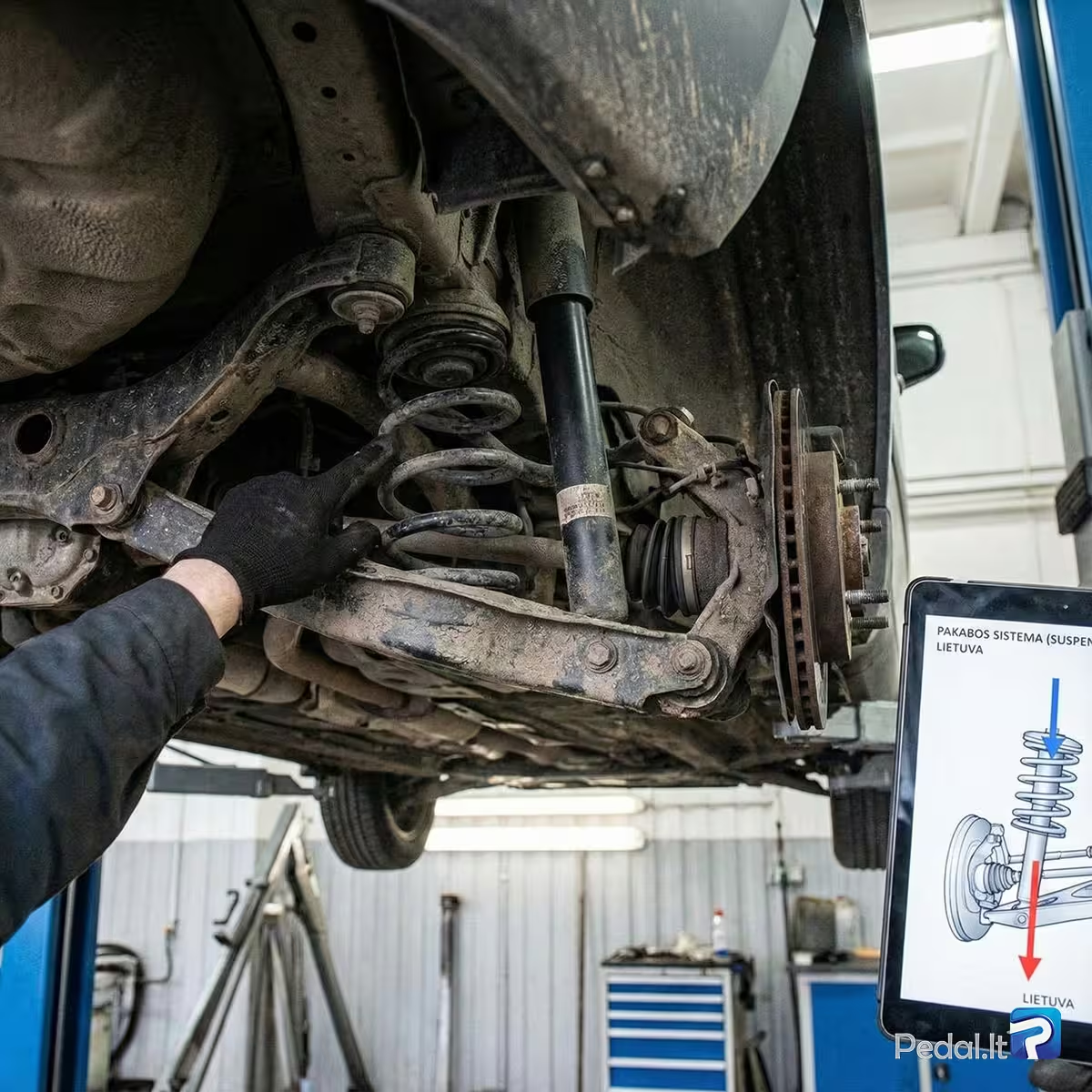
What is the function of a vehicle's suspension system?
The function of a vehicle suspension system is to convert bumps and shocks transmitted to the wheels, with the aid of shock absorbers, into minor oscillations of the vehicle body, providing comfort for driver and passengers. The suspension reduces body oscillations, and when functioning properly it enhances driving safety.
1. To improve ride comfort for the driver and passengers.
2. To convert bumps and shocks transmitted to the wheels into minor oscillations of the vehicle body.
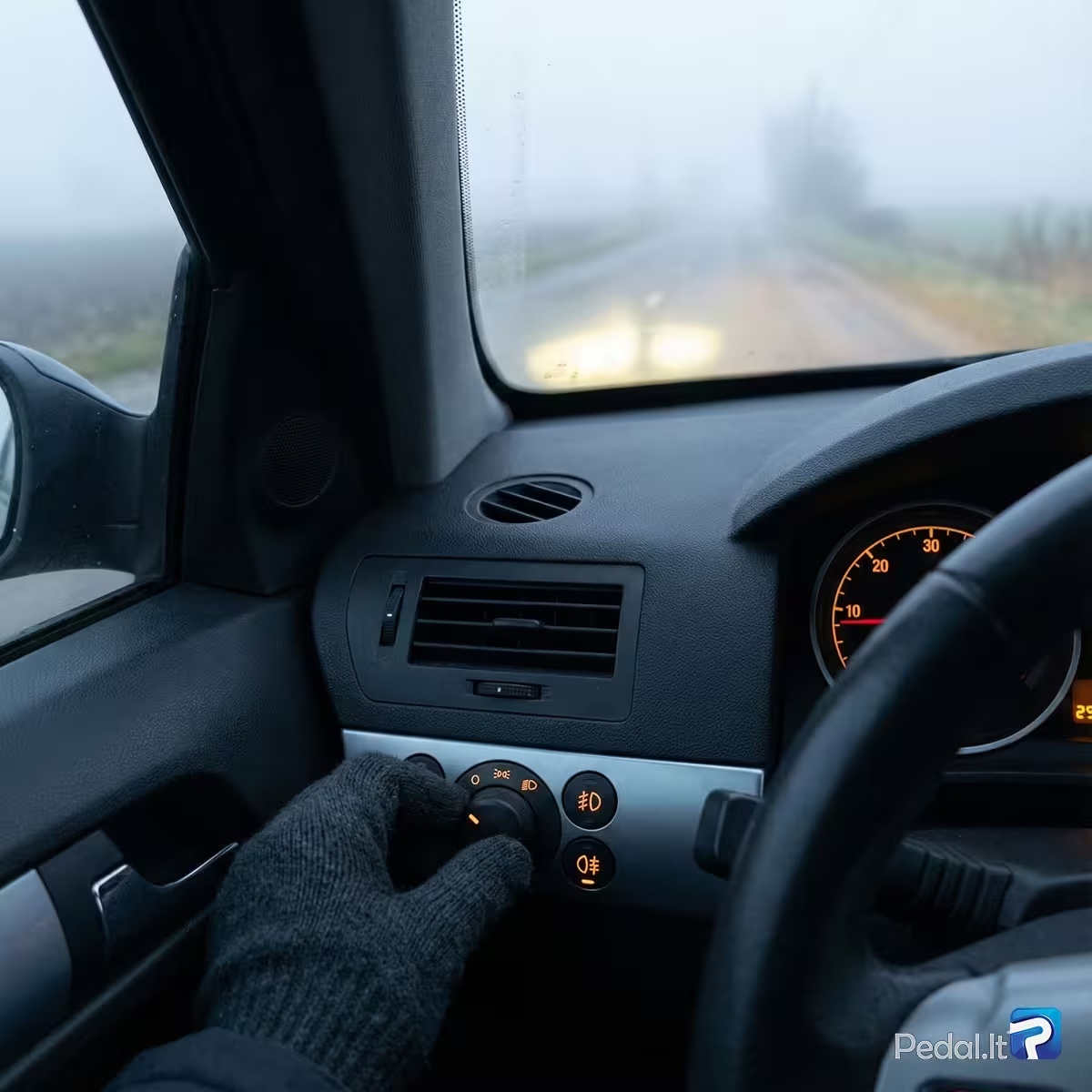
Fog lamps must be capable of being switched on:
Technical requirements for vehicles operated on a road, Chapter IV, Paragraph 22: If fog lamps are fitted, they must only be capable of being switched on and off using an appropriate switch when the position lamps are switched on. Additionally, fog lamps must be capable of being switched off independently of any other lights.
1. When the main-beam (high‑beam) headlamps are switched on.
2. When the position (parking) lamps are switched on.
3. Only when the position lamps are switched on; they must be able to be turned off independently of any other lights.
4. When the dipped‑beam (low‑beam) headlamps are switched on.
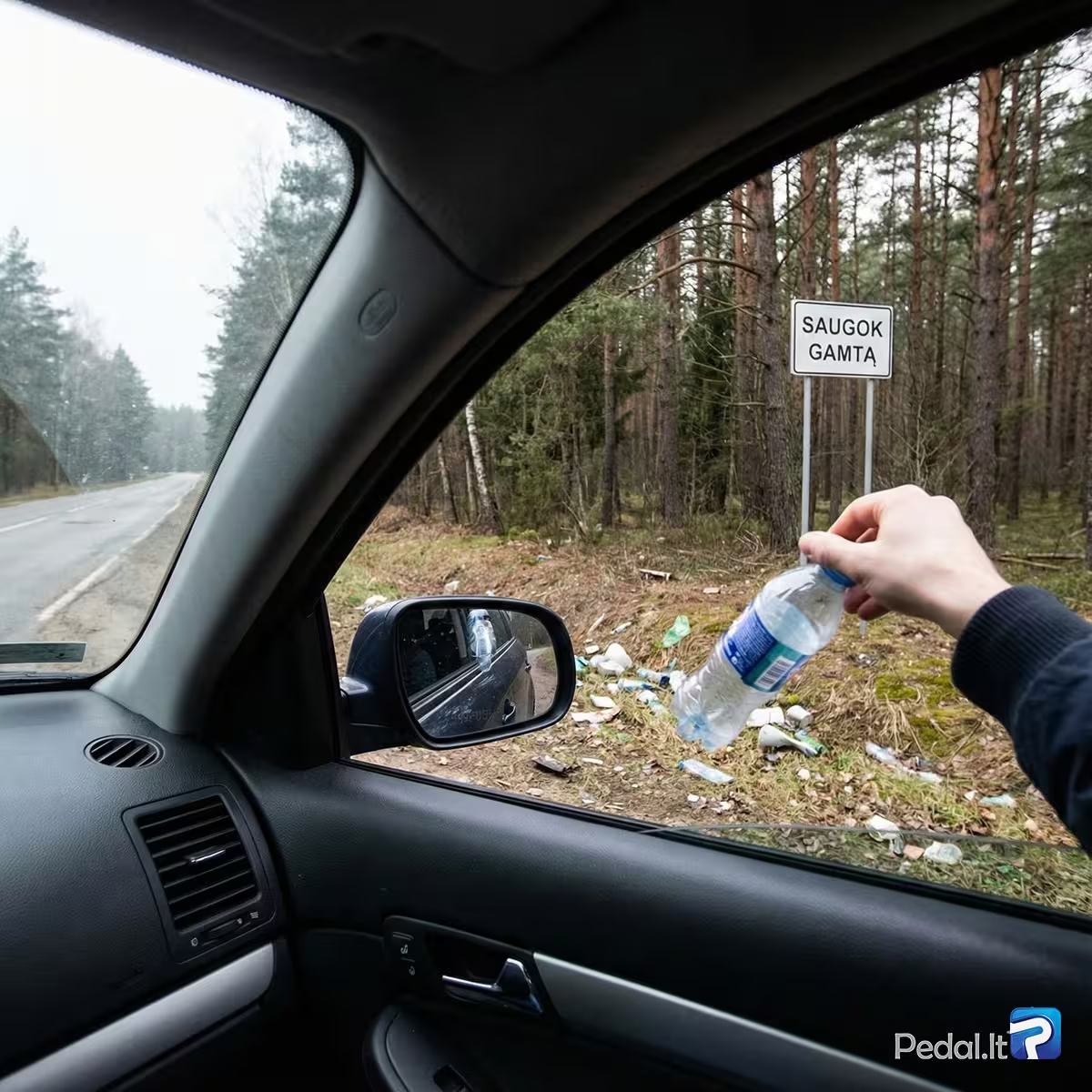
What should we avoid to protect nature?
Carrying unnecessary luggage increases fuel consumption and causes additional harmful emissions. Loud music from a vehicle contributes to noise pollution and can scare wildlife. For short trips, people can walk, cycle, or use public transport, because during brief journeys the engine often does not reach its optimal operating temperature, the vehicle runs less efficiently, and pollution is higher.
1. Leaving a vehicle's engine running while stationary (idling).
2. Playing loud music from a vehicle with the windows open.
3. Using a car for short trips.
4. Carrying unnecessary cargo or luggage.
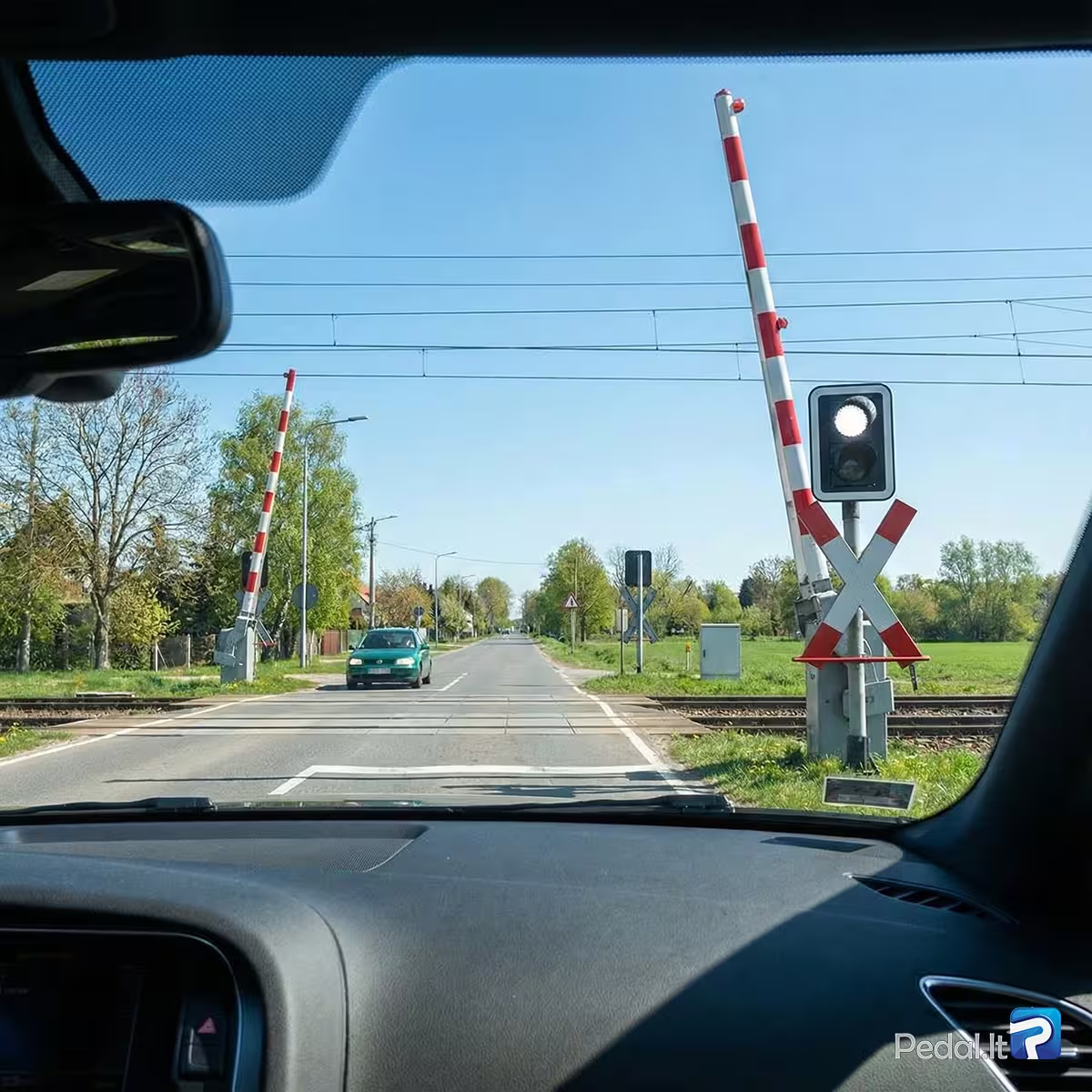
You see a flashing white light and the barrier is fully raised. Are you permitted to cross the level crossing in this situation?
RTR 73. Traffic light signals: 73.10. A flashing white light used at level crossings indicates that vehicles may proceed only after confirming that no rail-borne vehicle is approaching the crossing.
1. Yes — but only after you have verified that no train or other rail vehicle is approaching the level crossing.
2. No — you may not proceed.
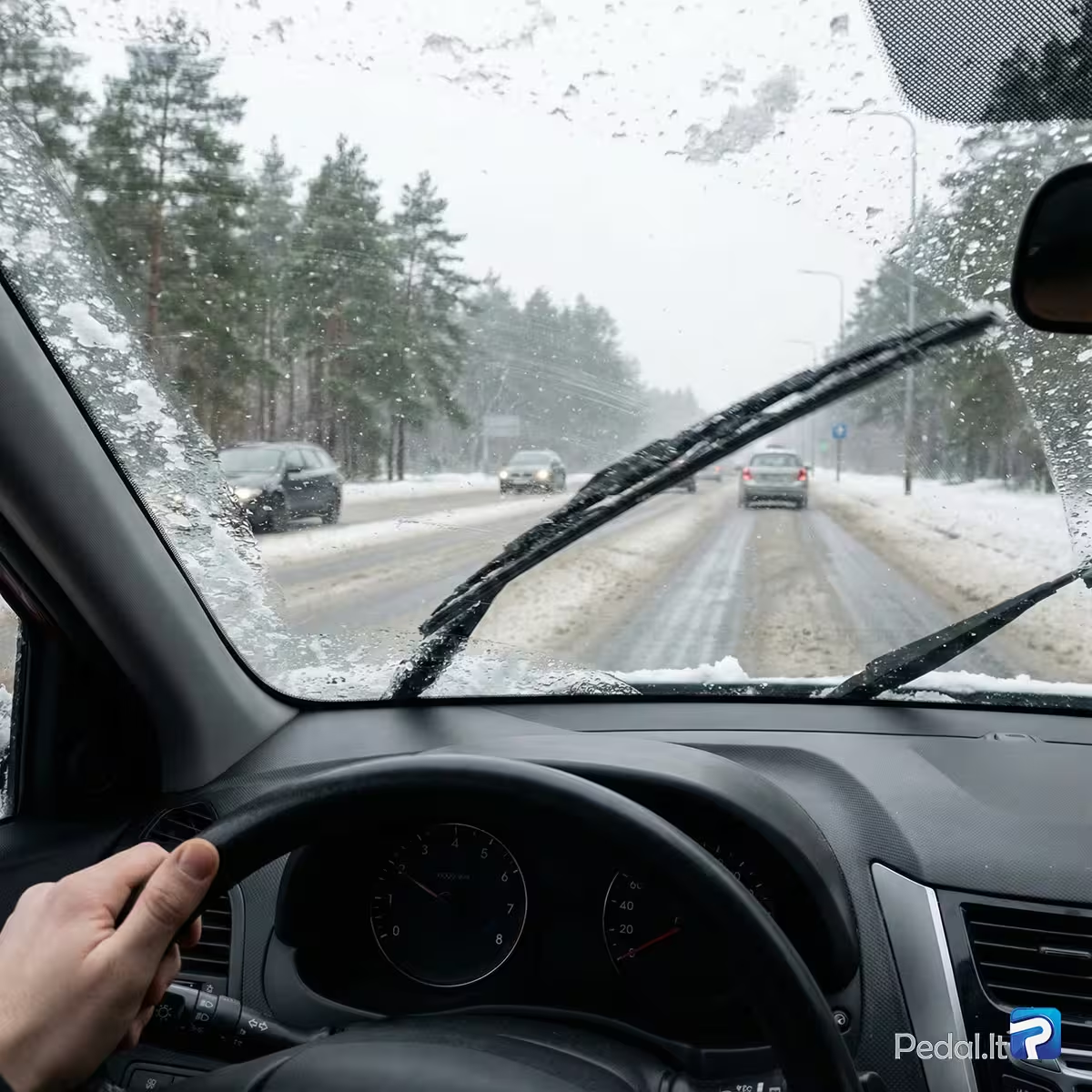
When should you switch on your windscreen wipers while driving in sleet?
A driver must maintain clear forward visibility in all weather conditions. Use the windscreen wipers according to the intensity of precipitation, traffic, presence of pedestrians and other circumstances. Waiting until "the windscreen is covered in snow and you are unable to see anything" is too late.
1. Only when the windscreen is completely covered with snow and you cannot see anything.
2. Before another vehicle driving alongside you can splash dirty water onto your windscreen.
3. Before an oncoming vehicle can splash dirty water onto your windscreen.
4. In advance, so you are not distracted while searching for the windscreen wiper control.
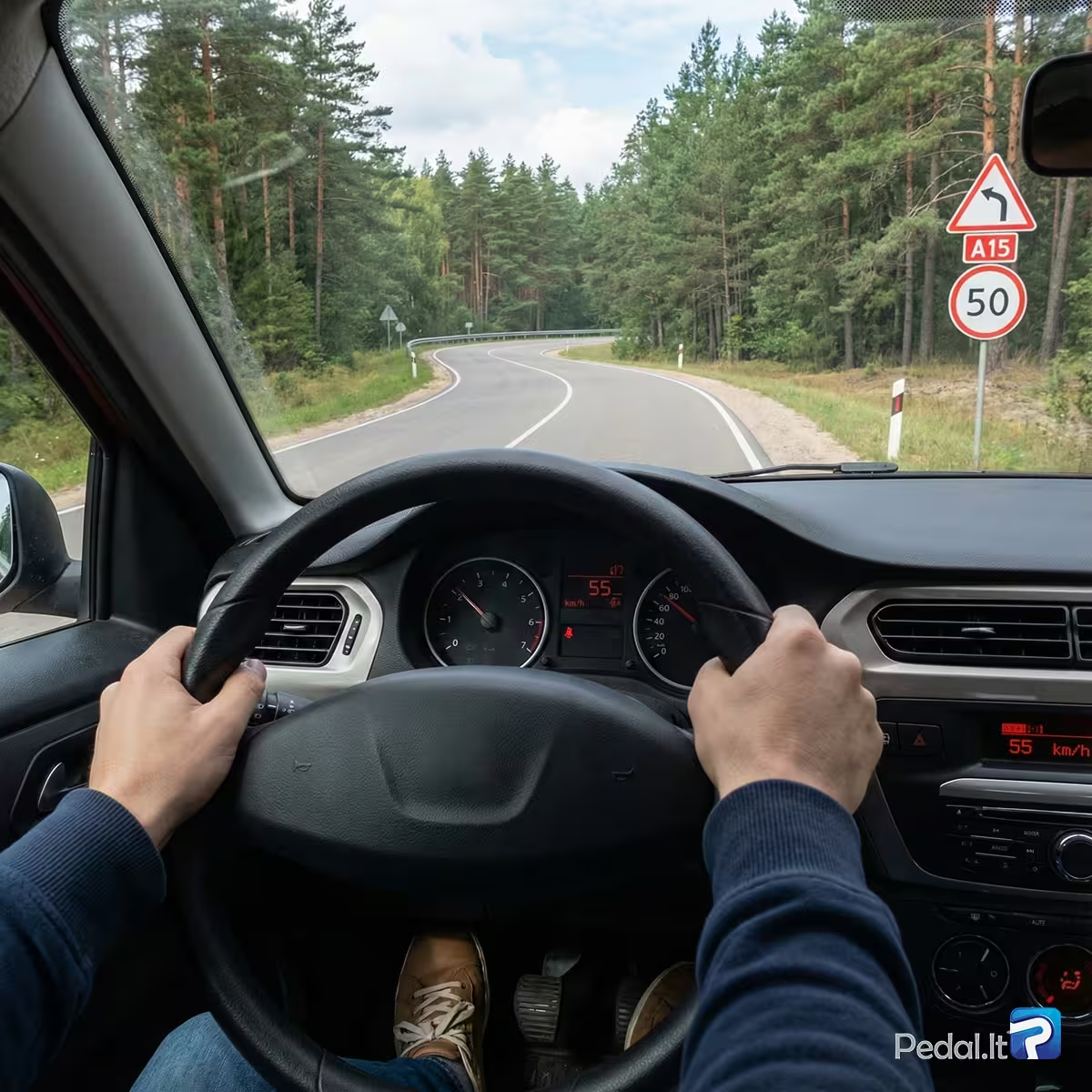
You are approaching a bend in the road. You should:
Drivers approaching a bend should be aware that the curve may be sharper than it appears. Therefore they must select a safe speed and adopt an appropriate position on the road to avoid entering the oncoming traffic lane. A safe speed depends on all circumstances: weather conditions, the technical condition of the road and the vehicle, the vehicle's load, the driver's experience and physical condition. RTR 127. Drivers must not exceed the permitted speed limit. When choosing a driving speed, drivers should consider the driving conditions — in particular the terrain — the condition of the road and the vehicle (including its load), weather conditions and traffic density so that they can stop safely before any foreseeable obstruction. Drivers must slow down or stop if circumstances require, especially when visibility is poor.
1. Reduce your speed.
2. Position your vehicle to avoid crossing into the oncoming traffic lane.
3. Use your turn signal.
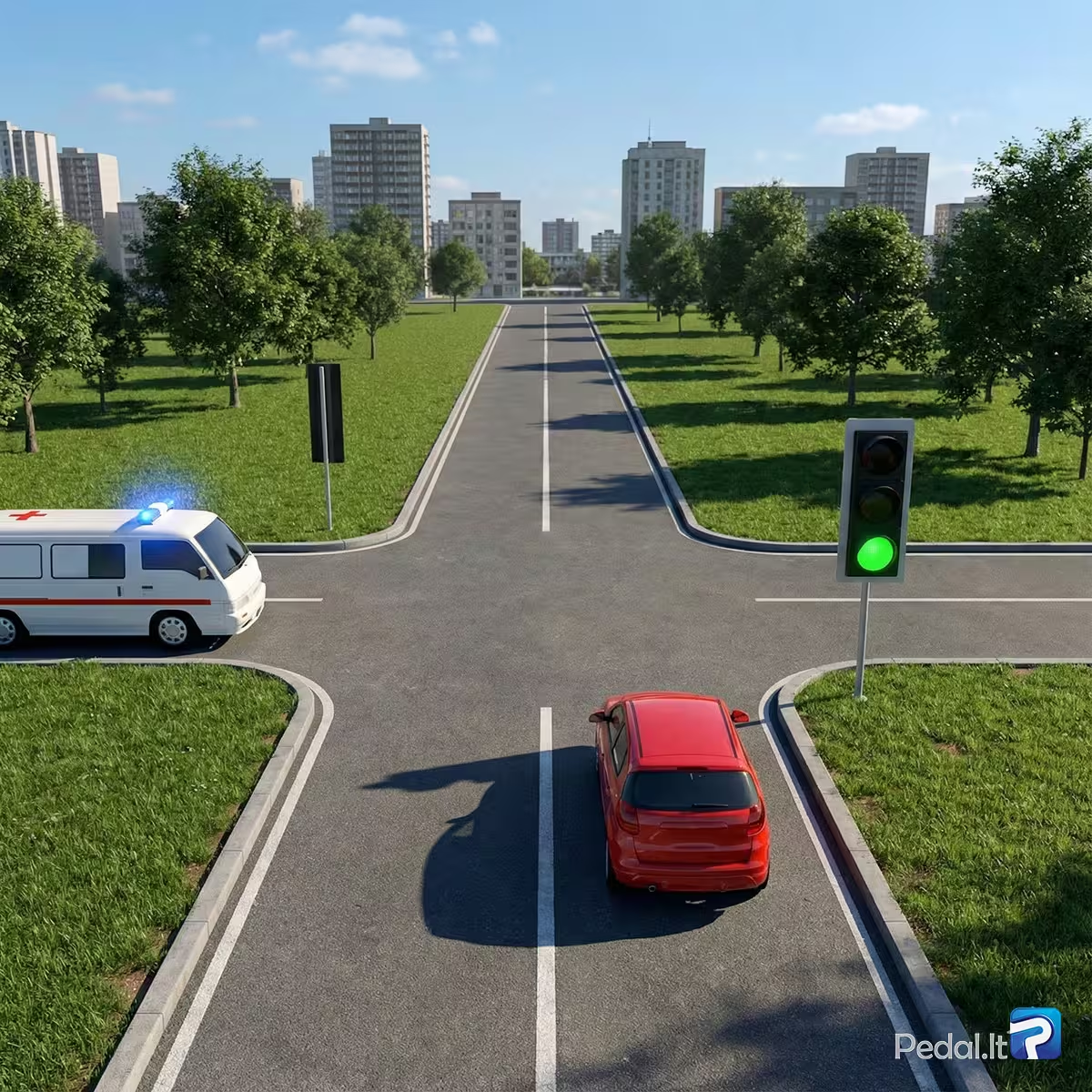
If, in this situation, a vehicle approaches the intersection with blue and red flashing lights and its special audible signals activated, the driver of the red car:
RTR 12. Road users must immediately yield to approaching special vehicles that are using blue-and-red (or only blue) flashing lights and special audible signals, and to vehicles escorted by them. Road users shall form an emergency corridor and yield as follows: 12.1 On a road with a single lane in one direction, drivers must stop on the right hard shoulder if available; if there is no hard shoulder, they must stop close to the right-hand edge of the carriageway. 12.2 On a road with two or more lanes in the same direction, vehicles in the far-left lane shall move as close to the left (the appropriate edge of the carriageway designated for that direction) as possible and stop; vehicles in lanes to the right of the far-left lane shall move as close to the right (toward the right-hand edge of the carriageway or the hard shoulder) as possible and stop. 12.3 On a road with a central reservation, only drivers travelling in the same direction must comply with the requirements specified in paragraphs 12.1 and 12.2. JB
1. He will proceed without yielding to anyone because he has a green light.
2. He must yield to the special vehicle.
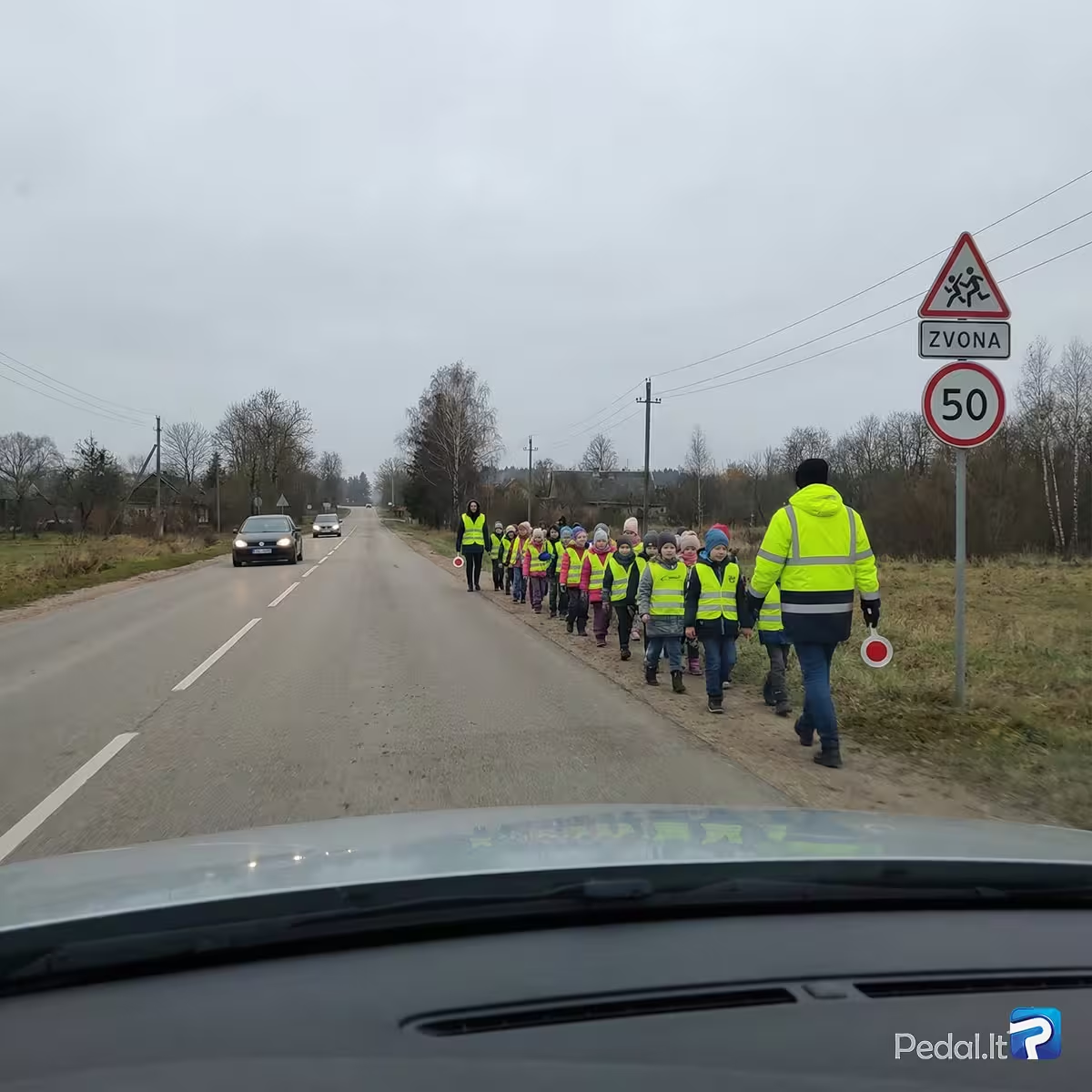
Under what conditions and at what times may an organised group of pedestrians composed of children under 16 be led along the roadside?
RTR 40. An organised group of children under 16, accompanied by at least two adults, may use pavements, footpaths, or the pedestrian side of shared footpath and cycle tracks if available. If none of these facilities are present, the group may walk along the hard shoulder, but only in daylight hours when visibility is good, in no more than two files walking against the flow of traffic, and only when it is safe to do so. Accompanying adults must be positioned at the front and rear of the column and wear high-visibility vests. It is recommended that all children in the organised group wear high-visibility vests when walking along the hard shoulder.
1. During daylight hours and only when visibility is good.
2. In no more than two files, walking against the flow of traffic.
3. At any time of day provided visibility is good.
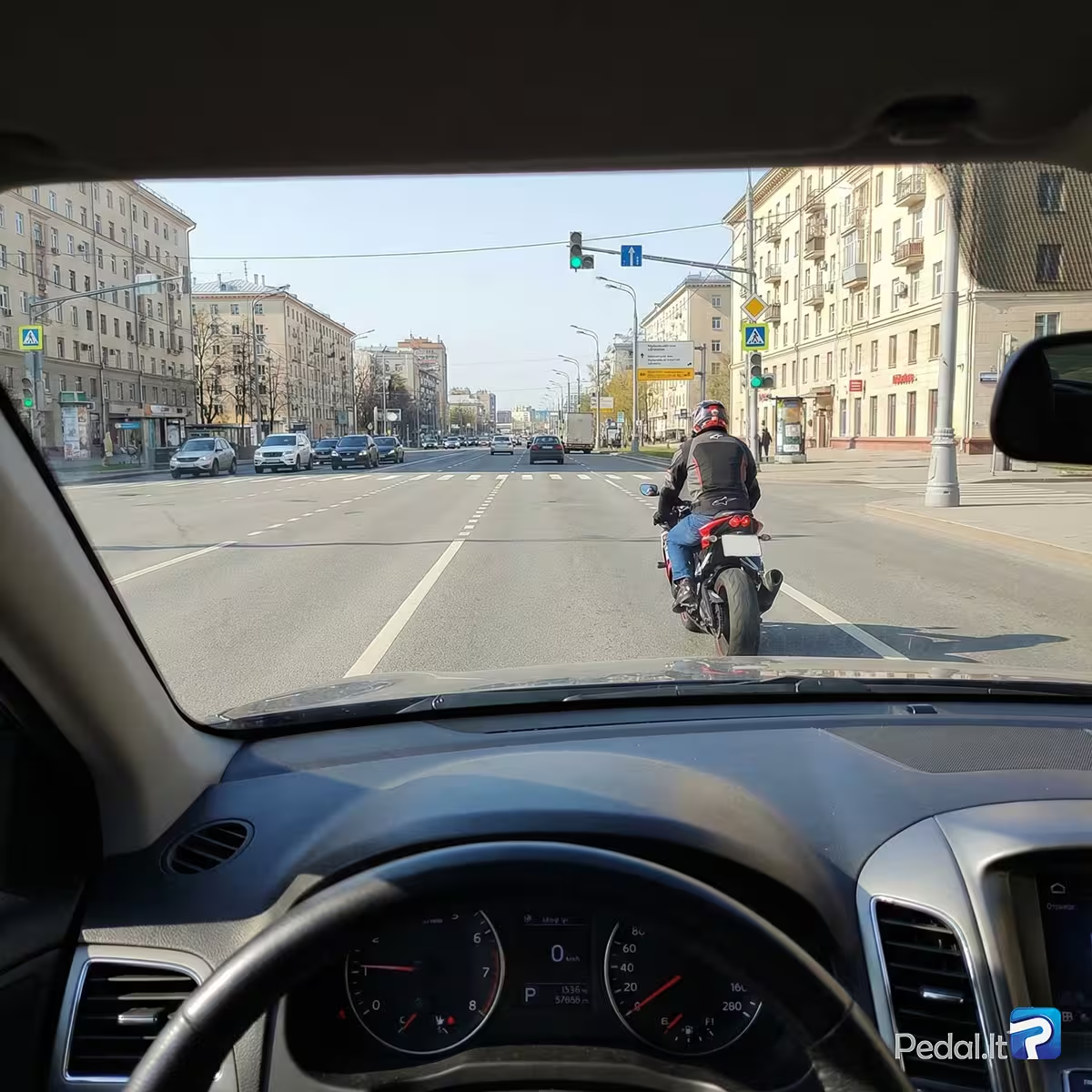
Are you allowed to ride a motorcycle with only a category B driving licence?
LAW ON ROAD TRAFFIC SAFETY — Article 22(12). Persons aged 24 or older who have at least two years' driving experience with a category B licence and who have completed practical training for category A1 vehicles in accordance with the procedure established by the Ministry of Transport and Communications or its authorised institution are granted the right to drive category A1 vehicles within the territory of the Republic of Lithuania.
1. Driving category A1 motorcycles is permitted for persons aged at least 24 who have held a category B licence for at least two years and have completed special practical motorcycle training at a driving school.
2. It is permitted to drive all motorcycles.
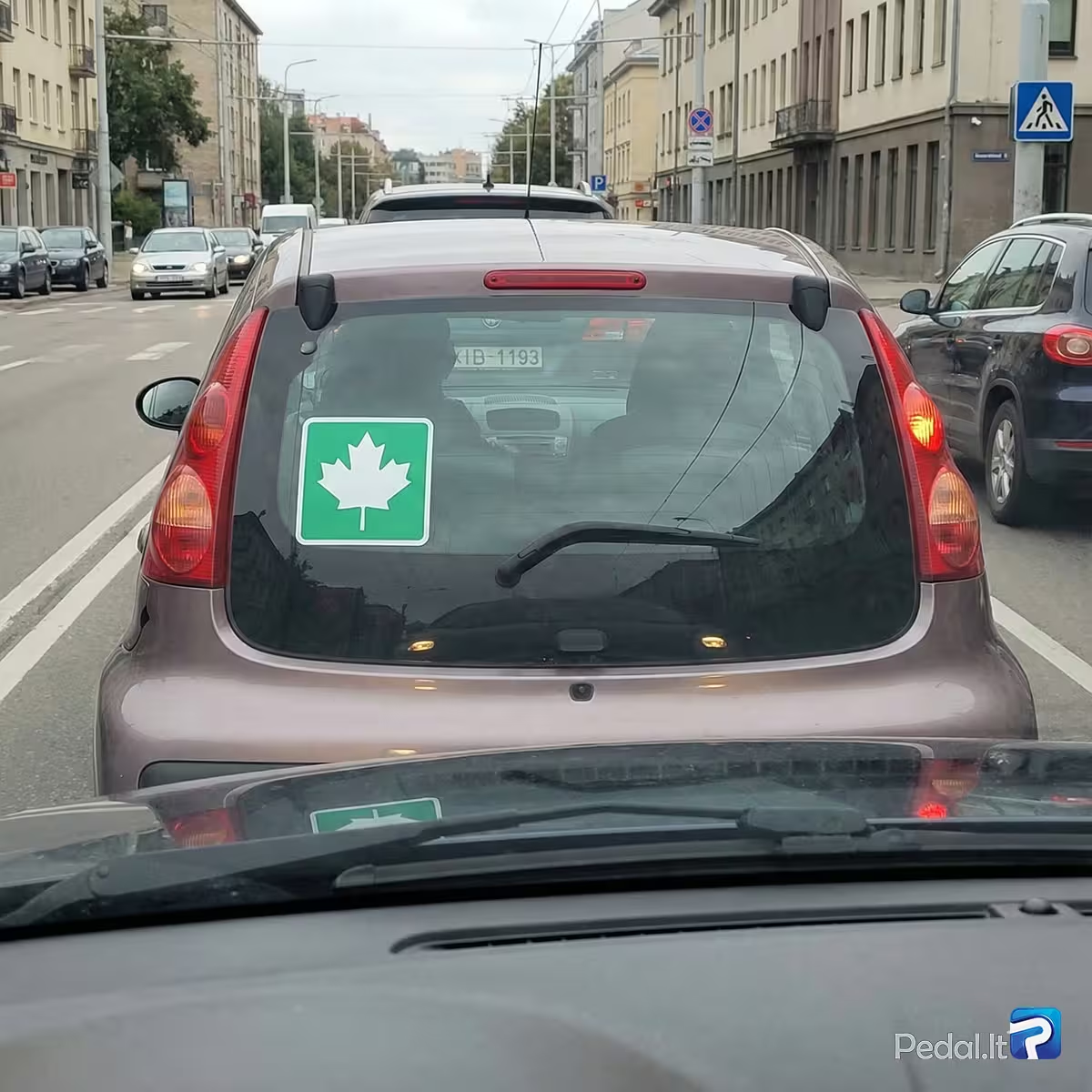
What size distinguishing sign (maple leaf) is permitted on a vehicle driven by a novice driver?
The side length of the 'Maple Leaf' sign must be between 100 mm and 150 mm. Therefore, the correct answers are 100×100 mm and 150×150 mm. A vehicle driven by a novice driver must display, on the left side of the rear, a white square distinguishing sign with a green border and a green maple leaf in the centre. The side length of the square must be between 100 mm and 150 mm, and the border width must be one-tenth (1/10) of the side length.
1. 100 × 100 mm.
2. 150 × 150 mm.
3. 200 × 200 mm.
4. The size of the sign does not matter.
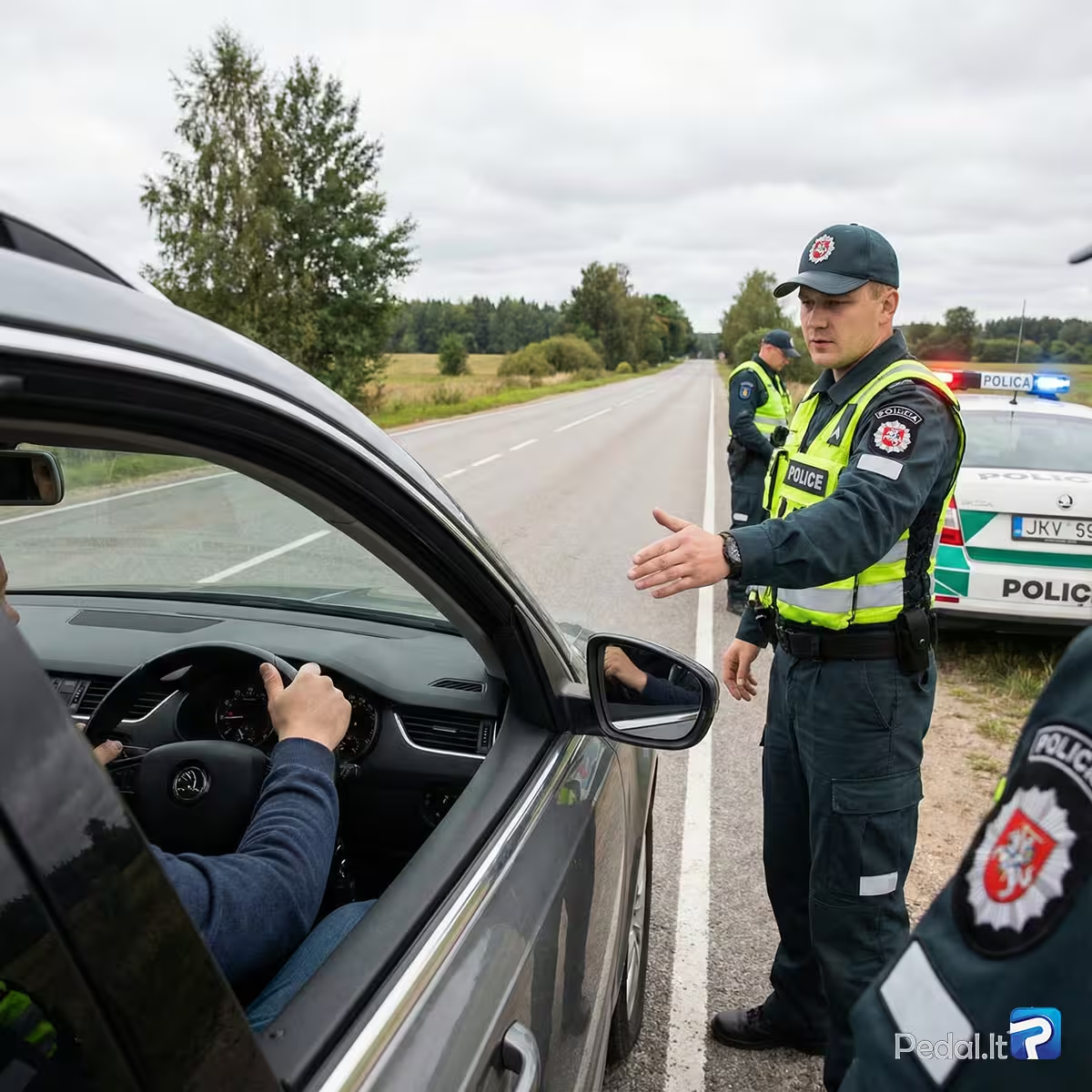
If an officer who intends to inspect your vehicle stops you, are you permitted to exit the vehicle?
RTR – 51. When an inspecting officer stops a vehicle, passengers may exit the vehicle only with the officer's authorization.
1. You may exit the vehicle only with the officer's permission.
2. You must remain inside the vehicle in all circumstances.
3. You must exit the vehicle in all circumstances.
.avif)
In this situation, is the driver of the green vehicle permitted to cross the indicated double horizontal line when completing the overtaking maneuver?
He is allowed because the driver of the green vehicle must complete the overtaking maneuver. RTR Annex 3.1.10: A double line composed of two narrow parallel lines — one solid and one broken — separates traffic moving in opposite directions or in the same direction on road sections where lane changing is permitted only from one lane. It also marks locations for U-turns and the entrances and exits of parking areas where travel is allowed in only one direction. Drivers may cross this line from the side of the broken line, and they may also cross it from the side of the solid line only when finishing an overtaking or passing maneuver.
1. No — he is not allowed.
2. Yes — he is allowed.
1 of 30 Task
Time left: 00:00:00
1
2
3
4
5
6
7
8
9
10
11
12
13
14
15
16
17
18
19
20
21
22
23
24
25
26
27
28
29
30