Drivers may be arrested or imprisoned for up to one year if their blood alcohol concentration (BAC) is:
Criminal Code of the Republic of Lithuania, Article 281‑1: A person who, while operating a motor vehicle, tractor, or self-propelled machine, or instructing a learner driver, is under the influence of alcohol with a blood alcohol concentration of 1.51 per mille or higher; or who refused a sobriety test when showing signs of intoxication; or who consumed alcohol after a road accident before the circumstances were established and was found to have a blood alcohol concentration of 1.51 per mille or higher, shall be punished by a fine, arrest, or imprisonment for up to one year.
1. 0.41 per mille.
2. 2.51 per mille.
3. 1.51 per mille.
4. 0.2 per mille.
When driving and you discover that a bend in the road is sharper than you anticipated, you should:
If a bend in the road is sharper than anticipated, you must reduce your speed.
1. You should reduce your speed.
2. You should attempt to decrease your turning radius.
3. You should accelerate.
4. You should maintain your current speed.
Which features ensure a vehicle's active safety?
Difference between active and passive safety:
- Active safety: systems and features that help prevent accidents by improving vehicle control, handling and stability before a collision occurs. These measures operate before an impact and commonly include technologies such as Anti-lock Braking System (ABS), Electronic Brakeforce Distribution (EBD), traction control, correct tyre pressure and adequate tread depth, among others. Active safety also depends on the driver’s condition and behavior — for example, poor ventilation or heating can cause drowsiness or nausea and reduce attention on the road.
- Passive safety: systems and equipment designed to reduce injury and damage during or after a collision. These features are activated in a crash to protect occupants and other road users and include seat belts, airbags, motorcycle helmets, seat-belt reminders, head restraints, crumple zones and other structural or restraint systems that absorb impact and lower the risk of injury.
1. Proper ventilation and heating.
2. Tyre pressure and tread depth.
3. Anti-lock Braking System (ABS).
4. Electronic Brakeforce Distribution (EBD).
What are the common signs that a car battery is dead?
Select the signs that indicate the car battery may be dead.
1. When attempting to start the car, the starter motor does not engage or cranks very slowly.
2. When attempting to start the car, the dashboard lights dim or go out.
How is a motorized bicycle defined?
Note that a motorized bicycle must have at least two wheels and an auxiliary internal combustion engine or an electric motor — it is not sufficient for it to have only an internal combustion engine. SEAK Art. 2.40. "Motorized bicycle" — a vehicle with at least two wheels that is powered by the rider’s muscular force using pedals or handlebars and is equipped with an auxiliary internal combustion engine or electric motor with a maximum net power of no more than 1 kW and a maximum design speed of no more than 25 km/h. The auxiliary engine stops providing power when the vehicle reaches 25 km/h. Wheelchairs for persons with disabilities are not classified as motorized bicycles.
1. A vehicle whose maximum net power does not exceed 1 kW and whose maximum design speed does not exceed 25 km/h.
2. A vehicle that is primarily propelled by the rider’s muscular power using pedals or handlebars and is equipped with an auxiliary internal combustion engine or an electric motor.
Under what conditions is it prohibited to drive a vehicle?
It is prohibited to drive a vehicle if the main brake is inoperative, as this creates a danger to road safety. According to technical requirements, tyres mounted on the same axle must be of the same type and have identical tread patterns. Tyres with different tread patterns can cause instability under braking and reduce traction, creating a road safety risk; therefore driving such a vehicle is prohibited. RTR 234. A driver must not operate a motor vehicle, a tractor, or a self-propelled machine with: 234.1. a defective foot brake (the driver cannot stop the vehicle); 234.2. a defective steering mechanism (the driver cannot control the vehicle); 234.3. a defective coupling device between the vehicle and a trailer; 234.4. a defective windscreen wiper on the driver's side in snow, rain, or fog; 234.5. faulty front left-side lamps (dipped-beam headlamp and fog lamp) during hours of darkness or when visibility is poor, or if at least one rear position lamp has failed, hazard warning lights are not functioning (or are switched off), or a warning triangle is not affixed to the rear of the vehicle.
1. When the wheels on the same axle are fitted with different tread patterns.
2. When the engine oil level is too low.
3. When there is low air pressure in the tyres.
4. When the vehicle's foot (service) brake is defective.
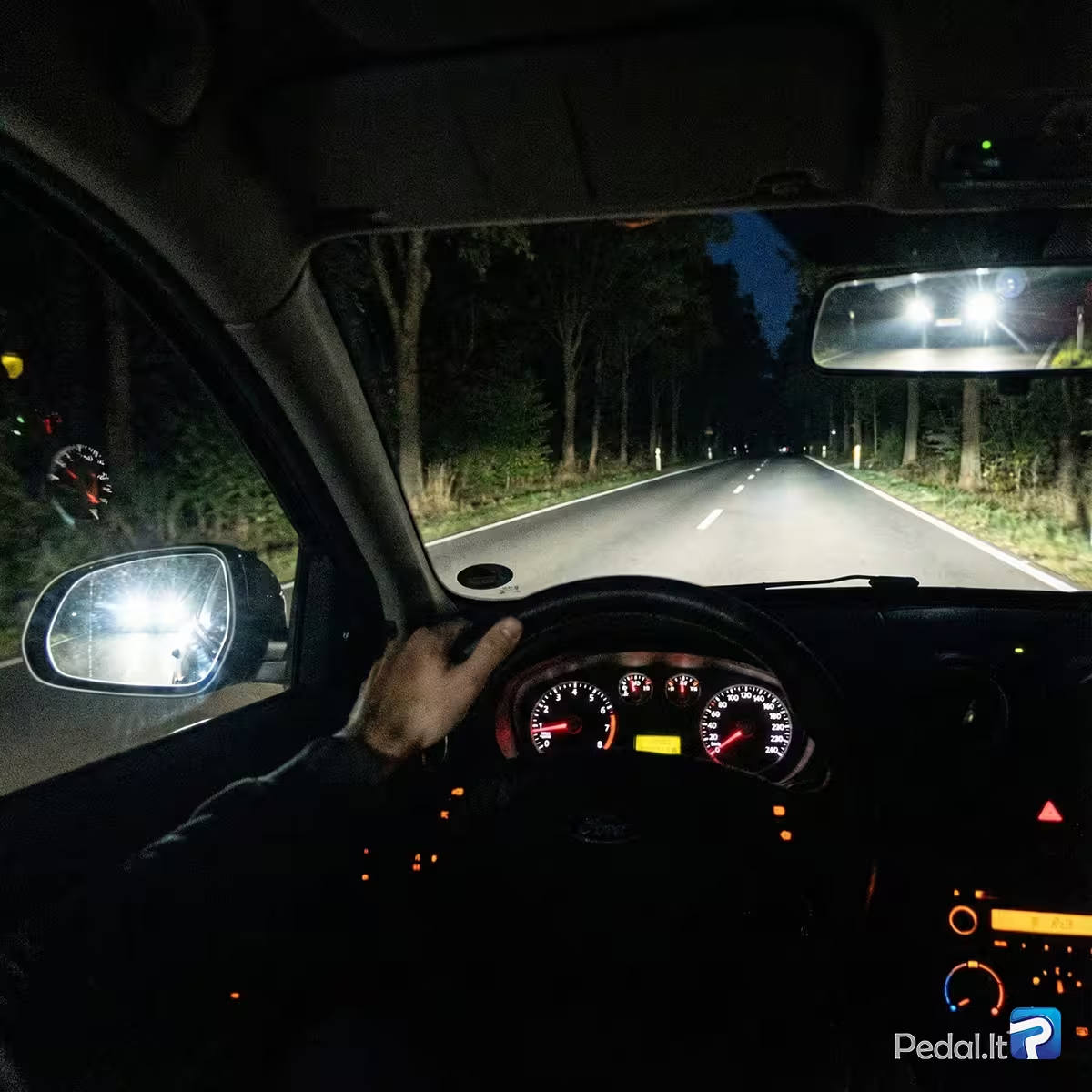
What must the drivers do if one vehicle catches up to the other while both are driving outside a settlement with their headlights on high beam?
The driver of the following vehicle must dip their headlights so as not to dazzle the driver ahead. The vehicle in front should switch to low beam only if the following vehicle begins to overtake, to avoid dazzling that driver. RTR 95. During darkness or in poor visibility, main beam headlights must be switched to low beam: 95.1 on illuminated roads; 95.2 when the distance to a vehicle approaching from the opposite direction is at least 150 m; 95.3 in other cases when main beam lights can dazzle other drivers (even travelling in the same direction). JB
1. The driver of the vehicle ahead must switch from high beam to low beam when the following vehicle begins to overtake.
2. The driver of the vehicle ahead must activate the hazard warning lights.
3. The driver of the following vehicle must switch from high beam to low beam.
At what times of day are wild animals most likely to cross the road?
Wild animals commonly appear on roads at dusk and in the late evening (approximately 17:00–23:00), and also in the early morning hours around 4:00–5:00.
1. At dawn (early morning).
2. During the night.
3. At dusk (twilight, when it is getting dark).
4. During the middle of the day.
The term "service vehicle" refers to:
RTR 3.1. "Service vehicles" are vehicles owned by companies, institutions, or organisations operating in an area marked by restrictive signs; vehicles belonging to persons who live or work in that area; vehicles delivering goods to that area or collecting goods from it; and taxis or other passenger vehicles providing paid transport to or from that area.
1. Any vehicle used for transporting goods.
2. A vehicle owned by companies, institutions, or organisations operating in an area marked with restrictive signs, or by persons working in that area.
3. A vehicle owned by persons residing in an area marked with restrictive signs.
4. A vehicle delivering goods to an area marked with restrictive signs, or collecting goods from it.
5. Taxis or other passenger vehicles providing paid transport to or from an area marked with restrictive signs.
.avif)
Which driver will proceed through the intersection in the blue car?
The blue car is on the priority (main) road, so it has the right of way and must proceed first — the fact that the green car is to its right is irrelevant. Only after the blue car has passed may the green car proceed. (RTR 154) At a controlled intersection, drivers entering from a side road must yield to vehicles on the priority road.
1. The second car.
2. The first car.
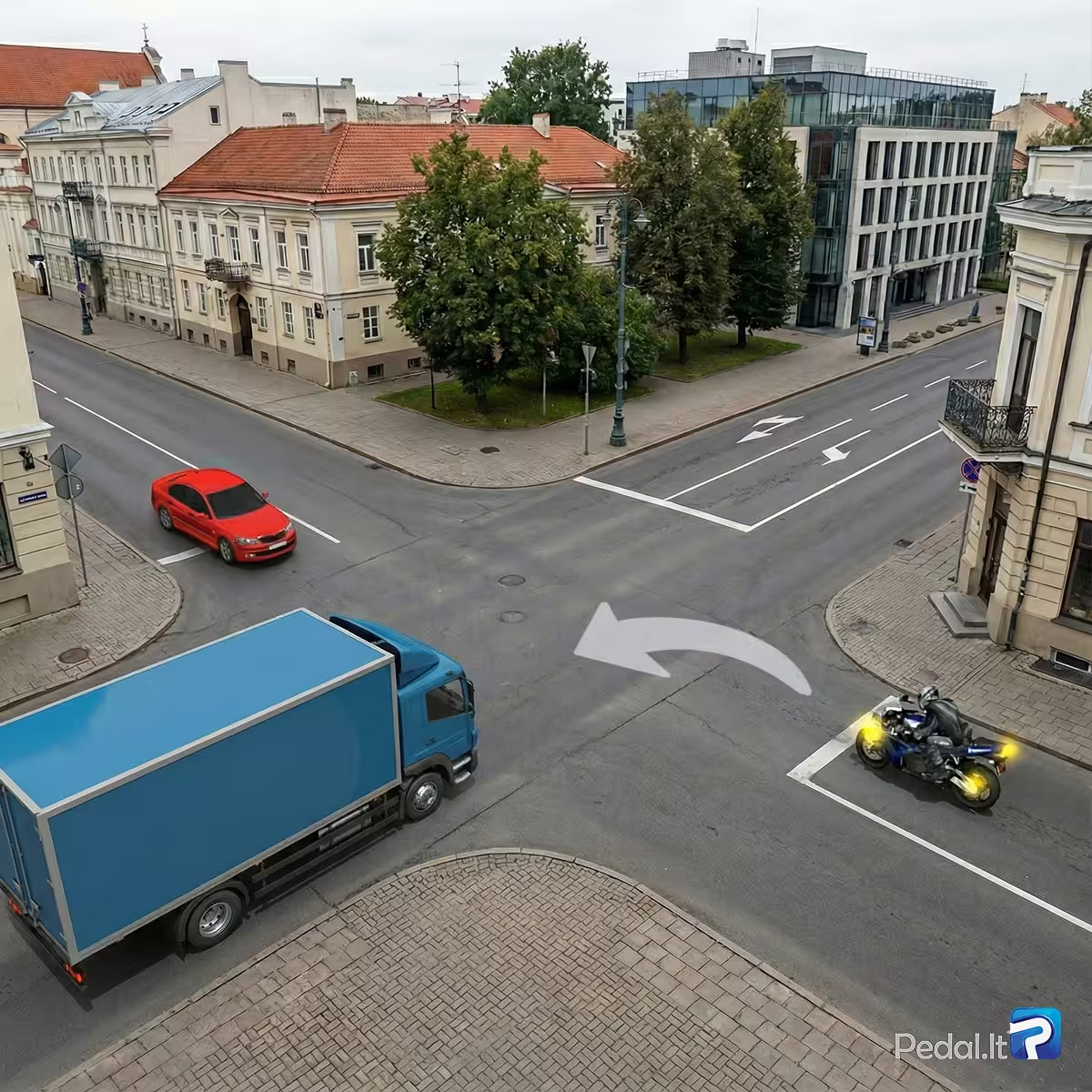
Which vehicle will be the last to pass through the intersection?
The motorcycle, being the only vehicle with no approaching traffic from the right, will enter the intersection first but will stop in the middle to give way to the passenger car (see Paragraph 157 of the Road Traffic Rules). After that, the goods vehicle will proceed through the intersection, as there will no longer be any vehicles approaching it from the right. The passenger car will go second, and the motorcycle will be last. A driver must comply with the requirement of Paragraph 155 of the Road Traffic Rules when driving straight ahead, turning left, or making a U-turn. RTR 155. At an uncontrolled intersection, drivers must give way to vehicles approaching from the right if the vehicle trajectories intersect. RTR 157. When turning left or making a U-turn, the driver shall give way to oncoming vehicles on a road of equal importance that are driving straight ahead or turning right, and—at an intersection where overtaking is allowed—to overtaking vehicles as well.
1. Passenger car.
2. Motorcycle.
3. Goods vehicle.
Under which conditions does a car battery's capacity decrease?
Battery capacity decreases as ambient temperature falls. A fully charged battery that measures 100% capacity at +25 °C will typically drop to about 80% at 0 °C and to roughly 60% at −25 °C.
1. When ambient temperature rises.
2. When ambient temperature falls.
3. It does not change with temperature.
Operating a vehicle is prohibited if any of the following applies:
RTR 14. Persons who are not authorized to drive, who are intoxicated, under the influence of narcotic or psychotropic drugs or other psychoactive substances, or who have not taken the legally required daily rest must not drive. Additionally, a person who is fatigued or ill must not drive if doing so could endanger road safety. A vehicle must not be entrusted to anyone affected by the above factors or who is not authorized to operate that class of vehicle. When driving, the driver must comply with any restrictions or conditions indicated on the driving licence.
1. The driver is not authorized to do so.
2. The driver holds valid documents required by the Road Traffic Rules.
3. The driver is intoxicated.
4. The driver is not under the influence of psychoactive substances (e.g., narcotics, medications, or other intoxicating substances).
Why might a vehicle skid or move sideways during braking?
Braking with uneven tire wear between the left and right sides is dangerous because it can cause the vehicle to slide off the road and overturn.
1. Uneven wear between the vehicle's left and right tires.
2. Irregularities in the road surface.
3. A brake on one wheel is not working, or braking force is uneven between sides.
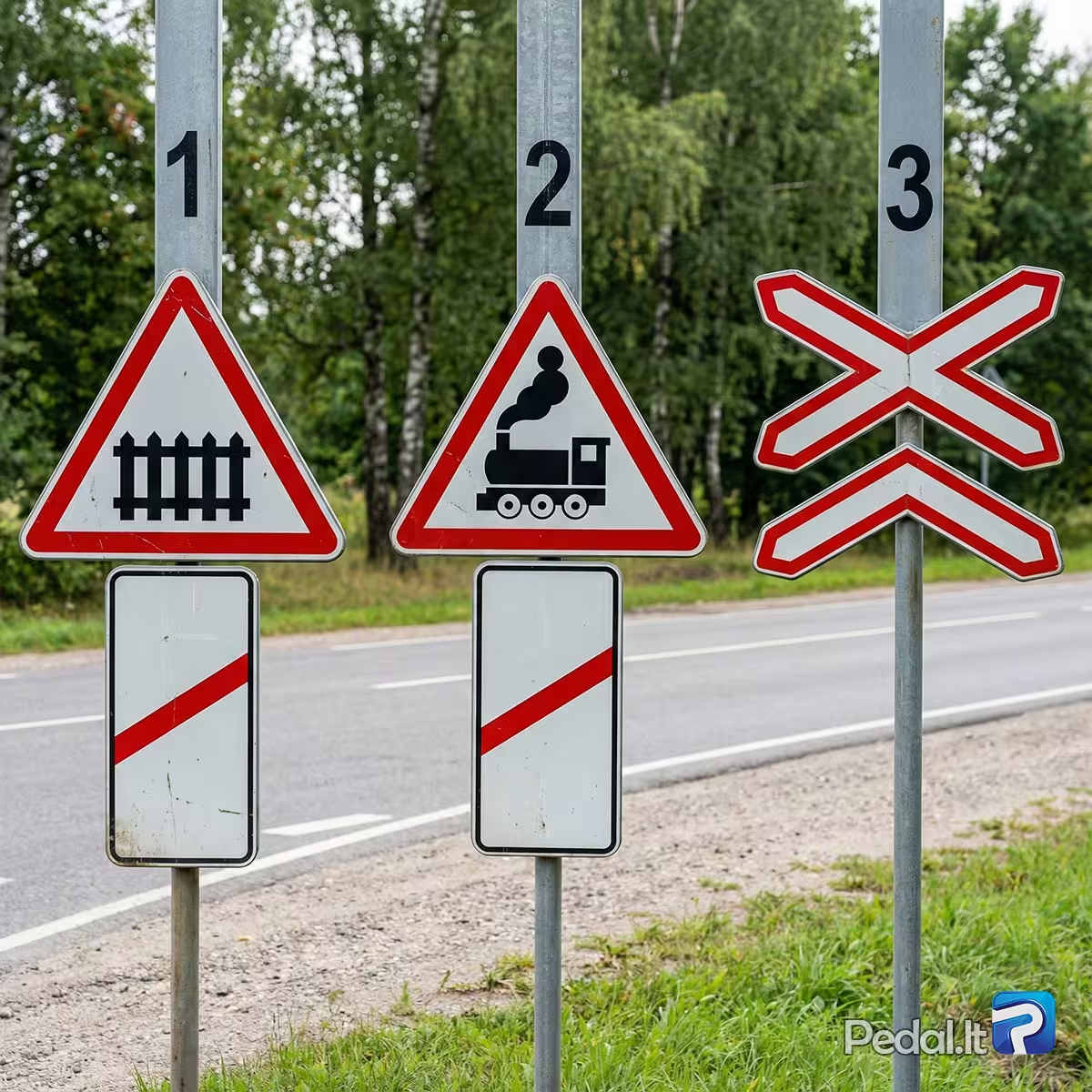
Which road sign indicates that you are approaching a level crossing equipped with a barrier?
Road sign 101 — “Level Crossing with Barrier”: indicates a level crossing protected by a barrier. Road sign 102 — “Level Crossing without Barrier”: indicates a level crossing that has no barrier. Road sign 142 — “Level Crossing Ahead”: warns of a level crossing ahead outside built-up areas; this sign is placed as close as possible to the crossing on the right-hand side of the road. Road sign 139 — “Multi-Track Railway”: indicates a level crossing without a barrier across a railway with two or more tracks.
1. 1.
2. 2.
3. 3.
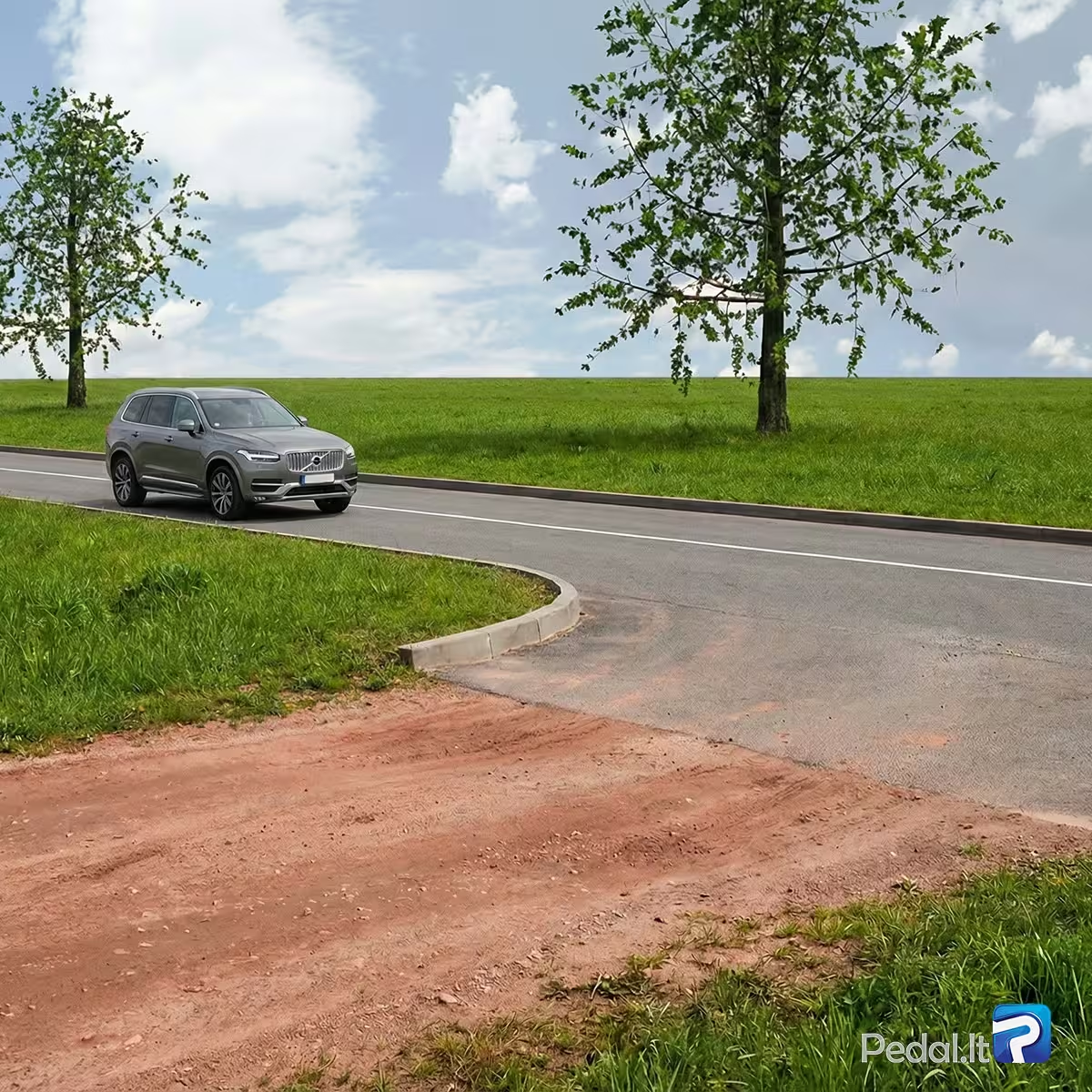
Which road is the main road at this intersection?
RTR 3.14. The main (priority) road is: a road marked with the 'Priority Road' sign, an 'Intersection with a Side Road' sign, a 'Side Road from the Right' or 'Side Road from the Left' sign, or designated as a 'Motorway' or 'Road for Motor Vehicles' in relation to the intersecting or joining road; a road in relation to another road marked with 'Give Way', 'STOP', or 'End of Residential Area' signs; a paved road (concrete, asphalt, or cobblestone) in relation to an improved unpaved road (macadam or gravel) or a dirt road (forest, field, or similar road); and an improved unpaved road in relation to a dirt road. A paved or improved unpaved section of a side road immediately before an intersection does not make that side road equivalent to the intersecting or joining road. There is no priority road at intersections controlled by traffic signals. JB
1. The road with a gravel surface.
2. Both roads are equivalent.
3. The road with an asphalt surface.
.avif)
What does a continuous yellow line painted along the edge of the carriageway indicate?
RTR Annex 3.1.4: A continuous yellow line along the carriageway edge indicates areas where stopping or parking is prohibited; it may also be used to mark lanes affected by roadworks. Vehicles must not cross this line. When a yellow continuous line is used together with white lane markings, drivers must obey the yellow line. RTR Annex 3.1.27: A yellow zigzag line marks a section or side of the road where stopping and parking are prohibited along the entire length of the zigzag.
1. Areas where only parking is prohibited.
2. Areas where both stopping (standing) and parking are prohibited.
Are you required to signal before starting to move?
RTR 82. A driver must indicate intended actions by using the right or left direction indicators, or by arm signals if the indicators are not available or are inoperative: 82.1 before starting to move off and before stopping; 82.2 before changing lanes, before and after overtaking, before and after bypassing an obstruction, before turning right or left, before making a U-turn, and before leaving a roundabout or an intersection where traffic circulates in a circle. JB
1. Yes — you must signal before starting to move.
2. No — you are not required to signal.
When making a turn, a vehicle is more stable when it is moving:
Compared with coasting (driving in neutral), driving with a gear engaged provides better control because, even without pressing the accelerator, the engine maintains steady rotational force on the driven wheels. Rapidly reducing speed during a turn can make the vehicle less stable, while increasing speed can make it harder to complete the turn smoothly due to the higher centrifugal force. Choose and maintain an appropriate speed before entering the turn.
1. With the gearbox engaged.
2. With the gearbox disengaged (in neutral).
3. By increasing speed.
4. By reducing speed.
What should drivers do if they encounter a pothole on the road that cannot be avoided while traveling at high speed?
When you see a pothole, reduce your speed and try to steer around it. If avoidance is impossible and an impact cannot be prevented, release the brakes just before the pothole and straighten the steering — this reduces the chance of damaging the tire or suspension components.
1. Release the brakes just before hitting the pothole.
2. Accelerate before hitting the pothole.
Your car veers to one side only while braking (it travels straight when not braking). What is the likely cause?
Incorrect tyre pressure usually causes the vehicle to pull to one side during normal driving, not only when braking. If the car only pulls while braking, uneven braking is the likely cause — for example, a seized caliper, sticking pads, or poor adjustment causing one side to brake harder. Low brake fluid will reduce braking effectiveness or cause pedal problems, but it typically does not make the car swerve to one side only when braking.
1. Tire pressures are incorrect or uneven.
2. The wheel brakes are applying unevenly.
3. Brake fluid level is insufficient.
What documents must the driver of a motor vehicle bring when summoned by the police to appear at the specified time?
8. After receiving a summons from the police, the road user must appear at the police station at the specified time. He must bring an identity document and any other documents listed in the summons. JB
1. In all cases, the person must present an identity document. Additionally, if specified in the summons, they should bring the vehicle's state technical inspection certificate, the compulsory civil insurance policy for the vehicle, and the driver's licence.
2. A driver's licence in every case.
3. A valid medical fitness certificate for driving.
4. A certificate of completion of the mandatory first-aid training.
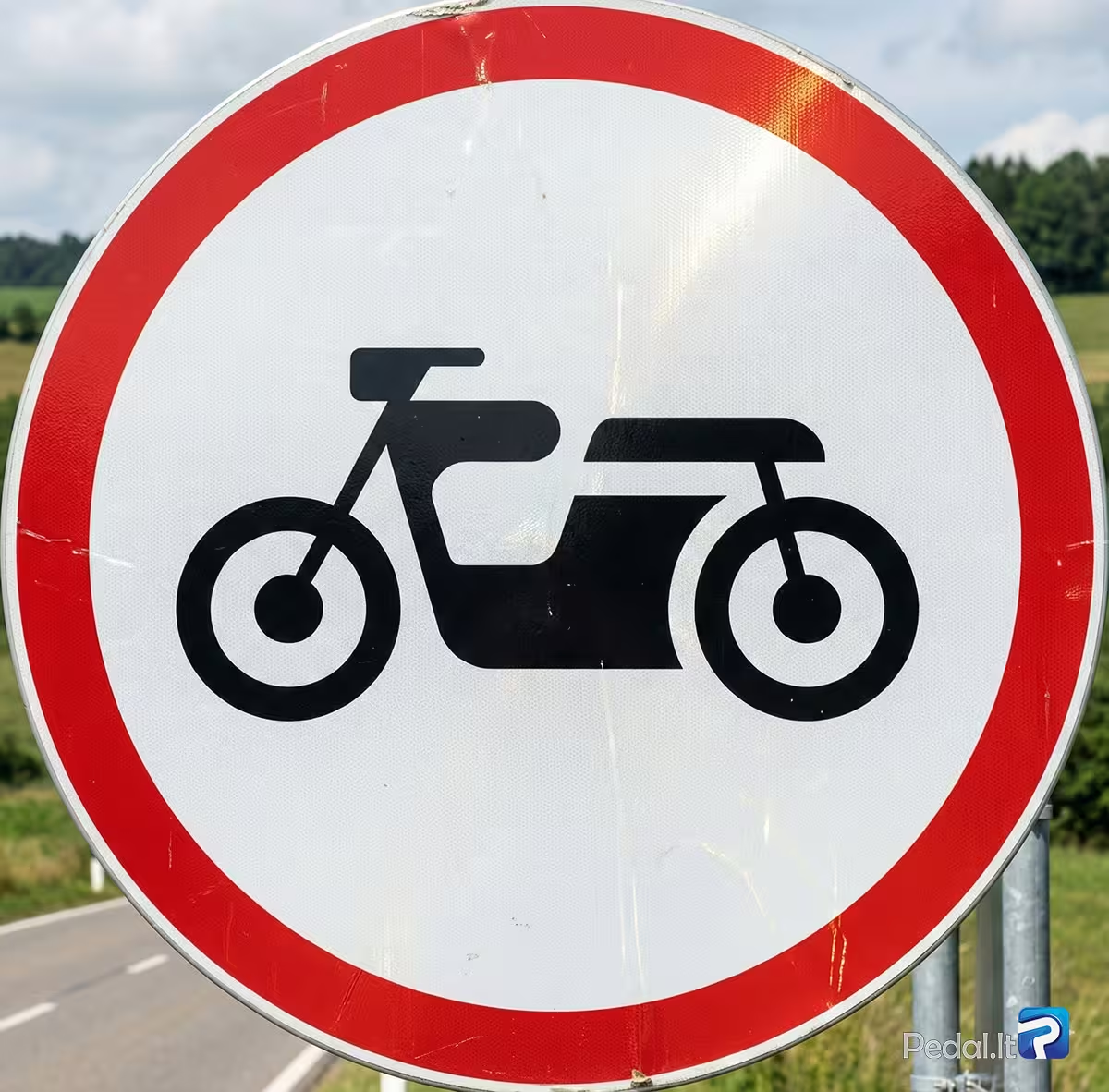
Which motor vehicles are prohibited from entering the area designated by this road sign?
1. Motorcycles (two‑wheeled motor vehicles)
2. Light quadricycles (small four‑wheeled motor vehicles)
3. Mopeds (low‑powered two‑wheel motor vehicles)
4. Bicycles (pedal‑powered two‑wheel vehicles)
How is a "built-up area" defined?
Law on Road Traffic Safety, Article 2, Clause 19: A "built-up area" means an area containing buildings whose roads are marked at the entrances with the road sign "Beginning of Built-Up Area" and at the exits with the road sign "End of Built-Up Area".
1. An area containing buildings whose roads are marked at the entrances with the regulatory sign "Residential Area".
2. An area containing buildings to which additional traffic rules apply and whose roads are marked at the entrances with the sign "Beginning of Built-Up Area" and at the exits with the sign "End of Built-Up Area".
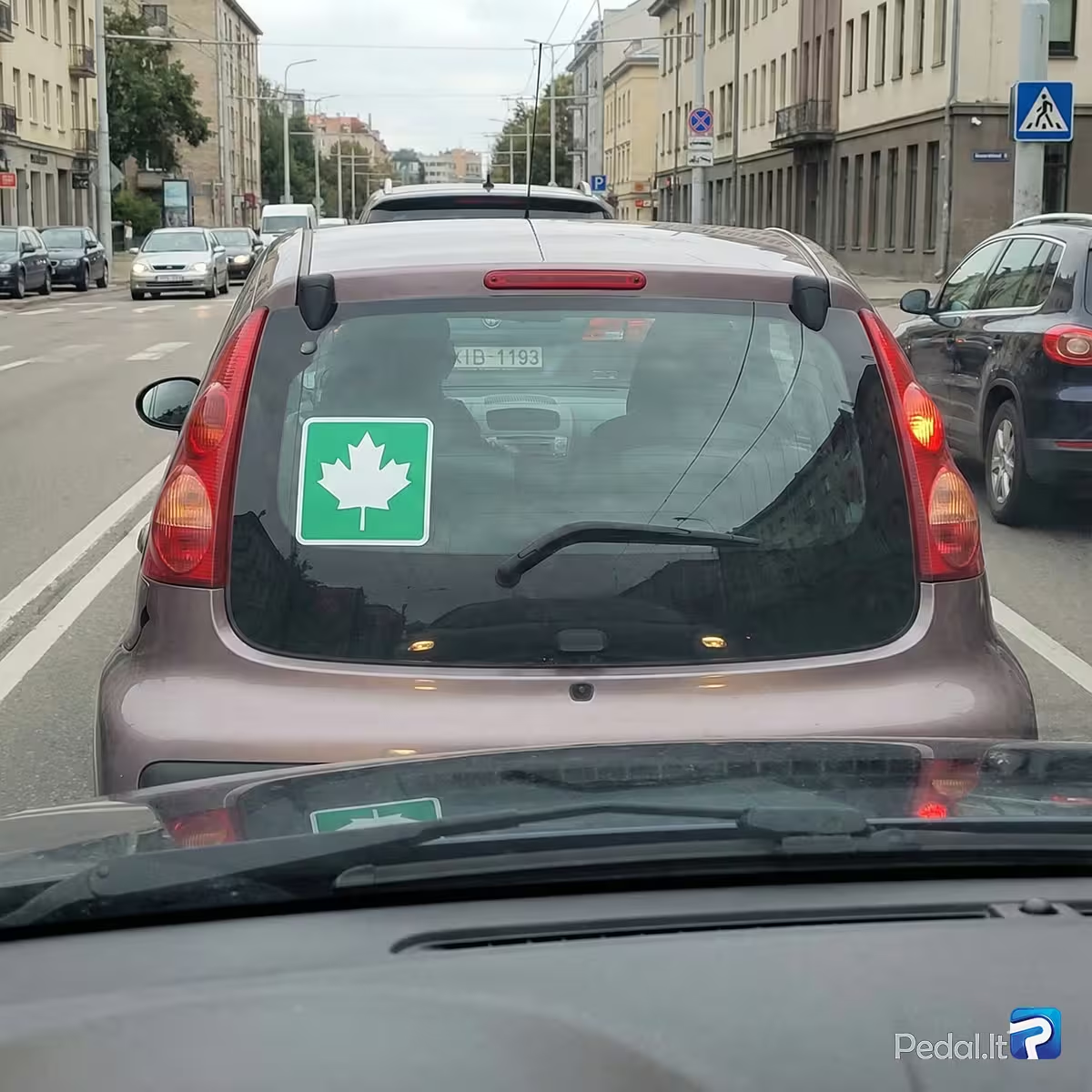
What size distinguishing sign (maple leaf) is permitted on a vehicle driven by a novice driver?
The side length of the 'Maple Leaf' sign must be between 100 mm and 150 mm. Therefore, the correct answers are 100×100 mm and 150×150 mm. A vehicle driven by a novice driver must display, on the left side of the rear, a white square distinguishing sign with a green border and a green maple leaf in the centre. The side length of the square must be between 100 mm and 150 mm, and the border width must be one-tenth (1/10) of the side length.
1. 100 × 100 mm.
2. 150 × 150 mm.
3. 200 × 200 mm.
4. The size of the sign does not matter.
What should you do when you see a speed limit sign ahead in the distance?
Explanation of terms:
• To brake — press the brake pedal; the vehicle decelerates quickly and stops before the expected obstacle.
• To release the accelerator pedal — lift your foot off the gas; the vehicle will slow down gradually without stopping completely and will continue moving.
• To maintain your current speed — keep the accelerator pedal in the same position; the vehicle continues at a constant speed.
RTR 127. Drivers must not exceed the permissible speed limit. The driver must select a driving speed appropriate to the driving conditions, in particular the terrain, the condition of the road and the vehicle (including the load), weather conditions and traffic density, so that the vehicle can be stopped safely before any foreseeable obstacle. The driver must slow down and stop when driving circumstances require it, especially when visibility is poor.
RTR 135. Drivers must not:
135.2. exceed the speed limit specified on the vehicle marking plate;
135.3. drive unnecessarily slowly and impede the normal flow of traffic for other road users;
135.4. slow down abruptly for reasons other than safety.
1. I will apply the brakes.
2. I will release the accelerator pedal.
3. I will maintain my current speed.
Are vehicles permitted to drive on the pavement (sidewalk)?
RTR 124. Drivers of motor vehicles, tractors, self‑propelled machines, and animal‑drawn vehicles must not drive or manoeuvre on lawns, pavements (sidewalks), footpaths, cycle tracks, or cycle lanes. An exception applies where road signs permit (partial) parking at the pavement edge and a cycle track or lane is delineated by the horizontal marking line 1.14. Driving on central reservations, embankment slopes, excavations, or in ditches is prohibited. Drivers must also not enter or leave the roadway except at locations designated for that purpose.
1. They may do so provided they do not obstruct pedestrians.
2. They are permitted only where road signs indicate that (partial) parking on the pavement edge is allowed.
3. Driving on pavements is prohibited.
When should you release the throttle and rely on the vehicle's inertia to conserve fuel?
Note: Releasing the throttle is not the same as freewheeling. See 3.4 Control the throttle: 3.4.9 Release the throttle and use the vehicle's inertia before coming to a stop at a predetermined location (for example, at an intersection with a traffic light or at a stop sign) or in similar situations. JB
1. When approaching an intersection with a red traffic light.
2. When driving downhill on a steep slope.
3. When approaching a stop sign.
4. Before coming to a stop at a predetermined location.
What size handcart carrying a load that is pushed or pulled at the roadside must be equipped with reflectors?
The option "More than 1 meter long" is incorrect because the RTR do not specify any marking requirement based on the cart's length. Under RTR 41: pedestrians moving along an unlit hard shoulder or along the edge of the carriageway, or standing there during hours of darkness or when visibility is poor, must carry a torch visible to other road users, wear a high-visibility vest, or carry a reflector visible to other road users. A pulled or pushed handcart wider than 1 m must have reflectors affixed on its left side: a white reflector at the front and a red reflector at the rear. JB
1. More than 1 meter wide.
2. More than 1 meter long.
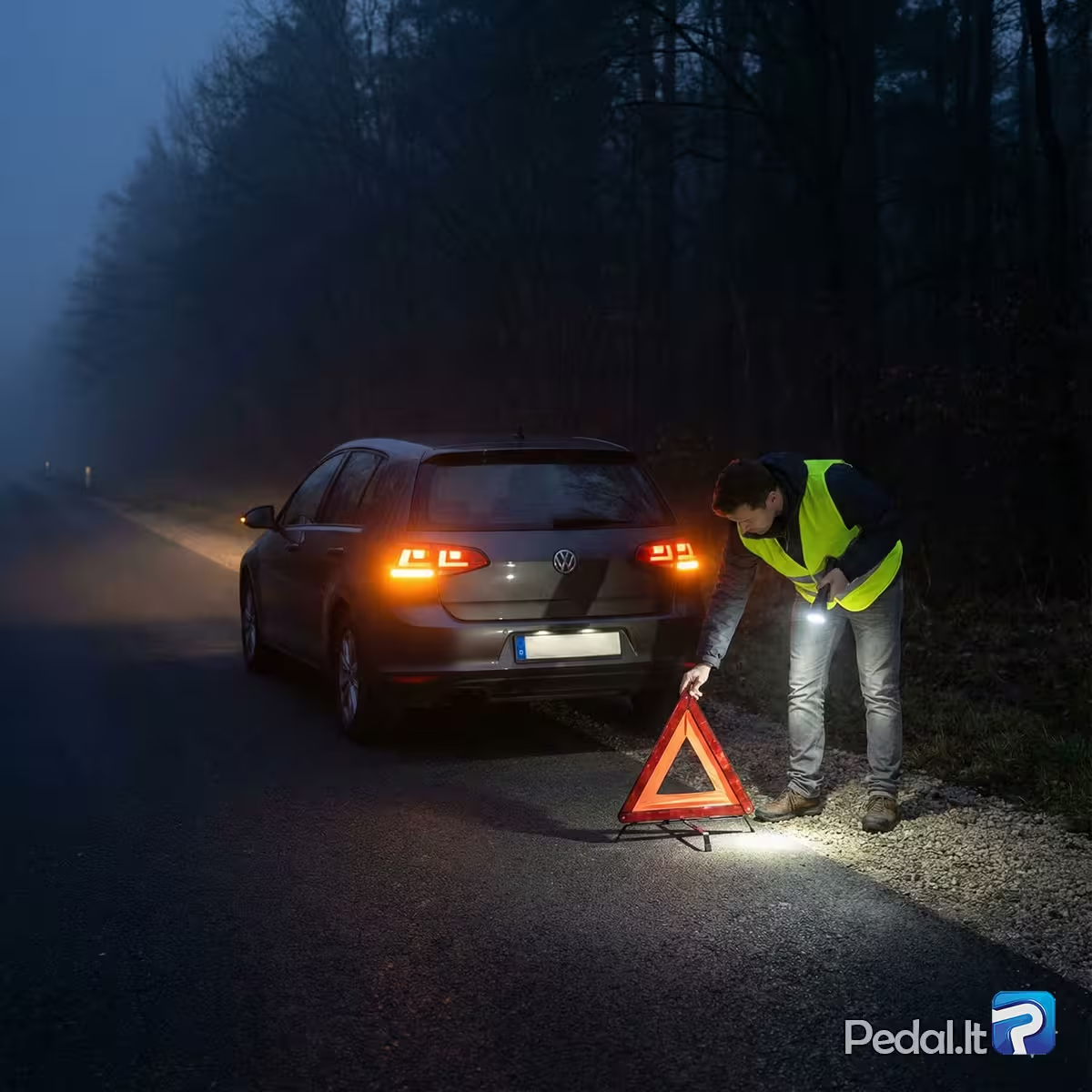
If you are forced to stop on an unlit section of road at night or in poor visibility because your position and brake lights have failed, what should you do?
RTR 92. If the emergency light signaling system is not fitted or is defective and an emergency stop is required where stopping or parking is prohibited, in the event of an accident, or where the stopped vehicle would be visible to other road users from less than 100 metres, the driver of a motor vehicle (other than a motor moped or a motorcycle without a trailer), a tractor, or a self‑propelled machine must immediately place an emergency stop sign on the carriageway side opposite the direction of travel: in built‑up areas not less than 25 m from the stopped vehicle, and outside built‑up areas not less than 50 m. If at least one rear position lamp is defective and the hazard warning lights are not working when driving at night or in poor visibility, an emergency stop sign must be affixed to the rear of the vehicle in order to continue driving.
RTR 151. When a vehicle is forced to stop where standing or parking is forbidden, drivers must switch on their hazard warning lights if available and/or place a warning triangle on the road as specified in Paragraph 92 of the Rules and remove their vehicle from the road as soon as possible. If drivers intend to stop their vehicle on unlit sections of the road during darkness or when visibility is poor, and hazard warning lights are not available or are inoperative, the vehicle must be parked off the carriageway. If this is impossible, the location must be marked as specified in Paragraph 92 of the Rules. JB
1. Turn the vehicle around and switch on the low beam headlights.
2. If it is not possible to park off the carriageway, switch on your hazard warning lights; if these are not available or are inoperative, place a warning triangle.
3. Indicate the stopped vehicle with bright flags.
1 of 30 Task
Time left: 00:00:00
1
2
3
4
5
6
7
8
9
10
11
12
13
14
15
16
17
18
19
20
21
22
23
24
25
26
27
28
29
30