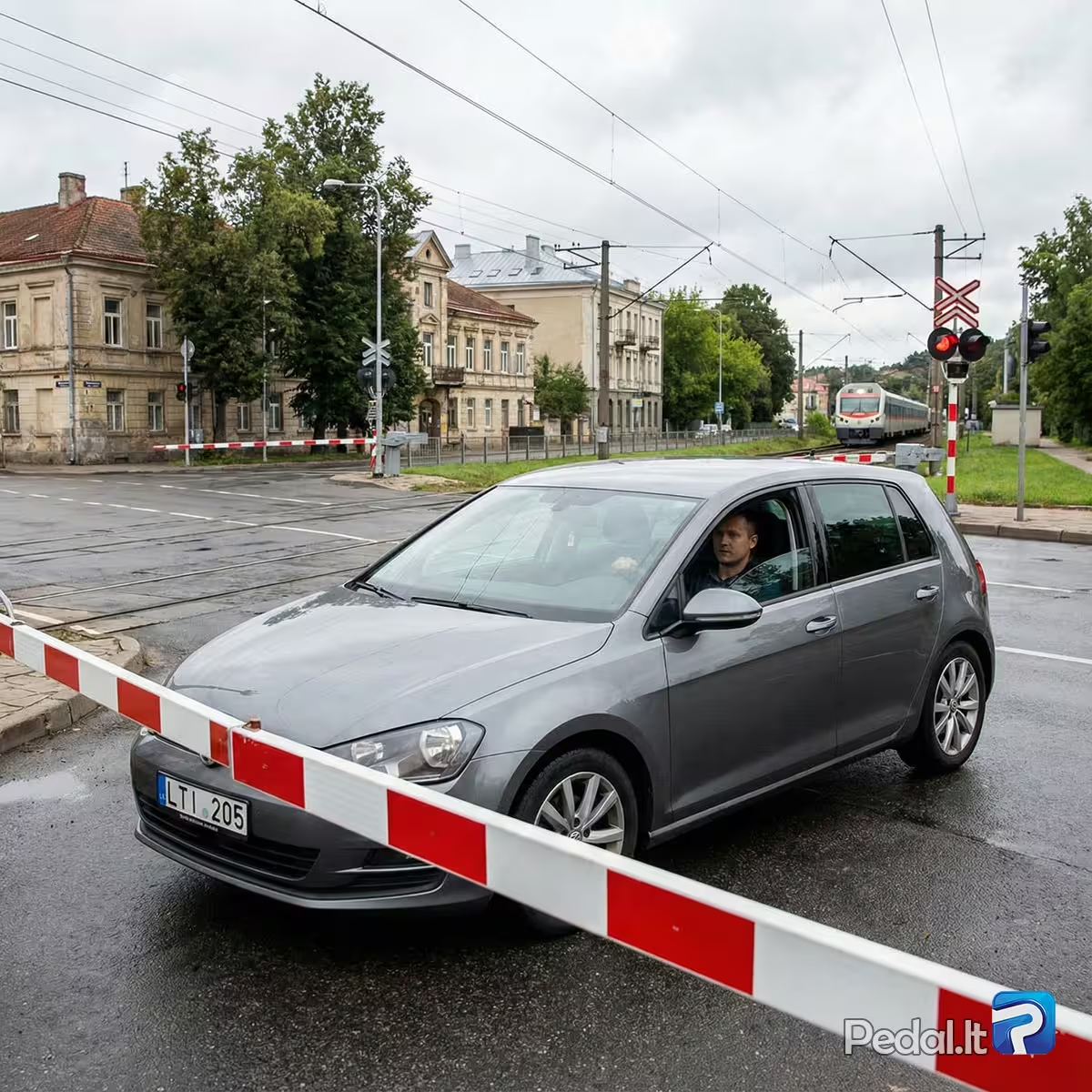
At a railway crossing, the vehicle driver must not:
Regulation RTR 173. Drivers must not: 173.3. enter a level crossing after the barrier has been lowered or is in the process of being lowered; deliberately lift the barrier; or drive around the barriers.
1. Deliberately lifting the barrier.
2. Entering the crossing after the barrier has been lowered or is in the process of being lowered.
3. Driving around the barrier.
The service brake has failed while you are driving on a motorway. What should you do?
Maintain a speed that allows you to stop the vehicle with the parking brake if necessary. Switch on your hazard warning lights to warn other road users. Drive to the nearest safe place to stop and call roadside assistance.
1. Reduce your speed and switch on the hazard warning lights. If necessary, apply the parking brake gradually. Carefully drive to the nearest safe place to stop and call roadside assistance.
2. Reduce your speed and notify the road police. Continue driving cautiously to your destination. If possible, add brake fluid.
When must you use the turn signal?
RTR 86. Warning signals must be given sufficiently in advance of a manoeuvre (including any braking related to it) and must be discontinued immediately after the manoeuvre is completed (hand signals may be stopped just before the manoeuvre). A signal must be given so that it does not mislead other road users. Turn signals are not used when entering a roundabout.
1. Before completing your overtaking manoeuvre.
2. Before beginning your overtaking manoeuvre.
3. Before passing an obstruction.
What happens when the air pressure in a vehicle's tyres is too low?
When driving with tyres that have insufficient air pressure, the outer edges of the tyres wear more quickly, shortening tyre lifespan. Low tyre pressure also reduces vehicle stability and increases rolling resistance, which raises fuel consumption.
1. Tyres wear out more quickly.
2. Vehicle stability improves.
3. Fuel consumption increases.
4. Vehicle stability decreases.
Your car begins to skid sideways while braking. What should you do?
If the wheels lock and the car begins to skid while braking, you must release the brake pedal. For example, if you brake hard before a bend and lock the wheels, the vehicle will continue moving in its original direction (straight ahead) despite steering input. That can cause you to run off the road or collide with an obstacle. In that situation you must stop braking — which can be difficult, especially for inexperienced drivers.
1. Press the clutch pedal.
2. Release the brake pedal (stop applying the brakes).
3. Apply the brakes more firmly.
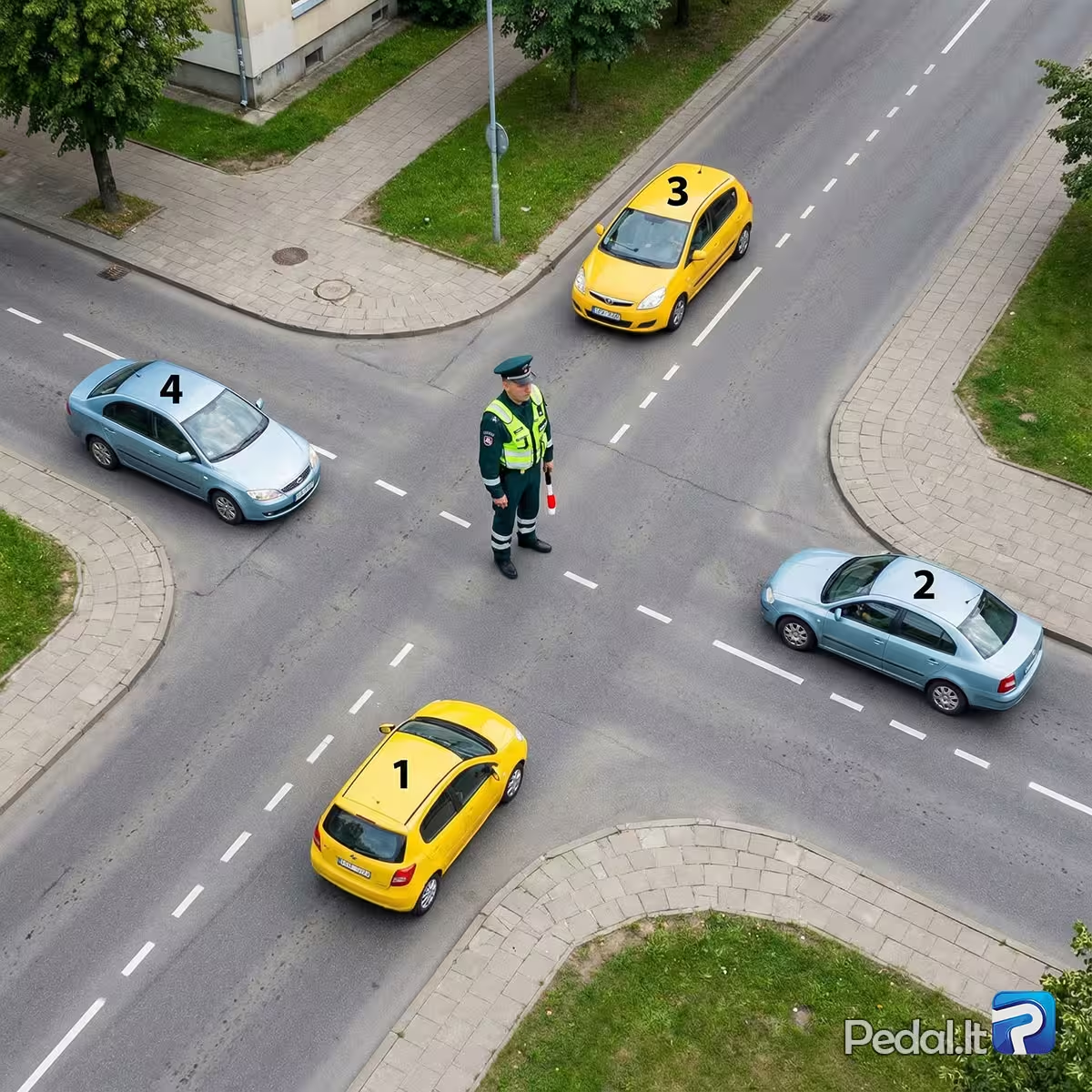
Is the third vehicle permitted to make a U‑turn?
The leading vehicle is not permitted to turn left and therefore may not make a U‑turn (RTR 77.1). When the signal arm is extended sideways or downward: 77.1.1 vehicles to the left and right may proceed straight or turn right; pedestrians may cross the carriageway; 77.1.2 vehicles and pedestrians ahead of and behind the signaling vehicle must not proceed. JB
1. Yes — it may.
2. No — it is not permitted.
3. Yes — but only after yielding to the first vehicle proceeding straight.
How does fatigue affect a driver?
When a driver operates a vehicle while fatigued, their memory and attention are impaired. They take longer to notice signals and assess situations, driving performance declines, reaction times are delayed, and vehicle control deteriorates.
1. Attention diminishes.
2. Fatigue has no effect on driving.
3. Reaction time is delayed.
The vehicle may transport passengers:
RTR 195. Drivers must not: 195.1. carry more passengers than are permitted by the vehicle's technical specifications; JB
1. Only to the extent necessary for urgent matters or when transporting persons en route for serious reasons.
2. No more than the number permitted by the vehicle's technical specifications.
Upon request by another road user involved in the accident:
RTR 219. In the event of a road accident, every driver involved or any other road user must: 219.3. upon the request of other road users involved in the accident, present a valid identity document or a valid driving licence, and a certificate (policy) of compulsory third‑party motor vehicle liability insurance in order to identify the insurer;
1. You must present a valid identity document and the certificate (policy) of compulsory motor third‑party liability insurance to identify the insurer.
2. You are required to present the documents only to the police.
Which factors can reduce a driver's attention while driving?
1. Engaging in a heated or intense conversation with a passenger.
2. Experiencing strong emotions (e.g., joy, anger, or hatred).
3. Listening to an engaging radio programme.
Is using the parking brake to slow down permitted?
The parking brake may be used only in emergency situations (to prevent a collision) or if the foot brake fails.
1. It is permitted in emergency situations.
2. It is permitted if the foot brake fails.
3. It is permitted if the driver needs to brake suddenly.
4. It is not permitted.
Are you required to signal before changing lanes?
RTR 82. A driver must indicate intended maneuvers using the vehicle's right or left direction indicators, or by arm signals if the indicator lights are unavailable or inoperative. Specifically: 82.1 before starting to move and before stopping; 82.2 before changing lanes, before and after overtaking, before and after passing an obstruction, before turning right or left, before making a U‑turn, and before leaving an intersection where vehicles must circulate around a central point. JB
1. Yes — you must signal.
2. No — you are not required to.
3. Only if other road users are nearby.
Indicate the maximum permitted speed for learner drivers when driving outside a built-up area on a road with an asphalt surface.
RTR 131. The following speed limits apply outside built-up areas: 131.2. The maximum speed for A1, A2, A or B category vehicles driven by novice drivers, persons learning to drive or taking a practical driving test, and buses (including school buses) is: 100 km/h on motorways; 90 km/h on highways; 80 km/h on roads with asphalt or concrete pavement; and 70 km/h on other roads. JB
1. 50 km/h.
2. 80 km/h.
3. 70 km/h.
4. 90 km/h.
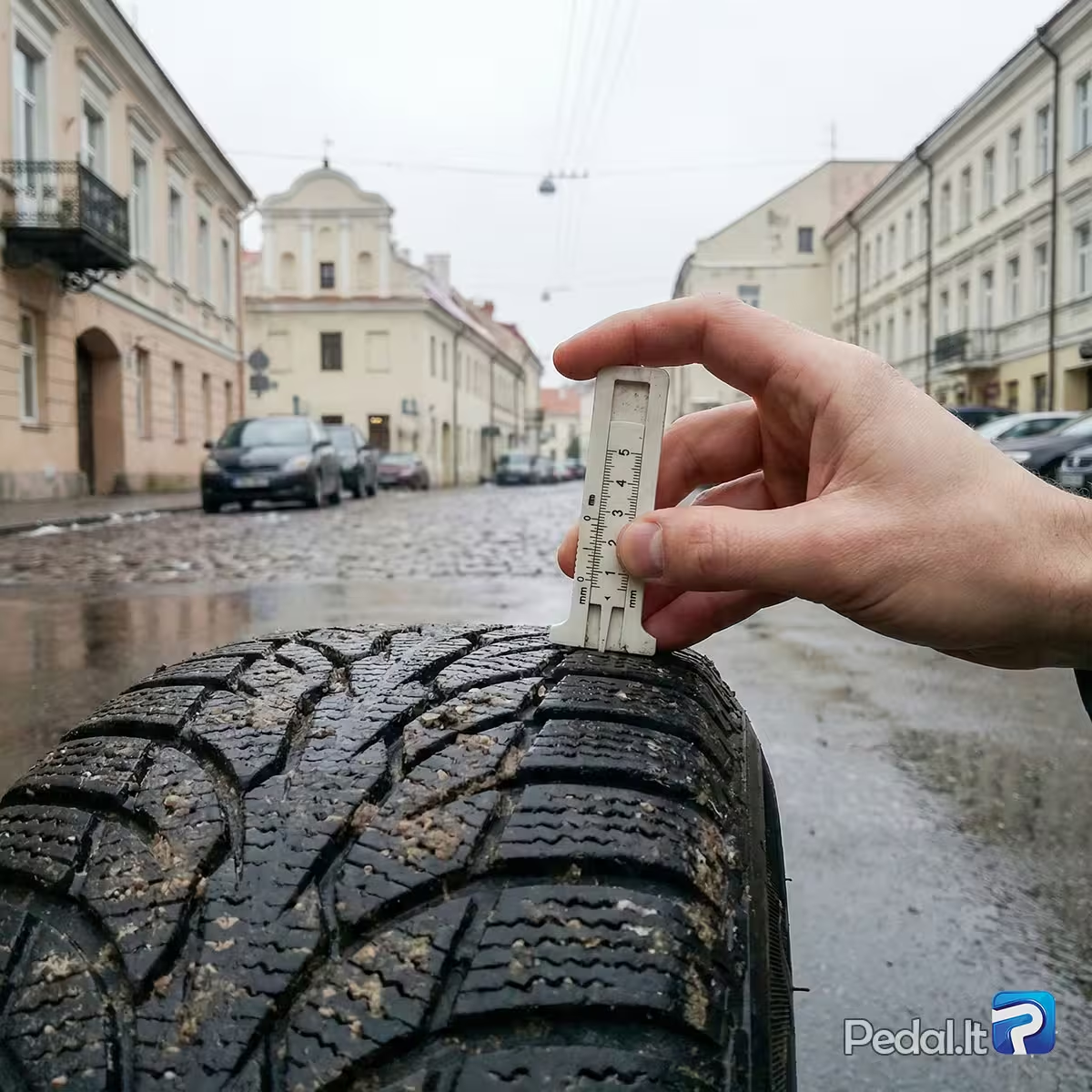
What is the minimum allowable winter tread depth for a passenger car tyre?
Passenger car tyre tread depth must be at least 1.6 mm in general and 3.0 mm during the winter period. Source: Technical requirements for motor vehicles and their trailers — Section V: Vehicle axles, wheels, tyres and suspension. 5.7. The tread depth of the tyres used must be at least: 5.7.1. M1 category — 1.6 mm (from November 10 to March 31 — 3.0 mm); JB
1. 1.6 mm.
2. 2.0 mm.
3. 3.0 mm.
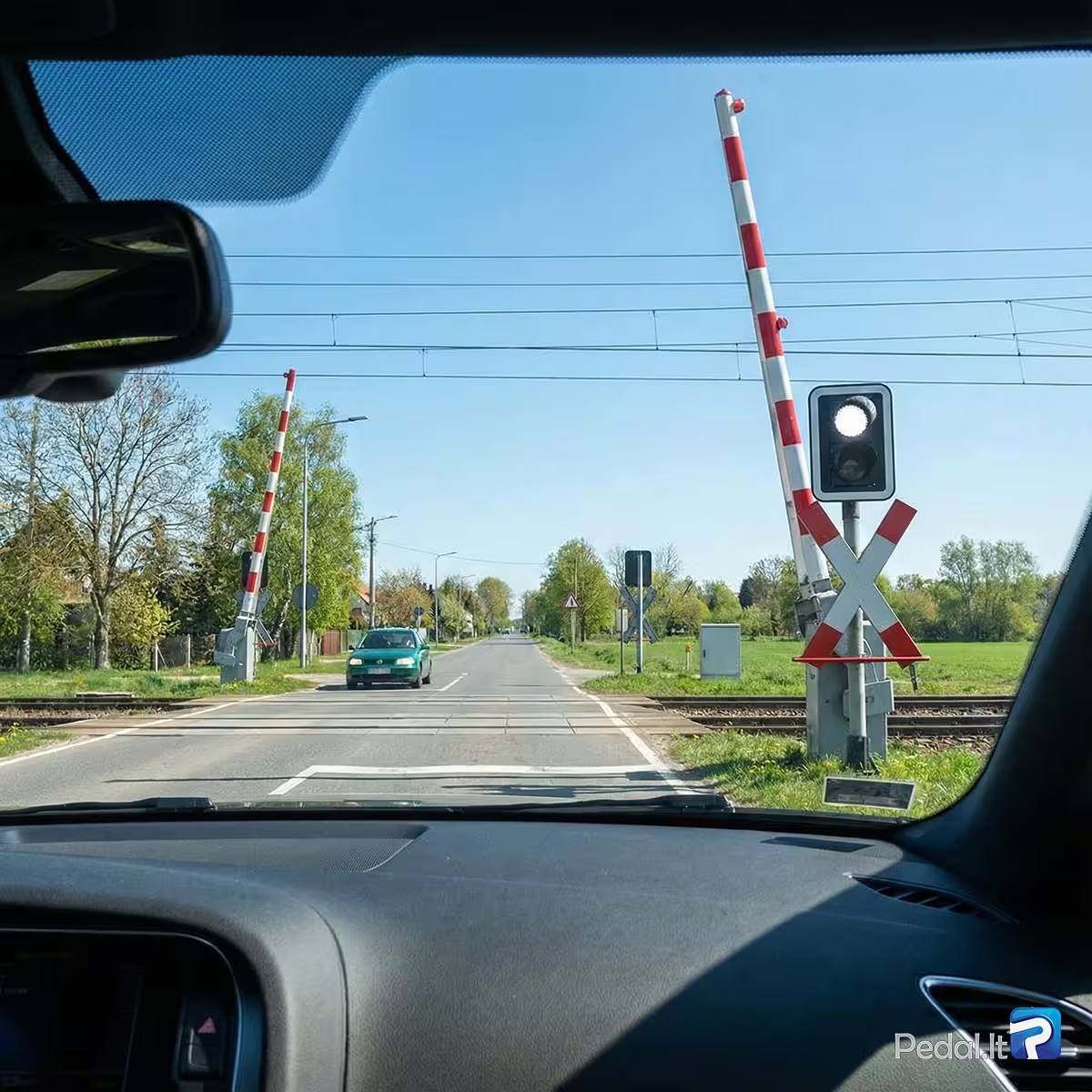
You see a flashing white light and the barrier is fully raised. Are you permitted to cross the level crossing in this situation?
RTR 73. Traffic light signals: 73.10. A flashing white light used at level crossings indicates that vehicles may proceed only after confirming that no rail-borne vehicle is approaching the crossing.
1. Yes — but only after you have verified that no train or other rail vehicle is approaching the level crossing.
2. No — you may not proceed.
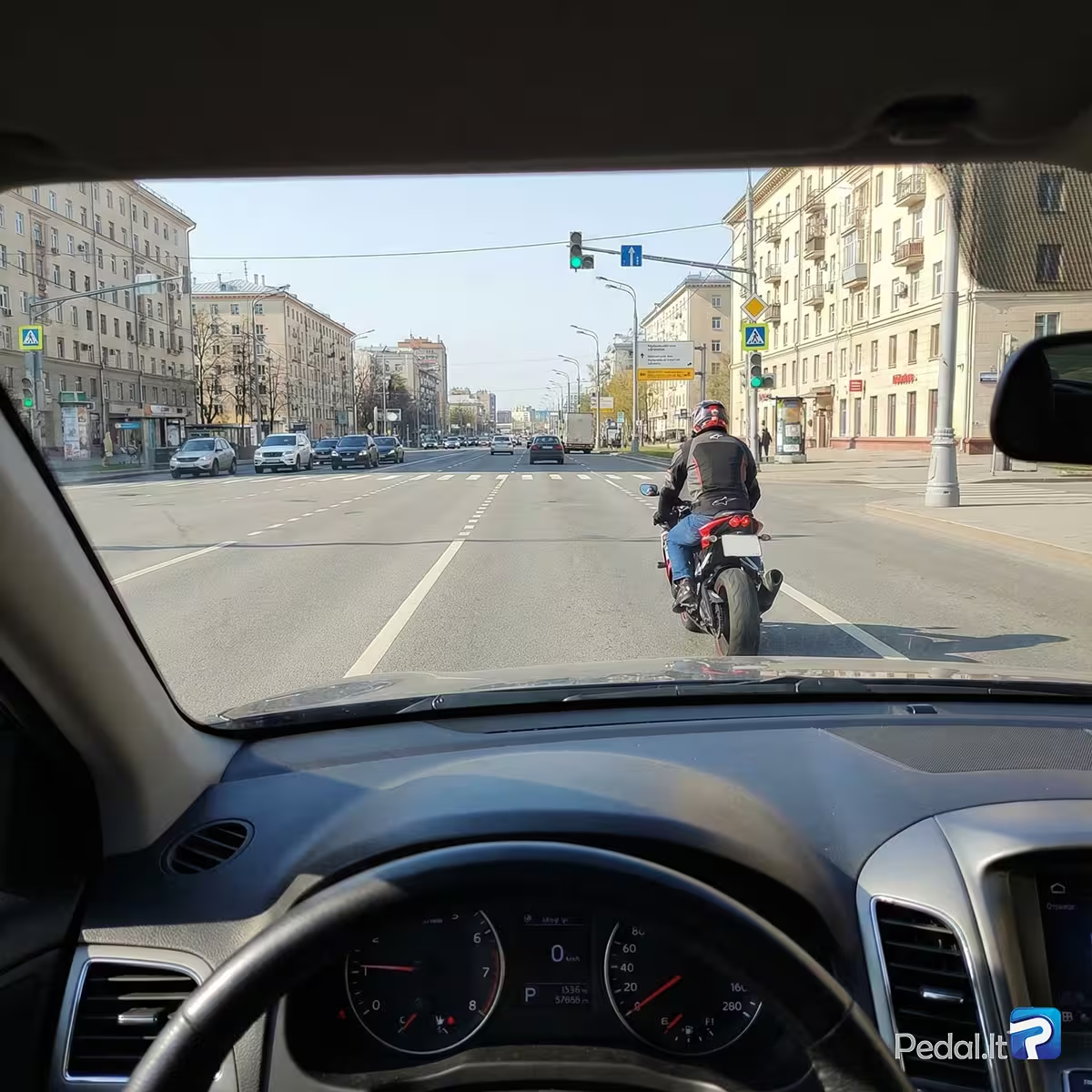
Are you allowed to ride a motorcycle with only a category B driving licence?
LAW ON ROAD TRAFFIC SAFETY — Article 22(12). Persons aged 24 or older who have at least two years' driving experience with a category B licence and who have completed practical training for category A1 vehicles in accordance with the procedure established by the Ministry of Transport and Communications or its authorised institution are granted the right to drive category A1 vehicles within the territory of the Republic of Lithuania.
1. Driving category A1 motorcycles is permitted for persons aged at least 24 who have held a category B licence for at least two years and have completed special practical motorcycle training at a driving school.
2. It is permitted to drive all motorcycles.
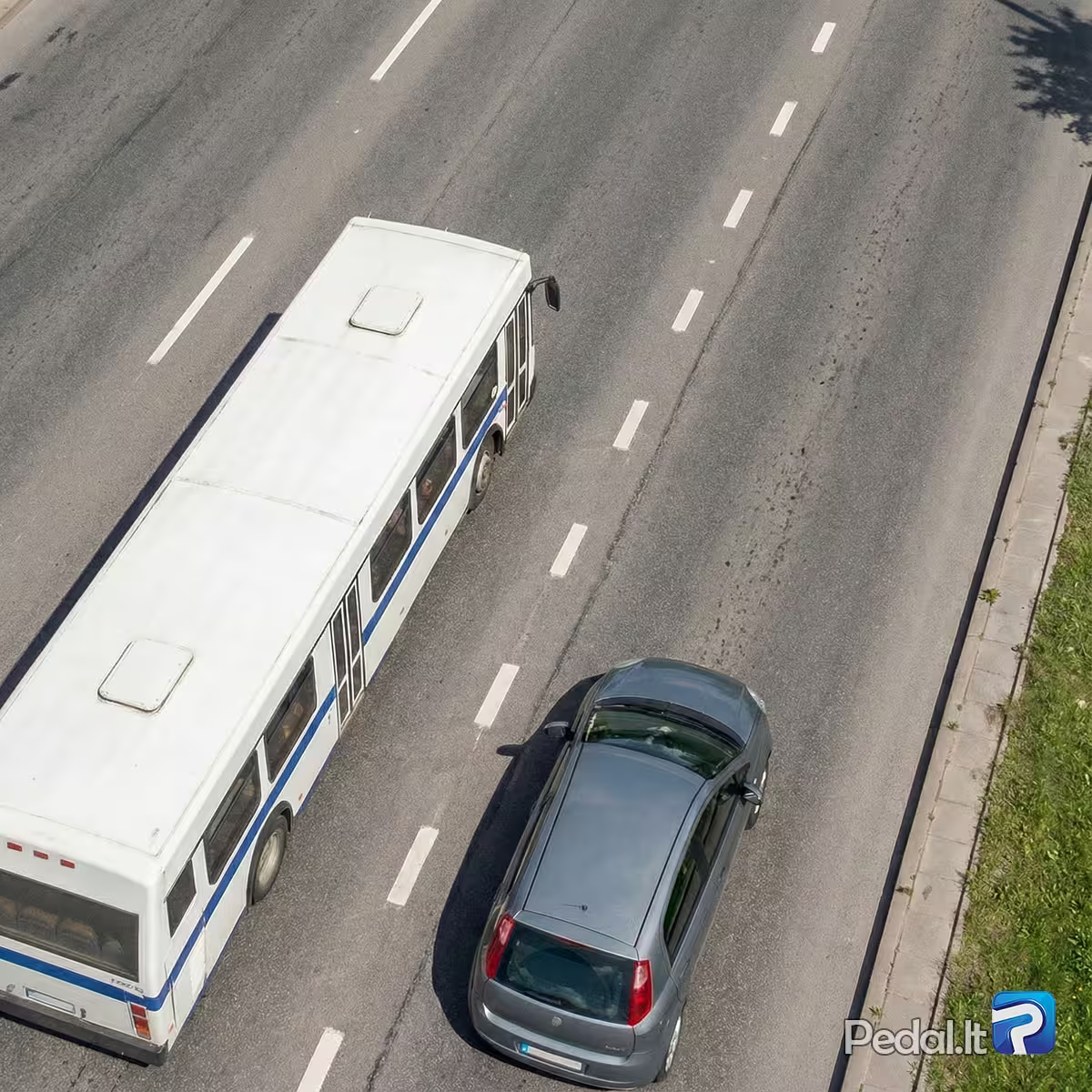
An acceleration lane is used to:
RTR 112. When an acceleration lane is provided for entering a roadway, the driver must use it to gain speed and merge into the main traffic flow, yielding to vehicles already on the road. The driver may change lanes as necessary or enter a deceleration lane when appropriate. JB
1. To accelerate to the speed of traffic and merge into the main flow, yielding to vehicles already on the road.
2. For use by general traffic when the roadway is too narrow.
3. For parking when no nearby parking facilities are available.
A driver is operating a goods vehicle with a permissible maximum weight under 3,500 kg. Which driving‑licence category must the driver hold?
In this situation the driver must hold at least a category B driving licence; the driver is not required to hold a category C licence. LAW ON ROAD TRAFFIC SAFETY — Article 23. Categories of motor vehicles and the minimum driving age. 1. Categories of motor vehicles and their combinations with trailers are: 6) Category B: vehicles with a permissible maximum weight not exceeding 3,500 kg and designed and constructed to carry no more than eight passengers, excluding the driver; these vehicles may be combined with a trailer whose permissible maximum weight does not exceed 750 kg; they may also be combined with a trailer whose permissible maximum weight exceeds 750 kg, provided that the permissible maximum weight of the vehicle combination does not exceed 4,250 kg; a vehicle combination with a permissible maximum weight exceeding 3,500 kg (including a trailer with a permissible maximum weight exceeding 750 kg) may be driven only after passing a practical skills and behaviour test at the state enterprise "Regitra".
1. C.
2. B.
3. A.
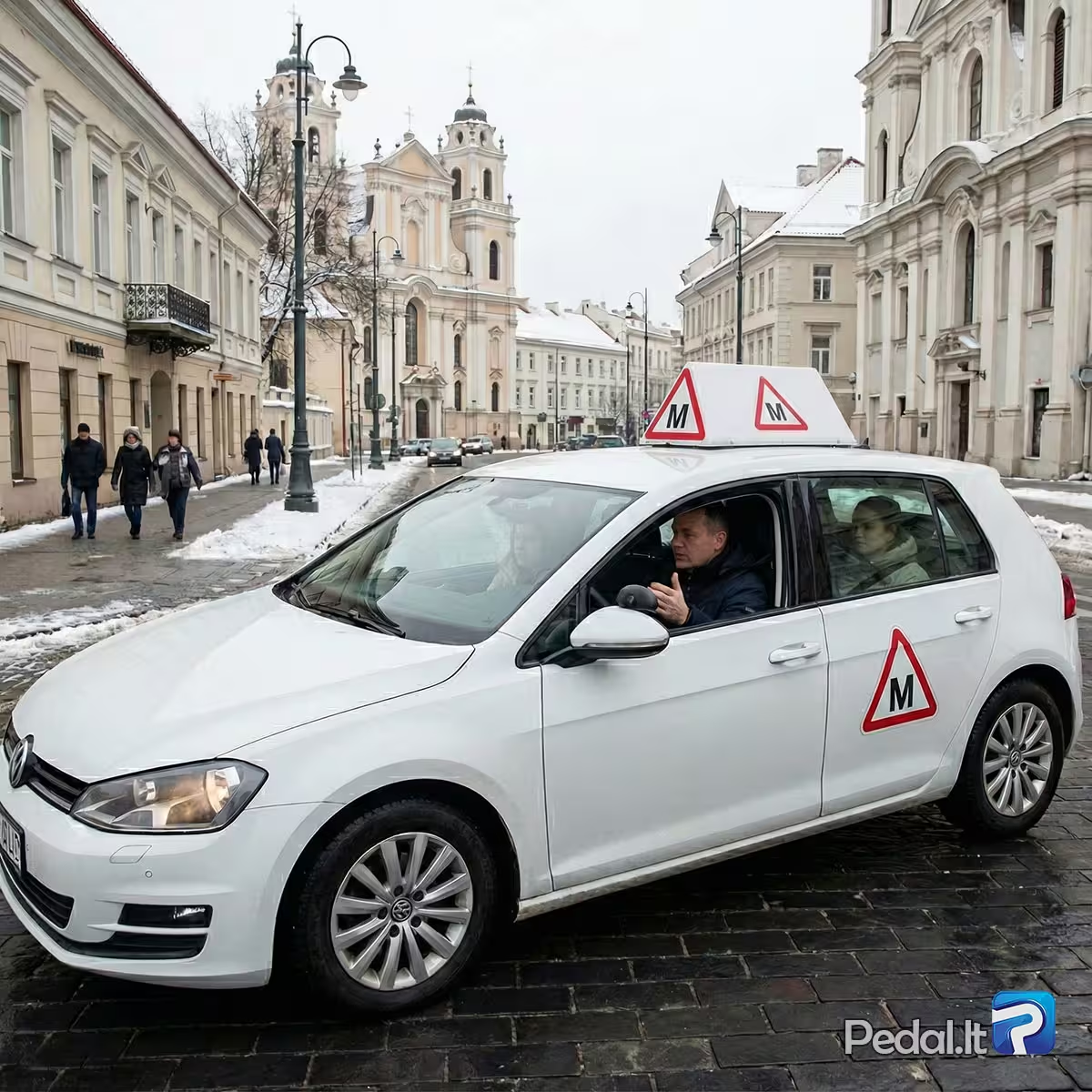
Is it permitted to transport passengers while teaching someone to drive?
RTR 195. Drivers must not: 6) teach another person to drive or transport children under 14 years of age; JB
1. Prohibited.
2. Permitted.
3. Permitted, but only for passengers aged 14 years or older.
When operating electric scooters, choppers, or electric mopeds with a maximum design speed of 25–45 km/h and power between 1 kW and 4 kW:
The AM category is sufficient to drive these vehicles, but it is not the only entitlement that allows you to do so. Possessing another driving category that authorises operation of such vehicles also permits you to drive them. LAW ON ROAD TRAFFIC SAFETY — Article 2. Basic concepts of the Law: 30. Light quadricycle means a four-wheeled motor vehicle with an unladen mass (excluding batteries if it is an electric vehicle) not exceeding 350 kg, a maximum design speed not exceeding 45 km/h, an engine capacity not exceeding 50 cm3 (for a spark-ignition engine), a maximum net power not exceeding 4 kW (for another type of internal combustion engine), and a maximum rated power not exceeding 4 kW (for an electric motor). 33. Moped means a two-wheeled motor vehicle with a maximum design speed exceeding 25 km/h and not exceeding 45 km/h, an engine capacity not exceeding 50 cm3 (for an internal combustion engine), and a maximum net power not exceeding 4 kW (for an electric motor); or a three-wheeled motor vehicle with a maximum design speed exceeding 25 km/h and not exceeding 45 km/h, an engine capacity not exceeding 50 cm3 (for a spark-ignition engine), a maximum net power not exceeding 4 kW (for another type of internal combustion engine), and a maximum net power not exceeding 4 kW (for an electric motor). LAW ON ROAD TRAFFIC SAFETY — Article 23. Categories of motor vehicles and the minimum driving age: 1. Categories of motor vehicles and their combinations with trailers: 1) Category AM: mopeds and light quadricycles;
1. A driving licence is not required to operate these vehicles.
2. The driver must hold a valid driving licence entitling them to operate AM‑category vehicles, or a licence of another category that permits driving such vehicles.
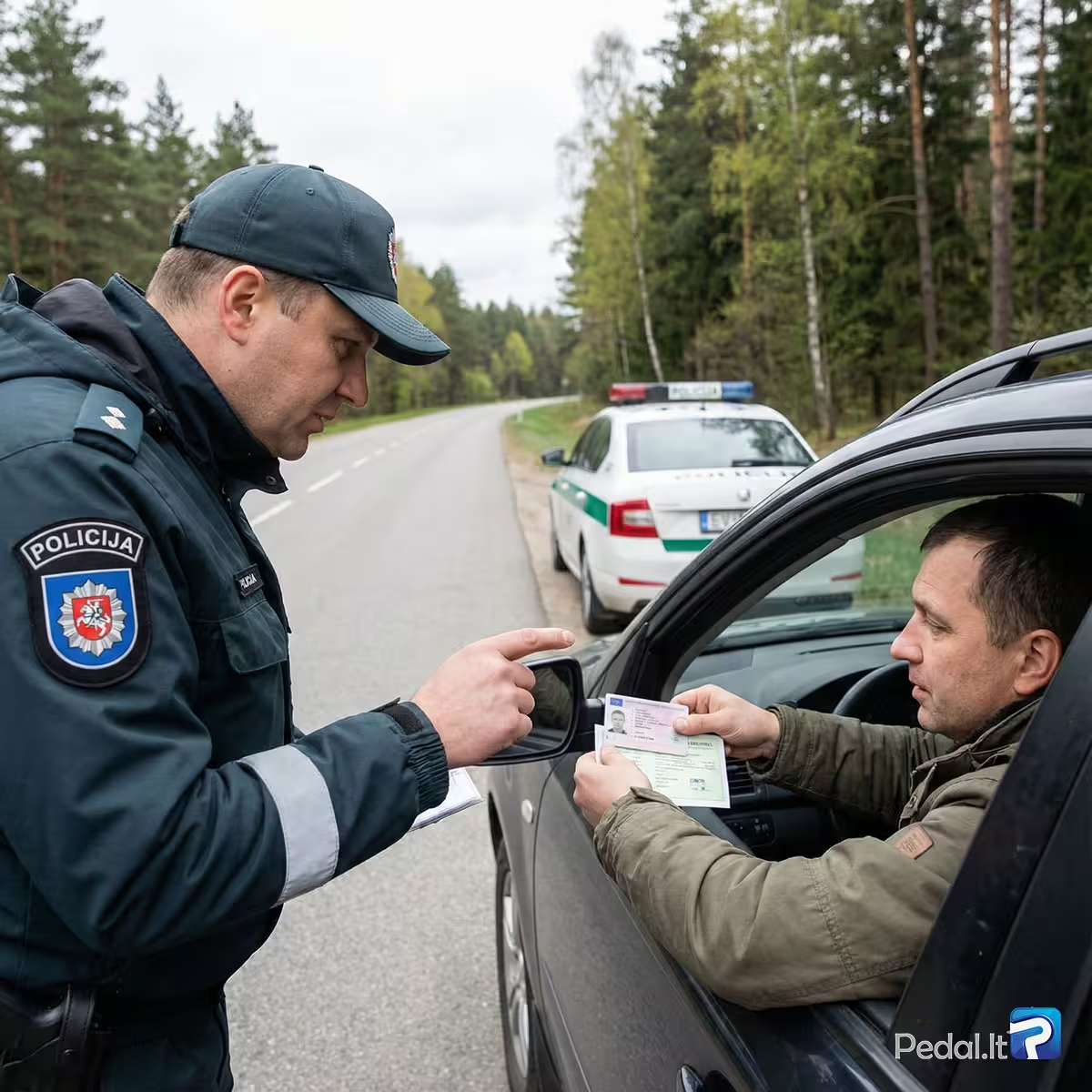
What checks must a driver allow when requested by a police officer?
RTR 17. At the request of a police officer, a driver must submit to tests for alcohol intoxication or for intoxication caused by narcotic drugs, psychotropic substances, or other psychoactive substances, in the manner prescribed by the Government of the Republic of Lithuania. RTR 14. It is prohibited to drive a vehicle if you are not authorized to do so, if you are under the influence of alcohol, narcotic drugs, psychotropic substances or other psychoactive substances. A person who is fatigued or ill must not drive if driving may endanger road safety. A vehicle must not be entrusted to a person who is under the influence of such factors or who is not authorized to drive that type of vehicle. When operating a vehicle, the driver must comply with the conditions specified on the driving licence. JB
1. Alcohol intoxication.
2. Irritability.
3. Fatigue.
4. Intoxication by narcotic drugs.
If an inspecting officer stops you, what must you switch on?
RTR 91. If the vehicle is fitted with hazard warning lights, they must be switched on: 91.3 when the vehicle is stopped by an inspecting officer. JB
1. The horn (audible warning).
2. Hazard warning lights (emergency flashers).
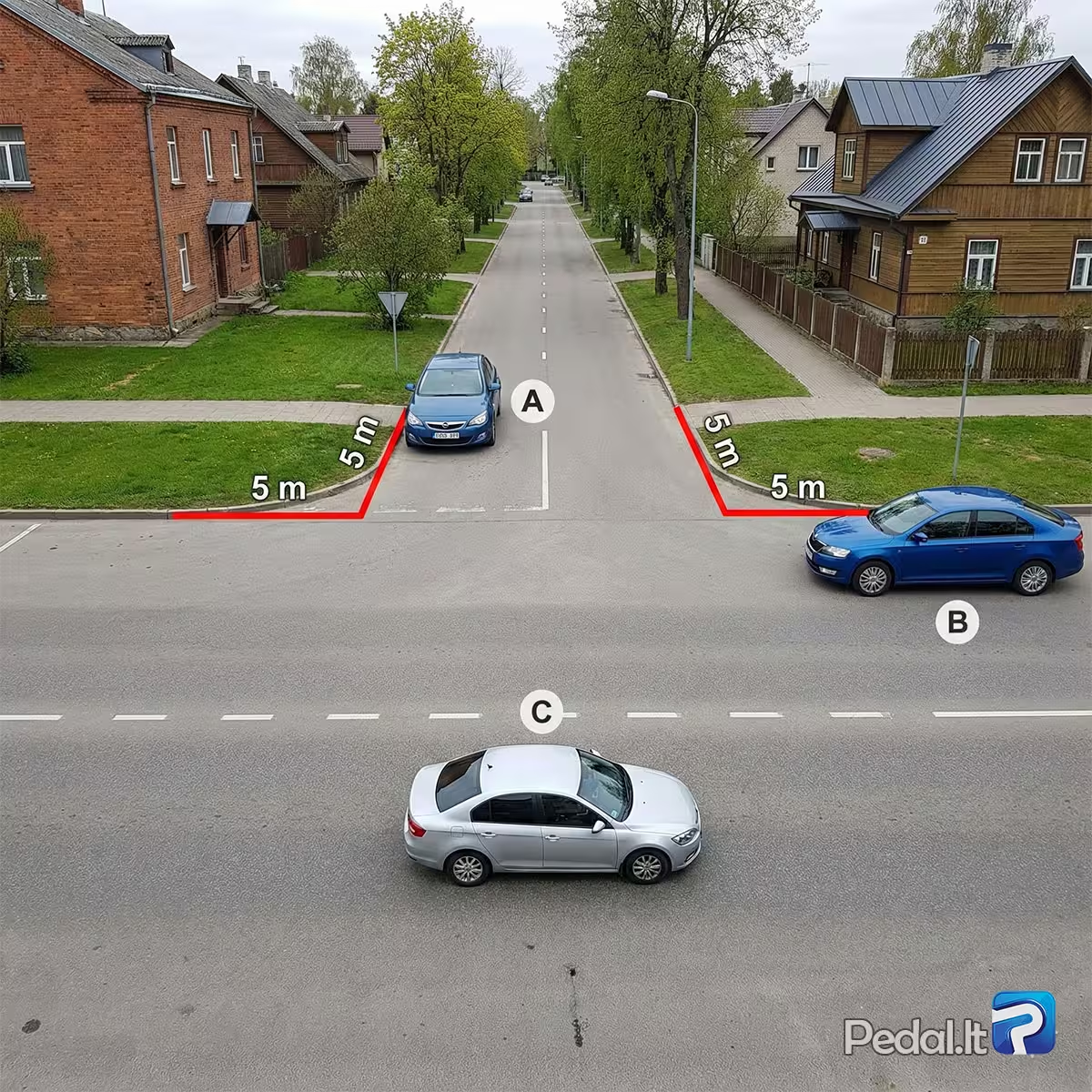
Which vehicles have violated the Road Traffic Rules by stopping at the entrance to the yard?
This is not an intersection but the entrance to a yard. Therefore, vehicle C is not prohibited from parking in this way. RTR 150. Standing and parking shall be prohibited: 150.15 at crossroads and in places where vehicles enter the road from adjacent areas and exit the road to adjacent areas, and within a 5-metre distance from those points (on the side of the road where the entrance/exit is located), except where road signs permit parking.
1. Vehicle A
2. Vehicle B
3. Vehicle C
4. All vehicles are parked correctly.
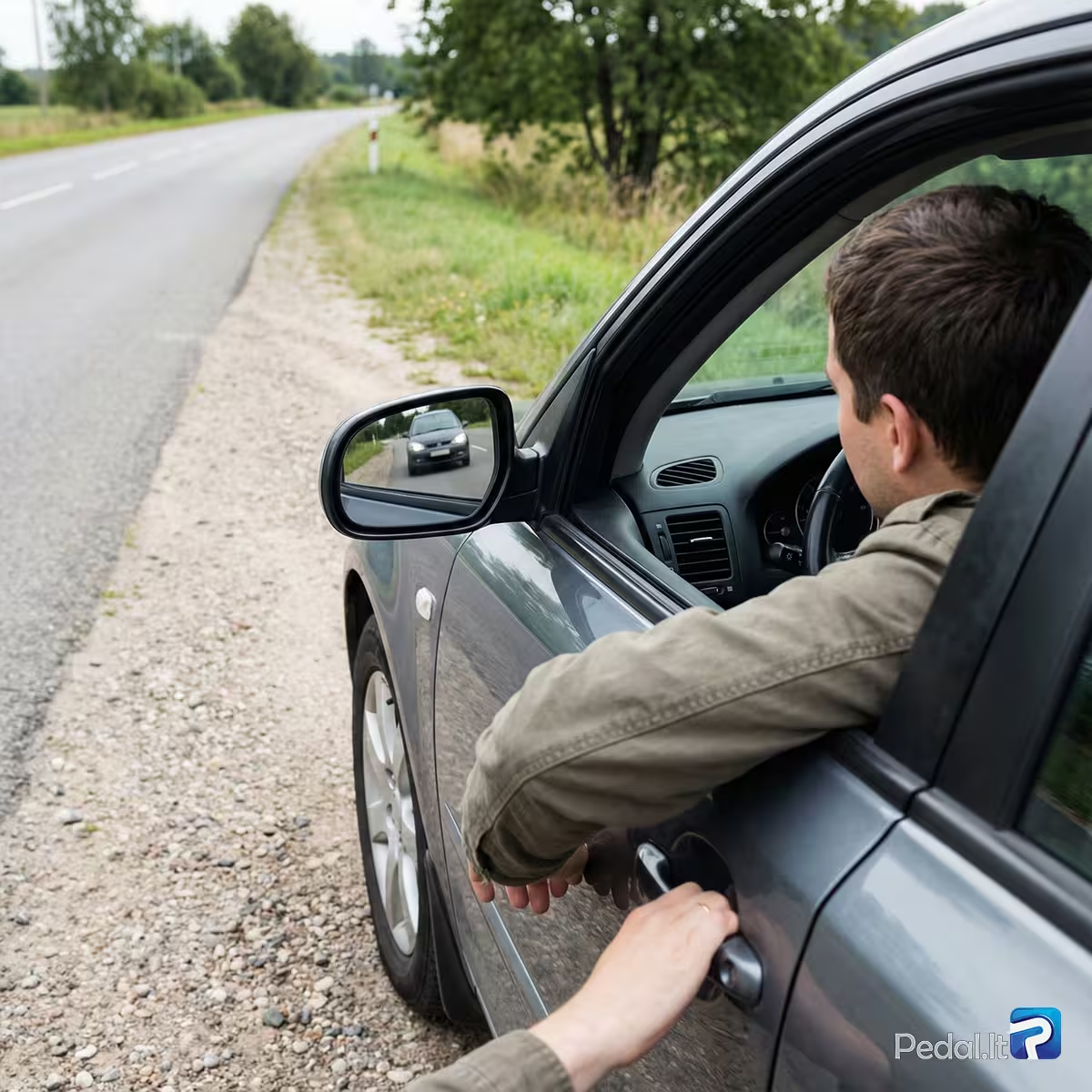
After stopping on the right-hand shoulder, what should a driver check before opening the door?
Vehicles may be approaching from the rear on the left-hand side, so opening the door could be unsafe. (RTR 148) Do not open the doors of a parked vehicle if doing so would create an obstruction or pose a hazard to other road users.
1. Vehicles approaching from behind on the left-hand side.
2. Vehicles approaching from behind on the right-hand side.
3. They do not need to pay attention to anything specific.
Your vehicle's dipped-beam headlamps are on during daylight. Drivers in the oncoming lane keep switching their main beams to dipped beams (flashing their headlights). What does this indicate?
If other drivers switch their headlights from high beam to low beam (flash) during the day, it may indicate that your low beams are excessively bright or misaligned and are dazzling other road users. This is dangerous because dazzled drivers can become disoriented and cause accidents. If you notice that drivers often flash their lights as they pass you, it is a sign to have your vehicle's lighting checked and, if necessary, adjusted. 81. The warning signals are as follows: using turn and brake light signals (signals may also be indicated by hand); sounding the horn; switching headlights on and off; using hazard warning lights; turning on flashing orange hazard lights; and placing a warning triangle on the road or attaching it to a vehicle.
1. You must switch on your main-beam (high) headlamps.
2. You must switch on your position (parking) lamps.
3. Your vehicle's headlamps are misaligned or aimed too high and are dazzling other road users.
What should you consider before setting out on a long journey?
Before a long journey, inspect your vehicle for obvious defects that could force you to stop. Avoid overloading the car to improve safety and reduce fuel consumption and wear. Planning your route with a navigation system helps make the trip faster, more efficient, and safer.
1. Performing a roadworthiness check.
2. Checking your tyre pressure.
3. Planning your route using a navigation system.
4. Avoiding overloading your vehicle.
Braking distance depends on:
Braking distance depends on the condition of the tyres, the vehicle's speed, the road surface, the vehicle's weight, the force applied to the brake pedal, and the condition of the braking system. Less worn tyres provide more effective braking. Lower speeds reduce stopping distance. Heavier vehicles require a longer distance to stop. Rougher road surfaces increase traction and therefore shorten stopping distance. Applying greater pressure to the brake pedal generally shortens stopping distance, provided you avoid locking the wheels.
1. The condition of the tyres and the vehicle's speed.
2. Whether the vehicle is front-wheel drive or rear-wheel drive.
3. The condition of the brake pads.
4. The condition of the road surface.
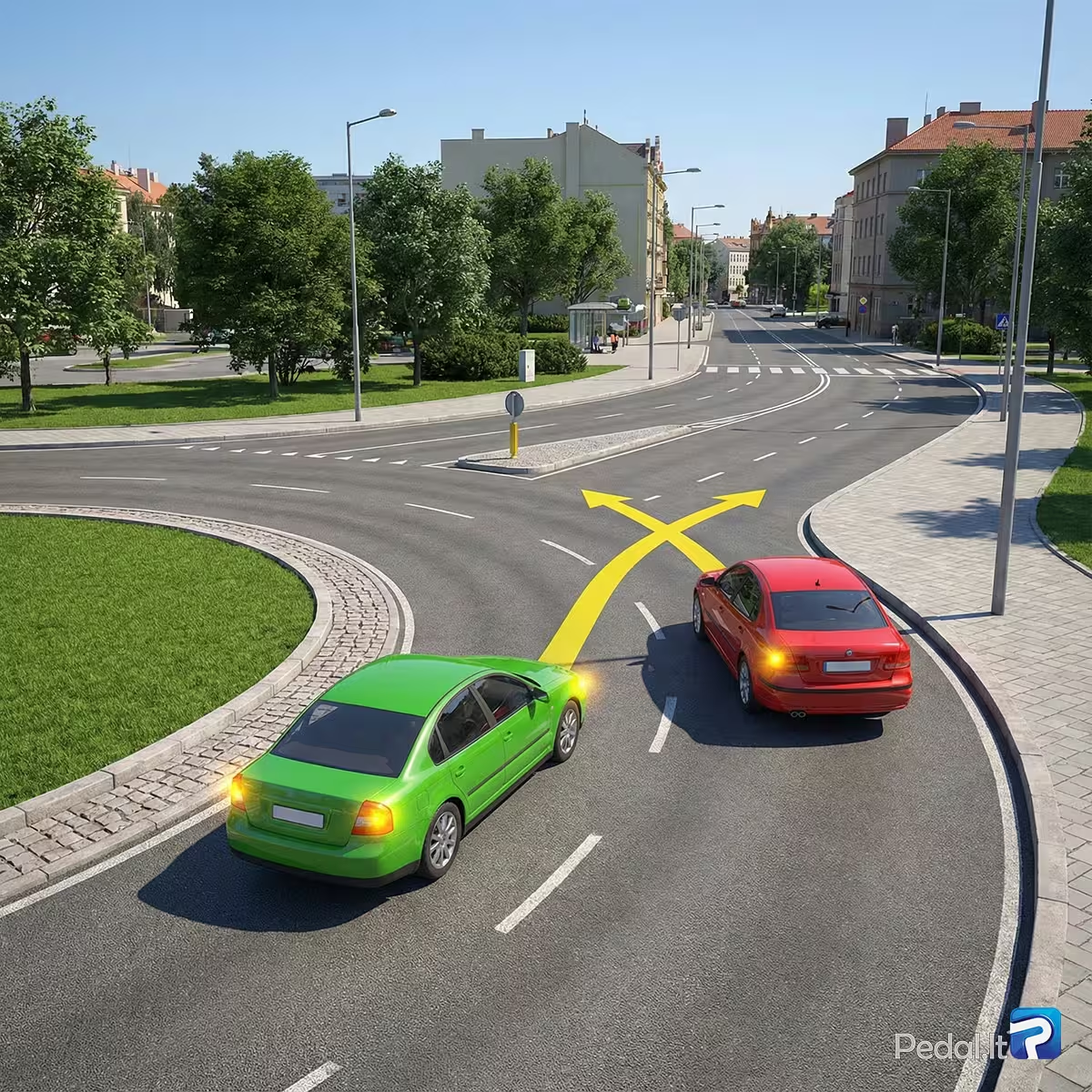
Which driver is violating the traffic rules?
There are no lane direction signs; therefore the driver of the red vehicle may go straight or turn right. When changing lanes, the driver of the green vehicle must yield. RTR 104. When changing lanes, a driver must yield to vehicles moving in the same direction in the adjacent lane. If vehicles moving in the same direction change lanes simultaneously, a driver must yield to the vehicle on the right, except in the cases specified in Paragraph 112 of the Rules. RTR 112. If an acceleration lane is provided for entering the road, the driver must use that lane and merge into the main traffic flow (change lanes and move into the adjacent lane), yielding to vehicles already in that flow or to vehicles changing lanes toward the deceleration lane. RTR 106. Before turning right, left, or making a U-turn (except when entering an intersection with circular traffic), a driver must move in advance to the edge of the carriageway designated for that direction. Road signs and/or road markings may indicate otherwise.
1. The driver of the red vehicle.
2. The driver of the green vehicle.
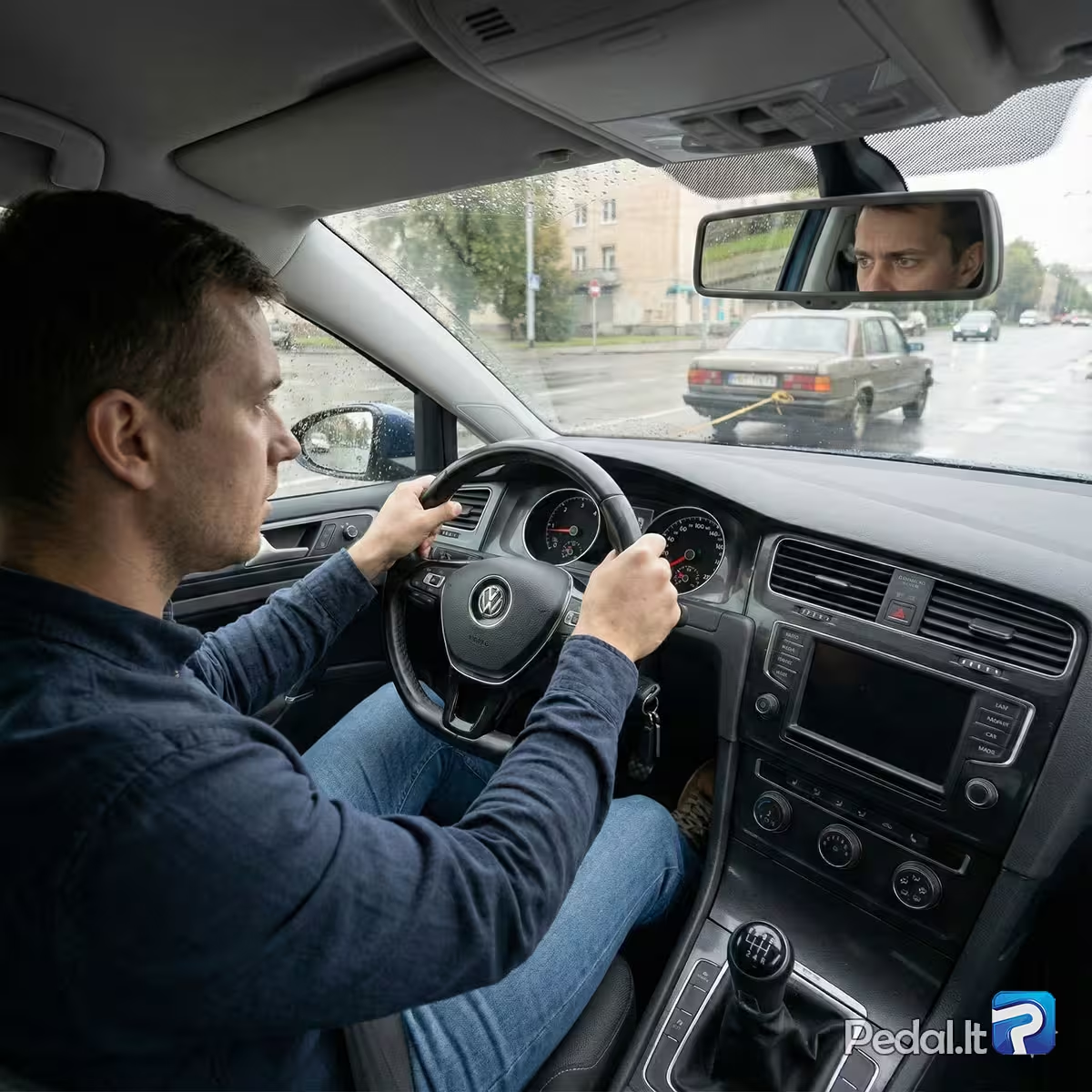
What should a driver be aware of when towing a vehicle whose engine—and therefore its brake servo—is not running?
Consider the effect on braking performance when towing a vehicle whose engine (and thus its brake servo) is not operating.
1. Continue driving as usual.
2. The towed vehicle's braking effectiveness is reduced.
When should you release the throttle and rely on the vehicle's inertia to conserve fuel?
Note: Releasing the throttle is not the same as freewheeling. See 3.4 Control the throttle: 3.4.9 Release the throttle and use the vehicle's inertia before coming to a stop at a predetermined location (for example, at an intersection with a traffic light or at a stop sign) or in similar situations. JB
1. When approaching an intersection with a red traffic light.
2. When driving downhill on a steep slope.
3. When approaching a stop sign.
4. Before coming to a stop at a predetermined location.
1 of 30 Task
Time left: 00:00:00
1
2
3
4
5
6
7
8
9
10
11
12
13
14
15
16
17
18
19
20
21
22
23
24
25
26
27
28
29
30