What is meant by "crossroads"?
RTR 3.17. "Crossroads" means the area bounded by imaginary lines drawn from the outer edges of the intersecting carriageways, regardless of whether those edges are widened or rounded.
1. An area bounded by imaginary lines drawn from the outer edges of the intersecting carriageways.
2. An area bounded by imaginary lines connecting the outer edges of pavements or road shoulders.
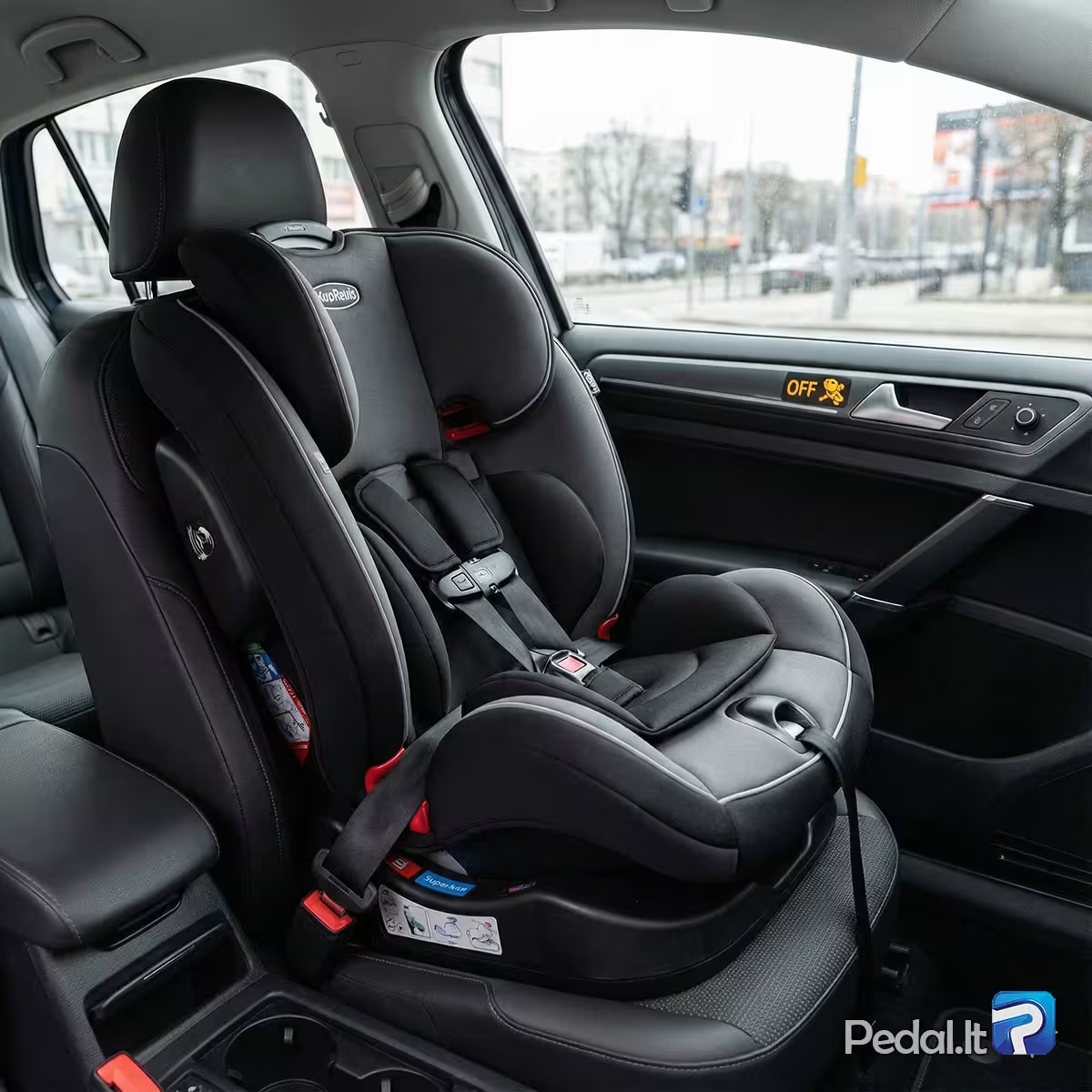
When is a child allowed to be transported in a child restraint (appropriate for their size and weight) on the front passenger seat of a motor vehicle?
RTR 201. Do not place a rear-facing child restraint suitable for the child's size on the front passenger seat if that seat is protected by an active airbag. This prohibition does not apply when the front passenger airbag is deactivated. It is recommended that children remain as long as possible in a rear-facing child restraint adapted to their height and weight, in accordance with the child seat manufacturer's instructions.
1. Only in a forward-facing child seat.
2. A child may be transported in a rear-facing child restraint on the front passenger seat if the vehicle has no front passenger airbag.
3. A child may be transported in a rear-facing child restraint on the front passenger seat if the front passenger airbag has been deactivated.
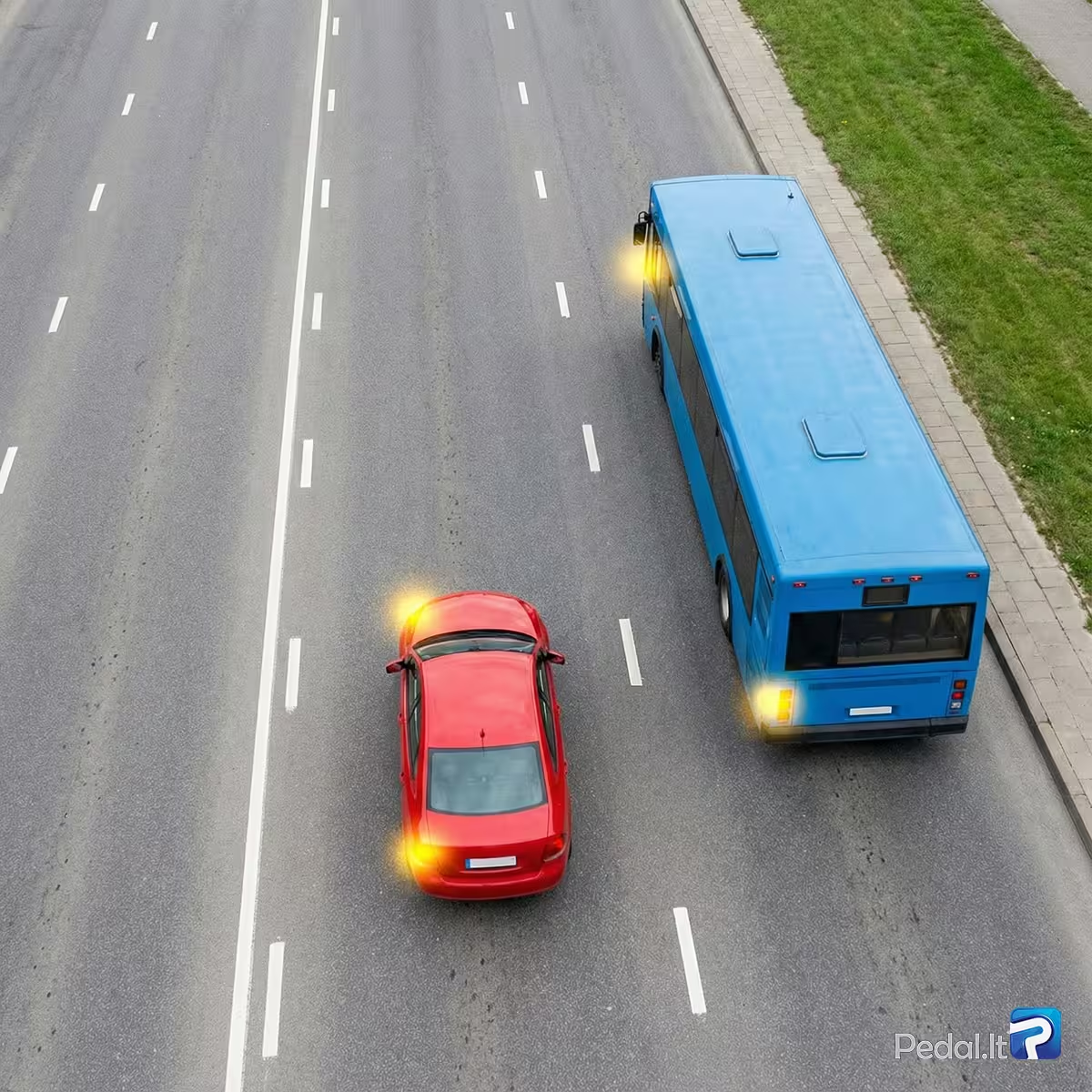
Is it permitted to turn around from the right-hand side of the carriageway if the carriageway is too narrow to turn from the left-hand side?
RTR 107. When, due to a vehicle's large size or other valid reasons, it is not possible to complete a turn (turn around) from the appropriate edge position of the carriageway, the vehicle may perform the turn from a part of the carriageway other than that edge assigned for travel in that direction, provided the maneuver does not obstruct other vehicles or create a hazard for other road users. JB
1. Yes — provided the maneuver does not obstruct other vehicles or create a hazard for other road users.
2. No — the maneuver is prohibited.
How should you drive when the road is covered with ice?
High speed is unsafe on icy roads because the slippery surface increases braking distance; therefore you should drive slowly. On slippery roads, also try to prevent excessive wheel slip by keeping engine revolutions low — a higher gear results in lower engine RPM. Select a gear appropriate for your speed, but ensure it is as high as possible. If you feel the vehicle beginning to skid, immediately and gently release the accelerator and do not change the clutch pedal position.
1. Drive at a low speed while using the highest gear possible.
2. Drive at a low speed while using the lowest gear.
3. Drive at a high speed while using the highest gear.
4. Drive at a high speed while using the lowest gear.
Standing and parking are prohibited when the distance between a stationary vehicle and a solid line of the road marking (or the kerb) is:
The distance between a stationary vehicle and a solid line (or the kerb) must be at least 3 metres. If the distance is exactly 3 metres, standing and parking are permitted. If the distance is less than 3 metres (for example, 2 metres), standing and parking are prohibited.
RTR 150. Standing and parking are prohibited:
150.7 where there is a distance of less than 3 m between a stationary vehicle and a solid line of the road marking, the kerb, or, in its absence, the edge of the carriageway;
1. 3 metres
2. 3.5 metres
3. 4 metres
4. 2 metres
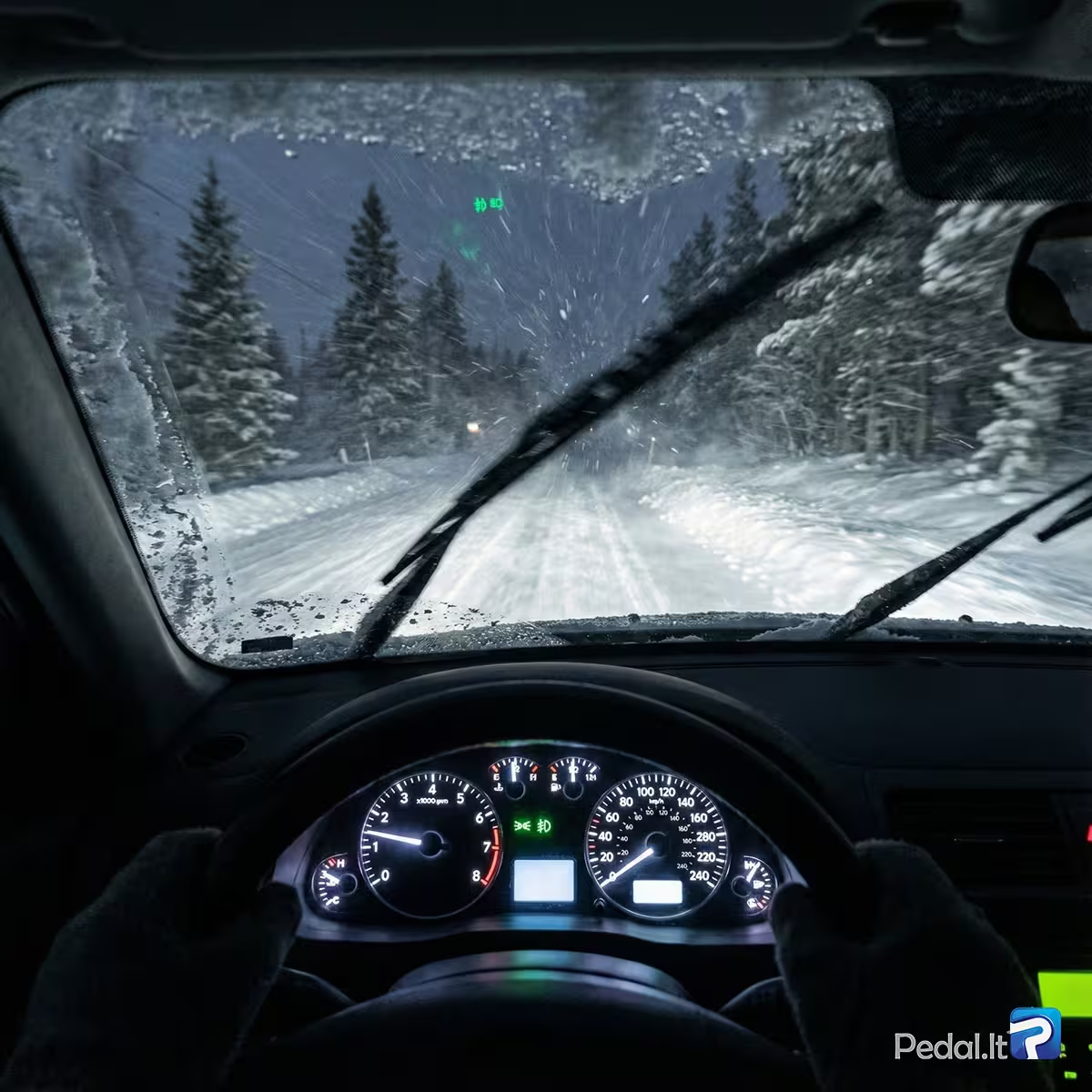
Which exterior lights should be switched on to improve visibility on the road during darkness and when snow is blowing?
When driving at night and during blowing snow, you should switch on the fog lamps together with the dipped-beam (low-beam) headlamps. Using the main-beam (high-beam) headlamps will cause light to reflect off the snow and dazzle the driver. (RTR 98) Fog lamps should only be used when visibility is seriously reduced; the front fog lamps may also be used in the event of failure of the front left dipped-beam headlamp.
1. Fog lamps used together with the main-beam (high-beam) headlamps.
2. Fog lamps used together with the dipped-beam (low-beam) headlamps.
The effect of inertia on the vehicle (risk of sliding sideways) when cornering is reduced by:
The higher the vehicle's speed when cornering, the greater the effect of inertia and the higher the risk of the car sliding sideways. Lower speeds reduce inertia and the risk of sliding. A larger turning radius (a gentler curve) also reduces lateral inertial forces.
1. By decreasing the turning radius (making the turn tighter).
2. By reducing vehicle speed.
3. By increasing the turning radius (making the curve gentler).
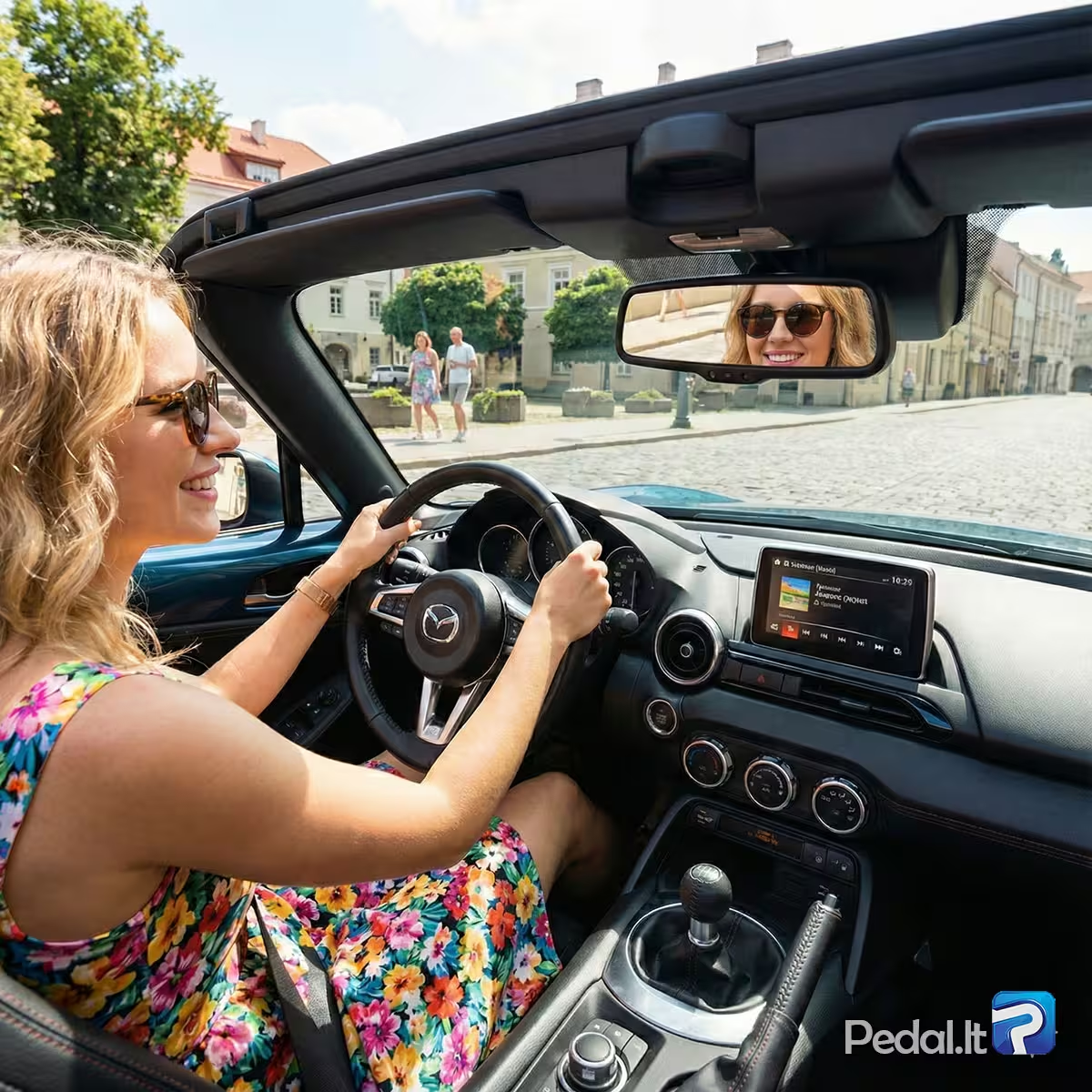
When driving safely, you must:
Always make safety your priority. That means thinking ahead, planning your actions, and anticipating the behavior of other road users.
1. Anticipate the actions of other road users.
2. Driving slightly above the speed limit.
3. Stay closer to the edge of the road.
4. Driving well below the maximum permitted speed.
A vehicle has nearly completed an overtaking maneuver while another vehicle is approaching in the oncoming lane. What should you do?
The Driver Behaviour Manual states: If another vehicle's overtaking endangers or inconveniences traffic in the oncoming lane, the driver of the vehicle being overtaken must try to prevent a hazardous situation by: (1) reducing speed; (2) moving to the side; (3) stopping if necessary. Section 128: If there is an obstruction or traffic safety is at risk, the driver must slow down and, if required, bring the vehicle to a complete stop or go around the obstruction (if it can be seen), provided this can be done without endangering other road users. Section 135: Drivers must not: 135.4. decelerate sharply for reasons other than safety.
1. Apply the brakes.
2. Maintain your current speed.
3. Ease off the accelerator.
4. Increase your speed.
A driver whose vehicle is being overtaken must not:
Using the horn may distract the driver being overtaken but will not prevent the overtaking; they may still accelerate to complete the manoeuvre. Obstructing an overtaking vehicle includes actions such as accelerating, steering toward the overtaking vehicle, blocking the lane, or any other behaviour intended to prevent another driver from passing. RTR 138. The driver of a vehicle being overtaken must not obstruct drivers who wish to pass by speeding up or by any other action. RTR 136. Drivers are advised to avoid unnecessary overtaking manoeuvres. Before overtaking, drivers must take extra precautions and ensure that: 136.1. no driver behind them has already begun to overtake; 136.2. the driver of the vehicle to be overtaken is not signalling a left turn; 136.3. the section of lane required for overtaking is clear and the manoeuvre will not obstruct oncoming vehicles or pedestrians on the carriageway; 136.4. a safe distance from the vehicle being overtaken can be maintained during the overtaking; 136.5. after the overtaking manoeuvre they will be able to return to the same traffic lane safely without obstructing the overtaken vehicle. JB
1. Speeding up or otherwise obstructing a driver who is attempting to overtake.
2. Slowing down.
3. Using the horn.
Are drivers permitted to take part in vehicle races that are organized illegally on streets and roads?
23. Drivers must not take part in vehicle races that are organized illegally.
1. Yes, they are permitted.
2. No, they are not permitted.
Upon request by another road user involved in the accident:
RTR 219. In the event of a road accident, every driver involved or any other road user must: 219.3. upon the request of other road users involved in the accident, present a valid identity document or a valid driving licence, and a certificate (policy) of compulsory third‑party motor vehicle liability insurance in order to identify the insurer;
1. You must present a valid identity document and the certificate (policy) of compulsory motor third‑party liability insurance to identify the insurer.
2. You are required to present the documents only to the police.
What should the driver do first to stop a braking car from skidding?
If the vehicle begins to slide while braking, you must stop braking. For example, if you brake suddenly and lock the wheels before a turn, even after steering into the desired direction the car will continue moving in its previous direction (straight), which can cause you to leave the road or collide with an obstacle. Therefore, in this situation you must consciously release the brakes — a maneuver that can be especially difficult for an inexperienced driver. JB
1. Release the clutch and the brake pedal.
2. Release the brake pedal.
3. Increase vehicle speed.
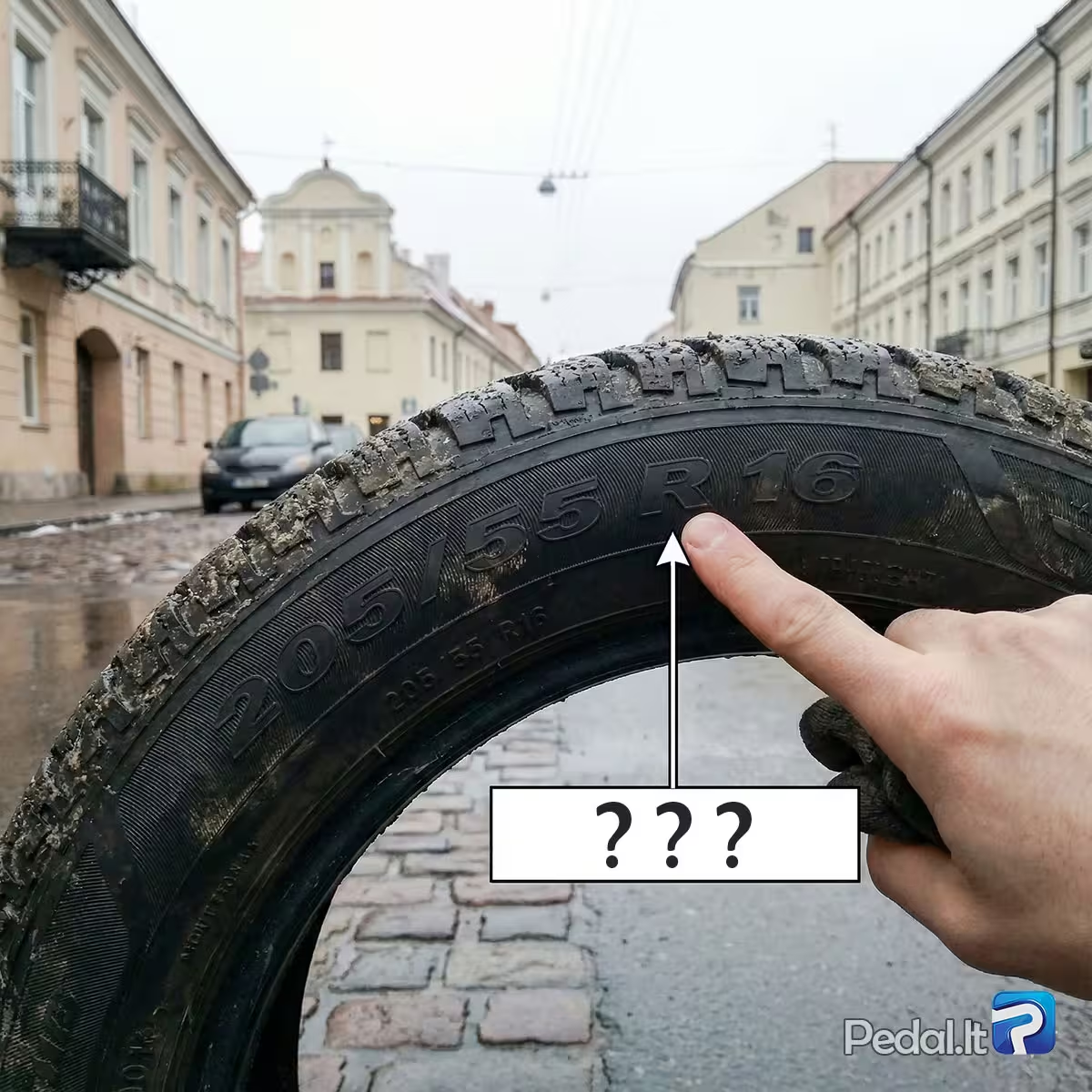
What does the letter 'R' indicate in tyre markings?
The letter 'R' denotes a radial tyre construction. In a radial tyre, the carcass cords run from one bead to the other in a radial direction instead of being wrapped around the bead cores. Thin, flexible crown plies provide the tread area with the required rigidity and flexibility while minimizing elastic deformation.
1. The tyre's construction (radial construction).
2. Tyre diameter.
3. Tyre load index.
How should you drive to minimize fuel consumption and maximize range?
Driving uphill requires more power than driving on level ground. Therefore, maintain a steady speed and avoid accelerating on climbs. It is reasonable to increase speed on level sections or when driving downhill. At a constant speed, using a higher gear reduces engine revolutions; lower revolutions mean the engine works less and uses less fuel. Do not coast in neutral when descending — this is not only uneconomical but also unsafe. While coasting downhill, vehicle systems may cut fuel supply, so the instrument reading can show 0.0 l/100 km (if you do not press the accelerator). It is most economical to start moving immediately after you start the engine. Idling a stationary vehicle consumes fuel and emits pollutants; the engine will warm up and reach normal operating temperature during driving (unless there is a malfunction).
1. Shift into neutral and coast when descending a hill.
2. Avoid accelerating when driving uphill.
3. Use the highest appropriate gear possible.
4. Delay driving until the engine reaches normal operating temperature.
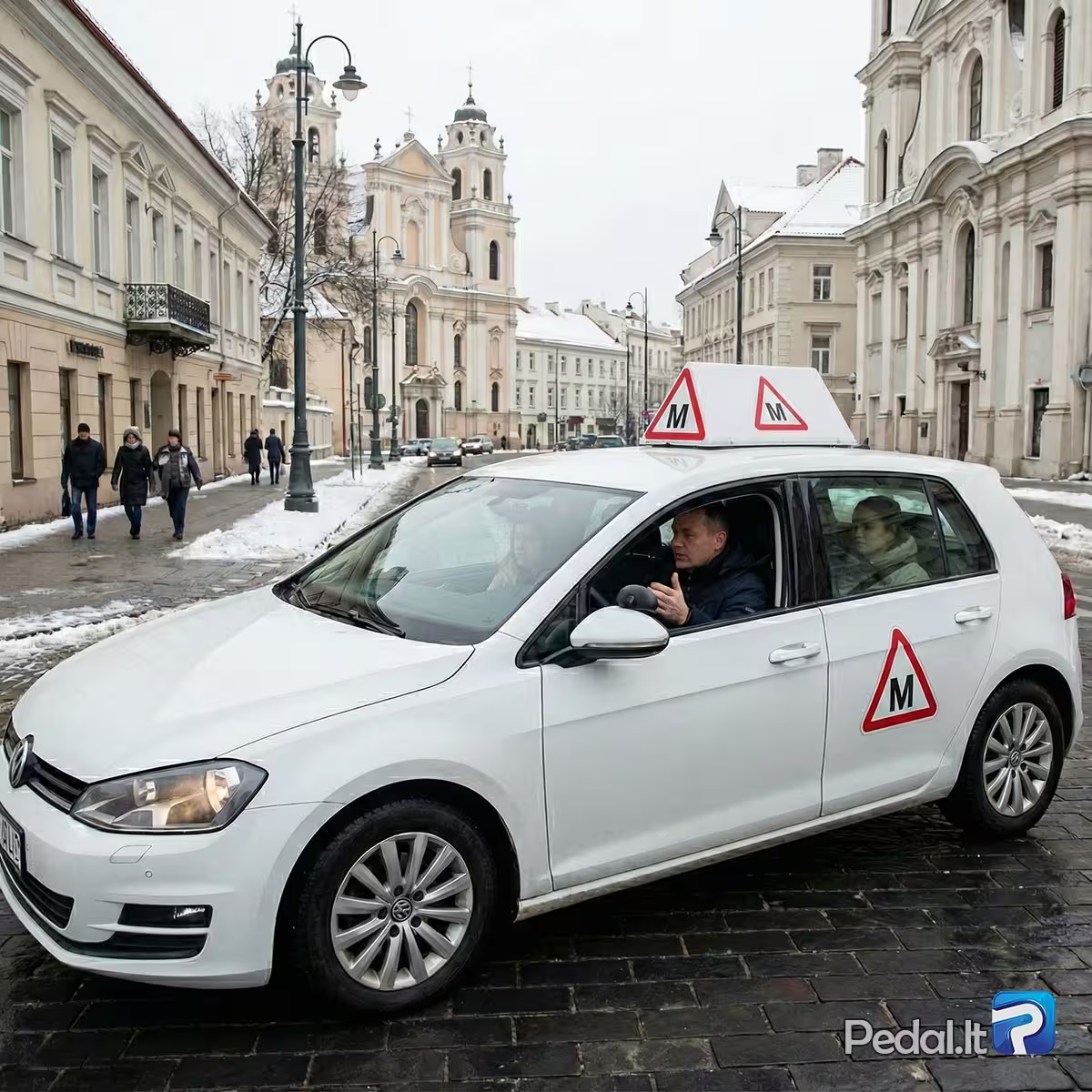
Is it permitted to transport passengers while teaching someone to drive?
RTR 195. Drivers must not: 6) teach another person to drive or transport children under 14 years of age; JB
1. Prohibited.
2. Permitted.
3. Permitted, but only for passengers aged 14 years or older.
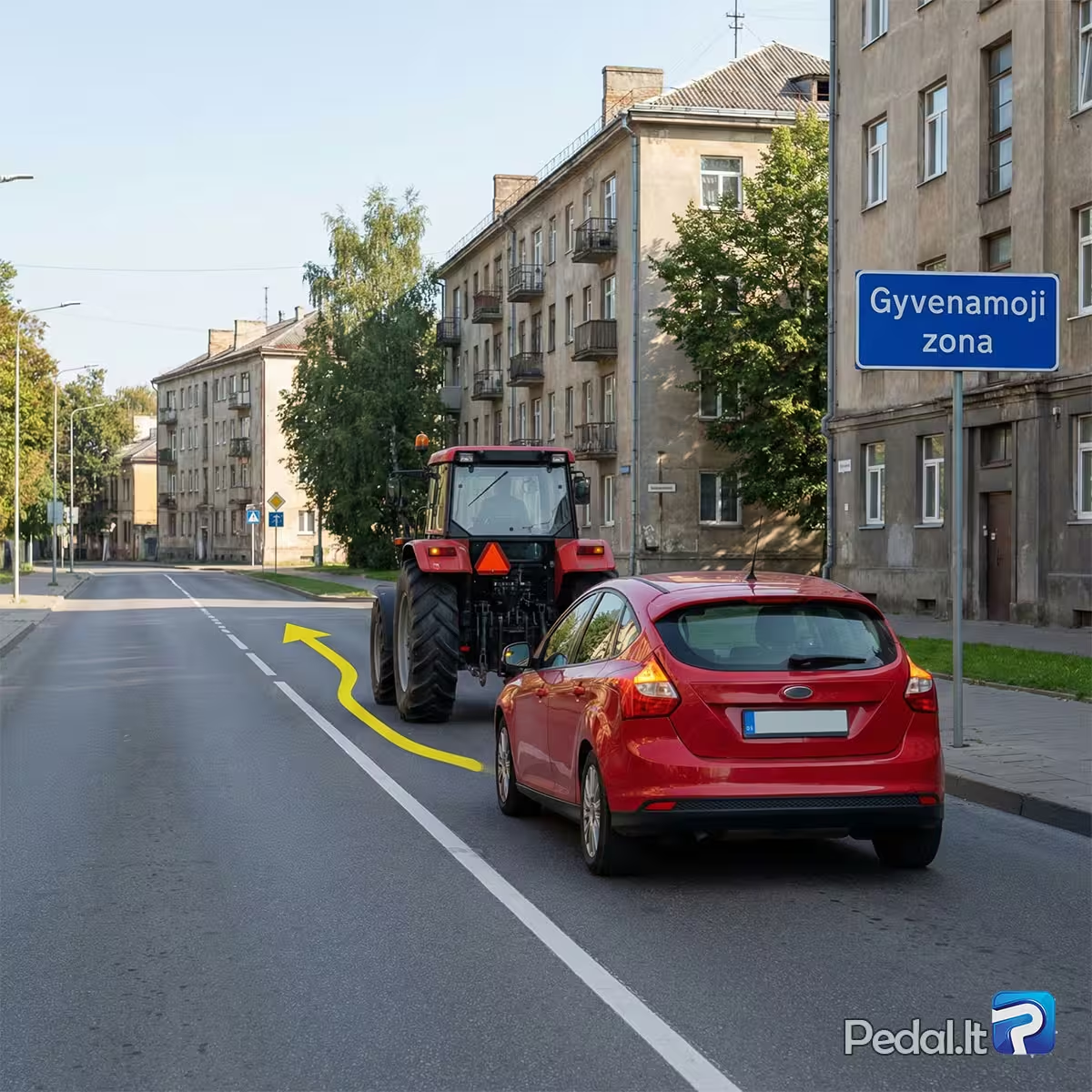
Is overtaking permitted in this situation?
A narrow continuous (solid) line prohibits overtaking. There is an exception when the road has both a narrow solid line and the road sign "Overtaking Prohibited" (RTR Annex 1.325): that sign indicates overtaking is prohibited except for single vehicles or single-vehicle combinations traveling slower than 30 km/h, which means very slow-moving vehicles (e.g., tractors) may be passed. In the pictured case there is no such sign—only a continuous line—so overtaking, even of a very slowly moving tractor, is not permitted.
RTR Annex 1.805 "The Validity Zone Ahead" indicates the length of the zone to which a sign applies beyond the sign itself.
Horizontal Marking 1.1: A narrow solid line separates opposing traffic and forbids drivers from using the oncoming lane on the marked section; it also marks lane boundaries, carriageway areas vehicles are prohibited from entering, parking-space limits, and the carriageway edge. Vehicles must not cross this line except where it marks the edge of the carriageway or a parking space.
1. Overtaking is prohibited.
2. Overtaking is permitted.
Which car colors are most visible to other road users?
Light, bright-colored vehicles are most visible to other road users. (JB)
1. Black, gray, or blue.
2. White, orange, or red.
3. Purple or brown.
4. Vehicle color has no effect on visibility.
Are other vehicles permitted to enter the space between a motorcyclist and the driving instructor who is accompanying the motorcyclist in a car?
RTR 26. Drivers of other vehicles must not enter the space between a learner driver—who is learning to operate a moped, motorcycle, tricycle, or any type of quadricycle—and the driving instructor who is accompanying the learner in a vehicle. During the training period the learner must wear a high-visibility vest marked with the distinguishing sign 'M' on both the front and the back. A driving instructor who accompanies the learner on a motorcycle must also wear a vest of the same type bearing the words 'DRIVING INSTRUCTOR'. If the instructor accompanies the learner in a car, the car must display the identifying marking specified in Annex 4 of these Rules.
1. It is permitted.
2. It is prohibited.
The term "service vehicle" refers to:
RTR 3.1. "Service vehicles" are vehicles owned by companies, institutions, or organisations operating in an area marked by restrictive signs; vehicles belonging to persons who live or work in that area; vehicles delivering goods to that area or collecting goods from it; and taxis or other passenger vehicles providing paid transport to or from that area.
1. Any vehicle used for transporting goods.
2. A vehicle owned by companies, institutions, or organisations operating in an area marked with restrictive signs, or by persons working in that area.
3. A vehicle owned by persons residing in an area marked with restrictive signs.
4. A vehicle delivering goods to an area marked with restrictive signs, or collecting goods from it.
5. Taxis or other passenger vehicles providing paid transport to or from an area marked with restrictive signs.
What is the maximum permitted blood alcohol concentration (in ‰) for a driver with one year of driving experience operating a passenger car?
Under amendments to the Law on Road Traffic Safety that took effect on 1 January 2015, novice drivers (those with less than two years' driving experience) are considered intoxicated if the alcohol concentration in their breath or bodily fluids exceeds 0. LAW ON ROAD TRAFFIC SAFETY, Article 2, clause 43 defines 'condition under the influence of alcohol' as the state when the concentration of ethyl alcohol in a biological medium of the body (breath, blood, urine, saliva, or other bodily fluids) exceeds the statutory permissible limit. The general maximum permitted concentration of ethyl alcohol in breath, blood, urine, saliva, or other bodily fluids while driving is 0.4 per mille. However, novice drivers, taxi drivers, drivers of mopeds, motorcycles, tricycles, light quadricycles, quadricycles, powerful quadricycles, drivers of vehicles with a maximum permissible mass exceeding 3.5 tonnes or with more than nine seats, and drivers carrying dangerous goods are considered intoxicated when the ethyl alcohol concentration in their breath, blood, urine, saliva, or other bodily fluids is more than 0 per mille.
1. 0.0 ‰
2. 0.2 ‰
3. 0.4 ‰
4. 0.8 ‰
You are driving at the maximum permitted speed. A vehicle is approaching rapidly from behind and its driver is flashing their headlights. What should you do?
Even if the overtaking vehicle will exceed the speed limit while overtaking and thus violate the rules, you must not endanger yourself or others; you should allow the overtaking to take place. Road users must follow the principle of mutual respect and safety. 138. The driver of the vehicle being overtaken must not obstruct drivers who wish to overtake that vehicle by accelerating or by any other actions.
1. You will maintain your current speed and prevent the other driver from overtaking you.
2. You will apply the brake so that your brake lights illuminate.
3. You will accelerate to increase the gap to the vehicle behind you.
4. You will not obstruct a driver attempting to overtake you.
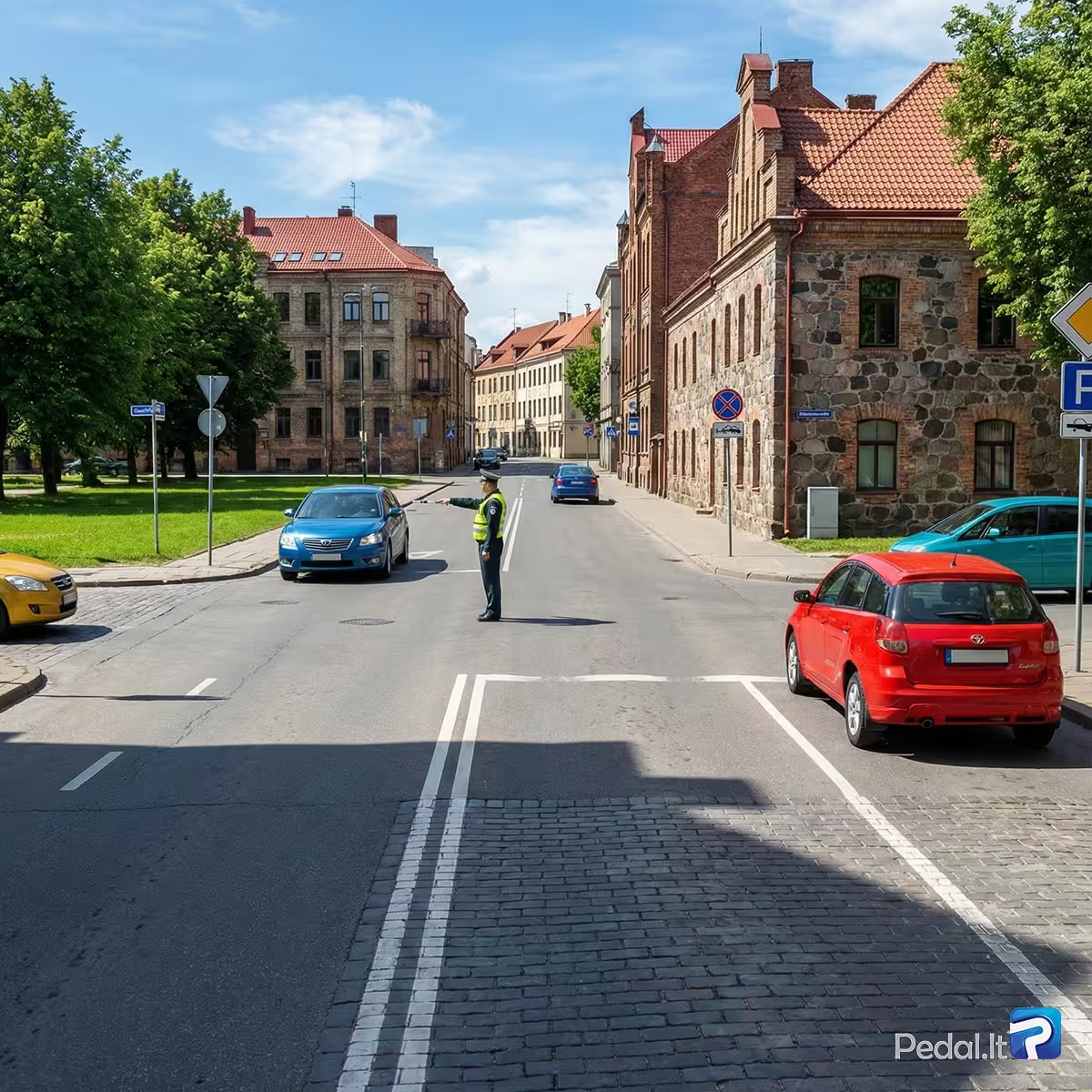
Which vehicles can turn right?
RTR 77.2. Right arm extended forward: 77.2.1. Vehicles on the left side of the traffic officer may proceed in any direction; 77.2.2. Vehicles facing the traffic officer may proceed only to the right; 77.2.3. Vehicles behind the traffic officer and on the right side must not proceed; 77.2.4. Pedestrians may cross the carriageway behind the traffic officer.
1. The red vehicle.
2. The brown vehicle.
3. The blue vehicle.
A load projects up to 1 metre beyond the front or rear of a vehicle. It will be transported at night or in conditions of poor visibility. How should this load be marked?
If the load projects less than 1 m beyond the front or rear of the vehicle, marking is not required (RTR 2.10). Any motor vehicle carrying a load that extends more than 1 m beyond the front or rear, or beyond the sides of the vehicle, must have the extremities of the load marked as specified in Annex 4 to these Rules (RTR 4.12). The extremities of loads protruding more than 1 m in front or rear, any projection to the side, and extremities of vehicles wider than 2.6 m must bear distinguishing marks — 400 mm square plates covered with alternating diagonal reflective white and red stripes 50 mm wide. These plates must be mounted not lower than 0.4 m and not higher than 1.6 m above ground level. During hours of darkness or when visibility is poor, such vehicles must have lights at the projecting points: white at the front, amber at the sides and red at the rear. JB
1. Using brightly coloured flags.
2. Distinctive markers — square plates with alternating diagonal reflective white and red stripes.
3. Marked with lights: white at the front, amber at the sides and red at the rear.
4. Marking is not required.
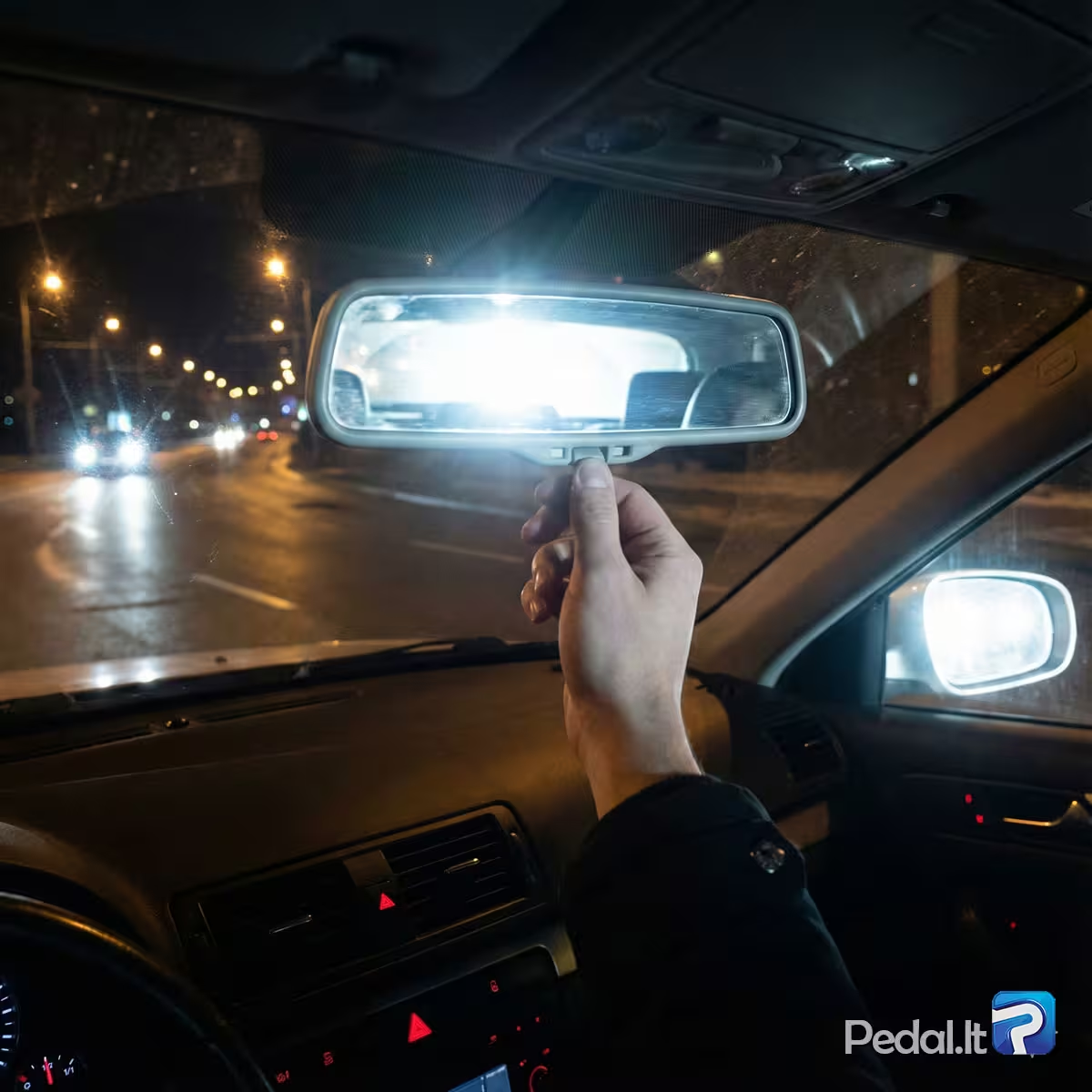
What should you do if a vehicle behind you is dazzling you with its lights?
If bright headlights are reflected in your rearview mirror, in addition to the measures listed in Paragraph 96 you can quickly activate the mirror's anti‑dazzle setting by flipping the switch at its base (if fitted). This engages the automatic dimming function and reduces glare. According to RTR 96, a dazzled driver must turn on the hazard warning lights, reduce speed without changing direction, and stop if necessary.
1. You will look away.
2. If possible, activate the rearview mirror's automatic dimming function.
3. You will turn on your hazard warning lights.
4. You will reduce speed and stop if necessary.
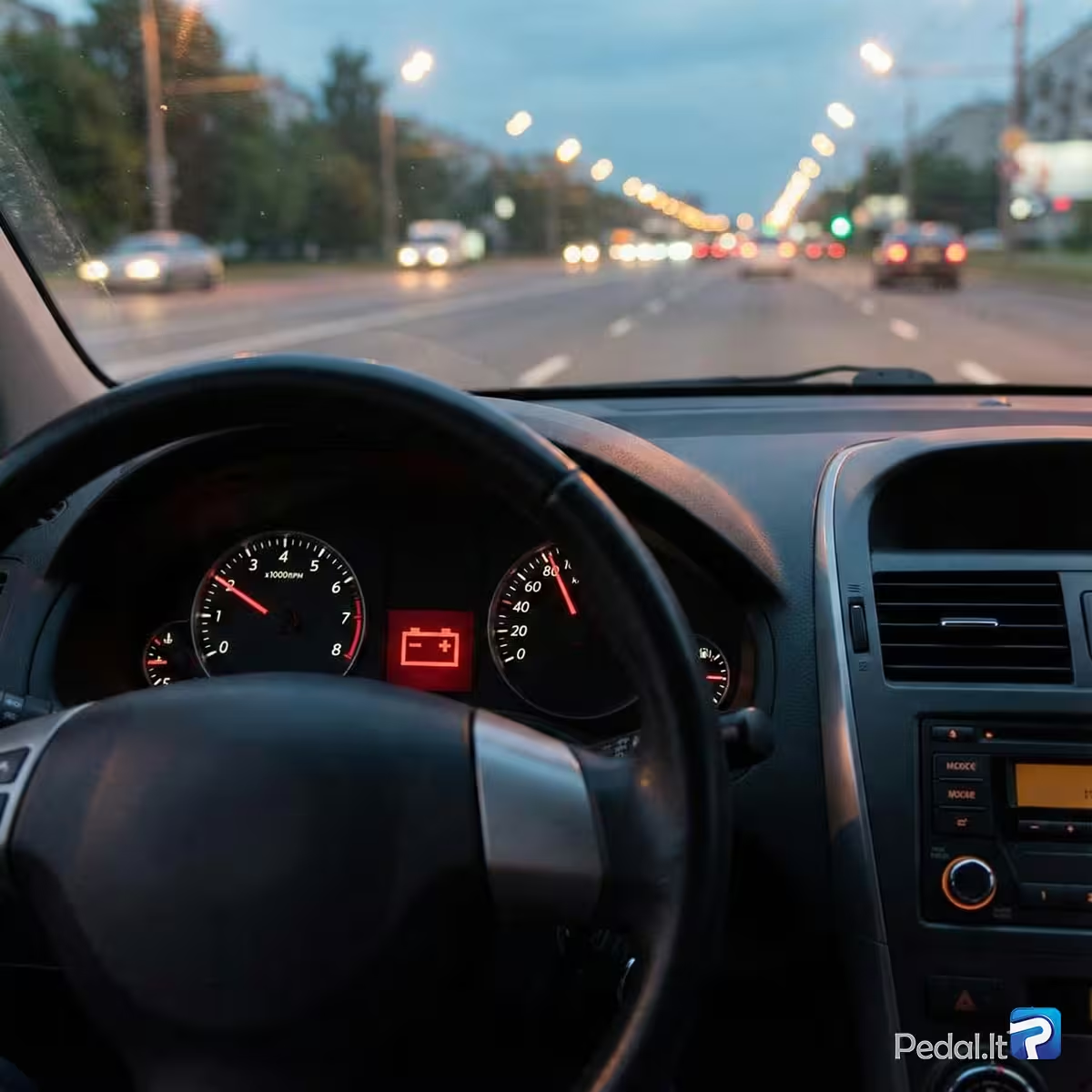
When the engine is running, a red battery warning light on the dashboard indicates:
If the red battery warning light illuminates while the engine is running, it indicates the alternator (generator) has failed and the battery is not being charged.
1. The battery is being overcharged.
2. The battery is completely discharged.
3. The battery is not being charged.
4. The battery's electrolyte level is too low.
Cyclists must not:
RTR 38. Persons moving in a wheelchair, or guiding a motorcycle, moped, bicycle, motorised two‑wheeled vehicle, electric micromobility device, or pulling (pushing) a sledge or handcart along the shoulder or edge of the carriageway must proceed in single file and only in the direction of traffic. RTR 64. Cyclists must not: 64.1. ride on the carriageway, except in cases permitted by the Rules. RTR 57. Bicycles may be ridden only on cycle tracks, combined footpath/cycle tracks, or cycle lanes; if none of these are available, bicycles may be ridden on a suitable hard shoulder (with asphalt or concrete surfacing). When a right‑side cycle track, combined footpath/cycle track, cycle lane, or suitable hard shoulder is not available or is unsuitable for cycling (for example, pitted), cyclists may use the pavement or ride in single file on the right‑hand lane of the carriageway, keeping to the right edge of the lane, except in the cases specified in paragraph 106 of these Rules and except when cyclists must bypass an obstruction or continue straight where turning right from the first lane is the only permitted manoeuvre. When riding on a hard shoulder, footpath, cycle track, or pavement, a cyclist must yield to pedestrians, must not obstruct or endanger them, and should pass pedestrians at a speed close to walking pace (3–7 km/h), leaving sufficient lateral clearance to ensure safety.
1. Ride on the carriageway except when no cycle track, cycle lane, or suitable hard shoulder is available.
2. Ride against the flow of traffic.
3. Walk (push) their bicycle in the same direction as vehicular traffic.
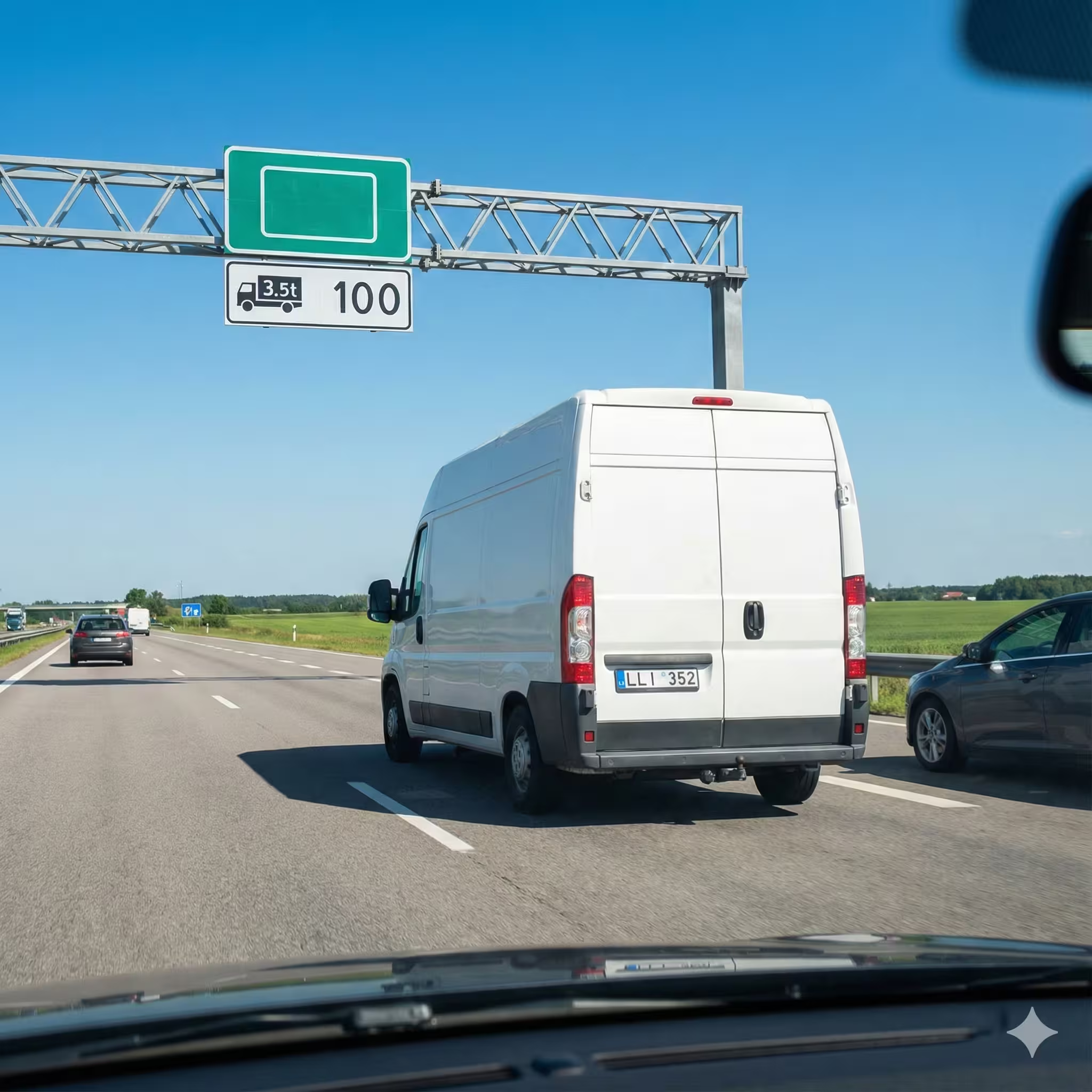
What is the maximum speed limit on motorways in summer for goods vehicles with a permissible maximum weight of 3.5 tonnes?
According to rule 131.1: On motorways, from April to October the maximum speed for passenger cars, goods vehicles with a permissible maximum weight up to 3.5 tonnes, motorcycles, and tricycles is 130 km/h, and from November to March it is 110 km/h. On expressways (highways) the limit is 120 km/h from April to October and 110 km/h from November to March. On roads with asphalt or concrete pavement the limit is 90 km/h, and on other roads it is 70 km/h.
1. 90 km/h
2. 100 km/h
3. 110 km/h
4. 130 km/h
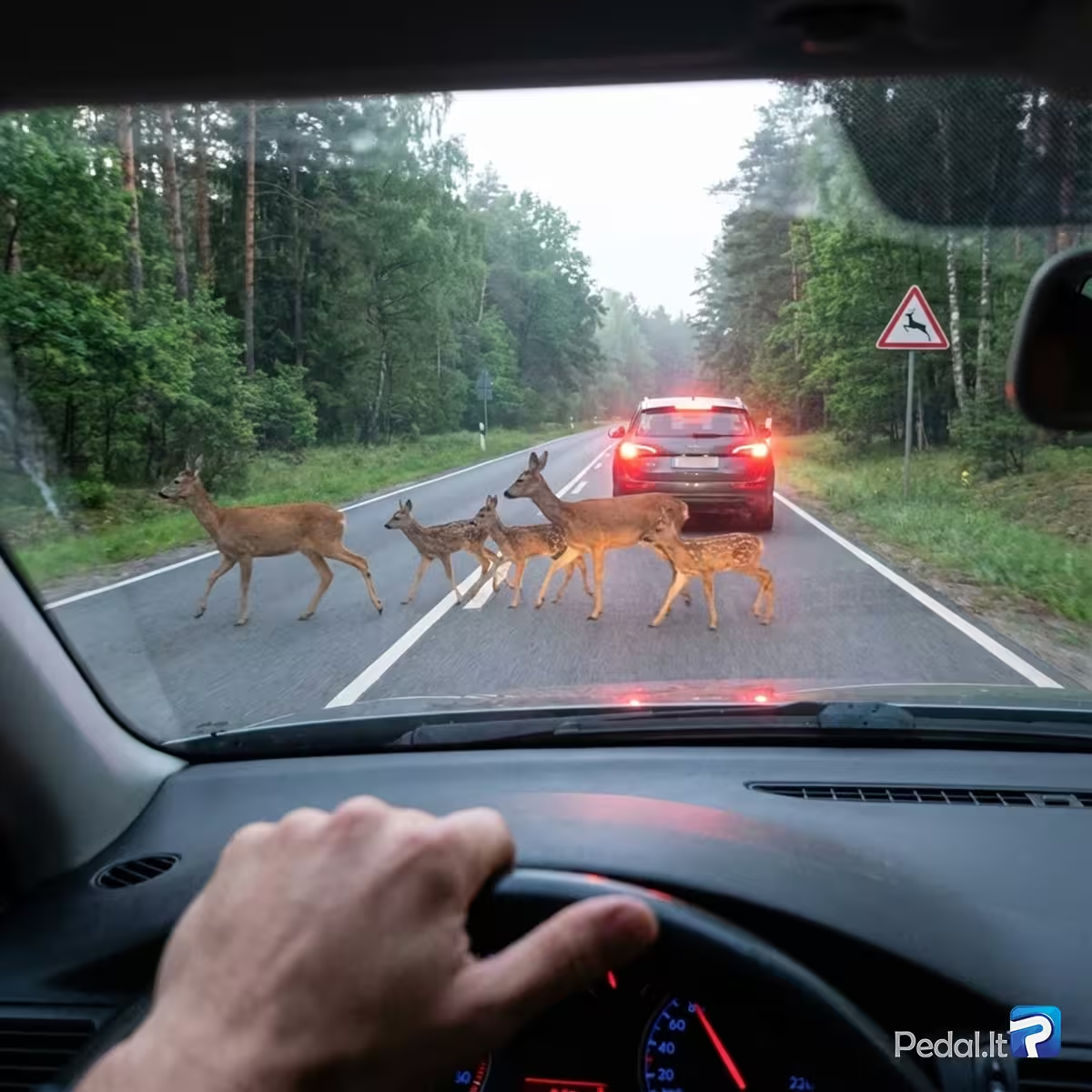
While driving, a group of roe deer crossed the road in front of your vehicle. What should you expect?
Wild animals typically travel in groups. If you see a lone roe deer, deer, or wild boar, others are likely nearby. Herding instincts lead animals to cross roads together rather than individually.
1. The animals may return to the road.
2. A solitary animal may follow the group.
3. It is unlikely that there will be any solitary animals.
A road user must not:
Dipped-beam headlights are not required when daytime running lights are illuminated (not all vehicles have them). RTR 10. Road users must not deliberately move, cover, remove, or install traffic control devices that regulate traffic; obstruct the carriageway; leave objects on the road or otherwise interfere with traffic; damage the road surface, traffic control devices, outdoor emergency communication systems, or planted lawns; block access to a fire hydrant or other rescue equipment or otherwise prevent access to them; throw any items from a vehicle or litter; discharge lubricants in undesignated areas; or otherwise pollute the environment.
1. Discard litter from a moving vehicle.
2. Release oils or other lubricants in undesignated areas or otherwise pollute the environment.
3. Use dipped-beam (low-beam) headlights during daylight hours.
4. Drive at a speed significantly lower than the vehicle's specified limits when it does not obstruct traffic.
1 of 30 Task
Time left: 00:00:00
1
2
3
4
5
6
7
8
9
10
11
12
13
14
15
16
17
18
19
20
21
22
23
24
25
26
27
28
29
30