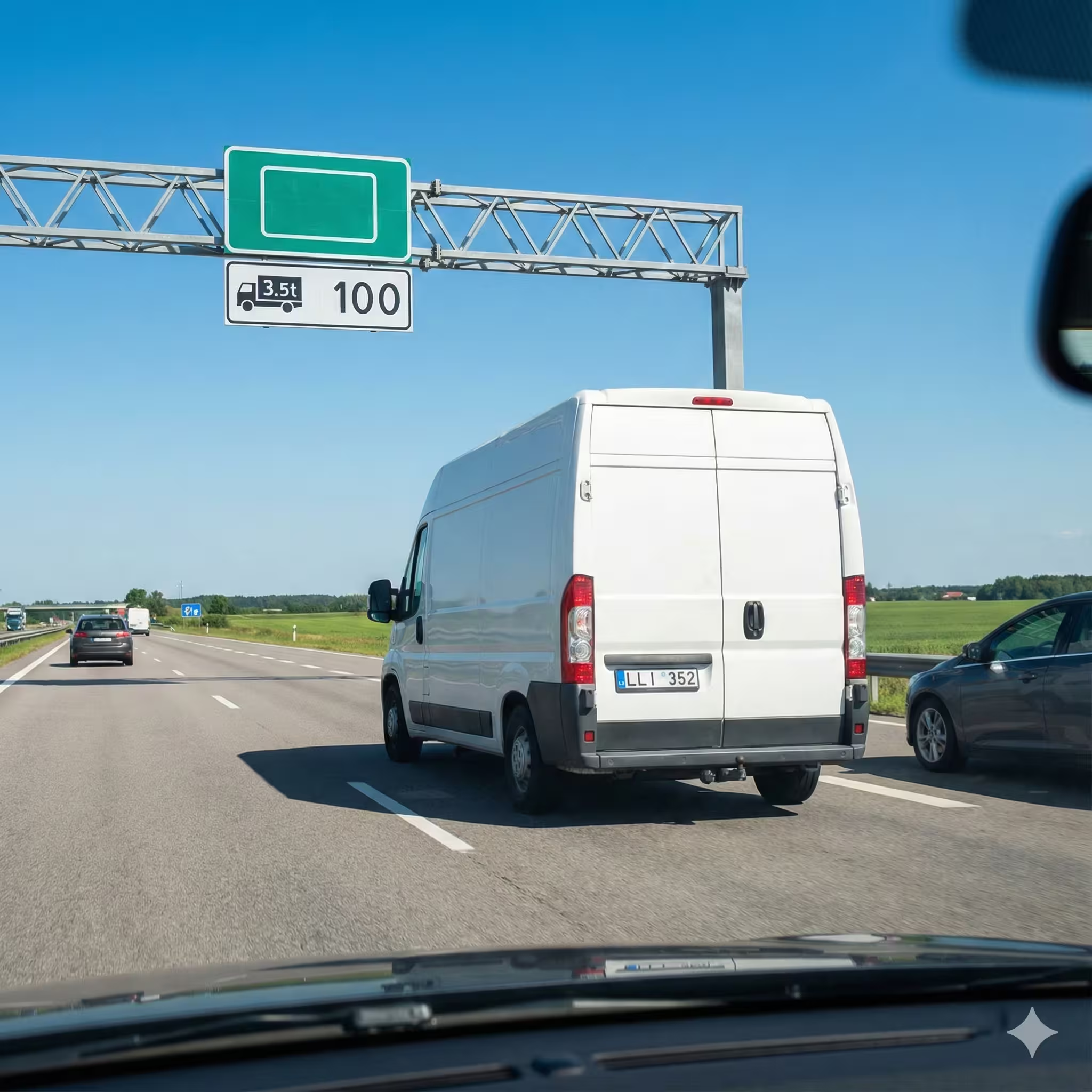
What is the maximum speed limit on motorways in summer for goods vehicles with a permissible maximum weight of 3.5 tonnes?
According to rule 131.1: On motorways, from April to October the maximum speed for passenger cars, goods vehicles with a permissible maximum weight up to 3.5 tonnes, motorcycles, and tricycles is 130 km/h, and from November to March it is 110 km/h. On expressways (highways) the limit is 120 km/h from April to October and 110 km/h from November to March. On roads with asphalt or concrete pavement the limit is 90 km/h, and on other roads it is 70 km/h.
1. 90 km/h
2. 100 km/h
3. 110 km/h
4. 130 km/h
When driving at night, a car's dipped-beam (low-beam) headlamps may dazzle oncoming drivers if:
Your vehicle may dazzle oncoming drivers for one or more of the following reasons: the headlamps are incorrectly aimed (too high); the headlamps are improperly fitted (not seated correctly in their sockets or the wrong type has been fitted); or the vehicle is carrying a heavy load in the boot or is fully loaded and the headlamps have not been lowered using the headlamp aiming/levelling control (if fitted).
1. The vehicle's headlamps are incorrectly adjusted (aimed too high).
2. The headlamps are improperly installed or the wrong type has been fitted.
3. The vehicle is carrying a heavy load in its boot.
What must drivers do if stopped by an inspecting officer?
RTR 16. A driver must stop the vehicle when ordered by an inspecting officer. The driver of a motor vehicle, tractor or self-propelled vehicle shall carry, and upon request of the inspecting officer present, a valid driving licence or a document certifying the right to drive tractors and/or self-propelled vehicles or military equipment (including tactical and logistical vehicles) or their combinations with trailers; the vehicle registration documents; the certificate of the compulsory roadworthiness test and the report of the most recent technical inspection for vehicle categories M2, M3, N2, N3, O3, O4 and wheeled tractor categories T1b, T2b, T3b, T4.1b, T4.2b, T4.3b, T5; the certificate (policy) of compulsory motor third-party liability insurance; and any other documents required by the laws of the Republic of Lithuania and these Rules (except in cases where the Law on Road Traffic Safety exempts the driver from carrying certain documents). The driver must also allow the inspecting officer to check the readings of validated meters that record driving time and rest periods. Documents shall be presented without leaving the vehicle. The driver may leave the vehicle only with the inspecting officer's permission. RTR 91. If hazard warning lights are fitted in a vehicle, they must be switched on: 91.3. when the vehicle is stopped by an inspecting officer;
1. Exit the vehicle only with the inspecting officer's permission.
2. Present the requested documents to the inspecting officer without leaving the vehicle.
3. Exit the vehicle and deliver the documents to the inspecting officer.
4. Stop the vehicle at the location indicated.
5. Turn on the vehicle's hazard warning lights.
Upon request by another road user involved in the accident:
RTR 219. In the event of a road accident, every driver involved or any other road user must: 219.3. upon the request of other road users involved in the accident, present a valid identity document or a valid driving licence, and a certificate (policy) of compulsory third‑party motor vehicle liability insurance in order to identify the insurer;
1. You must present a valid identity document and the certificate (policy) of compulsory motor third‑party liability insurance to identify the insurer.
2. You are required to present the documents only to the police.
How should you choose an appropriate driving speed?
Order of the General Director of the state company "Regitra" approving the description of the criteria and methods for evaluating driving skills and abilities (23 December 2013, No. V-223): 3.18 Speed selection — accelerate steadily, choose a speed appropriate to the traffic situation and do not exceed the permitted limit. 3.18.1 Control the vehicle's speed while performing maneuvers: 3.18.1.1 If necessary, maintain a sufficiently low speed to compensate for any errors; 3.18.1.2 The vehicle must move evenly and smoothly. JB
1. Accelerate smoothly and steadily.
2. Drive at a speed appropriate for the traffic conditions and do not exceed the legal speed limit.
3. Drive faster to reach your destination sooner.
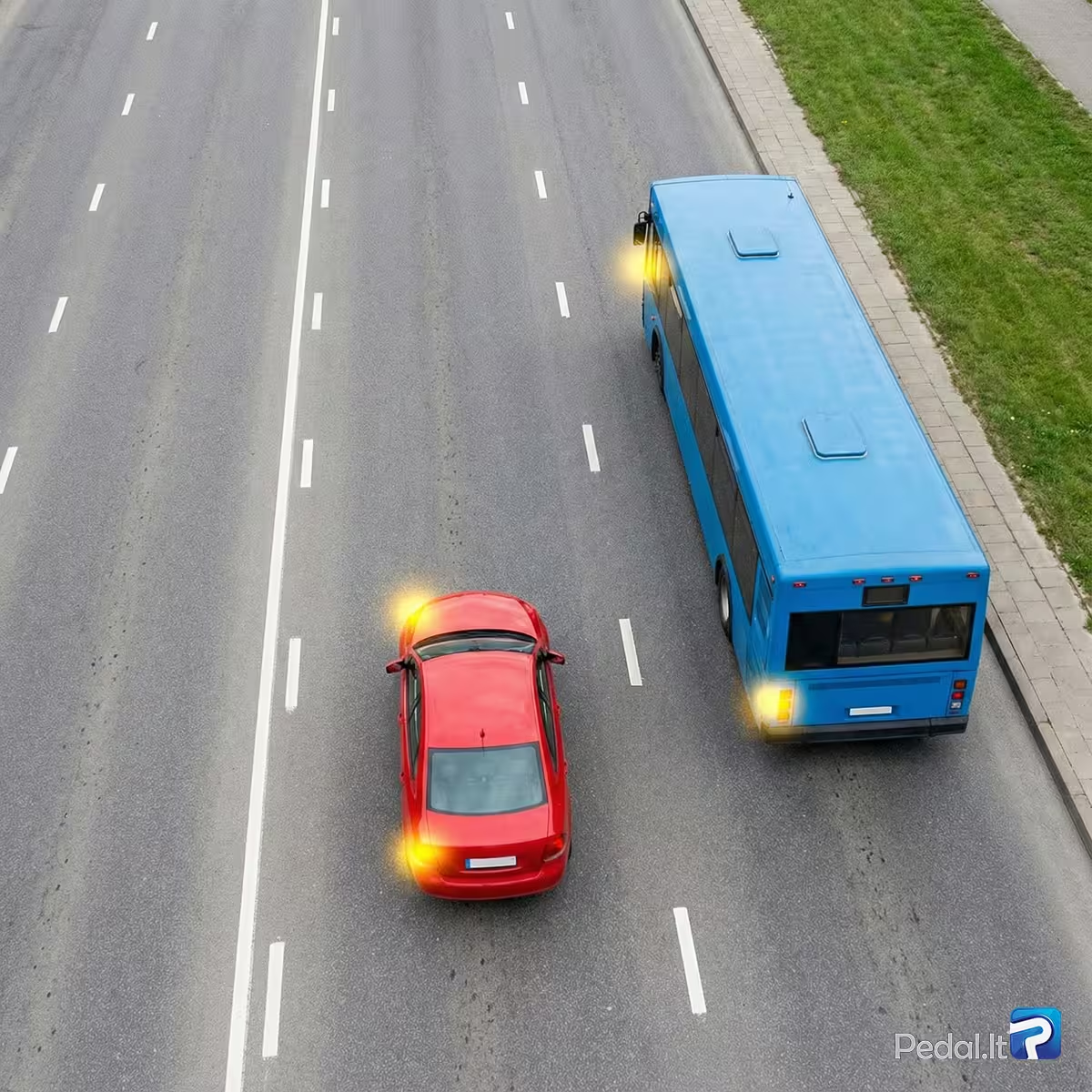
Is it permitted to turn around from the right-hand side of the carriageway if the carriageway is too narrow to turn from the left-hand side?
RTR 107. When, due to a vehicle's large size or other valid reasons, it is not possible to complete a turn (turn around) from the appropriate edge position of the carriageway, the vehicle may perform the turn from a part of the carriageway other than that edge assigned for travel in that direction, provided the maneuver does not obstruct other vehicles or create a hazard for other road users. JB
1. Yes — provided the maneuver does not obstruct other vehicles or create a hazard for other road users.
2. No — the maneuver is prohibited.
How is a "built-up area" defined?
Law on Road Traffic Safety, Article 2, Clause 19: A "built-up area" means an area containing buildings whose roads are marked at the entrances with the road sign "Beginning of Built-Up Area" and at the exits with the road sign "End of Built-Up Area".
1. An area containing buildings whose roads are marked at the entrances with the regulatory sign "Residential Area".
2. An area containing buildings to which additional traffic rules apply and whose roads are marked at the entrances with the sign "Beginning of Built-Up Area" and at the exits with the sign "End of Built-Up Area".
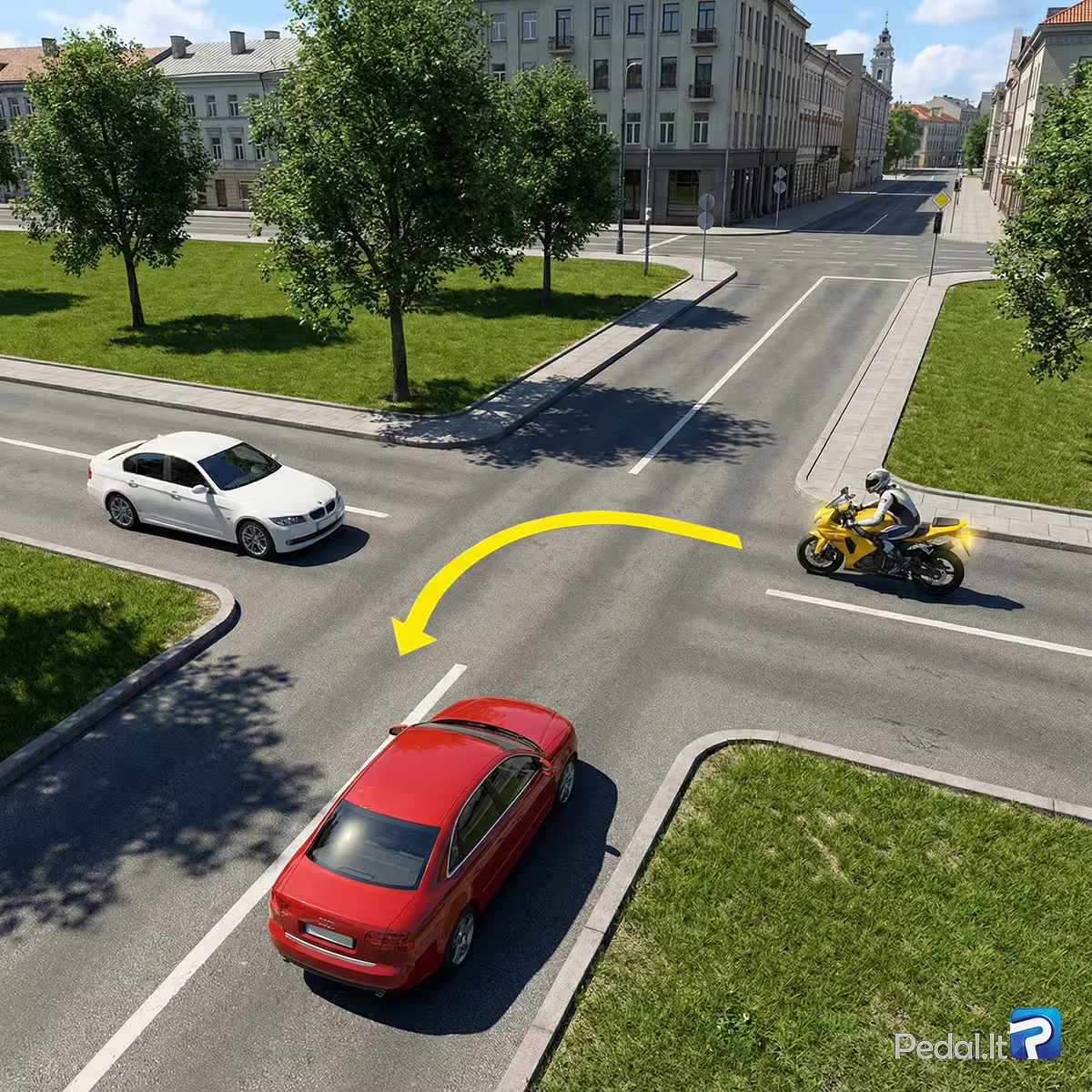
What is the motorcycle's order of passage through the intersection? The rider is turning left.
At an uncontrolled intersection of roads with equal priority, drivers must yield to vehicles approaching from the right when their paths intersect. A vehicle turning left must give way to oncoming traffic that is going straight or turning right. In this scenario, the red car goes first because the motorcycle, which had entered the intersection, stopped to yield. The white car proceeds next, since it no longer has a vehicle to its right, and finally the motorcyclist completes the maneuver — the motorcycle goes third. (RTR 155; RTR 157.)
1. First.
2. Third.
3. Second.
.avif)
Is it permitted to use high‑beam headlights after dark on an unlit road within a settlement?
On unlit roads it is permitted to use high‑beam headlights. According to regulation RTR 95, during hours of darkness or in conditions of poor visibility high beams must be switched to low beam on illuminated roads (see 95.1).
1. Yes — it is permitted.
2. No — it is prohibited.
Which features ensure a vehicle's active safety?
Difference between active and passive safety:
- Active safety: systems and features that help prevent accidents by improving vehicle control, handling and stability before a collision occurs. These measures operate before an impact and commonly include technologies such as Anti-lock Braking System (ABS), Electronic Brakeforce Distribution (EBD), traction control, correct tyre pressure and adequate tread depth, among others. Active safety also depends on the driver’s condition and behavior — for example, poor ventilation or heating can cause drowsiness or nausea and reduce attention on the road.
- Passive safety: systems and equipment designed to reduce injury and damage during or after a collision. These features are activated in a crash to protect occupants and other road users and include seat belts, airbags, motorcycle helmets, seat-belt reminders, head restraints, crumple zones and other structural or restraint systems that absorb impact and lower the risk of injury.
1. Proper ventilation and heating.
2. Tyre pressure and tread depth.
3. Anti-lock Braking System (ABS).
4. Electronic Brakeforce Distribution (EBD).
Which device is used to measure the level of alcohol in the human body?
Alcohol levels in the human body are measured using a breathalyser.
1. A breathalyser.
2. A manometer.
Which vehicle(s) are classified as a public service vehicle?
A minibus is a vehicle with no more than eight passenger seats (excluding the driver’s seat) and a maximum permissible mass not exceeding 3.5 tonnes. It may be used for private or commercial purposes. A scheduled taxi (scheduled minibus) is a public transport vehicle that operates on a fixed route with designated stops and is marked with the sign "Regular transport." A public service vehicle is any public transport vehicle — for example a bus, trolleybus, or shuttle bus — that regularly carries passengers along a specified route with defined stops; the term also includes school buses.
1. Taxi.
2. Minibuses.
3. Public transport vehicles — for example buses, trolleybuses, and shuttle buses — that regularly carry passengers along a specified route with designated stops.
When may a driver leave the scene of a road accident?
XXIX. Obligations of Road Users in the Event of a Road Accident (paras. 219–222) 219. In the event of a road accident, every driver involved or any other road user must: 219.4. if a person has died or has been injured in the road accident, report the accident to the police and remain at the accident scene or, after notifying the police, return to the scene and wait for the police to arrive, except where the police permit the road user to leave the scene or when the casualties or the person who reported the accident require first aid; 220. If no deaths or injuries occurred in the road accident and the road users involved agree on the circumstances and do not call the police to the accident scene, the road users must draw the accident sketch on the Road Accident Report Form, describe the circumstances in writing, and have it signed by all road users involved. If none of the road users involved has the Road Accident Report Form, the circumstances may be described and the accident sketch drawn on a blank sheet of paper listing all road users involved, their vehicles, and witnesses, and all details and circumstances must be confirmed by the signatures of the road users involved. Where the circumstances of the accident are disputed, the police must be called to the scene.
1. If a person sustained only minor injuries.
2. If the driver requires first aid.
3. If an injured person requires first aid.
4. If the police have permitted the driver to leave the scene.
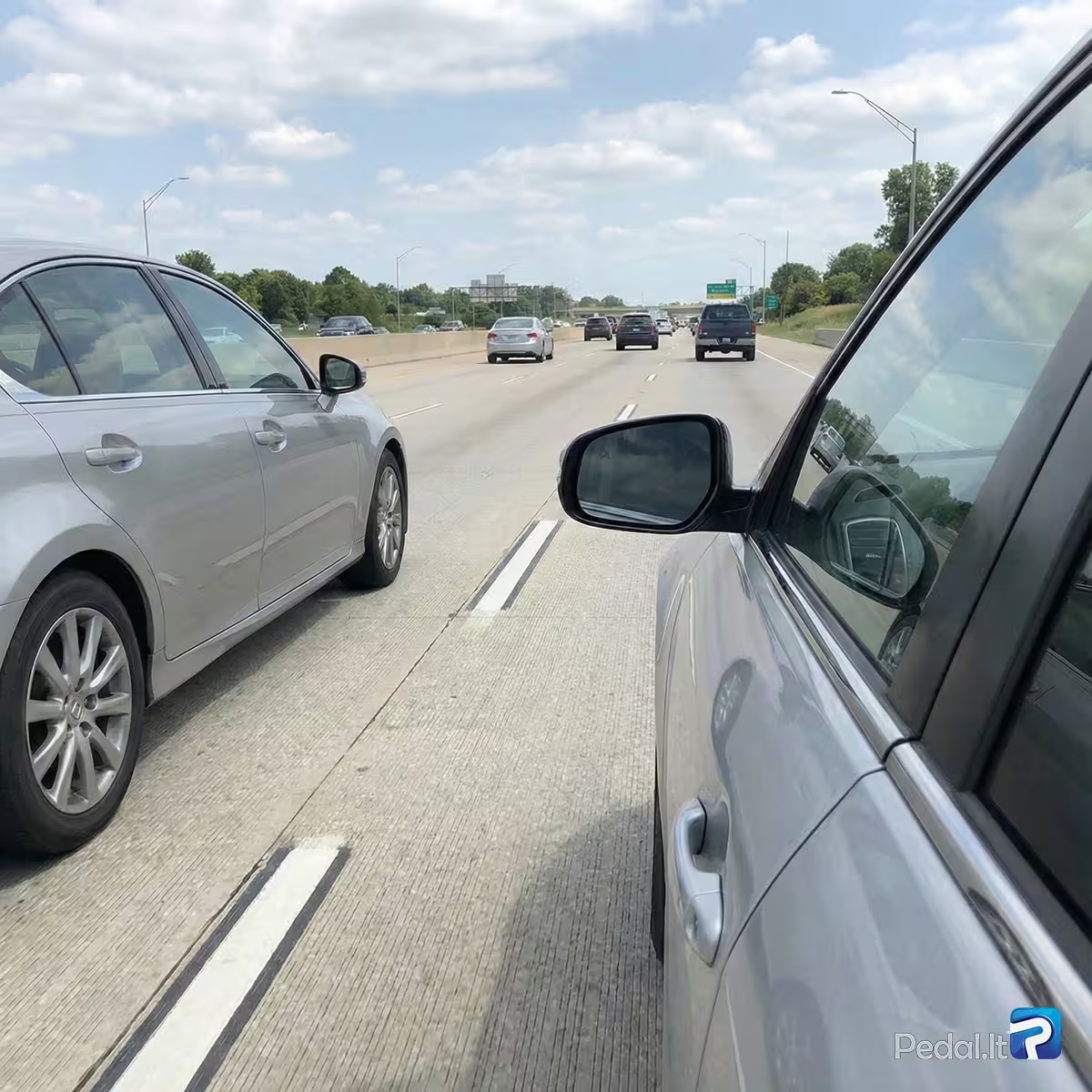
What lateral distance from nearby vehicles is considered safe?
3.17 Choosing a safe distance: operate the vehicle so that: 3.17.3. the distance to other vehicles, whether moving or stationary, is safe relative to any parked vehicle — maintain sufficient clearance to prevent parked vehicles or other obstacles from causing interference. When the vehicle is parked in a parking space, the lateral clearance should permit opening the vehicle's doors.
1. A lateral clearance sufficient to allow the vehicle's doors to be opened.
2. 1 m.
3. 50 cm.
4. 30 cm.
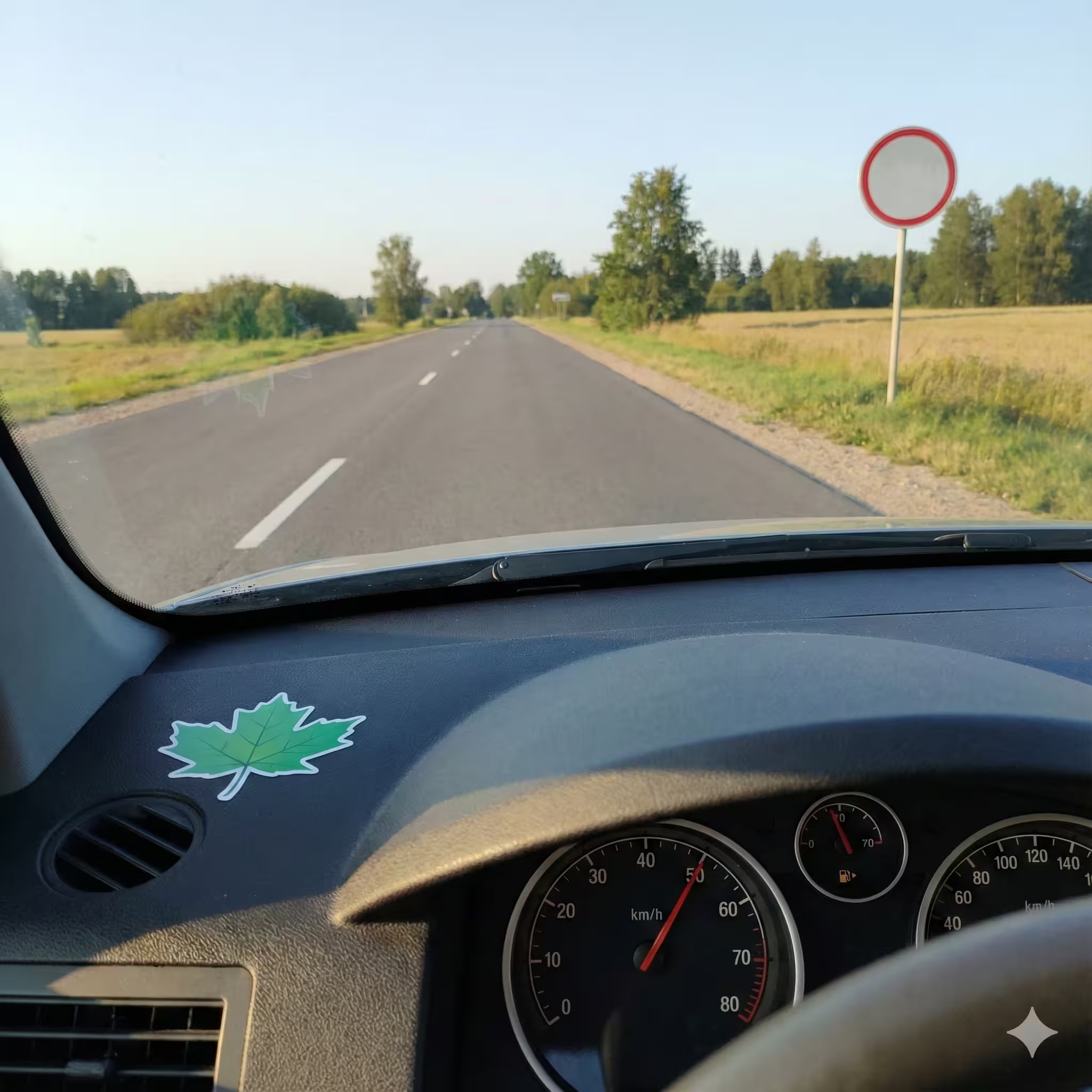
What is the maximum permitted speed on asphalt or concrete roads outside built-up areas for drivers with less than two years' driving experience?
131. The following speed limits apply outside built-up areas: 131.2. Vehicles of categories A1, A2, A or B driven by novice drivers, persons learning to drive or taking a practical driving test, and buses (including school buses) are subject to the following maximum speeds: 100 km/h on motorways, 90 km/h on highways, 80 km/h on roads with asphalt or concrete pavement, and 70 km/h on other roads.
1. 50 km/h
2. 80 km/h
3. 70 km/h
4. 90 km/h
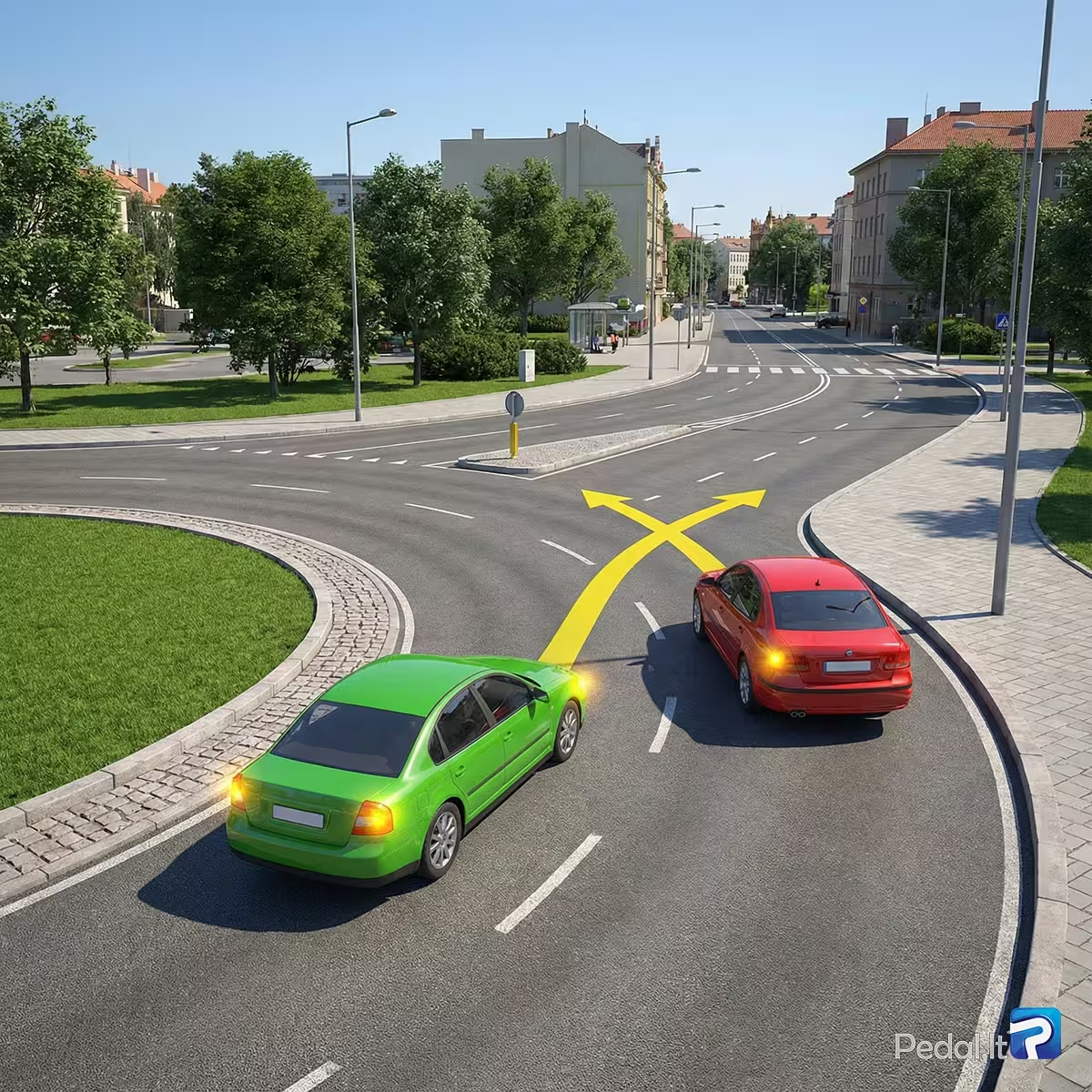
Which driver is violating the traffic rules?
There are no lane direction signs; therefore the driver of the red vehicle may go straight or turn right. When changing lanes, the driver of the green vehicle must yield. RTR 104. When changing lanes, a driver must yield to vehicles moving in the same direction in the adjacent lane. If vehicles moving in the same direction change lanes simultaneously, a driver must yield to the vehicle on the right, except in the cases specified in Paragraph 112 of the Rules. RTR 112. If an acceleration lane is provided for entering the road, the driver must use that lane and merge into the main traffic flow (change lanes and move into the adjacent lane), yielding to vehicles already in that flow or to vehicles changing lanes toward the deceleration lane. RTR 106. Before turning right, left, or making a U-turn (except when entering an intersection with circular traffic), a driver must move in advance to the edge of the carriageway designated for that direction. Road signs and/or road markings may indicate otherwise.
1. The driver of the red vehicle.
2. The driver of the green vehicle.
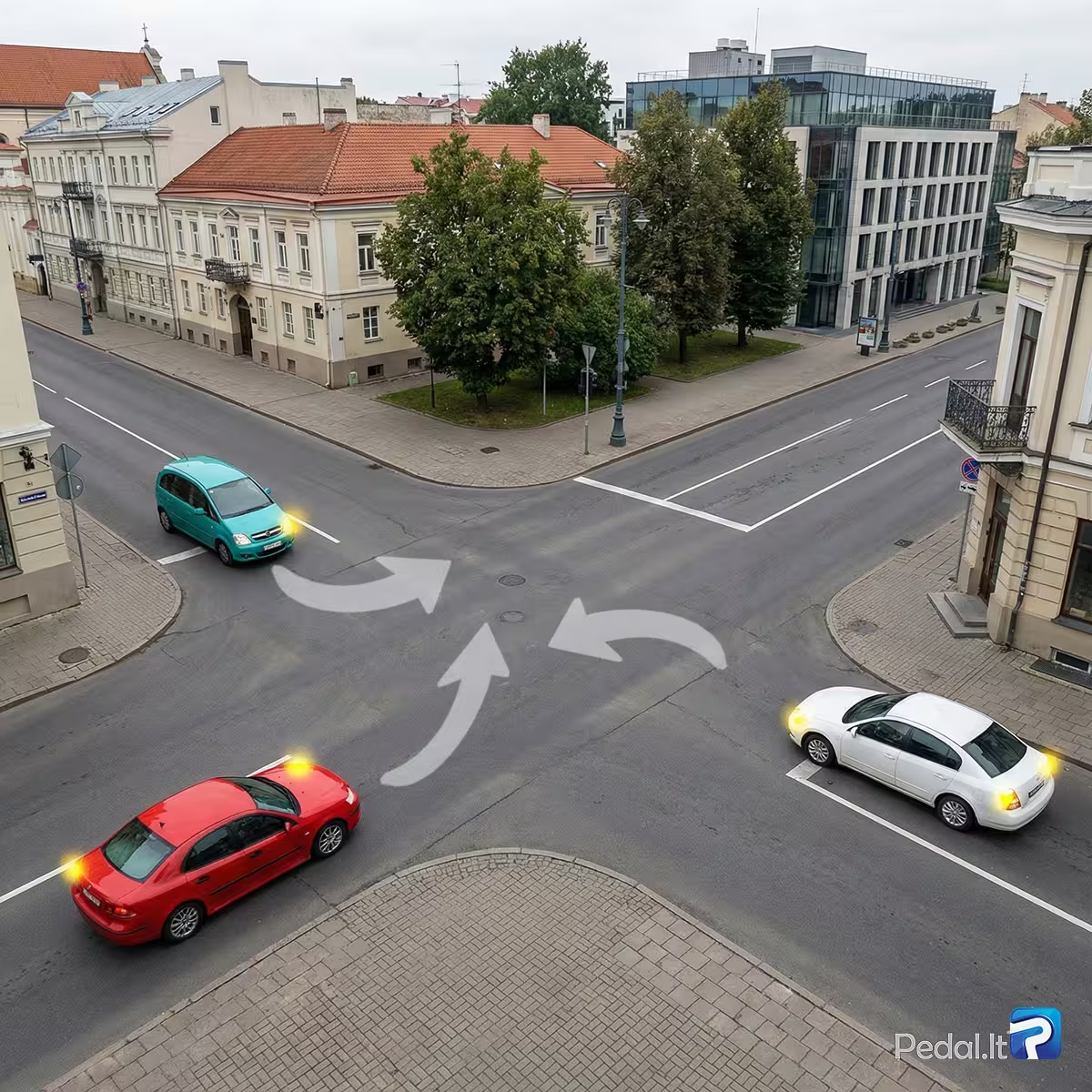
The correct sequence of vehicles to proceed through this intersection is:
The white car goes first because it has no vehicle on its right. It does not need to stop in the middle of the intersection because the green car, which is turning left, does not obstruct it. Next, the red car proceeds because the white car is no longer to its right. Finally, the green car goes. The white and green cars cannot go at the same time because the green car must yield to the red car on its right. (RTR 155) At an uncontrolled intersection, drivers must yield to vehicles approaching from the right when their paths intersect.
1. The white car goes first, then the red car, and finally the green car.
2. The red car goes first, then the green car, and finally the white car.
3. The white and green cars proceed simultaneously, followed by the red car.
What should the driver do first to stop a braking car from skidding?
If the vehicle begins to slide while braking, you must stop braking. For example, if you brake suddenly and lock the wheels before a turn, even after steering into the desired direction the car will continue moving in its previous direction (straight), which can cause you to leave the road or collide with an obstacle. Therefore, in this situation you must consciously release the brakes — a maneuver that can be especially difficult for an inexperienced driver. JB
1. Release the clutch and the brake pedal.
2. Release the brake pedal.
3. Increase vehicle speed.
On which road sections can exceeding the speed limit cause a road accident?
Exceeding the speed limit on any section of road is dangerous: it increases braking distance and thereby raises the likelihood of a road accident.
1. At pedestrian crossings.
2. On curves and turns.
3. At intersections.
In which situations must a driver report a road accident to the police?
If a road accident results only in property damage and the owner of the damaged property is not present at the scene and cannot be contacted, the road user involved must immediately notify the owner or, if that is not possible, report the accident to the police.
XXIX. Obligations of Road Users in the Event of a Road Accident (paras. 219–222)
219. In the event of a road accident, every driver involved or any other road user must:
219.1. stop immediately without creating further danger to other road users and mark the accident scene as required by subparagraph 91.2 and paragraph 92 of these Rules;
219.2. take all possible measures to ensure safety at the scene, and if the police are called, avoid (without endangering traffic) altering the circumstances of the accident and preserve the traces and evidence of the collision;
219.3. at the request of other road users involved, present a valid identity document or driving licence and a certificate (policy) of compulsory motor third-party liability insurance to identify the insurer;
219.4. if a person has been injured or has died in the accident, report the accident to the police and remain at the scene, or after notifying the police return and wait for them, except where the police permit departure or where the casualties or the person reporting the accident require immediate first aid;
219.5. take all necessary measures to provide first aid to the casualties, call an ambulance or, if calling an ambulance or transporting casualties to a medical facility by other means is impossible, carry them to the nearest medical facility in a private vehicle unless such transport would endanger their life or health.
222. If a road accident causes only property damage and the victim is not present at the scene, the road user involved must immediately notify the victim or, if that is not possible, the police.
1. When the accident caused only property damage and the owner of the damaged property is not present at the scene and cannot be reached.
2. When there is a dispute or disagreement about the circumstances of the accident.
3. When a person has been injured as a result of the accident.
4. When a person has died as a result of the accident.
If an inspecting officer stops you, what must you switch on?
RTR 91. If the vehicle is fitted with hazard warning lights, they must be switched on: 91.3 when the vehicle is stopped by an inspecting officer. JB
1. The horn (audible warning).
2. Hazard warning lights (emergency flashers).
Does a category B driving licence permit the holder to drive a light quadricycle?
A category B driving licence entitles the holder to drive vehicles of category AM (mopeds and light quadricycles). LAW ON ROAD TRAFFIC SAFETY Article 23. 1. Categories of motor vehicles and their combinations with trailers are as follows: 1) Category AM: mopeds and light quadricycles; 5) Category B1: quadricycles. 4. A driving licence that entitles a person to drive: 1) vehicles referred to in Subparagraphs 2–16 of Paragraph 2 of this Article also entitles the holder to drive vehicles of category AM; 4) vehicles of categories B, C, or D also entitle the holder to drive vehicles of categories B1, C1, or D1.
1. Yes. A category B driving licence allows the holder to drive a light quadricycle.
2. No. A category B driving licence does not permit driving a light quadricycle.
.avif)
To whom must a motorcyclist yield?
RTR 12. Road users must immediately yield to approaching emergency vehicles that display blue and red (or only blue) flashing lights and use special audible signals, as well as to vehicles escorted by them. Road users shall form an emergency corridor as follows: 12.1 On a road with a single lane in one direction, drivers must stop on the right hard shoulder if one exists; if there is no hard shoulder, they must stop as close as possible to the right edge of the carriageway. 12.2 On a road with two or more lanes in the same direction, vehicles in the far-left lane must move and stop as close as possible to the left edge of the carriageway designated for that direction, while vehicles in the lanes to the right must move and stop as close as possible to the right edge of the carriageway (or the hard shoulder). 12.3 On a road with a central reservation, only drivers travelling in the same direction must comply with the requirements in paragraphs 12.1 and 12.2. RTR 154. At a controlled intersection, drivers on a side (minor) road must yield to vehicles approaching on the priority road.
1. The red car.
2. The police vehicle.
3. The bus.
4. The motorcyclist is not required to yield to anyone.
Another person may drive your vehicle if:
A driving licence of categories B and BE entitles the holder to drive a passenger car (RTR 14). It is prohibited to operate a vehicle if you do not have the legal right to do so, or if you are under the influence of alcohol, narcotic drugs, psychotropic substances, or other psychoactive substances. A person who is fatigued or ill must not drive if driving could endanger road safety. A vehicle must not be entrusted to anyone who is under the influence of the aforementioned factors or who is not authorized to drive that type of vehicle. When operating a vehicle, the driver must comply with the restrictions and endorsements indicated on the driving licence.
1. The person is at least 18 years old but does not possess a driving licence.
2. The person holds a category BE driving licence.
3. The person holds a category B driving licence.
4. The person holds only a category A driving licence.
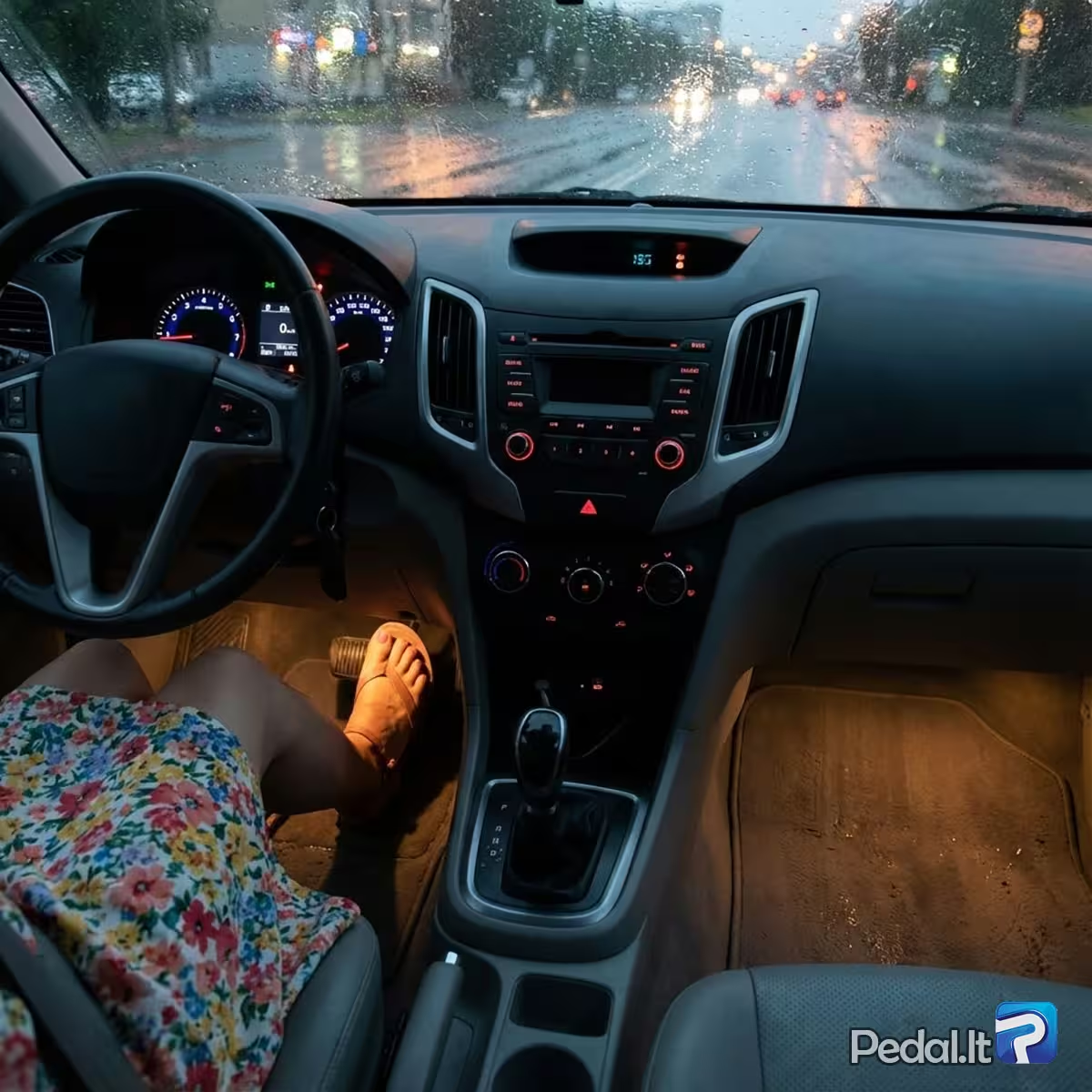
If water gets into the brake pads and reduces braking effectiveness, what will you do?
After driving through a deep puddle or a body of water, drive at low speed for a short while and gently apply the brakes several times to dry the brake discs or drums and the pads or shoes. Friction will heat the components, helping the water to evaporate and restoring braking performance.
1. You would repeatedly apply the brakes while the vehicle is stationary.
2. You would ignore it because they will dry on their own within a few minutes.
3. You would gently apply the brakes several times while driving slowly.
How should you drive to minimize fuel consumption and maximize range?
Driving uphill requires more power than driving on level ground. Therefore, maintain a steady speed and avoid accelerating on climbs. It is reasonable to increase speed on level sections or when driving downhill. At a constant speed, using a higher gear reduces engine revolutions; lower revolutions mean the engine works less and uses less fuel. Do not coast in neutral when descending — this is not only uneconomical but also unsafe. While coasting downhill, vehicle systems may cut fuel supply, so the instrument reading can show 0.0 l/100 km (if you do not press the accelerator). It is most economical to start moving immediately after you start the engine. Idling a stationary vehicle consumes fuel and emits pollutants; the engine will warm up and reach normal operating temperature during driving (unless there is a malfunction).
1. Shift into neutral and coast when descending a hill.
2. Avoid accelerating when driving uphill.
3. Use the highest appropriate gear possible.
4. Delay driving until the engine reaches normal operating temperature.
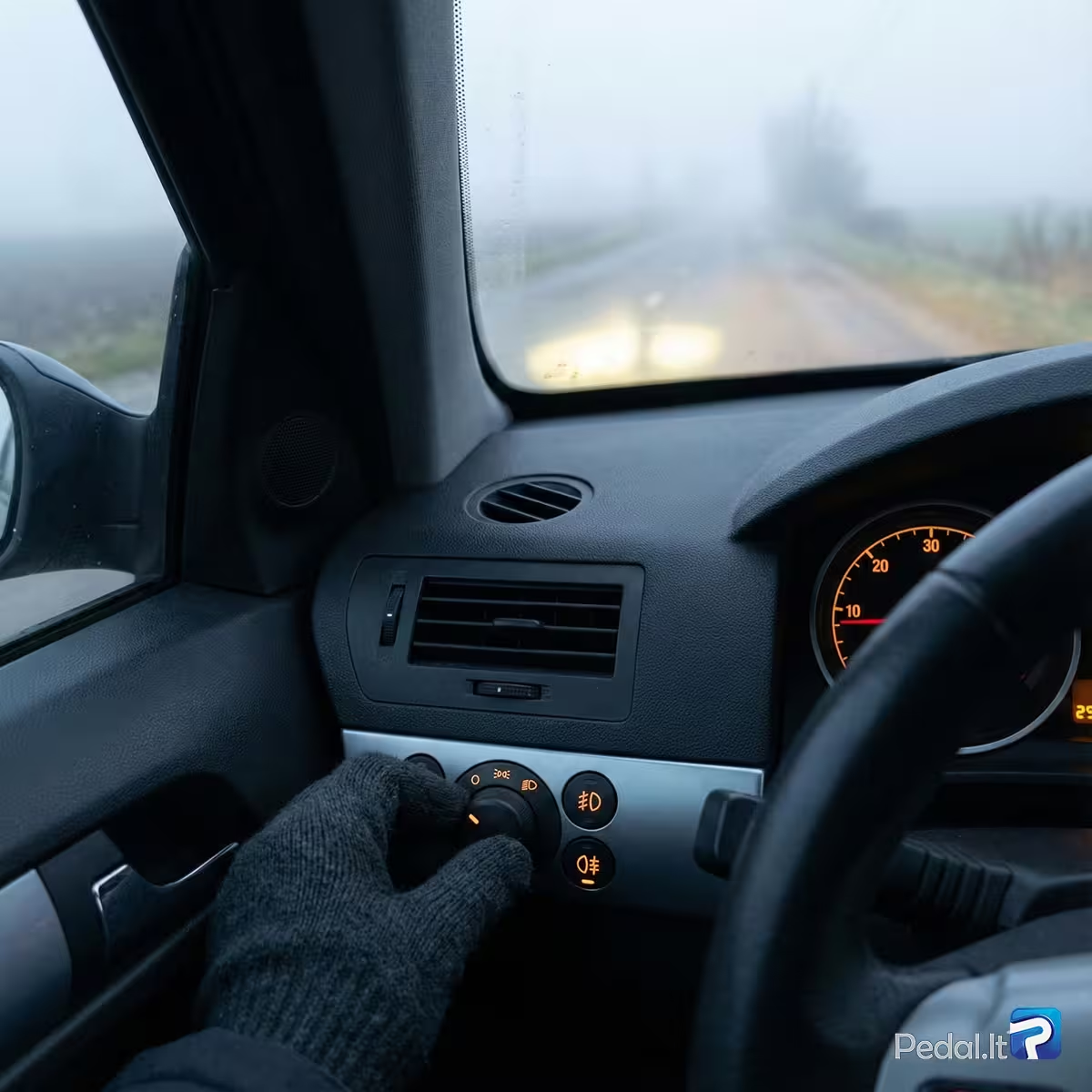
Fog lamps must be capable of being switched on:
Technical requirements for vehicles operated on a road, Chapter IV, Paragraph 22: If fog lamps are fitted, they must only be capable of being switched on and off using an appropriate switch when the position lamps are switched on. Additionally, fog lamps must be capable of being switched off independently of any other lights.
1. When the main-beam (high‑beam) headlamps are switched on.
2. When the position (parking) lamps are switched on.
3. Only when the position lamps are switched on; they must be able to be turned off independently of any other lights.
4. When the dipped‑beam (low‑beam) headlamps are switched on.
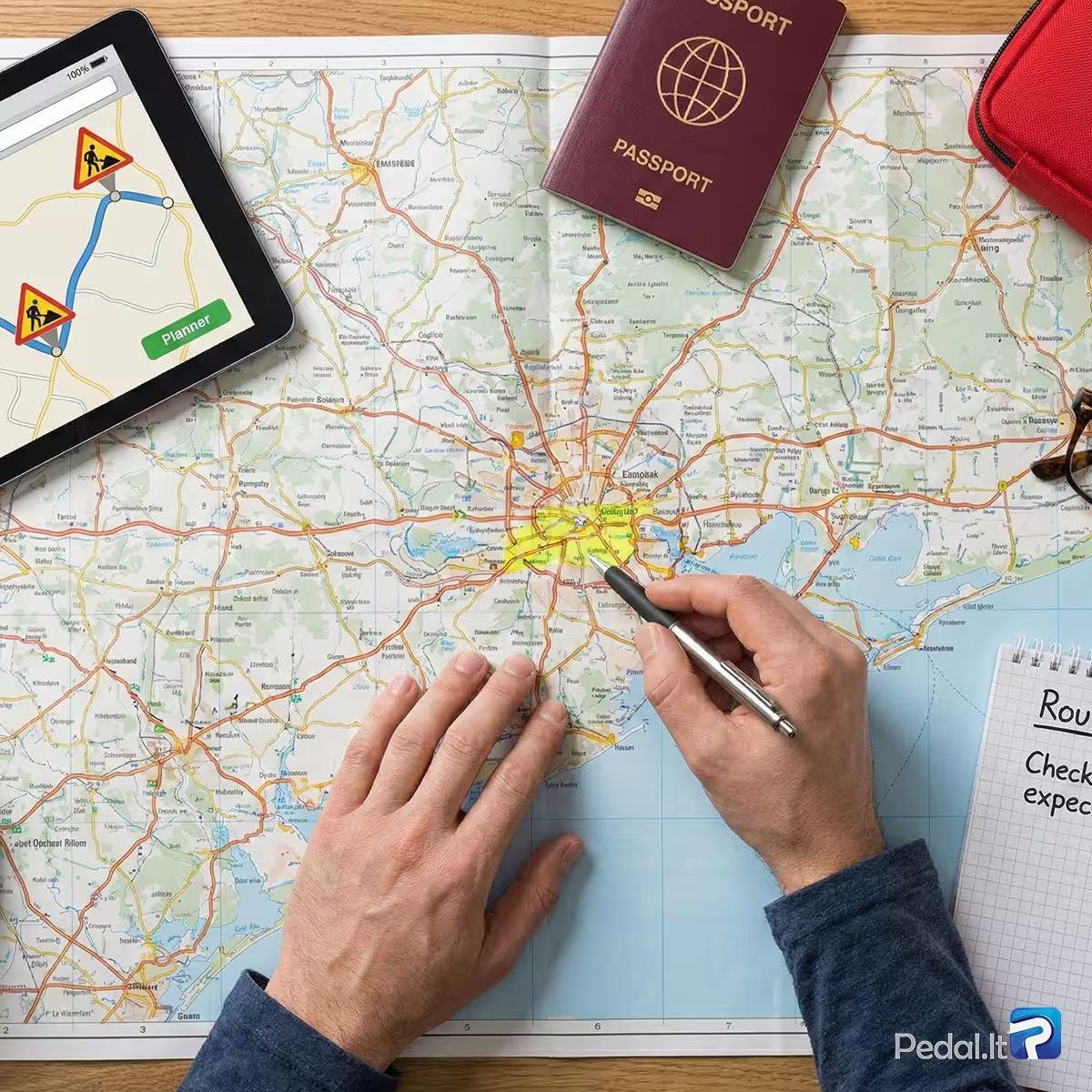
How should you plan your route when travelling a long distance that may include roadworks, border crossings and unexpected events?
JB
1. Estimate the additional fuel required for your journey and plan appropriate refuelling stops.
2. No planning is necessary.
3. Plan your departure time, stops and rest breaks, parking arrangements, and the route your vehicle will follow to the destination.
4. Check the traffic laws and legal requirements of any countries you will pass through.
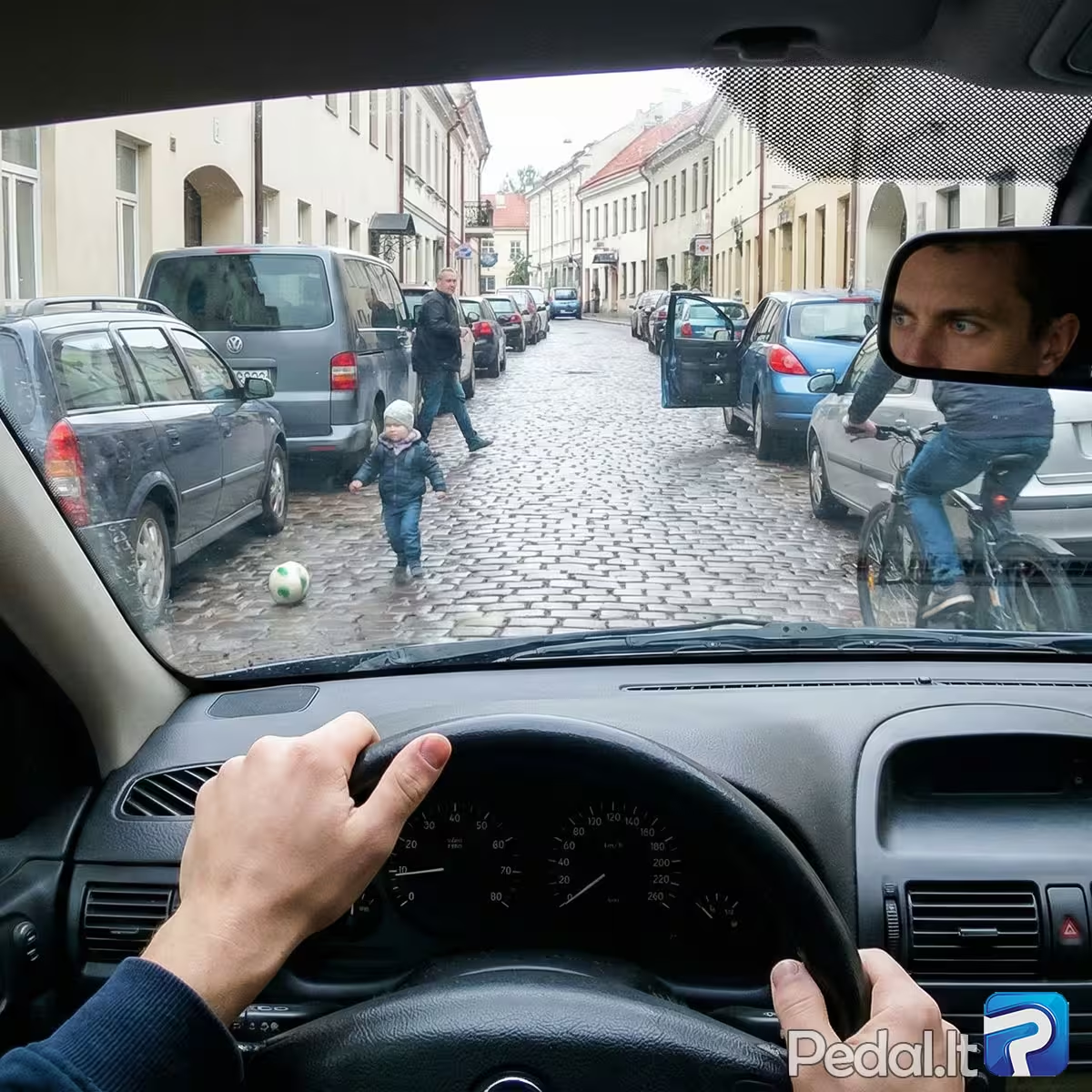
When driving past parked vehicles, you should be particularly alert for:
When driving beside a line of parked vehicles, watch for pedestrians who may step out into the road, drivers exiting their cars, and vehicle doors opening unexpectedly — any of these can cause a collision. 148. The doors of a parked vehicle must not be opened if doing so could create an obstruction or a hazard to other road users.
1. Pedestrians walking between parked vehicles.
2. Drivers exiting their vehicles.
3. Doors of parked vehicles that may open unexpectedly.
4. Children at play who may run into the carriageway.
Why does a vehicle pull to one side during braking?
If a vehicle pulls to one side only during braking, the fault lies in the braking system. If the wheel alignment is incorrect or there is a malfunction in the steering system, the vehicle may also pull to one side while driving.
1. Because the wheels are misaligned.
2. Because the braking system is applying unevenly.
3. Because of a malfunction in the steering mechanism.
1 of 30 Task
Time left: 00:00:00
1
2
3
4
5
6
7
8
9
10
11
12
13
14
15
16
17
18
19
20
21
22
23
24
25
26
27
28
29
30