Documents a motor vehicle driver must carry while driving and present upon request to an inspecting officer:
Drivers are generally required to carry only a driving licence or an identity document; other documents are required only if the driver is not the owner of the vehicle they are driving (RTR 16). A driver must stop the vehicle when ordered by an inspecting officer. The driver of a motor vehicle, tractor or self-propelled vehicle shall carry and, at the request of the inspecting officer, present a valid driving licence or a document certifying the right to drive tractors and/or self-propelled vehicles; the vehicle registration documents; the certificate of compulsory roadworthiness inspection (compulsory technical inspection); the report of the most recent technical inspection for vehicle categories M2, M3, N2, N3, O3, O4 and wheeled tractor categories T1b, T2b, T3b, T4.1b, T4.2b, T4.3b, T5; the certificate (policy) of compulsory motor third‑party liability insurance; and other documents specified by the laws of the Republic of Lithuania and these Rules (except where the Law on Road Traffic Safety provides that a driver is not required to carry the relevant documents). The driver must also allow the inspecting officer to check readings of validated devices registering driving time and rest periods. Documents should be presented without leaving the vehicle; the driver may exit the vehicle only with the inspecting officer's permission.
6. A driver whose licence was issued in the Republic of Lithuania need not carry and present the licence if they present a valid identity document.
7. A driver referred to in paragraph 6 who is driving a vehicle registered in the Republic of Lithuania is not required to carry and present the compulsory technical inspection document or the compulsory motor third‑party liability insurance certificate (policy) upon request of the inspecting officer.
8. A driver referred to in paragraph 6 who is driving a vehicle registered in the Republic of Lithuania that they own is not required to carry and present the documents referred to in paragraph 7 or the vehicle registration document upon request of the inspecting officer. (RTR 219). In the event of a road accident, every driver involved or any other road user must: 219.3. produce the driver's licence, vehicle registration and compulsory technical inspection documents, the motor third‑party liability insurance policy or other documents in their possession if so requested by other road users involved in the accident. JB
1. The driver's licence, compulsory insurance certificate (policy), vehicle registration documents and the mandatory technical inspection documents.
2. Certificate of completion of compulsory first aid training.
3. A document proving personal identity or a valid driving licence.
4. A valid driver's medical certificate.
Which of the following are warning signals?
RTR 81. Warning signals include: using turn and brake lights (arm signals may be used), sounding the horn, switching the headlights on and off, activating hazard warning lights or flashing amber beacons, and placing a warning triangle on the road or attaching it to the vehicle.
1. Brake light signal.
2. Indicating a turn using an arm signal.
3. Horn signal.
4. Switching the headlights on and off.
5. Placing a warning triangle on the road.
Overtaking is prohibited in the following situations:
RTR XVI.140. Overtaking is forbidden: 140.1. at intersections, except where overtaking on a main road is permitted because the intersection is not marked by one of the following signs: 'Intersection with the Side Road', 'Side Road on the Right', 'Side Road on the Left', or 'Priority Road'; 140.2. at level crossings and within 100 m of a level crossing; 140.3. on road sections with poor visibility; 140.4. on pedestrian crossings; 140.5. on roads with more than one lane in the same direction; 140.6. on road sections marked with the signs 'Overtaking is prohibited' or 'Overtaking by trucks is prohibited' (see the explanations for these signs); 140.7. on road sections where opposing traffic flows are separated by longitudinal markings 1.1, 1.3, 1.4, 1.10 (from the continuous line side) and 1.15 listed in Appendix 3 of the Rules; 140.8. in residential areas, apartment building courtyards, parking lots and bicycle streets. JB
1. At intersections, except where overtaking is specifically allowed.
2. On stretches of road with good visibility.
3. Within 50 metres before a railway crossing.
4. On road sections where signs 'No overtaking' or 'No overtaking by trucks' are posted (as defined by the signs' descriptions).
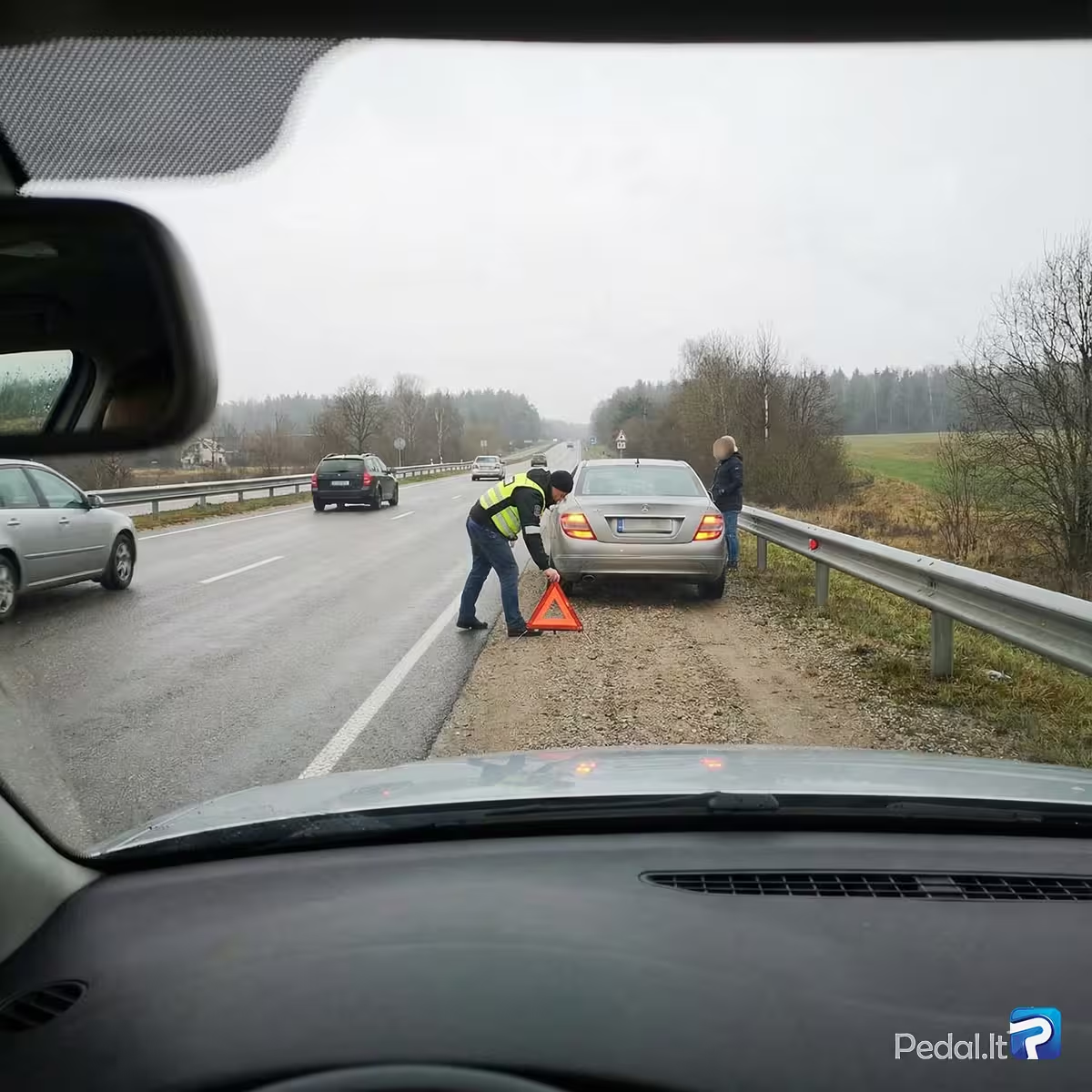
A vehicle has broken down on the road. What is the safest action to take?
1. Have the vehicle removed from the roadway as soon as possible using a tow truck (rigid towing).
2. Turn on your hazard lights and wait beside the vehicle.
3. Try to push the vehicle to the side of the road.
4. Stop and attempt to repair the vehicle while still on the roadway.
What should guide road users' behaviour?
Road users should adhere to the principles of mutual respect and safety.
1. Their income.
2. The position they hold.
3. Their social status.
4. Mutual respect and safety.
Upon request by another road user involved in the accident:
RTR 219. In the event of a road accident, every driver involved or any other road user must: 219.3. upon the request of other road users involved in the accident, present a valid identity document or a valid driving licence, and a certificate (policy) of compulsory third‑party motor vehicle liability insurance in order to identify the insurer;
1. You must present a valid identity document and the certificate (policy) of compulsory motor third‑party liability insurance to identify the insurer.
2. You are required to present the documents only to the police.
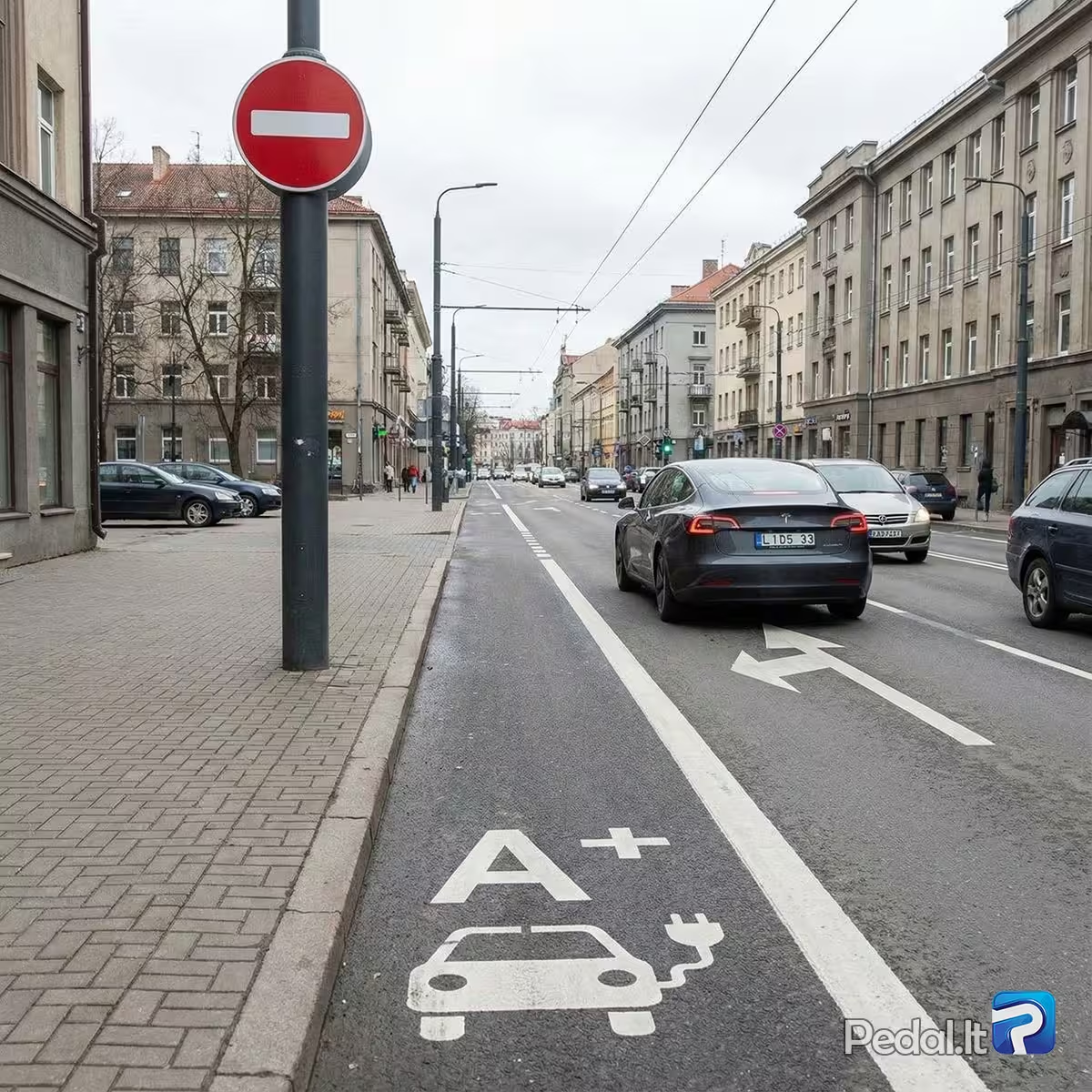
When driving in a lane marked 'A+' and bearing an electric vehicle symbol, and the lane's road sign indicates 'No Entry', what should the driver of an electric vehicle do if they intend to go straight ahead?
In this situation, the 'No Entry' sign applies to the lane and is not limited solely to public-service vehicles. Therefore, if the electric vehicle driver intends to continue straight ahead, they must change lanes and move into a lane that permits driving straight. Legal basis: RTR 181 — Non-public-service vehicles must not drive in lanes marked 'Lane Reserved for Public Service Vehicles' and the letter 'A'. 1811 — Non-public-service vehicles must not drive in lanes marked 'A+' except for the following: 1811.1 bicycles, electric micromobility devices, mopeds, and light quadricycles; 1811.2 vehicles marked with the distinguishing sign 'A person with a disability' or displaying a parking card that transport a person with a disability to/from an educational institution or a day-care centre for people with disabilities if the route is agreed with the road owner according to the established procedure; 1811.3 taxis if the lane reads 'TAXI'; 1811.4 cars carrying four or more road users if the lane is marked with the symbol '4+'; 1811.5 electric vehicles if the lane is marked with an electric vehicle symbol; 1811.6 motorcycles if the lane is marked with a motorcycle symbol. RTR Annex 1. 301 — Road sign 'No Entry': Entry is prohibited for all vehicles except public-service vehicles.
1. Continue straight ahead without changing lanes.
2. Change lanes and move into the lane from which it is allowed to drive straight ahead.
In which situations must a driver report a road accident to the police?
If a road accident results only in property damage and the owner of the damaged property is not present at the scene and cannot be contacted, the road user involved must immediately notify the owner or, if that is not possible, report the accident to the police.
XXIX. Obligations of Road Users in the Event of a Road Accident (paras. 219–222)
219. In the event of a road accident, every driver involved or any other road user must:
219.1. stop immediately without creating further danger to other road users and mark the accident scene as required by subparagraph 91.2 and paragraph 92 of these Rules;
219.2. take all possible measures to ensure safety at the scene, and if the police are called, avoid (without endangering traffic) altering the circumstances of the accident and preserve the traces and evidence of the collision;
219.3. at the request of other road users involved, present a valid identity document or driving licence and a certificate (policy) of compulsory motor third-party liability insurance to identify the insurer;
219.4. if a person has been injured or has died in the accident, report the accident to the police and remain at the scene, or after notifying the police return and wait for them, except where the police permit departure or where the casualties or the person reporting the accident require immediate first aid;
219.5. take all necessary measures to provide first aid to the casualties, call an ambulance or, if calling an ambulance or transporting casualties to a medical facility by other means is impossible, carry them to the nearest medical facility in a private vehicle unless such transport would endanger their life or health.
222. If a road accident causes only property damage and the victim is not present at the scene, the road user involved must immediately notify the victim or, if that is not possible, the police.
1. When the accident caused only property damage and the owner of the damaged property is not present at the scene and cannot be reached.
2. When there is a dispute or disagreement about the circumstances of the accident.
3. When a person has been injured as a result of the accident.
4. When a person has died as a result of the accident.
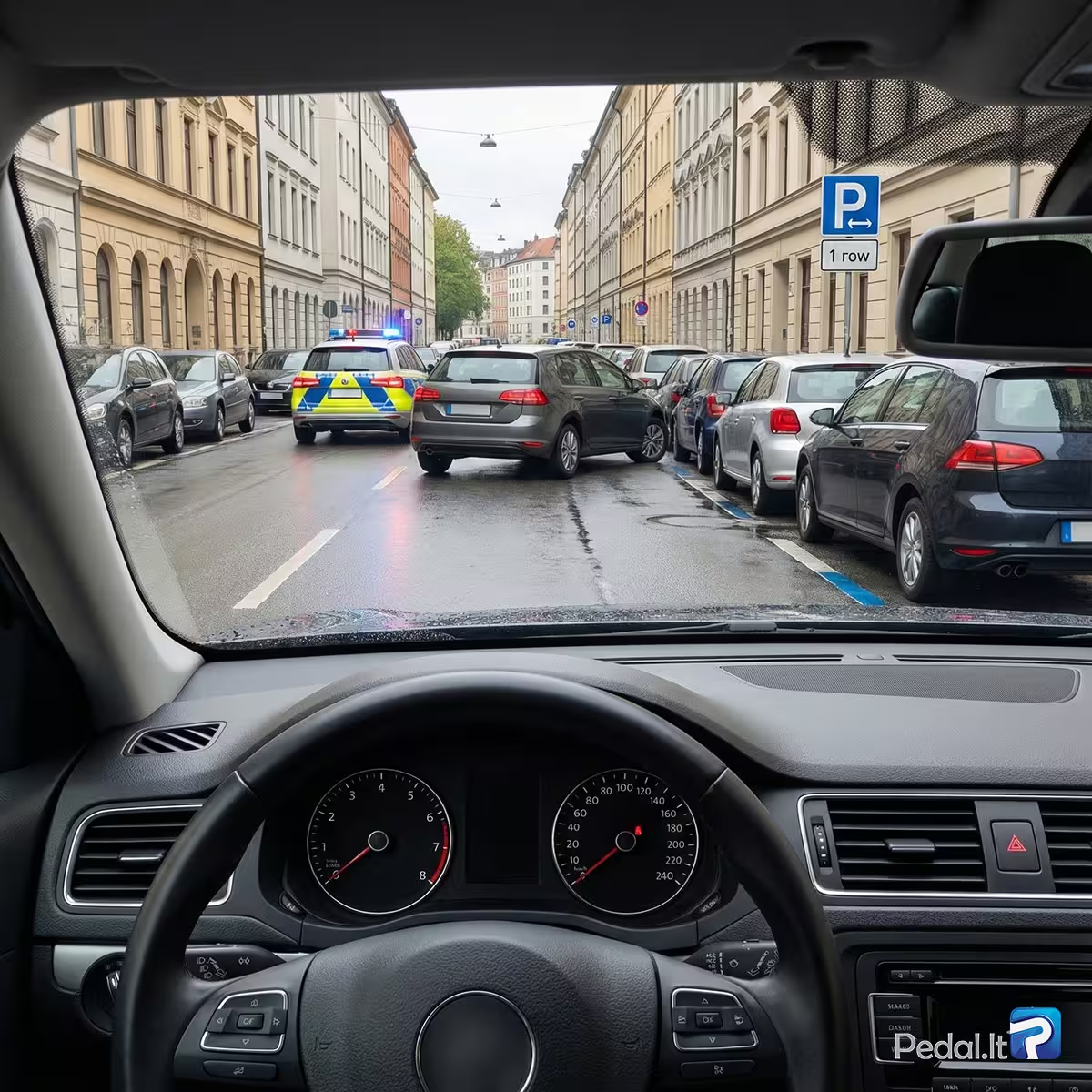
How many rows of cars are permitted to stop and park on the roadway?
RTR 144. Vehicles must stop and park on the carriageway in a single line. RTR 145. Motorcycles without a sidecar, mopeds, bicycles, and electric micromobility devices may be parked in two lines provided such parking does not obstruct traffic.
1. In a single row.
2. In two rows.
3. In three rows.
Carrying passengers is permitted in:
Towing a vehicle with a trailer is not prohibited, and carrying passengers in a towed passenger car is allowed. According to RTR 195 and clause 195.4, drivers must not carry passengers inside a towed bus, trolleybus, or in the cargo body of a goods vehicle. If the front or rear of a vehicle rests on a supporting device, no passengers may be inside or in the body of the towed vehicle.
1. Inside a towed bus.
2. Inside a car being towed together with its trailer.
3. Inside a passenger car being towed without a trailer.
4. Inside a car that is being towed with its front lifted on a special support device.
Why is it dangerous to drive fast on an asphalt road during heavy rain?
Heavy rain creates a layer of water on the asphalt surface (especially in longitudinal ruts) that cannot drain quickly to the roadside. At high speeds, a tire's tread cannot displace this water from beneath the wheel, and aquaplaning (hydroplaning) can occur. In other words, the wheels lose contact with—or have reduced grip on—the road surface, and the vehicle may become uncontrollable.
1. Water will enter the engine and cause it to stall.
2. The vehicle may lose control due to aquaplaning.
3. The windshield wipers will stop working.
You are driving at night on a narrow road. The vehicle ahead, traveling slowly, has its left turn signal on. What will you do?
You cannot overtake on the right because you are on a narrow road. Overtaking on the right of a vehicle that is turning left is permitted only if there is sufficient space on the carriageway. RTR 136. Drivers are advised to avoid unnecessary overtaking maneuvers. Before overtaking, drivers must exercise extra caution and ensure that: 136.1 none of the drivers behind has already begun to overtake; 136.2 the driver of the vehicle to be overtaken is not indicating a left turn; 136.3 the portion of lane required for overtaking is clear and the maneuver will not obstruct oncoming vehicles or pedestrians using the carriageway; 136.4 a safe distance from the vehicle being overtaken will be maintained during the maneuver; 136.5 after overtaking they will be able to return to the same traffic lane safely without obstructing the overtaken vehicle. RTR 137. If the vehicle in front is indicating a left turn and has changed lanes to make that left turn (or to turn around), vehicles following must pass the turning vehicle on the right or wait until it leaves the traffic lane.
1. You will pass the vehicle on the right.
2. You will not overtake the vehicle while its left turn signal remains on.
3. You will switch on your high-beam headlights before overtaking the vehicle.
4. You will activate your left turn signal and sound the horn.
What can cause a vehicle to skid?
Sudden steering wheel movements, improper use of the accelerator, or other actions that do not take the road surface and driving speed into account can cause a vehicle to skid. In general, it is the driver's own actions (for example, sudden braking), not the actions of another driver, that lead to skidding. The driver must choose an appropriate speed and following distance so that the actions of other road users do not endanger the vehicle. 126. The driver must maintain a distance appropriate to the speed, sufficient to avoid hitting the vehicle in front if it brakes, and must leave a lateral gap to ensure traffic safety. It is recommended that the distance to the vehicle ahead be at least the distance covered in two seconds or at least half the speedometer reading converted into metres (for example, at 70 km/h the distance should be at least 35 m), unless traffic conditions require otherwise. Drivers of motor vehicles, tractors and self-propelled machinery shall, when overtaking pedestrians or when overtaking or passing cyclists or drivers of electric micro-mobility vehicles, leave a lateral distance of at least 1.0 m when their speed does not exceed 50 km/h and at least 1.5 m when their speed exceeds 50 km/h. The requirement to maintain the specified lateral distance does not apply on a single-lane road.
1. The driver's actions.
2. An emergency caused by another driver.
Under which conditions does a car battery's capacity decrease?
Battery capacity decreases as ambient temperature falls. A fully charged battery that measures 100% capacity at +25 °C will typically drop to about 80% at 0 °C and to roughly 60% at −25 °C.
1. When ambient temperature rises.
2. When ambient temperature falls.
3. It does not change with temperature.
Which of the following correctly describes stopping distance?
Stopping distance is the distance a vehicle travels from the moment the driver notices an obstruction until the vehicle comes to a complete stop. Braking distance is the distance the vehicle travels from the moment the brakes are fully applied until it stops. Reaction distance is the distance the vehicle travels from the moment the driver detects an obstruction until the driver begins to apply the brakes.
1. The distance a vehicle travels from the moment the driver detects an obstacle until the vehicle comes to a complete stop.
2. The distance a vehicle travels until the braking force is transmitted to the wheels.
3. The distance a vehicle travels from the moment braking begins until the vehicle comes to a complete stop.
If the rear of a front-wheel-drive vehicle begins to skid sideways during a turn, how should you respond?
Gradually apply the accelerator and steer smoothly to return the vehicle to the intended line. Slightly increasing front-wheel traction helps counteract the rear's lateral slide, reducing the effect of centrifugal force and stabilizing the vehicle.
1. Lightly apply the brakes and steer into the skid.
2. Ease off the accelerator and steer carefully to return the vehicle to the intended line.
3. Gradually apply the accelerator and steer smoothly to return the vehicle to the intended path.
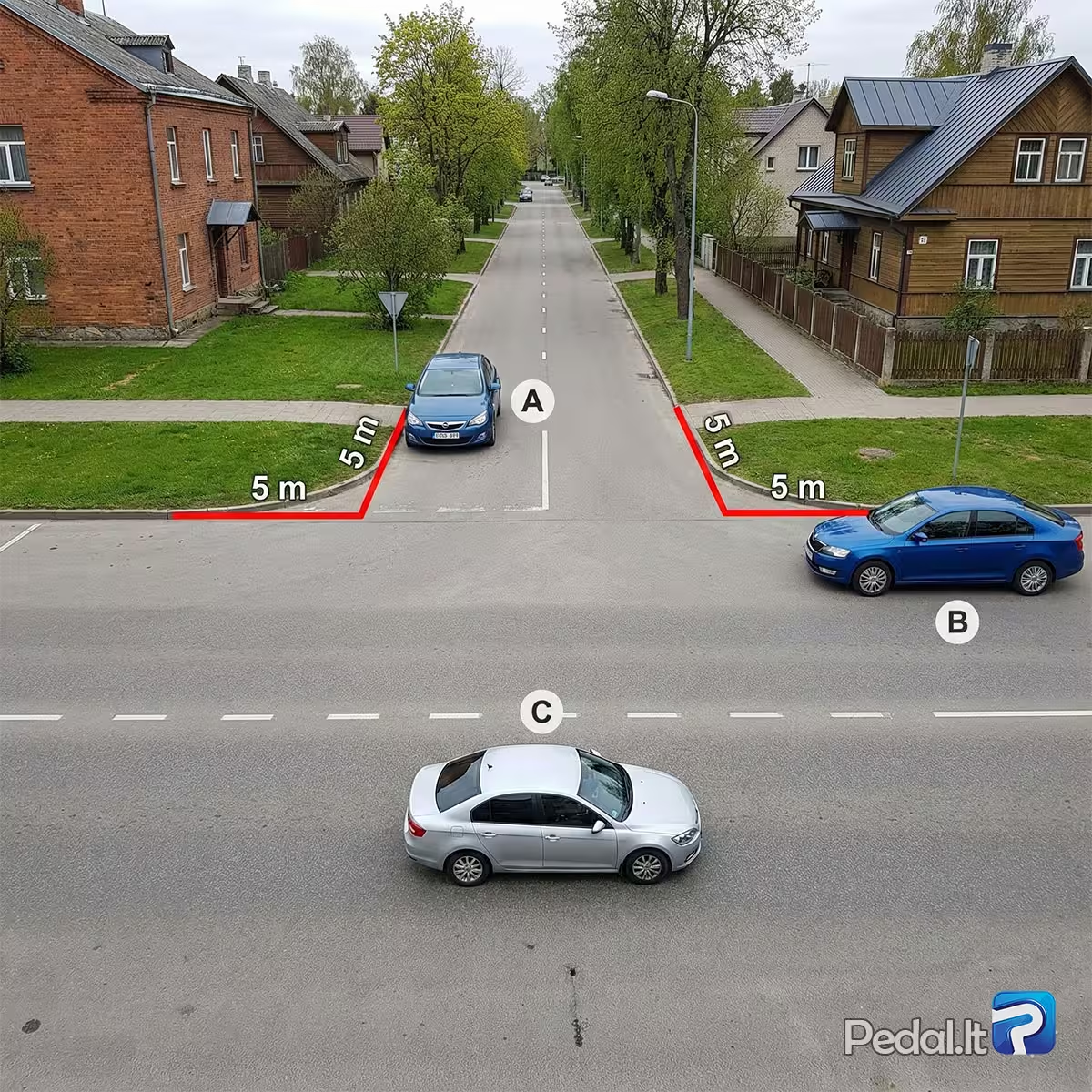
Which vehicles have violated the Road Traffic Rules by stopping at the entrance to the yard?
This is not an intersection but the entrance to a yard. Therefore, vehicle C is not prohibited from parking in this way. RTR 150. Standing and parking shall be prohibited: 150.15 at crossroads and in places where vehicles enter the road from adjacent areas and exit the road to adjacent areas, and within a 5-metre distance from those points (on the side of the road where the entrance/exit is located), except where road signs permit parking.
1. Vehicle A
2. Vehicle B
3. Vehicle C
4. All vehicles are parked correctly.
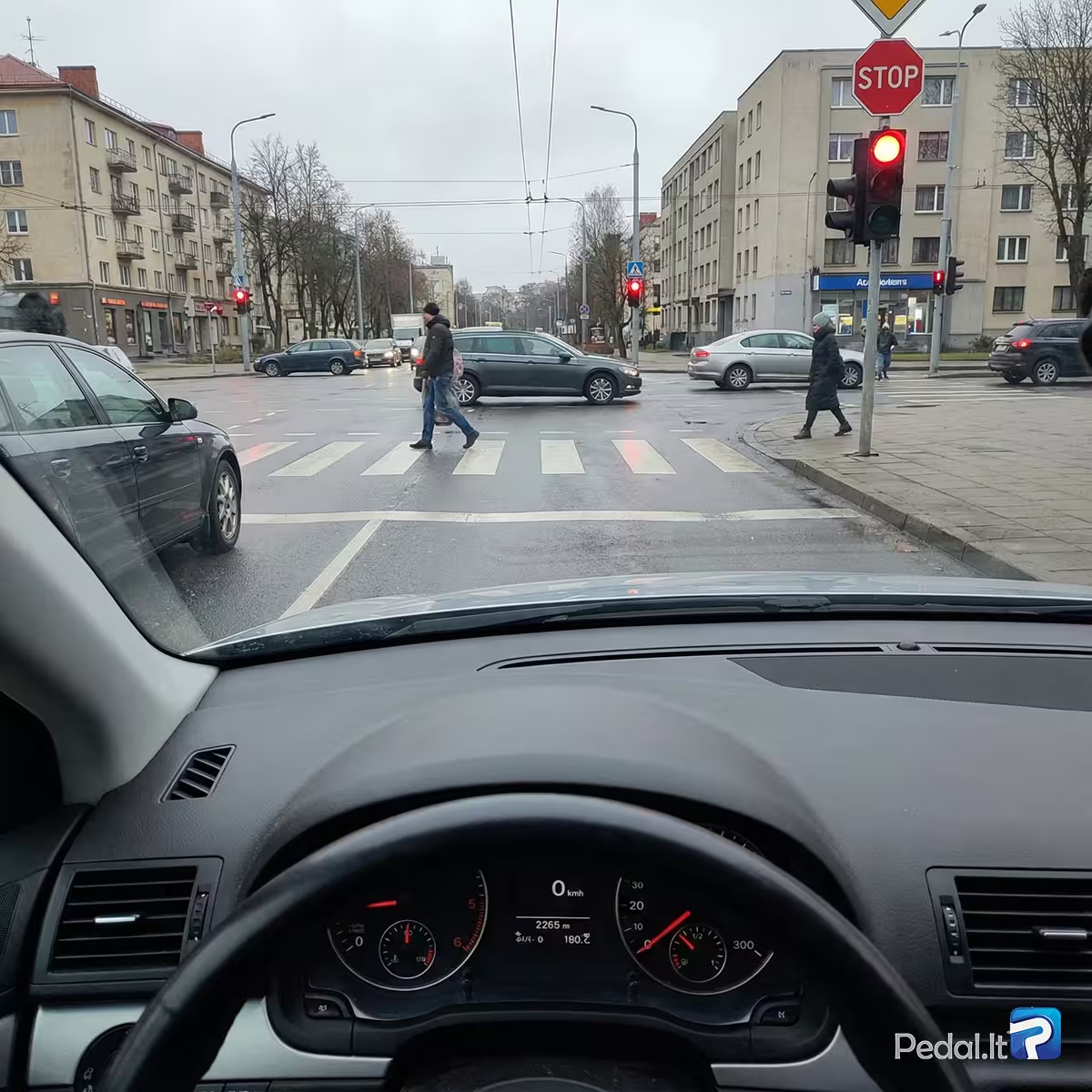
Where must the driver stop, according to traffic rules, when a prohibitory traffic signal or a traffic regulator's signal is in effect?
RTR 165 p. When a prohibitory traffic signal or a traffic regulator's signal is displayed, the driver must stop before the 'Stop line' road sign and/or before the marked stop line. If neither is present, the driver must stop before the traffic light, before the junction or the connecting carriageway, before a pedestrian crossing, or before a bicycle crossing, in such a position that does not obstruct vehicular or pedestrian traffic.
1. Before the 'Stop line' road sign and/or before the marked stop line.
2. So as not to obstruct vehicular traffic.
3. So as not to obstruct pedestrian traffic.
.avif)
How should you drive on a slippery road?
A safe speed depends on all circumstances, including weather, road surface and vehicle condition, as well as the driver's experience and level of alertness. (RTR 127) Drivers must not exceed the permissible speed limits. A driver must choose a speed appropriate to the conditions — taking into account terrain, road and vehicle condition (including load), weather, and traffic density — so that they can stop safely before any foreseeable obstruction. The driver must reduce speed or stop when conditions require, particularly when visibility is poor. JB
1. Maintain a larger-than-usual following distance from other vehicles.
2. When necessary, apply the brakes very gently.
3. Avoid sudden movements of the steering wheel or abrupt changes to the accelerator.
4. Select a safe driving speed.
What is the primary difference between winter diesel and summer diesel fuel?
In winter, air temperatures can easily drop to -25 °C or lower, causing diesel vehicles to experience starting problems. When temperatures fall below 0 °C, water in diesel fuel can freeze; failing to prepare a diesel vehicle for such conditions may lead to breakdowns. At service stations you can choose “summer” diesel, typically suitable from May through October, or “winter” diesel, formulated for use from November through April and adapted to low sub-zero temperatures.
1. Winter diesel fuel does not gel or freeze at -25 °C.
2. Winter diesel fuel begins to gel or freeze at temperatures below -5 °C.

What driving licence category is required to operate a motorized bicycle?
There is a minimum age requirement to operate a motorized bicycle, but no driving test or driving licence is required. LAW ON ROAD TRAFFIC SAFETY I 2. 40. Motorized bicycle - a vehicle with at least two wheels that is propelled by the rider's muscular effort using pedals or handlebars and equipped with an auxiliary internal combustion engine or electric motor with a maximum net power not exceeding 1 kW and a maximum design speed not exceeding 25 km/h. The auxiliary engine ceases to provide power when the vehicle reaches 25 km/h. Wheelchairs for persons with disabilities are not classified as motorized bicycles. RTR 55. Persons older than 14 are permitted to ride bicycles on the carriageway; if they have completed the training course established by the Ministry of Education, Science, and Sport of the Republic of Lithuania and hold a certificate issued by the school, the minimum age is 12. Persons over 8 may ride bicycles on the carriageway under adult supervision. No age limit is established for cyclists within a residential area. RTR 66. Drivers of motorized bicycles must also comply with the rules and requirements applicable to cyclists.
1. Category AM.
2. Category A.
3. Category B.
4. You do not have to have a driving licence.
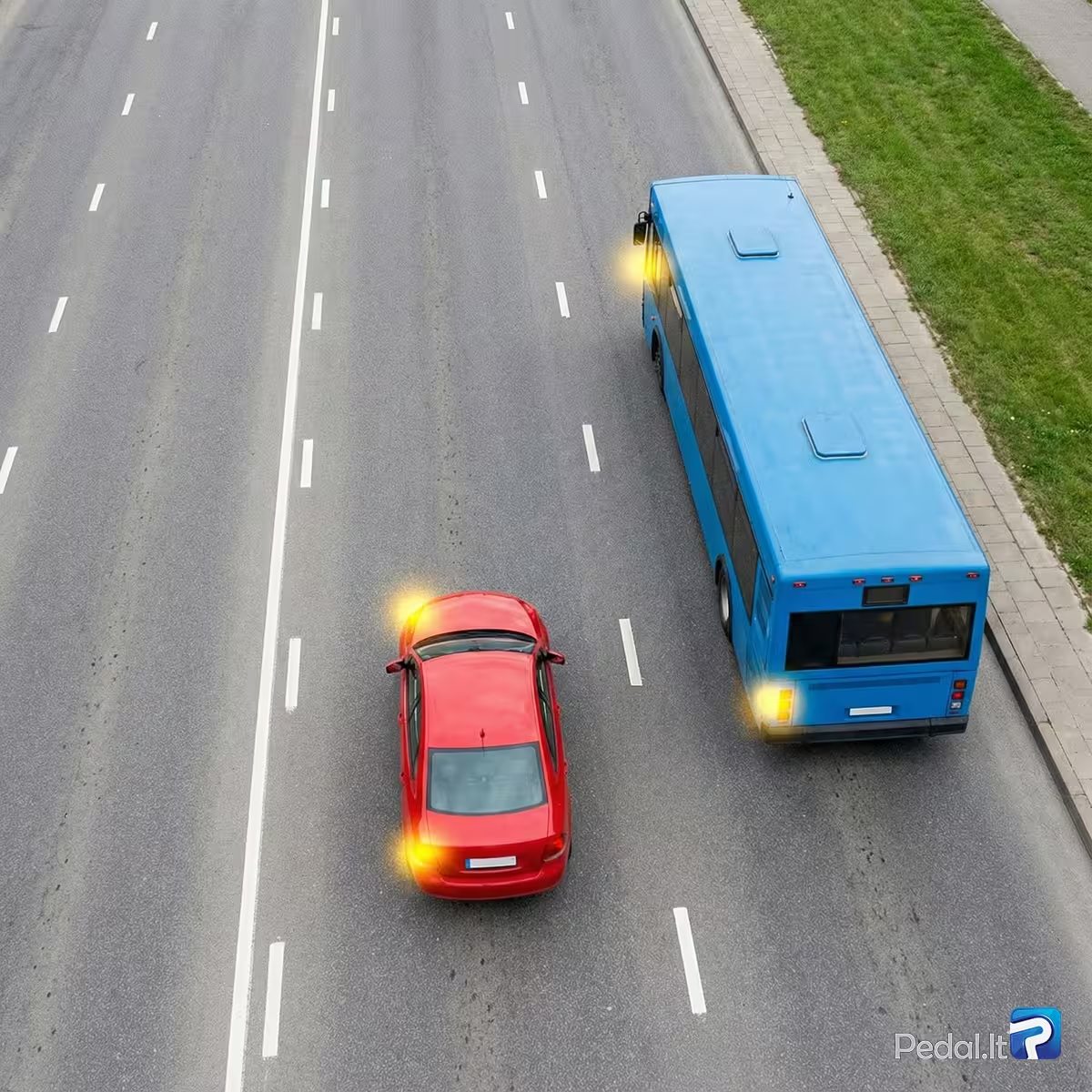
Is it permitted to turn around from the right-hand side of the carriageway if the carriageway is too narrow to turn from the left-hand side?
RTR 107. When, due to a vehicle's large size or other valid reasons, it is not possible to complete a turn (turn around) from the appropriate edge position of the carriageway, the vehicle may perform the turn from a part of the carriageway other than that edge assigned for travel in that direction, provided the maneuver does not obstruct other vehicles or create a hazard for other road users. JB
1. Yes — provided the maneuver does not obstruct other vehicles or create a hazard for other road users.
2. No — the maneuver is prohibited.
If you are forced to stop outside a built-up area where stopping is prohibited and your hazard warning lights are not working, what must you do?
RTR 92. If the vehicle's hazard warning lights are absent or defective and an emergency stop is required where stopping or parking is prohibited, in the event of an accident, or when the stopped vehicle would be visible to other road users from less than 100 metres, the driver of a motor vehicle (excluding a motor moped and motorcycles without a trailer), a tractor, or a self-propelled machine must immediately place an emergency stop sign on the side of the carriageway opposite the direction of travel: within settlements not less than 25 m, and outside settlements not less than 50 m from the stopped vehicle. If at least one rear position lamp is defective and the hazard warning signal is not working when driving in darkness or poor visibility, an emergency stop sign must be affixed to the rear of the vehicle in order to continue driving.
1. Attach a red flag to your vehicle.
2. Place a warning triangle 50 m behind the stopped vehicle.
3. Stop another vehicle and request assistance.
4. Turn on your dipped-beam headlights.
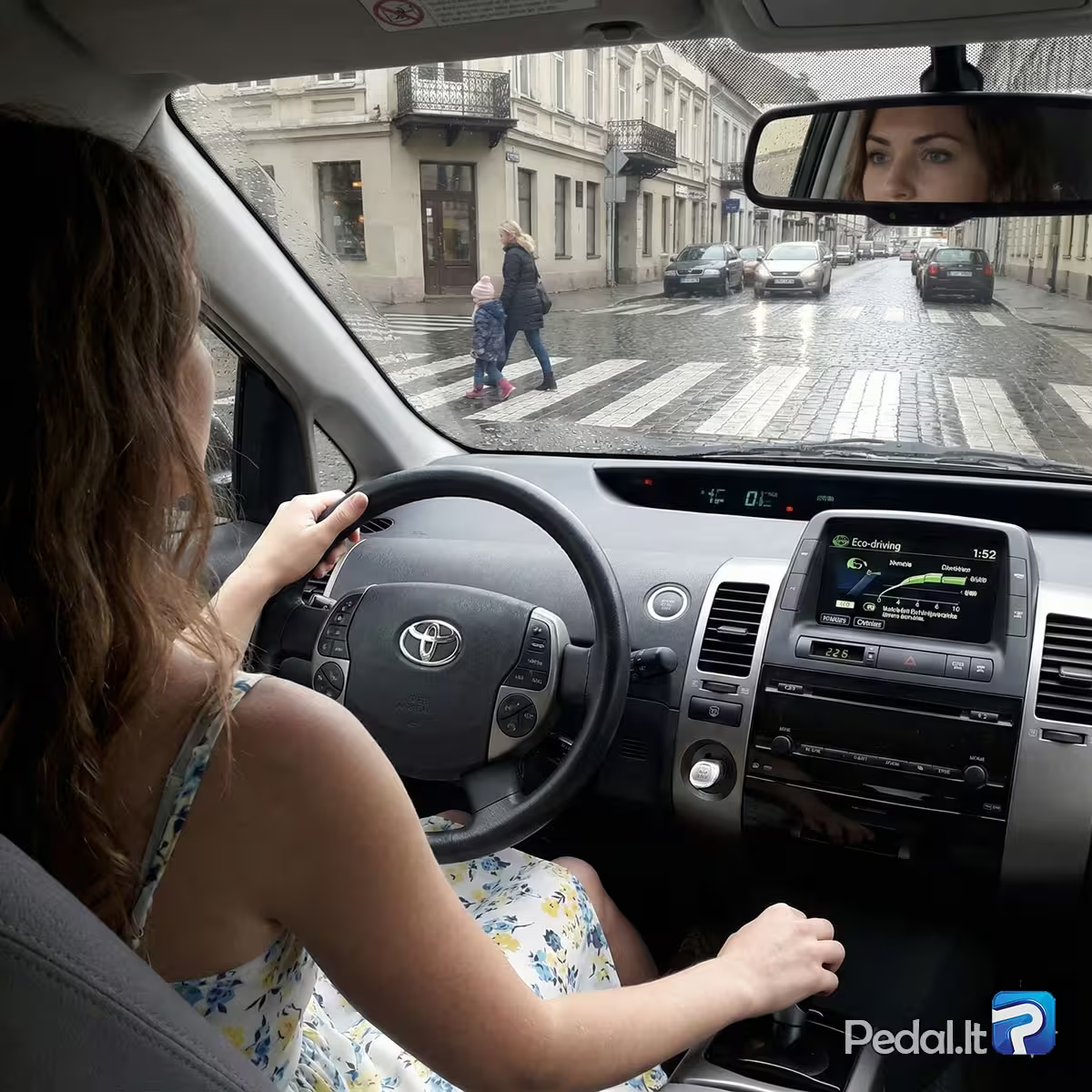
What should you do when approaching the pedestrian crossing?
Stationary vehicles positioned before a pedestrian crossing restrict visibility. Drivers must exercise extra caution and may continue only after confirming that no pedestrians entitled to right of way are at the crossing. (RTR 30.) When approaching an uncontrolled pedestrian crossing, a driver must reduce speed or stop before the crossing to give way to pedestrians who have already entered any lane, are walking in any lane, or were standing immediately at the carriageway edge waiting to step into a lane in the direction of the vehicle’s travel—or into any lane on a road with one lane in each direction. Drivers must be especially careful at night, in poor visibility, or whenever the crossing is not clearly visible from the driver’s position, and must ensure there are no pedestrians who should be given way.
1. You should reduce your speed.
2. If necessary to verify that no pedestrians are present, you will stop before the crossing.
3. You will pass the stationary vehicle at the permitted speed because you do not see any pedestrians on the crossing.
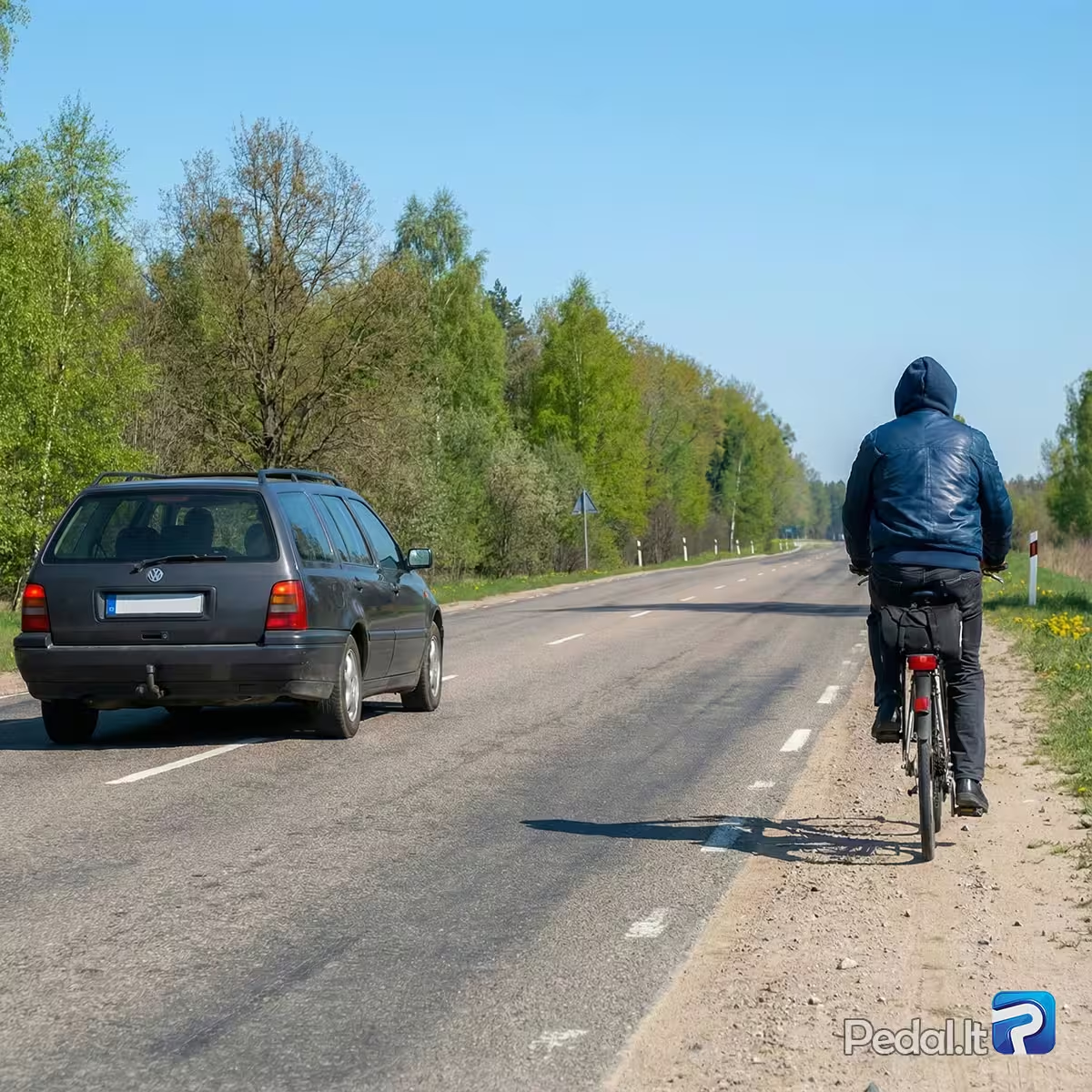
Cyclists must not perform any of the following:
RTR VIII. Rules for Cyclists
64. Cyclists must not:
64.1 Ride on the carriageway except in cases expressly permitted by these Rules.
64.2 Ride on motorways and expressways.
64.3 Ride without holding the handlebars with their hands.
64.4 Carry passengers if the bicycle is not fitted with a designated passenger seat.
64.5 Carry, tow, or push loads that impede control of the bicycle or pose a hazard to other road users.
64.6 Be towed by other vehicles.
64.7 Tow other vehicles, except for trailers specially designed for bicycles.
64.8 Hold on to a moving vehicle while cycling.
64.9 Cross the carriageway by riding over a pedestrian crossing. JB
1. Carrying, towing, or pushing any load that impairs control of the bicycle or endangers other road users.
2. Riding on bicycle paths after dark.
3. Riding in bicycle lanes marked on the sidewalk.
4. Riding at the edge of the carriageway during daylight hours.
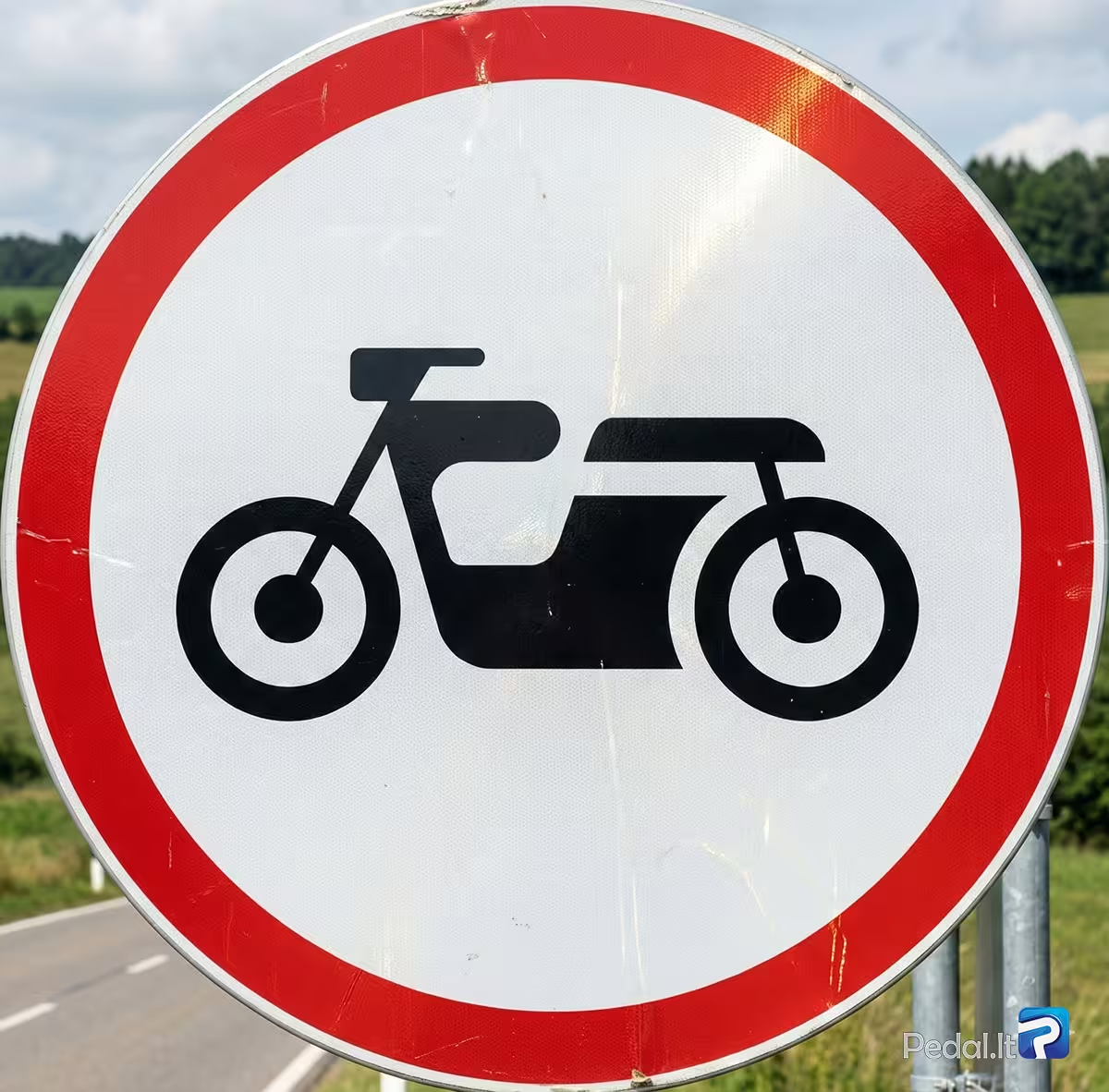
Which motor vehicles are prohibited from entering the area designated by this road sign?
1. Motorcycles (two‑wheeled motor vehicles)
2. Light quadricycles (small four‑wheeled motor vehicles)
3. Mopeds (low‑powered two‑wheel motor vehicles)
4. Bicycles (pedal‑powered two‑wheel vehicles)
What happens when the air pressure in a vehicle's tyres is too low?
When driving with tyres that have insufficient air pressure, the outer edges of the tyres wear more quickly, shortening tyre lifespan. Low tyre pressure also reduces vehicle stability and increases rolling resistance, which raises fuel consumption.
1. Tyres wear out more quickly.
2. Vehicle stability improves.
3. Fuel consumption increases.
4. Vehicle stability decreases.
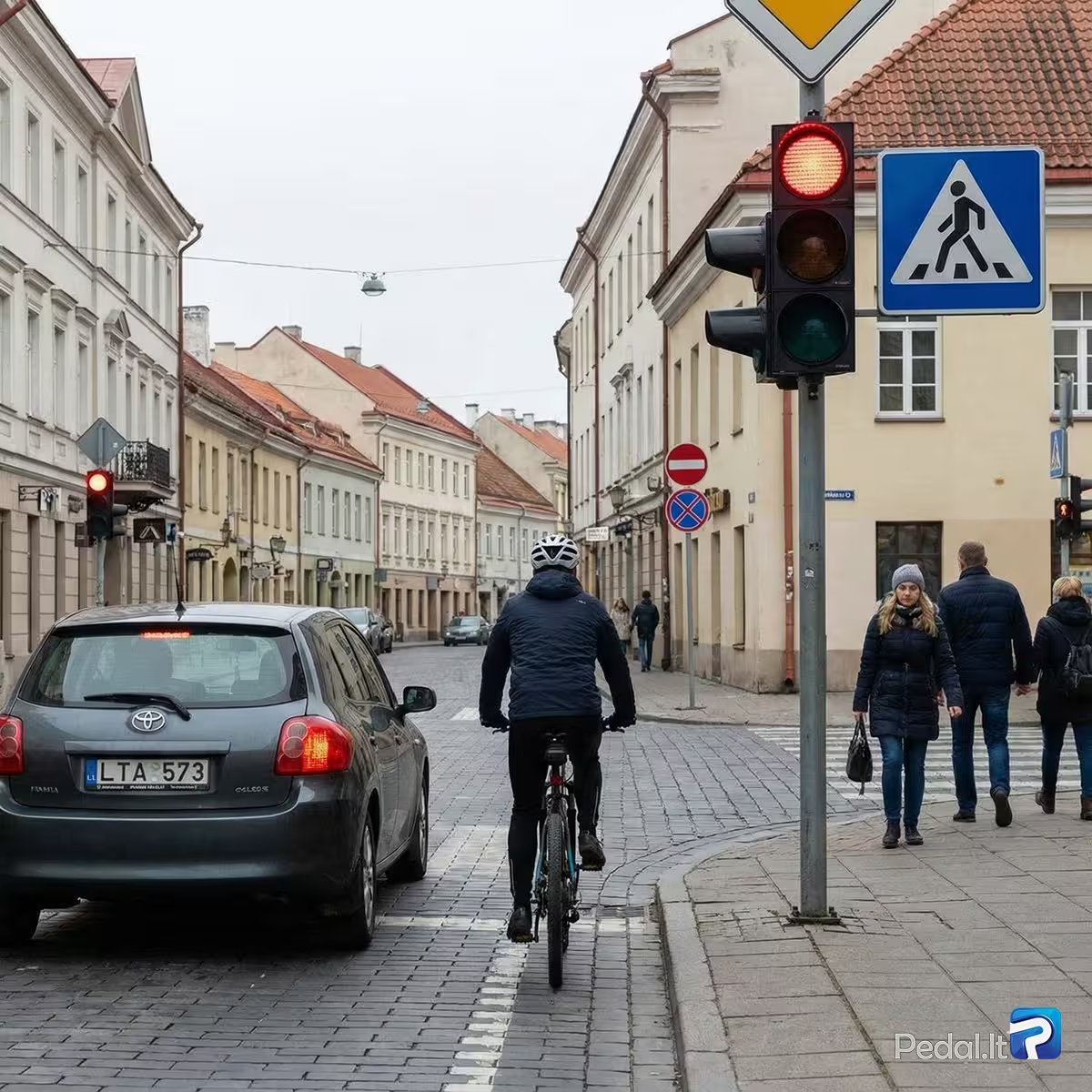
Road users are required to:
RTR 5. Road users must be familiar with the Law on Road Traffic Safety of the Republic of Lithuania, be acquainted with these Rules, and comply with them. JB
1. Be familiar with the directives of the General Commissioner of Police.
2. Know and comply with the traffic rules.
3. Be familiar with the Law on Road Traffic Safety.
4. Know the regulations of the Lithuanian Transport Safety Administration.
When operating electric scooters, choppers, or electric mopeds with a maximum design speed of 25–45 km/h and power between 1 kW and 4 kW:
The AM category is sufficient to drive these vehicles, but it is not the only entitlement that allows you to do so. Possessing another driving category that authorises operation of such vehicles also permits you to drive them. LAW ON ROAD TRAFFIC SAFETY — Article 2. Basic concepts of the Law: 30. Light quadricycle means a four-wheeled motor vehicle with an unladen mass (excluding batteries if it is an electric vehicle) not exceeding 350 kg, a maximum design speed not exceeding 45 km/h, an engine capacity not exceeding 50 cm3 (for a spark-ignition engine), a maximum net power not exceeding 4 kW (for another type of internal combustion engine), and a maximum rated power not exceeding 4 kW (for an electric motor). 33. Moped means a two-wheeled motor vehicle with a maximum design speed exceeding 25 km/h and not exceeding 45 km/h, an engine capacity not exceeding 50 cm3 (for an internal combustion engine), and a maximum net power not exceeding 4 kW (for an electric motor); or a three-wheeled motor vehicle with a maximum design speed exceeding 25 km/h and not exceeding 45 km/h, an engine capacity not exceeding 50 cm3 (for a spark-ignition engine), a maximum net power not exceeding 4 kW (for another type of internal combustion engine), and a maximum net power not exceeding 4 kW (for an electric motor). LAW ON ROAD TRAFFIC SAFETY — Article 23. Categories of motor vehicles and the minimum driving age: 1. Categories of motor vehicles and their combinations with trailers: 1) Category AM: mopeds and light quadricycles;
1. A driving licence is not required to operate these vehicles.
2. The driver must hold a valid driving licence entitling them to operate AM‑category vehicles, or a licence of another category that permits driving such vehicles.
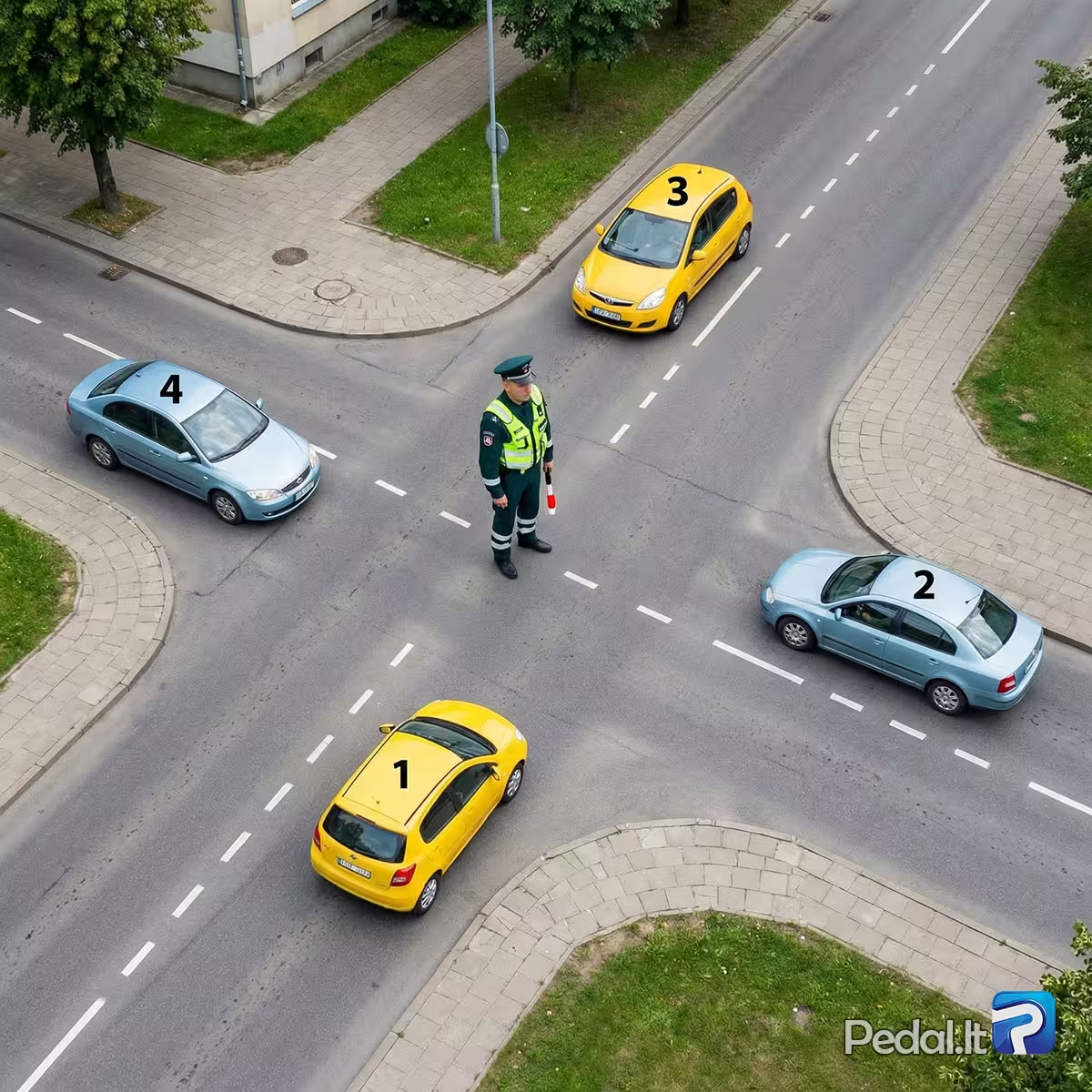
Is the third vehicle permitted to make a U‑turn?
The leading vehicle is not permitted to turn left and therefore may not make a U‑turn (RTR 77.1). When the signal arm is extended sideways or downward: 77.1.1 vehicles to the left and right may proceed straight or turn right; pedestrians may cross the carriageway; 77.1.2 vehicles and pedestrians ahead of and behind the signaling vehicle must not proceed. JB
1. Yes — it may.
2. No — it is not permitted.
3. Yes — but only after yielding to the first vehicle proceeding straight.
1 of 30 Task
Time left: 00:00:00
1
2
3
4
5
6
7
8
9
10
11
12
13
14
15
16
17
18
19
20
21
22
23
24
25
26
27
28
29
30