Effects of driving at high speed:
When driving at high speed, tires are subjected to greater loads and wear more quickly. (RTR 127.) Drivers must not exceed the posted speed limit. A driver must choose a driving speed appropriate to the prevailing conditions — in particular the terrain, the condition of the road and the vehicle (including the load), the weather, and traffic density — so as to be able to stop safely before any predictable obstacle. The driver must reduce speed or stop when conditions require it, especially when visibility is poor. JB
1. Increases the risk of a traffic accident.
2. Fuel consumption is reduced.
3. Tires wear out more quickly.
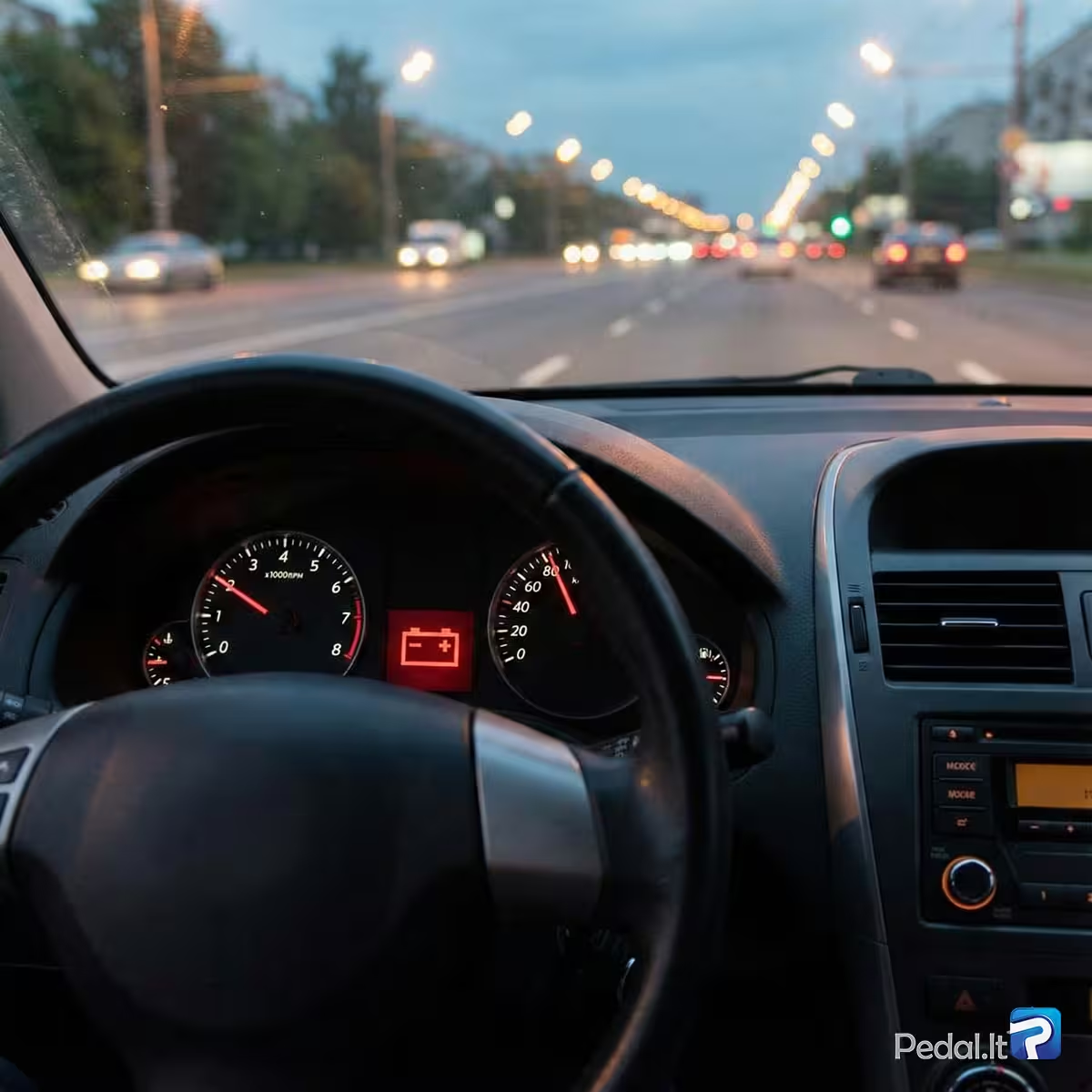
When the engine is running, a red battery warning light on the dashboard indicates:
If the red battery warning light illuminates while the engine is running, it indicates the alternator (generator) has failed and the battery is not being charged.
1. The battery is being overcharged.
2. The battery is completely discharged.
3. The battery is not being charged.
4. The battery's electrolyte level is too low.
Which of the following are warning signals?
RTR 81. Warning signals include: using turn and brake lights (arm signals may be used), sounding the horn, switching the headlights on and off, activating hazard warning lights or flashing amber beacons, and placing a warning triangle on the road or attaching it to the vehicle.
1. Brake light signal.
2. Indicating a turn using an arm signal.
3. Horn signal.
4. Switching the headlights on and off.
5. Placing a warning triangle on the road.
Is it permitted to transport dogs in a motor vehicle?
206. The driver must ensure the safety of pets in the vehicle and make sure they are transported in a way that does not interfere with driving and does not cause injury to the animals or to vehicle occupants if the vehicle stops suddenly.
1. Permitted, provided the animals are secured or restrained so they do not interfere with driving and do not pose a risk of injury to themselves or to the vehicle’s occupants in the event of a sudden stop.
2. Permitted only when the dogs are placed on the vehicle’s front seat.
3. Permitted only when the dogs are placed on the vehicle’s rear seat.
4. Prohibited.
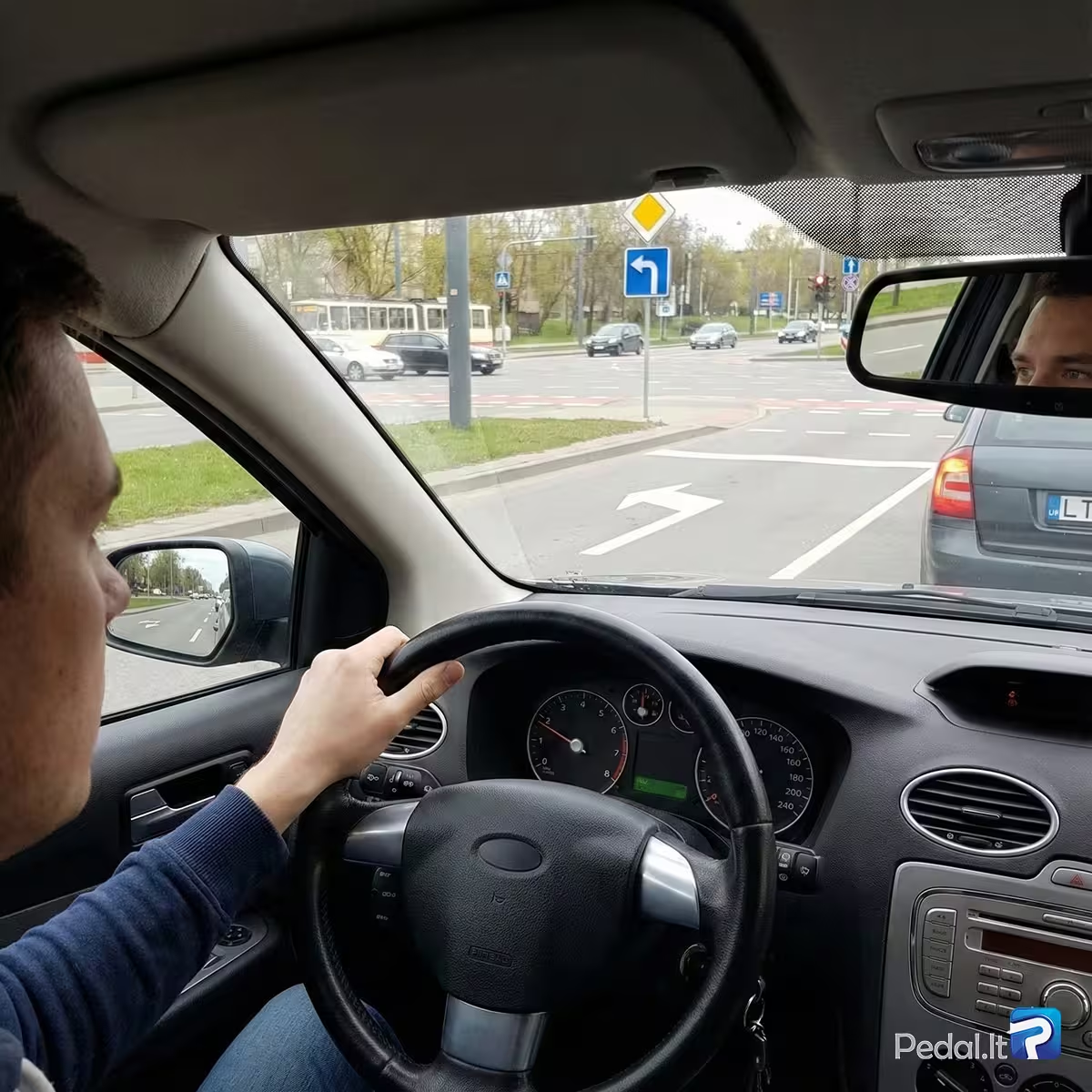
You are approaching a bend in the road:
Drivers approaching a road bend should be aware the bend may be sharper than it appears. Choose a safe speed and the correct road position to avoid entering the oncoming lane. A safe speed depends on all circumstances: weather, road and vehicle condition (including load), driver experience and fitness. According to RTR 127, drivers must not exceed the legal speed limit. When selecting speed, consider the terrain, road and vehicle condition, load, weather and traffic density so you can stop safely for any foreseeable obstacle. Drivers must slow down and stop when conditions require, especially if visibility is poor.
1. You will increase your speed midway through the bend.
2. You will reduce your speed before the bend.
3. You will reduce your speed while in the middle of the bend.
4. You will not change your speed.
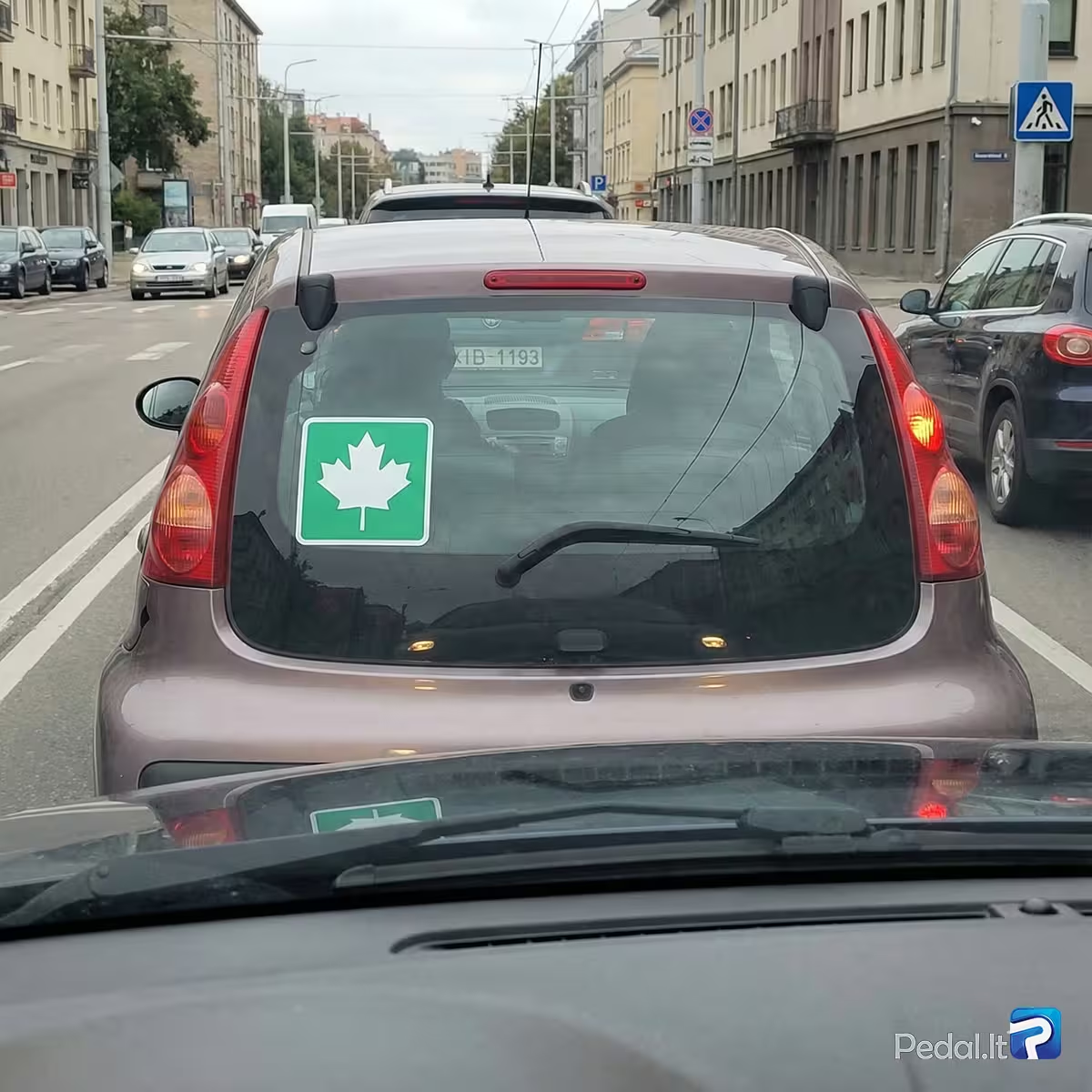
What size distinguishing sign (maple leaf) is permitted on a vehicle driven by a novice driver?
The side length of the 'Maple Leaf' sign must be between 100 mm and 150 mm. Therefore, the correct answers are 100×100 mm and 150×150 mm. A vehicle driven by a novice driver must display, on the left side of the rear, a white square distinguishing sign with a green border and a green maple leaf in the centre. The side length of the square must be between 100 mm and 150 mm, and the border width must be one-tenth (1/10) of the side length.
1. 100 × 100 mm.
2. 150 × 150 mm.
3. 200 × 200 mm.
4. The size of the sign does not matter.
Must road users involved in a traffic accident refrain from consuming alcohol and other intoxicating substances?
RTR 221. Road users involved in a traffic accident must refrain from consuming alcoholic beverages, medications, narcotic drugs, or any other intoxicating substances immediately after the accident until they have either undergone, or formally refused, a test to determine drunkenness or impairment caused by a narcotic, psychotropic, or any other substance.
1. Yes — until the circumstances of the accident involving other road users have been clarified.
2. Yes — until the circumstances at the accident scene have been established and investigated.
3. No — they are not required to do so.
4. Yes — until the sobriety or intoxication of the road user involved in the accident has been determined by testing or they have formally refused the test.

A traffic officer directing vehicles stands with their arms lowered. Are you permitted to proceed straight through the intersection when the traffic light displays a red signal?
1. Yes
2. No
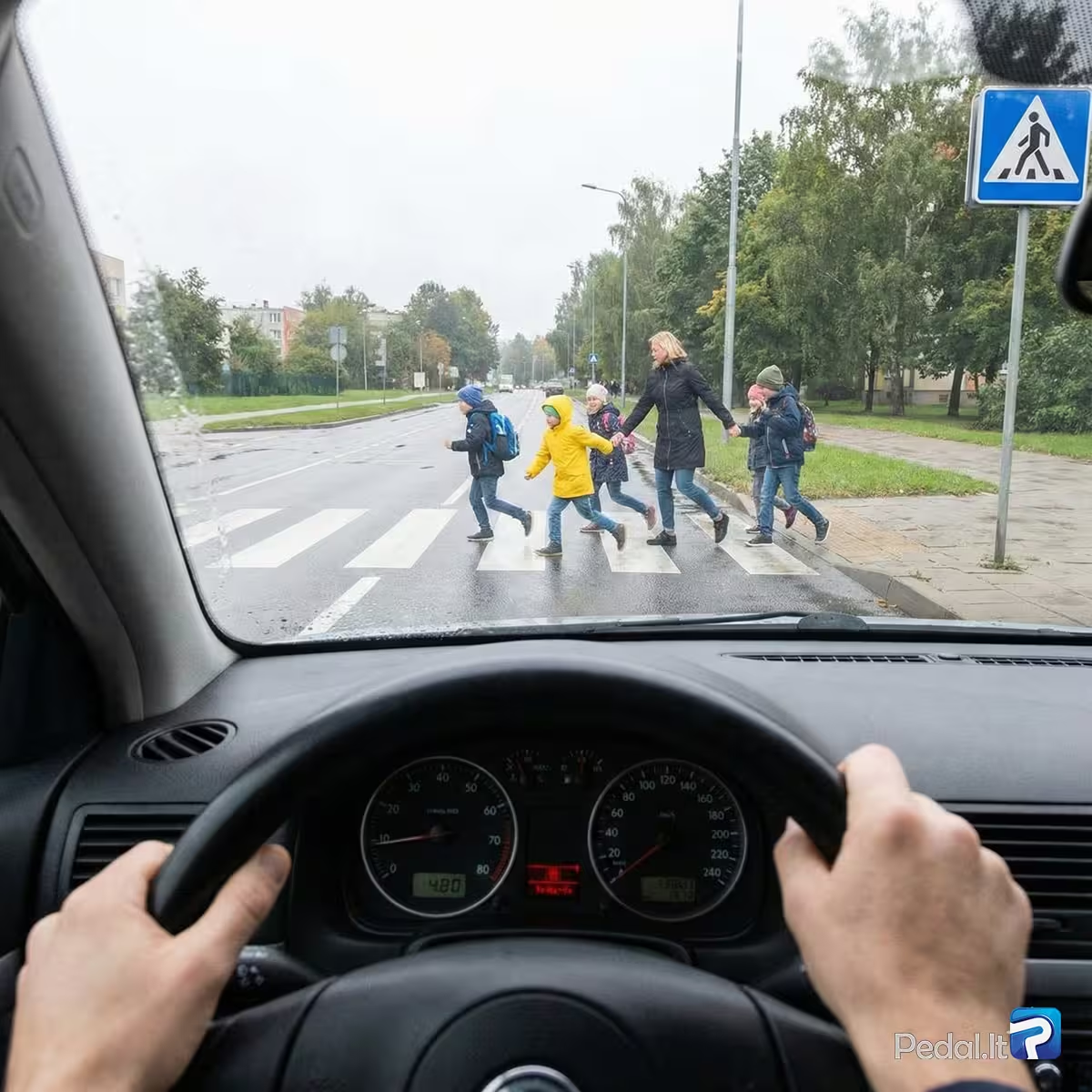
What should a driver be aware of about children's behavior when they cross a pedestrian crossing?
Drivers should be prepared for unexpected behavior from children at pedestrian crossings. When children act predictably and responsibly, it improves road safety.
1. Children may suddenly step onto the pedestrian crossing.
2. Children may stop or hesitate while on the pedestrian crossing.
3. Children behave predictably and in an orderly manner.
Why might a vehicle skid or move sideways during braking?
Braking with uneven tire wear between the left and right sides is dangerous because it can cause the vehicle to slide off the road and overturn.
1. Uneven wear between the vehicle's left and right tires.
2. Irregularities in the road surface.
3. A brake on one wheel is not working, or braking force is uneven between sides.
Under which conditions does a car battery's capacity decrease?
Battery capacity decreases as ambient temperature falls. A fully charged battery that measures 100% capacity at +25 °C will typically drop to about 80% at 0 °C and to roughly 60% at −25 °C.
1. When ambient temperature rises.
2. When ambient temperature falls.
3. It does not change with temperature.
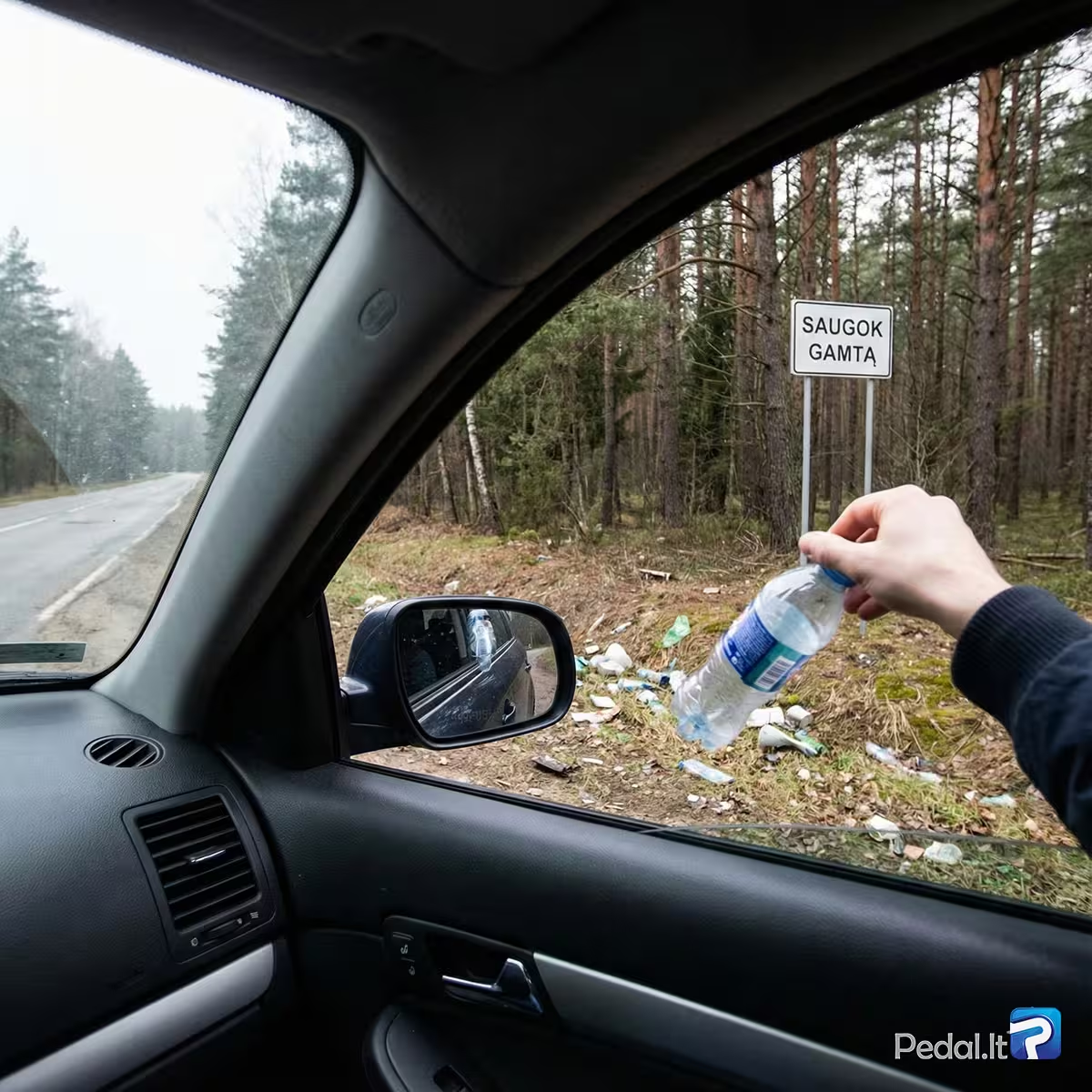
What should we avoid to protect nature?
Carrying unnecessary luggage increases fuel consumption and causes additional harmful emissions. Loud music from a vehicle contributes to noise pollution and can scare wildlife. For short trips, people can walk, cycle, or use public transport, because during brief journeys the engine often does not reach its optimal operating temperature, the vehicle runs less efficiently, and pollution is higher.
1. Leaving a vehicle's engine running while stationary (idling).
2. Playing loud music from a vehicle with the windows open.
3. Using a car for short trips.
4. Carrying unnecessary cargo or luggage.
During the hours of darkness, the poorest visibility on a road occurs:
The worst visibility at night occurs just before passing an oncoming vehicle because the oncoming headlights can dazzle the driver. When approximately 100 m remain before meeting an oncoming vehicle, the driver should reduce speed, keep as close as safely possible to the right edge of the carriageway, and look toward the kerb. These actions reduce glare and help the driver detect pedestrians, cyclists, people operating animal‑drawn vehicles, and other hazards more quickly. Specifically, drivers should: reduce speed to increase reaction time; position the vehicle near the right edge of the road to minimise the risk of head‑on conflicts and to allow space for unexpected events; and avoid looking directly at oncoming headlights, instead focusing toward the kerb or road edge to preserve night vision.
1. When there are 100 m remaining before passing an oncoming vehicle.
2. Just before passing an oncoming vehicle.
If an inspecting officer stops you, what must you switch on?
RTR 91. If the vehicle is fitted with hazard warning lights, they must be switched on: 91.3 when the vehicle is stopped by an inspecting officer. JB
1. The horn (audible warning).
2. Hazard warning lights (emergency flashers).
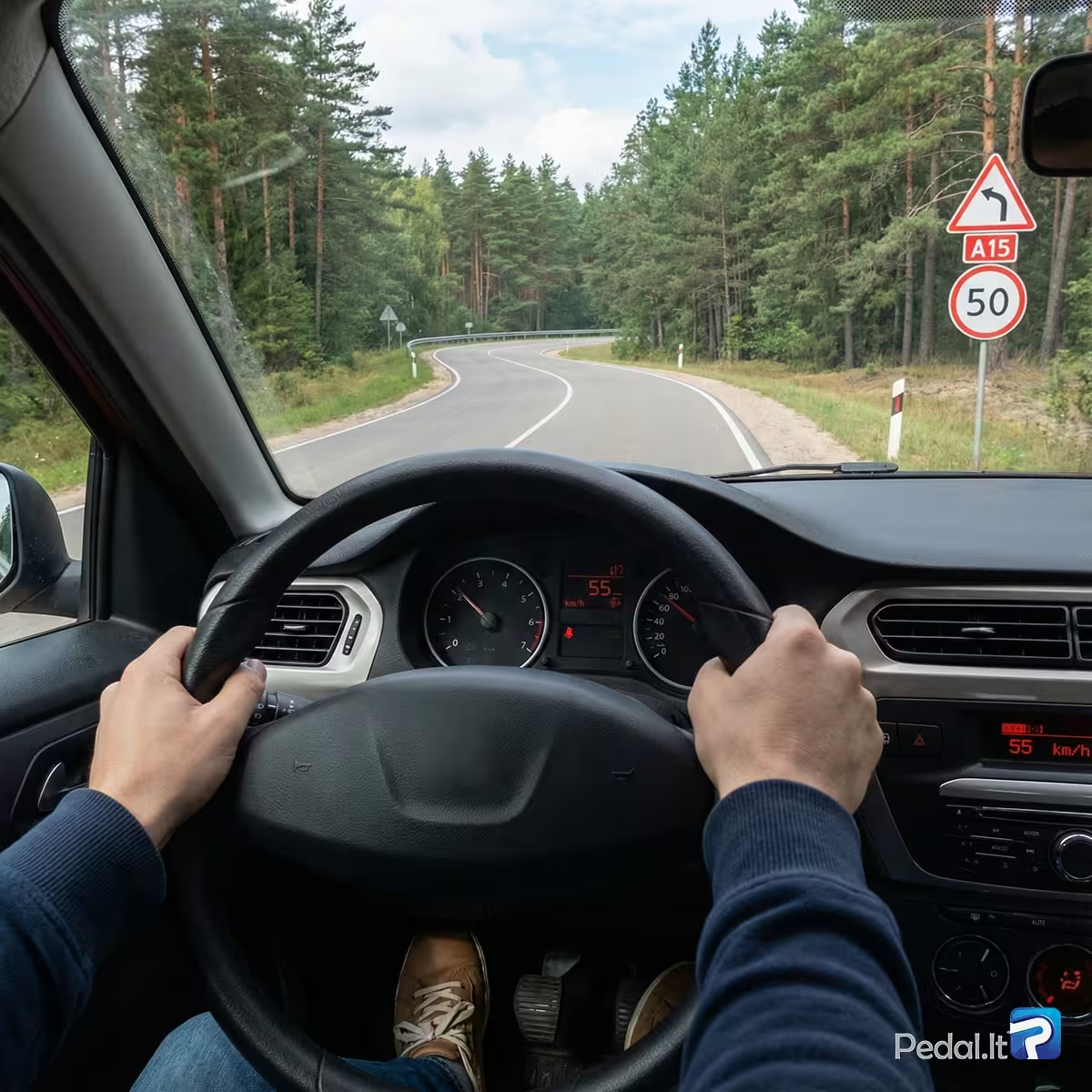
You are approaching a bend in the road. You should:
Drivers approaching a bend should be aware that the curve may be sharper than it appears. Therefore they must select a safe speed and adopt an appropriate position on the road to avoid entering the oncoming traffic lane. A safe speed depends on all circumstances: weather conditions, the technical condition of the road and the vehicle, the vehicle's load, the driver's experience and physical condition. RTR 127. Drivers must not exceed the permitted speed limit. When choosing a driving speed, drivers should consider the driving conditions — in particular the terrain — the condition of the road and the vehicle (including its load), weather conditions and traffic density so that they can stop safely before any foreseeable obstruction. Drivers must slow down or stop if circumstances require, especially when visibility is poor.
1. Reduce your speed.
2. Position your vehicle to avoid crossing into the oncoming traffic lane.
3. Use your turn signal.
How is a motorized bicycle defined?
Note that a motorized bicycle must have at least two wheels and an auxiliary internal combustion engine or an electric motor — it is not sufficient for it to have only an internal combustion engine. SEAK Art. 2.40. "Motorized bicycle" — a vehicle with at least two wheels that is powered by the rider’s muscular force using pedals or handlebars and is equipped with an auxiliary internal combustion engine or electric motor with a maximum net power of no more than 1 kW and a maximum design speed of no more than 25 km/h. The auxiliary engine stops providing power when the vehicle reaches 25 km/h. Wheelchairs for persons with disabilities are not classified as motorized bicycles.
1. A vehicle whose maximum net power does not exceed 1 kW and whose maximum design speed does not exceed 25 km/h.
2. A vehicle that is primarily propelled by the rider’s muscular power using pedals or handlebars and is equipped with an auxiliary internal combustion engine or an electric motor.
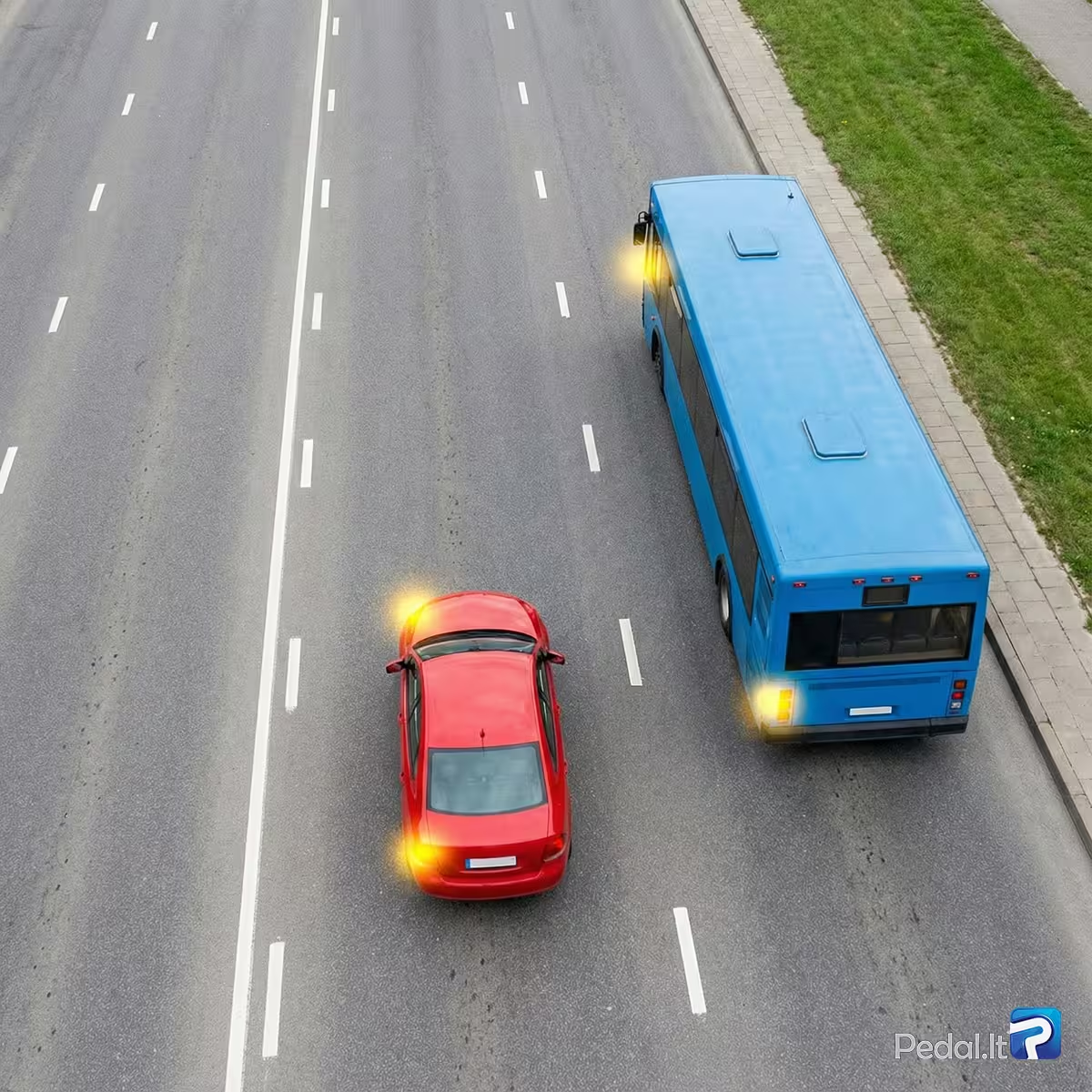
Is it permitted to turn around from the right-hand side of the carriageway if the carriageway is too narrow to turn from the left-hand side?
RTR 107. When, due to a vehicle's large size or other valid reasons, it is not possible to complete a turn (turn around) from the appropriate edge position of the carriageway, the vehicle may perform the turn from a part of the carriageway other than that edge assigned for travel in that direction, provided the maneuver does not obstruct other vehicles or create a hazard for other road users. JB
1. Yes — provided the maneuver does not obstruct other vehicles or create a hazard for other road users.
2. No — the maneuver is prohibited.
The requirement to 'Give Way' means:
3. Terms used in the Road Traffic Rules: 3.2. 'Give way' means that drivers must stop, or must not begin to drive or manoeuvre, if doing so would require other vehicle drivers to change their direction of travel or their speed.
1. That drivers on a side road must yield to vehicles approaching the intersection on a priority road.
2. That drivers must stop, or must not begin to drive or manoeuvre, if doing so would force other vehicle drivers to change their direction of travel or their speed.
3. That at an uncontrolled intersection drivers must yield to vehicles approaching from the right.
Which of the following symptoms are characteristic of long-term cannabis use?
Symptoms associated with long-term use become more pronounced with continued consumption. The most serious psychiatric complication is cannabis‑induced psychosis. Users may experience dramatic mood swings, perceptual distortions, anxiety, and aggression. In people with preexisting mental illness, even brief exposure to cannabis can trigger psychosis. Men who begin heavy cannabis use at an early age have an increased risk of developing schizophrenia.
1. Psychiatric disorders.
2. Irritability.
Drivers may be arrested or imprisoned for up to one year if their blood alcohol concentration (BAC) is:
Criminal Code of the Republic of Lithuania, Article 281‑1: A person who, while operating a motor vehicle, tractor, or self-propelled machine, or instructing a learner driver, is under the influence of alcohol with a blood alcohol concentration of 1.51 per mille or higher; or who refused a sobriety test when showing signs of intoxication; or who consumed alcohol after a road accident before the circumstances were established and was found to have a blood alcohol concentration of 1.51 per mille or higher, shall be punished by a fine, arrest, or imprisonment for up to one year.
1. 0.41 per mille.
2. 2.51 per mille.
3. 1.51 per mille.
4. 0.2 per mille.
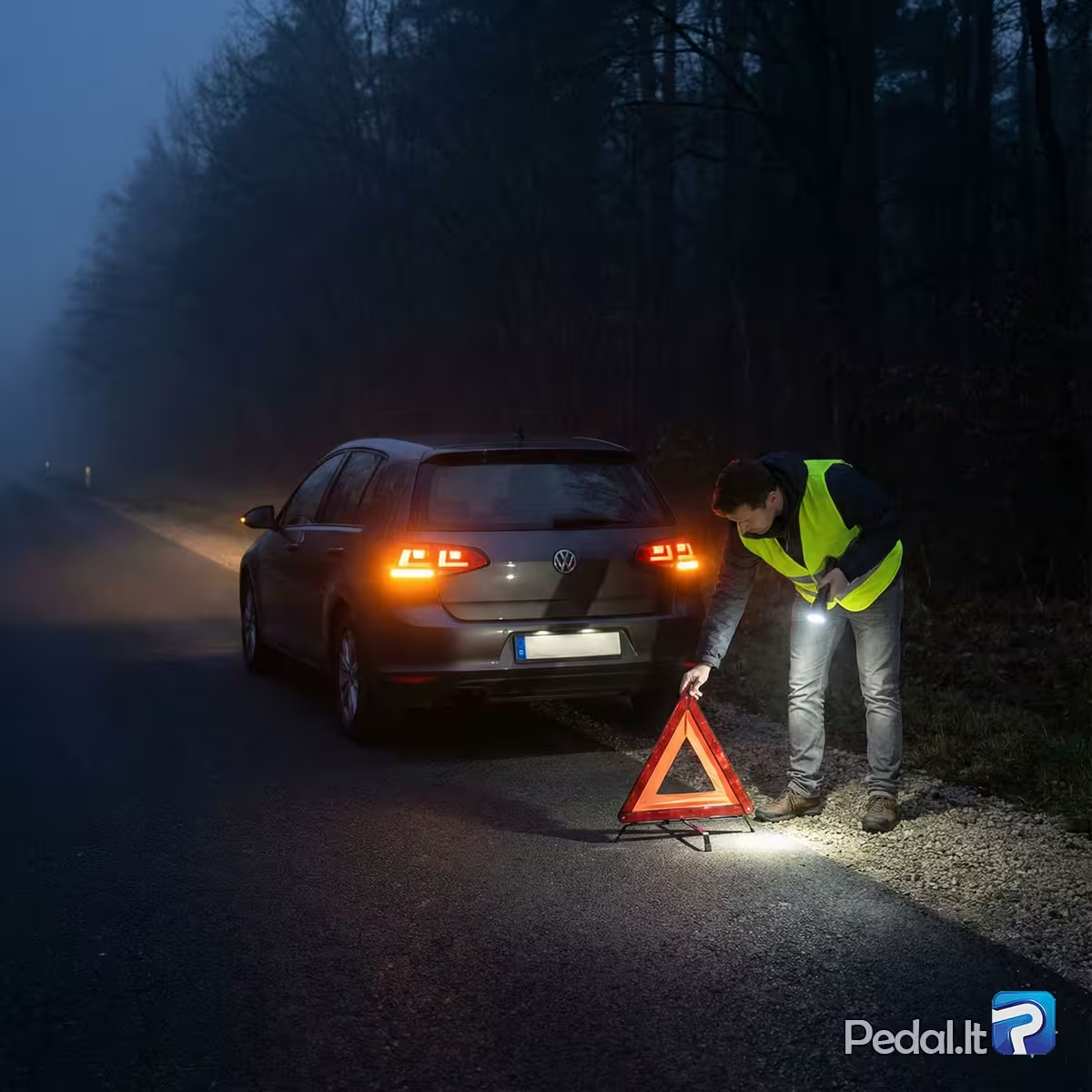
If you are forced to stop on an unlit section of road at night or in poor visibility because your position and brake lights have failed, what should you do?
RTR 92. If the emergency light signaling system is not fitted or is defective and an emergency stop is required where stopping or parking is prohibited, in the event of an accident, or where the stopped vehicle would be visible to other road users from less than 100 metres, the driver of a motor vehicle (other than a motor moped or a motorcycle without a trailer), a tractor, or a self‑propelled machine must immediately place an emergency stop sign on the carriageway side opposite the direction of travel: in built‑up areas not less than 25 m from the stopped vehicle, and outside built‑up areas not less than 50 m. If at least one rear position lamp is defective and the hazard warning lights are not working when driving at night or in poor visibility, an emergency stop sign must be affixed to the rear of the vehicle in order to continue driving.
RTR 151. When a vehicle is forced to stop where standing or parking is forbidden, drivers must switch on their hazard warning lights if available and/or place a warning triangle on the road as specified in Paragraph 92 of the Rules and remove their vehicle from the road as soon as possible. If drivers intend to stop their vehicle on unlit sections of the road during darkness or when visibility is poor, and hazard warning lights are not available or are inoperative, the vehicle must be parked off the carriageway. If this is impossible, the location must be marked as specified in Paragraph 92 of the Rules. JB
1. Turn the vehicle around and switch on the low beam headlights.
2. If it is not possible to park off the carriageway, switch on your hazard warning lights; if these are not available or are inoperative, place a warning triangle.
3. Indicate the stopped vehicle with bright flags.
Is it permitted to carry passengers in a towed vehicle when a flexible towing link is used?
Passengers may be carried in a towed vehicle except when the vehicle is being towed with its front or rear supported on a towing platform or other support device. Regulation 195 states that drivers must not: 195.4. carry passengers inside a bus, trolleybus, or the body of a goods vehicle that is being towed; if the front or rear of a vehicle is resting on a support device, passengers must not be inside the vehicle or in its cargo body.
1. Yes — it is allowed.
2. No — it is not allowed.
Which vehicles may a driver with a category B driving licence operate?
LAW ON ROAD TRAFFIC SAFETY Article 23. Categories of motor vehicles and the minimum driving age: 1. Categories of motor vehicles and their combinations with trailers are as follows: 6) Category B: vehicles with a maximum permissible mass not exceeding 3,500 kg designed and constructed to carry no more than eight passengers, excluding the driver; these vehicles may be coupled with a trailer whose maximum permissible mass does not exceed 750 kg; they may also be coupled with a trailer whose maximum permissible mass exceeds 750 kg, provided that the maximum permissible mass of the combined vehicle does not exceed 4,250 kg; a vehicle combination with a maximum permissible mass exceeding 3,500 kg (including a trailer with a maximum permissible mass exceeding 750 kg) may be driven only after passing a skills and behaviour test at the state enterprise "Regitra". LAW ON ROAD TRAFFIC SAFETY Article 22. Granting the right to drive motor vehicles, tractors, self-propelled machines: 12. Persons who are at least 24 years old, who have at least 2 years of driving experience in category B vehicles and who have completed practical driving training for category A1 vehicles in accordance with the procedure established by the Ministry of Transport or its authorised institution, are granted the right to drive category A1 vehicles in the territory of the Republic of Lithuania. As a result, the driver's licence does not explicitly state entitlement to drive category A1 vehicles; instead, the national code set by the Ministry of the Interior is shown next to the category B marking.
1. Passenger cars and motorcycles.
2. Passenger cars only.
3. Any vehicle with a maximum permissible weight up to 3,500 kg designed and built to carry no more than eight passengers (excluding the driver).
4. A category A1 motorcycle after completion of the required practical training.
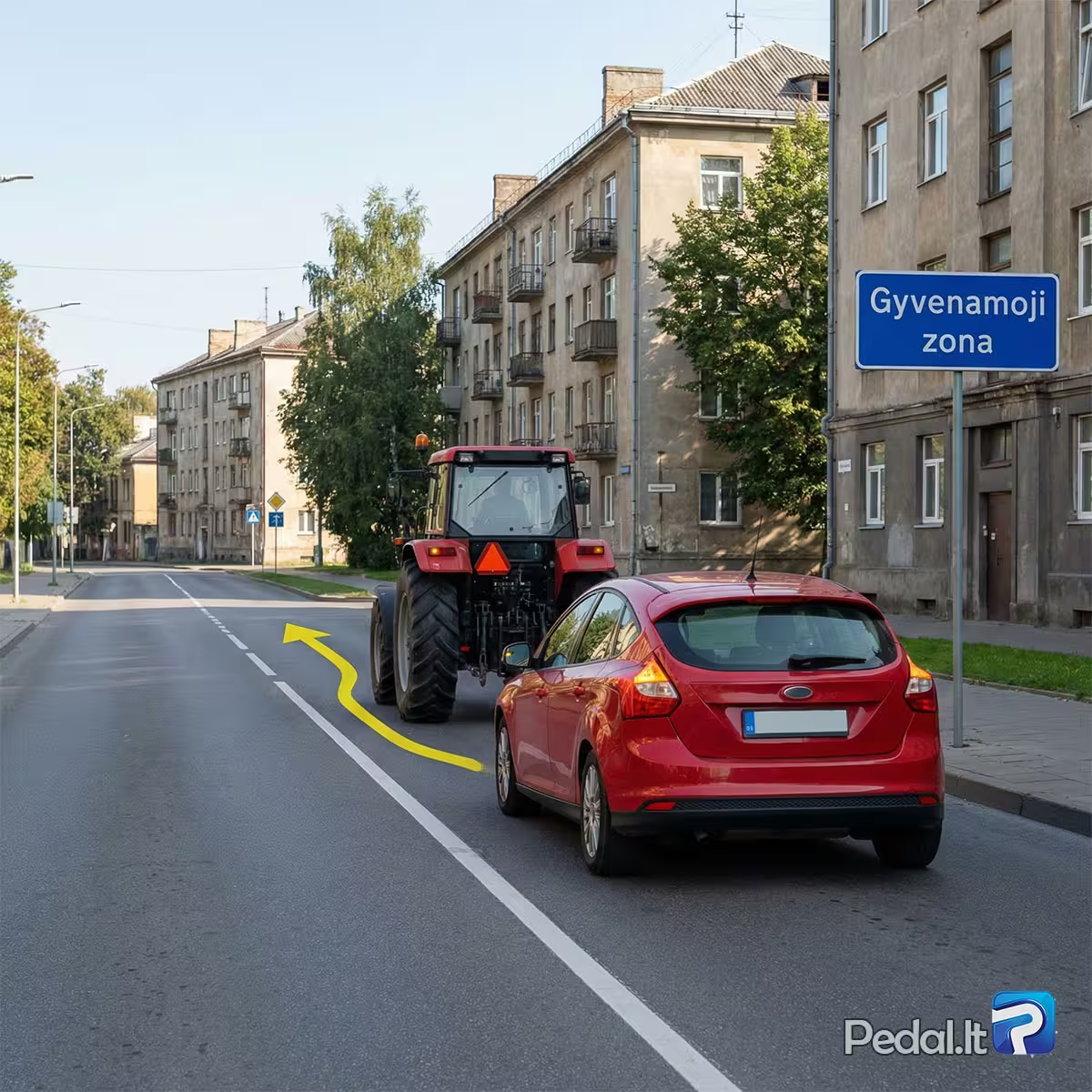
Is overtaking permitted in this situation?
A narrow continuous (solid) line prohibits overtaking. There is an exception when the road has both a narrow solid line and the road sign "Overtaking Prohibited" (RTR Annex 1.325): that sign indicates overtaking is prohibited except for single vehicles or single-vehicle combinations traveling slower than 30 km/h, which means very slow-moving vehicles (e.g., tractors) may be passed. In the pictured case there is no such sign—only a continuous line—so overtaking, even of a very slowly moving tractor, is not permitted.
RTR Annex 1.805 "The Validity Zone Ahead" indicates the length of the zone to which a sign applies beyond the sign itself.
Horizontal Marking 1.1: A narrow solid line separates opposing traffic and forbids drivers from using the oncoming lane on the marked section; it also marks lane boundaries, carriageway areas vehicles are prohibited from entering, parking-space limits, and the carriageway edge. Vehicles must not cross this line except where it marks the edge of the carriageway or a parking space.
1. Overtaking is prohibited.
2. Overtaking is permitted.
Are vehicles permitted to drive on the pavement (sidewalk)?
RTR 124. Drivers of motor vehicles, tractors, self‑propelled machines, and animal‑drawn vehicles must not drive or manoeuvre on lawns, pavements (sidewalks), footpaths, cycle tracks, or cycle lanes. An exception applies where road signs permit (partial) parking at the pavement edge and a cycle track or lane is delineated by the horizontal marking line 1.14. Driving on central reservations, embankment slopes, excavations, or in ditches is prohibited. Drivers must also not enter or leave the roadway except at locations designated for that purpose.
1. They may do so provided they do not obstruct pedestrians.
2. They are permitted only where road signs indicate that (partial) parking on the pavement edge is allowed.
3. Driving on pavements is prohibited.
At what times of day are wild animals most likely to cross the road?
Wild animals commonly appear on roads at dusk and in the late evening (approximately 17:00–23:00), and also in the early morning hours around 4:00–5:00.
1. At dawn (early morning).
2. During the night.
3. At dusk (twilight, when it is getting dark).
4. During the middle of the day.
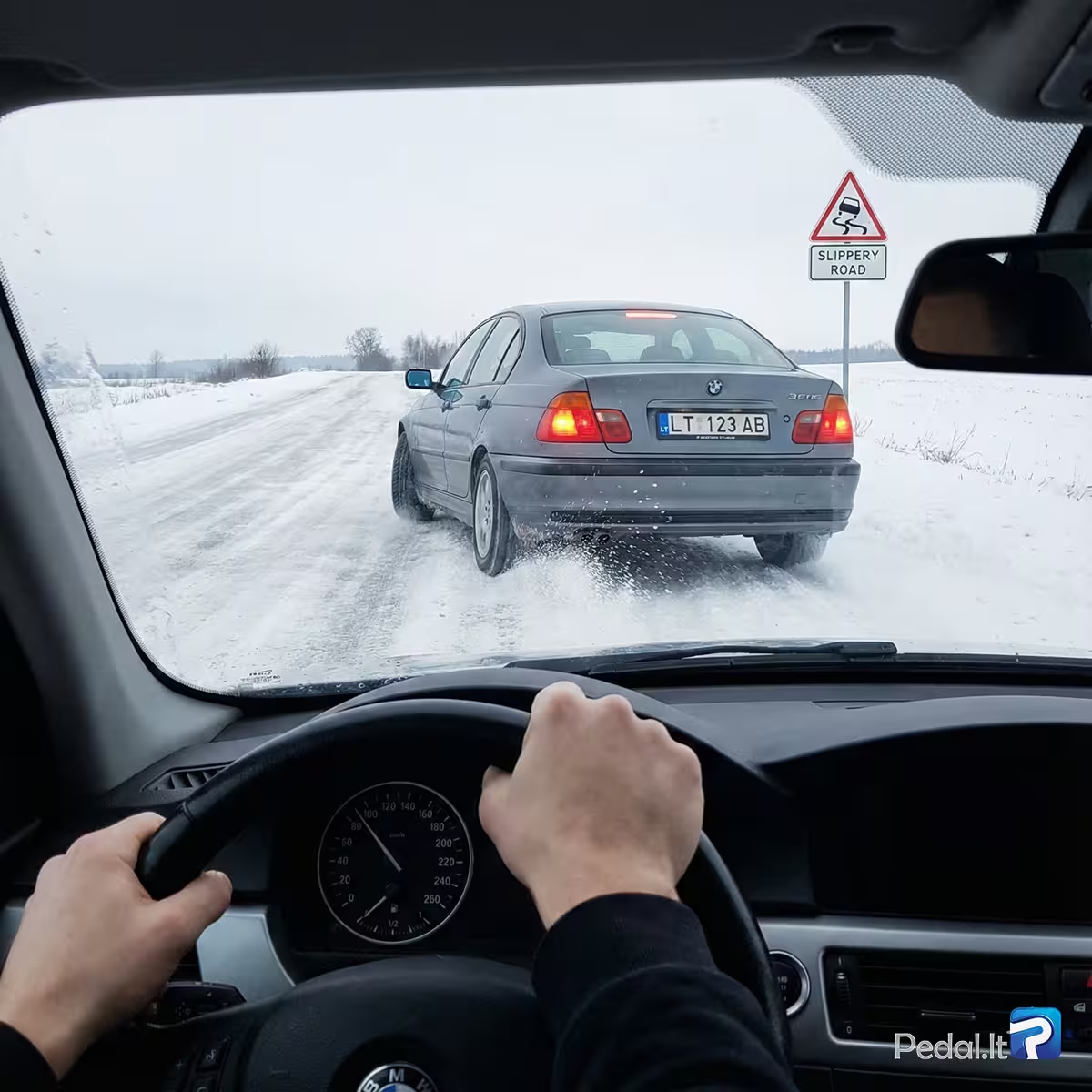
How dangerous is a sudden increase in engine RPM while driving on a slippery road?
If the road surface is slippery or the engine delivers strong torque and the revs increase abruptly, the driven wheels can spin. When the driven wheels are at the rear, the rear axle may lose traction; when they are at the front, the front axle may lose traction, which can cause the vehicle to lose stability and skid.
1. The fuel filter may fail.
2. The fuel pump may fail.
3. If the tractive force of the wheels exceeds the available grip with the road, the vehicle can lose stability and begin to slide.
What or who provides a driver with useful information while driving on the road?
A driver obtains information from: - the road itself; - the surrounding environment; - moving road users (vehicles, pedestrians, road workers, etc.); - stationary objects on the road (central islands, speed bumps, road markings, etc.); - road signs; - traffic lights; - the condition of the road surface; - environmental and weather conditions. RTR 53: Passengers must not distract the driver or interfere with their driving.
1. From the road and the surrounding environment.
2. From moving and stationary objects on the road.
3. From road signs and traffic lights.
4. From passengers.
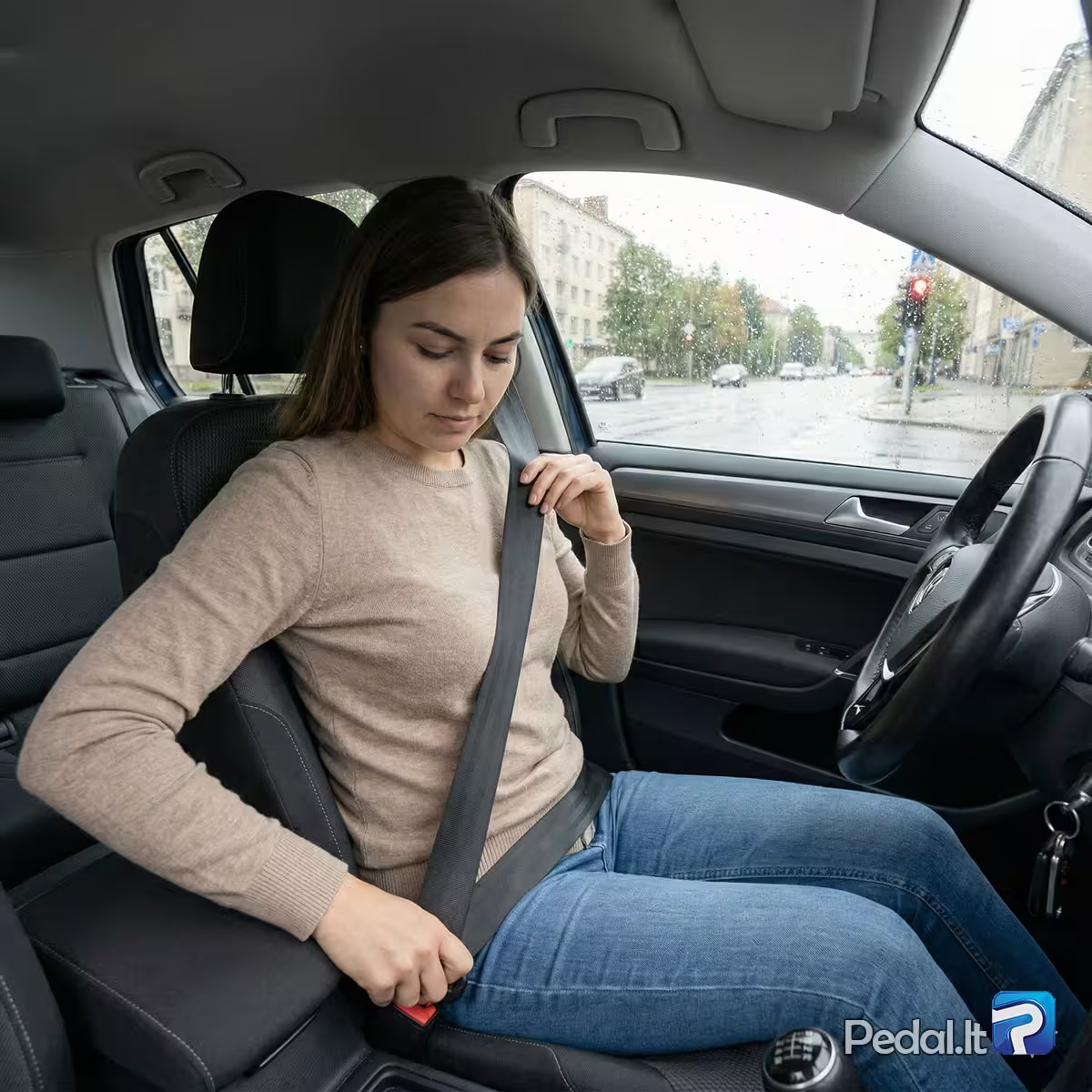
How should the seat belt be fastened correctly?
RTR p. 197. Seat belts must be worn over the shoulder and across the lap, or in the manner specified by the vehicle manufacturer. JB
1. Seat belts must be worn over the shoulder and across the lap, or as specified by the vehicle manufacturer.
2. It is not necessary to wear a seat belt.
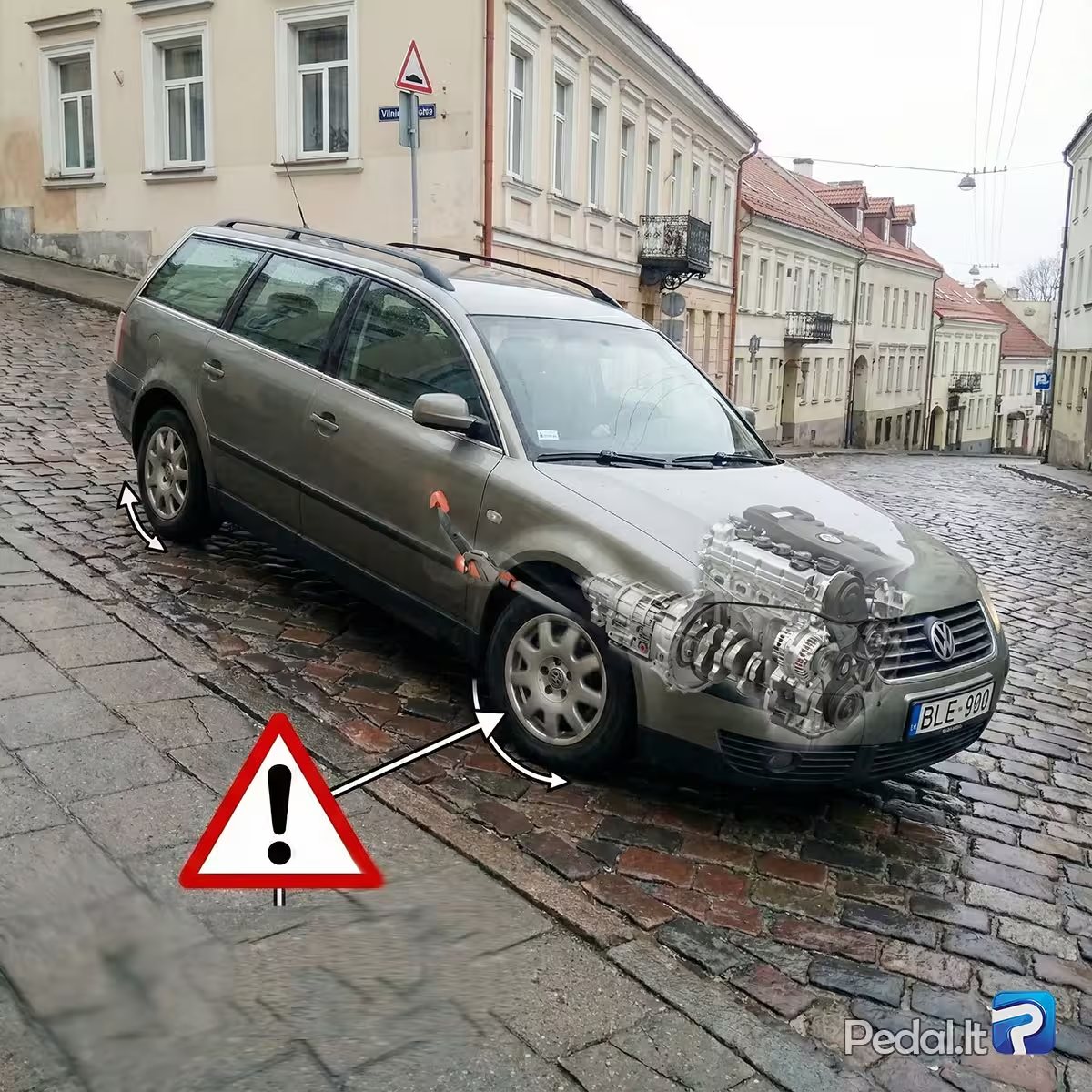
When parked on a downhill slope, leaving a diesel vehicle in gear is hazardous because:
If a vehicle is left in gear and begins to roll downhill, certain older diesel engines may rotate and start automatically.
1. The transmission or gearshift mechanism can be damaged.
2. An older diesel engine may start automatically.
3. There is no danger.
1 of 30 Task
Time left: 00:00:00
1
2
3
4
5
6
7
8
9
10
11
12
13
14
15
16
17
18
19
20
21
22
23
24
25
26
27
28
29
30