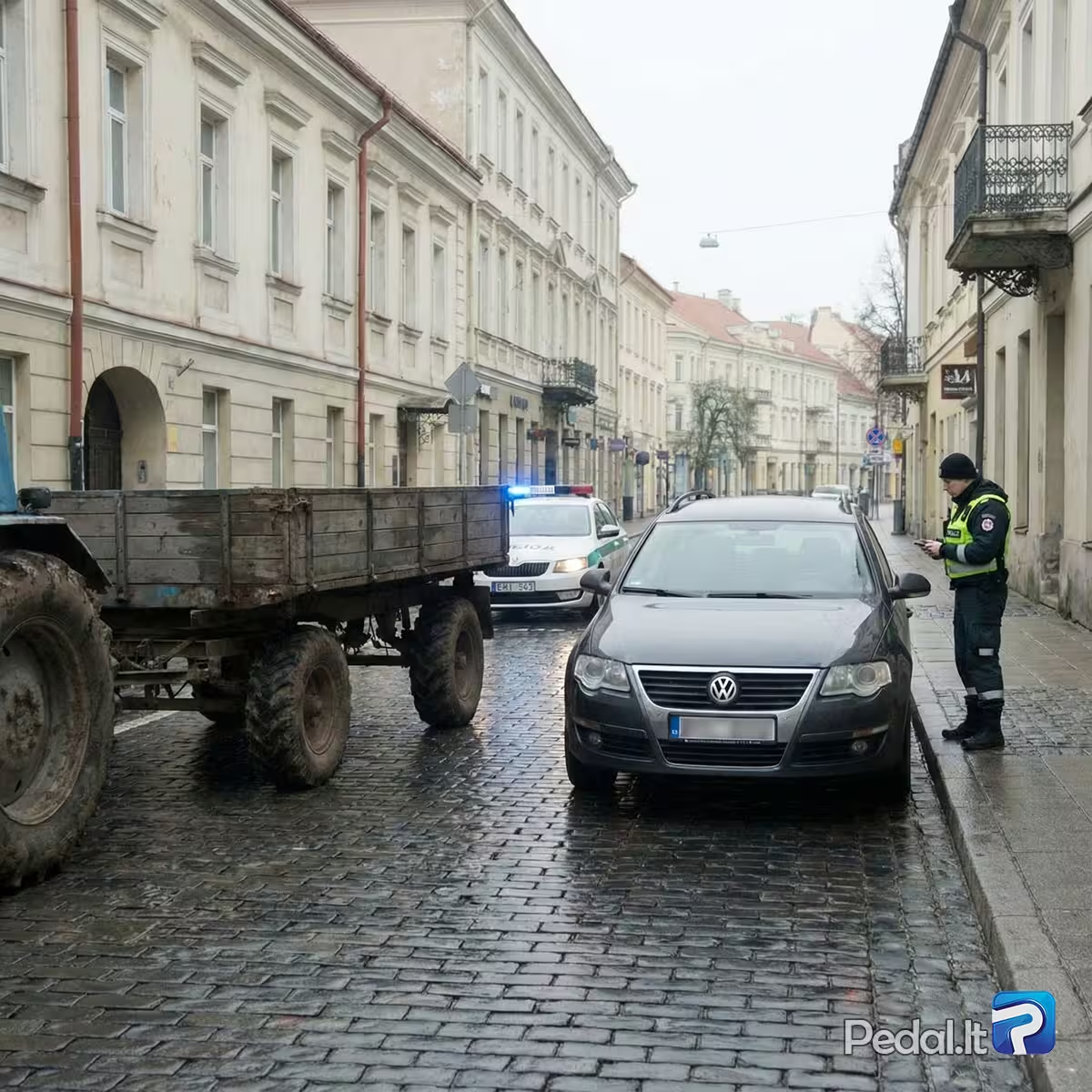
Are motor vehicles permitted to tow trailers intended for agricultural tractors?
Motor vehicles are not permitted to tow trailers intended for agricultural tractors due to safety requirements and technical incompatibilities. The term "motor vehicle" excludes non-road rail vehicles, tractors, and self-propelled machines. Per RTR 207, the total weight of carried cargo and passengers and the axle loads must not exceed the gross vehicle weight and axle load limits specified for that vehicle by the Ministry of Transport and Communications of the Republic of Lithuania and by the vehicle manufacturer. The gross weight of a towed trailer (laden or unladen) must not exceed the maximum permissible tow weight established by the Ministry and the manufacturer. Consequently, motor vehicles are prohibited from towing trailers of non-motor vehicles, and non-motor vehicles are prohibited from towing trailers of motor vehicles.
1. Only sport utility vehicles (SUVs) are permitted to tow trailers designed for agricultural tractors.
2. Motor vehicles are prohibited from towing trailers intended for agricultural tractors.
3. Only Category C commercial vehicles are permitted to tow trailers designed for agricultural tractors.
Who is responsible for ensuring that children transported in a motor vehicle use the appropriate installed and correctly fitted restraint systems?
RTR 203. A driver must ensure that children transported in a motor vehicle use the appropriate installed and correctly fitted restraint systems. JB
1. The children being transported.
2. The parents or legal guardians.
3. The foster parents.
4. The driver of the vehicle.
What is the purpose of antifreeze in a vehicle?
1. It is used to fill the brake system.
2. It is used to fill the windscreen washer reservoir.
3. It is used to fill the engine cooling system.
Which of the following are warning signals?
RTR 81. Warning signals include: using turn and brake lights (arm signals may be used), sounding the horn, switching the headlights on and off, activating hazard warning lights or flashing amber beacons, and placing a warning triangle on the road or attaching it to the vehicle.
1. Brake light signal.
2. Indicating a turn using an arm signal.
3. Horn signal.
4. Switching the headlights on and off.
5. Placing a warning triangle on the road.
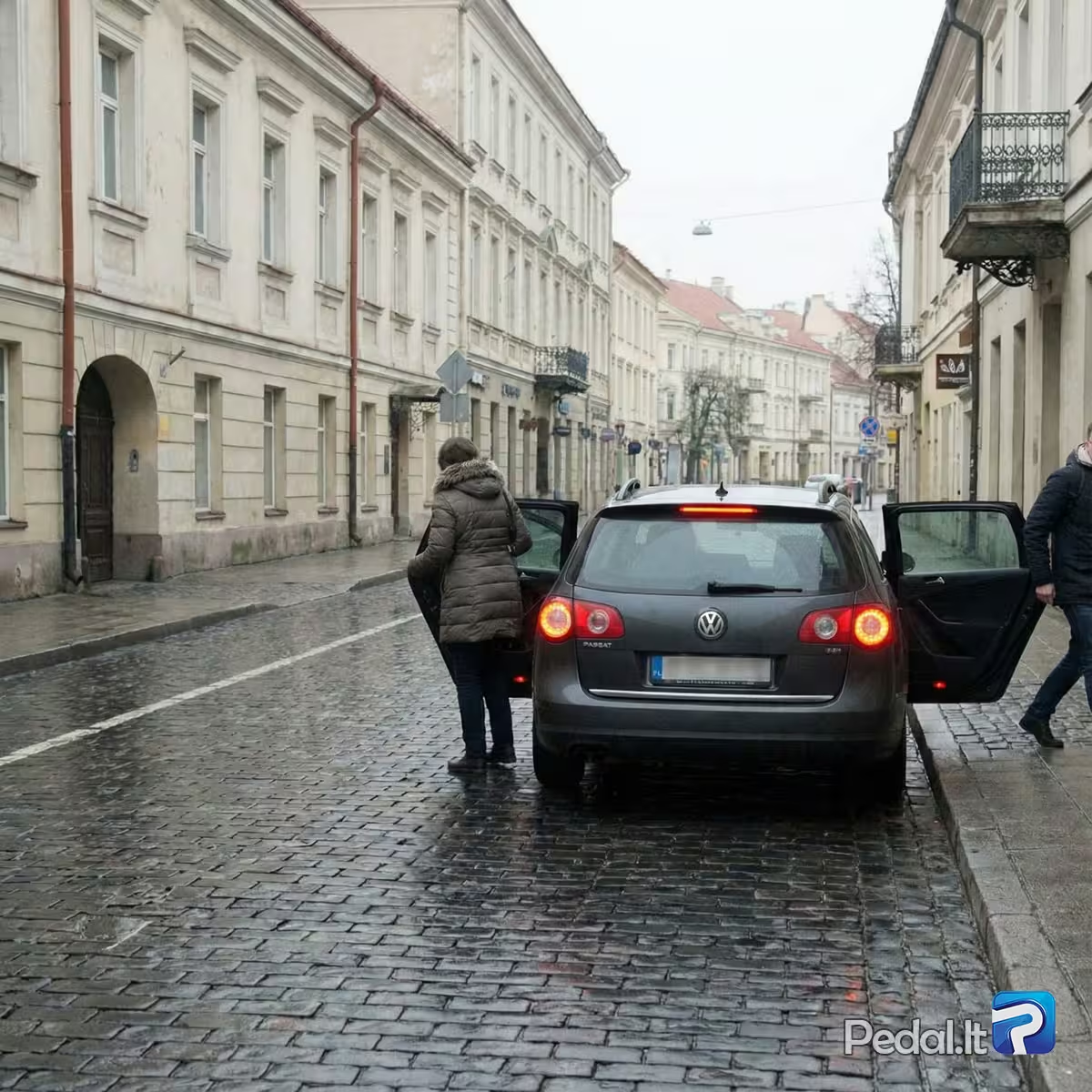
Is it permitted for passengers to board or alight from a vehicle from the roadway side?
Passengers may board or alight from the roadway side only when it is impossible to do so from the pavement (sidewalk) or hard shoulder, and only if it can be done safely without obstructing other road users.
1. It is prohibited.
2. It is allowed.
3. Yes — permitted only when boarding or alighting from the pavement (sidewalk) or hard shoulder is not possible.
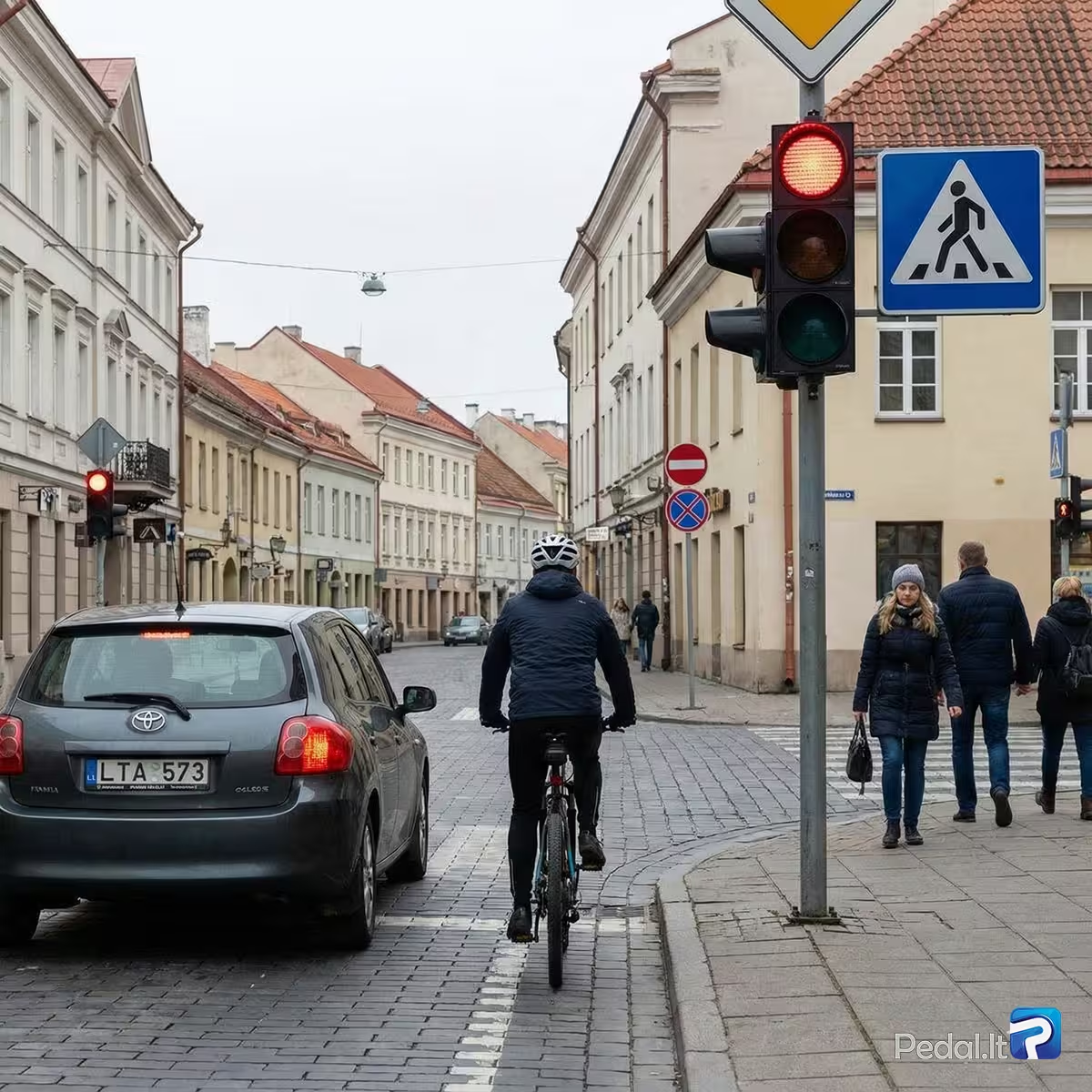
Road users are required to:
RTR 5. Road users must be familiar with the Law on Road Traffic Safety of the Republic of Lithuania, be acquainted with these Rules, and comply with them. JB
1. Be familiar with the directives of the General Commissioner of Police.
2. Know and comply with the traffic rules.
3. Be familiar with the Law on Road Traffic Safety.
4. Know the regulations of the Lithuanian Transport Safety Administration.
The effect of inertia on the vehicle (risk of sliding sideways) when cornering is reduced by:
The higher the vehicle's speed when cornering, the greater the effect of inertia and the higher the risk of the car sliding sideways. Lower speeds reduce inertia and the risk of sliding. A larger turning radius (a gentler curve) also reduces lateral inertial forces.
1. By decreasing the turning radius (making the turn tighter).
2. By reducing vehicle speed.
3. By increasing the turning radius (making the curve gentler).
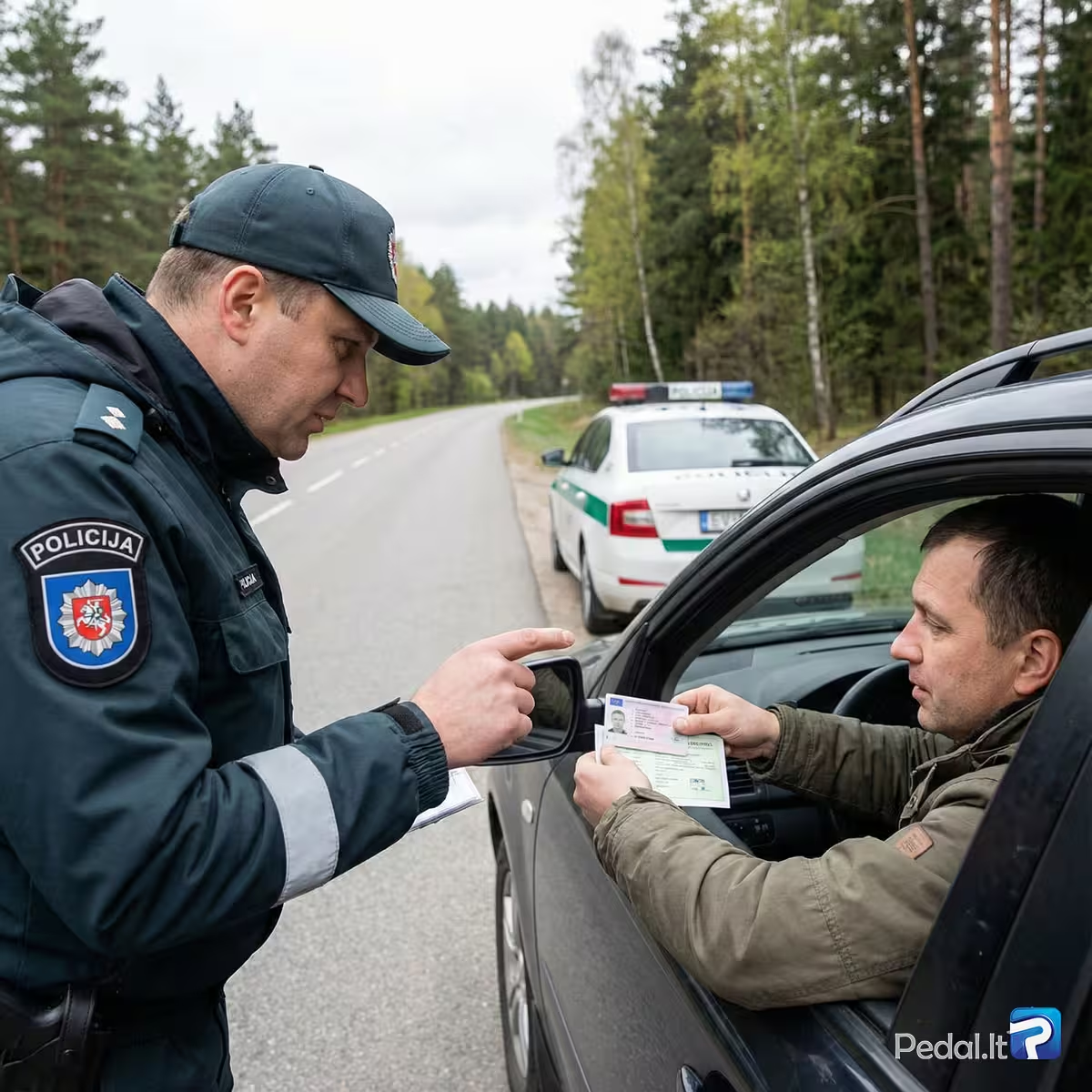
What checks must a driver allow when requested by a police officer?
RTR 17. At the request of a police officer, a driver must submit to tests for alcohol intoxication or for intoxication caused by narcotic drugs, psychotropic substances, or other psychoactive substances, in the manner prescribed by the Government of the Republic of Lithuania. RTR 14. It is prohibited to drive a vehicle if you are not authorized to do so, if you are under the influence of alcohol, narcotic drugs, psychotropic substances or other psychoactive substances. A person who is fatigued or ill must not drive if driving may endanger road safety. A vehicle must not be entrusted to a person who is under the influence of such factors or who is not authorized to drive that type of vehicle. When operating a vehicle, the driver must comply with the conditions specified on the driving licence. JB
1. Alcohol intoxication.
2. Irritability.
3. Fatigue.
4. Intoxication by narcotic drugs.
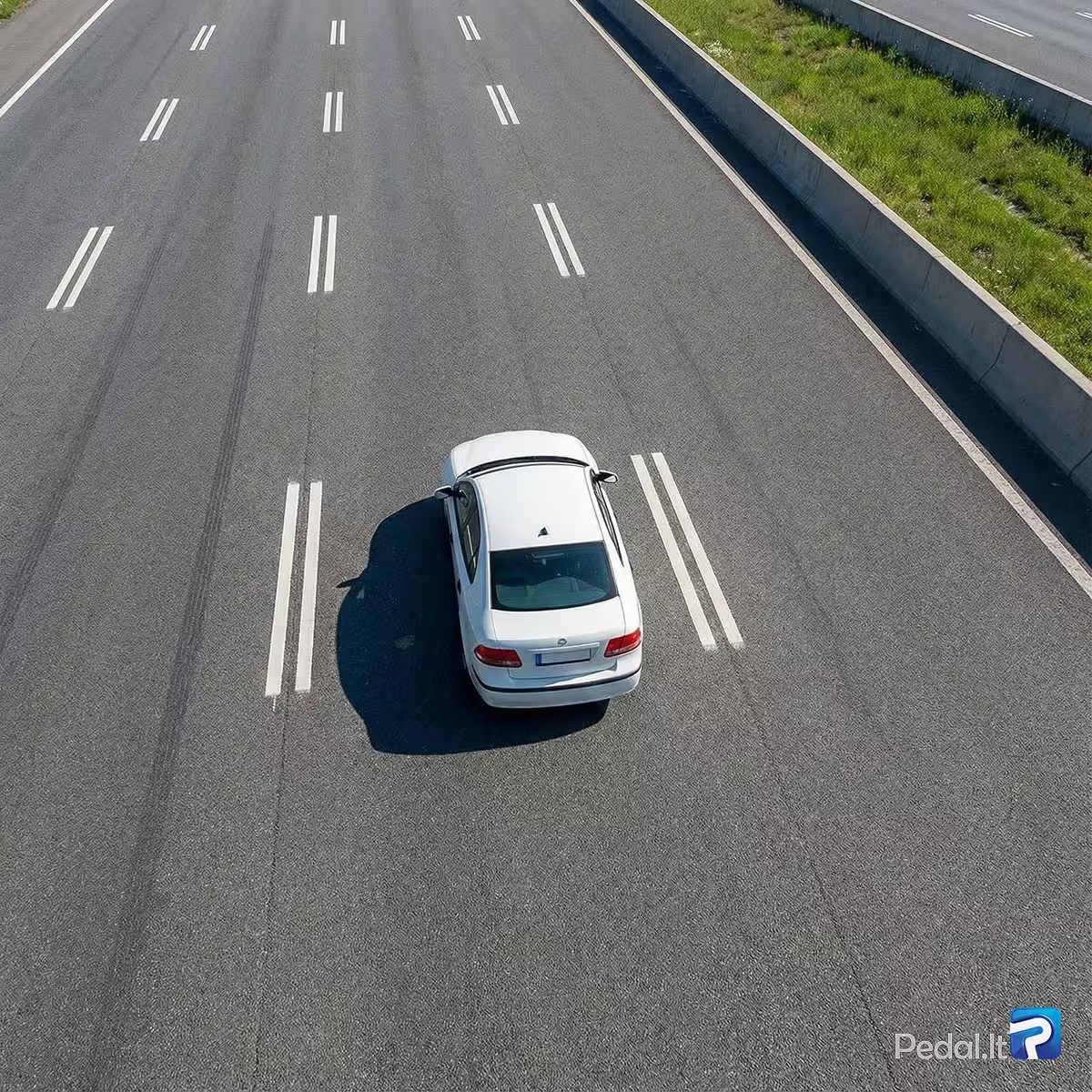
When may a double broken line be crossed?
RTR – Annex 3. 1.26. A double broken line indicates lanes of opposing traffic; it separates flows of traffic moving in opposite directions. Vehicles must not cross this line when it separates traffic moving in opposite directions. If the line separates lanes moving in the same direction, vehicles may cross it from either side when the green lane-control light is illuminated. When the amber lane-control light is illuminated, vehicles may cross it only if the line is to the driver’s right.
1. On both sides when the green lane-control light is illuminated.
2. When the amber lane-control light is illuminated, and the double broken line lies to the driver’s right.
3. Crossing it is prohibited in all cases.
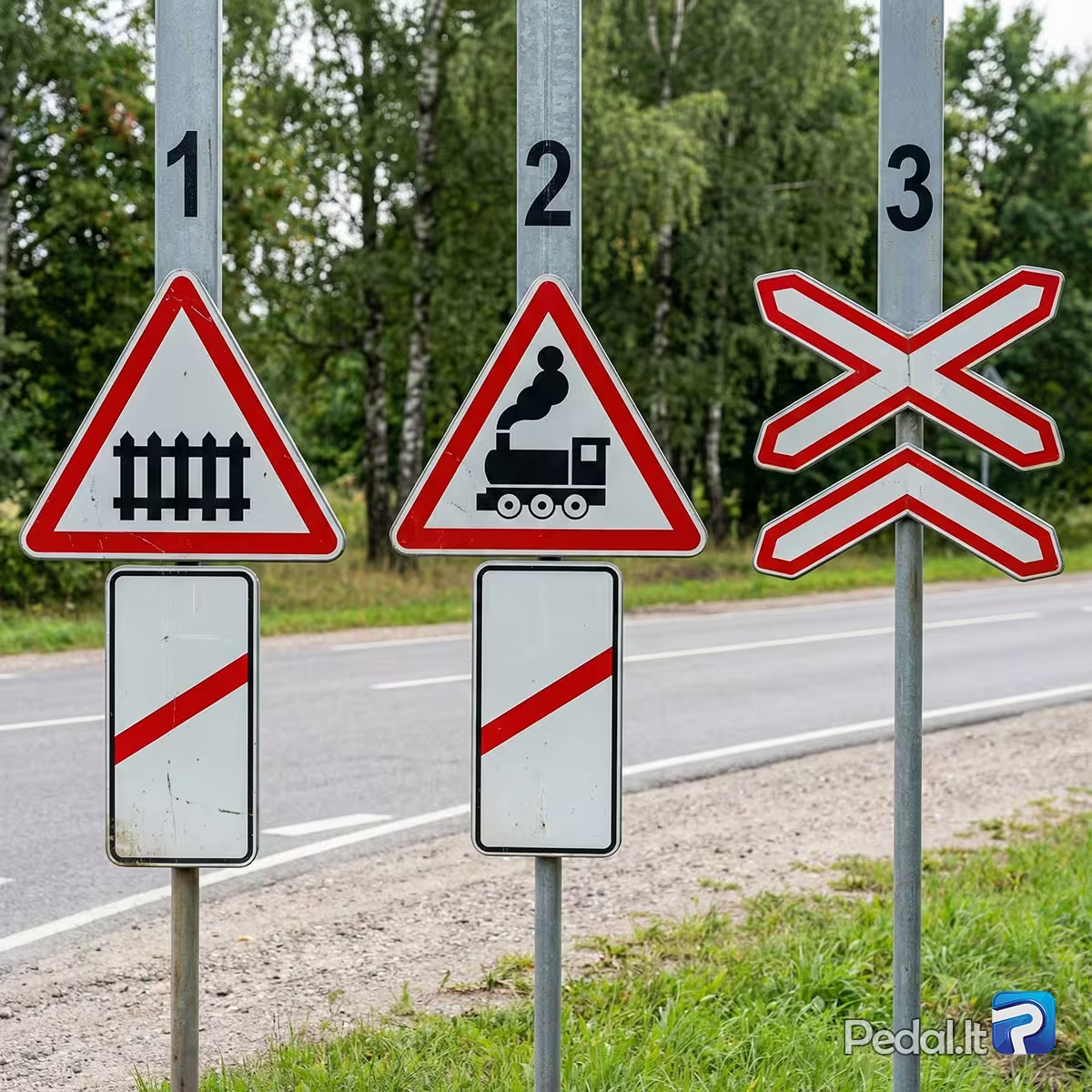
Which road sign indicates that you are approaching a level crossing equipped with a barrier?
Road sign 101 — “Level Crossing with Barrier”: indicates a level crossing protected by a barrier. Road sign 102 — “Level Crossing without Barrier”: indicates a level crossing that has no barrier. Road sign 142 — “Level Crossing Ahead”: warns of a level crossing ahead outside built-up areas; this sign is placed as close as possible to the crossing on the right-hand side of the road. Road sign 139 — “Multi-Track Railway”: indicates a level crossing without a barrier across a railway with two or more tracks.
1. 1.
2. 2.
3. 3.
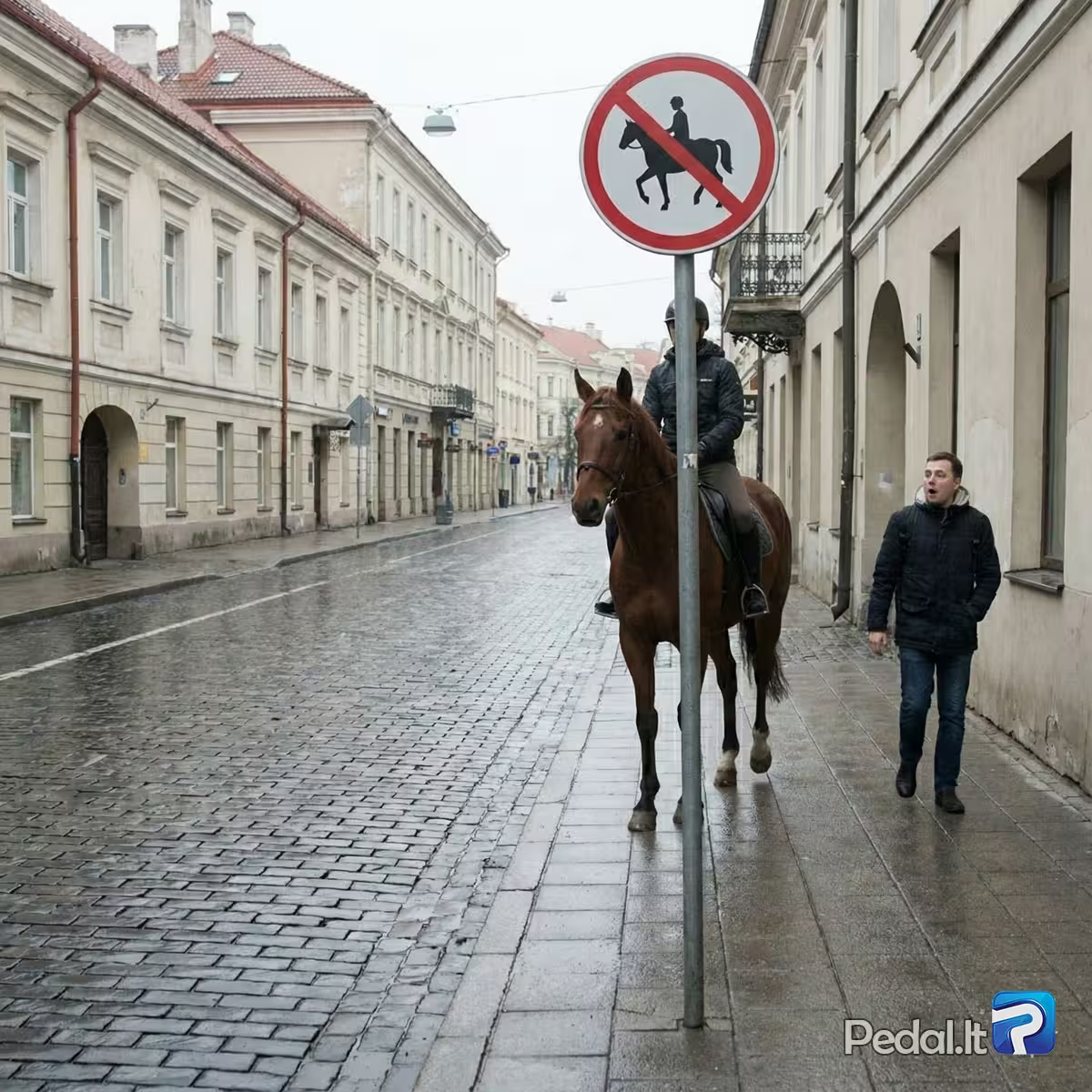
Persons riding animals are prohibited from:
67. Only persons aged 14 or older may drive an animal-drawn vehicle, herd animals or birds, or ride an animal on a road. 72. Drivers of animal-drawn vehicles, those herding animals or birds, riders, and other persons must not: 72.1. leave animals or birds unattended on a road or near a road; 72.2. tie animals so that they could enter a road; 72.3. herd animals or birds along a cobbled road or roads with asphalt or concrete pavement without the road owner's consent; 72.4. herd animals or birds across railway tracks or a road where there are no specially designated crossings; 72.5. ride an animal on the carriageway during hours of darkness; 72.6. drive animal-drawn vehicles, herd animals or birds, or ride animals on motorways and highways; 72.7. drive animal-drawn vehicles, herd animals or birds, or ride animals while under the influence of alcohol or psychoactive substances.
1. Riding an animal while under the influence of alcohol or psychoactive substances.
2. Riding an animal on the carriageway during hours of darkness, and riding on motorways and highways.
3. Riding an animal on roads if the rider is under 14 years old.
4. Riding an animal on the carriageway during daylight hours.
Are you required to signal before changing lanes?
RTR 82. A driver must indicate intended maneuvers using the vehicle's right or left direction indicators, or by arm signals if the indicator lights are unavailable or inoperative. Specifically: 82.1 before starting to move and before stopping; 82.2 before changing lanes, before and after overtaking, before and after passing an obstruction, before turning right or left, before making a U‑turn, and before leaving an intersection where vehicles must circulate around a central point. JB
1. Yes — you must signal.
2. No — you are not required to.
3. Only if other road users are nearby.
Is it permitted to carry passengers in a towed vehicle when a flexible towing link is used?
Passengers may be carried in a towed vehicle except when the vehicle is being towed with its front or rear supported on a towing platform or other support device. Regulation 195 states that drivers must not: 195.4. carry passengers inside a bus, trolleybus, or the body of a goods vehicle that is being towed; if the front or rear of a vehicle is resting on a support device, passengers must not be inside the vehicle or in its cargo body.
1. Yes — it is allowed.
2. No — it is not allowed.
You are driving on the road when a vehicle rapidly approaches from behind. The driver has switched on the left-turn indicator and is signaling by flashing the headlights. What will you do?
Even if another driver breaks the rules by overtaking or exceeding the speed limit, you must not endanger other road users — allow that driver to overtake you. 4. Road users shall follow the principle of mutual respect and safety.
1. You will accelerate to increase the distance between the vehicles.
2. You will maintain your speed and prevent the other driver from overtaking you.
3. You will allow the approaching vehicle to overtake you.
4. You will apply the brake pedal to activate the brake lights.
When driving, you must yield to pedestrians when they:
RTR 30. When approaching an uncontrolled pedestrian crossing, a driver must slow down or stop before the crossing to yield to pedestrians who have stepped into any lane, are moving within any lane, or are standing immediately before a lane (at the edge of the roadway) waiting for the opportunity to step into that lane in the direction of the vehicle’s travel or into any lane on a road with one lane in each direction. Drivers must take extra precautions during hours of darkness, when visibility is poor, or whenever a pedestrian crossing is not clearly visible from the driver’s position, and must ensure there are no pedestrians who should be given way at the crossing.
1. Are already on a pedestrian crossing.
2. Are stepping onto a pedestrian crossing.
3. Are standing at the edge of the roadway before a pedestrian crossing and waiting for the opportunity to step onto it.
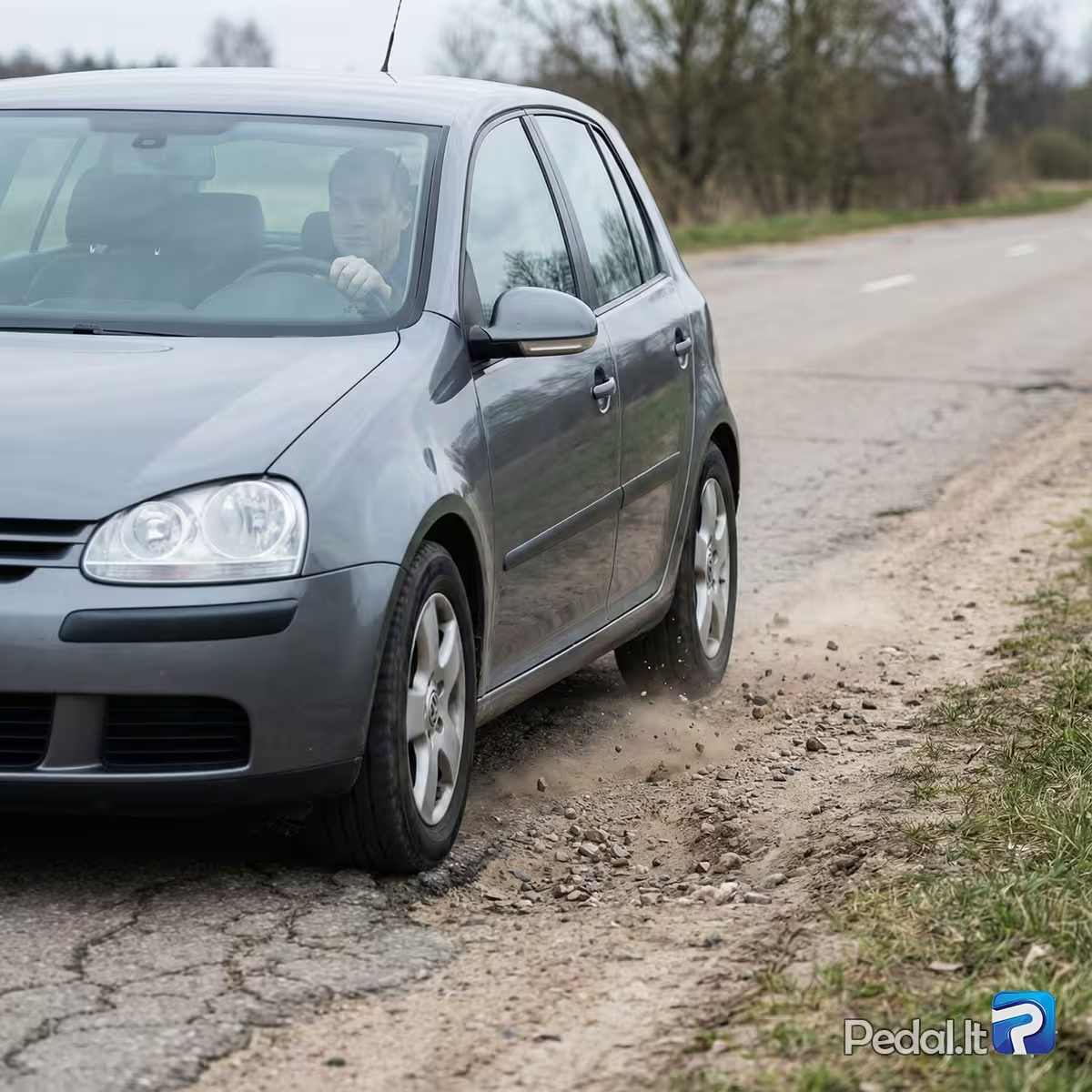
If two wheels of your vehicle move onto the road shoulder while driving, what should you do?
Avoid sudden steering or braking to prevent further instability. Gently accelerate — increasing the driven wheel's RPM will help the wheel regain traction and make it easier to return to the paved road.
1. Apply the brakes and steer back onto the carriageway.
2. Gently accelerate and steer back onto the carriageway.
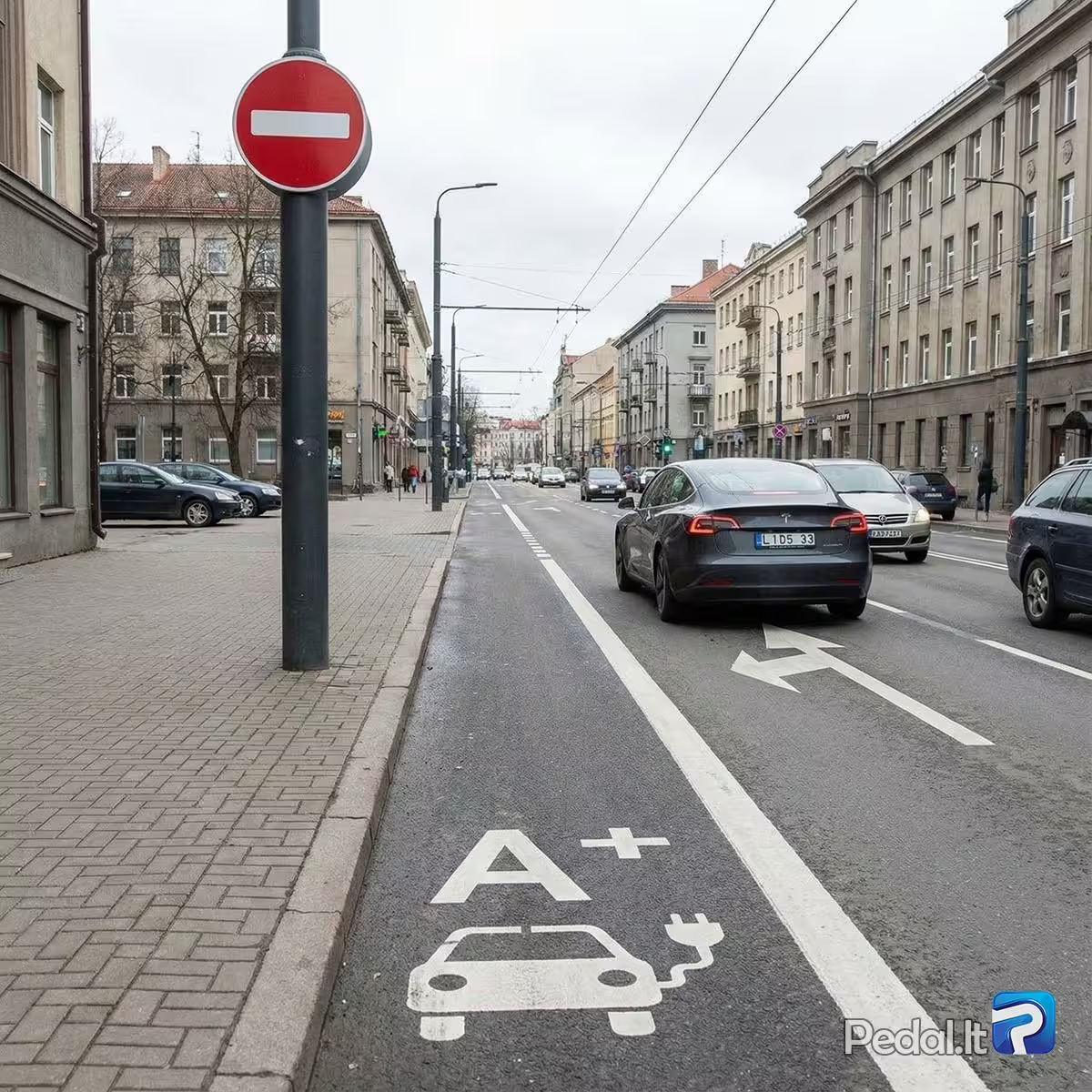
When driving in a lane marked 'A+' and bearing an electric vehicle symbol, and the lane's road sign indicates 'No Entry', what should the driver of an electric vehicle do if they intend to go straight ahead?
In this situation, the 'No Entry' sign applies to the lane and is not limited solely to public-service vehicles. Therefore, if the electric vehicle driver intends to continue straight ahead, they must change lanes and move into a lane that permits driving straight. Legal basis: RTR 181 — Non-public-service vehicles must not drive in lanes marked 'Lane Reserved for Public Service Vehicles' and the letter 'A'. 1811 — Non-public-service vehicles must not drive in lanes marked 'A+' except for the following: 1811.1 bicycles, electric micromobility devices, mopeds, and light quadricycles; 1811.2 vehicles marked with the distinguishing sign 'A person with a disability' or displaying a parking card that transport a person with a disability to/from an educational institution or a day-care centre for people with disabilities if the route is agreed with the road owner according to the established procedure; 1811.3 taxis if the lane reads 'TAXI'; 1811.4 cars carrying four or more road users if the lane is marked with the symbol '4+'; 1811.5 electric vehicles if the lane is marked with an electric vehicle symbol; 1811.6 motorcycles if the lane is marked with a motorcycle symbol. RTR Annex 1. 301 — Road sign 'No Entry': Entry is prohibited for all vehicles except public-service vehicles.
1. Continue straight ahead without changing lanes.
2. Change lanes and move into the lane from which it is allowed to drive straight ahead.
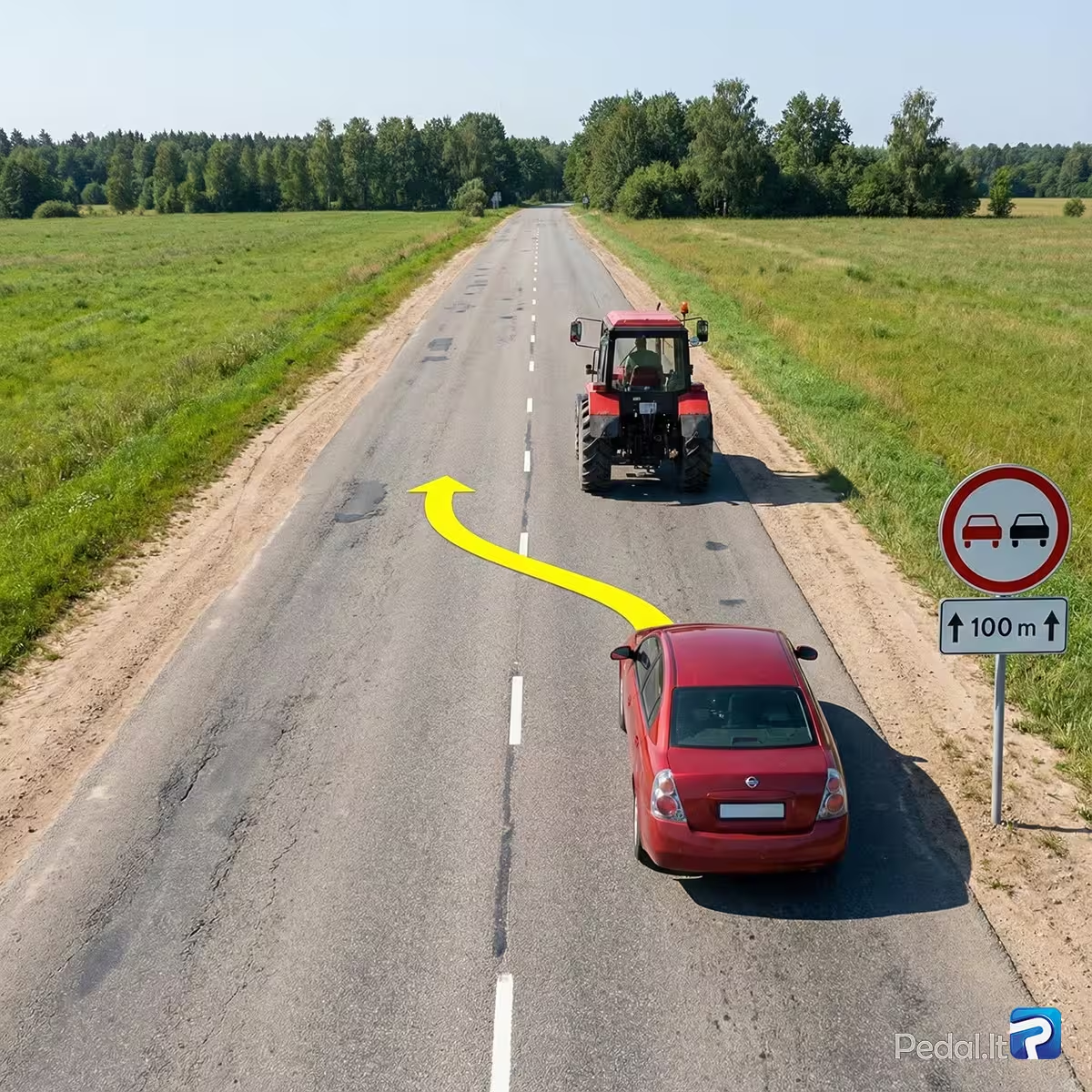
Is overtaking permitted?
Although the road sign normally prohibits overtaking, overtaking vehicles traveling at speeds under 30 km/h is permitted provided it can be done safely. Road sign 325 — “Overtaking prohibited” forbids overtaking, except for individual vehicles (or individual vehicle combinations) traveling at speeds under 30 km/h. Road sign 805 — “Validity zone ahead” indicates the length of the zone beyond the sign during which a hazardous road section or other associated signs remain in effect.
1. No — overtaking is prohibited.
2. Yes — overtaking is permitted if the tractor is traveling at less than 30 km/h.
Under which conditions does a car battery's capacity decrease?
Battery capacity decreases as ambient temperature falls. A fully charged battery that measures 100% capacity at +25 °C will typically drop to about 80% at 0 °C and to roughly 60% at −25 °C.
1. When ambient temperature rises.
2. When ambient temperature falls.
3. It does not change with temperature.
.avif)
If, when starting to move, your vehicle's wheels spin while the vehicle remains stationary:
To drive a motor vehicle economically and sensibly, begin moving smoothly and steadily. Where possible, reduce your speed gradually and avoid unnecessary abrupt actions unless they are essential (e.g., emergency braking because of an unexpected obstacle on the road).
1. It is uneconomical — it increases fuel consumption and accelerates tyre wear.
2. The tyre squeal or wheel spin disturbs other road users.
3. It is regarded as normal and acceptable.
.avif)
A child is saying goodbye to a friend. What should you anticipate in this situation?
Children close to the road can behave unpredictably. Exercise extreme caution when driving near them — they may run into the carriageway without looking and may not respond to a horn.
1. The child may step into the carriageway without looking.
2. The child may be looking toward the road but still step into the carriageway.
3. The child may step into the carriageway even if you sound the horn to warn them.
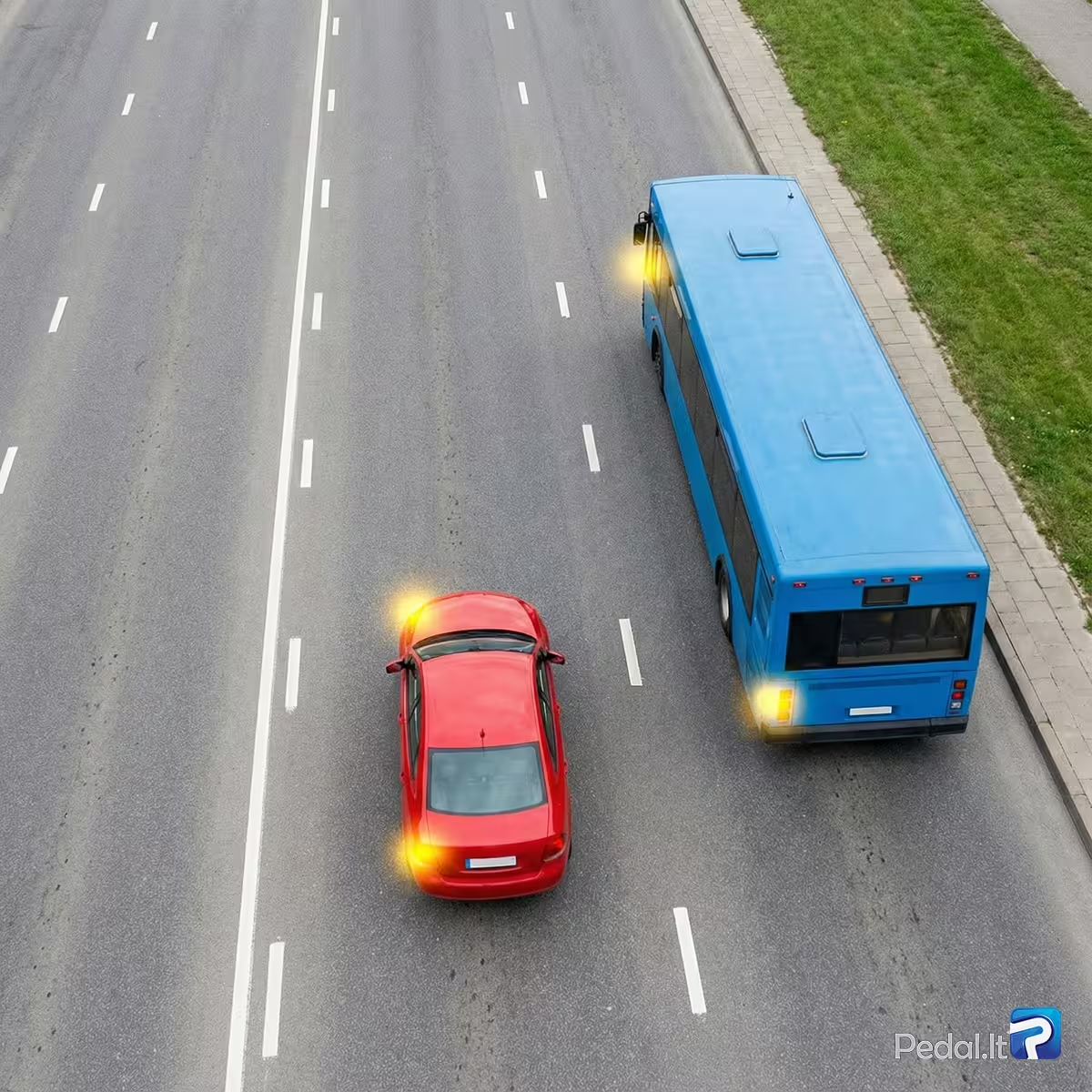
Is it permitted to turn around from the right-hand side of the carriageway if the carriageway is too narrow to turn from the left-hand side?
RTR 107. When, due to a vehicle's large size or other valid reasons, it is not possible to complete a turn (turn around) from the appropriate edge position of the carriageway, the vehicle may perform the turn from a part of the carriageway other than that edge assigned for travel in that direction, provided the maneuver does not obstruct other vehicles or create a hazard for other road users. JB
1. Yes — provided the maneuver does not obstruct other vehicles or create a hazard for other road users.
2. No — the maneuver is prohibited.
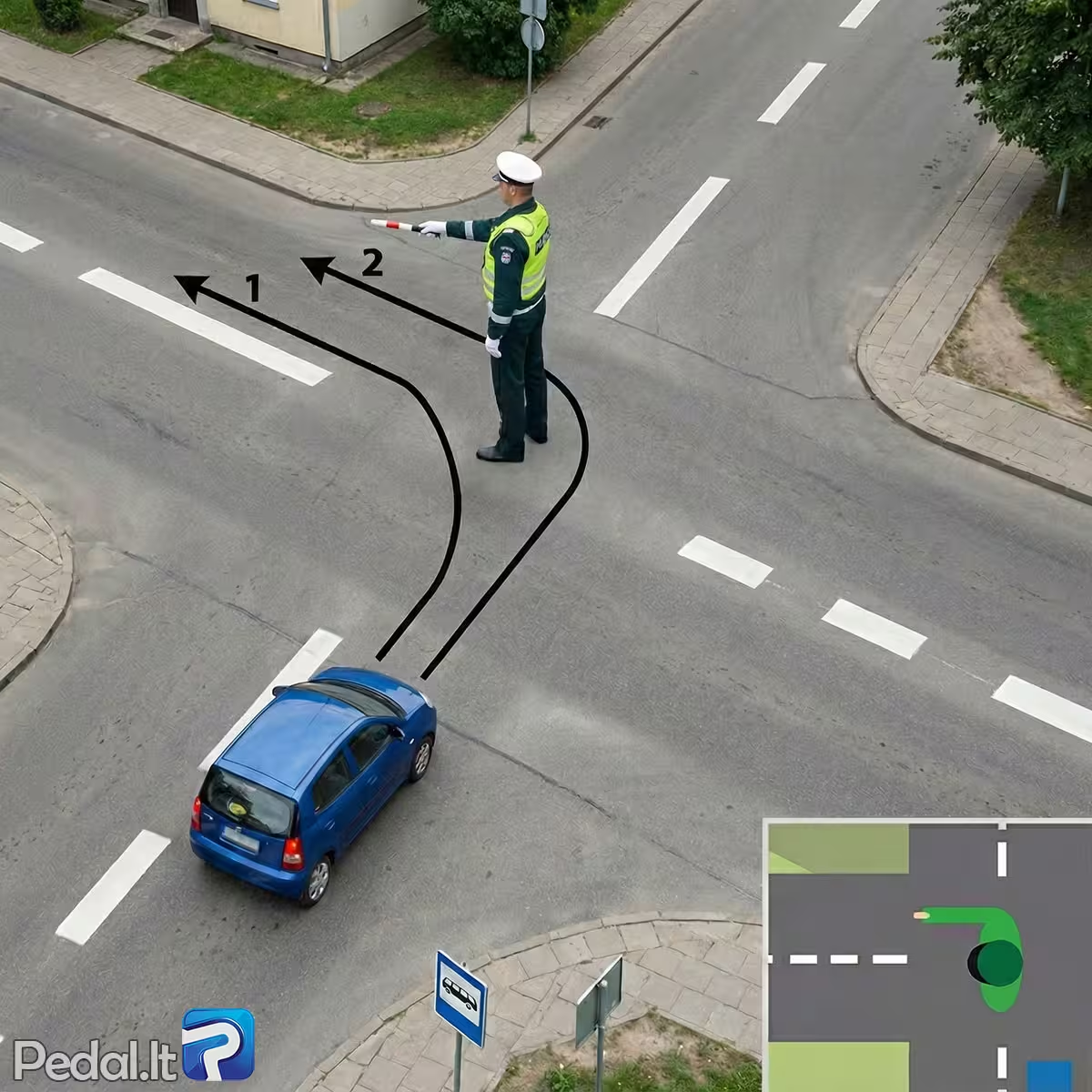
Is it permitted to make a left turn in this situation?
In this scenario the driver must complete the left turn before passing the traffic officer. Turning left after passing the officer would violate Road Traffic Rules requirement 77.2.3, which prohibits vehicles approaching from the rear and from the right from proceeding. RTR 77 — Signals given by traffic officers — are defined as follows: 77.1 Arms extended sideways or down: 77.1.1 Vehicles to the left and to the right may proceed straight ahead or turn right; pedestrians may cross the carriageway. 77.1.2 Vehicles and pedestrians in front of and behind the officer must not proceed. 77.2 Right arm extended forward: 77.2.1 Vehicles approaching from the left may proceed in any direction. 77.2.2 Vehicles from the front may proceed only to the right. 77.2.3 Vehicles from the rear and from the right must not proceed. 77.2.4 Pedestrians may cross the carriageway behind the officer. 77.3 Arm raised upwards: 77.3.1 All road users must not proceed in any direction. 77.3.2 Drivers must stop their vehicles without changing lanes.
1. Turning left is permitted, but only when following the first trajectory.
2. Turning left is permitted, but only when following the second trajectory.
3. Turning left is permitted in both cases.
4. Turning left is prohibited.
Which of the following distances to a vehicle ahead would be unsafe?
RTR 126. The driver must maintain a following distance at speed sufficient to avoid colliding with the vehicle ahead if it brakes, and must leave a lateral gap to ensure traffic safety. It is recommended that the following distance be at least the distance covered in two seconds, or at least half the speedometer reading converted into metres; for example, at 70 km/h the distance should not be less than 35 m, unless traffic conditions require otherwise. Drivers of motor vehicles, tractors and self‑propelled machinery, when overtaking pedestrians or when overtaking or passing cyclists or drivers of electric micromobility vehicles, must leave a lateral clearance of at least 1.0 m if their speed does not exceed 50 km/h, and at least 1.5 m if their speed exceeds 50 km/h. The requirement to maintain the specified lateral distance does not apply on single‑lane roads.
1. Less than the distance covered in two seconds.
2. Less than the distance covered in five seconds.
3. 30 m
4. 50 m
Must road users involved in a traffic accident refrain from consuming alcohol and other intoxicating substances?
RTR 221. Road users involved in a traffic accident must refrain from consuming alcoholic beverages, medications, narcotic drugs, or any other intoxicating substances immediately after the accident until they have either undergone, or formally refused, a test to determine drunkenness or impairment caused by a narcotic, psychotropic, or any other substance.
1. Yes — until the circumstances of the accident involving other road users have been clarified.
2. Yes — until the circumstances at the accident scene have been established and investigated.
3. No — they are not required to do so.
4. Yes — until the sobriety or intoxication of the road user involved in the accident has been determined by testing or they have formally refused the test.
What size handcart carrying a load that is pushed or pulled at the roadside must be equipped with reflectors?
The option "More than 1 meter long" is incorrect because the RTR do not specify any marking requirement based on the cart's length. Under RTR 41: pedestrians moving along an unlit hard shoulder or along the edge of the carriageway, or standing there during hours of darkness or when visibility is poor, must carry a torch visible to other road users, wear a high-visibility vest, or carry a reflector visible to other road users. A pulled or pushed handcart wider than 1 m must have reflectors affixed on its left side: a white reflector at the front and a red reflector at the rear. JB
1. More than 1 meter wide.
2. More than 1 meter long.
The term "service vehicle" refers to:
RTR 3.1. "Service vehicles" are vehicles owned by companies, institutions, or organisations operating in an area marked by restrictive signs; vehicles belonging to persons who live or work in that area; vehicles delivering goods to that area or collecting goods from it; and taxis or other passenger vehicles providing paid transport to or from that area.
1. Any vehicle used for transporting goods.
2. A vehicle owned by companies, institutions, or organisations operating in an area marked with restrictive signs, or by persons working in that area.
3. A vehicle owned by persons residing in an area marked with restrictive signs.
4. A vehicle delivering goods to an area marked with restrictive signs, or collecting goods from it.
5. Taxis or other passenger vehicles providing paid transport to or from an area marked with restrictive signs.
You are on the right side of the road and are about to start moving. A goods vehicle is behind you. What should you take into consideration?
101. Before starting to move, changing lanes, or otherwise altering course, drivers must ensure the manoeuvre is safe and give way to other road users (i.e., avoid creating obstructions).
1. You may not notice vehicles traveling in the same direction that are approaching or about to overtake you.
2. Other drivers may fail to see your left‑turn indicator.
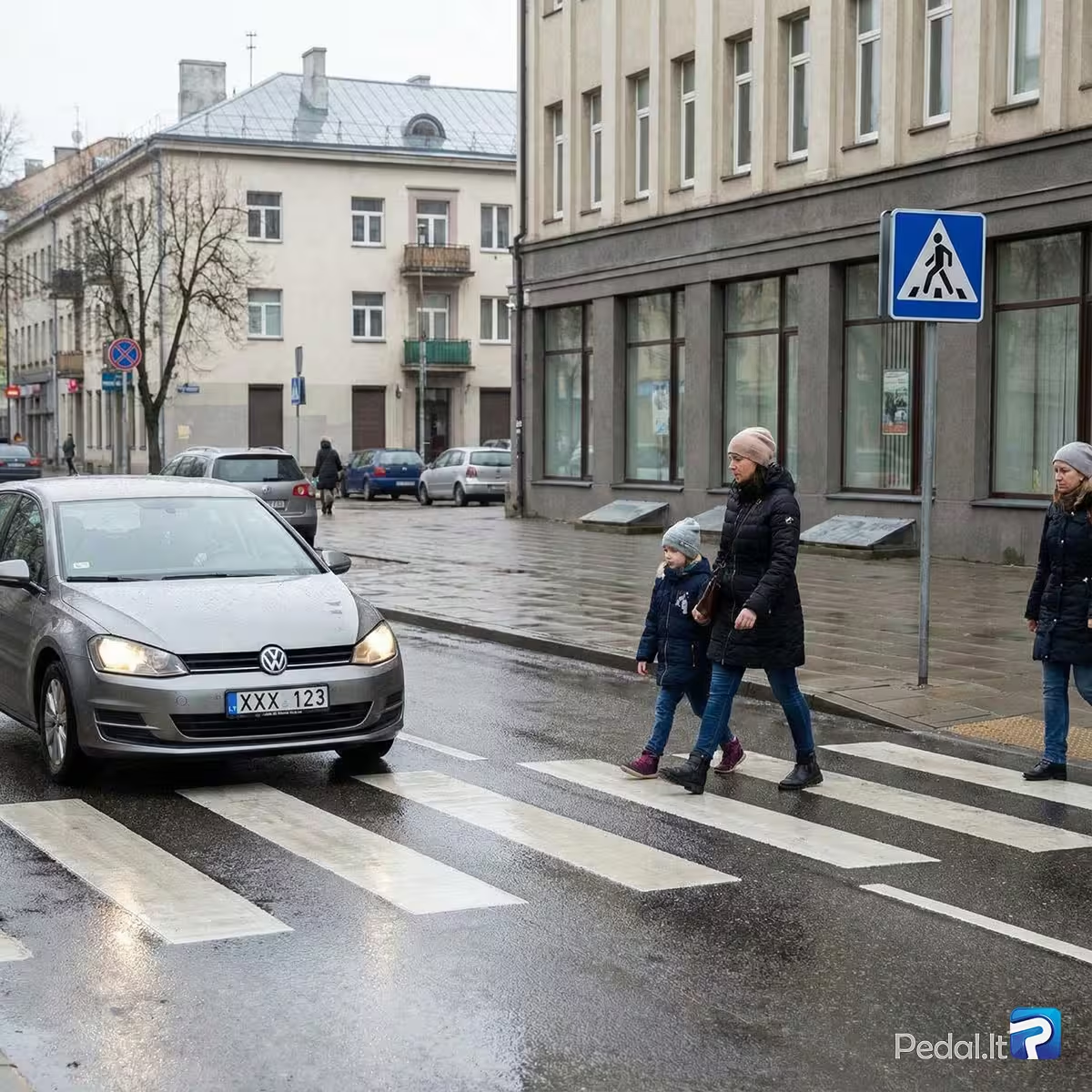
At this pedestrian crossing, you must yield to:
RTR 30. When approaching an uncontrolled pedestrian crossing, a driver must slow down or stop before the crossing to yield to pedestrians who have stepped into any lane, are walking in any lane, or are standing at the edge of the carriageway waiting to step into a lane in the direction of the vehicle's travel (or into any lane on a single-lane road with traffic in both directions). Drivers must exercise extra caution at night, in poor visibility, or when the crossing is not clearly visible from the driver's position, and must ensure there are no pedestrians entitled to priority at the crossing.
1. Pedestrians who have stepped into the lane carrying oncoming traffic.
2. Pedestrians standing at the curb adjacent to the crossing.
3. Pedestrians who have stepped into the lane in which you are travelling.
Where is overtaking prohibited?
RTR XVI.140. Overtaking is prohibited. Clause 140.8: in residential areas, courtyards of apartment buildings, parking lots, and bicycle streets. JB
1. In parking lots.
2. In the courtyards of multi-apartment residential buildings.
3. In residential areas.
4. On bicycle streets.
1 of 30 Task
Time left: 00:00:00
1
2
3
4
5
6
7
8
9
10
11
12
13
14
15
16
17
18
19
20
21
22
23
24
25
26
27
28
29
30