Is it permitted to carry passengers in a towed vehicle when a flexible towing link is used?
Passengers may be carried in a towed vehicle except when the vehicle is being towed with its front or rear supported on a towing platform or other support device. Regulation 195 states that drivers must not: 195.4. carry passengers inside a bus, trolleybus, or the body of a goods vehicle that is being towed; if the front or rear of a vehicle is resting on a support device, passengers must not be inside the vehicle or in its cargo body.
1. Yes — it is allowed.
2. No — it is not allowed.
When driving a motor vehicle equipped with seat belts, may a rear-seat passenger travel without wearing a seat belt?
Only the driver may be exempt from wearing a seat belt within built-up or residential areas (for example, when maneuvering in a parking lot). RTR 196. All drivers and passengers must wear seat belts when travelling in vehicles equipped with them. If a bus is fitted with seat belts, visible informational signs reading "Fasten Your Seat Belt" must be displayed in front of, on, or next to every seat. It is recommended that all bus passengers be informed of the seat belt requirement verbally or by audiovisual means before the journey begins. RTR 198. Persons driving a vehicle in reverse or manoeuvring in a parking area within a built-up area are exempt from wearing seat belts. RTR 205. Persons who, for serious medical reasons, hold special permits issued by competent authorities are exempt from wearing seat belts; these permits must include an expiry date. JB
1. Yes — but only if the passenger holds a special medical exemption certificate issued by the competent authorities.
2. Permitted when driving within built-up areas.
3. Permitted only with the driver's consent.
4. Permitted when driving in residential zones.
When must the driver begin displaying the warning signal?
RTR 86. Warning signals must be given to other road users sufficiently in advance of a maneuver (including braking associated with the maneuver) and must be discontinued immediately after the maneuver. Hand signals may be ceased before the maneuver begins. JB
1. At the beginning of the maneuver.
2. While the maneuver is in progress.
3. Well in advance of the maneuver (including braking connected to the maneuver).
4. No signal is required if there are no vehicles following.
What does a flashing white traffic light at a level crossing indicate?
RTR 73. Traffic light signals have the following meanings: 73.10. A flashing white light used at level crossings means that vehicles may proceed after ensuring that no rail-borne vehicle is approaching the level crossing;
1. It prohibits traffic from proceeding.
2. It permits traffic to proceed after ensuring that no rail-borne vehicle is approaching the level crossing.
3. It permits traffic only if you can cross the level crossing before the approaching train arrives.
You should select a speed so that the stopping distance is:
If the stopping distance is longer than the visible portion of the road, you may collide with an obstacle. Therefore, the distance visible ahead must always exceed the stopping distance.
1. Longer than the visible distance ahead.
2. Shorter than the visible distance ahead.
Which of the following are warning signals?
RTR 81. Warning signals include: using turn and brake lights (arm signals may be used), sounding the horn, switching the headlights on and off, activating hazard warning lights or flashing amber beacons, and placing a warning triangle on the road or attaching it to the vehicle.
1. Brake light signal.
2. Indicating a turn using an arm signal.
3. Horn signal.
4. Switching the headlights on and off.
5. Placing a warning triangle on the road.
When is the road surface most slippery?
The road surface is most slippery at the start of rain because accumulated dust and oil on the pavement combine with the first drops to form a slippery film.
1. When rain begins.
2. After heavy rain.
3. After puddles have formed on the road.
What must you do first before overtaking?
RTR 136. Drivers should avoid unnecessary overtaking maneuvers. Before overtaking, drivers must take extra precautions and ensure that: 136.1 no driver following has already begun to overtake them; 136.2 the driver of the vehicle to be overtaken is not signaling a left turn; 136.3 the portion of the lane required for overtaking is clear and the maneuver will not obstruct oncoming traffic or pedestrians on the carriageway; 136.4 a safe distance from the vehicle being overtaken will be maintained throughout the maneuver; 136.5 after overtaking, the driver can safely return to the original lane without obstructing the overtaken vehicle.
1. Ensure the road ahead is clear.
2. Shift to a lower gear.
3. Increase your speed.
4. Reduce your speed.
Under what circumstances are drivers prohibited from operating a vehicle?
IV 15. It is prohibited to drive vehicles that are not in good condition or that fail to meet the applicable technical requirements. Before setting off, the driver of a motor vehicle, tractor, or self-propelled vehicle must ensure the vehicle is in proper condition and is equipped with a warning triangle, fire extinguisher, first-aid kit, and any other items mandated for that vehicle type. The driver must also monitor the vehicle's technical condition during the trip. If the vehicle breaks down while driving and ceases to meet technical requirements, and repairs on-site are impossible, the driver may proceed—taking all necessary precautions—to the nearest parking area or repair facility, except in cases specified in paragraph 234 of these Rules.
1. When the engine has not yet warmed up to its optimal operating temperature.
2. When the vehicle's fuel tank is not full.
3. When the vehicle is not in roadworthy condition.
4. When the vehicle does not meet the required technical standards.
When driving a passenger car with a trailer, what should you take into account when descending a hill?
The stopping distance increases when towing a trailer downhill because the trailer’s mass pushes the towing vehicle forward, adding momentum. Conversely, when driving uphill the trailer’s weight helps slow the vehicle and reduces the stopping distance.
1. A trailer will help the car stop more quickly.
2. The stopping distance will be reduced.
3. The stopping distance will increase.
4. The stopping distance will remain unchanged.
Are you required to signal before starting to move?
RTR 82. A driver must indicate intended actions by using the right or left direction indicators, or by arm signals if the indicators are not available or are inoperative: 82.1 before starting to move off and before stopping; 82.2 before changing lanes, before and after overtaking, before and after bypassing an obstruction, before turning right or left, before making a U-turn, and before leaving a roundabout or an intersection where traffic circulates in a circle. JB
1. Yes — you must signal before starting to move.
2. No — you are not required to signal.
.avif)
Which driver will proceed through the intersection in the blue car?
The blue car is on the priority (main) road, so it has the right of way and must proceed first — the fact that the green car is to its right is irrelevant. Only after the blue car has passed may the green car proceed. (RTR 154) At a controlled intersection, drivers entering from a side road must yield to vehicles on the priority road.
1. The second car.
2. The first car.
What is the maximum permitted blood alcohol concentration (in ‰) for a driver with one year of driving experience operating a passenger car?
Under amendments to the Law on Road Traffic Safety that took effect on 1 January 2015, novice drivers (those with less than two years' driving experience) are considered intoxicated if the alcohol concentration in their breath or bodily fluids exceeds 0. LAW ON ROAD TRAFFIC SAFETY, Article 2, clause 43 defines 'condition under the influence of alcohol' as the state when the concentration of ethyl alcohol in a biological medium of the body (breath, blood, urine, saliva, or other bodily fluids) exceeds the statutory permissible limit. The general maximum permitted concentration of ethyl alcohol in breath, blood, urine, saliva, or other bodily fluids while driving is 0.4 per mille. However, novice drivers, taxi drivers, drivers of mopeds, motorcycles, tricycles, light quadricycles, quadricycles, powerful quadricycles, drivers of vehicles with a maximum permissible mass exceeding 3.5 tonnes or with more than nine seats, and drivers carrying dangerous goods are considered intoxicated when the ethyl alcohol concentration in their breath, blood, urine, saliva, or other bodily fluids is more than 0 per mille.
1. 0.0 ‰
2. 0.2 ‰
3. 0.4 ‰
4. 0.8 ‰
Which actions are permitted for a driver to attract the attention of other road users when overtaking them outside built-up areas?
Outside built-up areas, a driver may warn others when overtaking by flashing the high or low beams (provided this does not dazzle other road users) or by sounding the horn. Within built-up areas, flashing the lights is permitted if it does not dazzle others; sounding the horn is prohibited except when necessary to avoid a traffic accident. RTR — 89.
1. A driver may repeatedly switch the headlights on and off to attract attention.
2. A driver may sound the vehicle's horn to attract attention.
3. A driver may switch on the hazard warning lights.
What are the primary characteristics of a driver's will?
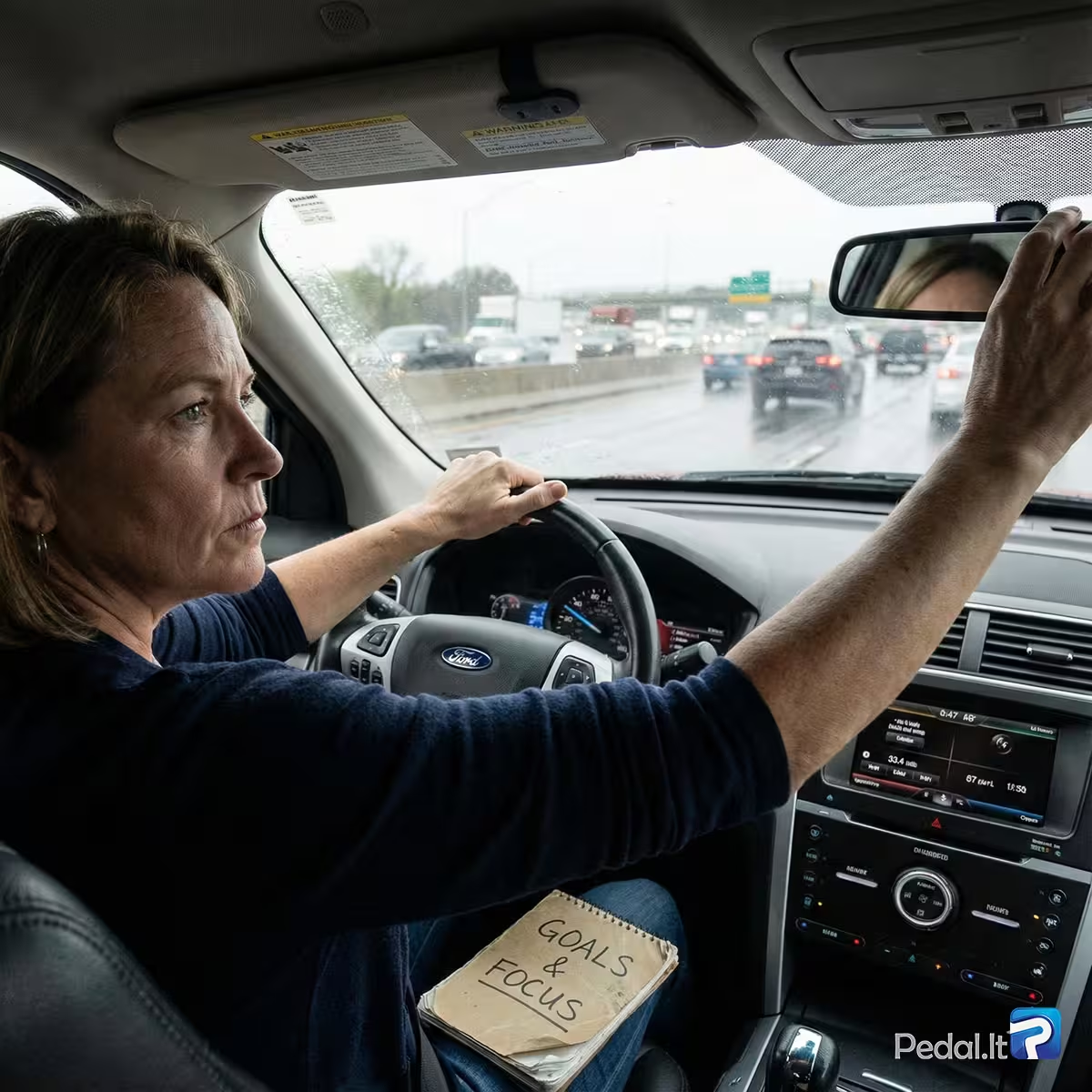
The primary characteristics of a driver's will are discipline, determination, self-control, and perseverance. Disciplined drivers consistently obey the rules of the road (RTR). Determined drivers do not hesitate about decisions they make while operating a vehicle. A driver's self-control is demonstrated by remaining calm in complex traffic situations and by showing respect for other road users. Perseverance is the ability to overcome difficulties encountered on the road.
1. Discipline and determination.
2. Aggression and anger.
3. Self-control and calm temperament.
4. Indifference.
Which of the following should you avoid to prevent unnecessary noise?
Driving smoothly and courteously helps prevent unnecessary noise. Sudden engine revving, hard braking or wheel lock-up produce loud sounds that disturb others. Slamming vehicle doors or using the horn without cause breaches public order. These actions not only create noise pollution but also demonstrate irresponsible driving behaviour.
1. Avoid sharply increasing engine revolutions (sudden revving).
2. Avoid slamming the vehicle door shut.
3. Avoid using the horn without a valid reason.
4. Avoid braking by locking the wheels.
Your car begins to skid sideways while braking. What should you do?
If the wheels lock and the car begins to skid while braking, you must release the brake pedal. For example, if you brake hard before a bend and lock the wheels, the vehicle will continue moving in its original direction (straight ahead) despite steering input. That can cause you to run off the road or collide with an obstacle. In that situation you must stop braking — which can be difficult, especially for inexperienced drivers.
1. Press the clutch pedal.
2. Release the brake pedal (stop applying the brakes).
3. Apply the brakes more firmly.
If an inspecting officer stops you, what must you switch on?
RTR 91. If the vehicle is fitted with hazard warning lights, they must be switched on: 91.3 when the vehicle is stopped by an inspecting officer. JB
1. The horn (audible warning).
2. Hazard warning lights (emergency flashers).
Which type of skid is most difficult to control?
Sudden braking on a slippery road can cause a vehicle to begin sliding. In such a situation the driver should stop braking and then take specific actions depending on which wheels are driven. For front-wheel-drive cars, the driver should gently apply the accelerator and correct the vehicle’s path with the steering wheel. For rear-wheel-drive cars, the driver should release the accelerator and, after a slight reduction in speed, steer into the direction of the slide to correct the trajectory. The most difficult situation is when both axles begin to slide; this requires very precise and decisive actions from the driver. JB
1. When the front axle is slipping.
2. When the rear axle is slipping.
3. When both axles are slipping.
Before overtaking, drivers must ensure that:
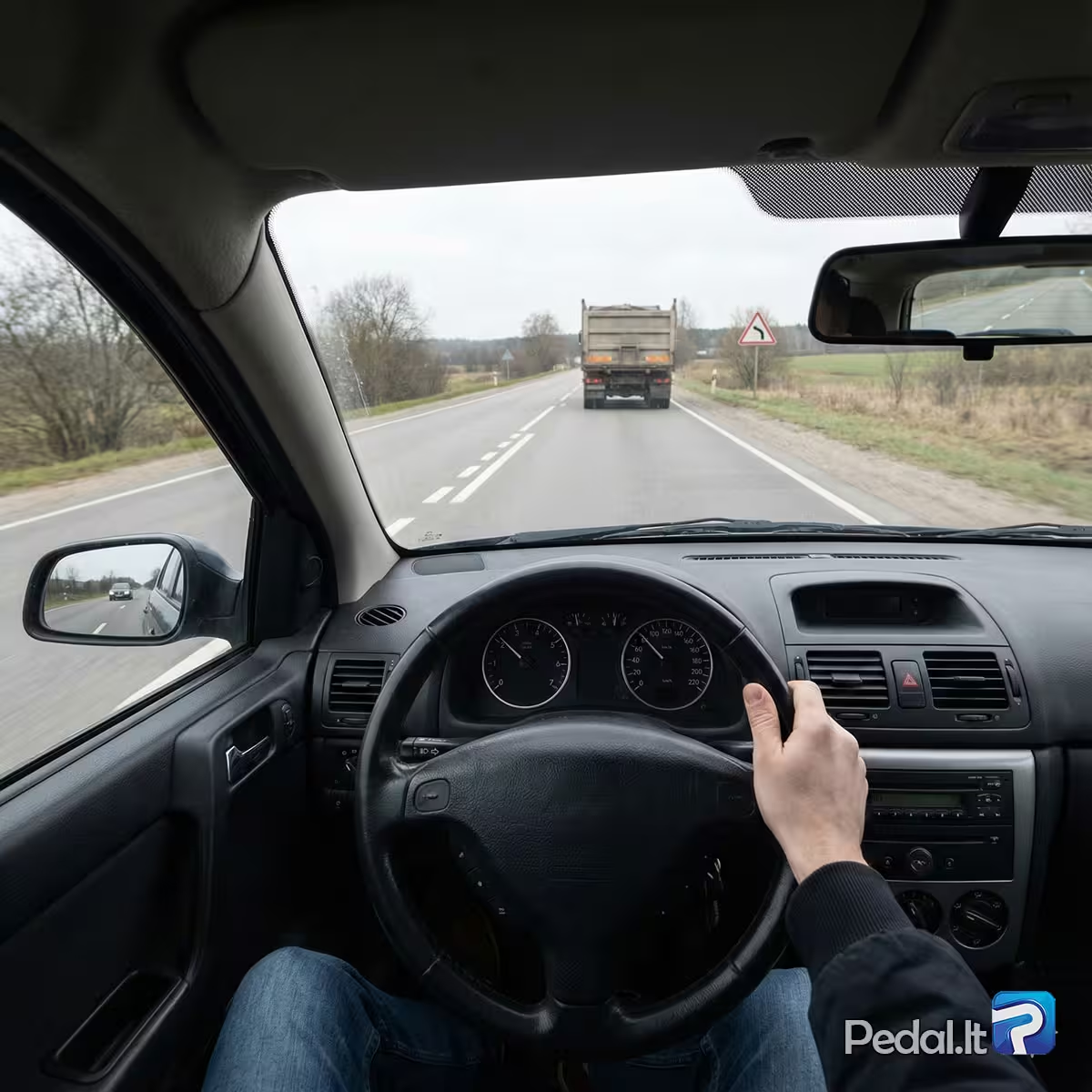
RTR 136. Drivers should avoid unnecessary overtaking manoeuvres. Before overtaking, drivers must exercise extra caution and ensure that: 136.1 no driver following has already begun to overtake them; 136.2 the driver of the vehicle to be overtaken is not indicating a left turn; 136.3 the section of lane required for the overtaking manoeuvre is clear and the manoeuvre will not obstruct oncoming traffic or pedestrians on the carriageway; 136.4 a safe distance from the vehicle being overtaken can be maintained during the manoeuvre; 136.5 after completing the overtaking manoeuvre they will be able to return safely to the original traffic lane without obstructing the overtaken vehicle.
1. The road ahead is clear and the overtaking manoeuvre can be completed safely
2. No vehicle is approaching from the opposite direction
3. No vehicle behind has already begun overtaking
Are drivers permitted to take part in vehicle races that are organized illegally on streets and roads?
23. Drivers must not take part in vehicle races that are organized illegally.
1. Yes, they are permitted.
2. No, they are not permitted.
What must the driver do when turning left at the intersection?
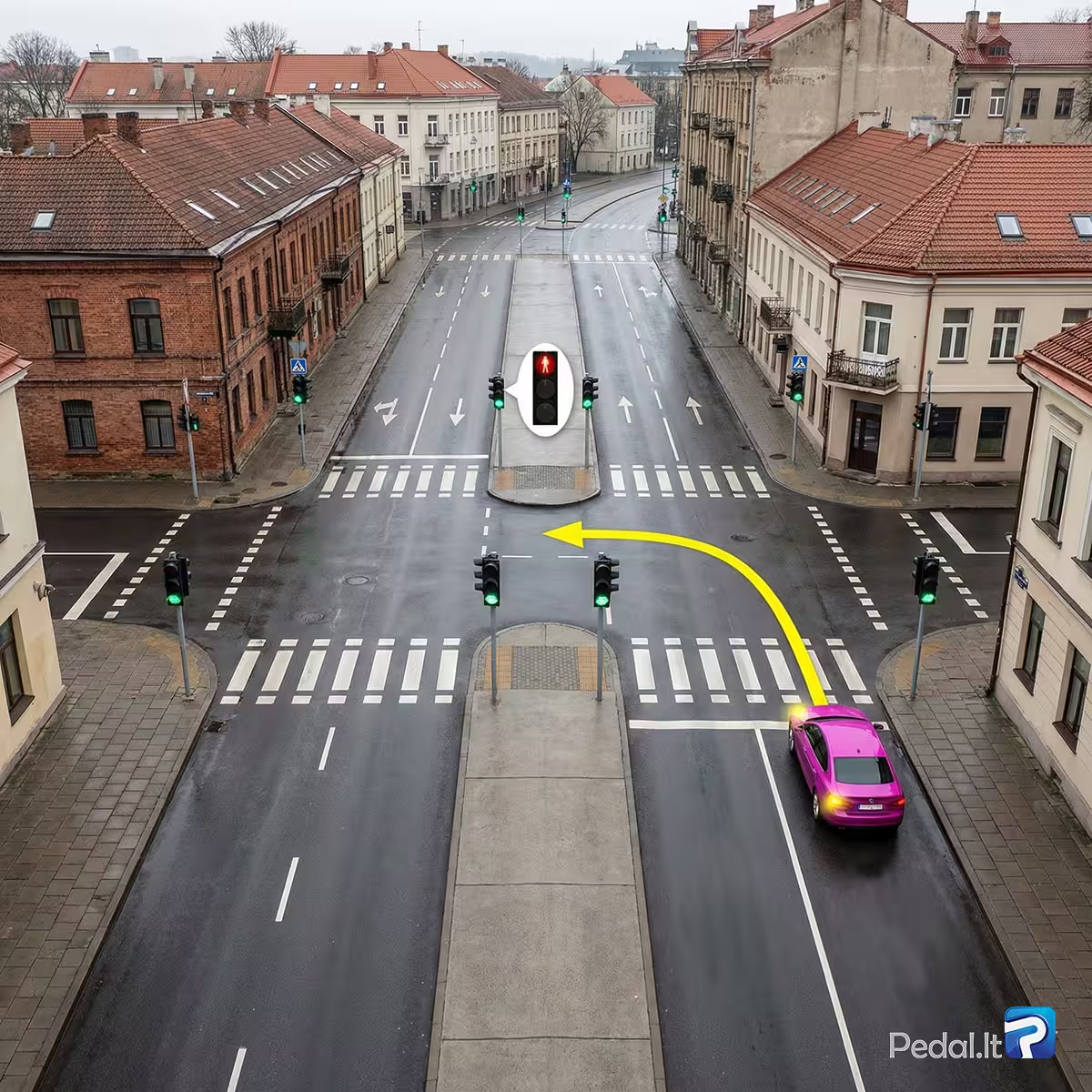
RTR 73.11. A red light or two alternately flashing red lights prohibit traffic; if the light displays black arrow(s), it prohibits traffic in the direction(s) indicated by the arrow(s) and indicates which directions road users may proceed when the green arrow appears. RTR 162. Drivers who entered the intersection in accordance with a traffic light signal permitting them to proceed may continue in their intended direction regardless of the traffic light signal shown when the vehicle is leaving the intersection. However, if the 'STOP' sign and/or a 'Stop' line is present at the intersection before other traffic lights on the route, the driver must obey every traffic light signal. RTR 165. If traffic light signals or traffic officers prohibit driving, drivers must stop before the 'STOP' sign and/or the 'Stop' line if present; if not, they must stop before the traffic lights, before the carriageway they are about to cross or join, or before a pedestrian or bicycle crossing so as not to obstruct vehicular or pedestrian traffic.
1. The driver must turn left and then proceed straight ahead without stopping.
2. The driver must turn left and then proceed straight ahead without stopping, provided this does not obstruct other road users.
3. The driver must turn left, stop before the 'Stop' line, and when the traffic light displays a signal permitting movement, proceed straight ahead.
Why must you wear a seat belt when driving?
RTR 196. The driver and all passengers must wear seat belts when the vehicle is equipped with them. If a bus is fitted with seat belts, visible notices reading 'Fasten Your Seat Belt' must be displayed in front of every seat, on the seat, or next to it. It is recommended that all bus passengers be informed—verbally or by audio‑visual means—about the requirement to wear seat belts before the journey begins. RTR 197. A seat belt must be fastened over the shoulder and around the waist, or as specified by the vehicle manufacturer.
1. To reduce the risk of injury in a road traffic collision.
2. Because wearing a seat belt makes driving more comfortable.
3. Because the road traffic regulations require it.
Must a rear-seat passenger wear a seat belt while the vehicle is in motion?
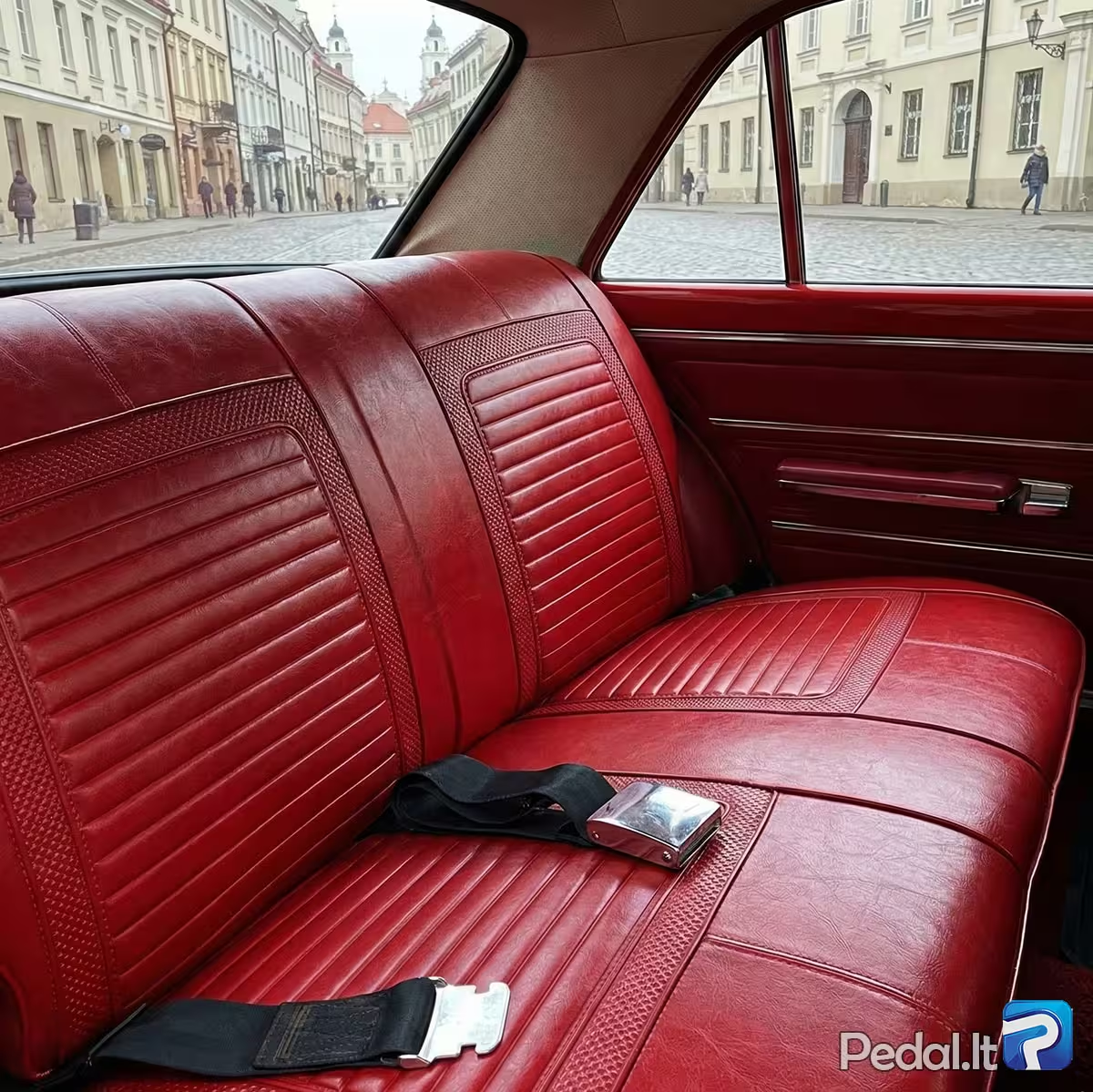
Drivers and all passengers must wear seat belts in vehicles that are equipped with them. In buses fitted with seat belts, a "Fasten Your Seat Belt" notice must be displayed in a clearly visible location in front of each seat, on the seat, or adjacent to it. It is recommended that all bus passengers be informed of the seat belt requirement — either verbally or by audiovisual means — before the journey begins.
1. Yes — you are required to wear a seat belt.
2. No — you are not required to wear a seat belt.
When are drivers permitted to brake on a pedestrian crossing?
According to traffic regulations, there are no specific locations where braking is prohibited. Braking is necessary to ensure road safety; therefore drivers must brake whenever required.
1. When it is necessary to prevent a traffic accident.
2. When they see the brake lights of the vehicle ahead.
3. When they need to stop after the pedestrian crossing on the right-hand side of the road.
4. It is forbidden to brake on a pedestrian crossing in all circumstances.
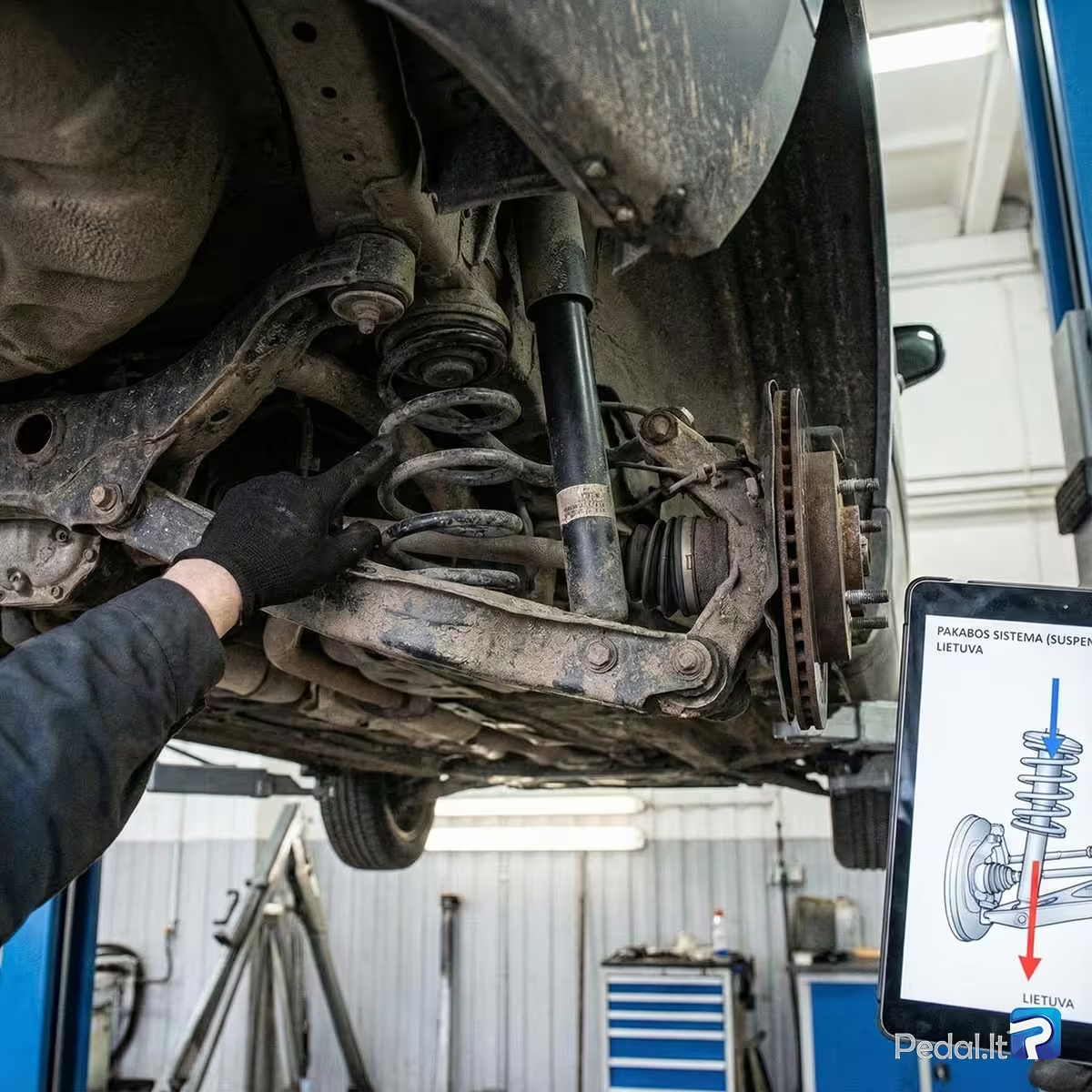
What is the function of a vehicle's suspension system?
The function of a vehicle suspension system is to convert bumps and shocks transmitted to the wheels, with the aid of shock absorbers, into minor oscillations of the vehicle body, providing comfort for driver and passengers. The suspension reduces body oscillations, and when functioning properly it enhances driving safety.
1. To improve ride comfort for the driver and passengers.
2. To convert bumps and shocks transmitted to the wheels into minor oscillations of the vehicle body.
You are driving in heavy rain and the steering wheel suddenly becomes very light to turn. What should you do?
If the steering wheel becomes very easy to turn, the vehicle's tyres have likely lost traction on the slippery road surface. In this situation, you must reduce your speed gradually — abrupt throttle changes or hard braking can cause the vehicle to skid or lose control.
1. You will slightly increase your speed.
2. You will gradually release the accelerator.
3. You will brake suddenly to reduce your speed.
4. You will move towards the hard shoulder.
What types of liability apply to reckless driving while intoxicated?
Drivers with a blood alcohol concentration (BAC) exceeding 1.5 per mille are subject to a fine, arrest, or imprisonment for up to one year (since 01/01/2017). Drink-driving may give rise to both criminal and administrative liability. The applicable type of liability depends on the specific circumstances and the seriousness of the offence:
- Administrative liability: applies when the offences are of lesser severity.
- Criminal liability: applies when the offence is particularly serious or when driving endangers road safety, or the health or life of others.
Code of Administrative Offences of the Republic of Lithuania, Article 420(2): Reckless driving, i.e. a violation of the Road Traffic Rules that endangers road safety or the safety of oneself or others for hooligan motives, incurs a fine ranging from EUR 450 to EUR 550 for drivers and from EUR 750 to EUR 1,000 for persons not entitled to drive vehicles.
Code of Administrative Offences of the Republic of Lithuania, Article 420(4): The acts referred to in paragraph 2 committed by an intoxicated person (mild intoxication: more than 0.4 per mille but not exceeding 1.5 per mille), by a person under the influence of drugs, psychotropic or other psychoactive substances, by a person who avoided performing a field sobriety test, or by a person who consumed alcohol, drugs, psychotropic or other psychoactive substances before the test, shall incur a fine ranging from EUR 850 to EUR 1,200 for drivers.
Criminal Code of the Republic of Lithuania, Article 281(7): Persons who drive a road vehicle or instruct a learner driver while under the influence of alcohol with a BAC exceeding 1.5 per mille shall be punished by a fine, arrest, or imprisonment for up to one year.
1. Criminal liability.
2. Administrative liability.
3. Civil liability.
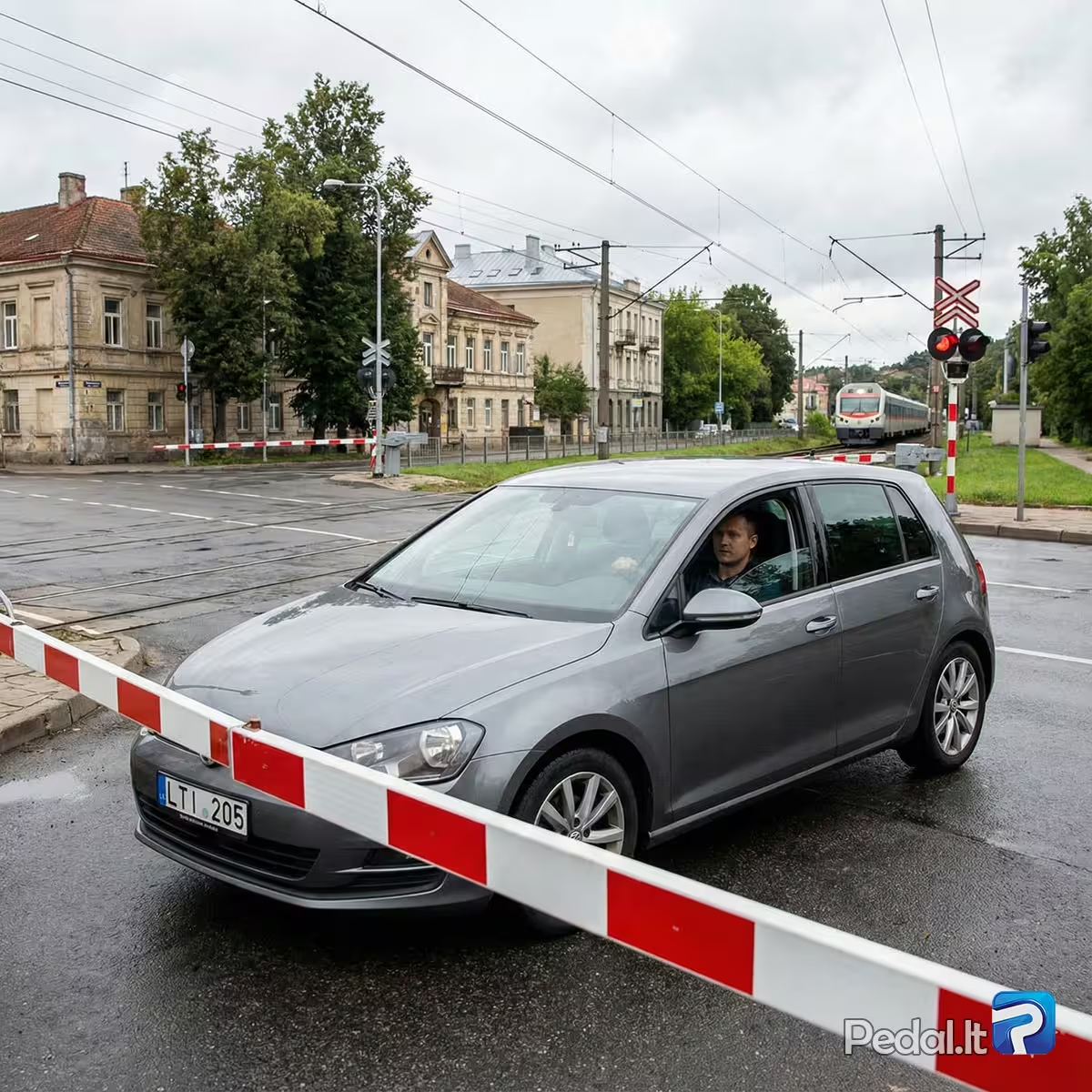
At a railway crossing, the vehicle driver must not:
Regulation RTR 173. Drivers must not: 173.3. enter a level crossing after the barrier has been lowered or is in the process of being lowered; deliberately lift the barrier; or drive around the barriers.
1. Deliberately lifting the barrier.
2. Entering the crossing after the barrier has been lowered or is in the process of being lowered.
3. Driving around the barrier.
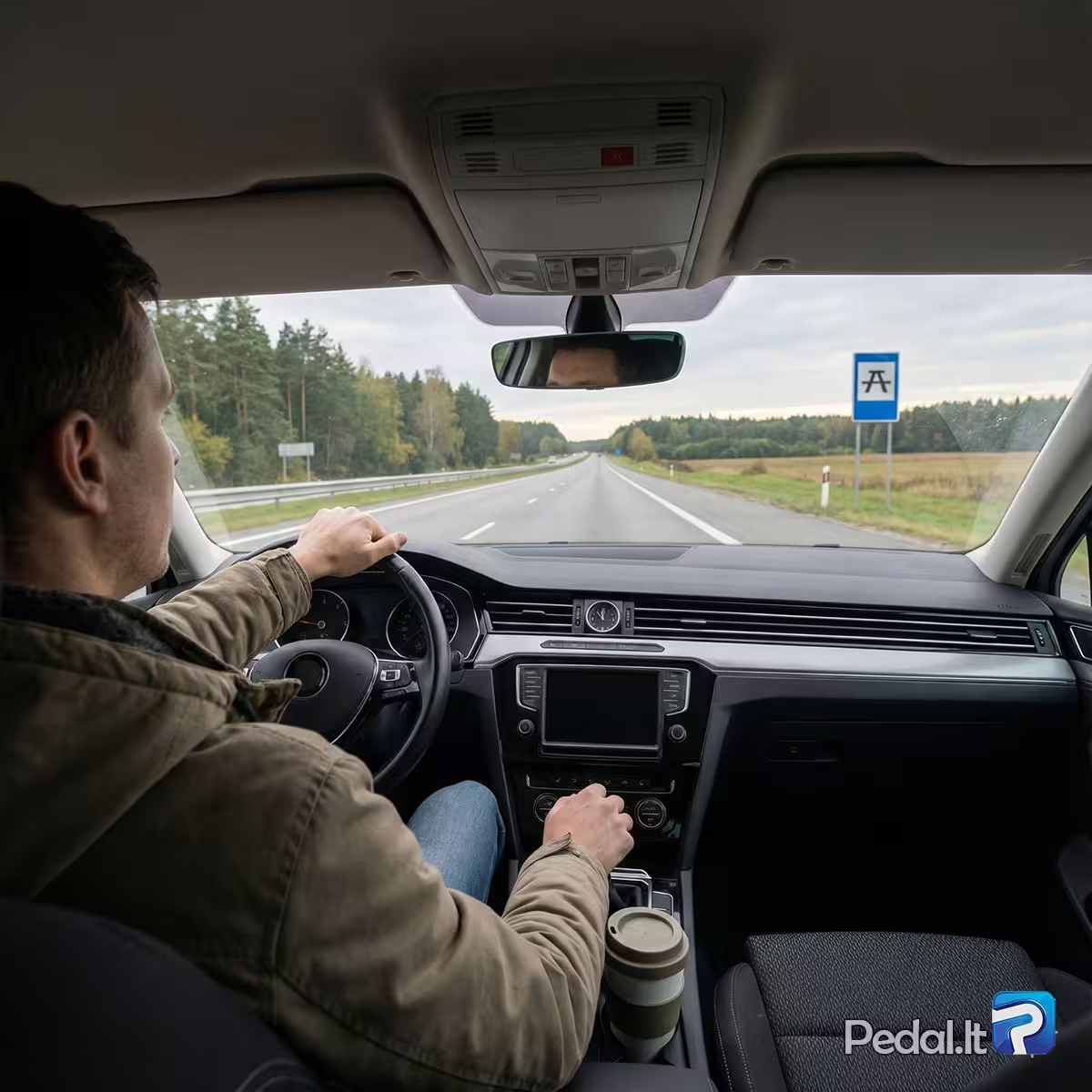
How should you behave during a long journey?
Long journeys can cause the driver to become distracted and fatigued for extended periods, which reduces reaction time and concentration and increases the risk of mistakes. It is recommended to take breaks every 1.5 to 2 hours or after driving approximately 200 kilometres. Sitting for long periods can lead to muscle tension and poor circulation, so getting out of the vehicle helps relax the body and improve well‑being. Exiting the car or opening a window to breathe fresh air can refresh the mind, restore energy and improve concentration.
1. Listen to loud music.
2. Maintain continuous conversation with your passengers to stay alert.
3. Leave the road or motorway and stop to rest; then exit the vehicle or open a window to breathe fresh air.
4. Routinely drink coffee to stay awake.
1 of 30 Task
Time left: 00:00:00
1
2
3
4
5
6
7
8
9
10
11
12
13
14
15
16
17
18
19
20
21
22
23
24
25
26
27
28
29
30