.avif)
Which vehicle may proceed in the direction indicated by the arrow?
RTR 77.1. When the traffic officer's arms are extended sideways or pointed downward: 77.1.1. Vehicles located to the officer's left and right may proceed straight ahead or turn right; pedestrians may cross the carriageway. 77.1.2. Vehicles and pedestrians positioned in front of or behind the officer must not proceed. JB
1. First vehicle
2. Second vehicle
3. Third vehicle
In which situations must a driver signal their intended actions using the vehicle's turn signal?
82. A driver must signal intended maneuvers using the vehicle's turn signals, or by arm signals if the electrical indicators are inoperative or unavailable: 82.1 before starting to move and before stopping; 82.2 before changing lanes, before and after overtaking, before and after passing an obstruction, before turning right or left, before making a U-turn, and before exiting a roundabout.
1. Before entering a roundabout.
2. Before exiting a roundabout.
3. Prior to making a right or left turn.
4. Before making a U-turn.
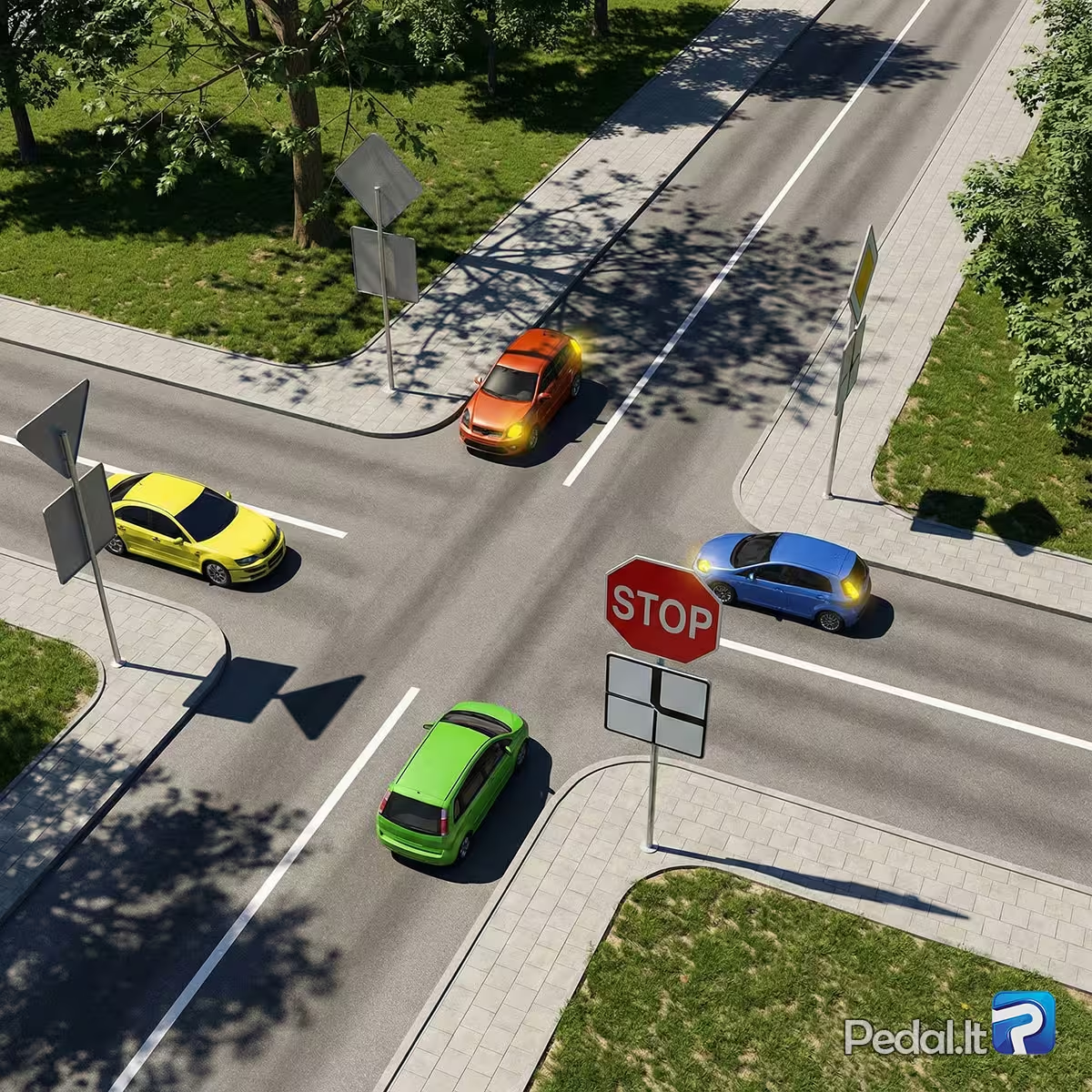
What is the correct sequence in which the vehicles will pass through the intersection?
The red and blue vehicles are on the priority (main) road, so they proceed first. Between them the priority-to-the-right rule applies: the red vehicle goes first because no vehicle is approaching from its right, followed by the blue vehicle. Vehicles on the side road follow: the green vehicle goes next (it has no vehicle to its right), and last is the yellow vehicle. RTR 154. At a controlled intersection, drivers on a side road must yield to vehicles on the priority road. RTR 156. If the main road’s direction changes at the intersection, drivers on the main road must, with respect to one another, follow the rules for intersections of roads of equal importance; drivers on the side road must apply those same rules among themselves. RTR Annex 2.204. 'STOP' — drivers must not proceed without stopping before the stop line or, if there is no line, before the sign. A driver must yield to vehicles traveling on the road he or she is about to cross. If panel No. 843 'Direction of Priority Road' is installed below the sign, the driver must yield to vehicles on the priority road.
1. Red, then blue, then yellow, and finally green.
2. Red, then blue, then green, and finally yellow.
3. Blue, then red, then green, and finally yellow.
4. Green, then blue, then yellow, and finally red.
Why is a slippery road surface hazardous?
A slippery road surface is hazardous because tyre grip on the pavement is greatly reduced. As a result, stopping distances increase and the vehicle may skid sideways when negotiating a bend.
1. Stopping distance increases.
2. Steering requires more effort.
3. Your vehicle is more likely to skid sideways when cornering.
It is prohibited to operate (permanently use) a vehicle if:
If you discover that the horn is not working, you may drive only to a parking area or a repair facility. However, it is prohibited to operate a vehicle permanently if it does not meet the technical requirements (for example, if the horn, speedometer, or other required systems are not functioning). RTR 223. Vehicles traveling on roads must comply with the technical requirements applicable in the Republic of Lithuania when undergoing mandatory technical inspection. RTR 224. Only motor vehicles and trailers that are in good repair, except in the cases provided for in these Rules, may participate in public traffic in the Republic of Lithuania. Short-term (one-day) participation in public traffic is allowed, pursuant to the prescribed procedure, for vehicles and trailers displaying temporary license plates whose registered owners (keepers) have obtained compulsory motor third-party liability insurance and have paid the applicable fees and taxes for the vehicle or road use. RTR 15. Driving vehicles that are not in proper condition and do not comply with technical requirements for vehicles is prohibited. Before starting to drive, the driver of a motor vehicle, tractor, or self-propelled vehicle must ensure that the vehicle is in good condition, that it carries a warning triangle, fire extinguisher, first aid kit, and any other items mandatory for that type of vehicle, and must monitor the vehicle's technical condition during the journey. If the vehicle breaks down while driving and therefore does not meet the technical requirements and cannot be repaired on site, the driver may proceed, taking all necessary precautions, to the nearest parking area or vehicle repair shop, except in the cases laid down in paragraph 234 of these Rules. JB
1. The horn (sound signal) is not functioning.
2. The speedometer is not functioning.
3. The windshield is cracked and obstructs the driver's view.
Standing and parking are prohibited when the distance between a stationary vehicle and a solid line of the road marking (or the kerb) is:
The distance between a stationary vehicle and a solid line (or the kerb) must be at least 3 metres. If the distance is exactly 3 metres, standing and parking are permitted. If the distance is less than 3 metres (for example, 2 metres), standing and parking are prohibited.
RTR 150. Standing and parking are prohibited:
150.7 where there is a distance of less than 3 m between a stationary vehicle and a solid line of the road marking, the kerb, or, in its absence, the edge of the carriageway;
1. 3 metres
2. 3.5 metres
3. 4 metres
4. 2 metres
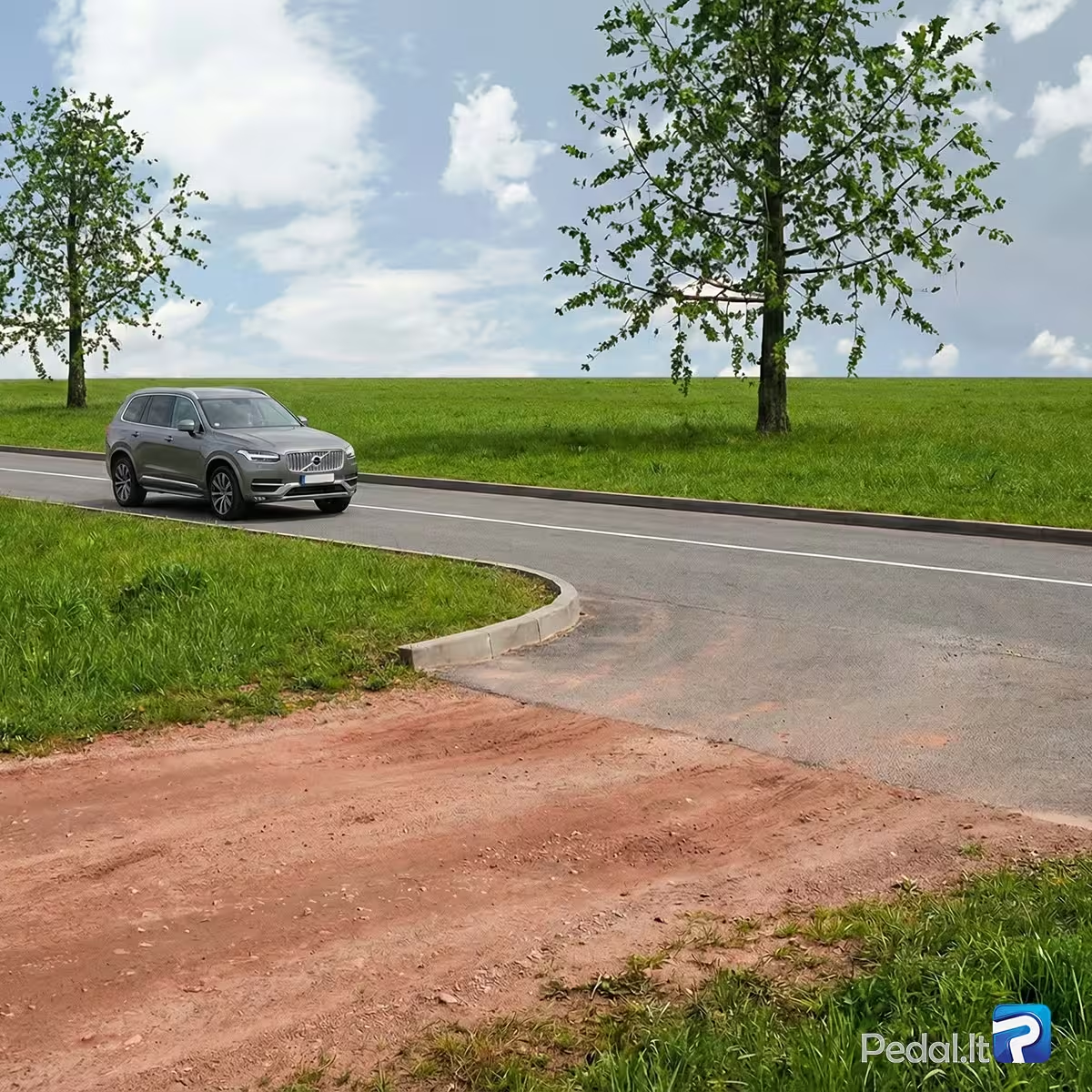
Which road is the main road at this intersection?
RTR 3.14. The main (priority) road is: a road marked with the 'Priority Road' sign, an 'Intersection with a Side Road' sign, a 'Side Road from the Right' or 'Side Road from the Left' sign, or designated as a 'Motorway' or 'Road for Motor Vehicles' in relation to the intersecting or joining road; a road in relation to another road marked with 'Give Way', 'STOP', or 'End of Residential Area' signs; a paved road (concrete, asphalt, or cobblestone) in relation to an improved unpaved road (macadam or gravel) or a dirt road (forest, field, or similar road); and an improved unpaved road in relation to a dirt road. A paved or improved unpaved section of a side road immediately before an intersection does not make that side road equivalent to the intersecting or joining road. There is no priority road at intersections controlled by traffic signals. JB
1. The road with a gravel surface.
2. Both roads are equivalent.
3. The road with an asphalt surface.
Which of the following are warning signals?
RTR 81. Warning signals include: using turn and brake lights (arm signals may be used), sounding the horn, switching the headlights on and off, activating hazard warning lights or flashing amber beacons, and placing a warning triangle on the road or attaching it to the vehicle.
1. Brake light signal.
2. Indicating a turn using an arm signal.
3. Horn signal.
4. Switching the headlights on and off.
5. Placing a warning triangle on the road.
How must a load that projects more than 1 m beyond the front or rear of a vehicle's dimensions be marked?
According to RTR Annex 4.12: Any load whose extreme edge projects more than 1 m beyond the front or rear of the vehicle—or which projects even minimally to the side—or any vehicle wider than 2.6 m must be marked with distinctive signs: squares 400 mm on a side with diagonal alternating reflective white and red stripes 50 mm wide. These signs must be mounted between 0.4 m and 1.6 m above ground level. During hours of darkness or when visibility is poor, such vehicles must also display lights in designated positions: white at the front, amber (orange) on the sides, and red at the rear.
1. With reflectors or lights: white at the front, amber on the sides, and red at the rear.
2. With distinctive signs — squares with diagonal alternating reflective white and red stripes.
3. With high-visibility flags.
4. During hours of darkness or poor visibility: with white lights at the front, amber on the sides, and red at the rear.
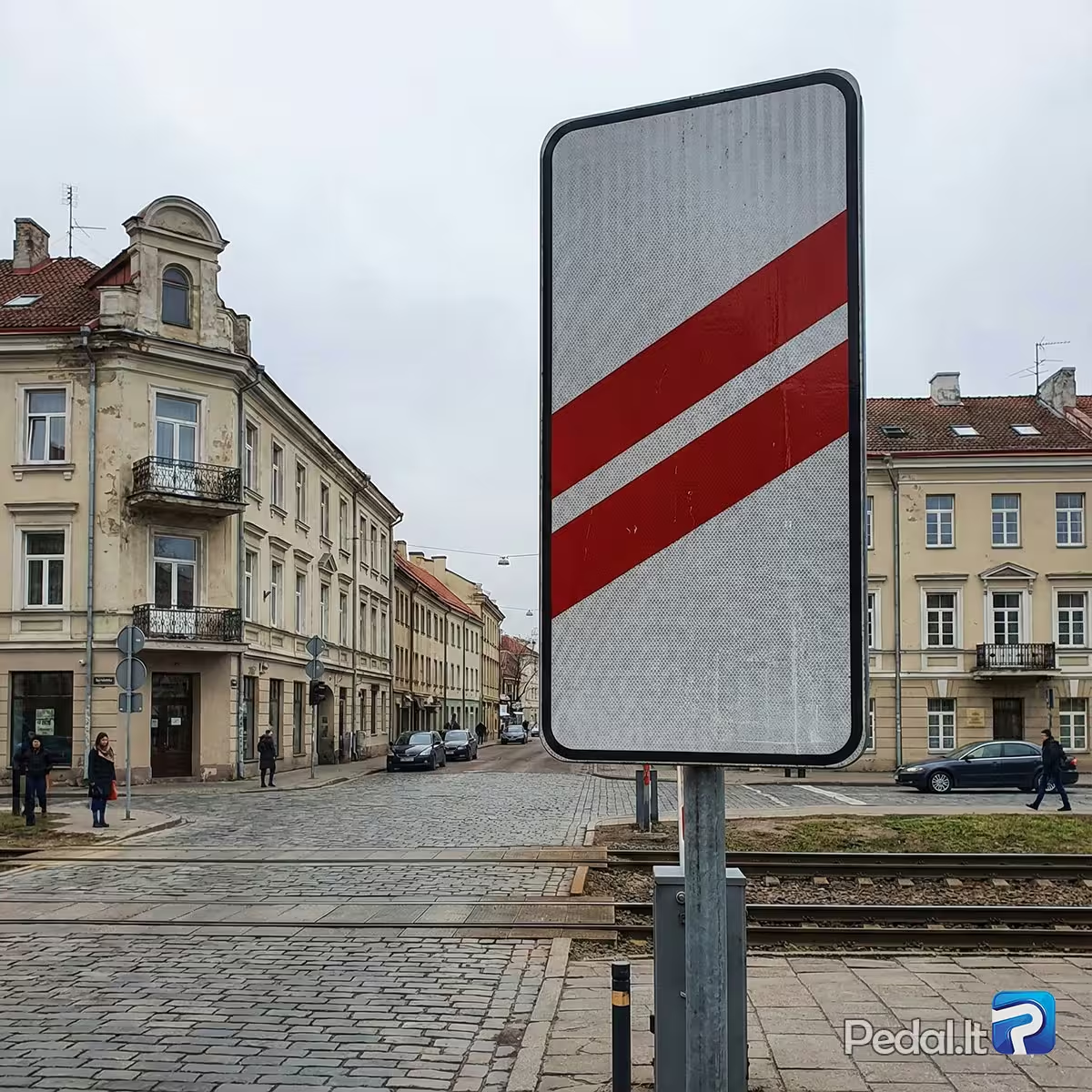
What does this traffic sign indicate?
141. "Level Crossing Ahead" — warns of a railway level crossing ahead located outside a built-up area. The sign is mounted on the right-hand side of the road.
1. It indicates a level crossing ahead located outside a built-up area.
2. It indicates a level crossing ahead located within a built-up area.
Actions to take when driving in fog with visibility under 300 metres:
Selecting an appropriate heating/ventilation setting will reduce condensation on the windows; using the windscreen wipers will clear fogged windows and maintain good visibility; switching on the fog lamps will make the road more visible and help other road users notice you. RTR 98. Fog lamps may be used only when visibility is seriously reduced, and the front fog lamps may be used in the event of failure of the front left dipped‑beam headlamp. Poor visibility means a situation caused by weather conditions or other phenomena when road visibility is less than 300 metres, regardless of road parameters.
1. Select the appropriate heating/ventilation mode.
2. Occasionally use the windscreen wipers to clear fogged-up windows.
3. Switch on the fog lamps.
Which of the following can cause your vehicle to begin skidding while driving?
Worn tyres affect a vehicle's tendency to skid — even at low speeds they can cause the vehicle to skid. A faulty power steering can make the steering wheel harder to turn, but it does not directly cause skidding. Likewise, the parking brake only affects a parked vehicle and does not cause skidding while driving.
1. Faulty parking brake.
2. Faulty power steering.
3. Worn tyres.
Is a driver involved in a road accident required to transport injured persons to the nearest healthcare facility in a private vehicle when the accident occurs within a built-up area?
XXIX. Obligations of Road Users in the Event of a Road Accident (paras. 219–222) 219. In the event of a road accident, every driver involved or any other road user must: 219.5. take all necessary measures to provide first aid to the injured, call an ambulance, or — when calling an ambulance or transporting the injured to a healthcare institution by other means is impossible — convey them to the nearest healthcare institution in a private vehicle, unless such transportation would endanger their life or health.
1. Yes — but only if calling an ambulance or transporting the injured to a medical facility by other means is impossible.
2. No — the driver is not required to do so.
.avif)
What are the fundamental principles of driver conduct?
1. Responsibility and courtesy.
2. Aggressive behavior.
3. Anger.
4. Disrespect toward other road users.
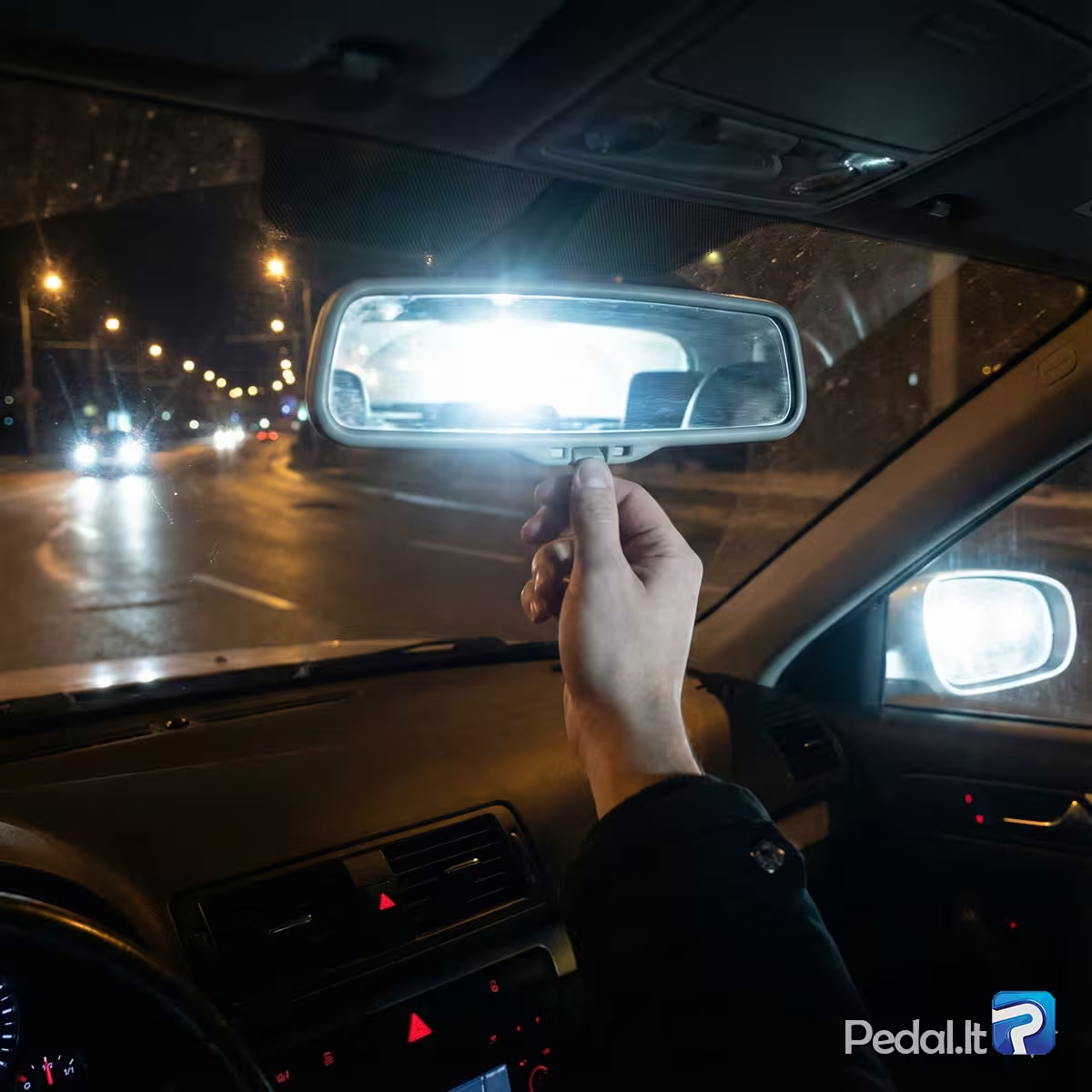
What should you do if a vehicle behind you is dazzling you with its lights?
If bright headlights are reflected in your rearview mirror, in addition to the measures listed in Paragraph 96 you can quickly activate the mirror's anti‑dazzle setting by flipping the switch at its base (if fitted). This engages the automatic dimming function and reduces glare. According to RTR 96, a dazzled driver must turn on the hazard warning lights, reduce speed without changing direction, and stop if necessary.
1. You will look away.
2. If possible, activate the rearview mirror's automatic dimming function.
3. You will turn on your hazard warning lights.
4. You will reduce speed and stop if necessary.
.avif)
Which driver will proceed through the intersection first?
RTR 154. At a controlled intersection, drivers on a side road must yield to vehicles on the priority road.
1. The driver of the blue car.
2. The driver of the red car.
How should you choose an appropriate driving speed?
Order of the General Director of the state company "Regitra" approving the description of the criteria and methods for evaluating driving skills and abilities (23 December 2013, No. V-223): 3.18 Speed selection — accelerate steadily, choose a speed appropriate to the traffic situation and do not exceed the permitted limit. 3.18.1 Control the vehicle's speed while performing maneuvers: 3.18.1.1 If necessary, maintain a sufficiently low speed to compensate for any errors; 3.18.1.2 The vehicle must move evenly and smoothly. JB
1. Accelerate smoothly and steadily.
2. Drive at a speed appropriate for the traffic conditions and do not exceed the legal speed limit.
3. Drive faster to reach your destination sooner.
Why does a vehicle pull to one side during braking?
If a vehicle pulls to one side only during braking, the fault lies in the braking system. If the wheel alignment is incorrect or there is a malfunction in the steering system, the vehicle may also pull to one side while driving.
1. Because the wheels are misaligned.
2. Because the braking system is applying unevenly.
3. Because of a malfunction in the steering mechanism.
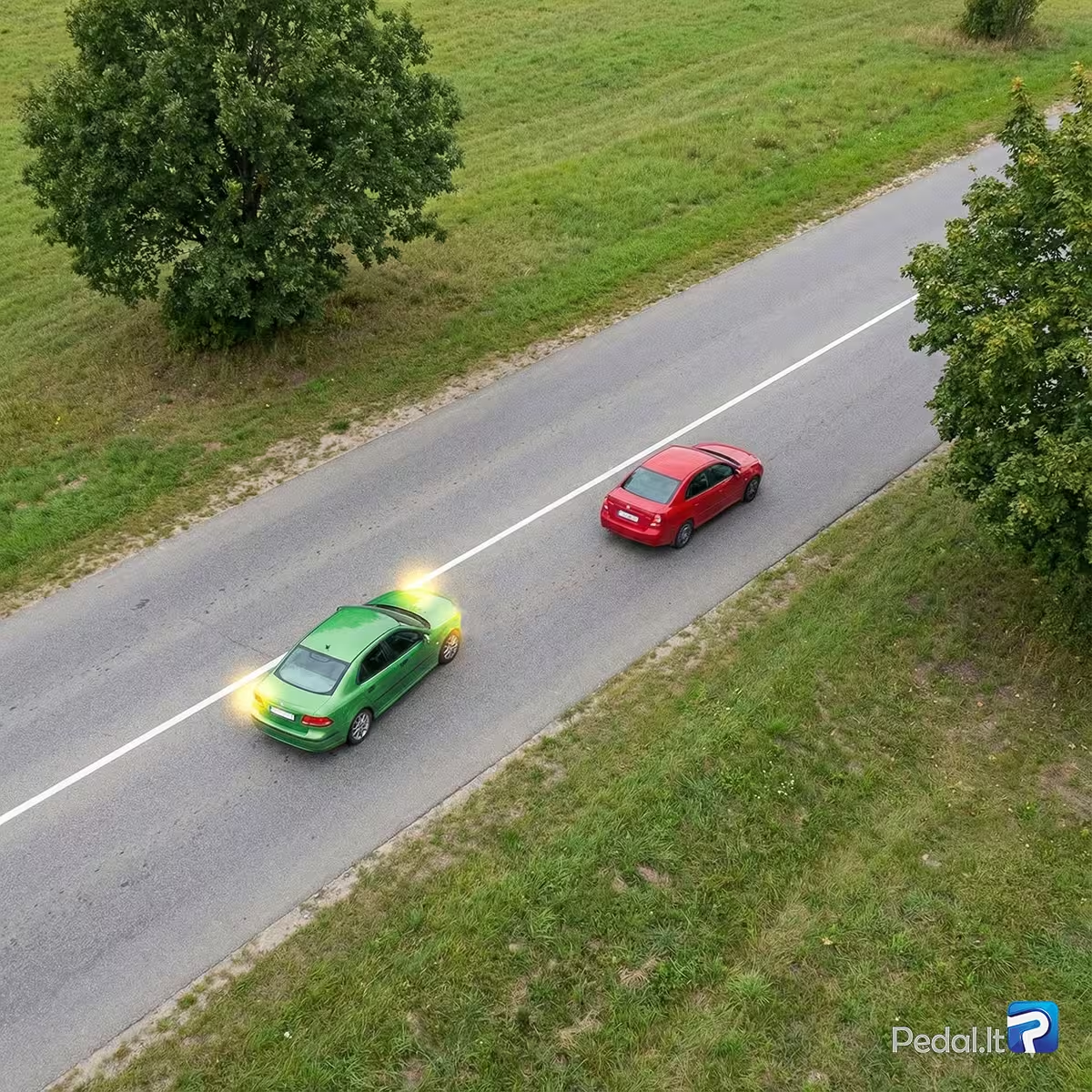
Is the driver of the green vehicle permitted to overtake?
The Road Traffic Rules prohibit crossing a solid line; it does not matter how fast the vehicle you wish to overtake is traveling. Overtaking slow-moving vehicles (traveling under 30 km/h) is allowed only where the 'No Overtaking' sign is in force (within its zone of validity) and there is no solid lane line. http://www.keliueismotaisykles.info/pakeitimai-ir-patarimai/ar-lenkiant-galima-kirsti-istisine-linija RTR Annex 3.1.1. A narrow solid line separates traffic flows in opposite directions and prohibits the use of the oncoming lane on the marked road section; it marks lane edges, areas where access is prohibited, parking space boundaries and the edge of the carriageway; in the case of road sign No 413 'Pedestrian and cycle path', it separates the section reserved for cyclists from the section reserved for pedestrians. It must not be crossed except where it marks the edge of the carriageway or a parking space. RTR Annex 1.325 'Overtaking Prohibited'. Overtaking is prohibited except for single vehicles or single vehicle combinations traveling at less than 30 km/h.
1. Overtaking is permitted.
2. Overtaking is prohibited.
3. Overtaking is permitted if the vehicle being overtaken is traveling at less than 30 km/h.
4. Overtaking is permitted if the vehicle being overtaken is traveling at less than 15 km/h.
How can you conserve fuel and reduce environmental pollution?
Carrying a 100 kg load in city driving increases fuel consumption by about 0.5 L per 100 km. The air conditioner consumes approximately 0.5–1.0 L/100 km; a fan consumes about 0.08–0.3 L/100 km; the radio about 0.06–0.21 L/100 km; modern audio systems about 0.2–0.7 L/100 km. JB
1. Remove unnecessary items from the vehicle before driving.
2. Use the air conditioner only when necessary.
3. Use electrical accessories only when necessary.
Braking distance depends on:
Braking distance depends on the condition of the tyres, the vehicle's speed, the road surface, the vehicle's weight, the force applied to the brake pedal, and the condition of the braking system. Less worn tyres provide more effective braking. Lower speeds reduce stopping distance. Heavier vehicles require a longer distance to stop. Rougher road surfaces increase traction and therefore shorten stopping distance. Applying greater pressure to the brake pedal generally shortens stopping distance, provided you avoid locking the wheels.
1. The condition of the tyres and the vehicle's speed.
2. Whether the vehicle is front-wheel drive or rear-wheel drive.
3. The condition of the brake pads.
4. The condition of the road surface.
Under what conditions is it prohibited to drive a vehicle?
It is prohibited to drive a vehicle if the main brake is inoperative, as this creates a danger to road safety. According to technical requirements, tyres mounted on the same axle must be of the same type and have identical tread patterns. Tyres with different tread patterns can cause instability under braking and reduce traction, creating a road safety risk; therefore driving such a vehicle is prohibited. RTR 234. A driver must not operate a motor vehicle, a tractor, or a self-propelled machine with: 234.1. a defective foot brake (the driver cannot stop the vehicle); 234.2. a defective steering mechanism (the driver cannot control the vehicle); 234.3. a defective coupling device between the vehicle and a trailer; 234.4. a defective windscreen wiper on the driver's side in snow, rain, or fog; 234.5. faulty front left-side lamps (dipped-beam headlamp and fog lamp) during hours of darkness or when visibility is poor, or if at least one rear position lamp has failed, hazard warning lights are not functioning (or are switched off), or a warning triangle is not affixed to the rear of the vehicle.
1. When the wheels on the same axle are fitted with different tread patterns.
2. When the engine oil level is too low.
3. When there is low air pressure in the tyres.
4. When the vehicle's foot (service) brake is defective.
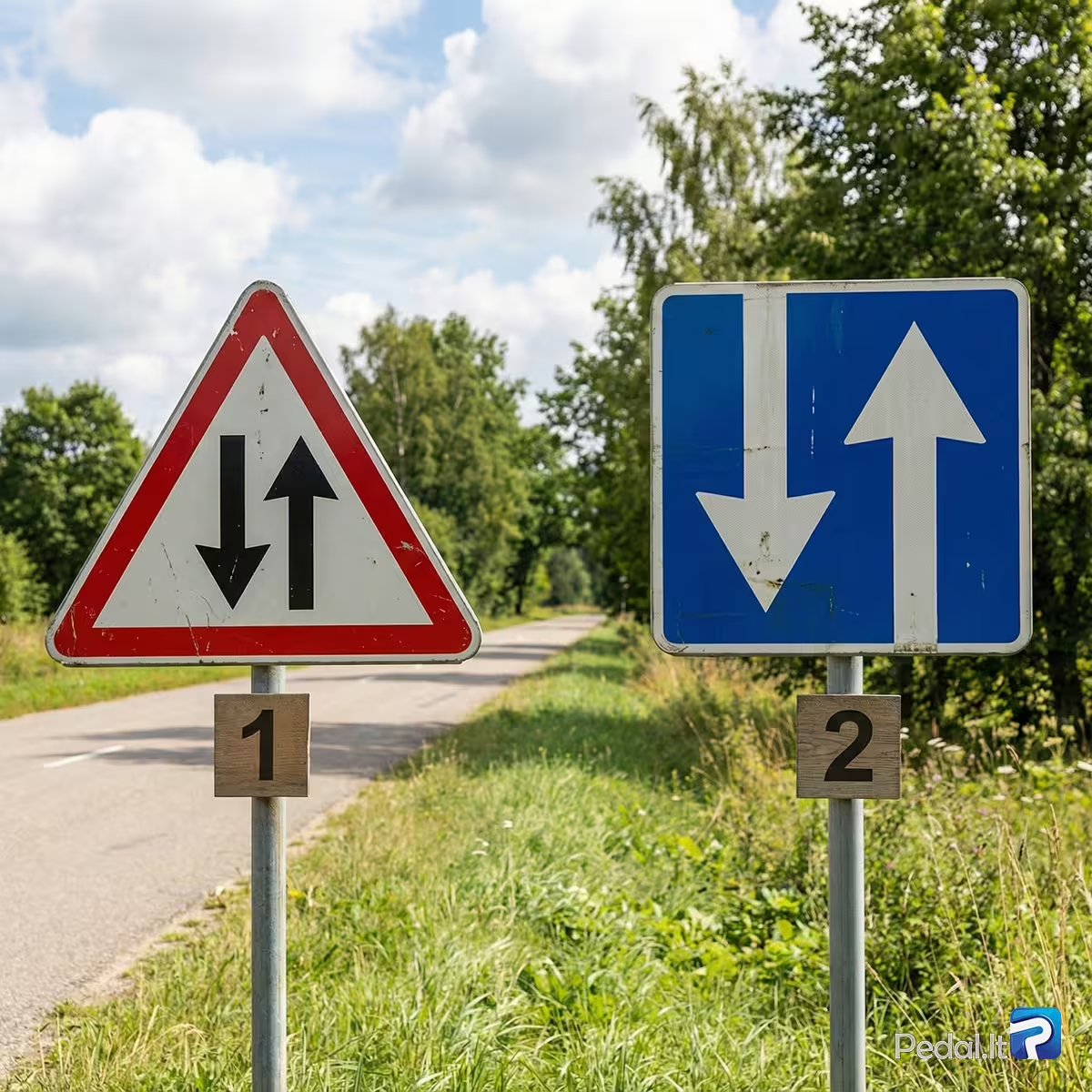
Which sign indicates that the road ahead carries two-way (opposing) traffic?
Warning signs alert drivers to upcoming changes in traffic conditions. Sign 126, 'Two-Way Traffic', indicates the start of a carriageway section with opposing traffic. Sign 504, 'End of One-Way Traffic', is a regulatory sign that marks the end of a one-way traffic section. (RTR Annex 1: 126 and 504.)
1. Sign 1.
2. Sign 2.
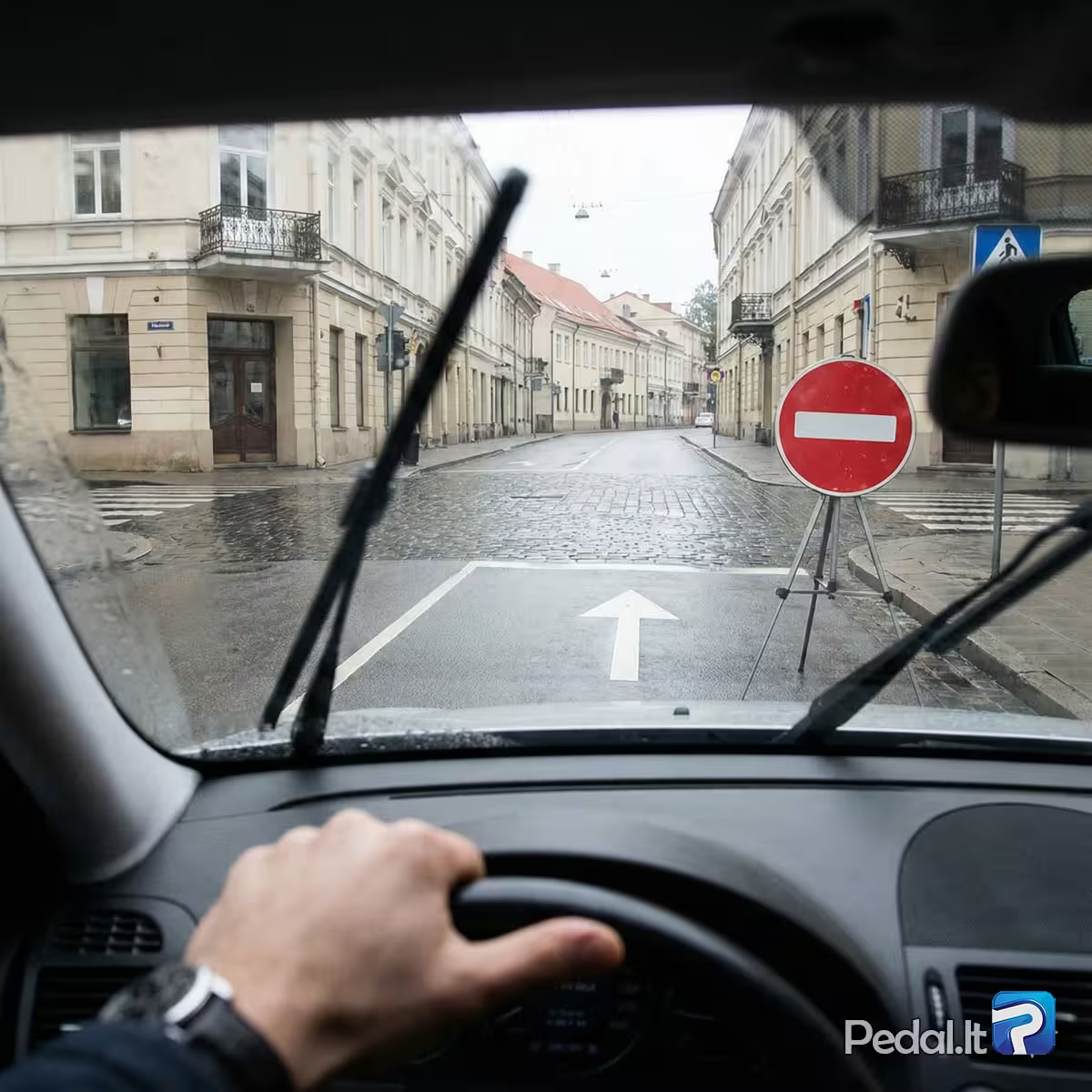
What should you do if road signs contradict the horizontal road markings?
RTR 8. In the Republic of Lithuania, traffic may be regulated only by road signs listed in Annex 1 to the Rules, by variable message signs treated as road signs (examples are given in Annex 2), by road markings specified in Annex 3, by traffic lights, and by signals from traffic officers, as provided for in these Rules and other legal acts governing traffic control. If the requirements of a road sign conflict with those of a road marking, the road sign must be obeyed. When variable message signs are in use, their indications must be followed. Signals given by traffic officers take precedence over traffic lights, road signs, road markings, and the provisions of these Rules. Road users must comply with the signs that apply to them.
1. You should follow the road signs.
2. You should follow the horizontal road markings.
You should select a speed so that the stopping distance is:
If the stopping distance is longer than the visible portion of the road, you may collide with an obstacle. Therefore, the distance visible ahead must always exceed the stopping distance.
1. Longer than the visible distance ahead.
2. Shorter than the visible distance ahead.
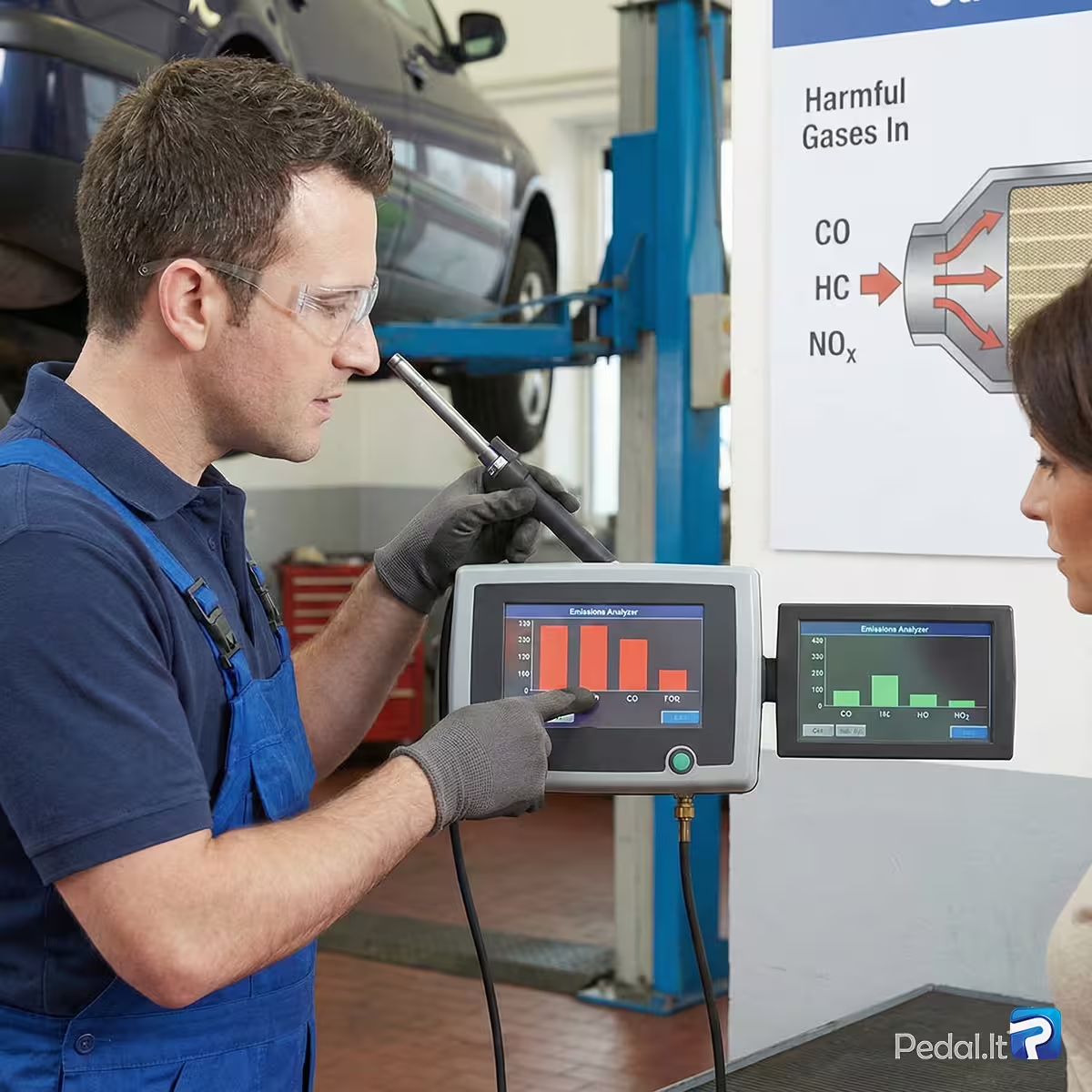
Why does a car need a catalytic converter in its exhaust system?
A catalytic converter neutralises (burns) harmful exhaust gases. It converts three toxic substances—carbon monoxide (CO), nitrogen oxides (NOx), and unburnt hydrocarbons (UHC)—into non-toxic substances through oxidation and reduction reactions. Its purpose is not to dampen engine noise; that is the role of the muffler (silencer). Removing a catalytic converter can alter the car's exhaust sound and often makes it louder or harsher, but this is only a side effect, not the converter's primary function.
1. To reduce engine noise.
2. To neutralise harmful pollutants in the exhaust gases.
3. To reduce fuel consumption.
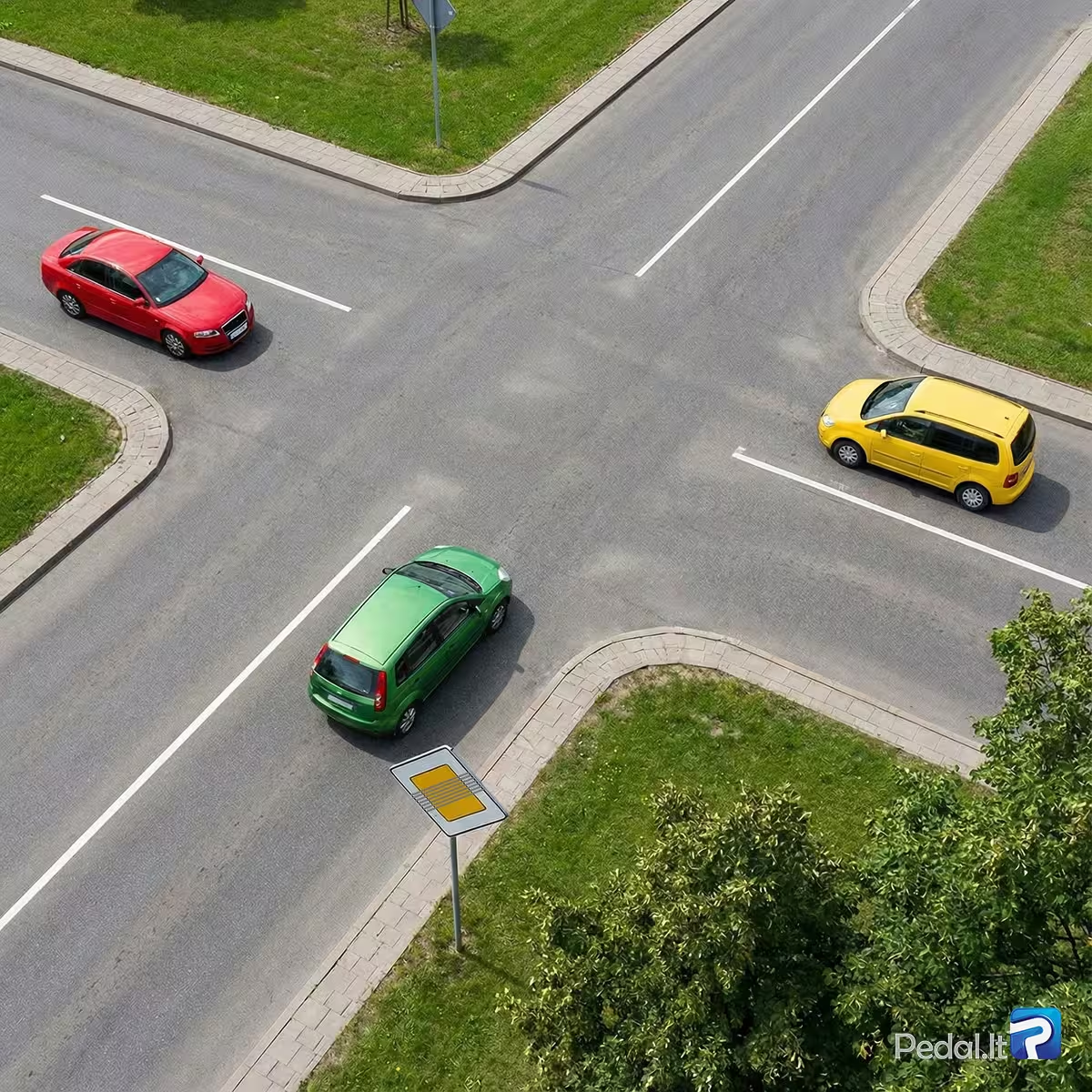
In what order will the vehicles pass through the intersection?
The yellow vehicle goes first because it is the only one without a vehicle to its right obstructing its path. Next comes the green vehicle, and last is the red vehicle. RTR 155. At an uncontrolled intersection, drivers must yield to vehicles approaching from the right when their trajectories intersect.
1. The yellow vehicle first, followed by the green vehicle, and finally the red vehicle.
2. The green vehicle first, then the red vehicle, and finally the yellow vehicle.
3. The red and yellow vehicles together first, followed by the green vehicle.
4. The green vehicle first, then the red and yellow vehicles together.
Which of the following should you avoid to prevent unnecessary noise?
Driving smoothly and courteously helps prevent unnecessary noise. Sudden engine revving, hard braking or wheel lock-up produce loud sounds that disturb others. Slamming vehicle doors or using the horn without cause breaches public order. These actions not only create noise pollution but also demonstrate irresponsible driving behaviour.
1. Avoid sharply increasing engine revolutions (sudden revving).
2. Avoid slamming the vehicle door shut.
3. Avoid using the horn without a valid reason.
4. Avoid braking by locking the wheels.
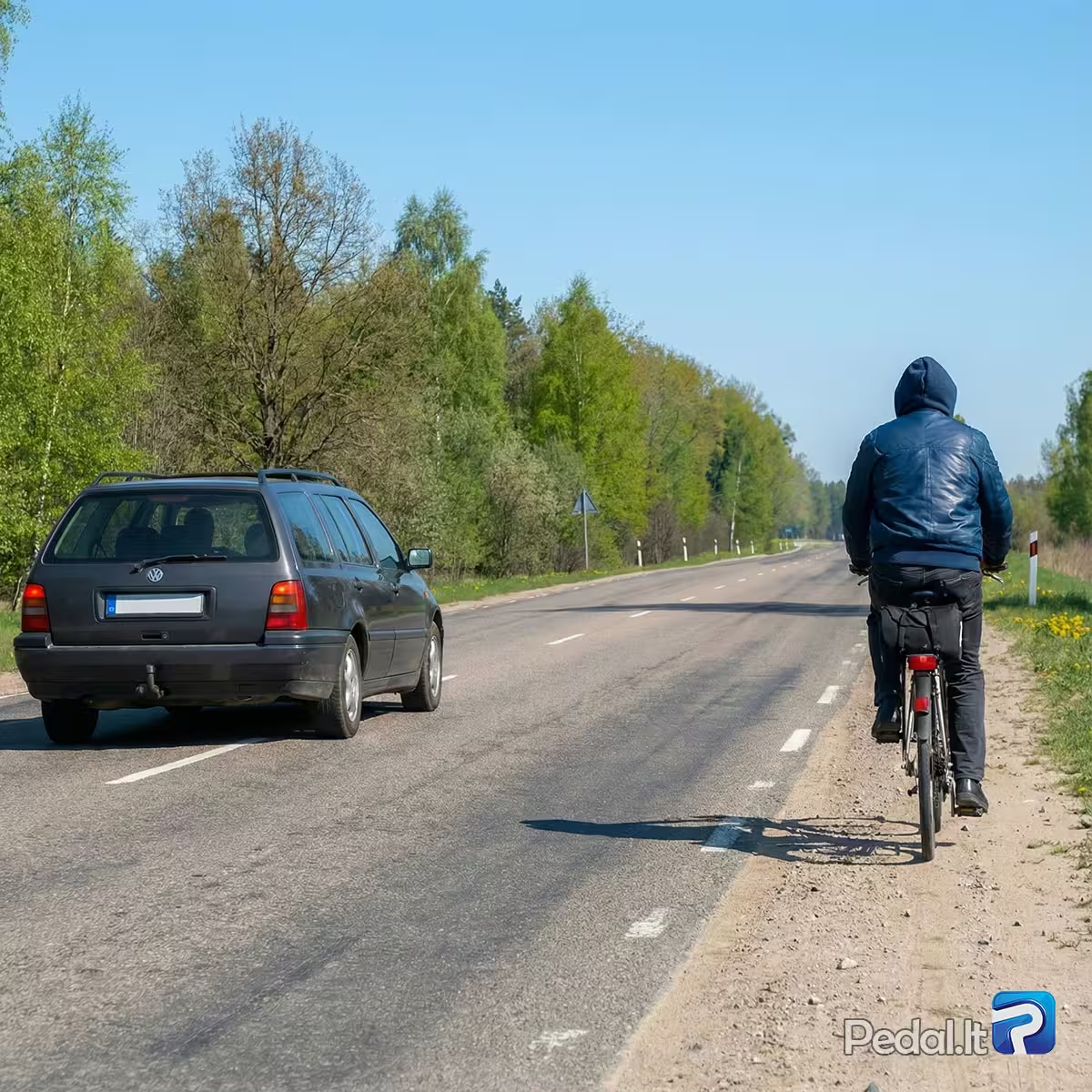
Cyclists must not perform any of the following:
RTR VIII. Rules for Cyclists
64. Cyclists must not:
64.1 Ride on the carriageway except in cases expressly permitted by these Rules.
64.2 Ride on motorways and expressways.
64.3 Ride without holding the handlebars with their hands.
64.4 Carry passengers if the bicycle is not fitted with a designated passenger seat.
64.5 Carry, tow, or push loads that impede control of the bicycle or pose a hazard to other road users.
64.6 Be towed by other vehicles.
64.7 Tow other vehicles, except for trailers specially designed for bicycles.
64.8 Hold on to a moving vehicle while cycling.
64.9 Cross the carriageway by riding over a pedestrian crossing. JB
1. Carrying, towing, or pushing any load that impairs control of the bicycle or endangers other road users.
2. Riding on bicycle paths after dark.
3. Riding in bicycle lanes marked on the sidewalk.
4. Riding at the edge of the carriageway during daylight hours.
What must you do on an unlit road at night when repairing your car?
RTR 151. If a vehicle is forced to stop where standing or parking is prohibited, the driver must switch on the hazard warning lights if available and/or place a warning triangle on the road as specified in Paragraph 92 of the Rules, and remove the vehicle from the road as soon as possible. If the driver intends to stop on unlit sections of road during the hours of darkness or when visibility is poor, and the hazard warning lights are not available or are inoperative, the vehicle must be parked off the carriageway. If that is impossible, the stopping location must be marked as specified in Paragraph 92 of the Rules.
RTR 92. If the emergency light signalling system is not fitted or is defective and an emergency stop is required where stopping or parking is prohibited, in the event of an accident, or where the stopped vehicle would be visible to other road users from less than 100 metres, the driver of a motor vehicle (other than a motor moped or a motorcycle without a trailer), a tractor or a self-propelled machine must immediately erect an emergency stop sign on the side of the carriageway opposite the direction of travel: in built-up areas not closer than 25 m, and outside built-up areas not closer than 50 m to the stopped vehicle. If at least one rear position lamp is defective and the emergency light signal does not work when driving in the dark or in poor visibility, an emergency stop sign must be affixed to the rear of the vehicle in order to continue driving.
Law on Road Traffic Safety art. 13.14. The driver of a motor vehicle, tractor or self-propelled machine who stops at night on an unlit road or in conditions of poor visibility, except in designated parking spaces, must wear a high-visibility vest with reflective elements.
JB
1. Switch on the hazard warning lights (emergency flashers).
2. Place a warning triangle on the road if the hazard lights are unavailable or inoperative.
3. Wear a high-visibility vest with reflective elements.
4. Station a person to warn other drivers by waving their arms.
1 of 30 Task
Time left: 00:00:00
1
2
3
4
5
6
7
8
9
10
11
12
13
14
15
16
17
18
19
20
21
22
23
24
25
26
27
28
29
30