.avif)
Which vehicle may proceed in the direction indicated by the arrow?
RTR 77.1. When the traffic officer's arms are extended sideways or pointed downward: 77.1.1. Vehicles located to the officer's left and right may proceed straight ahead or turn right; pedestrians may cross the carriageway. 77.1.2. Vehicles and pedestrians positioned in front of or behind the officer must not proceed. JB
1. First vehicle
2. Second vehicle
3. Third vehicle
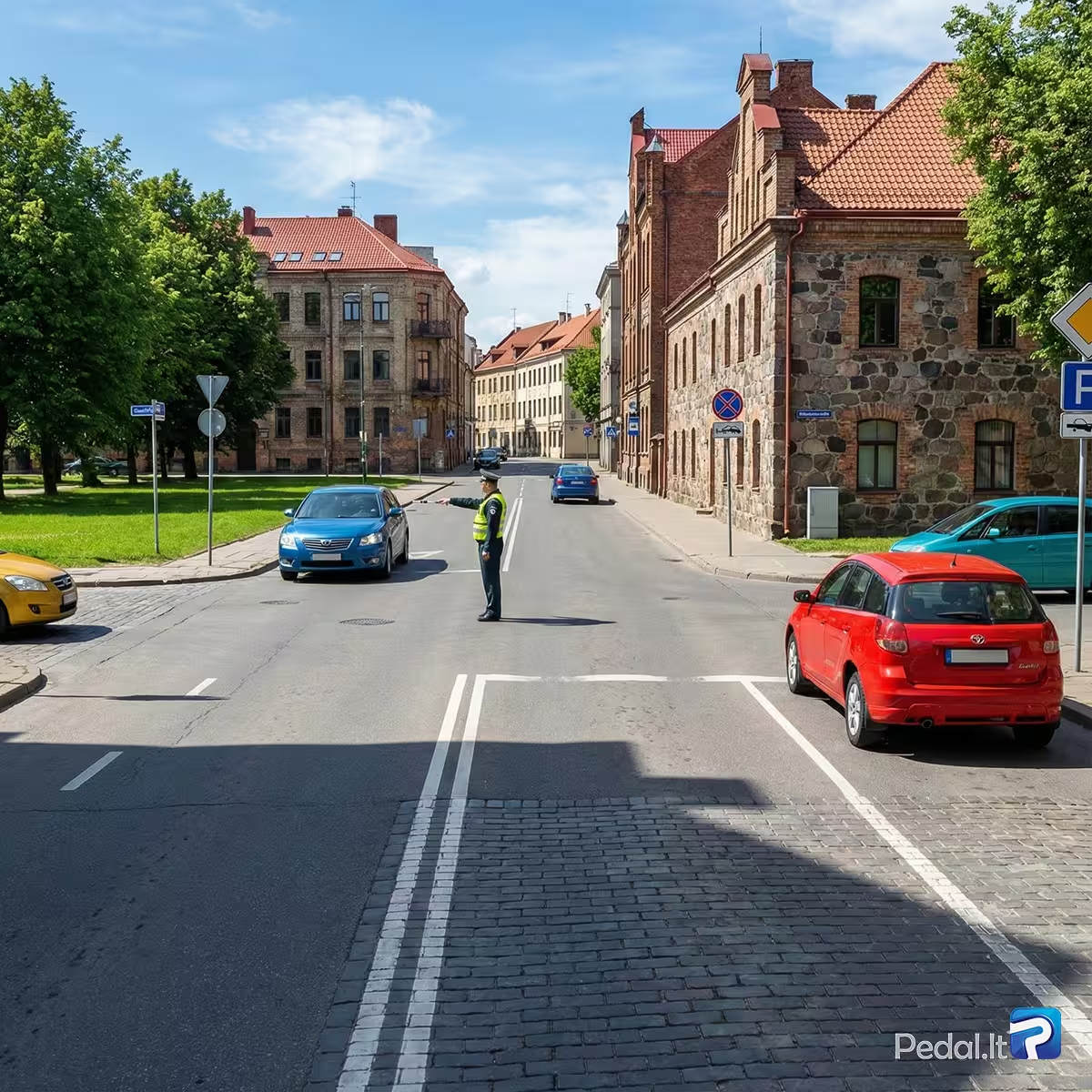
Which vehicles can turn right?
RTR 77.2. Right arm extended forward: 77.2.1. Vehicles on the left side of the traffic officer may proceed in any direction; 77.2.2. Vehicles facing the traffic officer may proceed only to the right; 77.2.3. Vehicles behind the traffic officer and on the right side must not proceed; 77.2.4. Pedestrians may cross the carriageway behind the traffic officer.
1. The red vehicle.
2. The brown vehicle.
3. The blue vehicle.
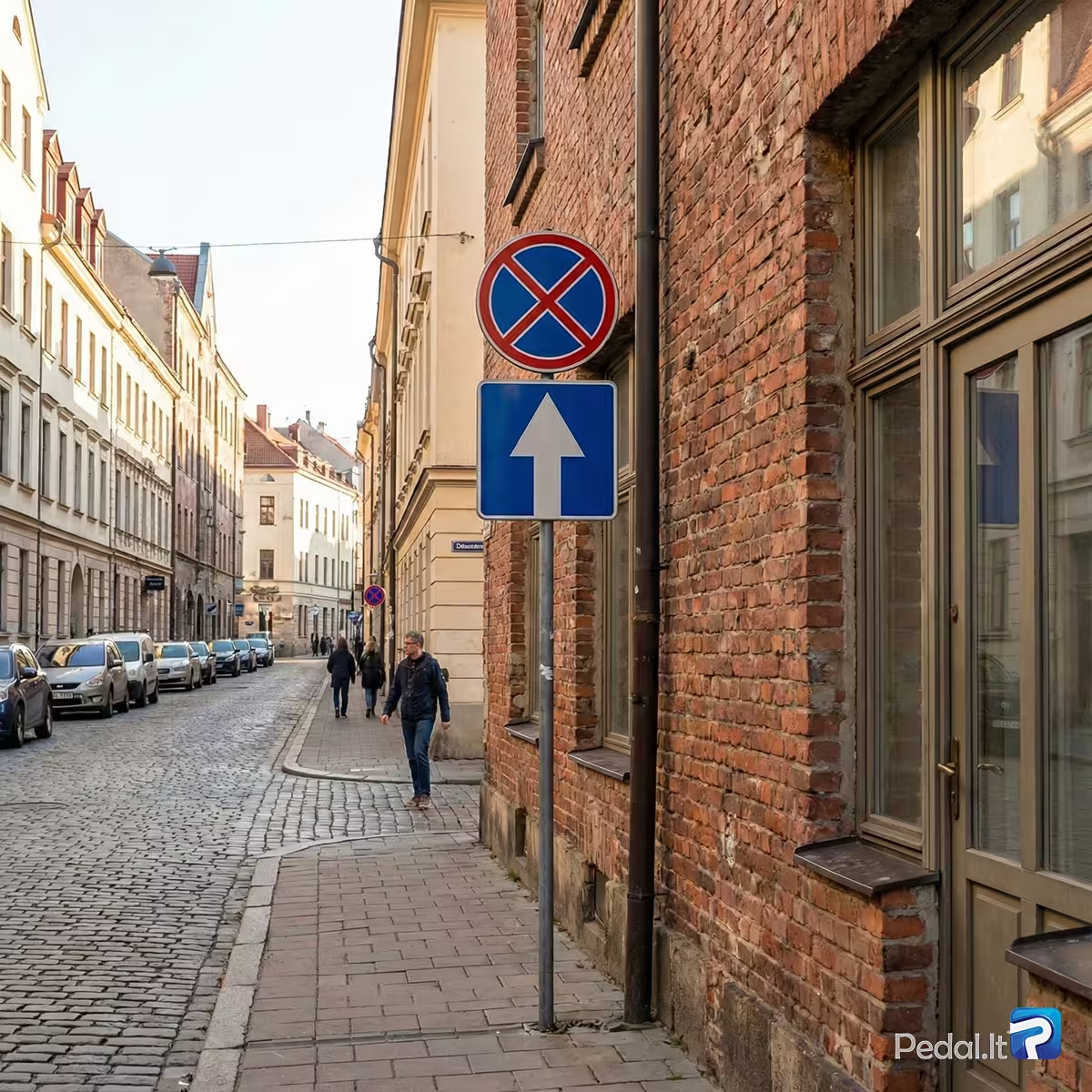
Which of the following actions are permitted on the road beyond these signs?
Traffic rules prohibit reversing only on motorways, expressways and in tunnels; otherwise reversing is allowed. U‑turns are prohibited here because they would require driving against the flow of traffic. RTR Annex 1, III — Restrictive signs: Road sign 332 'No stopping'. Vehicles must not stop or stand on the side of the road where this sign is placed, except for stopping at bus stops. The sign does not apply to vehicles displaying the distinguishing sign 'A person with a disability' or holding a parking card for people with disabilities. If the sign is used in combination with road marking 1.4, the prohibition applies until the end of that marking. RTR Annex 1, V — Special regulation signs: Road sign 503 'One-way traffic' — indicates a road or carriageway where vehicular traffic moves in one direction across the full width.
1. Proceed in one direction.
2. Park vehicles displaying the 'Person with a disability' badge.
3. Make a U‑turn.
4. Reverse (drive backward).
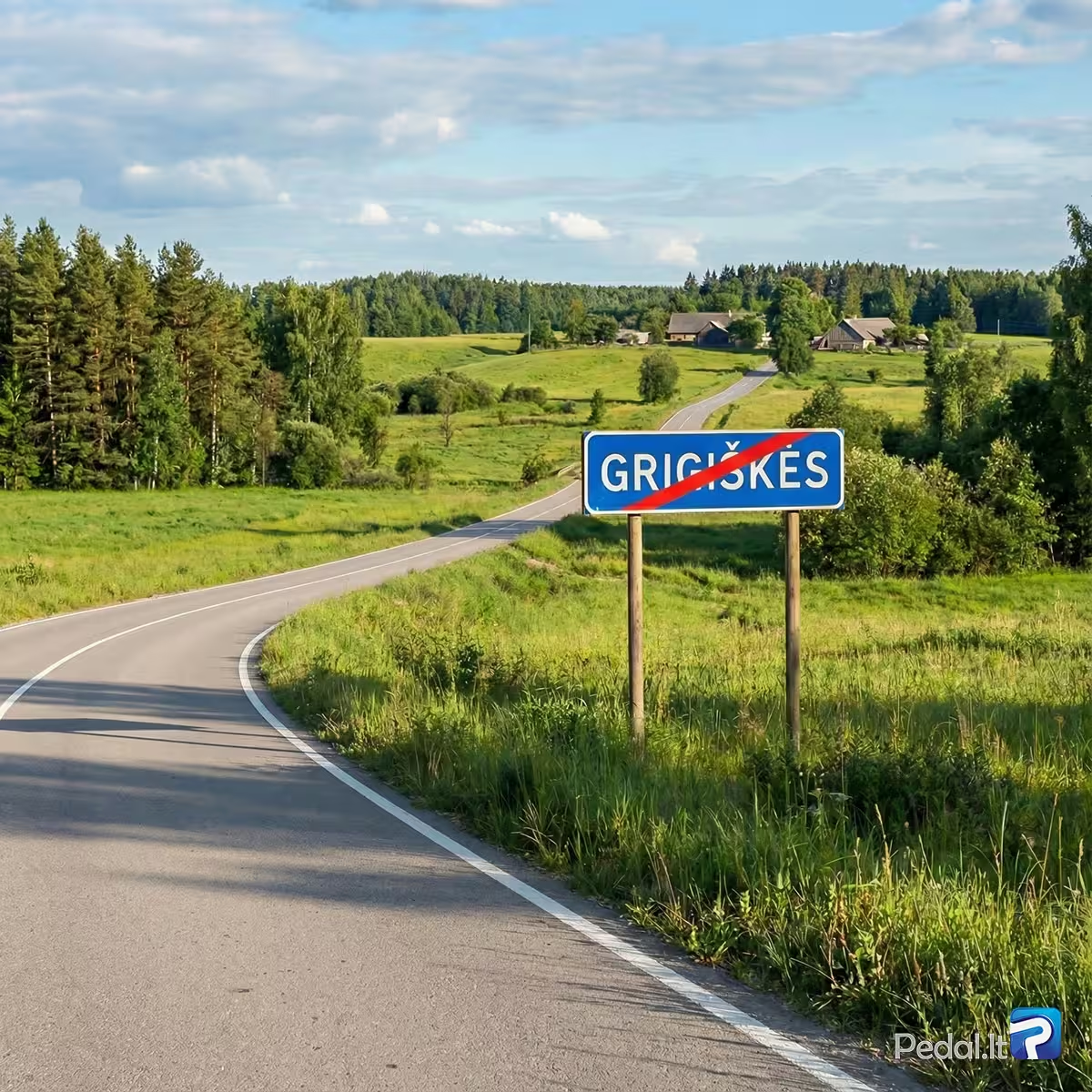
What is the maximum permitted speed for a passenger car on an asphalt- or concrete-surfaced road where this sign applies?
According to the Road Traffic Rules (RTR), a blue sign showing the settlement name in white letters indicates the start of a settlement where the special traffic regulations that normally apply within built-up areas do NOT apply. By contrast, a sign with the settlement name in black letters on a white background marks the start of a settlement where built-up-area traffic rules are in force (RTR 131). The following maximum speeds apply outside built-up areas (RTR 131.1): for passenger cars, light goods vehicles with a permissible maximum mass up to 3.5 tonnes, motorcycles and tricycles — on motorways: 130 km/h from April to October and 110 km/h from November to March; on expressways/highways: 120 km/h from April to October and 110 km/h from November to March; on roads with asphalt or concrete pavement: 90 km/h; on other roads: 70 km/h. See road sign 612: Beginning of a built-up area where special built-up-area rules do not apply. Road sign 613: End of a built-up area (marked by sign 616); it may show the name of another settlement and the distance to it.
1. 70 km/h
2. 80 km/h
3. 90 km/h
Where is it prohibited to make a U-turn?
RTR 116. U-turns are prohibited: 116.1 on pedestrian crossings; 116.2 on level crossings; 116.3 in tunnels; 116.4 on and beneath bridges, overpasses and viaducts; 116.5 where visibility in at least one direction is less than 100 metres; 116.6 on roads with a central reservation, except at locations designated and marked for U-turns by road signs and/or road markings. JB
1. On and beneath bridges, overpasses and viaducts.
2. In tunnels.
3. On level crossings (railway crossings).
4. On roads where the carriageway is less than 10 m wide.
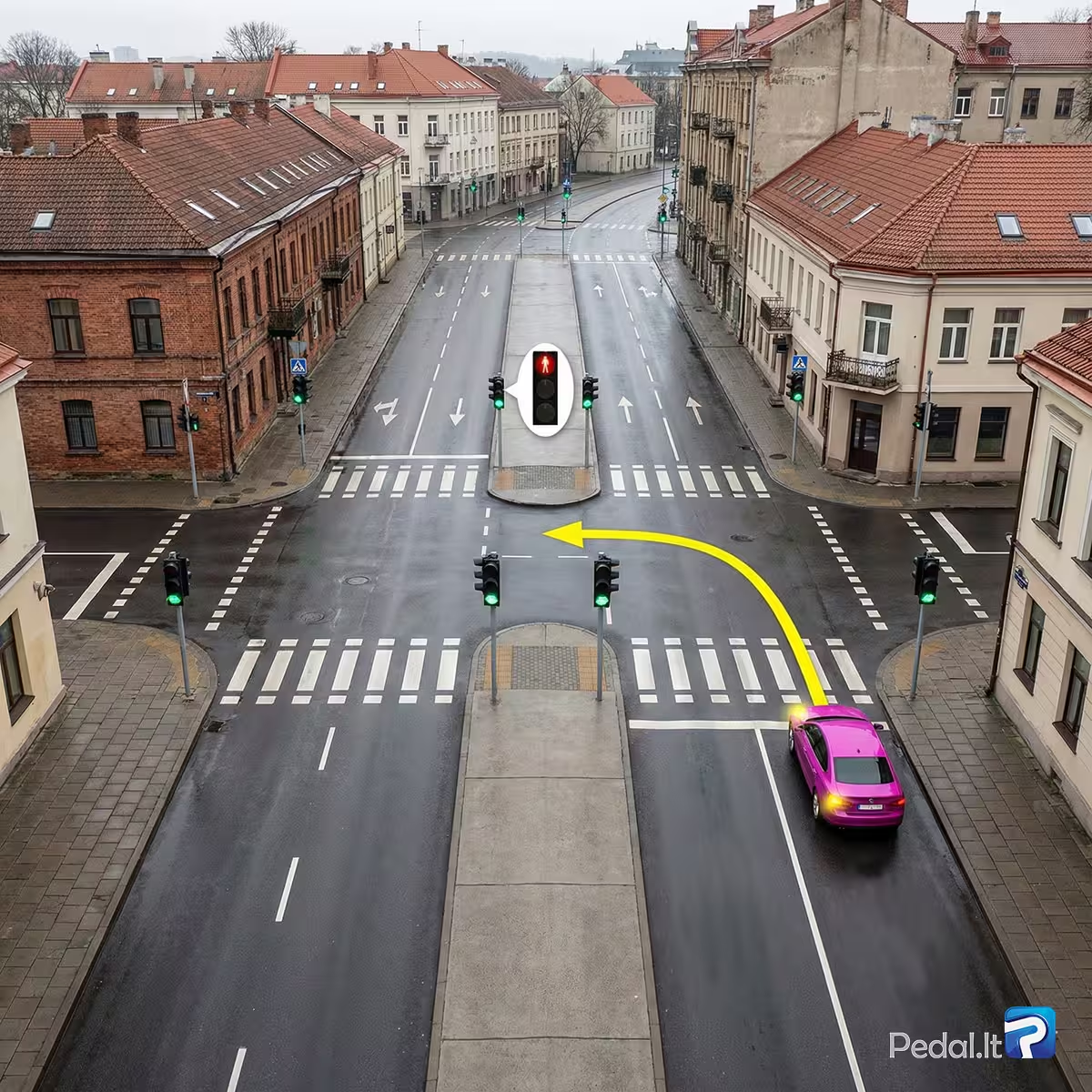
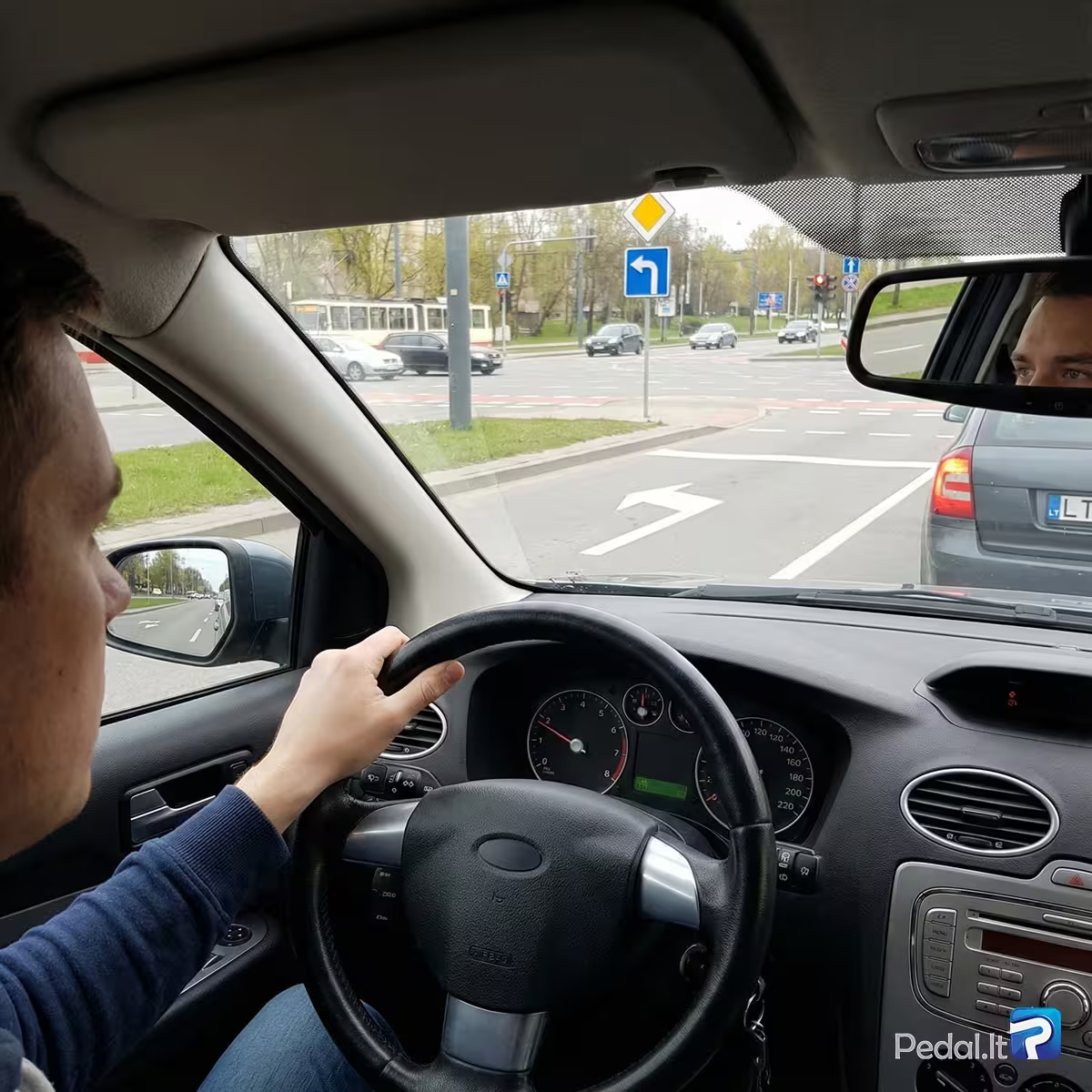
What must the driver do when turning left at the intersection?
RTR 73.11. A red light or two alternately flashing red lights prohibit traffic; if the light displays black arrow(s), it prohibits traffic in the direction(s) indicated by the arrow(s) and indicates which directions road users may proceed when the green arrow appears. RTR 162. Drivers who entered the intersection in accordance with a traffic light signal permitting them to proceed may continue in their intended direction regardless of the traffic light signal shown when the vehicle is leaving the intersection. However, if the 'STOP' sign and/or a 'Stop' line is present at the intersection before other traffic lights on the route, the driver must obey every traffic light signal. RTR 165. If traffic light signals or traffic officers prohibit driving, drivers must stop before the 'STOP' sign and/or the 'Stop' line if present; if not, they must stop before the traffic lights, before the carriageway they are about to cross or join, or before a pedestrian or bicycle crossing so as not to obstruct vehicular or pedestrian traffic.
1. The driver must turn left and then proceed straight ahead without stopping.
2. The driver must turn left and then proceed straight ahead without stopping, provided this does not obstruct other road users.
3. The driver must turn left, stop before the 'Stop' line, and when the traffic light displays a signal permitting movement, proceed straight ahead.
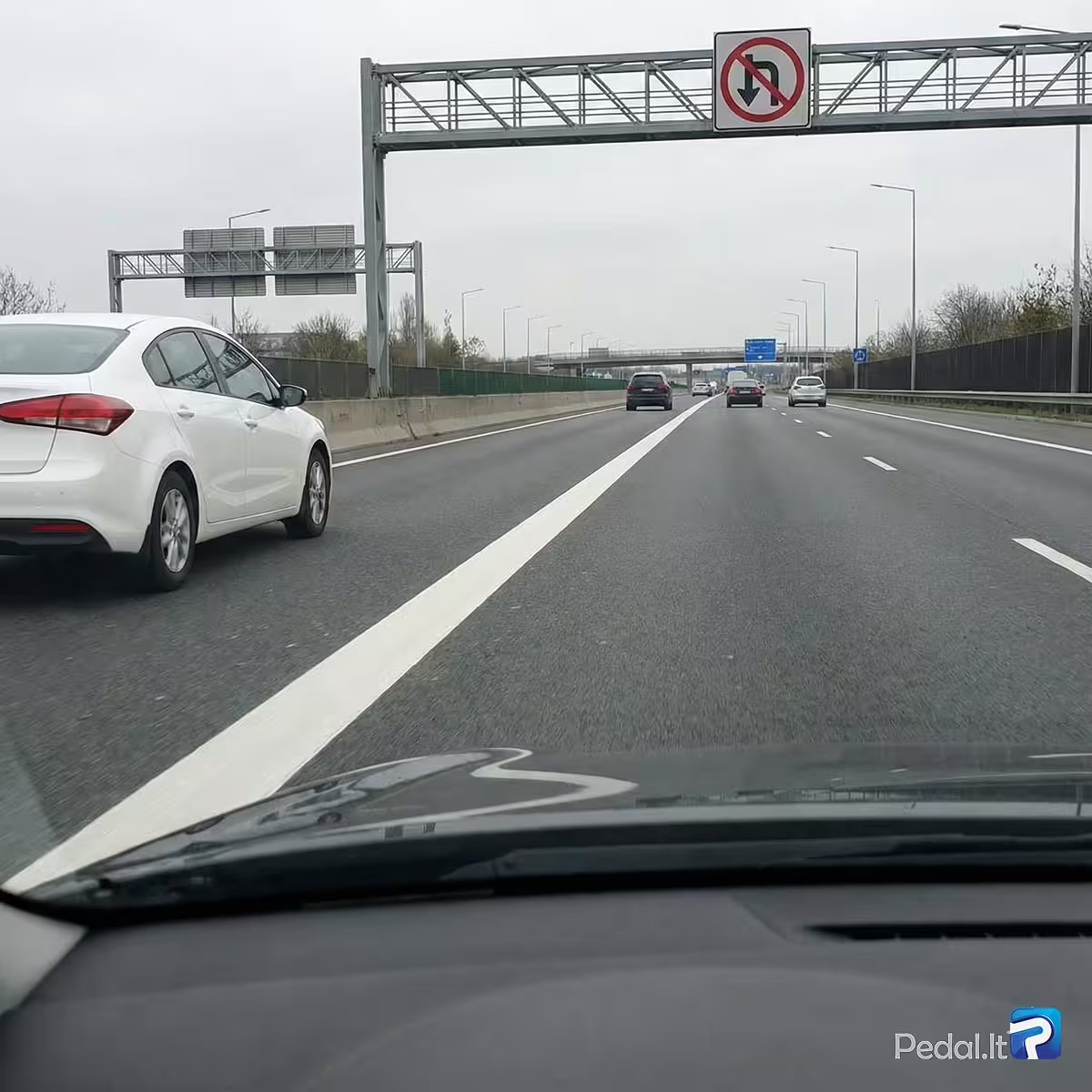
Is it permitted to cross a wide continuous road marking?
RTR 174. On roads designated as Motorway or Motor Vehicle Road the following are prohibited: 174.2 standing or parking except in designated parking areas; RTR Annex 3 1.2. A BROAD CONTINUOUS LINE marks the edge of the carriageway and the boundaries of sections where entry is prohibited on motorways and highways; it separates traffic lanes reserved for public-service vehicles and delineates lanes from bus stops. Vehicles must not cross this line unless it marks the edge of the carriageway. JB
1. Crossing is permitted.
2. Crossing is permitted only when the line denotes the edge of the carriageway.
3. Crossing is permitted to bypass an obstacle when the line separates a lane reserved for shuttle (route) transport.
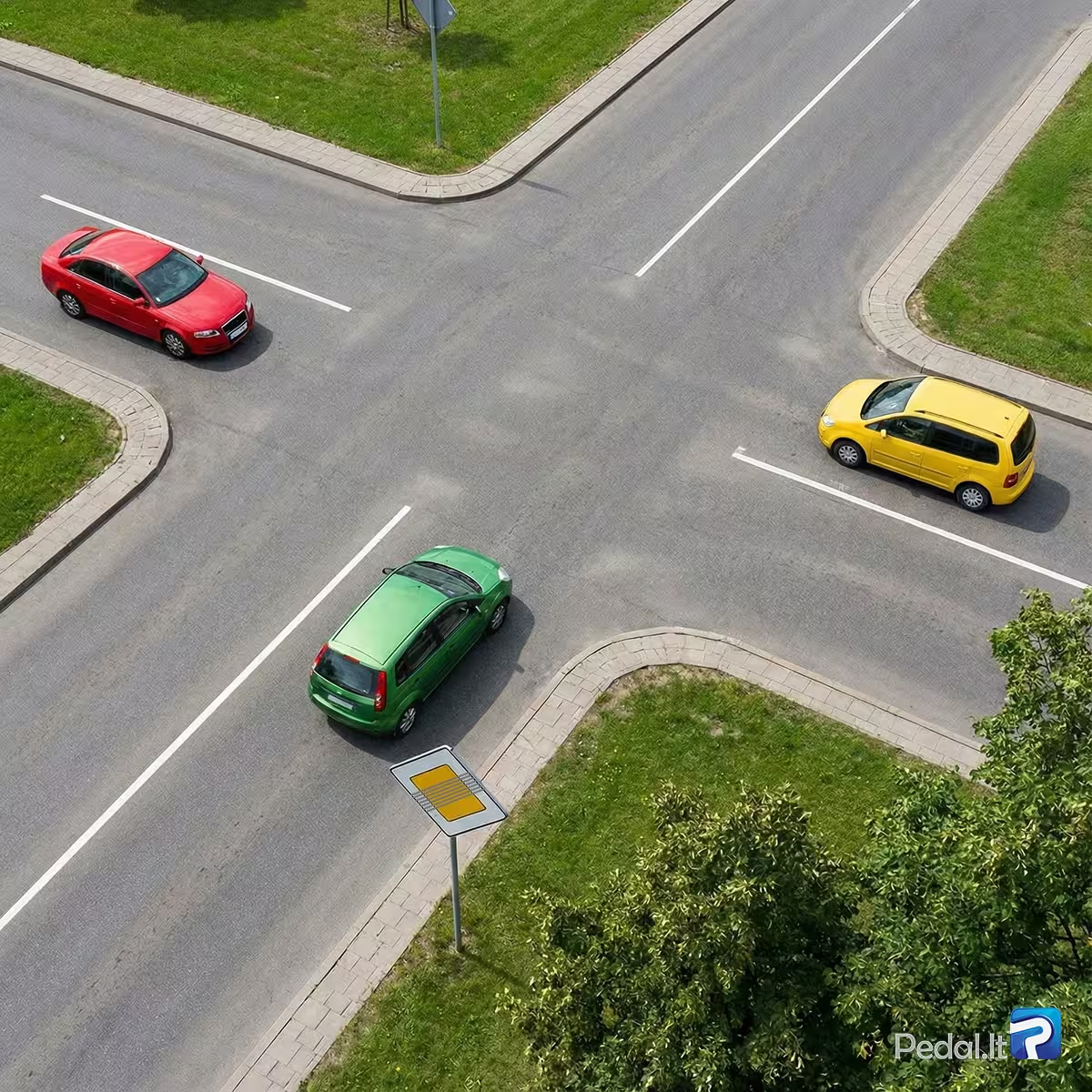
In what order will the vehicles pass through the intersection?
The yellow vehicle goes first because it is the only one without a vehicle to its right obstructing its path. Next comes the green vehicle, and last is the red vehicle. RTR 155. At an uncontrolled intersection, drivers must yield to vehicles approaching from the right when their trajectories intersect.
1. The yellow vehicle first, followed by the green vehicle, and finally the red vehicle.
2. The green vehicle first, then the red vehicle, and finally the yellow vehicle.
3. The red and yellow vehicles together first, followed by the green vehicle.
4. The green vehicle first, then the red and yellow vehicles together.
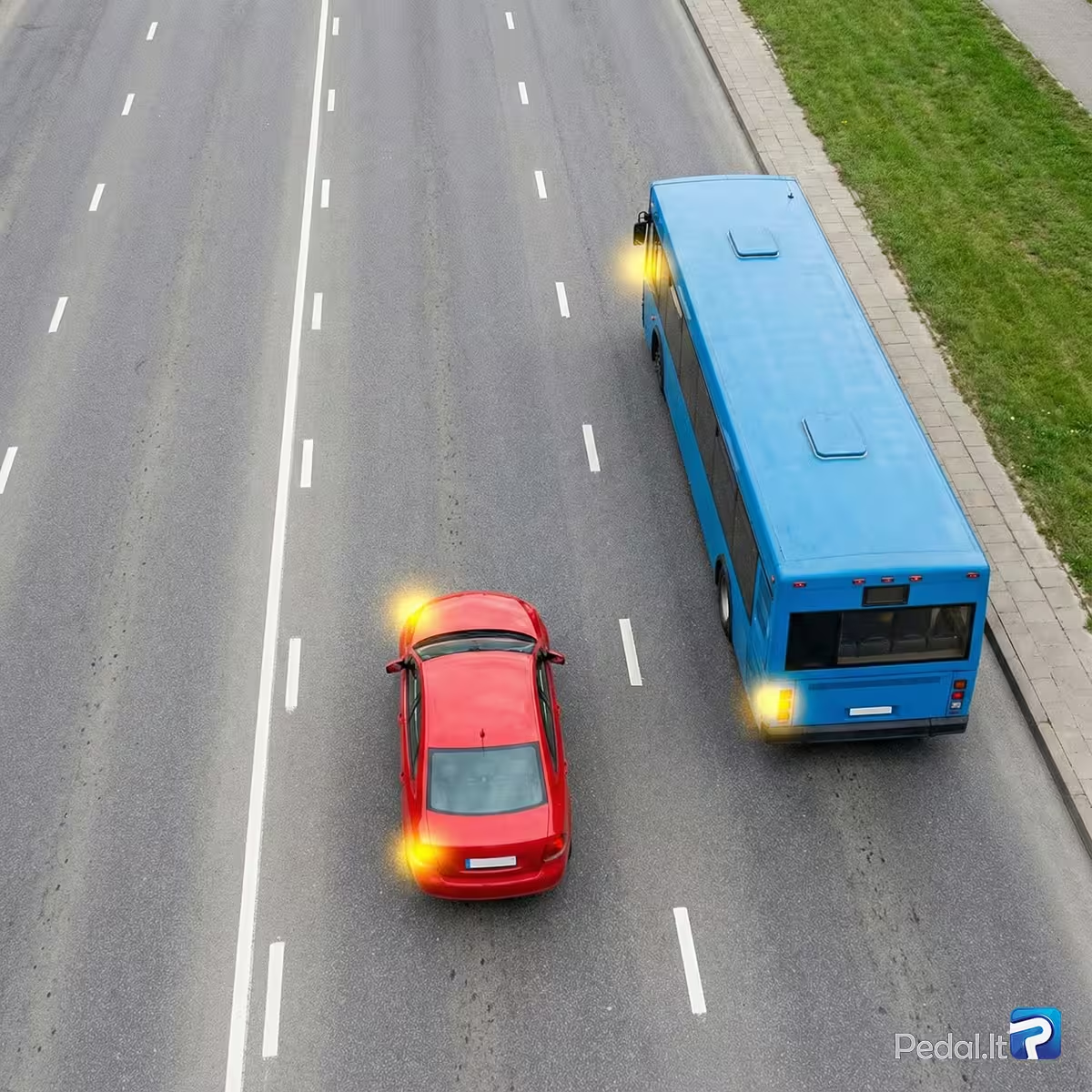
Is it permitted to turn around from the right-hand side of the carriageway if the carriageway is too narrow to turn from the left-hand side?
RTR 107. When, due to a vehicle's large size or other valid reasons, it is not possible to complete a turn (turn around) from the appropriate edge position of the carriageway, the vehicle may perform the turn from a part of the carriageway other than that edge assigned for travel in that direction, provided the maneuver does not obstruct other vehicles or create a hazard for other road users. JB
1. Yes — provided the maneuver does not obstruct other vehicles or create a hazard for other road users.
2. No — the maneuver is prohibited.
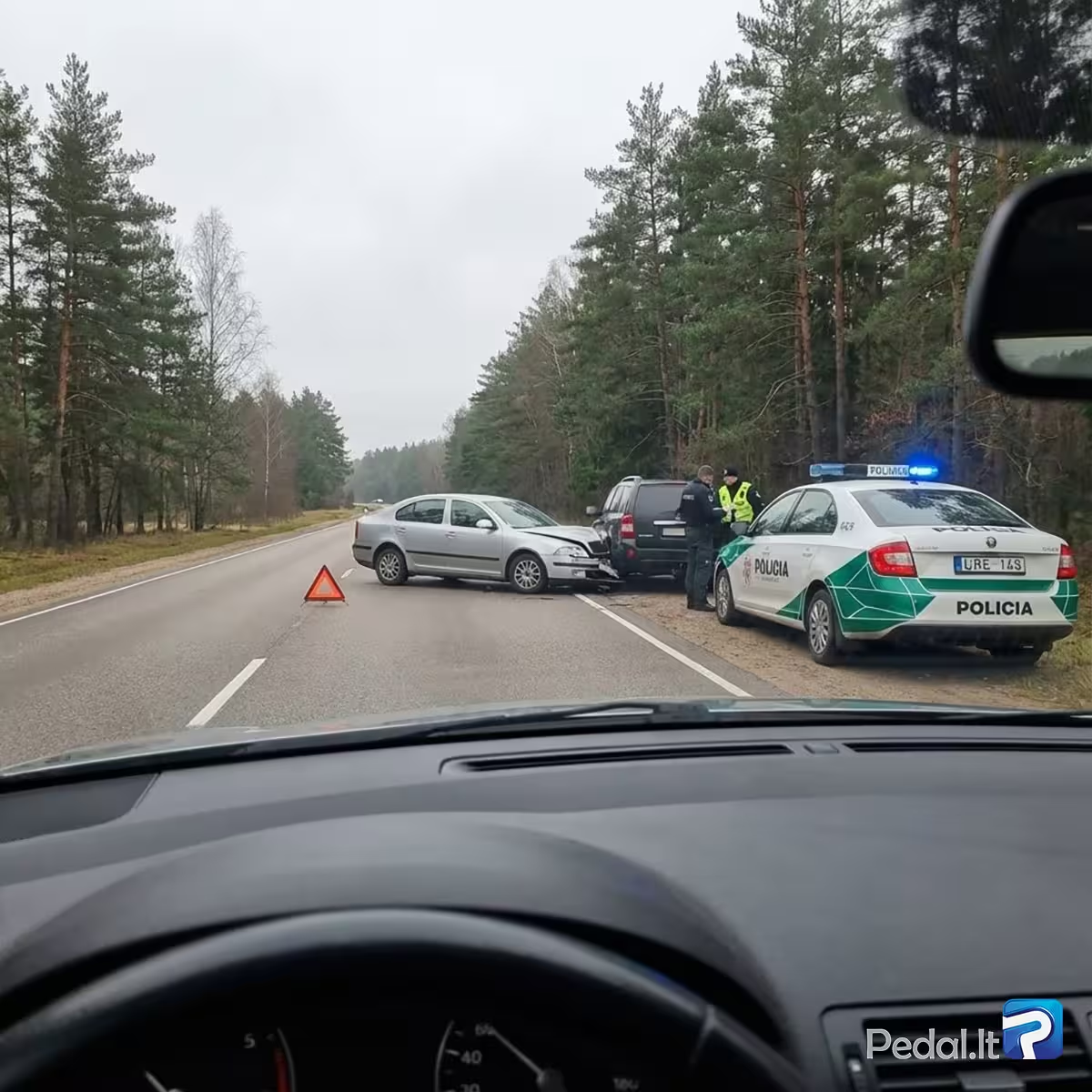
In most cases, those responsible for road accidents in Lithuania are:
According to data from the Lithuanian Road Administration, in 2017 drivers accounted for 68.83% of all individuals found responsible for road accidents.
1. Drivers of motor vehicles.
2. Cyclists (bicyclists).
3. Pedestrians (people on foot).
4. Drivers of animal-drawn vehicles.
.avif)
What are the fundamental principles of driver conduct?
1. Responsibility and courtesy.
2. Aggressive behavior.
3. Anger.
4. Disrespect toward other road users.
.avif)
How should you drive on a slippery road?
A safe speed depends on all circumstances, including weather, road surface and vehicle condition, as well as the driver's experience and level of alertness. (RTR 127) Drivers must not exceed the permissible speed limits. A driver must choose a speed appropriate to the conditions — taking into account terrain, road and vehicle condition (including load), weather, and traffic density — so that they can stop safely before any foreseeable obstruction. The driver must reduce speed or stop when conditions require, particularly when visibility is poor. JB
1. Maintain a larger-than-usual following distance from other vehicles.
2. When necessary, apply the brakes very gently.
3. Avoid sudden movements of the steering wheel or abrupt changes to the accelerator.
4. Select a safe driving speed.
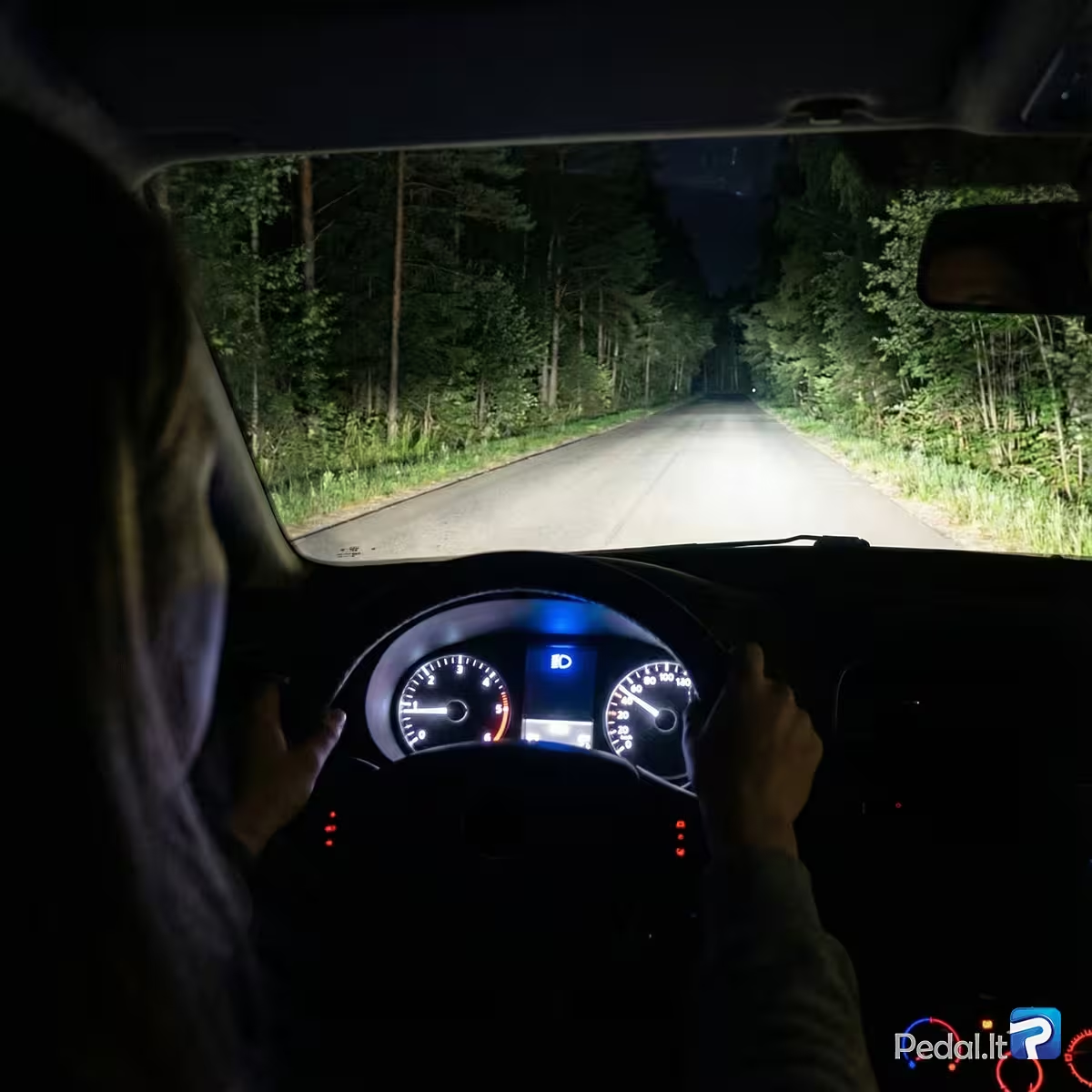
When driving at night on unlit stretches of road, a vehicle driver must drive with:
RTR 94. When traveling on roads at night or in conditions of poor visibility, motor vehicles, tractors, and self‑propelled vehicles must be driven with either dipped (low‑beam) or main (high‑beam) headlamps switched on.
1. Only the main (high‑beam) headlamps are switched on.
2. Only the dipped (low‑beam) headlamps are switched on.
3. Either the dipped (low‑beam) or the main (high‑beam) headlamps must be switched on.
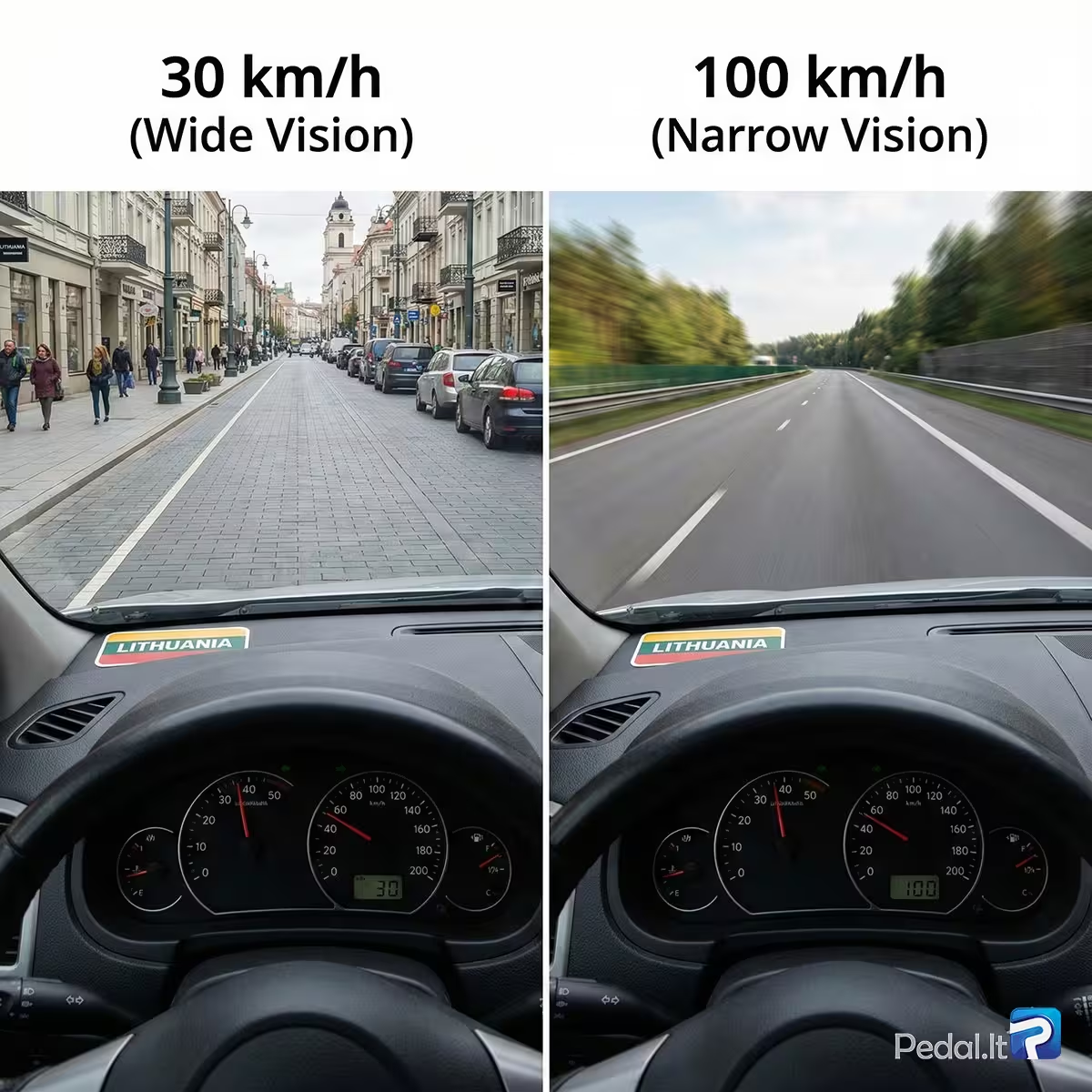
How does your field of vision change as your driving speed increases?
The field of vision is affected by driving speed, visual acuity (e.g., short-sightedness), fatigue, the color and brightness of objects, their contrast with the background, and other factors. As speed increases, a driver’s area of attention narrows and shifts forward: although drivers tend to look farther ahead, the effective dimensions of attention decrease inversely with speed. For example, at 50 km/h it is usually sufficient to focus about 150 m ahead to detect an obstacle; at 140 km/h an oncoming vehicle may not be noticed until it is only 15–20 m from the point of passing.
1. It becomes narrower.
2. It becomes wider.
3. It does not change.
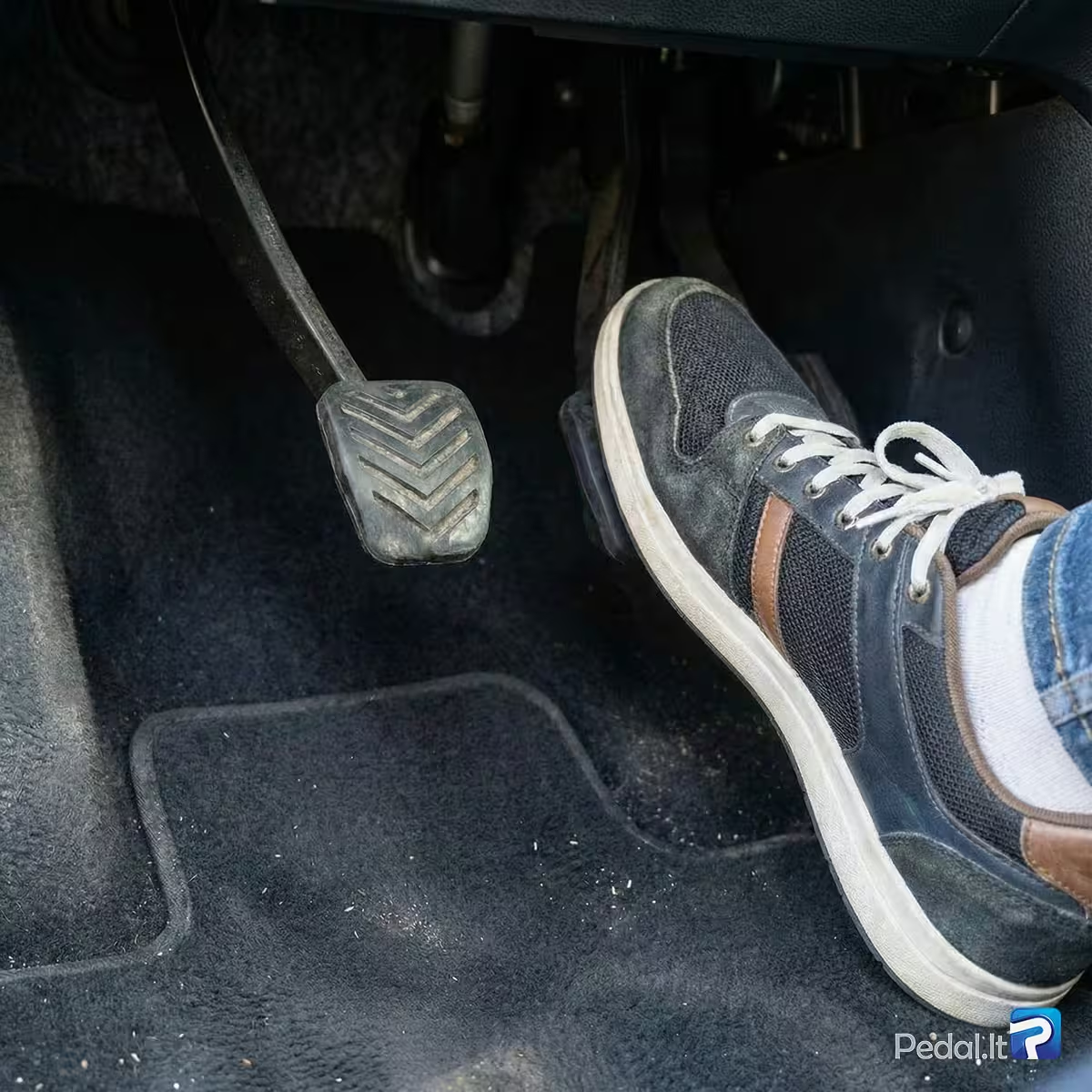
Which factors can cause the clutch to wear out more quickly?
Causes of premature clutch wear include an improperly adjusted clutch release mechanism, loose clutch mounting screws, weakened clutch springs, or a worn gearbox primary shaft.
1. Incorrectly adjusted clutch release mechanism.
2. Loose clutch mounting screws.
3. Weakened clutch springs.
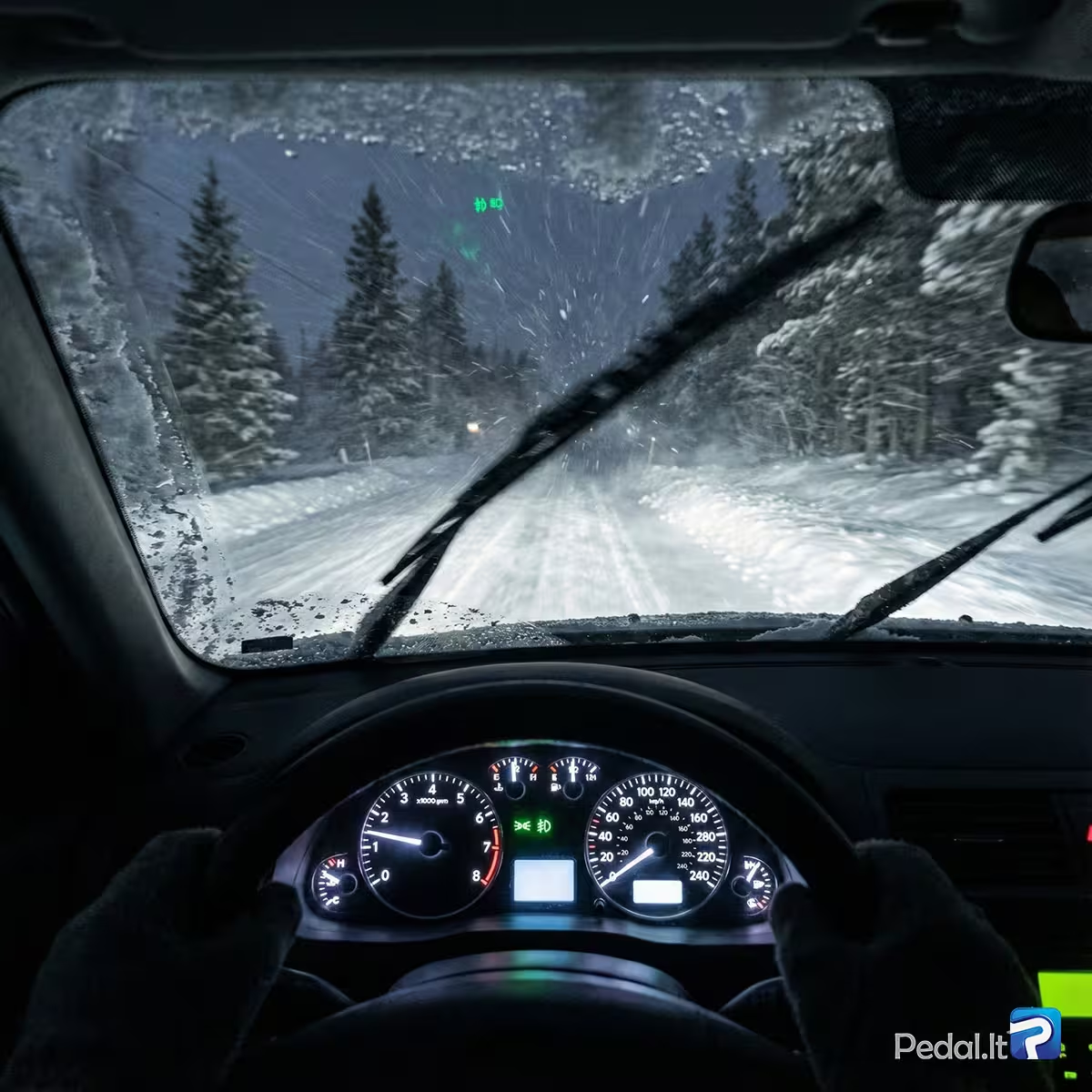
Which exterior lights should be switched on to improve visibility on the road during darkness and when snow is blowing?
When driving at night and during blowing snow, you should switch on the fog lamps together with the dipped-beam (low-beam) headlamps. Using the main-beam (high-beam) headlamps will cause light to reflect off the snow and dazzle the driver. (RTR 98) Fog lamps should only be used when visibility is seriously reduced; the front fog lamps may also be used in the event of failure of the front left dipped-beam headlamp.
1. Fog lamps used together with the main-beam (high-beam) headlamps.
2. Fog lamps used together with the dipped-beam (low-beam) headlamps.
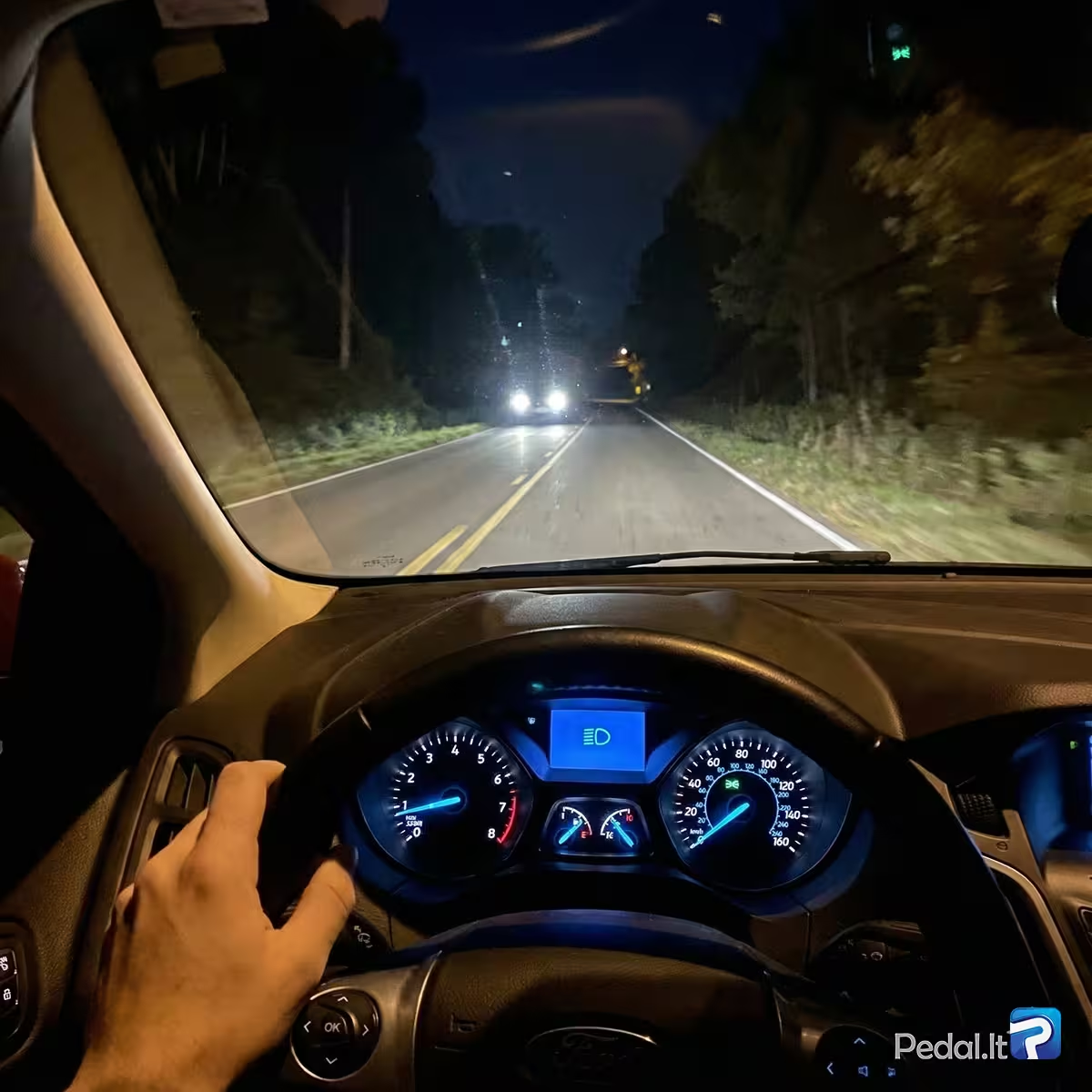
In which situations during hours of darkness must the vehicle's high-beam headlights be switched to low beam?
Regulation RTR 95. During hours of darkness or in conditions of poor visibility, main-beam headlights must be switched to low beam in the following cases: 95.1 on illuminated roads; 95.2 when the distance to an oncoming vehicle is at least 150 m. JB
1. When driving on illuminated roads within built-up areas.
2. When an oncoming vehicle is at least 150 m away.
3. Switching to low beam is optional.
4. When driving on illuminated roads outside built-up areas.
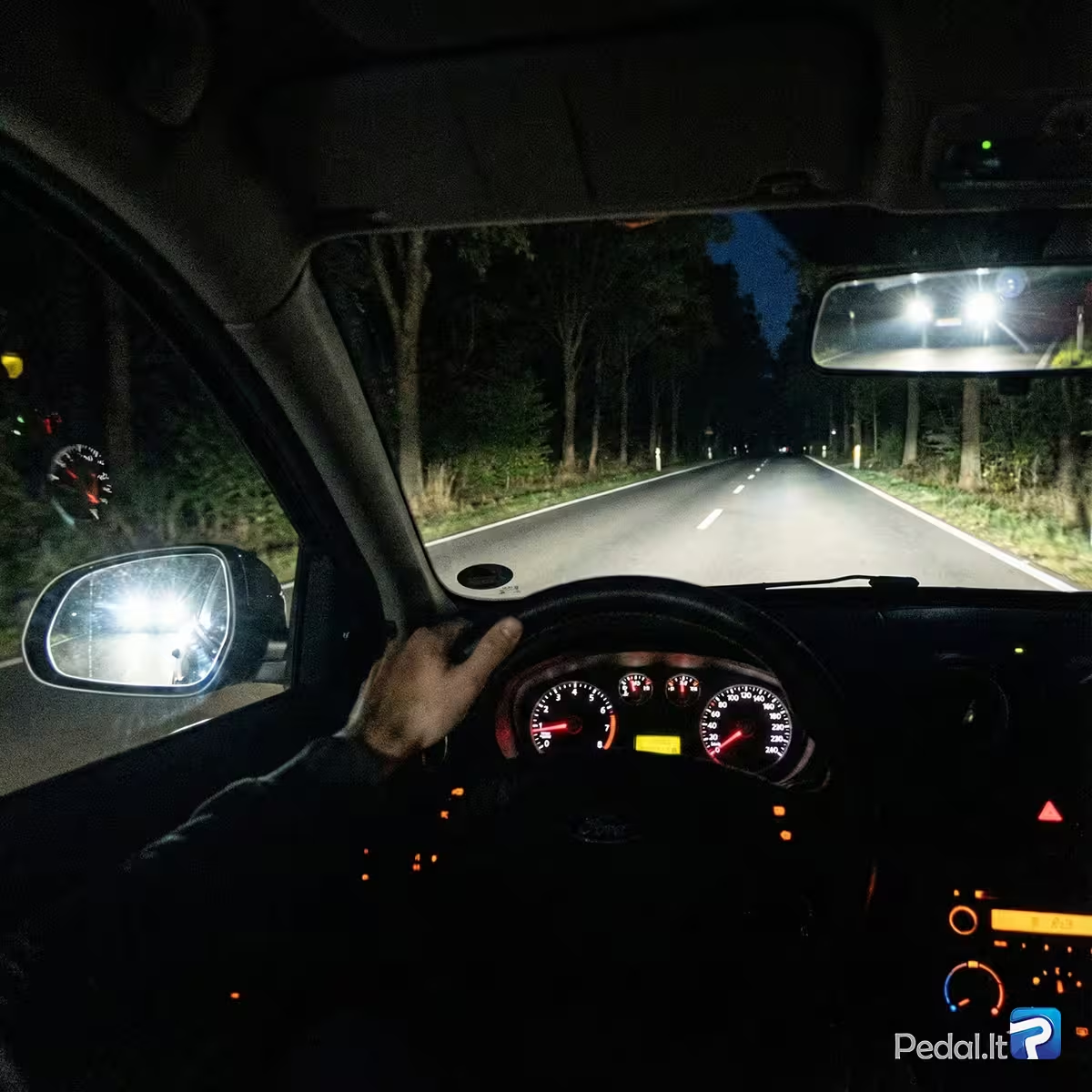
What must the drivers do if one vehicle catches up to the other while both are driving outside a settlement with their headlights on high beam?
The driver of the following vehicle must dip their headlights so as not to dazzle the driver ahead. The vehicle in front should switch to low beam only if the following vehicle begins to overtake, to avoid dazzling that driver. RTR 95. During darkness or in poor visibility, main beam headlights must be switched to low beam: 95.1 on illuminated roads; 95.2 when the distance to a vehicle approaching from the opposite direction is at least 150 m; 95.3 in other cases when main beam lights can dazzle other drivers (even travelling in the same direction). JB
1. The driver of the vehicle ahead must switch from high beam to low beam when the following vehicle begins to overtake.
2. The driver of the vehicle ahead must activate the hazard warning lights.
3. The driver of the following vehicle must switch from high beam to low beam.
.avif)
Is it permitted to use high‑beam headlights after dark on an unlit road within a settlement?
On unlit roads it is permitted to use high‑beam headlights. According to regulation RTR 95, during hours of darkness or in conditions of poor visibility high beams must be switched to low beam on illuminated roads (see 95.1).
1. Yes — it is permitted.
2. No — it is prohibited.
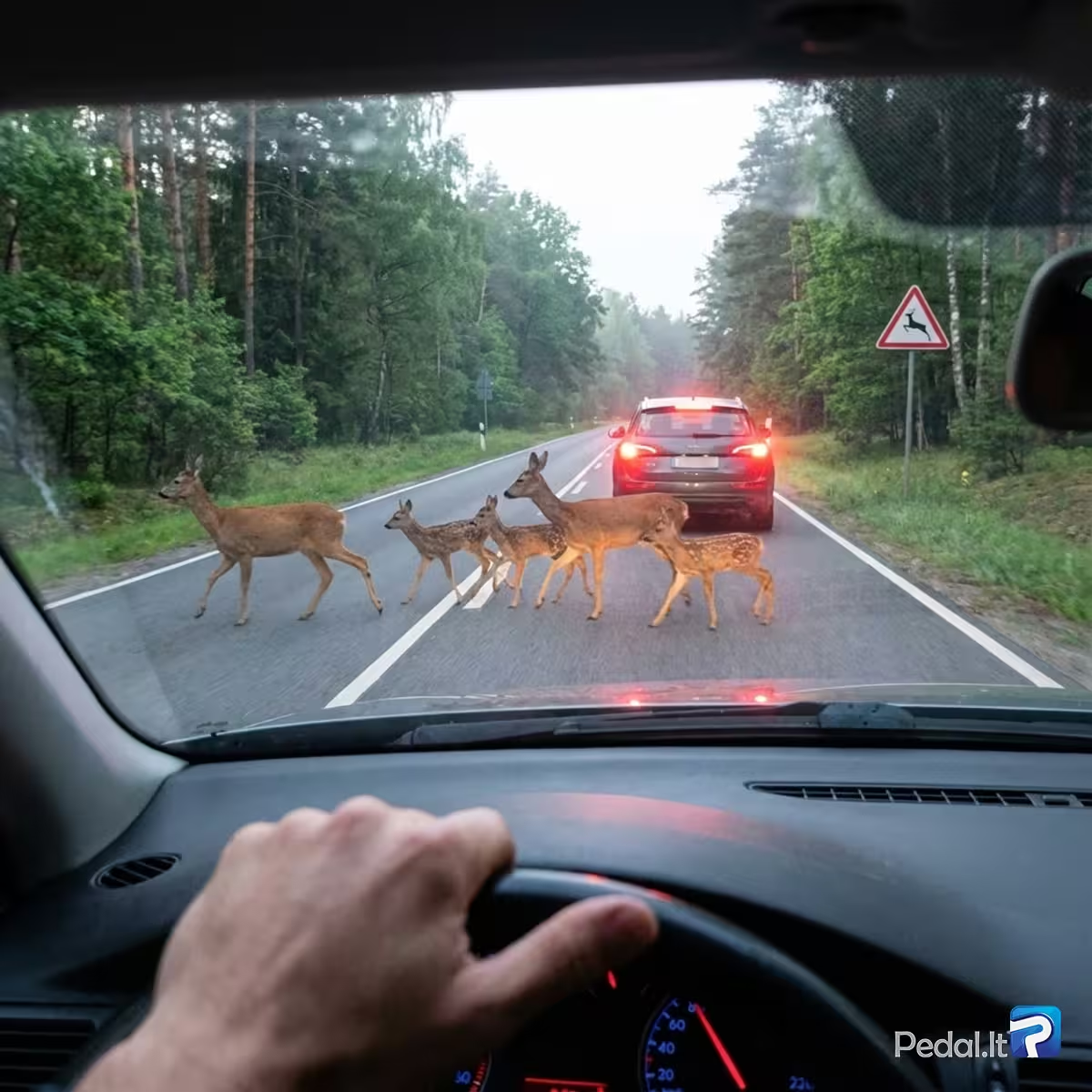
While driving, a group of roe deer crossed the road in front of your vehicle. What should you expect?
Wild animals typically travel in groups. If you see a lone roe deer, deer, or wild boar, others are likely nearby. Herding instincts lead animals to cross roads together rather than individually.
1. The animals may return to the road.
2. A solitary animal may follow the group.
3. It is unlikely that there will be any solitary animals.
On which side of the road is stopping permitted?
RTR 141. Vehicles may stand or park on the right-hand side of the road, as close as possible to the right edge of a hard shoulder, or at the carriageway edge if no hard shoulder exists. When entering or leaving the hard shoulder, the driver must not endanger other road users. If a cycle lane is installed along the right edge of the carriageway, drivers may stand or park adjacent to that cycle lane.
1.1. A NARROW CONTINUOUS LINE separates traffic flows in opposite directions and prohibits driving in the lane for oncoming traffic on the marked section of road; it also marks the edges of traffic lanes, sections of the carriageway into which entry is prohibited, the limits of vehicle parking spaces and the carriageway edge. At road sign No. 413 "Pedestrian and bicycle path" it separates the part of the path intended for bicycle traffic from the part intended for pedestrian traffic. Crossing this line is prohibited, except where it marks the carriageway edge or the boundary of a parking space.
1. On the right side of the road.
2. On the left side of the road.
3. Stopping is prohibited.
You are approaching a bend in the road:
Drivers approaching a road bend should be aware the bend may be sharper than it appears. Choose a safe speed and the correct road position to avoid entering the oncoming lane. A safe speed depends on all circumstances: weather, road and vehicle condition (including load), driver experience and fitness. According to RTR 127, drivers must not exceed the legal speed limit. When selecting speed, consider the terrain, road and vehicle condition, load, weather and traffic density so you can stop safely for any foreseeable obstacle. Drivers must slow down and stop when conditions require, especially if visibility is poor.
1. You will increase your speed midway through the bend.
2. You will reduce your speed before the bend.
3. You will reduce your speed while in the middle of the bend.
4. You will not change your speed.
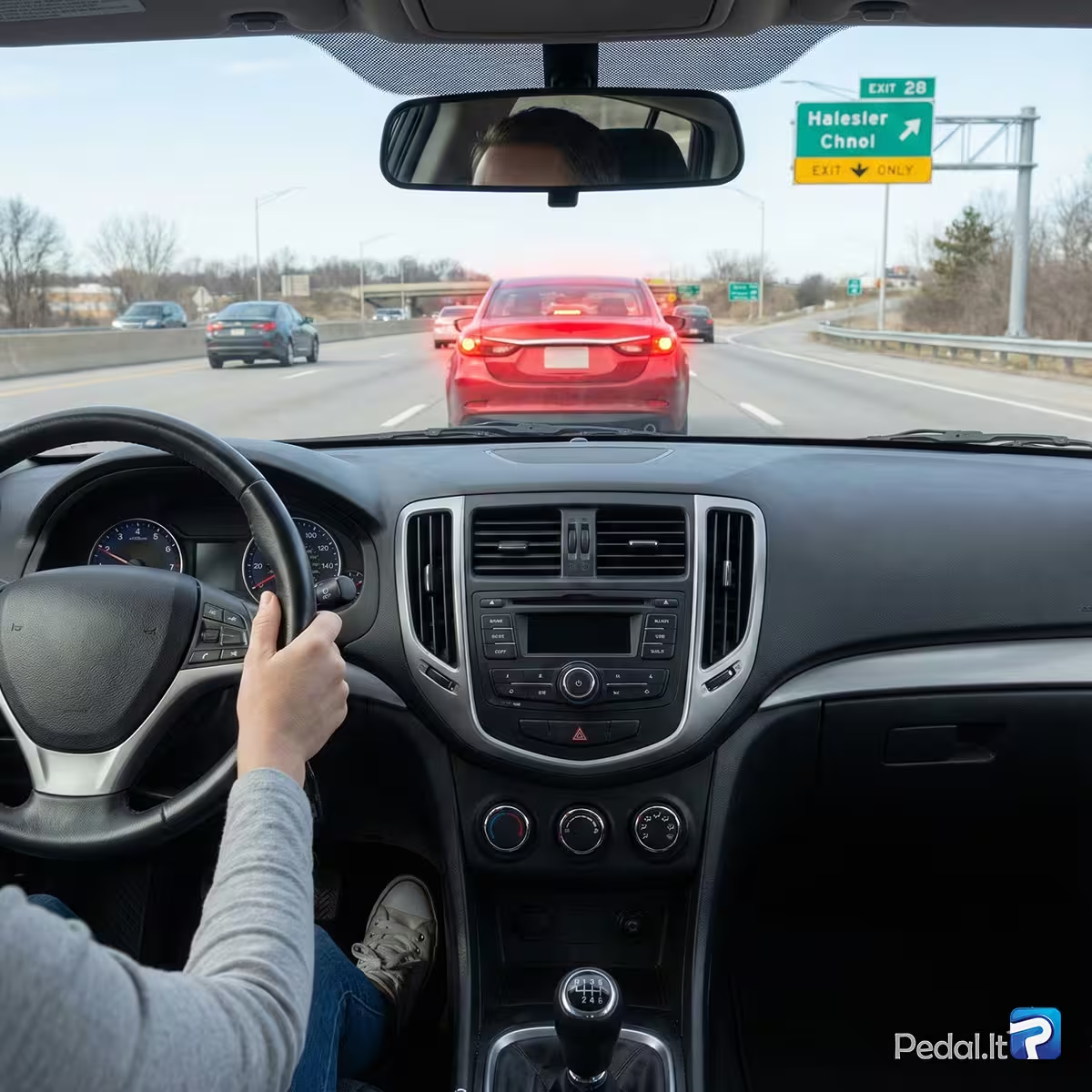
What should you do if you notice a vehicle braking in the distance ahead?
Explanation of terms: • To brake – press the brake pedal; the car slows down rapidly and stops before the expected obstacle. • To release the accelerator pedal – take your foot off the gas; the car gradually slows on its own but does not come to a complete stop and continues moving. • To drive without changing speed – keep the accelerator position the same; the car continues at a constant speed. RTR 128. If there is an obstruction or traffic safety is at risk, the driver must reduce speed or, if necessary, bring the vehicle to a complete stop or steer around the obstruction (if it can be seen) without creating a hazard for other road users.
1. Apply the brakes.
2. Take your foot off the accelerator and be prepared to brake.
3. Maintain your current speed.
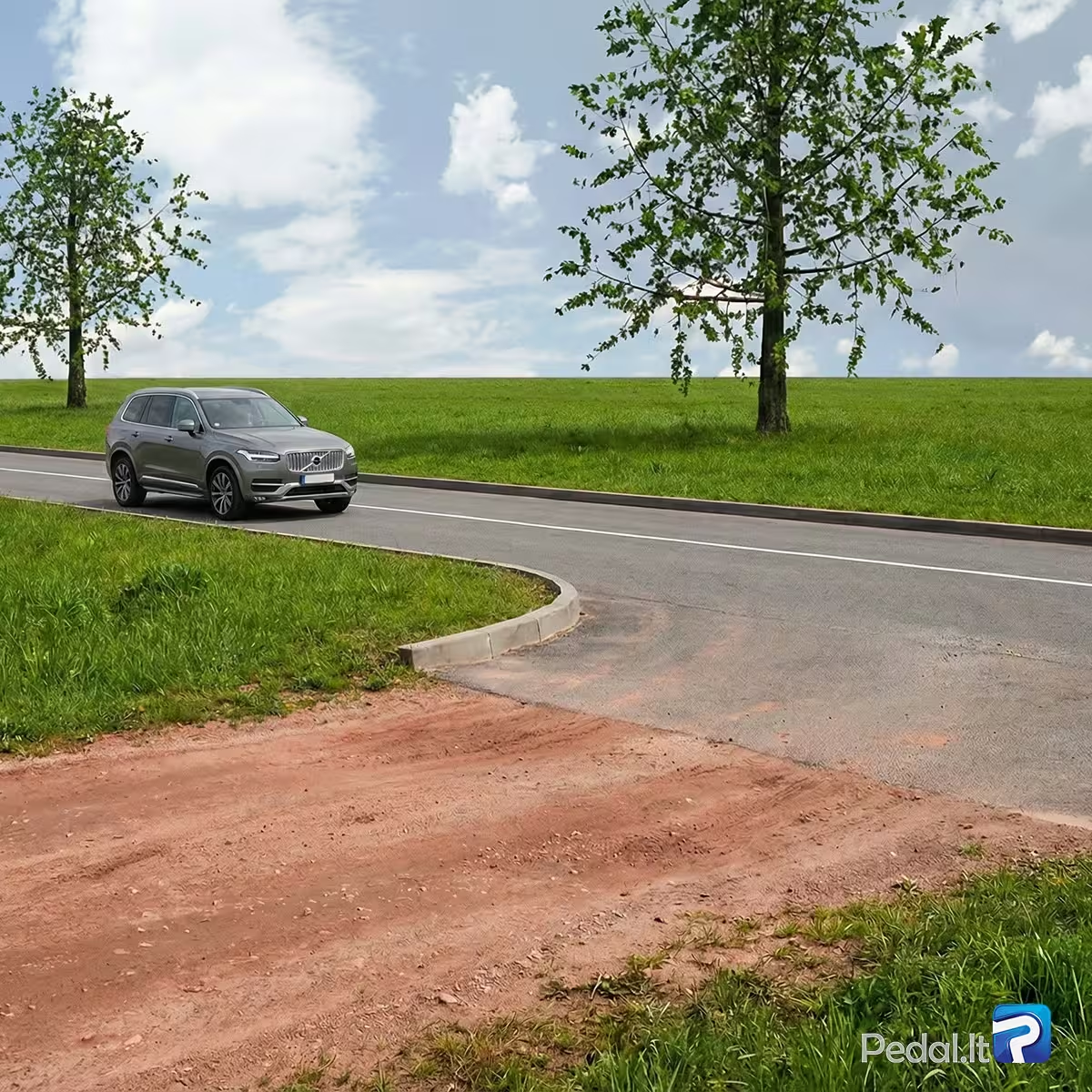
Which road is the main road at this intersection?
RTR 3.14. The main (priority) road is: a road marked with the 'Priority Road' sign, an 'Intersection with a Side Road' sign, a 'Side Road from the Right' or 'Side Road from the Left' sign, or designated as a 'Motorway' or 'Road for Motor Vehicles' in relation to the intersecting or joining road; a road in relation to another road marked with 'Give Way', 'STOP', or 'End of Residential Area' signs; a paved road (concrete, asphalt, or cobblestone) in relation to an improved unpaved road (macadam or gravel) or a dirt road (forest, field, or similar road); and an improved unpaved road in relation to a dirt road. A paved or improved unpaved section of a side road immediately before an intersection does not make that side road equivalent to the intersecting or joining road. There is no priority road at intersections controlled by traffic signals. JB
1. The road with a gravel surface.
2. Both roads are equivalent.
3. The road with an asphalt surface.
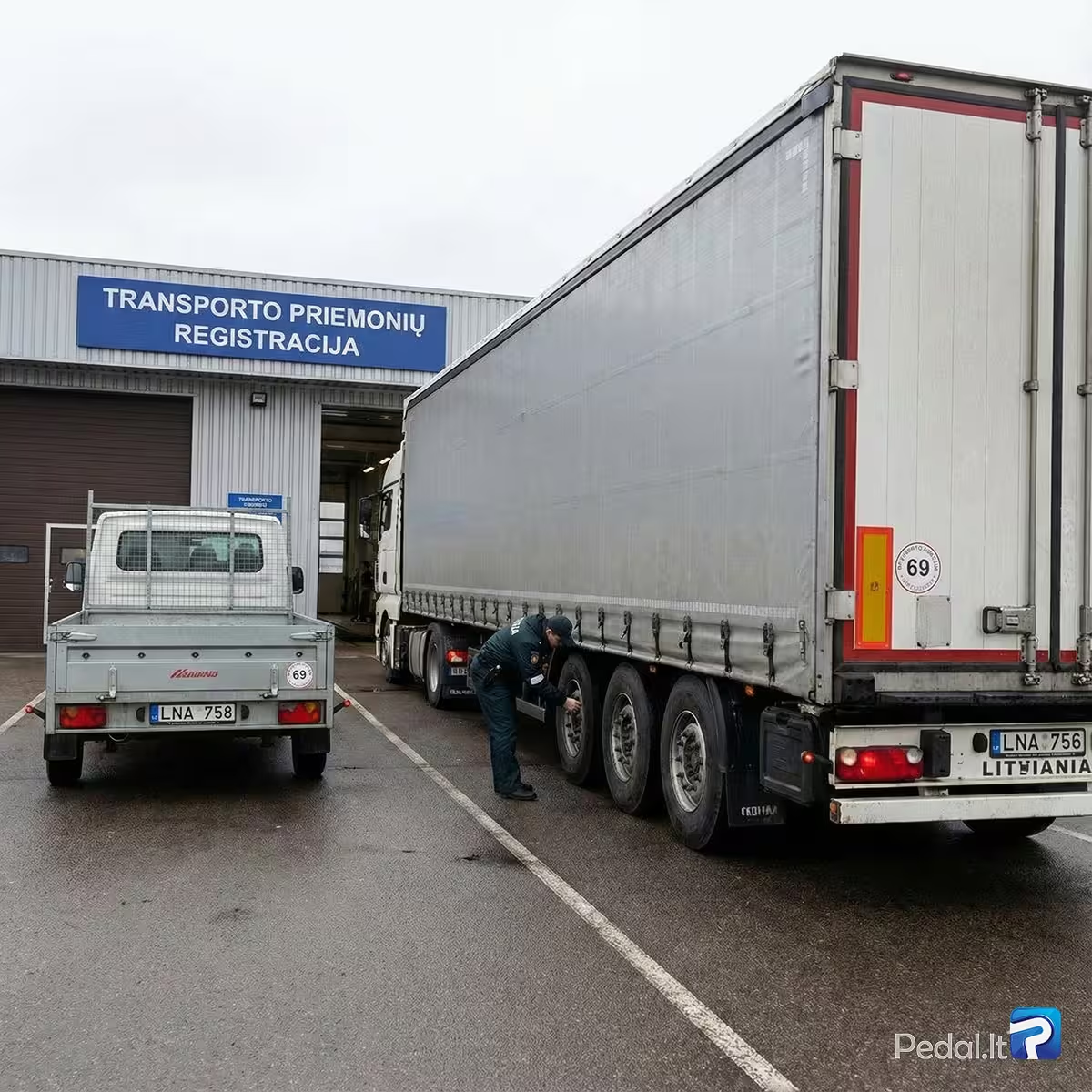
Are trailers and semi-trailers considered vehicles?
48. A trailer is a vehicle designed to be towed by a motor vehicle. Semi-trailers are also regarded as trailers. 52. A semi-trailer is a trailer coupled to a motor vehicle in such a way that part of its weight and the weight of its load are borne by the motor vehicle.
1. No.
2. Yes.
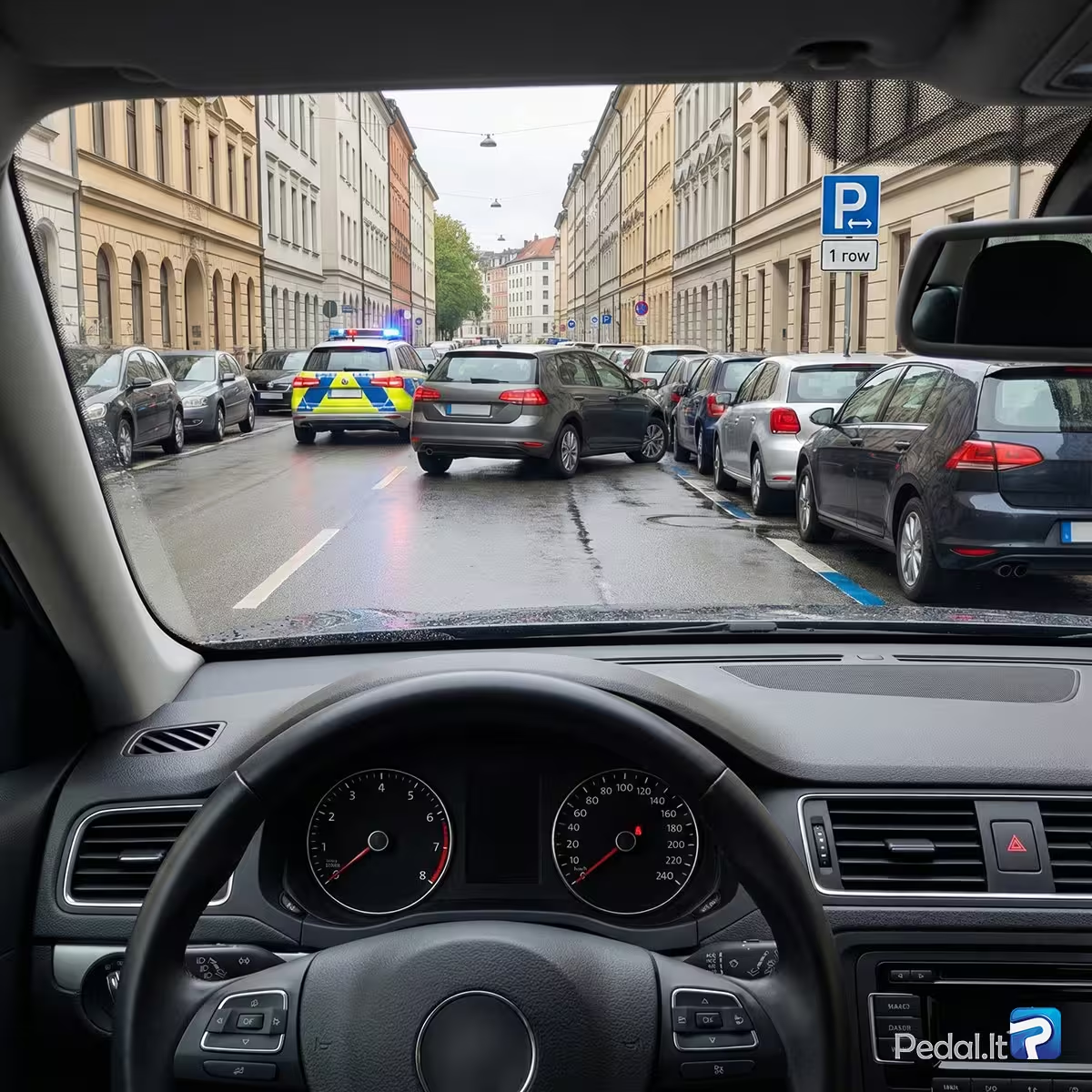
How many rows of cars are permitted to stop and park on the roadway?
RTR 144. Vehicles must stop and park on the carriageway in a single line. RTR 145. Motorcycles without a sidecar, mopeds, bicycles, and electric micromobility devices may be parked in two lines provided such parking does not obstruct traffic.
1. In a single row.
2. In two rows.
3. In three rows.
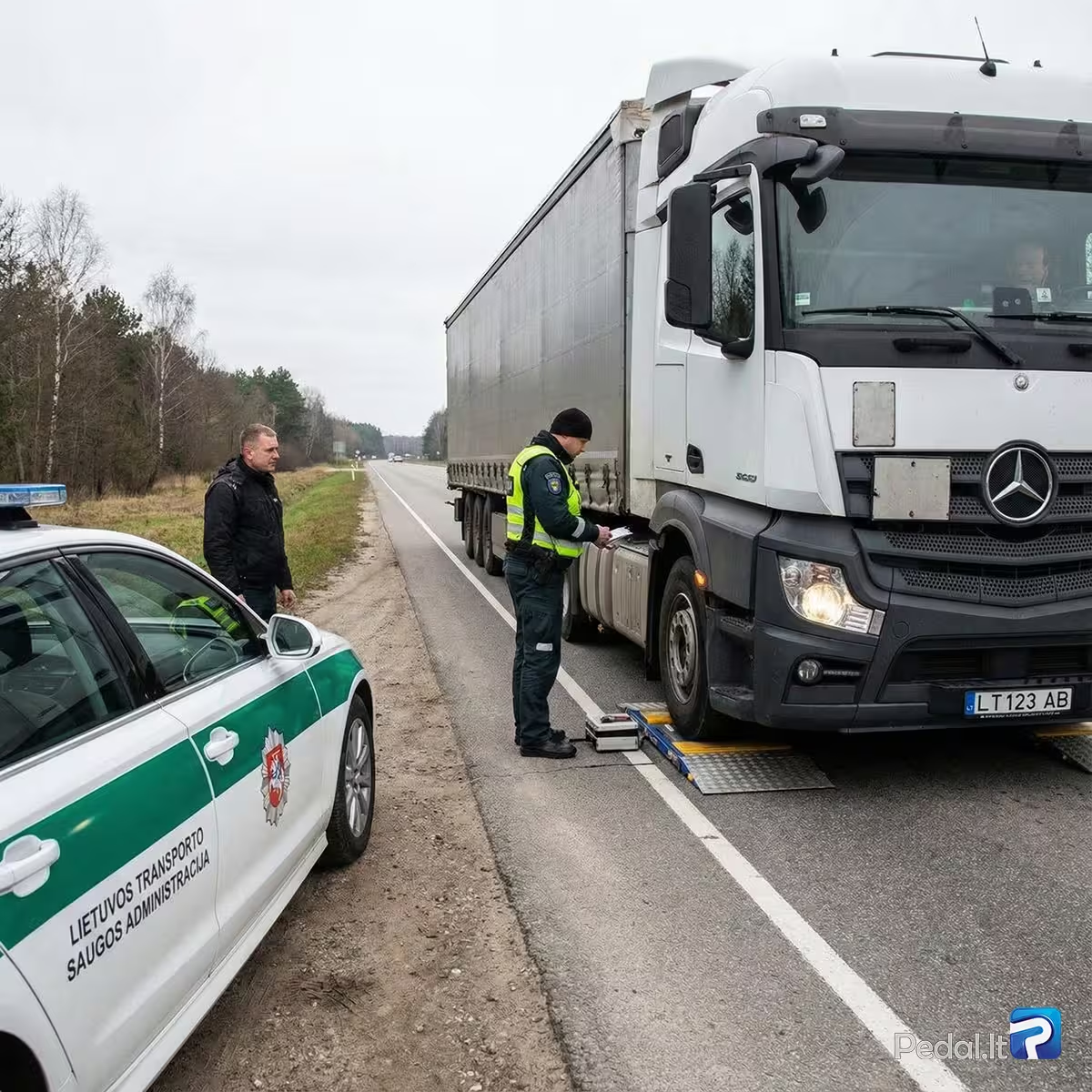
What is the permissible maximum weight for a combination of vehicles?
A vehicle's permissible maximum weight (hereinafter 'permissible maximum weight') means the maximum authorized operating weight of a fully laden vehicle or combination of vehicles, including the driver, passengers, and cargo, as specified by the vehicle manufacturer or the competent government authority.
1. The maximum authorized operating weight of a fully loaded vehicle or combination of vehicles.
2. The total payload of a vehicle and its trailer.
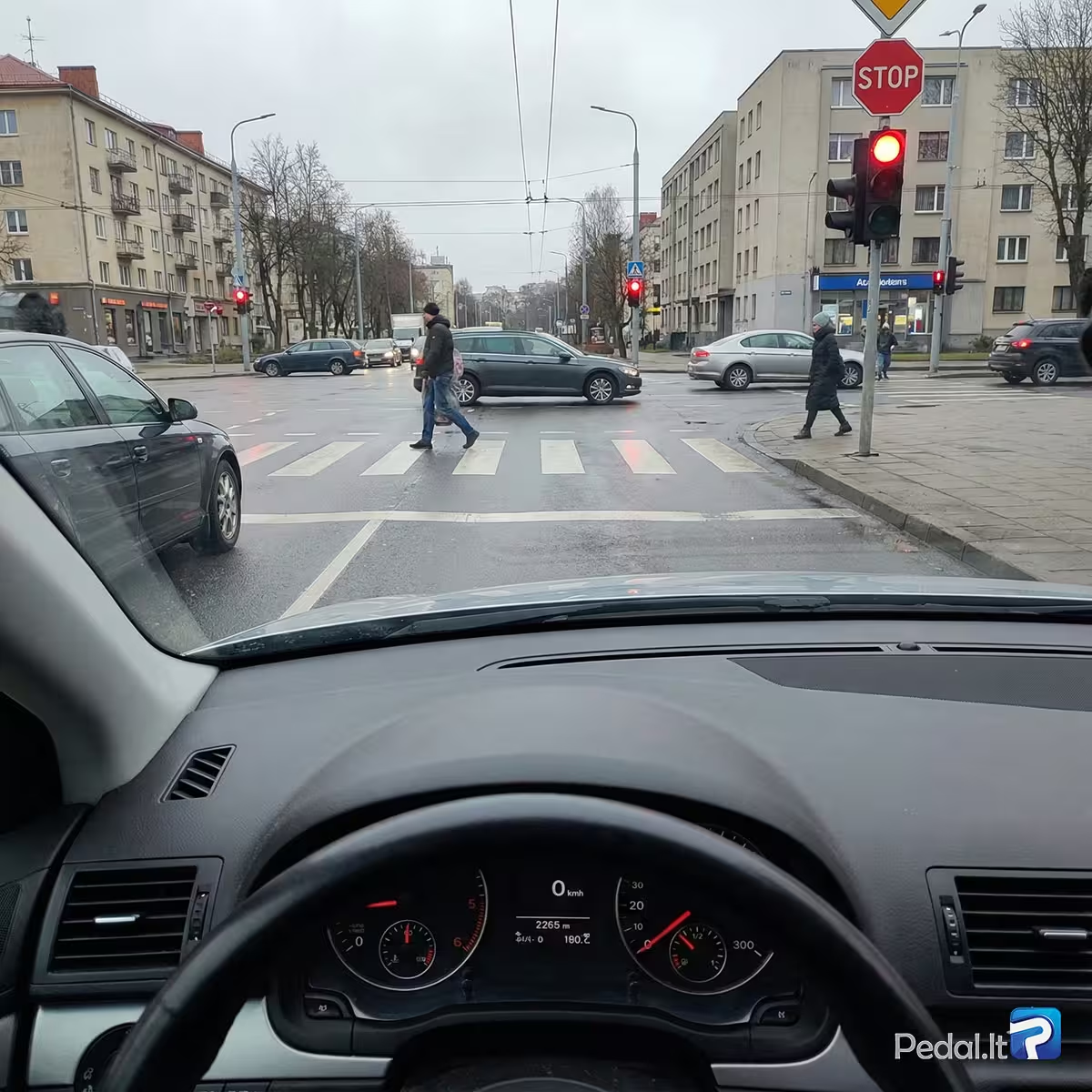
Where must the driver stop, according to traffic rules, when a prohibitory traffic signal or a traffic regulator's signal is in effect?
RTR 165 p. When a prohibitory traffic signal or a traffic regulator's signal is displayed, the driver must stop before the 'Stop line' road sign and/or before the marked stop line. If neither is present, the driver must stop before the traffic light, before the junction or the connecting carriageway, before a pedestrian crossing, or before a bicycle crossing, in such a position that does not obstruct vehicular or pedestrian traffic.
1. Before the 'Stop line' road sign and/or before the marked stop line.
2. So as not to obstruct vehicular traffic.
3. So as not to obstruct pedestrian traffic.
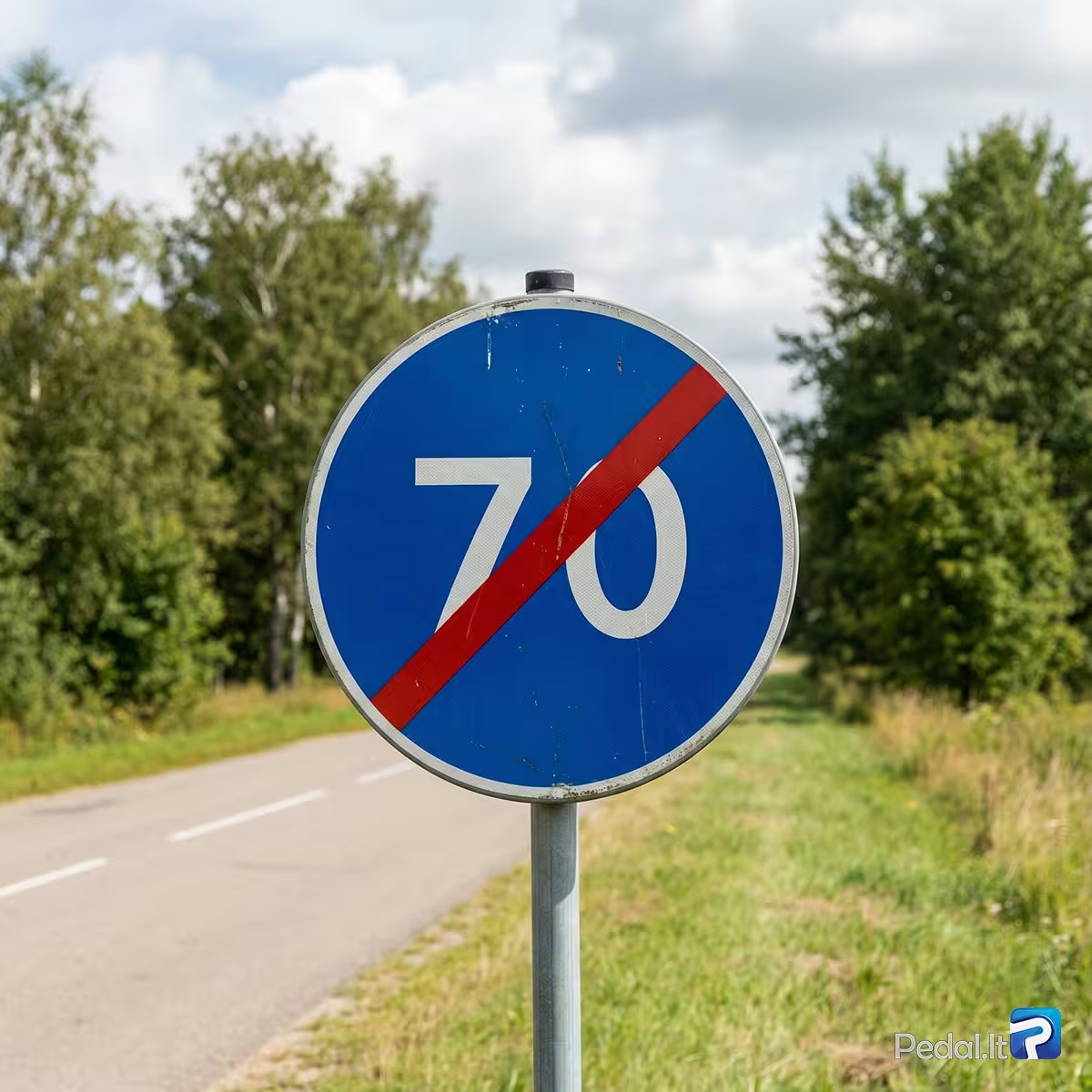
After this road sign:
This sign indicates the end of the minimum speed requirement; it does not specify a particular permitted speed. The applicable speed depends on other road signs, regulations and current driving conditions. Road sign 415 — End of minimum speed limit.
1. Driving at a maximum speed of 70 km/h is permitted.
2. Driving at a speed of at least 70 km/h is permitted.
3. The minimum speed limit has ended.
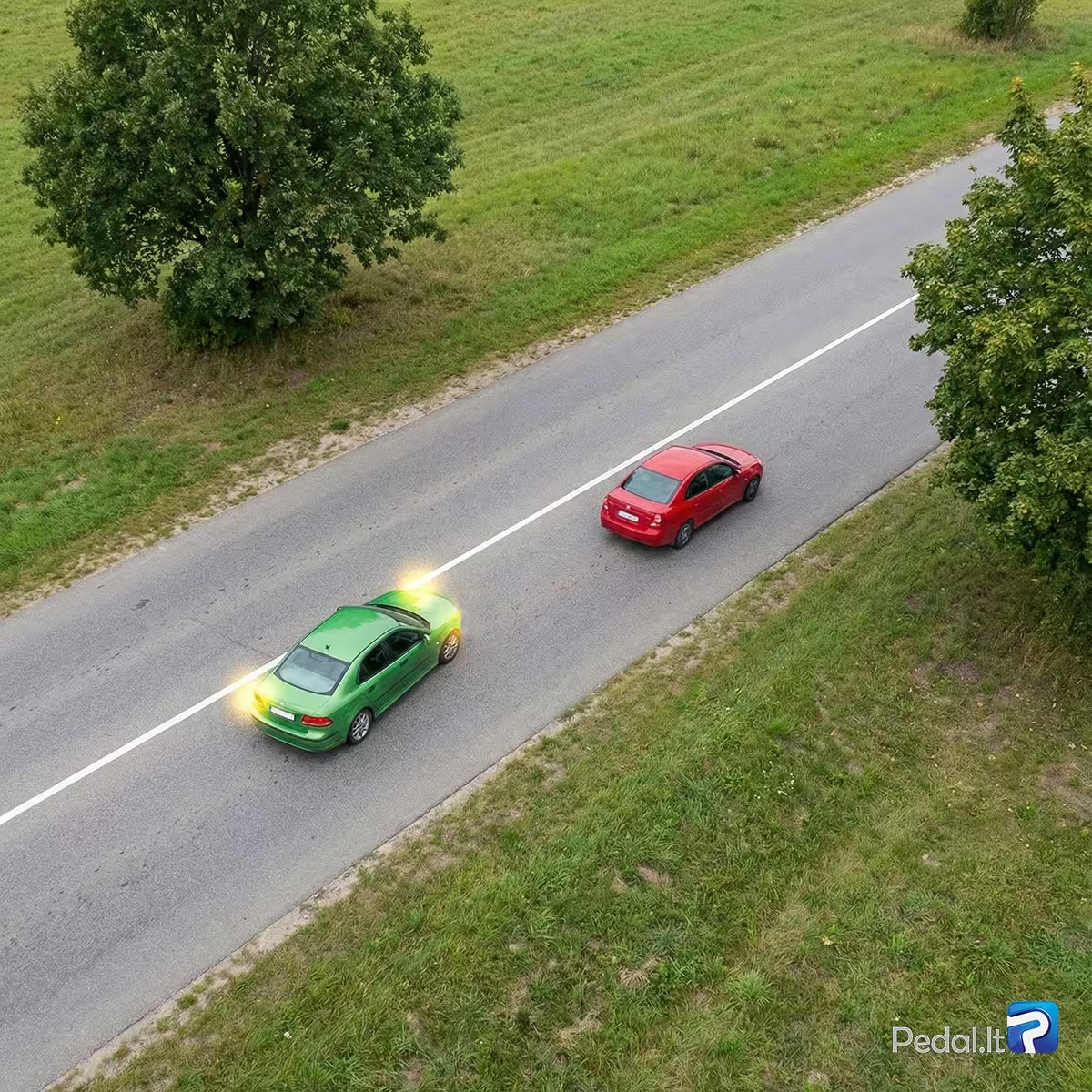
Is the driver of the green vehicle permitted to overtake?
The Road Traffic Rules prohibit crossing a solid line; it does not matter how fast the vehicle you wish to overtake is traveling. Overtaking slow-moving vehicles (traveling under 30 km/h) is allowed only where the 'No Overtaking' sign is in force (within its zone of validity) and there is no solid lane line. http://www.keliueismotaisykles.info/pakeitimai-ir-patarimai/ar-lenkiant-galima-kirsti-istisine-linija RTR Annex 3.1.1. A narrow solid line separates traffic flows in opposite directions and prohibits the use of the oncoming lane on the marked road section; it marks lane edges, areas where access is prohibited, parking space boundaries and the edge of the carriageway; in the case of road sign No 413 'Pedestrian and cycle path', it separates the section reserved for cyclists from the section reserved for pedestrians. It must not be crossed except where it marks the edge of the carriageway or a parking space. RTR Annex 1.325 'Overtaking Prohibited'. Overtaking is prohibited except for single vehicles or single vehicle combinations traveling at less than 30 km/h.
1. Overtaking is permitted.
2. Overtaking is prohibited.
3. Overtaking is permitted if the vehicle being overtaken is traveling at less than 30 km/h.
4. Overtaking is permitted if the vehicle being overtaken is traveling at less than 15 km/h.
1 of 30 Task
Time left: 00:00:00
1
2
3
4
5
6
7
8
9
10
11
12
13
14
15
16
17
18
19
20
21
22
23
24
25
26
27
28
29
30