Is a driver involved in a road accident required to transport injured persons to the nearest healthcare facility in a private vehicle when the accident occurs within a built-up area?
XXIX. Obligations of Road Users in the Event of a Road Accident (paras. 219–222) 219. In the event of a road accident, every driver involved or any other road user must: 219.5. take all necessary measures to provide first aid to the injured, call an ambulance, or — when calling an ambulance or transporting the injured to a healthcare institution by other means is impossible — convey them to the nearest healthcare institution in a private vehicle, unless such transportation would endanger their life or health.
1. Yes — but only if calling an ambulance or transporting the injured to a medical facility by other means is impossible.
2. No — the driver is not required to do so.
A driver is operating a goods vehicle with a permissible maximum weight under 3,500 kg. Which driving‑licence category must the driver hold?
In this situation the driver must hold at least a category B driving licence; the driver is not required to hold a category C licence. LAW ON ROAD TRAFFIC SAFETY — Article 23. Categories of motor vehicles and the minimum driving age. 1. Categories of motor vehicles and their combinations with trailers are: 6) Category B: vehicles with a permissible maximum weight not exceeding 3,500 kg and designed and constructed to carry no more than eight passengers, excluding the driver; these vehicles may be combined with a trailer whose permissible maximum weight does not exceed 750 kg; they may also be combined with a trailer whose permissible maximum weight exceeds 750 kg, provided that the permissible maximum weight of the vehicle combination does not exceed 4,250 kg; a vehicle combination with a permissible maximum weight exceeding 3,500 kg (including a trailer with a permissible maximum weight exceeding 750 kg) may be driven only after passing a practical skills and behaviour test at the state enterprise "Regitra".
1. C.
2. B.
3. A.
If the rear of a front-wheel-drive vehicle begins to skid sideways during a turn, how should you respond?
Gradually apply the accelerator and steer smoothly to return the vehicle to the intended line. Slightly increasing front-wheel traction helps counteract the rear's lateral slide, reducing the effect of centrifugal force and stabilizing the vehicle.
1. Lightly apply the brakes and steer into the skid.
2. Ease off the accelerator and steer carefully to return the vehicle to the intended line.
3. Gradually apply the accelerator and steer smoothly to return the vehicle to the intended path.
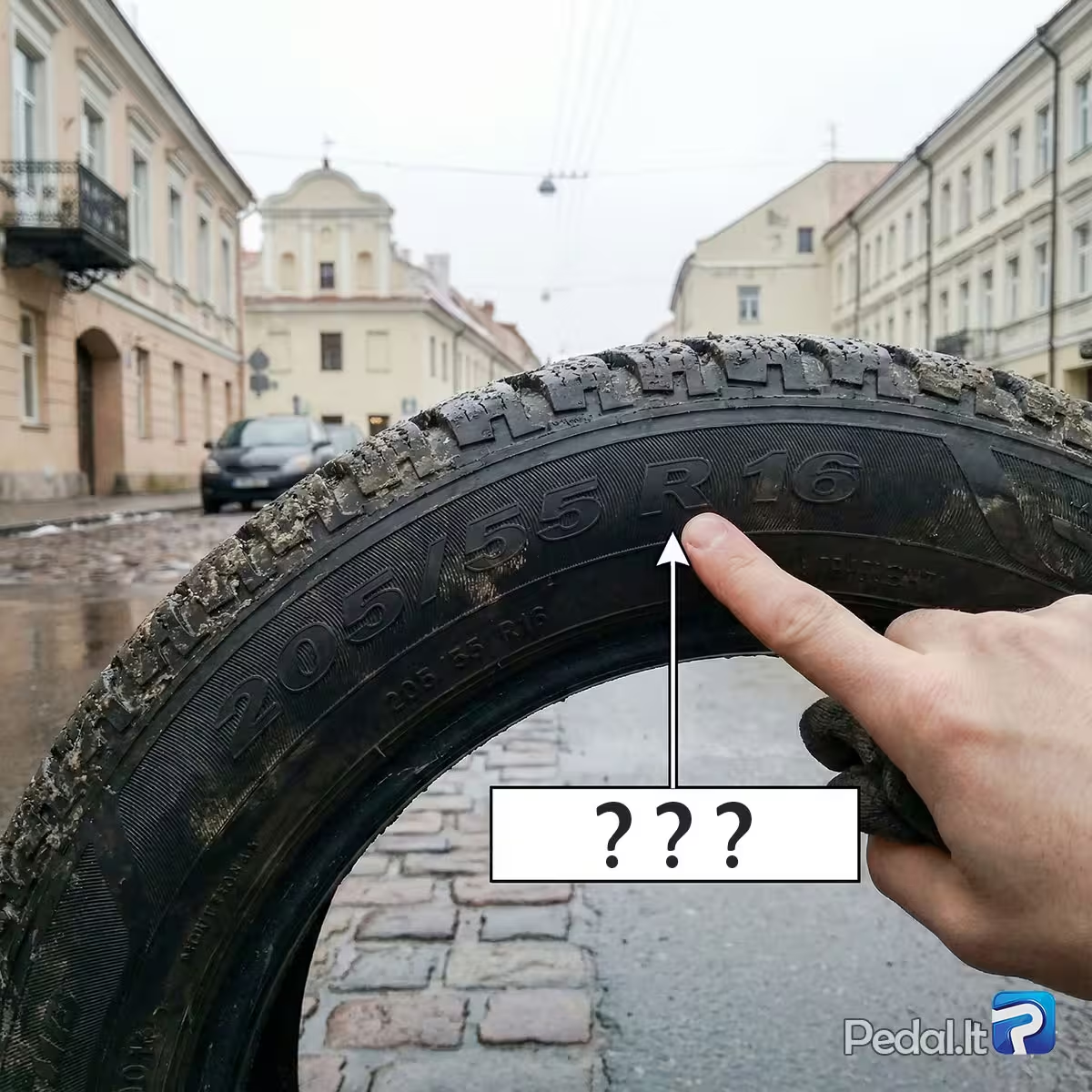
What does the letter 'R' indicate in tyre markings?
The letter 'R' denotes a radial tyre construction. In a radial tyre, the carcass cords run from one bead to the other in a radial direction instead of being wrapped around the bead cores. Thin, flexible crown plies provide the tread area with the required rigidity and flexibility while minimizing elastic deformation.
1. The tyre's construction (radial construction).
2. Tyre diameter.
3. Tyre load index.
How should you drive when the road is covered with ice?
High speed is unsafe on icy roads because the slippery surface increases braking distance; therefore you should drive slowly. On slippery roads, also try to prevent excessive wheel slip by keeping engine revolutions low — a higher gear results in lower engine RPM. Select a gear appropriate for your speed, but ensure it is as high as possible. If you feel the vehicle beginning to skid, immediately and gently release the accelerator and do not change the clutch pedal position.
1. Drive at a low speed while using the highest gear possible.
2. Drive at a low speed while using the lowest gear.
3. Drive at a high speed while using the highest gear.
4. Drive at a high speed while using the lowest gear.
Does a category B driving licence permit the holder to drive a light quadricycle?
A category B driving licence entitles the holder to drive vehicles of category AM (mopeds and light quadricycles). LAW ON ROAD TRAFFIC SAFETY Article 23. 1. Categories of motor vehicles and their combinations with trailers are as follows: 1) Category AM: mopeds and light quadricycles; 5) Category B1: quadricycles. 4. A driving licence that entitles a person to drive: 1) vehicles referred to in Subparagraphs 2–16 of Paragraph 2 of this Article also entitles the holder to drive vehicles of category AM; 4) vehicles of categories B, C, or D also entitle the holder to drive vehicles of categories B1, C1, or D1.
1. Yes. A category B driving licence allows the holder to drive a light quadricycle.
2. No. A category B driving licence does not permit driving a light quadricycle.
During hours of darkness or in conditions of poor visibility, a load projecting up to 1 metre beyond the side of a vehicle must be marked:
Any load that projects laterally, even slightly, must be marked. During hours of darkness such a load must be indicated by lights. Loads projecting beyond the sides of the vehicle must always be marked; loads projecting beyond the front or rear do not always require marking. According to RTR 210 and Annex 4: loads extending more than 1 m beyond the front or rear of the vehicle, or projecting laterally beyond the vehicle's outer edge, must be marked as specified in Annex 4.12. Extreme edges of loads that extend more than 1 m beyond the vehicle's dimensions, or that project even minimally to the side, as well as extreme edges of vehicles wider than 2.6 m, shall be marked with distinguishing panels — 400 mm square plates with alternating reflective white and red diagonal stripes 50 mm wide. These panels must be mounted between 0.4 m and 1.6 m above ground level. During hours of darkness or in poor visibility such vehicles must also display lights in the designated positions: white at the front, orange at the sides, and red at the rear.
1. Marked with high-visibility flags.
2. Marked with lights: white at the front, orange at the sides, and red at the rear.
3. Marking is not required.
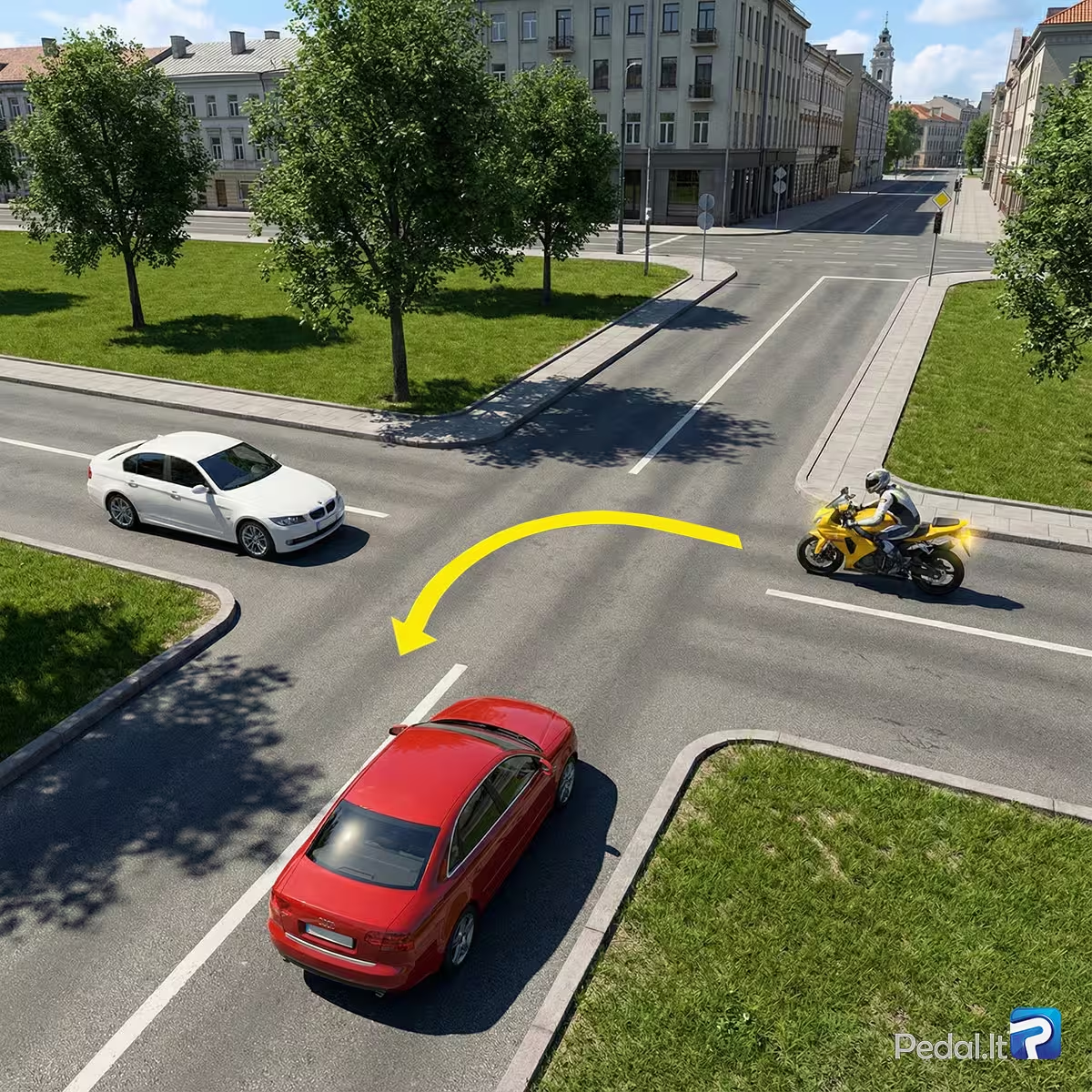
What is the motorcycle's order of passage through the intersection? The rider is turning left.
At an uncontrolled intersection of roads with equal priority, drivers must yield to vehicles approaching from the right when their paths intersect. A vehicle turning left must give way to oncoming traffic that is going straight or turning right. In this scenario, the red car goes first because the motorcycle, which had entered the intersection, stopped to yield. The white car proceeds next, since it no longer has a vehicle to its right, and finally the motorcyclist completes the maneuver — the motorcycle goes third. (RTR 155; RTR 157.)
1. First.
2. Third.
3. Second.
If an inspecting officer stops you, what must you switch on?
RTR 91. If the vehicle is fitted with hazard warning lights, they must be switched on: 91.3 when the vehicle is stopped by an inspecting officer. JB
1. The horn (audible warning).
2. Hazard warning lights (emergency flashers).
Which of the following are warning signals?
RTR 81. Warning signals include: using turn and brake lights (arm signals may be used), sounding the horn, switching the headlights on and off, activating hazard warning lights or flashing amber beacons, and placing a warning triangle on the road or attaching it to the vehicle.
1. Brake light signal.
2. Indicating a turn using an arm signal.
3. Horn signal.
4. Switching the headlights on and off.
5. Placing a warning triangle on the road.
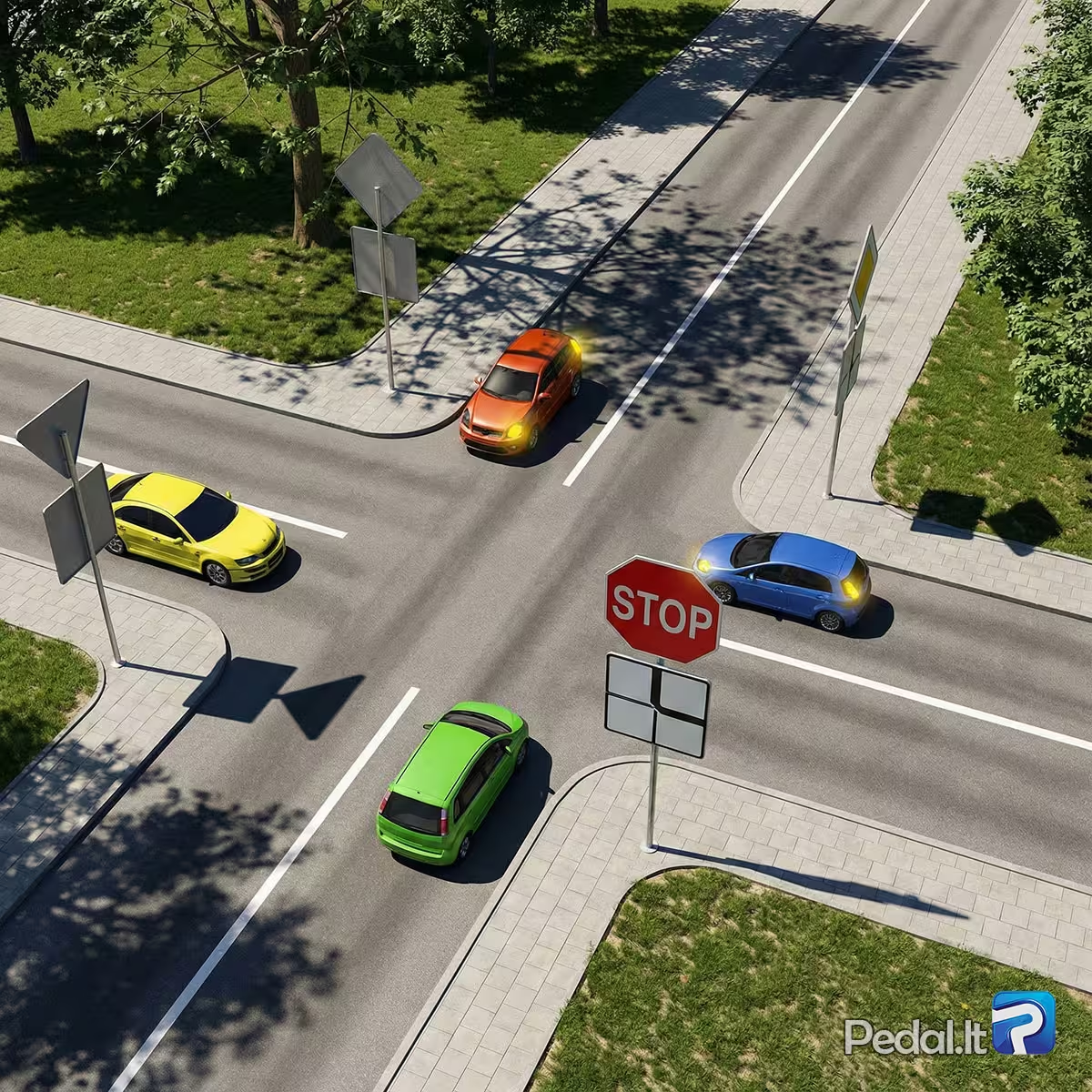
What is the correct sequence in which the vehicles will pass through the intersection?
The red and blue vehicles are on the priority (main) road, so they proceed first. Between them the priority-to-the-right rule applies: the red vehicle goes first because no vehicle is approaching from its right, followed by the blue vehicle. Vehicles on the side road follow: the green vehicle goes next (it has no vehicle to its right), and last is the yellow vehicle. RTR 154. At a controlled intersection, drivers on a side road must yield to vehicles on the priority road. RTR 156. If the main road’s direction changes at the intersection, drivers on the main road must, with respect to one another, follow the rules for intersections of roads of equal importance; drivers on the side road must apply those same rules among themselves. RTR Annex 2.204. 'STOP' — drivers must not proceed without stopping before the stop line or, if there is no line, before the sign. A driver must yield to vehicles traveling on the road he or she is about to cross. If panel No. 843 'Direction of Priority Road' is installed below the sign, the driver must yield to vehicles on the priority road.
1. Red, then blue, then yellow, and finally green.
2. Red, then blue, then green, and finally yellow.
3. Blue, then red, then green, and finally yellow.
4. Green, then blue, then yellow, and finally red.
What or who provides a driver with useful information while driving on the road?
A driver obtains information from: - the road itself; - the surrounding environment; - moving road users (vehicles, pedestrians, road workers, etc.); - stationary objects on the road (central islands, speed bumps, road markings, etc.); - road signs; - traffic lights; - the condition of the road surface; - environmental and weather conditions. RTR 53: Passengers must not distract the driver or interfere with their driving.
1. From the road and the surrounding environment.
2. From moving and stationary objects on the road.
3. From road signs and traffic lights.
4. From passengers.
What must you do on an unlit road at night when repairing your car?
RTR 151. If a vehicle is forced to stop where standing or parking is prohibited, the driver must switch on the hazard warning lights if available and/or place a warning triangle on the road as specified in Paragraph 92 of the Rules, and remove the vehicle from the road as soon as possible. If the driver intends to stop on unlit sections of road during the hours of darkness or when visibility is poor, and the hazard warning lights are not available or are inoperative, the vehicle must be parked off the carriageway. If that is impossible, the stopping location must be marked as specified in Paragraph 92 of the Rules.
RTR 92. If the emergency light signalling system is not fitted or is defective and an emergency stop is required where stopping or parking is prohibited, in the event of an accident, or where the stopped vehicle would be visible to other road users from less than 100 metres, the driver of a motor vehicle (other than a motor moped or a motorcycle without a trailer), a tractor or a self-propelled machine must immediately erect an emergency stop sign on the side of the carriageway opposite the direction of travel: in built-up areas not closer than 25 m, and outside built-up areas not closer than 50 m to the stopped vehicle. If at least one rear position lamp is defective and the emergency light signal does not work when driving in the dark or in poor visibility, an emergency stop sign must be affixed to the rear of the vehicle in order to continue driving.
Law on Road Traffic Safety art. 13.14. The driver of a motor vehicle, tractor or self-propelled machine who stops at night on an unlit road or in conditions of poor visibility, except in designated parking spaces, must wear a high-visibility vest with reflective elements.
JB
1. Switch on the hazard warning lights (emergency flashers).
2. Place a warning triangle on the road if the hazard lights are unavailable or inoperative.
3. Wear a high-visibility vest with reflective elements.
4. Station a person to warn other drivers by waving their arms.
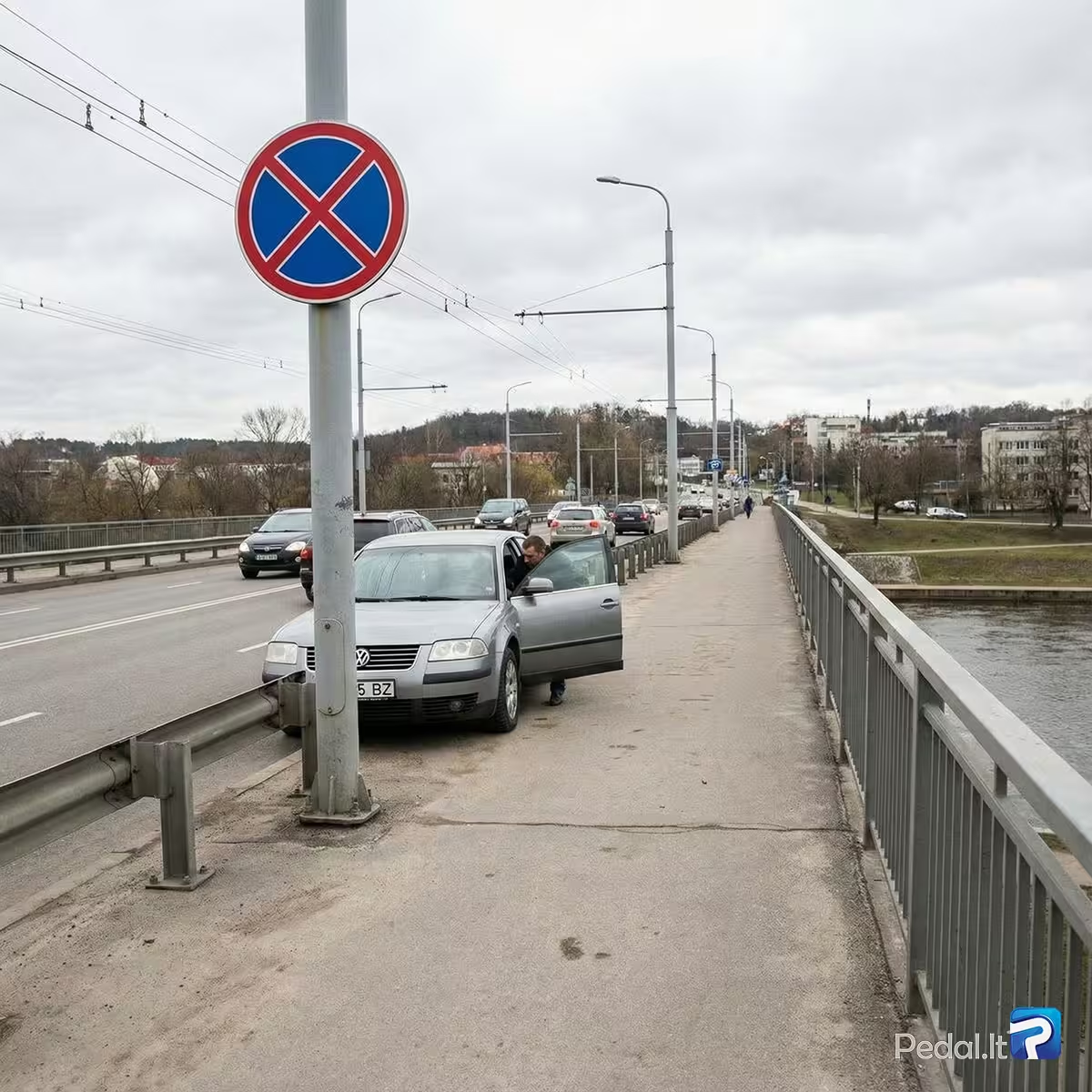
Are drivers permitted to stop or park their vehicles on a bridge if they do not obstruct traffic flow?
RTR – 150. Standing and parking are prohibited: 150.3 on and under bridges, viaducts and flyovers — except where parking is expressly permitted by road signs indicating a parking space — and in tunnels.
1. Yes — it is permitted.
2. Parking is permitted only where road signs explicitly designate a parking space.
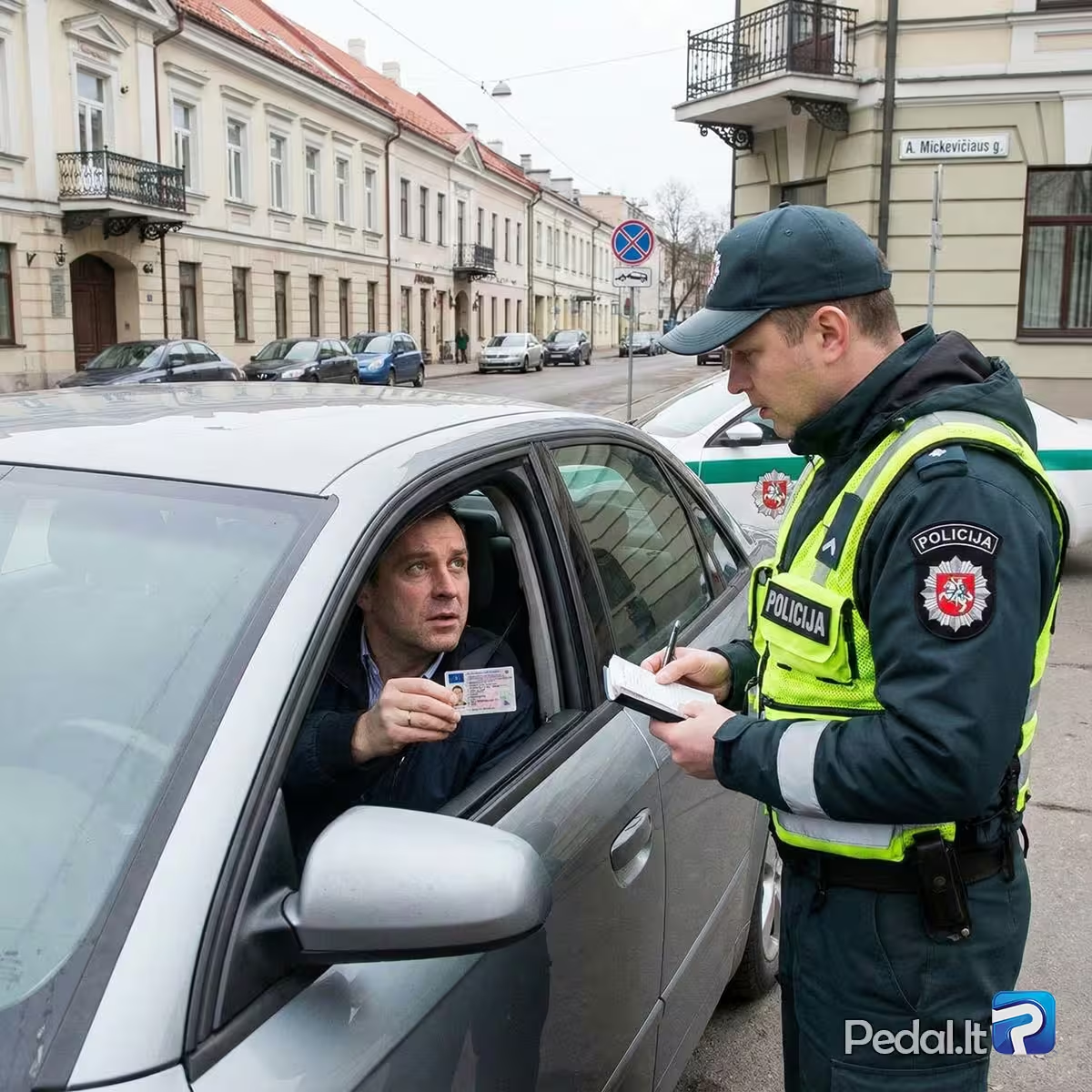
Is a person without a valid driving licence in the Republic of Lithuania permitted to drive (as opposed to only learning to drive) a motor vehicle?
Driving licences issued in Lithuania, in other EU Member States, and in certain other countries are recognised in Lithuania. This question, however, asks whether a person may drive in Lithuania without a valid driving licence (including one issued abroad). The correct answer is “No”.
LAW ON ROAD TRAFFIC SAFETY — Article 13(1): Persons who do not have the right to drive a motor vehicle, tractor, or self-propelled work machine; who are intoxicated; who are under the influence of narcotic, psychotropic or other psychoactive substances; or who have not taken the legally required daily rest must not drive. In addition, a person who is fatigued or ill must not drive if doing so could endanger road safety. A vehicle must not be entrusted to a person affected by any of the factors listed above or who is not authorised to drive that type of vehicle.
1. No — they are not permitted to drive.
2. Yes — they are permitted to drive.
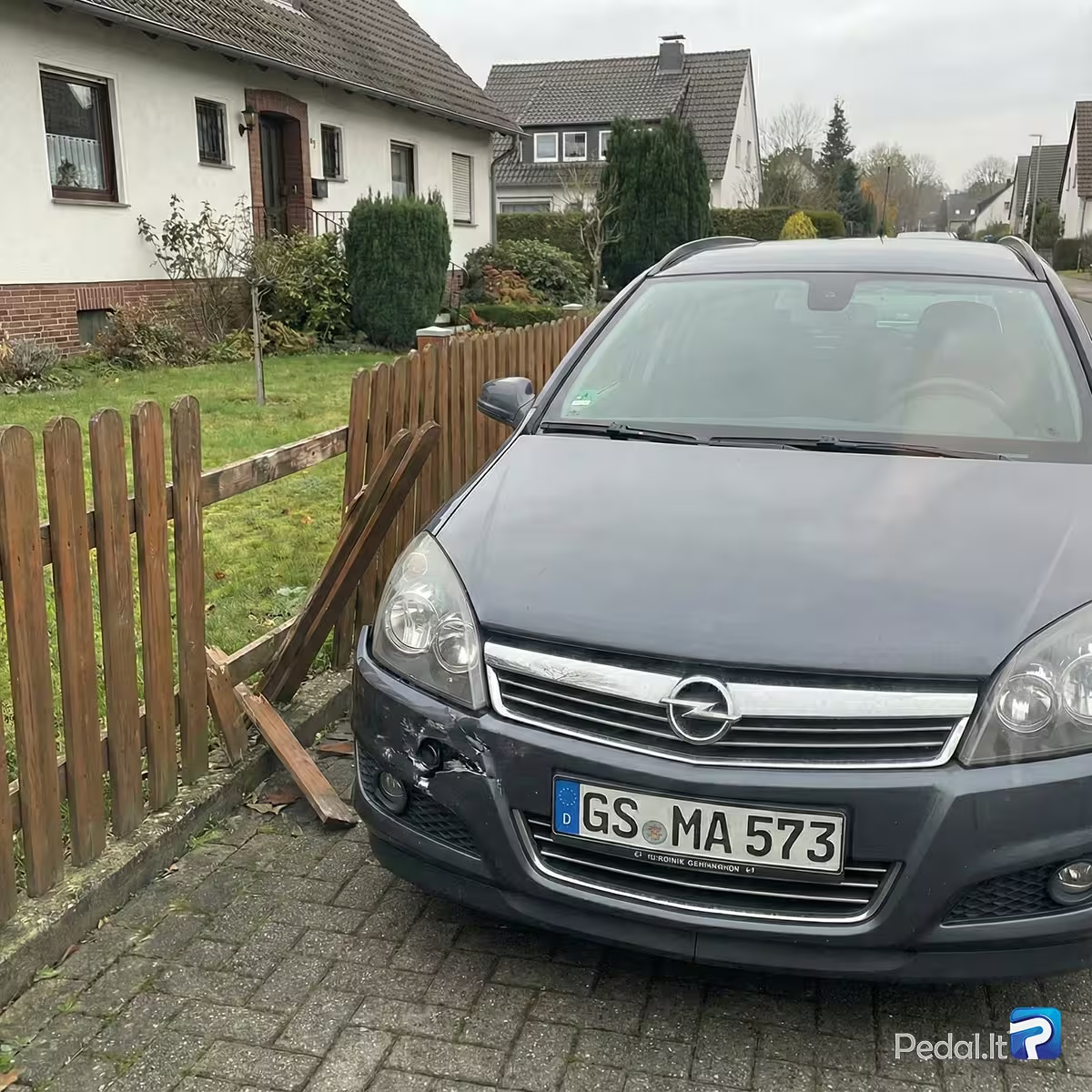
You have damaged the fence of a private property with your vehicle while the owner is absent. What must you do?
1. Leave a note with your contact information and then leave the scene.
2. Attempt to repair the damage yourself if it is safe and feasible.
3. Notify the police and remain at the scene until instructed otherwise.
4. Drive away from the scene because the property owner is absent.
What should drivers do when approaching an intersection where the green traffic light is flashing?
According to the Road Traffic Rules (RTR 73.3), a flashing green light permits traffic to proceed but indicates that the green phase is ending and that a prohibitive signal will soon appear. Drivers who try to speed through the intersection — by accelerating or overtaking — take unnecessary risks and may cause an accident. Other drivers may brake suddenly; therefore, to pass the intersection safely while the green light is flashing, drivers must ensure their actions will not obstruct other vehicles and must consider the behavior of drivers behind them, since sudden braking can also lead to collisions. Anticipating the need to stop before the intersection, drivers should reduce their speed.
1. Observe and take into account the actions of vehicles ahead.
2. Accelerate to the maximum allowable speed.
3. Be aware of and consider the actions of drivers behind you.
4. Reduce your speed.
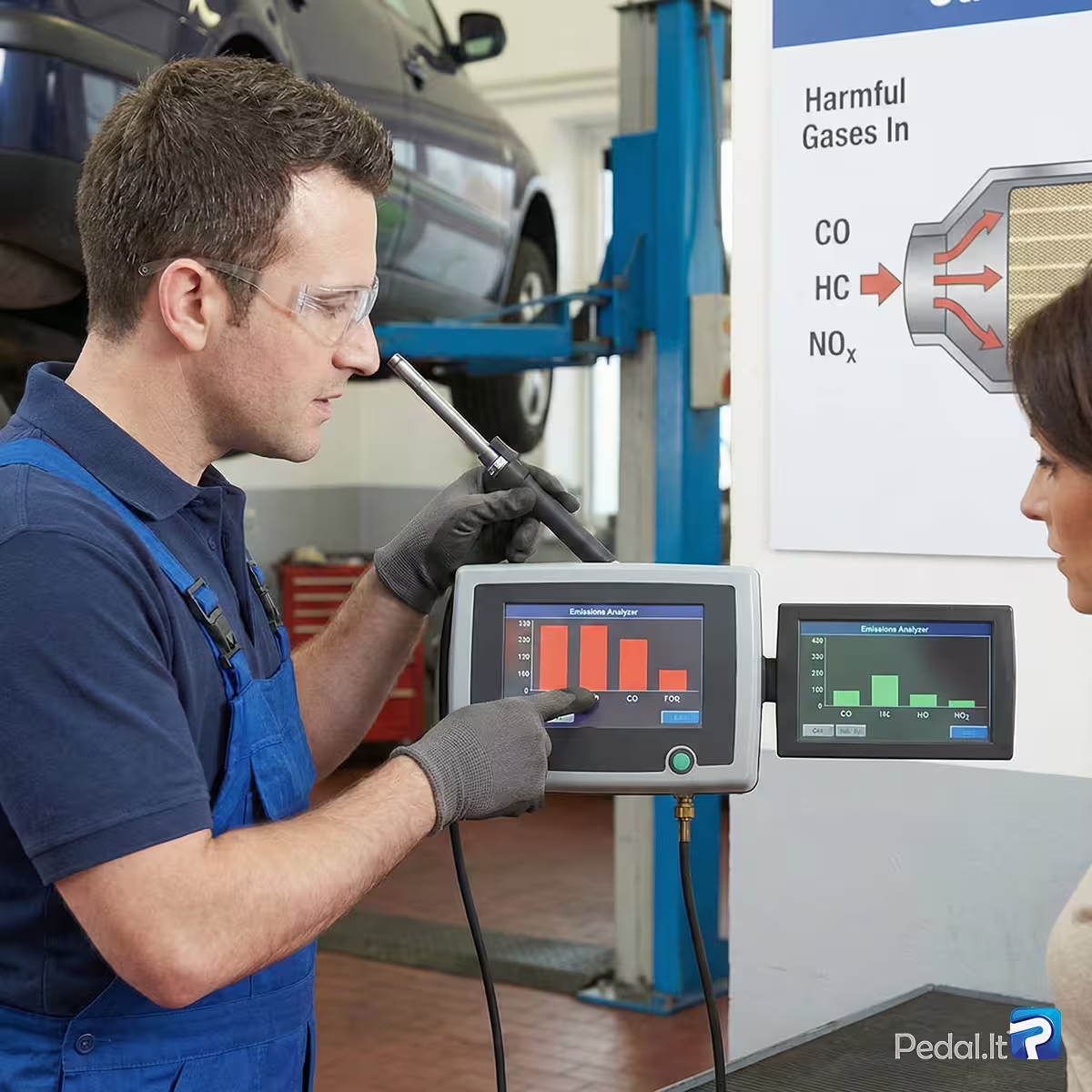
Why does a car need a catalytic converter in its exhaust system?
A catalytic converter neutralises (burns) harmful exhaust gases. It converts three toxic substances—carbon monoxide (CO), nitrogen oxides (NOx), and unburnt hydrocarbons (UHC)—into non-toxic substances through oxidation and reduction reactions. Its purpose is not to dampen engine noise; that is the role of the muffler (silencer). Removing a catalytic converter can alter the car's exhaust sound and often makes it louder or harsher, but this is only a side effect, not the converter's primary function.
1. To reduce engine noise.
2. To neutralise harmful pollutants in the exhaust gases.
3. To reduce fuel consumption.
You are on the right side of the road and are about to start moving. A goods vehicle is behind you. What should you take into consideration?
101. Before starting to move, changing lanes, or otherwise altering course, drivers must ensure the manoeuvre is safe and give way to other road users (i.e., avoid creating obstructions).
1. You may not notice vehicles traveling in the same direction that are approaching or about to overtake you.
2. Other drivers may fail to see your left‑turn indicator.
If, because of its large size or for other reasons, a vehicle cannot turn (or turn around) from the edge position, it may perform the turn:
RTR 107. If, because of large dimensions or other reasons, a vehicle cannot turn (or make a U‑turn) from the edge position, it may execute the turn from a location other than the lane edge designated for travel in that direction, provided the manoeuvre does not obstruct other vehicles or create hazards for other road users.
1. At a location other than an intersection.
2. Outside a built-up (urban) area.
3. Not from the edge of the carriageway, provided the manoeuvre does not obstruct other vehicles or create hazards for other road users.
A vehicle is more stable in a turn when:
The higher a vehicle's center of gravity (for example, when carrying tall loads or items on the roof), the greater the risk of rollover when cornering.
1. The vehicle's center of gravity is higher.
2. The vehicle's center of gravity is lower.
How can you confirm that all the lights on your vehicle are functioning?
Drivers should check that all vehicle lights are working before every long journey and at least once every six months. Properly functioning lights help you assess road conditions accurately and reduce the risk of accidents.
1. Turn on all vehicle lights and, each time you exit the car, walk around it to verify that they are illuminated.
2. You do not need to inspect your car's lights; instead, replace the bulbs every six months.
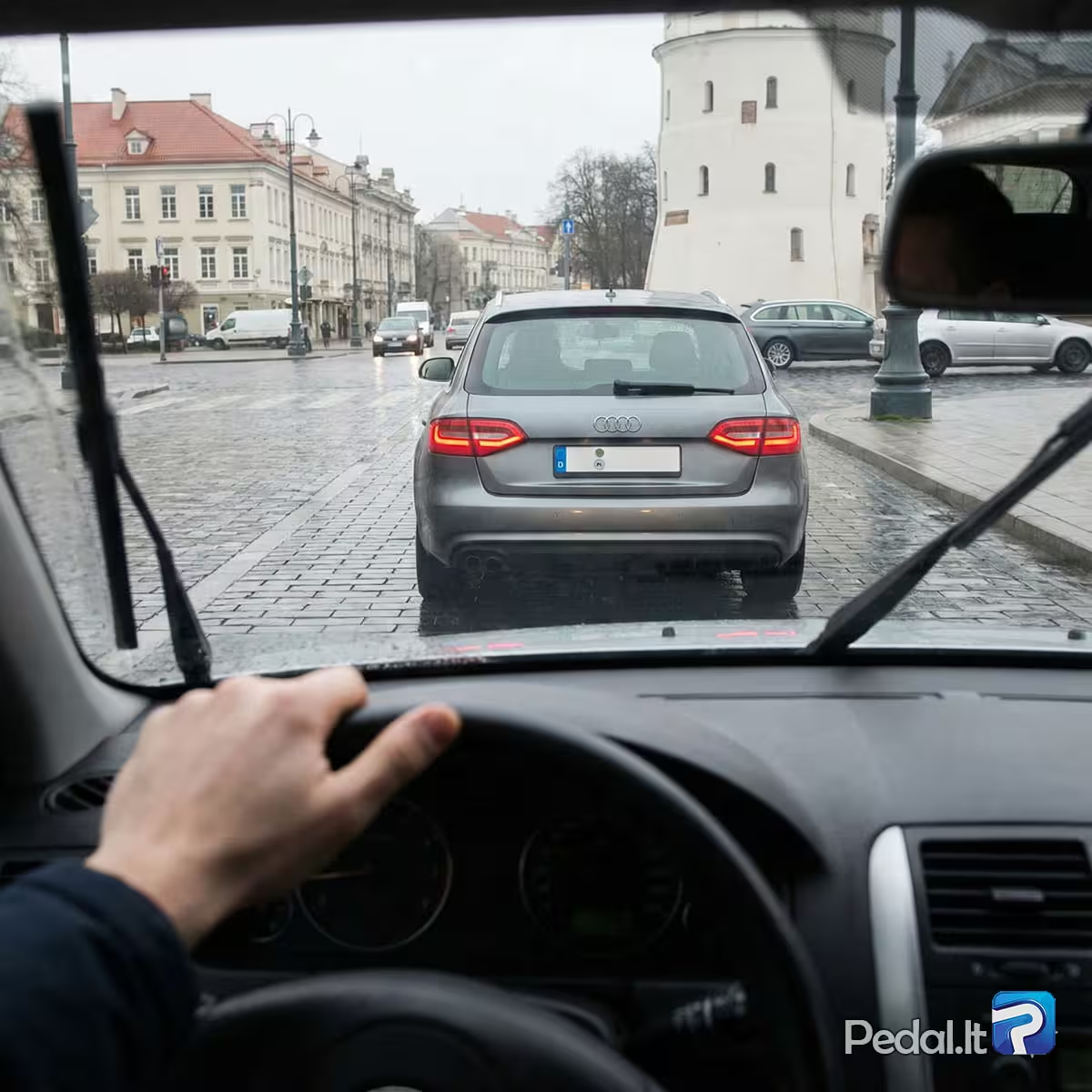
A vehicle with foreign license plates is driving ahead. What might you expect from that vehicle?
Drivers from other countries who are unfamiliar with local roads may have difficulty orienting themselves; they might make unexpected maneuvers, signal late before turns, or brake suddenly.
1. It may make unexpected maneuvers.
2. The driver may signal too late before turning at an intersection.
3. The vehicle may stop suddenly.
While stopped uphill at a traffic signal, the best method to keep a manual-transmission car stationary is to:
When stopped uphill at a red traffic light, the recommended way to keep a manual-transmission car stationary is to use the parking brake. This is especially advised for inexperienced drivers, as it makes starting away easier and reduces the risk of rolling backward.
1. Apply the parking brake.
2. Select first gear and partially release the clutch to hold the vehicle.
3. Leave the vehicle in gear and switch off the engine.
4. Apply and hold the service (foot) brake.
What are the common signs that a car battery is dead?
Select the signs that indicate the car battery may be dead.
1. When attempting to start the car, the starter motor does not engage or cranks very slowly.
2. When attempting to start the car, the dashboard lights dim or go out.
Who is authorized to teach someone to drive a category B vehicle?
For more information about learning to drive with a family member: http://www.teises.lt/kaip-gauti-teises/mokymasis-vairuoti-su-seimos-nariu
1. A person who fulfills the requirements for a driving instructor and is authorized, under the prescribed procedure, to work as an instructor at a driving school.
2. A person who has passed the category B practical driving test at the state enterprise "Regitra" in accordance with the prescribed procedure.
3. A person with at least five years of category B driving experience.
4. A family member of the learner who has at least five years of category B driving experience and is not disqualified from driving.
Which type of skid is most difficult to control?
Sudden braking on a slippery road can cause a vehicle to begin sliding. In such a situation the driver should stop braking and then take specific actions depending on which wheels are driven. For front-wheel-drive cars, the driver should gently apply the accelerator and correct the vehicle’s path with the steering wheel. For rear-wheel-drive cars, the driver should release the accelerator and, after a slight reduction in speed, steer into the direction of the slide to correct the trajectory. The most difficult situation is when both axles begin to slide; this requires very precise and decisive actions from the driver. JB
1. When the front axle is slipping.
2. When the rear axle is slipping.
3. When both axles are slipping.
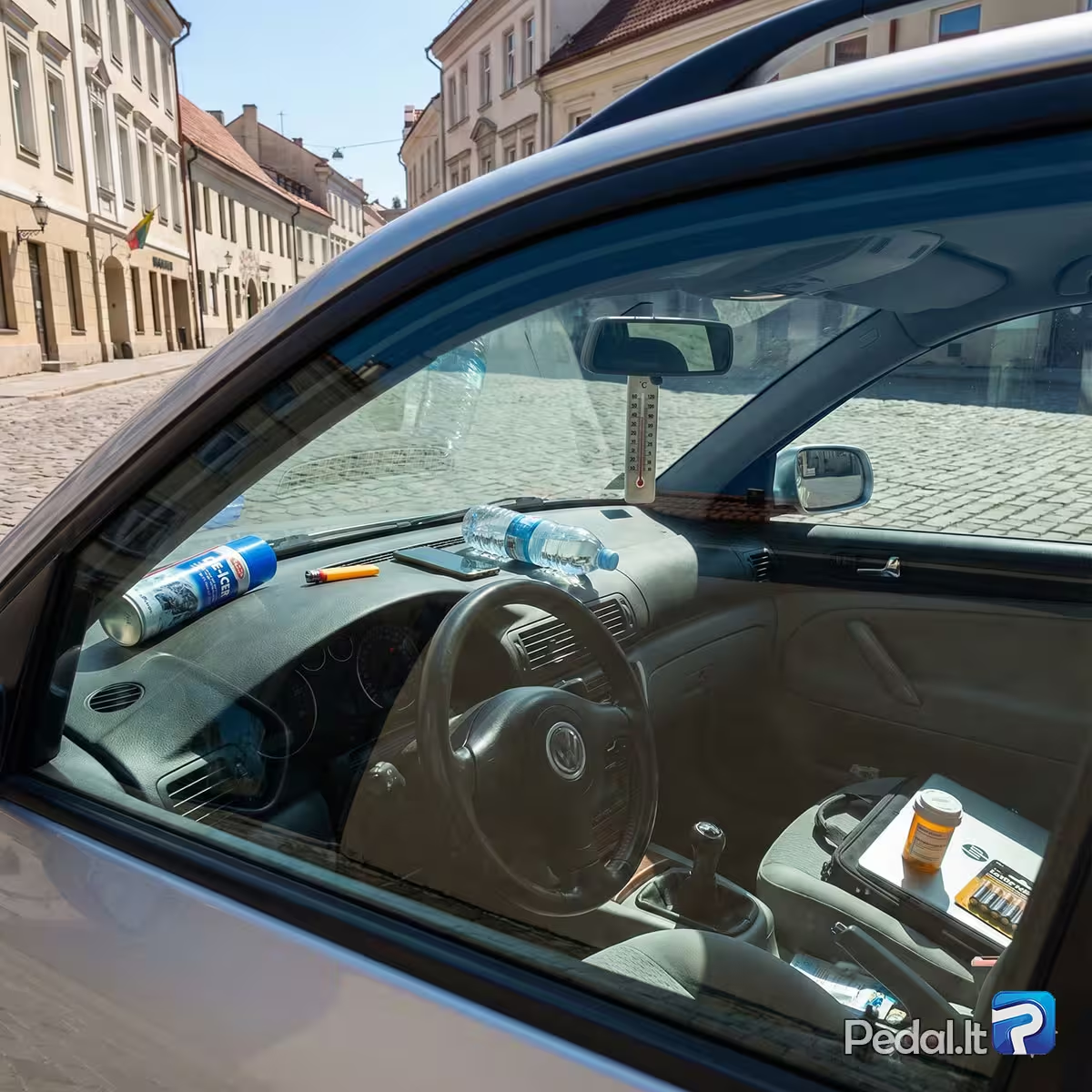
Which items must not be left in a vehicle?
Vehicle documents should not be left in the vehicle, as they can be readily used by thieves. Valuable items must not be left in plain view inside the vehicle because they may attract opportunistic burglaries. Leaving liquids, such as soft drinks, inside the vehicle does not compromise its safety. (RTR 147) A driver may leave the vehicle unattended only after ensuring it cannot move on its own and that unauthorised use is prevented.
1. Vehicle documents (registration and insurance papers).
2. Valuable items left in plain view inside the vehicle.
3. Liquids (e.g., soft drinks).
Your car veers to one side only while braking (it travels straight when not braking). What is the likely cause?
Incorrect tyre pressure usually causes the vehicle to pull to one side during normal driving, not only when braking. If the car only pulls while braking, uneven braking is the likely cause — for example, a seized caliper, sticking pads, or poor adjustment causing one side to brake harder. Low brake fluid will reduce braking effectiveness or cause pedal problems, but it typically does not make the car swerve to one side only when braking.
1. Tire pressures are incorrect or uneven.
2. The wheel brakes are applying unevenly.
3. Brake fluid level is insufficient.
What is the lowest speed at which a collision can be fatal?
Even at 30 km/h, a collision can seriously endanger the health or life of drivers and passengers. For example, in a head-on collision between two vehicles travelling in opposite directions.
1. 50 km/h.
2. 30 km/h.
3. 80 km/h.
1 of 30 Task
Time left: 00:00:00
1
2
3
4
5
6
7
8
9
10
11
12
13
14
15
16
17
18
19
20
21
22
23
24
25
26
27
28
29
30