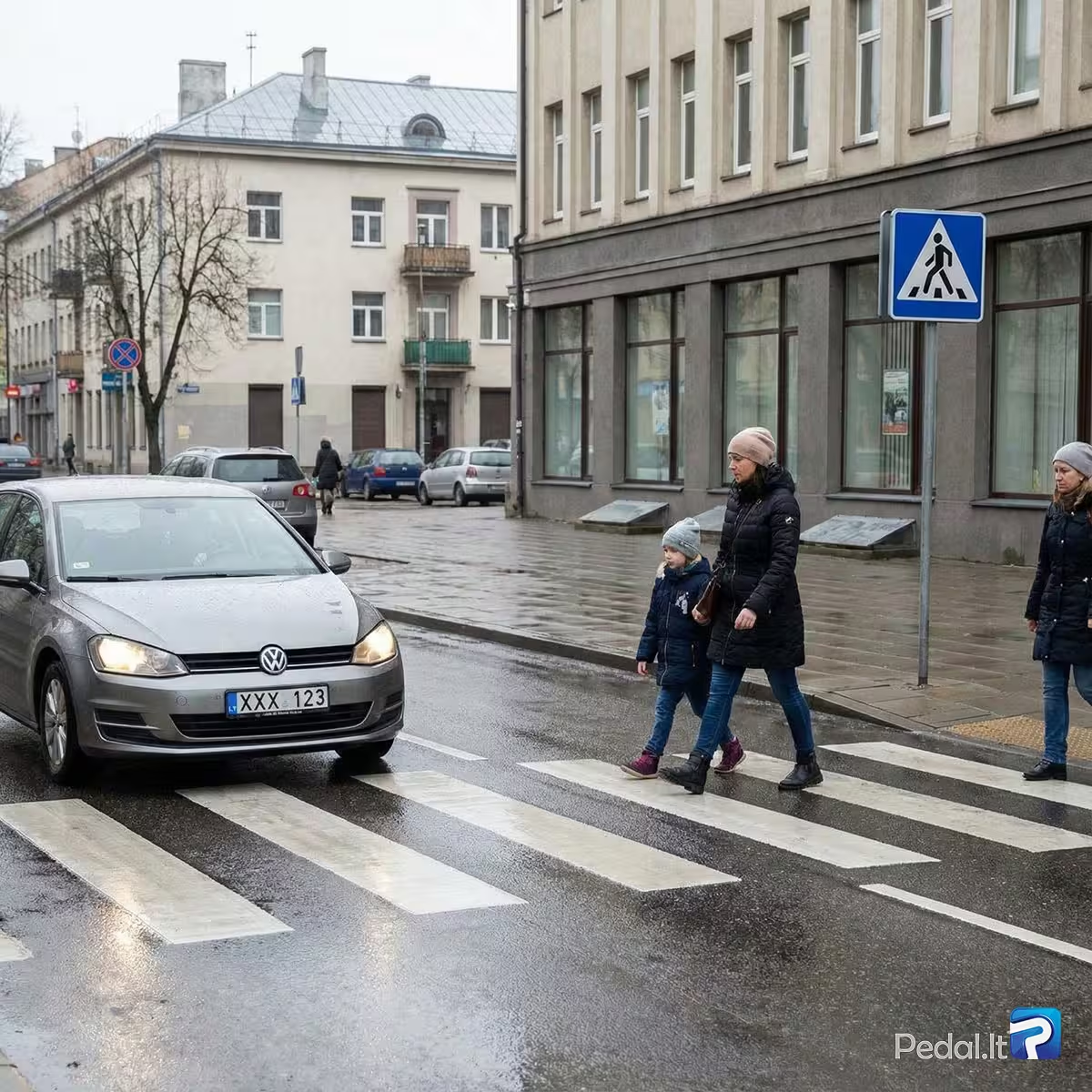
At this pedestrian crossing, you must yield to:
RTR 30. When approaching an uncontrolled pedestrian crossing, a driver must slow down or stop before the crossing to yield to pedestrians who have stepped into any lane, are walking in any lane, or are standing at the edge of the carriageway waiting to step into a lane in the direction of the vehicle's travel (or into any lane on a single-lane road with traffic in both directions). Drivers must exercise extra caution at night, in poor visibility, or when the crossing is not clearly visible from the driver's position, and must ensure there are no pedestrians entitled to priority at the crossing.
1. Pedestrians who have stepped into the lane carrying oncoming traffic.
2. Pedestrians standing at the curb adjacent to the crossing.
3. Pedestrians who have stepped into the lane in which you are travelling.
Who must give way on a signed slope when an obstruction is present?
On slopes marked with the appropriate road signs, the vehicle traveling downhill must give way when an obstruction is present, regardless of which side the obstruction occupies (RTR 139). However, if it is difficult for two vehicles to pass each other, the driver whose side has the obstruction should give way.
1. The driver traveling uphill.
2. The driver whose side of the road has an obstruction.
3. The driver traveling downhill.
4. The driver whose side of the road has no obstruction.
Persons holding a school-issued certificate are permitted to ride bicycles on roads starting at what age?
Persons under 14 years of age are not permitted to ride bicycles on roads. However, those who complete an additional training course and obtain a school-issued certificate may ride on roads from age 12. Within residential areas, there is no minimum age restriction for cyclists.
1. 12 years of age.
2. 14 years of age.
3. 16 years of age.
Which of the following statements is correct?
It is always safer to exit a yard or a residential area facing forward, because this provides a better view of the road you are entering. Reversing out of such areas may cause you to miss other road users to whom you must yield. KET 114: When reversing, the driver must give way to other road users.
1. Avoid reversing out onto the road from adjacent premises.
2. Never reverse from the road into adjacent premises.
3. If possible, reverse from adjacent premises onto the road.
4. If possible, reverse from the road into adjacent premises.
Before making a turn, drivers must ensure that:
Before making a turn, drivers must reduce speed and ensure their vehicle does not enter the lane of oncoming traffic or that the rear wheels do not mount the pavement. RTR 108. The turning manoeuvre must be executed so that vehicles do not encroach on the oncoming-traffic lane when entering or leaving the intersection. If a turn is made from a single lane, the driver may choose any lane of the carriageway into which they are turning. If turning is permitted from multiple lanes, drivers must remain in their lane and must not obstruct a vehicle turning from an adjacent lane.
1. Their vehicle does not enter the lane designated for oncoming traffic.
2. The rear wheels of their vehicle do not mount the pavement.
If an inspecting officer stops you, what must you switch on?
RTR 91. If the vehicle is fitted with hazard warning lights, they must be switched on: 91.3 when the vehicle is stopped by an inspecting officer. JB
1. The horn (audible warning).
2. Hazard warning lights (emergency flashers).
After depressing the clutch lever, you should hold it down only as long as necessary to:
3.3. Clutch control: 3.3.3. Keep the clutch lever depressed only for the time necessary to engage, change, or disengage a gear, to start moving, to stop, or to maneuver at low speed;
1. Engage a gear.
2. Engage or disengage a gear.
3. Start moving the vehicle.
4. Stop the vehicle or maneuver at low speed.
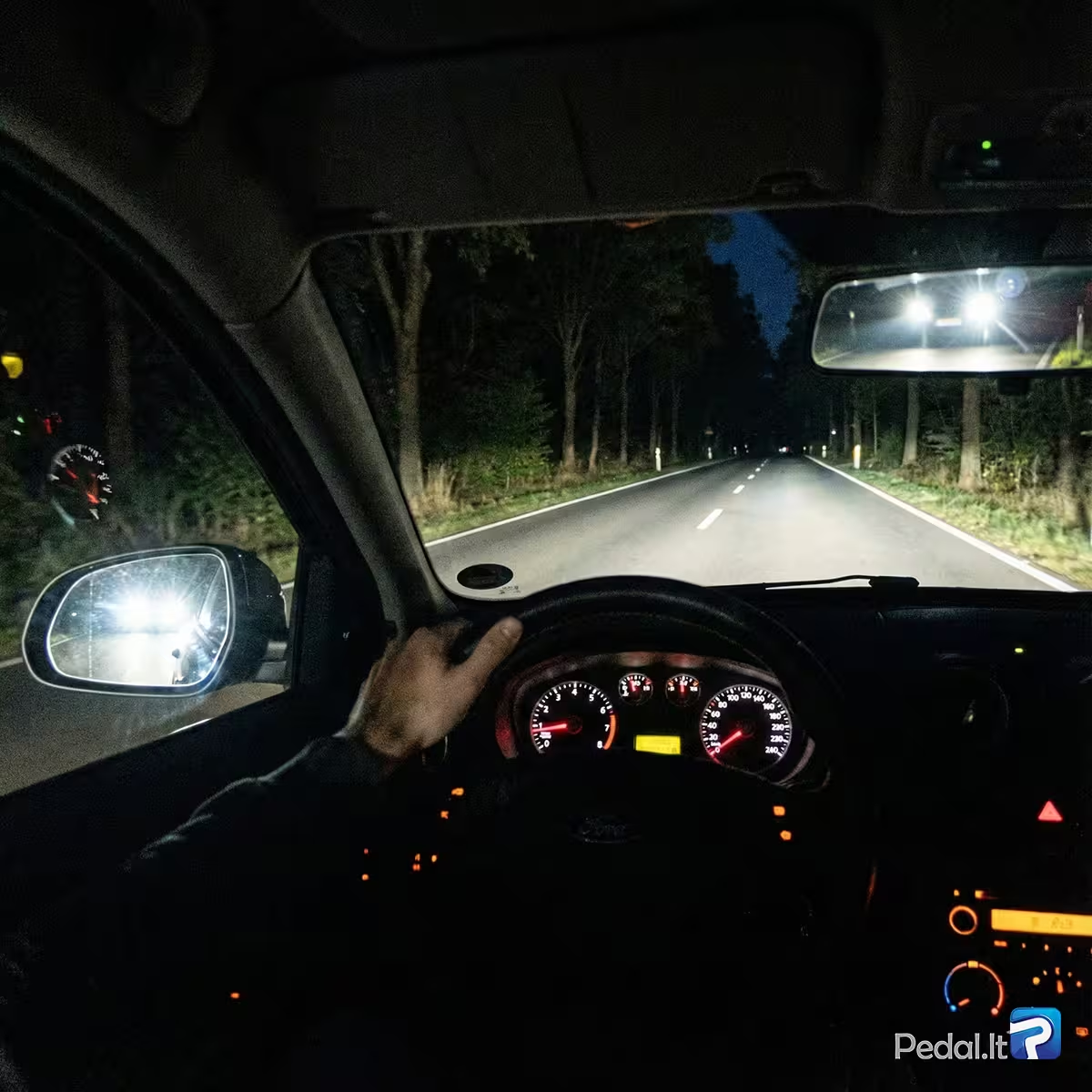
What must the drivers do if one vehicle catches up to the other while both are driving outside a settlement with their headlights on high beam?
The driver of the following vehicle must dip their headlights so as not to dazzle the driver ahead. The vehicle in front should switch to low beam only if the following vehicle begins to overtake, to avoid dazzling that driver. RTR 95. During darkness or in poor visibility, main beam headlights must be switched to low beam: 95.1 on illuminated roads; 95.2 when the distance to a vehicle approaching from the opposite direction is at least 150 m; 95.3 in other cases when main beam lights can dazzle other drivers (even travelling in the same direction). JB
1. The driver of the vehicle ahead must switch from high beam to low beam when the following vehicle begins to overtake.
2. The driver of the vehicle ahead must activate the hazard warning lights.
3. The driver of the following vehicle must switch from high beam to low beam.
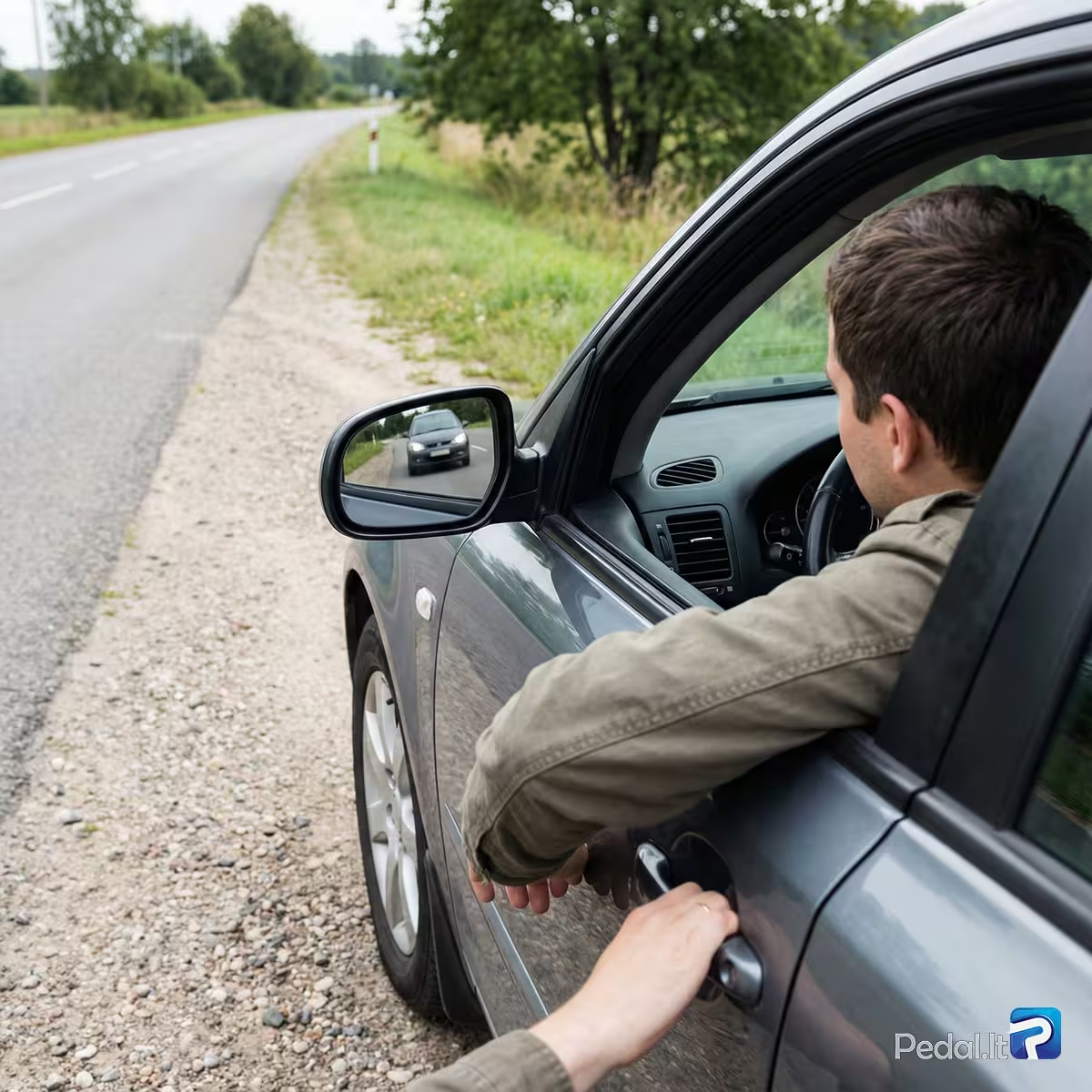
After stopping on the right-hand shoulder, what should a driver check before opening the door?
Vehicles may be approaching from the rear on the left-hand side, so opening the door could be unsafe. (RTR 148) Do not open the doors of a parked vehicle if doing so would create an obstruction or pose a hazard to other road users.
1. Vehicles approaching from behind on the left-hand side.
2. Vehicles approaching from behind on the right-hand side.
3. They do not need to pay attention to anything specific.
Which of the following correctly describes stopping distance?
Stopping distance is the distance a vehicle travels from the moment the driver notices an obstruction until the vehicle comes to a complete stop. Braking distance is the distance the vehicle travels from the moment the brakes are fully applied until it stops. Reaction distance is the distance the vehicle travels from the moment the driver detects an obstruction until the driver begins to apply the brakes.
1. The distance a vehicle travels from the moment the driver detects an obstacle until the vehicle comes to a complete stop.
2. The distance a vehicle travels until the braking force is transmitted to the wheels.
3. The distance a vehicle travels from the moment braking begins until the vehicle comes to a complete stop.
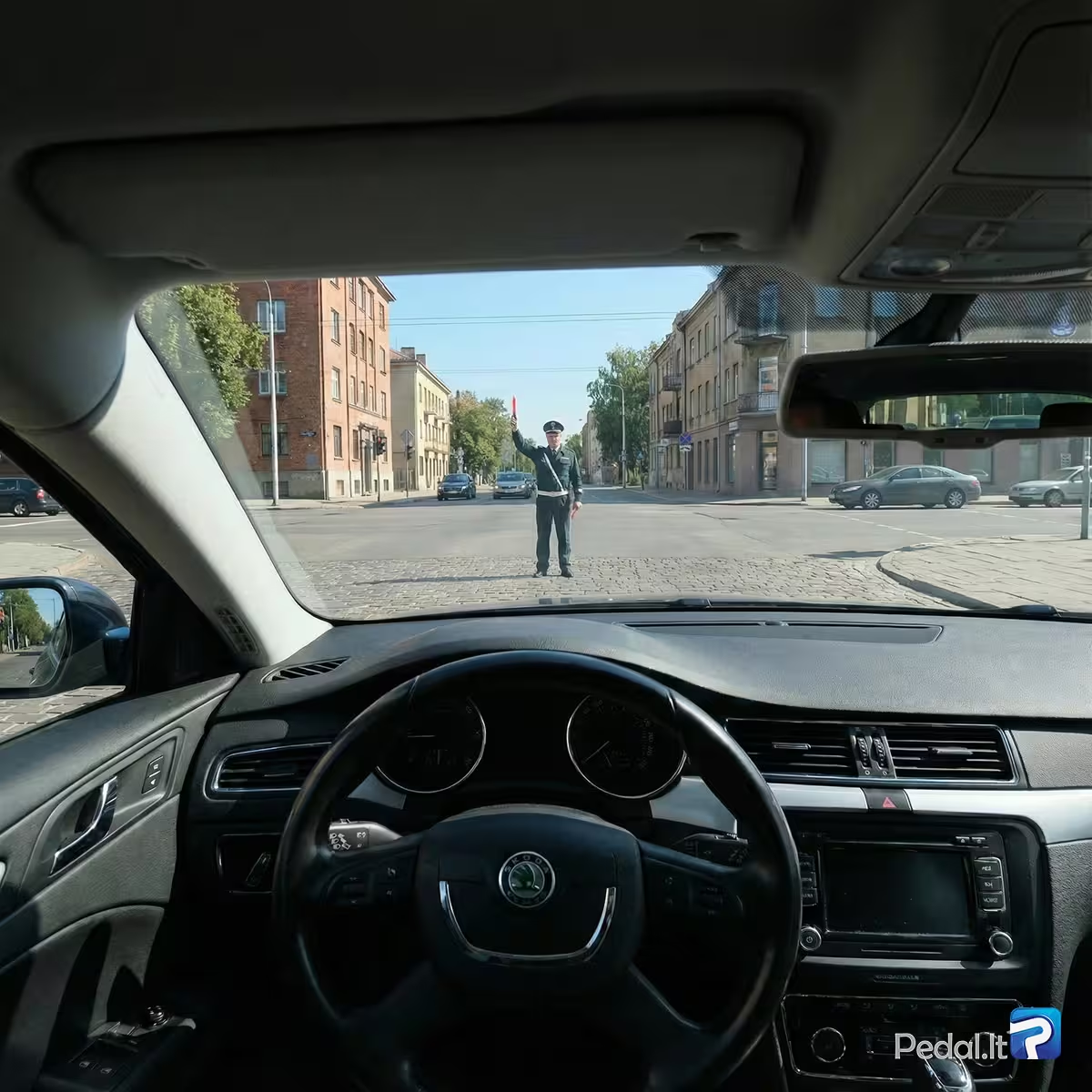
Are you permitted to proceed in this situation?
RTR 77. Signals given by traffic officers have the following meanings: 77.3. Arm raised upward: 77.3.1. All road users must not proceed in any direction.
1. Yes — you may proceed.
2. No — you must not proceed.
Which of the following are warning signals?
RTR 81. Warning signals include: using turn and brake lights (arm signals may be used), sounding the horn, switching the headlights on and off, activating hazard warning lights or flashing amber beacons, and placing a warning triangle on the road or attaching it to the vehicle.
1. Brake light signal.
2. Indicating a turn using an arm signal.
3. Horn signal.
4. Switching the headlights on and off.
5. Placing a warning triangle on the road.
What documents must the driver of a motor vehicle bring when summoned by the police to appear at the specified time?
8. After receiving a summons from the police, the road user must appear at the police station at the specified time. He must bring an identity document and any other documents listed in the summons. JB
1. In all cases, the person must present an identity document. Additionally, if specified in the summons, they should bring the vehicle's state technical inspection certificate, the compulsory civil insurance policy for the vehicle, and the driver's licence.
2. A driver's licence in every case.
3. A valid medical fitness certificate for driving.
4. A certificate of completion of the mandatory first-aid training.
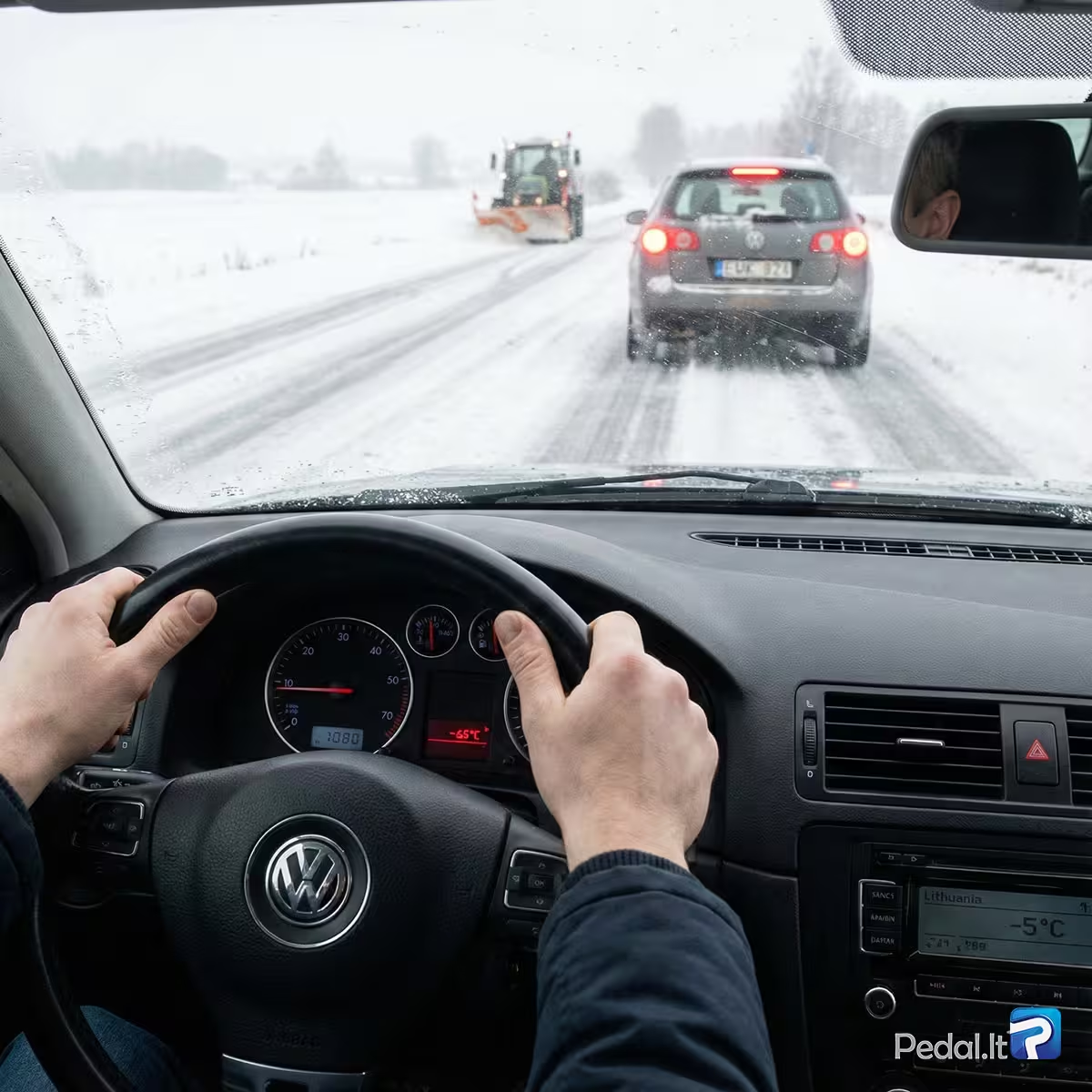
Which factor is considered the primary risk when driving on snowy roads?
1. Driver error (human factor)
2. Adverse weather conditions
3. Slippery road surface
Which of the following statements is correct?
During the summer season, it is permitted to drive on winter tyres that do not have studs. Such winter tyres are often used in summer when their tread depth is approximately 3 mm; during the winter season winter tyres may be used if their tread depth is at least 3 mm. The tread depth of tyres used in the summer season must not be less than 1.6 mm. RTR XXX. REQUIREMENTS FOR VEHICLES (p. 223-235) 229. Vehicles with studded tyres must not be used from April 10 to October 31. During the warm season, it is recommended to use vehicles with summer tyres. If winter conditions are prolonged, an order of the Minister of Transport and Communications may extend the permitted period for using studded tyres. 230. From November 10 to March 31, motor vehicles other than mopeds, motorcycles, tricycles, all types of quadricycles, and trailers must not be operated with summer tyres. Mopeds, motorcycles, tricycles, and all types of quadricycles fitted with summer tyres must not be operated in December–February, and also from March to November if any part of the carriageway is covered with snow or ice. JB
1. Summer tyres may be used in winter.
2. During the summer season, you may drive using winter tyres without studs.
3. You are only allowed to use summer tyres in summer and winter tyres in winter.
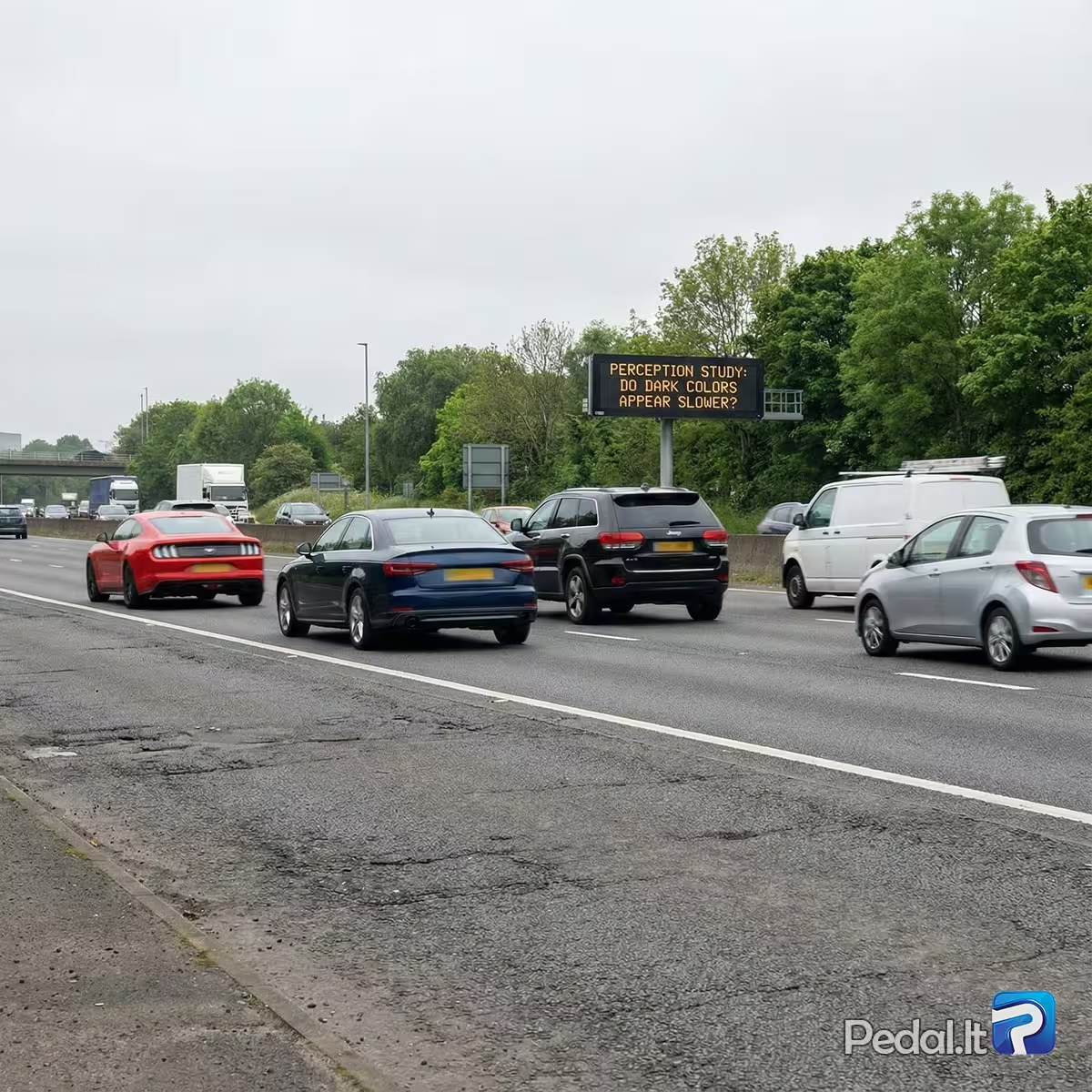
Which colour of vehicle tends to appear to be moving more slowly than it actually is?
Oncoming vehicles painted in dark colours often create the illusion that they are moving more slowly than they actually are.
1. Light-coloured vehicles.
2. Dark-coloured vehicles.
Are you required to signal before changing lanes?
RTR 82. A driver must indicate intended maneuvers using the vehicle's right or left direction indicators, or by arm signals if the indicator lights are unavailable or inoperative. Specifically: 82.1 before starting to move and before stopping; 82.2 before changing lanes, before and after overtaking, before and after passing an obstruction, before turning right or left, before making a U‑turn, and before leaving an intersection where vehicles must circulate around a central point. JB
1. Yes — you must signal.
2. No — you are not required to.
3. Only if other road users are nearby.
.avif)
In this situation, is the driver of the green vehicle permitted to cross the indicated double horizontal line when completing the overtaking maneuver?
He is allowed because the driver of the green vehicle must complete the overtaking maneuver. RTR Annex 3.1.10: A double line composed of two narrow parallel lines — one solid and one broken — separates traffic moving in opposite directions or in the same direction on road sections where lane changing is permitted only from one lane. It also marks locations for U-turns and the entrances and exits of parking areas where travel is allowed in only one direction. Drivers may cross this line from the side of the broken line, and they may also cross it from the side of the solid line only when finishing an overtaking or passing maneuver.
1. No — he is not allowed.
2. Yes — he is allowed.
It is prohibited to operate (permanently use) a vehicle if:
If you discover that the horn is not working, you may drive only to a parking area or a repair facility. However, it is prohibited to operate a vehicle permanently if it does not meet the technical requirements (for example, if the horn, speedometer, or other required systems are not functioning). RTR 223. Vehicles traveling on roads must comply with the technical requirements applicable in the Republic of Lithuania when undergoing mandatory technical inspection. RTR 224. Only motor vehicles and trailers that are in good repair, except in the cases provided for in these Rules, may participate in public traffic in the Republic of Lithuania. Short-term (one-day) participation in public traffic is allowed, pursuant to the prescribed procedure, for vehicles and trailers displaying temporary license plates whose registered owners (keepers) have obtained compulsory motor third-party liability insurance and have paid the applicable fees and taxes for the vehicle or road use. RTR 15. Driving vehicles that are not in proper condition and do not comply with technical requirements for vehicles is prohibited. Before starting to drive, the driver of a motor vehicle, tractor, or self-propelled vehicle must ensure that the vehicle is in good condition, that it carries a warning triangle, fire extinguisher, first aid kit, and any other items mandatory for that type of vehicle, and must monitor the vehicle's technical condition during the journey. If the vehicle breaks down while driving and therefore does not meet the technical requirements and cannot be repaired on site, the driver may proceed, taking all necessary precautions, to the nearest parking area or vehicle repair shop, except in the cases laid down in paragraph 234 of these Rules. JB
1. The horn (sound signal) is not functioning.
2. The speedometer is not functioning.
3. The windshield is cracked and obstructs the driver's view.
.avif)
Which driver will proceed through the intersection in the blue car?
The blue car is on the priority (main) road, so it has the right of way and must proceed first — the fact that the green car is to its right is irrelevant. Only after the blue car has passed may the green car proceed. (RTR 154) At a controlled intersection, drivers entering from a side road must yield to vehicles on the priority road.
1. The second car.
2. The first car.
How would you react if the vehicle began to skid on a wet surface (i.e., started to aquaplane)?
On roads (especially those with ruts) during heavy rain, water can accumulate on the asphalt because it cannot drain quickly toward the edges. If you accelerate under these conditions, the tire treads may be unable to disperse the accumulated water. The vehicle can aquaplane when a wedge of water lifts the tires off the road surface, reducing traction and making the vehicle difficult to control. If a vehicle begins to aquaplane, the driver should reduce speed to regain traction and stability.
1. You would immediately apply the brakes.
2. You would ease off the accelerator to reduce your speed.
3. You would increase your speed.
What factors affect road surface quality and traffic safety?
Manhole covers for underground information and communication systems can be more slippery than the surrounding road surface and may also be uneven.
1. Potholes.
2. Manhole covers for underground information and communication systems.
3. Oil stains on the roadway.
4. Loose gravel or stone chippings on the road.
5. Wet road surface (slippery conditions).
Where is overtaking prohibited?
RTR XVI.140. Overtaking is prohibited. Clause 140.8: in residential areas, courtyards of apartment buildings, parking lots, and bicycle streets. JB
1. In parking lots.
2. In the courtyards of multi-apartment residential buildings.
3. In residential areas.
4. On bicycle streets.
At what age can you obtain a category A (motorcycle) driving licence?
Under Article 23 of the Law on Road Traffic Safety, there are two ways to obtain a category A (motorcycle) driving licence. You may obtain category A from the age of 24 without prior experience. Alternatively, from the age of 20 you may obtain category A if you have at least two years' qualifying experience riding category A2 motorcycles. The two-year A2 experience requirement does not apply to applicants aged 24 or older. Separately, the right to drive tricycles (three-wheelers) with power exceeding 15 kW is granted from the age of 21.
1. From the age of 24.
2. From the age of 20, provided you have two years' experience riding category A2 motorcycles.
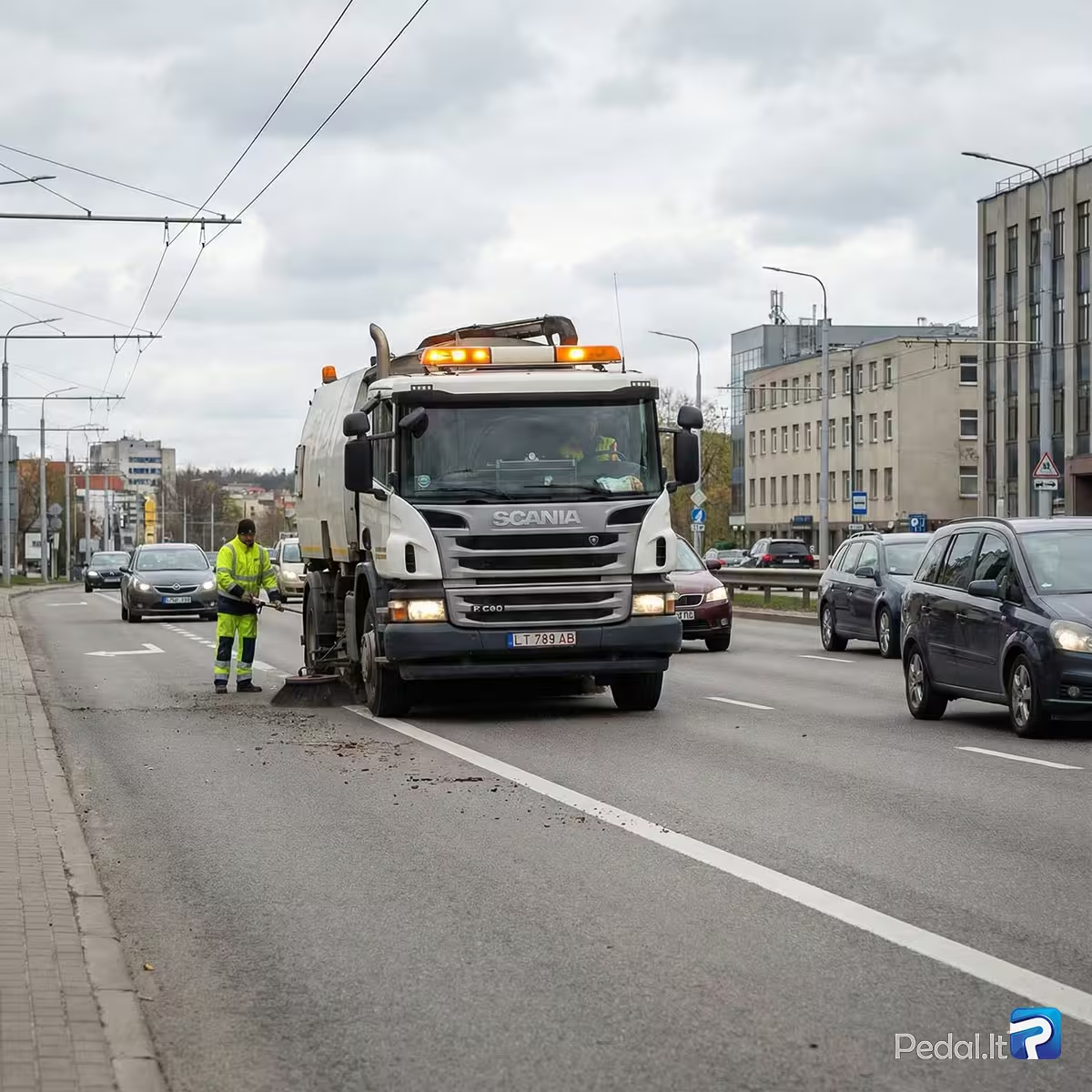
Are drivers of motor vehicles equipped with orange flashing lights permitted to disregard road-marking lines while performing work on the roadway?
Regulation RTR 188: An orange flashing light may be used only when the vehicle obstructs other road users—for example, when the vehicle's loaded or unloaded dimensions exceed permitted limits; when performing work on the roadway; when stopping or standing; when moving at very low speed; when escorting an organized group of cyclists; or when transporting hazardous goods. An orange flashing light does not confer priority; it merely attracts attention and warns other road users of a potential hazard. While driving, standing, or working on the road, drivers of vehicles displaying orange flashing lights must ensure they do not compromise traffic safety.
1. Yes — provided doing so does not jeopardize traffic safety.
2. No — they are not allowed to do so.
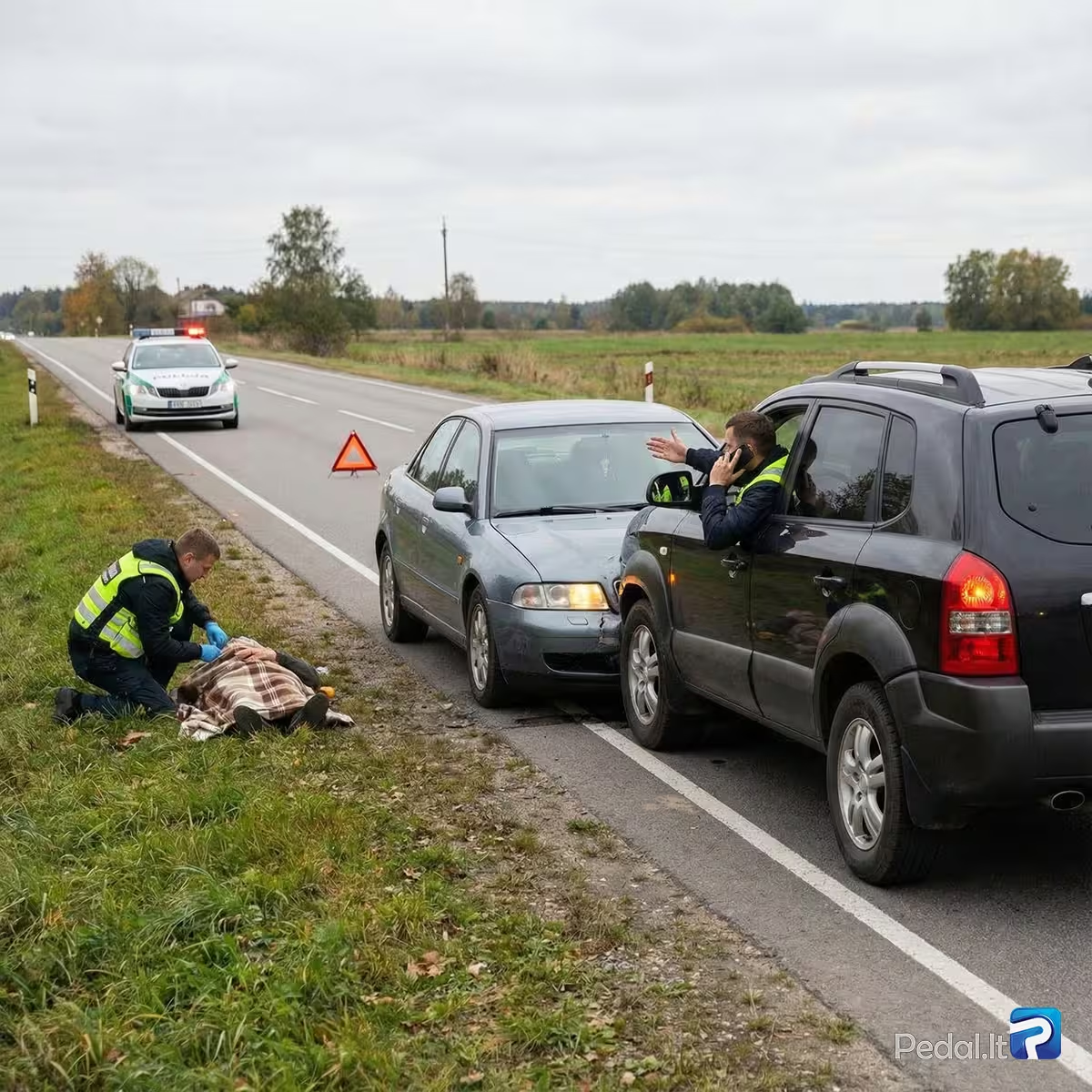
What must the drivers do if a person was injured in a road accident?
XXIX. Obligations of Road Users in the Event of a Road Accident (paras. 219–222)
219. In the event of a road accident, every driver involved or any other road user must:
219.4. if a person has died or been injured in the road accident, report the accident to the police and remain at the scene of the accident or, after notifying the police, return to the scene and wait for the police to arrive, except in cases where the police permit the road user to leave the scene, or where casualties or the person reporting the accident require urgent first aid;
220. If no deaths or injuries occurred in the road accident and the road users involved in the accident agree on the circumstances of the accident and do not call the police to the scene, the road users involved must draw the accident diagram on the Road Accident Report Form, describe the circumstances in writing, and have it signed by all involved road users. If none of the road users involved has the Road Accident Report Form, the circumstances may be described and the diagram drawn on a blank sheet of paper where all road users involved, their vehicles, and witnesses are listed, and all details and circumstances of the accident are confirmed by the signatures of the road users involved. Where the circumstances of the accident are disputed, the police must be called to the scene.
1. If all road users agree on the circumstances of the accident and there are no injuries, they do not need to complete any written report.
2. Drivers must describe the circumstances of the accident in writing, create a diagram of the scene, and list all involved road users, their vehicles, and any witnesses.
3. They must call the police.
You are driving at night on a narrow road. The vehicle ahead, traveling slowly, has its left turn signal on. What will you do?
You cannot overtake on the right because you are on a narrow road. Overtaking on the right of a vehicle that is turning left is permitted only if there is sufficient space on the carriageway. RTR 136. Drivers are advised to avoid unnecessary overtaking maneuvers. Before overtaking, drivers must exercise extra caution and ensure that: 136.1 none of the drivers behind has already begun to overtake; 136.2 the driver of the vehicle to be overtaken is not indicating a left turn; 136.3 the portion of lane required for overtaking is clear and the maneuver will not obstruct oncoming vehicles or pedestrians using the carriageway; 136.4 a safe distance from the vehicle being overtaken will be maintained during the maneuver; 136.5 after overtaking they will be able to return to the same traffic lane safely without obstructing the overtaken vehicle. RTR 137. If the vehicle in front is indicating a left turn and has changed lanes to make that left turn (or to turn around), vehicles following must pass the turning vehicle on the right or wait until it leaves the traffic lane.
1. You will pass the vehicle on the right.
2. You will not overtake the vehicle while its left turn signal remains on.
3. You will switch on your high-beam headlights before overtaking the vehicle.
4. You will activate your left turn signal and sound the horn.
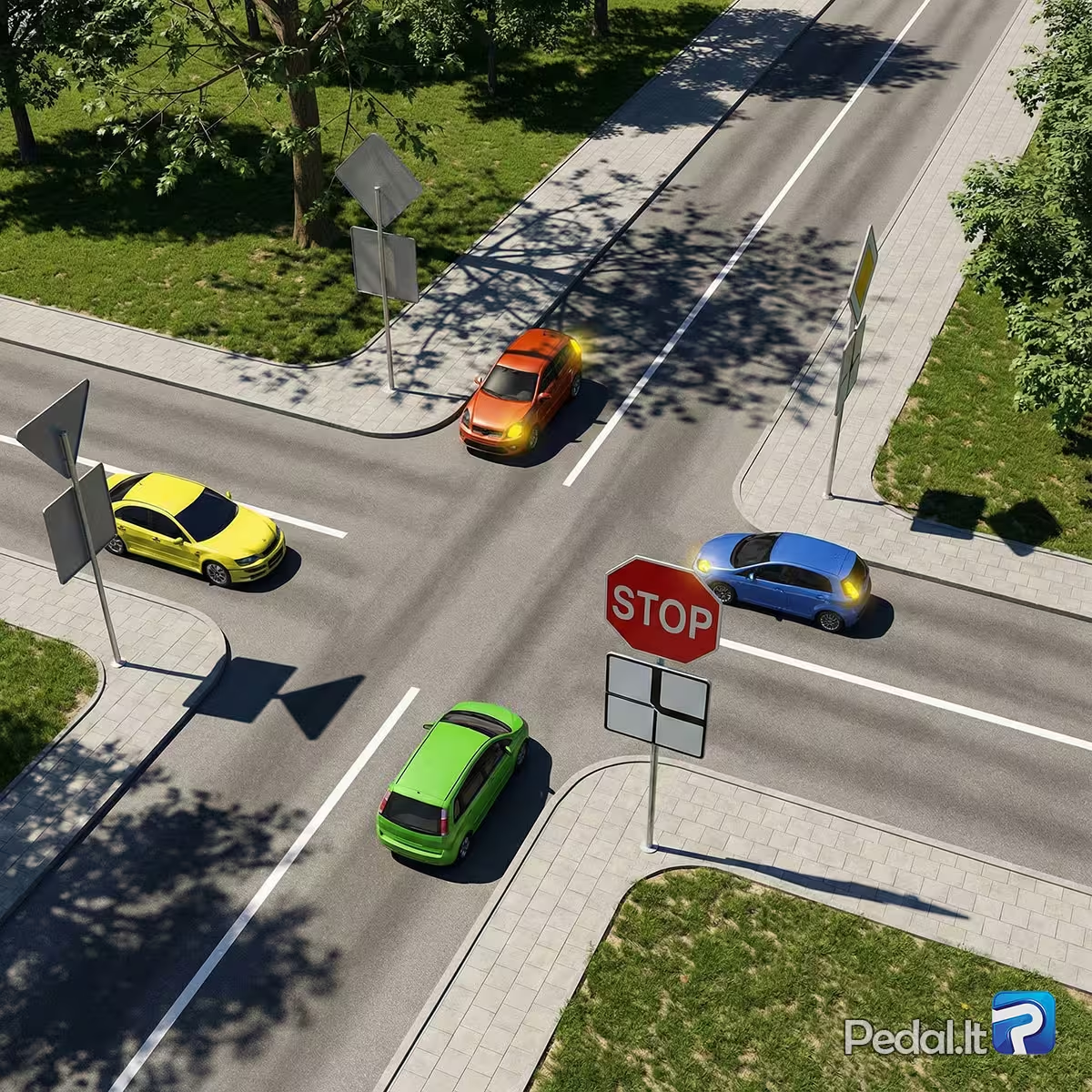
What is the correct sequence in which the vehicles will pass through the intersection?
The red and blue vehicles are on the priority (main) road, so they proceed first. Between them the priority-to-the-right rule applies: the red vehicle goes first because no vehicle is approaching from its right, followed by the blue vehicle. Vehicles on the side road follow: the green vehicle goes next (it has no vehicle to its right), and last is the yellow vehicle. RTR 154. At a controlled intersection, drivers on a side road must yield to vehicles on the priority road. RTR 156. If the main road’s direction changes at the intersection, drivers on the main road must, with respect to one another, follow the rules for intersections of roads of equal importance; drivers on the side road must apply those same rules among themselves. RTR Annex 2.204. 'STOP' — drivers must not proceed without stopping before the stop line or, if there is no line, before the sign. A driver must yield to vehicles traveling on the road he or she is about to cross. If panel No. 843 'Direction of Priority Road' is installed below the sign, the driver must yield to vehicles on the priority road.
1. Red, then blue, then yellow, and finally green.
2. Red, then blue, then green, and finally yellow.
3. Blue, then red, then green, and finally yellow.
4. Green, then blue, then yellow, and finally red.
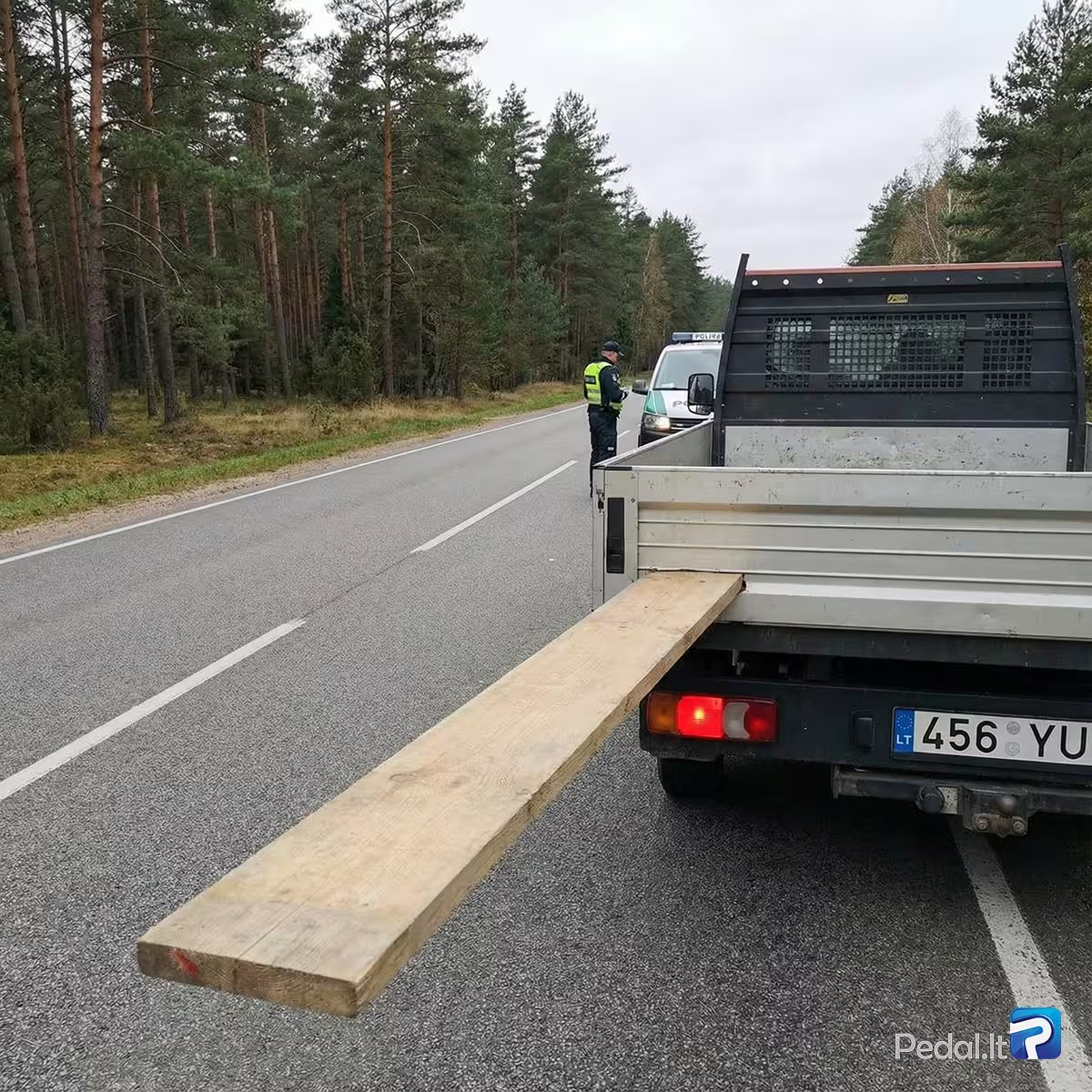
What is the maximum distance a load may extend beyond the rear of a vehicle without requiring marking?
Paragraph 210 of the Road Traffic Rules states that a load must be marked if it extends more than 1 metre beyond the front or rear of the vehicle. A load that extends up to and including 1 metre may remain unmarked; any extension beyond 1 metre must be marked. RTR 210: Any motor vehicle carrying a load which extends beyond the front and rear of the vehicle by more than 1 m or beyond the side of the vehicle must have the extremities of the load marked as provided for in Annex 4 to these Rules.
1. 0.5 m.
2. 1 m.
3. 1.5 m.
Is the term "Pavement" included within the definition of "Road"?
RTR 3.7. 'Road' means the surface of a strip of ground or a superstructure intended for, and used by, road traffic across its full width; this includes the carriageway, intersections, pavements, roadsides, pedestrian and bicycle paths, and dividing strips. RTR 3.8. 'Shoulder' means a road area adjacent to the carriageway (from the carriageway edge to the roadbed edge) that is paved with the same or different material as the carriageway and/or separated from the carriageway by an edge line, but is not regarded as a pavement or as a pedestrian or bicycle track. JB
1. Yes, it is.
2. No, it is not.
1 of 30 Task
Time left: 00:00:00
1
2
3
4
5
6
7
8
9
10
11
12
13
14
15
16
17
18
19
20
21
22
23
24
25
26
27
28
29
30