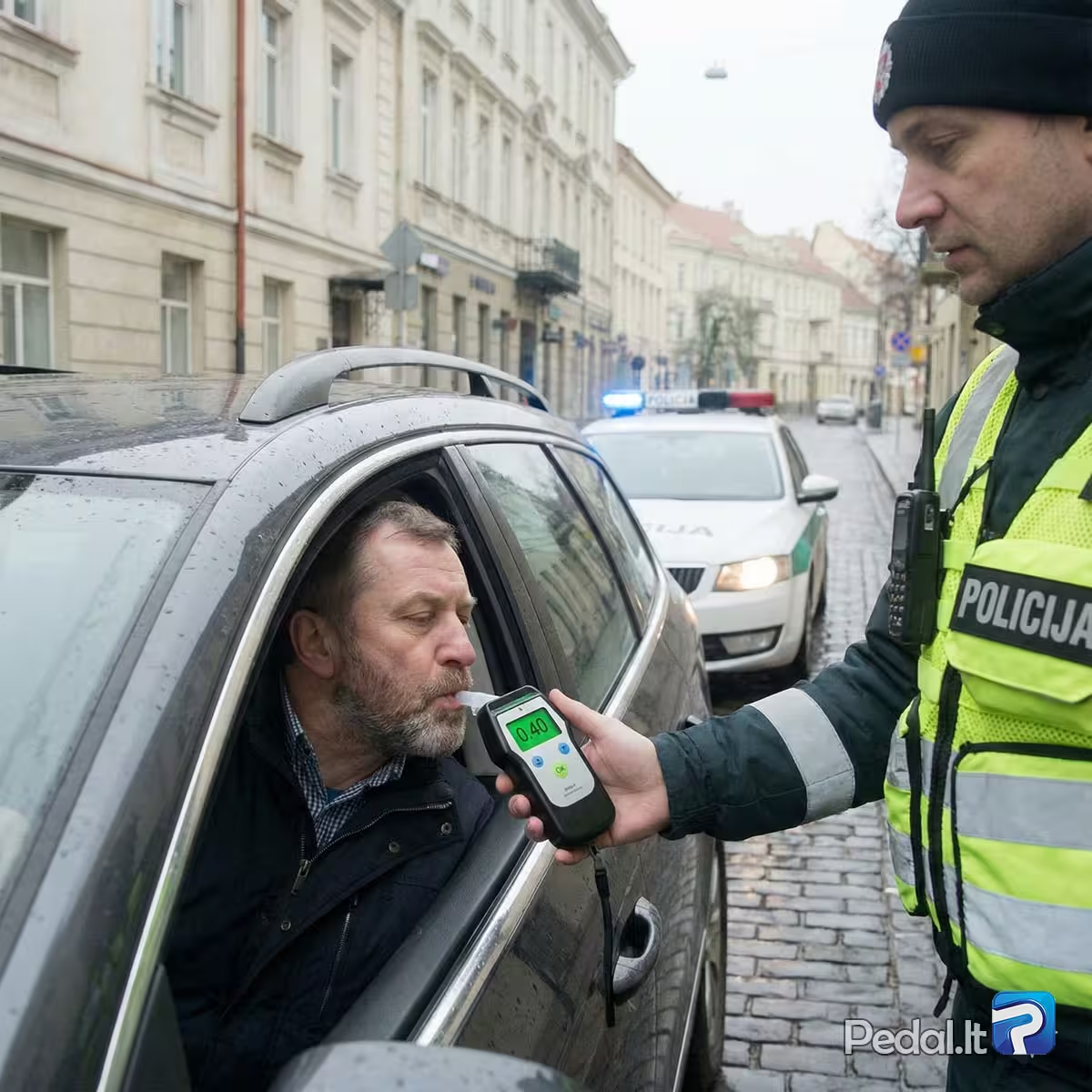
What is the maximum permitted alcohol concentration (in per mille, ‰) for a driver with 20 years of driving experience?
According to the Law on Road Traffic Safety, Article 2, point 43: “Drunkenness” means a state in which a person has consumed ethyl alcohol and the concentration of that alcohol in the body's biological media (exhaled air, blood, urine, saliva or other bodily fluids) exceeds the legal limit. The maximum permitted concentration of ethyl alcohol in the exhaled air, blood, urine, saliva or other bodily fluids of persons operating vehicles is 0.4 per mille (‰). Novice drivers, taxi drivers, and drivers of mopeds, motorcycles, tricycles, light quadricycles, four-wheelers, motorized quadricycles, vehicles with a maximum permissible weight over 3.5 t or with more than 9 seats, and drivers transporting dangerous goods are considered intoxicated when the concentration of ethyl alcohol in their exhaled air, blood, urine, saliva or other bodily fluids is greater than 0 ‰. JB
1. 0.2 ‰
2. 0.3 ‰
3. 0.4 ‰
4. 0.8 ‰
What can cause a vehicle to skid?
Sudden steering wheel movements, improper use of the accelerator, or other actions that do not take the road surface and driving speed into account can cause a vehicle to skid. In general, it is the driver's own actions (for example, sudden braking), not the actions of another driver, that lead to skidding. The driver must choose an appropriate speed and following distance so that the actions of other road users do not endanger the vehicle. 126. The driver must maintain a distance appropriate to the speed, sufficient to avoid hitting the vehicle in front if it brakes, and must leave a lateral gap to ensure traffic safety. It is recommended that the distance to the vehicle ahead be at least the distance covered in two seconds or at least half the speedometer reading converted into metres (for example, at 70 km/h the distance should be at least 35 m), unless traffic conditions require otherwise. Drivers of motor vehicles, tractors and self-propelled machinery shall, when overtaking pedestrians or when overtaking or passing cyclists or drivers of electric micro-mobility vehicles, leave a lateral distance of at least 1.0 m when their speed does not exceed 50 km/h and at least 1.5 m when their speed exceeds 50 km/h. The requirement to maintain the specified lateral distance does not apply on a single-lane road.
1. The driver's actions.
2. An emergency caused by another driver.
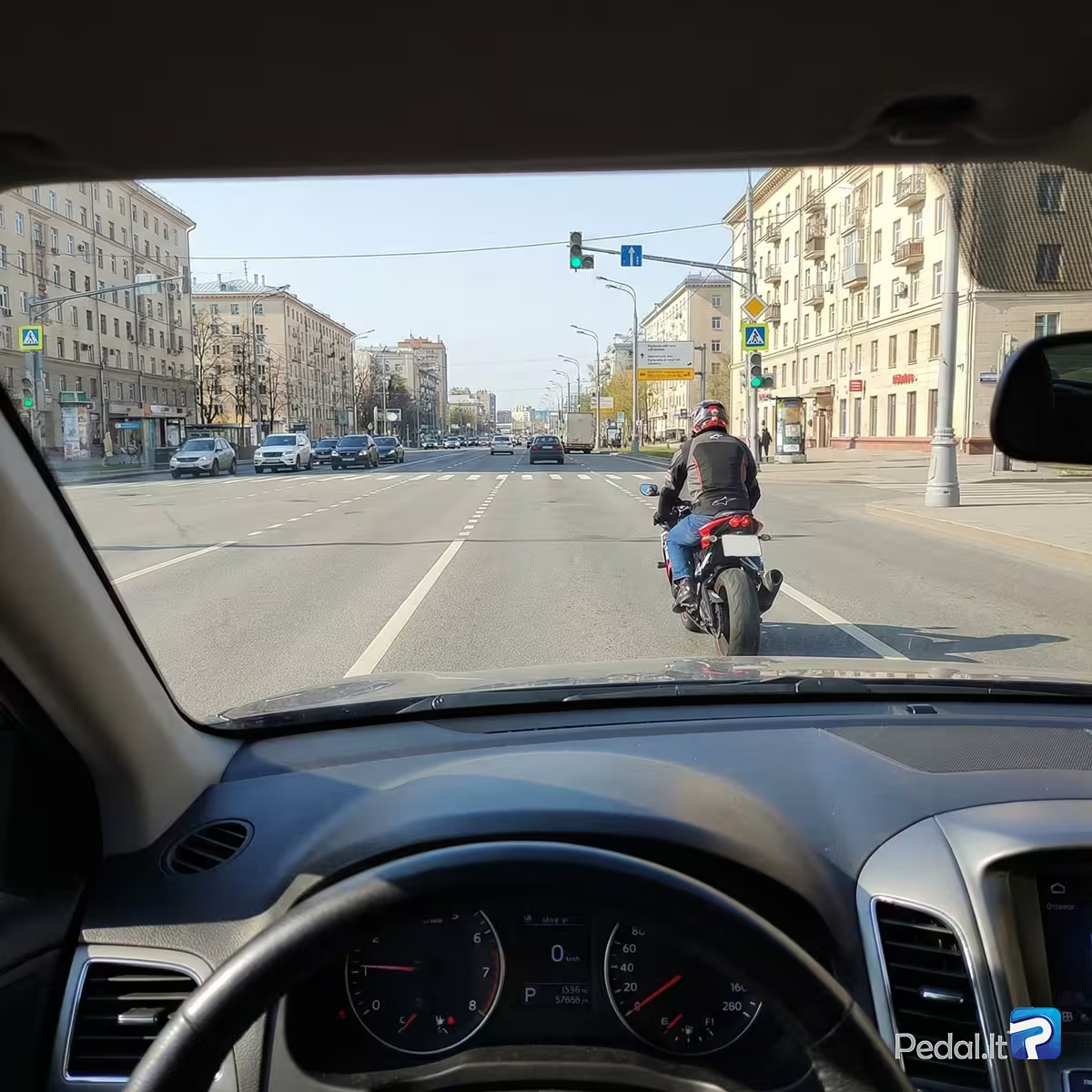
Are you allowed to ride a motorcycle with only a category B driving licence?
LAW ON ROAD TRAFFIC SAFETY — Article 22(12). Persons aged 24 or older who have at least two years' driving experience with a category B licence and who have completed practical training for category A1 vehicles in accordance with the procedure established by the Ministry of Transport and Communications or its authorised institution are granted the right to drive category A1 vehicles within the territory of the Republic of Lithuania.
1. Driving category A1 motorcycles is permitted for persons aged at least 24 who have held a category B licence for at least two years and have completed special practical motorcycle training at a driving school.
2. It is permitted to drive all motorcycles.
What is the primary purpose of a vehicle's main brakes?
A vehicle's braking system is intended to slow the vehicle, bring it to a complete stop, and hold it stationary. Braking distance should be kept as short as possible, and you must maintain control of the vehicle while braking.
1. Slow the vehicle to bring it to a complete stop and hold it stationary on a downhill slope.
2. Maintain a safe, controlled speed when driving downhill.
Are non-public-service vehicles allowed to drive in a lane marked with the letter 'A'?
A lane marked with the letter 'A' is reserved exclusively for public service vehicles. Non-public-service vehicles may only change into or use this lane when preparing to turn right. An exception exists for lanes marked with the 'A+' symbol. (See RTR Annex 3, §1.21; RTR 181 and Paragraph 182 of the Rules.) Non-public-service vehicles must not drive in lanes marked with the 'Lane Reserved for Public Service Vehicles' sign and the letter 'A'.
1. Yes — non-public-service vehicles are permitted to use that lane.
2. No — non-public-service vehicles are not permitted to use that lane.
What is the maximum permitted blood alcohol concentration (in ‰) for a driver with one year of driving experience operating a passenger car?
Under amendments to the Law on Road Traffic Safety that took effect on 1 January 2015, novice drivers (those with less than two years' driving experience) are considered intoxicated if the alcohol concentration in their breath or bodily fluids exceeds 0. LAW ON ROAD TRAFFIC SAFETY, Article 2, clause 43 defines 'condition under the influence of alcohol' as the state when the concentration of ethyl alcohol in a biological medium of the body (breath, blood, urine, saliva, or other bodily fluids) exceeds the statutory permissible limit. The general maximum permitted concentration of ethyl alcohol in breath, blood, urine, saliva, or other bodily fluids while driving is 0.4 per mille. However, novice drivers, taxi drivers, drivers of mopeds, motorcycles, tricycles, light quadricycles, quadricycles, powerful quadricycles, drivers of vehicles with a maximum permissible mass exceeding 3.5 tonnes or with more than nine seats, and drivers carrying dangerous goods are considered intoxicated when the ethyl alcohol concentration in their breath, blood, urine, saliva, or other bodily fluids is more than 0 per mille.
1. 0.0 ‰
2. 0.2 ‰
3. 0.4 ‰
4. 0.8 ‰
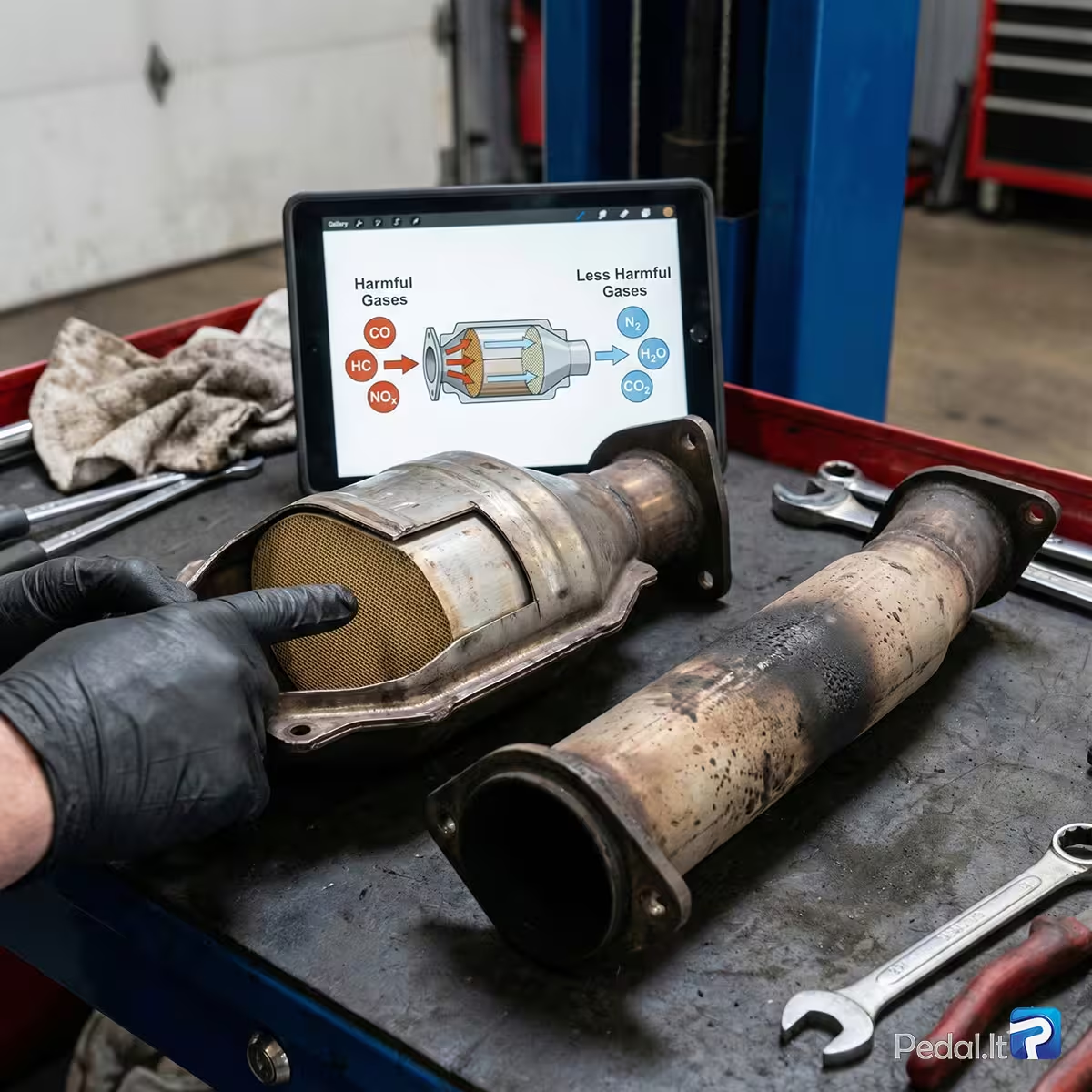
What is the function of a cardan shaft?
A cardan shaft is a mechanical component with a universal joint at one or both ends. It transmits torque and rotational motion. It is used for the following reasons: - To accommodate misalignment between shafts; - To allow changes in shaft position (for example, when driving over uneven terrain); - To transmit torque.
1. To transmit rotational motion to the drive wheels.
2. To transmit torque to the drive wheels.
3. To transmit inertia forces.
The service brake has failed while you are driving on a motorway. What should you do?
Maintain a speed that allows you to stop the vehicle with the parking brake if necessary. Switch on your hazard warning lights to warn other road users. Drive to the nearest safe place to stop and call roadside assistance.
1. Reduce your speed and switch on the hazard warning lights. If necessary, apply the parking brake gradually. Carefully drive to the nearest safe place to stop and call roadside assistance.
2. Reduce your speed and notify the road police. Continue driving cautiously to your destination. If possible, add brake fluid.
.avif)
In what order will the vehicles pass through the intersection?
If a 'STOP' road sign is present, drivers must stop before the sign and yield to vehicles traveling on the road they are about to cross. RTR 154. At a controlled intersection, drivers entering from a side road must yield to vehicles on the priority road. RTR Annex 1. 204. 'STOP'. Drivers must not proceed without stopping before the stop line or, if there is no stop line, before the sign. A driver must give way to vehicles on the road being crossed. If additional plate No. 843 'Direction of Priority Road' is mounted below the sign, the driver must yield to vehicles on the priority road.
1. Yellow and red vehicles proceed together, followed by the blue vehicle.
2. Blue and red vehicles proceed together, followed by the yellow vehicle.
3. Blue vehicle first, then the red vehicle, and finally the yellow vehicle.
4. Yellow vehicle first, then the blue vehicle, and finally the red vehicle.
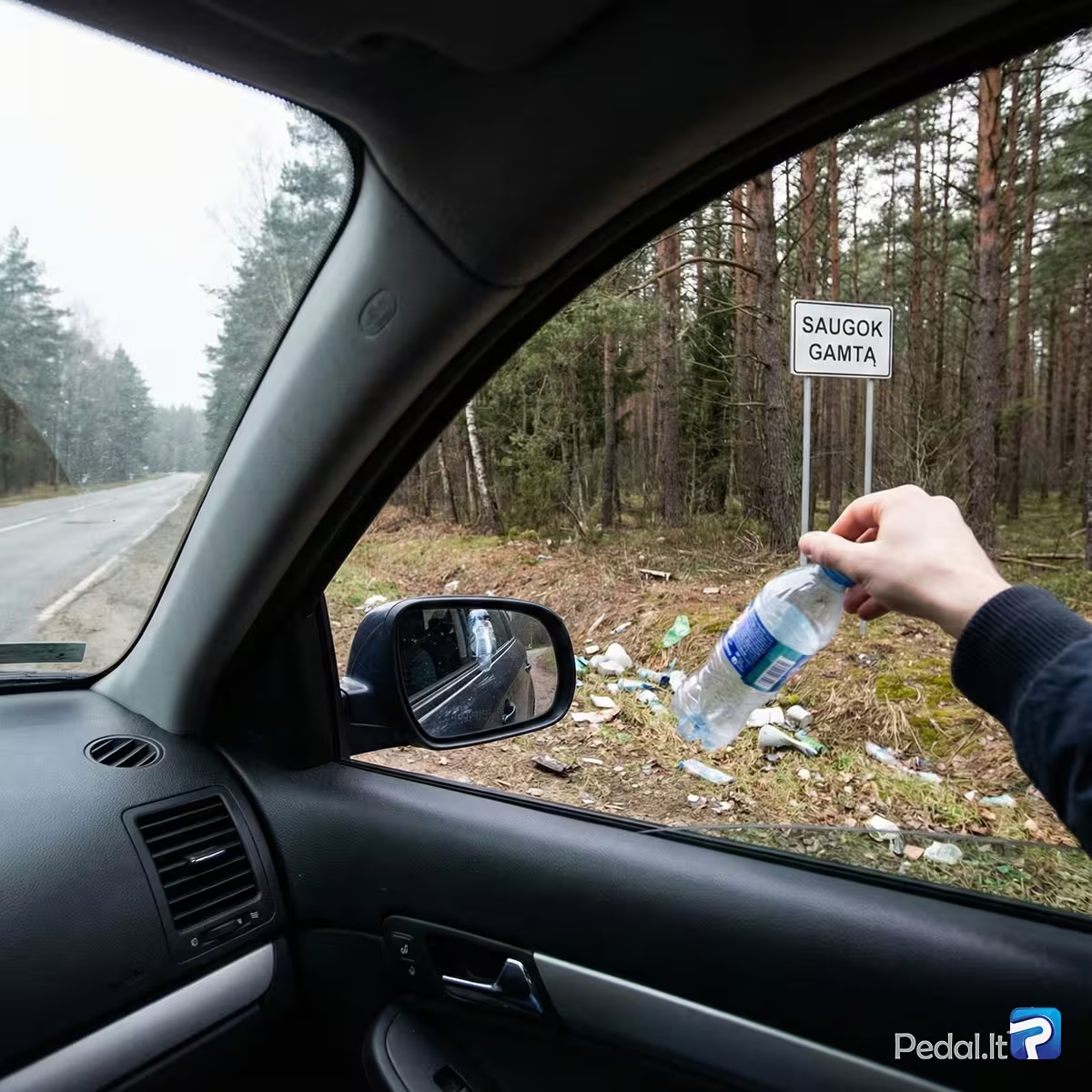
What should we avoid to protect nature?
Carrying unnecessary luggage increases fuel consumption and causes additional harmful emissions. Loud music from a vehicle contributes to noise pollution and can scare wildlife. For short trips, people can walk, cycle, or use public transport, because during brief journeys the engine often does not reach its optimal operating temperature, the vehicle runs less efficiently, and pollution is higher.
1. Leaving a vehicle's engine running while stationary (idling).
2. Playing loud music from a vehicle with the windows open.
3. Using a car for short trips.
4. Carrying unnecessary cargo or luggage.
You are on the right side of the road and are about to start moving. A goods vehicle is behind you. What should you take into consideration?
101. Before starting to move, changing lanes, or otherwise altering course, drivers must ensure the manoeuvre is safe and give way to other road users (i.e., avoid creating obstructions).
1. You may not notice vehicles traveling in the same direction that are approaching or about to overtake you.
2. Other drivers may fail to see your left‑turn indicator.
When should you release the throttle and rely on the vehicle's inertia to conserve fuel?
Note: Releasing the throttle is not the same as freewheeling. See 3.4 Control the throttle: 3.4.9 Release the throttle and use the vehicle's inertia before coming to a stop at a predetermined location (for example, at an intersection with a traffic light or at a stop sign) or in similar situations. JB
1. When approaching an intersection with a red traffic light.
2. When driving downhill on a steep slope.
3. When approaching a stop sign.
4. Before coming to a stop at a predetermined location.
How does fatigue affect a driver?
When a driver operates a vehicle while fatigued, their memory and attention are impaired. They take longer to notice signals and assess situations, driving performance declines, reaction times are delayed, and vehicle control deteriorates.
1. Attention diminishes.
2. Fatigue has no effect on driving.
3. Reaction time is delayed.
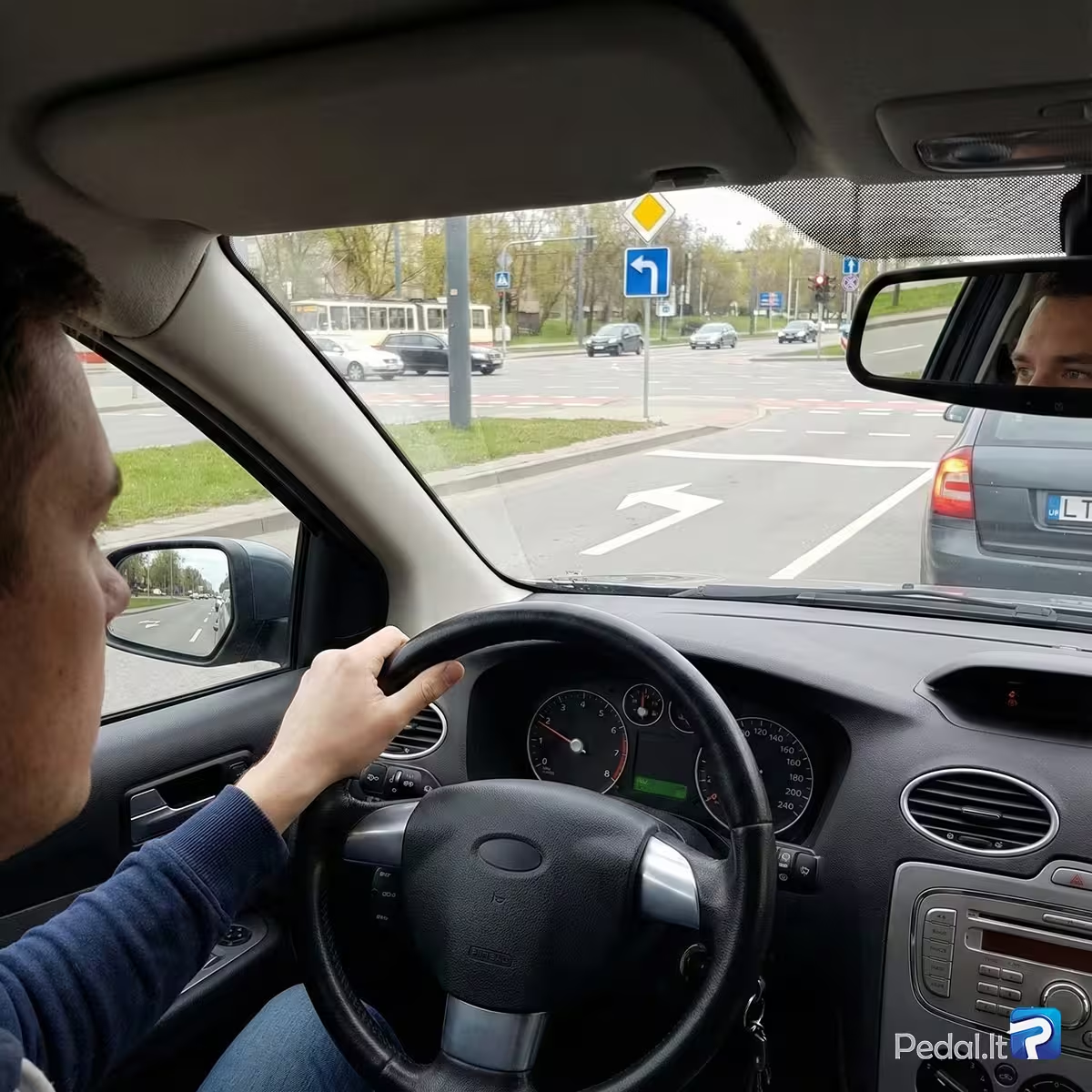
You are approaching a bend in the road:
Drivers approaching a road bend should be aware the bend may be sharper than it appears. Choose a safe speed and the correct road position to avoid entering the oncoming lane. A safe speed depends on all circumstances: weather, road and vehicle condition (including load), driver experience and fitness. According to RTR 127, drivers must not exceed the legal speed limit. When selecting speed, consider the terrain, road and vehicle condition, load, weather and traffic density so you can stop safely for any foreseeable obstacle. Drivers must slow down and stop when conditions require, especially if visibility is poor.
1. You will increase your speed midway through the bend.
2. You will reduce your speed before the bend.
3. You will reduce your speed while in the middle of the bend.
4. You will not change your speed.
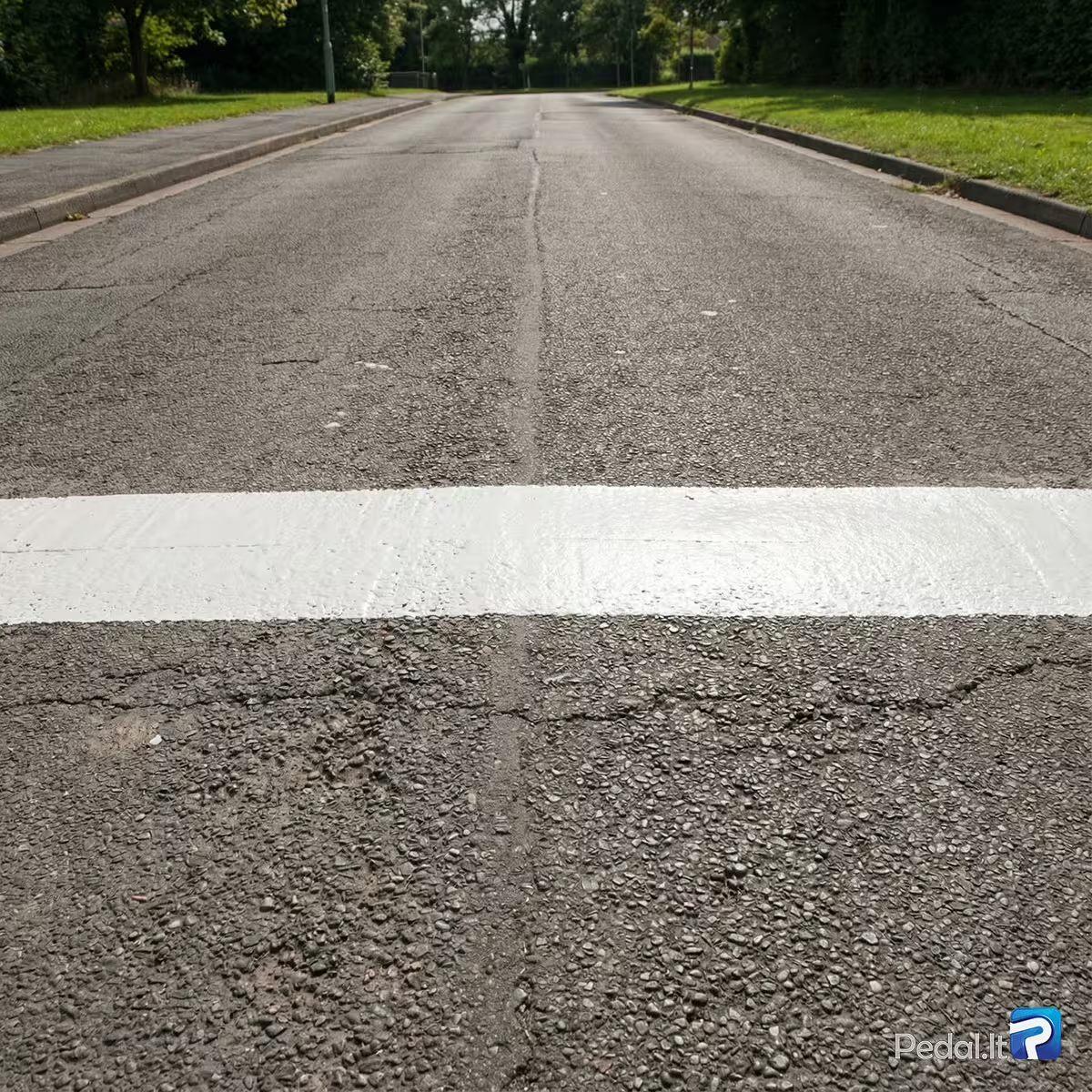
What is the name of the wide line drawn across the carriageway?
I. Horizontal marking: 1.11. A WIDE LINE is drawn across the carriageway (the 'Stop' line) and indicates the location where drivers must stop before a 'STOP' sign (at uncontrolled intersections), a red traffic light, or a stop signal given by a traffic officer.
1. The 'Stop' line.
2. A wide solid line.
3. A solid line.
Which of the following are warning signals?
RTR 81. Warning signals include: using turn and brake lights (arm signals may be used), sounding the horn, switching the headlights on and off, activating hazard warning lights or flashing amber beacons, and placing a warning triangle on the road or attaching it to the vehicle.
1. Brake light signal.
2. Indicating a turn using an arm signal.
3. Horn signal.
4. Switching the headlights on and off.
5. Placing a warning triangle on the road.
What is the maximum permitted speed for a truck with a permissible maximum mass of up to 3.5 tonnes on a gravel road?
RTR 131. The following speed limits apply outside built-up areas: 131.1. For passenger cars, goods vehicles with a maximum permissible mass up to 3.5 tonnes, motorcycles and tricycles the maximum permitted speeds are: on motorways — 130 km/h from April to October and 110 km/h from November to March; on highways — 120 km/h from April to October and 110 km/h from November to March; 90 km/h on roads with asphalt or concrete pavement; and 70 km/h on other roads. JB
1. 90 km/h.
2. 60 km/h.
3. 70 km/h.
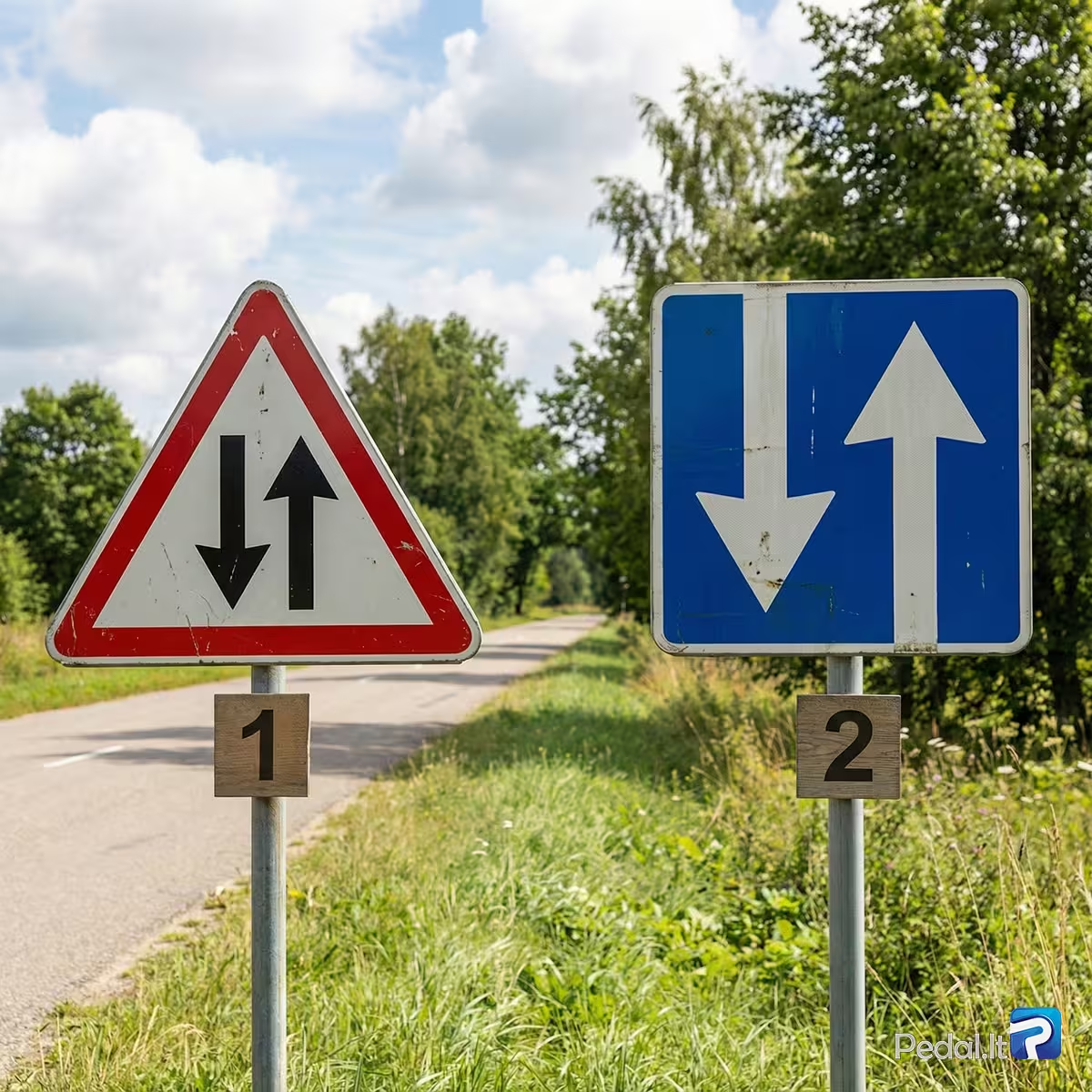
Which sign indicates that the road ahead carries two-way (opposing) traffic?
Warning signs alert drivers to upcoming changes in traffic conditions. Sign 126, 'Two-Way Traffic', indicates the start of a carriageway section with opposing traffic. Sign 504, 'End of One-Way Traffic', is a regulatory sign that marks the end of a one-way traffic section. (RTR Annex 1: 126 and 504.)
1. Sign 1.
2. Sign 2.
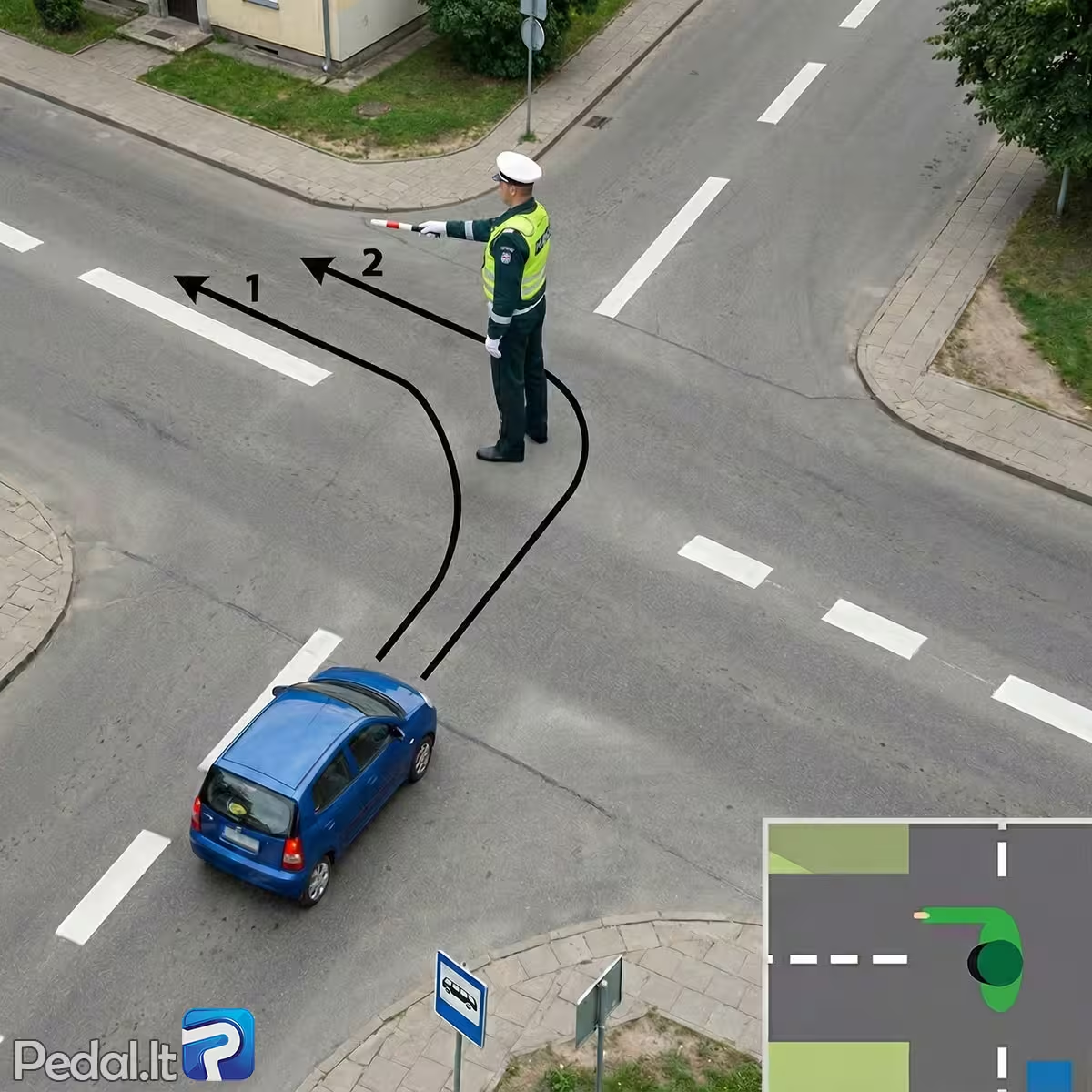
Is it permitted to make a left turn in this situation?
In this scenario the driver must complete the left turn before passing the traffic officer. Turning left after passing the officer would violate Road Traffic Rules requirement 77.2.3, which prohibits vehicles approaching from the rear and from the right from proceeding. RTR 77 — Signals given by traffic officers — are defined as follows: 77.1 Arms extended sideways or down: 77.1.1 Vehicles to the left and to the right may proceed straight ahead or turn right; pedestrians may cross the carriageway. 77.1.2 Vehicles and pedestrians in front of and behind the officer must not proceed. 77.2 Right arm extended forward: 77.2.1 Vehicles approaching from the left may proceed in any direction. 77.2.2 Vehicles from the front may proceed only to the right. 77.2.3 Vehicles from the rear and from the right must not proceed. 77.2.4 Pedestrians may cross the carriageway behind the officer. 77.3 Arm raised upwards: 77.3.1 All road users must not proceed in any direction. 77.3.2 Drivers must stop their vehicles without changing lanes.
1. Turning left is permitted, but only when following the first trajectory.
2. Turning left is permitted, but only when following the second trajectory.
3. Turning left is permitted in both cases.
4. Turning left is prohibited.
Which of the following statements is correct?
It is always safer to exit a yard or a residential area facing forward, because this provides a better view of the road you are entering. Reversing out of such areas may cause you to miss other road users to whom you must yield. KET 114: When reversing, the driver must give way to other road users.
1. Avoid reversing out onto the road from adjacent premises.
2. Never reverse from the road into adjacent premises.
3. If possible, reverse from adjacent premises onto the road.
4. If possible, reverse from the road into adjacent premises.
When may the front fog lamps be used?
Regulation RTR 98: Fog lamps may be used only when visibility is severely reduced. Front fog lamps may also be used if the left front dipped-beam headlamp has failed. According to the Law on Road Traffic Safety, Article 2(5), 'poor visibility' means a situation caused by weather or other phenomena in which road visibility is less than 300 metres, regardless of road characteristics.
1. In fog, when road visibility is 400 metres.
2. When visibility is severely reduced.
3. During rain or snow, when road visibility exceeds 300 metres.
Are drivers permitted to take part in vehicle races that are organized illegally on streets and roads?
23. Drivers must not take part in vehicle races that are organized illegally.
1. Yes, they are permitted.
2. No, they are not permitted.
Is it permitted to transport dogs in a motor vehicle?
206. The driver must ensure the safety of pets in the vehicle and make sure they are transported in a way that does not interfere with driving and does not cause injury to the animals or to vehicle occupants if the vehicle stops suddenly.
1. Permitted, provided the animals are secured or restrained so they do not interfere with driving and do not pose a risk of injury to themselves or to the vehicle’s occupants in the event of a sudden stop.
2. Permitted only when the dogs are placed on the vehicle’s front seat.
3. Permitted only when the dogs are placed on the vehicle’s rear seat.
4. Prohibited.
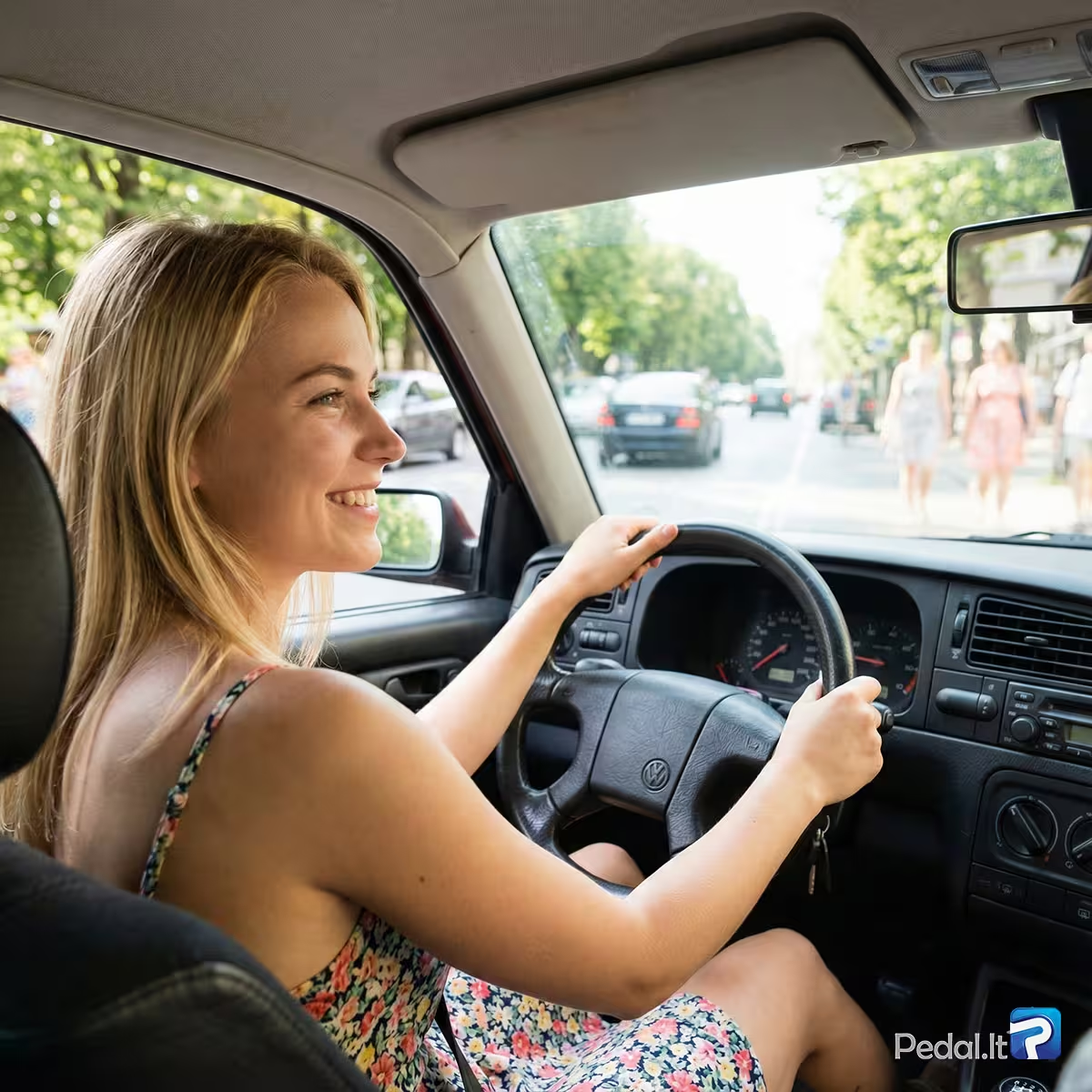
What are common causes of increased fuel consumption while driving?
Underinflated tires are the most common factor directly affecting fuel consumption; incorrect tire pressure can increase consumption by up to about 4%—both too little and too much pressure can have an effect. Check tire pressure when the tires are cold, because driving warms the rubber and raises the pressure. Carrying luggage on the roof increases aerodynamic drag and therefore fuel consumption. Frequent stop-and-go driving also increases fuel use. JB
1. Low tire pressure.
2. Driving with luggage mounted on the roof.
3. Short trips with frequent stops and starts.
Your vehicle's dipped-beam headlamps are on during daylight. Drivers in the oncoming lane keep switching their main beams to dipped beams (flashing their headlights). What does this indicate?
If other drivers switch their headlights from high beam to low beam (flash) during the day, it may indicate that your low beams are excessively bright or misaligned and are dazzling other road users. This is dangerous because dazzled drivers can become disoriented and cause accidents. If you notice that drivers often flash their lights as they pass you, it is a sign to have your vehicle's lighting checked and, if necessary, adjusted. 81. The warning signals are as follows: using turn and brake light signals (signals may also be indicated by hand); sounding the horn; switching headlights on and off; using hazard warning lights; turning on flashing orange hazard lights; and placing a warning triangle on the road or attaching it to a vehicle.
1. You must switch on your main-beam (high) headlamps.
2. You must switch on your position (parking) lamps.
3. Your vehicle's headlamps are misaligned or aimed too high and are dazzling other road users.
Are vehicles permitted to drive on the pavement (sidewalk)?
RTR 124. Drivers of motor vehicles, tractors, self‑propelled machines, and animal‑drawn vehicles must not drive or manoeuvre on lawns, pavements (sidewalks), footpaths, cycle tracks, or cycle lanes. An exception applies where road signs permit (partial) parking at the pavement edge and a cycle track or lane is delineated by the horizontal marking line 1.14. Driving on central reservations, embankment slopes, excavations, or in ditches is prohibited. Drivers must also not enter or leave the roadway except at locations designated for that purpose.
1. They may do so provided they do not obstruct pedestrians.
2. They are permitted only where road signs indicate that (partial) parking on the pavement edge is allowed.
3. Driving on pavements is prohibited.
Why is it dangerous to drive fast on an asphalt road during heavy rain?
Heavy rain creates a layer of water on the asphalt surface (especially in longitudinal ruts) that cannot drain quickly to the roadside. At high speeds, a tire's tread cannot displace this water from beneath the wheel, and aquaplaning (hydroplaning) can occur. In other words, the wheels lose contact with—or have reduced grip on—the road surface, and the vehicle may become uncontrollable.
1. Water will enter the engine and cause it to stall.
2. The vehicle may lose control due to aquaplaning.
3. The windshield wipers will stop working.
When may a driver leave the scene of a road accident?
XXIX. Obligations of Road Users in the Event of a Road Accident (paras. 219–222) 219. In the event of a road accident, every driver involved or any other road user must: 219.4. if a person has died or has been injured in the road accident, report the accident to the police and remain at the accident scene or, after notifying the police, return to the scene and wait for the police to arrive, except where the police permit the road user to leave the scene or when the casualties or the person who reported the accident require first aid; 220. If no deaths or injuries occurred in the road accident and the road users involved agree on the circumstances and do not call the police to the accident scene, the road users must draw the accident sketch on the Road Accident Report Form, describe the circumstances in writing, and have it signed by all road users involved. If none of the road users involved has the Road Accident Report Form, the circumstances may be described and the accident sketch drawn on a blank sheet of paper listing all road users involved, their vehicles, and witnesses, and all details and circumstances must be confirmed by the signatures of the road users involved. Where the circumstances of the accident are disputed, the police must be called to the scene.
1. If a person sustained only minor injuries.
2. If the driver requires first aid.
3. If an injured person requires first aid.
4. If the police have permitted the driver to leave the scene.
.avif)
Which vehicle will pass through the intersection first? (The green traffic light applies to the red car.)
RTR 163. When driving in the direction indicated by an arrow displayed in the supplementary section of a traffic light together with an amber or red signal, the driver must yield to road users coming from other directions who have a traffic signal permitting them to proceed, except as provided in Paragraph 163-1. 163-1. When making a U-turn at an intersection controlled by traffic lights, the driver must yield to road users from other directions who are permitted to proceed by a traffic signal. JB
1. The red car will pass the intersection first.
2. The black car will pass the intersection first.
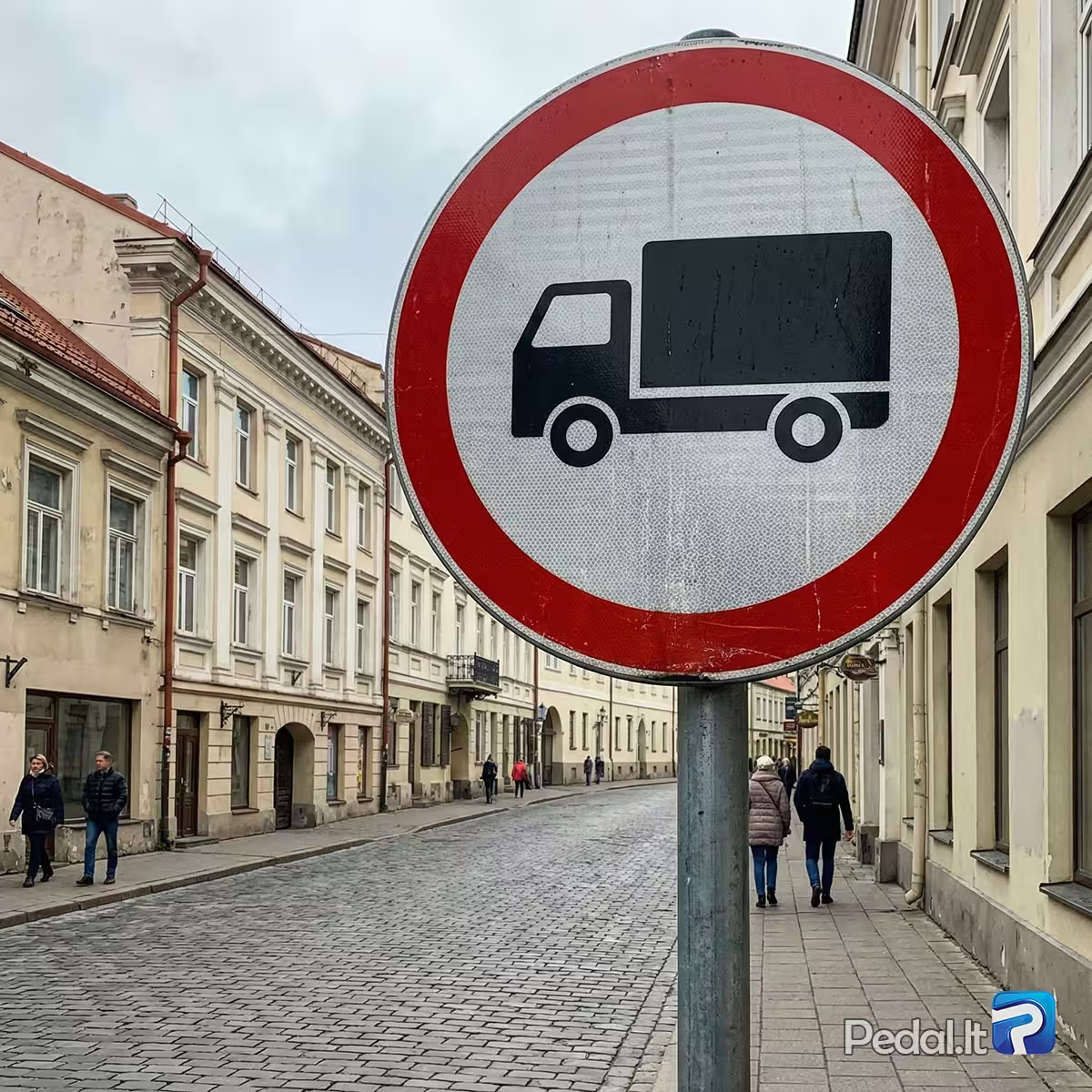
Are tractors or self-propelled vehicles permitted to pass this road sign?
Road sign 304 — "No entry for goods vehicles." Entry is prohibited for goods vehicles and vehicle combinations whose permissible maximum mass exceeds 3.5 tonnes or the weight shown on the sign. Tractors and self‑propelled vehicles are also prohibited, except for service vehicles.
1. Yes — passage is permitted.
2. No — passage is prohibited.
3. Passage is allowed only on working days.
1 of 30 Task
Time left: 00:00:00
1
2
3
4
5
6
7
8
9
10
11
12
13
14
15
16
17
18
19
20
21
22
23
24
25
26
27
28
29
30