.avif)
To whom must a motorcyclist yield?
RTR 12. Road users must immediately yield to approaching emergency vehicles that display blue and red (or only blue) flashing lights and use special audible signals, as well as to vehicles escorted by them. Road users shall form an emergency corridor as follows: 12.1 On a road with a single lane in one direction, drivers must stop on the right hard shoulder if one exists; if there is no hard shoulder, they must stop as close as possible to the right edge of the carriageway. 12.2 On a road with two or more lanes in the same direction, vehicles in the far-left lane must move and stop as close as possible to the left edge of the carriageway designated for that direction, while vehicles in the lanes to the right must move and stop as close as possible to the right edge of the carriageway (or the hard shoulder). 12.3 On a road with a central reservation, only drivers travelling in the same direction must comply with the requirements in paragraphs 12.1 and 12.2. RTR 154. At a controlled intersection, drivers on a side (minor) road must yield to vehicles approaching on the priority road.
1. The red car.
2. The police vehicle.
3. The bus.
4. The motorcyclist is not required to yield to anyone.
When driving and you discover that a bend in the road is sharper than you anticipated, you should:
If a bend in the road is sharper than anticipated, you must reduce your speed.
1. You should reduce your speed.
2. You should attempt to decrease your turning radius.
3. You should accelerate.
4. You should maintain your current speed.
If an inspecting officer stops you, what must you switch on?
RTR 91. If the vehicle is fitted with hazard warning lights, they must be switched on: 91.3 when the vehicle is stopped by an inspecting officer. JB
1. The horn (audible warning).
2. Hazard warning lights (emergency flashers).
When are pedestrians permitted to step onto the carriageway?
RTR 44. Pedestrians may enter the carriageway only after assessing the distance to and speed of approaching vehicles and ensuring it is safe to proceed. Before stepping onto or while moving along the carriageway, pedestrians must refrain from actions (such as using mobile devices) that would distract them from observing the surroundings and traffic conditions and would prevent them from confirming it is safe to continue.
1. After evaluating the distance to approaching vehicles.
2. After evaluating the speed of approaching vehicles and ensuring it is safe to cross at the pedestrian crossing.
3. Provided they refrain from actions (e.g., using mobile devices) that could distract them from observing the surroundings and the traffic situation.
4. If they are not looking at the carriageway.
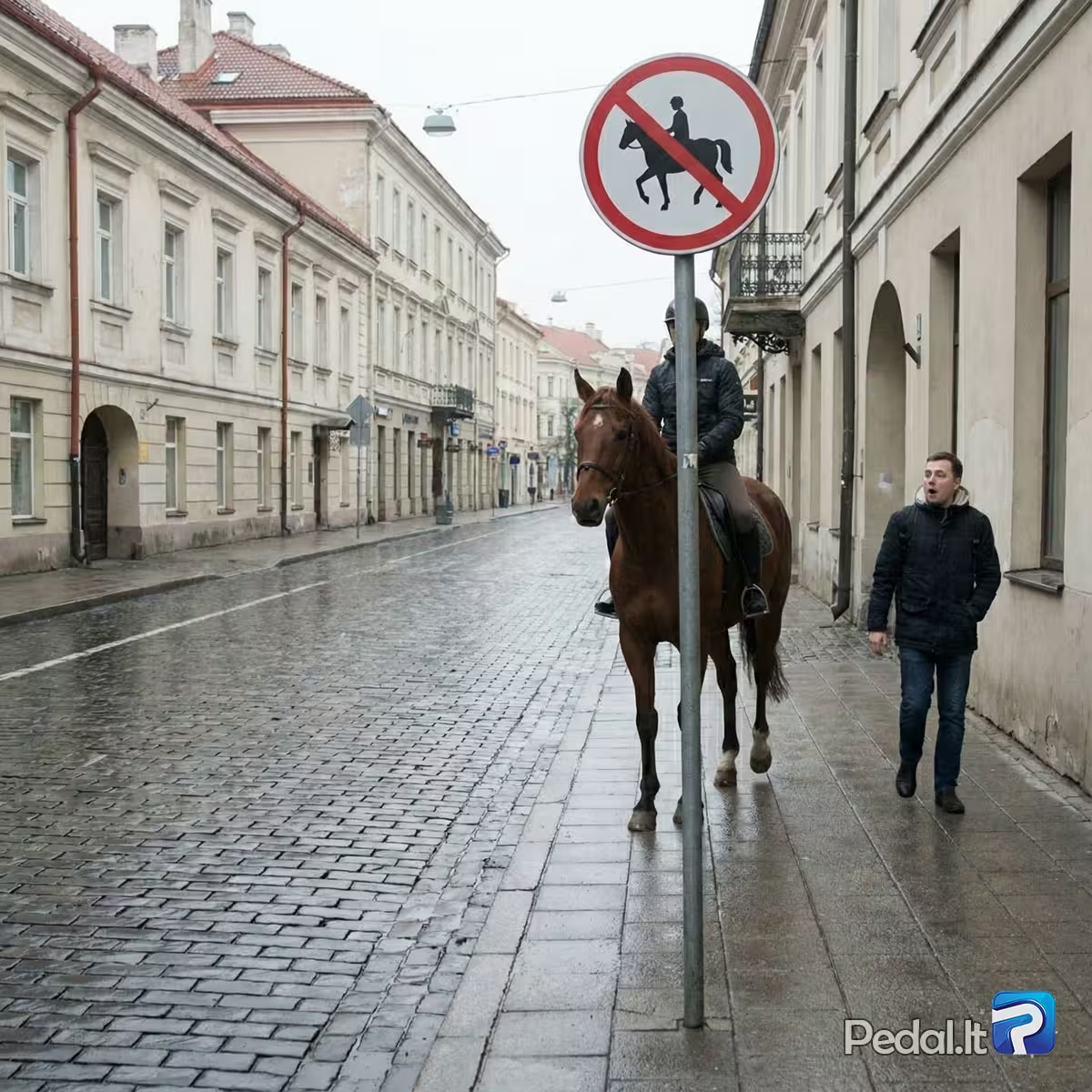
Persons riding animals are prohibited from:
67. Only persons aged 14 or older may drive an animal-drawn vehicle, herd animals or birds, or ride an animal on a road. 72. Drivers of animal-drawn vehicles, those herding animals or birds, riders, and other persons must not: 72.1. leave animals or birds unattended on a road or near a road; 72.2. tie animals so that they could enter a road; 72.3. herd animals or birds along a cobbled road or roads with asphalt or concrete pavement without the road owner's consent; 72.4. herd animals or birds across railway tracks or a road where there are no specially designated crossings; 72.5. ride an animal on the carriageway during hours of darkness; 72.6. drive animal-drawn vehicles, herd animals or birds, or ride animals on motorways and highways; 72.7. drive animal-drawn vehicles, herd animals or birds, or ride animals while under the influence of alcohol or psychoactive substances.
1. Riding an animal while under the influence of alcohol or psychoactive substances.
2. Riding an animal on the carriageway during hours of darkness, and riding on motorways and highways.
3. Riding an animal on roads if the rider is under 14 years old.
4. Riding an animal on the carriageway during daylight hours.
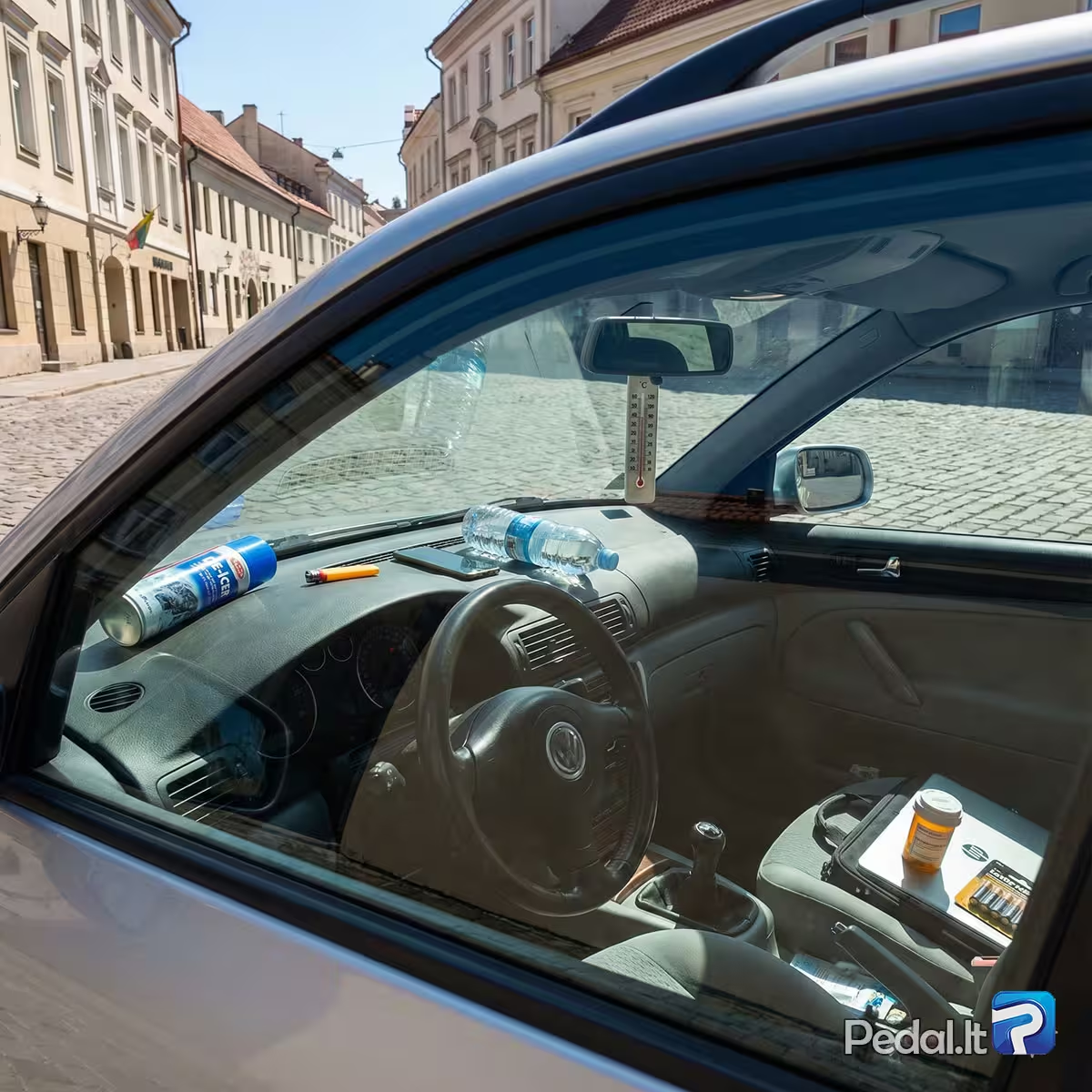
Which items must not be left in a vehicle?
Vehicle documents should not be left in the vehicle, as they can be readily used by thieves. Valuable items must not be left in plain view inside the vehicle because they may attract opportunistic burglaries. Leaving liquids, such as soft drinks, inside the vehicle does not compromise its safety. (RTR 147) A driver may leave the vehicle unattended only after ensuring it cannot move on its own and that unauthorised use is prevented.
1. Vehicle documents (registration and insurance papers).
2. Valuable items left in plain view inside the vehicle.
3. Liquids (e.g., soft drinks).
A road user must not:
Dipped-beam headlights are not required when daytime running lights are illuminated (not all vehicles have them). RTR 10. Road users must not deliberately move, cover, remove, or install traffic control devices that regulate traffic; obstruct the carriageway; leave objects on the road or otherwise interfere with traffic; damage the road surface, traffic control devices, outdoor emergency communication systems, or planted lawns; block access to a fire hydrant or other rescue equipment or otherwise prevent access to them; throw any items from a vehicle or litter; discharge lubricants in undesignated areas; or otherwise pollute the environment.
1. Discard litter from a moving vehicle.
2. Release oils or other lubricants in undesignated areas or otherwise pollute the environment.
3. Use dipped-beam (low-beam) headlights during daylight hours.
4. Drive at a speed significantly lower than the vehicle's specified limits when it does not obstruct traffic.
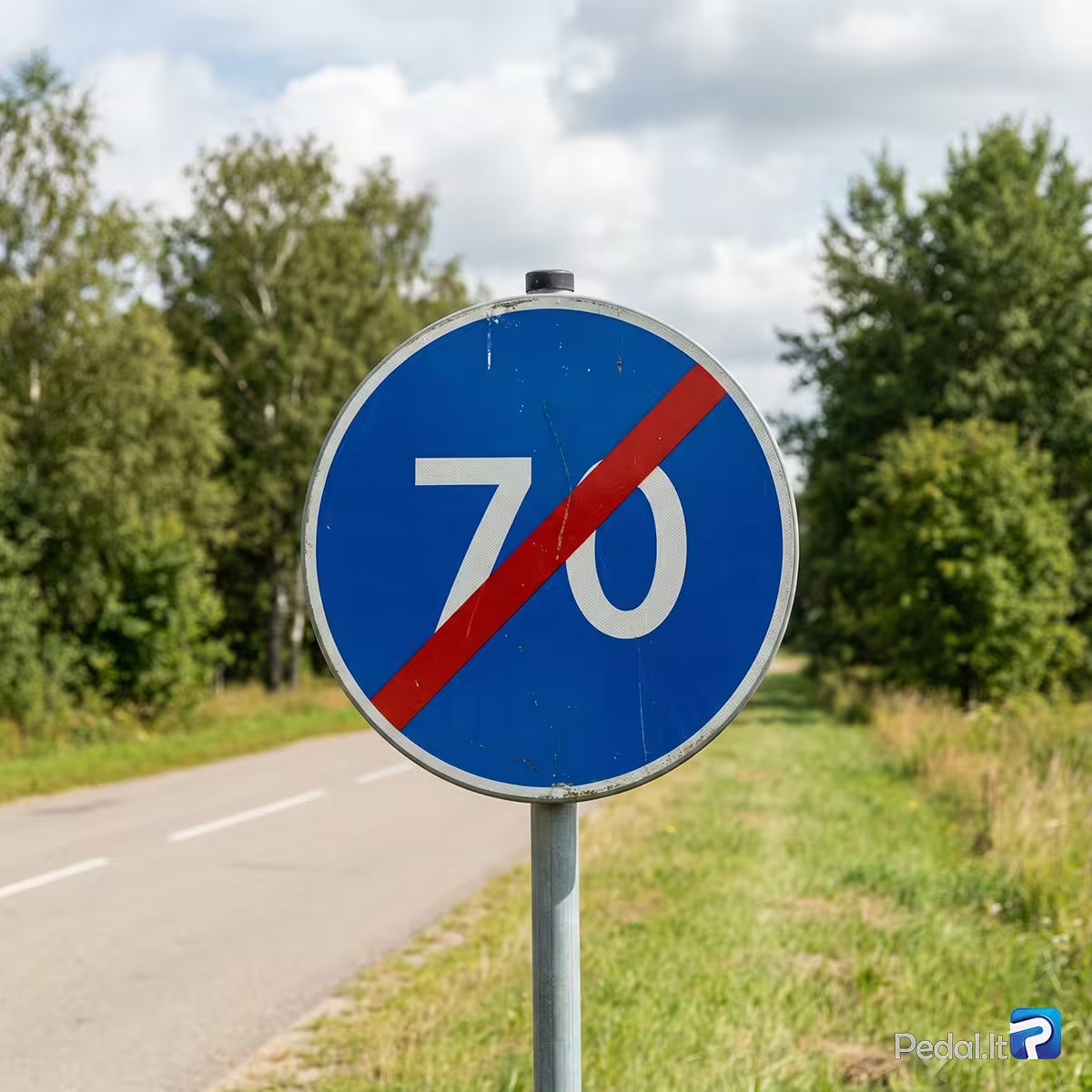
After this road sign:
This sign indicates the end of the minimum speed requirement; it does not specify a particular permitted speed. The applicable speed depends on other road signs, regulations and current driving conditions. Road sign 415 — End of minimum speed limit.
1. Driving at a maximum speed of 70 km/h is permitted.
2. Driving at a speed of at least 70 km/h is permitted.
3. The minimum speed limit has ended.
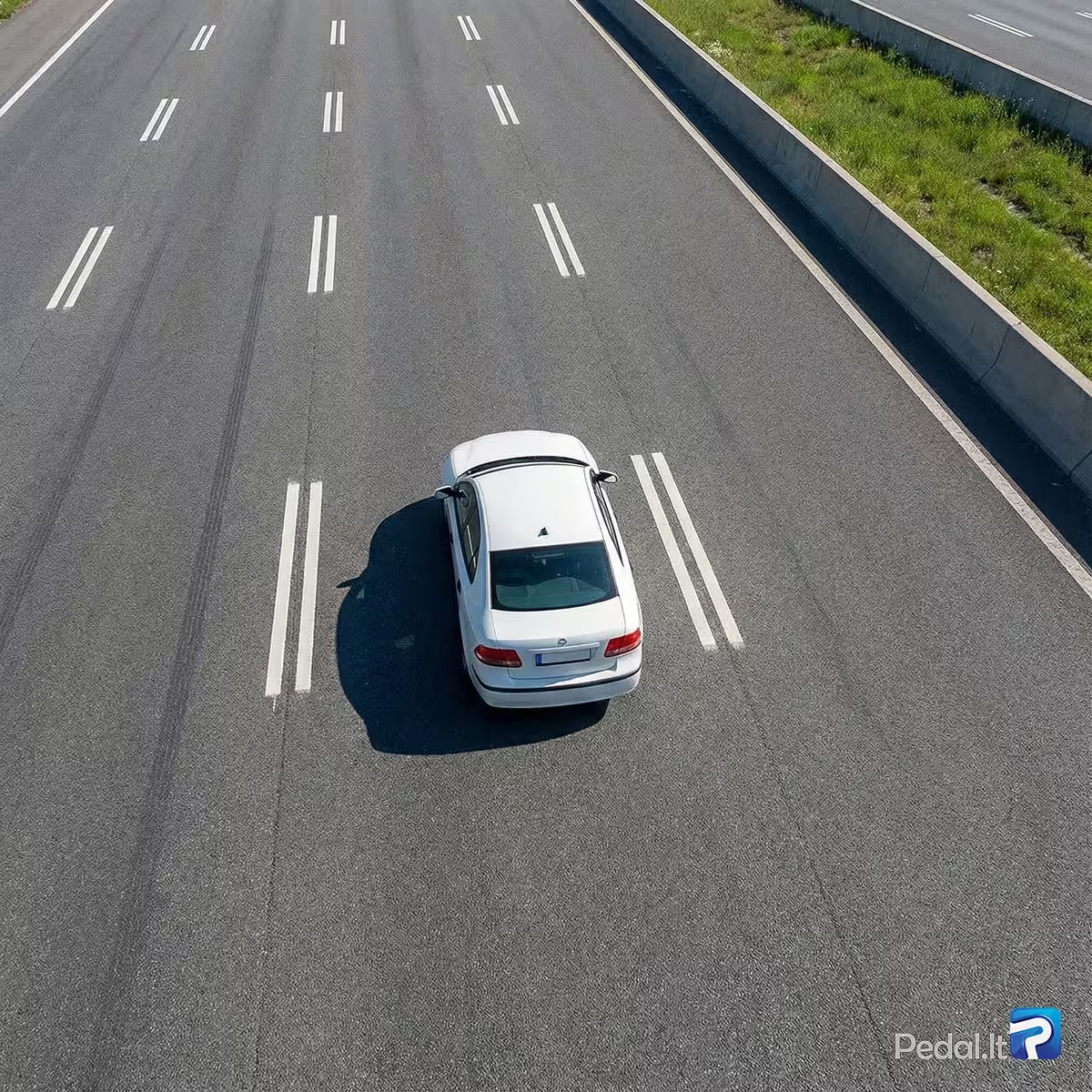
When may a double broken line be crossed?
RTR – Annex 3. 1.26. A double broken line indicates lanes of opposing traffic; it separates flows of traffic moving in opposite directions. Vehicles must not cross this line when it separates traffic moving in opposite directions. If the line separates lanes moving in the same direction, vehicles may cross it from either side when the green lane-control light is illuminated. When the amber lane-control light is illuminated, vehicles may cross it only if the line is to the driver’s right.
1. On both sides when the green lane-control light is illuminated.
2. When the amber lane-control light is illuminated, and the double broken line lies to the driver’s right.
3. Crossing it is prohibited in all cases.
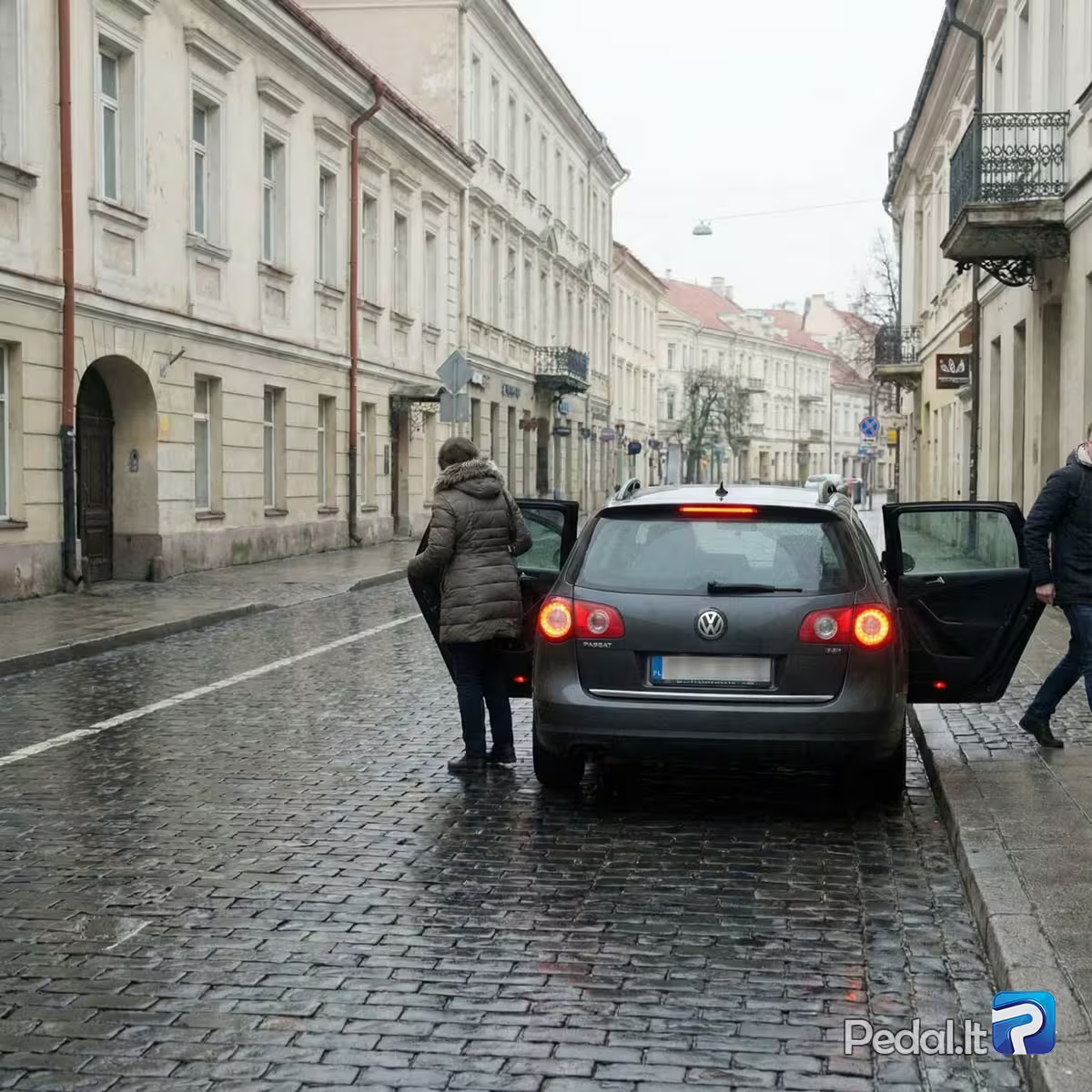
Is it permitted for passengers to board or alight from a vehicle from the roadway side?
Passengers may board or alight from the roadway side only when it is impossible to do so from the pavement (sidewalk) or hard shoulder, and only if it can be done safely without obstructing other road users.
1. It is prohibited.
2. It is allowed.
3. Yes — permitted only when boarding or alighting from the pavement (sidewalk) or hard shoulder is not possible.
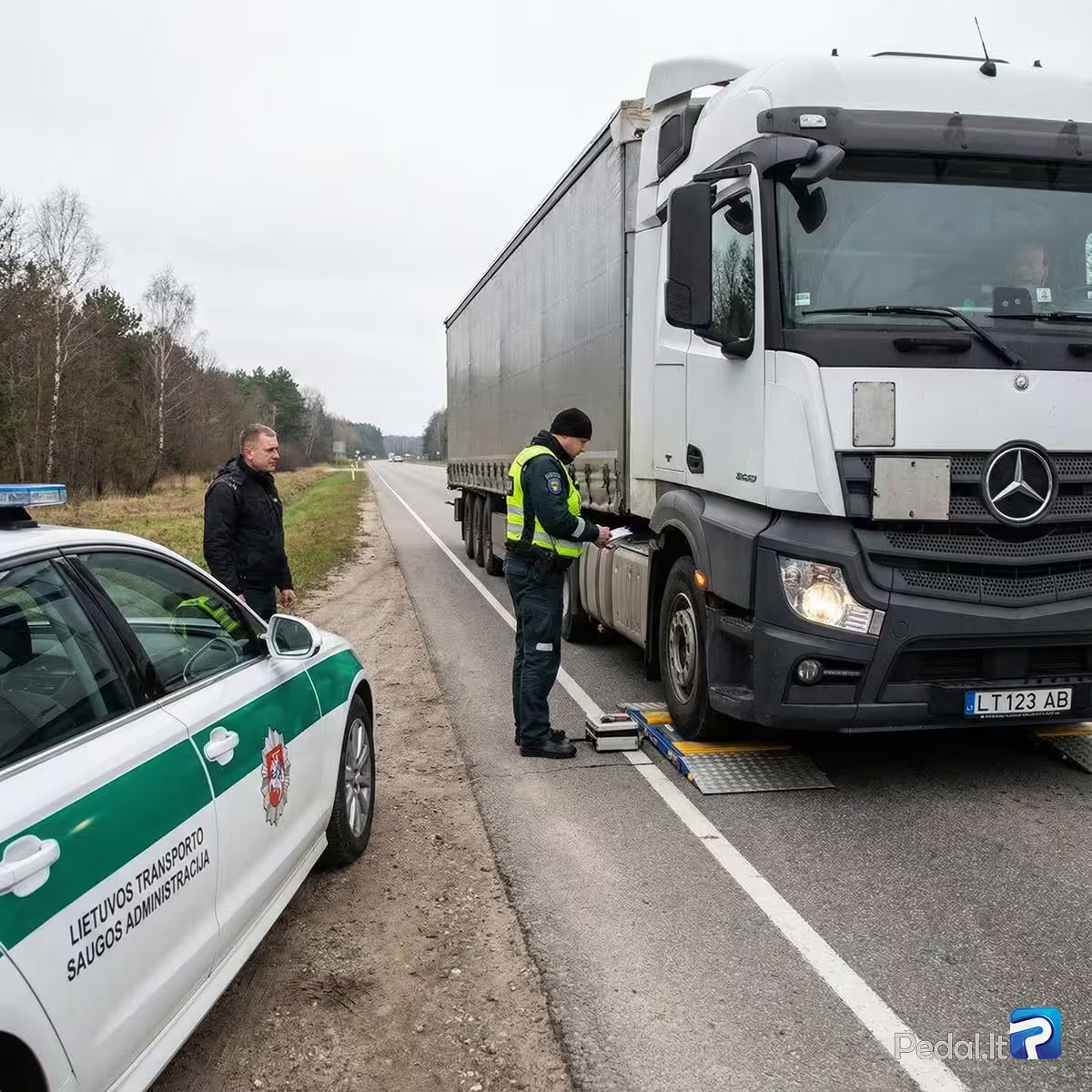
What is the permissible maximum weight for a combination of vehicles?
A vehicle's permissible maximum weight (hereinafter 'permissible maximum weight') means the maximum authorized operating weight of a fully laden vehicle or combination of vehicles, including the driver, passengers, and cargo, as specified by the vehicle manufacturer or the competent government authority.
1. The maximum authorized operating weight of a fully loaded vehicle or combination of vehicles.
2. The total payload of a vehicle and its trailer.
Which vehicle(s) are classified as a public service vehicle?
A minibus is a vehicle with no more than eight passenger seats (excluding the driver’s seat) and a maximum permissible mass not exceeding 3.5 tonnes. It may be used for private or commercial purposes. A scheduled taxi (scheduled minibus) is a public transport vehicle that operates on a fixed route with designated stops and is marked with the sign "Regular transport." A public service vehicle is any public transport vehicle — for example a bus, trolleybus, or shuttle bus — that regularly carries passengers along a specified route with defined stops; the term also includes school buses.
1. Taxi.
2. Minibuses.
3. Public transport vehicles — for example buses, trolleybuses, and shuttle buses — that regularly carry passengers along a specified route with designated stops.
Why does a vehicle pull to one side during braking?
If a vehicle pulls to one side only during braking, the fault lies in the braking system. If the wheel alignment is incorrect or there is a malfunction in the steering system, the vehicle may also pull to one side while driving.
1. Because the wheels are misaligned.
2. Because the braking system is applying unevenly.
3. Because of a malfunction in the steering mechanism.
Which of the following are warning signals?
RTR 81. Warning signals include: using turn and brake lights (arm signals may be used), sounding the horn, switching the headlights on and off, activating hazard warning lights or flashing amber beacons, and placing a warning triangle on the road or attaching it to the vehicle.
1. Brake light signal.
2. Indicating a turn using an arm signal.
3. Horn signal.
4. Switching the headlights on and off.
5. Placing a warning triangle on the road.
Why is it safer to brake without depressing the clutch while driving downhill?
After releasing the accelerator (engine braking), place your foot on the brake pedal and stop without pressing the clutch. This is the most effective braking method, especially in winter when roads are slippery. Braking with the clutch disengaged reduces stopping effectiveness and vehicle stability, increasing the risk of skidding to the side. JB
1. Braking is more effective.
2. The vehicle remains more stable during braking.
3. The tires will not wear out as quickly.
When is it permitted to teach someone to drive a motor vehicle on the roads?
RTR 21. Driving training. 4. Driving instruction on roads is permitted only when the student possesses sufficient driving skill. Instruction may be carried out only on roads where the owner has not prohibited it.
1. When the student has sufficient driving skills, understands the traffic rules, and complies with their requirements.
2. When the student can drive a vehicle but does not know the traffic rules.
3. Driving instruction on public roads is permitted only after the student has completed driving school.
How can you conserve fuel and reduce environmental pollution?
Carrying a 100 kg load in city driving increases fuel consumption by about 0.5 L per 100 km. The air conditioner consumes approximately 0.5–1.0 L/100 km; a fan consumes about 0.08–0.3 L/100 km; the radio about 0.06–0.21 L/100 km; modern audio systems about 0.2–0.7 L/100 km. JB
1. Remove unnecessary items from the vehicle before driving.
2. Use the air conditioner only when necessary.
3. Use electrical accessories only when necessary.
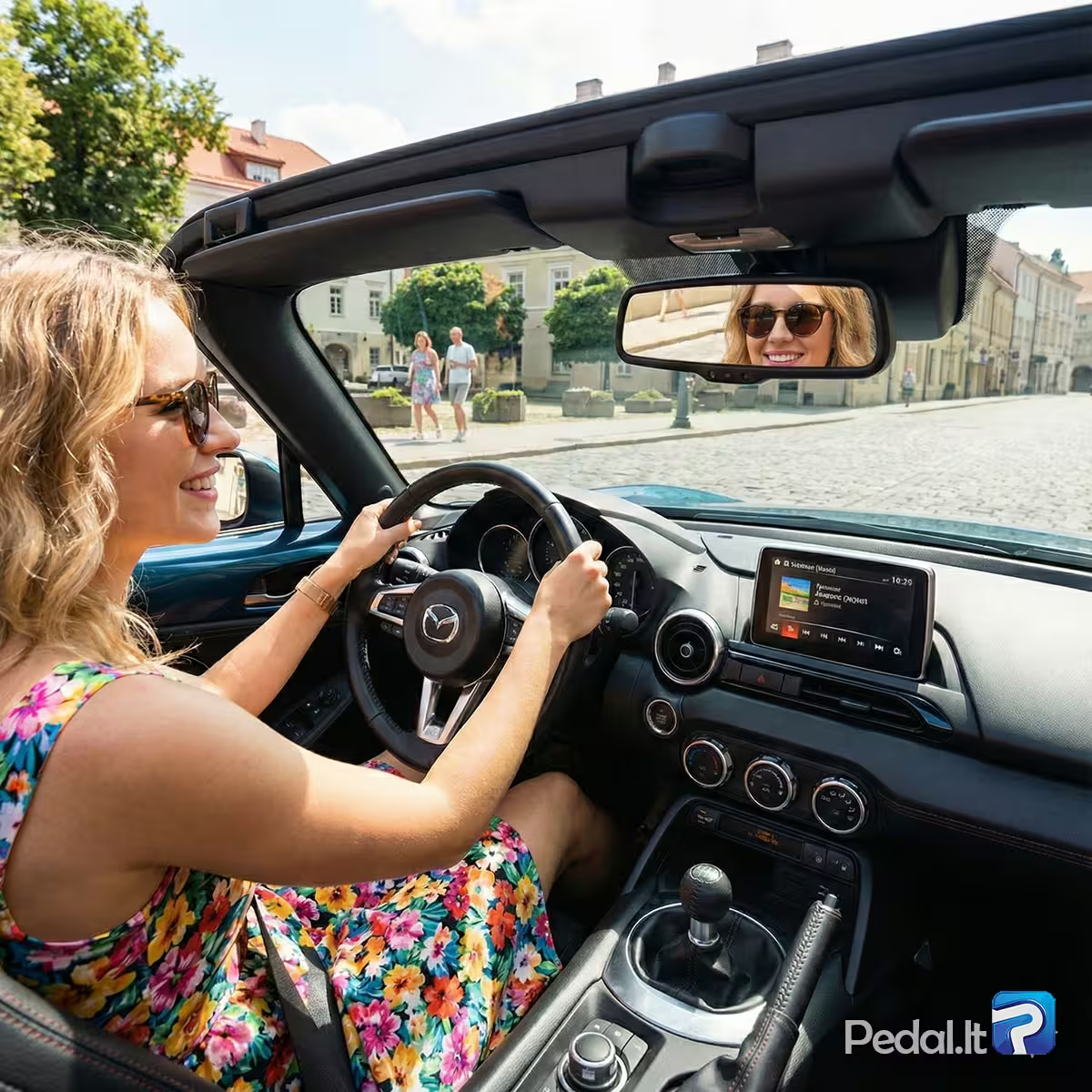
When driving safely, you must:
Always make safety your priority. That means thinking ahead, planning your actions, and anticipating the behavior of other road users.
1. Anticipate the actions of other road users.
2. Driving slightly above the speed limit.
3. Stay closer to the edge of the road.
4. Driving well below the maximum permitted speed.
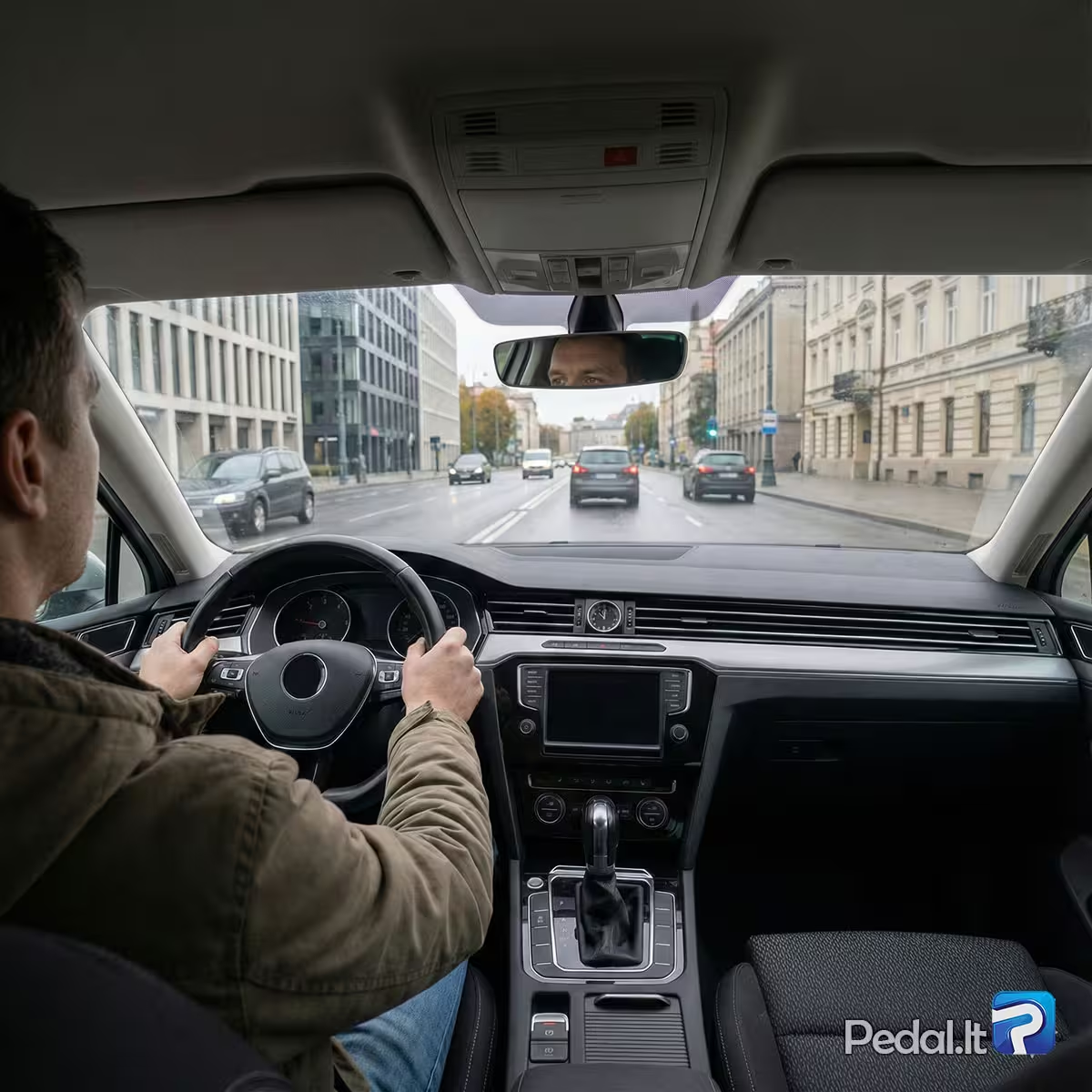
When should a driver move back into the right-hand lane after overtaking another vehicle?
RTR 136. Drivers should avoid unnecessary overtaking maneuvers. Before overtaking, drivers must take extra precautions and ensure that: 136.1. no driver behind them has already started to overtake; 136.2. the driver of the vehicle to be overtaken is not indicating a left turn; 136.3. the section of lane required for overtaking is clear, and the overtaking vehicle will not obstruct oncoming traffic or pedestrians on the roadway; 136.4. a safe distance from the vehicle being overtaken can be maintained during the maneuver; 136.5. after completing the overtaking maneuver, they will be able to return to the same lane safely without obstructing the overtaken vehicle.
1. Immediately after overtaking.
2. When the driver is more than 100 metres ahead of the overtaken vehicle.
3. When the overtaking driver can see the overtaken vehicle in the rear‑view mirror.
Your car begins to skid sideways while braking. What should you do?
If the wheels lock and the car begins to skid while braking, you must release the brake pedal. For example, if you brake hard before a bend and lock the wheels, the vehicle will continue moving in its original direction (straight ahead) despite steering input. That can cause you to run off the road or collide with an obstacle. In that situation you must stop braking — which can be difficult, especially for inexperienced drivers.
1. Press the clutch pedal.
2. Release the brake pedal (stop applying the brakes).
3. Apply the brakes more firmly.
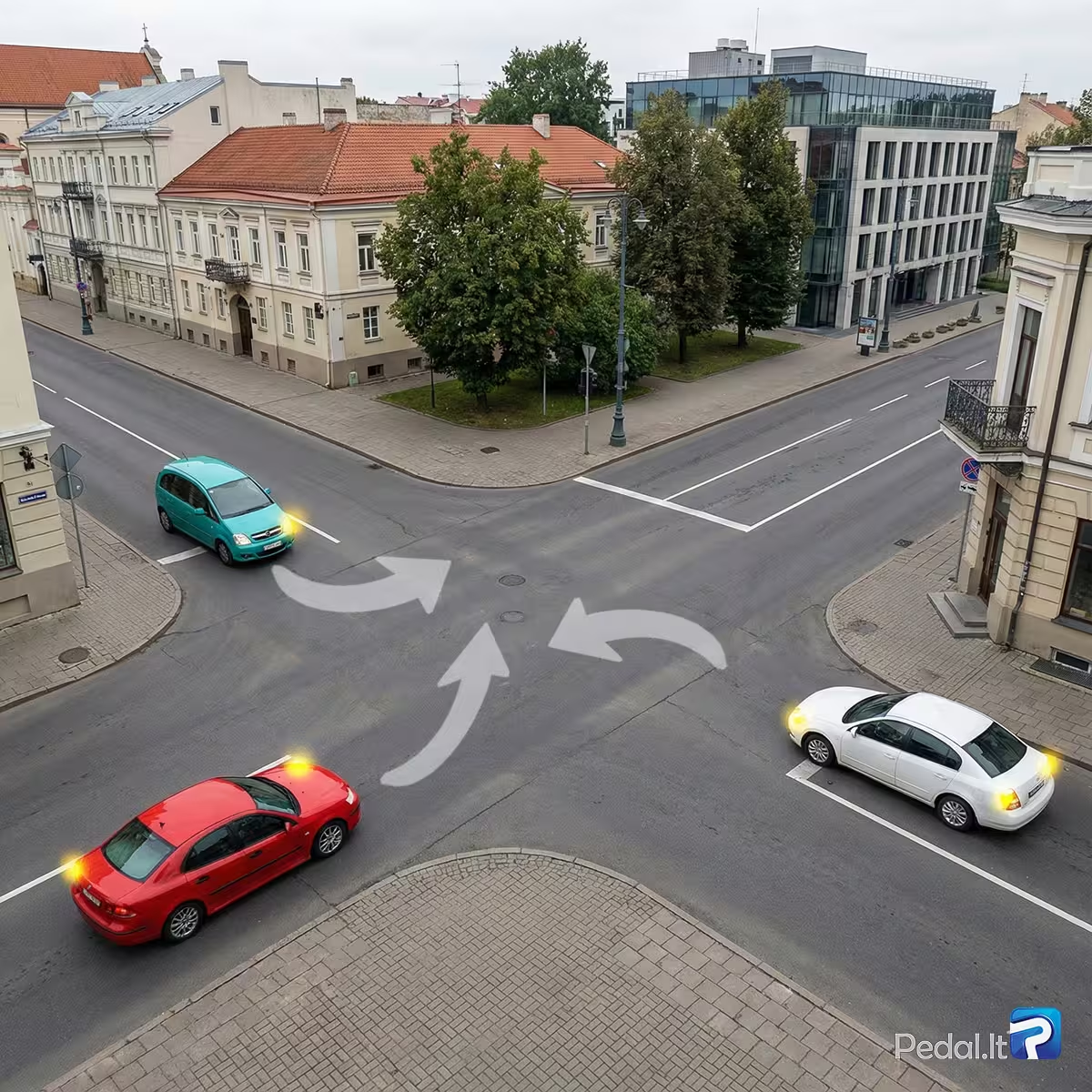
The correct sequence of vehicles to proceed through this intersection is:
The white car goes first because it has no vehicle on its right. It does not need to stop in the middle of the intersection because the green car, which is turning left, does not obstruct it. Next, the red car proceeds because the white car is no longer to its right. Finally, the green car goes. The white and green cars cannot go at the same time because the green car must yield to the red car on its right. (RTR 155) At an uncontrolled intersection, drivers must yield to vehicles approaching from the right when their paths intersect.
1. The white car goes first, then the red car, and finally the green car.
2. The red car goes first, then the green car, and finally the white car.
3. The white and green cars proceed simultaneously, followed by the red car.
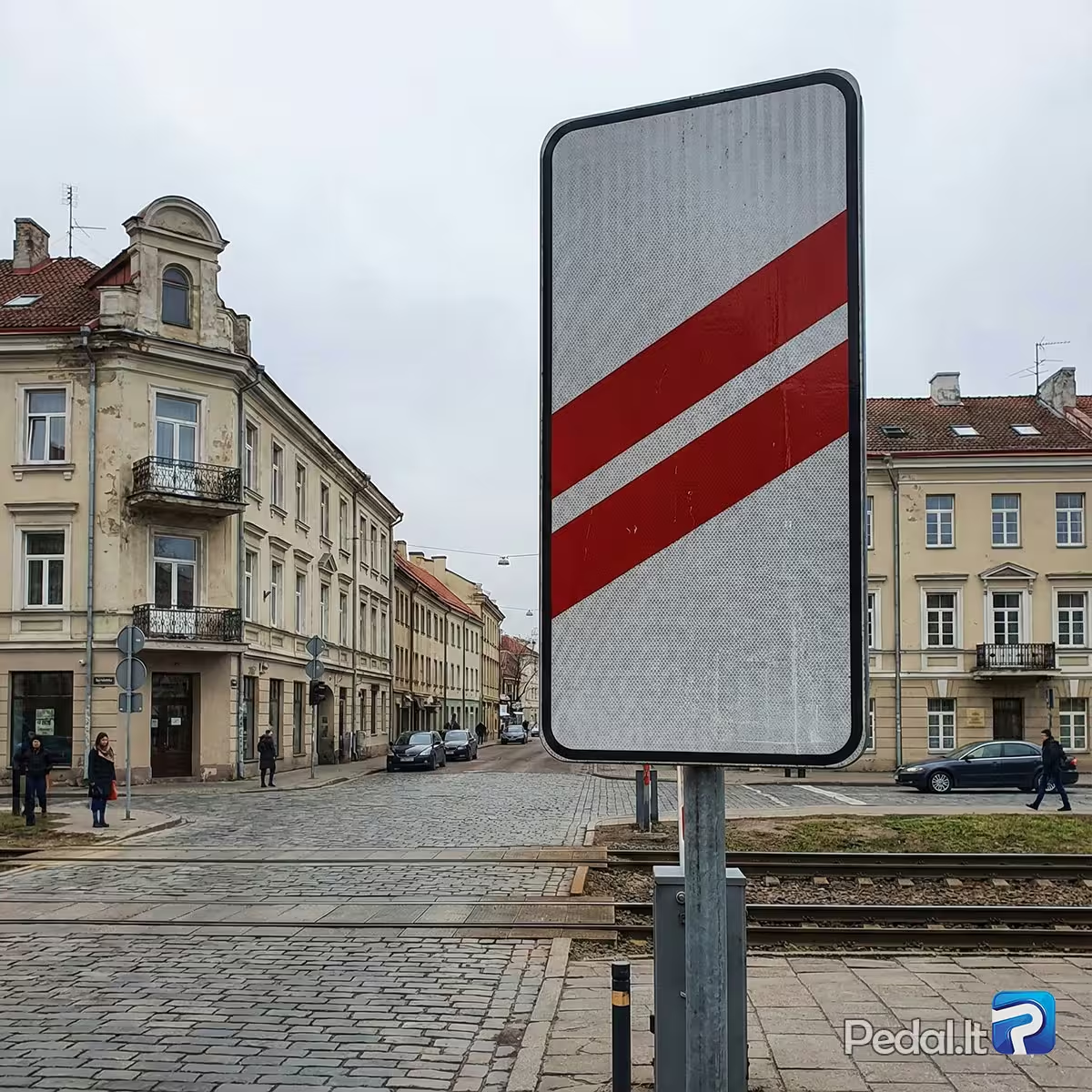
What does this traffic sign indicate?
141. "Level Crossing Ahead" — warns of a railway level crossing ahead located outside a built-up area. The sign is mounted on the right-hand side of the road.
1. It indicates a level crossing ahead located outside a built-up area.
2. It indicates a level crossing ahead located within a built-up area.
When must the driver begin displaying the warning signal?
RTR 86. Warning signals must be given to other road users sufficiently in advance of a maneuver (including braking associated with the maneuver) and must be discontinued immediately after the maneuver. Hand signals may be ceased before the maneuver begins. JB
1. At the beginning of the maneuver.
2. While the maneuver is in progress.
3. Well in advance of the maneuver (including braking connected to the maneuver).
4. No signal is required if there are no vehicles following.
Are non-public-service vehicles allowed to drive in a lane marked with the letter 'A'?
A lane marked with the letter 'A' is reserved exclusively for public service vehicles. Non-public-service vehicles may only change into or use this lane when preparing to turn right. An exception exists for lanes marked with the 'A+' symbol. (See RTR Annex 3, §1.21; RTR 181 and Paragraph 182 of the Rules.) Non-public-service vehicles must not drive in lanes marked with the 'Lane Reserved for Public Service Vehicles' sign and the letter 'A'.
1. Yes — non-public-service vehicles are permitted to use that lane.
2. No — non-public-service vehicles are not permitted to use that lane.
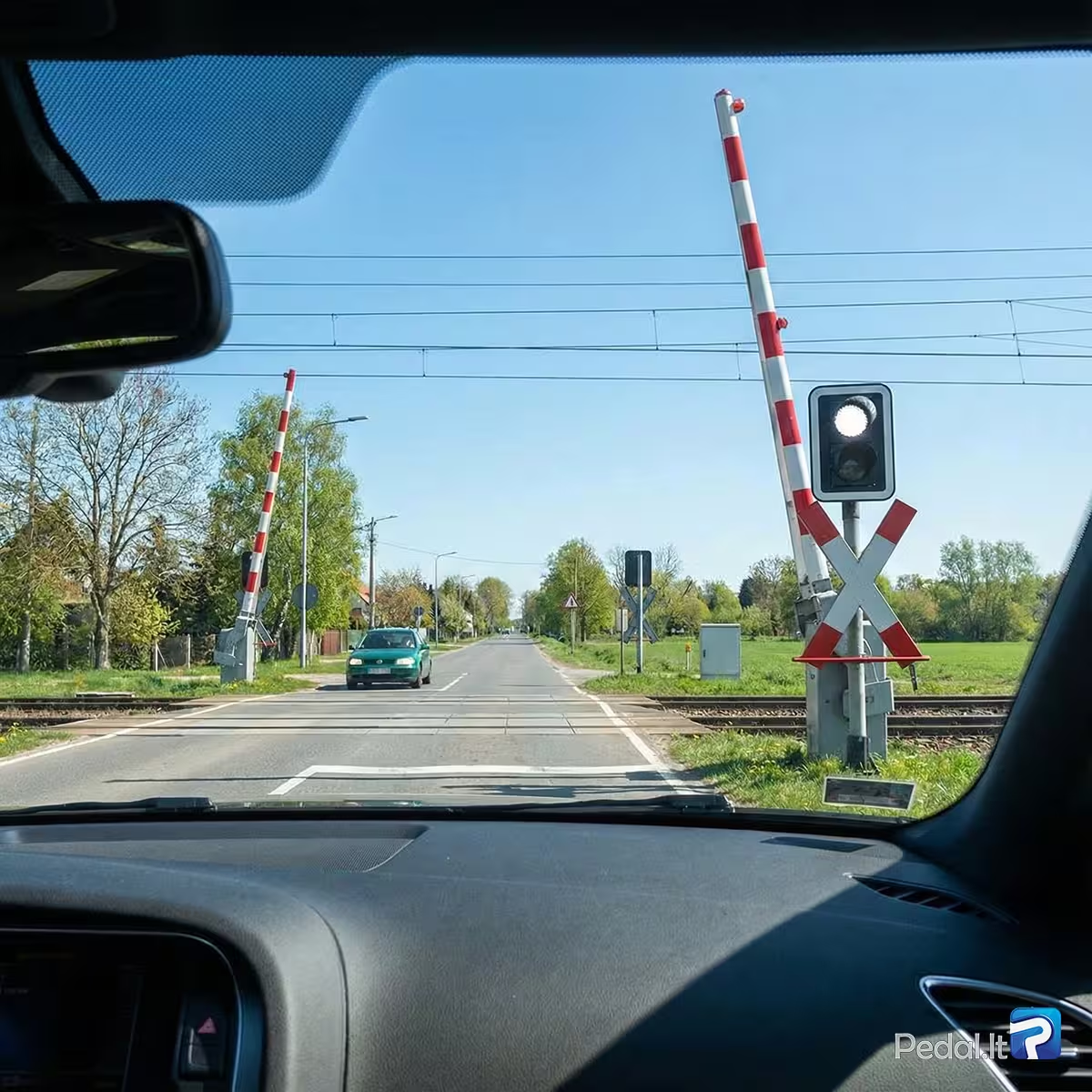
You see a flashing white light and the barrier is fully raised. Are you permitted to cross the level crossing in this situation?
RTR 73. Traffic light signals: 73.10. A flashing white light used at level crossings indicates that vehicles may proceed only after confirming that no rail-borne vehicle is approaching the crossing.
1. Yes — but only after you have verified that no train or other rail vehicle is approaching the level crossing.
2. No — you may not proceed.
Actions to take when driving in fog with visibility under 300 metres:
Selecting an appropriate heating/ventilation setting will reduce condensation on the windows; using the windscreen wipers will clear fogged windows and maintain good visibility; switching on the fog lamps will make the road more visible and help other road users notice you. RTR 98. Fog lamps may be used only when visibility is seriously reduced, and the front fog lamps may be used in the event of failure of the front left dipped‑beam headlamp. Poor visibility means a situation caused by weather conditions or other phenomena when road visibility is less than 300 metres, regardless of road parameters.
1. Select the appropriate heating/ventilation mode.
2. Occasionally use the windscreen wipers to clear fogged-up windows.
3. Switch on the fog lamps.
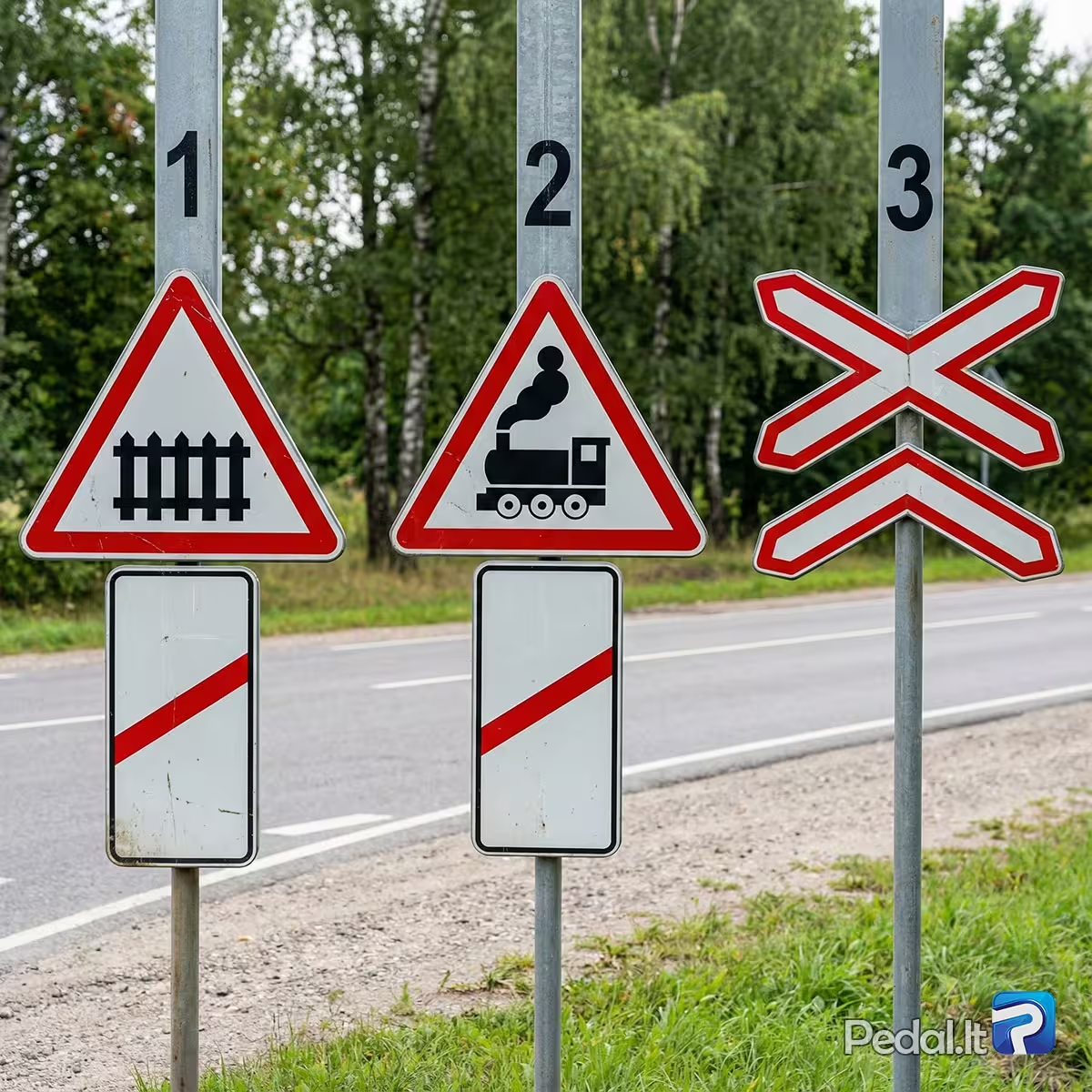
Which road sign indicates that you are approaching a level crossing equipped with a barrier?
Road sign 101 — “Level Crossing with Barrier”: indicates a level crossing protected by a barrier. Road sign 102 — “Level Crossing without Barrier”: indicates a level crossing that has no barrier. Road sign 142 — “Level Crossing Ahead”: warns of a level crossing ahead outside built-up areas; this sign is placed as close as possible to the crossing on the right-hand side of the road. Road sign 139 — “Multi-Track Railway”: indicates a level crossing without a barrier across a railway with two or more tracks.
1. 1.
2. 2.
3. 3.
When operating electric scooters, choppers, or electric mopeds with a maximum design speed of 25–45 km/h and power between 1 kW and 4 kW:
The AM category is sufficient to drive these vehicles, but it is not the only entitlement that allows you to do so. Possessing another driving category that authorises operation of such vehicles also permits you to drive them. LAW ON ROAD TRAFFIC SAFETY — Article 2. Basic concepts of the Law: 30. Light quadricycle means a four-wheeled motor vehicle with an unladen mass (excluding batteries if it is an electric vehicle) not exceeding 350 kg, a maximum design speed not exceeding 45 km/h, an engine capacity not exceeding 50 cm3 (for a spark-ignition engine), a maximum net power not exceeding 4 kW (for another type of internal combustion engine), and a maximum rated power not exceeding 4 kW (for an electric motor). 33. Moped means a two-wheeled motor vehicle with a maximum design speed exceeding 25 km/h and not exceeding 45 km/h, an engine capacity not exceeding 50 cm3 (for an internal combustion engine), and a maximum net power not exceeding 4 kW (for an electric motor); or a three-wheeled motor vehicle with a maximum design speed exceeding 25 km/h and not exceeding 45 km/h, an engine capacity not exceeding 50 cm3 (for a spark-ignition engine), a maximum net power not exceeding 4 kW (for another type of internal combustion engine), and a maximum net power not exceeding 4 kW (for an electric motor). LAW ON ROAD TRAFFIC SAFETY — Article 23. Categories of motor vehicles and the minimum driving age: 1. Categories of motor vehicles and their combinations with trailers: 1) Category AM: mopeds and light quadricycles;
1. A driving licence is not required to operate these vehicles.
2. The driver must hold a valid driving licence entitling them to operate AM‑category vehicles, or a licence of another category that permits driving such vehicles.
When must passengers fasten their seat belts?
RTR 196. All passengers and the driver must wear seat belts when traveling in vehicles equipped with them. If a bus is fitted with seat belts, visible signs reading "Fasten Your Seat Belt" must be displayed in front of every seat, on the seat, or next to it. It is recommended that all bus passengers be informed of the requirement to wear seat belts verbally or by audio-visual means before the journey begins. 198. Within built-up areas, a driver is permitted not to fasten the seat belt while reversing or when in parking areas. 205. Persons who, for serious medical reasons, hold special permits issued by competent authorities are exempt from wearing seat belts. These permits must include an expiry date.
1. Only when traveling on mountain roads.
2. At all times when traveling in a vehicle.
3. Only when traveling outside built-up areas.
4. Only when traveling on motorways.
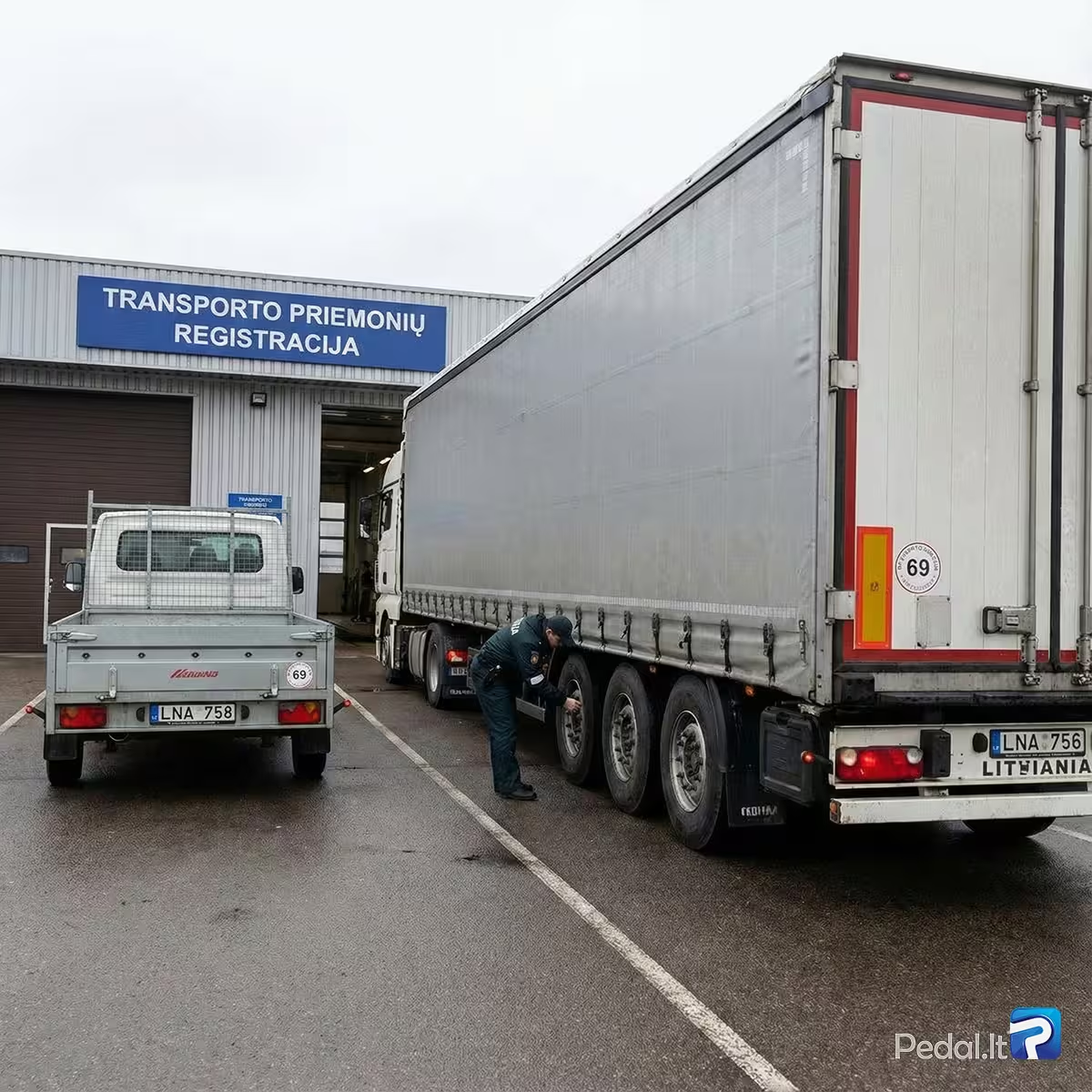
Are trailers and semi-trailers considered vehicles?
48. A trailer is a vehicle designed to be towed by a motor vehicle. Semi-trailers are also regarded as trailers. 52. A semi-trailer is a trailer coupled to a motor vehicle in such a way that part of its weight and the weight of its load are borne by the motor vehicle.
1. No.
2. Yes.
1 of 30 Task
Time left: 00:00:00
1
2
3
4
5
6
7
8
9
10
11
12
13
14
15
16
17
18
19
20
21
22
23
24
25
26
27
28
29
30