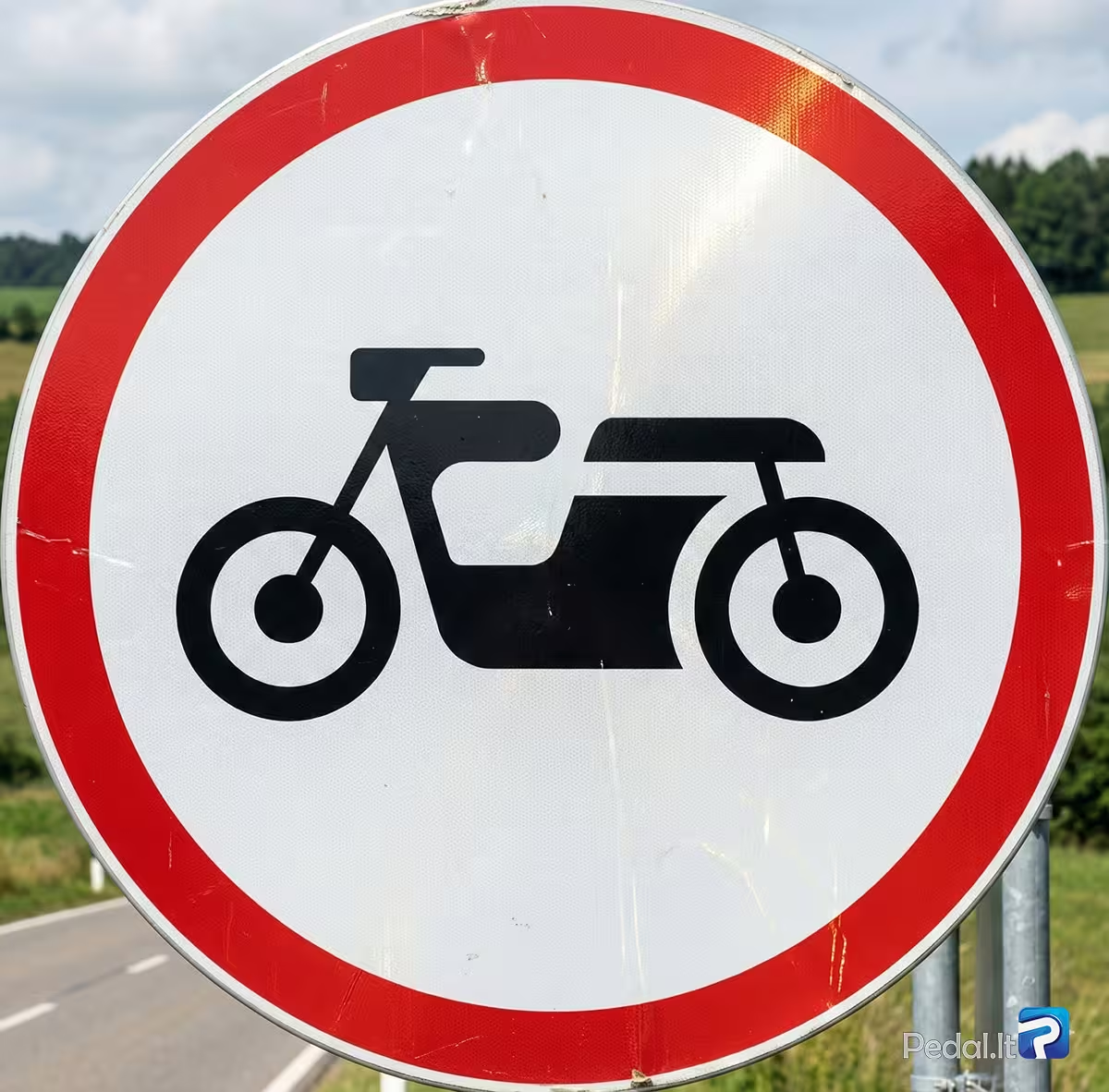
Which motor vehicles are prohibited from entering the area designated by this road sign?
1. Motorcycles (two‑wheeled motor vehicles)
2. Light quadricycles (small four‑wheeled motor vehicles)
3. Mopeds (low‑powered two‑wheel motor vehicles)
4. Bicycles (pedal‑powered two‑wheel vehicles)
Carrying passengers is permitted in:
Towing a vehicle with a trailer is not prohibited, and carrying passengers in a towed passenger car is allowed. According to RTR 195 and clause 195.4, drivers must not carry passengers inside a towed bus, trolleybus, or in the cargo body of a goods vehicle. If the front or rear of a vehicle rests on a supporting device, no passengers may be inside or in the body of the towed vehicle.
1. Inside a towed bus.
2. Inside a car being towed together with its trailer.
3. Inside a passenger car being towed without a trailer.
4. Inside a car that is being towed with its front lifted on a special support device.
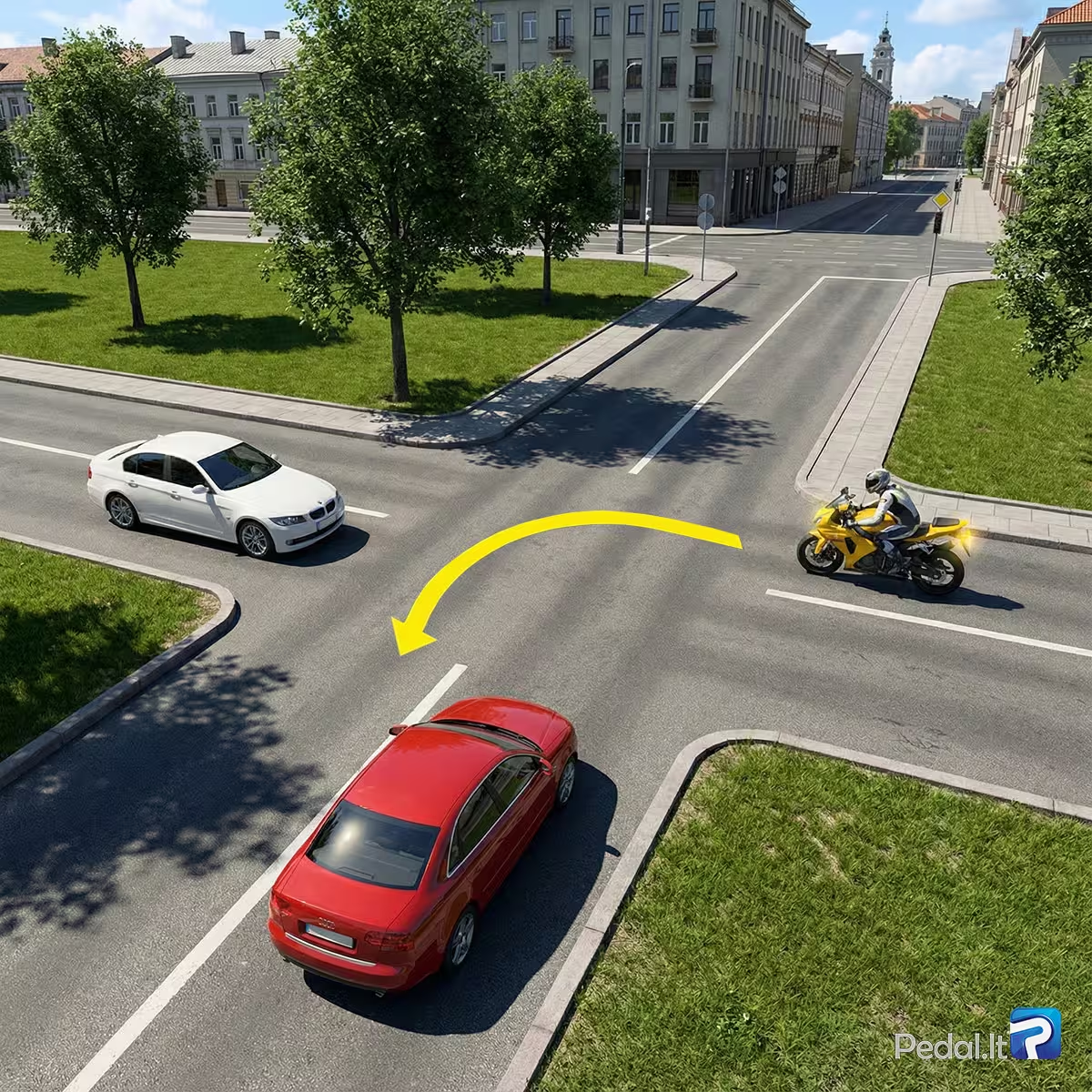
What is the motorcycle's order of passage through the intersection? The rider is turning left.
At an uncontrolled intersection of roads with equal priority, drivers must yield to vehicles approaching from the right when their paths intersect. A vehicle turning left must give way to oncoming traffic that is going straight or turning right. In this scenario, the red car goes first because the motorcycle, which had entered the intersection, stopped to yield. The white car proceeds next, since it no longer has a vehicle to its right, and finally the motorcyclist completes the maneuver — the motorcycle goes third. (RTR 155; RTR 157.)
1. First.
2. Third.
3. Second.
When must passengers fasten their seat belts?
RTR 196. All passengers and the driver must wear seat belts when traveling in vehicles equipped with them. If a bus is fitted with seat belts, visible signs reading "Fasten Your Seat Belt" must be displayed in front of every seat, on the seat, or next to it. It is recommended that all bus passengers be informed of the requirement to wear seat belts verbally or by audio-visual means before the journey begins. 198. Within built-up areas, a driver is permitted not to fasten the seat belt while reversing or when in parking areas. 205. Persons who, for serious medical reasons, hold special permits issued by competent authorities are exempt from wearing seat belts. These permits must include an expiry date.
1. Only when traveling on mountain roads.
2. At all times when traveling in a vehicle.
3. Only when traveling outside built-up areas.
4. Only when traveling on motorways.
What is the minimum age at which a person is permitted to drive livestock or birds on a road?
Driving livestock or birds on a road is uncommon, but drivers should know the minimum permitted age because it is specified in the Road Traffic Rules. RTR 5. Road users must be familiar with the Law of the Republic of Lithuania on Road Traffic Safety, know the Rules, and comply with them. RTR 67. Only persons over the age of 14 may drive an animal-drawn vehicle, drive livestock or birds, or ride an animal on the road.
1. 8
2. 12
3. 14
4. 16
Why does a vehicle need a generator?
A generator charges the battery and supplies electrical current to the vehicle's electrical systems and other consumers only while the engine is running, i.e. while the engine's crankshaft is turning. Via the drive pulley and belt, the crankshaft turns the generator, which produces electricity.
1. It supplies electrical current to the vehicle's electrical systems when the engine is not running.
2. It supplies electrical current to the vehicle's electrical systems while the engine is running.
3. It provides current to the starter motor when starting the engine.
Which legal act establishes the legal framework governing road traffic safety in the Republic of Lithuania?
Article 1. Purpose and scope. This Law establishes the legal framework for road traffic safety in the Republic of Lithuania. It defines the duties of state and municipal bodies in implementing road safety policy, sets requirements for the training of road users, and specifies the principal rights and obligations of road users, road maintenance authorities, the police, customs officers, and other supervisory officials. The Law also establishes basic requirements for vehicle technical condition, vehicle inspection and registration, and safety standards for road infrastructure, with the objective of protecting the lives, health, and property of road users and others, and of improving conditions for motorized and pedestrian traffic.
1. The Civil Code of the Republic of Lithuania.
2. The Criminal Code of the Republic of Lithuania.
3. The Law on Road Traffic Safety of the Republic of Lithuania.
4. The Code of Administrative Offences of the Republic of Lithuania.
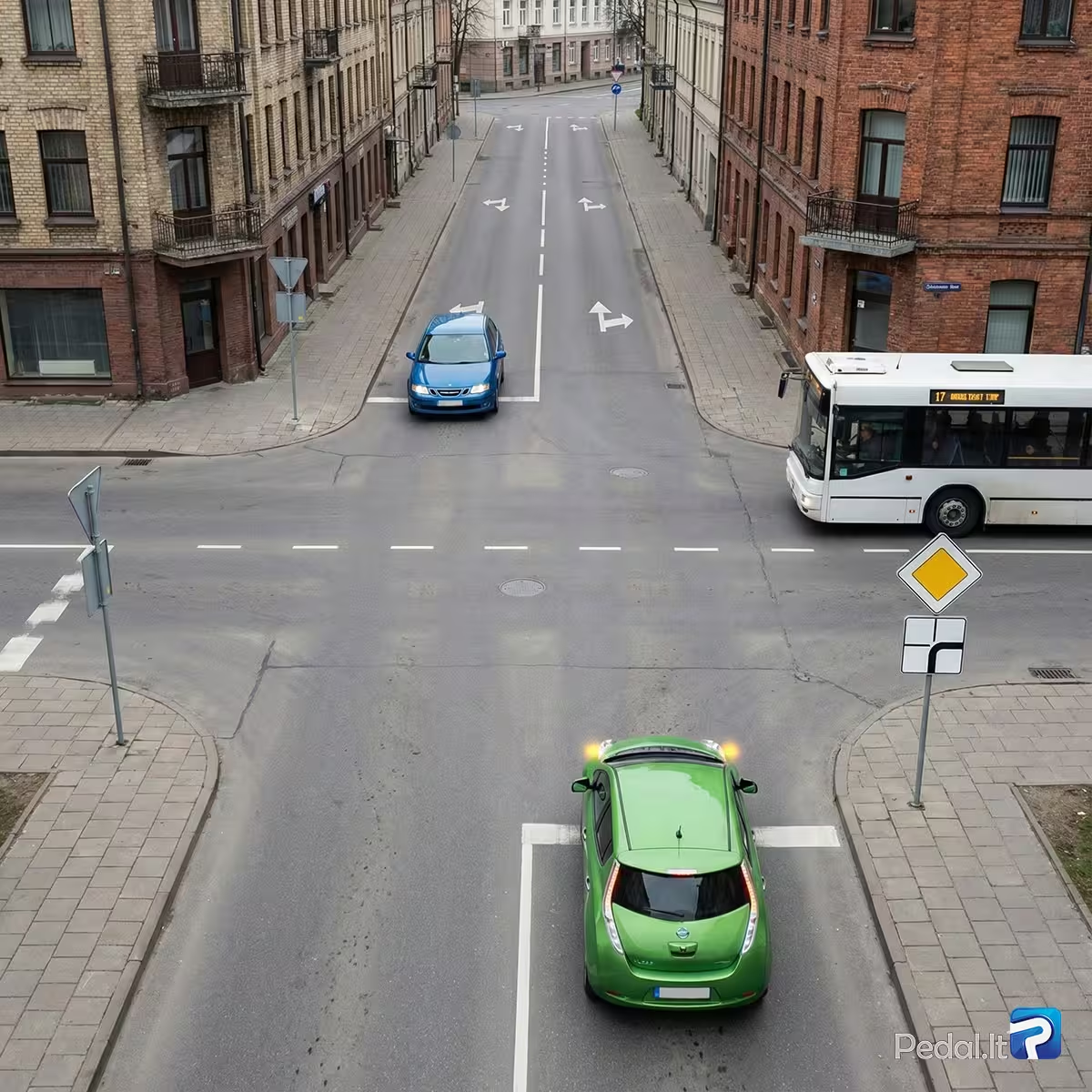
You are driving the green vehicle. When turning left, must you yield to the blue vehicle?
The green vehicle is on the main (priority) road, so it does not need to give way to the blue vehicle when turning left. Right-of-way rules vary depending on whether an intersection is controlled: at a controlled intersection, drivers entering from a side road must yield to traffic on the priority road. See rule 154.
1. Yes — you must yield.
2. No — you do not have to yield.
.avif)
How should you drive on a slippery road?
A safe speed depends on all circumstances, including weather, road surface and vehicle condition, as well as the driver's experience and level of alertness. (RTR 127) Drivers must not exceed the permissible speed limits. A driver must choose a speed appropriate to the conditions — taking into account terrain, road and vehicle condition (including load), weather, and traffic density — so that they can stop safely before any foreseeable obstruction. The driver must reduce speed or stop when conditions require, particularly when visibility is poor. JB
1. Maintain a larger-than-usual following distance from other vehicles.
2. When necessary, apply the brakes very gently.
3. Avoid sudden movements of the steering wheel or abrupt changes to the accelerator.
4. Select a safe driving speed.
Braking distance depends on:
Braking distance depends on the condition of the tyres, the vehicle's speed, the road surface, the vehicle's weight, the force applied to the brake pedal, and the condition of the braking system. Less worn tyres provide more effective braking. Lower speeds reduce stopping distance. Heavier vehicles require a longer distance to stop. Rougher road surfaces increase traction and therefore shorten stopping distance. Applying greater pressure to the brake pedal generally shortens stopping distance, provided you avoid locking the wheels.
1. The condition of the tyres and the vehicle's speed.
2. Whether the vehicle is front-wheel drive or rear-wheel drive.
3. The condition of the brake pads.
4. The condition of the road surface.
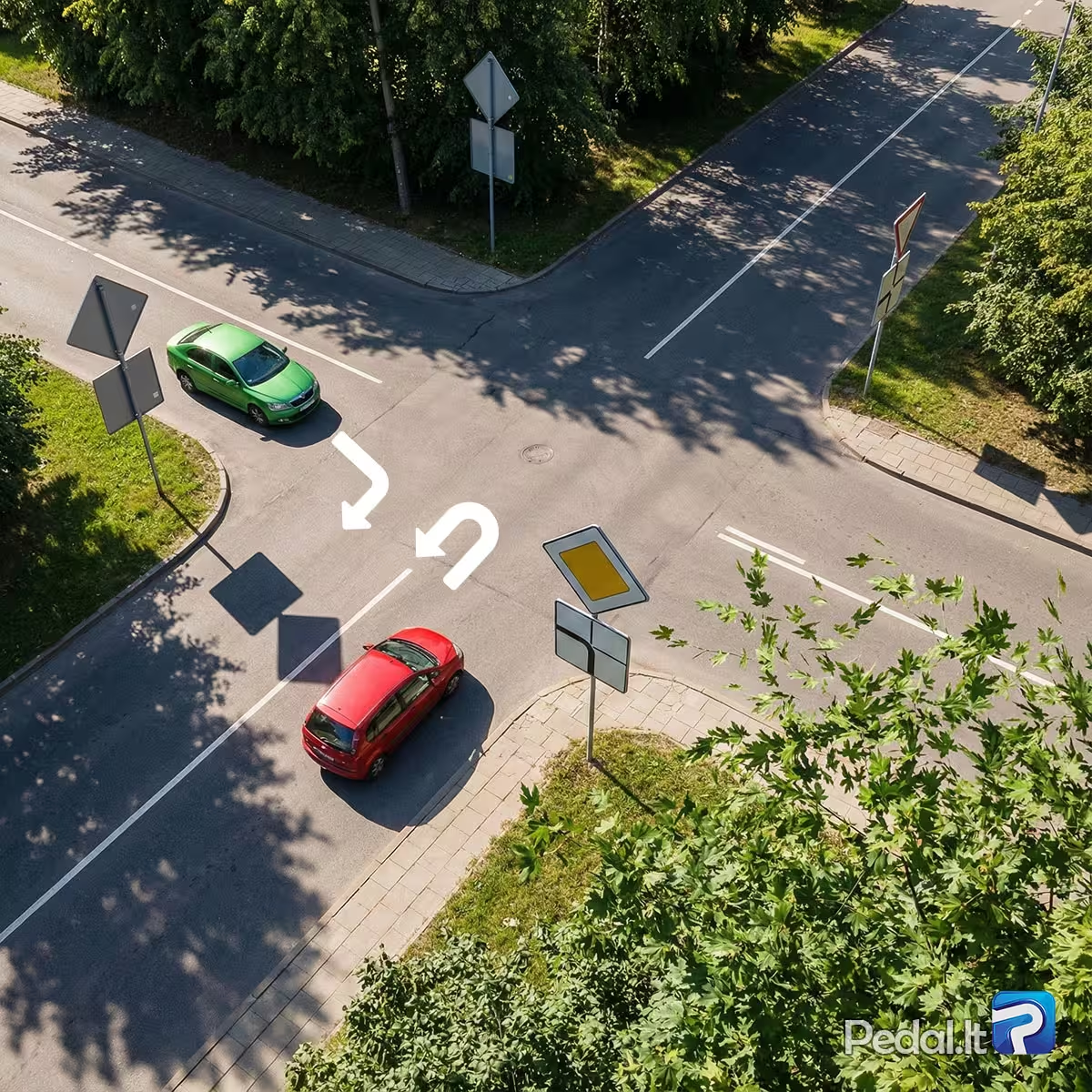
The driver of the red car is about to make a U-turn. Does he have the right of way?
When turning, the driver of the red car must yield to any vehicle coming from the opposite direction on a road of equal priority that is approaching from the right (the green car). Once the red car has already entered the intersection, the green car is considered an obstacle. At intersections where the main road changes direction, the priority-to-the-right rule applies (RTR 157). When turning left or making a U-turn, a driver must yield to oncoming vehicles on an equally important road that are going straight or turning right — and, where overtaking is permitted, also to vehicles that are overtaking.
1. Yes — he has the right of way.
2. No — he does not have the right of way.
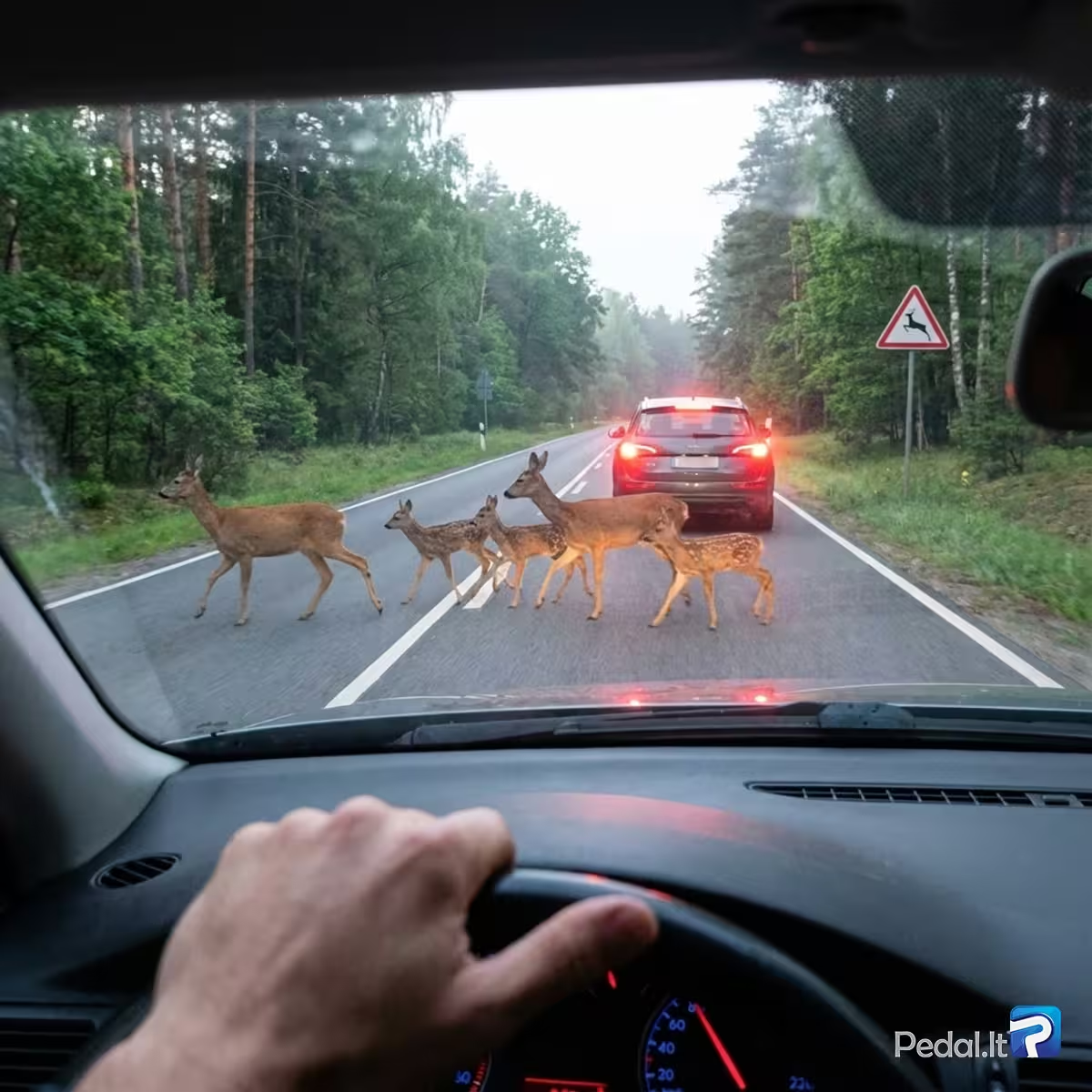
While driving, a group of roe deer crossed the road in front of your vehicle. What should you expect?
Wild animals typically travel in groups. If you see a lone roe deer, deer, or wild boar, others are likely nearby. Herding instincts lead animals to cross roads together rather than individually.
1. The animals may return to the road.
2. A solitary animal may follow the group.
3. It is unlikely that there will be any solitary animals.
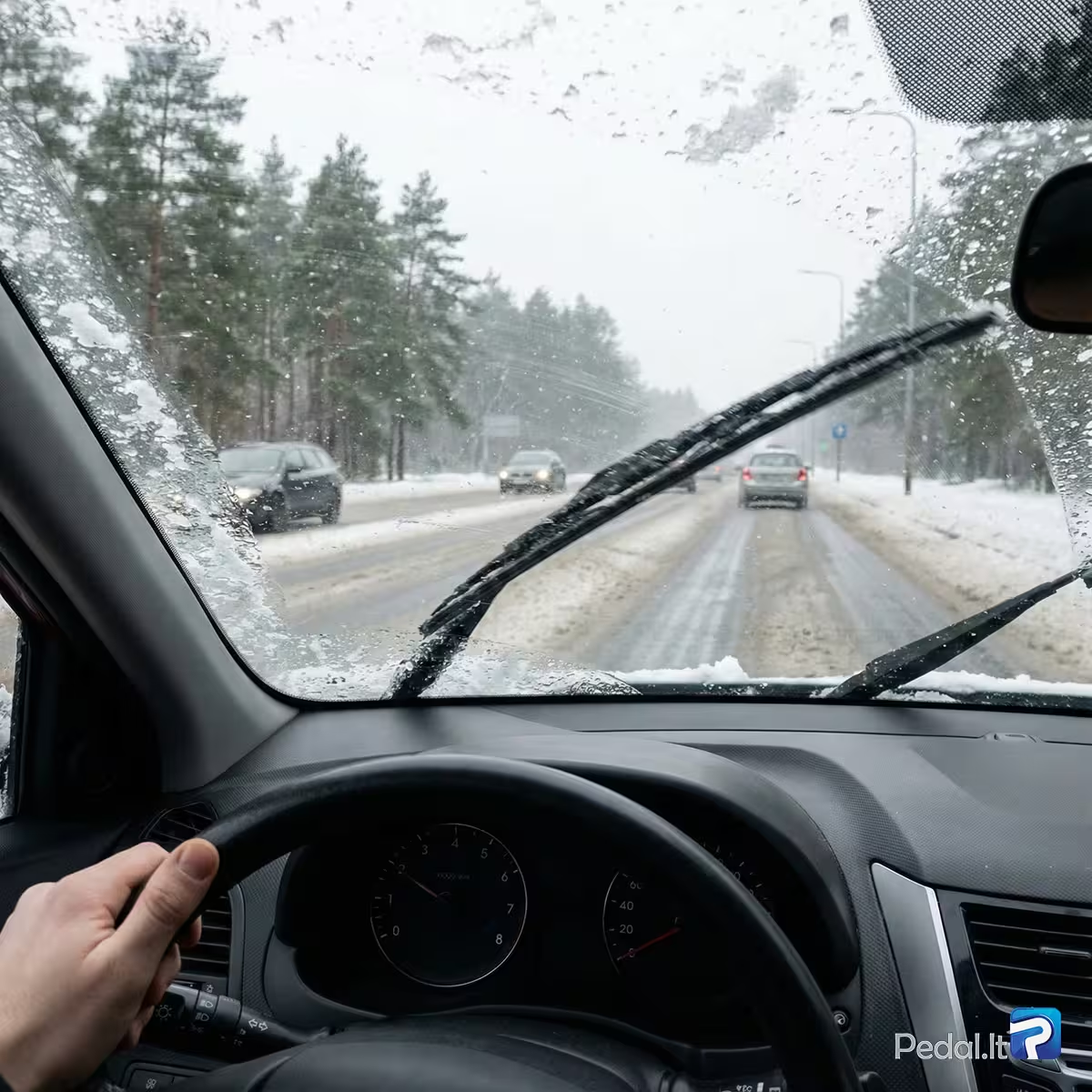
When should you switch on your windscreen wipers while driving in sleet?
A driver must maintain clear forward visibility in all weather conditions. Use the windscreen wipers according to the intensity of precipitation, traffic, presence of pedestrians and other circumstances. Waiting until "the windscreen is covered in snow and you are unable to see anything" is too late.
1. Only when the windscreen is completely covered with snow and you cannot see anything.
2. Before another vehicle driving alongside you can splash dirty water onto your windscreen.
3. Before an oncoming vehicle can splash dirty water onto your windscreen.
4. In advance, so you are not distracted while searching for the windscreen wiper control.
Cyclists must not:
RTR 38. Persons moving in a wheelchair, or guiding a motorcycle, moped, bicycle, motorised two‑wheeled vehicle, electric micromobility device, or pulling (pushing) a sledge or handcart along the shoulder or edge of the carriageway must proceed in single file and only in the direction of traffic. RTR 64. Cyclists must not: 64.1. ride on the carriageway, except in cases permitted by the Rules. RTR 57. Bicycles may be ridden only on cycle tracks, combined footpath/cycle tracks, or cycle lanes; if none of these are available, bicycles may be ridden on a suitable hard shoulder (with asphalt or concrete surfacing). When a right‑side cycle track, combined footpath/cycle track, cycle lane, or suitable hard shoulder is not available or is unsuitable for cycling (for example, pitted), cyclists may use the pavement or ride in single file on the right‑hand lane of the carriageway, keeping to the right edge of the lane, except in the cases specified in paragraph 106 of these Rules and except when cyclists must bypass an obstruction or continue straight where turning right from the first lane is the only permitted manoeuvre. When riding on a hard shoulder, footpath, cycle track, or pavement, a cyclist must yield to pedestrians, must not obstruct or endanger them, and should pass pedestrians at a speed close to walking pace (3–7 km/h), leaving sufficient lateral clearance to ensure safety.
1. Ride on the carriageway except when no cycle track, cycle lane, or suitable hard shoulder is available.
2. Ride against the flow of traffic.
3. Walk (push) their bicycle in the same direction as vehicular traffic.
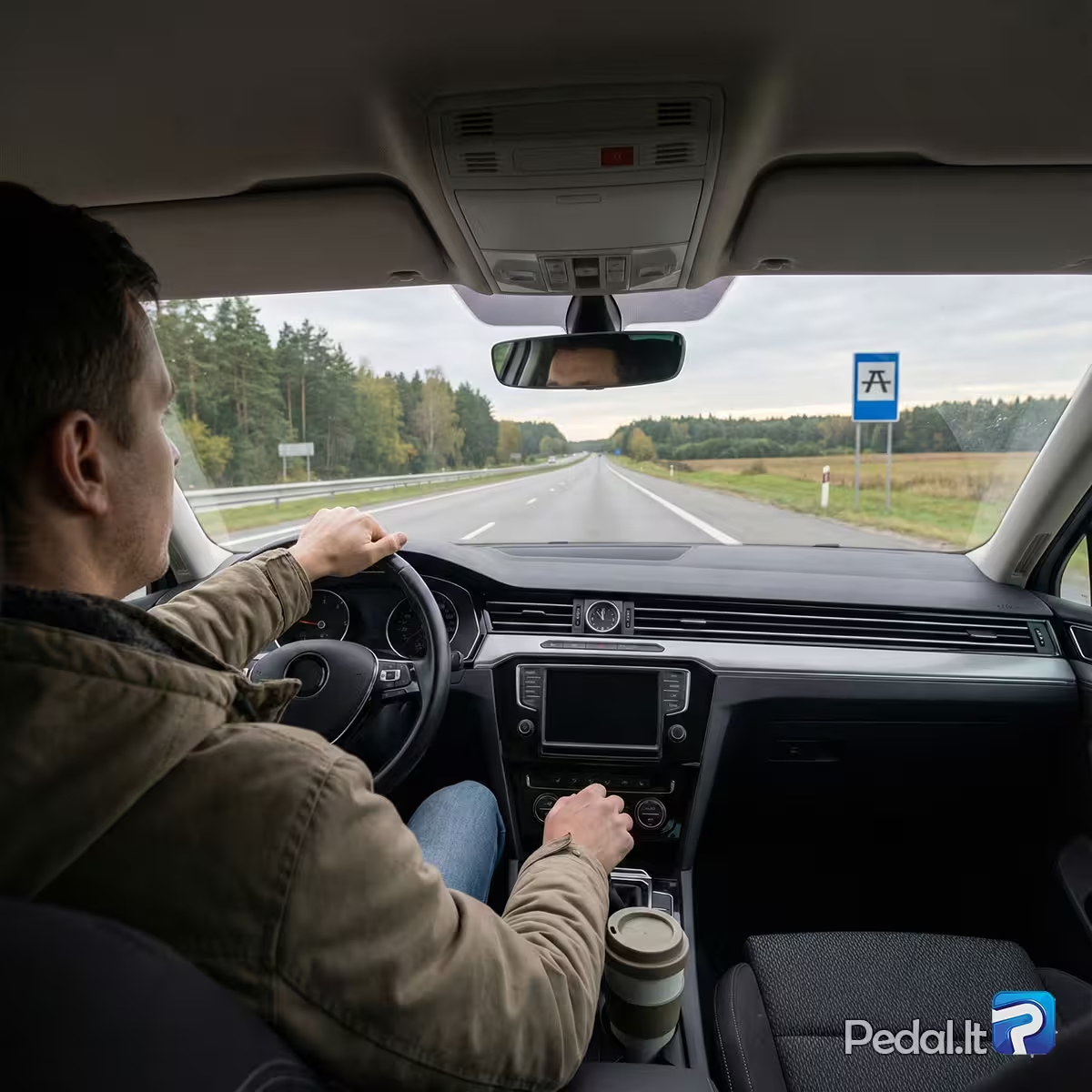
How should you behave during a long journey?
Long journeys can cause the driver to become distracted and fatigued for extended periods, which reduces reaction time and concentration and increases the risk of mistakes. It is recommended to take breaks every 1.5 to 2 hours or after driving approximately 200 kilometres. Sitting for long periods can lead to muscle tension and poor circulation, so getting out of the vehicle helps relax the body and improve well‑being. Exiting the car or opening a window to breathe fresh air can refresh the mind, restore energy and improve concentration.
1. Listen to loud music.
2. Maintain continuous conversation with your passengers to stay alert.
3. Leave the road or motorway and stop to rest; then exit the vehicle or open a window to breathe fresh air.
4. Routinely drink coffee to stay awake.
A driver whose vehicle is being overtaken must not:
Using the horn may distract the driver being overtaken but will not prevent the overtaking; they may still accelerate to complete the manoeuvre. Obstructing an overtaking vehicle includes actions such as accelerating, steering toward the overtaking vehicle, blocking the lane, or any other behaviour intended to prevent another driver from passing. RTR 138. The driver of a vehicle being overtaken must not obstruct drivers who wish to pass by speeding up or by any other action. RTR 136. Drivers are advised to avoid unnecessary overtaking manoeuvres. Before overtaking, drivers must take extra precautions and ensure that: 136.1. no driver behind them has already begun to overtake; 136.2. the driver of the vehicle to be overtaken is not signalling a left turn; 136.3. the section of lane required for overtaking is clear and the manoeuvre will not obstruct oncoming vehicles or pedestrians on the carriageway; 136.4. a safe distance from the vehicle being overtaken can be maintained during the overtaking; 136.5. after the overtaking manoeuvre they will be able to return to the same traffic lane safely without obstructing the overtaken vehicle. JB
1. Speeding up or otherwise obstructing a driver who is attempting to overtake.
2. Slowing down.
3. Using the horn.
Which of the following are warning signals?
RTR 81. Warning signals include: using turn and brake lights (arm signals may be used), sounding the horn, switching the headlights on and off, activating hazard warning lights or flashing amber beacons, and placing a warning triangle on the road or attaching it to the vehicle.
1. Brake light signal.
2. Indicating a turn using an arm signal.
3. Horn signal.
4. Switching the headlights on and off.
5. Placing a warning triangle on the road.
.avif)
Which vehicle may proceed in the direction indicated by the arrow?
RTR 77.1. When the traffic officer's arms are extended sideways or pointed downward: 77.1.1. Vehicles located to the officer's left and right may proceed straight ahead or turn right; pedestrians may cross the carriageway. 77.1.2. Vehicles and pedestrians positioned in front of or behind the officer must not proceed. JB
1. First vehicle
2. Second vehicle
3. Third vehicle
The requirement to 'Give Way' means:
3. Terms used in the Road Traffic Rules: 3.2. 'Give way' means that drivers must stop, or must not begin to drive or manoeuvre, if doing so would require other vehicle drivers to change their direction of travel or their speed.
1. That drivers on a side road must yield to vehicles approaching the intersection on a priority road.
2. That drivers must stop, or must not begin to drive or manoeuvre, if doing so would force other vehicle drivers to change their direction of travel or their speed.
3. That at an uncontrolled intersection drivers must yield to vehicles approaching from the right.
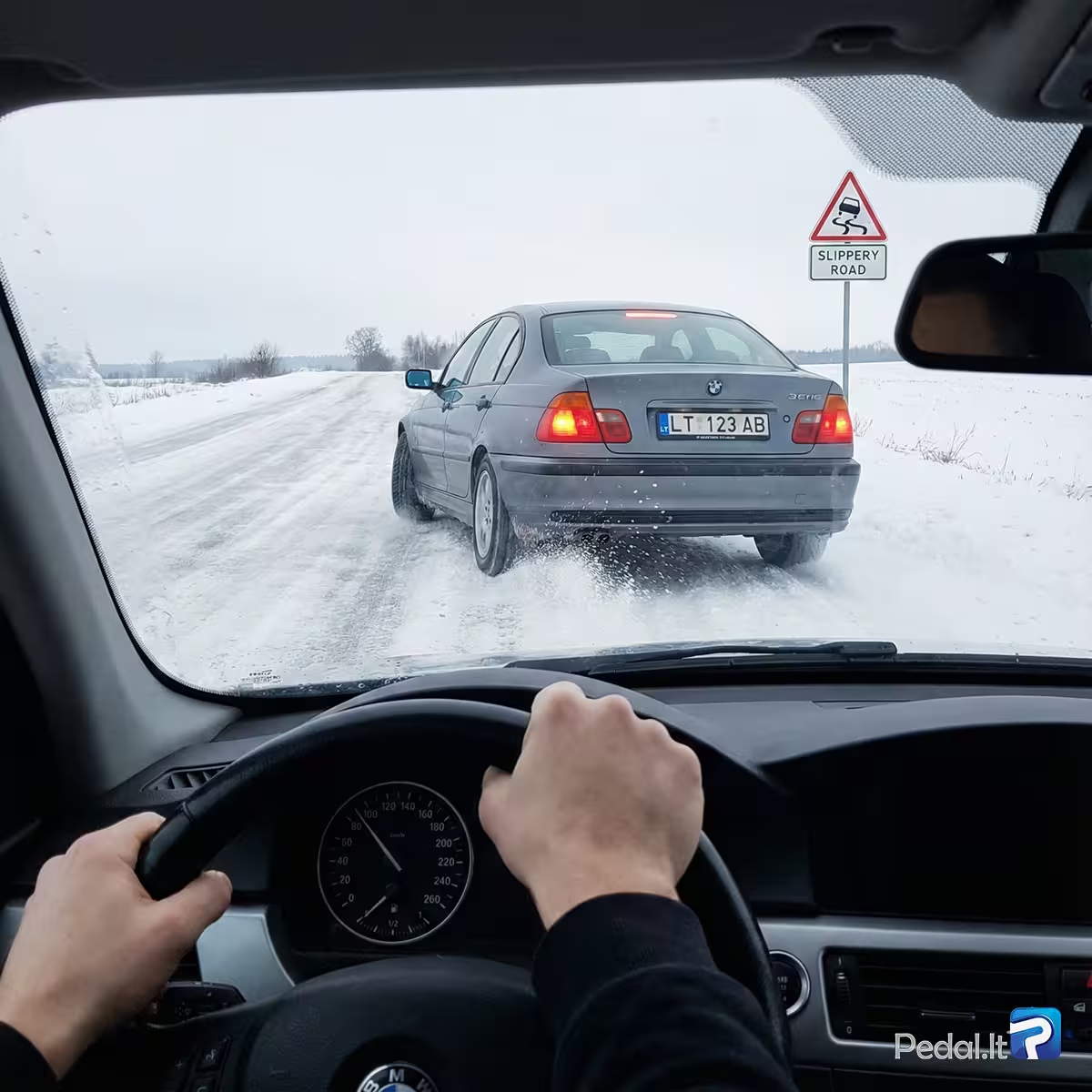
How dangerous is a sudden increase in engine RPM while driving on a slippery road?
If the road surface is slippery or the engine delivers strong torque and the revs increase abruptly, the driven wheels can spin. When the driven wheels are at the rear, the rear axle may lose traction; when they are at the front, the front axle may lose traction, which can cause the vehicle to lose stability and skid.
1. The fuel filter may fail.
2. The fuel pump may fail.
3. If the tractive force of the wheels exceeds the available grip with the road, the vehicle can lose stability and begin to slide.
.avif)
If you park on an even-numbered day of the month, between which hours must you move the vehicle to the opposite side of the road to comply with parking regulations?
Road sign 334 — “No parking on odd days”. Parking is prohibited on the side of the road where this sign is placed on odd-numbered days of the month. Road sign 335 — “No parking on even days”. Parking is prohibited on the side of the road where this sign is placed on even-numbered days of the month. When signs 334 and 335 are installed on both sides of the road, vehicles must be moved from one side to the other between 19:00 and 24:00 (7:00 pm–12:00 am); during that interval, parking is permitted on either side of the road.
1. From 5:00 pm to 9:00 pm
2. From 7:00 pm to 9:00 pm
3. From 10:00 pm to 11:00 pm
4. From 11:00 pm to 11:50 pm
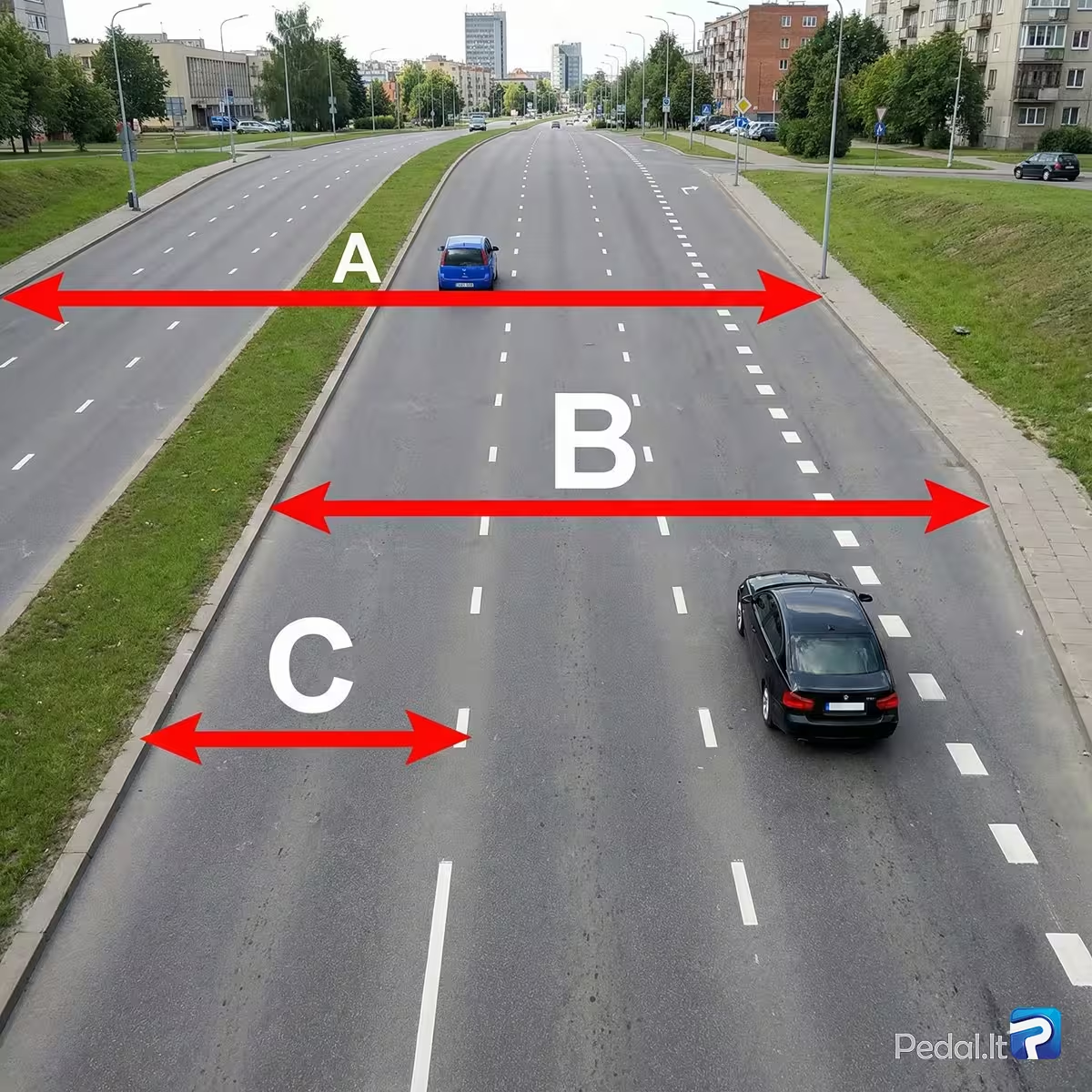
Which letter designates the entire carriageway of the road?
A central reservation is not part of the carriageway. A carriageway is the portion of a road intended for vehicular traffic.
1. A.
2. B.
3. C.
.avif)
Which driver will proceed through the intersection in the blue car?
The blue car is on the priority (main) road, so it has the right of way and must proceed first — the fact that the green car is to its right is irrelevant. Only after the blue car has passed may the green car proceed. (RTR 154) At a controlled intersection, drivers entering from a side road must yield to vehicles on the priority road.
1. The second car.
2. The first car.
What must you do first before overtaking?
RTR 136. Drivers should avoid unnecessary overtaking maneuvers. Before overtaking, drivers must take extra precautions and ensure that: 136.1 no driver following has already begun to overtake them; 136.2 the driver of the vehicle to be overtaken is not signaling a left turn; 136.3 the portion of the lane required for overtaking is clear and the maneuver will not obstruct oncoming traffic or pedestrians on the carriageway; 136.4 a safe distance from the vehicle being overtaken will be maintained throughout the maneuver; 136.5 after overtaking, the driver can safely return to the original lane without obstructing the overtaken vehicle.
1. Ensure the road ahead is clear.
2. Shift to a lower gear.
3. Increase your speed.
4. Reduce your speed.
.avif)
If, when starting to move, your vehicle's wheels spin while the vehicle remains stationary:
To drive a motor vehicle economically and sensibly, begin moving smoothly and steadily. Where possible, reduce your speed gradually and avoid unnecessary abrupt actions unless they are essential (e.g., emergency braking because of an unexpected obstacle on the road).
1. It is uneconomical — it increases fuel consumption and accelerates tyre wear.
2. The tyre squeal or wheel spin disturbs other road users.
3. It is regarded as normal and acceptable.
The front passenger airbag must be deactivated when a child is seated in a rear-facing child seat on the front passenger seat in a motor vehicle because:
RTR 201. A child must not be transported in a rear-facing child seat appropriate for their size on a front passenger seat that is protected by an active airbag. This restriction does not apply if the front airbag has been deactivated. It is recommended that a child be carried as long as possible in a child seat suitable for their height and weight and installed rear-facing, contrary to the vehicle’s direction of travel (as specified by the seat manufacturer).
1. In a collision the child’s neck can be seriously injured.
2. In a collision the child’s head can be seriously injured.
3. The driver may receive a fine.
What should you do when approaching an intersection where you must give way?
The correct action is to apply the brakes and release the accelerator pedal, because you must be prepared to stop if necessary. Road sign 203 — "Give Way" — indicates that drivers must yield to vehicles travelling on the road being crossed. If supplementary panel No. 843 "Direction of Priority Road" is mounted beneath the sign, you must yield to vehicles on the priority road.
1. You will apply the brakes.
2. You will release the accelerator pedal.
3. You will maintain your current speed.
What does a flashing white traffic light at a level crossing indicate?
RTR 73. Traffic light signals have the following meanings: 73.10. A flashing white light used at level crossings means that vehicles may proceed after ensuring that no rail-borne vehicle is approaching the level crossing;
1. It prohibits traffic from proceeding.
2. It permits traffic to proceed after ensuring that no rail-borne vehicle is approaching the level crossing.
3. It permits traffic only if you can cross the level crossing before the approaching train arrives.
You are driving on the road when a vehicle rapidly approaches from behind. The driver has switched on the left-turn indicator and is signaling by flashing the headlights. What will you do?
Even if another driver breaks the rules by overtaking or exceeding the speed limit, you must not endanger other road users — allow that driver to overtake you. 4. Road users shall follow the principle of mutual respect and safety.
1. You will accelerate to increase the distance between the vehicles.
2. You will maintain your speed and prevent the other driver from overtaking you.
3. You will allow the approaching vehicle to overtake you.
4. You will apply the brake pedal to activate the brake lights.
You are driving at the maximum permitted speed. A vehicle is approaching rapidly from behind and its driver is flashing their headlights. What should you do?
Even if the overtaking vehicle will exceed the speed limit while overtaking and thus violate the rules, you must not endanger yourself or others; you should allow the overtaking to take place. Road users must follow the principle of mutual respect and safety. 138. The driver of the vehicle being overtaken must not obstruct drivers who wish to overtake that vehicle by accelerating or by any other actions.
1. You will maintain your current speed and prevent the other driver from overtaking you.
2. You will apply the brake so that your brake lights illuminate.
3. You will accelerate to increase the gap to the vehicle behind you.
4. You will not obstruct a driver attempting to overtake you.
1 of 30 Task
Time left: 00:00:00
1
2
3
4
5
6
7
8
9
10
11
12
13
14
15
16
17
18
19
20
21
22
23
24
25
26
27
28
29
30