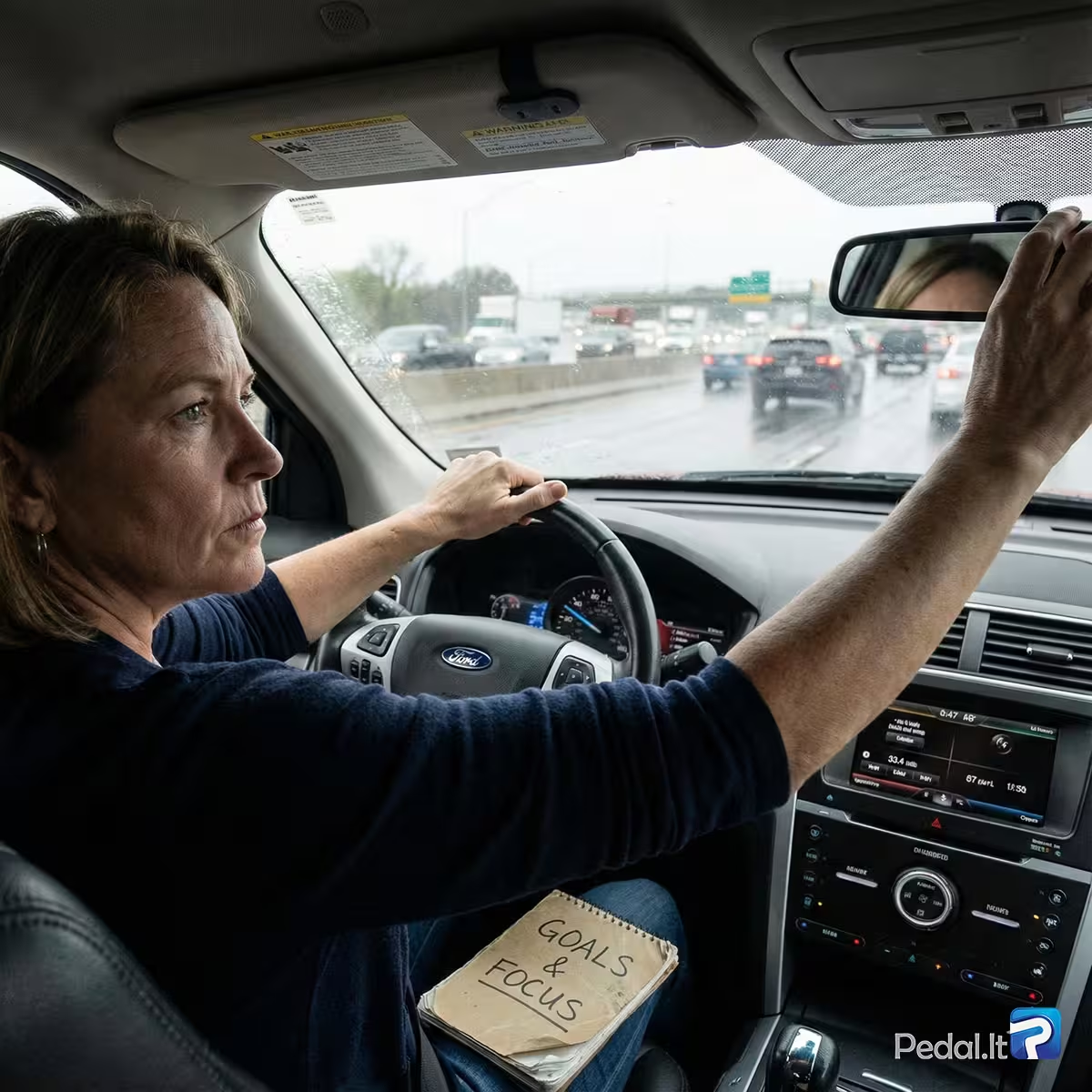
What are the primary characteristics of a driver's will?
The primary characteristics of a driver's will are discipline, determination, self-control, and perseverance. Disciplined drivers consistently obey the rules of the road (RTR). Determined drivers do not hesitate about decisions they make while operating a vehicle. A driver's self-control is demonstrated by remaining calm in complex traffic situations and by showing respect for other road users. Perseverance is the ability to overcome difficulties encountered on the road.
1. Discipline and determination.
2. Aggression and anger.
3. Self-control and calm temperament.
4. Indifference.
A vehicle driving ahead of you on the motorway has switched on its hazard warning lights and keeps driving. What does this indicate?
91. If a vehicle is equipped with hazard warning lights, they must be used: 91.7 when other road users should be warned of an obstruction or hazard.
1. There is an obstruction or hazard ahead.
2. Police are ahead.
3. They are indicating that they intend to turn around.
How should you drive when the road is covered with ice?
High speed is unsafe on icy roads because the slippery surface increases braking distance; therefore you should drive slowly. On slippery roads, also try to prevent excessive wheel slip by keeping engine revolutions low — a higher gear results in lower engine RPM. Select a gear appropriate for your speed, but ensure it is as high as possible. If you feel the vehicle beginning to skid, immediately and gently release the accelerator and do not change the clutch pedal position.
1. Drive at a low speed while using the highest gear possible.
2. Drive at a low speed while using the lowest gear.
3. Drive at a high speed while using the highest gear.
4. Drive at a high speed while using the lowest gear.
How does alcohol affect a driver's abilities?
When driving under the influence of alcohol, attention and comprehension are reduced; critical thinking and memory are impaired; coordination of movements deteriorates; reflexes are weakened or lost; drivers take longer to perceive signals and interpret situations; overall driving performance declines, reaction times slow, and vehicle control worsens or may be lost.
1. Reaction time is delayed.
2. Reaction times become shorter.
3. Attention diminishes.
4. Alcohol has no effect on a driver's reactions.
Documents a motor vehicle driver must carry while driving and present upon request to an inspecting officer:
Drivers are generally required to carry only a driving licence or an identity document; other documents are required only if the driver is not the owner of the vehicle they are driving (RTR 16). A driver must stop the vehicle when ordered by an inspecting officer. The driver of a motor vehicle, tractor or self-propelled vehicle shall carry and, at the request of the inspecting officer, present a valid driving licence or a document certifying the right to drive tractors and/or self-propelled vehicles; the vehicle registration documents; the certificate of compulsory roadworthiness inspection (compulsory technical inspection); the report of the most recent technical inspection for vehicle categories M2, M3, N2, N3, O3, O4 and wheeled tractor categories T1b, T2b, T3b, T4.1b, T4.2b, T4.3b, T5; the certificate (policy) of compulsory motor third‑party liability insurance; and other documents specified by the laws of the Republic of Lithuania and these Rules (except where the Law on Road Traffic Safety provides that a driver is not required to carry the relevant documents). The driver must also allow the inspecting officer to check readings of validated devices registering driving time and rest periods. Documents should be presented without leaving the vehicle; the driver may exit the vehicle only with the inspecting officer's permission.
6. A driver whose licence was issued in the Republic of Lithuania need not carry and present the licence if they present a valid identity document.
7. A driver referred to in paragraph 6 who is driving a vehicle registered in the Republic of Lithuania is not required to carry and present the compulsory technical inspection document or the compulsory motor third‑party liability insurance certificate (policy) upon request of the inspecting officer.
8. A driver referred to in paragraph 6 who is driving a vehicle registered in the Republic of Lithuania that they own is not required to carry and present the documents referred to in paragraph 7 or the vehicle registration document upon request of the inspecting officer. (RTR 219). In the event of a road accident, every driver involved or any other road user must: 219.3. produce the driver's licence, vehicle registration and compulsory technical inspection documents, the motor third‑party liability insurance policy or other documents in their possession if so requested by other road users involved in the accident. JB
1. The driver's licence, compulsory insurance certificate (policy), vehicle registration documents and the mandatory technical inspection documents.
2. Certificate of completion of compulsory first aid training.
3. A document proving personal identity or a valid driving licence.
4. A valid driver's medical certificate.
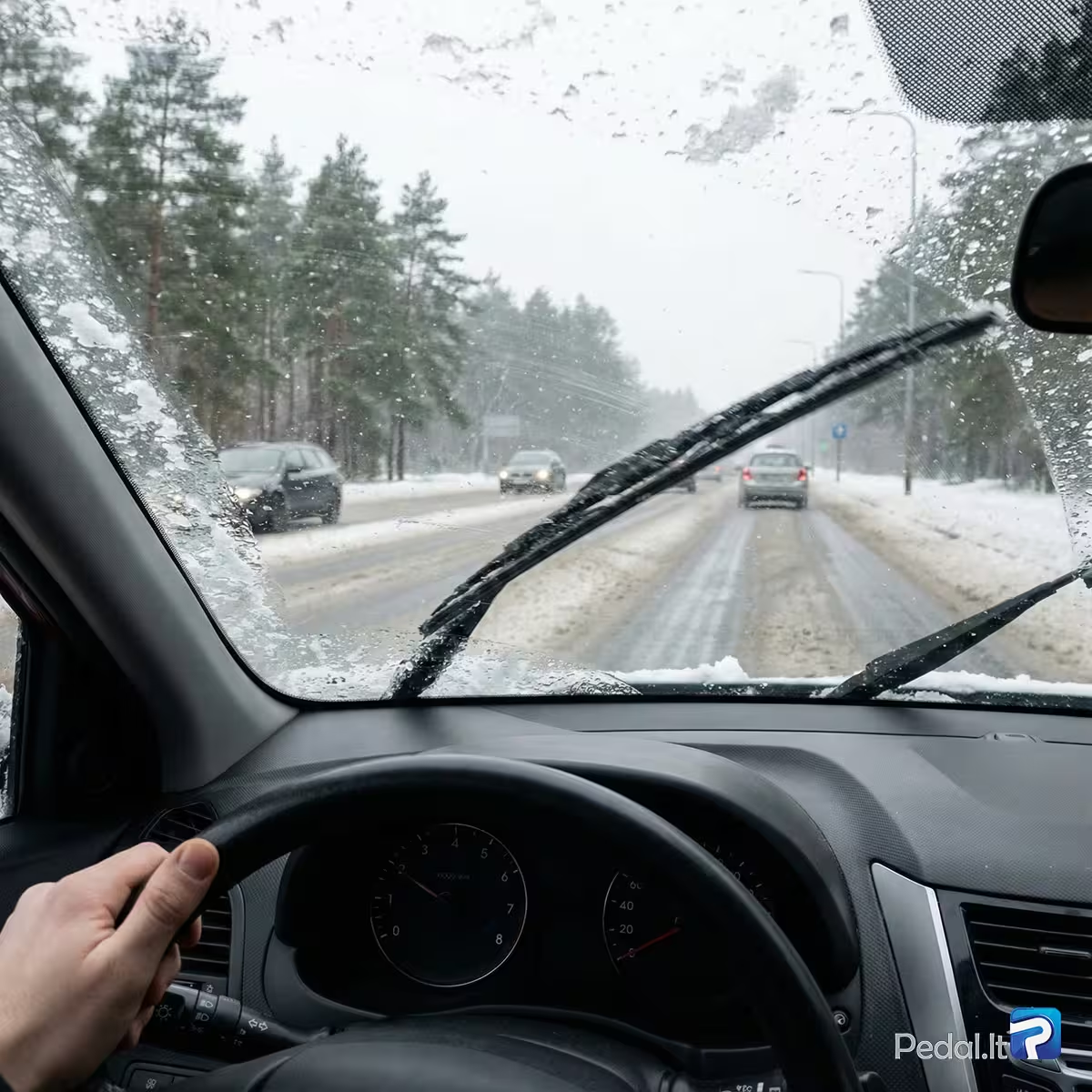
When should you switch on your windscreen wipers while driving in sleet?
A driver must maintain clear forward visibility in all weather conditions. Use the windscreen wipers according to the intensity of precipitation, traffic, presence of pedestrians and other circumstances. Waiting until "the windscreen is covered in snow and you are unable to see anything" is too late.
1. Only when the windscreen is completely covered with snow and you cannot see anything.
2. Before another vehicle driving alongside you can splash dirty water onto your windscreen.
3. Before an oncoming vehicle can splash dirty water onto your windscreen.
4. In advance, so you are not distracted while searching for the windscreen wiper control.
Where is overtaking prohibited?
RTR XVI.140. Overtaking is prohibited. Clause 140.8: in residential areas, courtyards of apartment buildings, parking lots, and bicycle streets. JB
1. In parking lots.
2. In the courtyards of multi-apartment residential buildings.
3. In residential areas.
4. On bicycle streets.
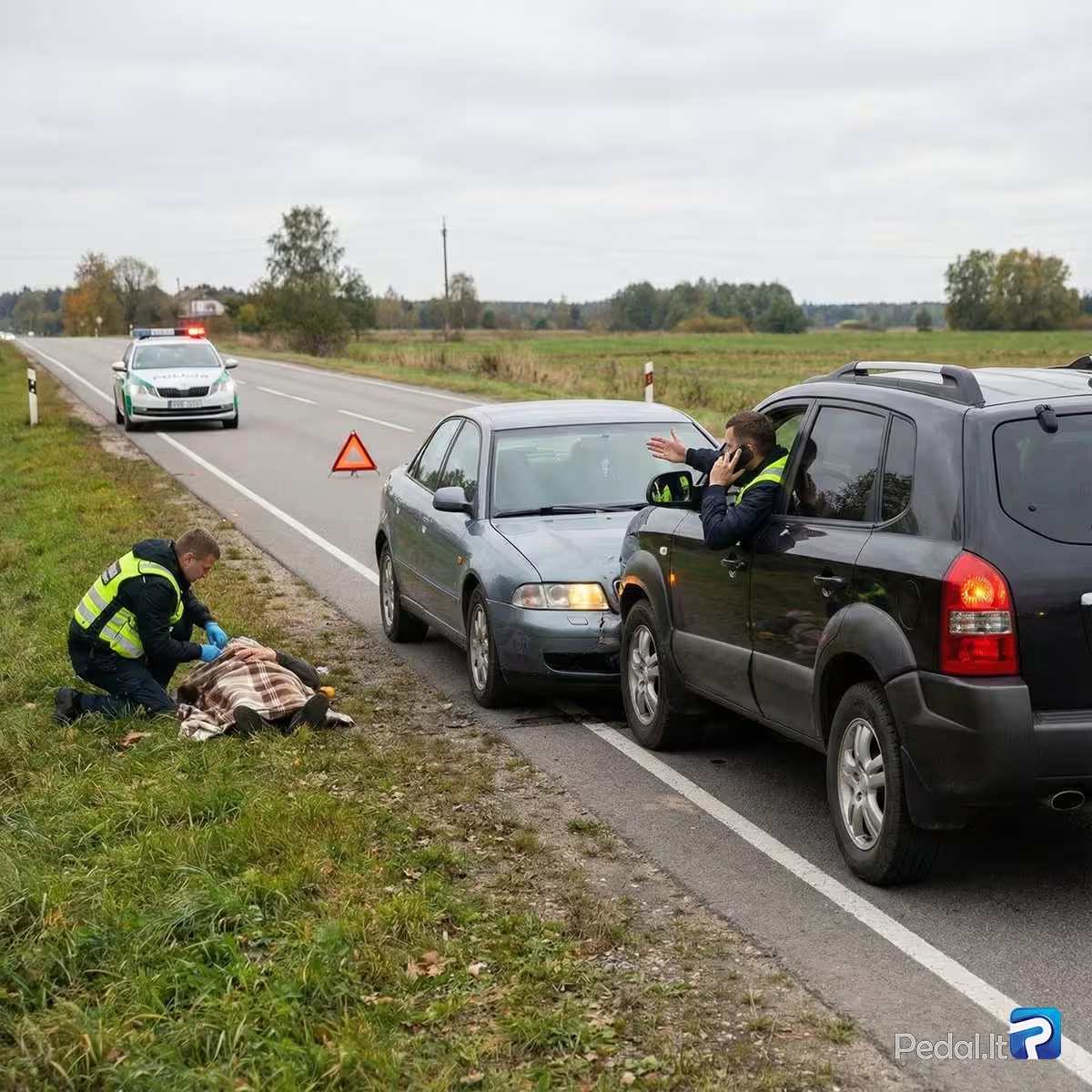
What must the drivers do if a person was injured in a road accident?
XXIX. Obligations of Road Users in the Event of a Road Accident (paras. 219–222)
219. In the event of a road accident, every driver involved or any other road user must:
219.4. if a person has died or been injured in the road accident, report the accident to the police and remain at the scene of the accident or, after notifying the police, return to the scene and wait for the police to arrive, except in cases where the police permit the road user to leave the scene, or where casualties or the person reporting the accident require urgent first aid;
220. If no deaths or injuries occurred in the road accident and the road users involved in the accident agree on the circumstances of the accident and do not call the police to the scene, the road users involved must draw the accident diagram on the Road Accident Report Form, describe the circumstances in writing, and have it signed by all involved road users. If none of the road users involved has the Road Accident Report Form, the circumstances may be described and the diagram drawn on a blank sheet of paper where all road users involved, their vehicles, and witnesses are listed, and all details and circumstances of the accident are confirmed by the signatures of the road users involved. Where the circumstances of the accident are disputed, the police must be called to the scene.
1. If all road users agree on the circumstances of the accident and there are no injuries, they do not need to complete any written report.
2. Drivers must describe the circumstances of the accident in writing, create a diagram of the scene, and list all involved road users, their vehicles, and any witnesses.
3. They must call the police.
When must cargo be marked with identification signs and illuminated during darkness or reduced visibility?
Any part of a load that protrudes beyond the vehicle's lateral profile, however slightly, must be marked. Specifically, loads extending more than 0.5 m beyond the vehicle's sides must be identified (Annex 4, §12). Extremities projecting more than 1 m beyond the front or rear of the vehicle, any parts extending laterally beyond the vehicle, and the extremities of vehicles wider than 2.6 m must display distinctive markers: square plates 400 mm on a side with alternating diagonal reflective stripes 50 mm wide in white and red. These plates must be mounted between 0.4 m and 1.6 m above ground level. During darkness or poor visibility, vehicles with protruding points must also show lights on those points: white at the front, amber on the sides, and red at the rear. JB
1. When the load projects more than 0.5 m beyond the rear of the vehicle.
2. When the load projects more than 1 m beyond the front or rear of the vehicle.
3. When the load projects more than 0.5 m beyond the side of the vehicle.
4. When the load projects any distance beyond the vehicle's sides.
What is the maximum permissible concentration of ethyl alcohol in the blood for a passenger car driver who has three years of driving experience?
LAW ON ROAD TRAFFIC SAFETY, Article 2, item 43. Intoxication — the state of a person who has consumed ethyl alcohol, when the concentration of that alcohol in the body's biological media (exhaled air, blood, urine, saliva or other bodily fluids) exceeds the legal limit. The maximum permitted concentration of ethyl alcohol in the exhaled air, blood, urine, saliva or other bodily fluids of persons driving vehicles is 0.4 per mille. Novice drivers, taxi drivers, and drivers of mopeds, motorcycles, tricycles, light quadricycles, four-wheel power quadricycles, vehicles with a maximum permissible weight over 3.5 t or with more than 9 seats, and drivers transporting dangerous goods are considered intoxicated when the concentration of ethyl alcohol in their exhaled air, blood, urine, saliva or other bodily fluids is greater than 0 per mille. JB
1. 0.2 ‰
2. 0.3 ‰
3. 0.4 ‰
4. 0 ‰
You are driving at the maximum permitted speed. A vehicle is approaching rapidly from behind and its driver is flashing their headlights. What should you do?
Even if the overtaking vehicle will exceed the speed limit while overtaking and thus violate the rules, you must not endanger yourself or others; you should allow the overtaking to take place. Road users must follow the principle of mutual respect and safety. 138. The driver of the vehicle being overtaken must not obstruct drivers who wish to overtake that vehicle by accelerating or by any other actions.
1. You will maintain your current speed and prevent the other driver from overtaking you.
2. You will apply the brake so that your brake lights illuminate.
3. You will accelerate to increase the gap to the vehicle behind you.
4. You will not obstruct a driver attempting to overtake you.
You are driving in heavy rain and the steering wheel suddenly becomes very light to turn. What should you do?
If the steering wheel becomes very easy to turn, the vehicle's tyres have likely lost traction on the slippery road surface. In this situation, you must reduce your speed gradually — abrupt throttle changes or hard braking can cause the vehicle to skid or lose control.
1. You will slightly increase your speed.
2. You will gradually release the accelerator.
3. You will brake suddenly to reduce your speed.
4. You will move towards the hard shoulder.
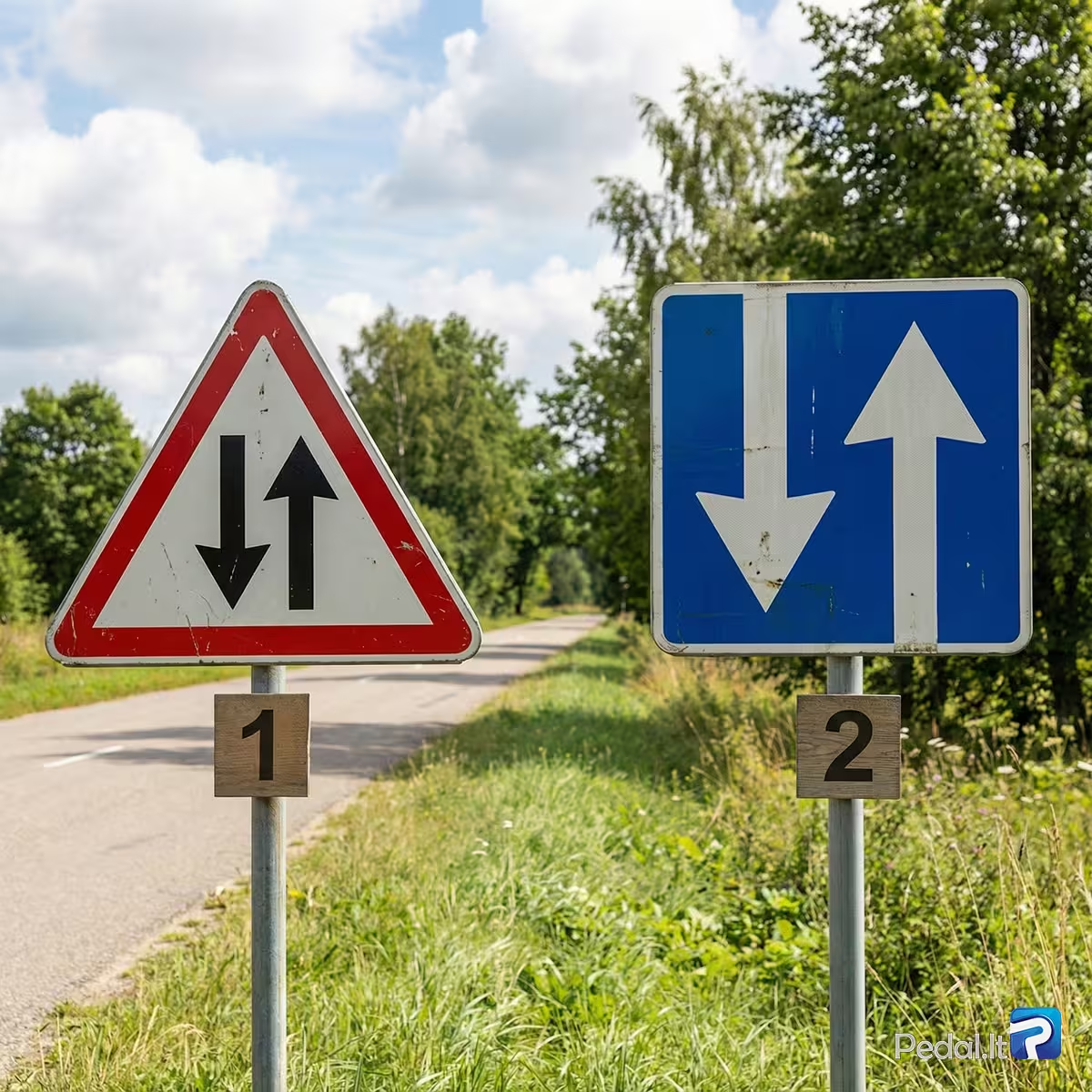
Which sign indicates that the road ahead carries two-way (opposing) traffic?
Warning signs alert drivers to upcoming changes in traffic conditions. Sign 126, 'Two-Way Traffic', indicates the start of a carriageway section with opposing traffic. Sign 504, 'End of One-Way Traffic', is a regulatory sign that marks the end of a one-way traffic section. (RTR Annex 1: 126 and 504.)
1. Sign 1.
2. Sign 2.
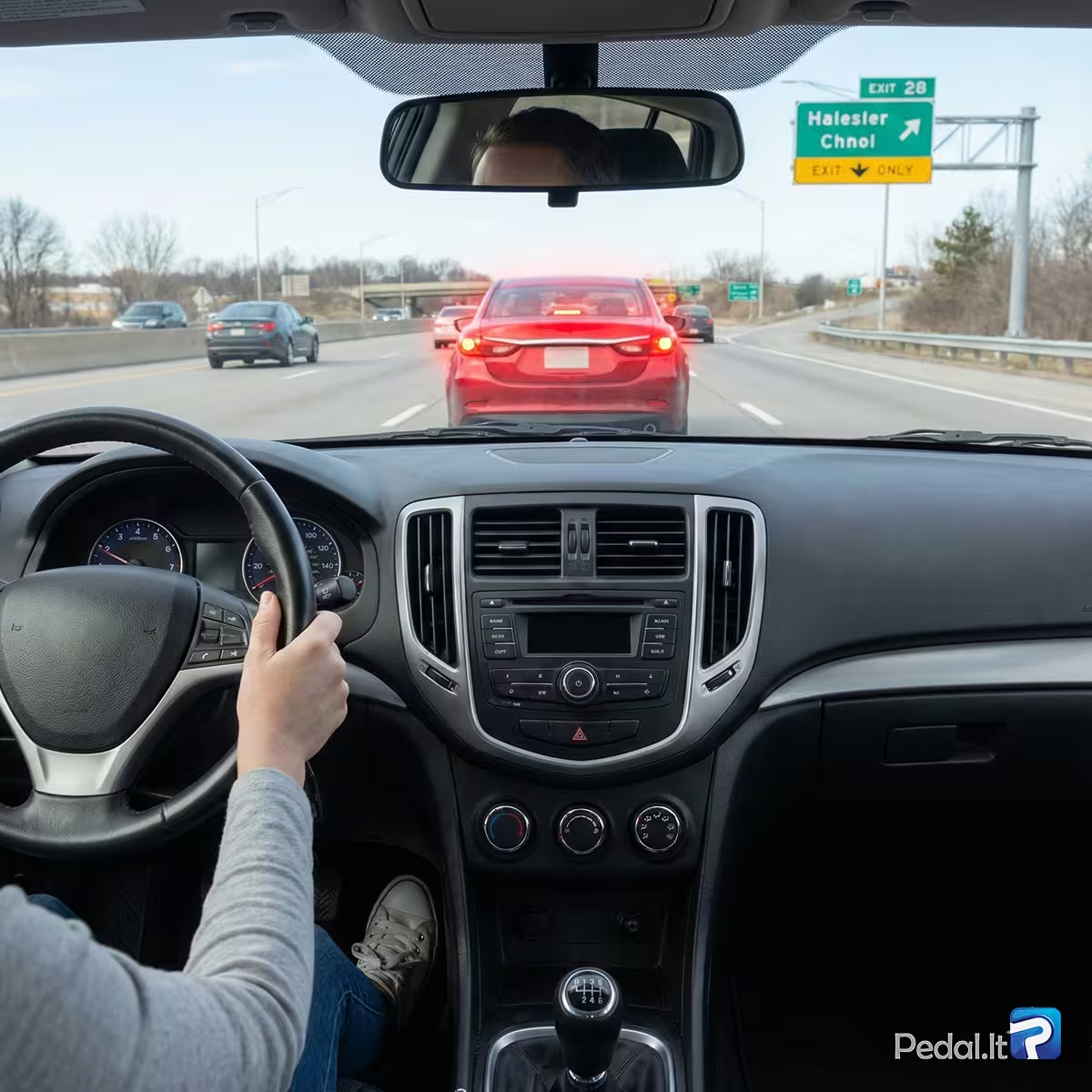
What should you do if you notice a vehicle braking in the distance ahead?
Explanation of terms: • To brake – press the brake pedal; the car slows down rapidly and stops before the expected obstacle. • To release the accelerator pedal – take your foot off the gas; the car gradually slows on its own but does not come to a complete stop and continues moving. • To drive without changing speed – keep the accelerator position the same; the car continues at a constant speed. RTR 128. If there is an obstruction or traffic safety is at risk, the driver must reduce speed or, if necessary, bring the vehicle to a complete stop or steer around the obstruction (if it can be seen) without creating a hazard for other road users.
1. Apply the brakes.
2. Take your foot off the accelerator and be prepared to brake.
3. Maintain your current speed.
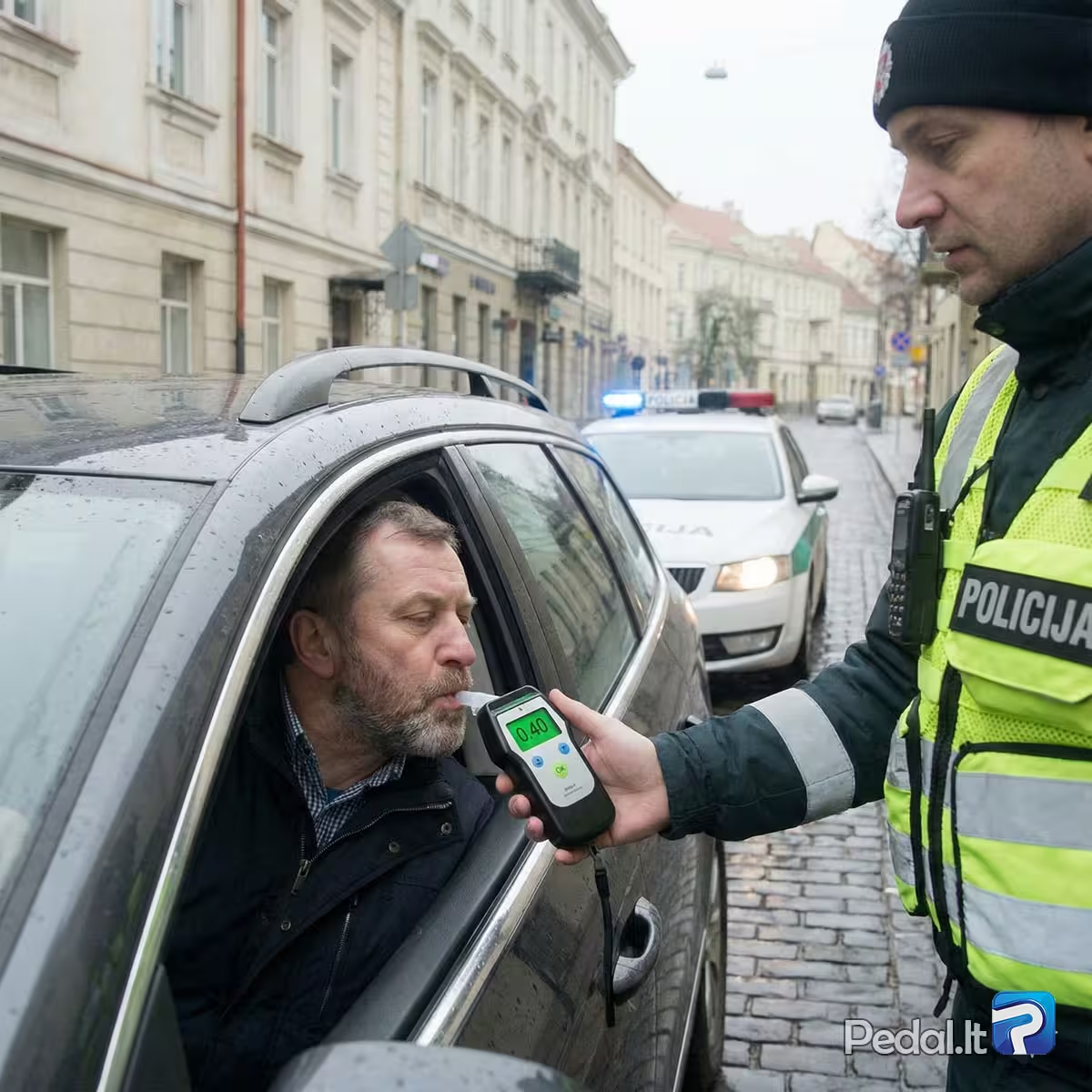
What is the maximum permitted alcohol concentration (in per mille, ‰) for a driver with 20 years of driving experience?
According to the Law on Road Traffic Safety, Article 2, point 43: “Drunkenness” means a state in which a person has consumed ethyl alcohol and the concentration of that alcohol in the body's biological media (exhaled air, blood, urine, saliva or other bodily fluids) exceeds the legal limit. The maximum permitted concentration of ethyl alcohol in the exhaled air, blood, urine, saliva or other bodily fluids of persons operating vehicles is 0.4 per mille (‰). Novice drivers, taxi drivers, and drivers of mopeds, motorcycles, tricycles, light quadricycles, four-wheelers, motorized quadricycles, vehicles with a maximum permissible weight over 3.5 t or with more than 9 seats, and drivers transporting dangerous goods are considered intoxicated when the concentration of ethyl alcohol in their exhaled air, blood, urine, saliva or other bodily fluids is greater than 0 ‰. JB
1. 0.2 ‰
2. 0.3 ‰
3. 0.4 ‰
4. 0.8 ‰
Why is it dangerous to suddenly increase engine speed while driving on a slippery road?
If you press the accelerator suddenly on a slippery road, the driving wheels may start to spin, further smoothing and polishing the wheel track on the slippery surface. This reduces traction; as a result the tires can lose grip more quickly and the vehicle may skid or slide sideways.
1. The vehicle may skid sideways.
2. The engine may stall.
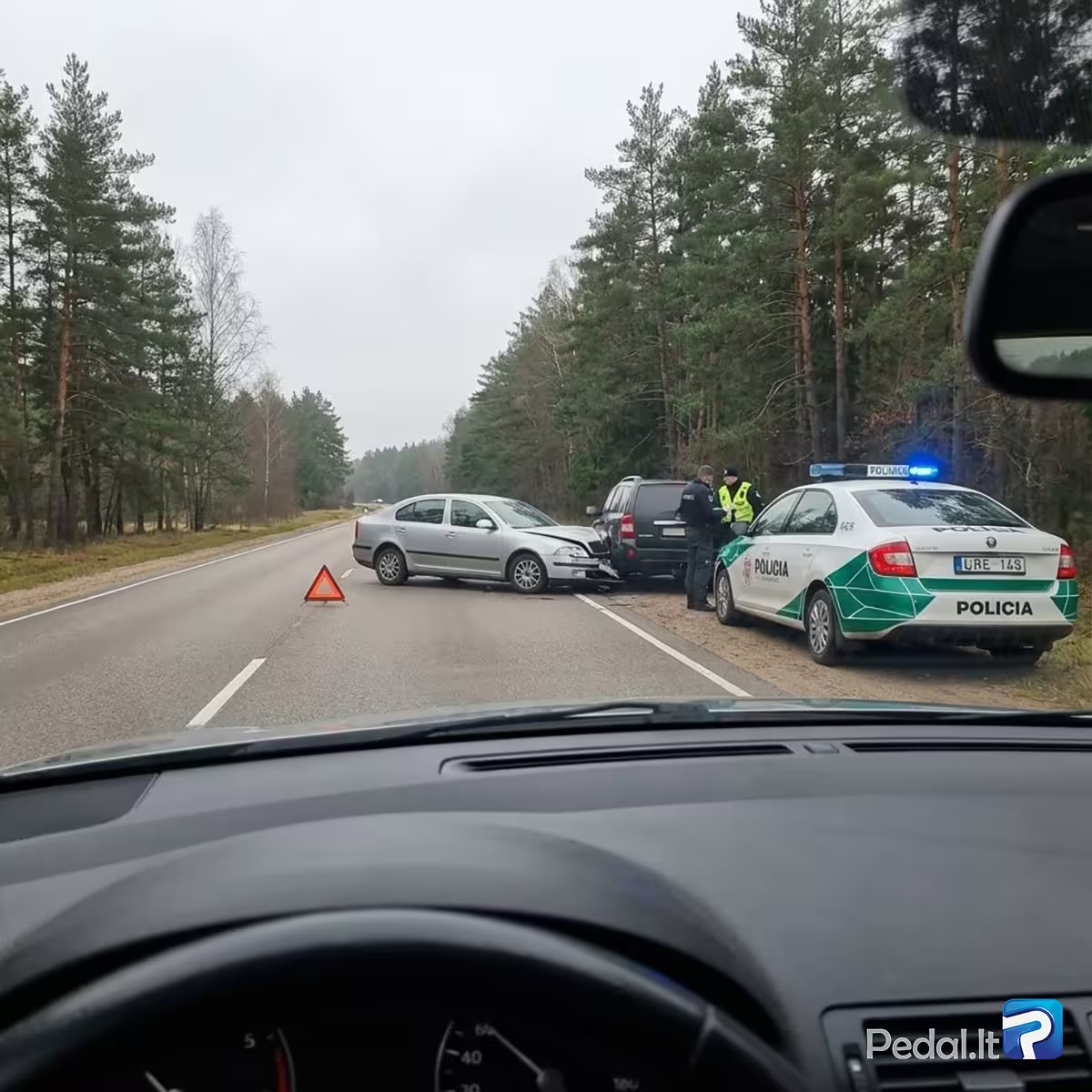
In most cases, those responsible for road accidents in Lithuania are:
According to data from the Lithuanian Road Administration, in 2017 drivers accounted for 68.83% of all individuals found responsible for road accidents.
1. Drivers of motor vehicles.
2. Cyclists (bicyclists).
3. Pedestrians (people on foot).
4. Drivers of animal-drawn vehicles.
What size handcart carrying a load that is pushed or pulled at the roadside must be equipped with reflectors?
The option "More than 1 meter long" is incorrect because the RTR do not specify any marking requirement based on the cart's length. Under RTR 41: pedestrians moving along an unlit hard shoulder or along the edge of the carriageway, or standing there during hours of darkness or when visibility is poor, must carry a torch visible to other road users, wear a high-visibility vest, or carry a reflector visible to other road users. A pulled or pushed handcart wider than 1 m must have reflectors affixed on its left side: a white reflector at the front and a red reflector at the rear. JB
1. More than 1 meter wide.
2. More than 1 meter long.
What can cause the vehicle's cabin windows to fog up?
If the windows fog up (for example after washing the vehicle), the heating/ventilation setting may be incorrect.
1. Residual moisture remaining after washing the vehicle.
2. The engine coolant level is too high.
3. Incorrect heating/ventilation setting.
4. An excessive number of occupants in the cabin.
Are you required to signal before changing lanes?
RTR 82. A driver must indicate intended maneuvers using the vehicle's right or left direction indicators, or by arm signals if the indicator lights are unavailable or inoperative. Specifically: 82.1 before starting to move and before stopping; 82.2 before changing lanes, before and after overtaking, before and after passing an obstruction, before turning right or left, before making a U‑turn, and before leaving an intersection where vehicles must circulate around a central point. JB
1. Yes — you must signal.
2. No — you are not required to.
3. Only if other road users are nearby.
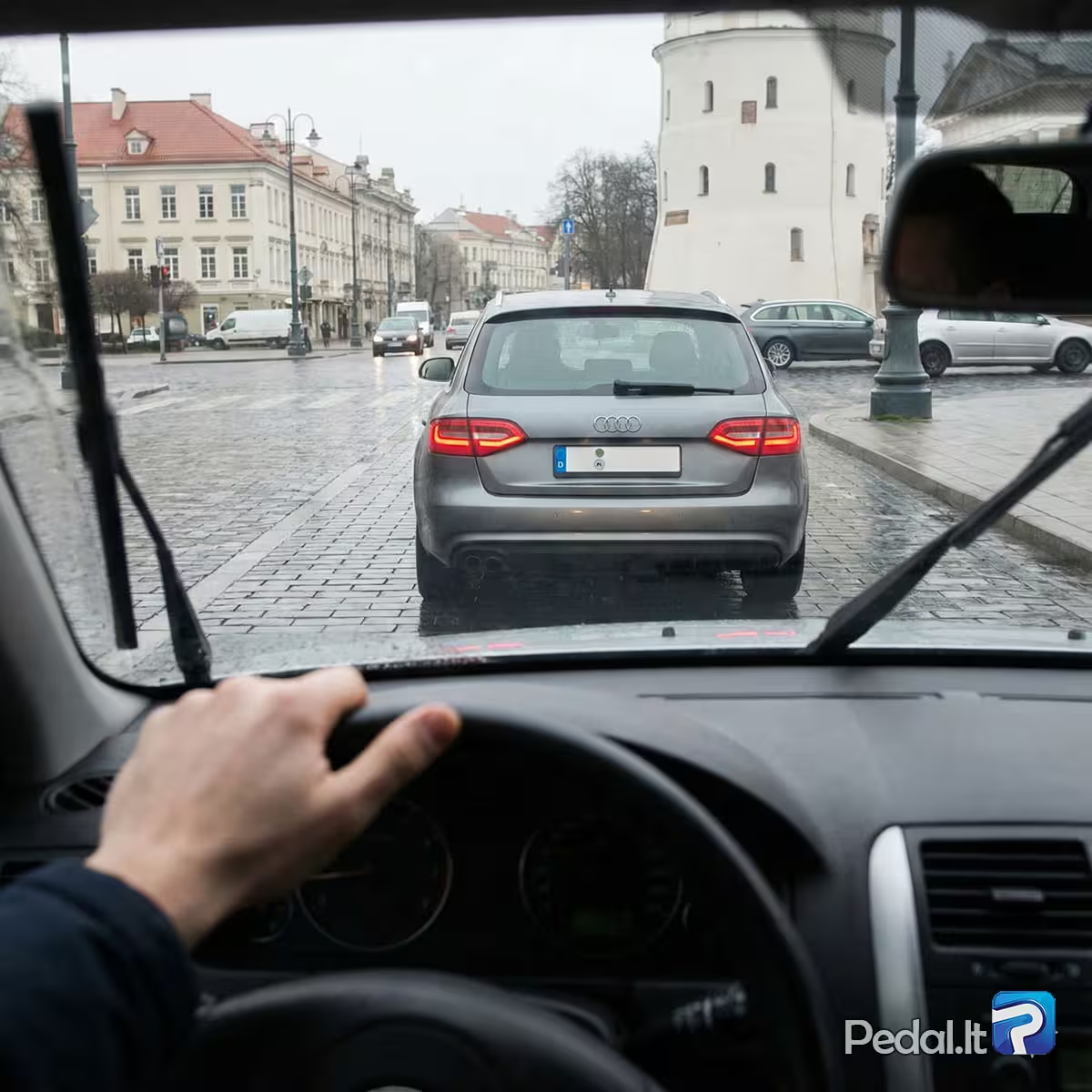
A vehicle with foreign license plates is driving ahead. What might you expect from that vehicle?
Drivers from other countries who are unfamiliar with local roads may have difficulty orienting themselves; they might make unexpected maneuvers, signal late before turns, or brake suddenly.
1. It may make unexpected maneuvers.
2. The driver may signal too late before turning at an intersection.
3. The vehicle may stop suddenly.
Is the term "Pavement" included within the definition of "Road"?
RTR 3.7. 'Road' means the surface of a strip of ground or a superstructure intended for, and used by, road traffic across its full width; this includes the carriageway, intersections, pavements, roadsides, pedestrian and bicycle paths, and dividing strips. RTR 3.8. 'Shoulder' means a road area adjacent to the carriageway (from the carriageway edge to the roadbed edge) that is paved with the same or different material as the carriageway and/or separated from the carriageway by an edge line, but is not regarded as a pavement or as a pedestrian or bicycle track. JB
1. Yes, it is.
2. No, it is not.
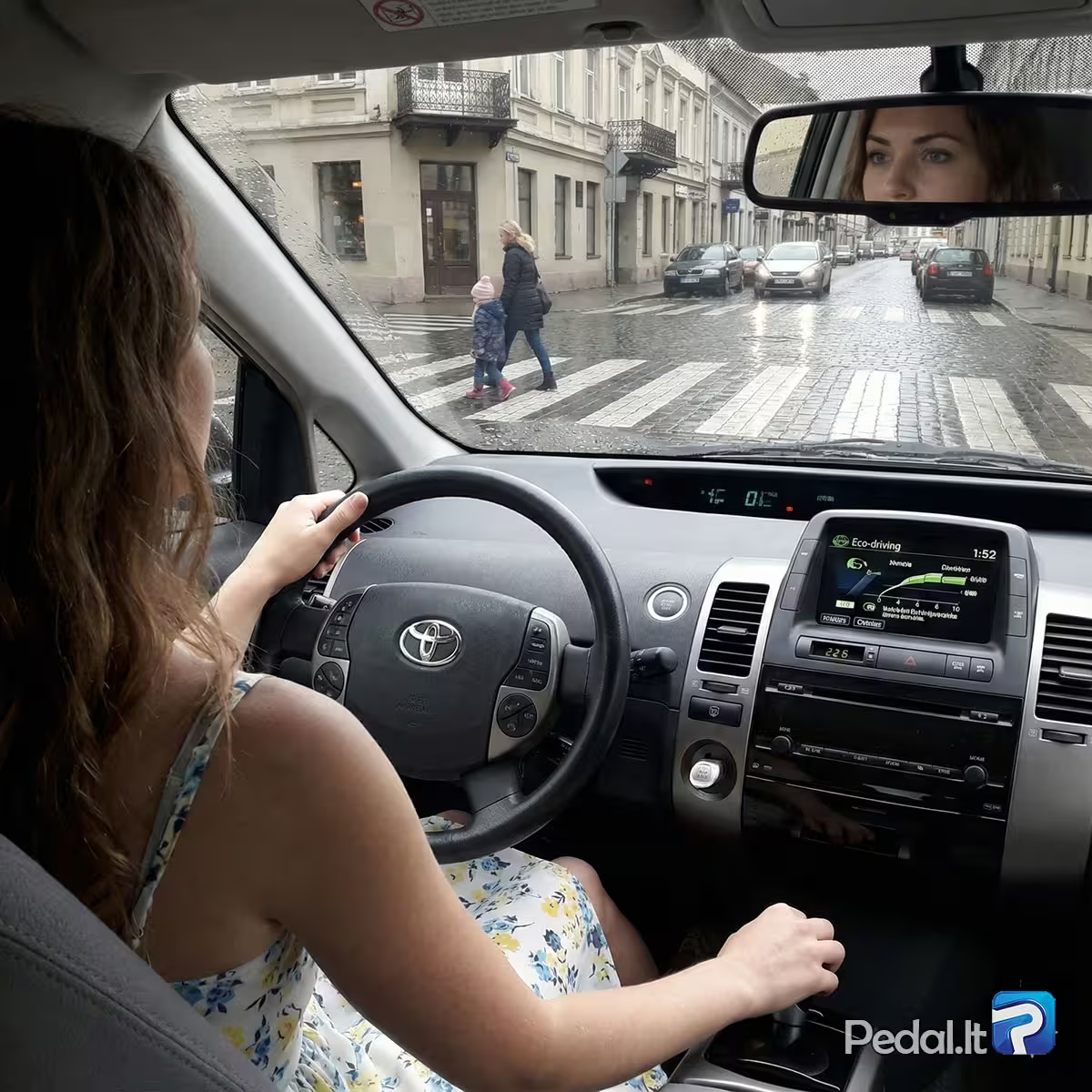
What should you do when approaching the pedestrian crossing?
Stationary vehicles positioned before a pedestrian crossing restrict visibility. Drivers must exercise extra caution and may continue only after confirming that no pedestrians entitled to right of way are at the crossing. (RTR 30.) When approaching an uncontrolled pedestrian crossing, a driver must reduce speed or stop before the crossing to give way to pedestrians who have already entered any lane, are walking in any lane, or were standing immediately at the carriageway edge waiting to step into a lane in the direction of the vehicle’s travel—or into any lane on a road with one lane in each direction. Drivers must be especially careful at night, in poor visibility, or whenever the crossing is not clearly visible from the driver’s position, and must ensure there are no pedestrians who should be given way.
1. You should reduce your speed.
2. If necessary to verify that no pedestrians are present, you will stop before the crossing.
3. You will pass the stationary vehicle at the permitted speed because you do not see any pedestrians on the crossing.
What is the primary purpose of a vehicle's main brakes?
A vehicle's braking system is intended to slow the vehicle, bring it to a complete stop, and hold it stationary. Braking distance should be kept as short as possible, and you must maintain control of the vehicle while braking.
1. Slow the vehicle to bring it to a complete stop and hold it stationary on a downhill slope.
2. Maintain a safe, controlled speed when driving downhill.
Which of the following are warning signals?
RTR 81. Warning signals include: using turn and brake lights (arm signals may be used), sounding the horn, switching the headlights on and off, activating hazard warning lights or flashing amber beacons, and placing a warning triangle on the road or attaching it to the vehicle.
1. Brake light signal.
2. Indicating a turn using an arm signal.
3. Horn signal.
4. Switching the headlights on and off.
5. Placing a warning triangle on the road.
At what times of day are wild animals most likely to cross the road?
Wild animals commonly appear on roads at dusk and in the late evening (approximately 17:00–23:00), and also in the early morning hours around 4:00–5:00.
1. At dawn (early morning).
2. During the night.
3. At dusk (twilight, when it is getting dark).
4. During the middle of the day.
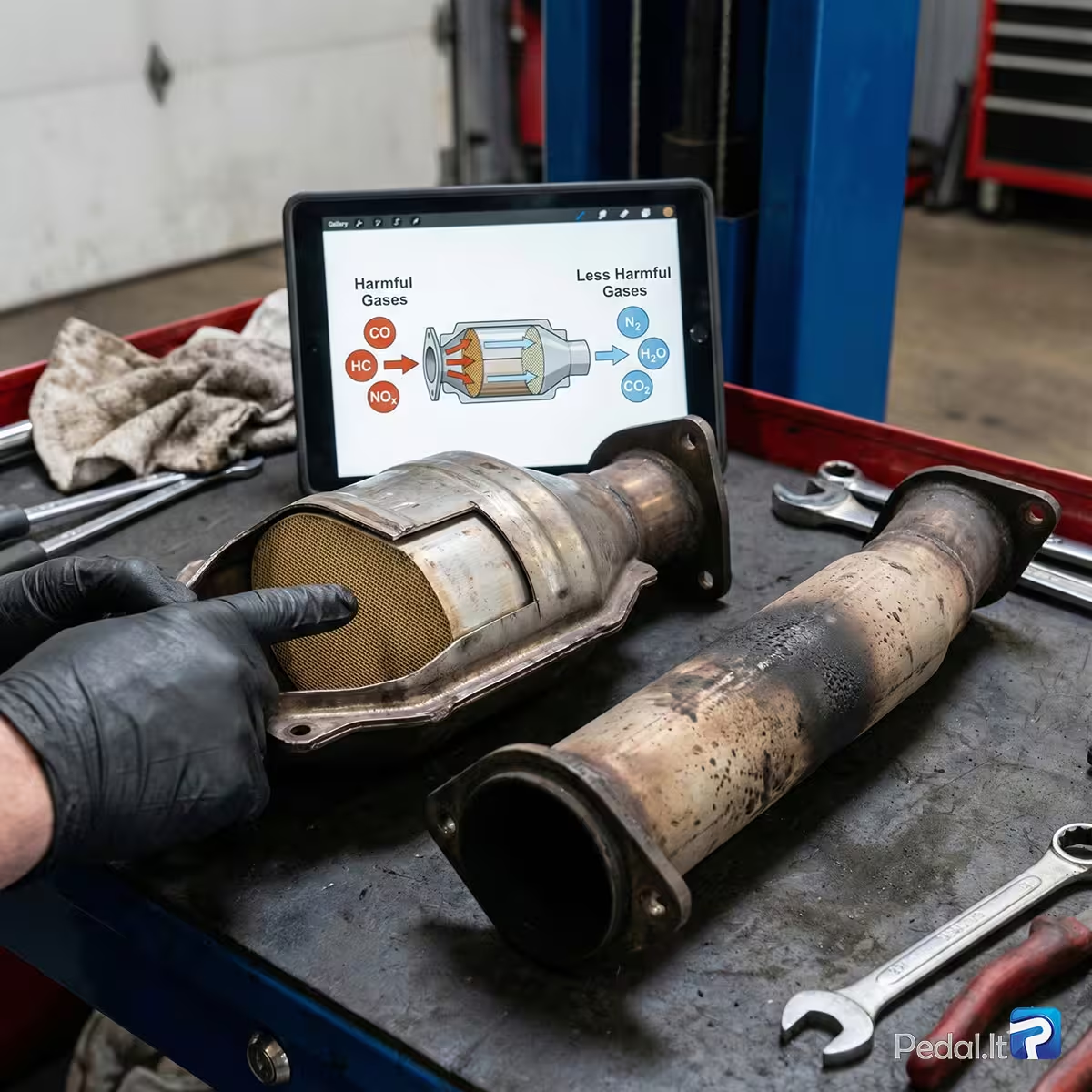
What is the function of a cardan shaft?
A cardan shaft is a mechanical component with a universal joint at one or both ends. It transmits torque and rotational motion. It is used for the following reasons: - To accommodate misalignment between shafts; - To allow changes in shaft position (for example, when driving over uneven terrain); - To transmit torque.
1. To transmit rotational motion to the drive wheels.
2. To transmit torque to the drive wheels.
3. To transmit inertia forces.
When driving at night, a car's dipped-beam (low-beam) headlamps may dazzle oncoming drivers if:
Your vehicle may dazzle oncoming drivers for one or more of the following reasons: the headlamps are incorrectly aimed (too high); the headlamps are improperly fitted (not seated correctly in their sockets or the wrong type has been fitted); or the vehicle is carrying a heavy load in the boot or is fully loaded and the headlamps have not been lowered using the headlamp aiming/levelling control (if fitted).
1. The vehicle's headlamps are incorrectly adjusted (aimed too high).
2. The headlamps are improperly installed or the wrong type has been fitted.
3. The vehicle is carrying a heavy load in its boot.
What should you do when approaching an intersection where you must give way?
The correct action is to apply the brakes and release the accelerator pedal, because you must be prepared to stop if necessary. Road sign 203 — "Give Way" — indicates that drivers must yield to vehicles travelling on the road being crossed. If supplementary panel No. 843 "Direction of Priority Road" is mounted beneath the sign, you must yield to vehicles on the priority road.
1. You will apply the brakes.
2. You will release the accelerator pedal.
3. You will maintain your current speed.
.avif)
What does a continuous yellow line painted along the edge of the carriageway indicate?
RTR Annex 3.1.4: A continuous yellow line along the carriageway edge indicates areas where stopping or parking is prohibited; it may also be used to mark lanes affected by roadworks. Vehicles must not cross this line. When a yellow continuous line is used together with white lane markings, drivers must obey the yellow line. RTR Annex 3.1.27: A yellow zigzag line marks a section or side of the road where stopping and parking are prohibited along the entire length of the zigzag.
1. Areas where only parking is prohibited.
2. Areas where both stopping (standing) and parking are prohibited.
1 of 30 Task
Time left: 00:00:00
1
2
3
4
5
6
7
8
9
10
11
12
13
14
15
16
17
18
19
20
21
22
23
24
25
26
27
28
29
30