Are you allowed to drive across a level crossing if the crossing attendant is facing you and holding a flag above their head?
RTR 168. Before entering and crossing a level crossing, road users must obey road signs, road markings, the position of barriers, traffic lights, audible warnings, and the signals of level crossing attendants/controllers. Before entering a level crossing, a road user must always ensure that no rail vehicle is approaching the level crossing. It is recommended that children under 12 be accompanied by an adult when crossing a level crossing.
1. Crossing the level crossing in this situation is prohibited.
2. Driving across the level crossing is permitted.
3. Crossing is permitted only after ensuring that no rail vehicle is approaching the level crossing.
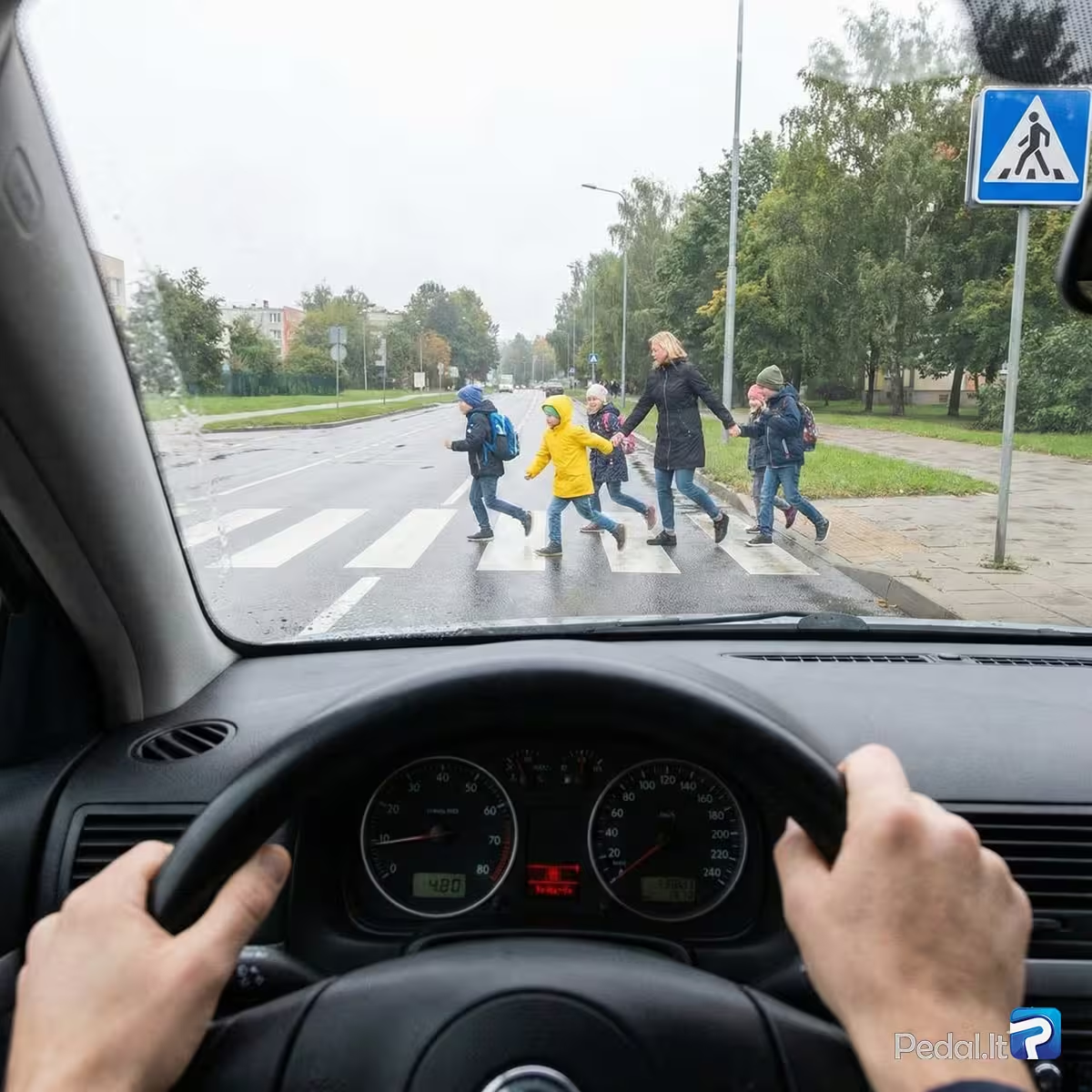
What should a driver be aware of about children's behavior when they cross a pedestrian crossing?
Drivers should be prepared for unexpected behavior from children at pedestrian crossings. When children act predictably and responsibly, it improves road safety.
1. Children may suddenly step onto the pedestrian crossing.
2. Children may stop or hesitate while on the pedestrian crossing.
3. Children behave predictably and in an orderly manner.
Which legal act establishes the legal framework governing road traffic safety in the Republic of Lithuania?
Article 1. Purpose and scope. This Law establishes the legal framework for road traffic safety in the Republic of Lithuania. It defines the duties of state and municipal bodies in implementing road safety policy, sets requirements for the training of road users, and specifies the principal rights and obligations of road users, road maintenance authorities, the police, customs officers, and other supervisory officials. The Law also establishes basic requirements for vehicle technical condition, vehicle inspection and registration, and safety standards for road infrastructure, with the objective of protecting the lives, health, and property of road users and others, and of improving conditions for motorized and pedestrian traffic.
1. The Civil Code of the Republic of Lithuania.
2. The Criminal Code of the Republic of Lithuania.
3. The Law on Road Traffic Safety of the Republic of Lithuania.
4. The Code of Administrative Offences of the Republic of Lithuania.
A driver is operating a goods vehicle with a permissible maximum weight under 3,500 kg. Which driving‑licence category must the driver hold?
In this situation the driver must hold at least a category B driving licence; the driver is not required to hold a category C licence. LAW ON ROAD TRAFFIC SAFETY — Article 23. Categories of motor vehicles and the minimum driving age. 1. Categories of motor vehicles and their combinations with trailers are: 6) Category B: vehicles with a permissible maximum weight not exceeding 3,500 kg and designed and constructed to carry no more than eight passengers, excluding the driver; these vehicles may be combined with a trailer whose permissible maximum weight does not exceed 750 kg; they may also be combined with a trailer whose permissible maximum weight exceeds 750 kg, provided that the permissible maximum weight of the vehicle combination does not exceed 4,250 kg; a vehicle combination with a permissible maximum weight exceeding 3,500 kg (including a trailer with a permissible maximum weight exceeding 750 kg) may be driven only after passing a practical skills and behaviour test at the state enterprise "Regitra".
1. C.
2. B.
3. A.
How is a motorized bicycle defined?
Note that a motorized bicycle must have at least two wheels and an auxiliary internal combustion engine or an electric motor — it is not sufficient for it to have only an internal combustion engine. SEAK Art. 2.40. "Motorized bicycle" — a vehicle with at least two wheels that is powered by the rider’s muscular force using pedals or handlebars and is equipped with an auxiliary internal combustion engine or electric motor with a maximum net power of no more than 1 kW and a maximum design speed of no more than 25 km/h. The auxiliary engine stops providing power when the vehicle reaches 25 km/h. Wheelchairs for persons with disabilities are not classified as motorized bicycles.
1. A vehicle whose maximum net power does not exceed 1 kW and whose maximum design speed does not exceed 25 km/h.
2. A vehicle that is primarily propelled by the rider’s muscular power using pedals or handlebars and is equipped with an auxiliary internal combustion engine or an electric motor.
Why does a vehicle need a generator?
A generator charges the battery and supplies electrical current to the vehicle's electrical systems and other consumers only while the engine is running, i.e. while the engine's crankshaft is turning. Via the drive pulley and belt, the crankshaft turns the generator, which produces electricity.
1. It supplies electrical current to the vehicle's electrical systems when the engine is not running.
2. It supplies electrical current to the vehicle's electrical systems while the engine is running.
3. It provides current to the starter motor when starting the engine.
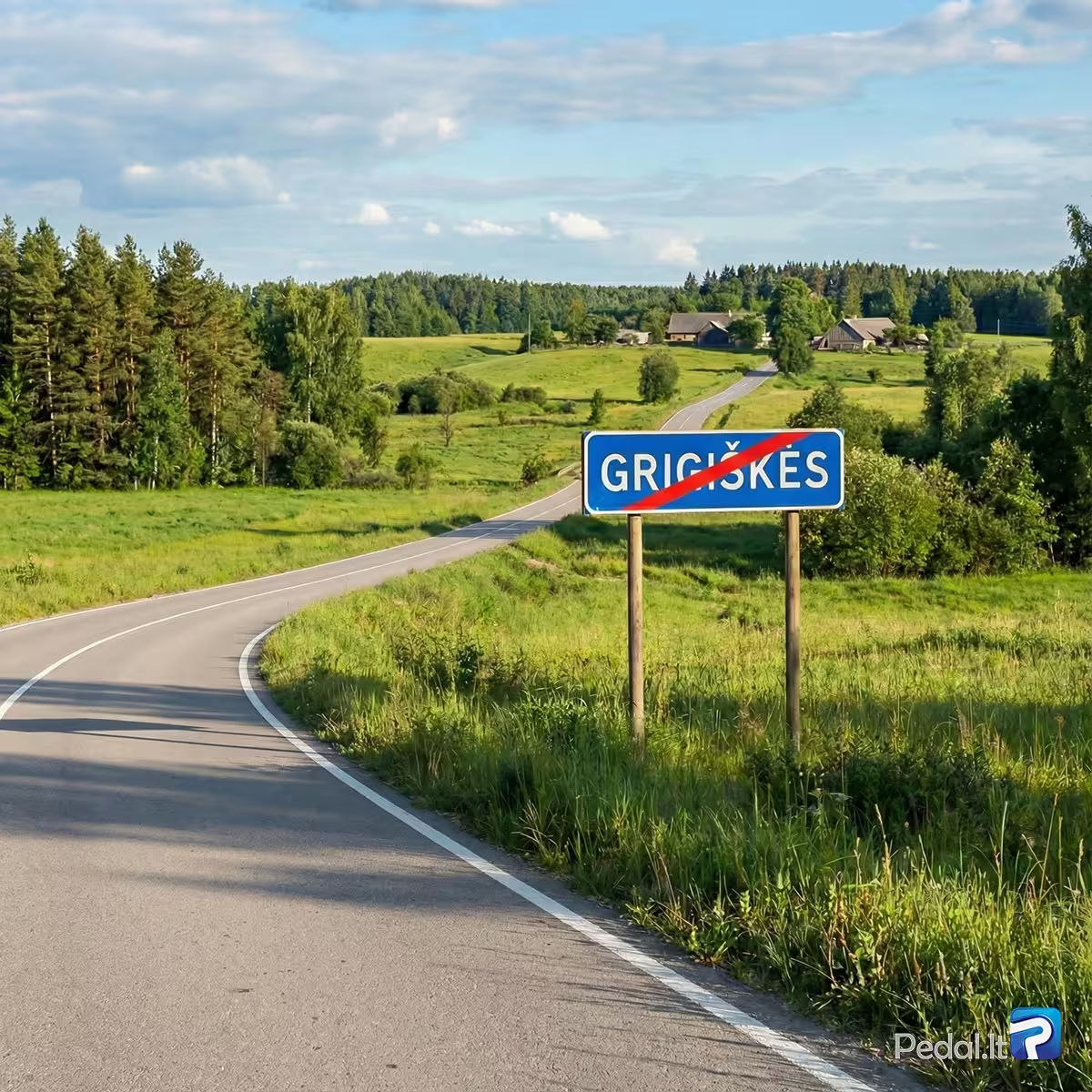
What is the maximum permitted speed for a passenger car on an asphalt- or concrete-surfaced road where this sign applies?
According to the Road Traffic Rules (RTR), a blue sign showing the settlement name in white letters indicates the start of a settlement where the special traffic regulations that normally apply within built-up areas do NOT apply. By contrast, a sign with the settlement name in black letters on a white background marks the start of a settlement where built-up-area traffic rules are in force (RTR 131). The following maximum speeds apply outside built-up areas (RTR 131.1): for passenger cars, light goods vehicles with a permissible maximum mass up to 3.5 tonnes, motorcycles and tricycles — on motorways: 130 km/h from April to October and 110 km/h from November to March; on expressways/highways: 120 km/h from April to October and 110 km/h from November to March; on roads with asphalt or concrete pavement: 90 km/h; on other roads: 70 km/h. See road sign 612: Beginning of a built-up area where special built-up-area rules do not apply. Road sign 613: End of a built-up area (marked by sign 616); it may show the name of another settlement and the distance to it.
1. 70 km/h
2. 80 km/h
3. 90 km/h
It is prohibited to operate (permanently use) a vehicle if:
If you discover that the horn is not working, you may drive only to a parking area or a repair facility. However, it is prohibited to operate a vehicle permanently if it does not meet the technical requirements (for example, if the horn, speedometer, or other required systems are not functioning). RTR 223. Vehicles traveling on roads must comply with the technical requirements applicable in the Republic of Lithuania when undergoing mandatory technical inspection. RTR 224. Only motor vehicles and trailers that are in good repair, except in the cases provided for in these Rules, may participate in public traffic in the Republic of Lithuania. Short-term (one-day) participation in public traffic is allowed, pursuant to the prescribed procedure, for vehicles and trailers displaying temporary license plates whose registered owners (keepers) have obtained compulsory motor third-party liability insurance and have paid the applicable fees and taxes for the vehicle or road use. RTR 15. Driving vehicles that are not in proper condition and do not comply with technical requirements for vehicles is prohibited. Before starting to drive, the driver of a motor vehicle, tractor, or self-propelled vehicle must ensure that the vehicle is in good condition, that it carries a warning triangle, fire extinguisher, first aid kit, and any other items mandatory for that type of vehicle, and must monitor the vehicle's technical condition during the journey. If the vehicle breaks down while driving and therefore does not meet the technical requirements and cannot be repaired on site, the driver may proceed, taking all necessary precautions, to the nearest parking area or vehicle repair shop, except in the cases laid down in paragraph 234 of these Rules. JB
1. The horn (sound signal) is not functioning.
2. The speedometer is not functioning.
3. The windshield is cracked and obstructs the driver's view.
Why is it dangerous to drive fast on an asphalt road during heavy rain?
Heavy rain creates a layer of water on the asphalt surface (especially in longitudinal ruts) that cannot drain quickly to the roadside. At high speeds, a tire's tread cannot displace this water from beneath the wheel, and aquaplaning (hydroplaning) can occur. In other words, the wheels lose contact with—or have reduced grip on—the road surface, and the vehicle may become uncontrollable.
1. Water will enter the engine and cause it to stall.
2. The vehicle may lose control due to aquaplaning.
3. The windshield wipers will stop working.
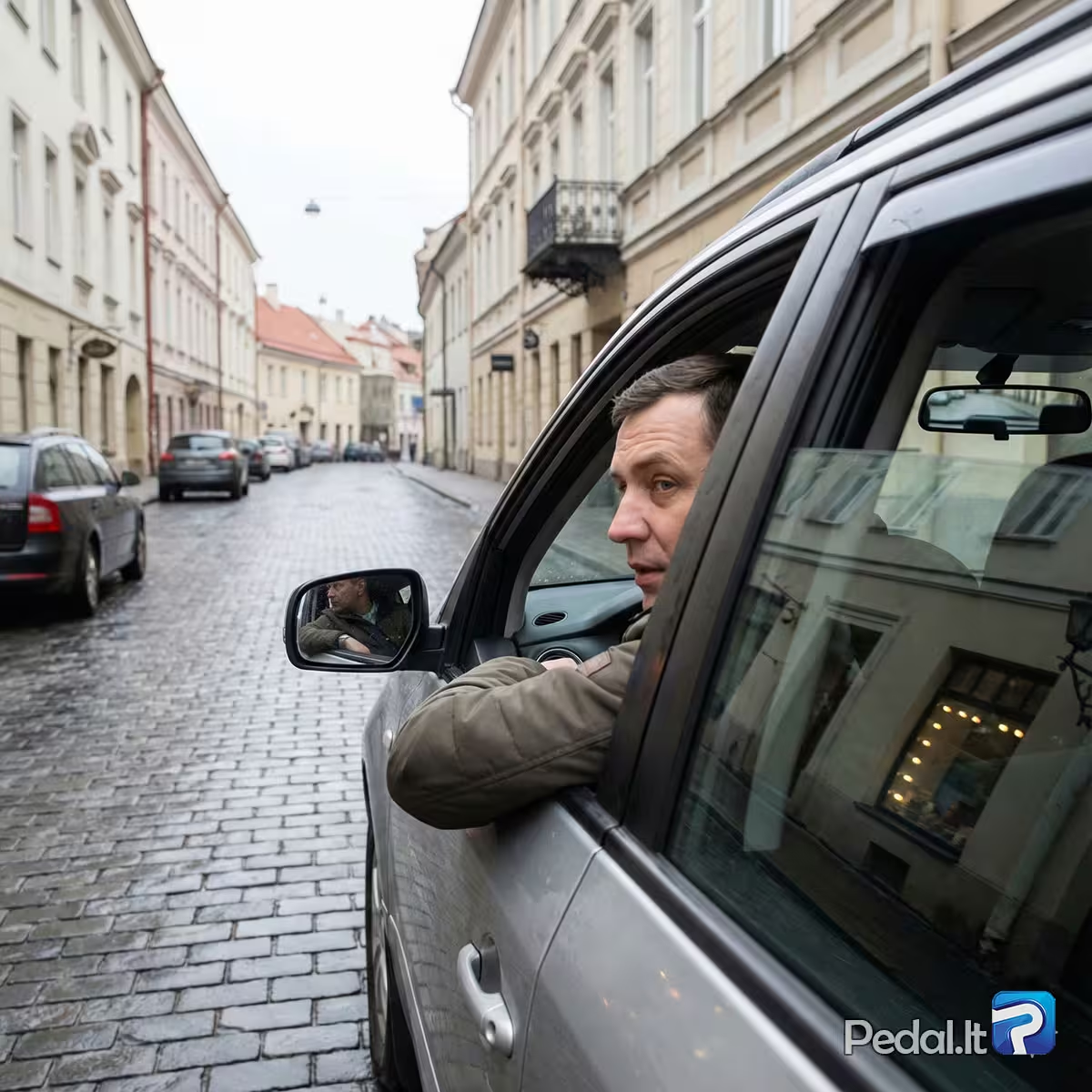
What must a driver do when reversing?
Note: If the steering wheel is turned sharply while reversing, the front of the vehicle can swing to the side and strike obstacles or other road users. When reversing, a driver must give way to other road users.
1. The driver must give way to other road users.
2. The driver must use the horn.
3. The driver must make sure that there are no obstructions behind the vehicle.
4. Do not obstruct other road users ahead.
When cycling on the road, must the bicycle have a red rear reflector and orange reflectors attached to the wheel spokes on both sides?
RTR 56. Only bicycles equipped with functioning brakes and a working audible warning device may be ridden on the road. A bicycle must have a red rear reflector and orange reflectors or other reflective elements fixed to the spokes on both sides of each wheel. During hours of darkness or when visibility is poor, a bicycle ridden on the road must have white front and red rear lights switched on. The cyclist must wear a reflective vest or have other reflective accessories attached to clothing in a location clearly visible to other road users. JB
1. Yes — at all times.
2. Only during hours of darkness.
3. Not required if the cyclist wears a high-visibility vest with reflective elements.
4. No, it does not.
What is the purpose of an anti-lock braking system (ABS) in a vehicle?
An anti-lock braking system (ABS) prevents wheel lockup during heavy braking, helping to maintain tire traction and steering control—especially on slippery surfaces. When wheels lock, the vehicle can skid and the driver may lose the ability to steer. ABS modulates brake pressure to preserve grip and directional stability.
1. Because it prevents the wheels from locking during sudden or hard braking, preserving traction and steering control.
2. Because it helps prevent vehicle theft.
3. Because it prevents the vehicle from rolling downhill.
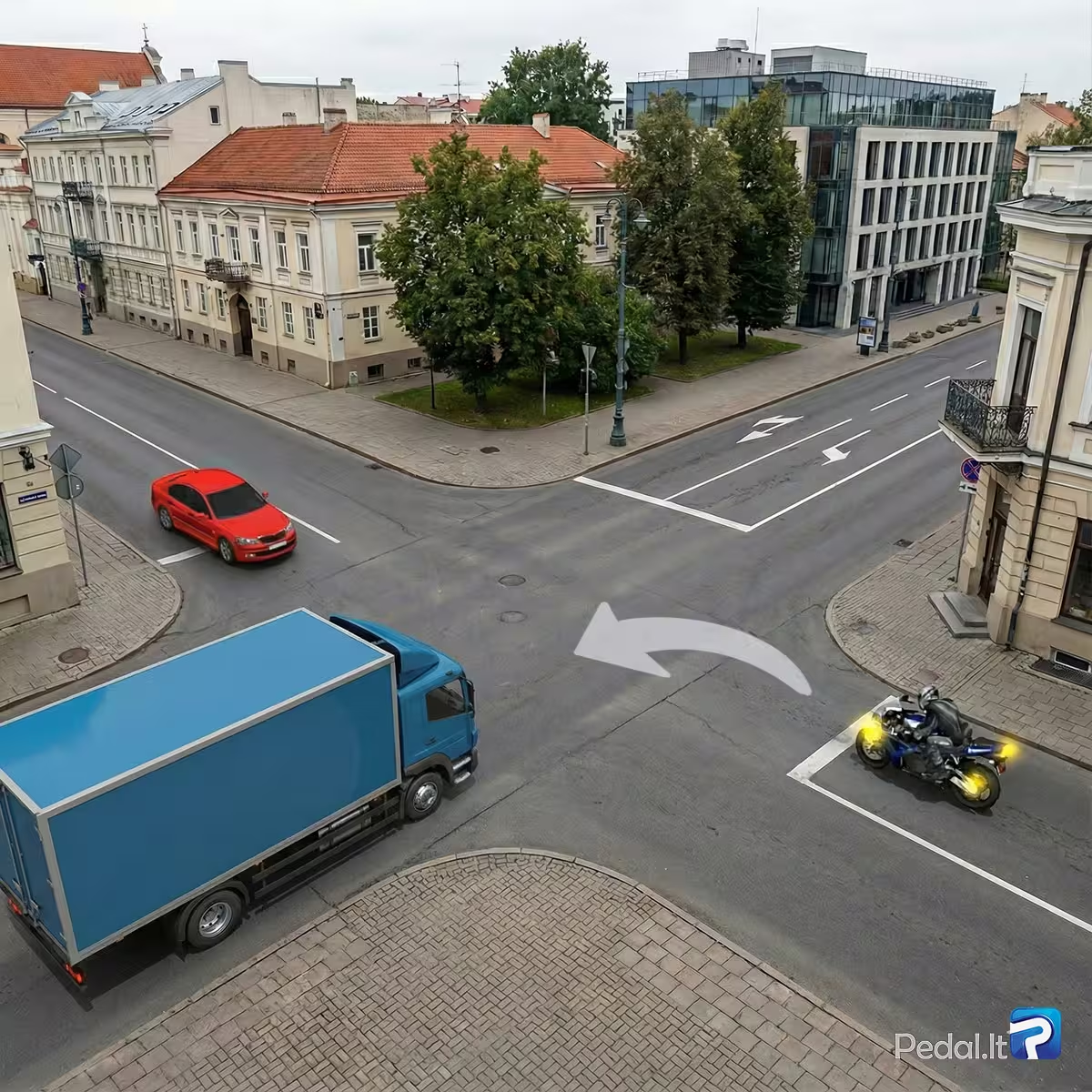
Which vehicle will be the last to pass through the intersection?
The motorcycle, being the only vehicle with no approaching traffic from the right, will enter the intersection first but will stop in the middle to give way to the passenger car (see Paragraph 157 of the Road Traffic Rules). After that, the goods vehicle will proceed through the intersection, as there will no longer be any vehicles approaching it from the right. The passenger car will go second, and the motorcycle will be last. A driver must comply with the requirement of Paragraph 155 of the Road Traffic Rules when driving straight ahead, turning left, or making a U-turn. RTR 155. At an uncontrolled intersection, drivers must give way to vehicles approaching from the right if the vehicle trajectories intersect. RTR 157. When turning left or making a U-turn, the driver shall give way to oncoming vehicles on a road of equal importance that are driving straight ahead or turning right, and—at an intersection where overtaking is allowed—to overtaking vehicles as well.
1. Passenger car.
2. Motorcycle.
3. Goods vehicle.
What is meant by "crossroads"?
RTR 3.17. "Crossroads" means the area bounded by imaginary lines drawn from the outer edges of the intersecting carriageways, regardless of whether those edges are widened or rounded.
1. An area bounded by imaginary lines drawn from the outer edges of the intersecting carriageways.
2. An area bounded by imaginary lines connecting the outer edges of pavements or road shoulders.
What should the driver do first to stop a braking car from skidding?
If the vehicle begins to slide while braking, you must stop braking. For example, if you brake suddenly and lock the wheels before a turn, even after steering into the desired direction the car will continue moving in its previous direction (straight), which can cause you to leave the road or collide with an obstacle. Therefore, in this situation you must consciously release the brakes — a maneuver that can be especially difficult for an inexperienced driver. JB
1. Release the clutch and the brake pedal.
2. Release the brake pedal.
3. Increase vehicle speed.
What or who provides a driver with useful information while driving on the road?
A driver obtains information from: - the road itself; - the surrounding environment; - moving road users (vehicles, pedestrians, road workers, etc.); - stationary objects on the road (central islands, speed bumps, road markings, etc.); - road signs; - traffic lights; - the condition of the road surface; - environmental and weather conditions. RTR 53: Passengers must not distract the driver or interfere with their driving.
1. From the road and the surrounding environment.
2. From moving and stationary objects on the road.
3. From road signs and traffic lights.
4. From passengers.
Which of the following should you avoid to prevent unnecessary noise?
Driving smoothly and courteously helps prevent unnecessary noise. Sudden engine revving, hard braking or wheel lock-up produce loud sounds that disturb others. Slamming vehicle doors or using the horn without cause breaches public order. These actions not only create noise pollution but also demonstrate irresponsible driving behaviour.
1. Avoid sharply increasing engine revolutions (sudden revving).
2. Avoid slamming the vehicle door shut.
3. Avoid using the horn without a valid reason.
4. Avoid braking by locking the wheels.
At what times of day are wild animals most likely to cross the road?
Wild animals commonly appear on roads at dusk and in the late evening (approximately 17:00–23:00), and also in the early morning hours around 4:00–5:00.
1. At dawn (early morning).
2. During the night.
3. At dusk (twilight, when it is getting dark).
4. During the middle of the day.
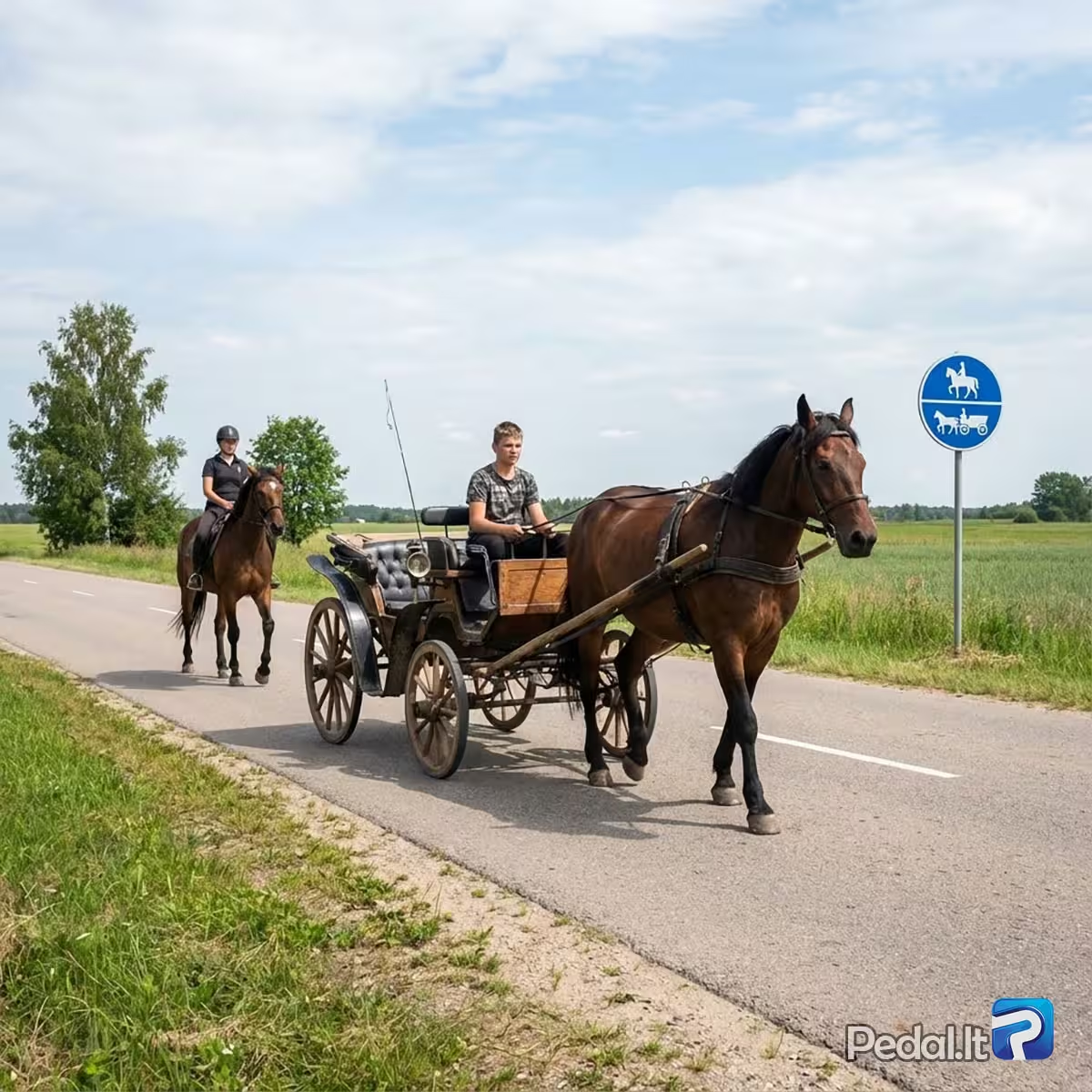
Driving an animal-drawn vehicle or riding an animal on roads is permitted from the age of:
Regulation RTR 67 — Only persons aged 14 or older may drive an animal-drawn vehicle, herd animals or birds, or ride an animal on the road.
1. 16 years old.
2. 15 years old.
3. 14 years old.
4. 12 years old.
5. 10 years old.
Standing and parking are prohibited when the distance between a stationary vehicle and a solid line of the road marking (or the kerb) is:
The distance between a stationary vehicle and a solid line (or the kerb) must be at least 3 metres. If the distance is exactly 3 metres, standing and parking are permitted. If the distance is less than 3 metres (for example, 2 metres), standing and parking are prohibited.
RTR 150. Standing and parking are prohibited:
150.7 where there is a distance of less than 3 m between a stationary vehicle and a solid line of the road marking, the kerb, or, in its absence, the edge of the carriageway;
1. 3 metres
2. 3.5 metres
3. 4 metres
4. 2 metres
Overtaking is prohibited in the following situations:
RTR XVI.140. Overtaking is forbidden: 140.1. at intersections, except where overtaking on a main road is permitted because the intersection is not marked by one of the following signs: 'Intersection with the Side Road', 'Side Road on the Right', 'Side Road on the Left', or 'Priority Road'; 140.2. at level crossings and within 100 m of a level crossing; 140.3. on road sections with poor visibility; 140.4. on pedestrian crossings; 140.5. on roads with more than one lane in the same direction; 140.6. on road sections marked with the signs 'Overtaking is prohibited' or 'Overtaking by trucks is prohibited' (see the explanations for these signs); 140.7. on road sections where opposing traffic flows are separated by longitudinal markings 1.1, 1.3, 1.4, 1.10 (from the continuous line side) and 1.15 listed in Appendix 3 of the Rules; 140.8. in residential areas, apartment building courtyards, parking lots and bicycle streets. JB
1. At intersections, except where overtaking is specifically allowed.
2. On stretches of road with good visibility.
3. Within 50 metres before a railway crossing.
4. On road sections where signs 'No overtaking' or 'No overtaking by trucks' are posted (as defined by the signs' descriptions).
If you brake sharply while driving in heavy traffic:
Braking sharply in heavy traffic is dangerous because drivers following you often do not maintain a safe distance and may collide with your vehicle when you brake suddenly.
1. A vehicle following you may collide with your vehicle.
2. Your brakes could be damaged.
3. That would be a normal braking method.
4. The brake pads might become stuck.
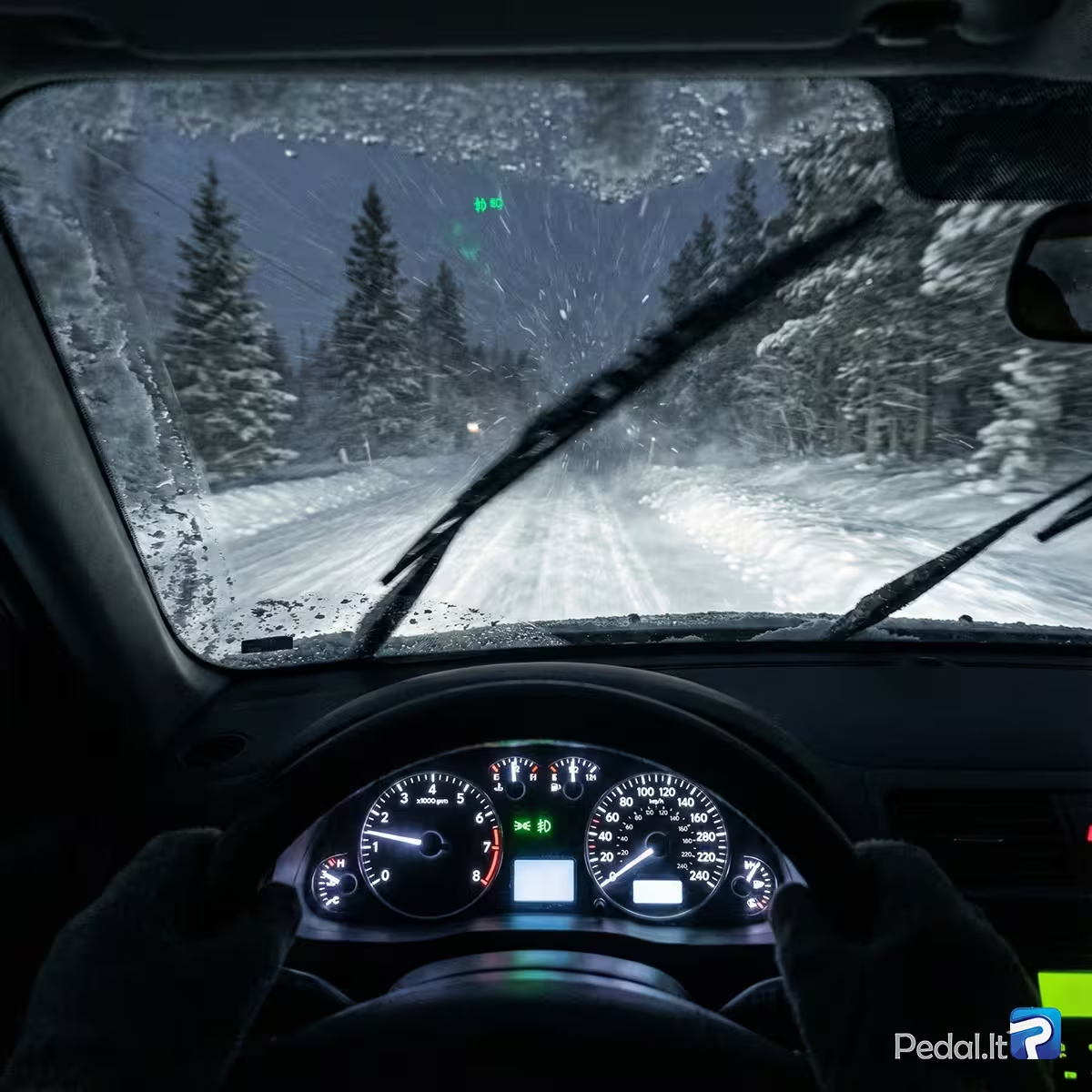
Which exterior lights should be switched on to improve visibility on the road during darkness and when snow is blowing?
When driving at night and during blowing snow, you should switch on the fog lamps together with the dipped-beam (low-beam) headlamps. Using the main-beam (high-beam) headlamps will cause light to reflect off the snow and dazzle the driver. (RTR 98) Fog lamps should only be used when visibility is seriously reduced; the front fog lamps may also be used in the event of failure of the front left dipped-beam headlamp.
1. Fog lamps used together with the main-beam (high-beam) headlamps.
2. Fog lamps used together with the dipped-beam (low-beam) headlamps.
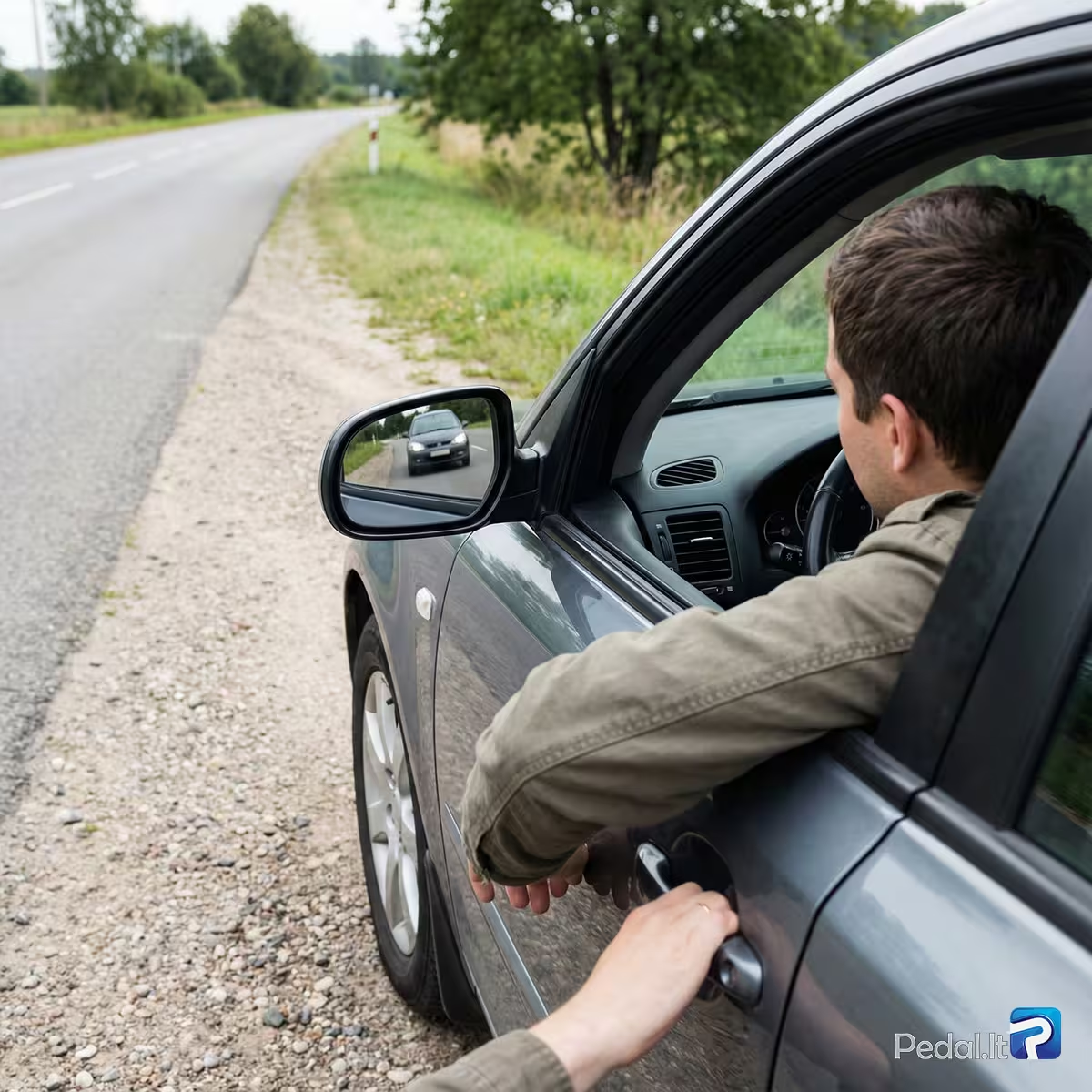
After stopping on the right-hand shoulder, what should a driver check before opening the door?
Vehicles may be approaching from the rear on the left-hand side, so opening the door could be unsafe. (RTR 148) Do not open the doors of a parked vehicle if doing so would create an obstruction or pose a hazard to other road users.
1. Vehicles approaching from behind on the left-hand side.
2. Vehicles approaching from behind on the right-hand side.
3. They do not need to pay attention to anything specific.
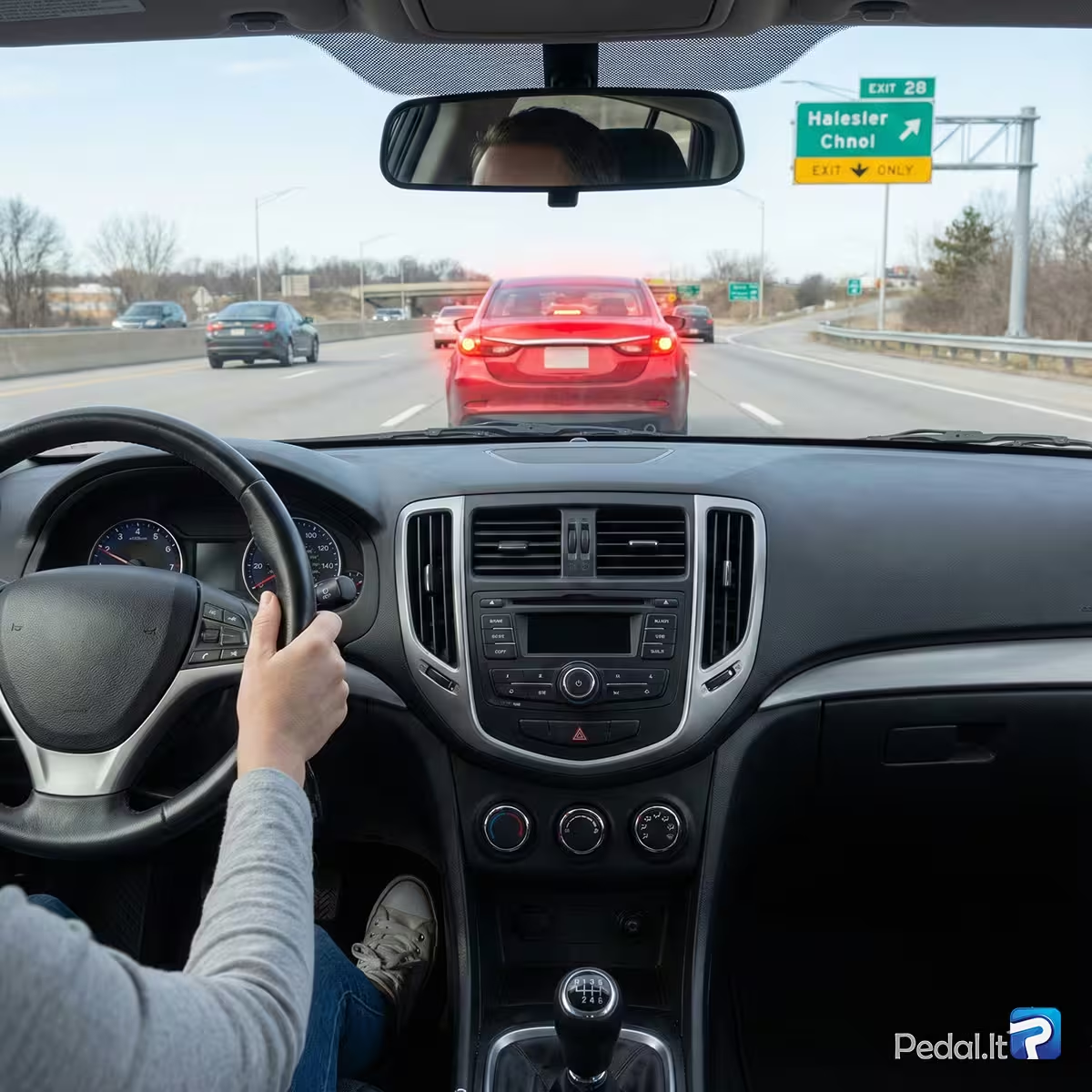
What should you do if you notice a vehicle braking in the distance ahead?
Explanation of terms: • To brake – press the brake pedal; the car slows down rapidly and stops before the expected obstacle. • To release the accelerator pedal – take your foot off the gas; the car gradually slows on its own but does not come to a complete stop and continues moving. • To drive without changing speed – keep the accelerator position the same; the car continues at a constant speed. RTR 128. If there is an obstruction or traffic safety is at risk, the driver must reduce speed or, if necessary, bring the vehicle to a complete stop or steer around the obstruction (if it can be seen) without creating a hazard for other road users.
1. Apply the brakes.
2. Take your foot off the accelerator and be prepared to brake.
3. Maintain your current speed.
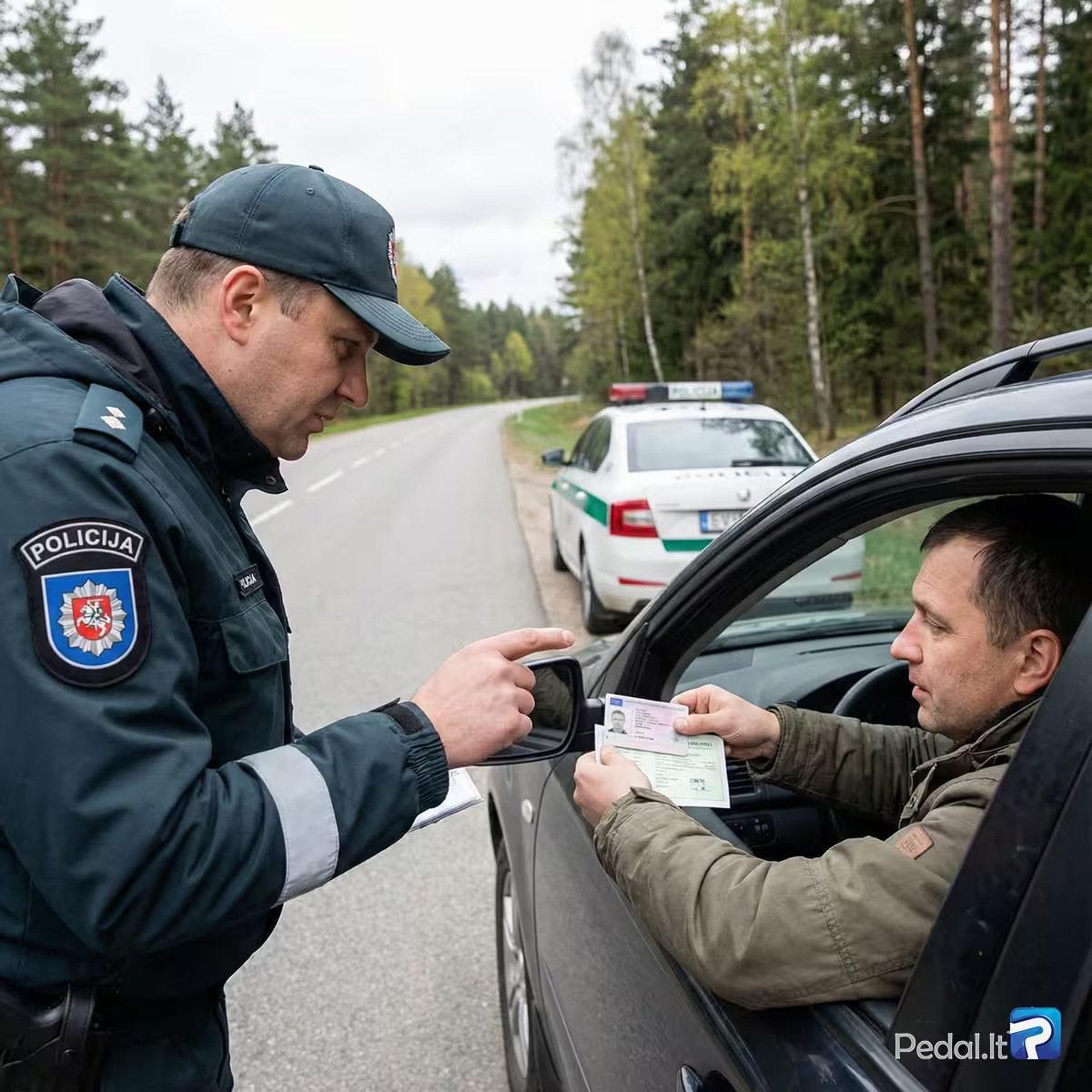
What checks must a driver allow when requested by a police officer?
RTR 17. At the request of a police officer, a driver must submit to tests for alcohol intoxication or for intoxication caused by narcotic drugs, psychotropic substances, or other psychoactive substances, in the manner prescribed by the Government of the Republic of Lithuania. RTR 14. It is prohibited to drive a vehicle if you are not authorized to do so, if you are under the influence of alcohol, narcotic drugs, psychotropic substances or other psychoactive substances. A person who is fatigued or ill must not drive if driving may endanger road safety. A vehicle must not be entrusted to a person who is under the influence of such factors or who is not authorized to drive that type of vehicle. When operating a vehicle, the driver must comply with the conditions specified on the driving licence. JB
1. Alcohol intoxication.
2. Irritability.
3. Fatigue.
4. Intoxication by narcotic drugs.
.avif)
Is it permitted to use high‑beam headlights after dark on an unlit road within a settlement?
On unlit roads it is permitted to use high‑beam headlights. According to regulation RTR 95, during hours of darkness or in conditions of poor visibility high beams must be switched to low beam on illuminated roads (see 95.1).
1. Yes — it is permitted.
2. No — it is prohibited.
Can the parking brake be used to slow the vehicle while braking?
The parking brake may be used to help slow the vehicle if the service (main) brakes fail.
1. No — it cannot be used.
2. Yes — in any circumstance.
3. Yes — in an emergency, if the service (main) brakes fail.
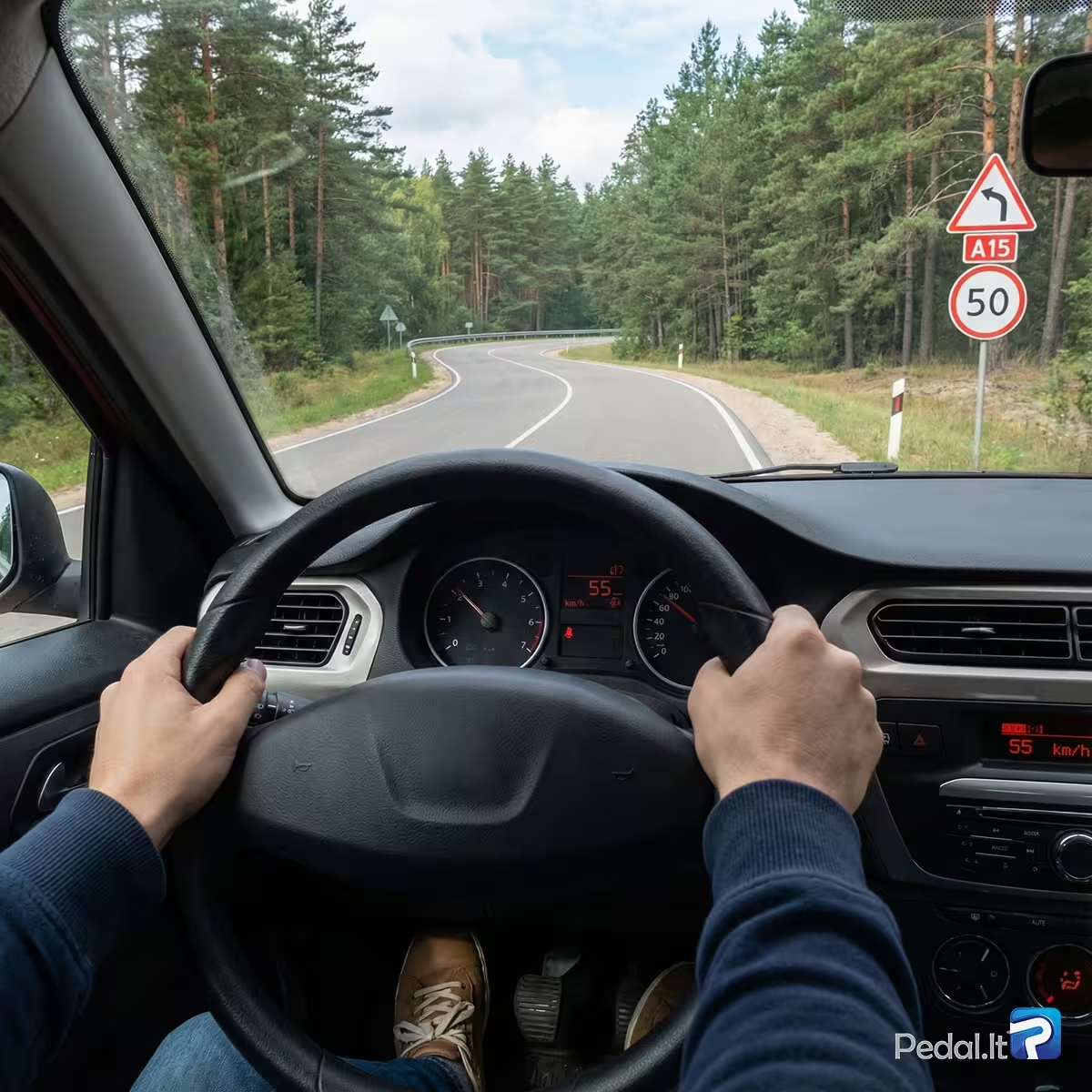
You are approaching a bend in the road. You should:
Drivers approaching a bend should be aware that the curve may be sharper than it appears. Therefore they must select a safe speed and adopt an appropriate position on the road to avoid entering the oncoming traffic lane. A safe speed depends on all circumstances: weather conditions, the technical condition of the road and the vehicle, the vehicle's load, the driver's experience and physical condition. RTR 127. Drivers must not exceed the permitted speed limit. When choosing a driving speed, drivers should consider the driving conditions — in particular the terrain — the condition of the road and the vehicle (including its load), weather conditions and traffic density so that they can stop safely before any foreseeable obstruction. Drivers must slow down or stop if circumstances require, especially when visibility is poor.
1. Reduce your speed.
2. Position your vehicle to avoid crossing into the oncoming traffic lane.
3. Use your turn signal.
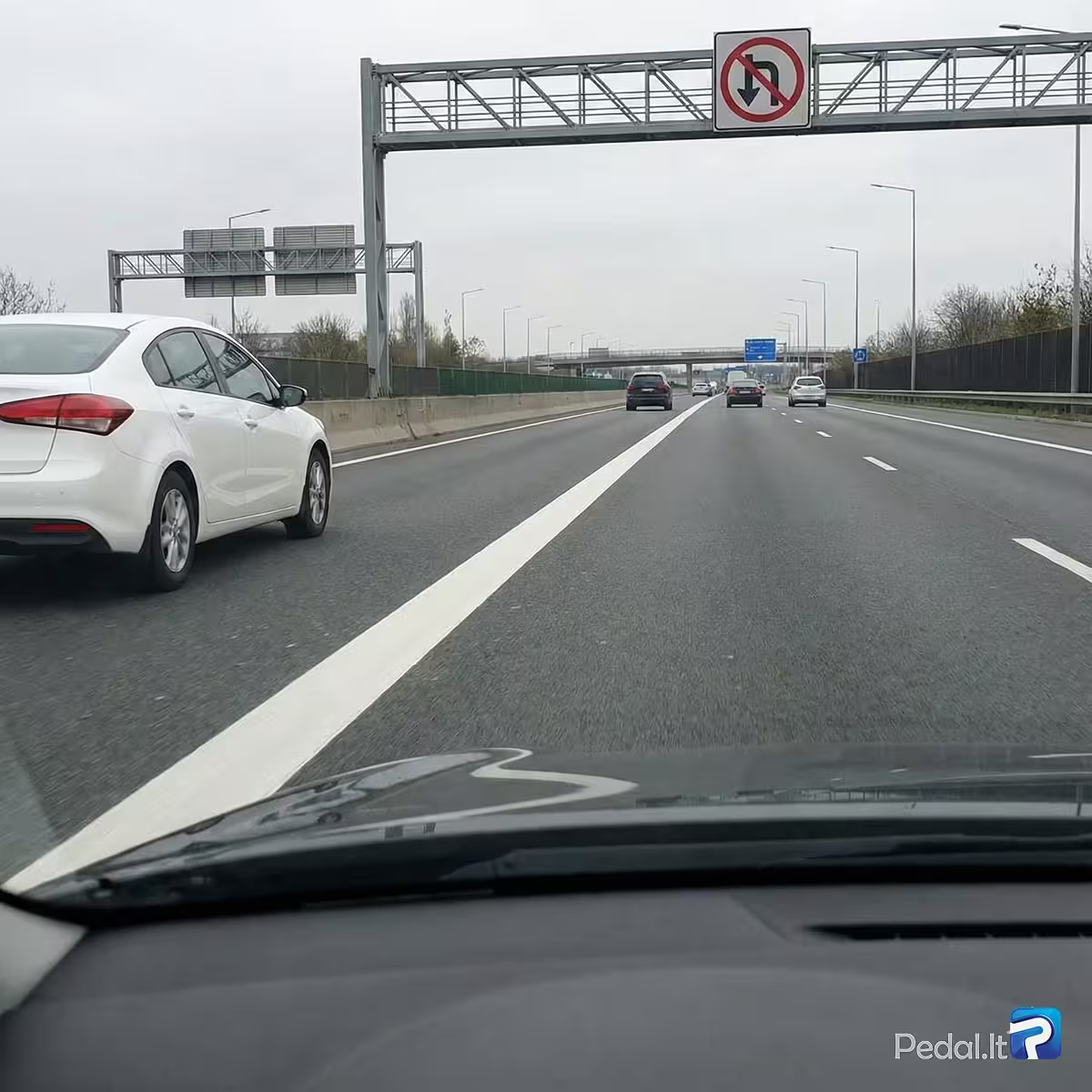
Is it permitted to cross a wide continuous road marking?
RTR 174. On roads designated as Motorway or Motor Vehicle Road the following are prohibited: 174.2 standing or parking except in designated parking areas; RTR Annex 3 1.2. A BROAD CONTINUOUS LINE marks the edge of the carriageway and the boundaries of sections where entry is prohibited on motorways and highways; it separates traffic lanes reserved for public-service vehicles and delineates lanes from bus stops. Vehicles must not cross this line unless it marks the edge of the carriageway. JB
1. Crossing is permitted.
2. Crossing is permitted only when the line denotes the edge of the carriageway.
3. Crossing is permitted to bypass an obstacle when the line separates a lane reserved for shuttle (route) transport.
1 of 30 Task
Time left: 00:00:00
1
2
3
4
5
6
7
8
9
10
11
12
13
14
15
16
17
18
19
20
21
22
23
24
25
26
27
28
29
30