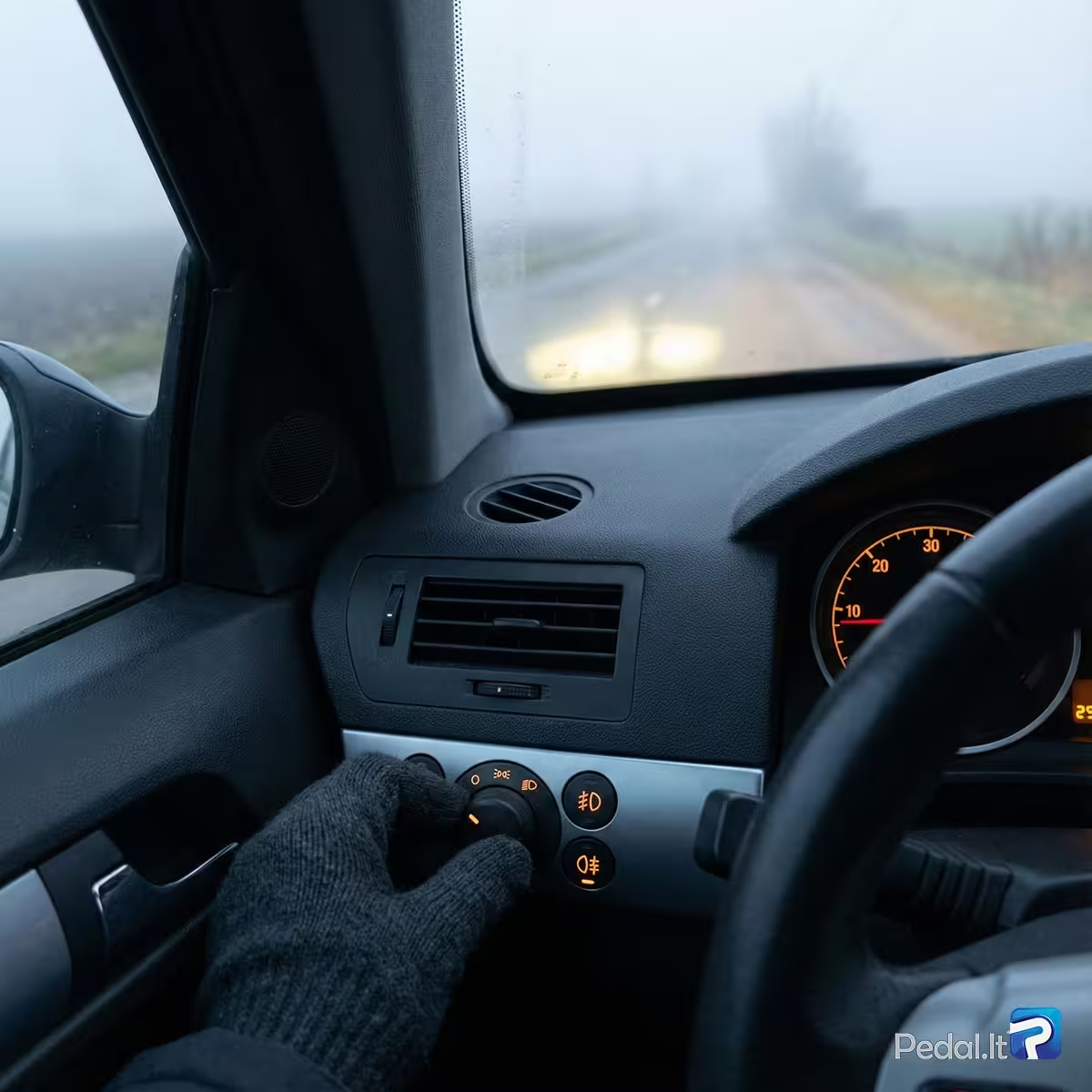
Fog lamps must be capable of being switched on:
Technical requirements for vehicles operated on a road, Chapter IV, Paragraph 22: If fog lamps are fitted, they must only be capable of being switched on and off using an appropriate switch when the position lamps are switched on. Additionally, fog lamps must be capable of being switched off independently of any other lights.
1. When the main-beam (high‑beam) headlamps are switched on.
2. When the position (parking) lamps are switched on.
3. Only when the position lamps are switched on; they must be able to be turned off independently of any other lights.
4. When the dipped‑beam (low‑beam) headlamps are switched on.
A load projects up to 1 metre beyond the front or rear of a vehicle. It will be transported at night or in conditions of poor visibility. How should this load be marked?
If the load projects less than 1 m beyond the front or rear of the vehicle, marking is not required (RTR 2.10). Any motor vehicle carrying a load that extends more than 1 m beyond the front or rear, or beyond the sides of the vehicle, must have the extremities of the load marked as specified in Annex 4 to these Rules (RTR 4.12). The extremities of loads protruding more than 1 m in front or rear, any projection to the side, and extremities of vehicles wider than 2.6 m must bear distinguishing marks — 400 mm square plates covered with alternating diagonal reflective white and red stripes 50 mm wide. These plates must be mounted not lower than 0.4 m and not higher than 1.6 m above ground level. During hours of darkness or when visibility is poor, such vehicles must have lights at the projecting points: white at the front, amber at the sides and red at the rear. JB
1. Using brightly coloured flags.
2. Distinctive markers — square plates with alternating diagonal reflective white and red stripes.
3. Marked with lights: white at the front, amber at the sides and red at the rear.
4. Marking is not required.
Are you allowed to drive across a level crossing if the crossing attendant is facing you and holding a flag above their head?
RTR 168. Before entering and crossing a level crossing, road users must obey road signs, road markings, the position of barriers, traffic lights, audible warnings, and the signals of level crossing attendants/controllers. Before entering a level crossing, a road user must always ensure that no rail vehicle is approaching the level crossing. It is recommended that children under 12 be accompanied by an adult when crossing a level crossing.
1. Crossing the level crossing in this situation is prohibited.
2. Driving across the level crossing is permitted.
3. Crossing is permitted only after ensuring that no rail vehicle is approaching the level crossing.
Why is it dangerous to suddenly increase engine speed while driving on a slippery road?
If you press the accelerator suddenly on a slippery road, the driving wheels may start to spin, further smoothing and polishing the wheel track on the slippery surface. This reduces traction; as a result the tires can lose grip more quickly and the vehicle may skid or slide sideways.
1. The vehicle may skid sideways.
2. The engine may stall.
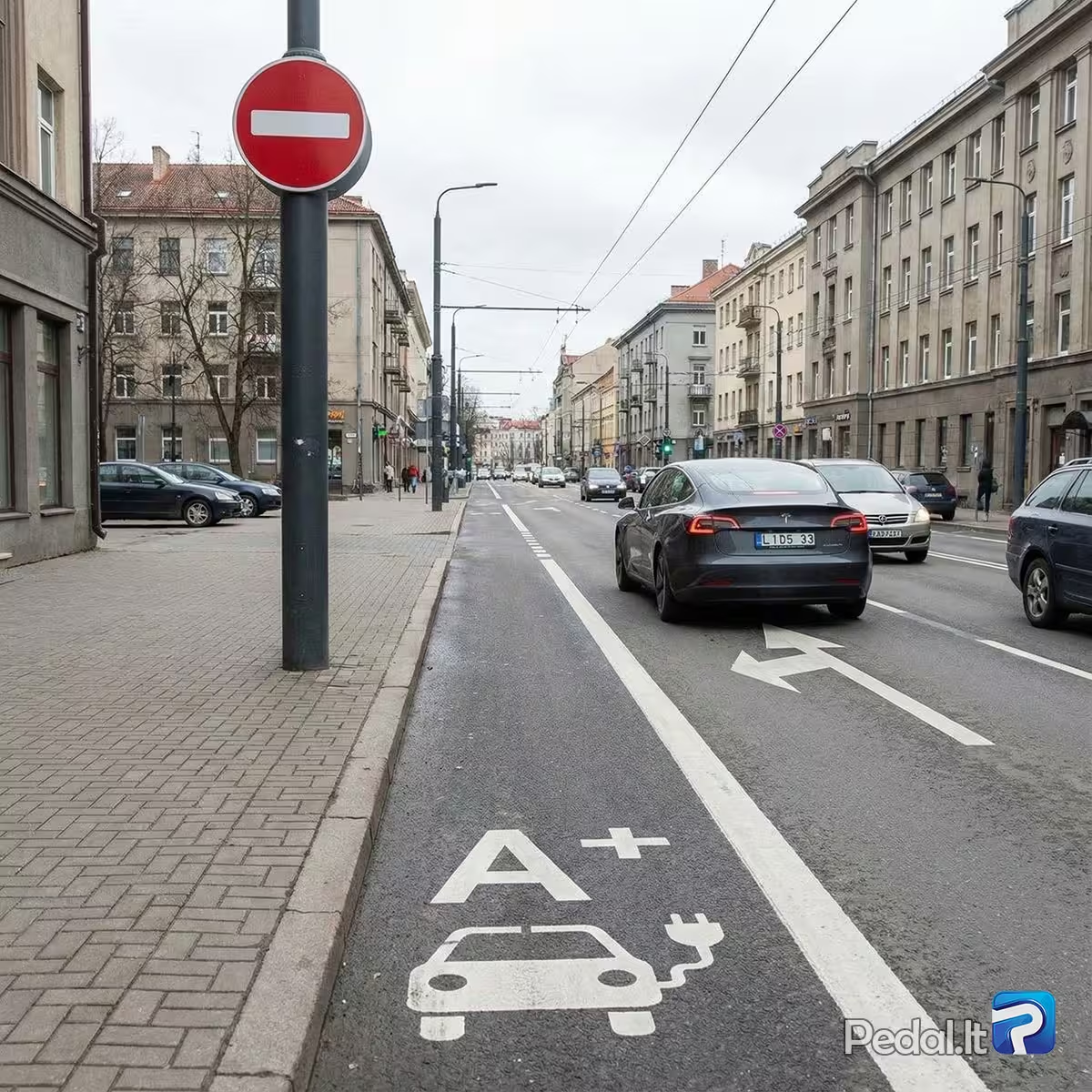
When driving in a lane marked 'A+' and bearing an electric vehicle symbol, and the lane's road sign indicates 'No Entry', what should the driver of an electric vehicle do if they intend to go straight ahead?
In this situation, the 'No Entry' sign applies to the lane and is not limited solely to public-service vehicles. Therefore, if the electric vehicle driver intends to continue straight ahead, they must change lanes and move into a lane that permits driving straight. Legal basis: RTR 181 — Non-public-service vehicles must not drive in lanes marked 'Lane Reserved for Public Service Vehicles' and the letter 'A'. 1811 — Non-public-service vehicles must not drive in lanes marked 'A+' except for the following: 1811.1 bicycles, electric micromobility devices, mopeds, and light quadricycles; 1811.2 vehicles marked with the distinguishing sign 'A person with a disability' or displaying a parking card that transport a person with a disability to/from an educational institution or a day-care centre for people with disabilities if the route is agreed with the road owner according to the established procedure; 1811.3 taxis if the lane reads 'TAXI'; 1811.4 cars carrying four or more road users if the lane is marked with the symbol '4+'; 1811.5 electric vehicles if the lane is marked with an electric vehicle symbol; 1811.6 motorcycles if the lane is marked with a motorcycle symbol. RTR Annex 1. 301 — Road sign 'No Entry': Entry is prohibited for all vehicles except public-service vehicles.
1. Continue straight ahead without changing lanes.
2. Change lanes and move into the lane from which it is allowed to drive straight ahead.
The effect of inertia on the vehicle (risk of sliding sideways) when cornering is reduced by:
The higher the vehicle's speed when cornering, the greater the effect of inertia and the higher the risk of the car sliding sideways. Lower speeds reduce inertia and the risk of sliding. A larger turning radius (a gentler curve) also reduces lateral inertial forces.
1. By decreasing the turning radius (making the turn tighter).
2. By reducing vehicle speed.
3. By increasing the turning radius (making the curve gentler).
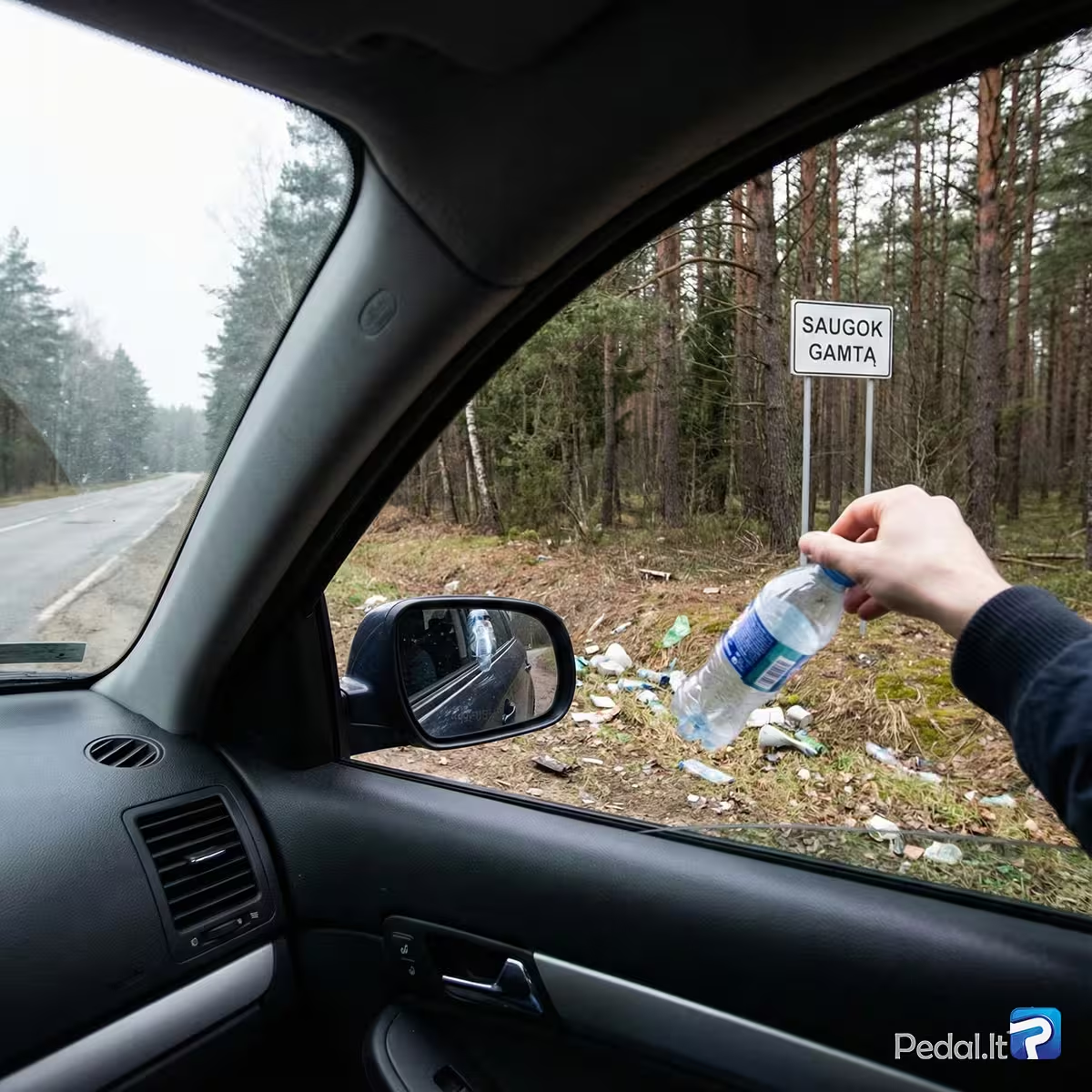
What should we avoid to protect nature?
Carrying unnecessary luggage increases fuel consumption and causes additional harmful emissions. Loud music from a vehicle contributes to noise pollution and can scare wildlife. For short trips, people can walk, cycle, or use public transport, because during brief journeys the engine often does not reach its optimal operating temperature, the vehicle runs less efficiently, and pollution is higher.
1. Leaving a vehicle's engine running while stationary (idling).
2. Playing loud music from a vehicle with the windows open.
3. Using a car for short trips.
4. Carrying unnecessary cargo or luggage.

What driving licence category is required to operate a motorized bicycle?
There is a minimum age requirement to operate a motorized bicycle, but no driving test or driving licence is required. LAW ON ROAD TRAFFIC SAFETY I 2. 40. Motorized bicycle - a vehicle with at least two wheels that is propelled by the rider's muscular effort using pedals or handlebars and equipped with an auxiliary internal combustion engine or electric motor with a maximum net power not exceeding 1 kW and a maximum design speed not exceeding 25 km/h. The auxiliary engine ceases to provide power when the vehicle reaches 25 km/h. Wheelchairs for persons with disabilities are not classified as motorized bicycles. RTR 55. Persons older than 14 are permitted to ride bicycles on the carriageway; if they have completed the training course established by the Ministry of Education, Science, and Sport of the Republic of Lithuania and hold a certificate issued by the school, the minimum age is 12. Persons over 8 may ride bicycles on the carriageway under adult supervision. No age limit is established for cyclists within a residential area. RTR 66. Drivers of motorized bicycles must also comply with the rules and requirements applicable to cyclists.
1. Category AM.
2. Category A.
3. Category B.
4. You do not have to have a driving licence.
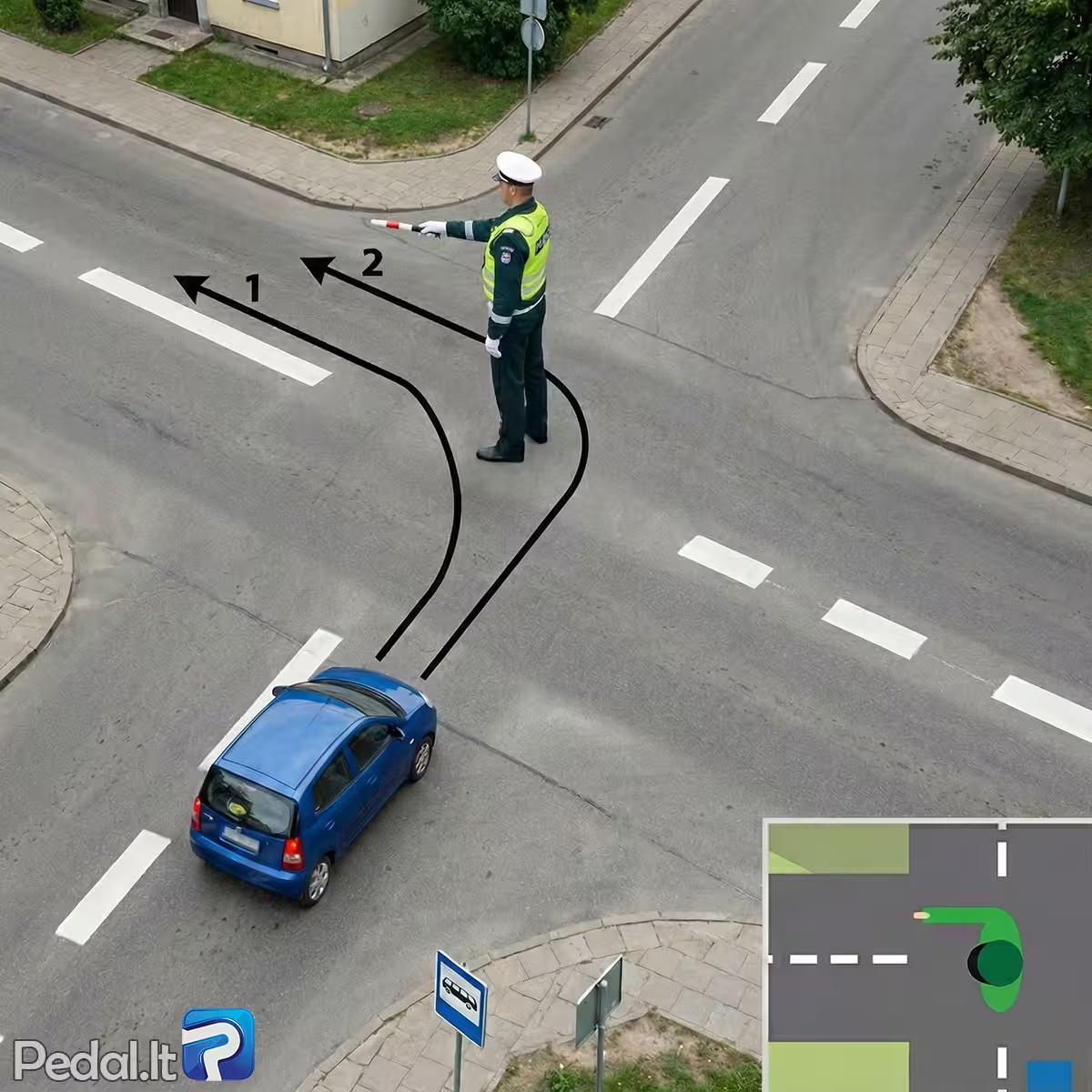
Is it permitted to make a left turn in this situation?
In this scenario the driver must complete the left turn before passing the traffic officer. Turning left after passing the officer would violate Road Traffic Rules requirement 77.2.3, which prohibits vehicles approaching from the rear and from the right from proceeding. RTR 77 — Signals given by traffic officers — are defined as follows: 77.1 Arms extended sideways or down: 77.1.1 Vehicles to the left and to the right may proceed straight ahead or turn right; pedestrians may cross the carriageway. 77.1.2 Vehicles and pedestrians in front of and behind the officer must not proceed. 77.2 Right arm extended forward: 77.2.1 Vehicles approaching from the left may proceed in any direction. 77.2.2 Vehicles from the front may proceed only to the right. 77.2.3 Vehicles from the rear and from the right must not proceed. 77.2.4 Pedestrians may cross the carriageway behind the officer. 77.3 Arm raised upwards: 77.3.1 All road users must not proceed in any direction. 77.3.2 Drivers must stop their vehicles without changing lanes.
1. Turning left is permitted, but only when following the first trajectory.
2. Turning left is permitted, but only when following the second trajectory.
3. Turning left is permitted in both cases.
4. Turning left is prohibited.
Documents a motor vehicle driver must carry while driving and present upon request to an inspecting officer:
Drivers are generally required to carry only a driving licence or an identity document; other documents are required only if the driver is not the owner of the vehicle they are driving (RTR 16). A driver must stop the vehicle when ordered by an inspecting officer. The driver of a motor vehicle, tractor or self-propelled vehicle shall carry and, at the request of the inspecting officer, present a valid driving licence or a document certifying the right to drive tractors and/or self-propelled vehicles; the vehicle registration documents; the certificate of compulsory roadworthiness inspection (compulsory technical inspection); the report of the most recent technical inspection for vehicle categories M2, M3, N2, N3, O3, O4 and wheeled tractor categories T1b, T2b, T3b, T4.1b, T4.2b, T4.3b, T5; the certificate (policy) of compulsory motor third‑party liability insurance; and other documents specified by the laws of the Republic of Lithuania and these Rules (except where the Law on Road Traffic Safety provides that a driver is not required to carry the relevant documents). The driver must also allow the inspecting officer to check readings of validated devices registering driving time and rest periods. Documents should be presented without leaving the vehicle; the driver may exit the vehicle only with the inspecting officer's permission.
6. A driver whose licence was issued in the Republic of Lithuania need not carry and present the licence if they present a valid identity document.
7. A driver referred to in paragraph 6 who is driving a vehicle registered in the Republic of Lithuania is not required to carry and present the compulsory technical inspection document or the compulsory motor third‑party liability insurance certificate (policy) upon request of the inspecting officer.
8. A driver referred to in paragraph 6 who is driving a vehicle registered in the Republic of Lithuania that they own is not required to carry and present the documents referred to in paragraph 7 or the vehicle registration document upon request of the inspecting officer. (RTR 219). In the event of a road accident, every driver involved or any other road user must: 219.3. produce the driver's licence, vehicle registration and compulsory technical inspection documents, the motor third‑party liability insurance policy or other documents in their possession if so requested by other road users involved in the accident. JB
1. The driver's licence, compulsory insurance certificate (policy), vehicle registration documents and the mandatory technical inspection documents.
2. Certificate of completion of compulsory first aid training.
3. A document proving personal identity or a valid driving licence.
4. A valid driver's medical certificate.
A driver whose vehicle is being overtaken must not:
Using the horn may distract the driver being overtaken but will not prevent the overtaking; they may still accelerate to complete the manoeuvre. Obstructing an overtaking vehicle includes actions such as accelerating, steering toward the overtaking vehicle, blocking the lane, or any other behaviour intended to prevent another driver from passing. RTR 138. The driver of a vehicle being overtaken must not obstruct drivers who wish to pass by speeding up or by any other action. RTR 136. Drivers are advised to avoid unnecessary overtaking manoeuvres. Before overtaking, drivers must take extra precautions and ensure that: 136.1. no driver behind them has already begun to overtake; 136.2. the driver of the vehicle to be overtaken is not signalling a left turn; 136.3. the section of lane required for overtaking is clear and the manoeuvre will not obstruct oncoming vehicles or pedestrians on the carriageway; 136.4. a safe distance from the vehicle being overtaken can be maintained during the overtaking; 136.5. after the overtaking manoeuvre they will be able to return to the same traffic lane safely without obstructing the overtaken vehicle. JB
1. Speeding up or otherwise obstructing a driver who is attempting to overtake.
2. Slowing down.
3. Using the horn.
Which legal act establishes the legal framework governing road traffic safety in the Republic of Lithuania?
Article 1. Purpose and scope. This Law establishes the legal framework for road traffic safety in the Republic of Lithuania. It defines the duties of state and municipal bodies in implementing road safety policy, sets requirements for the training of road users, and specifies the principal rights and obligations of road users, road maintenance authorities, the police, customs officers, and other supervisory officials. The Law also establishes basic requirements for vehicle technical condition, vehicle inspection and registration, and safety standards for road infrastructure, with the objective of protecting the lives, health, and property of road users and others, and of improving conditions for motorized and pedestrian traffic.
1. The Civil Code of the Republic of Lithuania.
2. The Criminal Code of the Republic of Lithuania.
3. The Law on Road Traffic Safety of the Republic of Lithuania.
4. The Code of Administrative Offences of the Republic of Lithuania.
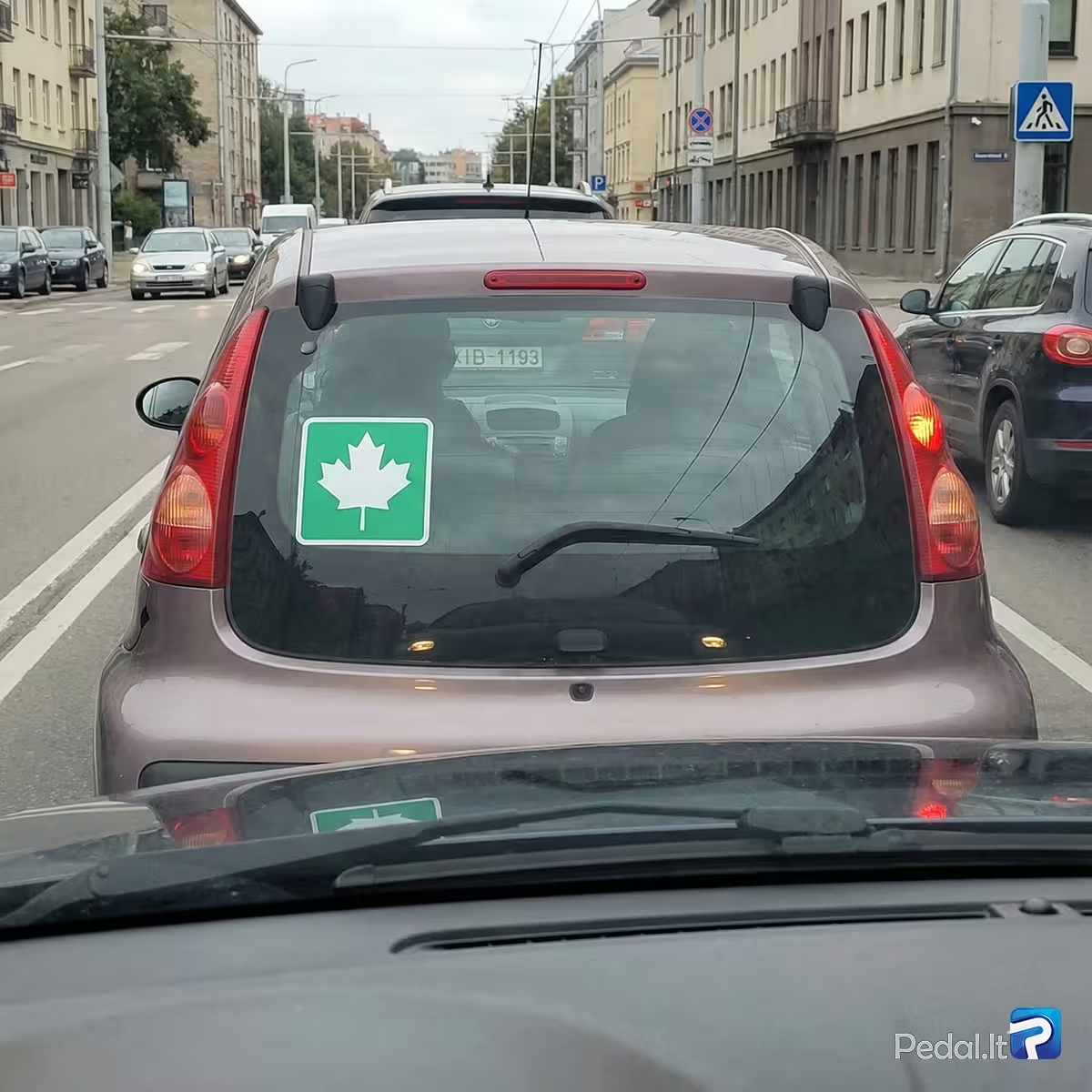
What size distinguishing sign (maple leaf) is permitted on a vehicle driven by a novice driver?
The side length of the 'Maple Leaf' sign must be between 100 mm and 150 mm. Therefore, the correct answers are 100×100 mm and 150×150 mm. A vehicle driven by a novice driver must display, on the left side of the rear, a white square distinguishing sign with a green border and a green maple leaf in the centre. The side length of the square must be between 100 mm and 150 mm, and the border width must be one-tenth (1/10) of the side length.
1. 100 × 100 mm.
2. 150 × 150 mm.
3. 200 × 200 mm.
4. The size of the sign does not matter.
.avif)
Which driver will proceed through the intersection in the blue car?
The blue car is on the priority (main) road, so it has the right of way and must proceed first — the fact that the green car is to its right is irrelevant. Only after the blue car has passed may the green car proceed. (RTR 154) At a controlled intersection, drivers entering from a side road must yield to vehicles on the priority road.
1. The second car.
2. The first car.
What must the driver of a vehicle do before starting to drive, before stopping, before changing lanes, before turning right or left, and before making a U-turn?
RTR 82. A driver must indicate intended manoeuvres by using the vehicle's left or right turn indicators, or by arm signals if the indicators are unavailable or inoperative. 82.1. Signals must be given before starting to move and before stopping. RTR 86. Warning signals must be given to other road users with sufficient advance notice before the manoeuvre (including any braking related to the manoeuvre) and must be discontinued immediately after the manoeuvre (hand signals may be stopped before the manoeuvre is completed). Signals must be given in a way that does not mislead other road users. Turn indicators are not used when entering a roundabout where traffic circulates in a circle. JB
1. Signal in advance using the appropriate turn indicator.
2. Check mirrors and glance over your shoulder to ensure the manoeuvre will not endanger or obstruct other road users.
3. Sound the horn briefly.
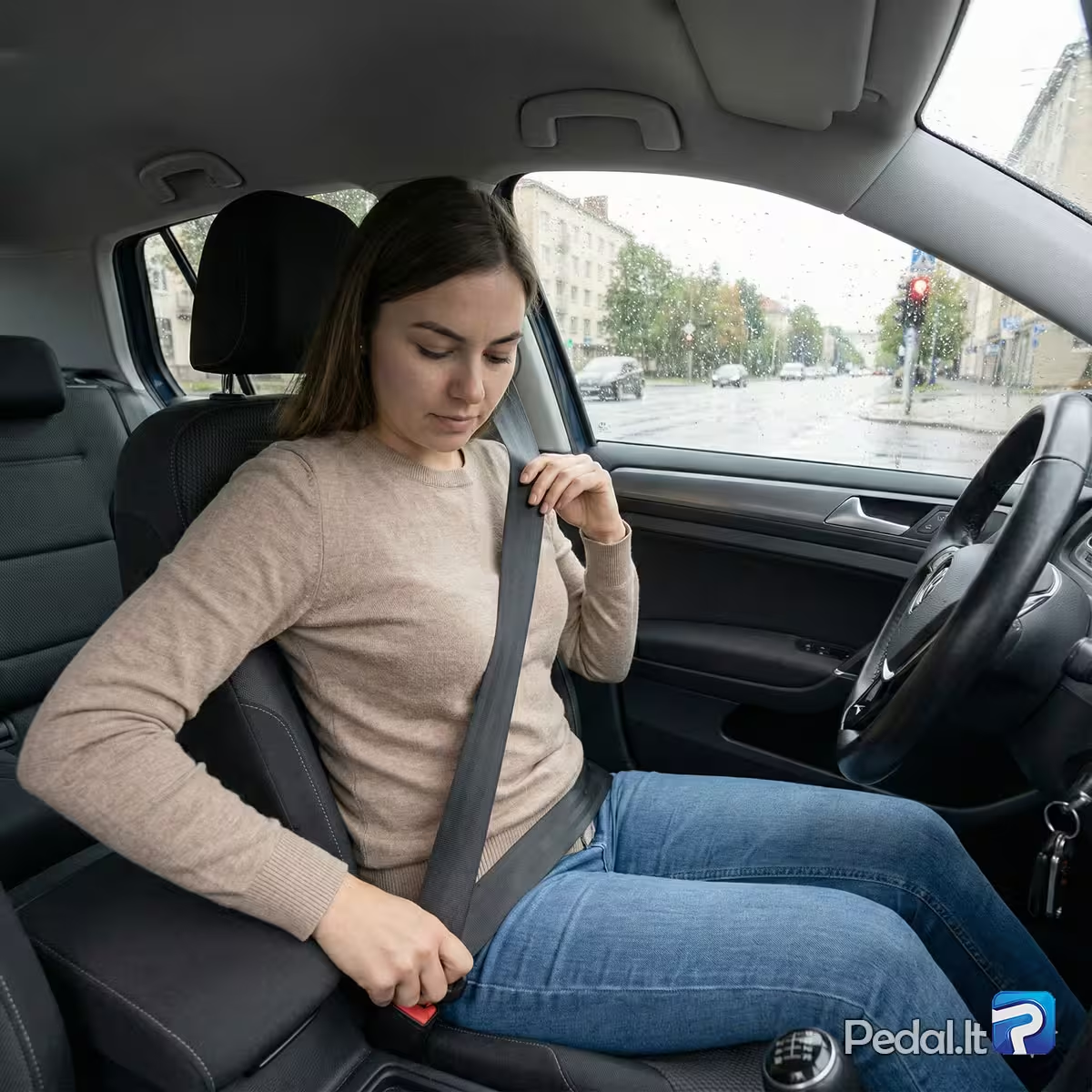
How should the seat belt be fastened correctly?
RTR p. 197. Seat belts must be worn over the shoulder and across the lap, or in the manner specified by the vehicle manufacturer. JB
1. Seat belts must be worn over the shoulder and across the lap, or as specified by the vehicle manufacturer.
2. It is not necessary to wear a seat belt.
What should the driver do first to stop a braking car from skidding?
If the vehicle begins to slide while braking, you must stop braking. For example, if you brake suddenly and lock the wheels before a turn, even after steering into the desired direction the car will continue moving in its previous direction (straight), which can cause you to leave the road or collide with an obstacle. Therefore, in this situation you must consciously release the brakes — a maneuver that can be especially difficult for an inexperienced driver. JB
1. Release the clutch and the brake pedal.
2. Release the brake pedal.
3. Increase vehicle speed.
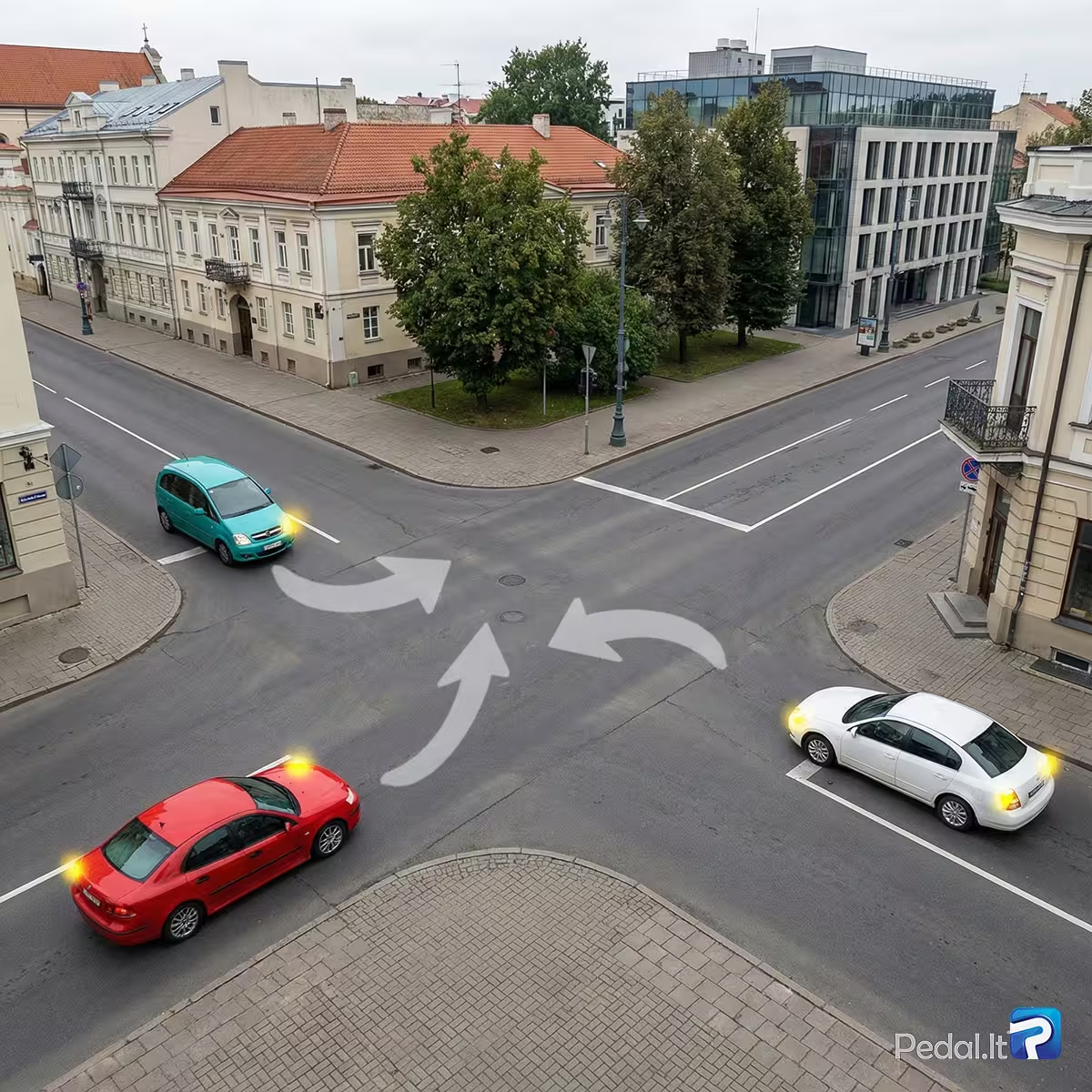
The correct sequence of vehicles to proceed through this intersection is:
The white car goes first because it has no vehicle on its right. It does not need to stop in the middle of the intersection because the green car, which is turning left, does not obstruct it. Next, the red car proceeds because the white car is no longer to its right. Finally, the green car goes. The white and green cars cannot go at the same time because the green car must yield to the red car on its right. (RTR 155) At an uncontrolled intersection, drivers must yield to vehicles approaching from the right when their paths intersect.
1. The white car goes first, then the red car, and finally the green car.
2. The red car goes first, then the green car, and finally the white car.
3. The white and green cars proceed simultaneously, followed by the red car.
What must drivers do if stopped by an inspecting officer?
RTR 16. A driver must stop the vehicle when ordered by an inspecting officer. The driver of a motor vehicle, tractor or self-propelled vehicle shall carry, and upon request of the inspecting officer present, a valid driving licence or a document certifying the right to drive tractors and/or self-propelled vehicles or military equipment (including tactical and logistical vehicles) or their combinations with trailers; the vehicle registration documents; the certificate of the compulsory roadworthiness test and the report of the most recent technical inspection for vehicle categories M2, M3, N2, N3, O3, O4 and wheeled tractor categories T1b, T2b, T3b, T4.1b, T4.2b, T4.3b, T5; the certificate (policy) of compulsory motor third-party liability insurance; and any other documents required by the laws of the Republic of Lithuania and these Rules (except in cases where the Law on Road Traffic Safety exempts the driver from carrying certain documents). The driver must also allow the inspecting officer to check the readings of validated meters that record driving time and rest periods. Documents shall be presented without leaving the vehicle. The driver may leave the vehicle only with the inspecting officer's permission. RTR 91. If hazard warning lights are fitted in a vehicle, they must be switched on: 91.3. when the vehicle is stopped by an inspecting officer;
1. Exit the vehicle only with the inspecting officer's permission.
2. Present the requested documents to the inspecting officer without leaving the vehicle.
3. Exit the vehicle and deliver the documents to the inspecting officer.
4. Stop the vehicle at the location indicated.
5. Turn on the vehicle's hazard warning lights.
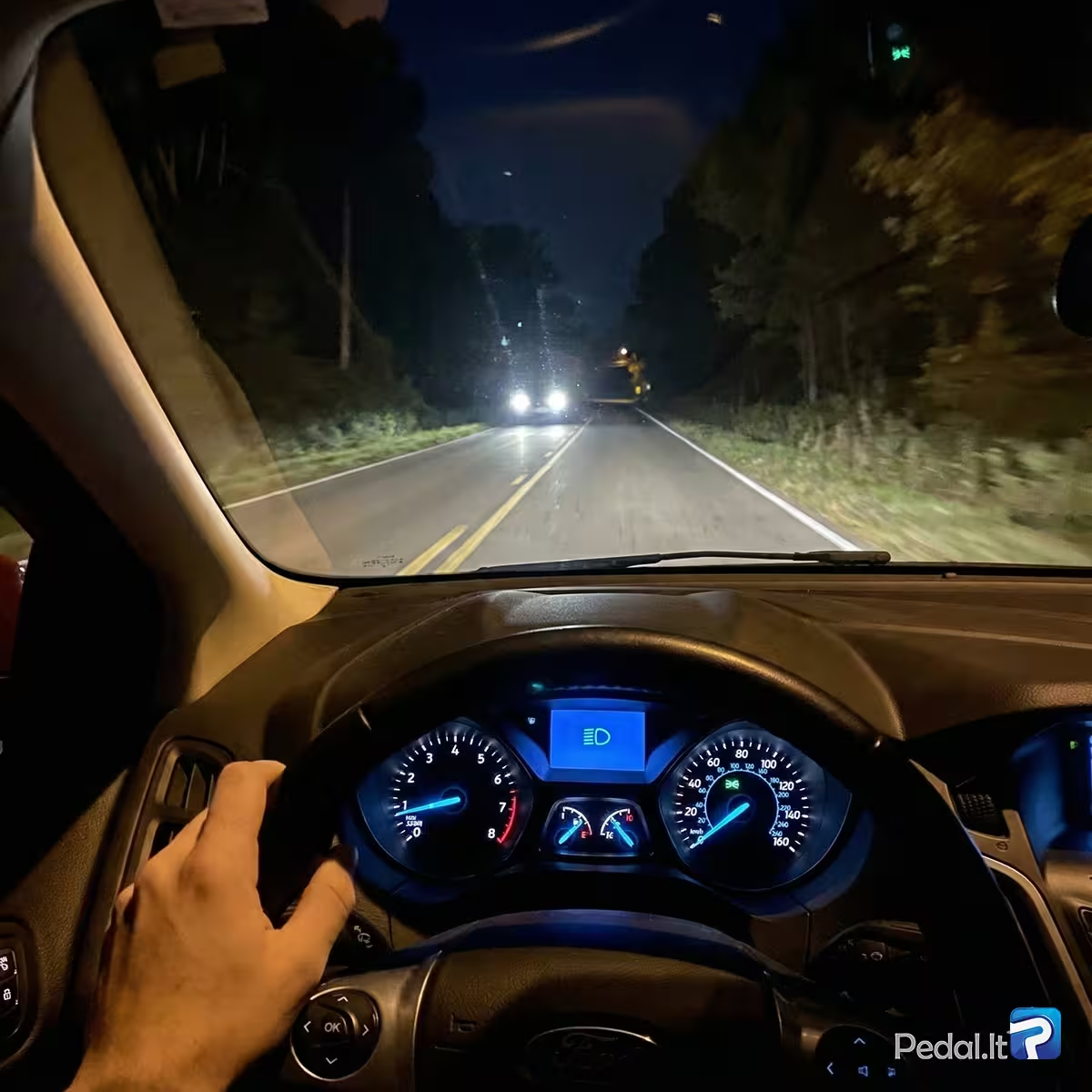
In which situations during hours of darkness must the vehicle's high-beam headlights be switched to low beam?
Regulation RTR 95. During hours of darkness or in conditions of poor visibility, main-beam headlights must be switched to low beam in the following cases: 95.1 on illuminated roads; 95.2 when the distance to an oncoming vehicle is at least 150 m. JB
1. When driving on illuminated roads within built-up areas.
2. When an oncoming vehicle is at least 150 m away.
3. Switching to low beam is optional.
4. When driving on illuminated roads outside built-up areas.
How is a "built-up area" defined?
Law on Road Traffic Safety, Article 2, Clause 19: A "built-up area" means an area containing buildings whose roads are marked at the entrances with the road sign "Beginning of Built-Up Area" and at the exits with the road sign "End of Built-Up Area".
1. An area containing buildings whose roads are marked at the entrances with the regulatory sign "Residential Area".
2. An area containing buildings to which additional traffic rules apply and whose roads are marked at the entrances with the sign "Beginning of Built-Up Area" and at the exits with the sign "End of Built-Up Area".
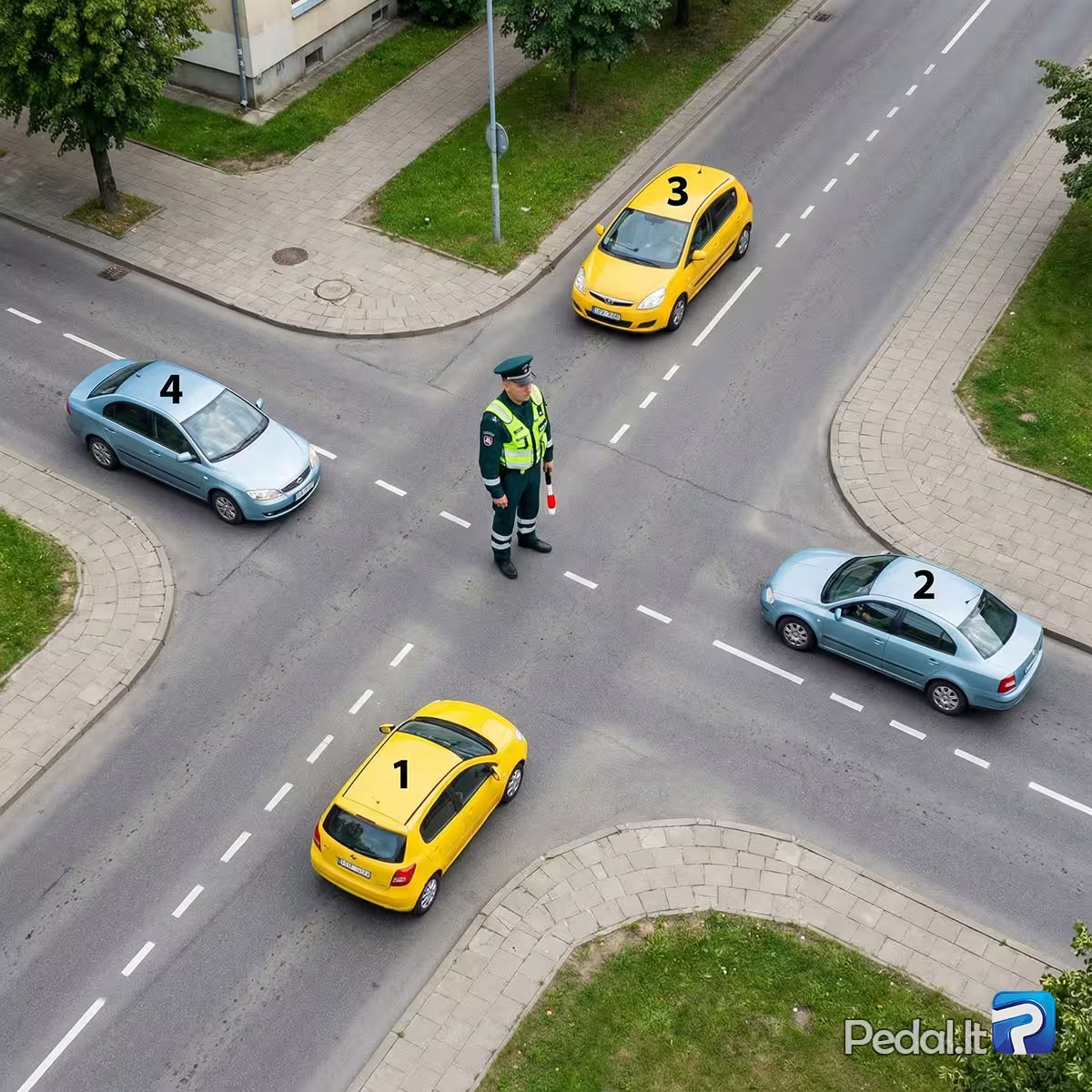
Is the third vehicle permitted to make a U‑turn?
The leading vehicle is not permitted to turn left and therefore may not make a U‑turn (RTR 77.1). When the signal arm is extended sideways or downward: 77.1.1 vehicles to the left and right may proceed straight or turn right; pedestrians may cross the carriageway; 77.1.2 vehicles and pedestrians ahead of and behind the signaling vehicle must not proceed. JB
1. Yes — it may.
2. No — it is not permitted.
3. Yes — but only after yielding to the first vehicle proceeding straight.
The requirement to 'Give Way' means:
3. Terms used in the Road Traffic Rules: 3.2. 'Give way' means that drivers must stop, or must not begin to drive or manoeuvre, if doing so would require other vehicle drivers to change their direction of travel or their speed.
1. That drivers on a side road must yield to vehicles approaching the intersection on a priority road.
2. That drivers must stop, or must not begin to drive or manoeuvre, if doing so would force other vehicle drivers to change their direction of travel or their speed.
3. That at an uncontrolled intersection drivers must yield to vehicles approaching from the right.
What should you do if you break another car's headlamp while manoeuvring in a car park?
This is considered a road traffic accident. First, try to locate the vehicle's owner and, together with them, complete the Road Accident Report Form. If you cannot find the owner, call the police — they can help locate the owner or come to the scene to record the accident. Also notify your insurance company of the accident as soon as possible. RTR 220. If there are no deaths or injuries and the involved road users agree on the circumstances and do not call the police to the scene, the parties must draw the accident sketch on the Road Accident Report Form, describe the circumstances in writing, and have the form signed by all involved. If none of the parties has the Road Accident Report Form, the circumstances and sketch may be recorded on a blank sheet of paper listing all involved road users, their vehicles and any witnesses, and confirmed by the signatures of all involved. If the circumstances are contested, the police must be called to the scene. RTR 221. Participants in a road accident must refrain from consuming alcoholic beverages, medicines, narcotic drugs or other intoxicating substances immediately after the accident until they have undergone, or have refused, testing for alcohol or impairment by narcotic, psychotropic or other substances. RTR 222. If the accident caused only property damage and the victim is not present at the scene, the person involved in the accident must immediately notify the victim, and if this is not possible — the police.
1. Locate the vehicle's owner; if you cannot find them, call the police.
2. If nobody notices, you may continue driving.
3. Fill in the Road Accident Report Form together with the car owner, if possible.
4. Notify your insurance company about the accident.
Another person may drive your vehicle if:
A driving licence of categories B and BE entitles the holder to drive a passenger car (RTR 14). It is prohibited to operate a vehicle if you do not have the legal right to do so, or if you are under the influence of alcohol, narcotic drugs, psychotropic substances, or other psychoactive substances. A person who is fatigued or ill must not drive if driving could endanger road safety. A vehicle must not be entrusted to anyone who is under the influence of the aforementioned factors or who is not authorized to drive that type of vehicle. When operating a vehicle, the driver must comply with the restrictions and endorsements indicated on the driving licence.
1. The person is at least 18 years old but does not possess a driving licence.
2. The person holds a category BE driving licence.
3. The person holds a category B driving licence.
4. The person holds only a category A driving licence.
When driving at night, a car's dipped-beam (low-beam) headlamps may dazzle oncoming drivers if:
Your vehicle may dazzle oncoming drivers for one or more of the following reasons: the headlamps are incorrectly aimed (too high); the headlamps are improperly fitted (not seated correctly in their sockets or the wrong type has been fitted); or the vehicle is carrying a heavy load in the boot or is fully loaded and the headlamps have not been lowered using the headlamp aiming/levelling control (if fitted).
1. The vehicle's headlamps are incorrectly adjusted (aimed too high).
2. The headlamps are improperly installed or the wrong type has been fitted.
3. The vehicle is carrying a heavy load in its boot.
Are you required to signal before starting to move?
RTR 82. A driver must indicate intended actions by using the right or left direction indicators, or by arm signals if the indicators are not available or are inoperative: 82.1 before starting to move off and before stopping; 82.2 before changing lanes, before and after overtaking, before and after bypassing an obstruction, before turning right or left, before making a U-turn, and before leaving a roundabout or an intersection where traffic circulates in a circle. JB
1. Yes — you must signal before starting to move.
2. No — you are not required to signal.
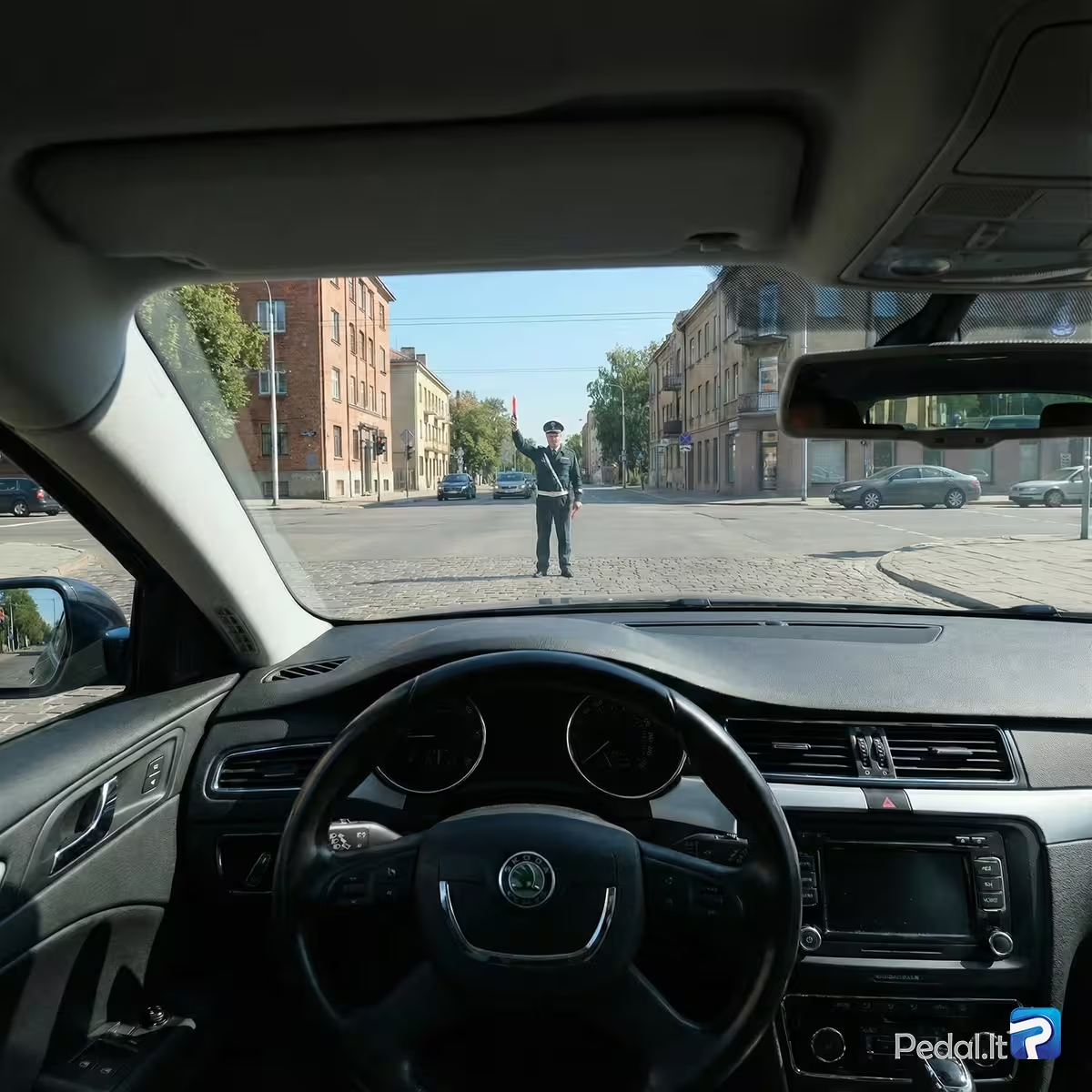
Are you permitted to proceed in this situation?
RTR 77. Signals given by traffic officers have the following meanings: 77.3. Arm raised upward: 77.3.1. All road users must not proceed in any direction.
1. Yes — you may proceed.
2. No — you must not proceed.
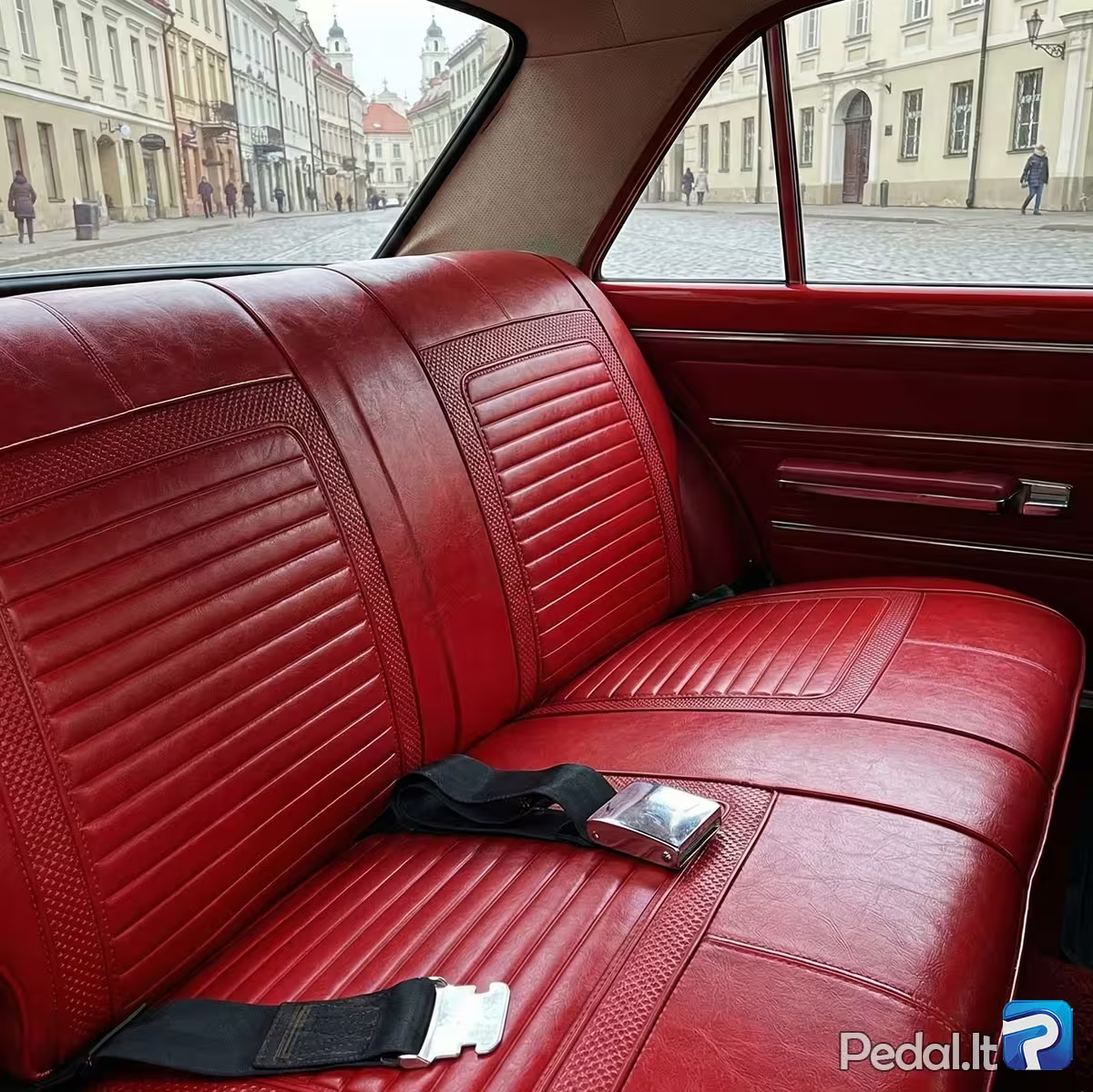
Must a rear-seat passenger wear a seat belt while the vehicle is in motion?
Drivers and all passengers must wear seat belts in vehicles that are equipped with them. In buses fitted with seat belts, a "Fasten Your Seat Belt" notice must be displayed in a clearly visible location in front of each seat, on the seat, or adjacent to it. It is recommended that all bus passengers be informed of the seat belt requirement — either verbally or by audiovisual means — before the journey begins.
1. Yes — you are required to wear a seat belt.
2. No — you are not required to wear a seat belt.
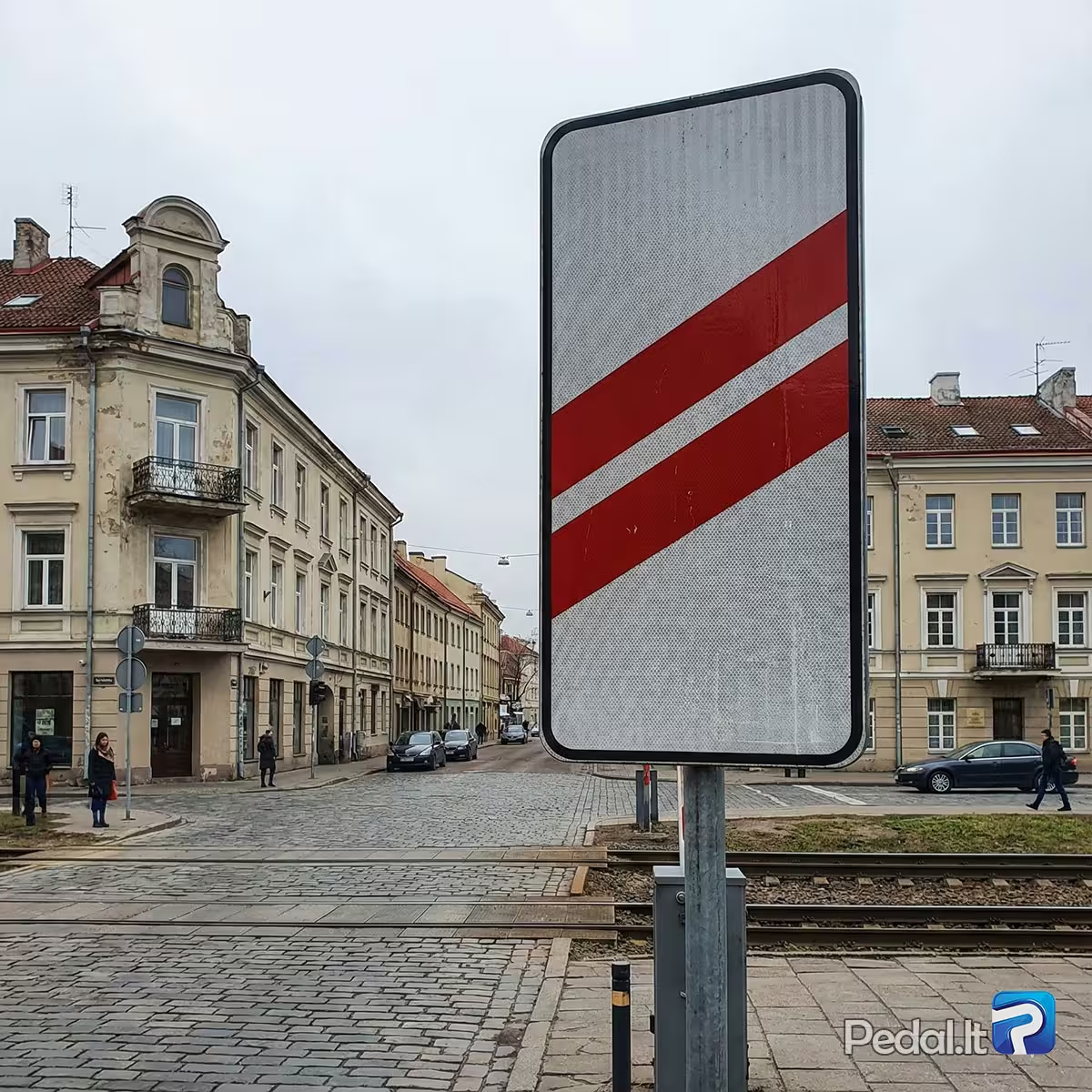
What does this traffic sign indicate?
141. "Level Crossing Ahead" — warns of a railway level crossing ahead located outside a built-up area. The sign is mounted on the right-hand side of the road.
1. It indicates a level crossing ahead located outside a built-up area.
2. It indicates a level crossing ahead located within a built-up area.
1 of 30 Task
Time left: 00:00:00
1
2
3
4
5
6
7
8
9
10
11
12
13
14
15
16
17
18
19
20
21
22
23
24
25
26
27
28
29
30