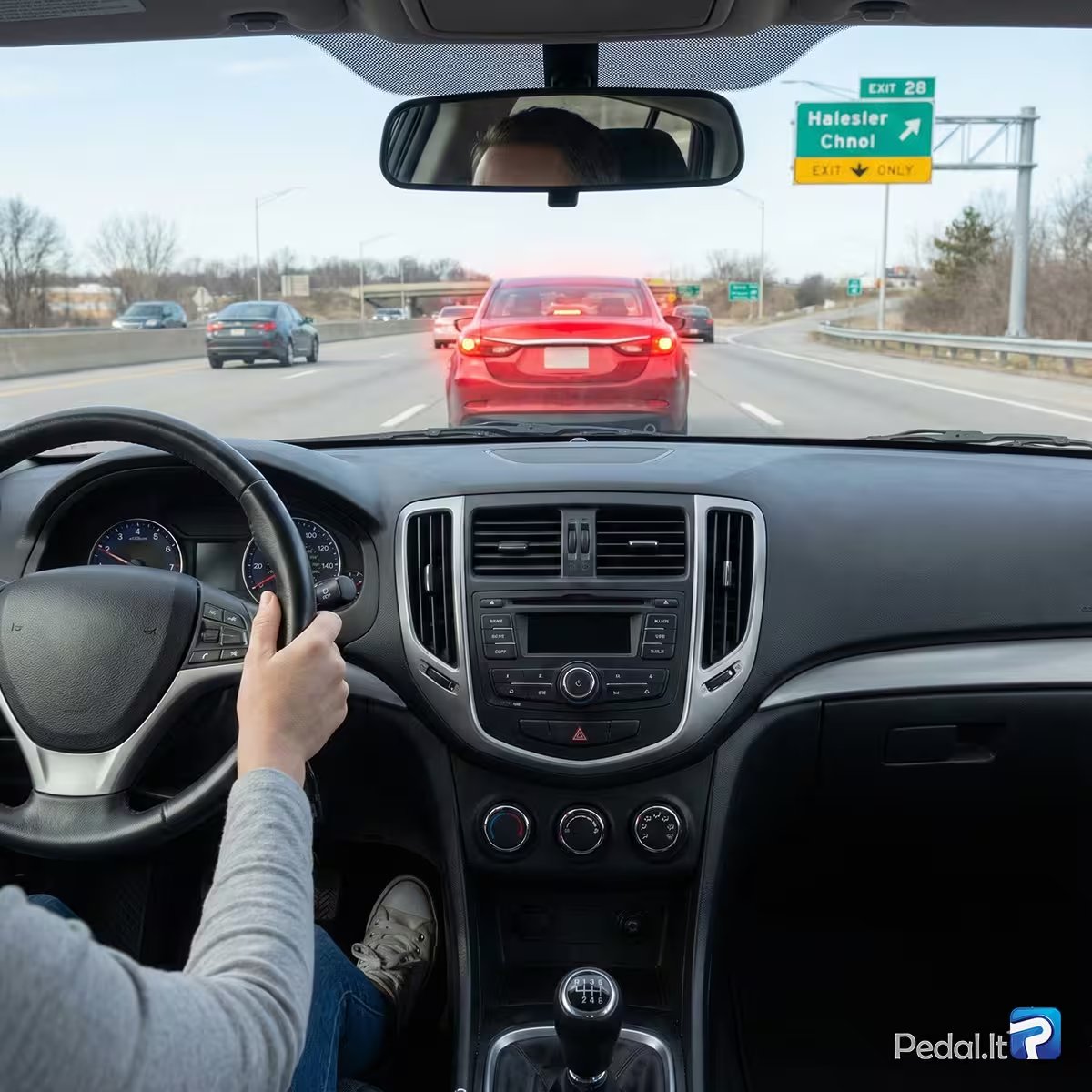
What should you do if you notice a vehicle braking in the distance ahead?
Explanation of terms: • To brake – press the brake pedal; the car slows down rapidly and stops before the expected obstacle. • To release the accelerator pedal – take your foot off the gas; the car gradually slows on its own but does not come to a complete stop and continues moving. • To drive without changing speed – keep the accelerator position the same; the car continues at a constant speed. RTR 128. If there is an obstruction or traffic safety is at risk, the driver must reduce speed or, if necessary, bring the vehicle to a complete stop or steer around the obstruction (if it can be seen) without creating a hazard for other road users.
1. Apply the brakes.
2. Take your foot off the accelerator and be prepared to brake.
3. Maintain your current speed.
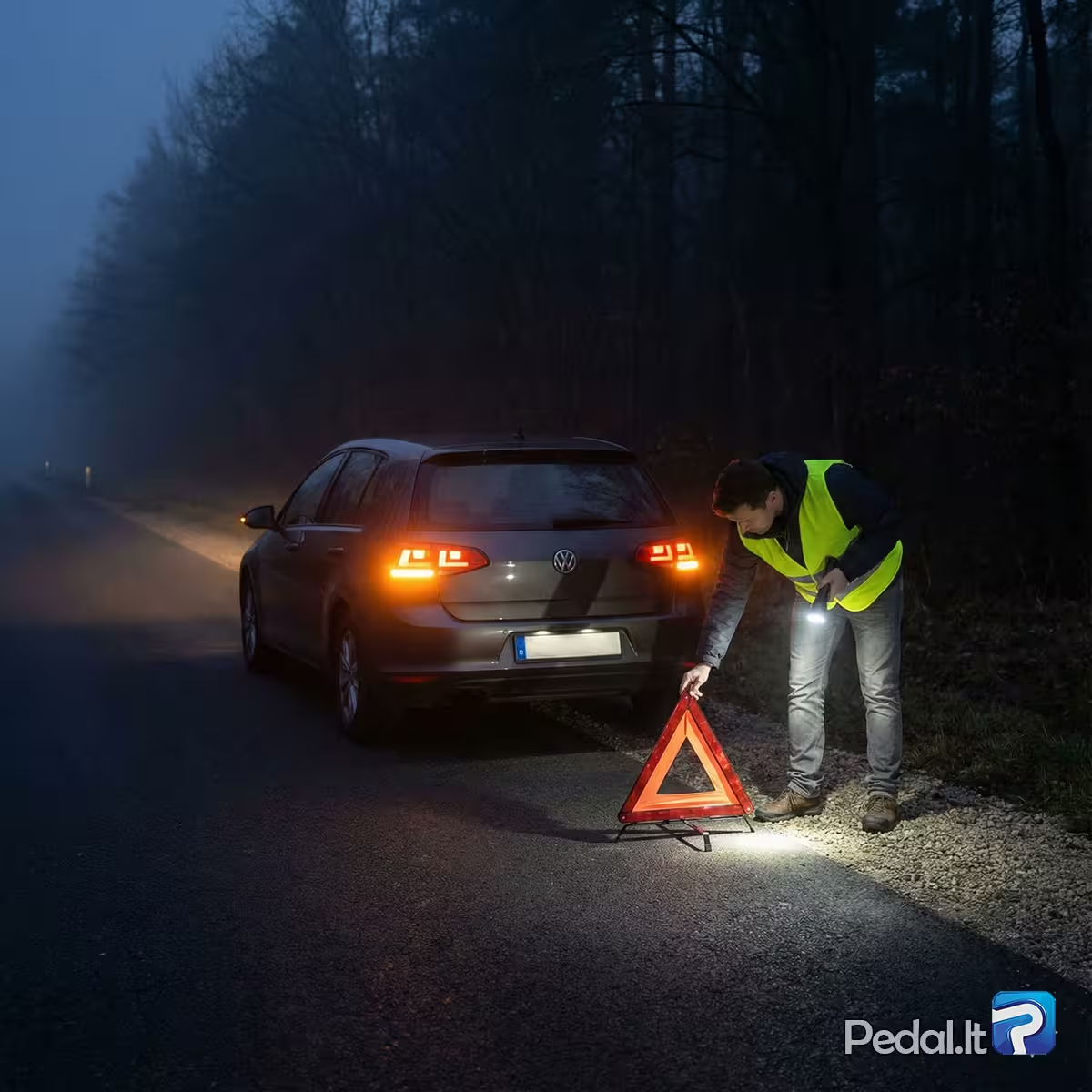
If you are forced to stop on an unlit section of road at night or in poor visibility because your position and brake lights have failed, what should you do?
RTR 92. If the emergency light signaling system is not fitted or is defective and an emergency stop is required where stopping or parking is prohibited, in the event of an accident, or where the stopped vehicle would be visible to other road users from less than 100 metres, the driver of a motor vehicle (other than a motor moped or a motorcycle without a trailer), a tractor, or a self‑propelled machine must immediately place an emergency stop sign on the carriageway side opposite the direction of travel: in built‑up areas not less than 25 m from the stopped vehicle, and outside built‑up areas not less than 50 m. If at least one rear position lamp is defective and the hazard warning lights are not working when driving at night or in poor visibility, an emergency stop sign must be affixed to the rear of the vehicle in order to continue driving.
RTR 151. When a vehicle is forced to stop where standing or parking is forbidden, drivers must switch on their hazard warning lights if available and/or place a warning triangle on the road as specified in Paragraph 92 of the Rules and remove their vehicle from the road as soon as possible. If drivers intend to stop their vehicle on unlit sections of the road during darkness or when visibility is poor, and hazard warning lights are not available or are inoperative, the vehicle must be parked off the carriageway. If this is impossible, the location must be marked as specified in Paragraph 92 of the Rules. JB
1. Turn the vehicle around and switch on the low beam headlights.
2. If it is not possible to park off the carriageway, switch on your hazard warning lights; if these are not available or are inoperative, place a warning triangle.
3. Indicate the stopped vehicle with bright flags.
Who has the right of way when the traffic lights at the intersection are not functioning?
Regulation RTR 167: When an intersection is controlled by traffic lights, drivers must obey the light signals regardless of any priority indicated by road signs. If the traffic lights are not operating or the amber (yellow) light is flashing, drivers must follow the priority indicated by the road signs.
1. No one has the right of way.
2. Drivers on the main (priority) road.
3. Drivers making a right turn.
4. Drivers on the side (secondary) road.
When driving a motor vehicle equipped with seat belts, may a rear-seat passenger travel without wearing a seat belt?
Only the driver may be exempt from wearing a seat belt within built-up or residential areas (for example, when maneuvering in a parking lot). RTR 196. All drivers and passengers must wear seat belts when travelling in vehicles equipped with them. If a bus is fitted with seat belts, visible informational signs reading "Fasten Your Seat Belt" must be displayed in front of, on, or next to every seat. It is recommended that all bus passengers be informed of the seat belt requirement verbally or by audiovisual means before the journey begins. RTR 198. Persons driving a vehicle in reverse or manoeuvring in a parking area within a built-up area are exempt from wearing seat belts. RTR 205. Persons who, for serious medical reasons, hold special permits issued by competent authorities are exempt from wearing seat belts; these permits must include an expiry date. JB
1. Yes — but only if the passenger holds a special medical exemption certificate issued by the competent authorities.
2. Permitted when driving within built-up areas.
3. Permitted only with the driver's consent.
4. Permitted when driving in residential zones.
Is it permitted to park a vehicle with a mass of 2.6 tonnes in the yard of an apartment building?
RTR 176. In residential areas road users must not: 176.3. leave parked lorries with a maximum permissible weight of more than 3.5 tonnes, buses with more than 12 seats, tractors, self-propelled machinery and trailers with a maximum permissible weight of more than 3.5 tonnes; RTR 178. The requirements of this Chapter also apply to the yards of apartment blocks. The provisions of Paragraph 175 and Subparagraph 176.4 of the Rules apply to car parks.
1. Yes, it is permitted.
2. No, it is not permitted.
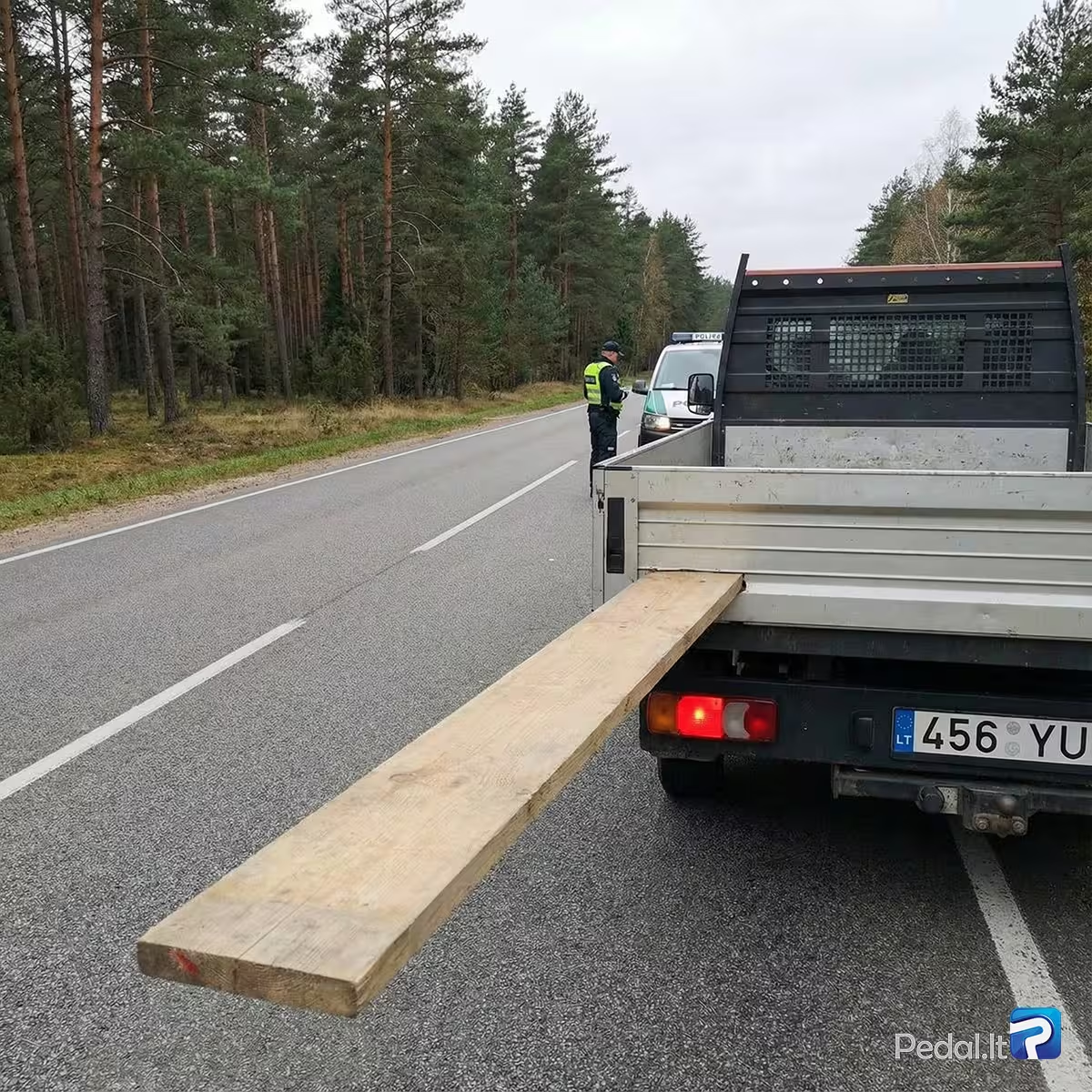
What is the maximum distance a load may extend beyond the rear of a vehicle without requiring marking?
Paragraph 210 of the Road Traffic Rules states that a load must be marked if it extends more than 1 metre beyond the front or rear of the vehicle. A load that extends up to and including 1 metre may remain unmarked; any extension beyond 1 metre must be marked. RTR 210: Any motor vehicle carrying a load which extends beyond the front and rear of the vehicle by more than 1 m or beyond the side of the vehicle must have the extremities of the load marked as provided for in Annex 4 to these Rules.
1. 0.5 m.
2. 1 m.
3. 1.5 m.
You should select a speed so that the stopping distance is:
If the stopping distance is longer than the visible portion of the road, you may collide with an obstacle. Therefore, the distance visible ahead must always exceed the stopping distance.
1. Longer than the visible distance ahead.
2. Shorter than the visible distance ahead.
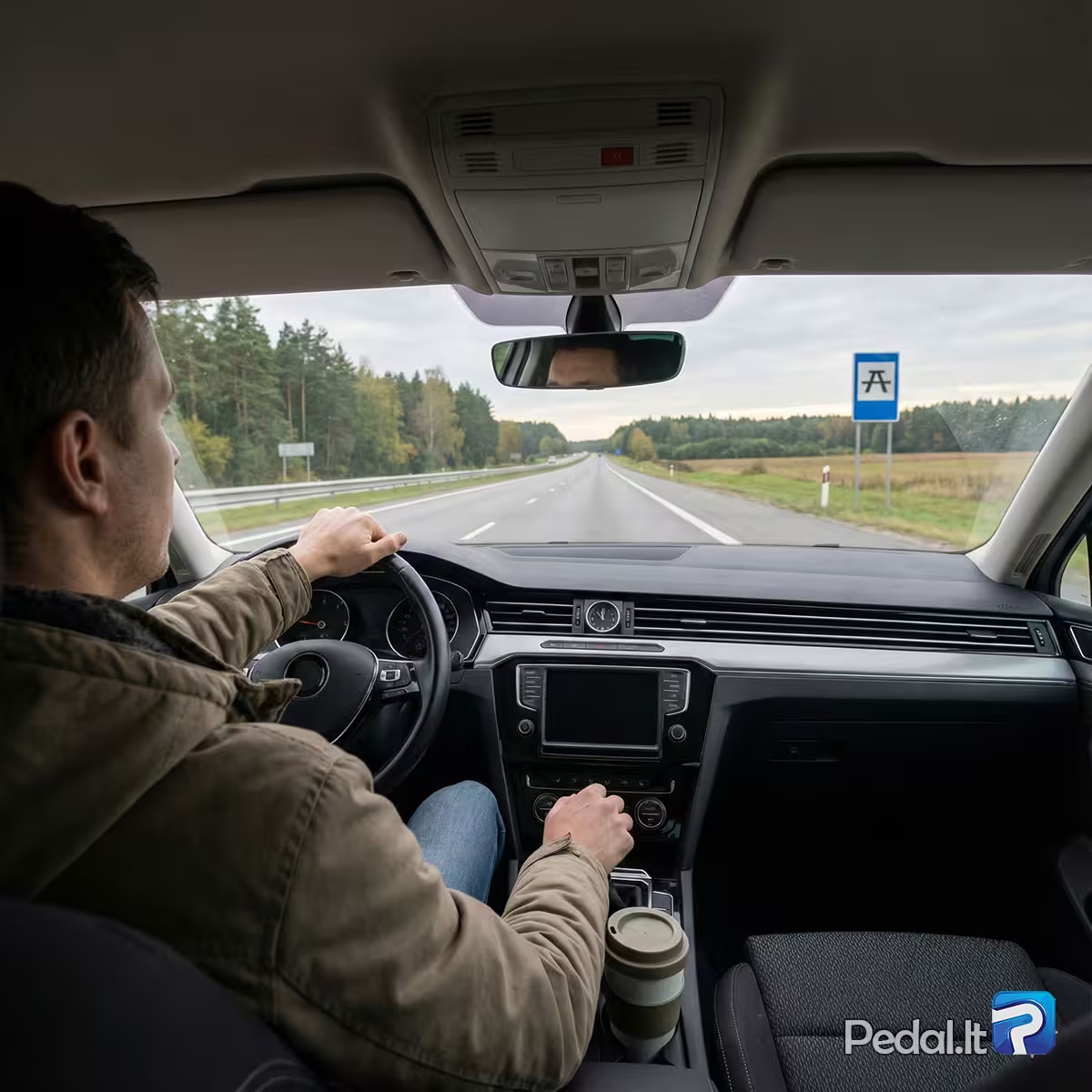
How should you behave during a long journey?
Long journeys can cause the driver to become distracted and fatigued for extended periods, which reduces reaction time and concentration and increases the risk of mistakes. It is recommended to take breaks every 1.5 to 2 hours or after driving approximately 200 kilometres. Sitting for long periods can lead to muscle tension and poor circulation, so getting out of the vehicle helps relax the body and improve well‑being. Exiting the car or opening a window to breathe fresh air can refresh the mind, restore energy and improve concentration.
1. Listen to loud music.
2. Maintain continuous conversation with your passengers to stay alert.
3. Leave the road or motorway and stop to rest; then exit the vehicle or open a window to breathe fresh air.
4. Routinely drink coffee to stay awake.
.avif)
What does a continuous yellow line painted along the edge of the carriageway indicate?
RTR Annex 3.1.4: A continuous yellow line along the carriageway edge indicates areas where stopping or parking is prohibited; it may also be used to mark lanes affected by roadworks. Vehicles must not cross this line. When a yellow continuous line is used together with white lane markings, drivers must obey the yellow line. RTR Annex 3.1.27: A yellow zigzag line marks a section or side of the road where stopping and parking are prohibited along the entire length of the zigzag.
1. Areas where only parking is prohibited.
2. Areas where both stopping (standing) and parking are prohibited.
Why might a vehicle skid or move sideways during braking?
Braking with uneven tire wear between the left and right sides is dangerous because it can cause the vehicle to slide off the road and overturn.
1. Uneven wear between the vehicle's left and right tires.
2. Irregularities in the road surface.
3. A brake on one wheel is not working, or braking force is uneven between sides.
When driving a passenger car with a trailer, what should you take into account when descending a hill?
The stopping distance increases when towing a trailer downhill because the trailer’s mass pushes the towing vehicle forward, adding momentum. Conversely, when driving uphill the trailer’s weight helps slow the vehicle and reduces the stopping distance.
1. A trailer will help the car stop more quickly.
2. The stopping distance will be reduced.
3. The stopping distance will increase.
4. The stopping distance will remain unchanged.
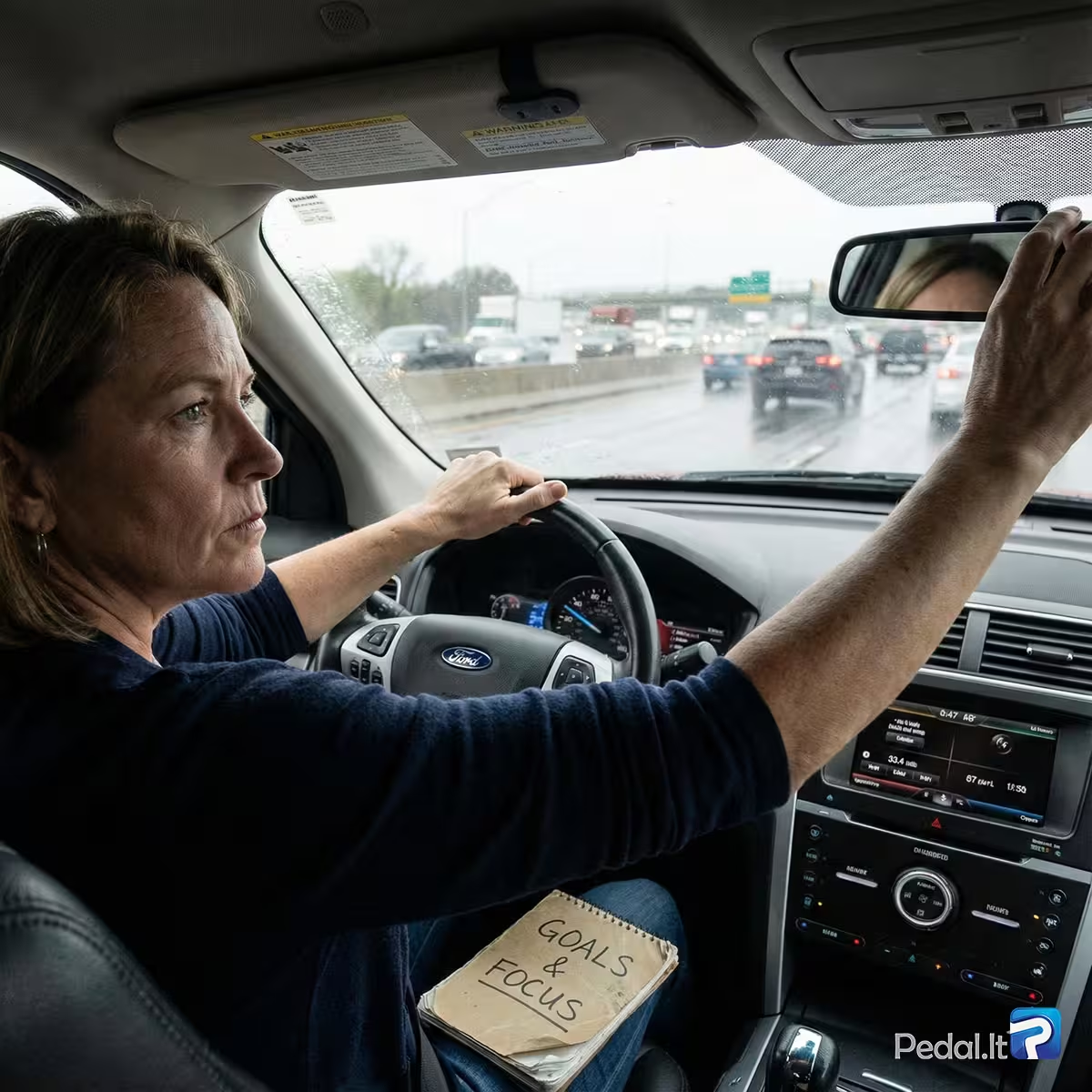
What are the primary characteristics of a driver's will?
The primary characteristics of a driver's will are discipline, determination, self-control, and perseverance. Disciplined drivers consistently obey the rules of the road (RTR). Determined drivers do not hesitate about decisions they make while operating a vehicle. A driver's self-control is demonstrated by remaining calm in complex traffic situations and by showing respect for other road users. Perseverance is the ability to overcome difficulties encountered on the road.
1. Discipline and determination.
2. Aggression and anger.
3. Self-control and calm temperament.
4. Indifference.
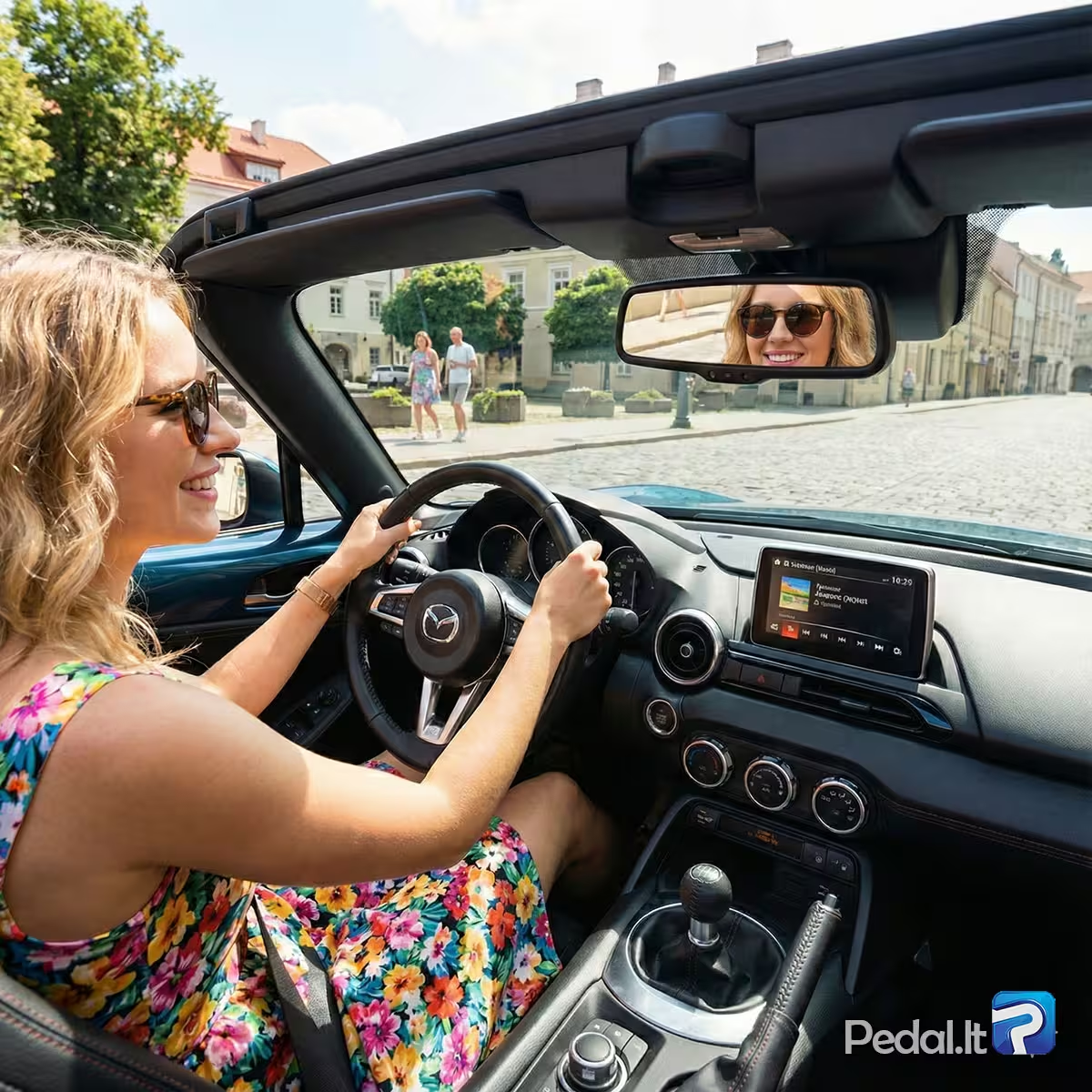
When driving safely, you must:
Always make safety your priority. That means thinking ahead, planning your actions, and anticipating the behavior of other road users.
1. Anticipate the actions of other road users.
2. Driving slightly above the speed limit.
3. Stay closer to the edge of the road.
4. Driving well below the maximum permitted speed.
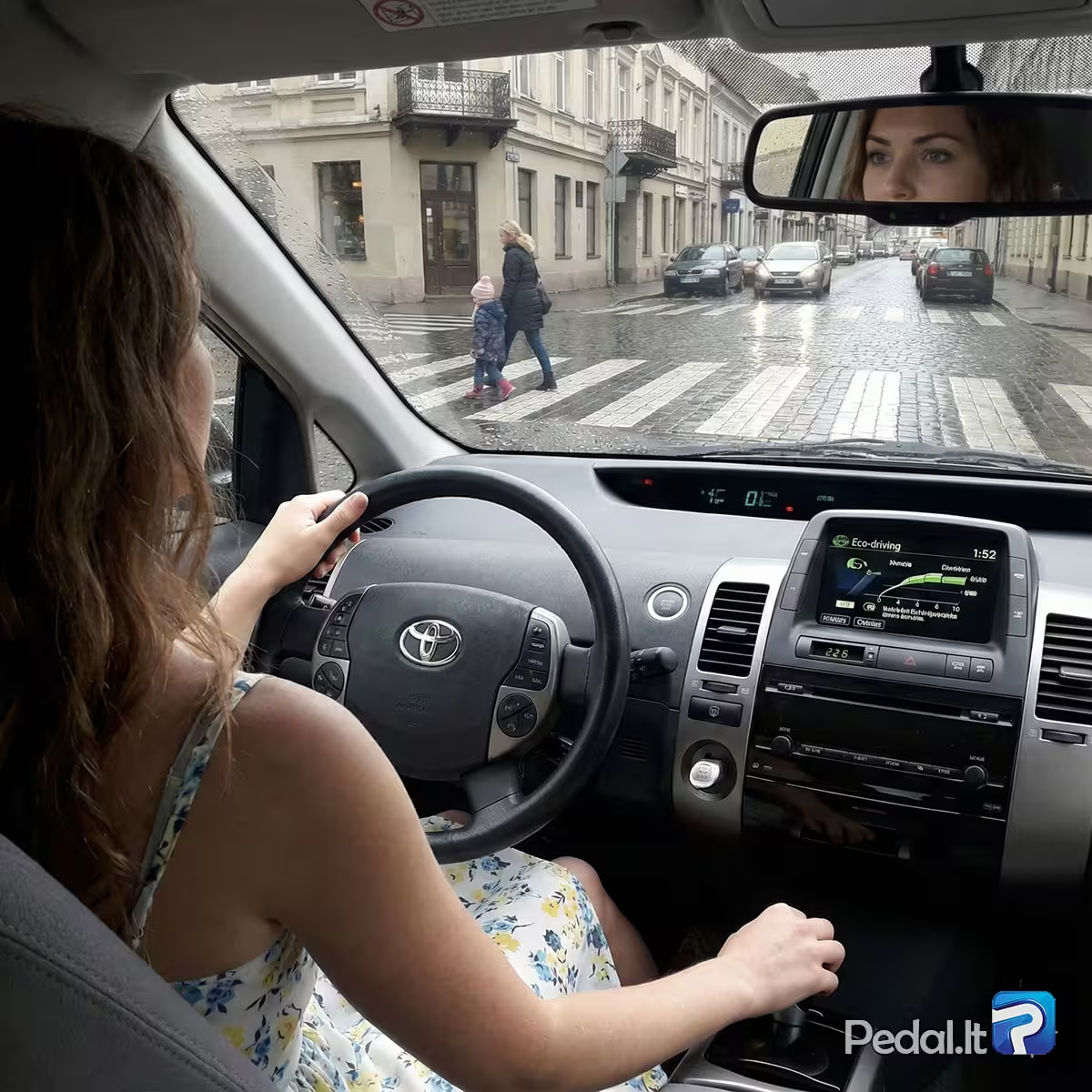
What should you do when approaching the pedestrian crossing?
Stationary vehicles positioned before a pedestrian crossing restrict visibility. Drivers must exercise extra caution and may continue only after confirming that no pedestrians entitled to right of way are at the crossing. (RTR 30.) When approaching an uncontrolled pedestrian crossing, a driver must reduce speed or stop before the crossing to give way to pedestrians who have already entered any lane, are walking in any lane, or were standing immediately at the carriageway edge waiting to step into a lane in the direction of the vehicle’s travel—or into any lane on a road with one lane in each direction. Drivers must be especially careful at night, in poor visibility, or whenever the crossing is not clearly visible from the driver’s position, and must ensure there are no pedestrians who should be given way.
1. You should reduce your speed.
2. If necessary to verify that no pedestrians are present, you will stop before the crossing.
3. You will pass the stationary vehicle at the permitted speed because you do not see any pedestrians on the crossing.
What is the purpose of antifreeze in a vehicle?
1. It is used to fill the brake system.
2. It is used to fill the windscreen washer reservoir.
3. It is used to fill the engine cooling system.
Are you allowed to drive across a level crossing if the crossing attendant is facing you and holding a flag above their head?
RTR 168. Before entering and crossing a level crossing, road users must obey road signs, road markings, the position of barriers, traffic lights, audible warnings, and the signals of level crossing attendants/controllers. Before entering a level crossing, a road user must always ensure that no rail vehicle is approaching the level crossing. It is recommended that children under 12 be accompanied by an adult when crossing a level crossing.
1. Crossing the level crossing in this situation is prohibited.
2. Driving across the level crossing is permitted.
3. Crossing is permitted only after ensuring that no rail vehicle is approaching the level crossing.
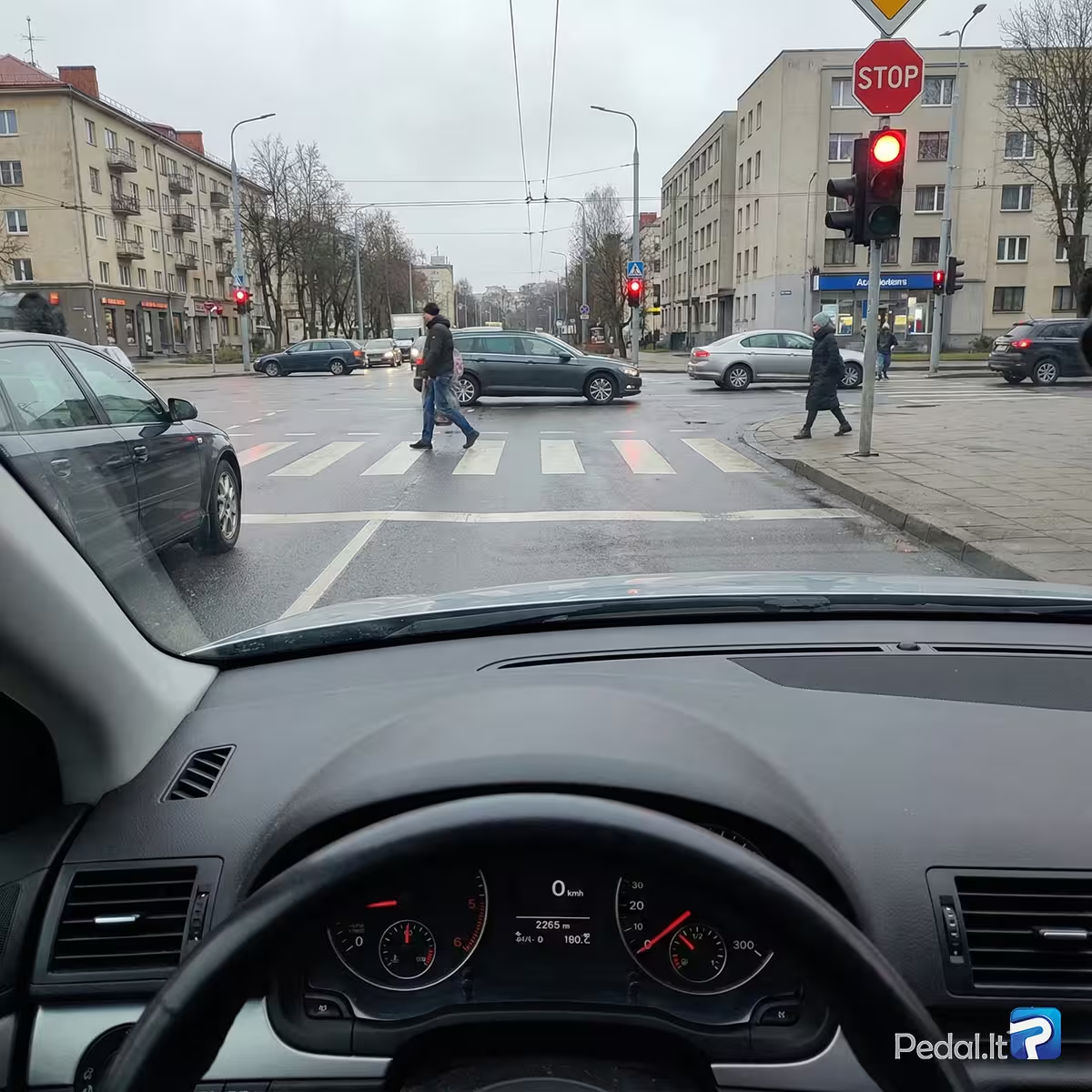
Where must the driver stop, according to traffic rules, when a prohibitory traffic signal or a traffic regulator's signal is in effect?
RTR 165 p. When a prohibitory traffic signal or a traffic regulator's signal is displayed, the driver must stop before the 'Stop line' road sign and/or before the marked stop line. If neither is present, the driver must stop before the traffic light, before the junction or the connecting carriageway, before a pedestrian crossing, or before a bicycle crossing, in such a position that does not obstruct vehicular or pedestrian traffic.
1. Before the 'Stop line' road sign and/or before the marked stop line.
2. So as not to obstruct vehicular traffic.
3. So as not to obstruct pedestrian traffic.
How many motor vehicles are you permitted to tow at one time?
RTR 217. The following vehicle towing and transport practices are prohibited: 217.6. Towing more than one motor vehicle, tractor, or self-propelled vehicle.
1. One vehicle.
2. Two vehicles.
3. Three vehicles.
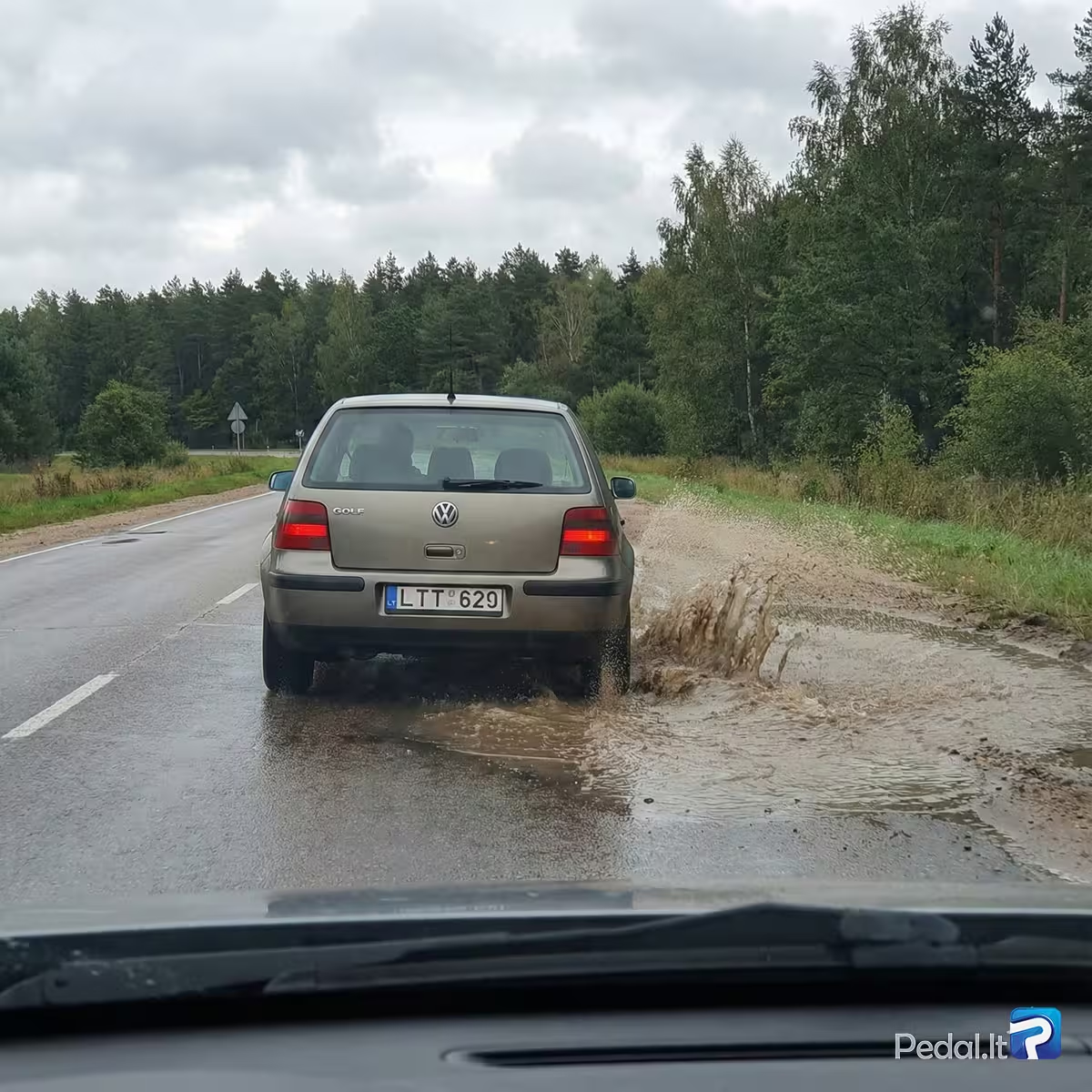
If either the left or right wheel of your vehicle has entered a body of water (for example, a puddle), you must:
When a wheel travels through standing water, the vehicle can aquaplane (ride on a layer of water), causing loss of traction and possible skidding. Hold the steering wheel firmly and gradually reduce speed to regain traction and maintain control.
1. Apply the brakes immediately.
2. Grip the steering wheel firmly.
3. Increase your speed.
What is the minimum age at which a person is permitted to drive livestock or birds on a road?
Driving livestock or birds on a road is uncommon, but drivers should know the minimum permitted age because it is specified in the Road Traffic Rules. RTR 5. Road users must be familiar with the Law of the Republic of Lithuania on Road Traffic Safety, know the Rules, and comply with them. RTR 67. Only persons over the age of 14 may drive an animal-drawn vehicle, drive livestock or birds, or ride an animal on the road.
1. 8
2. 12
3. 14
4. 16
When must passengers fasten their seat belts?
RTR 196. All passengers and the driver must wear seat belts when traveling in vehicles equipped with them. If a bus is fitted with seat belts, visible signs reading "Fasten Your Seat Belt" must be displayed in front of every seat, on the seat, or next to it. It is recommended that all bus passengers be informed of the requirement to wear seat belts verbally or by audio-visual means before the journey begins. 198. Within built-up areas, a driver is permitted not to fasten the seat belt while reversing or when in parking areas. 205. Persons who, for serious medical reasons, hold special permits issued by competent authorities are exempt from wearing seat belts. These permits must include an expiry date.
1. Only when traveling on mountain roads.
2. At all times when traveling in a vehicle.
3. Only when traveling outside built-up areas.
4. Only when traveling on motorways.
At what age can you obtain a category A (motorcycle) driving licence?
Under Article 23 of the Law on Road Traffic Safety, there are two ways to obtain a category A (motorcycle) driving licence. You may obtain category A from the age of 24 without prior experience. Alternatively, from the age of 20 you may obtain category A if you have at least two years' qualifying experience riding category A2 motorcycles. The two-year A2 experience requirement does not apply to applicants aged 24 or older. Separately, the right to drive tricycles (three-wheelers) with power exceeding 15 kW is granted from the age of 21.
1. From the age of 24.
2. From the age of 20, provided you have two years' experience riding category A2 motorcycles.
How does fatigue affect a driver?
When a driver operates a vehicle while fatigued, their memory and attention are impaired. They take longer to notice signals and assess situations, driving performance declines, reaction times are delayed, and vehicle control deteriorates.
1. Attention diminishes.
2. Fatigue has no effect on driving.
3. Reaction time is delayed.

A traffic officer directing vehicles stands with their arms lowered. Are you permitted to proceed straight through the intersection when the traffic light displays a red signal?
1. Yes
2. No
What are the common signs that a car battery is dead?
Select the signs that indicate the car battery may be dead.
1. When attempting to start the car, the starter motor does not engage or cranks very slowly.
2. When attempting to start the car, the dashboard lights dim or go out.
Which description corresponds to a "Bicycle path"?
Law on Road Traffic Safety, Art. 2, para. 11. "Bicycle path" — a road or part of a road intended for the movement of bicycles, motorcycles and electric micromobility vehicles, marked with appropriate road signs. A bicycle path must be separated from the roadway or its lanes by engineering measures.
1. A portion of the roadway, or a separate path, designated for bicycle and moped traffic.
2. A road or section of road intended for the movement of bicycles, motorcycles and electric micromobility vehicles, marked by appropriate road signs.
3. A portion of the road designated for shared pedestrian and bicycle use.
How can you conserve fuel and reduce environmental pollution?
Carrying a 100 kg load in city driving increases fuel consumption by about 0.5 L per 100 km. The air conditioner consumes approximately 0.5–1.0 L/100 km; a fan consumes about 0.08–0.3 L/100 km; the radio about 0.06–0.21 L/100 km; modern audio systems about 0.2–0.7 L/100 km. JB
1. Remove unnecessary items from the vehicle before driving.
2. Use the air conditioner only when necessary.
3. Use electrical accessories only when necessary.
Actions to take when driving in fog with visibility under 300 metres:
Selecting an appropriate heating/ventilation setting will reduce condensation on the windows; using the windscreen wipers will clear fogged windows and maintain good visibility; switching on the fog lamps will make the road more visible and help other road users notice you. RTR 98. Fog lamps may be used only when visibility is seriously reduced, and the front fog lamps may be used in the event of failure of the front left dipped‑beam headlamp. Poor visibility means a situation caused by weather conditions or other phenomena when road visibility is less than 300 metres, regardless of road parameters.
1. Select the appropriate heating/ventilation mode.
2. Occasionally use the windscreen wipers to clear fogged-up windows.
3. Switch on the fog lamps.
Your car veers to one side only while braking (it travels straight when not braking). What is the likely cause?
Incorrect tyre pressure usually causes the vehicle to pull to one side during normal driving, not only when braking. If the car only pulls while braking, uneven braking is the likely cause — for example, a seized caliper, sticking pads, or poor adjustment causing one side to brake harder. Low brake fluid will reduce braking effectiveness or cause pedal problems, but it typically does not make the car swerve to one side only when braking.
1. Tire pressures are incorrect or uneven.
2. The wheel brakes are applying unevenly.
3. Brake fluid level is insufficient.
Carrying passengers is permitted in:
Towing a vehicle with a trailer is not prohibited, and carrying passengers in a towed passenger car is allowed. According to RTR 195 and clause 195.4, drivers must not carry passengers inside a towed bus, trolleybus, or in the cargo body of a goods vehicle. If the front or rear of a vehicle rests on a supporting device, no passengers may be inside or in the body of the towed vehicle.
1. Inside a towed bus.
2. Inside a car being towed together with its trailer.
3. Inside a passenger car being towed without a trailer.
4. Inside a car that is being towed with its front lifted on a special support device.
1 of 30 Task
Time left: 00:00:00
1
2
3
4
5
6
7
8
9
10
11
12
13
14
15
16
17
18
19
20
21
22
23
24
25
26
27
28
29
30