What must you do on an unlit road at night when repairing your car?
RTR 151. If a vehicle is forced to stop where standing or parking is prohibited, the driver must switch on the hazard warning lights if available and/or place a warning triangle on the road as specified in Paragraph 92 of the Rules, and remove the vehicle from the road as soon as possible. If the driver intends to stop on unlit sections of road during the hours of darkness or when visibility is poor, and the hazard warning lights are not available or are inoperative, the vehicle must be parked off the carriageway. If that is impossible, the stopping location must be marked as specified in Paragraph 92 of the Rules.
RTR 92. If the emergency light signalling system is not fitted or is defective and an emergency stop is required where stopping or parking is prohibited, in the event of an accident, or where the stopped vehicle would be visible to other road users from less than 100 metres, the driver of a motor vehicle (other than a motor moped or a motorcycle without a trailer), a tractor or a self-propelled machine must immediately erect an emergency stop sign on the side of the carriageway opposite the direction of travel: in built-up areas not closer than 25 m, and outside built-up areas not closer than 50 m to the stopped vehicle. If at least one rear position lamp is defective and the emergency light signal does not work when driving in the dark or in poor visibility, an emergency stop sign must be affixed to the rear of the vehicle in order to continue driving.
Law on Road Traffic Safety art. 13.14. The driver of a motor vehicle, tractor or self-propelled machine who stops at night on an unlit road or in conditions of poor visibility, except in designated parking spaces, must wear a high-visibility vest with reflective elements.
JB
1. Switch on the hazard warning lights (emergency flashers).
2. Place a warning triangle on the road if the hazard lights are unavailable or inoperative.
3. Wear a high-visibility vest with reflective elements.
4. Station a person to warn other drivers by waving their arms.
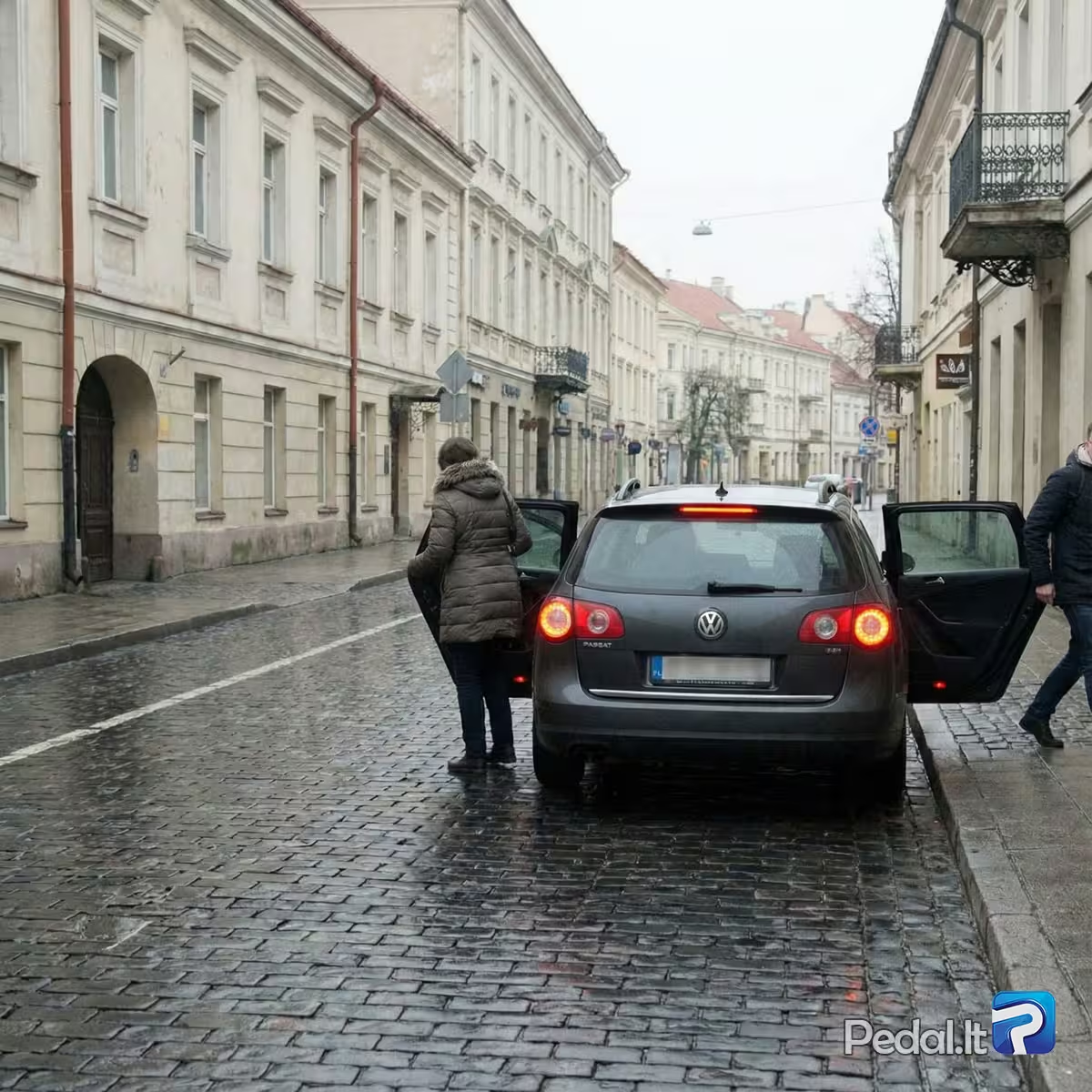
Is it permitted for passengers to board or alight from a vehicle from the roadway side?
Passengers may board or alight from the roadway side only when it is impossible to do so from the pavement (sidewalk) or hard shoulder, and only if it can be done safely without obstructing other road users.
1. It is prohibited.
2. It is allowed.
3. Yes — permitted only when boarding or alighting from the pavement (sidewalk) or hard shoulder is not possible.
When must cargo be marked with identification signs and illuminated during darkness or reduced visibility?
Any part of a load that protrudes beyond the vehicle's lateral profile, however slightly, must be marked. Specifically, loads extending more than 0.5 m beyond the vehicle's sides must be identified (Annex 4, §12). Extremities projecting more than 1 m beyond the front or rear of the vehicle, any parts extending laterally beyond the vehicle, and the extremities of vehicles wider than 2.6 m must display distinctive markers: square plates 400 mm on a side with alternating diagonal reflective stripes 50 mm wide in white and red. These plates must be mounted between 0.4 m and 1.6 m above ground level. During darkness or poor visibility, vehicles with protruding points must also show lights on those points: white at the front, amber on the sides, and red at the rear. JB
1. When the load projects more than 0.5 m beyond the rear of the vehicle.
2. When the load projects more than 1 m beyond the front or rear of the vehicle.
3. When the load projects more than 0.5 m beyond the side of the vehicle.
4. When the load projects any distance beyond the vehicle's sides.
What is the purpose of an anti-lock braking system (ABS) in a vehicle?
An anti-lock braking system (ABS) prevents wheel lockup during heavy braking, helping to maintain tire traction and steering control—especially on slippery surfaces. When wheels lock, the vehicle can skid and the driver may lose the ability to steer. ABS modulates brake pressure to preserve grip and directional stability.
1. Because it prevents the wheels from locking during sudden or hard braking, preserving traction and steering control.
2. Because it helps prevent vehicle theft.
3. Because it prevents the vehicle from rolling downhill.
Is turning around permitted on the bridge?
Traffic Regulations (RTR) 116. Turning around is prohibited under clause 116.4: on and under bridges, overpasses, and viaducts. JB
1. Yes, it is permitted.
2. No, it is not permitted.
.avif)
Which driver will proceed through the intersection first?
RTR 154. At a controlled intersection, drivers on a side road must yield to vehicles on the priority road.
1. The driver of the blue car.
2. The driver of the red car.
What must drivers do if stopped by an inspecting officer?
RTR 16. A driver must stop the vehicle when ordered by an inspecting officer. The driver of a motor vehicle, tractor or self-propelled vehicle shall carry, and upon request of the inspecting officer present, a valid driving licence or a document certifying the right to drive tractors and/or self-propelled vehicles or military equipment (including tactical and logistical vehicles) or their combinations with trailers; the vehicle registration documents; the certificate of the compulsory roadworthiness test and the report of the most recent technical inspection for vehicle categories M2, M3, N2, N3, O3, O4 and wheeled tractor categories T1b, T2b, T3b, T4.1b, T4.2b, T4.3b, T5; the certificate (policy) of compulsory motor third-party liability insurance; and any other documents required by the laws of the Republic of Lithuania and these Rules (except in cases where the Law on Road Traffic Safety exempts the driver from carrying certain documents). The driver must also allow the inspecting officer to check the readings of validated meters that record driving time and rest periods. Documents shall be presented without leaving the vehicle. The driver may leave the vehicle only with the inspecting officer's permission. RTR 91. If hazard warning lights are fitted in a vehicle, they must be switched on: 91.3. when the vehicle is stopped by an inspecting officer;
1. Exit the vehicle only with the inspecting officer's permission.
2. Present the requested documents to the inspecting officer without leaving the vehicle.
3. Exit the vehicle and deliver the documents to the inspecting officer.
4. Stop the vehicle at the location indicated.
5. Turn on the vehicle's hazard warning lights.
.avif)
If, when starting to move, your vehicle's wheels spin while the vehicle remains stationary:
To drive a motor vehicle economically and sensibly, begin moving smoothly and steadily. Where possible, reduce your speed gradually and avoid unnecessary abrupt actions unless they are essential (e.g., emergency braking because of an unexpected obstacle on the road).
1. It is uneconomical — it increases fuel consumption and accelerates tyre wear.
2. The tyre squeal or wheel spin disturbs other road users.
3. It is regarded as normal and acceptable.
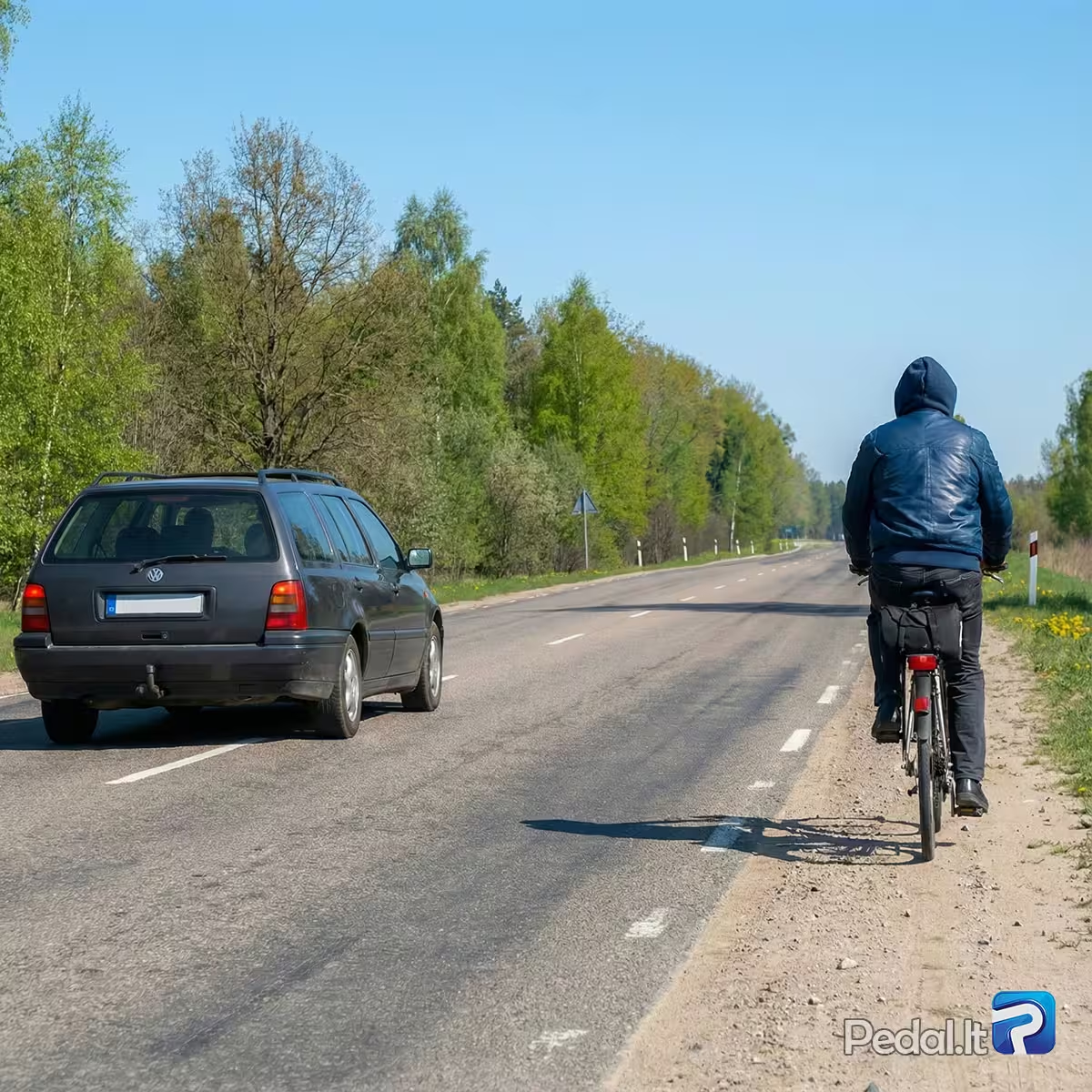
Cyclists must not perform any of the following:
RTR VIII. Rules for Cyclists
64. Cyclists must not:
64.1 Ride on the carriageway except in cases expressly permitted by these Rules.
64.2 Ride on motorways and expressways.
64.3 Ride without holding the handlebars with their hands.
64.4 Carry passengers if the bicycle is not fitted with a designated passenger seat.
64.5 Carry, tow, or push loads that impede control of the bicycle or pose a hazard to other road users.
64.6 Be towed by other vehicles.
64.7 Tow other vehicles, except for trailers specially designed for bicycles.
64.8 Hold on to a moving vehicle while cycling.
64.9 Cross the carriageway by riding over a pedestrian crossing. JB
1. Carrying, towing, or pushing any load that impairs control of the bicycle or endangers other road users.
2. Riding on bicycle paths after dark.
3. Riding in bicycle lanes marked on the sidewalk.
4. Riding at the edge of the carriageway during daylight hours.
How can you confirm that all the lights on your vehicle are functioning?
Drivers should check that all vehicle lights are working before every long journey and at least once every six months. Properly functioning lights help you assess road conditions accurately and reduce the risk of accidents.
1. Turn on all vehicle lights and, each time you exit the car, walk around it to verify that they are illuminated.
2. You do not need to inspect your car's lights; instead, replace the bulbs every six months.
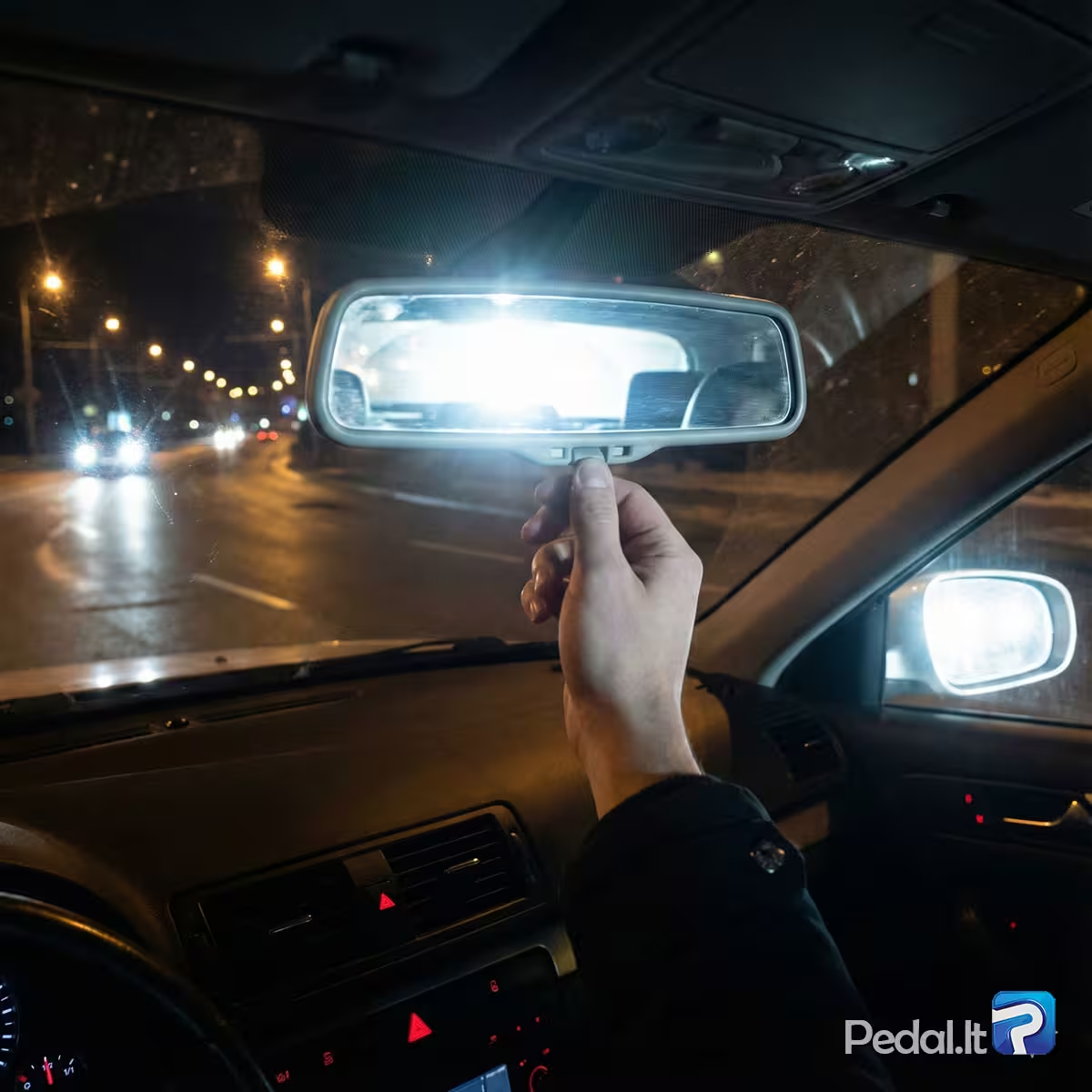
What should you do if a vehicle behind you is dazzling you with its lights?
If bright headlights are reflected in your rearview mirror, in addition to the measures listed in Paragraph 96 you can quickly activate the mirror's anti‑dazzle setting by flipping the switch at its base (if fitted). This engages the automatic dimming function and reduces glare. According to RTR 96, a dazzled driver must turn on the hazard warning lights, reduce speed without changing direction, and stop if necessary.
1. You will look away.
2. If possible, activate the rearview mirror's automatic dimming function.
3. You will turn on your hazard warning lights.
4. You will reduce speed and stop if necessary.
What is the primary purpose of a vehicle's main brakes?
A vehicle's braking system is intended to slow the vehicle, bring it to a complete stop, and hold it stationary. Braking distance should be kept as short as possible, and you must maintain control of the vehicle while braking.
1. Slow the vehicle to bring it to a complete stop and hold it stationary on a downhill slope.
2. Maintain a safe, controlled speed when driving downhill.
What must you do first before overtaking?
RTR 136. Drivers should avoid unnecessary overtaking maneuvers. Before overtaking, drivers must take extra precautions and ensure that: 136.1 no driver following has already begun to overtake them; 136.2 the driver of the vehicle to be overtaken is not signaling a left turn; 136.3 the portion of the lane required for overtaking is clear and the maneuver will not obstruct oncoming traffic or pedestrians on the carriageway; 136.4 a safe distance from the vehicle being overtaken will be maintained throughout the maneuver; 136.5 after overtaking, the driver can safely return to the original lane without obstructing the overtaken vehicle.
1. Ensure the road ahead is clear.
2. Shift to a lower gear.
3. Increase your speed.
4. Reduce your speed.
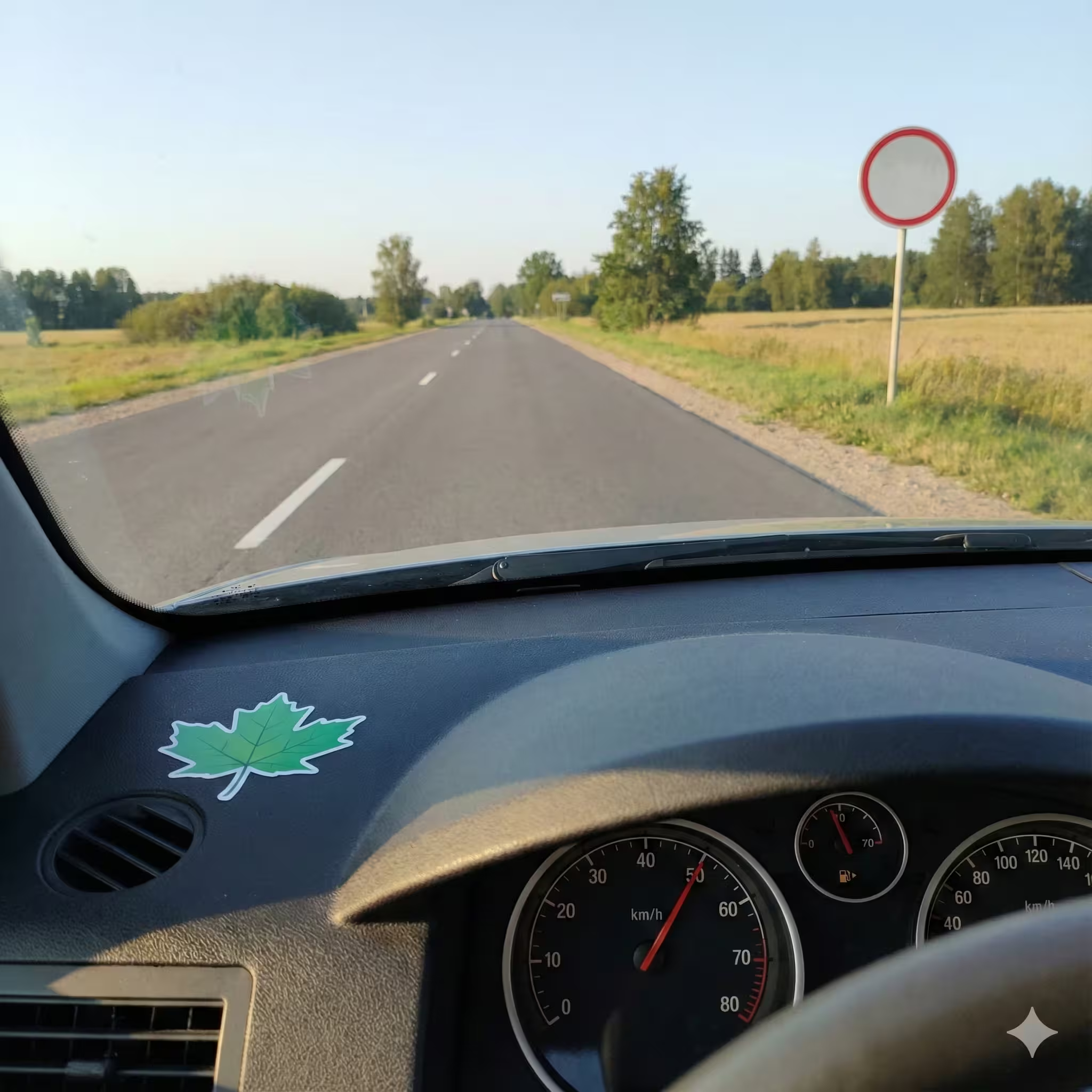
What is the maximum permitted speed on asphalt or concrete roads outside built-up areas for drivers with less than two years' driving experience?
131. The following speed limits apply outside built-up areas: 131.2. Vehicles of categories A1, A2, A or B driven by novice drivers, persons learning to drive or taking a practical driving test, and buses (including school buses) are subject to the following maximum speeds: 100 km/h on motorways, 90 km/h on highways, 80 km/h on roads with asphalt or concrete pavement, and 70 km/h on other roads.
1. 50 km/h
2. 80 km/h
3. 70 km/h
4. 90 km/h
Braking distance depends on:
Braking distance depends on the condition of the tyres, the vehicle's speed, the road surface, the vehicle's weight, the force applied to the brake pedal, and the condition of the braking system. Less worn tyres provide more effective braking. Lower speeds reduce stopping distance. Heavier vehicles require a longer distance to stop. Rougher road surfaces increase traction and therefore shorten stopping distance. Applying greater pressure to the brake pedal generally shortens stopping distance, provided you avoid locking the wheels.
1. The condition of the tyres and the vehicle's speed.
2. Whether the vehicle is front-wheel drive or rear-wheel drive.
3. The condition of the brake pads.
4. The condition of the road surface.
What would you do if your engine suddenly failed and stopped running?
Towing a vehicle whose engine has failed or stopped running is not prohibited. However, if the engine is not operating, the brakes may not function correctly because the brake servo will not work, and steering will be more difficult because the power steering will not operate. When using a dolly to tow a vehicle, towing is prohibited if only part of the vehicle rests on the dolly; it is permitted only when the entire vehicle rests on the dolly. RTR 217. The following vehicle towing and transporting practices are prohibited: 217.1 towing a vehicle with a broken steering mechanism using a tow rope or a rigid tow bar; 217.10 carrying a vehicle with part of it resting on a dolly.
1. You will tow the vehicle using a rigid tow bar at the earliest safe opportunity.
2. You will tow the vehicle with only part of it supported on a dolly.
3. You will exercise caution when towing the vehicle with a tow rope, because the brakes and power steering will not function properly.
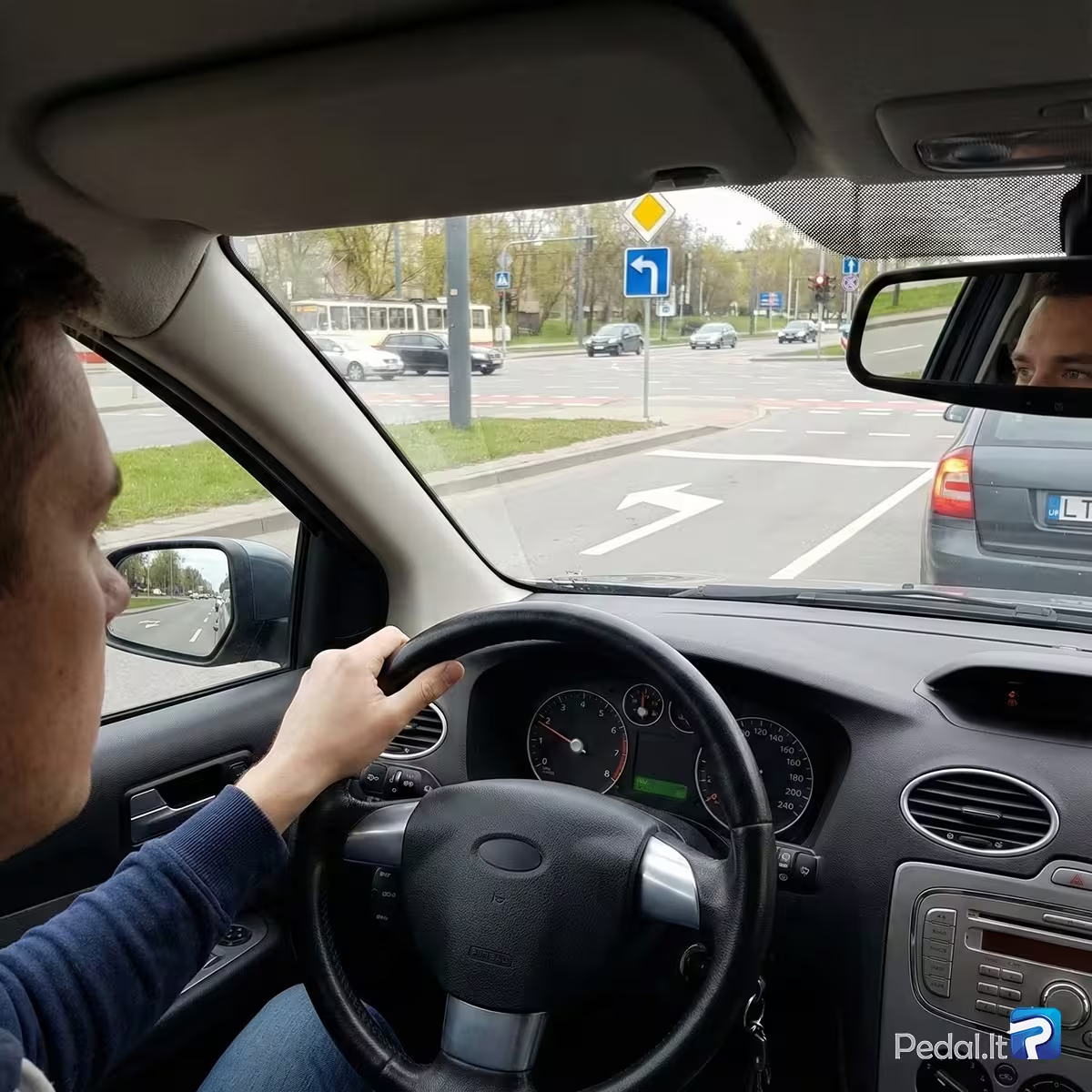
You are approaching a bend in the road:
Drivers approaching a road bend should be aware the bend may be sharper than it appears. Choose a safe speed and the correct road position to avoid entering the oncoming lane. A safe speed depends on all circumstances: weather, road and vehicle condition (including load), driver experience and fitness. According to RTR 127, drivers must not exceed the legal speed limit. When selecting speed, consider the terrain, road and vehicle condition, load, weather and traffic density so you can stop safely for any foreseeable obstacle. Drivers must slow down and stop when conditions require, especially if visibility is poor.
1. You will increase your speed midway through the bend.
2. You will reduce your speed before the bend.
3. You will reduce your speed while in the middle of the bend.
4. You will not change your speed.
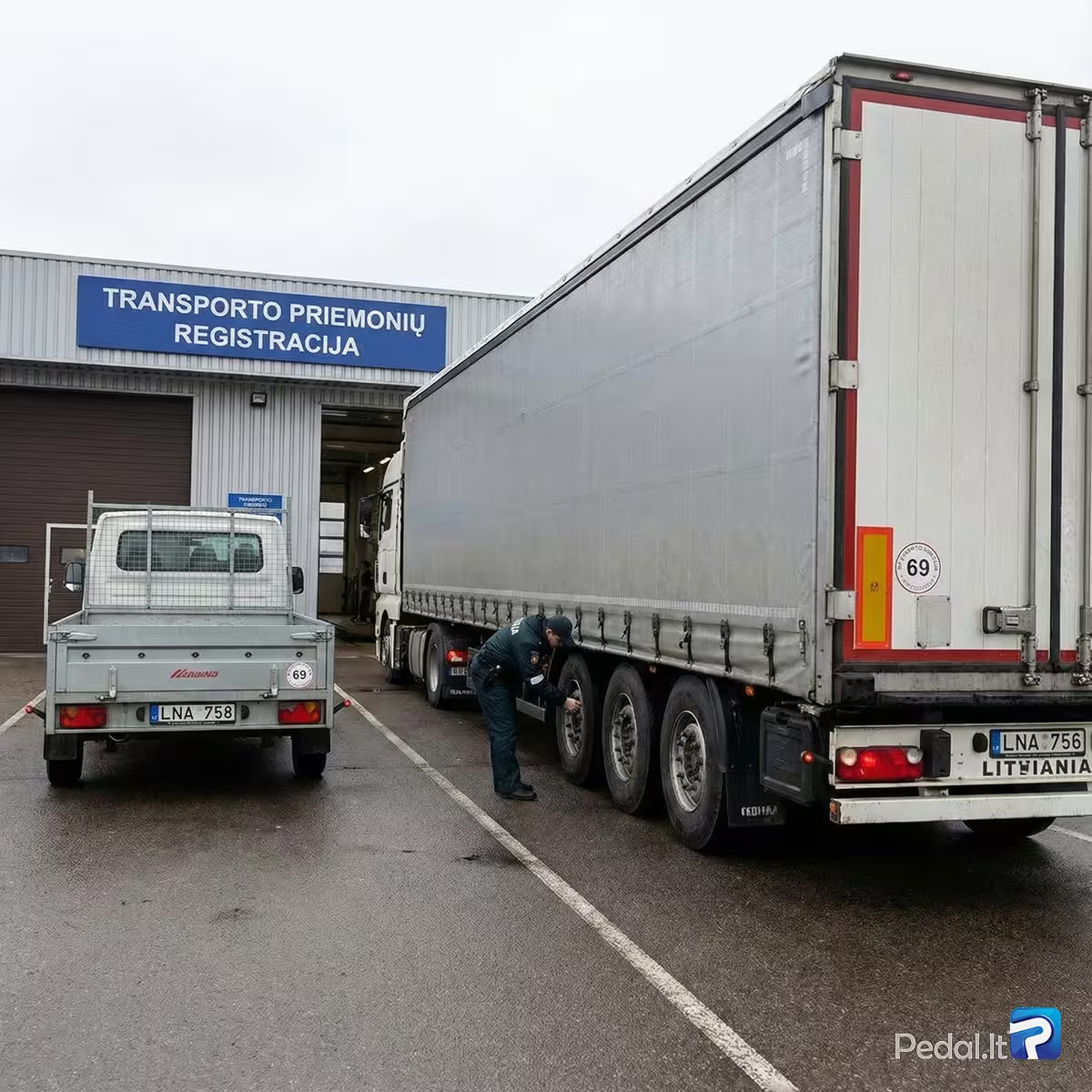
Are trailers and semi-trailers considered vehicles?
48. A trailer is a vehicle designed to be towed by a motor vehicle. Semi-trailers are also regarded as trailers. 52. A semi-trailer is a trailer coupled to a motor vehicle in such a way that part of its weight and the weight of its load are borne by the motor vehicle.
1. No.
2. Yes.
Is the term "Pavement" included within the definition of "Road"?
RTR 3.7. 'Road' means the surface of a strip of ground or a superstructure intended for, and used by, road traffic across its full width; this includes the carriageway, intersections, pavements, roadsides, pedestrian and bicycle paths, and dividing strips. RTR 3.8. 'Shoulder' means a road area adjacent to the carriageway (from the carriageway edge to the roadbed edge) that is paved with the same or different material as the carriageway and/or separated from the carriageway by an edge line, but is not regarded as a pavement or as a pedestrian or bicycle track. JB
1. Yes, it is.
2. No, it is not.
Which of the following statements is correct?
It is always safer to exit a yard or a residential area facing forward, because this provides a better view of the road you are entering. Reversing out of such areas may cause you to miss other road users to whom you must yield. KET 114: When reversing, the driver must give way to other road users.
1. Avoid reversing out onto the road from adjacent premises.
2. Never reverse from the road into adjacent premises.
3. If possible, reverse from adjacent premises onto the road.
4. If possible, reverse from the road into adjacent premises.
While stopped uphill at a traffic signal, the best method to keep a manual-transmission car stationary is to:
When stopped uphill at a red traffic light, the recommended way to keep a manual-transmission car stationary is to use the parking brake. This is especially advised for inexperienced drivers, as it makes starting away easier and reduces the risk of rolling backward.
1. Apply the parking brake.
2. Select first gear and partially release the clutch to hold the vehicle.
3. Leave the vehicle in gear and switch off the engine.
4. Apply and hold the service (foot) brake.
How should you drive when the road is covered with ice?
High speed is unsafe on icy roads because the slippery surface increases braking distance; therefore you should drive slowly. On slippery roads, also try to prevent excessive wheel slip by keeping engine revolutions low — a higher gear results in lower engine RPM. Select a gear appropriate for your speed, but ensure it is as high as possible. If you feel the vehicle beginning to skid, immediately and gently release the accelerator and do not change the clutch pedal position.
1. Drive at a low speed while using the highest gear possible.
2. Drive at a low speed while using the lowest gear.
3. Drive at a high speed while using the highest gear.
4. Drive at a high speed while using the lowest gear.
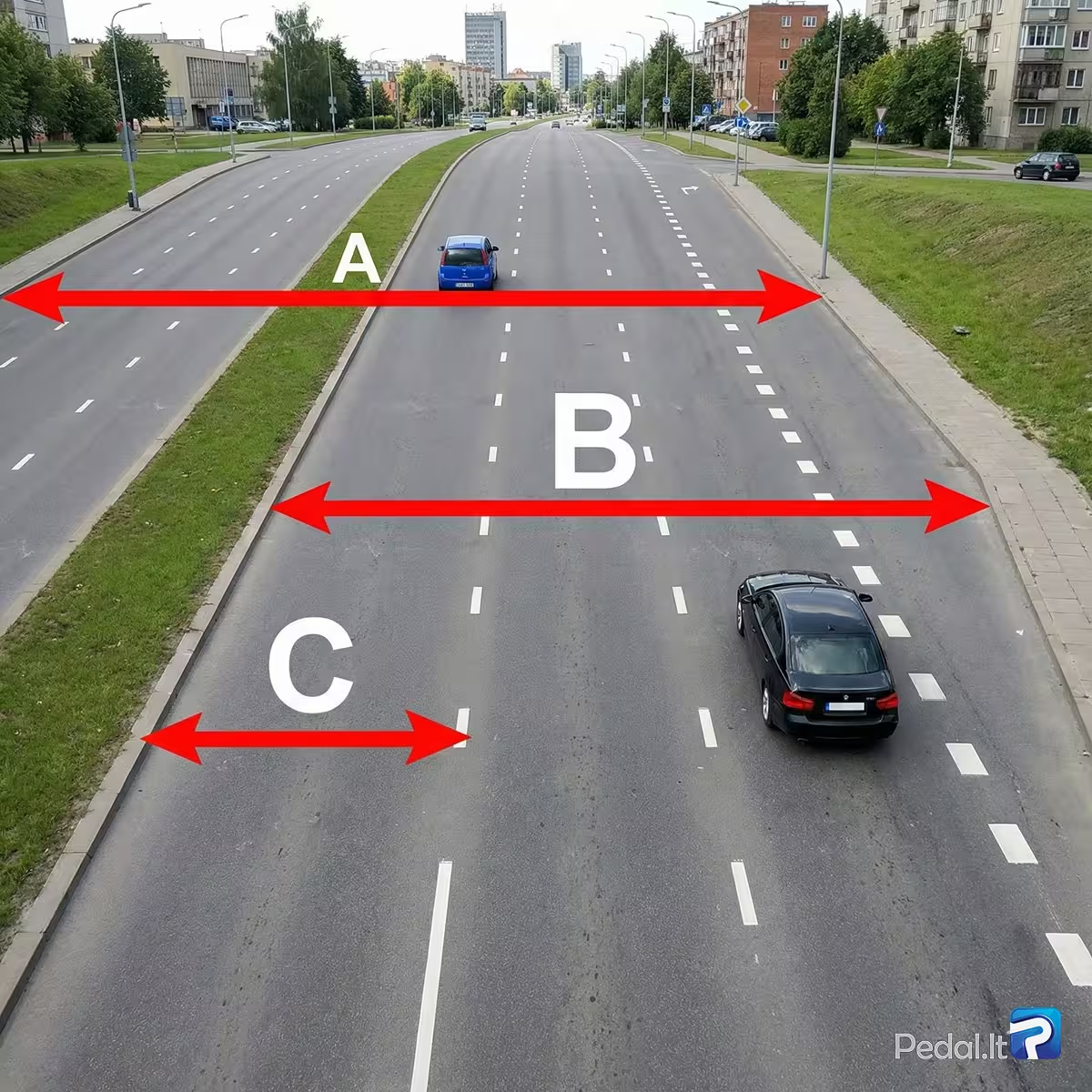
Which letter designates the entire carriageway of the road?
A central reservation is not part of the carriageway. A carriageway is the portion of a road intended for vehicular traffic.
1. A.
2. B.
3. C.
Who or what poses the greatest risk of causing road accidents?
According to the Lithuanian Road Administration, in 2017 drivers accounted for 68.83% of all traffic offenders. Although slippery roads are a traffic hazard, drivers can adapt to conditions, choose a safe speed, and thus reduce the risk of accidents.
1. Drivers.
2. Pedestrians.
3. Slippery road surfaces.
4. Road signs.
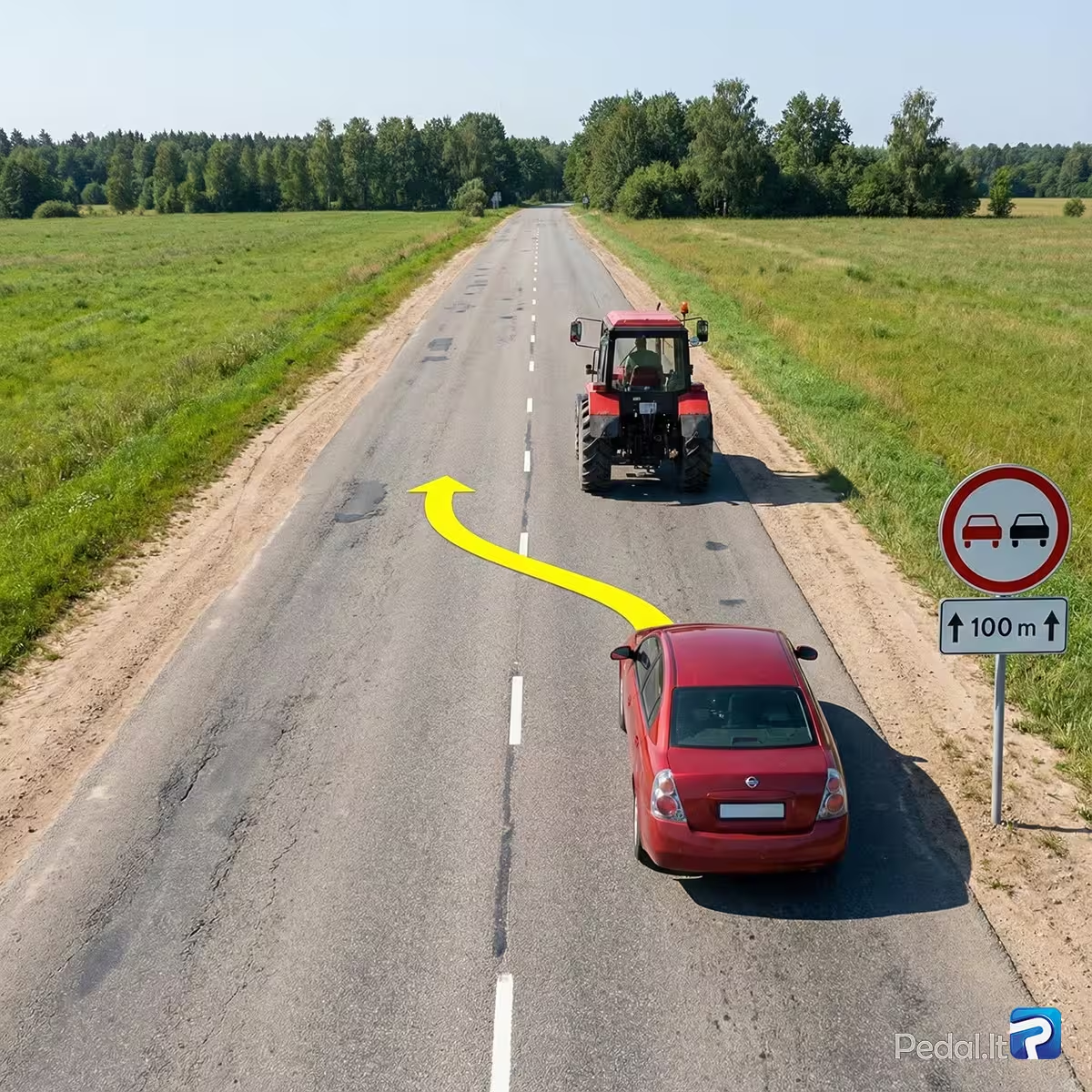
Is overtaking permitted?
Although the road sign normally prohibits overtaking, overtaking vehicles traveling at speeds under 30 km/h is permitted provided it can be done safely. Road sign 325 — “Overtaking prohibited” forbids overtaking, except for individual vehicles (or individual vehicle combinations) traveling at speeds under 30 km/h. Road sign 805 — “Validity zone ahead” indicates the length of the zone beyond the sign during which a hazardous road section or other associated signs remain in effect.
1. No — overtaking is prohibited.
2. Yes — overtaking is permitted if the tractor is traveling at less than 30 km/h.
Are you allowed to drive across a level crossing if the crossing attendant is facing you and holding a flag above their head?
RTR 168. Before entering and crossing a level crossing, road users must obey road signs, road markings, the position of barriers, traffic lights, audible warnings, and the signals of level crossing attendants/controllers. Before entering a level crossing, a road user must always ensure that no rail vehicle is approaching the level crossing. It is recommended that children under 12 be accompanied by an adult when crossing a level crossing.
1. Crossing the level crossing in this situation is prohibited.
2. Driving across the level crossing is permitted.
3. Crossing is permitted only after ensuring that no rail vehicle is approaching the level crossing.
When are pedestrians permitted to step onto the carriageway?
RTR 44. Pedestrians may enter the carriageway only after assessing the distance to and speed of approaching vehicles and ensuring it is safe to proceed. Before stepping onto or while moving along the carriageway, pedestrians must refrain from actions (such as using mobile devices) that would distract them from observing the surroundings and traffic conditions and would prevent them from confirming it is safe to continue.
1. After evaluating the distance to approaching vehicles.
2. After evaluating the speed of approaching vehicles and ensuring it is safe to cross at the pedestrian crossing.
3. Provided they refrain from actions (e.g., using mobile devices) that could distract them from observing the surroundings and the traffic situation.
4. If they are not looking at the carriageway.
What is the maximum permitted speed for a truck with a permissible maximum mass of up to 3.5 tonnes on a gravel road?
RTR 131. The following speed limits apply outside built-up areas: 131.1. For passenger cars, goods vehicles with a maximum permissible mass up to 3.5 tonnes, motorcycles and tricycles the maximum permitted speeds are: on motorways — 130 km/h from April to October and 110 km/h from November to March; on highways — 120 km/h from April to October and 110 km/h from November to March; 90 km/h on roads with asphalt or concrete pavement; and 70 km/h on other roads. JB
1. 90 km/h.
2. 60 km/h.
3. 70 km/h.
The service brake has failed while you are driving on a motorway. What should you do?
Maintain a speed that allows you to stop the vehicle with the parking brake if necessary. Switch on your hazard warning lights to warn other road users. Drive to the nearest safe place to stop and call roadside assistance.
1. Reduce your speed and switch on the hazard warning lights. If necessary, apply the parking brake gradually. Carefully drive to the nearest safe place to stop and call roadside assistance.
2. Reduce your speed and notify the road police. Continue driving cautiously to your destination. If possible, add brake fluid.
Is it permitted to park a vehicle with a mass of 2.6 tonnes in the yard of an apartment building?
RTR 176. In residential areas road users must not: 176.3. leave parked lorries with a maximum permissible weight of more than 3.5 tonnes, buses with more than 12 seats, tractors, self-propelled machinery and trailers with a maximum permissible weight of more than 3.5 tonnes; RTR 178. The requirements of this Chapter also apply to the yards of apartment blocks. The provisions of Paragraph 175 and Subparagraph 176.4 of the Rules apply to car parks.
1. Yes, it is permitted.
2. No, it is not permitted.
1 of 30 Task
Time left: 00:00:00
1
2
3
4
5
6
7
8
9
10
11
12
13
14
15
16
17
18
19
20
21
22
23
24
25
26
27
28
29
30