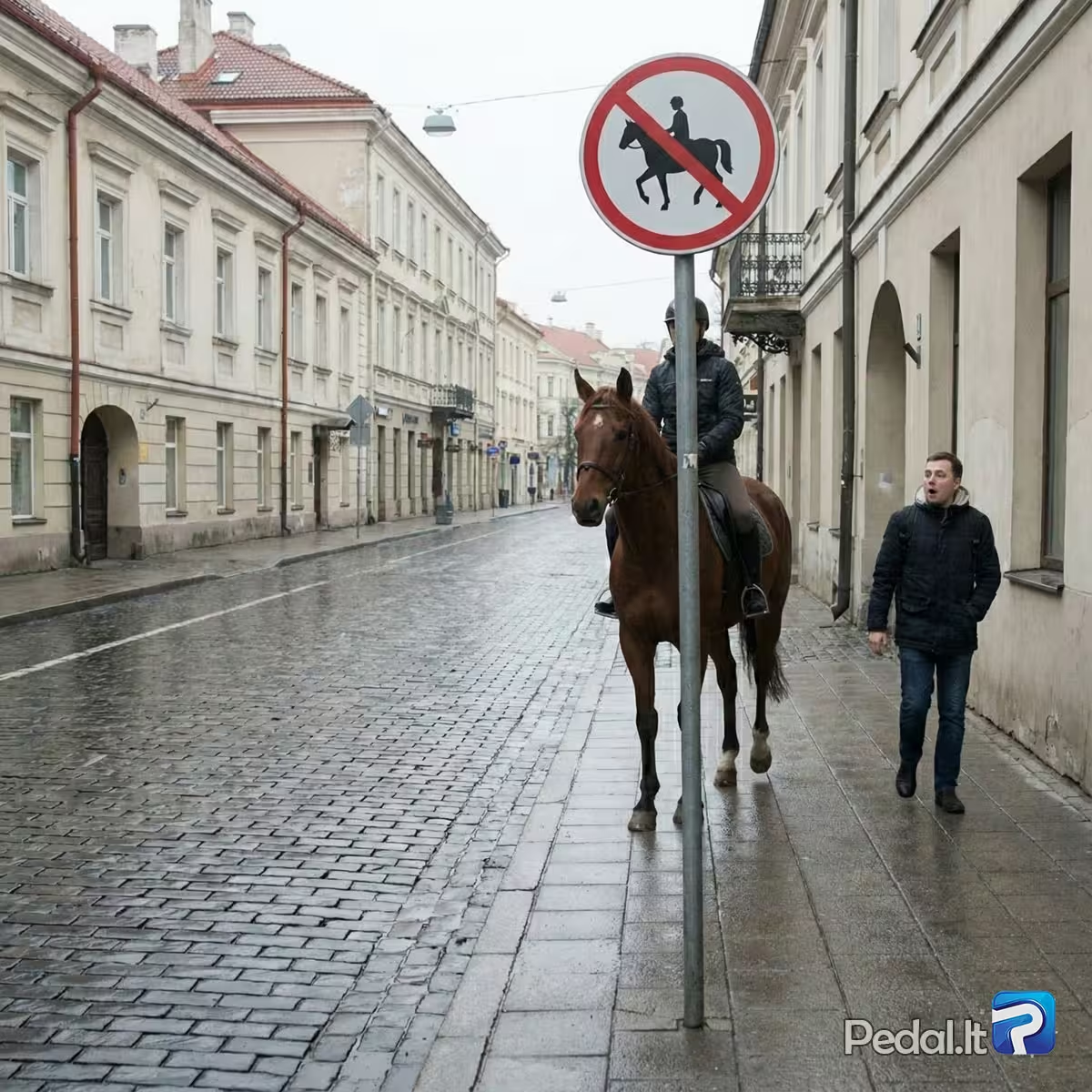
Persons riding animals are prohibited from:
67. Only persons aged 14 or older may drive an animal-drawn vehicle, herd animals or birds, or ride an animal on a road. 72. Drivers of animal-drawn vehicles, those herding animals or birds, riders, and other persons must not: 72.1. leave animals or birds unattended on a road or near a road; 72.2. tie animals so that they could enter a road; 72.3. herd animals or birds along a cobbled road or roads with asphalt or concrete pavement without the road owner's consent; 72.4. herd animals or birds across railway tracks or a road where there are no specially designated crossings; 72.5. ride an animal on the carriageway during hours of darkness; 72.6. drive animal-drawn vehicles, herd animals or birds, or ride animals on motorways and highways; 72.7. drive animal-drawn vehicles, herd animals or birds, or ride animals while under the influence of alcohol or psychoactive substances.
1. Riding an animal while under the influence of alcohol or psychoactive substances.
2. Riding an animal on the carriageway during hours of darkness, and riding on motorways and highways.
3. Riding an animal on roads if the rider is under 14 years old.
4. Riding an animal on the carriageway during daylight hours.
How should you drive safely on a steep slope?
Driver competencies - category B: A vehicle will begin to skid when the tires lose traction with the road surface. This may occur on inclines, slopes, or in strong crosswinds.
1. Drive at maximum speed.
2. Drive with the engine turned off.
3. Drive slowly, avoiding sudden steering or braking movements.
What is the maximum permitted speed for a truck with a permissible maximum mass of up to 3.5 tonnes on a gravel road?
RTR 131. The following speed limits apply outside built-up areas: 131.1. For passenger cars, goods vehicles with a maximum permissible mass up to 3.5 tonnes, motorcycles and tricycles the maximum permitted speeds are: on motorways — 130 km/h from April to October and 110 km/h from November to March; on highways — 120 km/h from April to October and 110 km/h from November to March; 90 km/h on roads with asphalt or concrete pavement; and 70 km/h on other roads. JB
1. 90 km/h.
2. 60 km/h.
3. 70 km/h.
How many motor vehicles are you permitted to tow at one time?
RTR 217. The following vehicle towing and transport practices are prohibited: 217.6. Towing more than one motor vehicle, tractor, or self-propelled vehicle.
1. One vehicle.
2. Two vehicles.
3. Three vehicles.
What documents must the driver of a motor vehicle bring when summoned by the police to appear at the specified time?
8. After receiving a summons from the police, the road user must appear at the police station at the specified time. He must bring an identity document and any other documents listed in the summons. JB
1. In all cases, the person must present an identity document. Additionally, if specified in the summons, they should bring the vehicle's state technical inspection certificate, the compulsory civil insurance policy for the vehicle, and the driver's licence.
2. A driver's licence in every case.
3. A valid medical fitness certificate for driving.
4. A certificate of completion of the mandatory first-aid training.
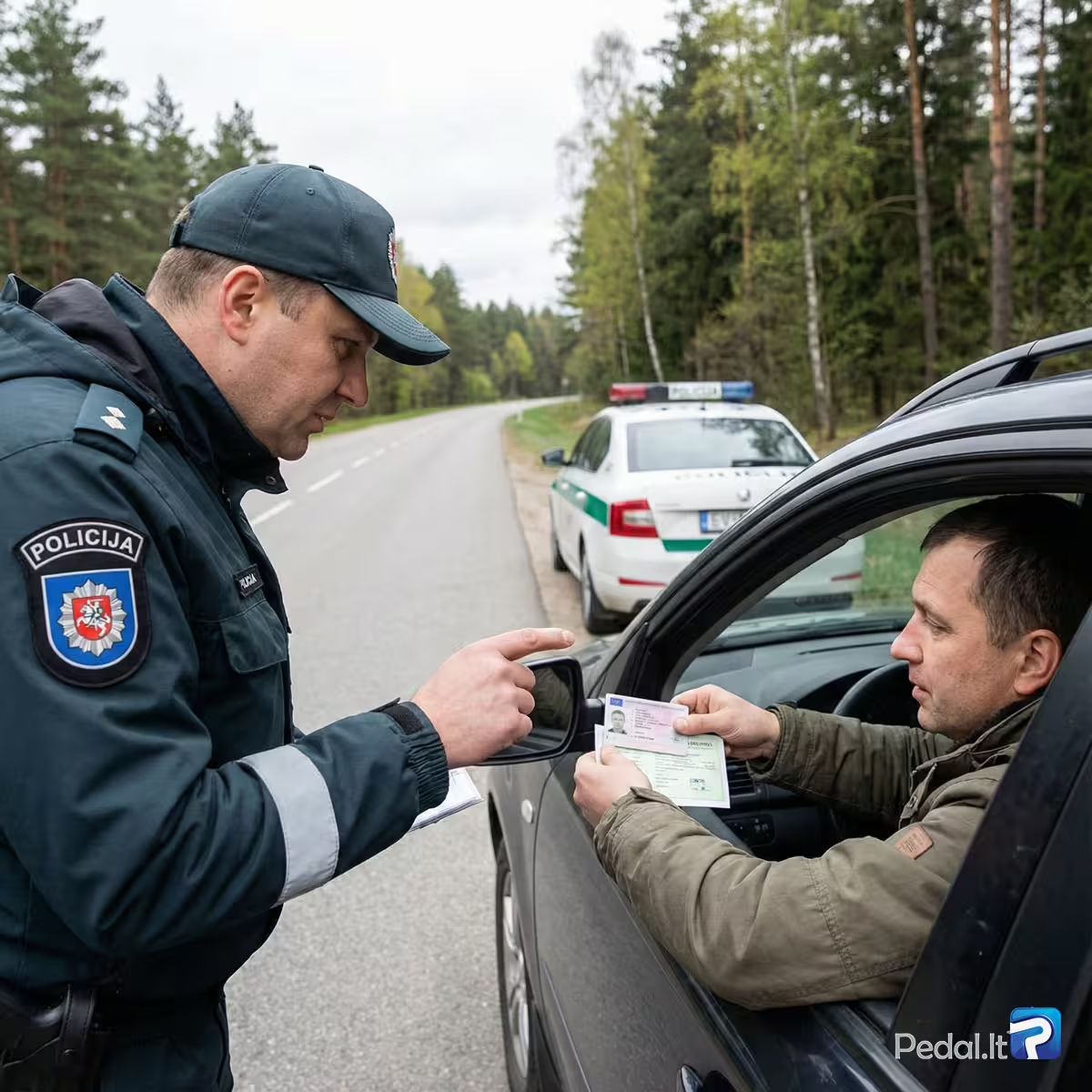
What checks must a driver allow when requested by a police officer?
RTR 17. At the request of a police officer, a driver must submit to tests for alcohol intoxication or for intoxication caused by narcotic drugs, psychotropic substances, or other psychoactive substances, in the manner prescribed by the Government of the Republic of Lithuania. RTR 14. It is prohibited to drive a vehicle if you are not authorized to do so, if you are under the influence of alcohol, narcotic drugs, psychotropic substances or other psychoactive substances. A person who is fatigued or ill must not drive if driving may endanger road safety. A vehicle must not be entrusted to a person who is under the influence of such factors or who is not authorized to drive that type of vehicle. When operating a vehicle, the driver must comply with the conditions specified on the driving licence. JB
1. Alcohol intoxication.
2. Irritability.
3. Fatigue.
4. Intoxication by narcotic drugs.
The effect of inertia on the vehicle (risk of sliding sideways) when cornering is reduced by:
The higher the vehicle's speed when cornering, the greater the effect of inertia and the higher the risk of the car sliding sideways. Lower speeds reduce inertia and the risk of sliding. A larger turning radius (a gentler curve) also reduces lateral inertial forces.
1. By decreasing the turning radius (making the turn tighter).
2. By reducing vehicle speed.
3. By increasing the turning radius (making the curve gentler).
Your car begins to skid sideways while braking. What should you do?
If the wheels lock and the car begins to skid while braking, you must release the brake pedal. For example, if you brake hard before a bend and lock the wheels, the vehicle will continue moving in its original direction (straight ahead) despite steering input. That can cause you to run off the road or collide with an obstacle. In that situation you must stop braking — which can be difficult, especially for inexperienced drivers.
1. Press the clutch pedal.
2. Release the brake pedal (stop applying the brakes).
3. Apply the brakes more firmly.
How is a road accident defined?
LAW ON ROAD TRAFFIC SAFETY — Article 2, Section 14. A 'road accident' means an incident occurring on a road in public or private areas where a moving vehicle causes death or injury to persons, or damages or destroys at least one vehicle, a load, the roadway, its structures, or any other property at the scene.
1. When the driver of an animal-drawn vehicle falls from the carriage while traveling on a road in public or private territory.
2. When two cyclists collide on a road in public or private territory and one or both sustain injuries.
3. When a pedestrian is struck and injured by a moped on a road in public or private territory.
4. When a vehicle's chassis is damaged after striking a pothole.
5. When property at the scene of a road incident on a road in public or private territory is damaged or destroyed in the presence of a moving vehicle.
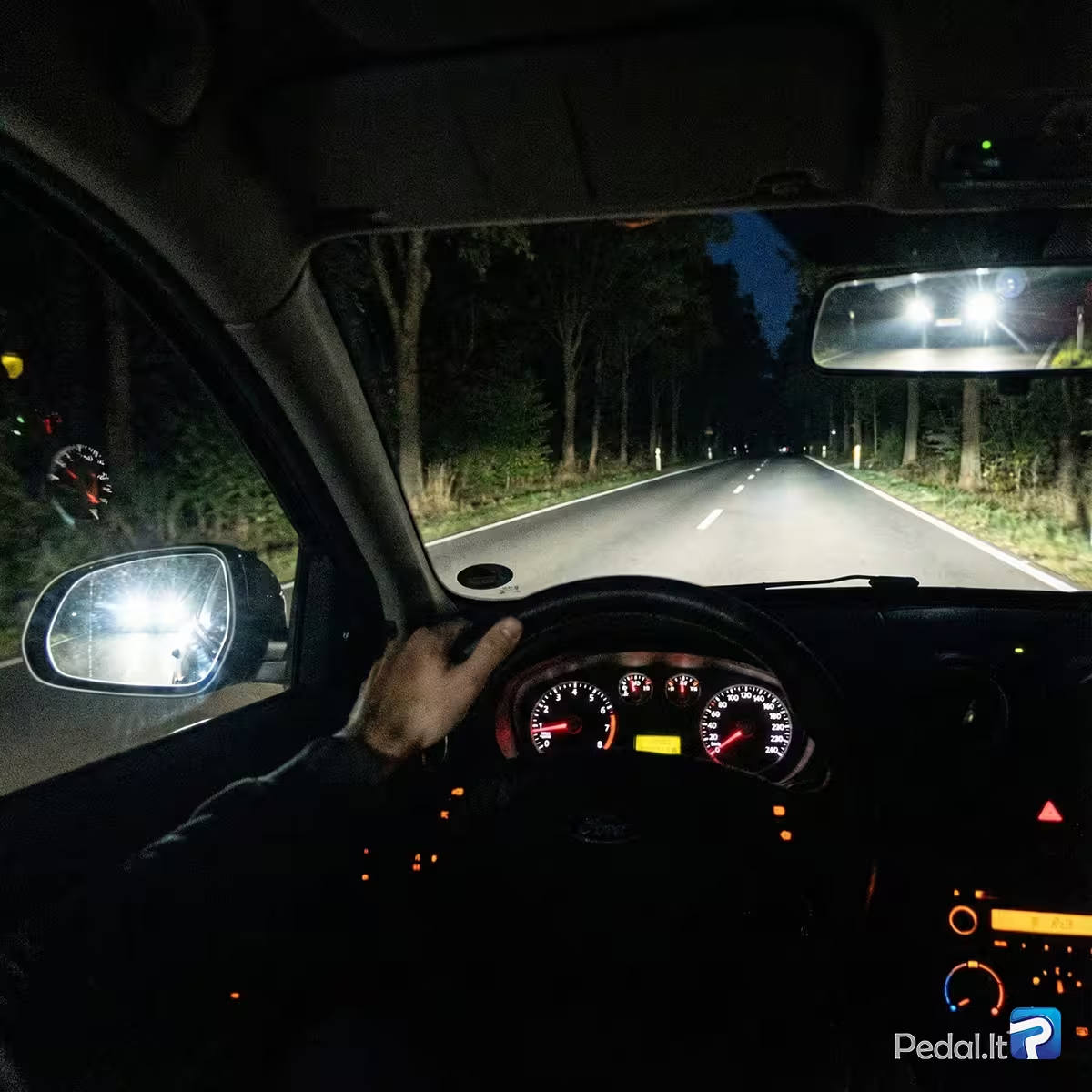
What must the drivers do if one vehicle catches up to the other while both are driving outside a settlement with their headlights on high beam?
The driver of the following vehicle must dip their headlights so as not to dazzle the driver ahead. The vehicle in front should switch to low beam only if the following vehicle begins to overtake, to avoid dazzling that driver. RTR 95. During darkness or in poor visibility, main beam headlights must be switched to low beam: 95.1 on illuminated roads; 95.2 when the distance to a vehicle approaching from the opposite direction is at least 150 m; 95.3 in other cases when main beam lights can dazzle other drivers (even travelling in the same direction). JB
1. The driver of the vehicle ahead must switch from high beam to low beam when the following vehicle begins to overtake.
2. The driver of the vehicle ahead must activate the hazard warning lights.
3. The driver of the following vehicle must switch from high beam to low beam.
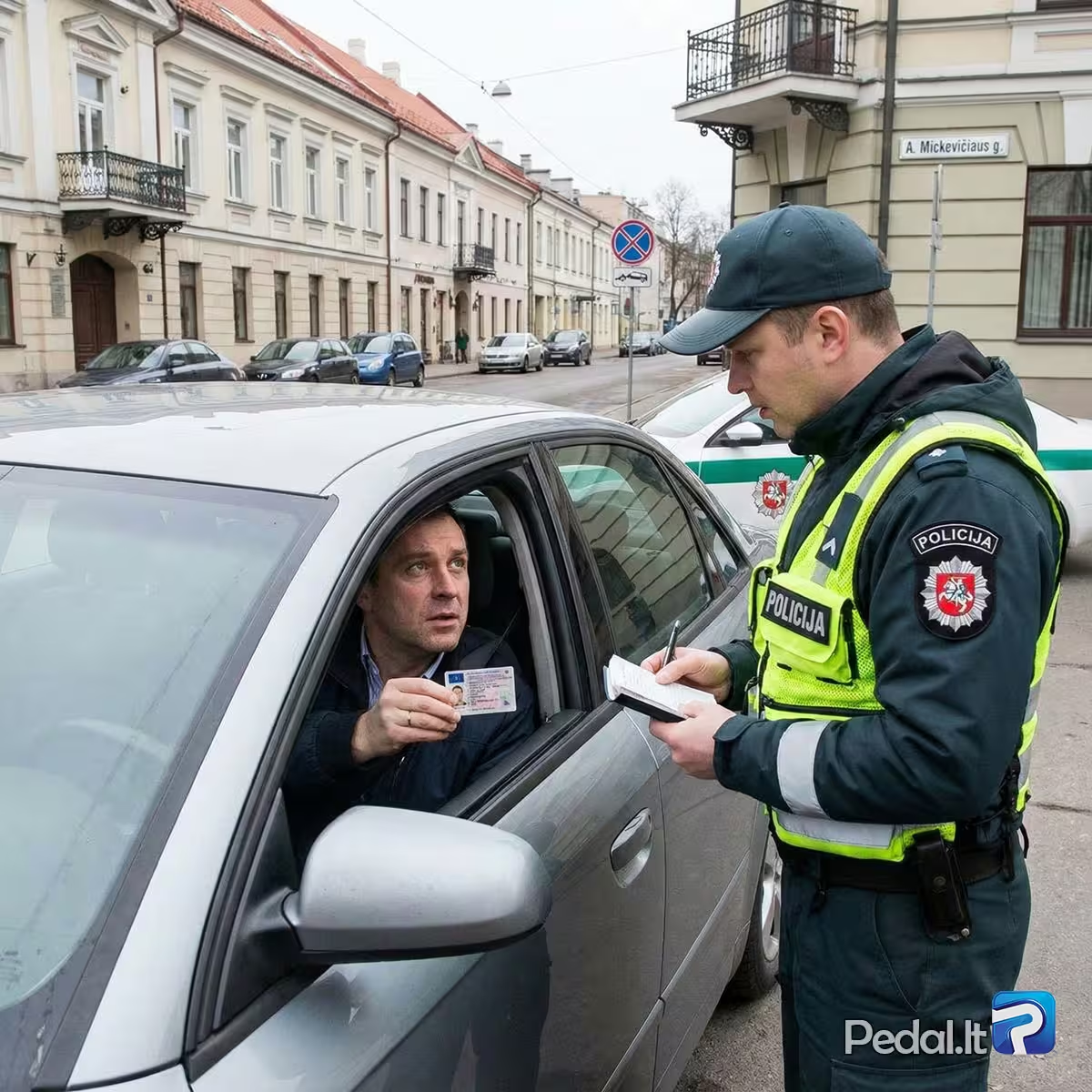
Is a person without a valid driving licence in the Republic of Lithuania permitted to drive (as opposed to only learning to drive) a motor vehicle?
Driving licences issued in Lithuania, in other EU Member States, and in certain other countries are recognised in Lithuania. This question, however, asks whether a person may drive in Lithuania without a valid driving licence (including one issued abroad). The correct answer is “No”.
LAW ON ROAD TRAFFIC SAFETY — Article 13(1): Persons who do not have the right to drive a motor vehicle, tractor, or self-propelled work machine; who are intoxicated; who are under the influence of narcotic, psychotropic or other psychoactive substances; or who have not taken the legally required daily rest must not drive. In addition, a person who is fatigued or ill must not drive if doing so could endanger road safety. A vehicle must not be entrusted to a person affected by any of the factors listed above or who is not authorised to drive that type of vehicle.
1. No — they are not permitted to drive.
2. Yes — they are permitted to drive.
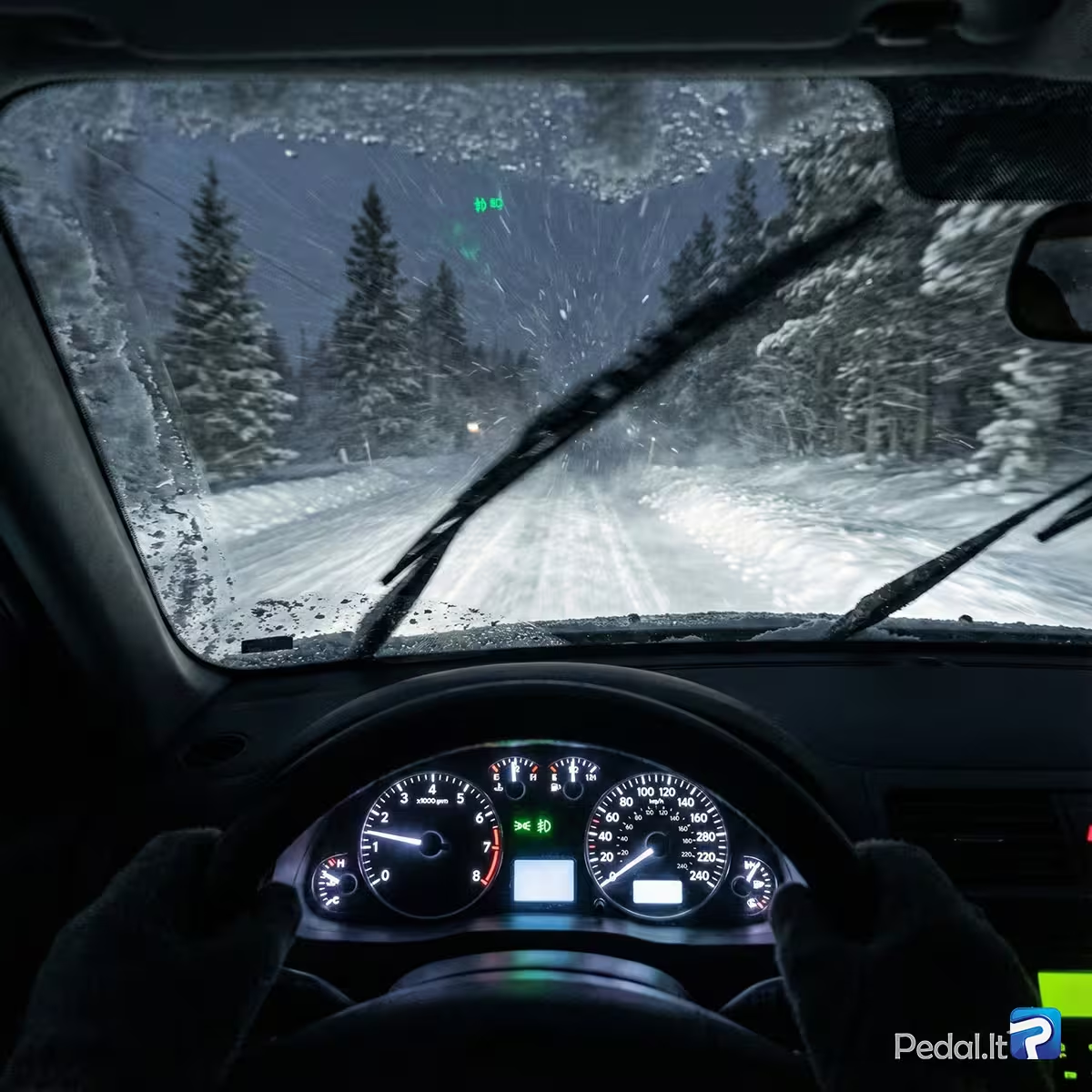
Which exterior lights should be switched on to improve visibility on the road during darkness and when snow is blowing?
When driving at night and during blowing snow, you should switch on the fog lamps together with the dipped-beam (low-beam) headlamps. Using the main-beam (high-beam) headlamps will cause light to reflect off the snow and dazzle the driver. (RTR 98) Fog lamps should only be used when visibility is seriously reduced; the front fog lamps may also be used in the event of failure of the front left dipped-beam headlamp.
1. Fog lamps used together with the main-beam (high-beam) headlamps.
2. Fog lamps used together with the dipped-beam (low-beam) headlamps.
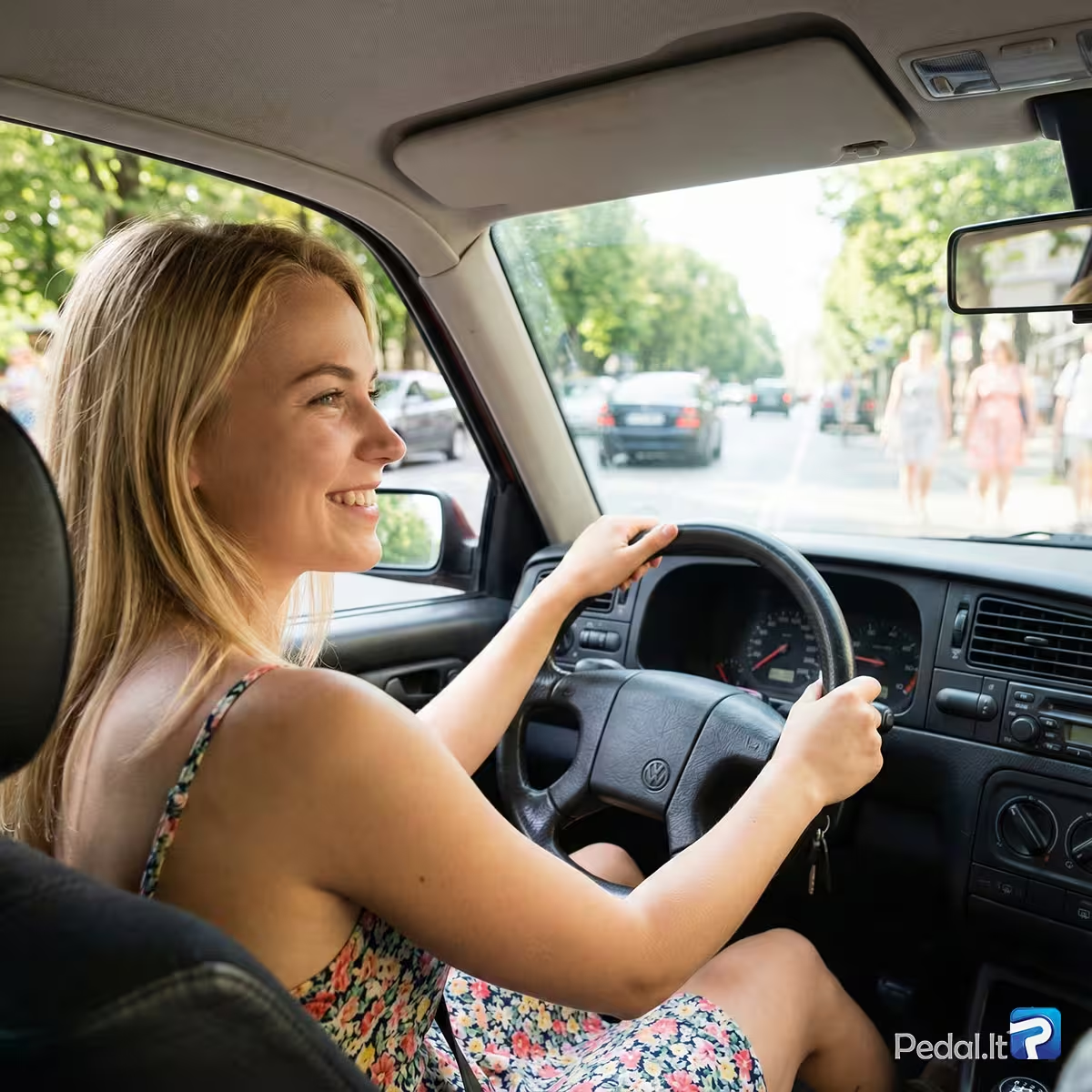
What are common causes of increased fuel consumption while driving?
Underinflated tires are the most common factor directly affecting fuel consumption; incorrect tire pressure can increase consumption by up to about 4%—both too little and too much pressure can have an effect. Check tire pressure when the tires are cold, because driving warms the rubber and raises the pressure. Carrying luggage on the roof increases aerodynamic drag and therefore fuel consumption. Frequent stop-and-go driving also increases fuel use. JB
1. Low tire pressure.
2. Driving with luggage mounted on the roof.
3. Short trips with frequent stops and starts.
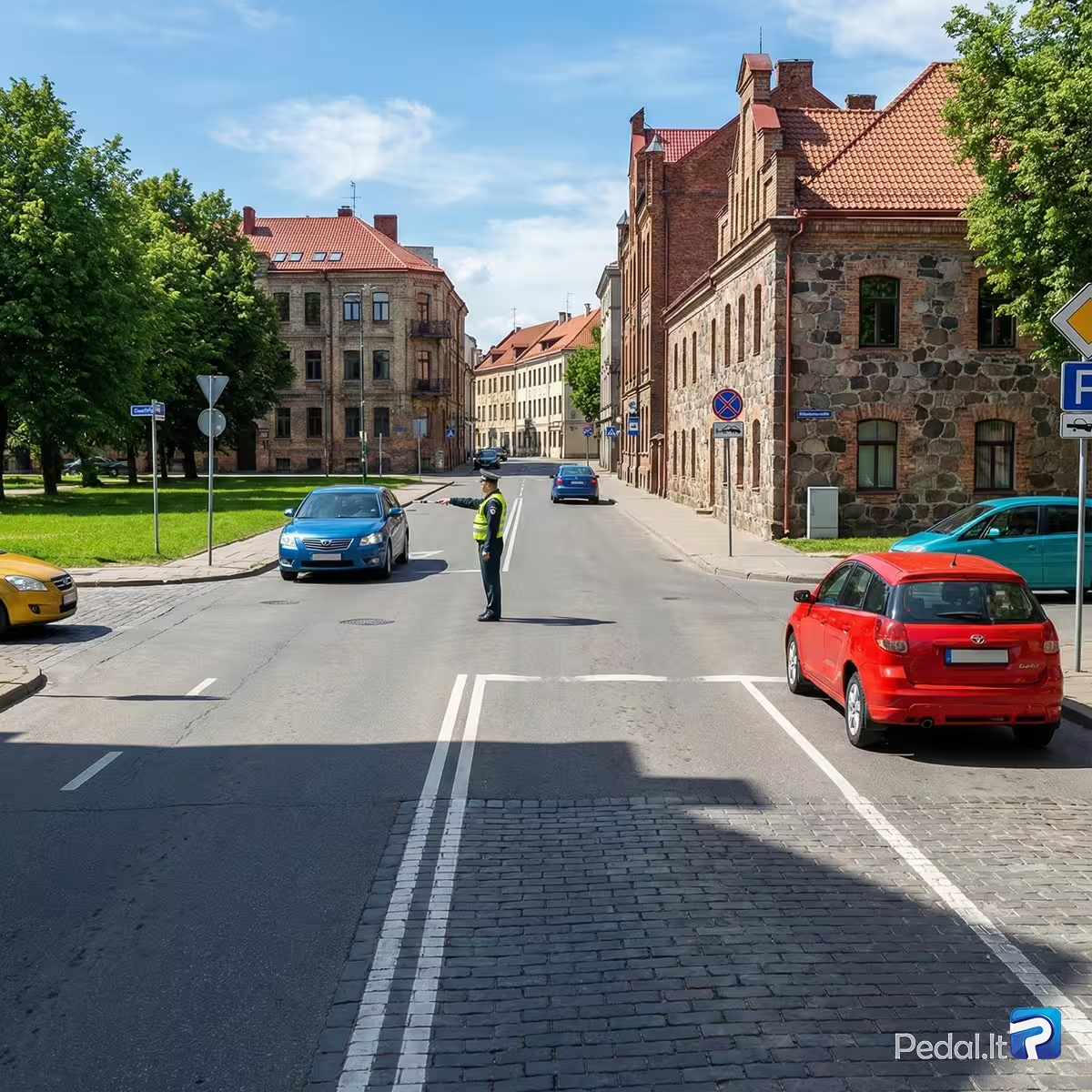
Which vehicles can turn right?
RTR 77.2. Right arm extended forward: 77.2.1. Vehicles on the left side of the traffic officer may proceed in any direction; 77.2.2. Vehicles facing the traffic officer may proceed only to the right; 77.2.3. Vehicles behind the traffic officer and on the right side must not proceed; 77.2.4. Pedestrians may cross the carriageway behind the traffic officer.
1. The red vehicle.
2. The brown vehicle.
3. The blue vehicle.
Which of the following symptoms are characteristic of long-term cannabis use?
Symptoms associated with long-term use become more pronounced with continued consumption. The most serious psychiatric complication is cannabis‑induced psychosis. Users may experience dramatic mood swings, perceptual distortions, anxiety, and aggression. In people with preexisting mental illness, even brief exposure to cannabis can trigger psychosis. Men who begin heavy cannabis use at an early age have an increased risk of developing schizophrenia.
1. Psychiatric disorders.
2. Irritability.
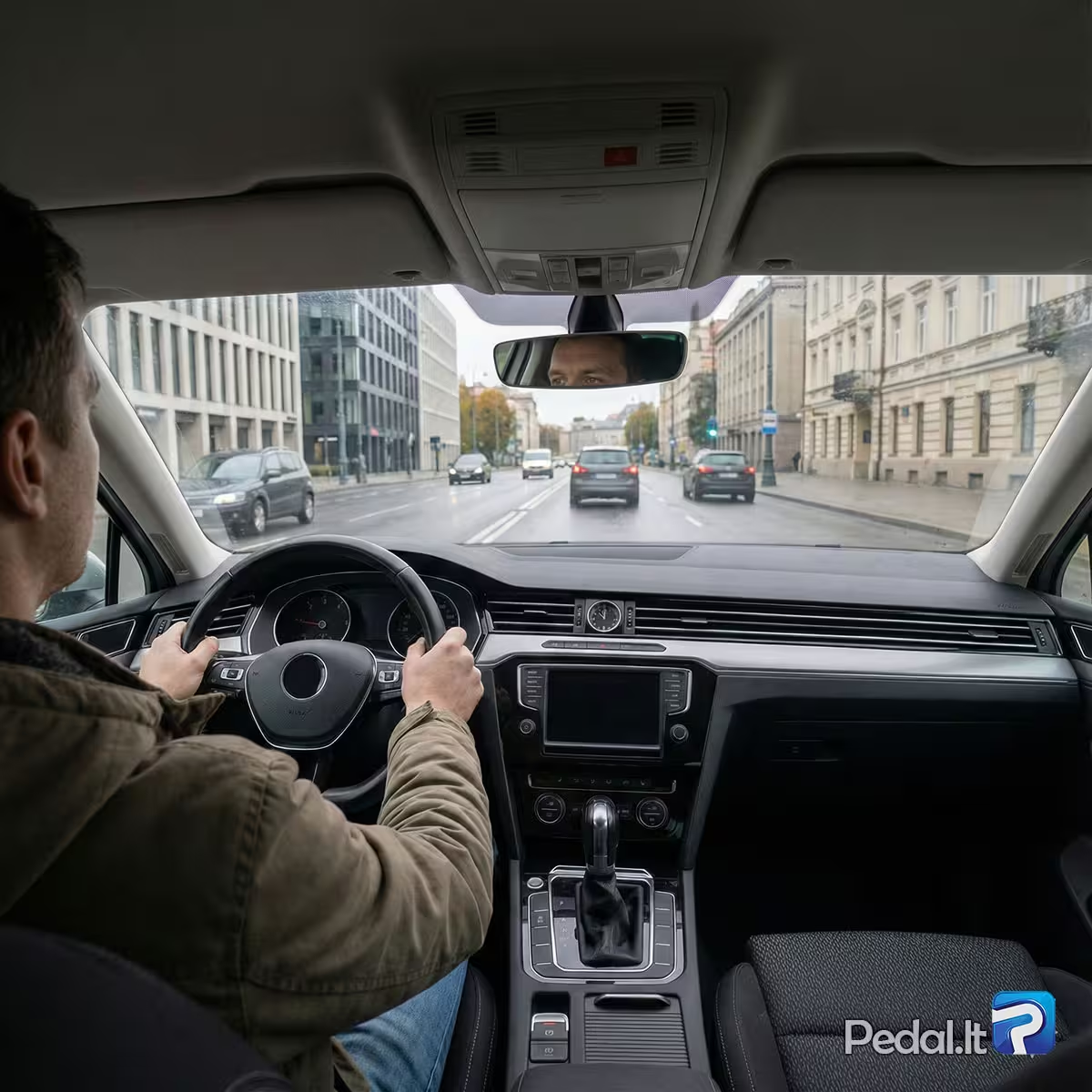
When should a driver move back into the right-hand lane after overtaking another vehicle?
RTR 136. Drivers should avoid unnecessary overtaking maneuvers. Before overtaking, drivers must take extra precautions and ensure that: 136.1. no driver behind them has already started to overtake; 136.2. the driver of the vehicle to be overtaken is not indicating a left turn; 136.3. the section of lane required for overtaking is clear, and the overtaking vehicle will not obstruct oncoming traffic or pedestrians on the roadway; 136.4. a safe distance from the vehicle being overtaken can be maintained during the maneuver; 136.5. after completing the overtaking maneuver, they will be able to return to the same lane safely without obstructing the overtaken vehicle.
1. Immediately after overtaking.
2. When the driver is more than 100 metres ahead of the overtaken vehicle.
3. When the overtaking driver can see the overtaken vehicle in the rear‑view mirror.
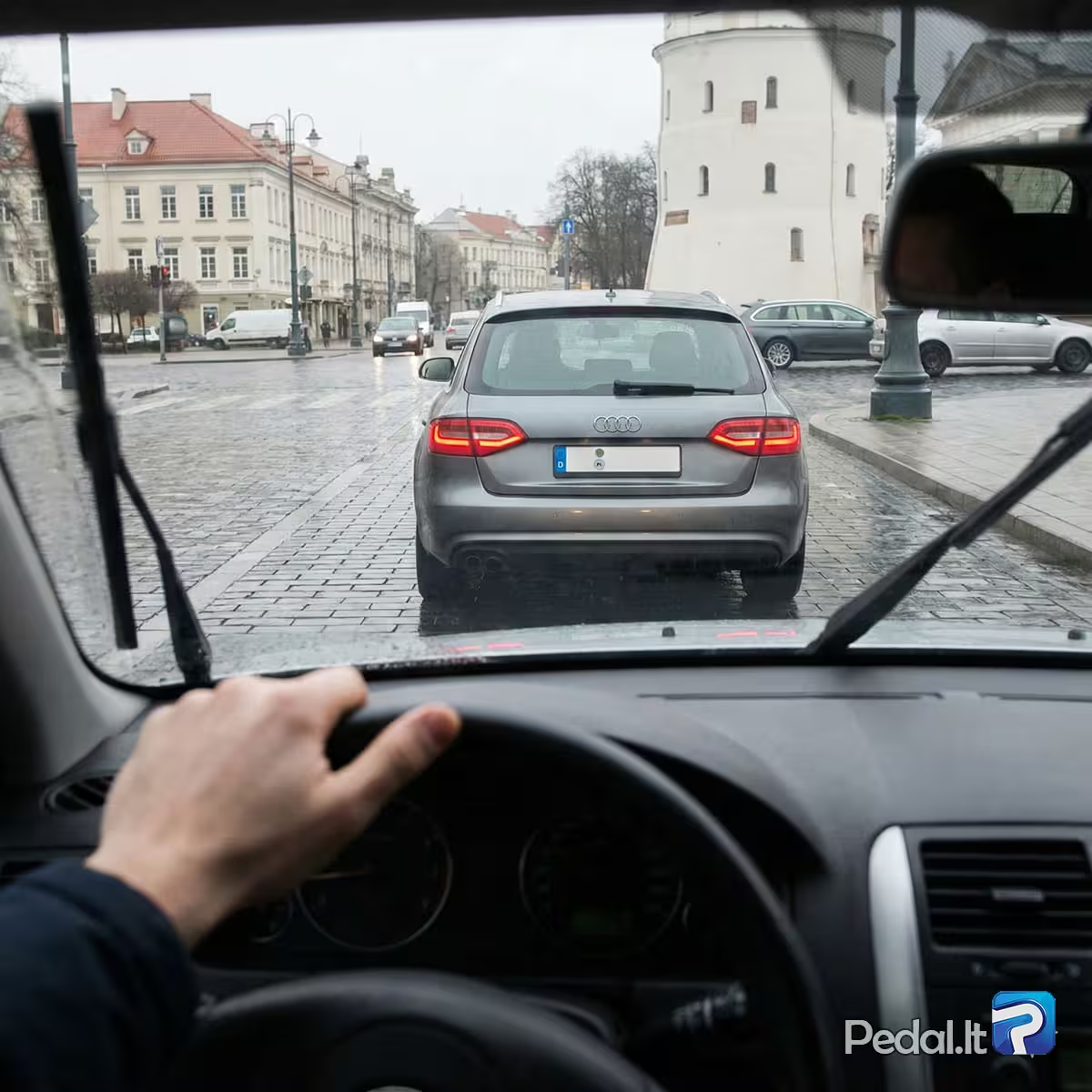
A vehicle with foreign license plates is driving ahead. What might you expect from that vehicle?
Drivers from other countries who are unfamiliar with local roads may have difficulty orienting themselves; they might make unexpected maneuvers, signal late before turns, or brake suddenly.
1. It may make unexpected maneuvers.
2. The driver may signal too late before turning at an intersection.
3. The vehicle may stop suddenly.
Which vehicle(s) are classified as a public service vehicle?
A minibus is a vehicle with no more than eight passenger seats (excluding the driver’s seat) and a maximum permissible mass not exceeding 3.5 tonnes. It may be used for private or commercial purposes. A scheduled taxi (scheduled minibus) is a public transport vehicle that operates on a fixed route with designated stops and is marked with the sign "Regular transport." A public service vehicle is any public transport vehicle — for example a bus, trolleybus, or shuttle bus — that regularly carries passengers along a specified route with defined stops; the term also includes school buses.
1. Taxi.
2. Minibuses.
3. Public transport vehicles — for example buses, trolleybuses, and shuttle buses — that regularly carry passengers along a specified route with designated stops.
What size handcart carrying a load that is pushed or pulled at the roadside must be equipped with reflectors?
The option "More than 1 meter long" is incorrect because the RTR do not specify any marking requirement based on the cart's length. Under RTR 41: pedestrians moving along an unlit hard shoulder or along the edge of the carriageway, or standing there during hours of darkness or when visibility is poor, must carry a torch visible to other road users, wear a high-visibility vest, or carry a reflector visible to other road users. A pulled or pushed handcart wider than 1 m must have reflectors affixed on its left side: a white reflector at the front and a red reflector at the rear. JB
1. More than 1 meter wide.
2. More than 1 meter long.
Is turning around permitted on the bridge?
Traffic Regulations (RTR) 116. Turning around is prohibited under clause 116.4: on and under bridges, overpasses, and viaducts. JB
1. Yes, it is permitted.
2. No, it is not permitted.
What is the primary difference between winter diesel and summer diesel fuel?
In winter, air temperatures can easily drop to -25 °C or lower, causing diesel vehicles to experience starting problems. When temperatures fall below 0 °C, water in diesel fuel can freeze; failing to prepare a diesel vehicle for such conditions may lead to breakdowns. At service stations you can choose “summer” diesel, typically suitable from May through October, or “winter” diesel, formulated for use from November through April and adapted to low sub-zero temperatures.
1. Winter diesel fuel does not gel or freeze at -25 °C.
2. Winter diesel fuel begins to gel or freeze at temperatures below -5 °C.
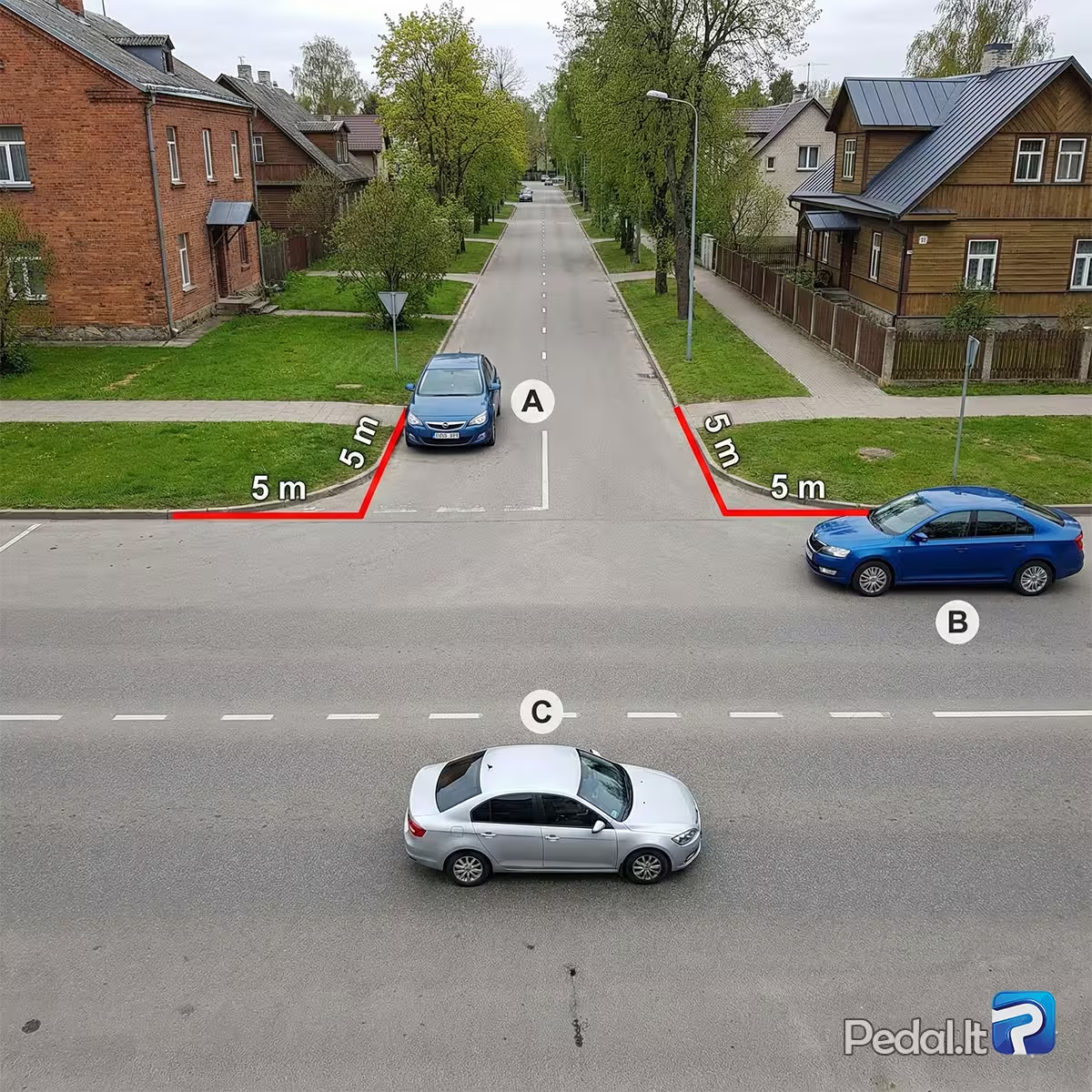
Which vehicles have violated the Road Traffic Rules by stopping at the entrance to the yard?
This is not an intersection but the entrance to a yard. Therefore, vehicle C is not prohibited from parking in this way. RTR 150. Standing and parking shall be prohibited: 150.15 at crossroads and in places where vehicles enter the road from adjacent areas and exit the road to adjacent areas, and within a 5-metre distance from those points (on the side of the road where the entrance/exit is located), except where road signs permit parking.
1. Vehicle A
2. Vehicle B
3. Vehicle C
4. All vehicles are parked correctly.
.avif)
How should you drive on a slippery road?
A safe speed depends on all circumstances, including weather, road surface and vehicle condition, as well as the driver's experience and level of alertness. (RTR 127) Drivers must not exceed the permissible speed limits. A driver must choose a speed appropriate to the conditions — taking into account terrain, road and vehicle condition (including load), weather, and traffic density — so that they can stop safely before any foreseeable obstruction. The driver must reduce speed or stop when conditions require, particularly when visibility is poor. JB
1. Maintain a larger-than-usual following distance from other vehicles.
2. When necessary, apply the brakes very gently.
3. Avoid sudden movements of the steering wheel or abrupt changes to the accelerator.
4. Select a safe driving speed.
During hours of darkness or in conditions of poor visibility, a load projecting up to 1 metre beyond the side of a vehicle must be marked:
Any load that projects laterally, even slightly, must be marked. During hours of darkness such a load must be indicated by lights. Loads projecting beyond the sides of the vehicle must always be marked; loads projecting beyond the front or rear do not always require marking. According to RTR 210 and Annex 4: loads extending more than 1 m beyond the front or rear of the vehicle, or projecting laterally beyond the vehicle's outer edge, must be marked as specified in Annex 4.12. Extreme edges of loads that extend more than 1 m beyond the vehicle's dimensions, or that project even minimally to the side, as well as extreme edges of vehicles wider than 2.6 m, shall be marked with distinguishing panels — 400 mm square plates with alternating reflective white and red diagonal stripes 50 mm wide. These panels must be mounted between 0.4 m and 1.6 m above ground level. During hours of darkness or in poor visibility such vehicles must also display lights in the designated positions: white at the front, orange at the sides, and red at the rear.
1. Marked with high-visibility flags.
2. Marked with lights: white at the front, orange at the sides, and red at the rear.
3. Marking is not required.
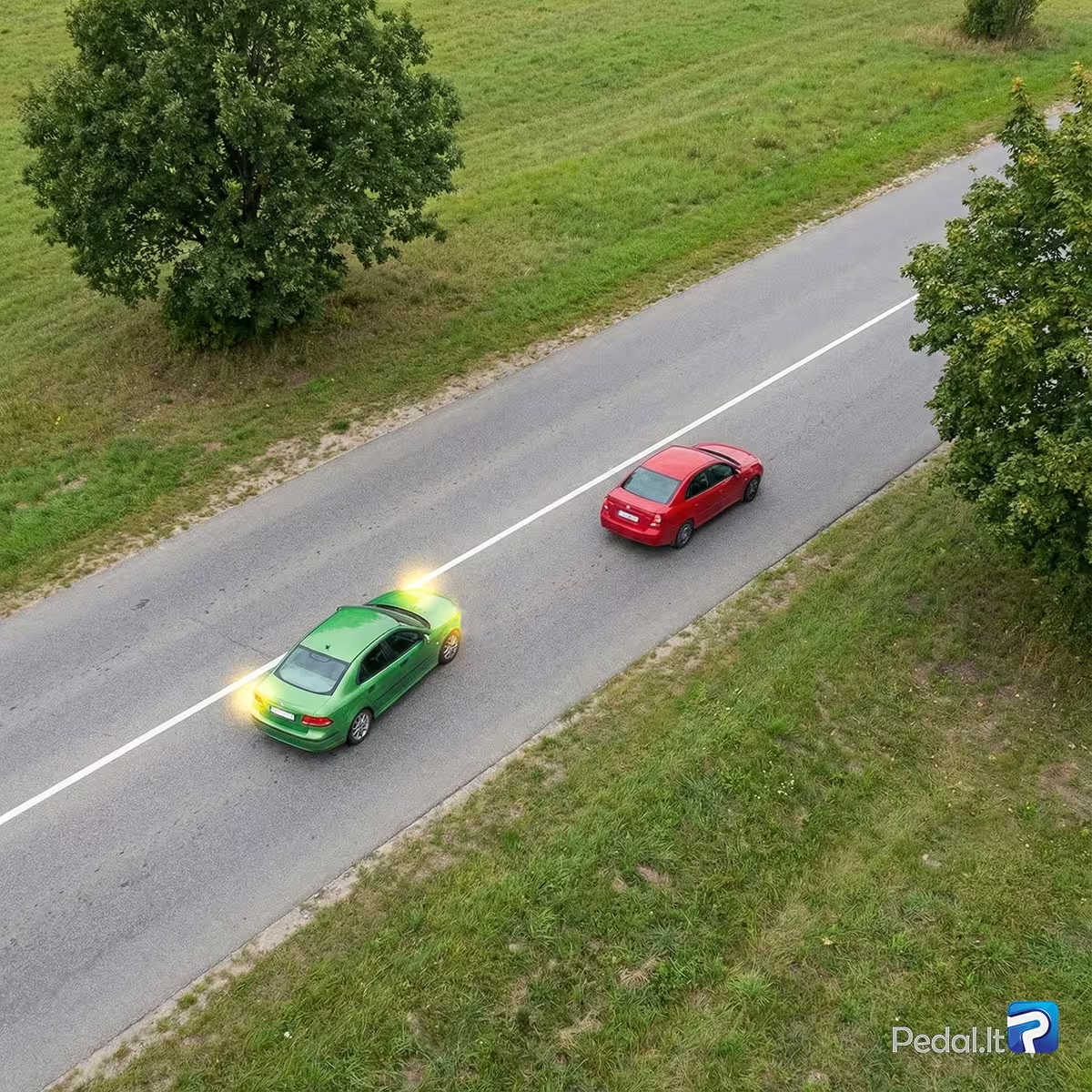
Is the driver of the green vehicle permitted to overtake?
The Road Traffic Rules prohibit crossing a solid line; it does not matter how fast the vehicle you wish to overtake is traveling. Overtaking slow-moving vehicles (traveling under 30 km/h) is allowed only where the 'No Overtaking' sign is in force (within its zone of validity) and there is no solid lane line. http://www.keliueismotaisykles.info/pakeitimai-ir-patarimai/ar-lenkiant-galima-kirsti-istisine-linija RTR Annex 3.1.1. A narrow solid line separates traffic flows in opposite directions and prohibits the use of the oncoming lane on the marked road section; it marks lane edges, areas where access is prohibited, parking space boundaries and the edge of the carriageway; in the case of road sign No 413 'Pedestrian and cycle path', it separates the section reserved for cyclists from the section reserved for pedestrians. It must not be crossed except where it marks the edge of the carriageway or a parking space. RTR Annex 1.325 'Overtaking Prohibited'. Overtaking is prohibited except for single vehicles or single vehicle combinations traveling at less than 30 km/h.
1. Overtaking is permitted.
2. Overtaking is prohibited.
3. Overtaking is permitted if the vehicle being overtaken is traveling at less than 30 km/h.
4. Overtaking is permitted if the vehicle being overtaken is traveling at less than 15 km/h.
Under what conditions is it prohibited to drive a vehicle?
It is prohibited to drive a vehicle if the main brake is inoperative, as this creates a danger to road safety. According to technical requirements, tyres mounted on the same axle must be of the same type and have identical tread patterns. Tyres with different tread patterns can cause instability under braking and reduce traction, creating a road safety risk; therefore driving such a vehicle is prohibited. RTR 234. A driver must not operate a motor vehicle, a tractor, or a self-propelled machine with: 234.1. a defective foot brake (the driver cannot stop the vehicle); 234.2. a defective steering mechanism (the driver cannot control the vehicle); 234.3. a defective coupling device between the vehicle and a trailer; 234.4. a defective windscreen wiper on the driver's side in snow, rain, or fog; 234.5. faulty front left-side lamps (dipped-beam headlamp and fog lamp) during hours of darkness or when visibility is poor, or if at least one rear position lamp has failed, hazard warning lights are not functioning (or are switched off), or a warning triangle is not affixed to the rear of the vehicle.
1. When the wheels on the same axle are fitted with different tread patterns.
2. When the engine oil level is too low.
3. When there is low air pressure in the tyres.
4. When the vehicle's foot (service) brake is defective.
In low-visibility conditions, a driver should select a speed so that the stopping distance is:
Stopping distance is the distance a vehicle covers from the moment the driver becomes aware of an obstacle until the vehicle comes to a complete stop.
1. Shorter than the length of the visible road ahead.
2. Longer than the length of the visible road ahead.
.avif)
In what order will the vehicles pass through the intersection?
If a 'STOP' road sign is present, drivers must stop before the sign and yield to vehicles traveling on the road they are about to cross. RTR 154. At a controlled intersection, drivers entering from a side road must yield to vehicles on the priority road. RTR Annex 1. 204. 'STOP'. Drivers must not proceed without stopping before the stop line or, if there is no stop line, before the sign. A driver must give way to vehicles on the road being crossed. If additional plate No. 843 'Direction of Priority Road' is mounted below the sign, the driver must yield to vehicles on the priority road.
1. Yellow and red vehicles proceed together, followed by the blue vehicle.
2. Blue and red vehicles proceed together, followed by the yellow vehicle.
3. Blue vehicle first, then the red vehicle, and finally the yellow vehicle.
4. Yellow vehicle first, then the blue vehicle, and finally the red vehicle.
Are you allowed to drive across a level crossing if the crossing attendant is facing you and holding a flag above their head?
RTR 168. Before entering and crossing a level crossing, road users must obey road signs, road markings, the position of barriers, traffic lights, audible warnings, and the signals of level crossing attendants/controllers. Before entering a level crossing, a road user must always ensure that no rail vehicle is approaching the level crossing. It is recommended that children under 12 be accompanied by an adult when crossing a level crossing.
1. Crossing the level crossing in this situation is prohibited.
2. Driving across the level crossing is permitted.
3. Crossing is permitted only after ensuring that no rail vehicle is approaching the level crossing.
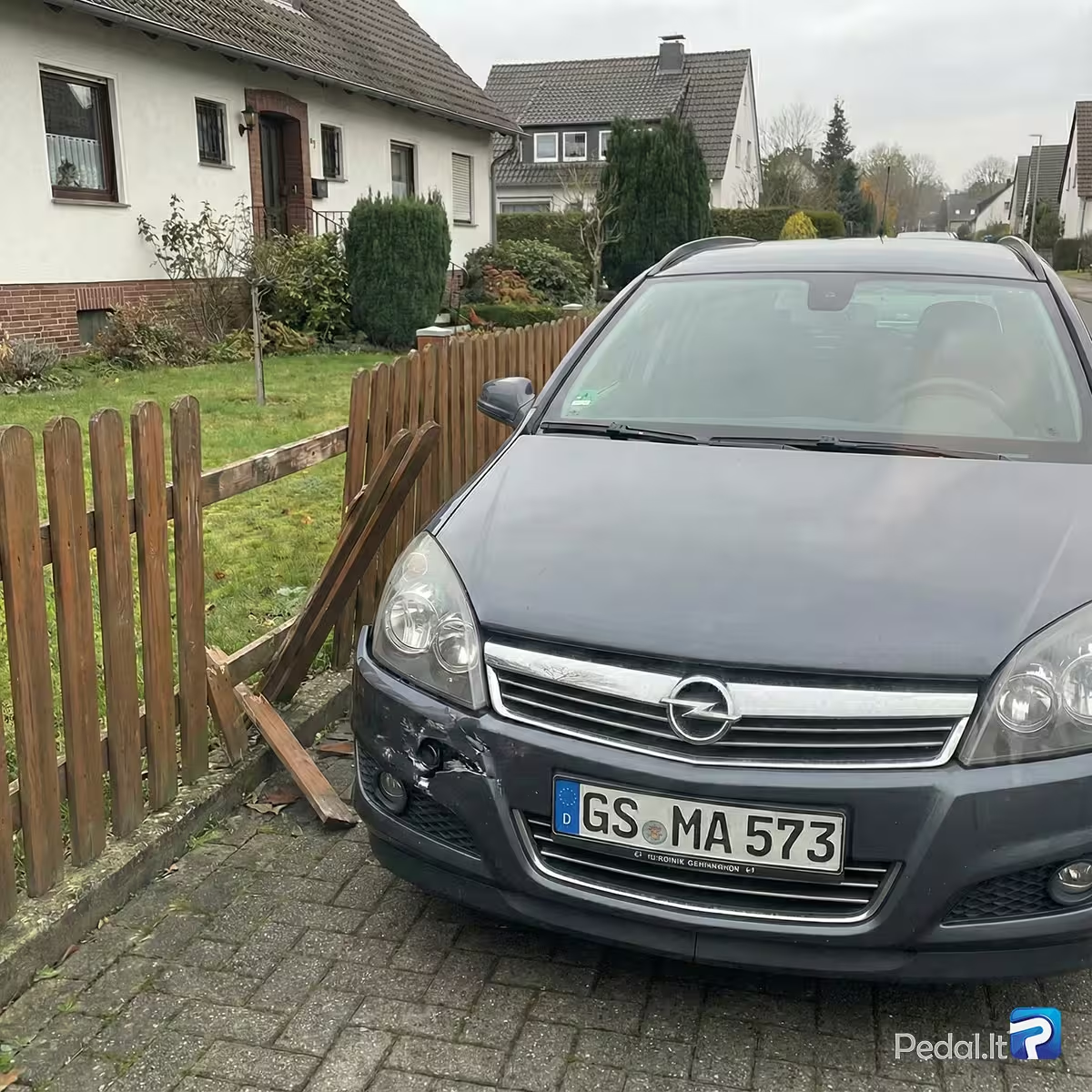
You have damaged the fence of a private property with your vehicle while the owner is absent. What must you do?
1. Leave a note with your contact information and then leave the scene.
2. Attempt to repair the damage yourself if it is safe and feasible.
3. Notify the police and remain at the scene until instructed otherwise.
4. Drive away from the scene because the property owner is absent.
1 of 30 Task
Time left: 00:00:00
1
2
3
4
5
6
7
8
9
10
11
12
13
14
15
16
17
18
19
20
21
22
23
24
25
26
27
28
29
30