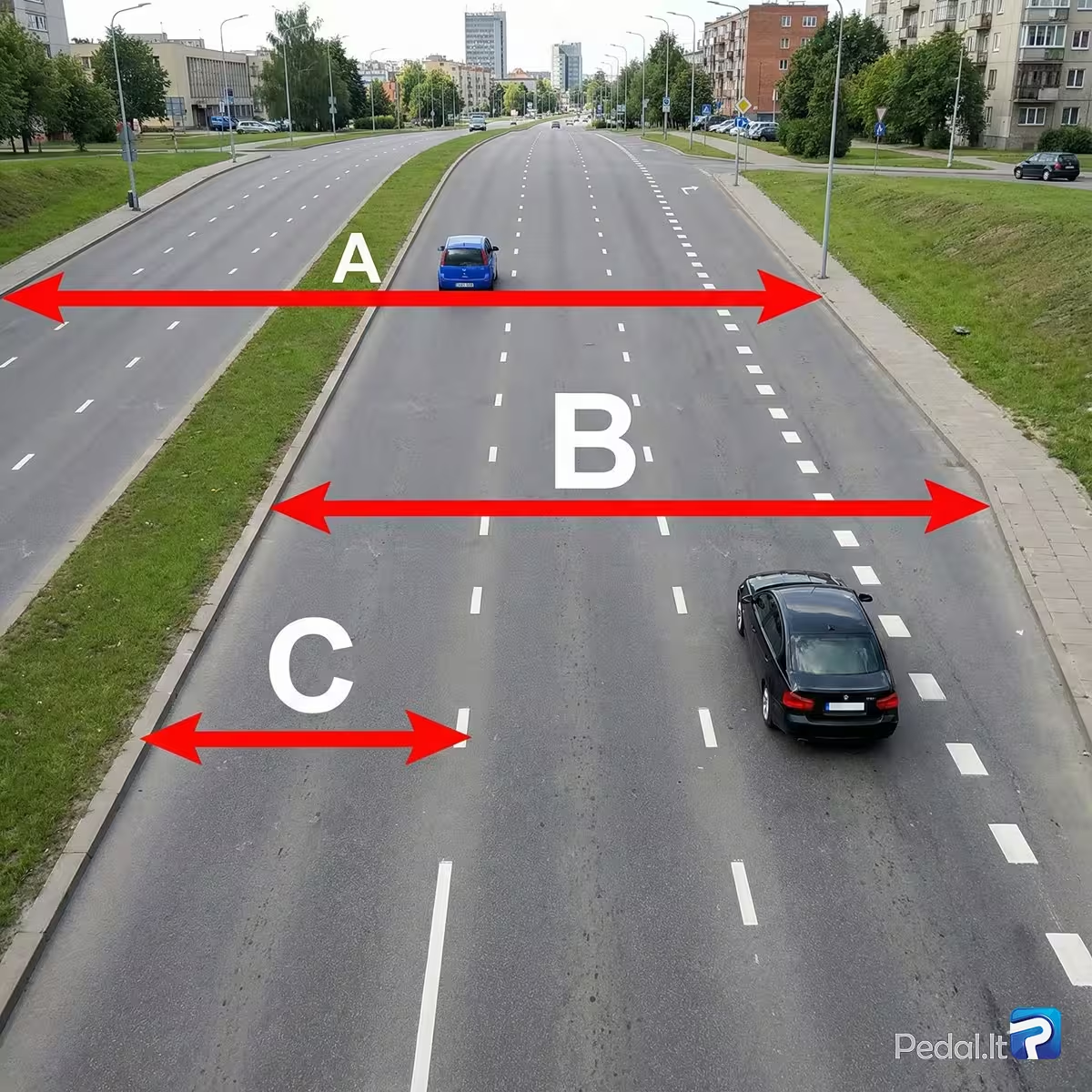
Which letter designates the entire carriageway of the road?
A central reservation is not part of the carriageway. A carriageway is the portion of a road intended for vehicular traffic.
1. A.
2. B.
3. C.
In low-visibility conditions, a driver should select a speed so that the stopping distance is:
Stopping distance is the distance a vehicle covers from the moment the driver becomes aware of an obstacle until the vehicle comes to a complete stop.
1. Shorter than the length of the visible road ahead.
2. Longer than the length of the visible road ahead.
Who is responsible for ensuring that children transported in a motor vehicle use the appropriate installed and correctly fitted restraint systems?
RTR 203. A driver must ensure that children transported in a motor vehicle use the appropriate installed and correctly fitted restraint systems. JB
1. The children being transported.
2. The parents or legal guardians.
3. The foster parents.
4. The driver of the vehicle.
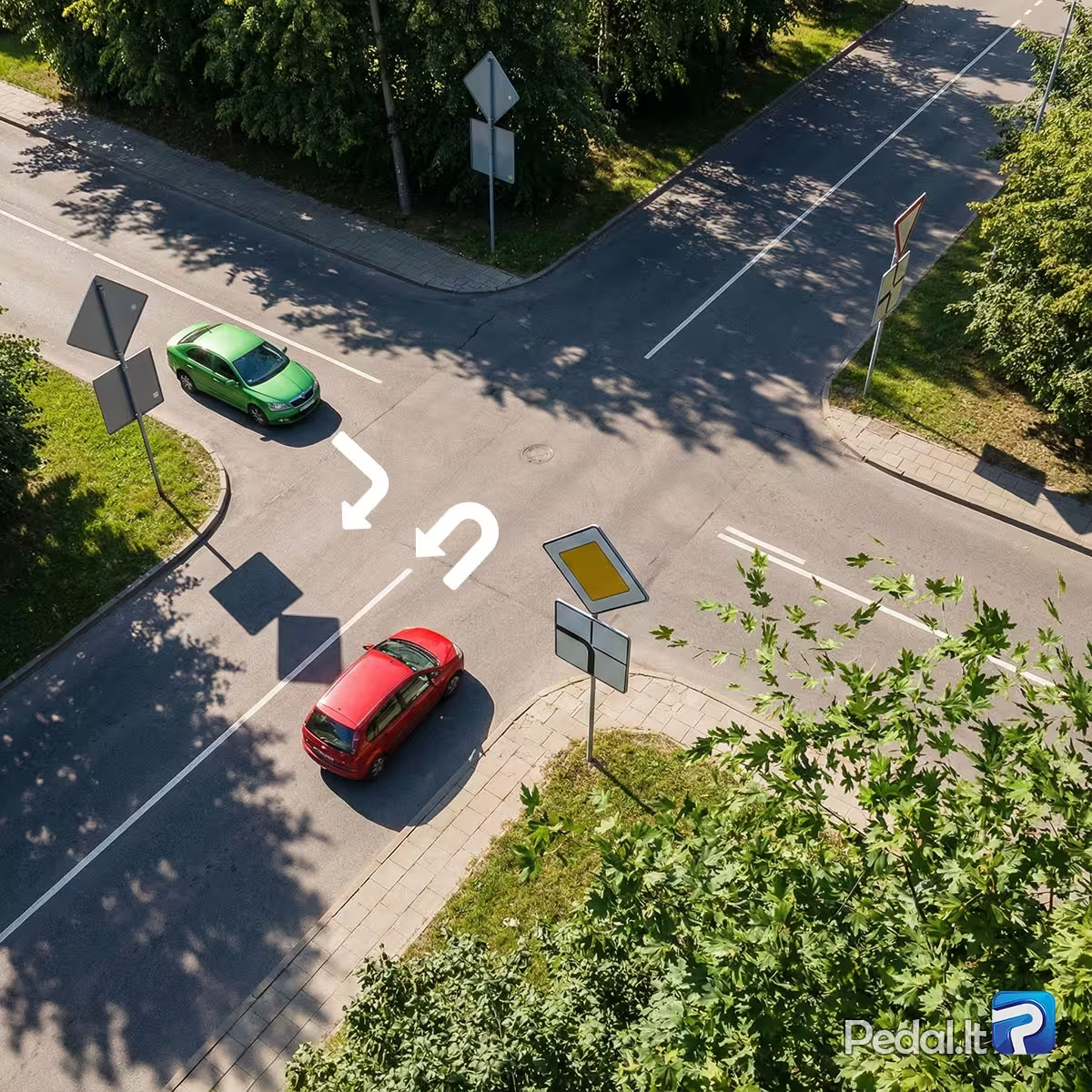
The driver of the red car is about to make a U-turn. Does he have the right of way?
When turning, the driver of the red car must yield to any vehicle coming from the opposite direction on a road of equal priority that is approaching from the right (the green car). Once the red car has already entered the intersection, the green car is considered an obstacle. At intersections where the main road changes direction, the priority-to-the-right rule applies (RTR 157). When turning left or making a U-turn, a driver must yield to oncoming vehicles on an equally important road that are going straight or turning right — and, where overtaking is permitted, also to vehicles that are overtaking.
1. Yes — he has the right of way.
2. No — he does not have the right of way.
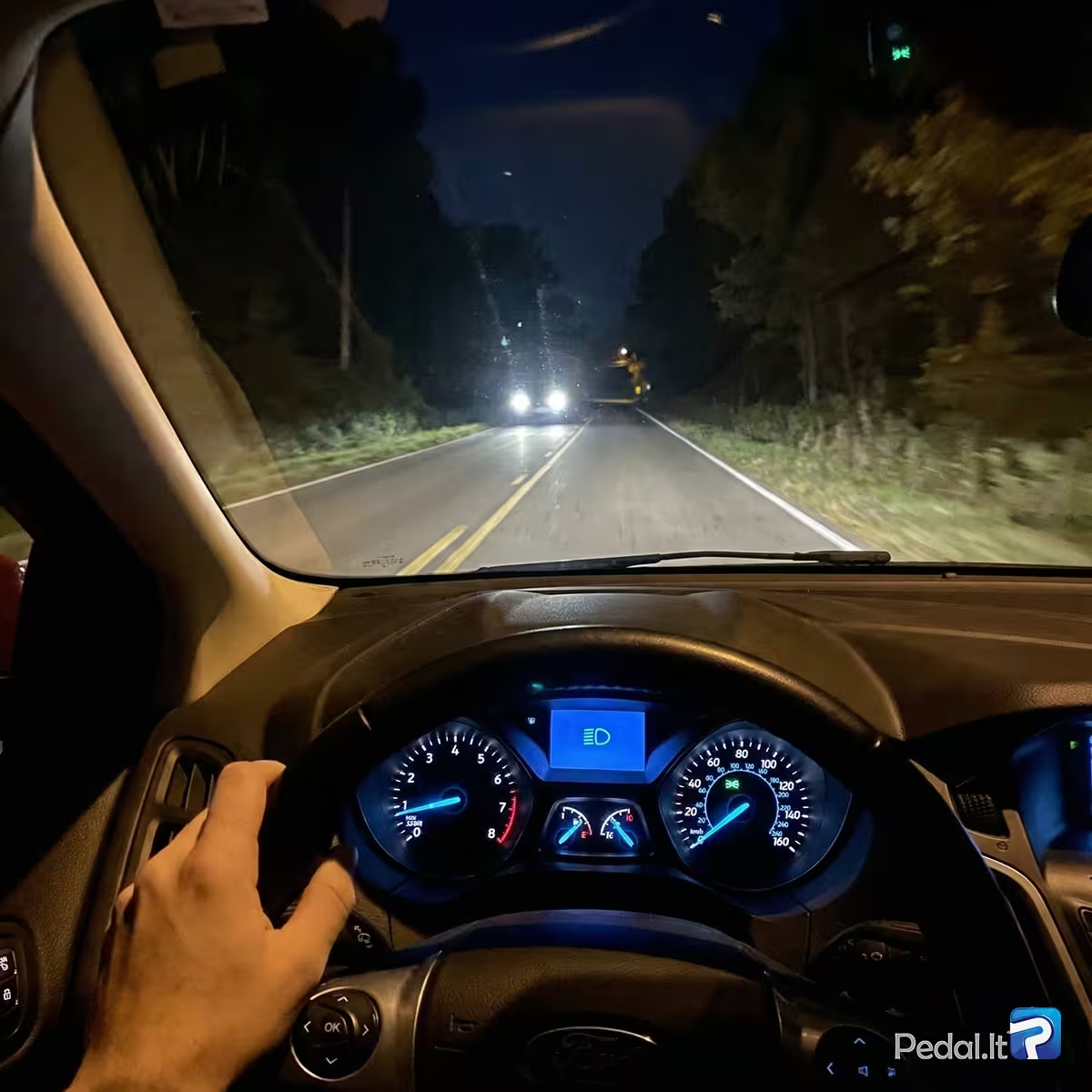
In which situations during hours of darkness must the vehicle's high-beam headlights be switched to low beam?
Regulation RTR 95. During hours of darkness or in conditions of poor visibility, main-beam headlights must be switched to low beam in the following cases: 95.1 on illuminated roads; 95.2 when the distance to an oncoming vehicle is at least 150 m. JB
1. When driving on illuminated roads within built-up areas.
2. When an oncoming vehicle is at least 150 m away.
3. Switching to low beam is optional.
4. When driving on illuminated roads outside built-up areas.
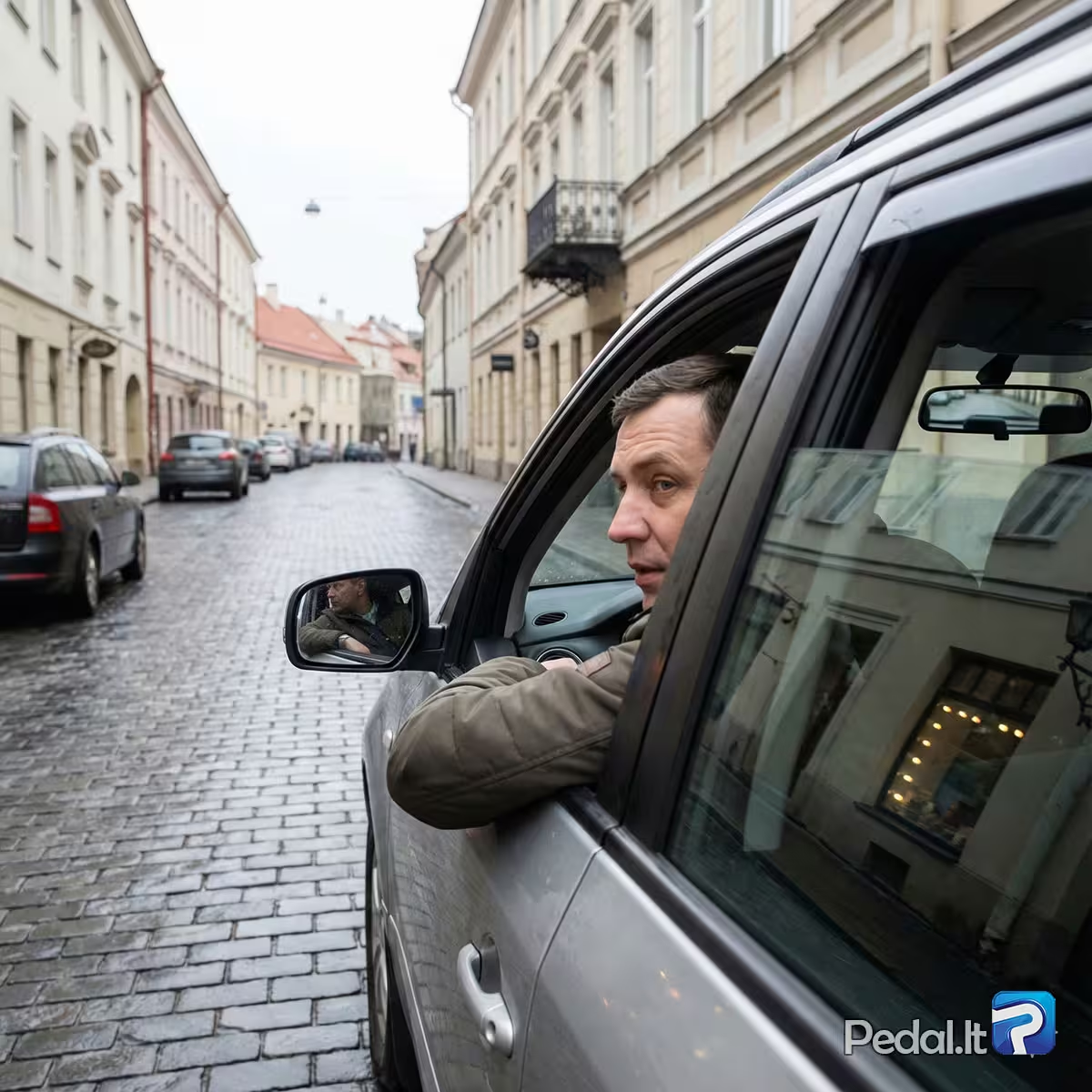
What must a driver do when reversing?
Note: If the steering wheel is turned sharply while reversing, the front of the vehicle can swing to the side and strike obstacles or other road users. When reversing, a driver must give way to other road users.
1. The driver must give way to other road users.
2. The driver must use the horn.
3. The driver must make sure that there are no obstructions behind the vehicle.
4. Do not obstruct other road users ahead.
What factors affect road surface quality and traffic safety?
Manhole covers for underground information and communication systems can be more slippery than the surrounding road surface and may also be uneven.
1. Potholes.
2. Manhole covers for underground information and communication systems.
3. Oil stains on the roadway.
4. Loose gravel or stone chippings on the road.
5. Wet road surface (slippery conditions).
When is it permitted to teach someone to drive a motor vehicle on the roads?
RTR 21. Driving training. 4. Driving instruction on roads is permitted only when the student possesses sufficient driving skill. Instruction may be carried out only on roads where the owner has not prohibited it.
1. When the student has sufficient driving skills, understands the traffic rules, and complies with their requirements.
2. When the student can drive a vehicle but does not know the traffic rules.
3. Driving instruction on public roads is permitted only after the student has completed driving school.
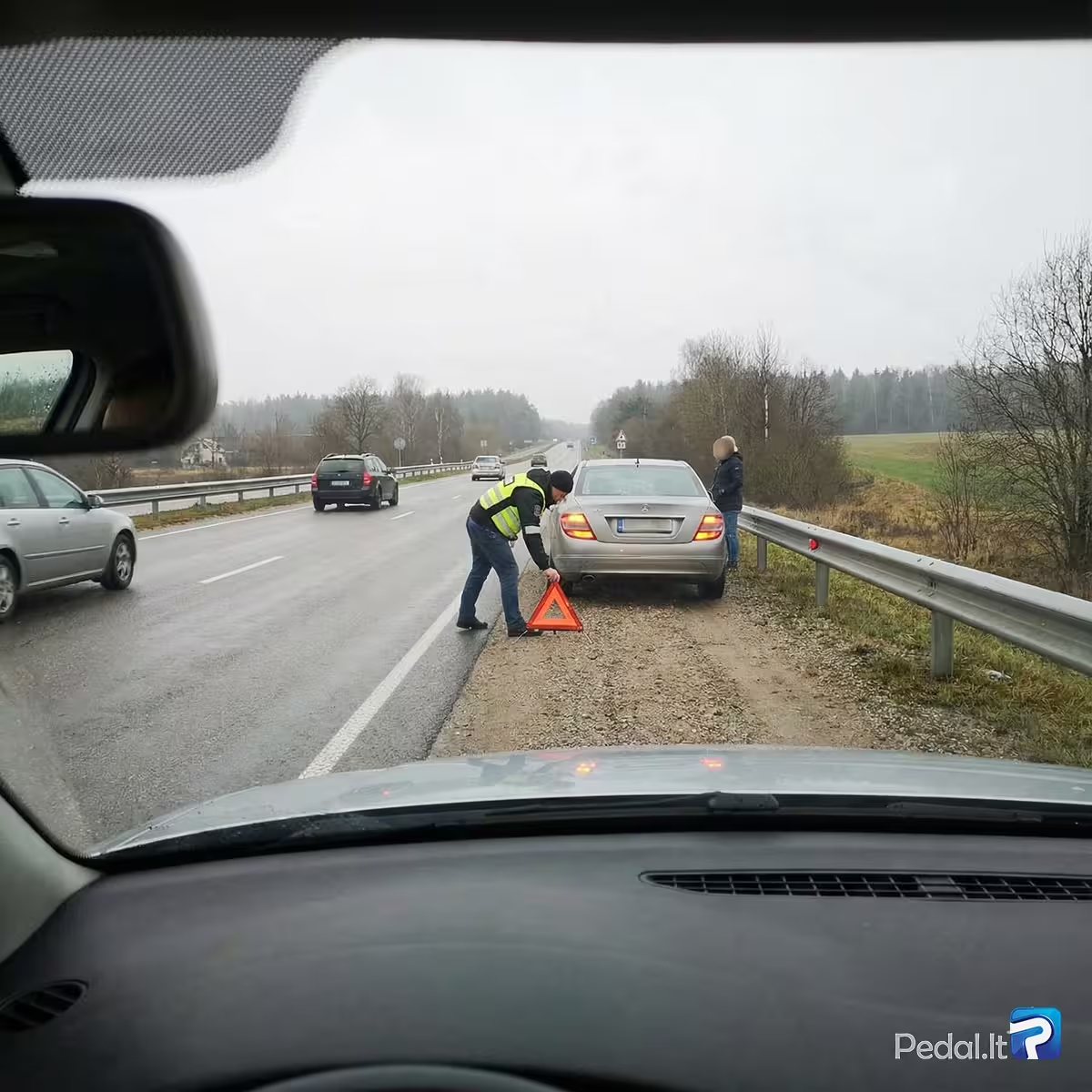
A vehicle has broken down on the road. What is the safest action to take?
1. Have the vehicle removed from the roadway as soon as possible using a tow truck (rigid towing).
2. Turn on your hazard lights and wait beside the vehicle.
3. Try to push the vehicle to the side of the road.
4. Stop and attempt to repair the vehicle while still on the roadway.
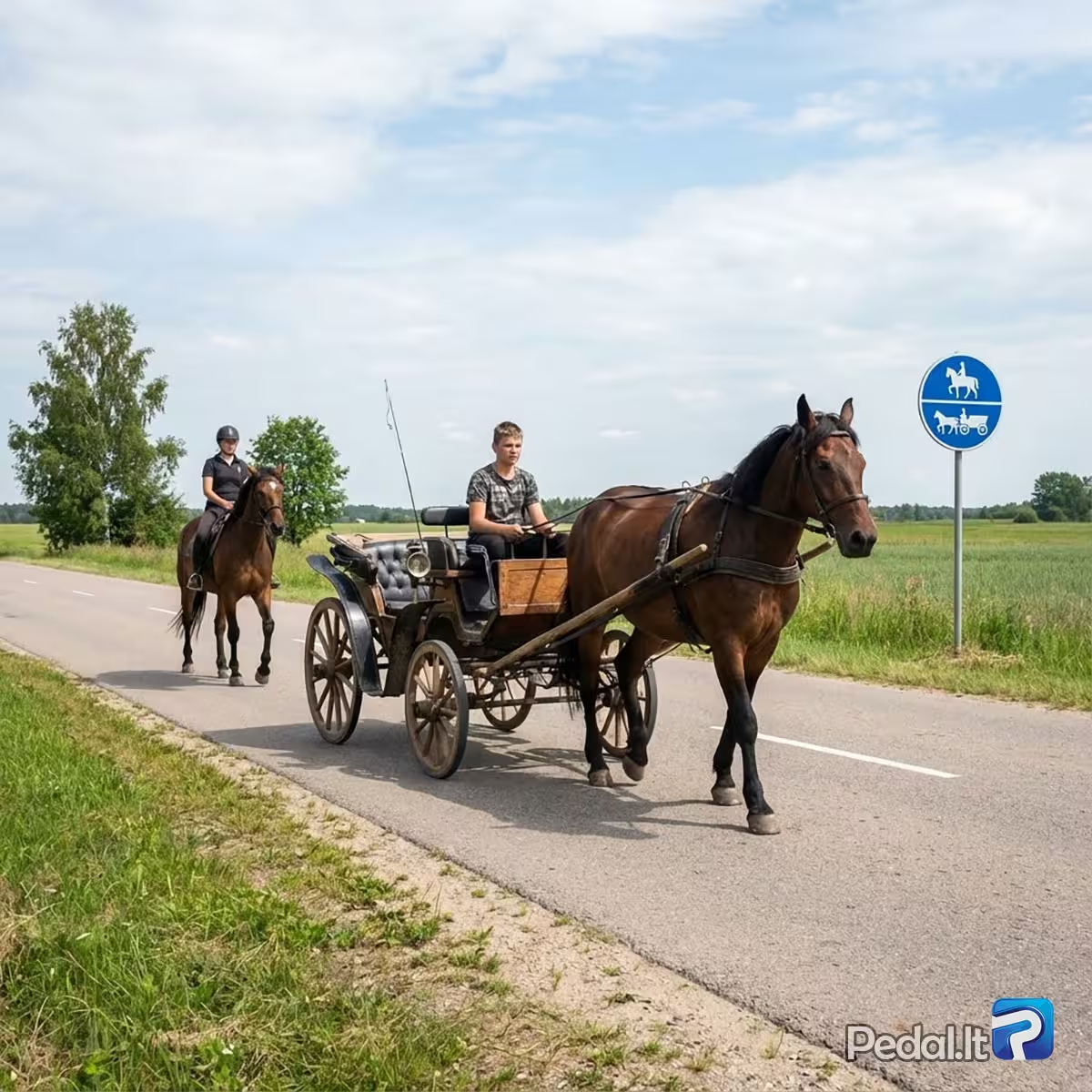
Driving an animal-drawn vehicle or riding an animal on roads is permitted from the age of:
Regulation RTR 67 — Only persons aged 14 or older may drive an animal-drawn vehicle, herd animals or birds, or ride an animal on the road.
1. 16 years old.
2. 15 years old.
3. 14 years old.
4. 12 years old.
5. 10 years old.
Your vehicle's dipped-beam headlamps are on during daylight. Drivers in the oncoming lane keep switching their main beams to dipped beams (flashing their headlights). What does this indicate?
If other drivers switch their headlights from high beam to low beam (flash) during the day, it may indicate that your low beams are excessively bright or misaligned and are dazzling other road users. This is dangerous because dazzled drivers can become disoriented and cause accidents. If you notice that drivers often flash their lights as they pass you, it is a sign to have your vehicle's lighting checked and, if necessary, adjusted. 81. The warning signals are as follows: using turn and brake light signals (signals may also be indicated by hand); sounding the horn; switching headlights on and off; using hazard warning lights; turning on flashing orange hazard lights; and placing a warning triangle on the road or attaching it to a vehicle.
1. You must switch on your main-beam (high) headlamps.
2. You must switch on your position (parking) lamps.
3. Your vehicle's headlamps are misaligned or aimed too high and are dazzling other road users.
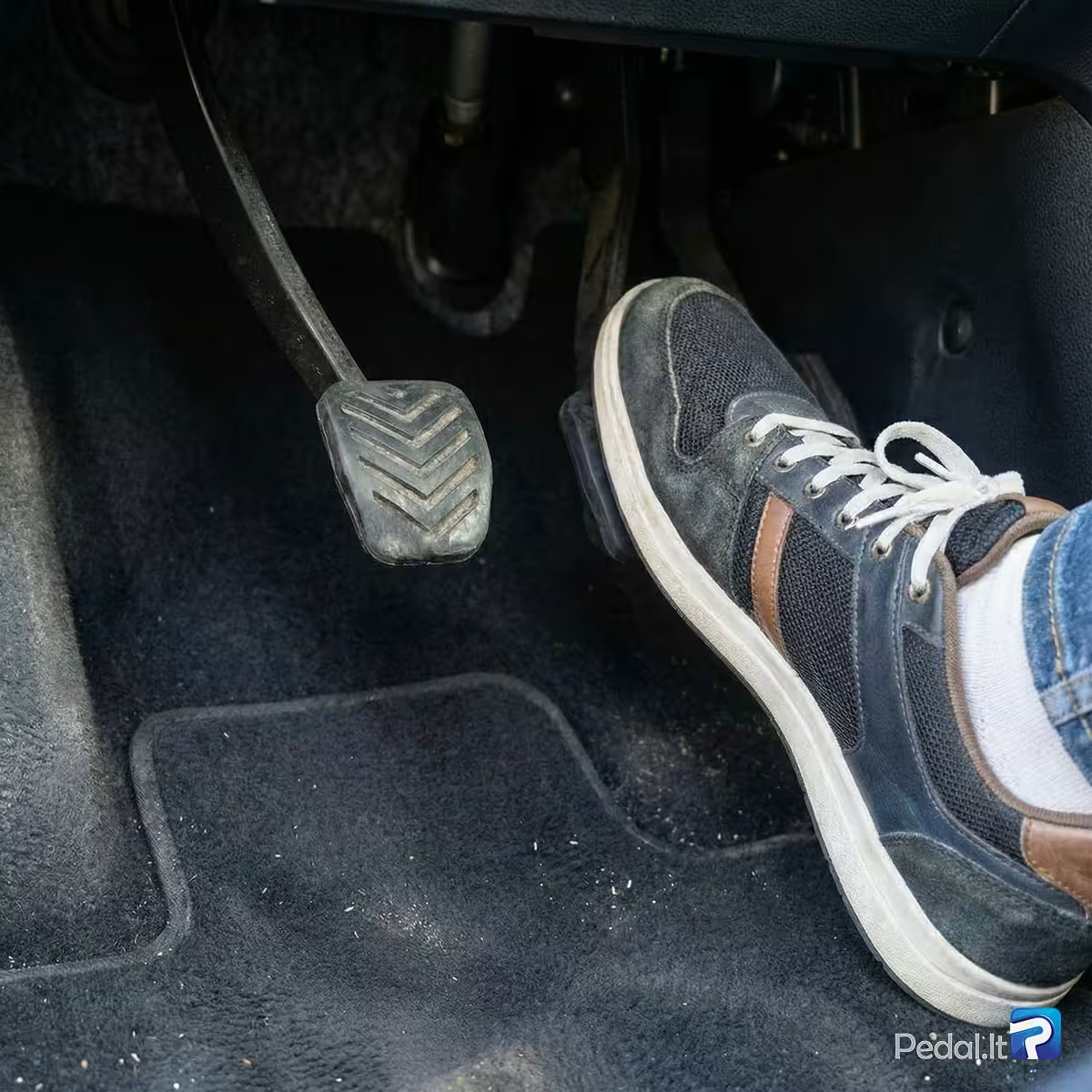
Which factors can cause the clutch to wear out more quickly?
Causes of premature clutch wear include an improperly adjusted clutch release mechanism, loose clutch mounting screws, weakened clutch springs, or a worn gearbox primary shaft.
1. Incorrectly adjusted clutch release mechanism.
2. Loose clutch mounting screws.
3. Weakened clutch springs.
A load projects up to 1 metre beyond the front or rear of a vehicle. It will be transported at night or in conditions of poor visibility. How should this load be marked?
If the load projects less than 1 m beyond the front or rear of the vehicle, marking is not required (RTR 2.10). Any motor vehicle carrying a load that extends more than 1 m beyond the front or rear, or beyond the sides of the vehicle, must have the extremities of the load marked as specified in Annex 4 to these Rules (RTR 4.12). The extremities of loads protruding more than 1 m in front or rear, any projection to the side, and extremities of vehicles wider than 2.6 m must bear distinguishing marks — 400 mm square plates covered with alternating diagonal reflective white and red stripes 50 mm wide. These plates must be mounted not lower than 0.4 m and not higher than 1.6 m above ground level. During hours of darkness or when visibility is poor, such vehicles must have lights at the projecting points: white at the front, amber at the sides and red at the rear. JB
1. Using brightly coloured flags.
2. Distinctive markers — square plates with alternating diagonal reflective white and red stripes.
3. Marked with lights: white at the front, amber at the sides and red at the rear.
4. Marking is not required.
What should you do if you break another car's headlamp while manoeuvring in a car park?
This is considered a road traffic accident. First, try to locate the vehicle's owner and, together with them, complete the Road Accident Report Form. If you cannot find the owner, call the police — they can help locate the owner or come to the scene to record the accident. Also notify your insurance company of the accident as soon as possible. RTR 220. If there are no deaths or injuries and the involved road users agree on the circumstances and do not call the police to the scene, the parties must draw the accident sketch on the Road Accident Report Form, describe the circumstances in writing, and have the form signed by all involved. If none of the parties has the Road Accident Report Form, the circumstances and sketch may be recorded on a blank sheet of paper listing all involved road users, their vehicles and any witnesses, and confirmed by the signatures of all involved. If the circumstances are contested, the police must be called to the scene. RTR 221. Participants in a road accident must refrain from consuming alcoholic beverages, medicines, narcotic drugs or other intoxicating substances immediately after the accident until they have undergone, or have refused, testing for alcohol or impairment by narcotic, psychotropic or other substances. RTR 222. If the accident caused only property damage and the victim is not present at the scene, the person involved in the accident must immediately notify the victim, and if this is not possible — the police.
1. Locate the vehicle's owner; if you cannot find them, call the police.
2. If nobody notices, you may continue driving.
3. Fill in the Road Accident Report Form together with the car owner, if possible.
4. Notify your insurance company about the accident.
Which of the following correctly describes stopping distance?
Stopping distance is the distance a vehicle travels from the moment the driver notices an obstruction until the vehicle comes to a complete stop. Braking distance is the distance the vehicle travels from the moment the brakes are fully applied until it stops. Reaction distance is the distance the vehicle travels from the moment the driver detects an obstruction until the driver begins to apply the brakes.
1. The distance a vehicle travels from the moment the driver detects an obstacle until the vehicle comes to a complete stop.
2. The distance a vehicle travels until the braking force is transmitted to the wheels.
3. The distance a vehicle travels from the moment braking begins until the vehicle comes to a complete stop.
Standing and parking are prohibited when the distance between a stationary vehicle and a solid line of the road marking (or the kerb) is:
The distance between a stationary vehicle and a solid line (or the kerb) must be at least 3 metres. If the distance is exactly 3 metres, standing and parking are permitted. If the distance is less than 3 metres (for example, 2 metres), standing and parking are prohibited.
RTR 150. Standing and parking are prohibited:
150.7 where there is a distance of less than 3 m between a stationary vehicle and a solid line of the road marking, the kerb, or, in its absence, the edge of the carriageway;
1. 3 metres
2. 3.5 metres
3. 4 metres
4. 2 metres
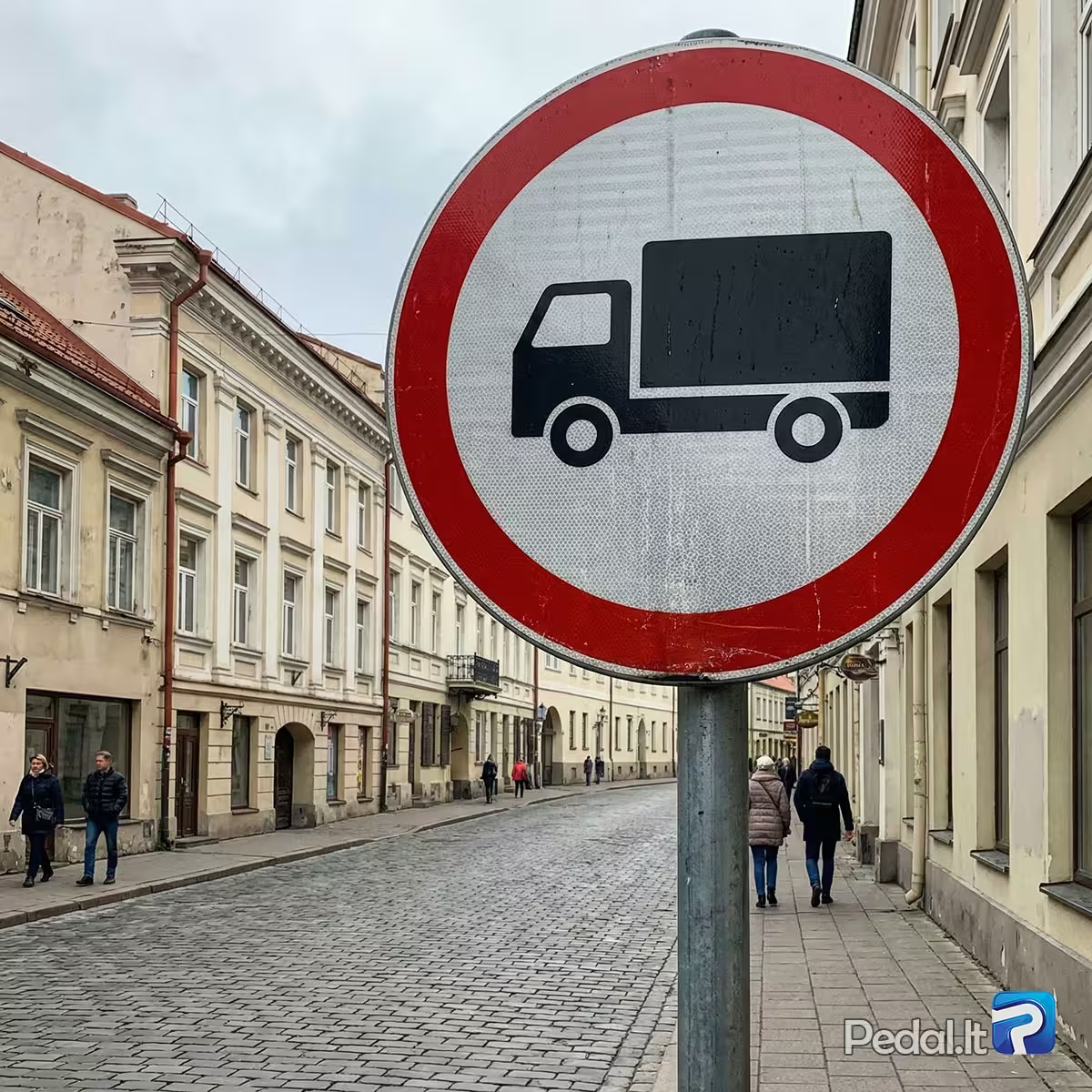
Are tractors or self-propelled vehicles permitted to pass this road sign?
Road sign 304 — "No entry for goods vehicles." Entry is prohibited for goods vehicles and vehicle combinations whose permissible maximum mass exceeds 3.5 tonnes or the weight shown on the sign. Tractors and self‑propelled vehicles are also prohibited, except for service vehicles.
1. Yes — passage is permitted.
2. No — passage is prohibited.
3. Passage is allowed only on working days.
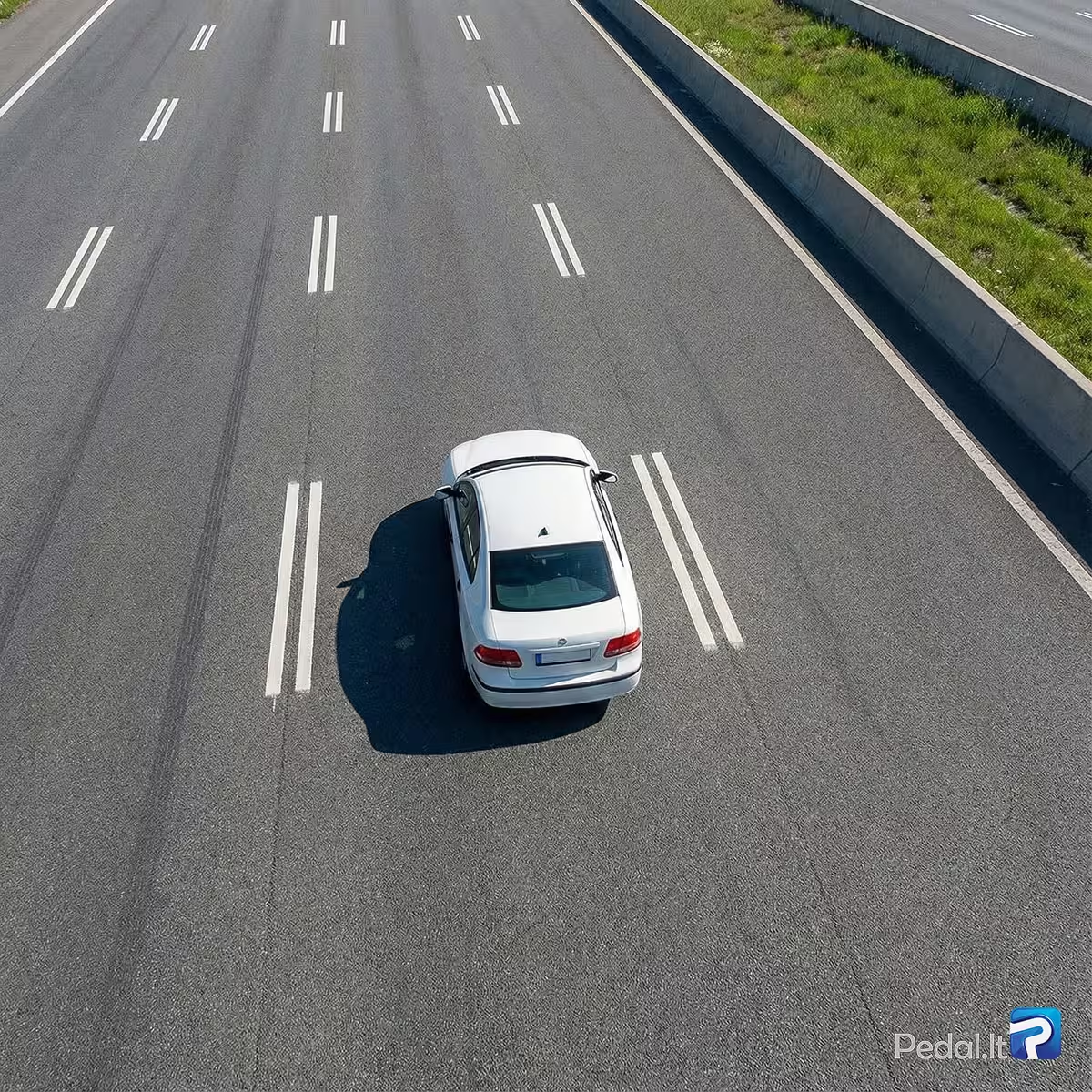
When may a double broken line be crossed?
RTR – Annex 3. 1.26. A double broken line indicates lanes of opposing traffic; it separates flows of traffic moving in opposite directions. Vehicles must not cross this line when it separates traffic moving in opposite directions. If the line separates lanes moving in the same direction, vehicles may cross it from either side when the green lane-control light is illuminated. When the amber lane-control light is illuminated, vehicles may cross it only if the line is to the driver’s right.
1. On both sides when the green lane-control light is illuminated.
2. When the amber lane-control light is illuminated, and the double broken line lies to the driver’s right.
3. Crossing it is prohibited in all cases.
.avif)
If you park on an even-numbered day of the month, between which hours must you move the vehicle to the opposite side of the road to comply with parking regulations?
Road sign 334 — “No parking on odd days”. Parking is prohibited on the side of the road where this sign is placed on odd-numbered days of the month. Road sign 335 — “No parking on even days”. Parking is prohibited on the side of the road where this sign is placed on even-numbered days of the month. When signs 334 and 335 are installed on both sides of the road, vehicles must be moved from one side to the other between 19:00 and 24:00 (7:00 pm–12:00 am); during that interval, parking is permitted on either side of the road.
1. From 5:00 pm to 9:00 pm
2. From 7:00 pm to 9:00 pm
3. From 10:00 pm to 11:00 pm
4. From 11:00 pm to 11:50 pm
Persons holding a school-issued certificate are permitted to ride bicycles on roads starting at what age?
Persons under 14 years of age are not permitted to ride bicycles on roads. However, those who complete an additional training course and obtain a school-issued certificate may ride on roads from age 12. Within residential areas, there is no minimum age restriction for cyclists.
1. 12 years of age.
2. 14 years of age.
3. 16 years of age.
In which situations may drivers of emergency vehicles exercise priority when operating with blue and red flashing lights and special audible signals?
Drivers of special (emergency) vehicles — such as ambulances, police, and fire service vehicles — may use blue and red (or only blue) flashing lights and special audible signals when necessary to: (1) save human life or health; (2) protect property; (3) ensure public order and traffic safety; (4) apprehend persons suspected of offences; or (5) escort or accompany official delegates and protected persons. Flashing lights must be visible in all directions (360°). While using these signals, drivers of special vehicles may disregard certain traffic rules specified in the Regulations, provided they do not jeopardize traffic safety and only after ensuring that other road users are giving way. They must drive cautiously and avoid creating danger to other road users. Other road users are required to give way immediately to such vehicles so they can pass safely and quickly. The right of way also applies to drivers of vehicles being escorted by special vehicles.
1. When doing so does not endanger traffic safety.
2. After confirming that other road users are yielding to them.
Why is a slippery road surface hazardous?
A slippery road surface is hazardous because tyre grip on the pavement is greatly reduced. As a result, stopping distances increase and the vehicle may skid sideways when negotiating a bend.
1. Stopping distance increases.
2. Steering requires more effort.
3. Your vehicle is more likely to skid sideways when cornering.
How is a motorized bicycle defined?
Note that a motorized bicycle must have at least two wheels and an auxiliary internal combustion engine or an electric motor — it is not sufficient for it to have only an internal combustion engine. SEAK Art. 2.40. "Motorized bicycle" — a vehicle with at least two wheels that is powered by the rider’s muscular force using pedals or handlebars and is equipped with an auxiliary internal combustion engine or electric motor with a maximum net power of no more than 1 kW and a maximum design speed of no more than 25 km/h. The auxiliary engine stops providing power when the vehicle reaches 25 km/h. Wheelchairs for persons with disabilities are not classified as motorized bicycles.
1. A vehicle whose maximum net power does not exceed 1 kW and whose maximum design speed does not exceed 25 km/h.
2. A vehicle that is primarily propelled by the rider’s muscular power using pedals or handlebars and is equipped with an auxiliary internal combustion engine or an electric motor.
After you pass your first driving test for category B, the driving licence you receive will be valid for:
LAW ON ROAD TRAFFIC SAFETY Article 22.5. Novice drivers are issued a driving licence valid for three years. In accordance with the procedure established by the Minister of the Interior or their authorised institution, this licence may be replaced with a 10-year licence after two years from the date of issue without completing additional driver training, provided that during those two years the driver has not committed any violations of the Road Traffic Rules (RTR) that would require additional driver training under this Law and has not caused a road traffic accident resulting in bodily injury to road users (except where the accident occurred under circumstances that exclude criminal liability or where the person is not subject to administrative liability). A novice driver who commits any RTR violation that triggers additional driver training under this Law, or who causes a road traffic accident resulting in bodily injury to road users (except as noted above), must complete additional driver training within one year from the date a court judgment (or order) recognising the person as having committed an offence takes effect, or from the date of execution of an administrative order issued after the administrative offence. If a court judgment or penal order imposes arrest or a term of imprisonment and the execution of the sentence is not suspended, the additional driver training must be completed within one year after serving the imposed sentence.
1. 10 years.
2. 15 years.
3. Unlimited validity.
4. 3 years.
How must a load that projects more than 1 m beyond the front or rear of a vehicle's dimensions be marked?
According to RTR Annex 4.12: Any load whose extreme edge projects more than 1 m beyond the front or rear of the vehicle—or which projects even minimally to the side—or any vehicle wider than 2.6 m must be marked with distinctive signs: squares 400 mm on a side with diagonal alternating reflective white and red stripes 50 mm wide. These signs must be mounted between 0.4 m and 1.6 m above ground level. During hours of darkness or when visibility is poor, such vehicles must also display lights in designated positions: white at the front, amber (orange) on the sides, and red at the rear.
1. With reflectors or lights: white at the front, amber on the sides, and red at the rear.
2. With distinctive signs — squares with diagonal alternating reflective white and red stripes.
3. With high-visibility flags.
4. During hours of darkness or poor visibility: with white lights at the front, amber on the sides, and red at the rear.
The requirement to 'Give Way' means:
3. Terms used in the Road Traffic Rules: 3.2. 'Give way' means that drivers must stop, or must not begin to drive or manoeuvre, if doing so would require other vehicle drivers to change their direction of travel or their speed.
1. That drivers on a side road must yield to vehicles approaching the intersection on a priority road.
2. That drivers must stop, or must not begin to drive or manoeuvre, if doing so would force other vehicle drivers to change their direction of travel or their speed.
3. That at an uncontrolled intersection drivers must yield to vehicles approaching from the right.
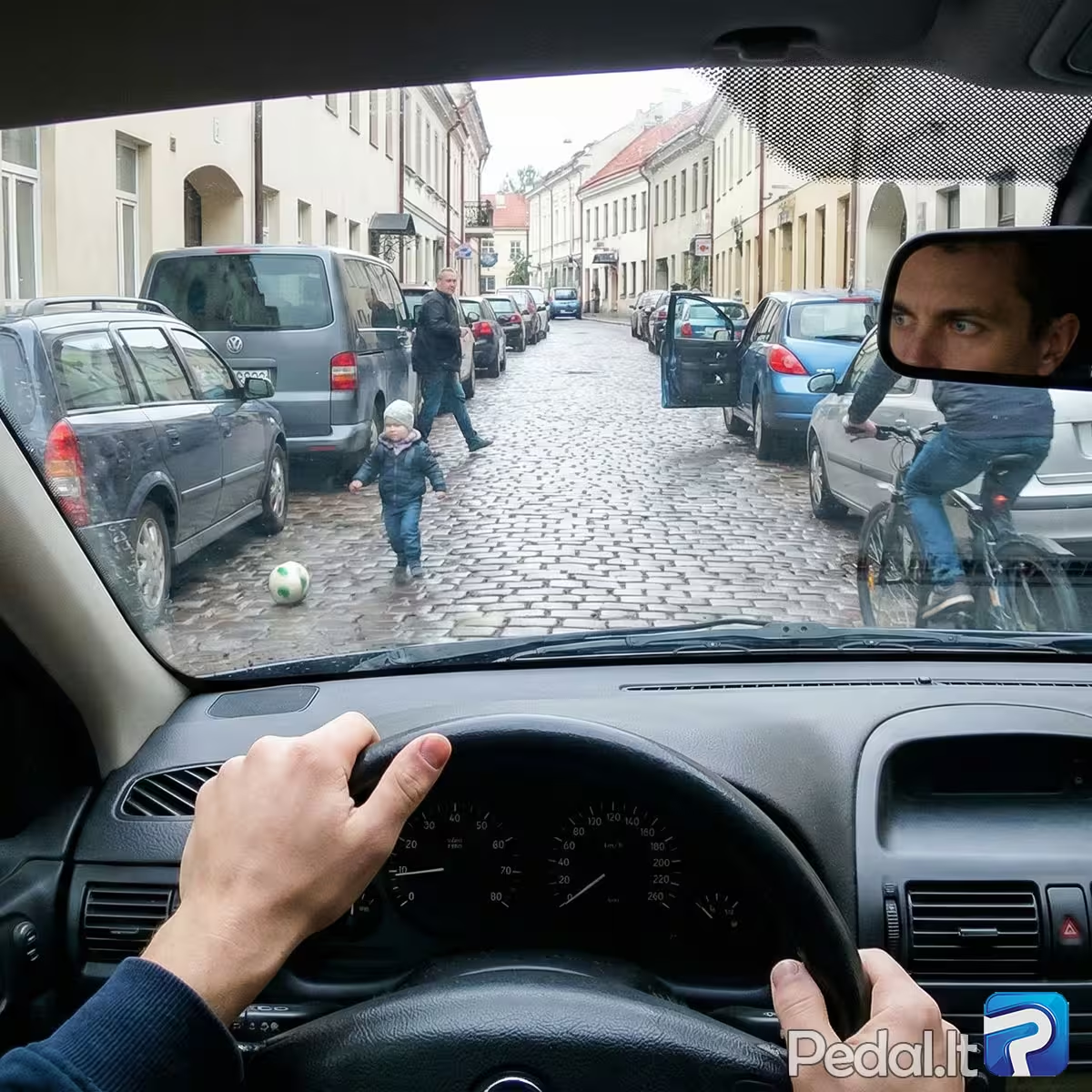
When driving past parked vehicles, you should be particularly alert for:
When driving beside a line of parked vehicles, watch for pedestrians who may step out into the road, drivers exiting their cars, and vehicle doors opening unexpectedly — any of these can cause a collision. 148. The doors of a parked vehicle must not be opened if doing so could create an obstruction or a hazard to other road users.
1. Pedestrians walking between parked vehicles.
2. Drivers exiting their vehicles.
3. Doors of parked vehicles that may open unexpectedly.
4. Children at play who may run into the carriageway.
Are you allowed to drive across a level crossing if the crossing attendant is facing you and holding a flag above their head?
RTR 168. Before entering and crossing a level crossing, road users must obey road signs, road markings, the position of barriers, traffic lights, audible warnings, and the signals of level crossing attendants/controllers. Before entering a level crossing, a road user must always ensure that no rail vehicle is approaching the level crossing. It is recommended that children under 12 be accompanied by an adult when crossing a level crossing.
1. Crossing the level crossing in this situation is prohibited.
2. Driving across the level crossing is permitted.
3. Crossing is permitted only after ensuring that no rail vehicle is approaching the level crossing.
Drivers may be arrested or imprisoned for up to one year if their blood alcohol concentration (BAC) is:
Criminal Code of the Republic of Lithuania, Article 281‑1: A person who, while operating a motor vehicle, tractor, or self-propelled machine, or instructing a learner driver, is under the influence of alcohol with a blood alcohol concentration of 1.51 per mille or higher; or who refused a sobriety test when showing signs of intoxication; or who consumed alcohol after a road accident before the circumstances were established and was found to have a blood alcohol concentration of 1.51 per mille or higher, shall be punished by a fine, arrest, or imprisonment for up to one year.
1. 0.41 per mille.
2. 2.51 per mille.
3. 1.51 per mille.
4. 0.2 per mille.
Is turning around permitted on the bridge?
Traffic Regulations (RTR) 116. Turning around is prohibited under clause 116.4: on and under bridges, overpasses, and viaducts. JB
1. Yes, it is permitted.
2. No, it is not permitted.
1 of 30 Task
Time left: 00:00:00
1
2
3
4
5
6
7
8
9
10
11
12
13
14
15
16
17
18
19
20
21
22
23
24
25
26
27
28
29
30