When are pedestrians permitted to step onto the carriageway?
RTR 44. Pedestrians may enter the carriageway only after assessing the distance to and speed of approaching vehicles and ensuring it is safe to proceed. Before stepping onto or while moving along the carriageway, pedestrians must refrain from actions (such as using mobile devices) that would distract them from observing the surroundings and traffic conditions and would prevent them from confirming it is safe to continue.
1. After evaluating the distance to approaching vehicles.
2. After evaluating the speed of approaching vehicles and ensuring it is safe to cross at the pedestrian crossing.
3. Provided they refrain from actions (e.g., using mobile devices) that could distract them from observing the surroundings and the traffic situation.
4. If they are not looking at the carriageway.
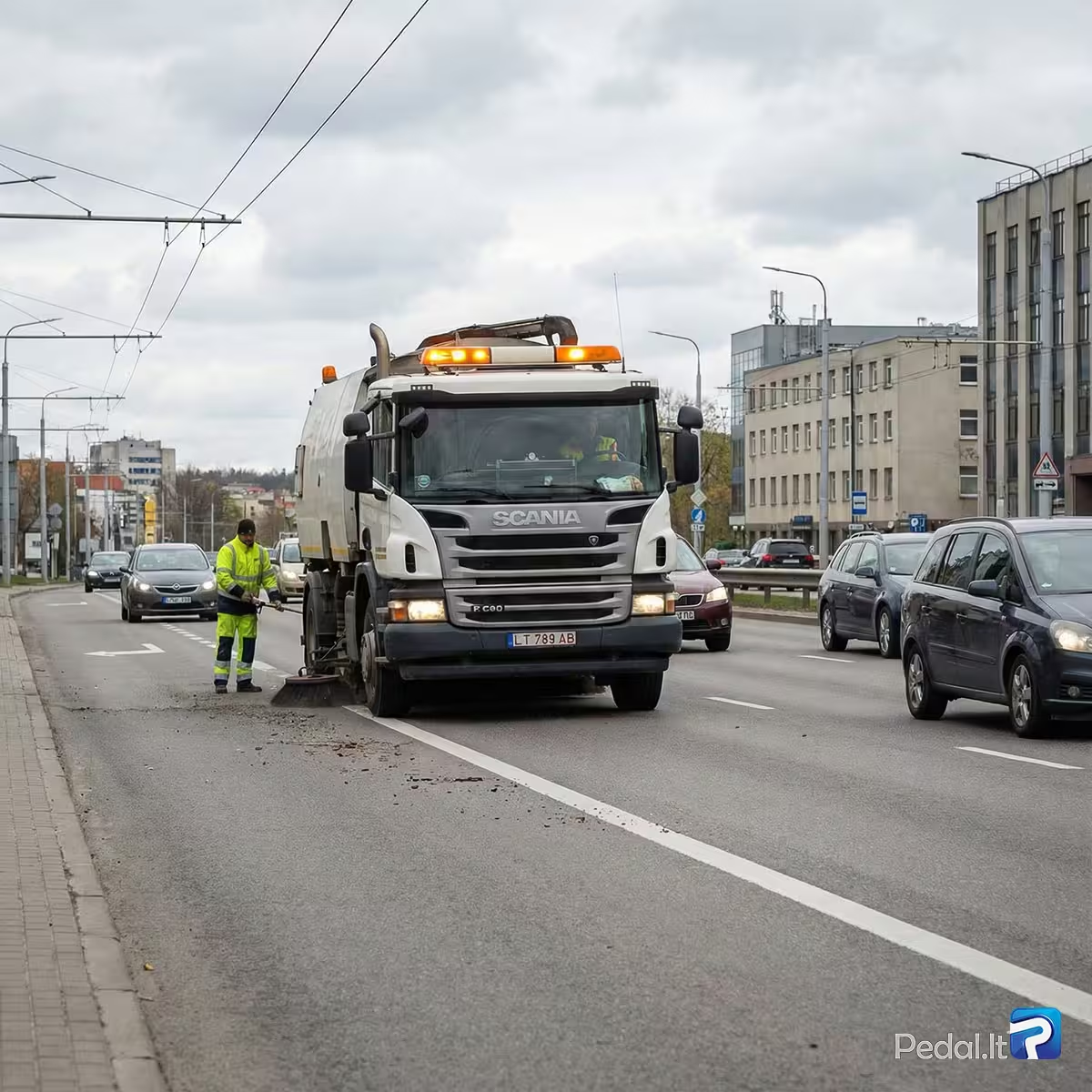
Are drivers of motor vehicles equipped with orange flashing lights permitted to disregard road-marking lines while performing work on the roadway?
Regulation RTR 188: An orange flashing light may be used only when the vehicle obstructs other road users—for example, when the vehicle's loaded or unloaded dimensions exceed permitted limits; when performing work on the roadway; when stopping or standing; when moving at very low speed; when escorting an organized group of cyclists; or when transporting hazardous goods. An orange flashing light does not confer priority; it merely attracts attention and warns other road users of a potential hazard. While driving, standing, or working on the road, drivers of vehicles displaying orange flashing lights must ensure they do not compromise traffic safety.
1. Yes — provided doing so does not jeopardize traffic safety.
2. No — they are not allowed to do so.
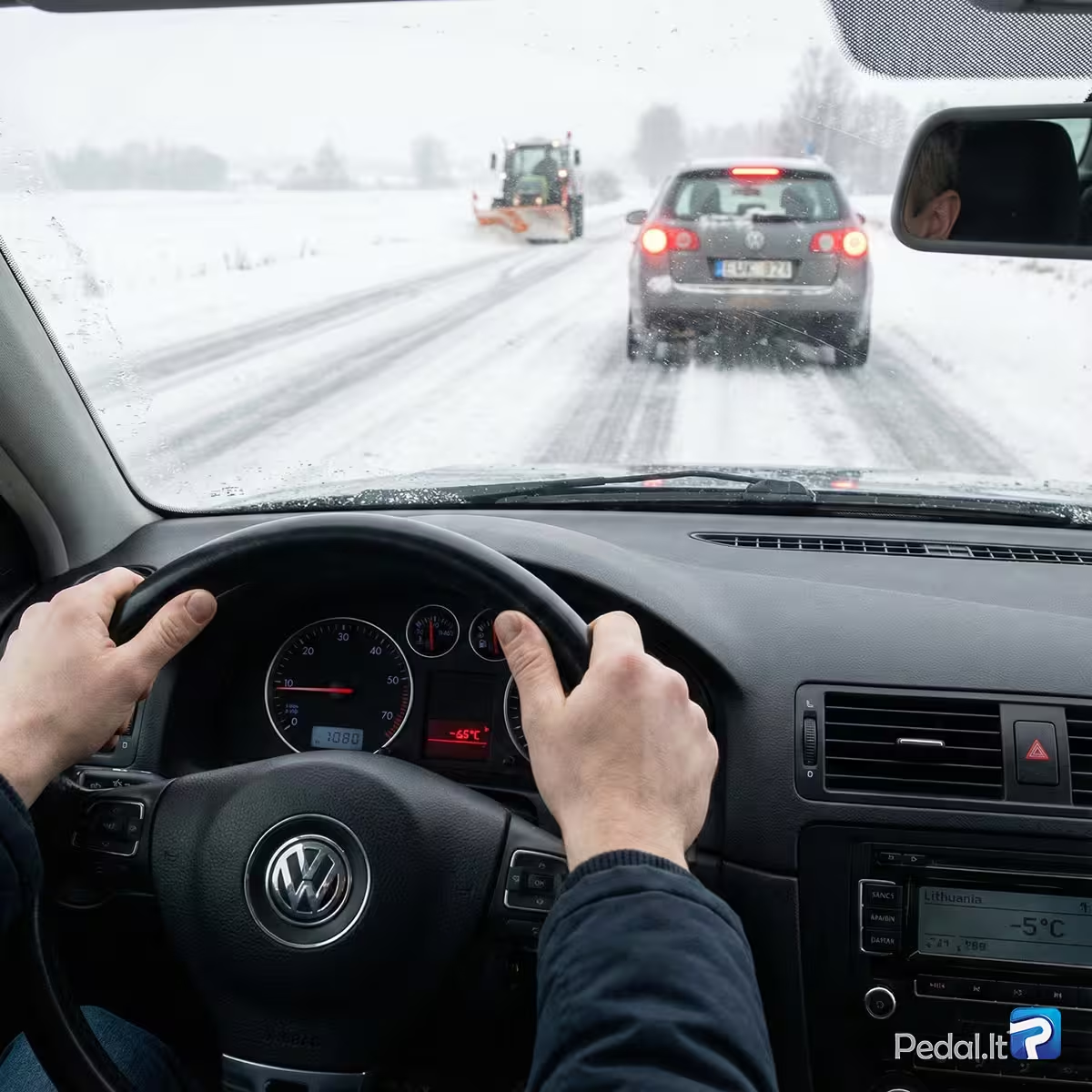
Which factor is considered the primary risk when driving on snowy roads?
1. Driver error (human factor)
2. Adverse weather conditions
3. Slippery road surface
.avif)
What are the fundamental principles of driver conduct?
1. Responsibility and courtesy.
2. Aggressive behavior.
3. Anger.
4. Disrespect toward other road users.
Which description corresponds to a "Bicycle path"?
Law on Road Traffic Safety, Art. 2, para. 11. "Bicycle path" — a road or part of a road intended for the movement of bicycles, motorcycles and electric micromobility vehicles, marked with appropriate road signs. A bicycle path must be separated from the roadway or its lanes by engineering measures.
1. A portion of the roadway, or a separate path, designated for bicycle and moped traffic.
2. A road or section of road intended for the movement of bicycles, motorcycles and electric micromobility vehicles, marked by appropriate road signs.
3. A portion of the road designated for shared pedestrian and bicycle use.
.avif)
To whom must a motorcyclist yield?
RTR 12. Road users must immediately yield to approaching emergency vehicles that display blue and red (or only blue) flashing lights and use special audible signals, as well as to vehicles escorted by them. Road users shall form an emergency corridor as follows: 12.1 On a road with a single lane in one direction, drivers must stop on the right hard shoulder if one exists; if there is no hard shoulder, they must stop as close as possible to the right edge of the carriageway. 12.2 On a road with two or more lanes in the same direction, vehicles in the far-left lane must move and stop as close as possible to the left edge of the carriageway designated for that direction, while vehicles in the lanes to the right must move and stop as close as possible to the right edge of the carriageway (or the hard shoulder). 12.3 On a road with a central reservation, only drivers travelling in the same direction must comply with the requirements in paragraphs 12.1 and 12.2. RTR 154. At a controlled intersection, drivers on a side (minor) road must yield to vehicles approaching on the priority road.
1. The red car.
2. The police vehicle.
3. The bus.
4. The motorcyclist is not required to yield to anyone.
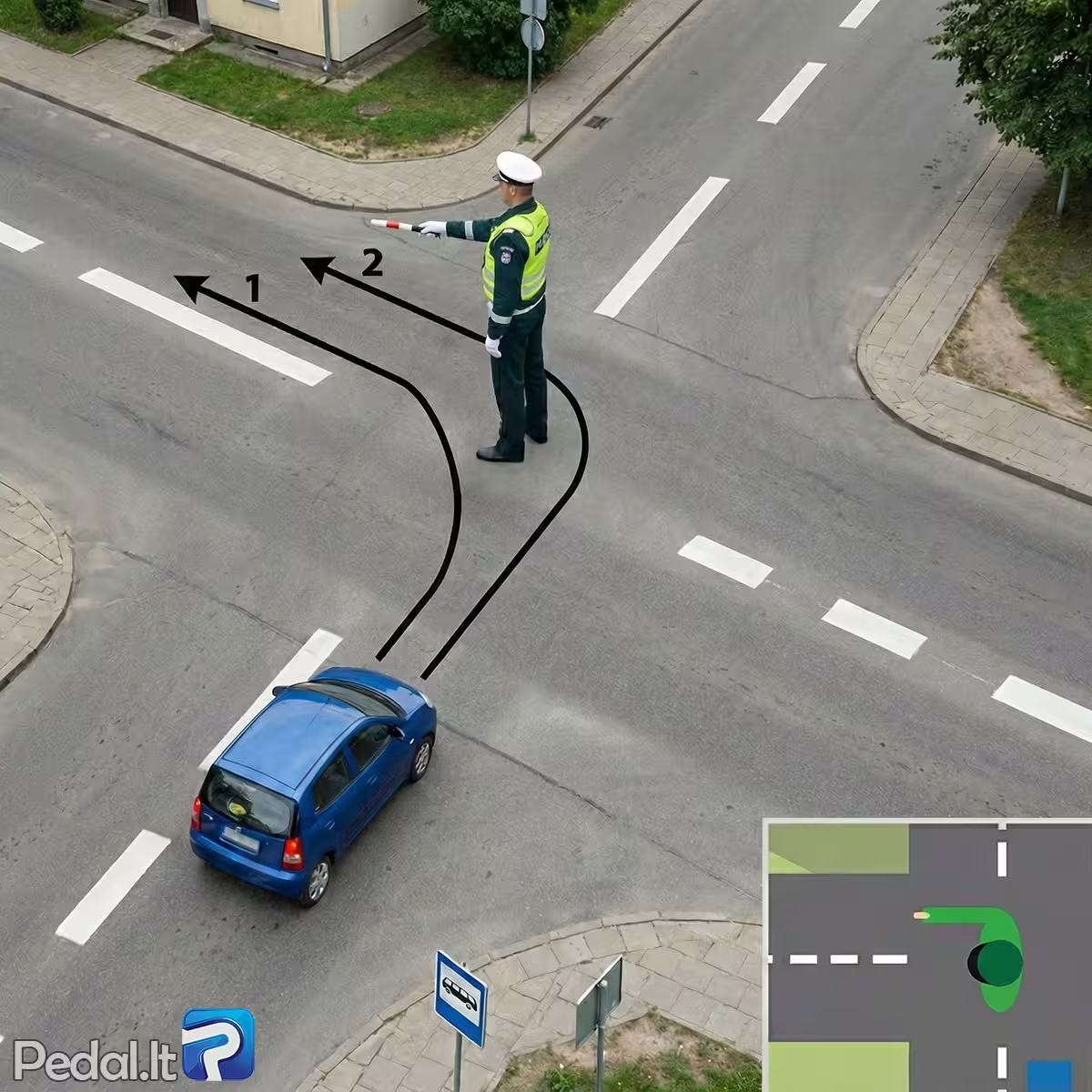
Is it permitted to make a left turn in this situation?
In this scenario the driver must complete the left turn before passing the traffic officer. Turning left after passing the officer would violate Road Traffic Rules requirement 77.2.3, which prohibits vehicles approaching from the rear and from the right from proceeding. RTR 77 — Signals given by traffic officers — are defined as follows: 77.1 Arms extended sideways or down: 77.1.1 Vehicles to the left and to the right may proceed straight ahead or turn right; pedestrians may cross the carriageway. 77.1.2 Vehicles and pedestrians in front of and behind the officer must not proceed. 77.2 Right arm extended forward: 77.2.1 Vehicles approaching from the left may proceed in any direction. 77.2.2 Vehicles from the front may proceed only to the right. 77.2.3 Vehicles from the rear and from the right must not proceed. 77.2.4 Pedestrians may cross the carriageway behind the officer. 77.3 Arm raised upwards: 77.3.1 All road users must not proceed in any direction. 77.3.2 Drivers must stop their vehicles without changing lanes.
1. Turning left is permitted, but only when following the first trajectory.
2. Turning left is permitted, but only when following the second trajectory.
3. Turning left is permitted in both cases.
4. Turning left is prohibited.
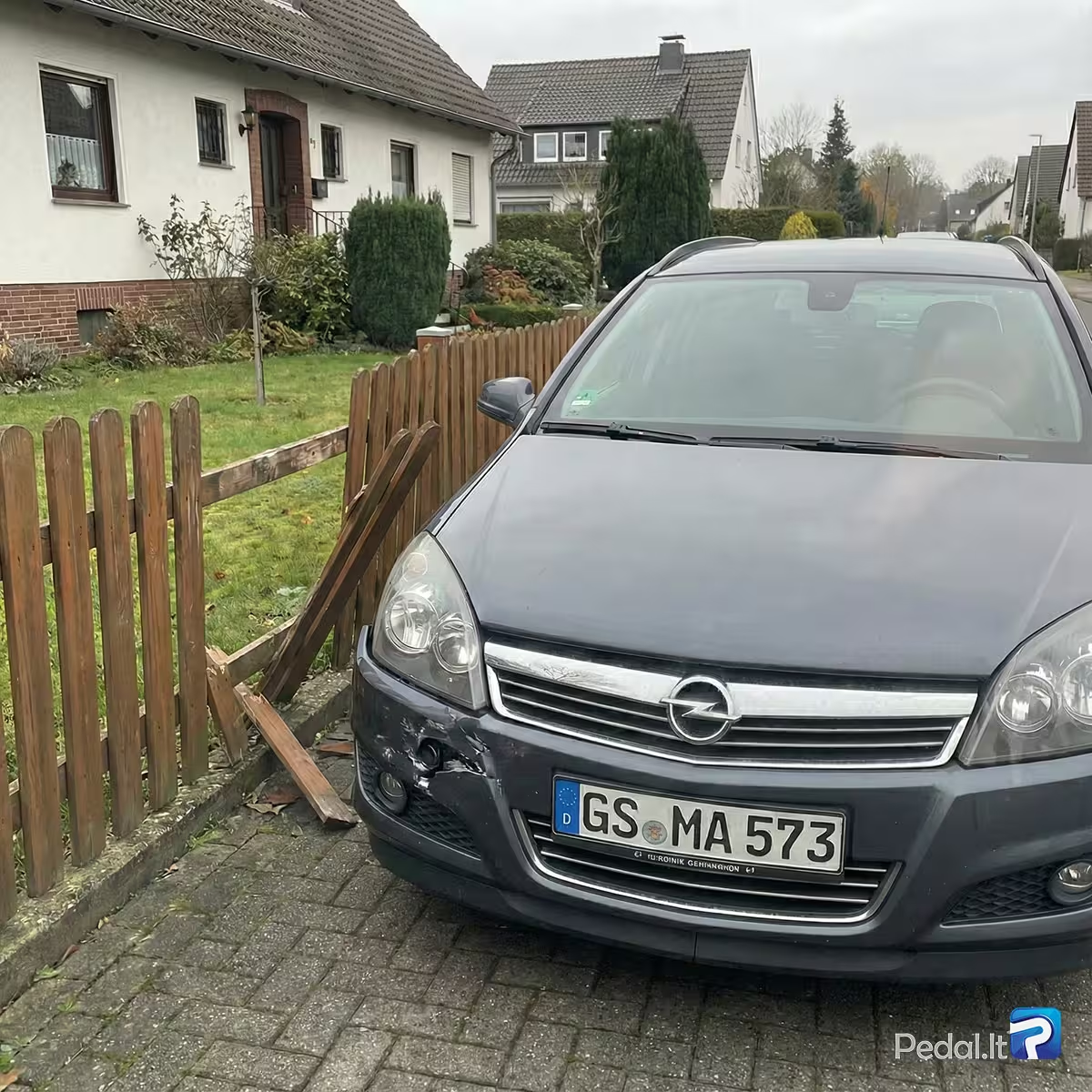
You have damaged the fence of a private property with your vehicle while the owner is absent. What must you do?
1. Leave a note with your contact information and then leave the scene.
2. Attempt to repair the damage yourself if it is safe and feasible.
3. Notify the police and remain at the scene until instructed otherwise.
4. Drive away from the scene because the property owner is absent.
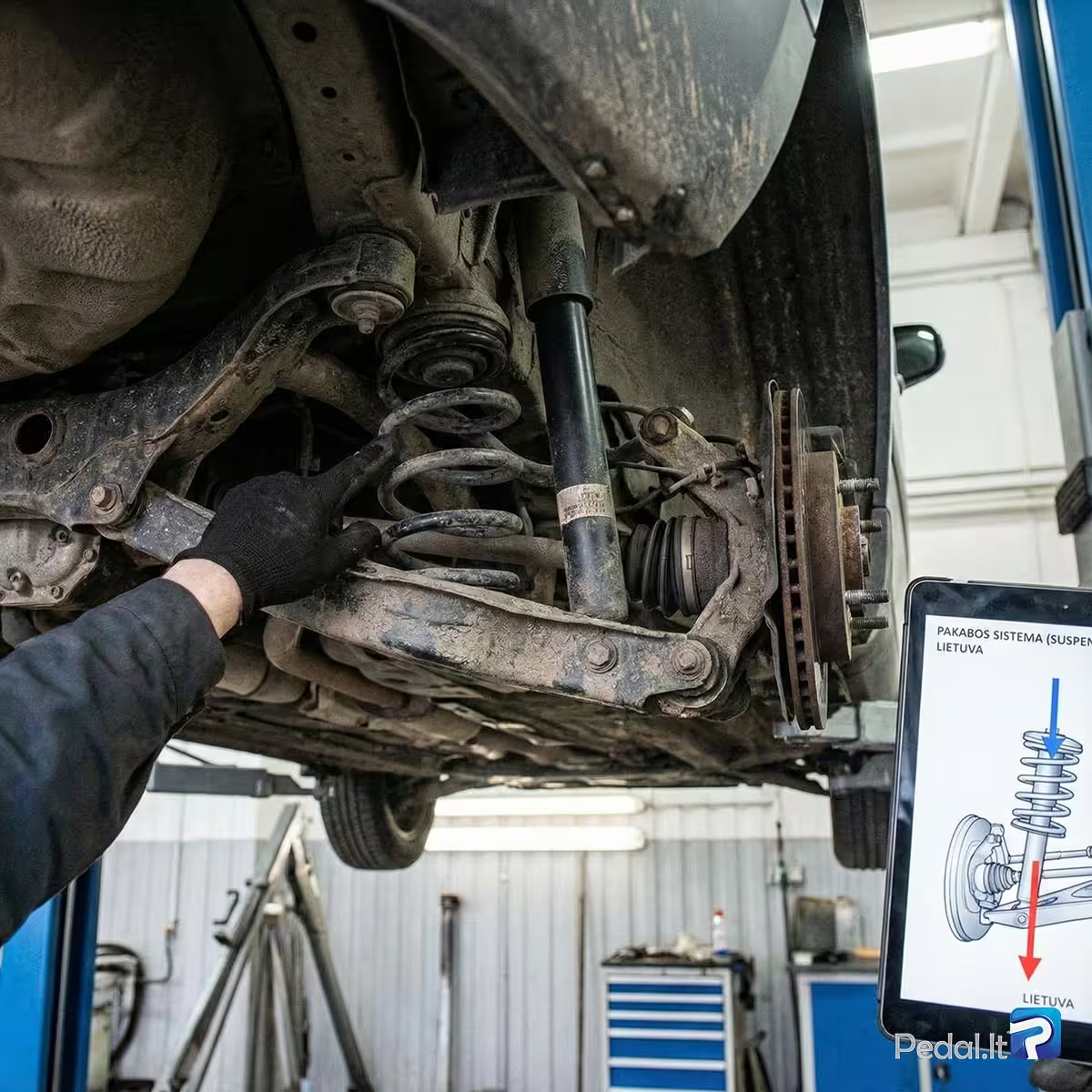
What is the function of a vehicle's suspension system?
The function of a vehicle suspension system is to convert bumps and shocks transmitted to the wheels, with the aid of shock absorbers, into minor oscillations of the vehicle body, providing comfort for driver and passengers. The suspension reduces body oscillations, and when functioning properly it enhances driving safety.
1. To improve ride comfort for the driver and passengers.
2. To convert bumps and shocks transmitted to the wheels into minor oscillations of the vehicle body.
Before making a turn, drivers must ensure that:
Before making a turn, drivers must reduce speed and ensure their vehicle does not enter the lane of oncoming traffic or that the rear wheels do not mount the pavement. RTR 108. The turning manoeuvre must be executed so that vehicles do not encroach on the oncoming-traffic lane when entering or leaving the intersection. If a turn is made from a single lane, the driver may choose any lane of the carriageway into which they are turning. If turning is permitted from multiple lanes, drivers must remain in their lane and must not obstruct a vehicle turning from an adjacent lane.
1. Their vehicle does not enter the lane designated for oncoming traffic.
2. The rear wheels of their vehicle do not mount the pavement.
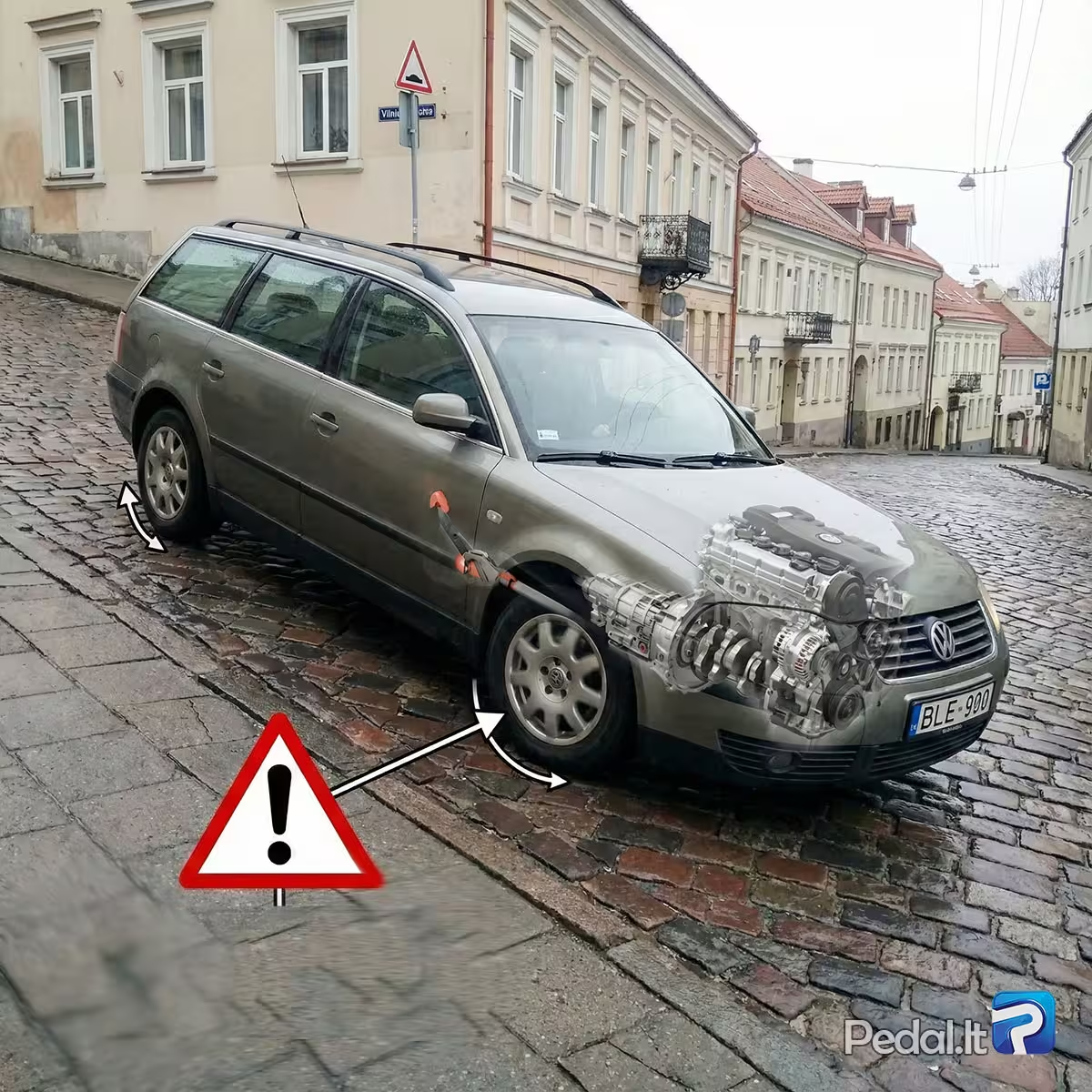
When parked on a downhill slope, leaving a diesel vehicle in gear is hazardous because:
If a vehicle is left in gear and begins to roll downhill, certain older diesel engines may rotate and start automatically.
1. The transmission or gearshift mechanism can be damaged.
2. An older diesel engine may start automatically.
3. There is no danger.
What should guide road users' behaviour?
Road users should adhere to the principles of mutual respect and safety.
1. Their income.
2. The position they hold.
3. Their social status.
4. Mutual respect and safety.
You are driving at night on a narrow road. The vehicle ahead, traveling slowly, has its left turn signal on. What will you do?
You cannot overtake on the right because you are on a narrow road. Overtaking on the right of a vehicle that is turning left is permitted only if there is sufficient space on the carriageway. RTR 136. Drivers are advised to avoid unnecessary overtaking maneuvers. Before overtaking, drivers must exercise extra caution and ensure that: 136.1 none of the drivers behind has already begun to overtake; 136.2 the driver of the vehicle to be overtaken is not indicating a left turn; 136.3 the portion of lane required for overtaking is clear and the maneuver will not obstruct oncoming vehicles or pedestrians using the carriageway; 136.4 a safe distance from the vehicle being overtaken will be maintained during the maneuver; 136.5 after overtaking they will be able to return to the same traffic lane safely without obstructing the overtaken vehicle. RTR 137. If the vehicle in front is indicating a left turn and has changed lanes to make that left turn (or to turn around), vehicles following must pass the turning vehicle on the right or wait until it leaves the traffic lane.
1. You will pass the vehicle on the right.
2. You will not overtake the vehicle while its left turn signal remains on.
3. You will switch on your high-beam headlights before overtaking the vehicle.
4. You will activate your left turn signal and sound the horn.
Overtaking is prohibited in the following situations:
RTR XVI.140. Overtaking is forbidden: 140.1. at intersections, except where overtaking on a main road is permitted because the intersection is not marked by one of the following signs: 'Intersection with the Side Road', 'Side Road on the Right', 'Side Road on the Left', or 'Priority Road'; 140.2. at level crossings and within 100 m of a level crossing; 140.3. on road sections with poor visibility; 140.4. on pedestrian crossings; 140.5. on roads with more than one lane in the same direction; 140.6. on road sections marked with the signs 'Overtaking is prohibited' or 'Overtaking by trucks is prohibited' (see the explanations for these signs); 140.7. on road sections where opposing traffic flows are separated by longitudinal markings 1.1, 1.3, 1.4, 1.10 (from the continuous line side) and 1.15 listed in Appendix 3 of the Rules; 140.8. in residential areas, apartment building courtyards, parking lots and bicycle streets. JB
1. At intersections, except where overtaking is specifically allowed.
2. On stretches of road with good visibility.
3. Within 50 metres before a railway crossing.
4. On road sections where signs 'No overtaking' or 'No overtaking by trucks' are posted (as defined by the signs' descriptions).
Why does a vehicle need a generator?
A generator charges the battery and supplies electrical current to the vehicle's electrical systems and other consumers only while the engine is running, i.e. while the engine's crankshaft is turning. Via the drive pulley and belt, the crankshaft turns the generator, which produces electricity.
1. It supplies electrical current to the vehicle's electrical systems when the engine is not running.
2. It supplies electrical current to the vehicle's electrical systems while the engine is running.
3. It provides current to the starter motor when starting the engine.
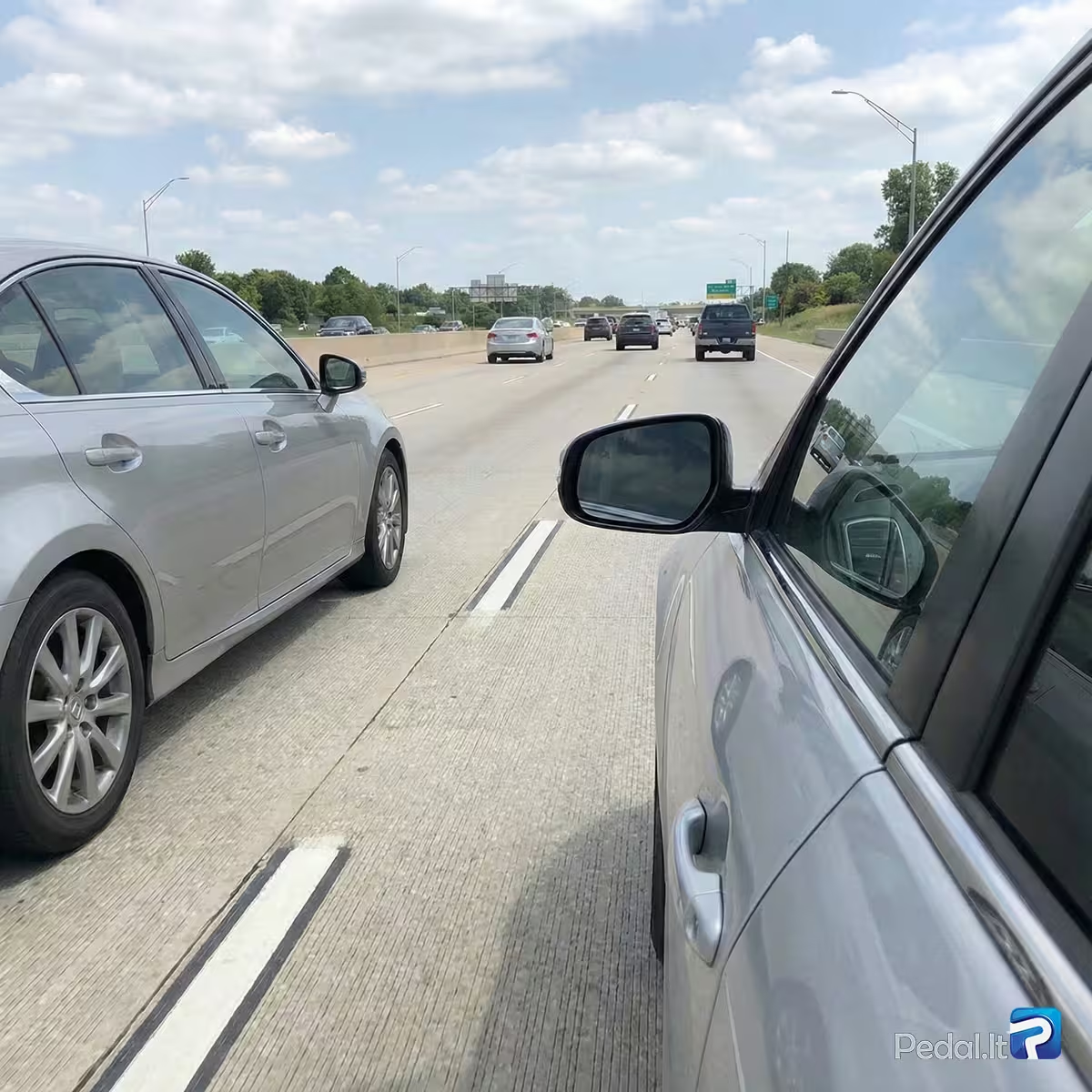
What lateral distance from nearby vehicles is considered safe?
3.17 Choosing a safe distance: operate the vehicle so that: 3.17.3. the distance to other vehicles, whether moving or stationary, is safe relative to any parked vehicle — maintain sufficient clearance to prevent parked vehicles or other obstacles from causing interference. When the vehicle is parked in a parking space, the lateral clearance should permit opening the vehicle's doors.
1. A lateral clearance sufficient to allow the vehicle's doors to be opened.
2. 1 m.
3. 50 cm.
4. 30 cm.
A vehicle is more stable in a turn when:
The higher a vehicle's center of gravity (for example, when carrying tall loads or items on the roof), the greater the risk of rollover when cornering.
1. The vehicle's center of gravity is higher.
2. The vehicle's center of gravity is lower.
You are driving in heavy rain and the steering wheel suddenly becomes very light to turn. What should you do?
If the steering wheel becomes very easy to turn, the vehicle's tyres have likely lost traction on the slippery road surface. In this situation, you must reduce your speed gradually — abrupt throttle changes or hard braking can cause the vehicle to skid or lose control.
1. You will slightly increase your speed.
2. You will gradually release the accelerator.
3. You will brake suddenly to reduce your speed.
4. You will move towards the hard shoulder.
How can you conserve fuel and reduce environmental pollution?
Carrying a 100 kg load in city driving increases fuel consumption by about 0.5 L per 100 km. The air conditioner consumes approximately 0.5–1.0 L/100 km; a fan consumes about 0.08–0.3 L/100 km; the radio about 0.06–0.21 L/100 km; modern audio systems about 0.2–0.7 L/100 km. JB
1. Remove unnecessary items from the vehicle before driving.
2. Use the air conditioner only when necessary.
3. Use electrical accessories only when necessary.
If your vehicle gets a flat tyre while crossing an intersection and vehicles are approaching from both directions, what should you do?
128. If there is an obstruction or traffic safety is endangered, the driver must reduce speed, stop if necessary, or avoid the obstruction (if it can be detected) without creating danger for other road users. 135. Drivers must not: 135.4. decelerate abruptly except for safety reasons.
1. You will stop in the middle of the intersection.
2. You will accelerate to clear the intersection quickly and then stop beyond it.
3. You will reduce your speed and stop beyond the intersection at a safe location.
Documents a motor vehicle driver must carry while driving and present upon request to an inspecting officer:
Drivers are generally required to carry only a driving licence or an identity document; other documents are required only if the driver is not the owner of the vehicle they are driving (RTR 16). A driver must stop the vehicle when ordered by an inspecting officer. The driver of a motor vehicle, tractor or self-propelled vehicle shall carry and, at the request of the inspecting officer, present a valid driving licence or a document certifying the right to drive tractors and/or self-propelled vehicles; the vehicle registration documents; the certificate of compulsory roadworthiness inspection (compulsory technical inspection); the report of the most recent technical inspection for vehicle categories M2, M3, N2, N3, O3, O4 and wheeled tractor categories T1b, T2b, T3b, T4.1b, T4.2b, T4.3b, T5; the certificate (policy) of compulsory motor third‑party liability insurance; and other documents specified by the laws of the Republic of Lithuania and these Rules (except where the Law on Road Traffic Safety provides that a driver is not required to carry the relevant documents). The driver must also allow the inspecting officer to check readings of validated devices registering driving time and rest periods. Documents should be presented without leaving the vehicle; the driver may exit the vehicle only with the inspecting officer's permission.
6. A driver whose licence was issued in the Republic of Lithuania need not carry and present the licence if they present a valid identity document.
7. A driver referred to in paragraph 6 who is driving a vehicle registered in the Republic of Lithuania is not required to carry and present the compulsory technical inspection document or the compulsory motor third‑party liability insurance certificate (policy) upon request of the inspecting officer.
8. A driver referred to in paragraph 6 who is driving a vehicle registered in the Republic of Lithuania that they own is not required to carry and present the documents referred to in paragraph 7 or the vehicle registration document upon request of the inspecting officer. (RTR 219). In the event of a road accident, every driver involved or any other road user must: 219.3. produce the driver's licence, vehicle registration and compulsory technical inspection documents, the motor third‑party liability insurance policy or other documents in their possession if so requested by other road users involved in the accident. JB
1. The driver's licence, compulsory insurance certificate (policy), vehicle registration documents and the mandatory technical inspection documents.
2. Certificate of completion of compulsory first aid training.
3. A document proving personal identity or a valid driving licence.
4. A valid driver's medical certificate.
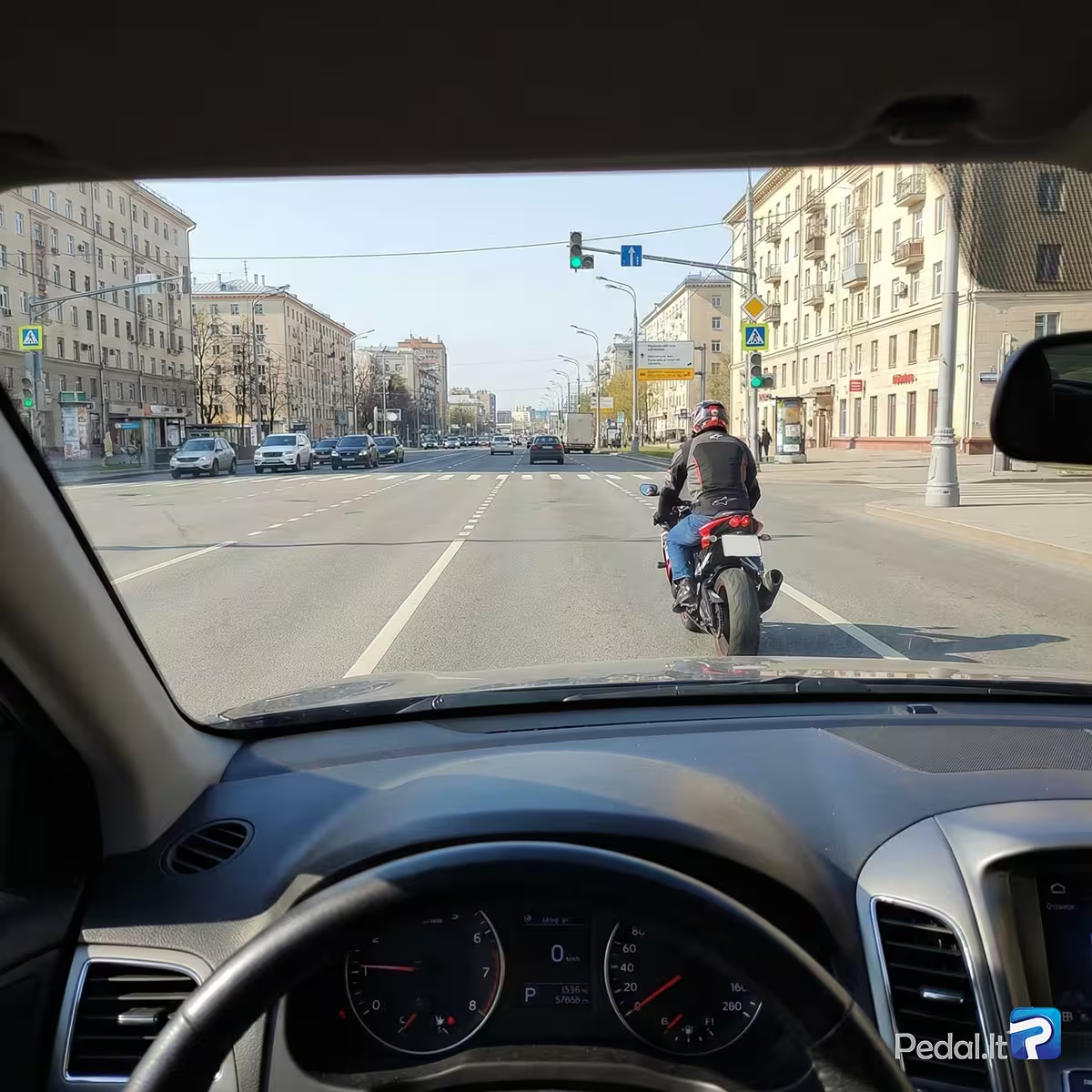
Are you allowed to ride a motorcycle with only a category B driving licence?
LAW ON ROAD TRAFFIC SAFETY — Article 22(12). Persons aged 24 or older who have at least two years' driving experience with a category B licence and who have completed practical training for category A1 vehicles in accordance with the procedure established by the Ministry of Transport and Communications or its authorised institution are granted the right to drive category A1 vehicles within the territory of the Republic of Lithuania.
1. Driving category A1 motorcycles is permitted for persons aged at least 24 who have held a category B licence for at least two years and have completed special practical motorcycle training at a driving school.
2. It is permitted to drive all motorcycles.
In which situations must a driver signal their intended actions using the vehicle's turn signal?
82. A driver must signal intended maneuvers using the vehicle's turn signals, or by arm signals if the electrical indicators are inoperative or unavailable: 82.1 before starting to move and before stopping; 82.2 before changing lanes, before and after overtaking, before and after passing an obstruction, before turning right or left, before making a U-turn, and before exiting a roundabout.
1. Before entering a roundabout.
2. Before exiting a roundabout.
3. Prior to making a right or left turn.
4. Before making a U-turn.
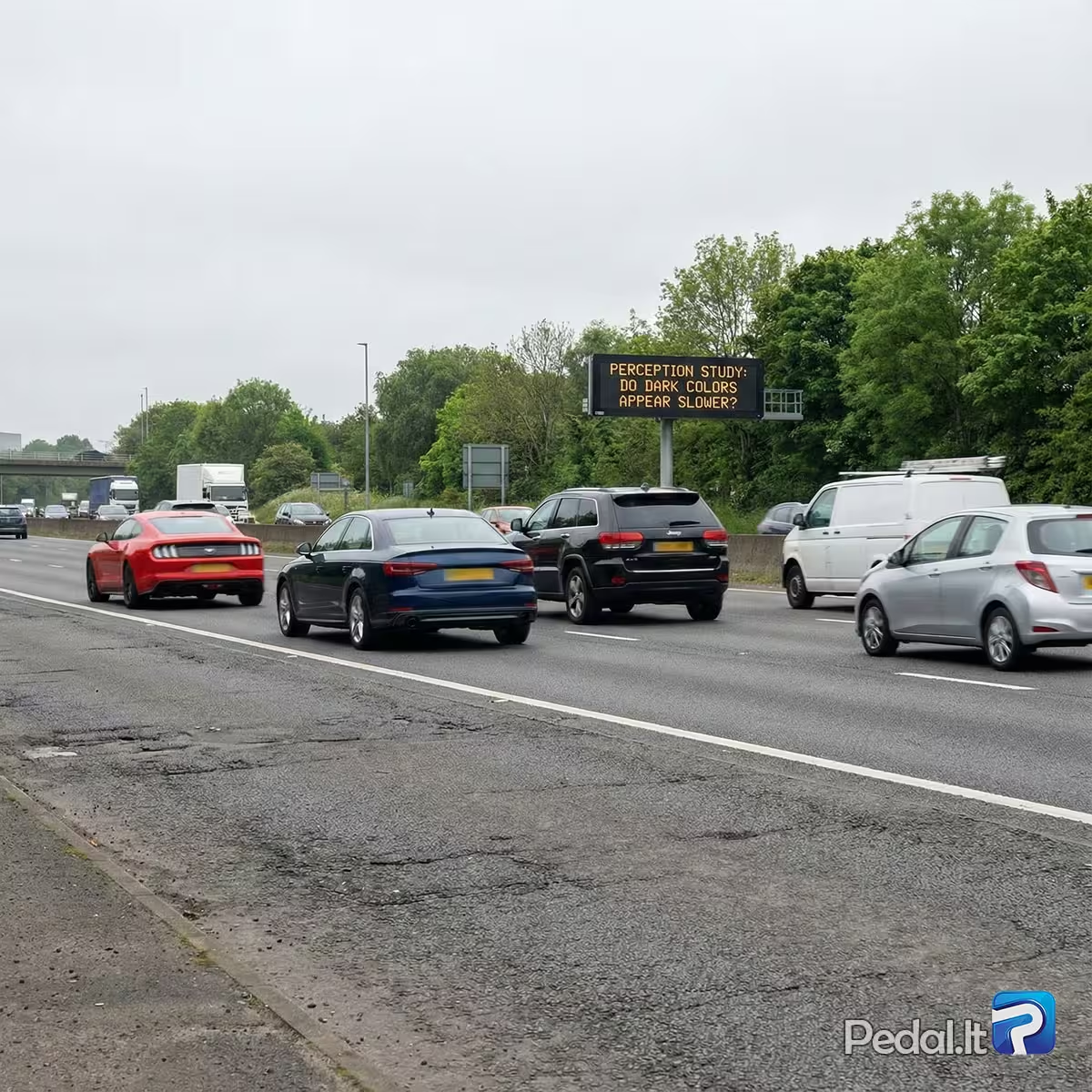
Which colour of vehicle tends to appear to be moving more slowly than it actually is?
Oncoming vehicles painted in dark colours often create the illusion that they are moving more slowly than they actually are.
1. Light-coloured vehicles.
2. Dark-coloured vehicles.
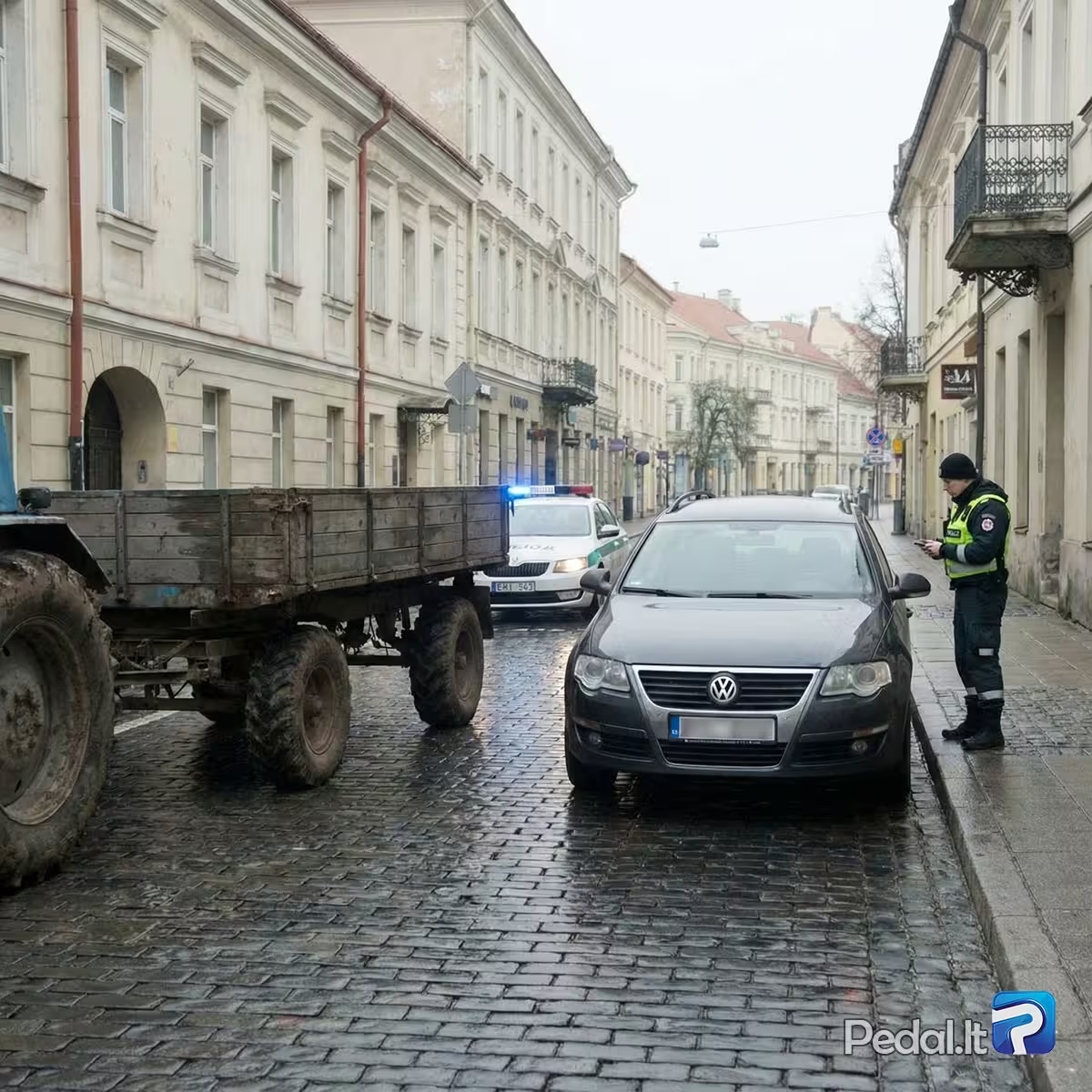
Are motor vehicles permitted to tow trailers intended for agricultural tractors?
Motor vehicles are not permitted to tow trailers intended for agricultural tractors due to safety requirements and technical incompatibilities. The term "motor vehicle" excludes non-road rail vehicles, tractors, and self-propelled machines. Per RTR 207, the total weight of carried cargo and passengers and the axle loads must not exceed the gross vehicle weight and axle load limits specified for that vehicle by the Ministry of Transport and Communications of the Republic of Lithuania and by the vehicle manufacturer. The gross weight of a towed trailer (laden or unladen) must not exceed the maximum permissible tow weight established by the Ministry and the manufacturer. Consequently, motor vehicles are prohibited from towing trailers of non-motor vehicles, and non-motor vehicles are prohibited from towing trailers of motor vehicles.
1. Only sport utility vehicles (SUVs) are permitted to tow trailers designed for agricultural tractors.
2. Motor vehicles are prohibited from towing trailers intended for agricultural tractors.
3. Only Category C commercial vehicles are permitted to tow trailers designed for agricultural tractors.
Which of the following can cause your vehicle to begin skidding while driving?
Worn tyres affect a vehicle's tendency to skid — even at low speeds they can cause the vehicle to skid. A faulty power steering can make the steering wheel harder to turn, but it does not directly cause skidding. Likewise, the parking brake only affects a parked vehicle and does not cause skidding while driving.
1. Faulty parking brake.
2. Faulty power steering.
3. Worn tyres.
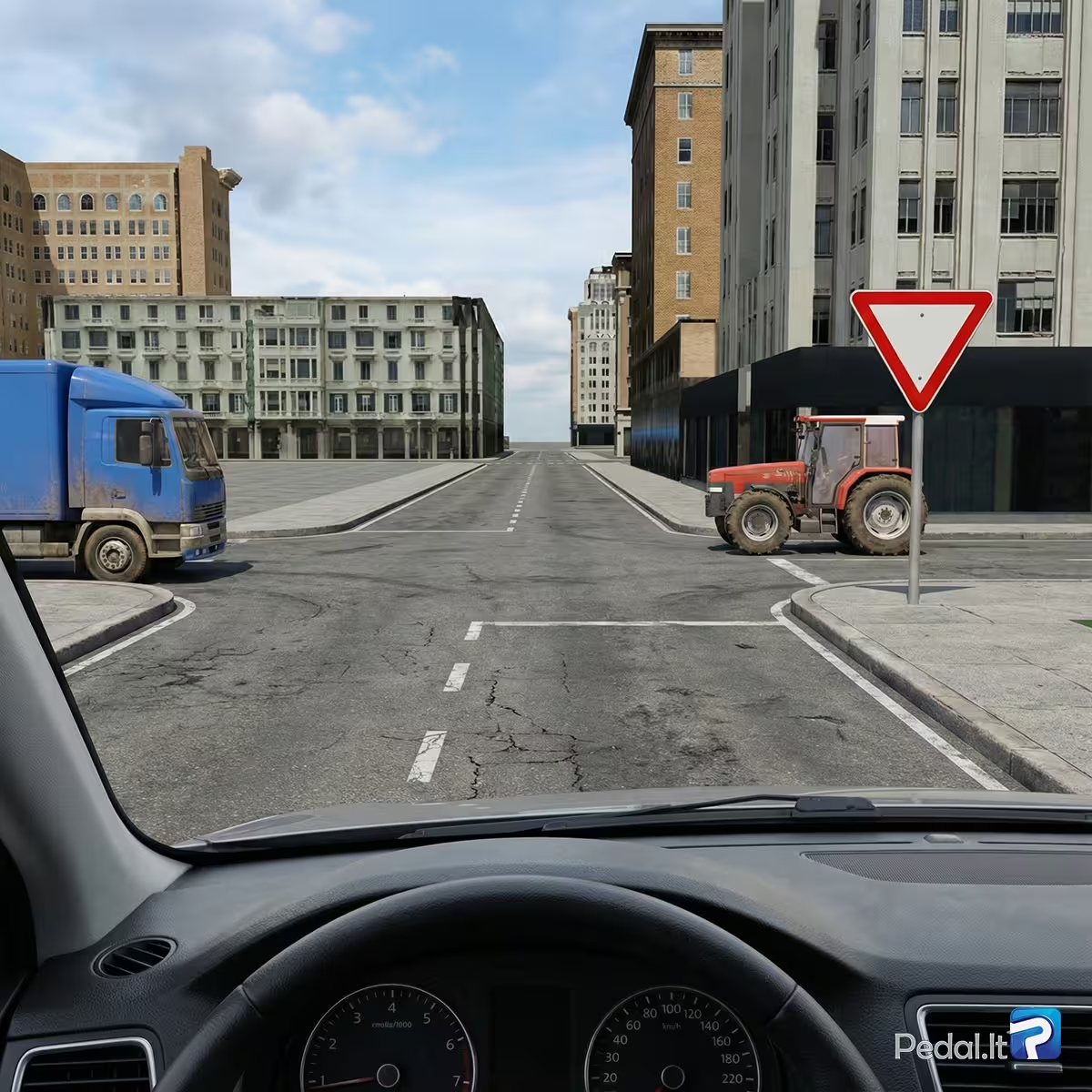
You intend to drive straight through the junction. In this situation:
1. I will yield to the commercial vehicle.
2. I will yield to the tractor.
3. I will proceed through the junction first.
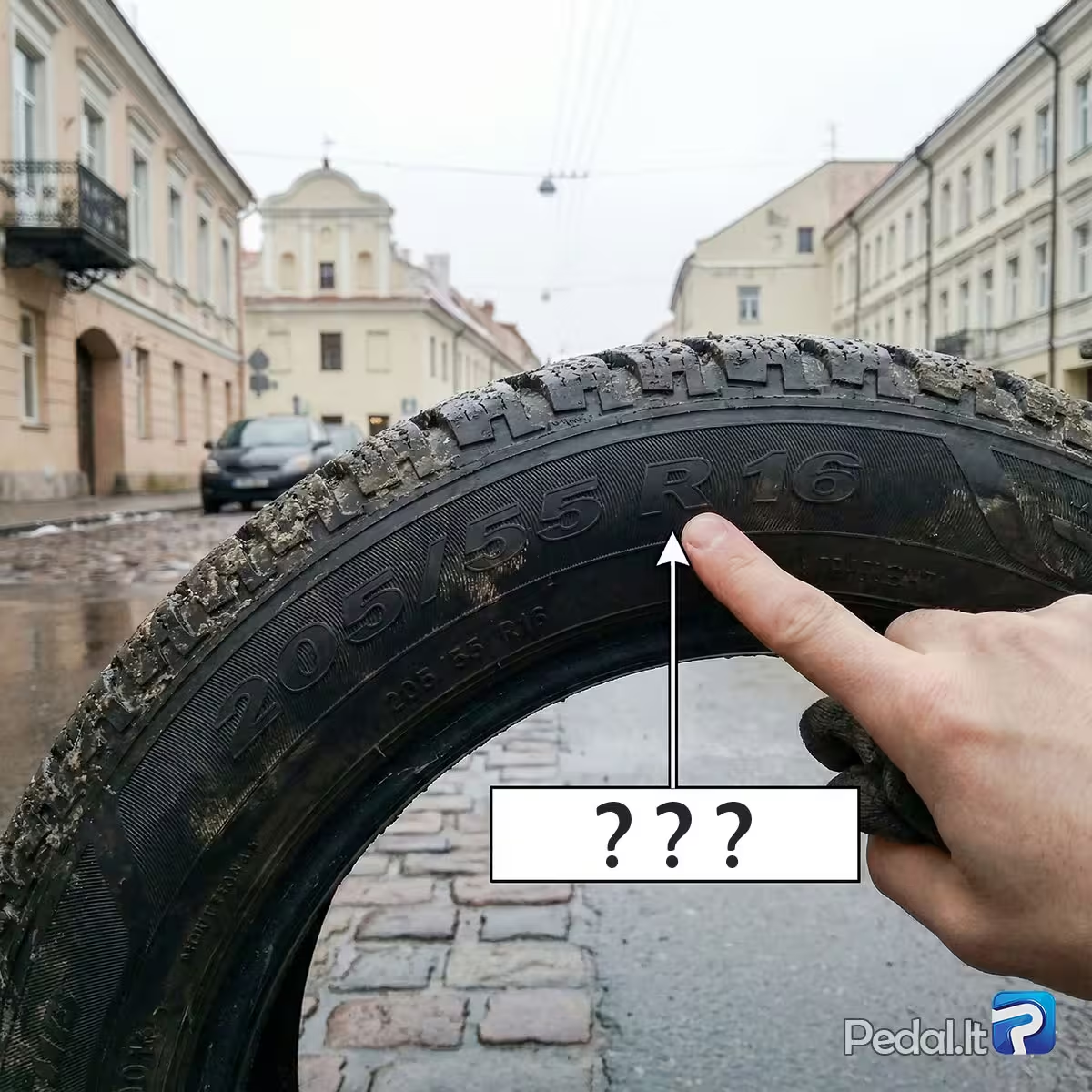
What does the letter 'R' indicate in tyre markings?
The letter 'R' denotes a radial tyre construction. In a radial tyre, the carcass cords run from one bead to the other in a radial direction instead of being wrapped around the bead cores. Thin, flexible crown plies provide the tread area with the required rigidity and flexibility while minimizing elastic deformation.
1. The tyre's construction (radial construction).
2. Tyre diameter.
3. Tyre load index.
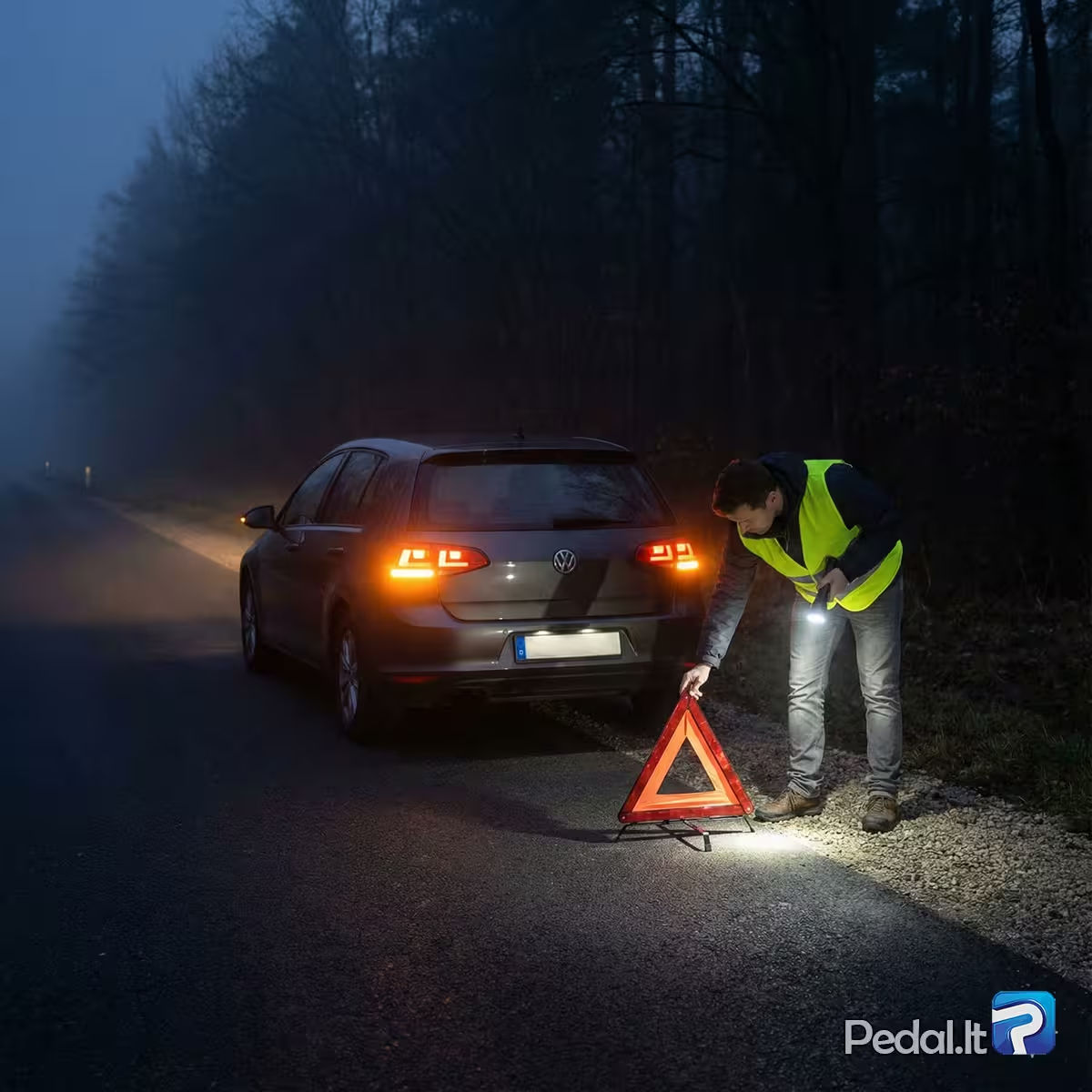
If you are forced to stop on an unlit section of road at night or in poor visibility because your position and brake lights have failed, what should you do?
RTR 92. If the emergency light signaling system is not fitted or is defective and an emergency stop is required where stopping or parking is prohibited, in the event of an accident, or where the stopped vehicle would be visible to other road users from less than 100 metres, the driver of a motor vehicle (other than a motor moped or a motorcycle without a trailer), a tractor, or a self‑propelled machine must immediately place an emergency stop sign on the carriageway side opposite the direction of travel: in built‑up areas not less than 25 m from the stopped vehicle, and outside built‑up areas not less than 50 m. If at least one rear position lamp is defective and the hazard warning lights are not working when driving at night or in poor visibility, an emergency stop sign must be affixed to the rear of the vehicle in order to continue driving.
RTR 151. When a vehicle is forced to stop where standing or parking is forbidden, drivers must switch on their hazard warning lights if available and/or place a warning triangle on the road as specified in Paragraph 92 of the Rules and remove their vehicle from the road as soon as possible. If drivers intend to stop their vehicle on unlit sections of the road during darkness or when visibility is poor, and hazard warning lights are not available or are inoperative, the vehicle must be parked off the carriageway. If this is impossible, the location must be marked as specified in Paragraph 92 of the Rules. JB
1. Turn the vehicle around and switch on the low beam headlights.
2. If it is not possible to park off the carriageway, switch on your hazard warning lights; if these are not available or are inoperative, place a warning triangle.
3. Indicate the stopped vehicle with bright flags.
In which direction does the load shift when the vehicle makes a left turn?
When the vehicle turns left, the load shifts to the right due to inertia.
1. Toward the left
2. Toward the right
3. Toward the front
4. Toward the rear
1 of 30 Task
Time left: 00:00:00
1
2
3
4
5
6
7
8
9
10
11
12
13
14
15
16
17
18
19
20
21
22
23
24
25
26
27
28
29
30