What is the maximum permitted blood alcohol concentration (in ‰) for a driver with one year of driving experience operating a passenger car?
Under amendments to the Law on Road Traffic Safety that took effect on 1 January 2015, novice drivers (those with less than two years' driving experience) are considered intoxicated if the alcohol concentration in their breath or bodily fluids exceeds 0. LAW ON ROAD TRAFFIC SAFETY, Article 2, clause 43 defines 'condition under the influence of alcohol' as the state when the concentration of ethyl alcohol in a biological medium of the body (breath, blood, urine, saliva, or other bodily fluids) exceeds the statutory permissible limit. The general maximum permitted concentration of ethyl alcohol in breath, blood, urine, saliva, or other bodily fluids while driving is 0.4 per mille. However, novice drivers, taxi drivers, drivers of mopeds, motorcycles, tricycles, light quadricycles, quadricycles, powerful quadricycles, drivers of vehicles with a maximum permissible mass exceeding 3.5 tonnes or with more than nine seats, and drivers carrying dangerous goods are considered intoxicated when the ethyl alcohol concentration in their breath, blood, urine, saliva, or other bodily fluids is more than 0 per mille.
1. 0.0 ‰
2. 0.2 ‰
3. 0.4 ‰
4. 0.8 ‰
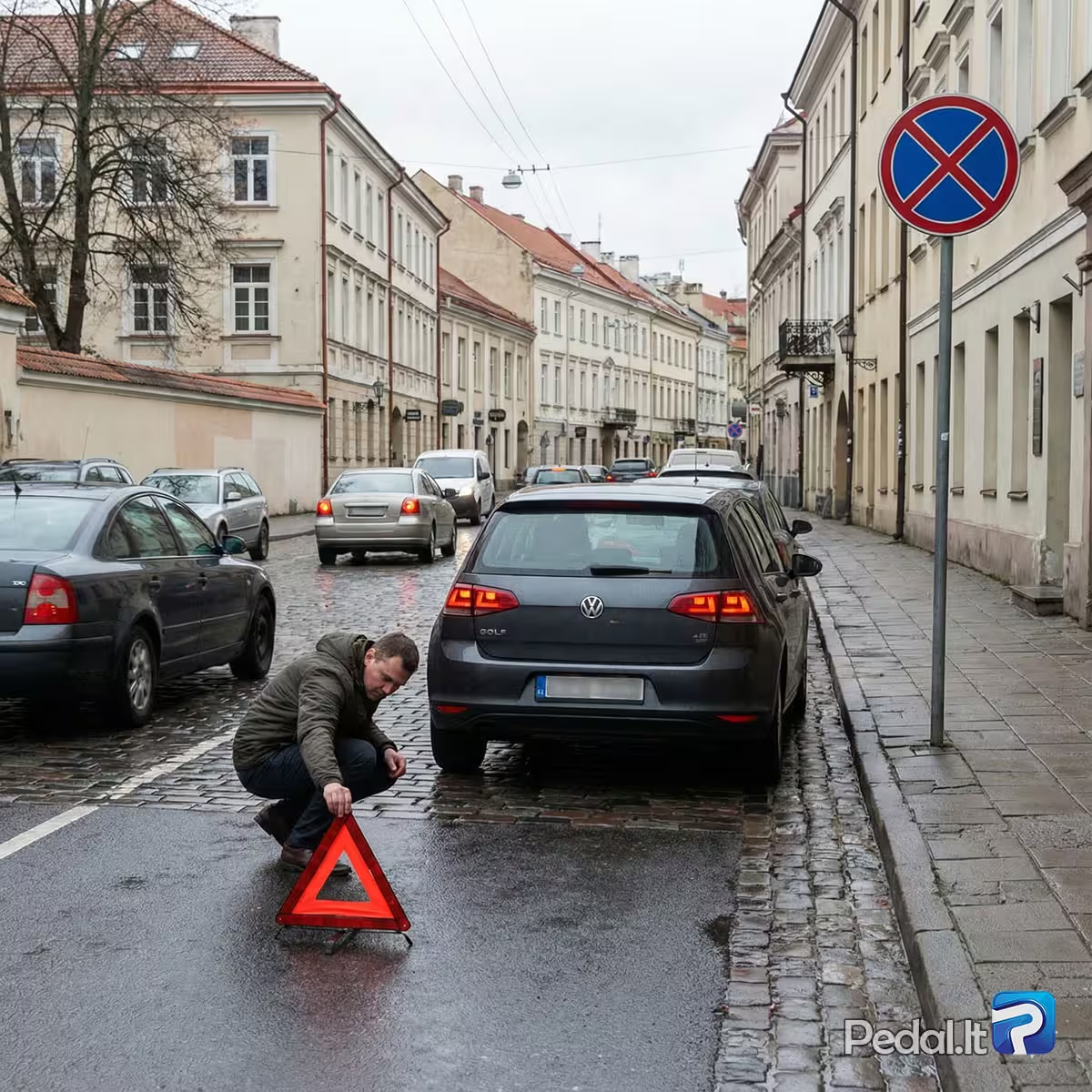
What must you do if you are forced to stop inside a settlement where stopping (parking) is prohibited and the hazard warning lights are not working?
RTR 92. If the emergency warning light system is not fitted or is defective and an emergency stop is required where stopping or parking is prohibited, in the event of an accident, or where the stopped vehicle would be visible to other road users from less than 100 metres, the driver of a motor vehicle (other than a motor moped or a motorcycle without a trailer), a tractor, or a self-propelled machine must immediately place an emergency stop sign on the carriageway side opposite to the direction of travel: in settlements, not closer than 25 m, and outside settlements, not closer than 50 m from the stopped vehicle. If at least one rear position lamp is defective and the hazard warning lights do not work while driving in darkness or poor visibility, an emergency stop sign must be attached to the rear of the vehicle in order to continue driving.
RTR 151. When a vehicle is forced to stop where standing or parking is forbidden, drivers must switch on hazard warning lights if available and/or place a warning triangle on the road as specified in Paragraph 92 of the Rules, and remove the vehicle from the road as soon as possible. If drivers intend to stop on unlit road sections at night or in poor visibility and hazard warning lights are unavailable or inoperable, the vehicle must be parked off the carriageway. If this is impossible, the place must be marked as specified in Paragraph 92 of the Rules. JB
1. Place a warning triangle at least 25 m from the stopped vehicle.
2. Attach a red flag to the vehicle.
3. Switch on the dipped headlights.
4. Stop another vehicle and ask for assistance.
.avif)
Which vehicle may proceed in the direction indicated by the arrow?
RTR 77.1. When the traffic officer's arms are extended sideways or pointed downward: 77.1.1. Vehicles located to the officer's left and right may proceed straight ahead or turn right; pedestrians may cross the carriageway. 77.1.2. Vehicles and pedestrians positioned in front of or behind the officer must not proceed. JB
1. First vehicle
2. Second vehicle
3. Third vehicle
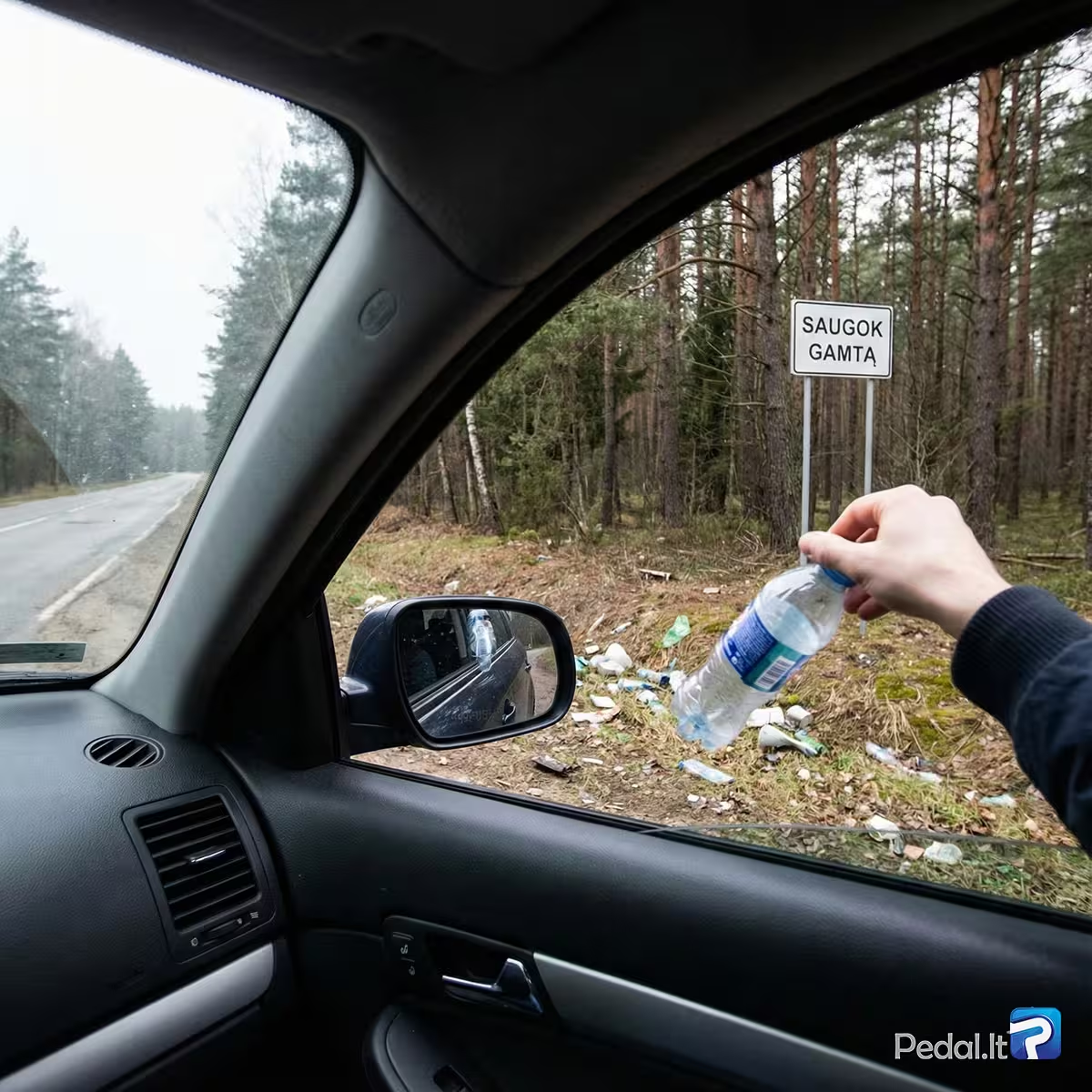
What should we avoid to protect nature?
Carrying unnecessary luggage increases fuel consumption and causes additional harmful emissions. Loud music from a vehicle contributes to noise pollution and can scare wildlife. For short trips, people can walk, cycle, or use public transport, because during brief journeys the engine often does not reach its optimal operating temperature, the vehicle runs less efficiently, and pollution is higher.
1. Leaving a vehicle's engine running while stationary (idling).
2. Playing loud music from a vehicle with the windows open.
3. Using a car for short trips.
4. Carrying unnecessary cargo or luggage.
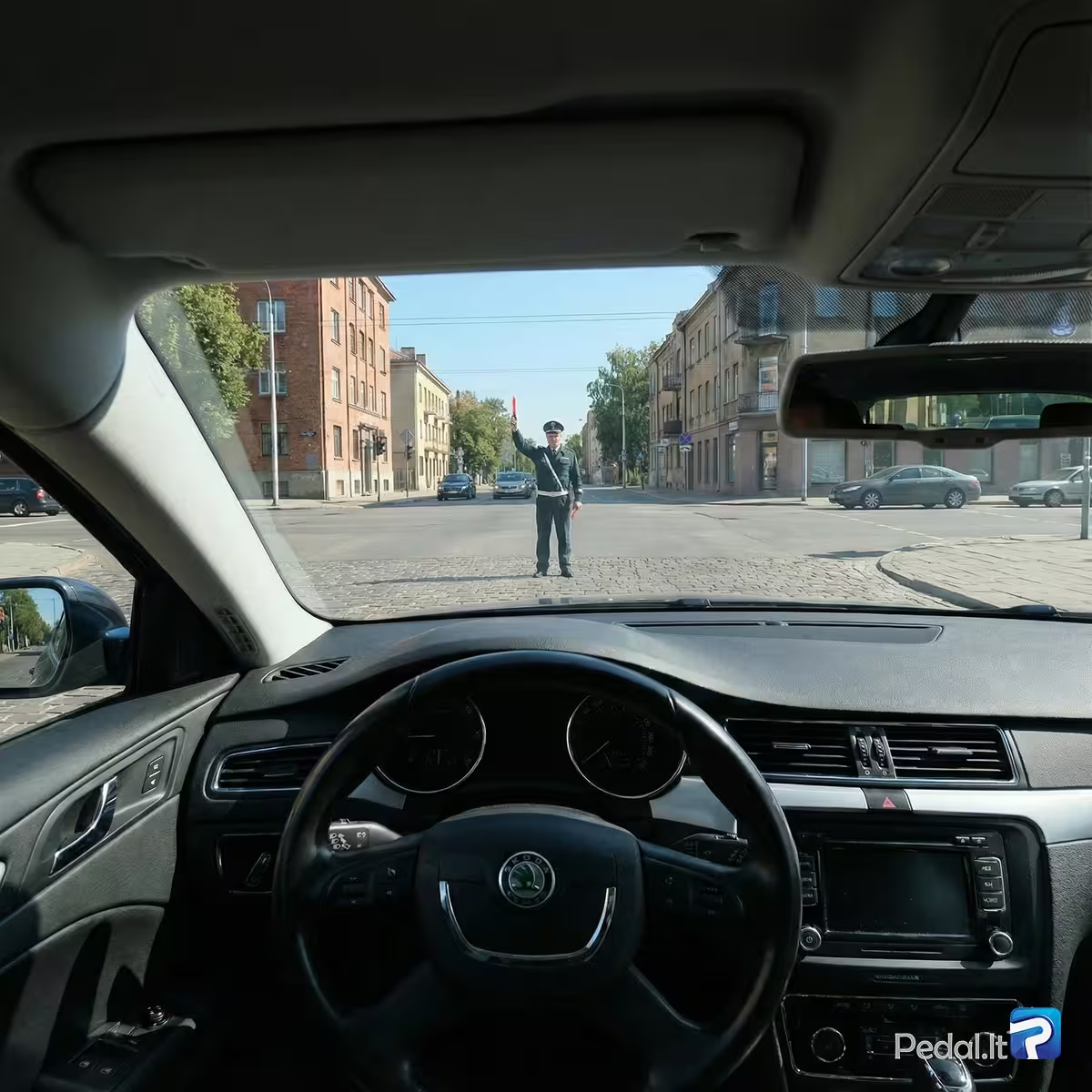
Are you permitted to proceed in this situation?
RTR 77. Signals given by traffic officers have the following meanings: 77.3. Arm raised upward: 77.3.1. All road users must not proceed in any direction.
1. Yes — you may proceed.
2. No — you must not proceed.
How many motor vehicles are you permitted to tow at one time?
RTR 217. The following vehicle towing and transport practices are prohibited: 217.6. Towing more than one motor vehicle, tractor, or self-propelled vehicle.
1. One vehicle.
2. Two vehicles.
3. Three vehicles.
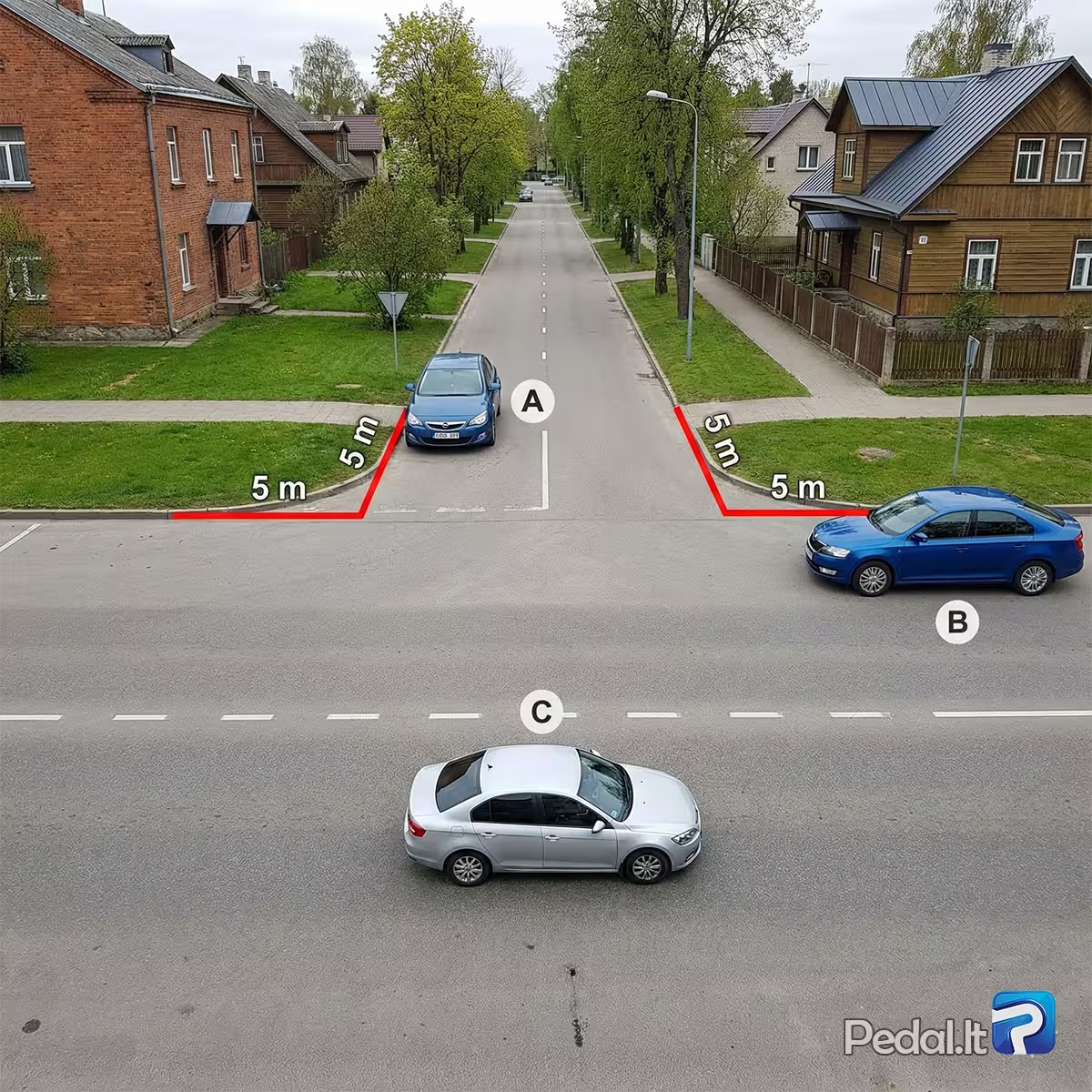
Which vehicles have violated the Road Traffic Rules by stopping at the entrance to the yard?
This is not an intersection but the entrance to a yard. Therefore, vehicle C is not prohibited from parking in this way. RTR 150. Standing and parking shall be prohibited: 150.15 at crossroads and in places where vehicles enter the road from adjacent areas and exit the road to adjacent areas, and within a 5-metre distance from those points (on the side of the road where the entrance/exit is located), except where road signs permit parking.
1. Vehicle A
2. Vehicle B
3. Vehicle C
4. All vehicles are parked correctly.
Who has the right of way when the traffic lights at the intersection are not functioning?
Regulation RTR 167: When an intersection is controlled by traffic lights, drivers must obey the light signals regardless of any priority indicated by road signs. If the traffic lights are not operating or the amber (yellow) light is flashing, drivers must follow the priority indicated by the road signs.
1. No one has the right of way.
2. Drivers on the main (priority) road.
3. Drivers making a right turn.
4. Drivers on the side (secondary) road.
On which road sections can exceeding the speed limit cause a road accident?
Exceeding the speed limit on any section of road is dangerous: it increases braking distance and thereby raises the likelihood of a road accident.
1. At pedestrian crossings.
2. On curves and turns.
3. At intersections.
The vehicle may transport passengers:
RTR 195. Drivers must not: 195.1. carry more passengers than are permitted by the vehicle's technical specifications; JB
1. Only to the extent necessary for urgent matters or when transporting persons en route for serious reasons.
2. No more than the number permitted by the vehicle's technical specifications.
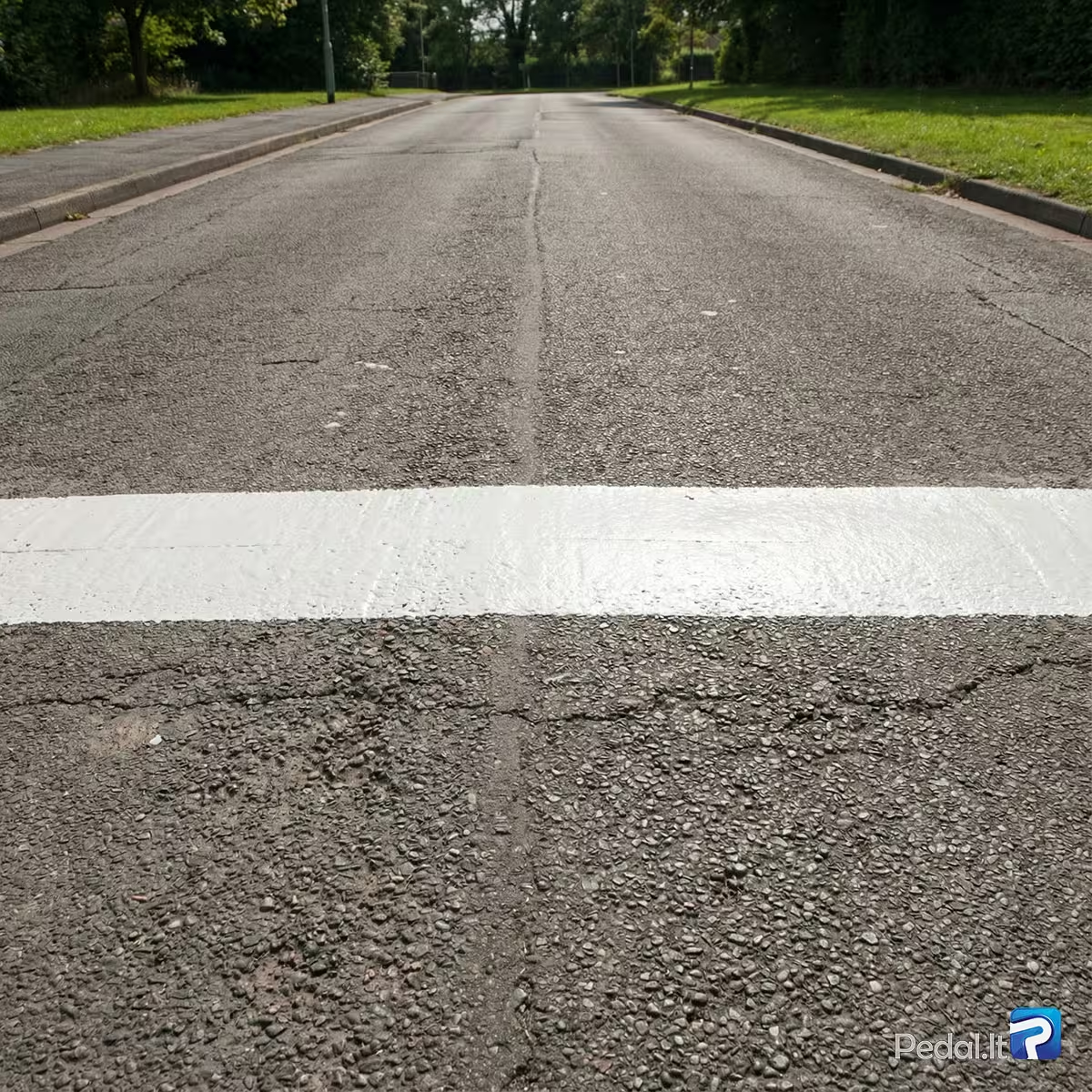
What is the name of the wide line drawn across the carriageway?
I. Horizontal marking: 1.11. A WIDE LINE is drawn across the carriageway (the 'Stop' line) and indicates the location where drivers must stop before a 'STOP' sign (at uncontrolled intersections), a red traffic light, or a stop signal given by a traffic officer.
1. The 'Stop' line.
2. A wide solid line.
3. A solid line.
If, because of its large size or for other reasons, a vehicle cannot turn (or turn around) from the edge position, it may perform the turn:
RTR 107. If, because of large dimensions or other reasons, a vehicle cannot turn (or make a U‑turn) from the edge position, it may execute the turn from a location other than the lane edge designated for travel in that direction, provided the manoeuvre does not obstruct other vehicles or create hazards for other road users.
1. At a location other than an intersection.
2. Outside a built-up (urban) area.
3. Not from the edge of the carriageway, provided the manoeuvre does not obstruct other vehicles or create hazards for other road users.
Can the parking brake be used to slow the vehicle while braking?
The parking brake may be used to help slow the vehicle if the service (main) brakes fail.
1. No — it cannot be used.
2. Yes — in any circumstance.
3. Yes — in an emergency, if the service (main) brakes fail.
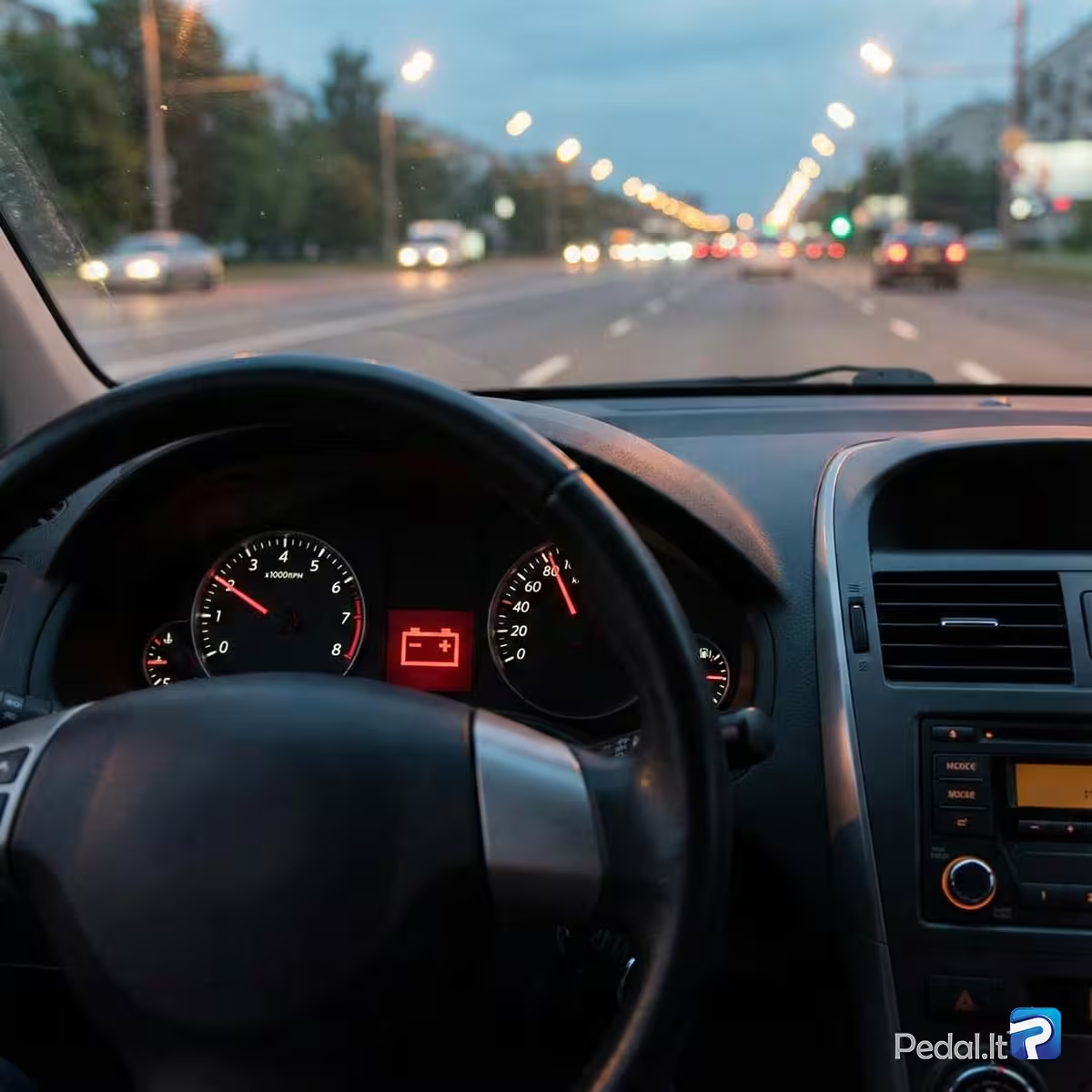
When the engine is running, a red battery warning light on the dashboard indicates:
If the red battery warning light illuminates while the engine is running, it indicates the alternator (generator) has failed and the battery is not being charged.
1. The battery is being overcharged.
2. The battery is completely discharged.
3. The battery is not being charged.
4. The battery's electrolyte level is too low.
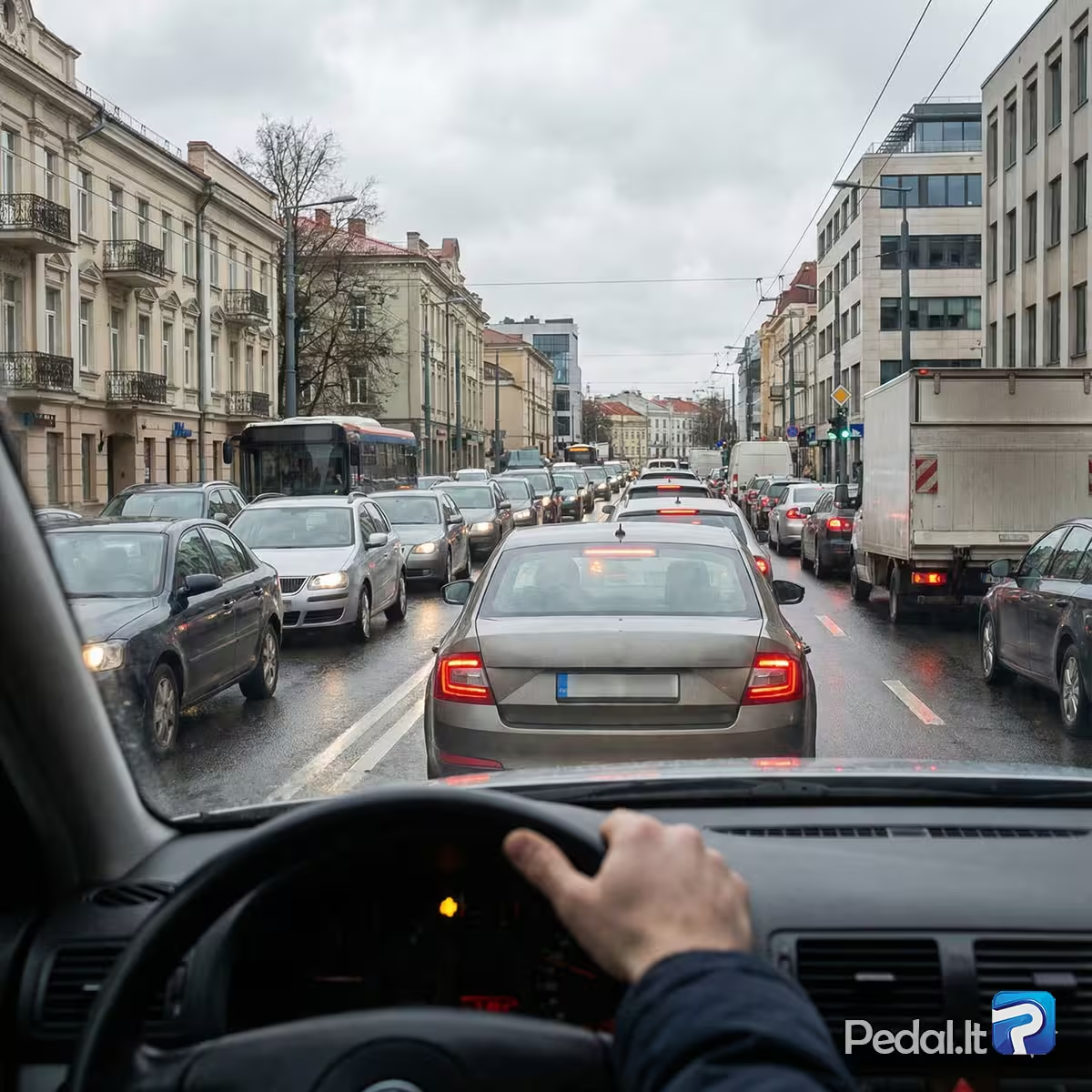
Is a driver permitted to change lanes in heavy traffic when all lanes are occupied?
RTR 11D. In heavy traffic, when all lanes are occupied by vehicles, changing lanes is permitted only when necessary to make a turn, make a U‑turn, or stop. JB
1. Changing lanes to stop is permitted when necessary.
2. Changing lanes to make a U‑turn is permitted when necessary.
3. Changing lanes to make a turn is permitted when necessary.
4. Changing lanes is prohibited.
What should you do when you see a speed limit sign ahead in the distance?
Explanation of terms:
• To brake — press the brake pedal; the vehicle decelerates quickly and stops before the expected obstacle.
• To release the accelerator pedal — lift your foot off the gas; the vehicle will slow down gradually without stopping completely and will continue moving.
• To maintain your current speed — keep the accelerator pedal in the same position; the vehicle continues at a constant speed.
RTR 127. Drivers must not exceed the permissible speed limit. The driver must select a driving speed appropriate to the driving conditions, in particular the terrain, the condition of the road and the vehicle (including the load), weather conditions and traffic density, so that the vehicle can be stopped safely before any foreseeable obstacle. The driver must slow down and stop when driving circumstances require it, especially when visibility is poor.
RTR 135. Drivers must not:
135.2. exceed the speed limit specified on the vehicle marking plate;
135.3. drive unnecessarily slowly and impede the normal flow of traffic for other road users;
135.4. slow down abruptly for reasons other than safety.
1. I will apply the brakes.
2. I will release the accelerator pedal.
3. I will maintain my current speed.
Which vehicles may a driver with a category B driving licence operate?
LAW ON ROAD TRAFFIC SAFETY Article 23. Categories of motor vehicles and the minimum driving age: 1. Categories of motor vehicles and their combinations with trailers are as follows: 6) Category B: vehicles with a maximum permissible mass not exceeding 3,500 kg designed and constructed to carry no more than eight passengers, excluding the driver; these vehicles may be coupled with a trailer whose maximum permissible mass does not exceed 750 kg; they may also be coupled with a trailer whose maximum permissible mass exceeds 750 kg, provided that the maximum permissible mass of the combined vehicle does not exceed 4,250 kg; a vehicle combination with a maximum permissible mass exceeding 3,500 kg (including a trailer with a maximum permissible mass exceeding 750 kg) may be driven only after passing a skills and behaviour test at the state enterprise "Regitra". LAW ON ROAD TRAFFIC SAFETY Article 22. Granting the right to drive motor vehicles, tractors, self-propelled machines: 12. Persons who are at least 24 years old, who have at least 2 years of driving experience in category B vehicles and who have completed practical driving training for category A1 vehicles in accordance with the procedure established by the Ministry of Transport or its authorised institution, are granted the right to drive category A1 vehicles in the territory of the Republic of Lithuania. As a result, the driver's licence does not explicitly state entitlement to drive category A1 vehicles; instead, the national code set by the Ministry of the Interior is shown next to the category B marking.
1. Passenger cars and motorcycles.
2. Passenger cars only.
3. Any vehicle with a maximum permissible weight up to 3,500 kg designed and built to carry no more than eight passengers (excluding the driver).
4. A category A1 motorcycle after completion of the required practical training.
Who has the right of way in residential areas?
RTR 175. In residential areas, pedestrians are permitted to walk on the roadway but must not obstruct vehicle traffic. Vehicles are required to yield to pedestrians in these areas.
1. Vehicles.
2. Pedestrians.
.avif)
In this situation, is the driver of the green vehicle permitted to cross the indicated double horizontal line when completing the overtaking maneuver?
He is allowed because the driver of the green vehicle must complete the overtaking maneuver. RTR Annex 3.1.10: A double line composed of two narrow parallel lines — one solid and one broken — separates traffic moving in opposite directions or in the same direction on road sections where lane changing is permitted only from one lane. It also marks locations for U-turns and the entrances and exits of parking areas where travel is allowed in only one direction. Drivers may cross this line from the side of the broken line, and they may also cross it from the side of the solid line only when finishing an overtaking or passing maneuver.
1. No — he is not allowed.
2. Yes — he is allowed.
Operating a vehicle is prohibited if any of the following applies:
RTR 14. Persons who are not authorized to drive, who are intoxicated, under the influence of narcotic or psychotropic drugs or other psychoactive substances, or who have not taken the legally required daily rest must not drive. Additionally, a person who is fatigued or ill must not drive if doing so could endanger road safety. A vehicle must not be entrusted to anyone affected by the above factors or who is not authorized to operate that class of vehicle. When driving, the driver must comply with any restrictions or conditions indicated on the driving licence.
1. The driver is not authorized to do so.
2. The driver holds valid documents required by the Road Traffic Rules.
3. The driver is intoxicated.
4. The driver is not under the influence of psychoactive substances (e.g., narcotics, medications, or other intoxicating substances).
When should you release the throttle and rely on the vehicle's inertia to conserve fuel?
Note: Releasing the throttle is not the same as freewheeling. See 3.4 Control the throttle: 3.4.9 Release the throttle and use the vehicle's inertia before coming to a stop at a predetermined location (for example, at an intersection with a traffic light or at a stop sign) or in similar situations. JB
1. When approaching an intersection with a red traffic light.
2. When driving downhill on a steep slope.
3. When approaching a stop sign.
4. Before coming to a stop at a predetermined location.
In which direction does the load shift when the vehicle makes a left turn?
When the vehicle turns left, the load shifts to the right due to inertia.
1. Toward the left
2. Toward the right
3. Toward the front
4. Toward the rear
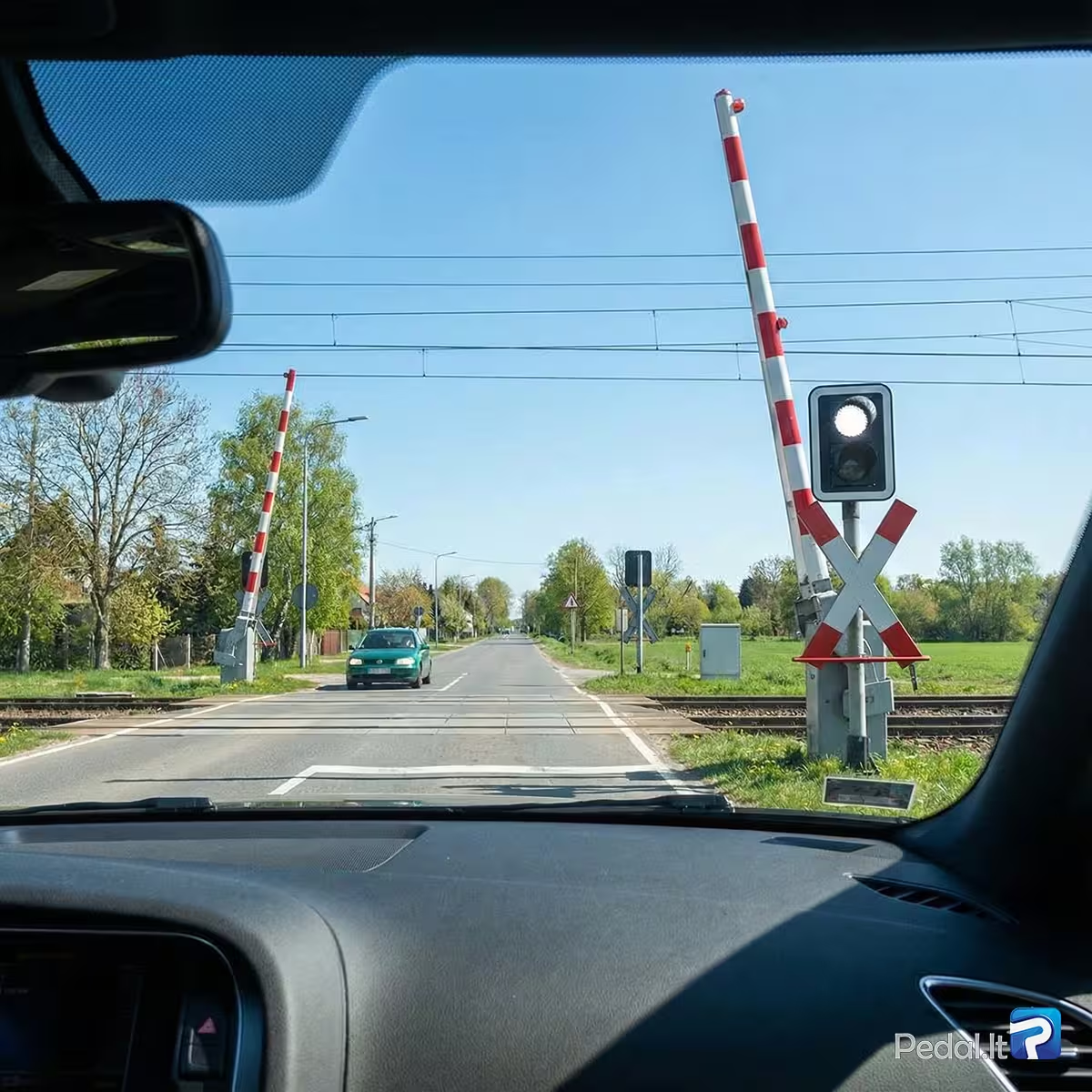
You see a flashing white light and the barrier is fully raised. Are you permitted to cross the level crossing in this situation?
RTR 73. Traffic light signals: 73.10. A flashing white light used at level crossings indicates that vehicles may proceed only after confirming that no rail-borne vehicle is approaching the crossing.
1. Yes — but only after you have verified that no train or other rail vehicle is approaching the level crossing.
2. No — you may not proceed.
Which car colors are most visible to other road users?
Light, bright-colored vehicles are most visible to other road users. (JB)
1. Black, gray, or blue.
2. White, orange, or red.
3. Purple or brown.
4. Vehicle color has no effect on visibility.
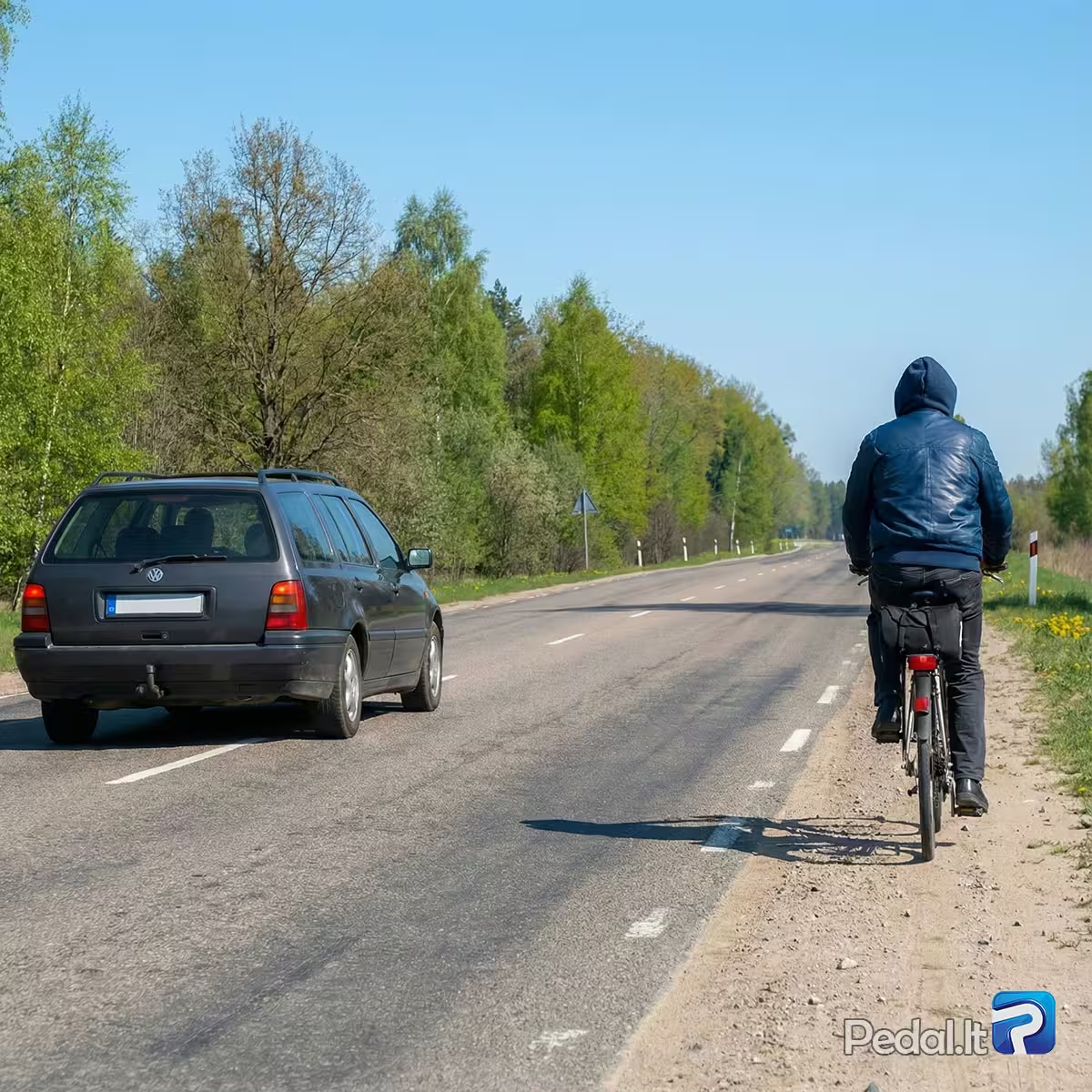
Cyclists must not perform any of the following:
RTR VIII. Rules for Cyclists
64. Cyclists must not:
64.1 Ride on the carriageway except in cases expressly permitted by these Rules.
64.2 Ride on motorways and expressways.
64.3 Ride without holding the handlebars with their hands.
64.4 Carry passengers if the bicycle is not fitted with a designated passenger seat.
64.5 Carry, tow, or push loads that impede control of the bicycle or pose a hazard to other road users.
64.6 Be towed by other vehicles.
64.7 Tow other vehicles, except for trailers specially designed for bicycles.
64.8 Hold on to a moving vehicle while cycling.
64.9 Cross the carriageway by riding over a pedestrian crossing. JB
1. Carrying, towing, or pushing any load that impairs control of the bicycle or endangers other road users.
2. Riding on bicycle paths after dark.
3. Riding in bicycle lanes marked on the sidewalk.
4. Riding at the edge of the carriageway during daylight hours.
Which factors can reduce a driver's attention while driving?
1. Engaging in a heated or intense conversation with a passenger.
2. Experiencing strong emotions (e.g., joy, anger, or hatred).
3. Listening to an engaging radio programme.
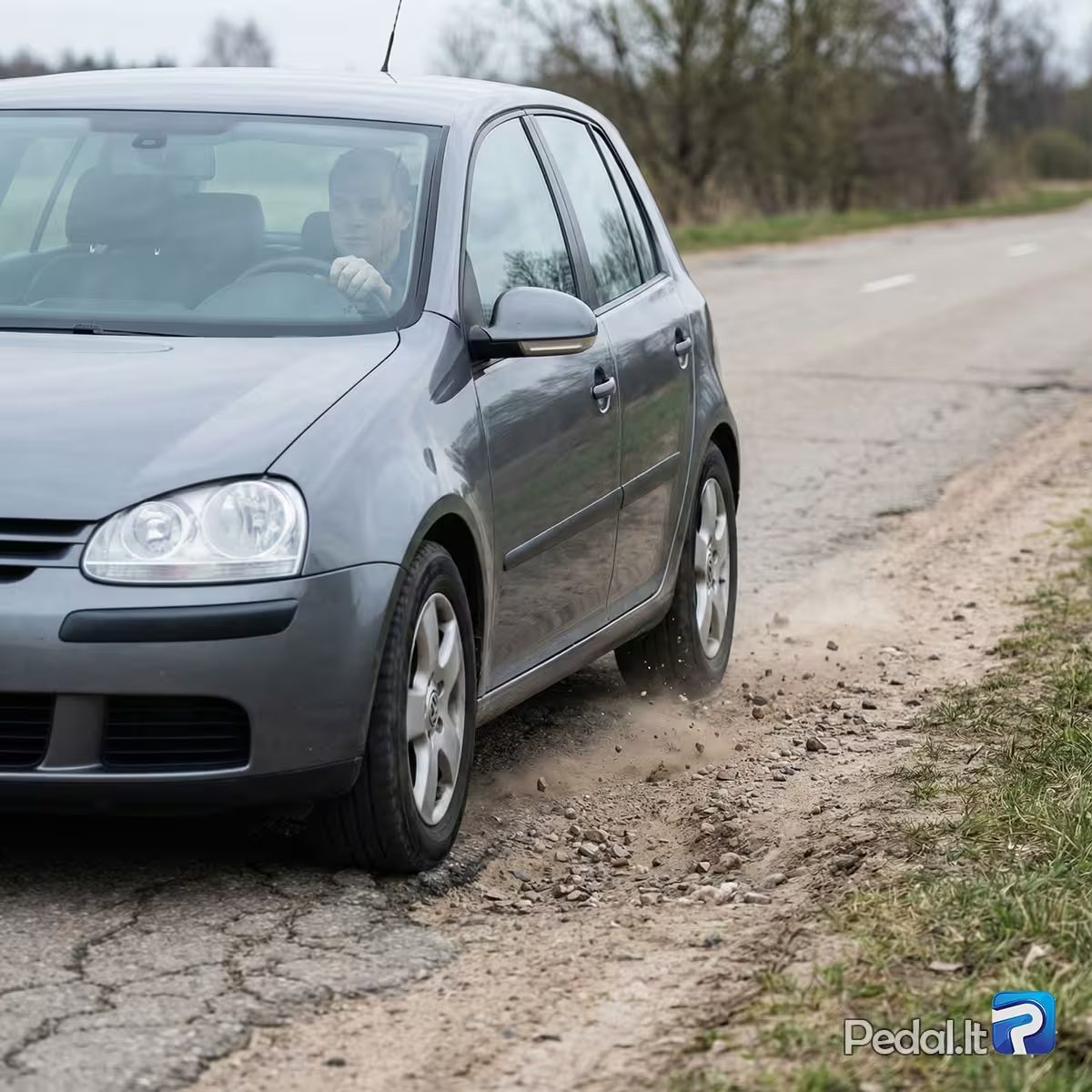
If two wheels of your vehicle move onto the road shoulder while driving, what should you do?
Avoid sudden steering or braking to prevent further instability. Gently accelerate — increasing the driven wheel's RPM will help the wheel regain traction and make it easier to return to the paved road.
1. Apply the brakes and steer back onto the carriageway.
2. Gently accelerate and steer back onto the carriageway.
What is the primary purpose of a vehicle's main brakes?
A vehicle's braking system is intended to slow the vehicle, bring it to a complete stop, and hold it stationary. Braking distance should be kept as short as possible, and you must maintain control of the vehicle while braking.
1. Slow the vehicle to bring it to a complete stop and hold it stationary on a downhill slope.
2. Maintain a safe, controlled speed when driving downhill.
Who is authorized to teach someone to drive a category B vehicle?
For more information about learning to drive with a family member: http://www.teises.lt/kaip-gauti-teises/mokymasis-vairuoti-su-seimos-nariu
1. A person who fulfills the requirements for a driving instructor and is authorized, under the prescribed procedure, to work as an instructor at a driving school.
2. A person who has passed the category B practical driving test at the state enterprise "Regitra" in accordance with the prescribed procedure.
3. A person with at least five years of category B driving experience.
4. A family member of the learner who has at least five years of category B driving experience and is not disqualified from driving.
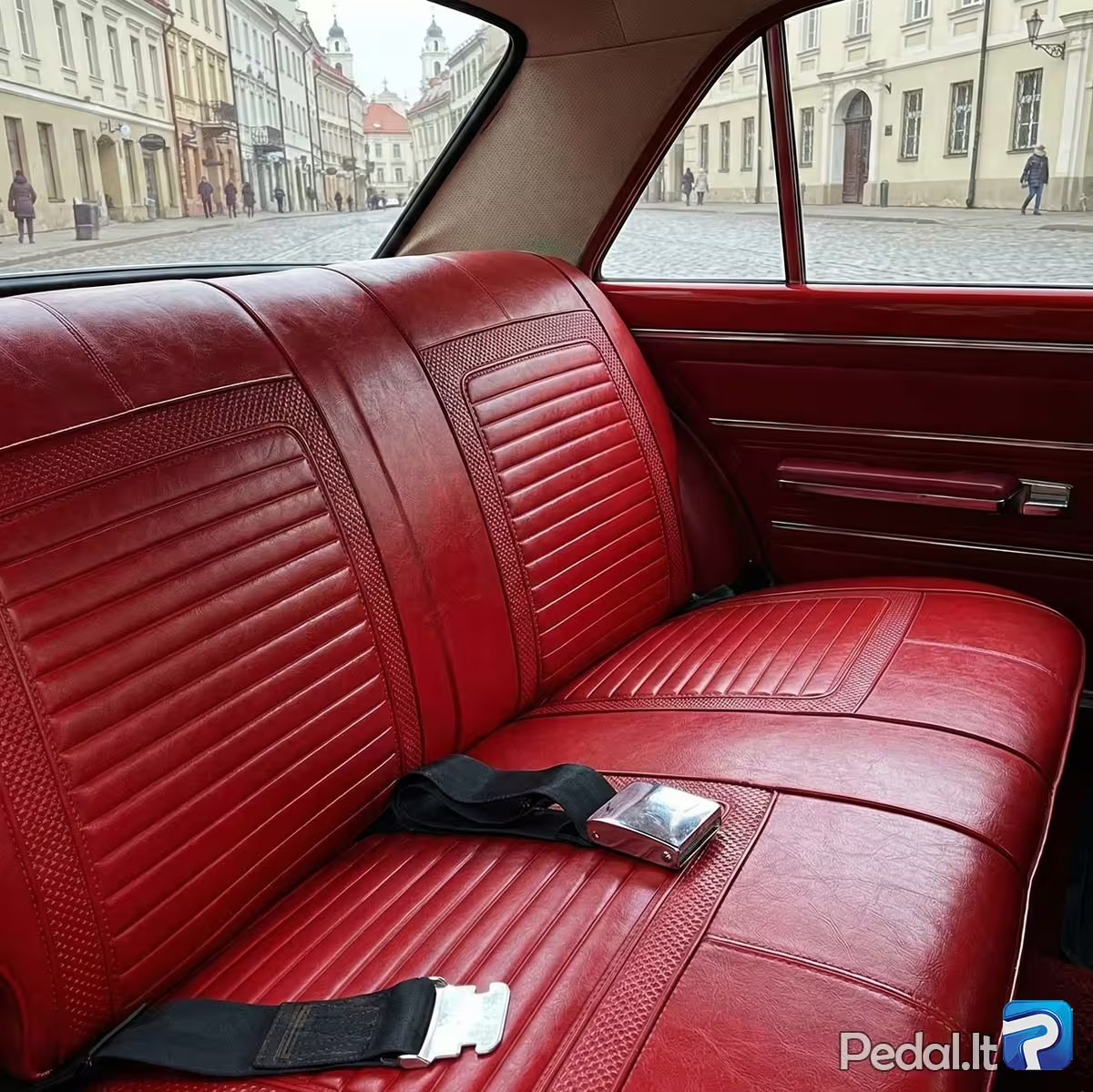
Must a rear-seat passenger wear a seat belt while the vehicle is in motion?
Drivers and all passengers must wear seat belts in vehicles that are equipped with them. In buses fitted with seat belts, a "Fasten Your Seat Belt" notice must be displayed in a clearly visible location in front of each seat, on the seat, or adjacent to it. It is recommended that all bus passengers be informed of the seat belt requirement — either verbally or by audiovisual means — before the journey begins.
1. Yes — you are required to wear a seat belt.
2. No — you are not required to wear a seat belt.
1 of 30 Task
Time left: 00:00:00
1
2
3
4
5
6
7
8
9
10
11
12
13
14
15
16
17
18
19
20
21
22
23
24
25
26
27
28
29
30