When driving and you discover that a bend in the road is sharper than you anticipated, you should:
If a bend in the road is sharper than anticipated, you must reduce your speed.
1. You should reduce your speed.
2. You should attempt to decrease your turning radius.
3. You should accelerate.
4. You should maintain your current speed.
Why must you wear a seat belt when driving?
RTR 196. The driver and all passengers must wear seat belts when the vehicle is equipped with them. If a bus is fitted with seat belts, visible notices reading 'Fasten Your Seat Belt' must be displayed in front of every seat, on the seat, or next to it. It is recommended that all bus passengers be informed—verbally or by audio‑visual means—about the requirement to wear seat belts before the journey begins. RTR 197. A seat belt must be fastened over the shoulder and around the waist, or as specified by the vehicle manufacturer.
1. To reduce the risk of injury in a road traffic collision.
2. Because wearing a seat belt makes driving more comfortable.
3. Because the road traffic regulations require it.
What would you do if your engine suddenly failed and stopped running?
Towing a vehicle whose engine has failed or stopped running is not prohibited. However, if the engine is not operating, the brakes may not function correctly because the brake servo will not work, and steering will be more difficult because the power steering will not operate. When using a dolly to tow a vehicle, towing is prohibited if only part of the vehicle rests on the dolly; it is permitted only when the entire vehicle rests on the dolly. RTR 217. The following vehicle towing and transporting practices are prohibited: 217.1 towing a vehicle with a broken steering mechanism using a tow rope or a rigid tow bar; 217.10 carrying a vehicle with part of it resting on a dolly.
1. You will tow the vehicle using a rigid tow bar at the earliest safe opportunity.
2. You will tow the vehicle with only part of it supported on a dolly.
3. You will exercise caution when towing the vehicle with a tow rope, because the brakes and power steering will not function properly.
A vehicle driving ahead of you on the motorway has switched on its hazard warning lights and keeps driving. What does this indicate?
91. If a vehicle is equipped with hazard warning lights, they must be used: 91.7 when other road users should be warned of an obstruction or hazard.
1. There is an obstruction or hazard ahead.
2. Police are ahead.
3. They are indicating that they intend to turn around.
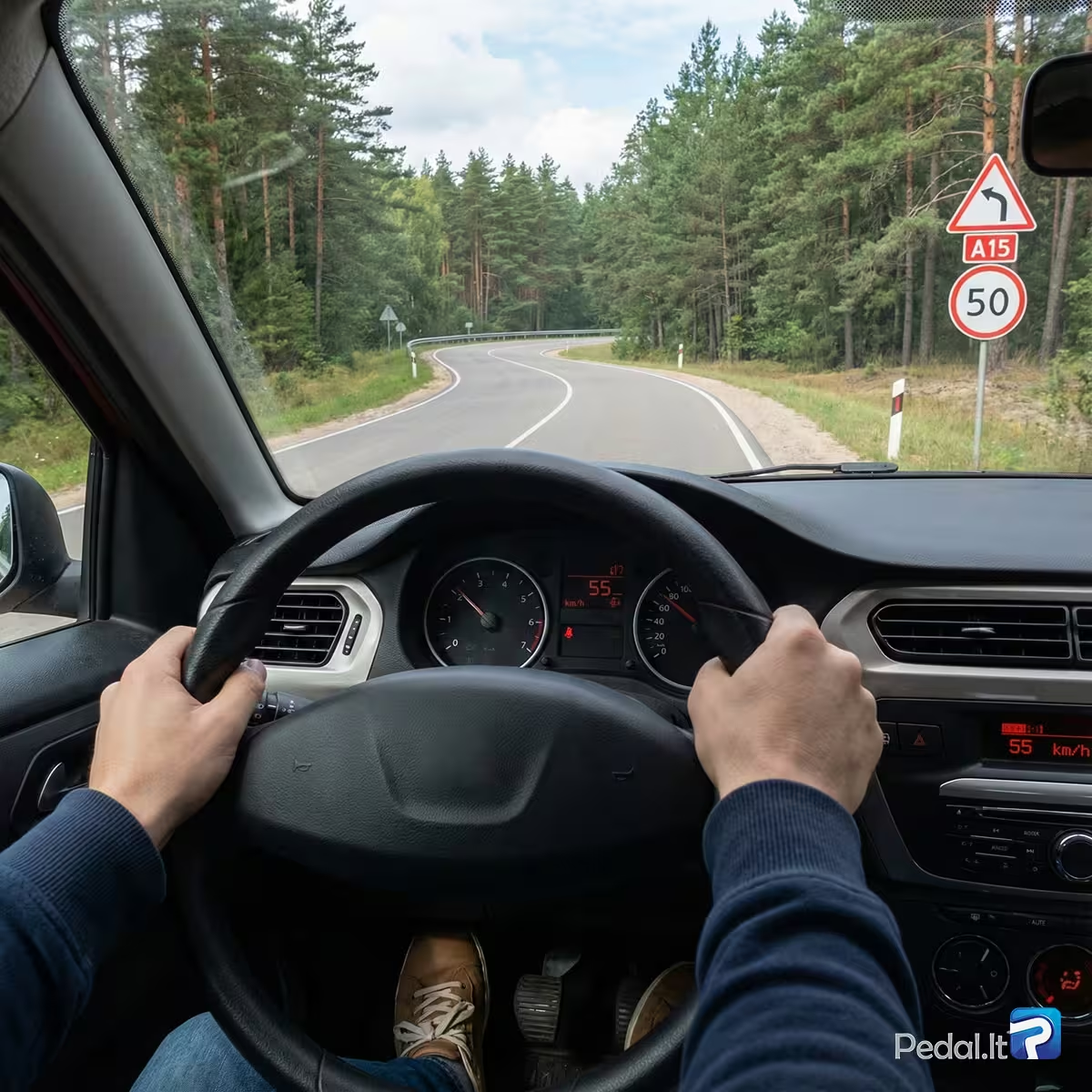
You are approaching a bend in the road. You should:
Drivers approaching a bend should be aware that the curve may be sharper than it appears. Therefore they must select a safe speed and adopt an appropriate position on the road to avoid entering the oncoming traffic lane. A safe speed depends on all circumstances: weather conditions, the technical condition of the road and the vehicle, the vehicle's load, the driver's experience and physical condition. RTR 127. Drivers must not exceed the permitted speed limit. When choosing a driving speed, drivers should consider the driving conditions — in particular the terrain — the condition of the road and the vehicle (including its load), weather conditions and traffic density so that they can stop safely before any foreseeable obstruction. Drivers must slow down or stop if circumstances require, especially when visibility is poor.
1. Reduce your speed.
2. Position your vehicle to avoid crossing into the oncoming traffic lane.
3. Use your turn signal.
Is the term "Pavement" included within the definition of "Road"?
RTR 3.7. 'Road' means the surface of a strip of ground or a superstructure intended for, and used by, road traffic across its full width; this includes the carriageway, intersections, pavements, roadsides, pedestrian and bicycle paths, and dividing strips. RTR 3.8. 'Shoulder' means a road area adjacent to the carriageway (from the carriageway edge to the roadbed edge) that is paved with the same or different material as the carriageway and/or separated from the carriageway by an edge line, but is not regarded as a pavement or as a pedestrian or bicycle track. JB
1. Yes, it is.
2. No, it is not.
After you pass your first driving test for category B, the driving licence you receive will be valid for:
LAW ON ROAD TRAFFIC SAFETY Article 22.5. Novice drivers are issued a driving licence valid for three years. In accordance with the procedure established by the Minister of the Interior or their authorised institution, this licence may be replaced with a 10-year licence after two years from the date of issue without completing additional driver training, provided that during those two years the driver has not committed any violations of the Road Traffic Rules (RTR) that would require additional driver training under this Law and has not caused a road traffic accident resulting in bodily injury to road users (except where the accident occurred under circumstances that exclude criminal liability or where the person is not subject to administrative liability). A novice driver who commits any RTR violation that triggers additional driver training under this Law, or who causes a road traffic accident resulting in bodily injury to road users (except as noted above), must complete additional driver training within one year from the date a court judgment (or order) recognising the person as having committed an offence takes effect, or from the date of execution of an administrative order issued after the administrative offence. If a court judgment or penal order imposes arrest or a term of imprisonment and the execution of the sentence is not suspended, the additional driver training must be completed within one year after serving the imposed sentence.
1. 10 years.
2. 15 years.
3. Unlimited validity.
4. 3 years.
What should drivers do when approaching an intersection where the green traffic light is flashing?
According to the Road Traffic Rules (RTR 73.3), a flashing green light permits traffic to proceed but indicates that the green phase is ending and that a prohibitive signal will soon appear. Drivers who try to speed through the intersection — by accelerating or overtaking — take unnecessary risks and may cause an accident. Other drivers may brake suddenly; therefore, to pass the intersection safely while the green light is flashing, drivers must ensure their actions will not obstruct other vehicles and must consider the behavior of drivers behind them, since sudden braking can also lead to collisions. Anticipating the need to stop before the intersection, drivers should reduce their speed.
1. Observe and take into account the actions of vehicles ahead.
2. Accelerate to the maximum allowable speed.
3. Be aware of and consider the actions of drivers behind you.
4. Reduce your speed.
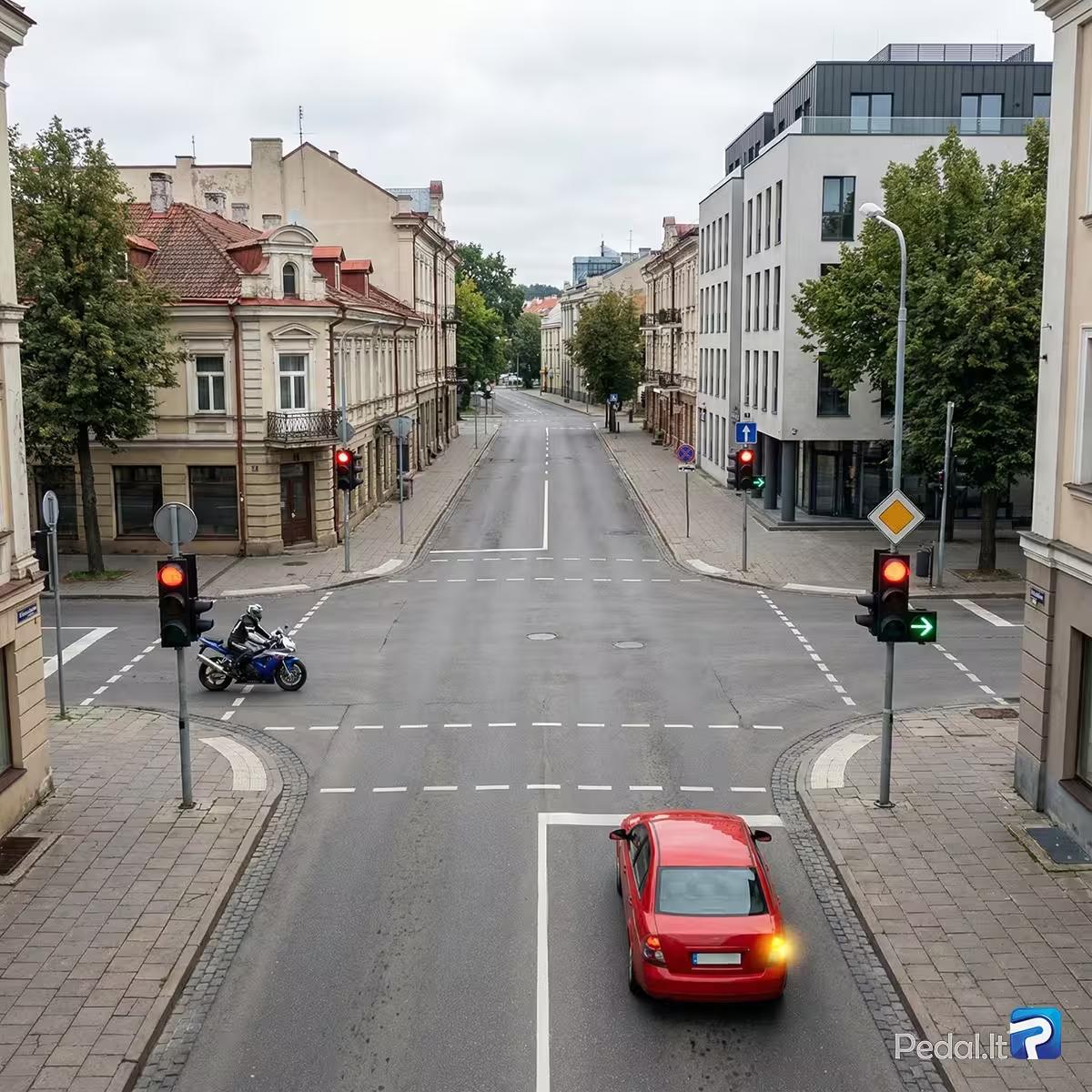
Who has the right of way? (the traffic light is green for the motorcyclist)
RTR 163. When driving in the direction indicated by an arrow illuminated in an auxiliary section of the traffic light together with an amber or red main signal, the driver must yield to road users coming from other directions who have a traffic-light signal permitting them to proceed, except as provided in Paragraph 163-1 of the Rules. RTR 163-1. When making a U-turn at an intersection controlled by traffic lights, the driver must yield to road users coming from other directions who are permitted to proceed by the traffic-light signal. JB
1. The driver of the red car.
2. The motorcyclist.
The effect of inertia on the vehicle (risk of sliding sideways) when cornering is reduced by:
The higher the vehicle's speed when cornering, the greater the effect of inertia and the higher the risk of the car sliding sideways. Lower speeds reduce inertia and the risk of sliding. A larger turning radius (a gentler curve) also reduces lateral inertial forces.
1. By decreasing the turning radius (making the turn tighter).
2. By reducing vehicle speed.
3. By increasing the turning radius (making the curve gentler).
When may a driver leave the scene of a road accident?
XXIX. Obligations of Road Users in the Event of a Road Accident (paras. 219–222) 219. In the event of a road accident, every driver involved or any other road user must: 219.4. if a person has died or has been injured in the road accident, report the accident to the police and remain at the accident scene or, after notifying the police, return to the scene and wait for the police to arrive, except where the police permit the road user to leave the scene or when the casualties or the person who reported the accident require first aid; 220. If no deaths or injuries occurred in the road accident and the road users involved agree on the circumstances and do not call the police to the accident scene, the road users must draw the accident sketch on the Road Accident Report Form, describe the circumstances in writing, and have it signed by all road users involved. If none of the road users involved has the Road Accident Report Form, the circumstances may be described and the accident sketch drawn on a blank sheet of paper listing all road users involved, their vehicles, and witnesses, and all details and circumstances must be confirmed by the signatures of the road users involved. Where the circumstances of the accident are disputed, the police must be called to the scene.
1. If a person sustained only minor injuries.
2. If the driver requires first aid.
3. If an injured person requires first aid.
4. If the police have permitted the driver to leave the scene.
In which direction does the load shift when the vehicle makes a left turn?
When the vehicle turns left, the load shifts to the right due to inertia.
1. Toward the left
2. Toward the right
3. Toward the front
4. Toward the rear
Who or what poses the greatest risk of causing road accidents?
According to the Lithuanian Road Administration, in 2017 drivers accounted for 68.83% of all traffic offenders. Although slippery roads are a traffic hazard, drivers can adapt to conditions, choose a safe speed, and thus reduce the risk of accidents.
1. Drivers.
2. Pedestrians.
3. Slippery road surfaces.
4. Road signs.
When driving a motor vehicle equipped with seat belts, may a rear-seat passenger travel without wearing a seat belt?
Only the driver may be exempt from wearing a seat belt within built-up or residential areas (for example, when maneuvering in a parking lot). RTR 196. All drivers and passengers must wear seat belts when travelling in vehicles equipped with them. If a bus is fitted with seat belts, visible informational signs reading "Fasten Your Seat Belt" must be displayed in front of, on, or next to every seat. It is recommended that all bus passengers be informed of the seat belt requirement verbally or by audiovisual means before the journey begins. RTR 198. Persons driving a vehicle in reverse or manoeuvring in a parking area within a built-up area are exempt from wearing seat belts. RTR 205. Persons who, for serious medical reasons, hold special permits issued by competent authorities are exempt from wearing seat belts; these permits must include an expiry date. JB
1. Yes — but only if the passenger holds a special medical exemption certificate issued by the competent authorities.
2. Permitted when driving within built-up areas.
3. Permitted only with the driver's consent.
4. Permitted when driving in residential zones.
When are drivers permitted to brake on a pedestrian crossing?
According to traffic regulations, there are no specific locations where braking is prohibited. Braking is necessary to ensure road safety; therefore drivers must brake whenever required.
1. When it is necessary to prevent a traffic accident.
2. When they see the brake lights of the vehicle ahead.
3. When they need to stop after the pedestrian crossing on the right-hand side of the road.
4. It is forbidden to brake on a pedestrian crossing in all circumstances.
Which actions are permitted for a driver to attract the attention of other road users when overtaking them outside built-up areas?
Outside built-up areas, a driver may warn others when overtaking by flashing the high or low beams (provided this does not dazzle other road users) or by sounding the horn. Within built-up areas, flashing the lights is permitted if it does not dazzle others; sounding the horn is prohibited except when necessary to avoid a traffic accident. RTR — 89.
1. A driver may repeatedly switch the headlights on and off to attract attention.
2. A driver may sound the vehicle's horn to attract attention.
3. A driver may switch on the hazard warning lights.
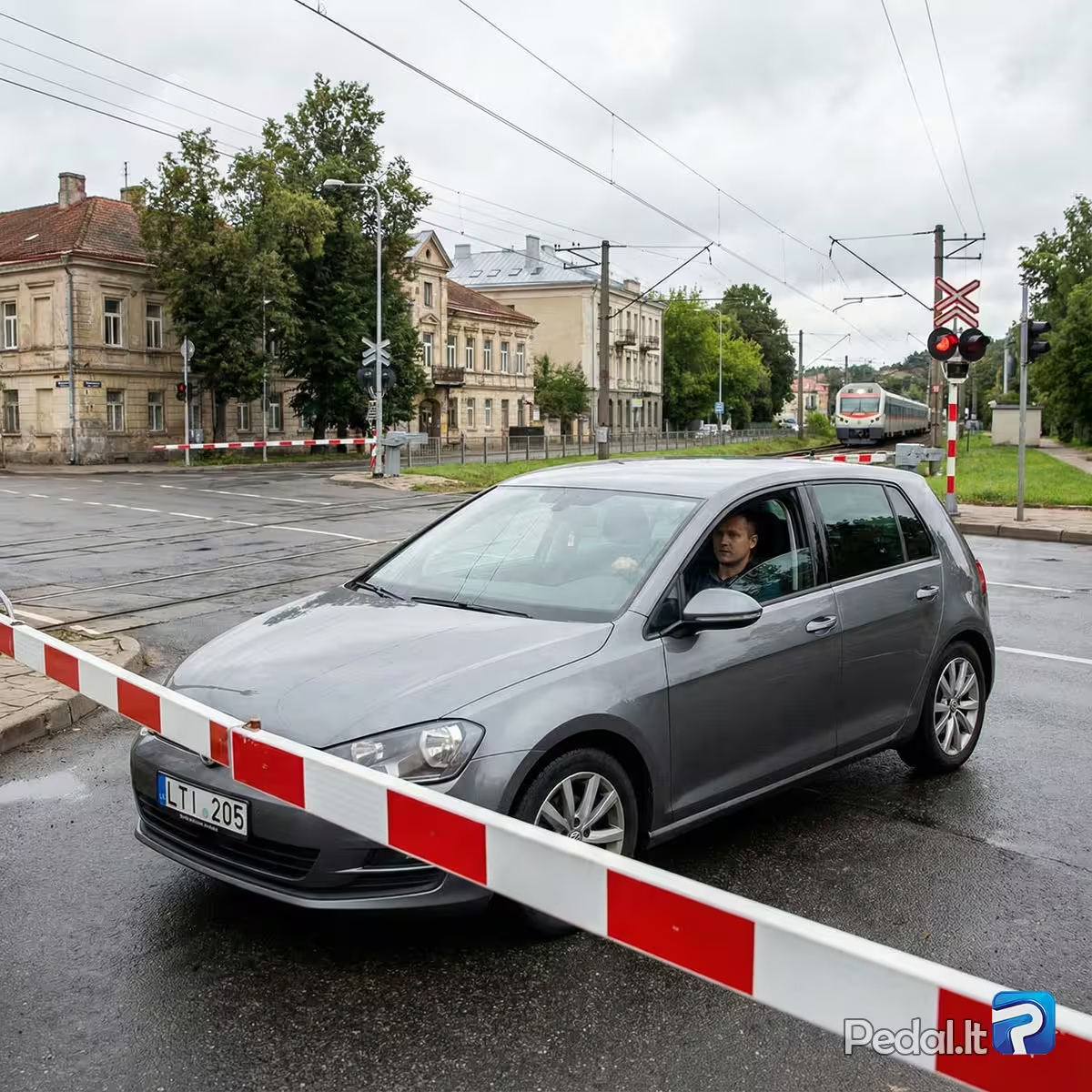
At a railway crossing, the vehicle driver must not:
Regulation RTR 173. Drivers must not: 173.3. enter a level crossing after the barrier has been lowered or is in the process of being lowered; deliberately lift the barrier; or drive around the barriers.
1. Deliberately lifting the barrier.
2. Entering the crossing after the barrier has been lowered or is in the process of being lowered.
3. Driving around the barrier.
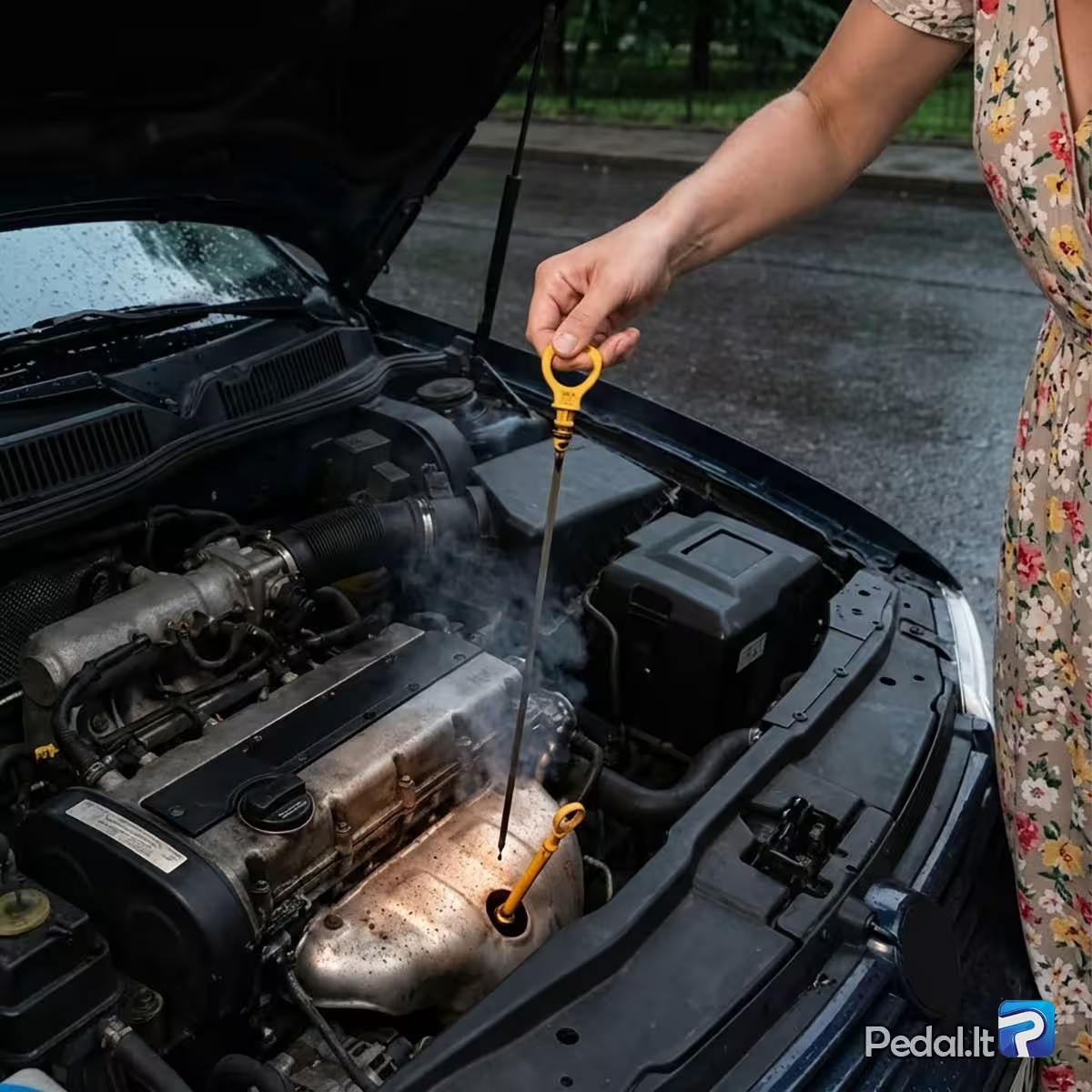
How dangerous is a low engine oil level?
When engine oil is low, internal components receive less lubrication, causing increased wear and overheating; this accelerates deterioration and can lead to engine failure.
1. Fuel consumption will be reduced.
2. The engine may suffer serious damage or fail.
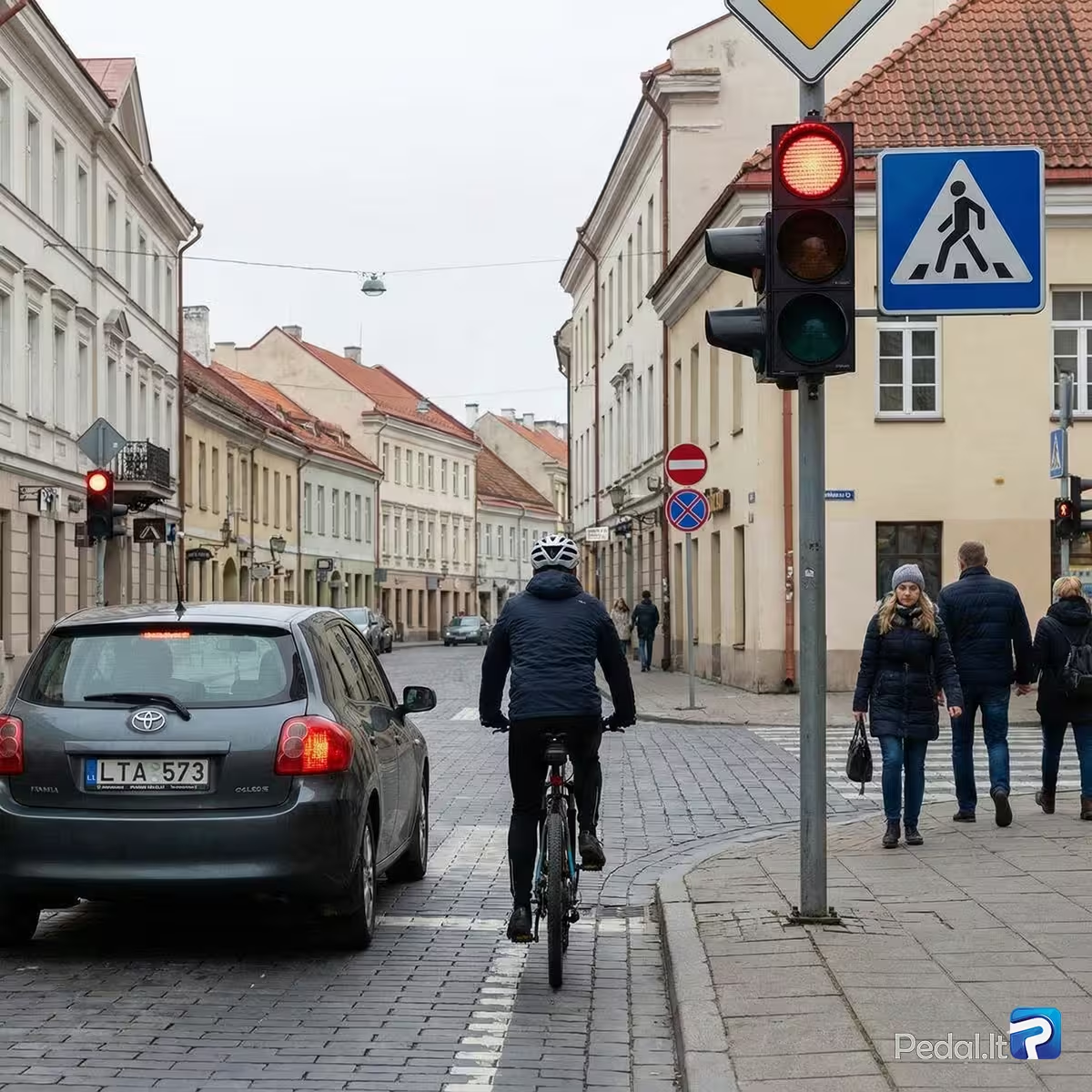
Road users are required to:
RTR 5. Road users must be familiar with the Law on Road Traffic Safety of the Republic of Lithuania, be acquainted with these Rules, and comply with them. JB
1. Be familiar with the directives of the General Commissioner of Police.
2. Know and comply with the traffic rules.
3. Be familiar with the Law on Road Traffic Safety.
4. Know the regulations of the Lithuanian Transport Safety Administration.
Another person may drive your vehicle if:
A driving licence of categories B and BE entitles the holder to drive a passenger car (RTR 14). It is prohibited to operate a vehicle if you do not have the legal right to do so, or if you are under the influence of alcohol, narcotic drugs, psychotropic substances, or other psychoactive substances. A person who is fatigued or ill must not drive if driving could endanger road safety. A vehicle must not be entrusted to anyone who is under the influence of the aforementioned factors or who is not authorized to drive that type of vehicle. When operating a vehicle, the driver must comply with the restrictions and endorsements indicated on the driving licence.
1. The person is at least 18 years old but does not possess a driving licence.
2. The person holds a category BE driving licence.
3. The person holds a category B driving licence.
4. The person holds only a category A driving licence.
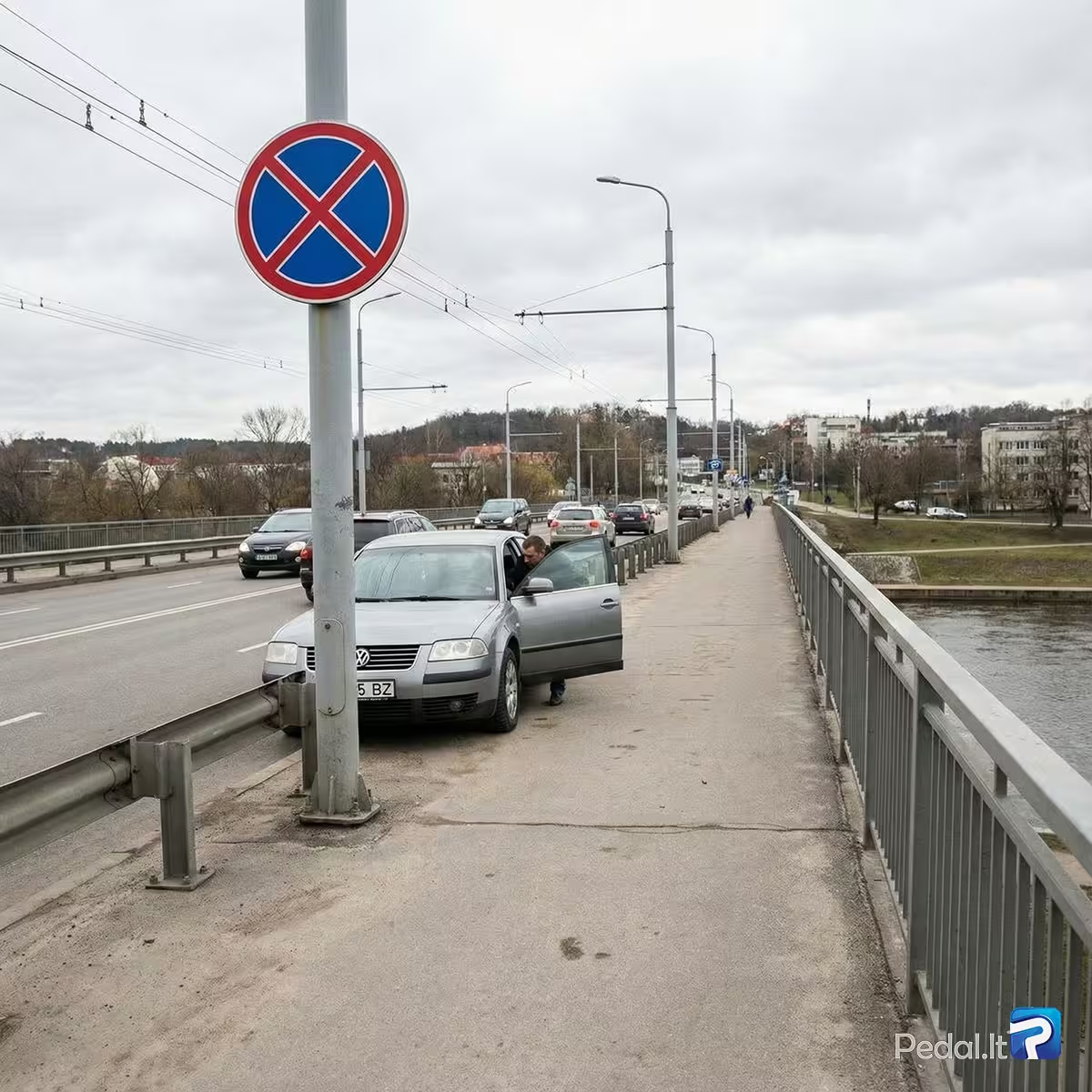
Are drivers permitted to stop or park their vehicles on a bridge if they do not obstruct traffic flow?
RTR – 150. Standing and parking are prohibited: 150.3 on and under bridges, viaducts and flyovers — except where parking is expressly permitted by road signs indicating a parking space — and in tunnels.
1. Yes — it is permitted.
2. Parking is permitted only where road signs explicitly designate a parking space.
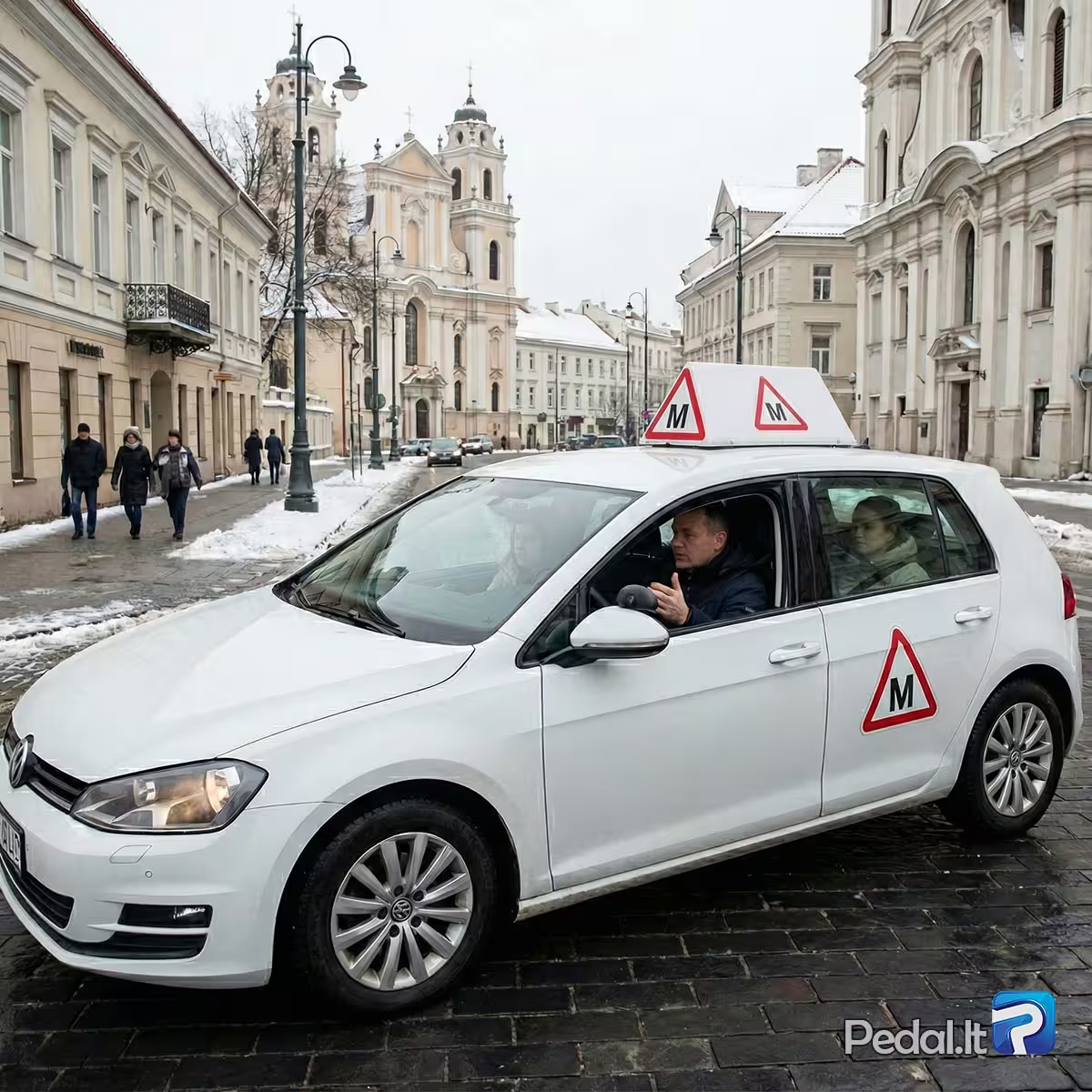
Is it permitted to transport passengers while teaching someone to drive?
RTR 195. Drivers must not: 6) teach another person to drive or transport children under 14 years of age; JB
1. Prohibited.
2. Permitted.
3. Permitted, but only for passengers aged 14 years or older.
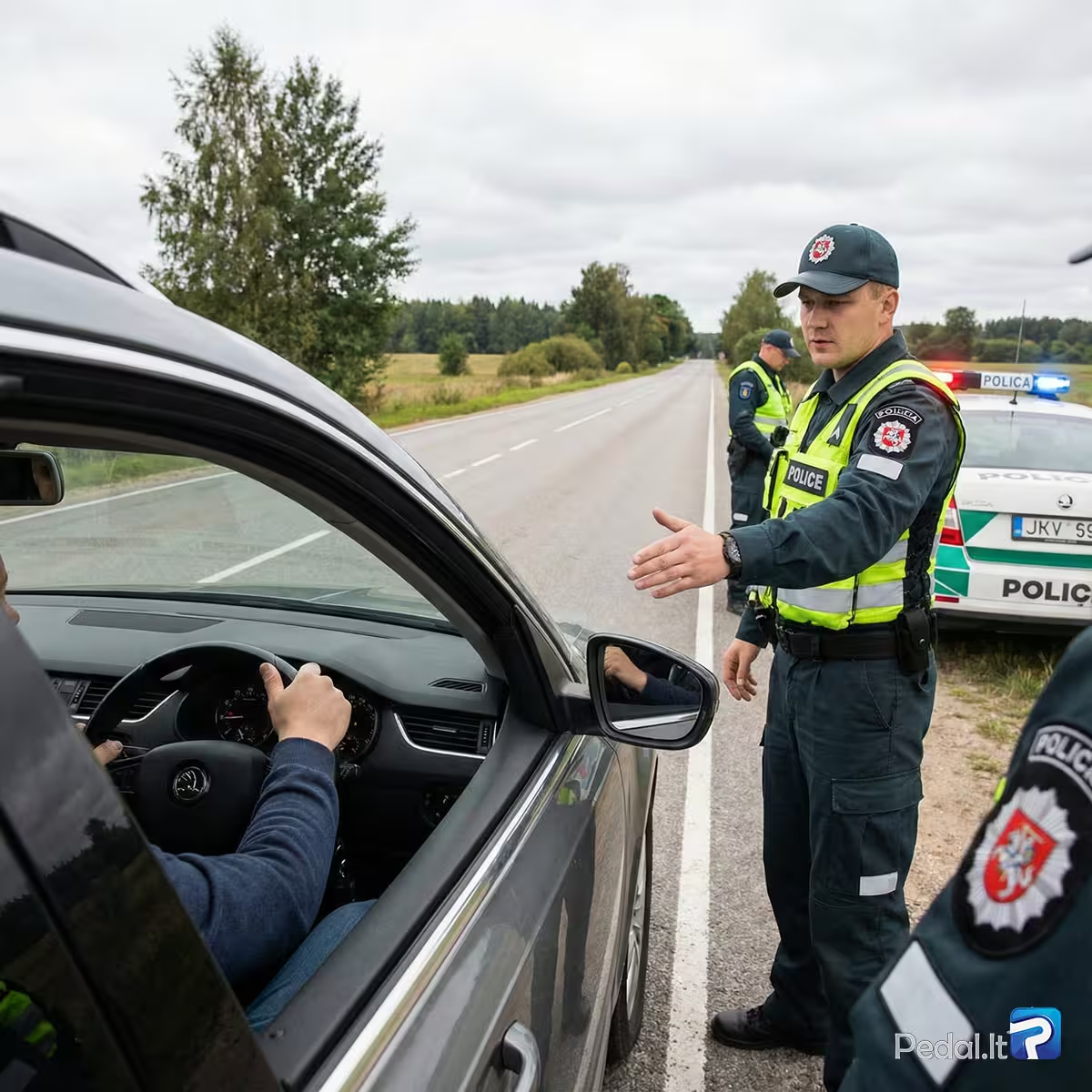
If an officer who intends to inspect your vehicle stops you, are you permitted to exit the vehicle?
RTR – 51. When an inspecting officer stops a vehicle, passengers may exit the vehicle only with the officer's authorization.
1. You may exit the vehicle only with the officer's permission.
2. You must remain inside the vehicle in all circumstances.
3. You must exit the vehicle in all circumstances.
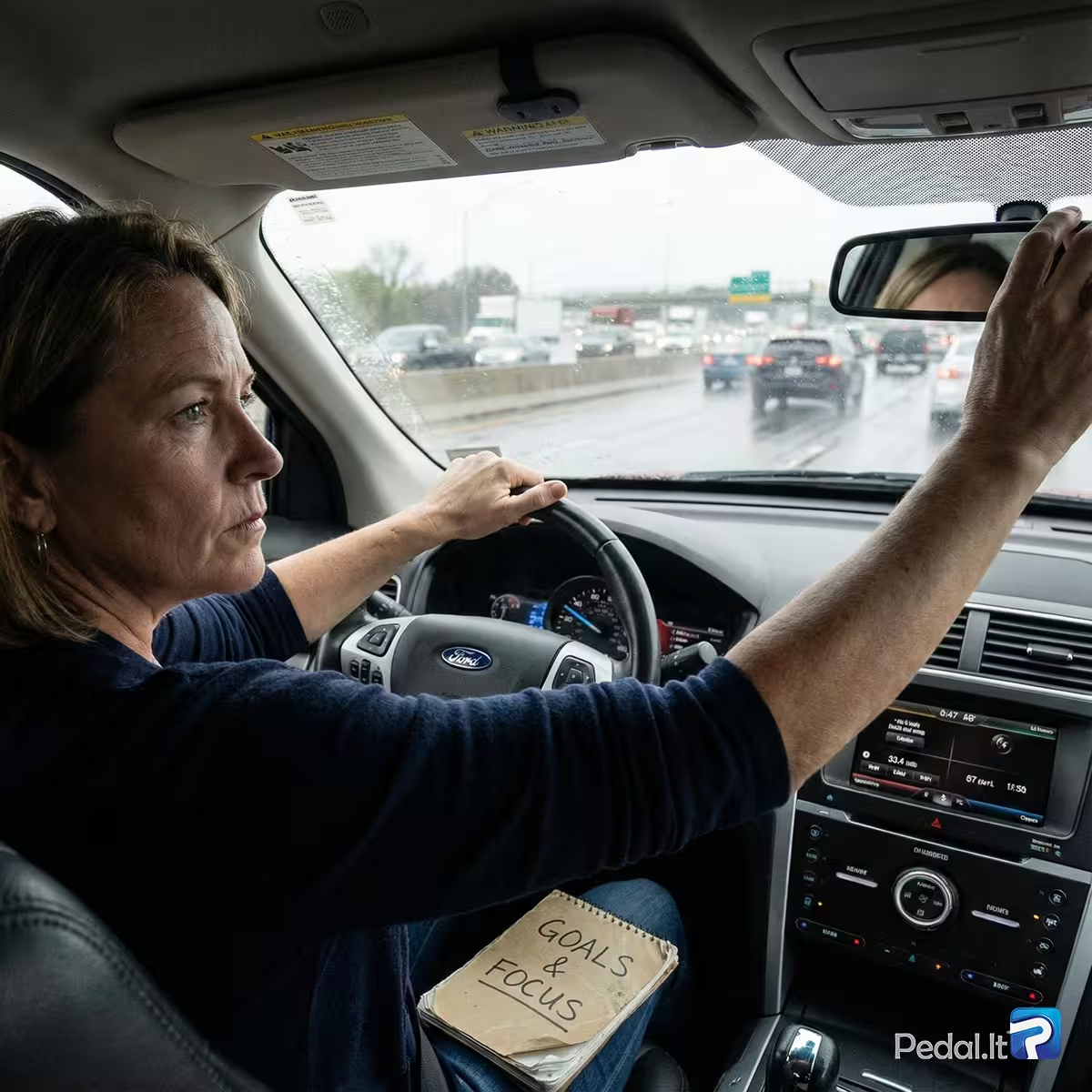
What are the primary characteristics of a driver's will?
The primary characteristics of a driver's will are discipline, determination, self-control, and perseverance. Disciplined drivers consistently obey the rules of the road (RTR). Determined drivers do not hesitate about decisions they make while operating a vehicle. A driver's self-control is demonstrated by remaining calm in complex traffic situations and by showing respect for other road users. Perseverance is the ability to overcome difficulties encountered on the road.
1. Discipline and determination.
2. Aggression and anger.
3. Self-control and calm temperament.
4. Indifference.
A vehicle has nearly completed an overtaking maneuver while another vehicle is approaching in the oncoming lane. What should you do?
The Driver Behaviour Manual states: If another vehicle's overtaking endangers or inconveniences traffic in the oncoming lane, the driver of the vehicle being overtaken must try to prevent a hazardous situation by: (1) reducing speed; (2) moving to the side; (3) stopping if necessary. Section 128: If there is an obstruction or traffic safety is at risk, the driver must slow down and, if required, bring the vehicle to a complete stop or go around the obstruction (if it can be seen), provided this can be done without endangering other road users. Section 135: Drivers must not: 135.4. decelerate sharply for reasons other than safety.
1. Apply the brakes.
2. Maintain your current speed.
3. Ease off the accelerator.
4. Increase your speed.
Where should you stop when you must give way to an approaching rail vehicle?
RTR 170. When yielding to an approaching rail vehicle, or whenever crossing a level crossing is prohibited, drivers must stop at the STOP line, the 'Stop' traffic sign, traffic lights, or barriers. If none of these are present, drivers must stop no nearer than 10 metres from the first rail. When a STOP line is used together with a 'Stop' sign, the driver must stop at the STOP line; if the STOP line is absent, stop at the 'Stop' sign even if a flashing white traffic light is displayed. JB
1. At the traffic lights.
2. At the first rail of the crossing.
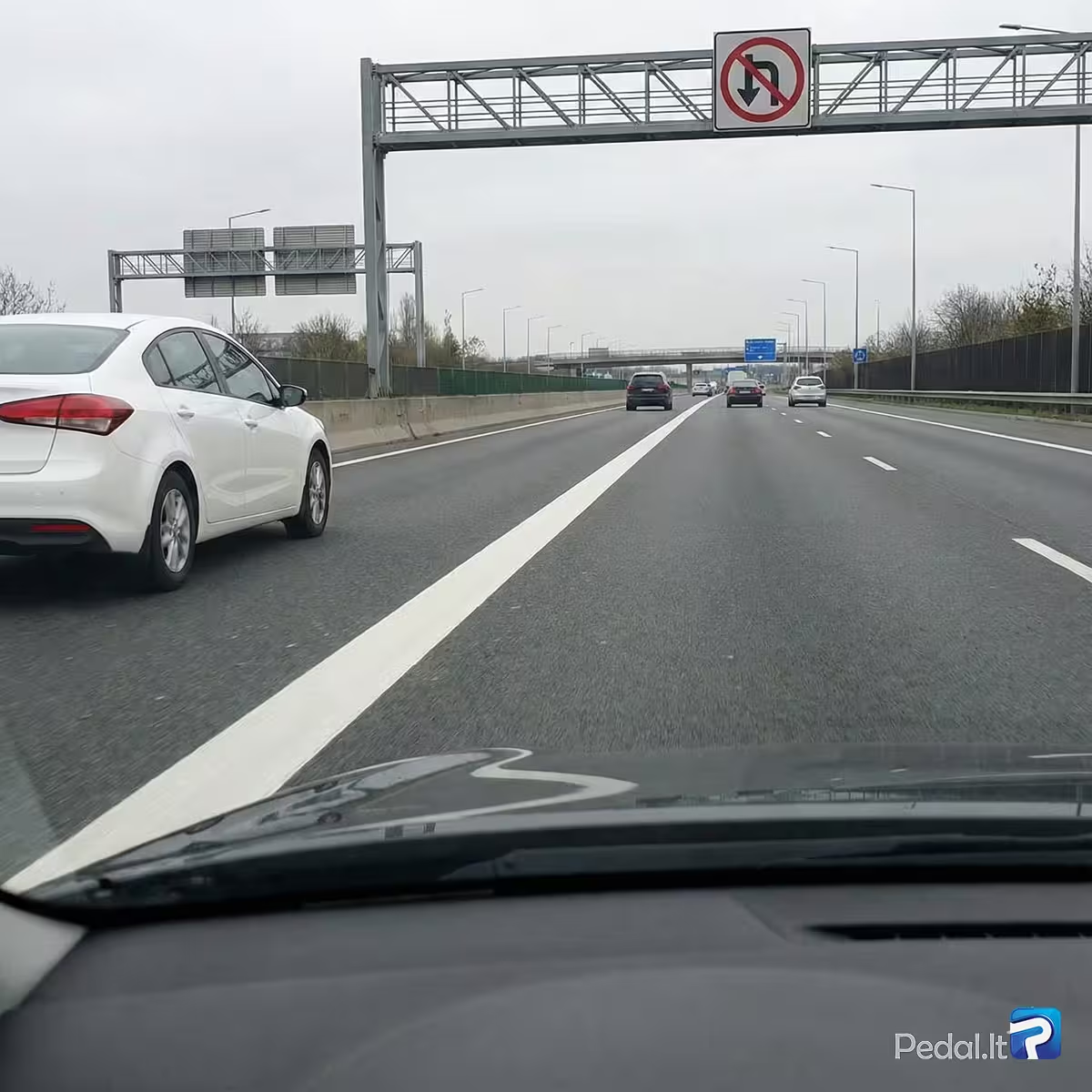
Is it permitted to cross a wide continuous road marking?
RTR 174. On roads designated as Motorway or Motor Vehicle Road the following are prohibited: 174.2 standing or parking except in designated parking areas; RTR Annex 3 1.2. A BROAD CONTINUOUS LINE marks the edge of the carriageway and the boundaries of sections where entry is prohibited on motorways and highways; it separates traffic lanes reserved for public-service vehicles and delineates lanes from bus stops. Vehicles must not cross this line unless it marks the edge of the carriageway. JB
1. Crossing is permitted.
2. Crossing is permitted only when the line denotes the edge of the carriageway.
3. Crossing is permitted to bypass an obstacle when the line separates a lane reserved for shuttle (route) transport.
The vehicle may transport passengers:
RTR 195. Drivers must not: 195.1. carry more passengers than are permitted by the vehicle's technical specifications; JB
1. Only to the extent necessary for urgent matters or when transporting persons en route for serious reasons.
2. No more than the number permitted by the vehicle's technical specifications.
What factors affect road surface quality and traffic safety?
Manhole covers for underground information and communication systems can be more slippery than the surrounding road surface and may also be uneven.
1. Potholes.
2. Manhole covers for underground information and communication systems.
3. Oil stains on the roadway.
4. Loose gravel or stone chippings on the road.
5. Wet road surface (slippery conditions).
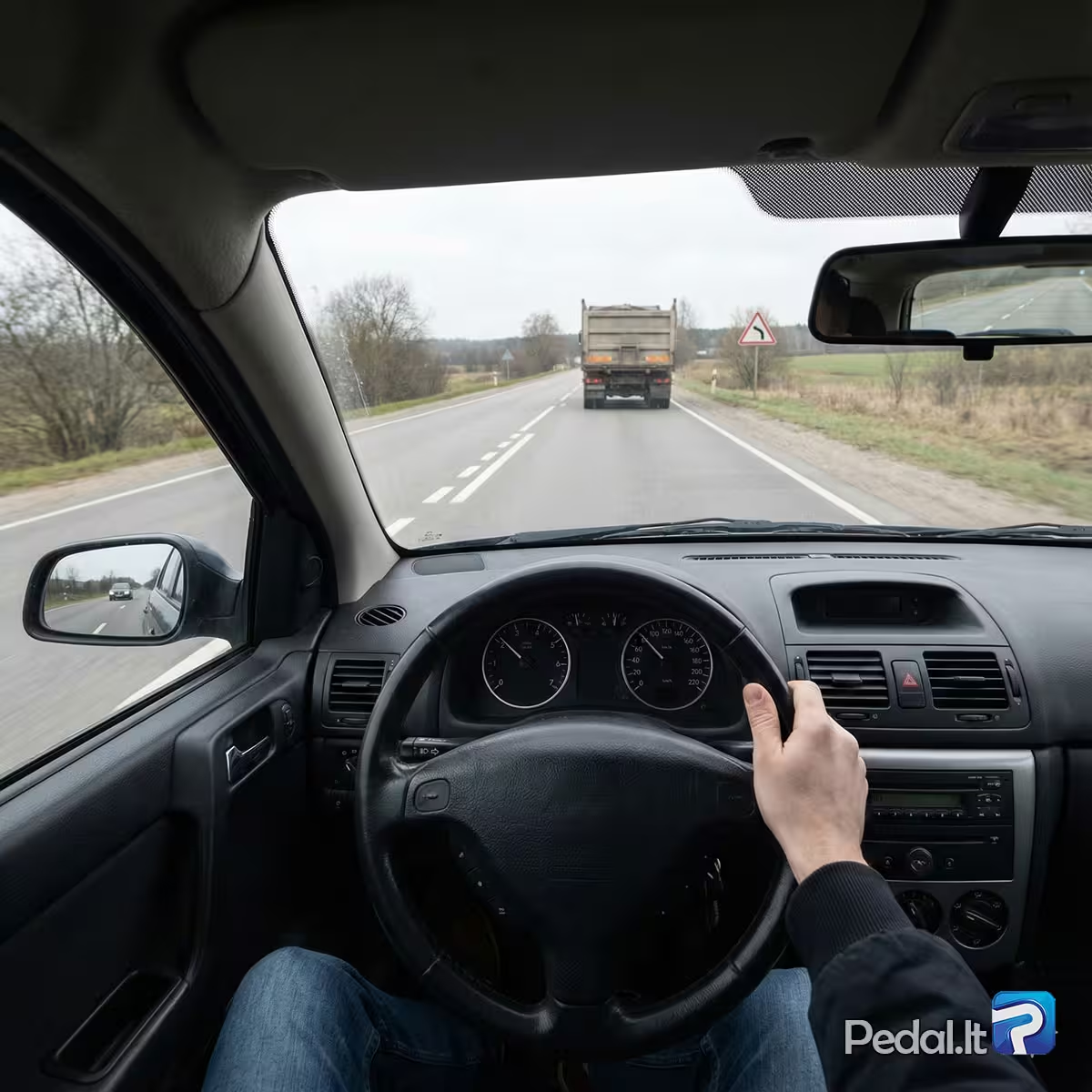
Before overtaking, drivers must ensure that:
RTR 136. Drivers should avoid unnecessary overtaking manoeuvres. Before overtaking, drivers must exercise extra caution and ensure that: 136.1 no driver following has already begun to overtake them; 136.2 the driver of the vehicle to be overtaken is not indicating a left turn; 136.3 the section of lane required for the overtaking manoeuvre is clear and the manoeuvre will not obstruct oncoming traffic or pedestrians on the carriageway; 136.4 a safe distance from the vehicle being overtaken can be maintained during the manoeuvre; 136.5 after completing the overtaking manoeuvre they will be able to return safely to the original traffic lane without obstructing the overtaken vehicle.
1. The road ahead is clear and the overtaking manoeuvre can be completed safely
2. No vehicle is approaching from the opposite direction
3. No vehicle behind has already begun overtaking
1 of 30 Task
Time left: 00:00:00
1
2
3
4
5
6
7
8
9
10
11
12
13
14
15
16
17
18
19
20
21
22
23
24
25
26
27
28
29
30