A driver whose vehicle is being overtaken must not:
Using the horn may distract the driver being overtaken but will not prevent the overtaking; they may still accelerate to complete the manoeuvre. Obstructing an overtaking vehicle includes actions such as accelerating, steering toward the overtaking vehicle, blocking the lane, or any other behaviour intended to prevent another driver from passing. RTR 138. The driver of a vehicle being overtaken must not obstruct drivers who wish to pass by speeding up or by any other action. RTR 136. Drivers are advised to avoid unnecessary overtaking manoeuvres. Before overtaking, drivers must take extra precautions and ensure that: 136.1. no driver behind them has already begun to overtake; 136.2. the driver of the vehicle to be overtaken is not signalling a left turn; 136.3. the section of lane required for overtaking is clear and the manoeuvre will not obstruct oncoming vehicles or pedestrians on the carriageway; 136.4. a safe distance from the vehicle being overtaken can be maintained during the overtaking; 136.5. after the overtaking manoeuvre they will be able to return to the same traffic lane safely without obstructing the overtaken vehicle. JB
1. Speeding up or otherwise obstructing a driver who is attempting to overtake.
2. Slowing down.
3. Using the horn.
Which type of skid is most difficult to control?
Sudden braking on a slippery road can cause a vehicle to begin sliding. In such a situation the driver should stop braking and then take specific actions depending on which wheels are driven. For front-wheel-drive cars, the driver should gently apply the accelerator and correct the vehicle’s path with the steering wheel. For rear-wheel-drive cars, the driver should release the accelerator and, after a slight reduction in speed, steer into the direction of the slide to correct the trajectory. The most difficult situation is when both axles begin to slide; this requires very precise and decisive actions from the driver. JB
1. When the front axle is slipping.
2. When the rear axle is slipping.
3. When both axles are slipping.
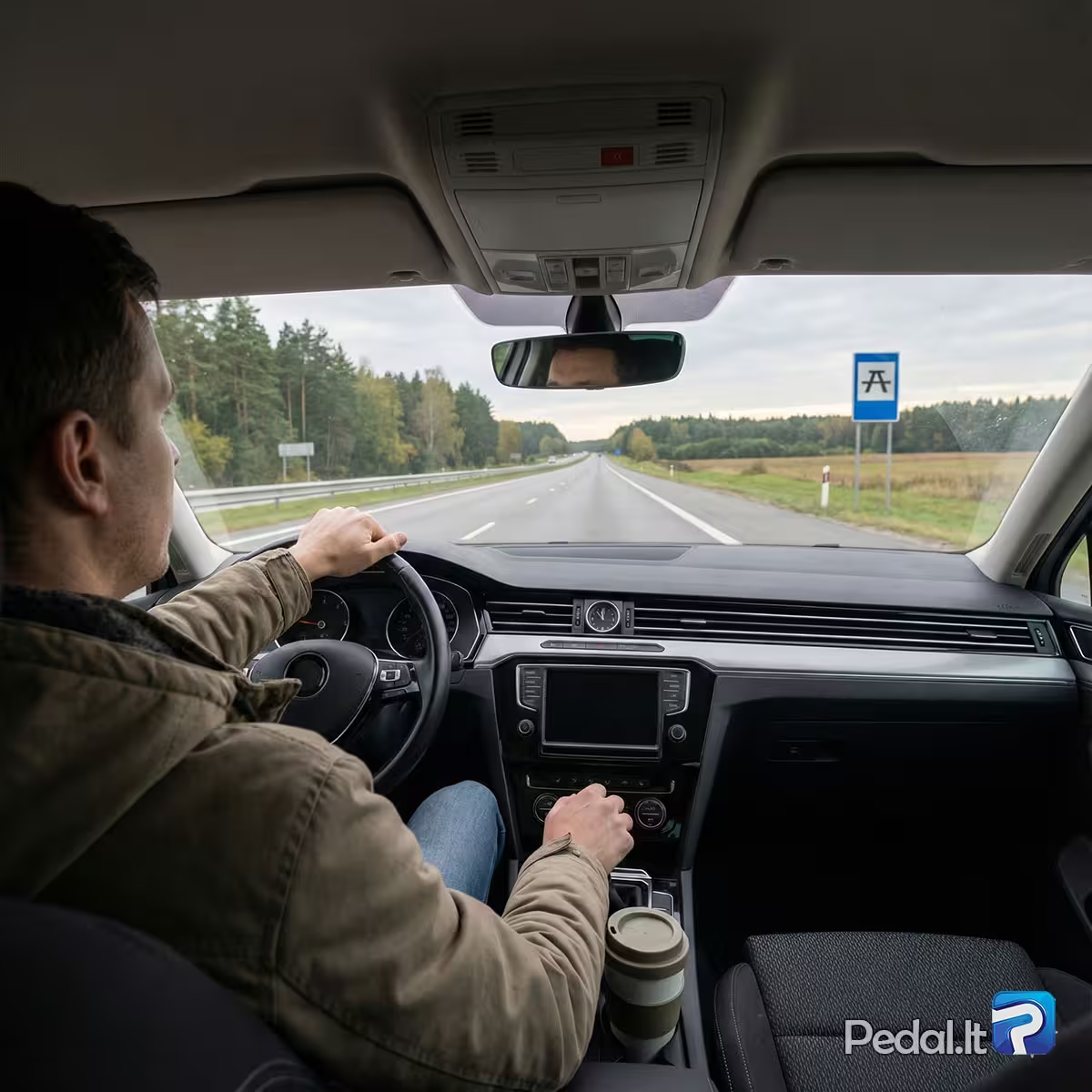
How should you behave during a long journey?
Long journeys can cause the driver to become distracted and fatigued for extended periods, which reduces reaction time and concentration and increases the risk of mistakes. It is recommended to take breaks every 1.5 to 2 hours or after driving approximately 200 kilometres. Sitting for long periods can lead to muscle tension and poor circulation, so getting out of the vehicle helps relax the body and improve well‑being. Exiting the car or opening a window to breathe fresh air can refresh the mind, restore energy and improve concentration.
1. Listen to loud music.
2. Maintain continuous conversation with your passengers to stay alert.
3. Leave the road or motorway and stop to rest; then exit the vehicle or open a window to breathe fresh air.
4. Routinely drink coffee to stay awake.

How should you plan your route when travelling a long distance that may include roadworks, border crossings and unexpected events?
JB
1. Estimate the additional fuel required for your journey and plan appropriate refuelling stops.
2. No planning is necessary.
3. Plan your departure time, stops and rest breaks, parking arrangements, and the route your vehicle will follow to the destination.
4. Check the traffic laws and legal requirements of any countries you will pass through.
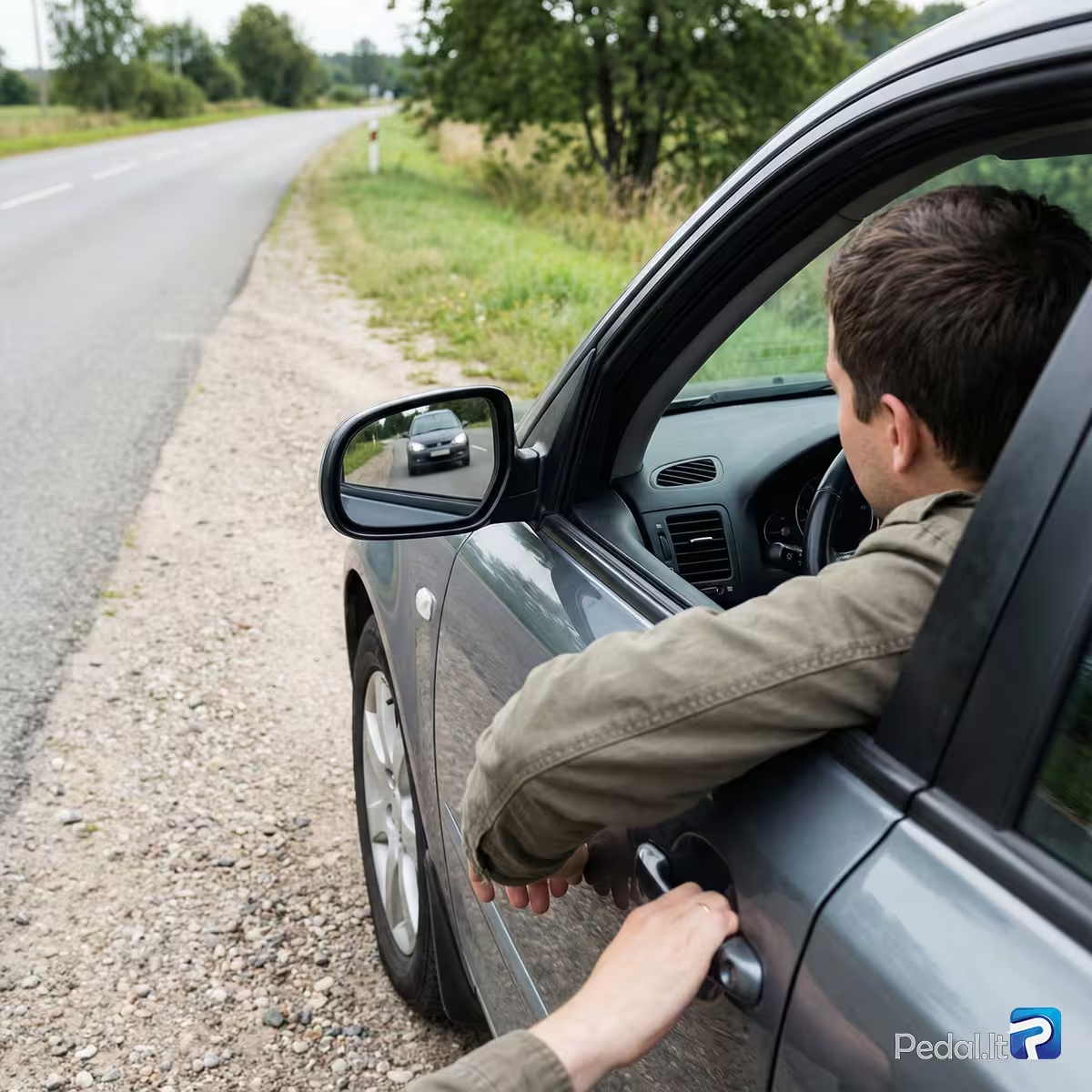
After stopping on the right-hand shoulder, what should a driver check before opening the door?
Vehicles may be approaching from the rear on the left-hand side, so opening the door could be unsafe. (RTR 148) Do not open the doors of a parked vehicle if doing so would create an obstruction or pose a hazard to other road users.
1. Vehicles approaching from behind on the left-hand side.
2. Vehicles approaching from behind on the right-hand side.
3. They do not need to pay attention to anything specific.
You are driving on the road when a vehicle rapidly approaches from behind. The driver has switched on the left-turn indicator and is signaling by flashing the headlights. What will you do?
Even if another driver breaks the rules by overtaking or exceeding the speed limit, you must not endanger other road users — allow that driver to overtake you. 4. Road users shall follow the principle of mutual respect and safety.
1. You will accelerate to increase the distance between the vehicles.
2. You will maintain your speed and prevent the other driver from overtaking you.
3. You will allow the approaching vehicle to overtake you.
4. You will apply the brake pedal to activate the brake lights.
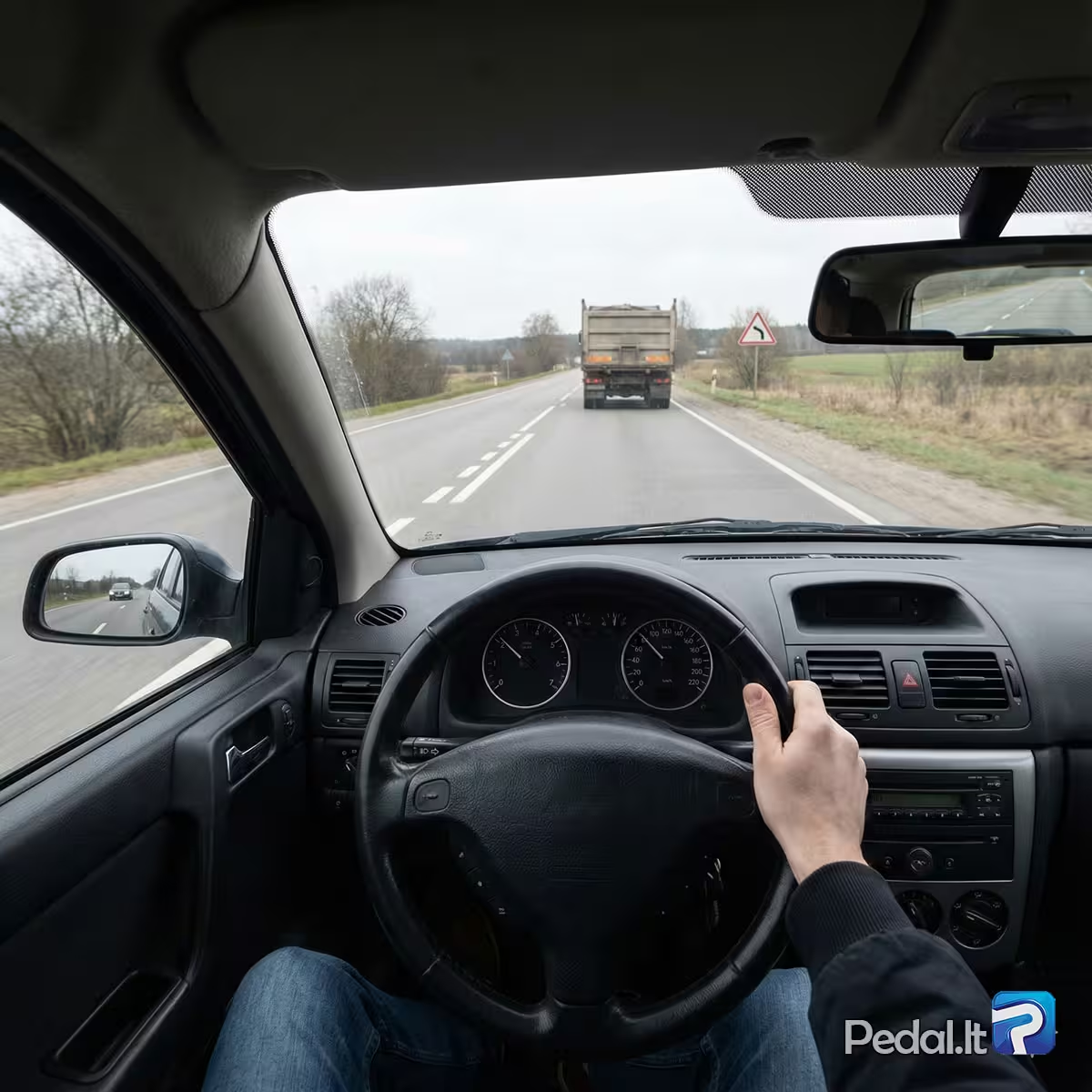
Before overtaking, drivers must ensure that:
RTR 136. Drivers should avoid unnecessary overtaking manoeuvres. Before overtaking, drivers must exercise extra caution and ensure that: 136.1 no driver following has already begun to overtake them; 136.2 the driver of the vehicle to be overtaken is not indicating a left turn; 136.3 the section of lane required for the overtaking manoeuvre is clear and the manoeuvre will not obstruct oncoming traffic or pedestrians on the carriageway; 136.4 a safe distance from the vehicle being overtaken can be maintained during the manoeuvre; 136.5 after completing the overtaking manoeuvre they will be able to return safely to the original traffic lane without obstructing the overtaken vehicle.
1. The road ahead is clear and the overtaking manoeuvre can be completed safely
2. No vehicle is approaching from the opposite direction
3. No vehicle behind has already begun overtaking
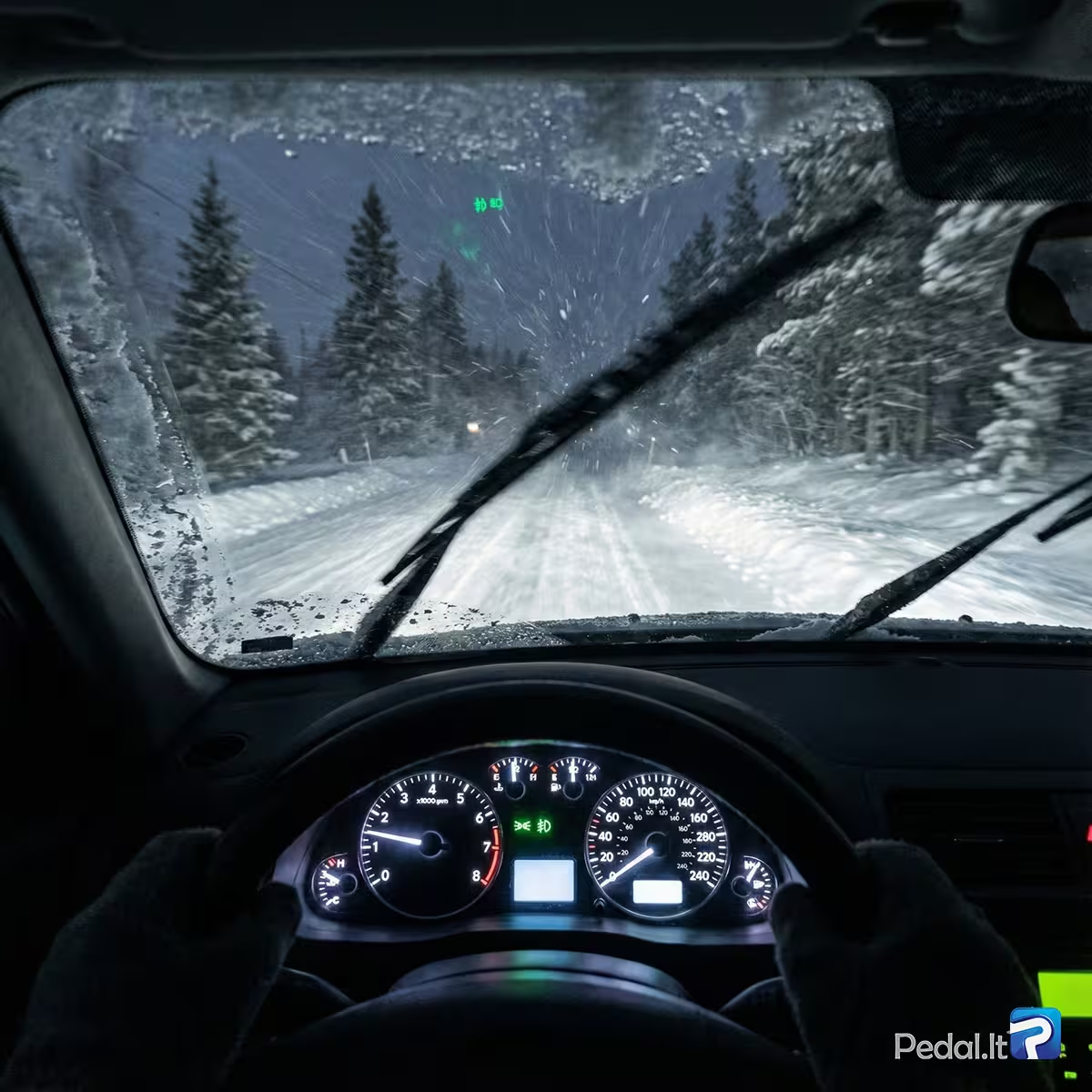
Which exterior lights should be switched on to improve visibility on the road during darkness and when snow is blowing?
When driving at night and during blowing snow, you should switch on the fog lamps together with the dipped-beam (low-beam) headlamps. Using the main-beam (high-beam) headlamps will cause light to reflect off the snow and dazzle the driver. (RTR 98) Fog lamps should only be used when visibility is seriously reduced; the front fog lamps may also be used in the event of failure of the front left dipped-beam headlamp.
1. Fog lamps used together with the main-beam (high-beam) headlamps.
2. Fog lamps used together with the dipped-beam (low-beam) headlamps.
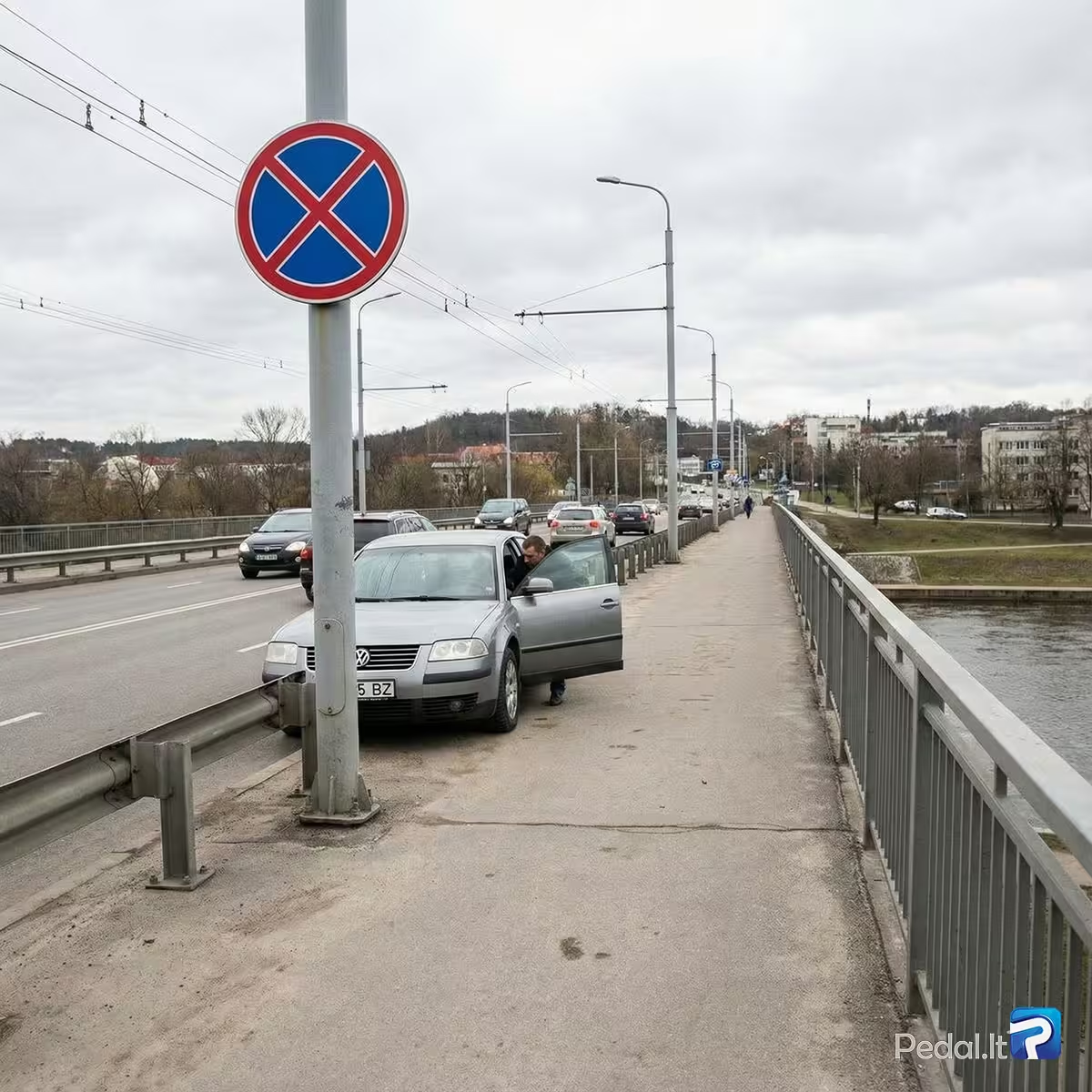
Are drivers permitted to stop or park their vehicles on a bridge if they do not obstruct traffic flow?
RTR – 150. Standing and parking are prohibited: 150.3 on and under bridges, viaducts and flyovers — except where parking is expressly permitted by road signs indicating a parking space — and in tunnels.
1. Yes — it is permitted.
2. Parking is permitted only where road signs explicitly designate a parking space.
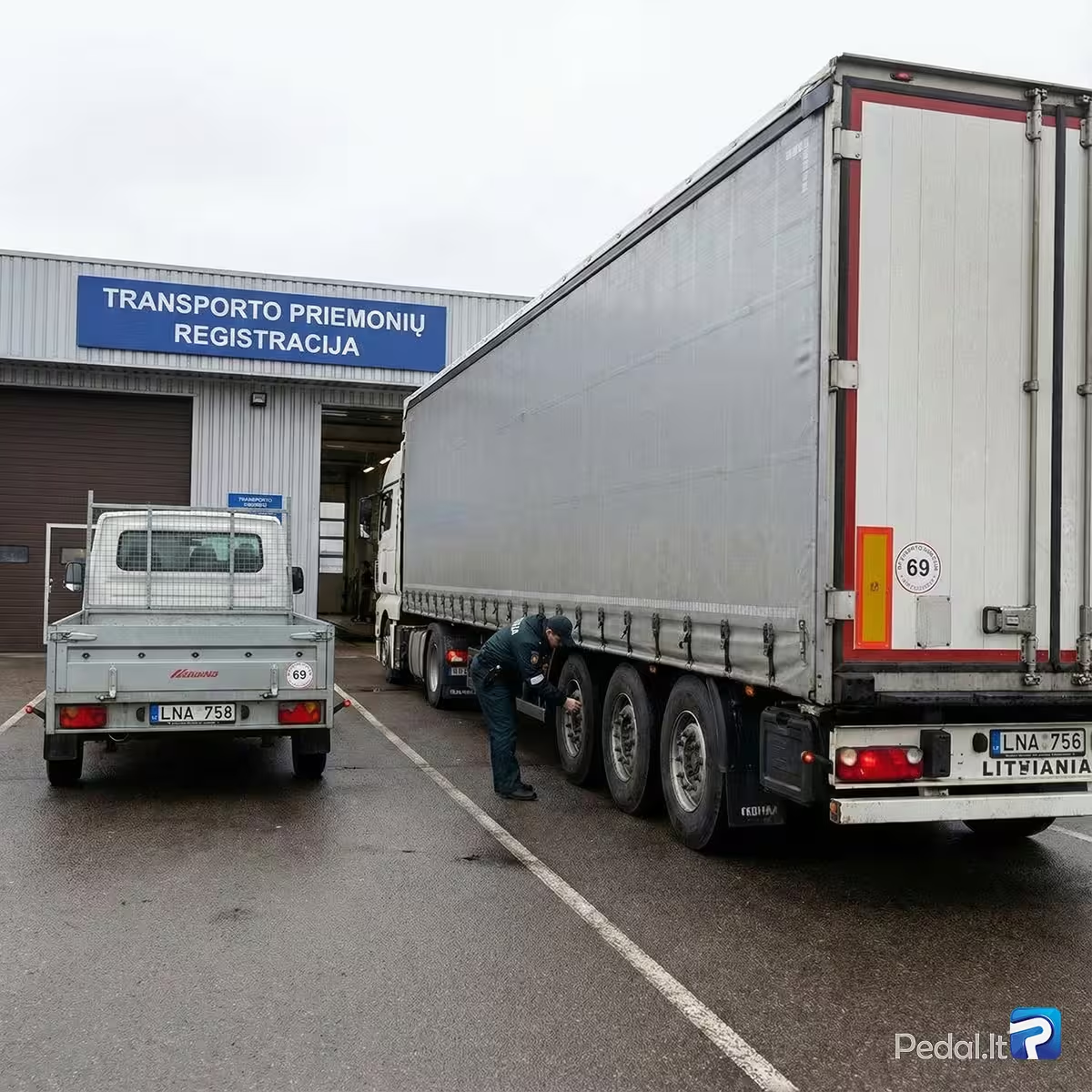
Are trailers and semi-trailers considered vehicles?
48. A trailer is a vehicle designed to be towed by a motor vehicle. Semi-trailers are also regarded as trailers. 52. A semi-trailer is a trailer coupled to a motor vehicle in such a way that part of its weight and the weight of its load are borne by the motor vehicle.
1. No.
2. Yes.
Which of the following distances to a vehicle ahead would be unsafe?
RTR 126. The driver must maintain a following distance at speed sufficient to avoid colliding with the vehicle ahead if it brakes, and must leave a lateral gap to ensure traffic safety. It is recommended that the following distance be at least the distance covered in two seconds, or at least half the speedometer reading converted into metres; for example, at 70 km/h the distance should not be less than 35 m, unless traffic conditions require otherwise. Drivers of motor vehicles, tractors and self‑propelled machinery, when overtaking pedestrians or when overtaking or passing cyclists or drivers of electric micromobility vehicles, must leave a lateral clearance of at least 1.0 m if their speed does not exceed 50 km/h, and at least 1.5 m if their speed exceeds 50 km/h. The requirement to maintain the specified lateral distance does not apply on single‑lane roads.
1. Less than the distance covered in two seconds.
2. Less than the distance covered in five seconds.
3. 30 m
4. 50 m
During the hours of darkness, the poorest visibility on a road occurs:
The worst visibility at night occurs just before passing an oncoming vehicle because the oncoming headlights can dazzle the driver. When approximately 100 m remain before meeting an oncoming vehicle, the driver should reduce speed, keep as close as safely possible to the right edge of the carriageway, and look toward the kerb. These actions reduce glare and help the driver detect pedestrians, cyclists, people operating animal‑drawn vehicles, and other hazards more quickly. Specifically, drivers should: reduce speed to increase reaction time; position the vehicle near the right edge of the road to minimise the risk of head‑on conflicts and to allow space for unexpected events; and avoid looking directly at oncoming headlights, instead focusing toward the kerb or road edge to preserve night vision.
1. When there are 100 m remaining before passing an oncoming vehicle.
2. Just before passing an oncoming vehicle.
How should you drive to minimize fuel consumption and maximize range?
Driving uphill requires more power than driving on level ground. Therefore, maintain a steady speed and avoid accelerating on climbs. It is reasonable to increase speed on level sections or when driving downhill. At a constant speed, using a higher gear reduces engine revolutions; lower revolutions mean the engine works less and uses less fuel. Do not coast in neutral when descending — this is not only uneconomical but also unsafe. While coasting downhill, vehicle systems may cut fuel supply, so the instrument reading can show 0.0 l/100 km (if you do not press the accelerator). It is most economical to start moving immediately after you start the engine. Idling a stationary vehicle consumes fuel and emits pollutants; the engine will warm up and reach normal operating temperature during driving (unless there is a malfunction).
1. Shift into neutral and coast when descending a hill.
2. Avoid accelerating when driving uphill.
3. Use the highest appropriate gear possible.
4. Delay driving until the engine reaches normal operating temperature.
Are you required to signal before starting to move?
RTR 82. A driver must indicate intended actions by using the right or left direction indicators, or by arm signals if the indicators are not available or are inoperative: 82.1 before starting to move off and before stopping; 82.2 before changing lanes, before and after overtaking, before and after bypassing an obstruction, before turning right or left, before making a U-turn, and before leaving a roundabout or an intersection where traffic circulates in a circle. JB
1. Yes — you must signal before starting to move.
2. No — you are not required to signal.
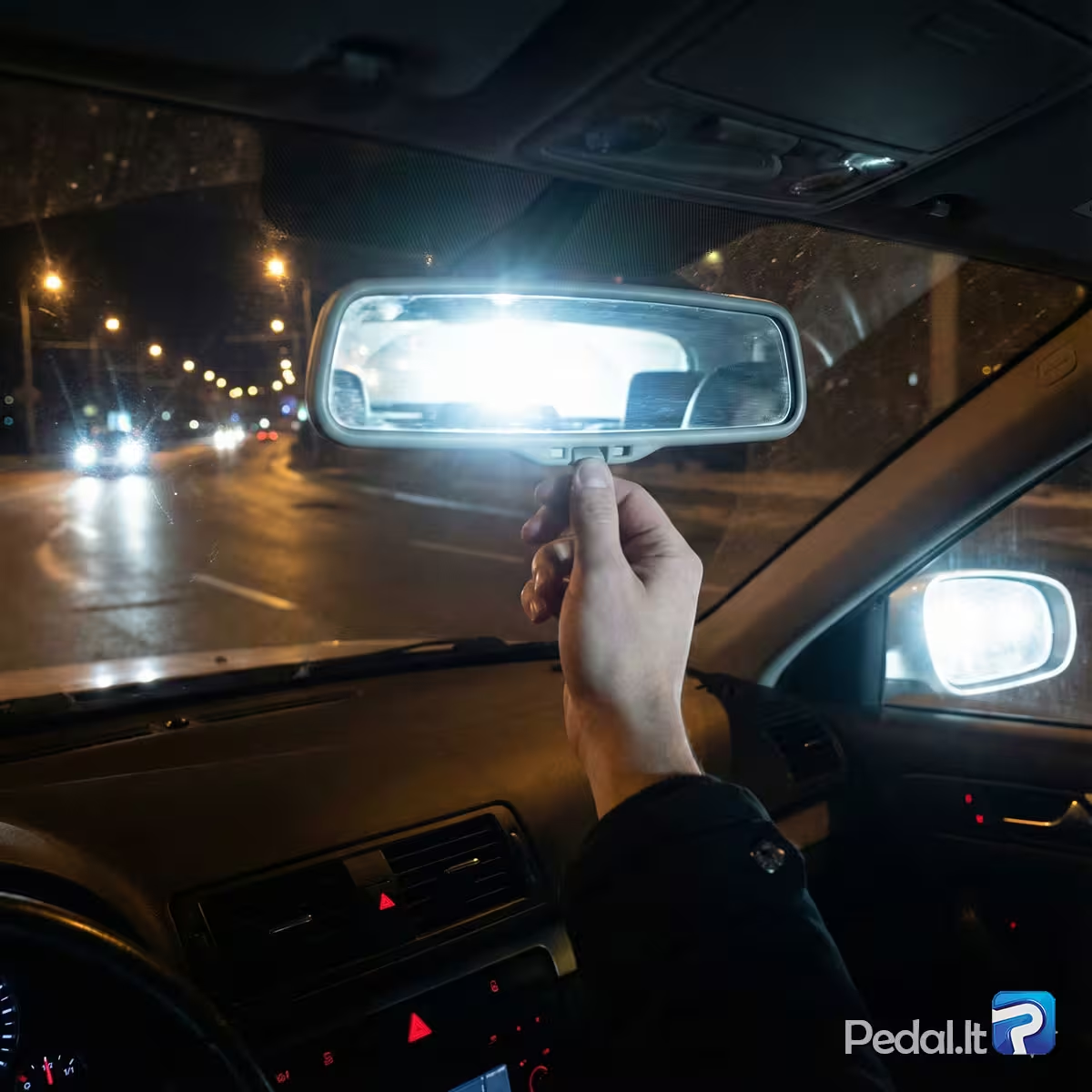
What should you do if a vehicle behind you is dazzling you with its lights?
If bright headlights are reflected in your rearview mirror, in addition to the measures listed in Paragraph 96 you can quickly activate the mirror's anti‑dazzle setting by flipping the switch at its base (if fitted). This engages the automatic dimming function and reduces glare. According to RTR 96, a dazzled driver must turn on the hazard warning lights, reduce speed without changing direction, and stop if necessary.
1. You will look away.
2. If possible, activate the rearview mirror's automatic dimming function.
3. You will turn on your hazard warning lights.
4. You will reduce speed and stop if necessary.
.avif)
A child is saying goodbye to a friend. What should you anticipate in this situation?
Children close to the road can behave unpredictably. Exercise extreme caution when driving near them — they may run into the carriageway without looking and may not respond to a horn.
1. The child may step into the carriageway without looking.
2. The child may be looking toward the road but still step into the carriageway.
3. The child may step into the carriageway even if you sound the horn to warn them.
In which direction does the load shift when the vehicle makes a left turn?
When the vehicle turns left, the load shifts to the right due to inertia.
1. Toward the left
2. Toward the right
3. Toward the front
4. Toward the rear
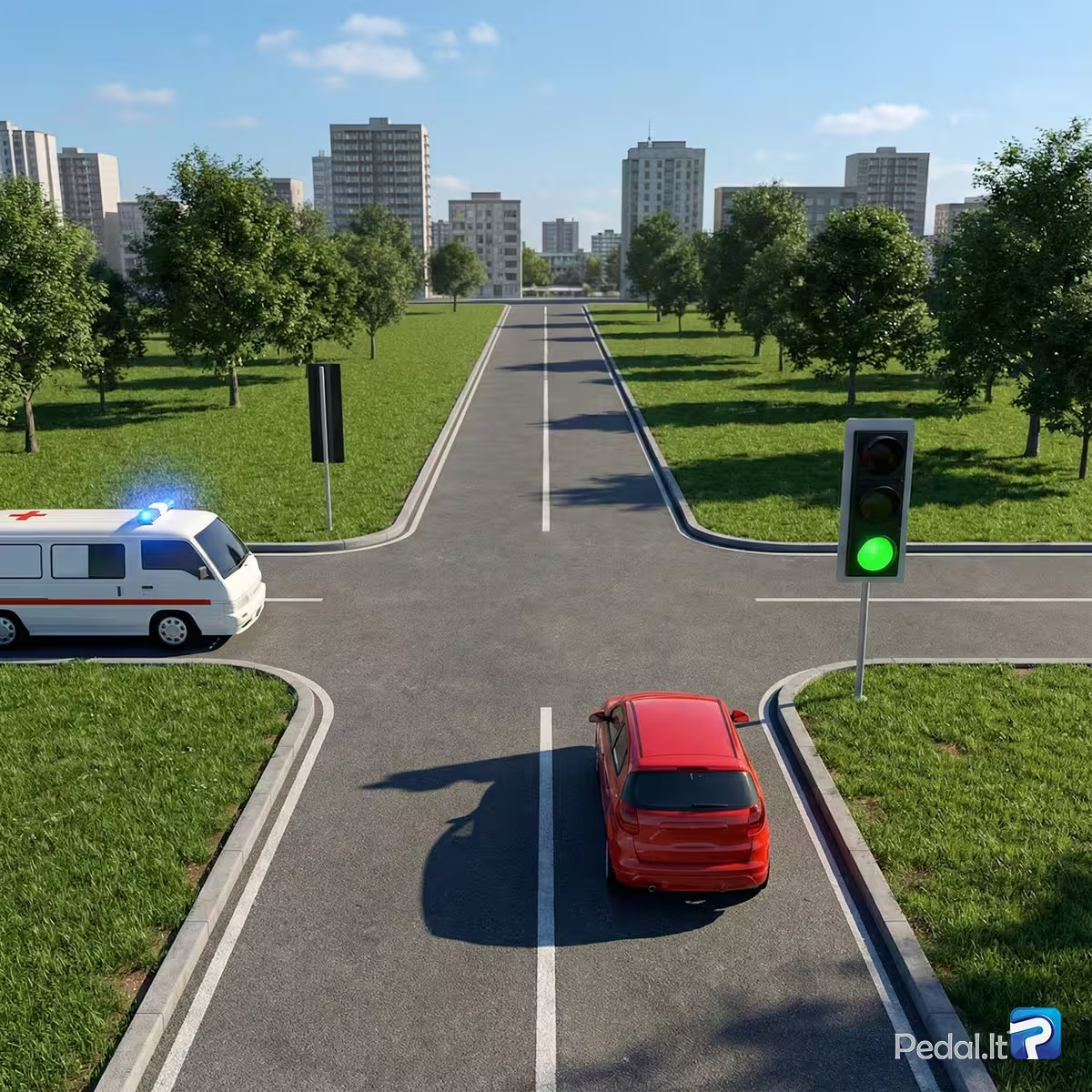
If, in this situation, a vehicle approaches the intersection with blue and red flashing lights and its special audible signals activated, the driver of the red car:
RTR 12. Road users must immediately yield to approaching special vehicles that are using blue-and-red (or only blue) flashing lights and special audible signals, and to vehicles escorted by them. Road users shall form an emergency corridor and yield as follows: 12.1 On a road with a single lane in one direction, drivers must stop on the right hard shoulder if available; if there is no hard shoulder, they must stop close to the right-hand edge of the carriageway. 12.2 On a road with two or more lanes in the same direction, vehicles in the far-left lane shall move as close to the left (the appropriate edge of the carriageway designated for that direction) as possible and stop; vehicles in lanes to the right of the far-left lane shall move as close to the right (toward the right-hand edge of the carriageway or the hard shoulder) as possible and stop. 12.3 On a road with a central reservation, only drivers travelling in the same direction must comply with the requirements specified in paragraphs 12.1 and 12.2. JB
1. He will proceed without yielding to anyone because he has a green light.
2. He must yield to the special vehicle.
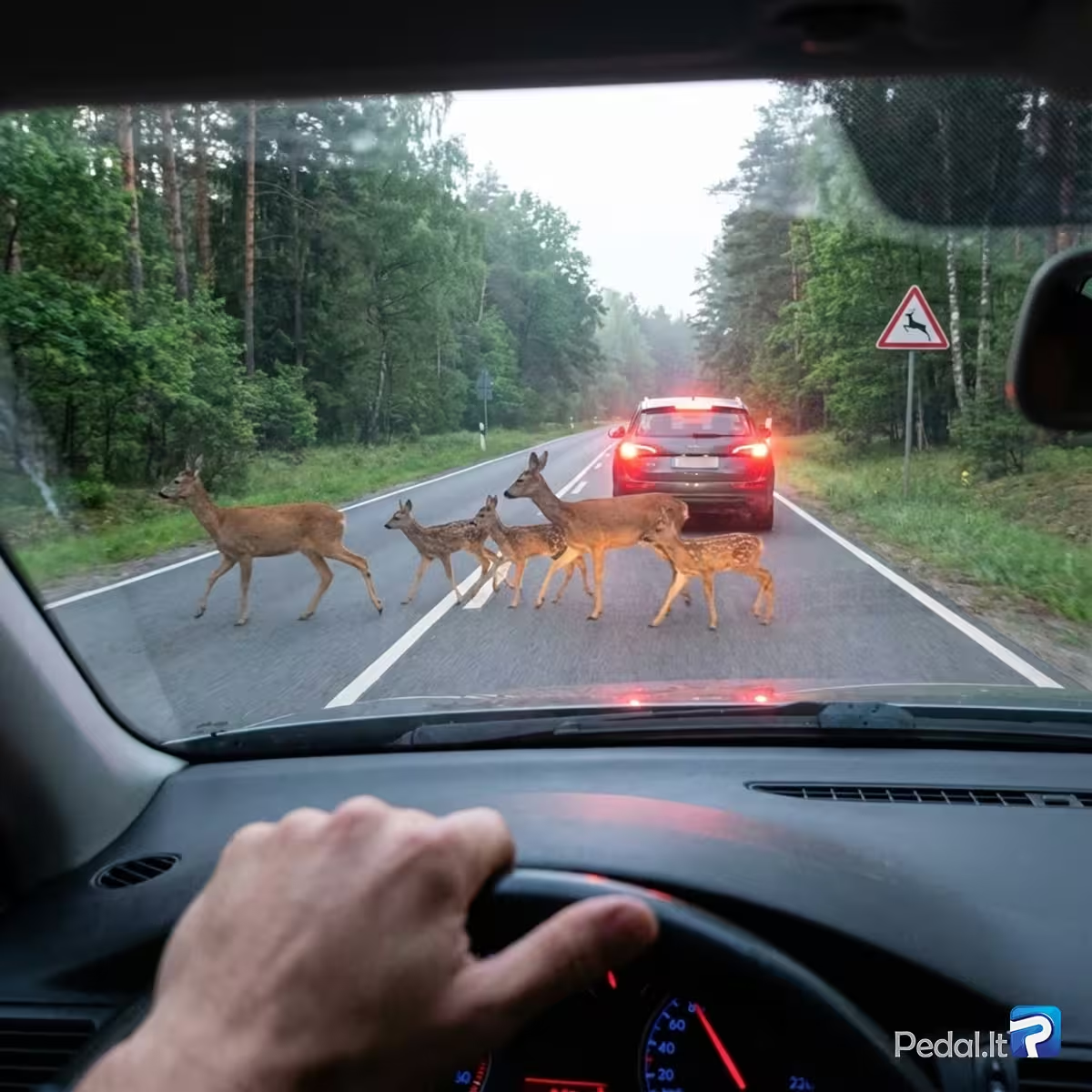
While driving, a group of roe deer crossed the road in front of your vehicle. What should you expect?
Wild animals typically travel in groups. If you see a lone roe deer, deer, or wild boar, others are likely nearby. Herding instincts lead animals to cross roads together rather than individually.
1. The animals may return to the road.
2. A solitary animal may follow the group.
3. It is unlikely that there will be any solitary animals.
Cyclists must not:
RTR 38. Persons moving in a wheelchair, or guiding a motorcycle, moped, bicycle, motorised two‑wheeled vehicle, electric micromobility device, or pulling (pushing) a sledge or handcart along the shoulder or edge of the carriageway must proceed in single file and only in the direction of traffic. RTR 64. Cyclists must not: 64.1. ride on the carriageway, except in cases permitted by the Rules. RTR 57. Bicycles may be ridden only on cycle tracks, combined footpath/cycle tracks, or cycle lanes; if none of these are available, bicycles may be ridden on a suitable hard shoulder (with asphalt or concrete surfacing). When a right‑side cycle track, combined footpath/cycle track, cycle lane, or suitable hard shoulder is not available or is unsuitable for cycling (for example, pitted), cyclists may use the pavement or ride in single file on the right‑hand lane of the carriageway, keeping to the right edge of the lane, except in the cases specified in paragraph 106 of these Rules and except when cyclists must bypass an obstruction or continue straight where turning right from the first lane is the only permitted manoeuvre. When riding on a hard shoulder, footpath, cycle track, or pavement, a cyclist must yield to pedestrians, must not obstruct or endanger them, and should pass pedestrians at a speed close to walking pace (3–7 km/h), leaving sufficient lateral clearance to ensure safety.
1. Ride on the carriageway except when no cycle track, cycle lane, or suitable hard shoulder is available.
2. Ride against the flow of traffic.
3. Walk (push) their bicycle in the same direction as vehicular traffic.
What does a flashing white traffic light at a level crossing indicate?
RTR 73. Traffic light signals have the following meanings: 73.10. A flashing white light used at level crossings means that vehicles may proceed after ensuring that no rail-borne vehicle is approaching the level crossing;
1. It prohibits traffic from proceeding.
2. It permits traffic to proceed after ensuring that no rail-borne vehicle is approaching the level crossing.
3. It permits traffic only if you can cross the level crossing before the approaching train arrives.
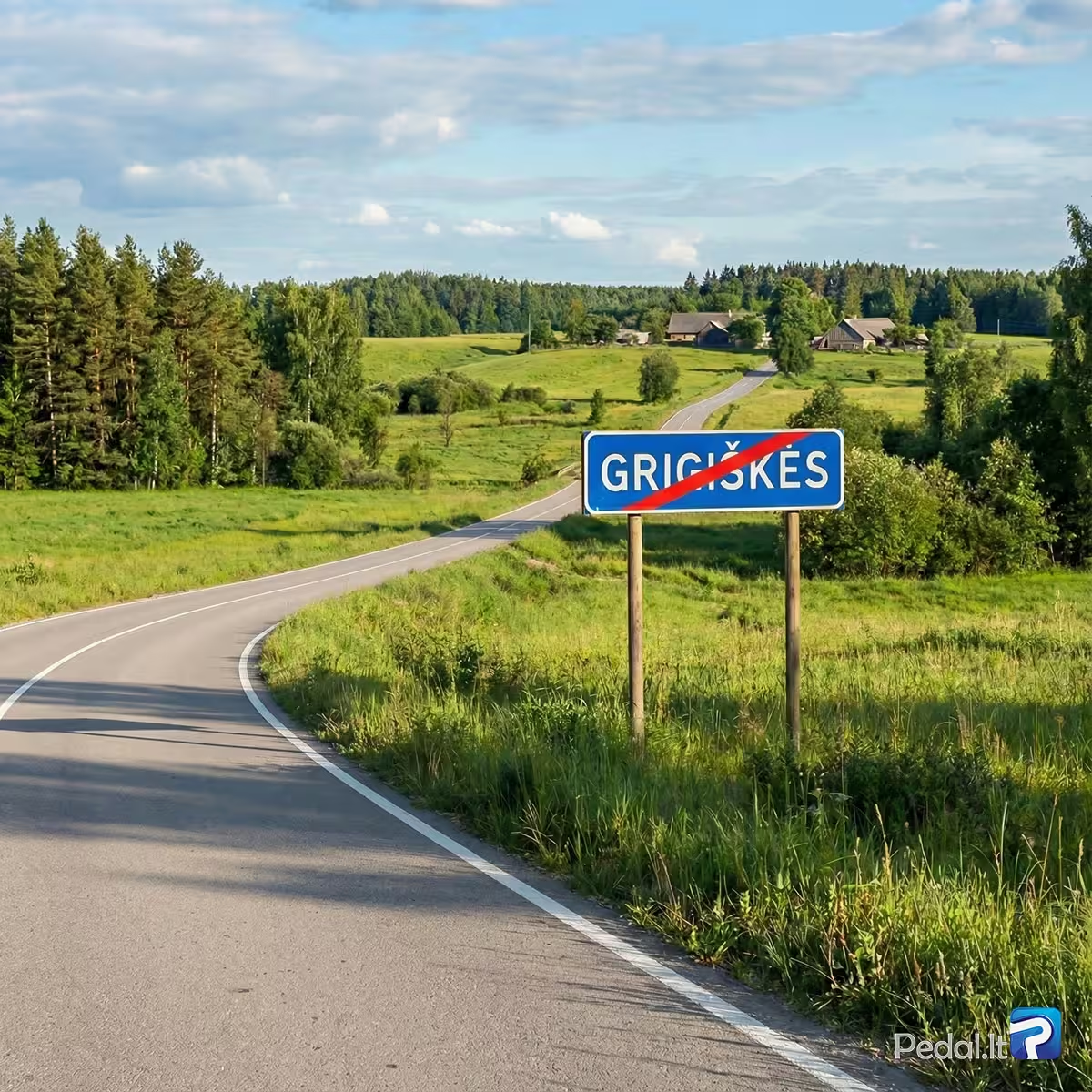
What is the maximum permitted speed for a passenger car on an asphalt- or concrete-surfaced road where this sign applies?
According to the Road Traffic Rules (RTR), a blue sign showing the settlement name in white letters indicates the start of a settlement where the special traffic regulations that normally apply within built-up areas do NOT apply. By contrast, a sign with the settlement name in black letters on a white background marks the start of a settlement where built-up-area traffic rules are in force (RTR 131). The following maximum speeds apply outside built-up areas (RTR 131.1): for passenger cars, light goods vehicles with a permissible maximum mass up to 3.5 tonnes, motorcycles and tricycles — on motorways: 130 km/h from April to October and 110 km/h from November to March; on expressways/highways: 120 km/h from April to October and 110 km/h from November to March; on roads with asphalt or concrete pavement: 90 km/h; on other roads: 70 km/h. See road sign 612: Beginning of a built-up area where special built-up-area rules do not apply. Road sign 613: End of a built-up area (marked by sign 616); it may show the name of another settlement and the distance to it.
1. 70 km/h
2. 80 km/h
3. 90 km/h
Must road users involved in a traffic accident refrain from consuming alcohol and other intoxicating substances?
RTR 221. Road users involved in a traffic accident must refrain from consuming alcoholic beverages, medications, narcotic drugs, or any other intoxicating substances immediately after the accident until they have either undergone, or formally refused, a test to determine drunkenness or impairment caused by a narcotic, psychotropic, or any other substance.
1. Yes — until the circumstances of the accident involving other road users have been clarified.
2. Yes — until the circumstances at the accident scene have been established and investigated.
3. No — they are not required to do so.
4. Yes — until the sobriety or intoxication of the road user involved in the accident has been determined by testing or they have formally refused the test.
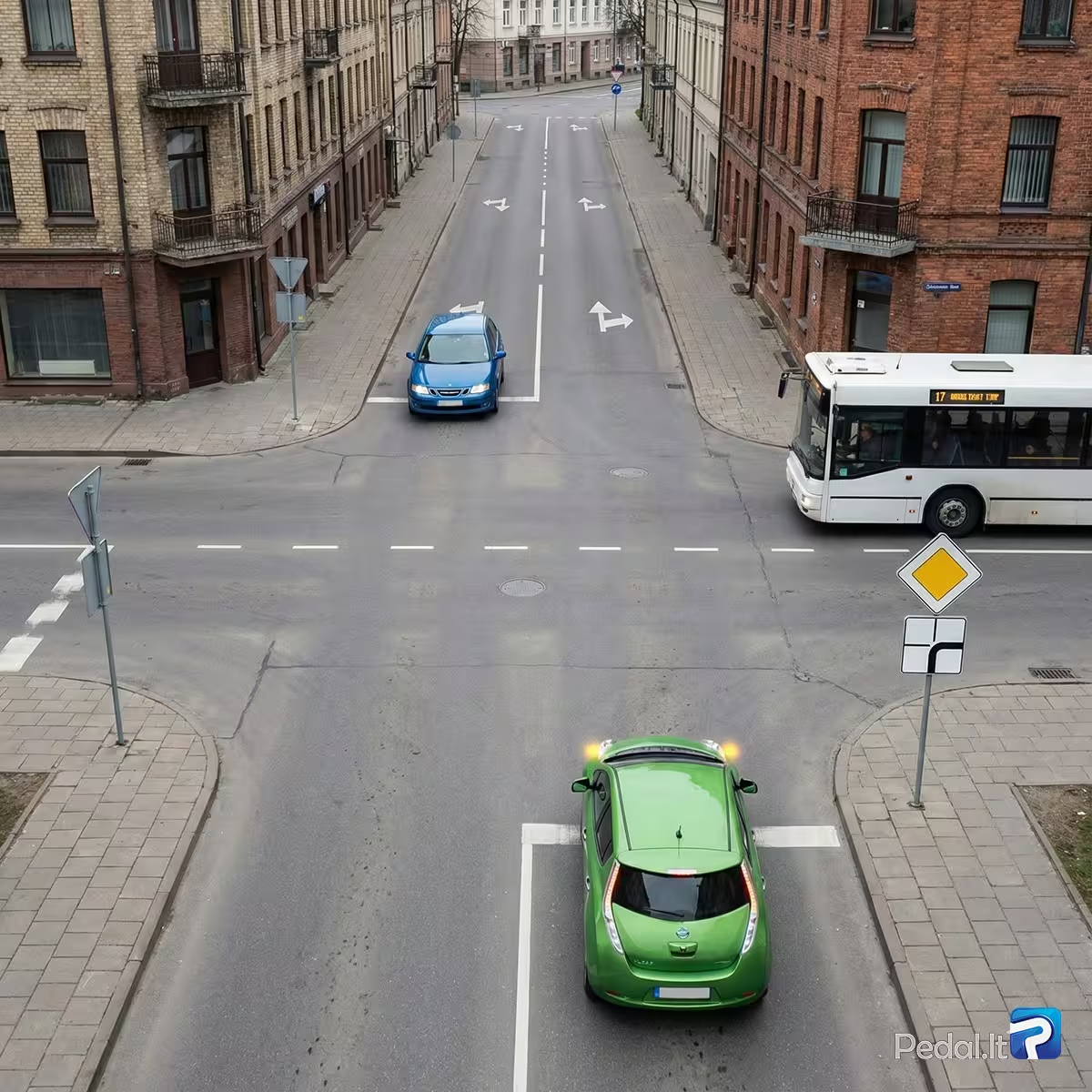
You are driving the green vehicle. When turning left, must you yield to the blue vehicle?
The green vehicle is on the main (priority) road, so it does not need to give way to the blue vehicle when turning left. Right-of-way rules vary depending on whether an intersection is controlled: at a controlled intersection, drivers entering from a side road must yield to traffic on the priority road. See rule 154.
1. Yes — you must yield.
2. No — you do not have to yield.
.avif)
If you park on an even-numbered day of the month, between which hours must you move the vehicle to the opposite side of the road to comply with parking regulations?
Road sign 334 — “No parking on odd days”. Parking is prohibited on the side of the road where this sign is placed on odd-numbered days of the month. Road sign 335 — “No parking on even days”. Parking is prohibited on the side of the road where this sign is placed on even-numbered days of the month. When signs 334 and 335 are installed on both sides of the road, vehicles must be moved from one side to the other between 19:00 and 24:00 (7:00 pm–12:00 am); during that interval, parking is permitted on either side of the road.
1. From 5:00 pm to 9:00 pm
2. From 7:00 pm to 9:00 pm
3. From 10:00 pm to 11:00 pm
4. From 11:00 pm to 11:50 pm
.avif)
Which vehicle will pass through the intersection first? (The green traffic light applies to the red car.)
RTR 163. When driving in the direction indicated by an arrow displayed in the supplementary section of a traffic light together with an amber or red signal, the driver must yield to road users coming from other directions who have a traffic signal permitting them to proceed, except as provided in Paragraph 163-1. 163-1. When making a U-turn at an intersection controlled by traffic lights, the driver must yield to road users from other directions who are permitted to proceed by a traffic signal. JB
1. The red car will pass the intersection first.
2. The black car will pass the intersection first.
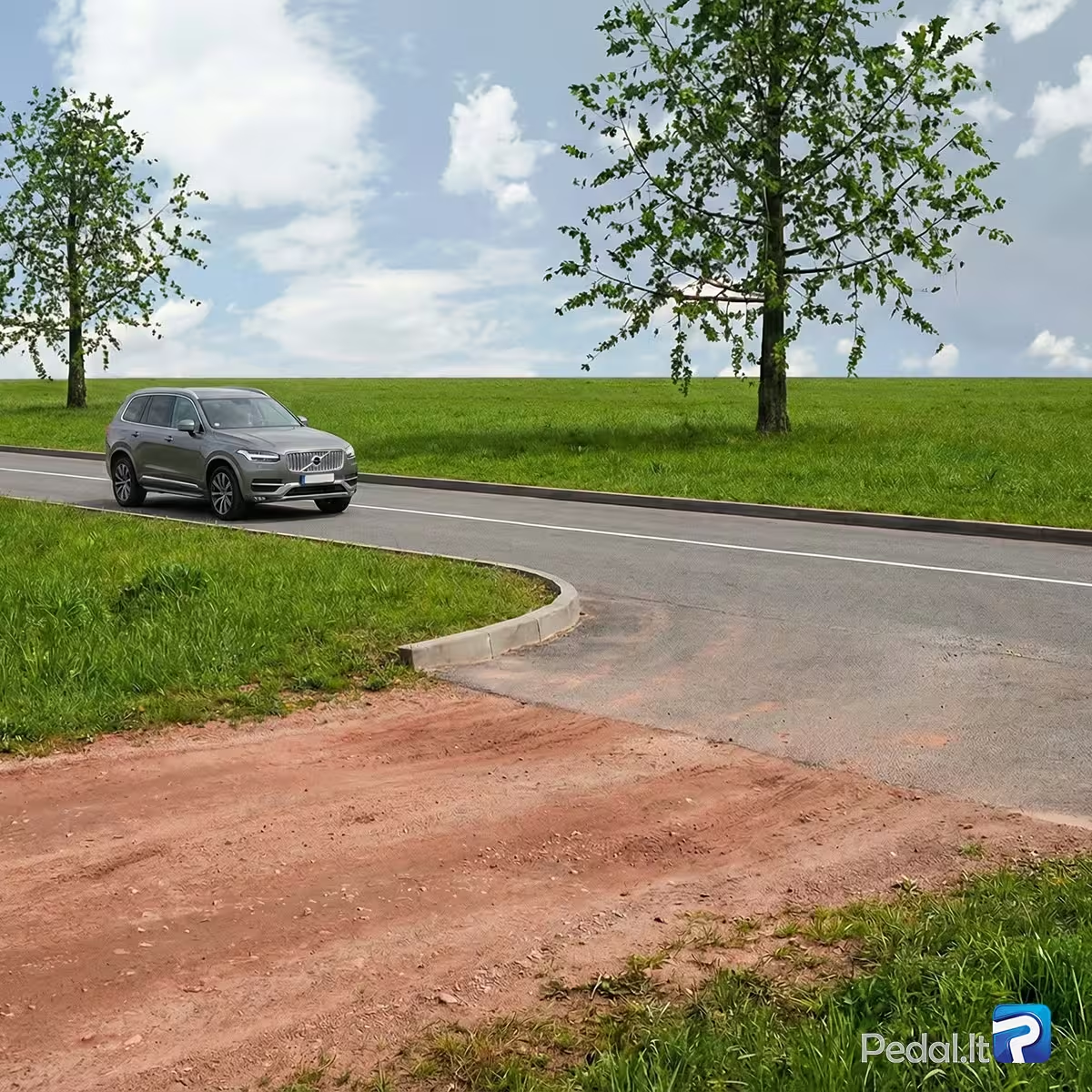
Which road is the main road at this intersection?
RTR 3.14. The main (priority) road is: a road marked with the 'Priority Road' sign, an 'Intersection with a Side Road' sign, a 'Side Road from the Right' or 'Side Road from the Left' sign, or designated as a 'Motorway' or 'Road for Motor Vehicles' in relation to the intersecting or joining road; a road in relation to another road marked with 'Give Way', 'STOP', or 'End of Residential Area' signs; a paved road (concrete, asphalt, or cobblestone) in relation to an improved unpaved road (macadam or gravel) or a dirt road (forest, field, or similar road); and an improved unpaved road in relation to a dirt road. A paved or improved unpaved section of a side road immediately before an intersection does not make that side road equivalent to the intersecting or joining road. There is no priority road at intersections controlled by traffic signals. JB
1. The road with a gravel surface.
2. Both roads are equivalent.
3. The road with an asphalt surface.
When may the front fog lamps be used?
Regulation RTR 98: Fog lamps may be used only when visibility is severely reduced. Front fog lamps may also be used if the left front dipped-beam headlamp has failed. According to the Law on Road Traffic Safety, Article 2(5), 'poor visibility' means a situation caused by weather or other phenomena in which road visibility is less than 300 metres, regardless of road characteristics.
1. In fog, when road visibility is 400 metres.
2. When visibility is severely reduced.
3. During rain or snow, when road visibility exceeds 300 metres.
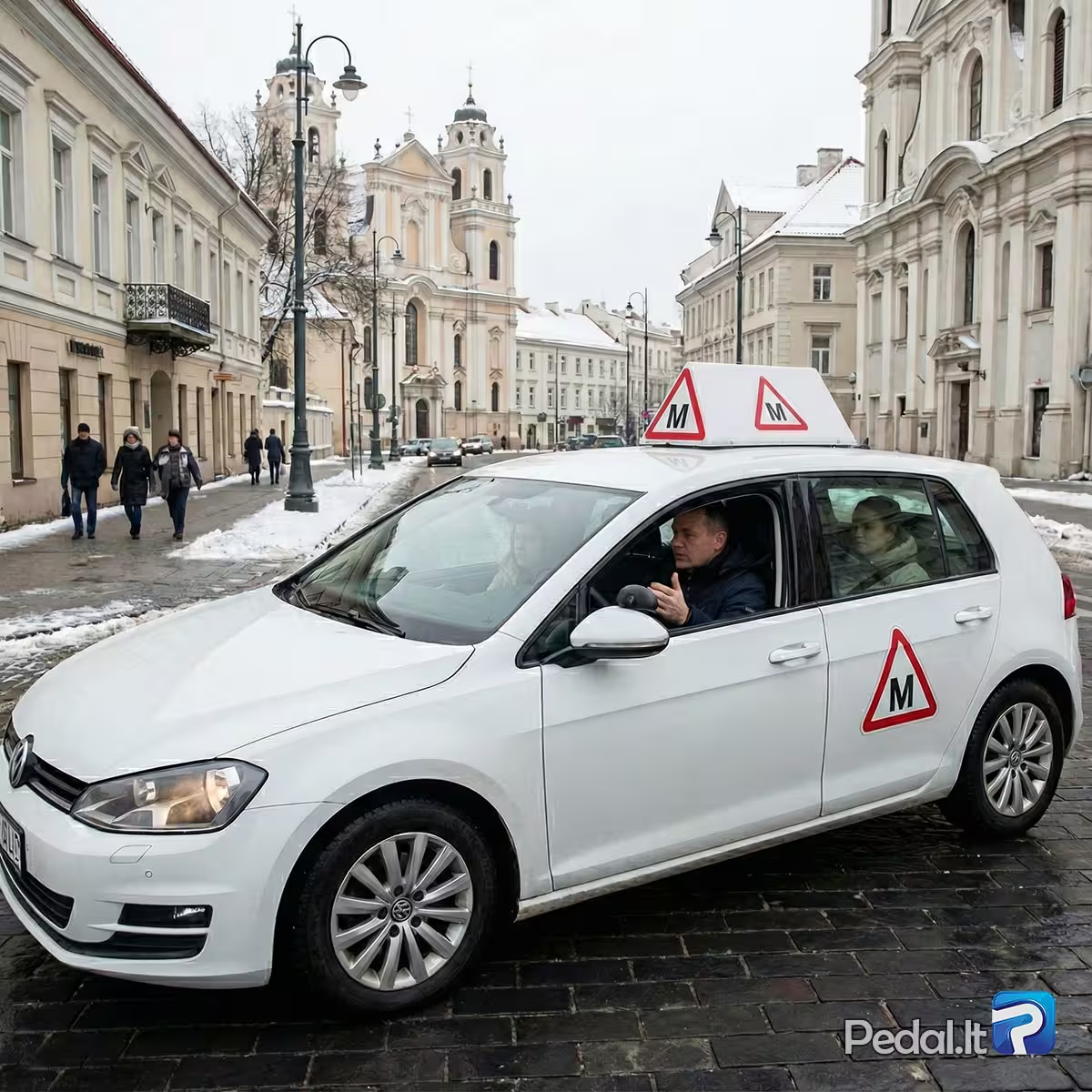
Is it permitted to transport passengers while teaching someone to drive?
RTR 195. Drivers must not: 6) teach another person to drive or transport children under 14 years of age; JB
1. Prohibited.
2. Permitted.
3. Permitted, but only for passengers aged 14 years or older.
Is a driver involved in a road accident required to transport injured persons to the nearest healthcare facility in a private vehicle when the accident occurs within a built-up area?
XXIX. Obligations of Road Users in the Event of a Road Accident (paras. 219–222) 219. In the event of a road accident, every driver involved or any other road user must: 219.5. take all necessary measures to provide first aid to the injured, call an ambulance, or — when calling an ambulance or transporting the injured to a healthcare institution by other means is impossible — convey them to the nearest healthcare institution in a private vehicle, unless such transportation would endanger their life or health.
1. Yes — but only if calling an ambulance or transporting the injured to a medical facility by other means is impossible.
2. No — the driver is not required to do so.
1 of 30 Task
Time left: 00:00:00
1
2
3
4
5
6
7
8
9
10
11
12
13
14
15
16
17
18
19
20
21
22
23
24
25
26
27
28
29
30