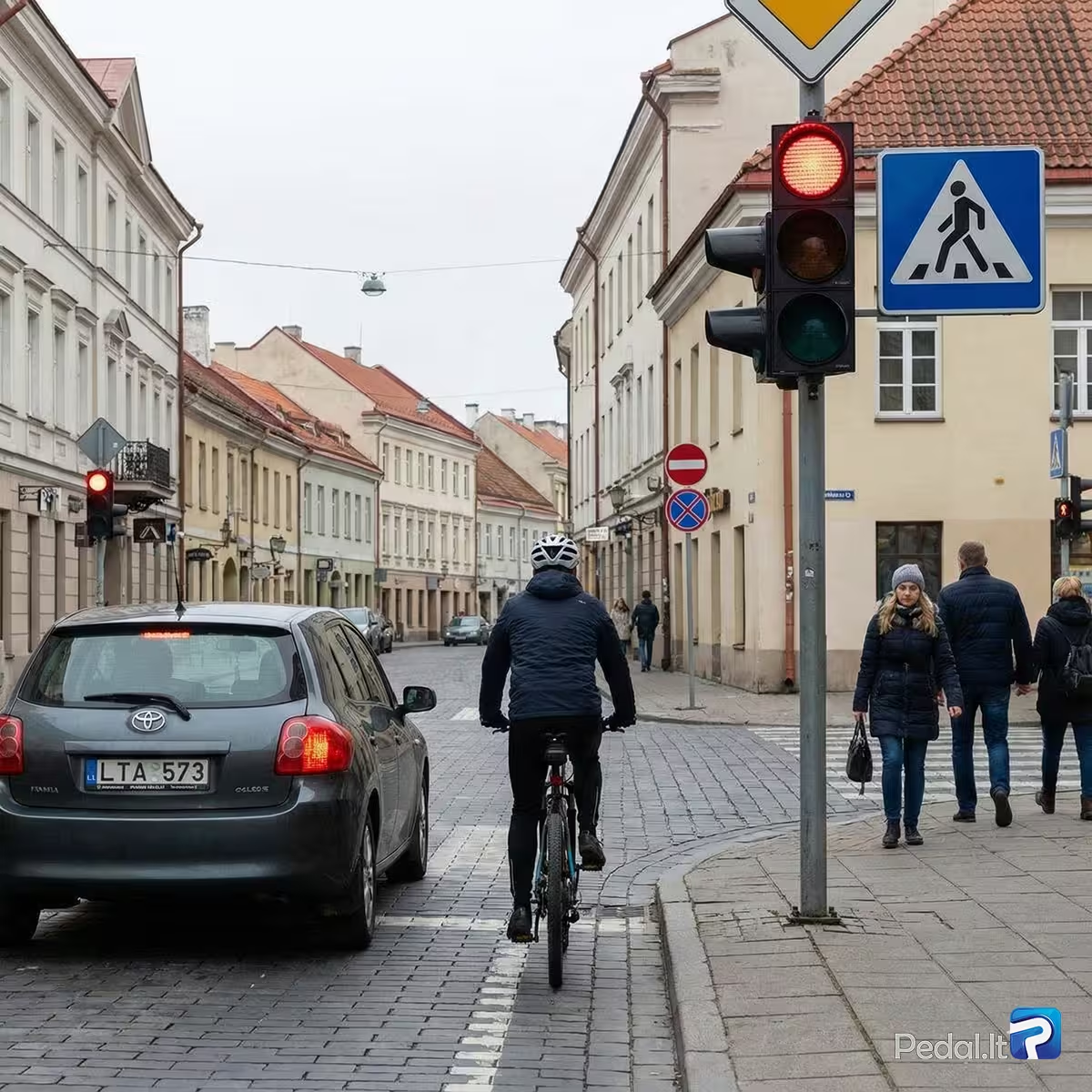
Road users are required to:
RTR 5. Road users must be familiar with the Law on Road Traffic Safety of the Republic of Lithuania, be acquainted with these Rules, and comply with them. JB
1. Be familiar with the directives of the General Commissioner of Police.
2. Know and comply with the traffic rules.
3. Be familiar with the Law on Road Traffic Safety.
4. Know the regulations of the Lithuanian Transport Safety Administration.
A vehicle has nearly completed an overtaking maneuver while another vehicle is approaching in the oncoming lane. What should you do?
The Driver Behaviour Manual states: If another vehicle's overtaking endangers or inconveniences traffic in the oncoming lane, the driver of the vehicle being overtaken must try to prevent a hazardous situation by: (1) reducing speed; (2) moving to the side; (3) stopping if necessary. Section 128: If there is an obstruction or traffic safety is at risk, the driver must slow down and, if required, bring the vehicle to a complete stop or go around the obstruction (if it can be seen), provided this can be done without endangering other road users. Section 135: Drivers must not: 135.4. decelerate sharply for reasons other than safety.
1. Apply the brakes.
2. Maintain your current speed.
3. Ease off the accelerator.
4. Increase your speed.
How should you drive safely on a steep slope?
Driver competencies - category B: A vehicle will begin to skid when the tires lose traction with the road surface. This may occur on inclines, slopes, or in strong crosswinds.
1. Drive at maximum speed.
2. Drive with the engine turned off.
3. Drive slowly, avoiding sudden steering or braking movements.
.avif)
In what order will the vehicles pass through the intersection?
If a 'STOP' road sign is present, drivers must stop before the sign and yield to vehicles traveling on the road they are about to cross. RTR 154. At a controlled intersection, drivers entering from a side road must yield to vehicles on the priority road. RTR Annex 1. 204. 'STOP'. Drivers must not proceed without stopping before the stop line or, if there is no stop line, before the sign. A driver must give way to vehicles on the road being crossed. If additional plate No. 843 'Direction of Priority Road' is mounted below the sign, the driver must yield to vehicles on the priority road.
1. Yellow and red vehicles proceed together, followed by the blue vehicle.
2. Blue and red vehicles proceed together, followed by the yellow vehicle.
3. Blue vehicle first, then the red vehicle, and finally the yellow vehicle.
4. Yellow vehicle first, then the blue vehicle, and finally the red vehicle.
How should you choose an appropriate driving speed?
Order of the General Director of the state company "Regitra" approving the description of the criteria and methods for evaluating driving skills and abilities (23 December 2013, No. V-223): 3.18 Speed selection — accelerate steadily, choose a speed appropriate to the traffic situation and do not exceed the permitted limit. 3.18.1 Control the vehicle's speed while performing maneuvers: 3.18.1.1 If necessary, maintain a sufficiently low speed to compensate for any errors; 3.18.1.2 The vehicle must move evenly and smoothly. JB
1. Accelerate smoothly and steadily.
2. Drive at a speed appropriate for the traffic conditions and do not exceed the legal speed limit.
3. Drive faster to reach your destination sooner.
Reflectors fitted to the rear of a vehicle must be:
Order No. 2B-14 of the Lithuanian Transport Safety Inspection, dated 16 January 2013, regarding amendments to the technical requirements for motor vehicles and their trailers, Chapter IV, point 4.10: Rear non-triangular reflector — red; Rear triangular reflector — red. JB
1. Yellow.
2. Red.
3. White.
.avif)
If, when starting to move, your vehicle's wheels spin while the vehicle remains stationary:
To drive a motor vehicle economically and sensibly, begin moving smoothly and steadily. Where possible, reduce your speed gradually and avoid unnecessary abrupt actions unless they are essential (e.g., emergency braking because of an unexpected obstacle on the road).
1. It is uneconomical — it increases fuel consumption and accelerates tyre wear.
2. The tyre squeal or wheel spin disturbs other road users.
3. It is regarded as normal and acceptable.
The effect of inertia on the vehicle (risk of sliding sideways) when cornering is reduced by:
The higher the vehicle's speed when cornering, the greater the effect of inertia and the higher the risk of the car sliding sideways. Lower speeds reduce inertia and the risk of sliding. A larger turning radius (a gentler curve) also reduces lateral inertial forces.
1. By decreasing the turning radius (making the turn tighter).
2. By reducing vehicle speed.
3. By increasing the turning radius (making the curve gentler).
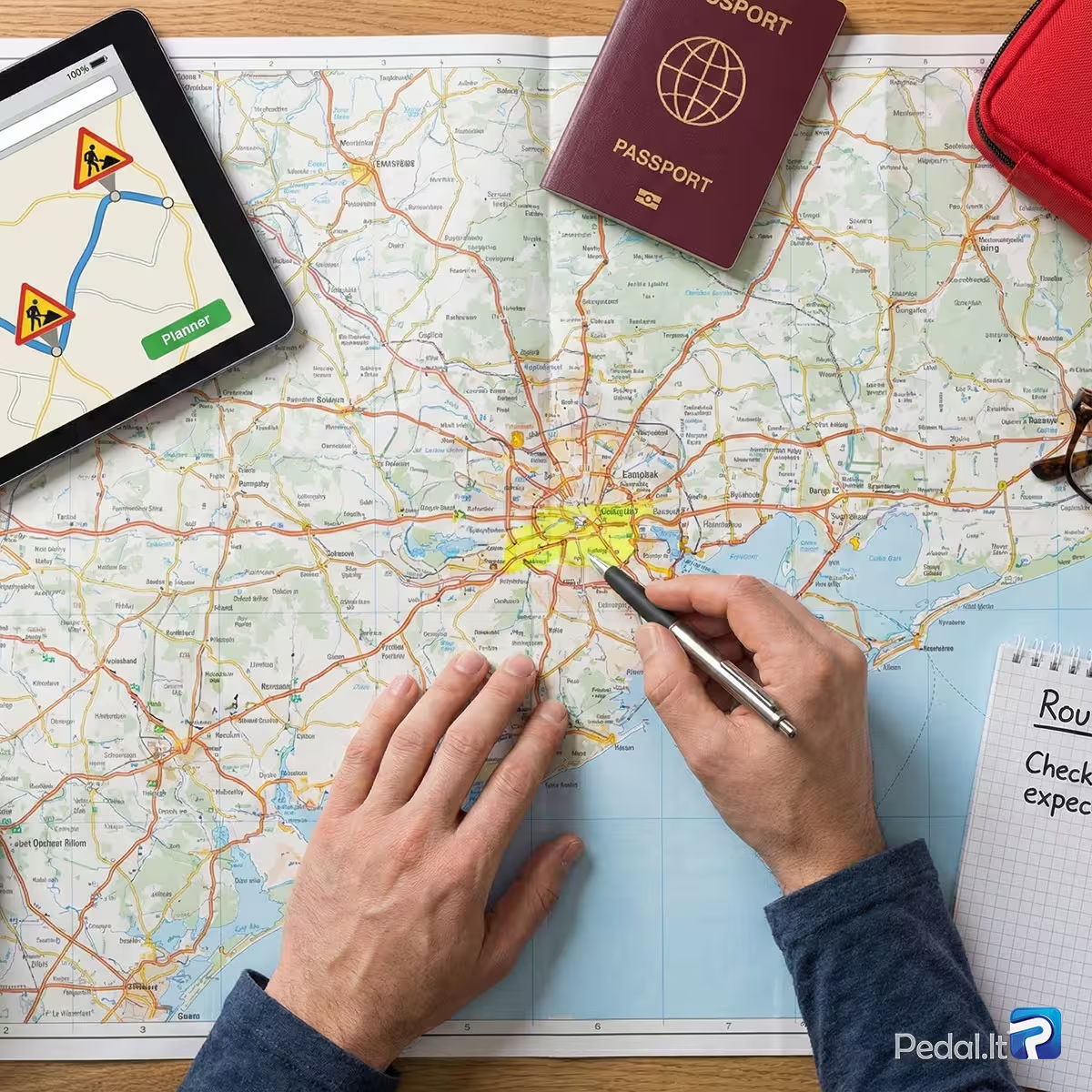
How should you plan your route when travelling a long distance that may include roadworks, border crossings and unexpected events?
JB
1. Estimate the additional fuel required for your journey and plan appropriate refuelling stops.
2. No planning is necessary.
3. Plan your departure time, stops and rest breaks, parking arrangements, and the route your vehicle will follow to the destination.
4. Check the traffic laws and legal requirements of any countries you will pass through.
A driver is operating a goods vehicle with a permissible maximum weight under 3,500 kg. Which driving‑licence category must the driver hold?
In this situation the driver must hold at least a category B driving licence; the driver is not required to hold a category C licence. LAW ON ROAD TRAFFIC SAFETY — Article 23. Categories of motor vehicles and the minimum driving age. 1. Categories of motor vehicles and their combinations with trailers are: 6) Category B: vehicles with a permissible maximum weight not exceeding 3,500 kg and designed and constructed to carry no more than eight passengers, excluding the driver; these vehicles may be combined with a trailer whose permissible maximum weight does not exceed 750 kg; they may also be combined with a trailer whose permissible maximum weight exceeds 750 kg, provided that the permissible maximum weight of the vehicle combination does not exceed 4,250 kg; a vehicle combination with a permissible maximum weight exceeding 3,500 kg (including a trailer with a permissible maximum weight exceeding 750 kg) may be driven only after passing a practical skills and behaviour test at the state enterprise "Regitra".
1. C.
2. B.
3. A.
Documents a motor vehicle driver must carry while driving and present upon request to an inspecting officer:
Drivers are generally required to carry only a driving licence or an identity document; other documents are required only if the driver is not the owner of the vehicle they are driving (RTR 16). A driver must stop the vehicle when ordered by an inspecting officer. The driver of a motor vehicle, tractor or self-propelled vehicle shall carry and, at the request of the inspecting officer, present a valid driving licence or a document certifying the right to drive tractors and/or self-propelled vehicles; the vehicle registration documents; the certificate of compulsory roadworthiness inspection (compulsory technical inspection); the report of the most recent technical inspection for vehicle categories M2, M3, N2, N3, O3, O4 and wheeled tractor categories T1b, T2b, T3b, T4.1b, T4.2b, T4.3b, T5; the certificate (policy) of compulsory motor third‑party liability insurance; and other documents specified by the laws of the Republic of Lithuania and these Rules (except where the Law on Road Traffic Safety provides that a driver is not required to carry the relevant documents). The driver must also allow the inspecting officer to check readings of validated devices registering driving time and rest periods. Documents should be presented without leaving the vehicle; the driver may exit the vehicle only with the inspecting officer's permission.
6. A driver whose licence was issued in the Republic of Lithuania need not carry and present the licence if they present a valid identity document.
7. A driver referred to in paragraph 6 who is driving a vehicle registered in the Republic of Lithuania is not required to carry and present the compulsory technical inspection document or the compulsory motor third‑party liability insurance certificate (policy) upon request of the inspecting officer.
8. A driver referred to in paragraph 6 who is driving a vehicle registered in the Republic of Lithuania that they own is not required to carry and present the documents referred to in paragraph 7 or the vehicle registration document upon request of the inspecting officer. (RTR 219). In the event of a road accident, every driver involved or any other road user must: 219.3. produce the driver's licence, vehicle registration and compulsory technical inspection documents, the motor third‑party liability insurance policy or other documents in their possession if so requested by other road users involved in the accident. JB
1. The driver's licence, compulsory insurance certificate (policy), vehicle registration documents and the mandatory technical inspection documents.
2. Certificate of completion of compulsory first aid training.
3. A document proving personal identity or a valid driving licence.
4. A valid driver's medical certificate.
How does fatigue affect a driver?
When a driver operates a vehicle while fatigued, their memory and attention are impaired. They take longer to notice signals and assess situations, driving performance declines, reaction times are delayed, and vehicle control deteriorates.
1. Attention diminishes.
2. Fatigue has no effect on driving.
3. Reaction time is delayed.
At what age can you obtain a category A (motorcycle) driving licence?
Under Article 23 of the Law on Road Traffic Safety, there are two ways to obtain a category A (motorcycle) driving licence. You may obtain category A from the age of 24 without prior experience. Alternatively, from the age of 20 you may obtain category A if you have at least two years' qualifying experience riding category A2 motorcycles. The two-year A2 experience requirement does not apply to applicants aged 24 or older. Separately, the right to drive tricycles (three-wheelers) with power exceeding 15 kW is granted from the age of 21.
1. From the age of 24.
2. From the age of 20, provided you have two years' experience riding category A2 motorcycles.
Carrying passengers is permitted in:
Towing a vehicle with a trailer is not prohibited, and carrying passengers in a towed passenger car is allowed. According to RTR 195 and clause 195.4, drivers must not carry passengers inside a towed bus, trolleybus, or in the cargo body of a goods vehicle. If the front or rear of a vehicle rests on a supporting device, no passengers may be inside or in the body of the towed vehicle.
1. Inside a towed bus.
2. Inside a car being towed together with its trailer.
3. Inside a passenger car being towed without a trailer.
4. Inside a car that is being towed with its front lifted on a special support device.
When must cargo be marked with identification signs and illuminated during darkness or reduced visibility?
Any part of a load that protrudes beyond the vehicle's lateral profile, however slightly, must be marked. Specifically, loads extending more than 0.5 m beyond the vehicle's sides must be identified (Annex 4, §12). Extremities projecting more than 1 m beyond the front or rear of the vehicle, any parts extending laterally beyond the vehicle, and the extremities of vehicles wider than 2.6 m must display distinctive markers: square plates 400 mm on a side with alternating diagonal reflective stripes 50 mm wide in white and red. These plates must be mounted between 0.4 m and 1.6 m above ground level. During darkness or poor visibility, vehicles with protruding points must also show lights on those points: white at the front, amber on the sides, and red at the rear. JB
1. When the load projects more than 0.5 m beyond the rear of the vehicle.
2. When the load projects more than 1 m beyond the front or rear of the vehicle.
3. When the load projects more than 0.5 m beyond the side of the vehicle.
4. When the load projects any distance beyond the vehicle's sides.
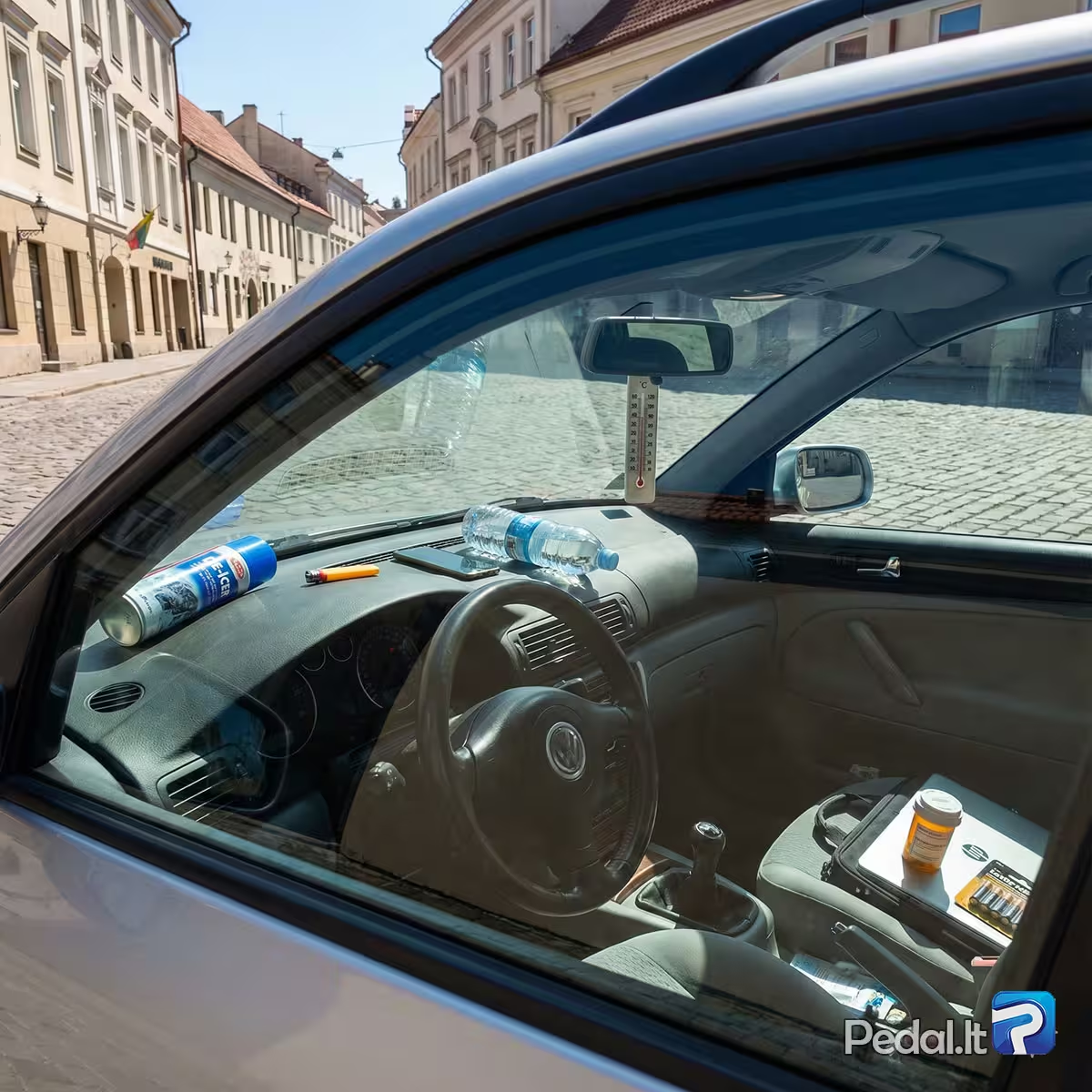
Which items must not be left in a vehicle?
Vehicle documents should not be left in the vehicle, as they can be readily used by thieves. Valuable items must not be left in plain view inside the vehicle because they may attract opportunistic burglaries. Leaving liquids, such as soft drinks, inside the vehicle does not compromise its safety. (RTR 147) A driver may leave the vehicle unattended only after ensuring it cannot move on its own and that unauthorised use is prevented.
1. Vehicle documents (registration and insurance papers).
2. Valuable items left in plain view inside the vehicle.
3. Liquids (e.g., soft drinks).
What types of liability apply to reckless driving while intoxicated?
Drivers with a blood alcohol concentration (BAC) exceeding 1.5 per mille are subject to a fine, arrest, or imprisonment for up to one year (since 01/01/2017). Drink-driving may give rise to both criminal and administrative liability. The applicable type of liability depends on the specific circumstances and the seriousness of the offence:
- Administrative liability: applies when the offences are of lesser severity.
- Criminal liability: applies when the offence is particularly serious or when driving endangers road safety, or the health or life of others.
Code of Administrative Offences of the Republic of Lithuania, Article 420(2): Reckless driving, i.e. a violation of the Road Traffic Rules that endangers road safety or the safety of oneself or others for hooligan motives, incurs a fine ranging from EUR 450 to EUR 550 for drivers and from EUR 750 to EUR 1,000 for persons not entitled to drive vehicles.
Code of Administrative Offences of the Republic of Lithuania, Article 420(4): The acts referred to in paragraph 2 committed by an intoxicated person (mild intoxication: more than 0.4 per mille but not exceeding 1.5 per mille), by a person under the influence of drugs, psychotropic or other psychoactive substances, by a person who avoided performing a field sobriety test, or by a person who consumed alcohol, drugs, psychotropic or other psychoactive substances before the test, shall incur a fine ranging from EUR 850 to EUR 1,200 for drivers.
Criminal Code of the Republic of Lithuania, Article 281(7): Persons who drive a road vehicle or instruct a learner driver while under the influence of alcohol with a BAC exceeding 1.5 per mille shall be punished by a fine, arrest, or imprisonment for up to one year.
1. Criminal liability.
2. Administrative liability.
3. Civil liability.
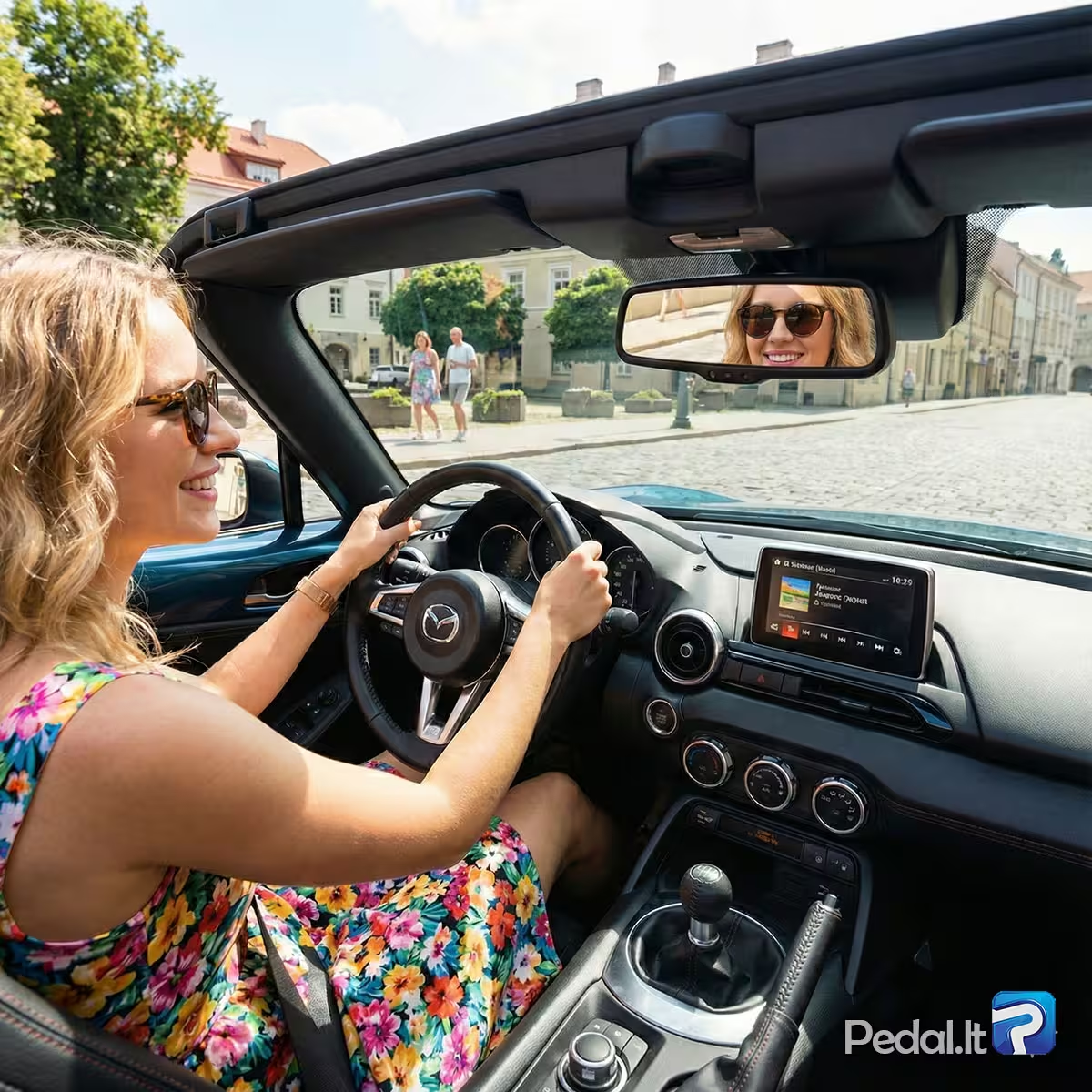
When driving safely, you must:
Always make safety your priority. That means thinking ahead, planning your actions, and anticipating the behavior of other road users.
1. Anticipate the actions of other road users.
2. Driving slightly above the speed limit.
3. Stay closer to the edge of the road.
4. Driving well below the maximum permitted speed.
Which of the following correctly describes stopping distance?
Stopping distance is the distance a vehicle travels from the moment the driver notices an obstruction until the vehicle comes to a complete stop. Braking distance is the distance the vehicle travels from the moment the brakes are fully applied until it stops. Reaction distance is the distance the vehicle travels from the moment the driver detects an obstruction until the driver begins to apply the brakes.
1. The distance a vehicle travels from the moment the driver detects an obstacle until the vehicle comes to a complete stop.
2. The distance a vehicle travels until the braking force is transmitted to the wheels.
3. The distance a vehicle travels from the moment braking begins until the vehicle comes to a complete stop.
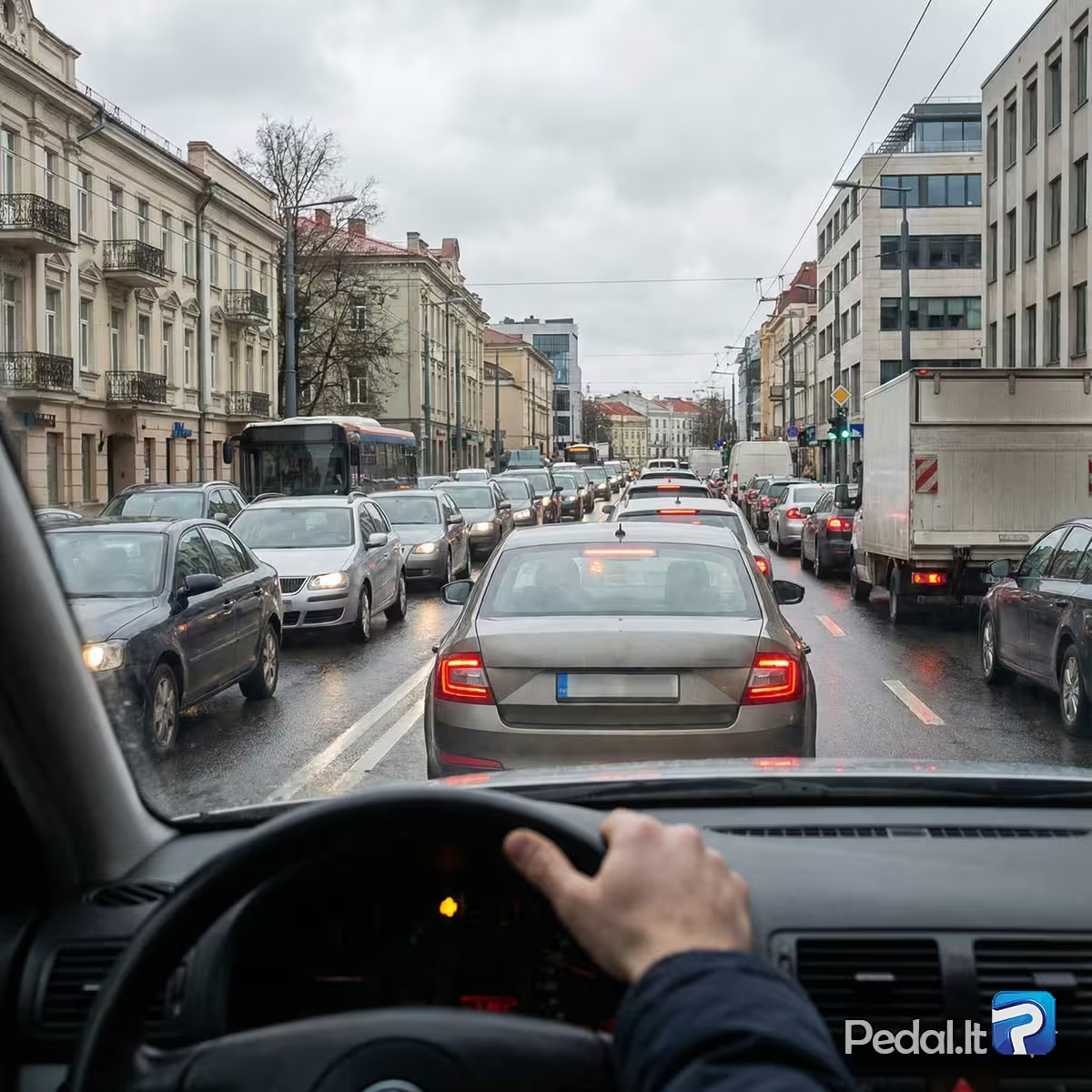
Is a driver permitted to change lanes in heavy traffic when all lanes are occupied?
RTR 11D. In heavy traffic, when all lanes are occupied by vehicles, changing lanes is permitted only when necessary to make a turn, make a U‑turn, or stop. JB
1. Changing lanes to stop is permitted when necessary.
2. Changing lanes to make a U‑turn is permitted when necessary.
3. Changing lanes to make a turn is permitted when necessary.
4. Changing lanes is prohibited.
How can you confirm that all the lights on your vehicle are functioning?
Drivers should check that all vehicle lights are working before every long journey and at least once every six months. Properly functioning lights help you assess road conditions accurately and reduce the risk of accidents.
1. Turn on all vehicle lights and, each time you exit the car, walk around it to verify that they are illuminated.
2. You do not need to inspect your car's lights; instead, replace the bulbs every six months.
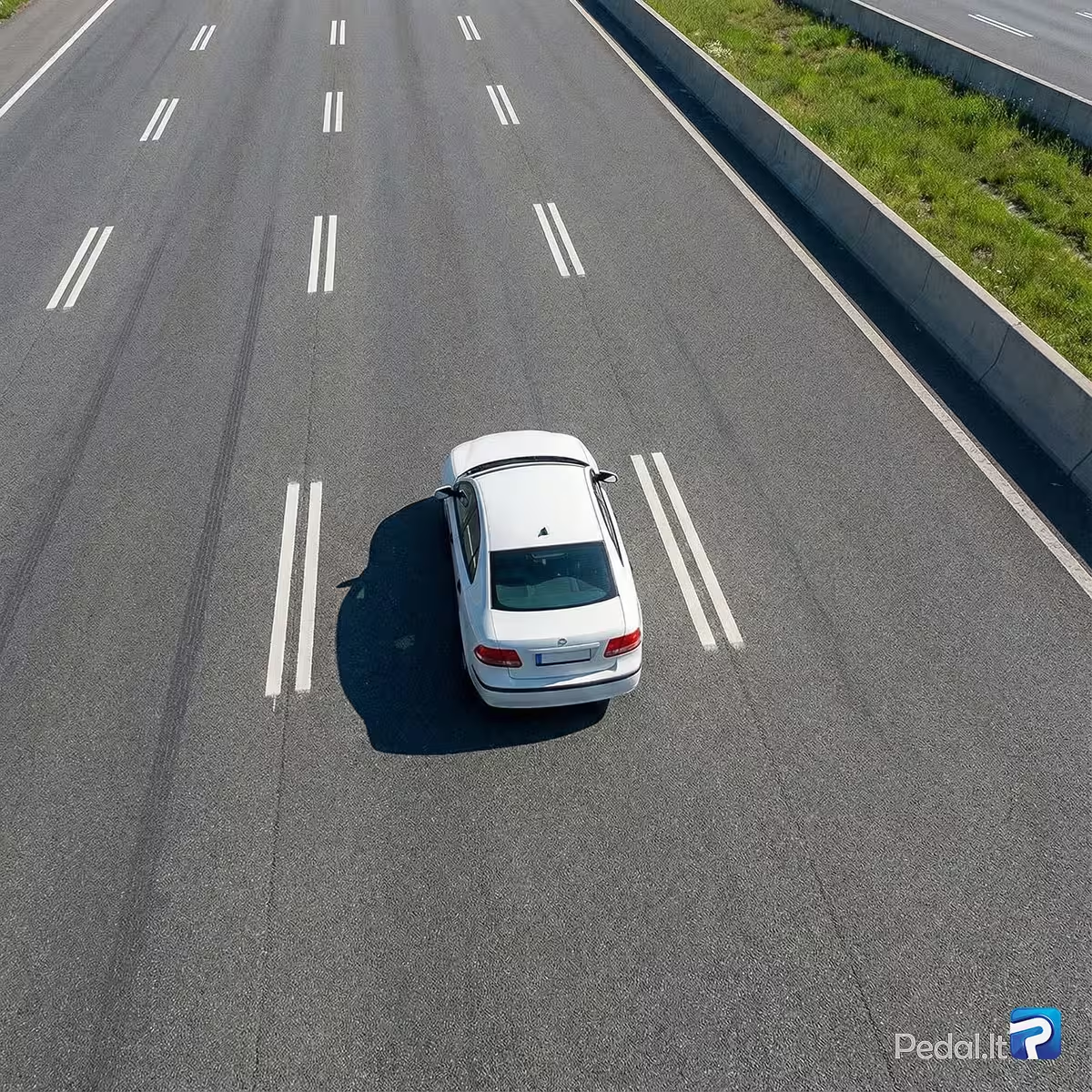
When may a double broken line be crossed?
RTR – Annex 3. 1.26. A double broken line indicates lanes of opposing traffic; it separates flows of traffic moving in opposite directions. Vehicles must not cross this line when it separates traffic moving in opposite directions. If the line separates lanes moving in the same direction, vehicles may cross it from either side when the green lane-control light is illuminated. When the amber lane-control light is illuminated, vehicles may cross it only if the line is to the driver’s right.
1. On both sides when the green lane-control light is illuminated.
2. When the amber lane-control light is illuminated, and the double broken line lies to the driver’s right.
3. Crossing it is prohibited in all cases.
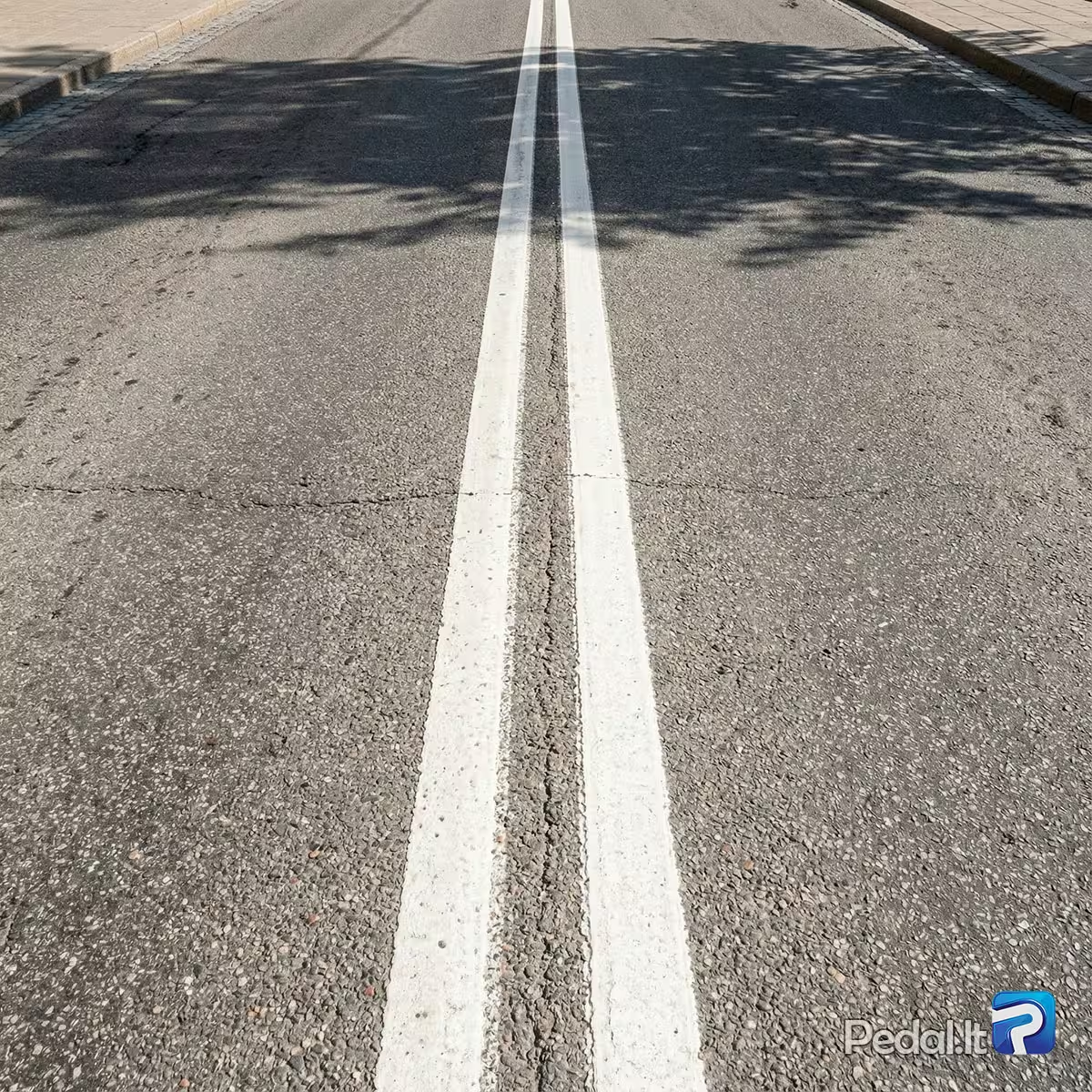
What does this road marking indicate?
On roads with four or more lanes, a double solid line separates opposing traffic flows. It prohibits driving in lanes that carry traffic in the opposite direction on the marked section; vehicles must not cross this line.
1. Crossing this line is prohibited.
2. Crossing the line is only permitted when making a U-turn.
3. Crossing this line is allowed.
Are non-public-service vehicles allowed to drive in a lane marked with the letter 'A'?
A lane marked with the letter 'A' is reserved exclusively for public service vehicles. Non-public-service vehicles may only change into or use this lane when preparing to turn right. An exception exists for lanes marked with the 'A+' symbol. (See RTR Annex 3, §1.21; RTR 181 and Paragraph 182 of the Rules.) Non-public-service vehicles must not drive in lanes marked with the 'Lane Reserved for Public Service Vehicles' sign and the letter 'A'.
1. Yes — non-public-service vehicles are permitted to use that lane.
2. No — non-public-service vehicles are not permitted to use that lane.
What are the benefits of eco-driving?
You improve road safety by planning your journey and anticipating traffic situations. Eco-driving reduces air pollution: the more fuel you consume, the more emissions you produce; by using less fuel you lower air pollution. Fuel savings are the primary objective of eco-driving. Drivers also experience less stress because maintaining steady acceleration, avoiding abrupt braking, and staying aware of traffic conditions simplifies decision-making. Eco-driving improves driving skills by encouraging anticipation and focus on the road. It also reduces noise levels: smoother acceleration and braking produce less engine and tire noise than aggressive driving.
1. You improve road safety by planning your journey and anticipating traffic situations.
2. You reduce air pollution by using less fuel.
3. You save fuel.
4. You experience less stress while driving due to smoother acceleration, gentler braking, and better anticipation.
5. You enhance your driving skills by learning to anticipate traffic and focus on the road.
6. You reduce noise levels because smoother acceleration and braking generate less engine and tire noise.
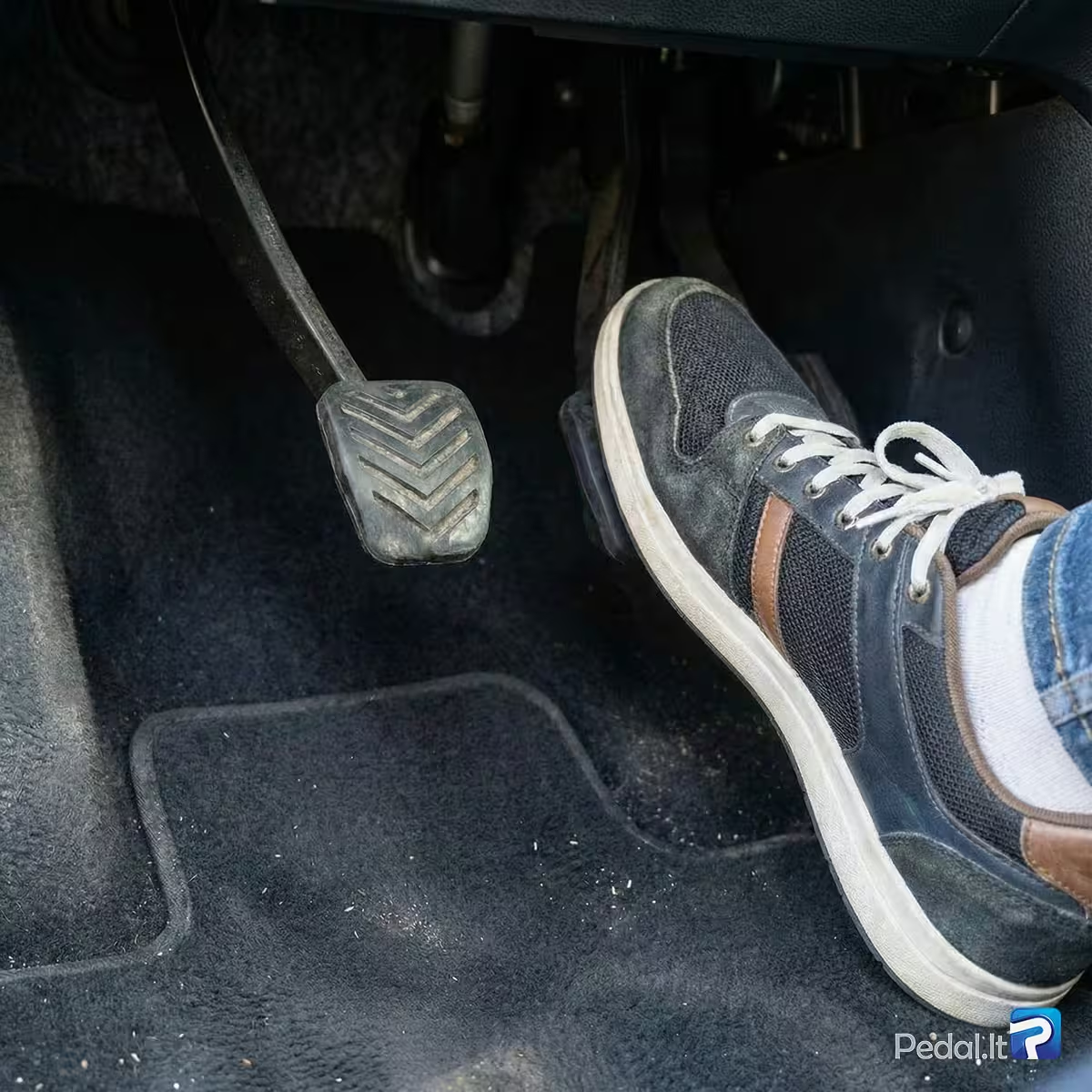
Which factors can cause the clutch to wear out more quickly?
Causes of premature clutch wear include an improperly adjusted clutch release mechanism, loose clutch mounting screws, weakened clutch springs, or a worn gearbox primary shaft.
1. Incorrectly adjusted clutch release mechanism.
2. Loose clutch mounting screws.
3. Weakened clutch springs.
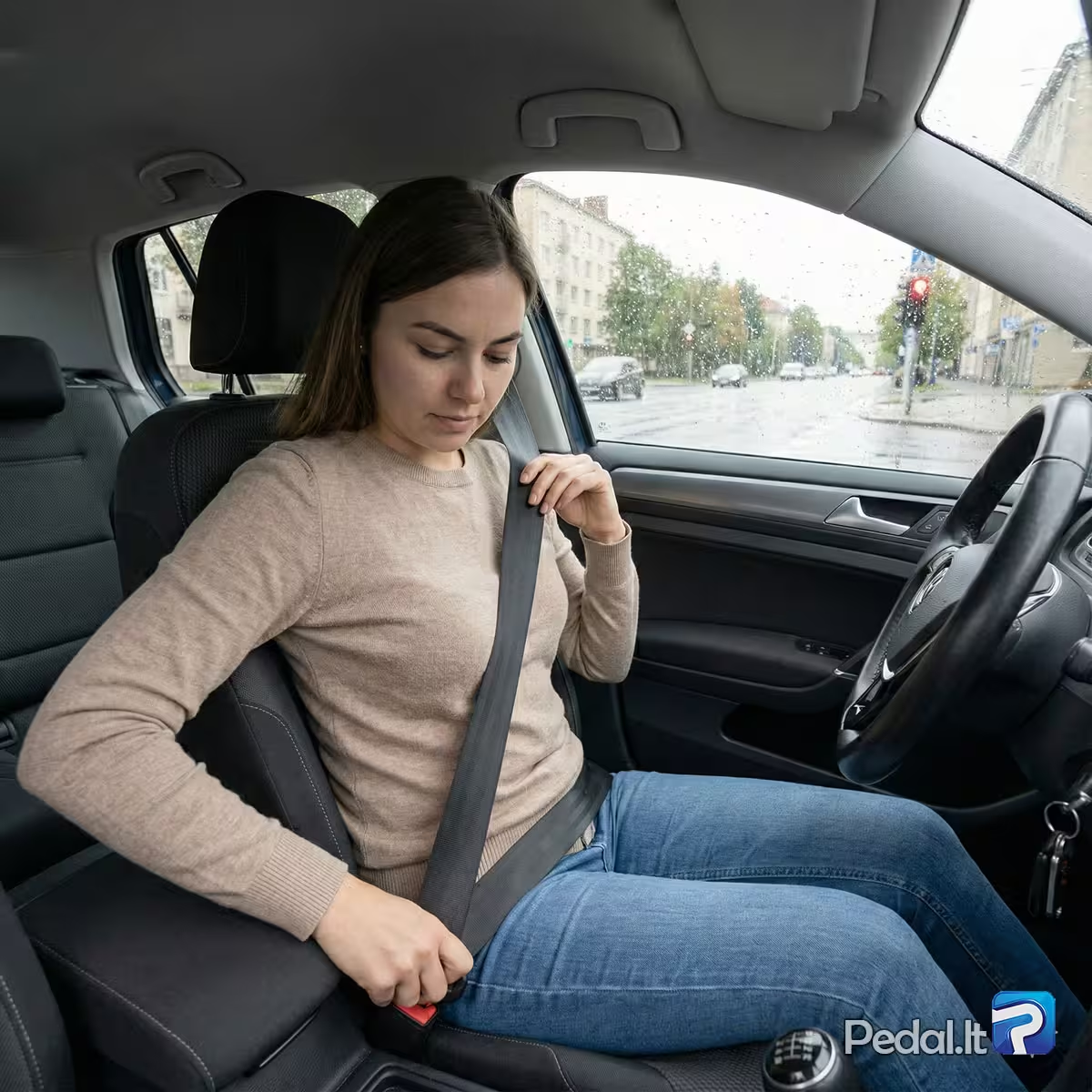
How should the seat belt be fastened correctly?
RTR p. 197. Seat belts must be worn over the shoulder and across the lap, or in the manner specified by the vehicle manufacturer. JB
1. Seat belts must be worn over the shoulder and across the lap, or as specified by the vehicle manufacturer.
2. It is not necessary to wear a seat belt.
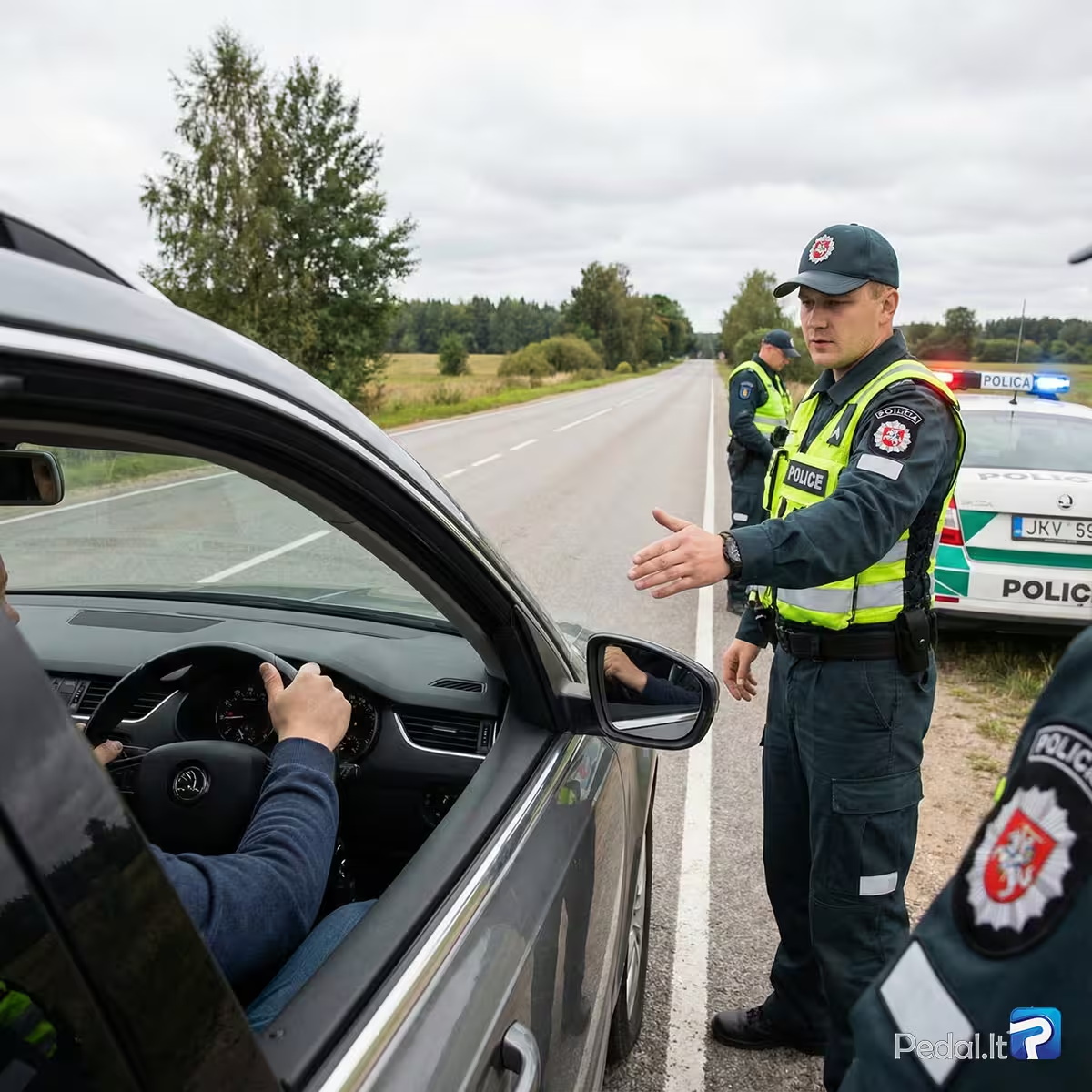
If an officer who intends to inspect your vehicle stops you, are you permitted to exit the vehicle?
RTR – 51. When an inspecting officer stops a vehicle, passengers may exit the vehicle only with the officer's authorization.
1. You may exit the vehicle only with the officer's permission.
2. You must remain inside the vehicle in all circumstances.
3. You must exit the vehicle in all circumstances.
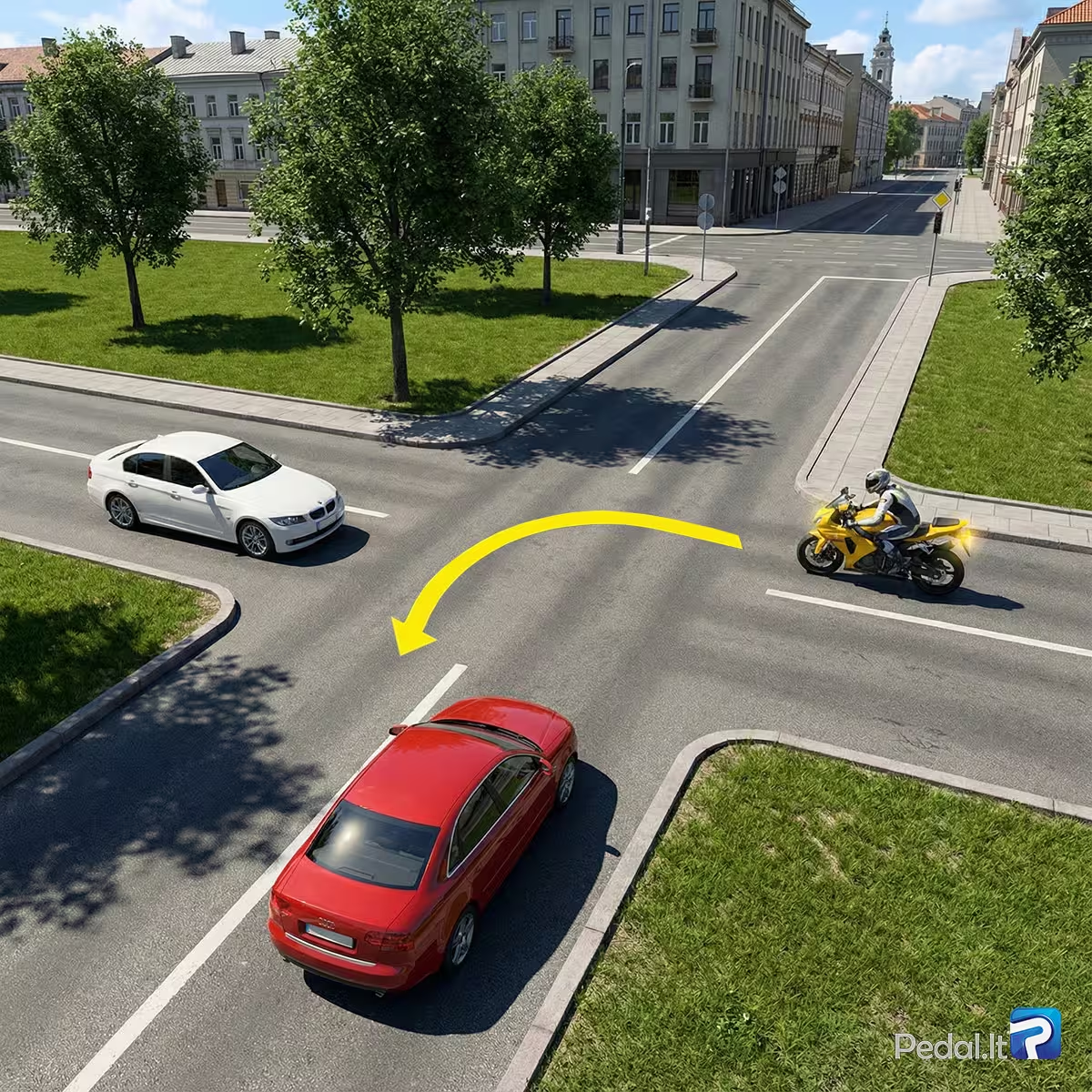
What is the motorcycle's order of passage through the intersection? The rider is turning left.
At an uncontrolled intersection of roads with equal priority, drivers must yield to vehicles approaching from the right when their paths intersect. A vehicle turning left must give way to oncoming traffic that is going straight or turning right. In this scenario, the red car goes first because the motorcycle, which had entered the intersection, stopped to yield. The white car proceeds next, since it no longer has a vehicle to its right, and finally the motorcyclist completes the maneuver — the motorcycle goes third. (RTR 155; RTR 157.)
1. First.
2. Third.
3. Second.
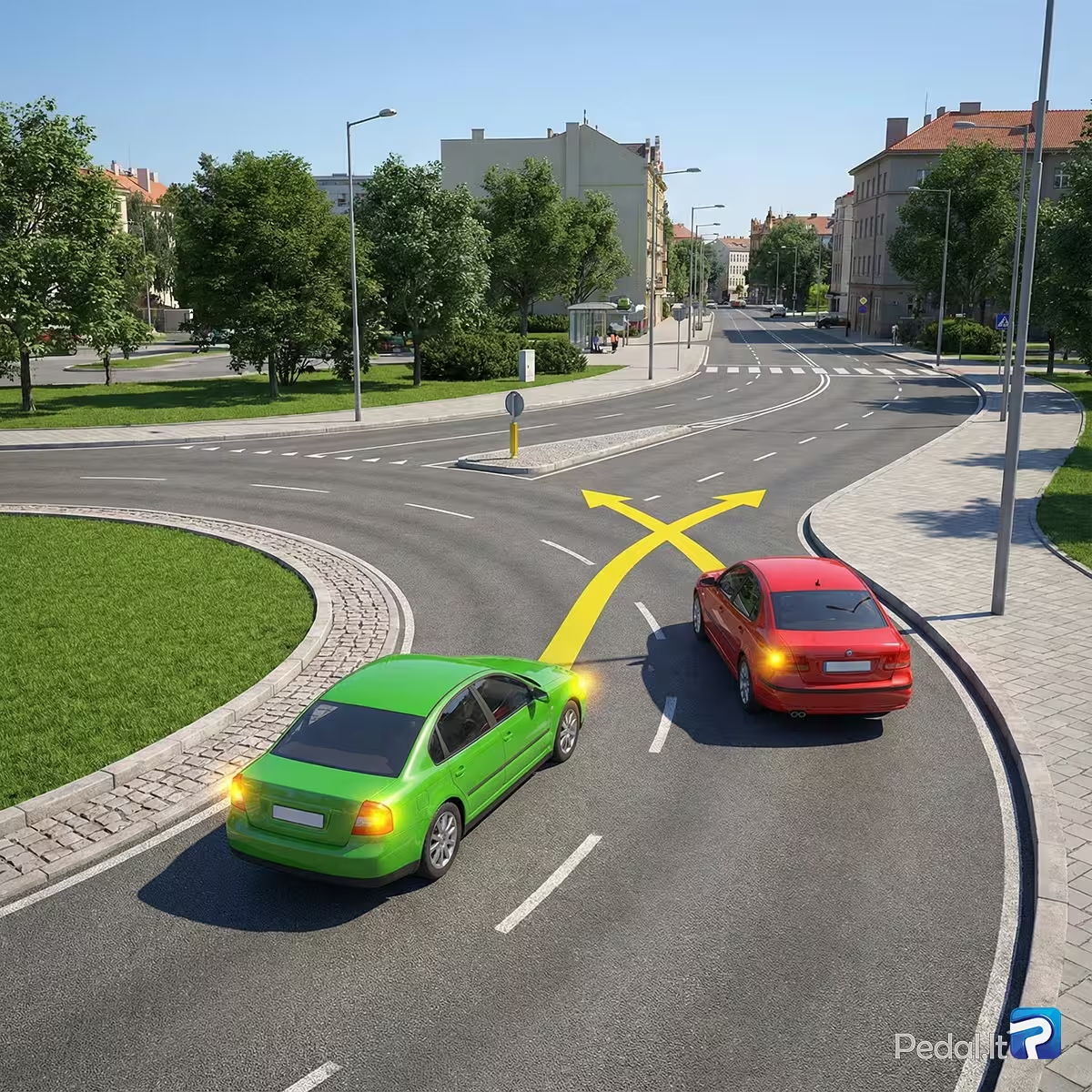
Which driver is violating the traffic rules?
There are no lane direction signs; therefore the driver of the red vehicle may go straight or turn right. When changing lanes, the driver of the green vehicle must yield. RTR 104. When changing lanes, a driver must yield to vehicles moving in the same direction in the adjacent lane. If vehicles moving in the same direction change lanes simultaneously, a driver must yield to the vehicle on the right, except in the cases specified in Paragraph 112 of the Rules. RTR 112. If an acceleration lane is provided for entering the road, the driver must use that lane and merge into the main traffic flow (change lanes and move into the adjacent lane), yielding to vehicles already in that flow or to vehicles changing lanes toward the deceleration lane. RTR 106. Before turning right, left, or making a U-turn (except when entering an intersection with circular traffic), a driver must move in advance to the edge of the carriageway designated for that direction. Road signs and/or road markings may indicate otherwise.
1. The driver of the red vehicle.
2. The driver of the green vehicle.
1 of 30 Task
Time left: 00:00:00
1
2
3
4
5
6
7
8
9
10
11
12
13
14
15
16
17
18
19
20
21
22
23
24
25
26
27
28
29
30