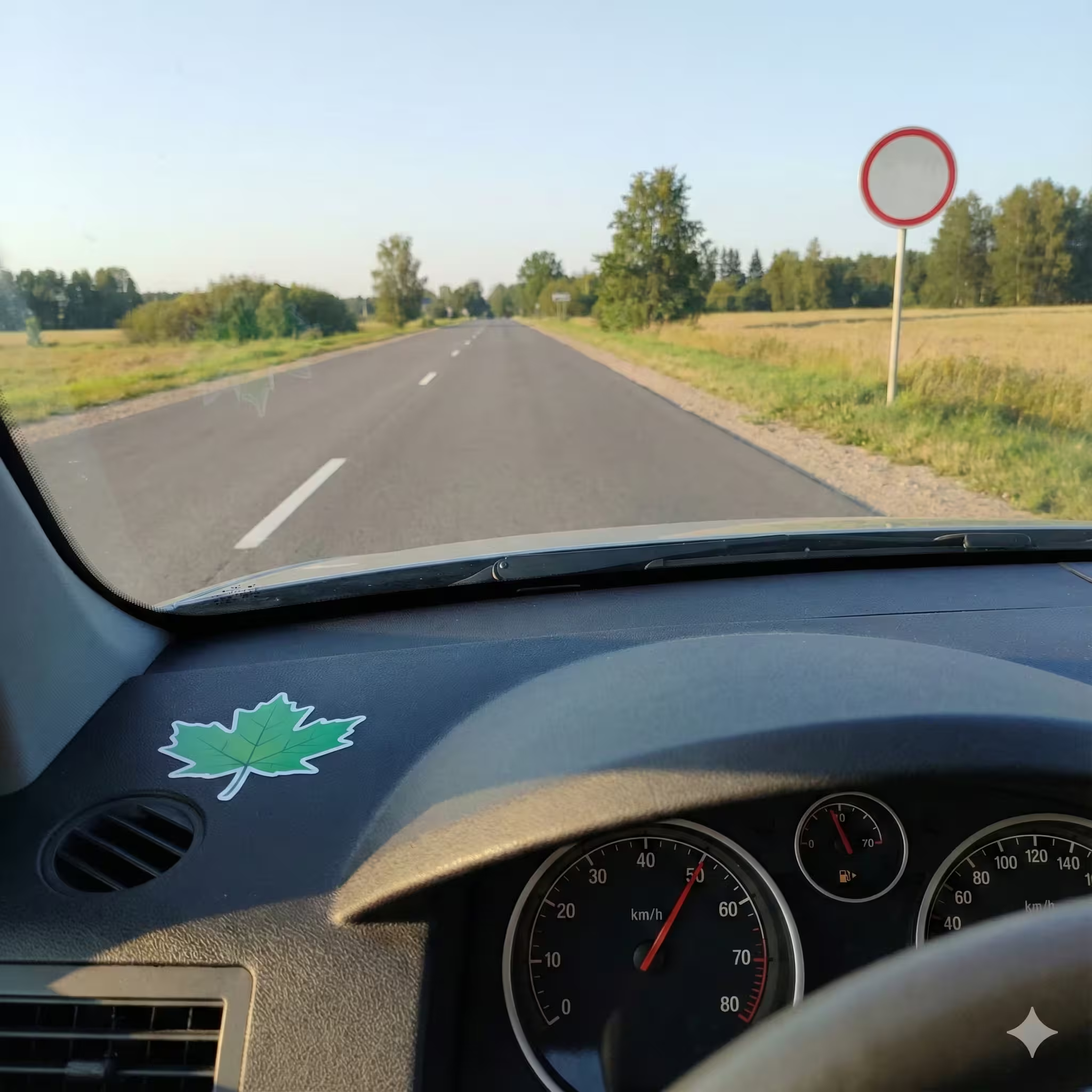
What is the maximum permitted speed on asphalt or concrete roads outside built-up areas for drivers with less than two years' driving experience?
131. The following speed limits apply outside built-up areas: 131.2. Vehicles of categories A1, A2, A or B driven by novice drivers, persons learning to drive or taking a practical driving test, and buses (including school buses) are subject to the following maximum speeds: 100 km/h on motorways, 90 km/h on highways, 80 km/h on roads with asphalt or concrete pavement, and 70 km/h on other roads.
1. 50 km/h
2. 80 km/h
3. 70 km/h
4. 90 km/h
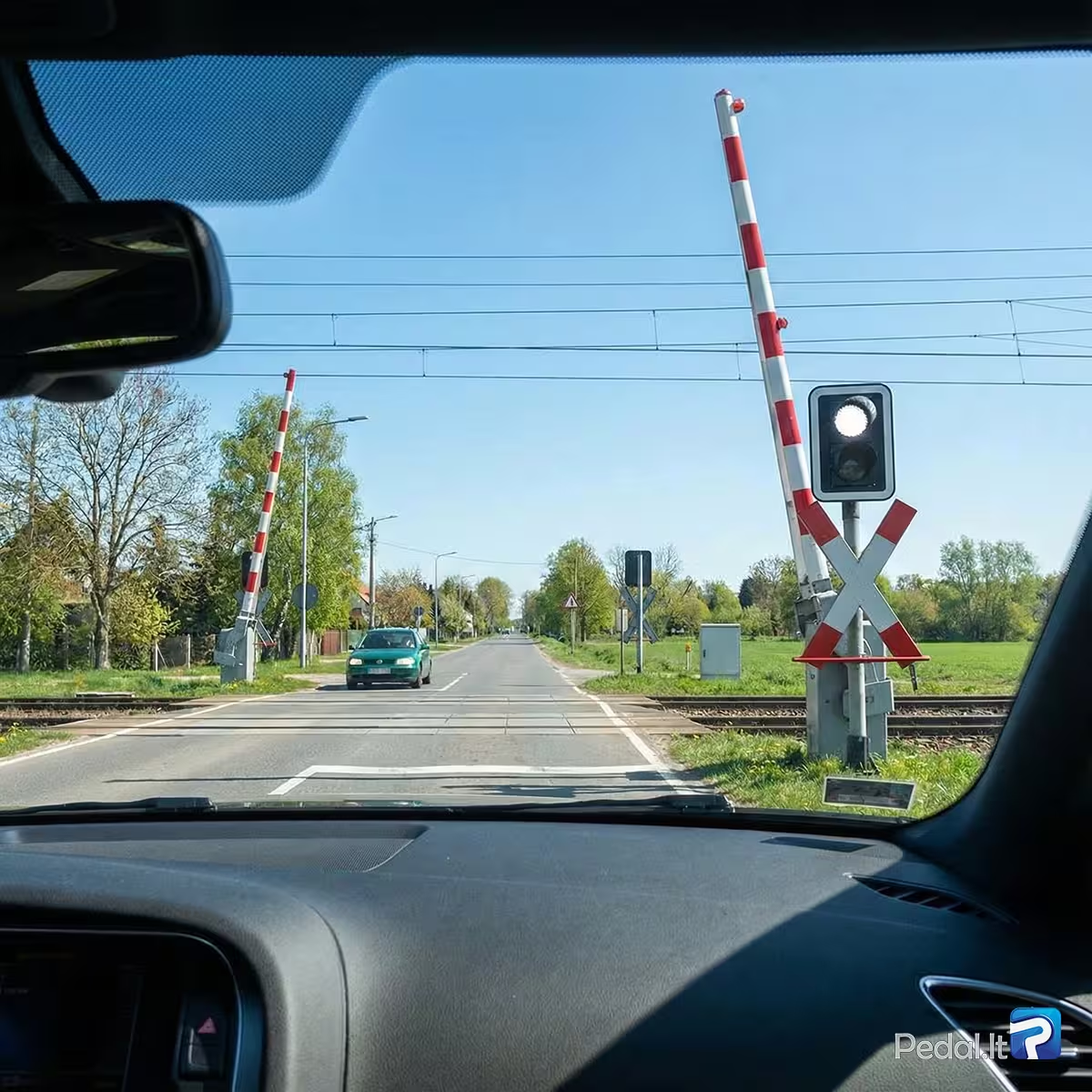
You see a flashing white light and the barrier is fully raised. Are you permitted to cross the level crossing in this situation?
RTR 73. Traffic light signals: 73.10. A flashing white light used at level crossings indicates that vehicles may proceed only after confirming that no rail-borne vehicle is approaching the crossing.
1. Yes — but only after you have verified that no train or other rail vehicle is approaching the level crossing.
2. No — you may not proceed.
What size handcart carrying a load that is pushed or pulled at the roadside must be equipped with reflectors?
The option "More than 1 meter long" is incorrect because the RTR do not specify any marking requirement based on the cart's length. Under RTR 41: pedestrians moving along an unlit hard shoulder or along the edge of the carriageway, or standing there during hours of darkness or when visibility is poor, must carry a torch visible to other road users, wear a high-visibility vest, or carry a reflector visible to other road users. A pulled or pushed handcart wider than 1 m must have reflectors affixed on its left side: a white reflector at the front and a red reflector at the rear. JB
1. More than 1 meter wide.
2. More than 1 meter long.
Are drivers permitted to take part in vehicle races that are organized illegally on streets and roads?
23. Drivers must not take part in vehicle races that are organized illegally.
1. Yes, they are permitted.
2. No, they are not permitted.
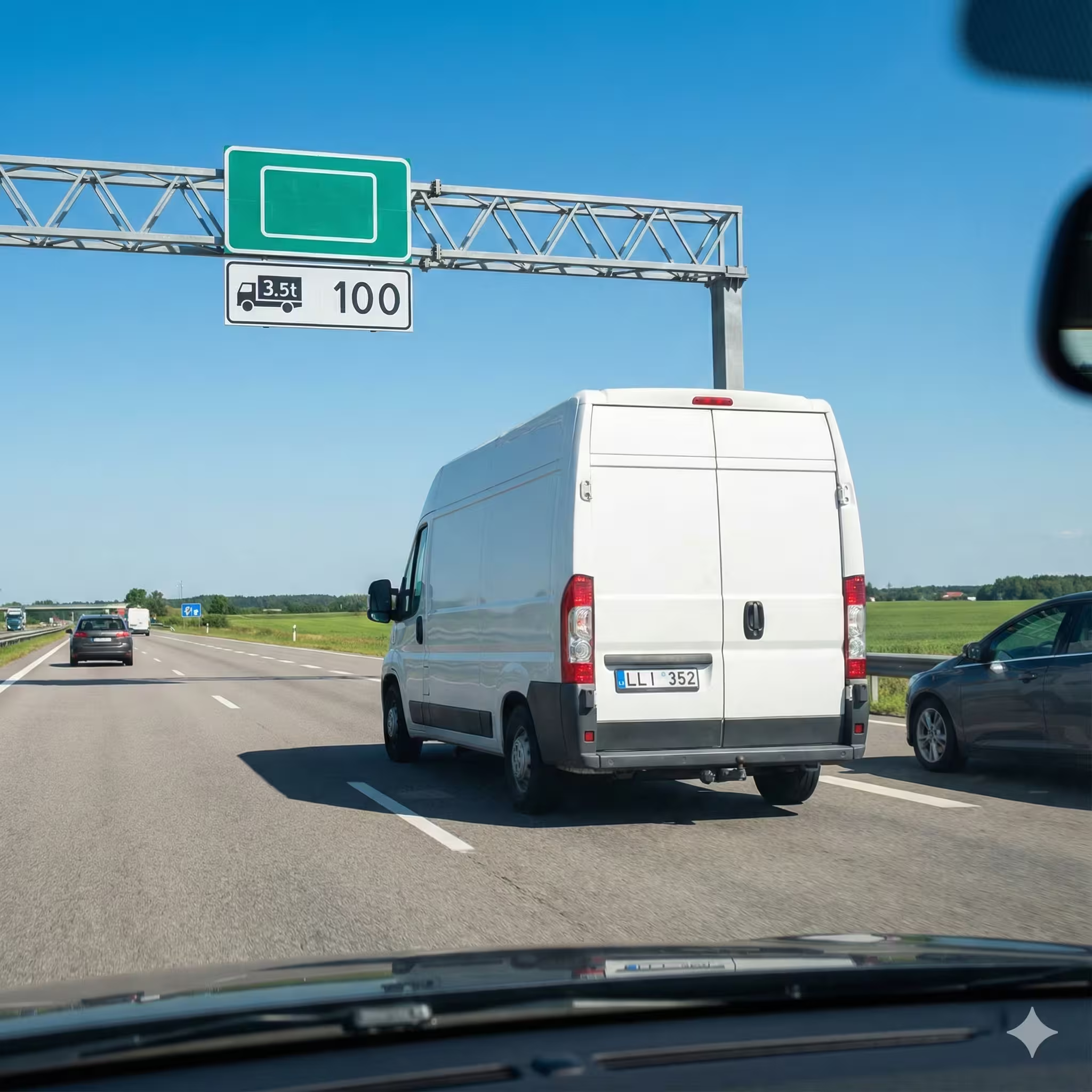
What is the maximum speed limit on motorways in summer for goods vehicles with a permissible maximum weight of 3.5 tonnes?
According to rule 131.1: On motorways, from April to October the maximum speed for passenger cars, goods vehicles with a permissible maximum weight up to 3.5 tonnes, motorcycles, and tricycles is 130 km/h, and from November to March it is 110 km/h. On expressways (highways) the limit is 120 km/h from April to October and 110 km/h from November to March. On roads with asphalt or concrete pavement the limit is 90 km/h, and on other roads it is 70 km/h.
1. 90 km/h
2. 100 km/h
3. 110 km/h
4. 130 km/h
Who must give way on a signed slope when an obstruction is present?
On slopes marked with the appropriate road signs, the vehicle traveling downhill must give way when an obstruction is present, regardless of which side the obstruction occupies (RTR 139). However, if it is difficult for two vehicles to pass each other, the driver whose side has the obstruction should give way.
1. The driver traveling uphill.
2. The driver whose side of the road has an obstruction.
3. The driver traveling downhill.
4. The driver whose side of the road has no obstruction.
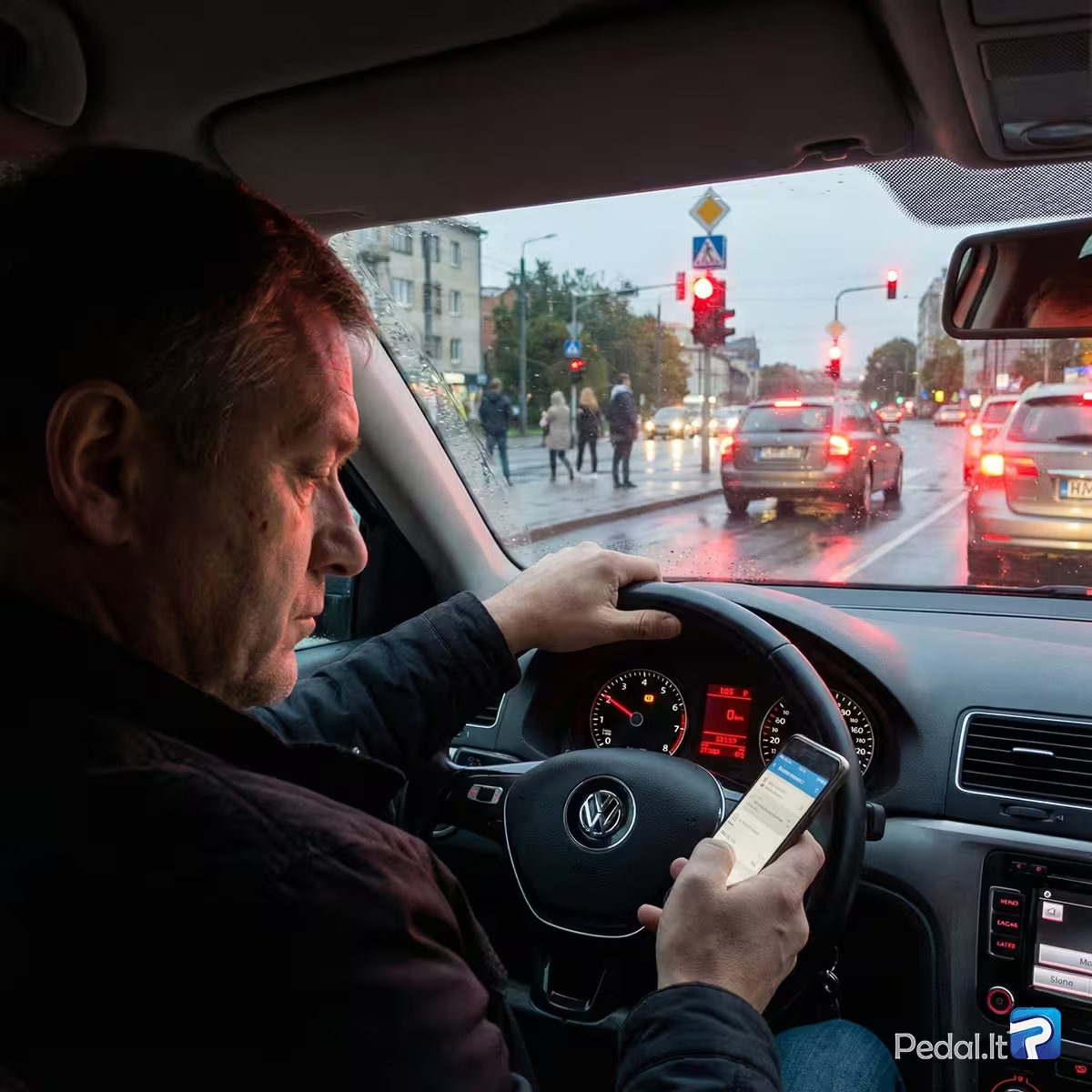
A driver's reaction time is affected by:
The driver's reaction time is delayed by illness, fatigue, or the influence of alcohol or drugs. Distraction and poor concentration while driving also lengthen reaction time, and reaction speed typically decreases with age. RTR 14. Driving is prohibited if you are not authorized to operate the vehicle, or if you are intoxicated or under the influence of narcotic, psychotropic or other psychoactive substances. A person who is tired or ill must not drive if doing so could endanger road safety. A vehicle must not be entrusted to anyone affected by these factors or without the required authorization for that vehicle type. When operating a vehicle, the driver must comply with the requirements shown on their driving licence.
1. Illness.
2. Fatigue.
3. Alcohol consumption.
4. Emotional state.
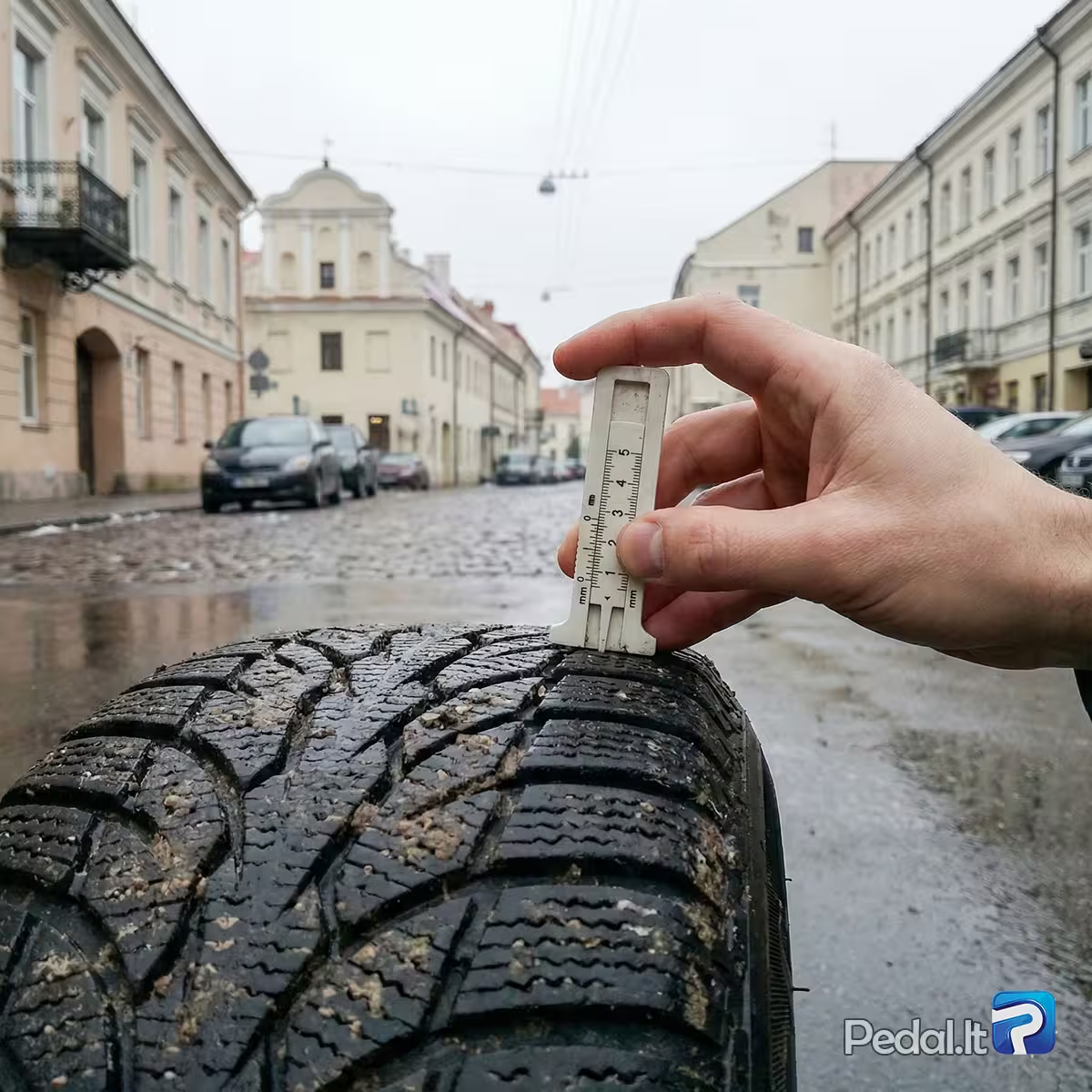
What is the minimum allowable winter tread depth for a passenger car tyre?
Passenger car tyre tread depth must be at least 1.6 mm in general and 3.0 mm during the winter period. Source: Technical requirements for motor vehicles and their trailers — Section V: Vehicle axles, wheels, tyres and suspension. 5.7. The tread depth of the tyres used must be at least: 5.7.1. M1 category — 1.6 mm (from November 10 to March 31 — 3.0 mm); JB
1. 1.6 mm.
2. 2.0 mm.
3. 3.0 mm.
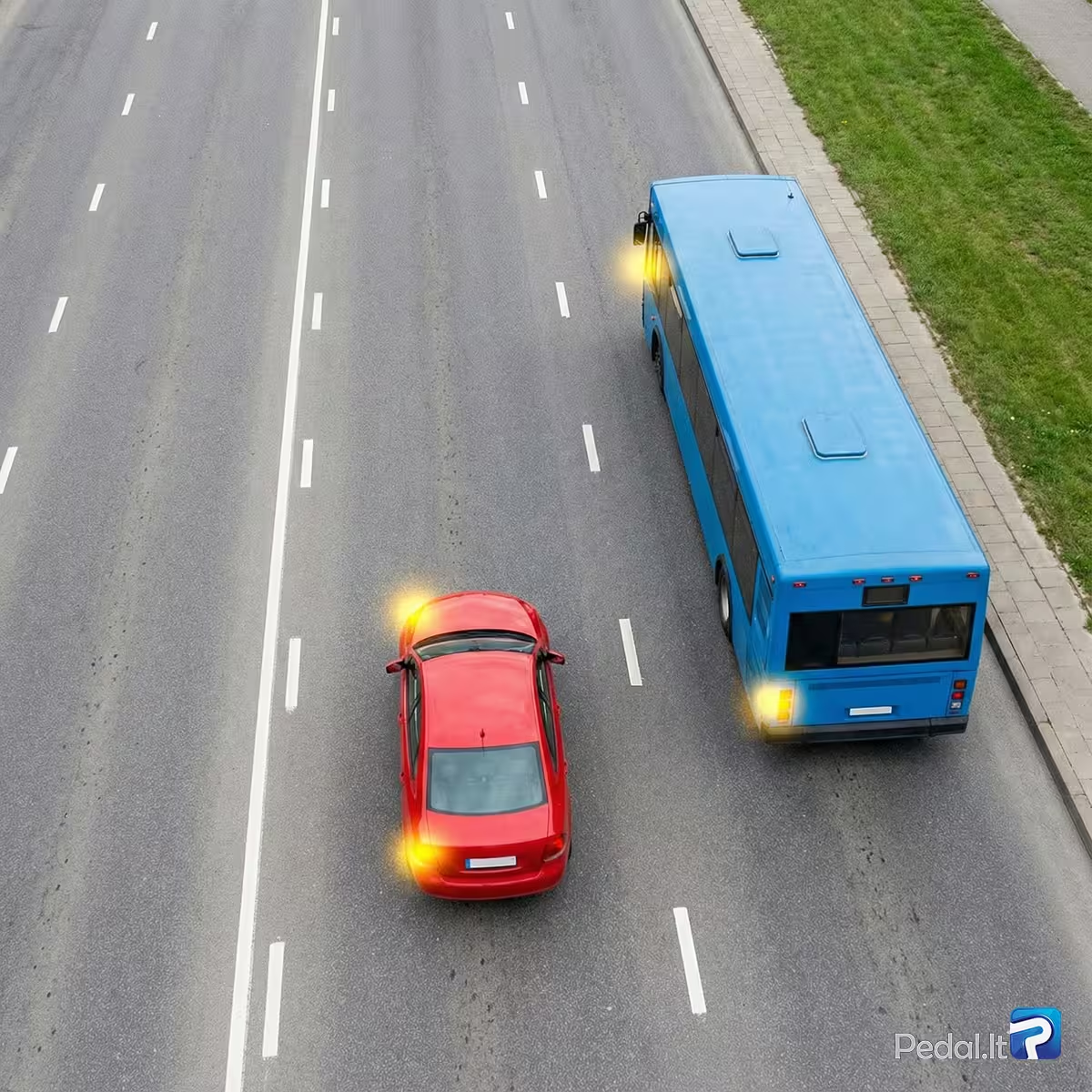
Is it permitted to turn around from the right-hand side of the carriageway if the carriageway is too narrow to turn from the left-hand side?
RTR 107. When, due to a vehicle's large size or other valid reasons, it is not possible to complete a turn (turn around) from the appropriate edge position of the carriageway, the vehicle may perform the turn from a part of the carriageway other than that edge assigned for travel in that direction, provided the maneuver does not obstruct other vehicles or create a hazard for other road users. JB
1. Yes — provided the maneuver does not obstruct other vehicles or create a hazard for other road users.
2. No — the maneuver is prohibited.
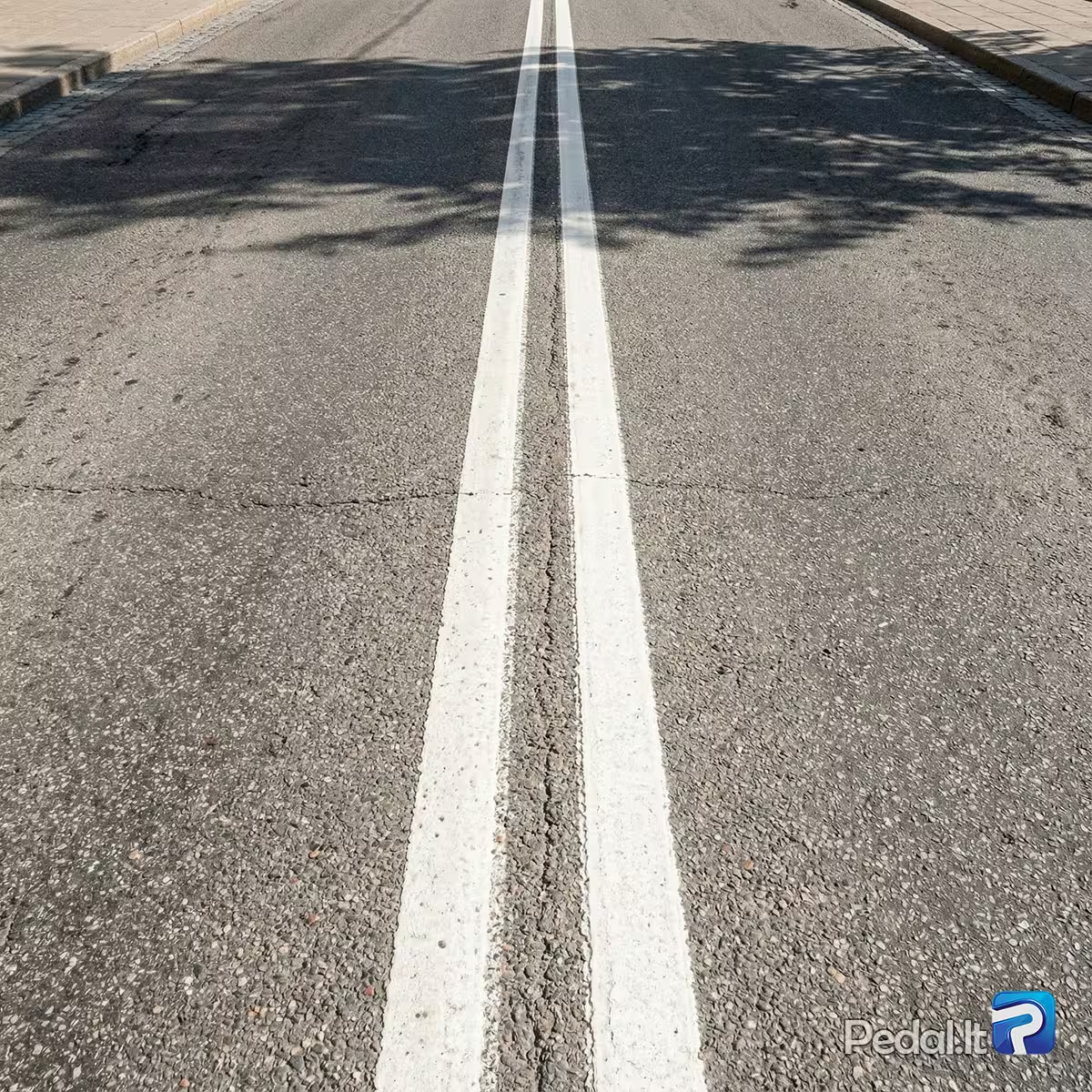
What does this road marking indicate?
On roads with four or more lanes, a double solid line separates opposing traffic flows. It prohibits driving in lanes that carry traffic in the opposite direction on the marked section; vehicles must not cross this line.
1. Crossing this line is prohibited.
2. Crossing the line is only permitted when making a U-turn.
3. Crossing this line is allowed.
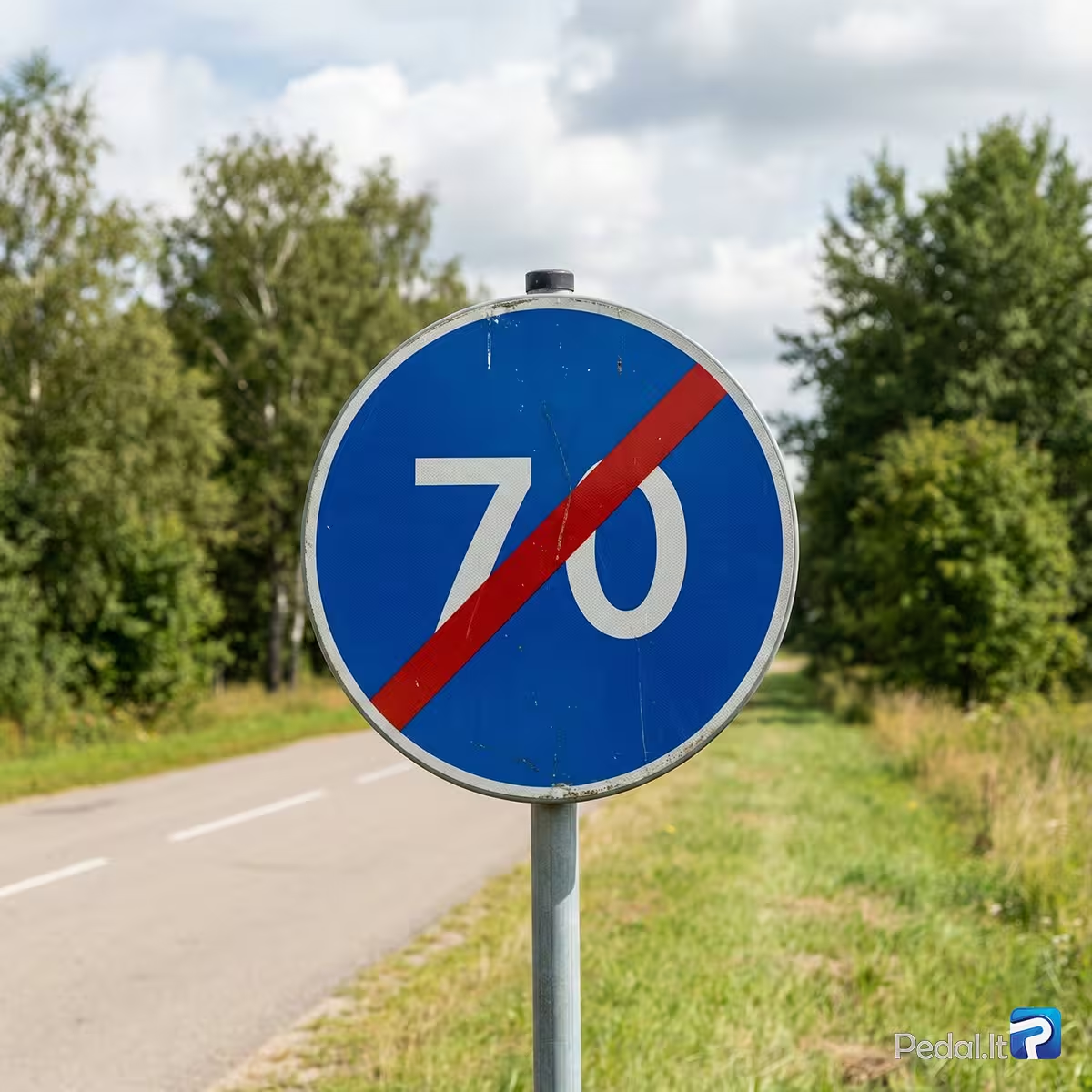
After this road sign:
This sign indicates the end of the minimum speed requirement; it does not specify a particular permitted speed. The applicable speed depends on other road signs, regulations and current driving conditions. Road sign 415 — End of minimum speed limit.
1. Driving at a maximum speed of 70 km/h is permitted.
2. Driving at a speed of at least 70 km/h is permitted.
3. The minimum speed limit has ended.
Where is overtaking prohibited?
RTR XVI.140. Overtaking is prohibited. Clause 140.8: in residential areas, courtyards of apartment buildings, parking lots, and bicycle streets. JB
1. In parking lots.
2. In the courtyards of multi-apartment residential buildings.
3. In residential areas.
4. On bicycle streets.
During hours of darkness or in conditions of poor visibility, a load projecting up to 1 metre beyond the side of a vehicle must be marked:
Any load that projects laterally, even slightly, must be marked. During hours of darkness such a load must be indicated by lights. Loads projecting beyond the sides of the vehicle must always be marked; loads projecting beyond the front or rear do not always require marking. According to RTR 210 and Annex 4: loads extending more than 1 m beyond the front or rear of the vehicle, or projecting laterally beyond the vehicle's outer edge, must be marked as specified in Annex 4.12. Extreme edges of loads that extend more than 1 m beyond the vehicle's dimensions, or that project even minimally to the side, as well as extreme edges of vehicles wider than 2.6 m, shall be marked with distinguishing panels — 400 mm square plates with alternating reflective white and red diagonal stripes 50 mm wide. These panels must be mounted between 0.4 m and 1.6 m above ground level. During hours of darkness or in poor visibility such vehicles must also display lights in the designated positions: white at the front, orange at the sides, and red at the rear.
1. Marked with high-visibility flags.
2. Marked with lights: white at the front, orange at the sides, and red at the rear.
3. Marking is not required.
Which vehicle is considered an automobile?
Law on Road Traffic Safety, Article 2, paragraph 2. An automobile is a motor vehicle designed to travel on roads to carry goods and/or passengers or to tow other vehicles, excluding motorcycles, light quadricycles, quadricycles, power quadricycles, mopeds, tricycles, tractors, and self-propelled machines. Automobiles also include trolleybuses, which are non-rail vehicles powered by overhead electric cables. JB
1. Designed for towing other vehicles.
2. Designed for road use and for transporting goods.
3. Designed for road use and for transporting passengers.
4. Motorcycles, tractors, and self-propelled machines.
5. Non-rail electric vehicles powered by overhead electric cables — trolleybuses.
In which situations must a driver signal their intended actions using the vehicle's turn signal?
82. A driver must signal intended maneuvers using the vehicle's turn signals, or by arm signals if the electrical indicators are inoperative or unavailable: 82.1 before starting to move and before stopping; 82.2 before changing lanes, before and after overtaking, before and after passing an obstruction, before turning right or left, before making a U-turn, and before exiting a roundabout.
1. Before entering a roundabout.
2. Before exiting a roundabout.
3. Prior to making a right or left turn.
4. Before making a U-turn.
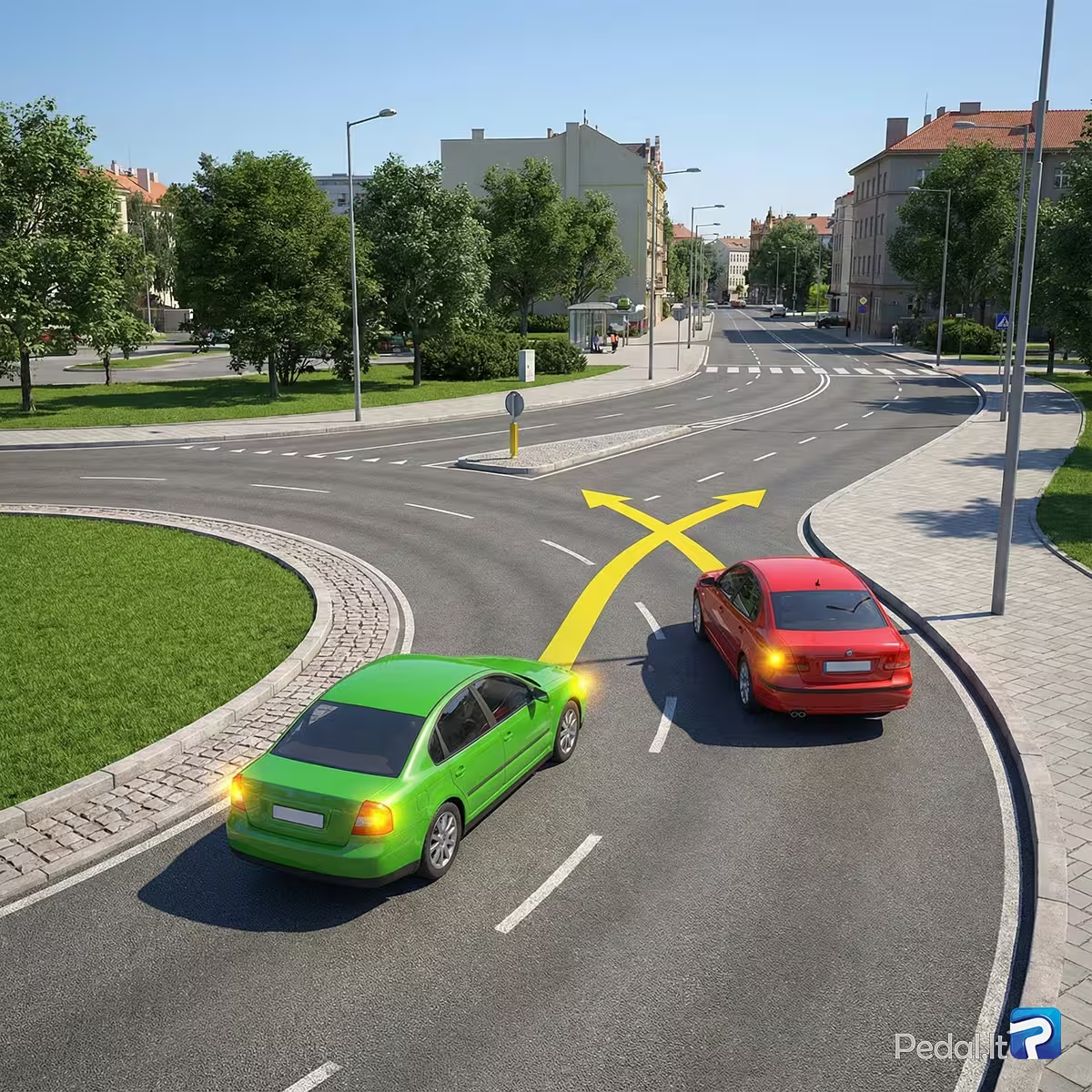
Which driver is violating the traffic rules?
There are no lane direction signs; therefore the driver of the red vehicle may go straight or turn right. When changing lanes, the driver of the green vehicle must yield. RTR 104. When changing lanes, a driver must yield to vehicles moving in the same direction in the adjacent lane. If vehicles moving in the same direction change lanes simultaneously, a driver must yield to the vehicle on the right, except in the cases specified in Paragraph 112 of the Rules. RTR 112. If an acceleration lane is provided for entering the road, the driver must use that lane and merge into the main traffic flow (change lanes and move into the adjacent lane), yielding to vehicles already in that flow or to vehicles changing lanes toward the deceleration lane. RTR 106. Before turning right, left, or making a U-turn (except when entering an intersection with circular traffic), a driver must move in advance to the edge of the carriageway designated for that direction. Road signs and/or road markings may indicate otherwise.
1. The driver of the red vehicle.
2. The driver of the green vehicle.
During the hours of darkness, the poorest visibility on a road occurs:
The worst visibility at night occurs just before passing an oncoming vehicle because the oncoming headlights can dazzle the driver. When approximately 100 m remain before meeting an oncoming vehicle, the driver should reduce speed, keep as close as safely possible to the right edge of the carriageway, and look toward the kerb. These actions reduce glare and help the driver detect pedestrians, cyclists, people operating animal‑drawn vehicles, and other hazards more quickly. Specifically, drivers should: reduce speed to increase reaction time; position the vehicle near the right edge of the road to minimise the risk of head‑on conflicts and to allow space for unexpected events; and avoid looking directly at oncoming headlights, instead focusing toward the kerb or road edge to preserve night vision.
1. When there are 100 m remaining before passing an oncoming vehicle.
2. Just before passing an oncoming vehicle.
Indicate the maximum permitted speed for learner drivers when driving outside a built-up area on a road with an asphalt surface.
RTR 131. The following speed limits apply outside built-up areas: 131.2. The maximum speed for A1, A2, A or B category vehicles driven by novice drivers, persons learning to drive or taking a practical driving test, and buses (including school buses) is: 100 km/h on motorways; 90 km/h on highways; 80 km/h on roads with asphalt or concrete pavement; and 70 km/h on other roads. JB
1. 50 km/h.
2. 80 km/h.
3. 70 km/h.
4. 90 km/h.
Which vehicle(s) are classified as a public service vehicle?
A minibus is a vehicle with no more than eight passenger seats (excluding the driver’s seat) and a maximum permissible mass not exceeding 3.5 tonnes. It may be used for private or commercial purposes. A scheduled taxi (scheduled minibus) is a public transport vehicle that operates on a fixed route with designated stops and is marked with the sign "Regular transport." A public service vehicle is any public transport vehicle — for example a bus, trolleybus, or shuttle bus — that regularly carries passengers along a specified route with defined stops; the term also includes school buses.
1. Taxi.
2. Minibuses.
3. Public transport vehicles — for example buses, trolleybuses, and shuttle buses — that regularly carry passengers along a specified route with designated stops.
Is it permitted to transport dogs in a motor vehicle?
206. The driver must ensure the safety of pets in the vehicle and make sure they are transported in a way that does not interfere with driving and does not cause injury to the animals or to vehicle occupants if the vehicle stops suddenly.
1. Permitted, provided the animals are secured or restrained so they do not interfere with driving and do not pose a risk of injury to themselves or to the vehicle’s occupants in the event of a sudden stop.
2. Permitted only when the dogs are placed on the vehicle’s front seat.
3. Permitted only when the dogs are placed on the vehicle’s rear seat.
4. Prohibited.
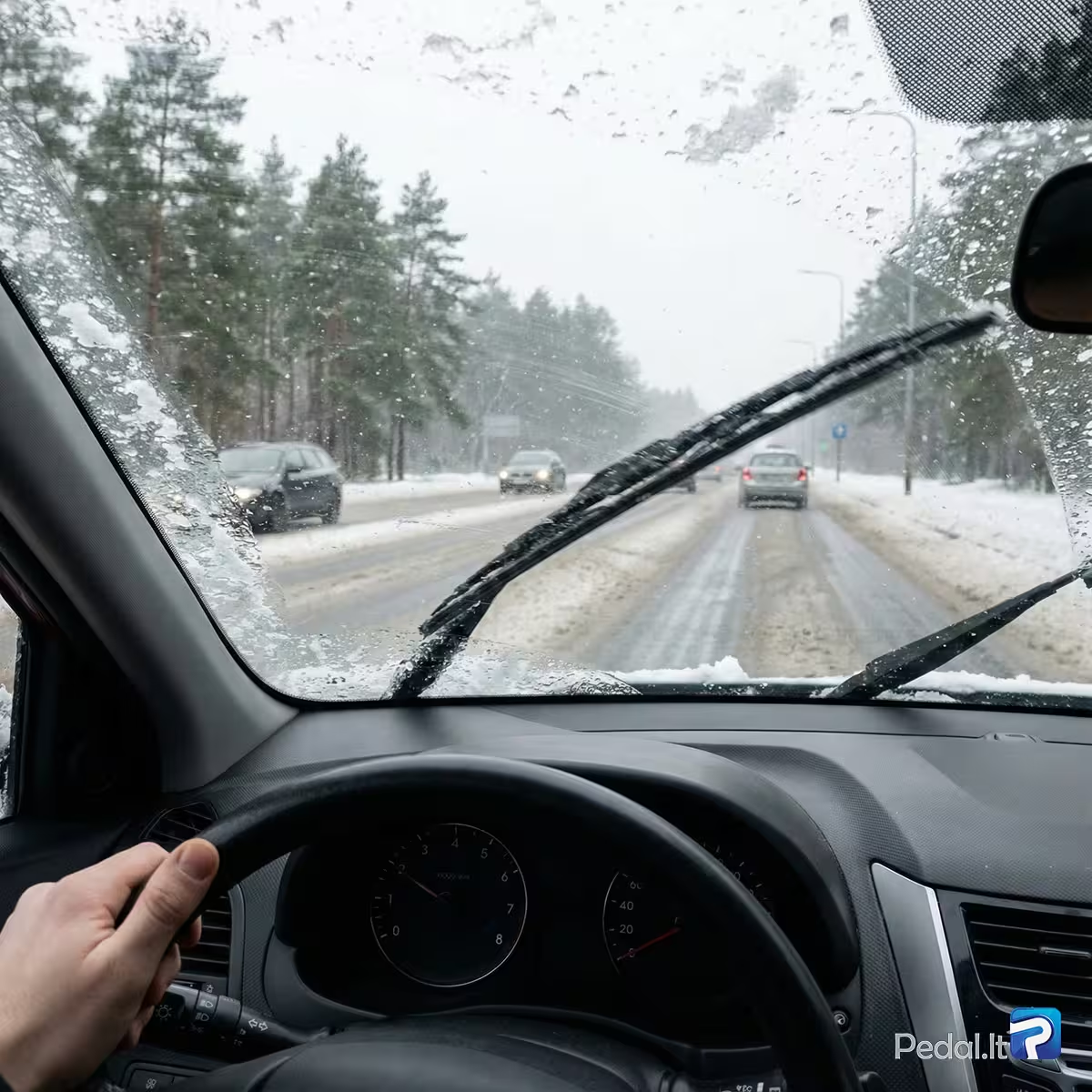
When should you switch on your windscreen wipers while driving in sleet?
A driver must maintain clear forward visibility in all weather conditions. Use the windscreen wipers according to the intensity of precipitation, traffic, presence of pedestrians and other circumstances. Waiting until "the windscreen is covered in snow and you are unable to see anything" is too late.
1. Only when the windscreen is completely covered with snow and you cannot see anything.
2. Before another vehicle driving alongside you can splash dirty water onto your windscreen.
3. Before an oncoming vehicle can splash dirty water onto your windscreen.
4. In advance, so you are not distracted while searching for the windscreen wiper control.
.avif)
Which vehicle may proceed in the direction indicated by the arrow?
RTR 77.1. When the traffic officer's arms are extended sideways or pointed downward: 77.1.1. Vehicles located to the officer's left and right may proceed straight ahead or turn right; pedestrians may cross the carriageway. 77.1.2. Vehicles and pedestrians positioned in front of or behind the officer must not proceed. JB
1. First vehicle
2. Second vehicle
3. Third vehicle
What happens when the air pressure in a vehicle's tyres is too low?
When driving with tyres that have insufficient air pressure, the outer edges of the tyres wear more quickly, shortening tyre lifespan. Low tyre pressure also reduces vehicle stability and increases rolling resistance, which raises fuel consumption.
1. Tyres wear out more quickly.
2. Vehicle stability improves.
3. Fuel consumption increases.
4. Vehicle stability decreases.
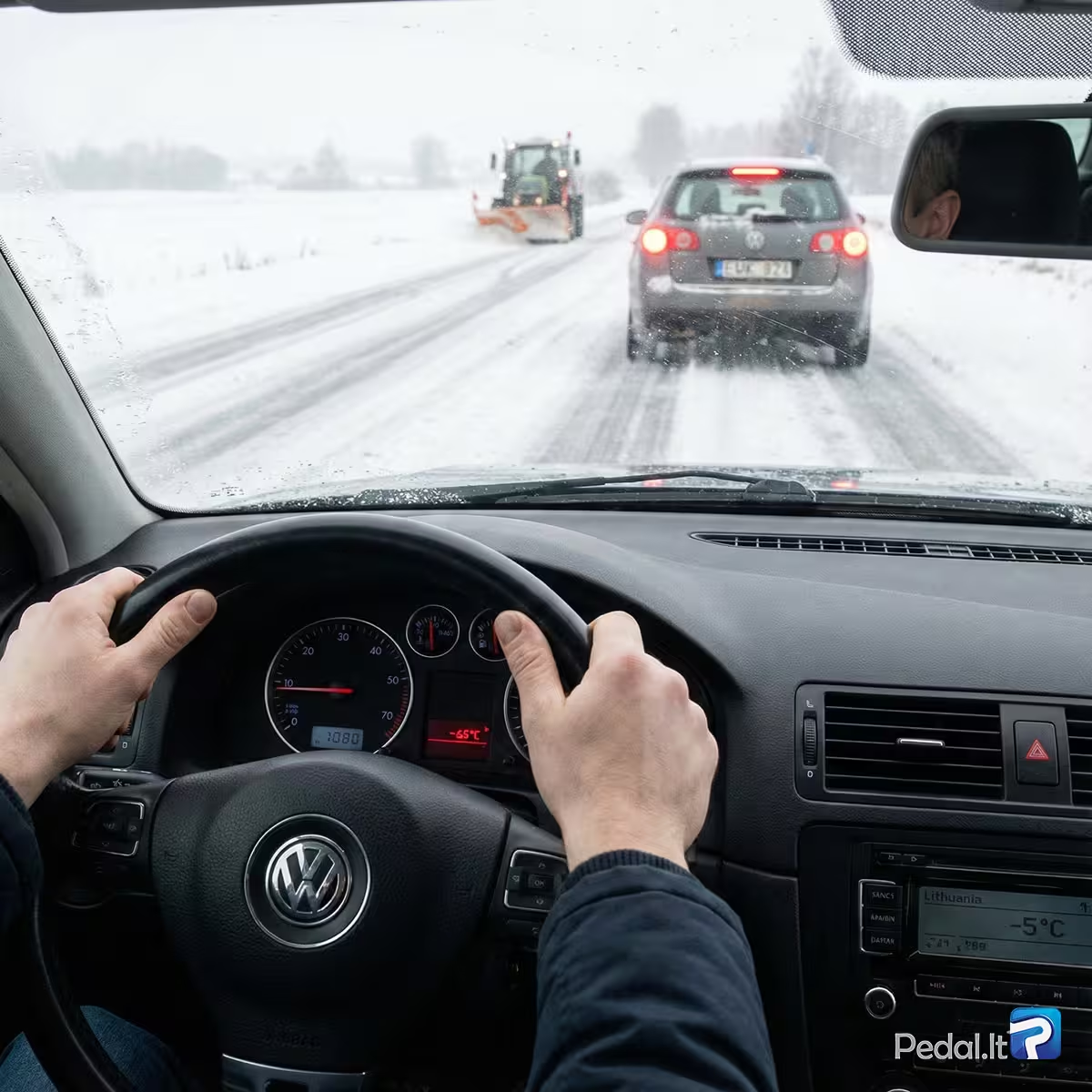
Which factor is considered the primary risk when driving on snowy roads?
1. Driver error (human factor)
2. Adverse weather conditions
3. Slippery road surface
When is the road surface most slippery?
The road surface is most slippery at the start of rain because accumulated dust and oil on the pavement combine with the first drops to form a slippery film.
1. When rain begins.
2. After heavy rain.
3. After puddles have formed on the road.
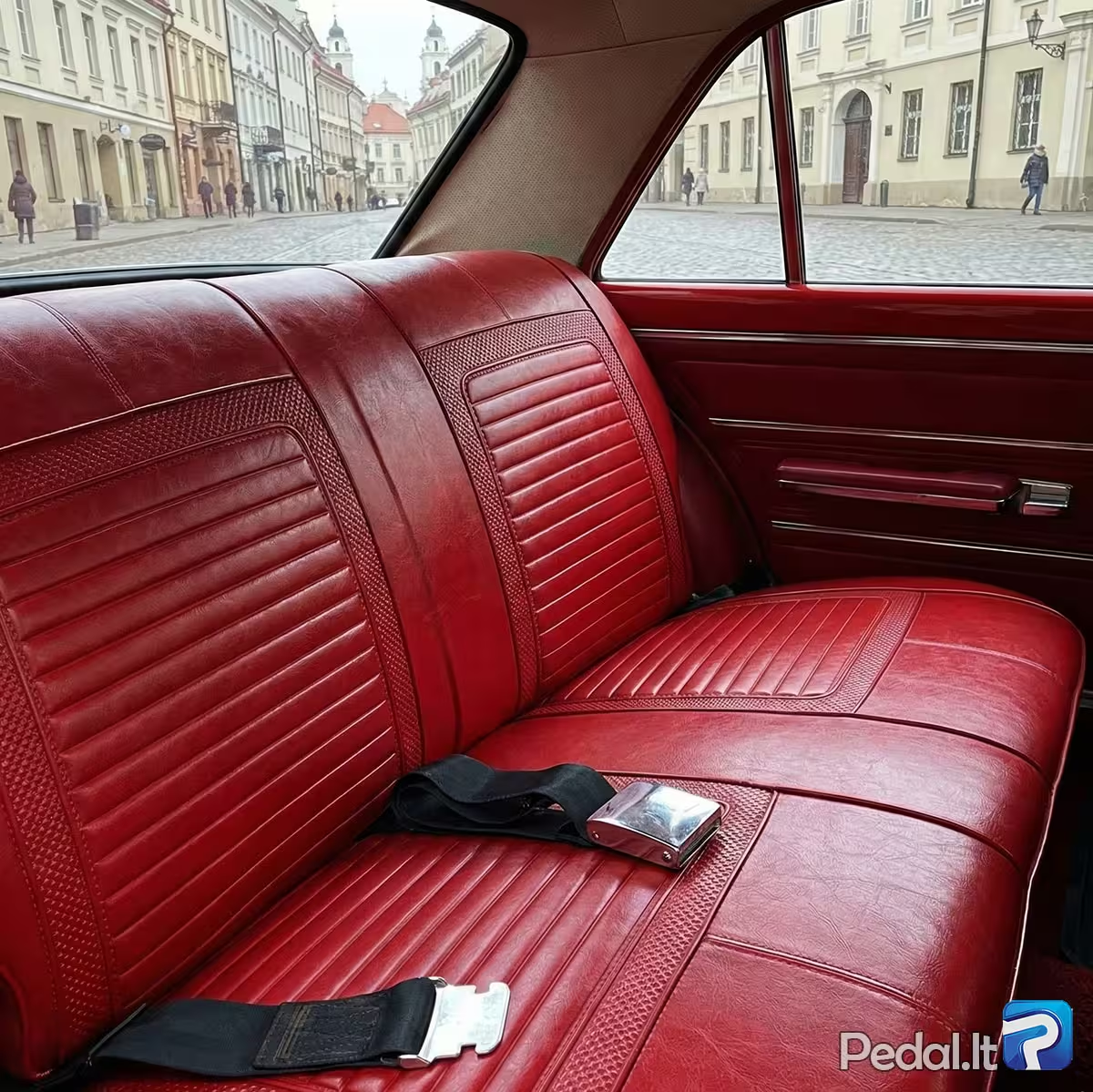
Must a rear-seat passenger wear a seat belt while the vehicle is in motion?
Drivers and all passengers must wear seat belts in vehicles that are equipped with them. In buses fitted with seat belts, a "Fasten Your Seat Belt" notice must be displayed in a clearly visible location in front of each seat, on the seat, or adjacent to it. It is recommended that all bus passengers be informed of the seat belt requirement — either verbally or by audiovisual means — before the journey begins.
1. Yes — you are required to wear a seat belt.
2. No — you are not required to wear a seat belt.
Reflectors fitted to the rear of a vehicle must be:
Order No. 2B-14 of the Lithuanian Transport Safety Inspection, dated 16 January 2013, regarding amendments to the technical requirements for motor vehicles and their trailers, Chapter IV, point 4.10: Rear non-triangular reflector — red; Rear triangular reflector — red. JB
1. Yellow.
2. Red.
3. White.
What is the colour of the road sign labelled 'Place of Interest'?
629. 'Place of Interest' sign. Indicates the name of a cultural or historical site of interest. The sign has a brown background.
1. Blue.
2. Green.
3. Yellow.
4. Brown.
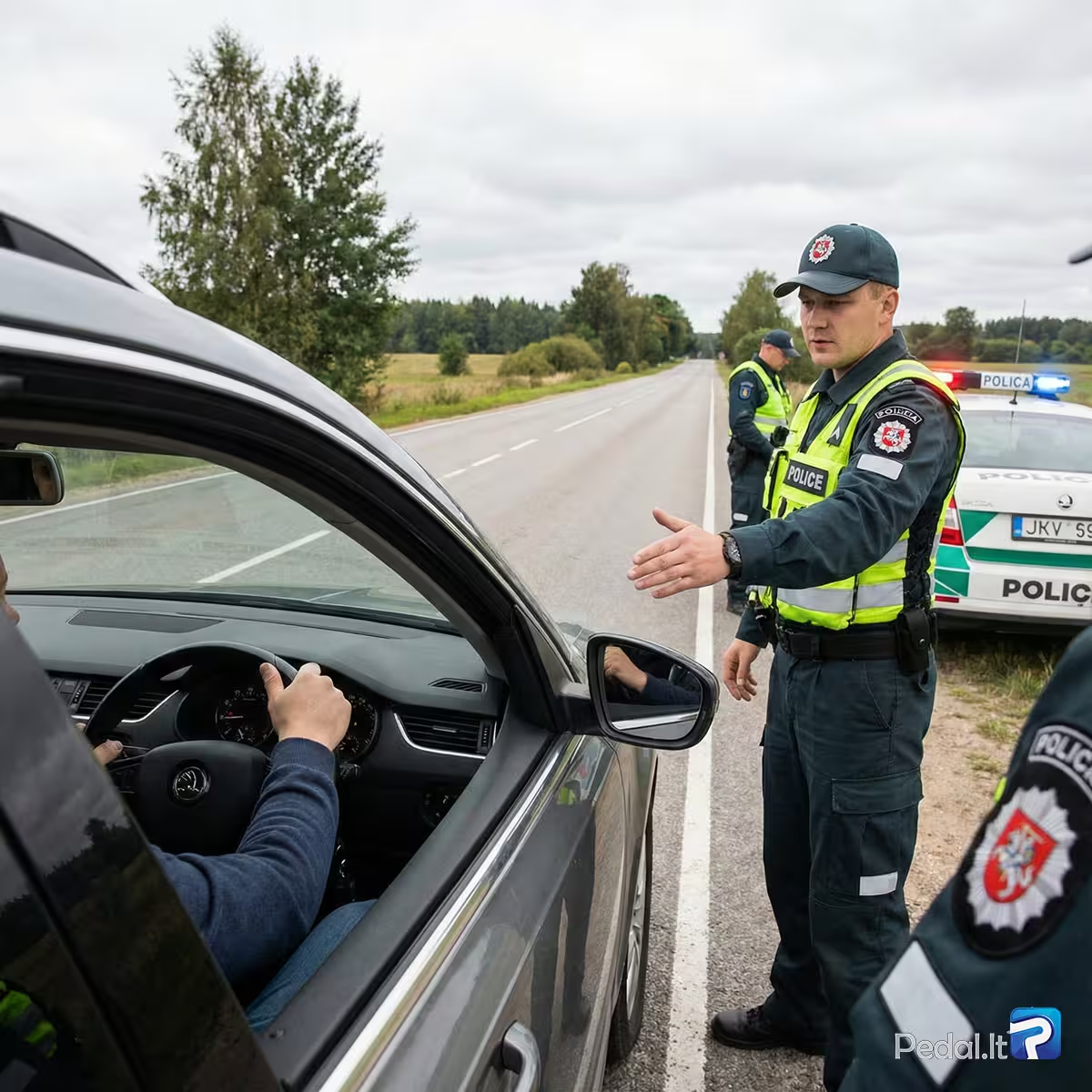
If an officer who intends to inspect your vehicle stops you, are you permitted to exit the vehicle?
RTR – 51. When an inspecting officer stops a vehicle, passengers may exit the vehicle only with the officer's authorization.
1. You may exit the vehicle only with the officer's permission.
2. You must remain inside the vehicle in all circumstances.
3. You must exit the vehicle in all circumstances.
The service brake has failed while you are driving on a motorway. What should you do?
Maintain a speed that allows you to stop the vehicle with the parking brake if necessary. Switch on your hazard warning lights to warn other road users. Drive to the nearest safe place to stop and call roadside assistance.
1. Reduce your speed and switch on the hazard warning lights. If necessary, apply the parking brake gradually. Carefully drive to the nearest safe place to stop and call roadside assistance.
2. Reduce your speed and notify the road police. Continue driving cautiously to your destination. If possible, add brake fluid.
1 of 30 Task
Time left: 00:00:00
1
2
3
4
5
6
7
8
9
10
11
12
13
14
15
16
17
18
19
20
21
22
23
24
25
26
27
28
29
30