What is the maximum permitted blood alcohol concentration (in ‰) for a driver with one year of driving experience operating a passenger car?
Under amendments to the Law on Road Traffic Safety that took effect on 1 January 2015, novice drivers (those with less than two years' driving experience) are considered intoxicated if the alcohol concentration in their breath or bodily fluids exceeds 0. LAW ON ROAD TRAFFIC SAFETY, Article 2, clause 43 defines 'condition under the influence of alcohol' as the state when the concentration of ethyl alcohol in a biological medium of the body (breath, blood, urine, saliva, or other bodily fluids) exceeds the statutory permissible limit. The general maximum permitted concentration of ethyl alcohol in breath, blood, urine, saliva, or other bodily fluids while driving is 0.4 per mille. However, novice drivers, taxi drivers, drivers of mopeds, motorcycles, tricycles, light quadricycles, quadricycles, powerful quadricycles, drivers of vehicles with a maximum permissible mass exceeding 3.5 tonnes or with more than nine seats, and drivers carrying dangerous goods are considered intoxicated when the ethyl alcohol concentration in their breath, blood, urine, saliva, or other bodily fluids is more than 0 per mille.
1. 0.0 ‰
2. 0.2 ‰
3. 0.4 ‰
4. 0.8 ‰
Which of the following statements is correct?
During the summer season, it is permitted to drive on winter tyres that do not have studs. Such winter tyres are often used in summer when their tread depth is approximately 3 mm; during the winter season winter tyres may be used if their tread depth is at least 3 mm. The tread depth of tyres used in the summer season must not be less than 1.6 mm. RTR XXX. REQUIREMENTS FOR VEHICLES (p. 223-235) 229. Vehicles with studded tyres must not be used from April 10 to October 31. During the warm season, it is recommended to use vehicles with summer tyres. If winter conditions are prolonged, an order of the Minister of Transport and Communications may extend the permitted period for using studded tyres. 230. From November 10 to March 31, motor vehicles other than mopeds, motorcycles, tricycles, all types of quadricycles, and trailers must not be operated with summer tyres. Mopeds, motorcycles, tricycles, and all types of quadricycles fitted with summer tyres must not be operated in December–February, and also from March to November if any part of the carriageway is covered with snow or ice. JB
1. Summer tyres may be used in winter.
2. During the summer season, you may drive using winter tyres without studs.
3. You are only allowed to use summer tyres in summer and winter tyres in winter.
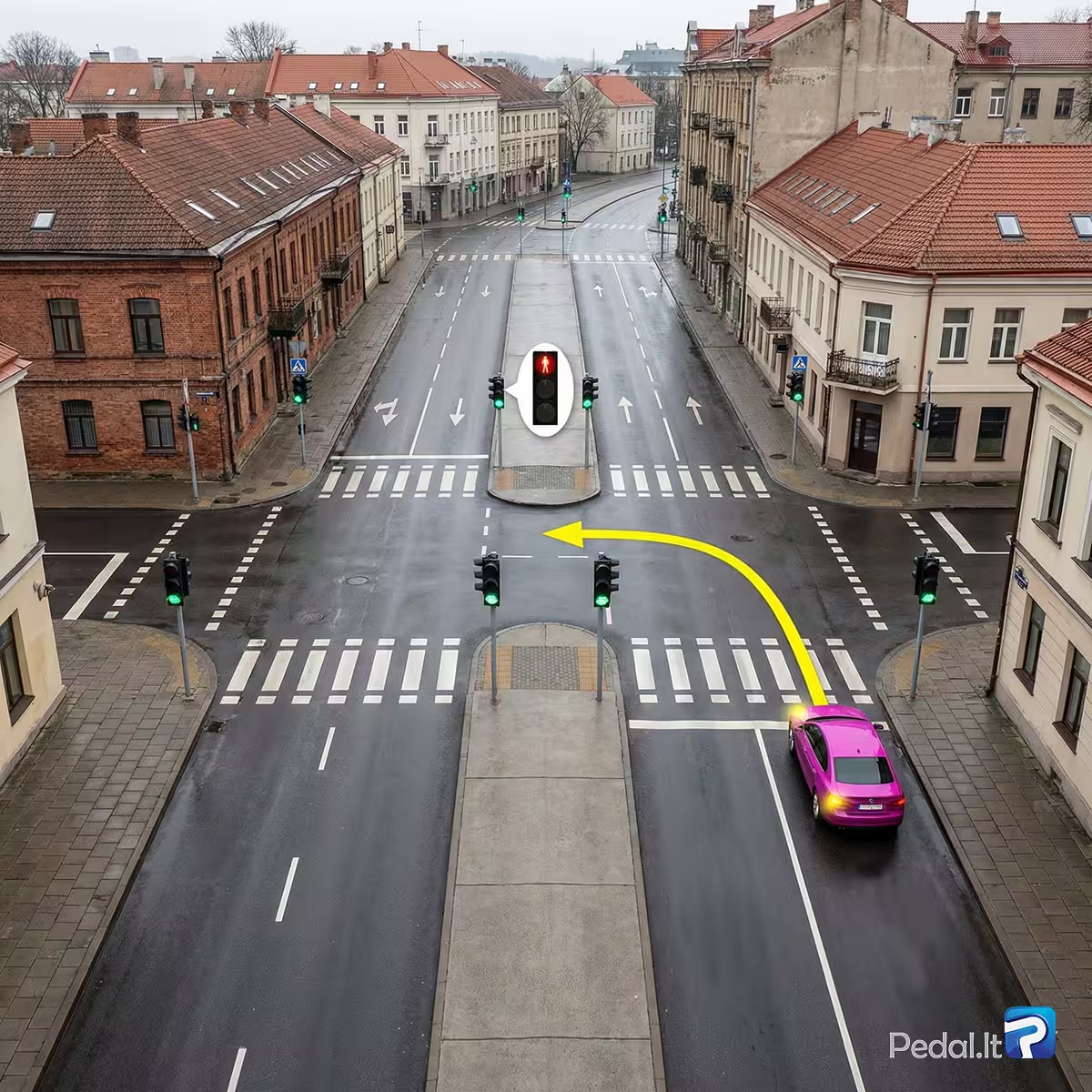
What must the driver do when turning left at the intersection?
RTR 73.11. A red light or two alternately flashing red lights prohibit traffic; if the light displays black arrow(s), it prohibits traffic in the direction(s) indicated by the arrow(s) and indicates which directions road users may proceed when the green arrow appears. RTR 162. Drivers who entered the intersection in accordance with a traffic light signal permitting them to proceed may continue in their intended direction regardless of the traffic light signal shown when the vehicle is leaving the intersection. However, if the 'STOP' sign and/or a 'Stop' line is present at the intersection before other traffic lights on the route, the driver must obey every traffic light signal. RTR 165. If traffic light signals or traffic officers prohibit driving, drivers must stop before the 'STOP' sign and/or the 'Stop' line if present; if not, they must stop before the traffic lights, before the carriageway they are about to cross or join, or before a pedestrian or bicycle crossing so as not to obstruct vehicular or pedestrian traffic.
1. The driver must turn left and then proceed straight ahead without stopping.
2. The driver must turn left and then proceed straight ahead without stopping, provided this does not obstruct other road users.
3. The driver must turn left, stop before the 'Stop' line, and when the traffic light displays a signal permitting movement, proceed straight ahead.
What is the minimum number of accompanying persons required to escort an organised group of children under the age of 16 walking along a hard shoulder?
RTR 40. An organised group of children consisting of persons under the age of 16 must be accompanied by at least two accompanying persons. Such a group should use pavements, footpaths or combined footpaths and cycle tracks (on the pedestrian side) if available; if these are not available, the group may use the hard shoulder but only in daylight, with good visibility, in no more than two abreast and against the flow of traffic when it is safe to do so. Accompanying persons must be positioned at the front and the rear of the column and wear high-visibility vests. It is recommended that all children in the organised group who walk along the hard shoulder also wear high-visibility vests.
1. One accompanying person.
2. Two accompanying persons.
3. Four accompanying persons.
4. Six accompanying persons.
When is it permitted to teach someone to drive a motor vehicle on the roads?
RTR 21. Driving training. 4. Driving instruction on roads is permitted only when the student possesses sufficient driving skill. Instruction may be carried out only on roads where the owner has not prohibited it.
1. When the student has sufficient driving skills, understands the traffic rules, and complies with their requirements.
2. When the student can drive a vehicle but does not know the traffic rules.
3. Driving instruction on public roads is permitted only after the student has completed driving school.
What documents must the driver of a motor vehicle bring when summoned by the police to appear at the specified time?
8. After receiving a summons from the police, the road user must appear at the police station at the specified time. He must bring an identity document and any other documents listed in the summons. JB
1. In all cases, the person must present an identity document. Additionally, if specified in the summons, they should bring the vehicle's state technical inspection certificate, the compulsory civil insurance policy for the vehicle, and the driver's licence.
2. A driver's licence in every case.
3. A valid medical fitness certificate for driving.
4. A certificate of completion of the mandatory first-aid training.
Which of the following are warning signals?
RTR 81. Warning signals include: using turn and brake lights (arm signals may be used), sounding the horn, switching the headlights on and off, activating hazard warning lights or flashing amber beacons, and placing a warning triangle on the road or attaching it to the vehicle.
1. Brake light signal.
2. Indicating a turn using an arm signal.
3. Horn signal.
4. Switching the headlights on and off.
5. Placing a warning triangle on the road.
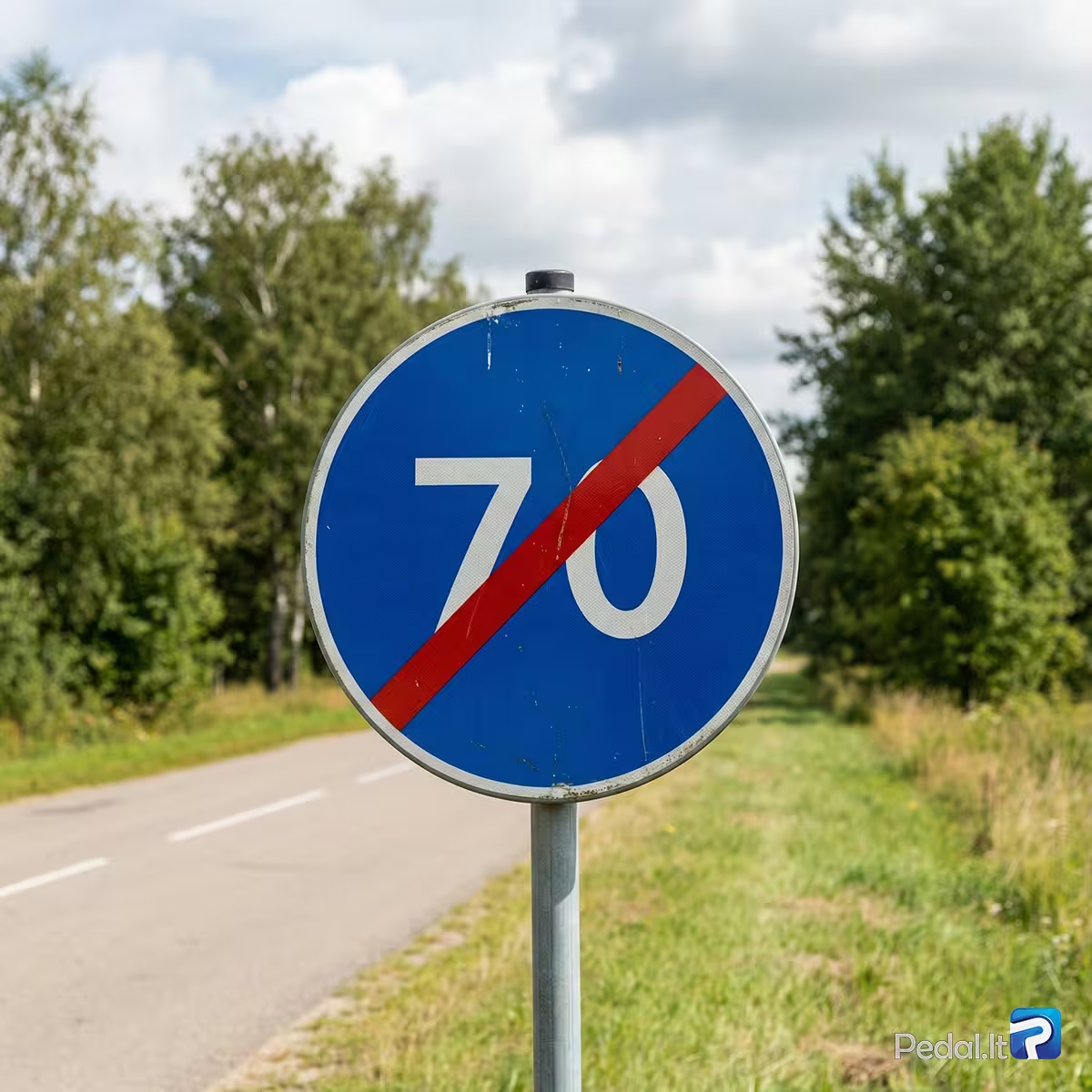
After this road sign:
This sign indicates the end of the minimum speed requirement; it does not specify a particular permitted speed. The applicable speed depends on other road signs, regulations and current driving conditions. Road sign 415 — End of minimum speed limit.
1. Driving at a maximum speed of 70 km/h is permitted.
2. Driving at a speed of at least 70 km/h is permitted.
3. The minimum speed limit has ended.
In which direction does the load shift when the vehicle makes a left turn?
When the vehicle turns left, the load shifts to the right due to inertia.
1. Toward the left
2. Toward the right
3. Toward the front
4. Toward the rear
While stopped uphill at a traffic signal, the best method to keep a manual-transmission car stationary is to:
When stopped uphill at a red traffic light, the recommended way to keep a manual-transmission car stationary is to use the parking brake. This is especially advised for inexperienced drivers, as it makes starting away easier and reduces the risk of rolling backward.
1. Apply the parking brake.
2. Select first gear and partially release the clutch to hold the vehicle.
3. Leave the vehicle in gear and switch off the engine.
4. Apply and hold the service (foot) brake.
How should you drive to minimize fuel consumption and maximize range?
Driving uphill requires more power than driving on level ground. Therefore, maintain a steady speed and avoid accelerating on climbs. It is reasonable to increase speed on level sections or when driving downhill. At a constant speed, using a higher gear reduces engine revolutions; lower revolutions mean the engine works less and uses less fuel. Do not coast in neutral when descending — this is not only uneconomical but also unsafe. While coasting downhill, vehicle systems may cut fuel supply, so the instrument reading can show 0.0 l/100 km (if you do not press the accelerator). It is most economical to start moving immediately after you start the engine. Idling a stationary vehicle consumes fuel and emits pollutants; the engine will warm up and reach normal operating temperature during driving (unless there is a malfunction).
1. Shift into neutral and coast when descending a hill.
2. Avoid accelerating when driving uphill.
3. Use the highest appropriate gear possible.
4. Delay driving until the engine reaches normal operating temperature.
How does alcohol affect a driver's abilities?
When driving under the influence of alcohol, attention and comprehension are reduced; critical thinking and memory are impaired; coordination of movements deteriorates; reflexes are weakened or lost; drivers take longer to perceive signals and interpret situations; overall driving performance declines, reaction times slow, and vehicle control worsens or may be lost.
1. Reaction time is delayed.
2. Reaction times become shorter.
3. Attention diminishes.
4. Alcohol has no effect on a driver's reactions.
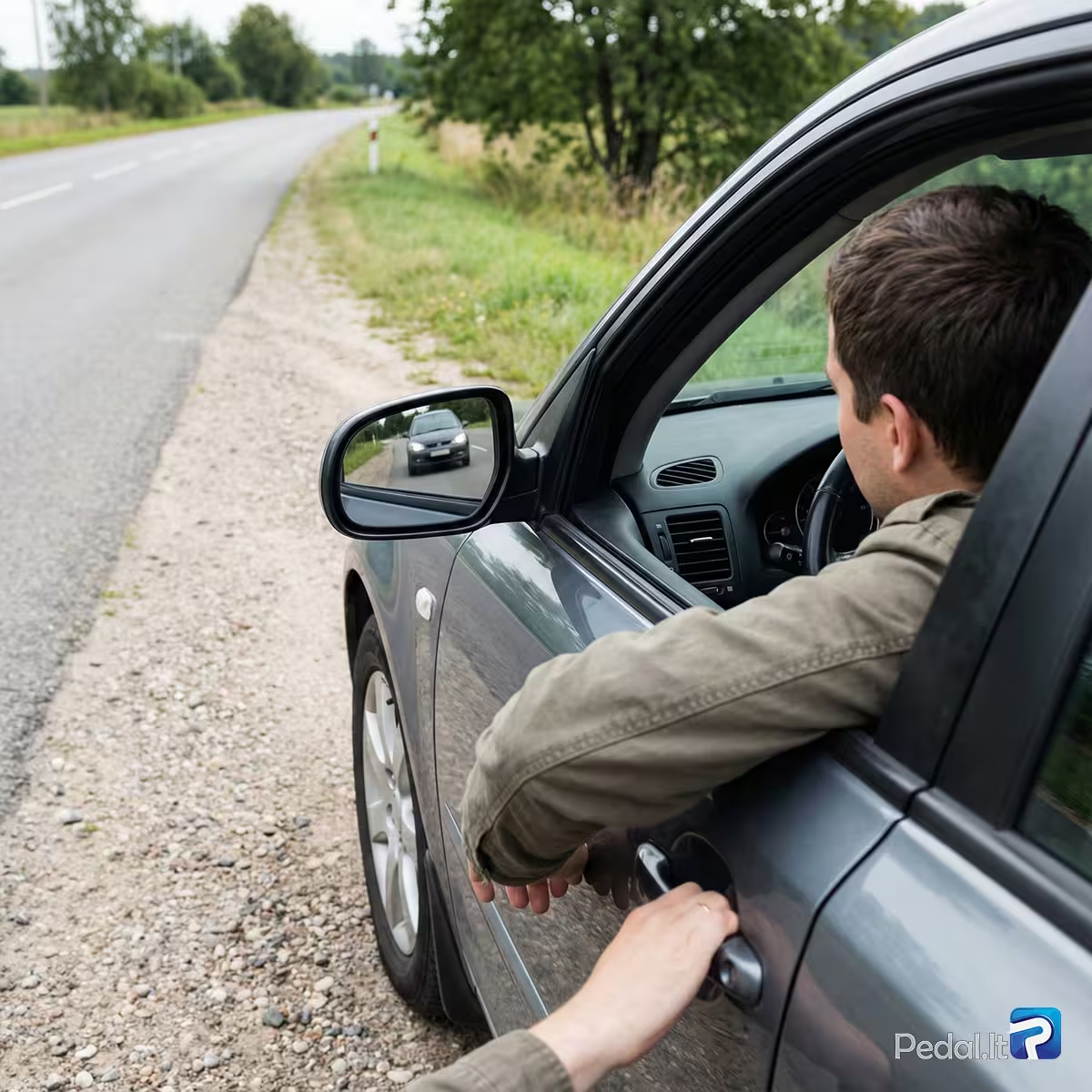
After stopping on the right-hand shoulder, what should a driver check before opening the door?
Vehicles may be approaching from the rear on the left-hand side, so opening the door could be unsafe. (RTR 148) Do not open the doors of a parked vehicle if doing so would create an obstruction or pose a hazard to other road users.
1. Vehicles approaching from behind on the left-hand side.
2. Vehicles approaching from behind on the right-hand side.
3. They do not need to pay attention to anything specific.
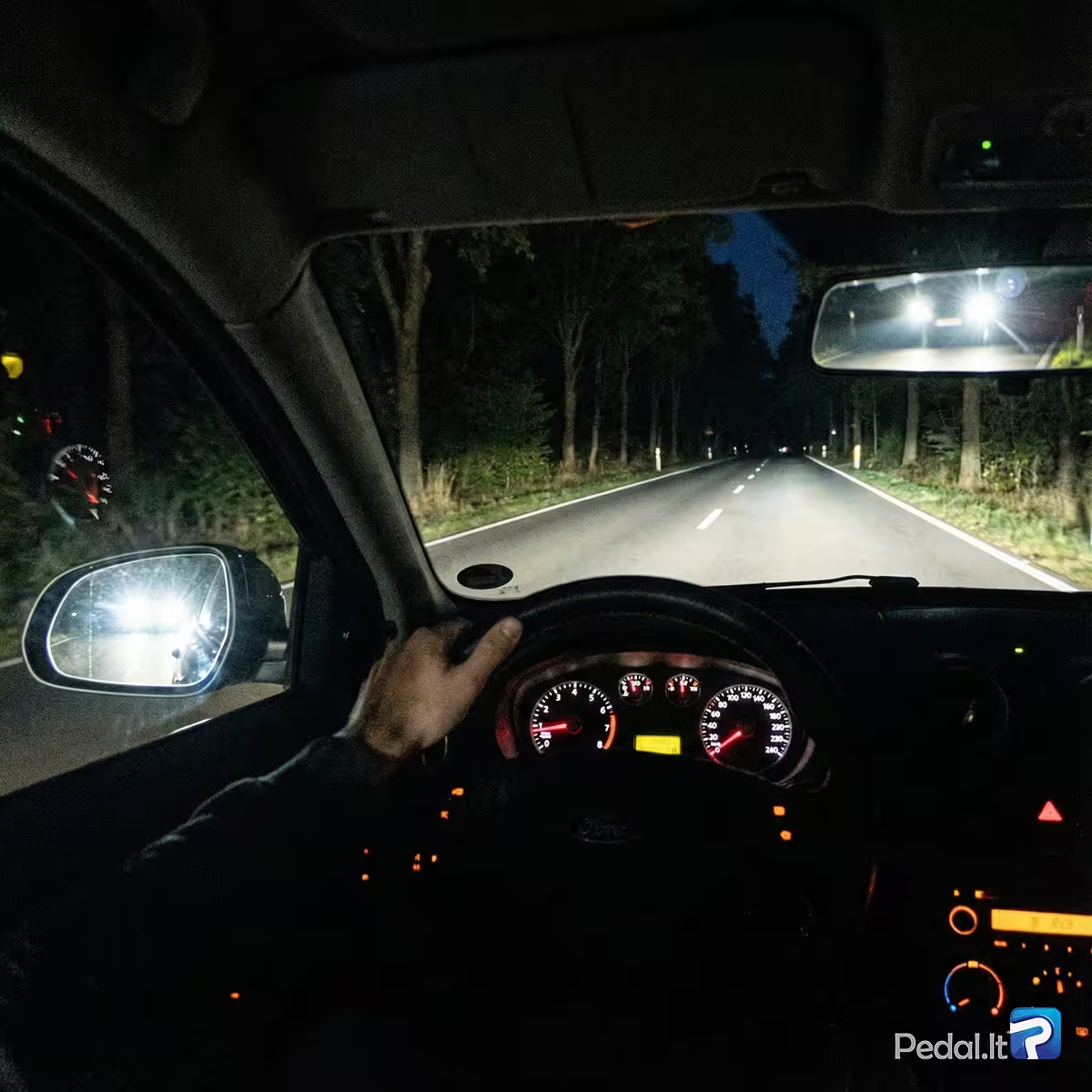
What must the drivers do if one vehicle catches up to the other while both are driving outside a settlement with their headlights on high beam?
The driver of the following vehicle must dip their headlights so as not to dazzle the driver ahead. The vehicle in front should switch to low beam only if the following vehicle begins to overtake, to avoid dazzling that driver. RTR 95. During darkness or in poor visibility, main beam headlights must be switched to low beam: 95.1 on illuminated roads; 95.2 when the distance to a vehicle approaching from the opposite direction is at least 150 m; 95.3 in other cases when main beam lights can dazzle other drivers (even travelling in the same direction). JB
1. The driver of the vehicle ahead must switch from high beam to low beam when the following vehicle begins to overtake.
2. The driver of the vehicle ahead must activate the hazard warning lights.
3. The driver of the following vehicle must switch from high beam to low beam.
Why does a vehicle need a generator?
A generator charges the battery and supplies electrical current to the vehicle's electrical systems and other consumers only while the engine is running, i.e. while the engine's crankshaft is turning. Via the drive pulley and belt, the crankshaft turns the generator, which produces electricity.
1. It supplies electrical current to the vehicle's electrical systems when the engine is not running.
2. It supplies electrical current to the vehicle's electrical systems while the engine is running.
3. It provides current to the starter motor when starting the engine.
What is the maximum permissible concentration of ethyl alcohol in the blood for a passenger car driver who has three years of driving experience?
LAW ON ROAD TRAFFIC SAFETY, Article 2, item 43. Intoxication — the state of a person who has consumed ethyl alcohol, when the concentration of that alcohol in the body's biological media (exhaled air, blood, urine, saliva or other bodily fluids) exceeds the legal limit. The maximum permitted concentration of ethyl alcohol in the exhaled air, blood, urine, saliva or other bodily fluids of persons driving vehicles is 0.4 per mille. Novice drivers, taxi drivers, and drivers of mopeds, motorcycles, tricycles, light quadricycles, four-wheel power quadricycles, vehicles with a maximum permissible weight over 3.5 t or with more than 9 seats, and drivers transporting dangerous goods are considered intoxicated when the concentration of ethyl alcohol in their exhaled air, blood, urine, saliva or other bodily fluids is greater than 0 per mille. JB
1. 0.2 ‰
2. 0.3 ‰
3. 0.4 ‰
4. 0 ‰
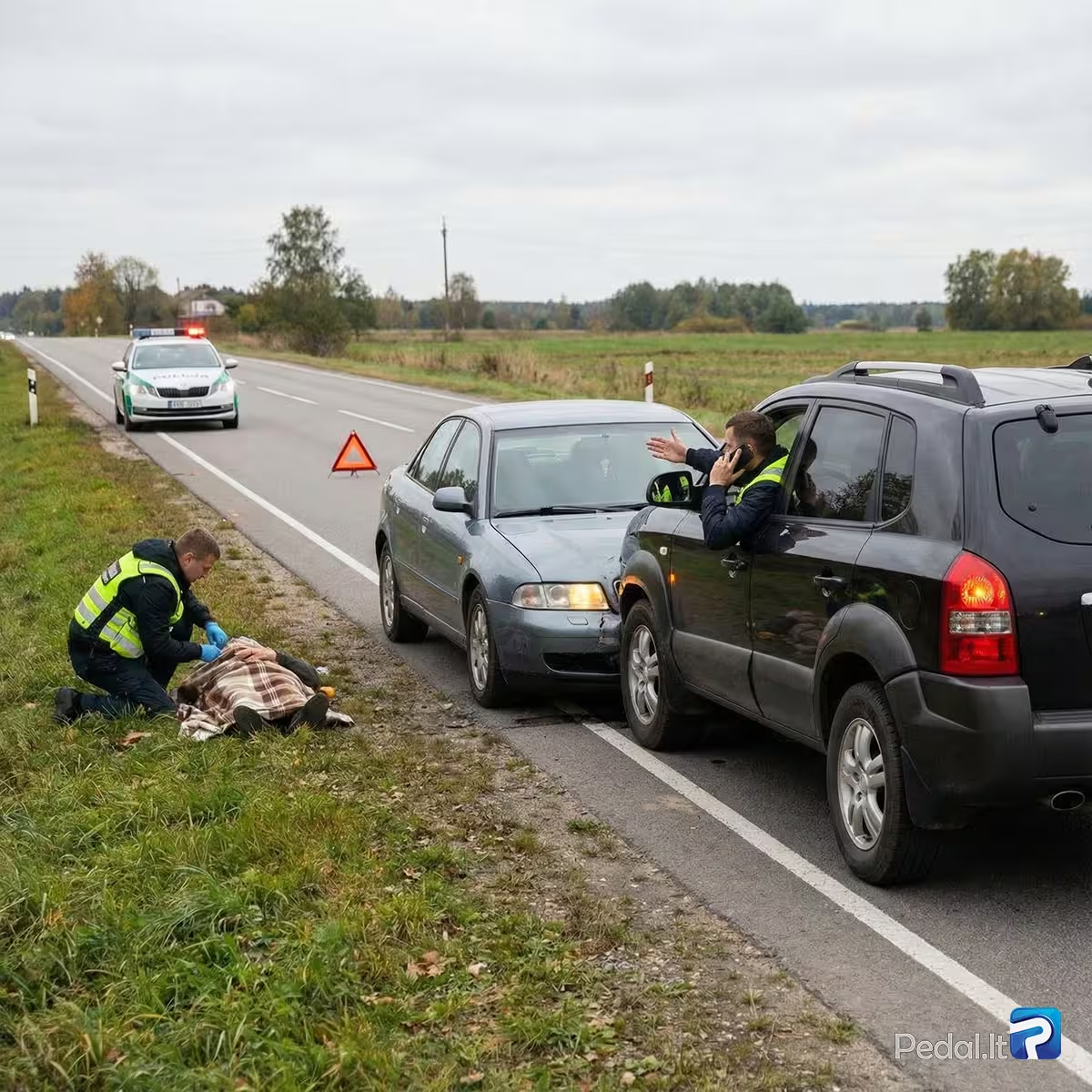
What must the drivers do if a person was injured in a road accident?
XXIX. Obligations of Road Users in the Event of a Road Accident (paras. 219–222)
219. In the event of a road accident, every driver involved or any other road user must:
219.4. if a person has died or been injured in the road accident, report the accident to the police and remain at the scene of the accident or, after notifying the police, return to the scene and wait for the police to arrive, except in cases where the police permit the road user to leave the scene, or where casualties or the person reporting the accident require urgent first aid;
220. If no deaths or injuries occurred in the road accident and the road users involved in the accident agree on the circumstances of the accident and do not call the police to the scene, the road users involved must draw the accident diagram on the Road Accident Report Form, describe the circumstances in writing, and have it signed by all involved road users. If none of the road users involved has the Road Accident Report Form, the circumstances may be described and the diagram drawn on a blank sheet of paper where all road users involved, their vehicles, and witnesses are listed, and all details and circumstances of the accident are confirmed by the signatures of the road users involved. Where the circumstances of the accident are disputed, the police must be called to the scene.
1. If all road users agree on the circumstances of the accident and there are no injuries, they do not need to complete any written report.
2. Drivers must describe the circumstances of the accident in writing, create a diagram of the scene, and list all involved road users, their vehicles, and any witnesses.
3. They must call the police.
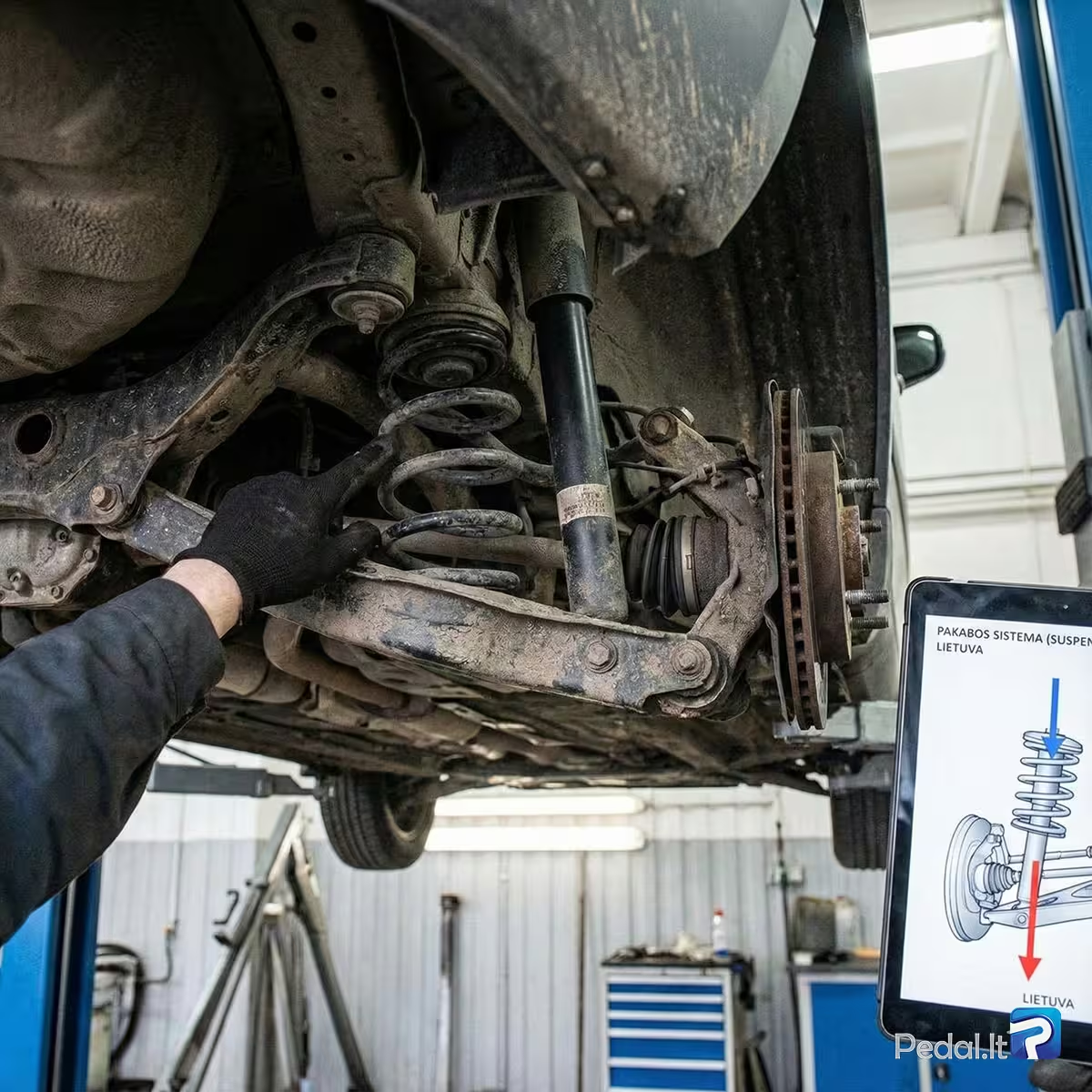
What is the function of a vehicle's suspension system?
The function of a vehicle suspension system is to convert bumps and shocks transmitted to the wheels, with the aid of shock absorbers, into minor oscillations of the vehicle body, providing comfort for driver and passengers. The suspension reduces body oscillations, and when functioning properly it enhances driving safety.
1. To improve ride comfort for the driver and passengers.
2. To convert bumps and shocks transmitted to the wheels into minor oscillations of the vehicle body.
After depressing the clutch lever, you should hold it down only as long as necessary to:
3.3. Clutch control: 3.3.3. Keep the clutch lever depressed only for the time necessary to engage, change, or disengage a gear, to start moving, to stop, or to maneuver at low speed;
1. Engage a gear.
2. Engage or disengage a gear.
3. Start moving the vehicle.
4. Stop the vehicle or maneuver at low speed.
The vehicle may transport passengers:
RTR 195. Drivers must not: 195.1. carry more passengers than are permitted by the vehicle's technical specifications; JB
1. Only to the extent necessary for urgent matters or when transporting persons en route for serious reasons.
2. No more than the number permitted by the vehicle's technical specifications.
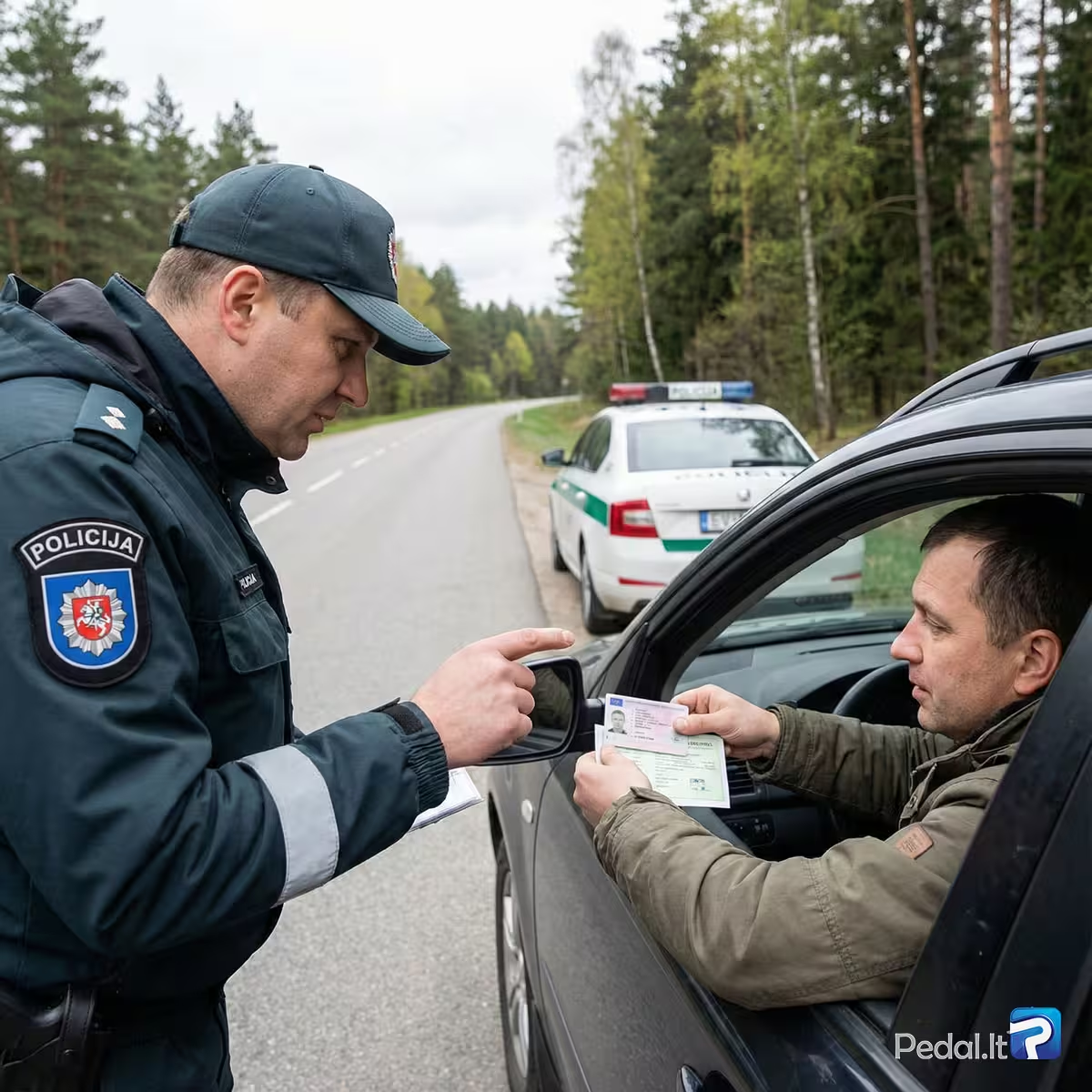
What checks must a driver allow when requested by a police officer?
RTR 17. At the request of a police officer, a driver must submit to tests for alcohol intoxication or for intoxication caused by narcotic drugs, psychotropic substances, or other psychoactive substances, in the manner prescribed by the Government of the Republic of Lithuania. RTR 14. It is prohibited to drive a vehicle if you are not authorized to do so, if you are under the influence of alcohol, narcotic drugs, psychotropic substances or other psychoactive substances. A person who is fatigued or ill must not drive if driving may endanger road safety. A vehicle must not be entrusted to a person who is under the influence of such factors or who is not authorized to drive that type of vehicle. When operating a vehicle, the driver must comply with the conditions specified on the driving licence. JB
1. Alcohol intoxication.
2. Irritability.
3. Fatigue.
4. Intoxication by narcotic drugs.
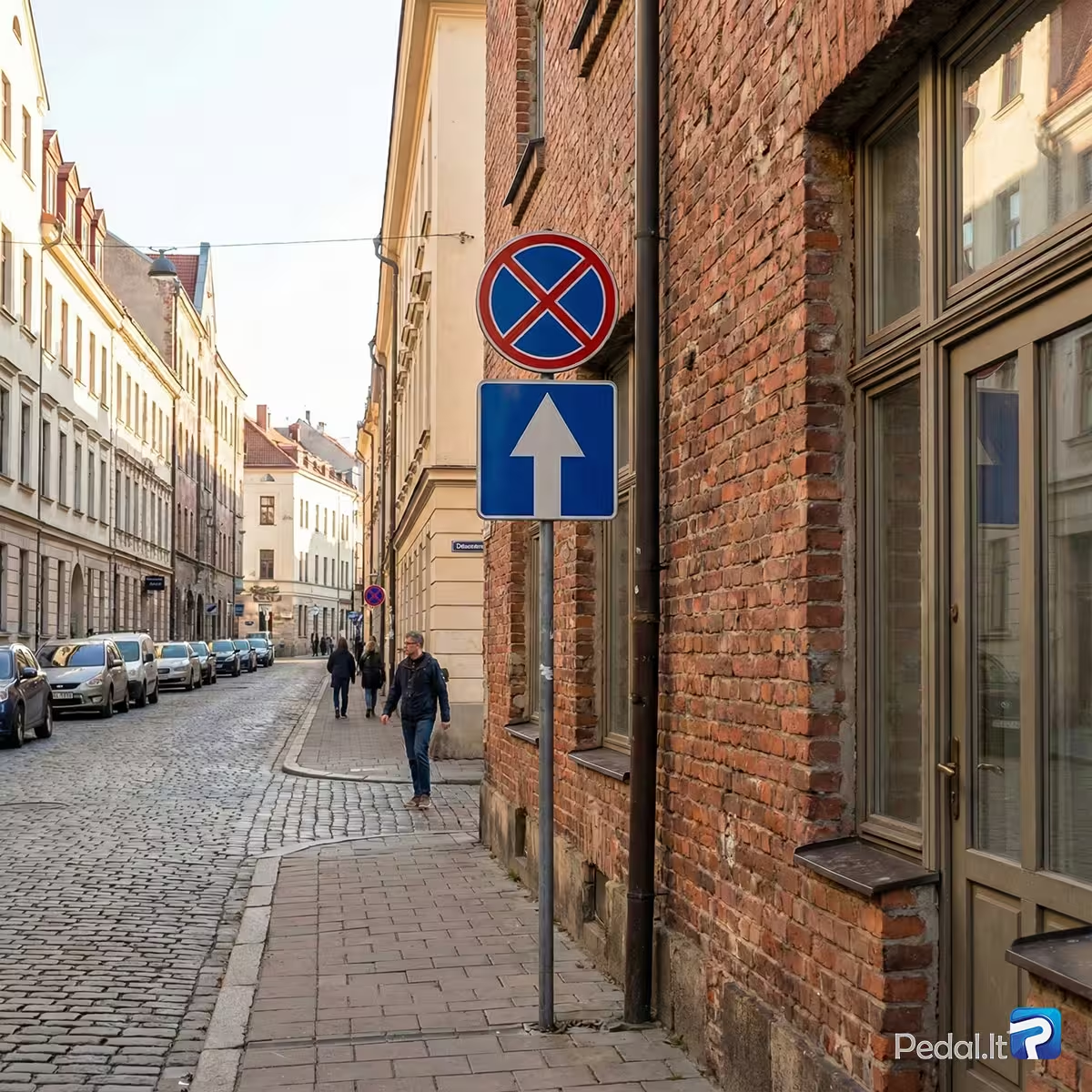
Which of the following actions are permitted on the road beyond these signs?
Traffic rules prohibit reversing only on motorways, expressways and in tunnels; otherwise reversing is allowed. U‑turns are prohibited here because they would require driving against the flow of traffic. RTR Annex 1, III — Restrictive signs: Road sign 332 'No stopping'. Vehicles must not stop or stand on the side of the road where this sign is placed, except for stopping at bus stops. The sign does not apply to vehicles displaying the distinguishing sign 'A person with a disability' or holding a parking card for people with disabilities. If the sign is used in combination with road marking 1.4, the prohibition applies until the end of that marking. RTR Annex 1, V — Special regulation signs: Road sign 503 'One-way traffic' — indicates a road or carriageway where vehicular traffic moves in one direction across the full width.
1. Proceed in one direction.
2. Park vehicles displaying the 'Person with a disability' badge.
3. Make a U‑turn.
4. Reverse (drive backward).
If the rear of a front-wheel-drive vehicle begins to skid sideways during a turn, how should you respond?
Gradually apply the accelerator and steer smoothly to return the vehicle to the intended line. Slightly increasing front-wheel traction helps counteract the rear's lateral slide, reducing the effect of centrifugal force and stabilizing the vehicle.
1. Lightly apply the brakes and steer into the skid.
2. Ease off the accelerator and steer carefully to return the vehicle to the intended line.
3. Gradually apply the accelerator and steer smoothly to return the vehicle to the intended path.
.avif)
Which vehicle may proceed in the direction indicated by the arrow?
RTR 77.1. When the traffic officer's arms are extended sideways or pointed downward: 77.1.1. Vehicles located to the officer's left and right may proceed straight ahead or turn right; pedestrians may cross the carriageway. 77.1.2. Vehicles and pedestrians positioned in front of or behind the officer must not proceed. JB
1. First vehicle
2. Second vehicle
3. Third vehicle
When driving, you must yield to pedestrians when they:
RTR 30. When approaching an uncontrolled pedestrian crossing, a driver must slow down or stop before the crossing to yield to pedestrians who have stepped into any lane, are moving within any lane, or are standing immediately before a lane (at the edge of the roadway) waiting for the opportunity to step into that lane in the direction of the vehicle’s travel or into any lane on a road with one lane in each direction. Drivers must take extra precautions during hours of darkness, when visibility is poor, or whenever a pedestrian crossing is not clearly visible from the driver’s position, and must ensure there are no pedestrians who should be given way at the crossing.
1. Are already on a pedestrian crossing.
2. Are stepping onto a pedestrian crossing.
3. Are standing at the edge of the roadway before a pedestrian crossing and waiting for the opportunity to step onto it.
What should drivers do when approaching an intersection where the green traffic light is flashing?
According to the Road Traffic Rules (RTR 73.3), a flashing green light permits traffic to proceed but indicates that the green phase is ending and that a prohibitive signal will soon appear. Drivers who try to speed through the intersection — by accelerating or overtaking — take unnecessary risks and may cause an accident. Other drivers may brake suddenly; therefore, to pass the intersection safely while the green light is flashing, drivers must ensure their actions will not obstruct other vehicles and must consider the behavior of drivers behind them, since sudden braking can also lead to collisions. Anticipating the need to stop before the intersection, drivers should reduce their speed.
1. Observe and take into account the actions of vehicles ahead.
2. Accelerate to the maximum allowable speed.
3. Be aware of and consider the actions of drivers behind you.
4. Reduce your speed.
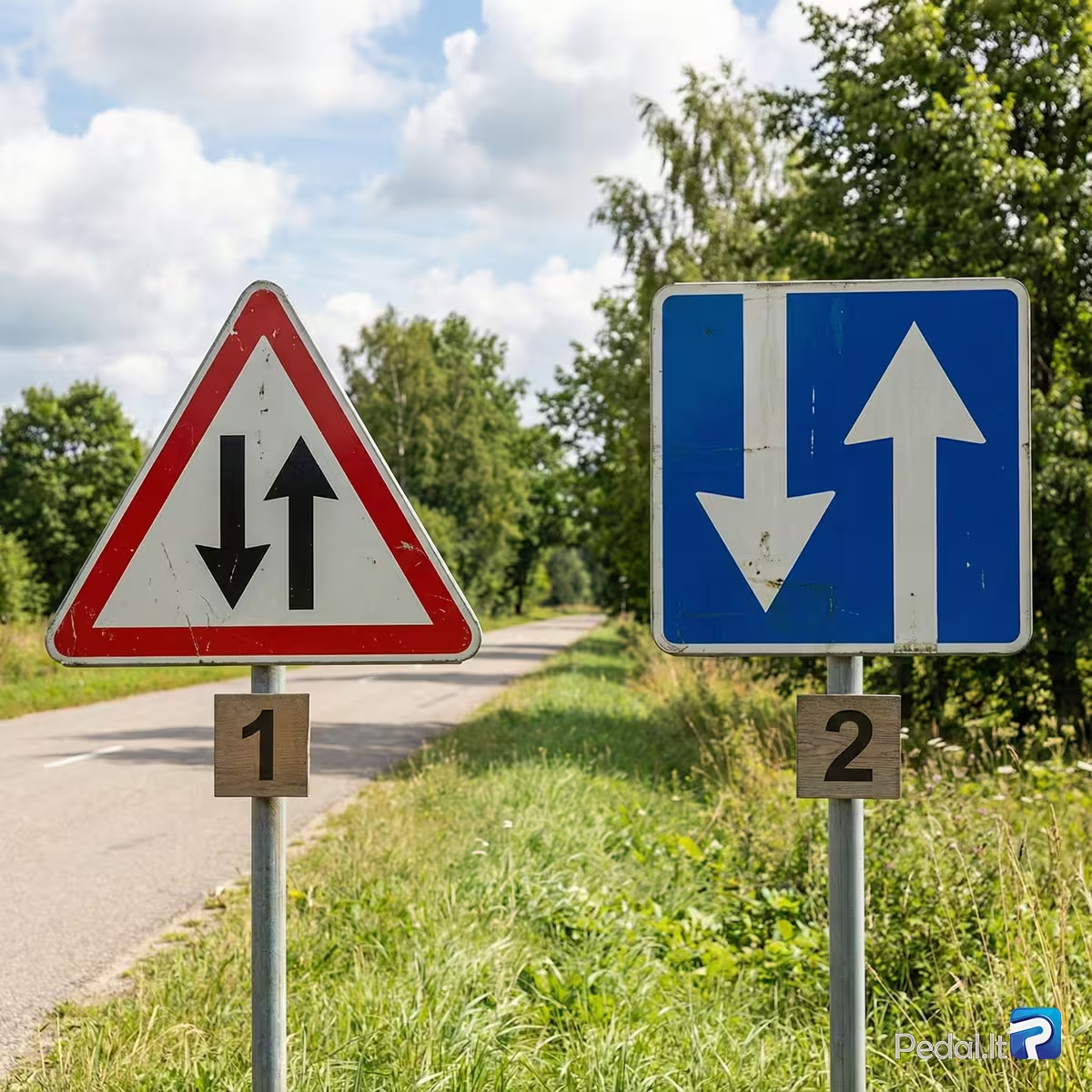
Which sign indicates that the road ahead carries two-way (opposing) traffic?
Warning signs alert drivers to upcoming changes in traffic conditions. Sign 126, 'Two-Way Traffic', indicates the start of a carriageway section with opposing traffic. Sign 504, 'End of One-Way Traffic', is a regulatory sign that marks the end of a one-way traffic section. (RTR Annex 1: 126 and 504.)
1. Sign 1.
2. Sign 2.
What should the driver do first to stop a braking car from skidding?
If the vehicle begins to slide while braking, you must stop braking. For example, if you brake suddenly and lock the wheels before a turn, even after steering into the desired direction the car will continue moving in its previous direction (straight), which can cause you to leave the road or collide with an obstacle. Therefore, in this situation you must consciously release the brakes — a maneuver that can be especially difficult for an inexperienced driver. JB
1. Release the clutch and the brake pedal.
2. Release the brake pedal.
3. Increase vehicle speed.
Another person may drive your vehicle if:
A driving licence of categories B and BE entitles the holder to drive a passenger car (RTR 14). It is prohibited to operate a vehicle if you do not have the legal right to do so, or if you are under the influence of alcohol, narcotic drugs, psychotropic substances, or other psychoactive substances. A person who is fatigued or ill must not drive if driving could endanger road safety. A vehicle must not be entrusted to anyone who is under the influence of the aforementioned factors or who is not authorized to drive that type of vehicle. When operating a vehicle, the driver must comply with the restrictions and endorsements indicated on the driving licence.
1. The person is at least 18 years old but does not possess a driving licence.
2. The person holds a category BE driving licence.
3. The person holds a category B driving licence.
4. The person holds only a category A driving licence.

A traffic officer directing vehicles stands with their arms lowered. Are you permitted to proceed straight through the intersection when the traffic light displays a red signal?
1. Yes
2. No
1 of 30 Task
Time left: 00:00:00
1
2
3
4
5
6
7
8
9
10
11
12
13
14
15
16
17
18
19
20
21
22
23
24
25
26
27
28
29
30