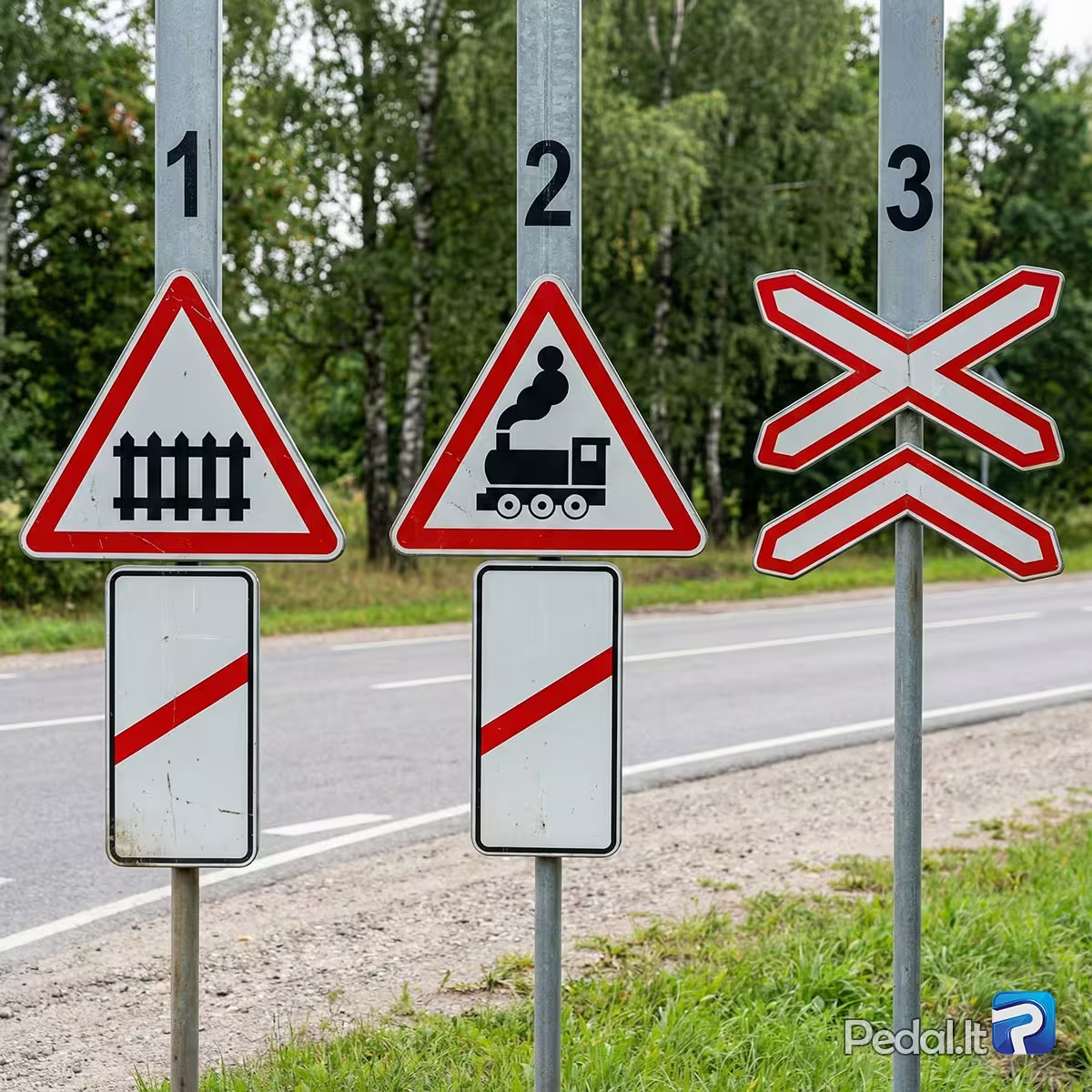
Which road sign indicates that you are approaching a level crossing equipped with a barrier?
Road sign 101 — “Level Crossing with Barrier”: indicates a level crossing protected by a barrier. Road sign 102 — “Level Crossing without Barrier”: indicates a level crossing that has no barrier. Road sign 142 — “Level Crossing Ahead”: warns of a level crossing ahead outside built-up areas; this sign is placed as close as possible to the crossing on the right-hand side of the road. Road sign 139 — “Multi-Track Railway”: indicates a level crossing without a barrier across a railway with two or more tracks.
1. 1.
2. 2.
3. 3.
In which situations must a driver signal their intended actions using the vehicle's turn signal?
82. A driver must signal intended maneuvers using the vehicle's turn signals, or by arm signals if the electrical indicators are inoperative or unavailable: 82.1 before starting to move and before stopping; 82.2 before changing lanes, before and after overtaking, before and after passing an obstruction, before turning right or left, before making a U-turn, and before exiting a roundabout.
1. Before entering a roundabout.
2. Before exiting a roundabout.
3. Prior to making a right or left turn.
4. Before making a U-turn.
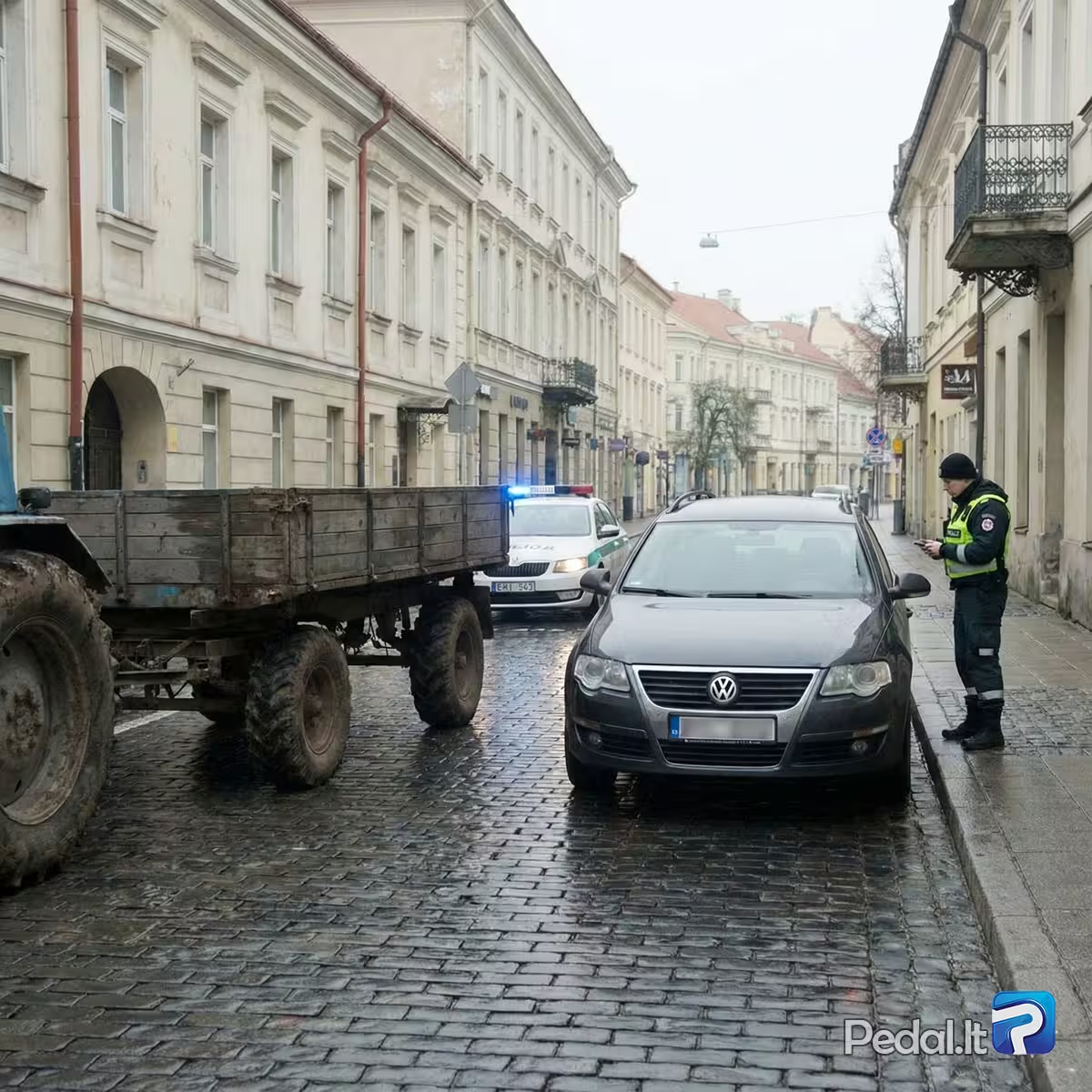
Are motor vehicles permitted to tow trailers intended for agricultural tractors?
Motor vehicles are not permitted to tow trailers intended for agricultural tractors due to safety requirements and technical incompatibilities. The term "motor vehicle" excludes non-road rail vehicles, tractors, and self-propelled machines. Per RTR 207, the total weight of carried cargo and passengers and the axle loads must not exceed the gross vehicle weight and axle load limits specified for that vehicle by the Ministry of Transport and Communications of the Republic of Lithuania and by the vehicle manufacturer. The gross weight of a towed trailer (laden or unladen) must not exceed the maximum permissible tow weight established by the Ministry and the manufacturer. Consequently, motor vehicles are prohibited from towing trailers of non-motor vehicles, and non-motor vehicles are prohibited from towing trailers of motor vehicles.
1. Only sport utility vehicles (SUVs) are permitted to tow trailers designed for agricultural tractors.
2. Motor vehicles are prohibited from towing trailers intended for agricultural tractors.
3. Only Category C commercial vehicles are permitted to tow trailers designed for agricultural tractors.
What factors should you consider when choosing a safe distance?
A safe distance is the distance a vehicle travels from the moment the driver notices a hazard until the vehicle comes to a complete stop. It depends on vehicle speed, size, braking performance, road type and surface condition, visibility, driver reaction time, and personal characteristics such as temperament. To choose an appropriate distance, you need to know the vehicle's stopping distance.
1. Visibility.
2. The condition of a road surface.
3. Speed.
Why must you wear a seat belt when driving?
RTR 196. The driver and all passengers must wear seat belts when the vehicle is equipped with them. If a bus is fitted with seat belts, visible notices reading 'Fasten Your Seat Belt' must be displayed in front of every seat, on the seat, or next to it. It is recommended that all bus passengers be informed—verbally or by audio‑visual means—about the requirement to wear seat belts before the journey begins. RTR 197. A seat belt must be fastened over the shoulder and around the waist, or as specified by the vehicle manufacturer.
1. To reduce the risk of injury in a road traffic collision.
2. Because wearing a seat belt makes driving more comfortable.
3. Because the road traffic regulations require it.
How is a motorized bicycle defined?
Note that a motorized bicycle must have at least two wheels and an auxiliary internal combustion engine or an electric motor — it is not sufficient for it to have only an internal combustion engine. SEAK Art. 2.40. "Motorized bicycle" — a vehicle with at least two wheels that is powered by the rider’s muscular force using pedals or handlebars and is equipped with an auxiliary internal combustion engine or electric motor with a maximum net power of no more than 1 kW and a maximum design speed of no more than 25 km/h. The auxiliary engine stops providing power when the vehicle reaches 25 km/h. Wheelchairs for persons with disabilities are not classified as motorized bicycles.
1. A vehicle whose maximum net power does not exceed 1 kW and whose maximum design speed does not exceed 25 km/h.
2. A vehicle that is primarily propelled by the rider’s muscular power using pedals or handlebars and is equipped with an auxiliary internal combustion engine or an electric motor.
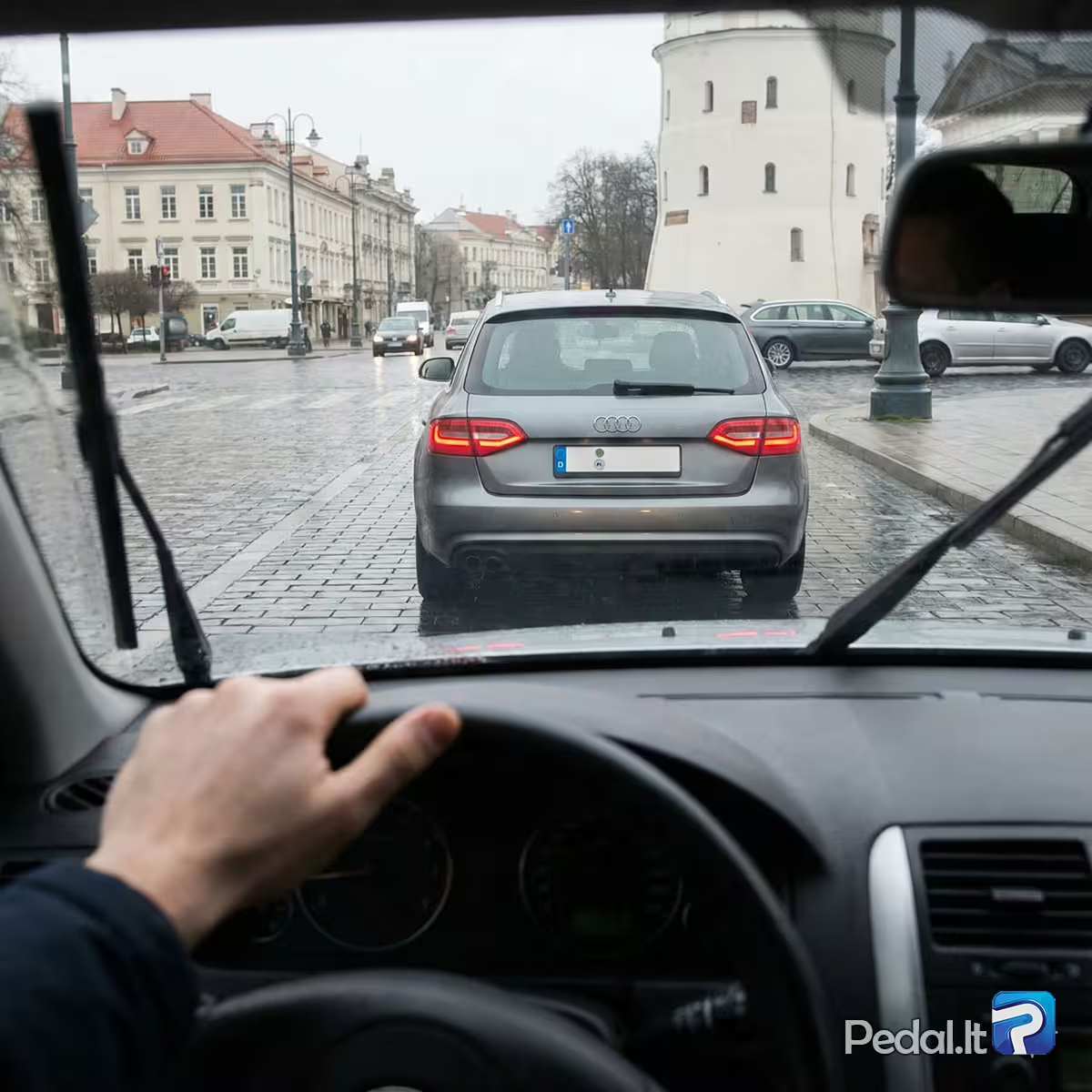
A vehicle with foreign license plates is driving ahead. What might you expect from that vehicle?
Drivers from other countries who are unfamiliar with local roads may have difficulty orienting themselves; they might make unexpected maneuvers, signal late before turns, or brake suddenly.
1. It may make unexpected maneuvers.
2. The driver may signal too late before turning at an intersection.
3. The vehicle may stop suddenly.
How should you choose an appropriate driving speed?
Order of the General Director of the state company "Regitra" approving the description of the criteria and methods for evaluating driving skills and abilities (23 December 2013, No. V-223): 3.18 Speed selection — accelerate steadily, choose a speed appropriate to the traffic situation and do not exceed the permitted limit. 3.18.1 Control the vehicle's speed while performing maneuvers: 3.18.1.1 If necessary, maintain a sufficiently low speed to compensate for any errors; 3.18.1.2 The vehicle must move evenly and smoothly. JB
1. Accelerate smoothly and steadily.
2. Drive at a speed appropriate for the traffic conditions and do not exceed the legal speed limit.
3. Drive faster to reach your destination sooner.
.avif)
To whom must a motorcyclist yield?
RTR 12. Road users must immediately yield to approaching emergency vehicles that display blue and red (or only blue) flashing lights and use special audible signals, as well as to vehicles escorted by them. Road users shall form an emergency corridor as follows: 12.1 On a road with a single lane in one direction, drivers must stop on the right hard shoulder if one exists; if there is no hard shoulder, they must stop as close as possible to the right edge of the carriageway. 12.2 On a road with two or more lanes in the same direction, vehicles in the far-left lane must move and stop as close as possible to the left edge of the carriageway designated for that direction, while vehicles in the lanes to the right must move and stop as close as possible to the right edge of the carriageway (or the hard shoulder). 12.3 On a road with a central reservation, only drivers travelling in the same direction must comply with the requirements in paragraphs 12.1 and 12.2. RTR 154. At a controlled intersection, drivers on a side (minor) road must yield to vehicles approaching on the priority road.
1. The red car.
2. The police vehicle.
3. The bus.
4. The motorcyclist is not required to yield to anyone.
.avif)
If you park on an even-numbered day of the month, between which hours must you move the vehicle to the opposite side of the road to comply with parking regulations?
Road sign 334 — “No parking on odd days”. Parking is prohibited on the side of the road where this sign is placed on odd-numbered days of the month. Road sign 335 — “No parking on even days”. Parking is prohibited on the side of the road where this sign is placed on even-numbered days of the month. When signs 334 and 335 are installed on both sides of the road, vehicles must be moved from one side to the other between 19:00 and 24:00 (7:00 pm–12:00 am); during that interval, parking is permitted on either side of the road.
1. From 5:00 pm to 9:00 pm
2. From 7:00 pm to 9:00 pm
3. From 10:00 pm to 11:00 pm
4. From 11:00 pm to 11:50 pm
When cycling on the road, must the bicycle have a red rear reflector and orange reflectors attached to the wheel spokes on both sides?
RTR 56. Only bicycles equipped with functioning brakes and a working audible warning device may be ridden on the road. A bicycle must have a red rear reflector and orange reflectors or other reflective elements fixed to the spokes on both sides of each wheel. During hours of darkness or when visibility is poor, a bicycle ridden on the road must have white front and red rear lights switched on. The cyclist must wear a reflective vest or have other reflective accessories attached to clothing in a location clearly visible to other road users. JB
1. Yes — at all times.
2. Only during hours of darkness.
3. Not required if the cyclist wears a high-visibility vest with reflective elements.
4. No, it does not.
Which of the following are warning signals?
RTR 81. Warning signals include: using turn and brake lights (arm signals may be used), sounding the horn, switching the headlights on and off, activating hazard warning lights or flashing amber beacons, and placing a warning triangle on the road or attaching it to the vehicle.
1. Brake light signal.
2. Indicating a turn using an arm signal.
3. Horn signal.
4. Switching the headlights on and off.
5. Placing a warning triangle on the road.
How can you conserve fuel and reduce environmental pollution?
Carrying a 100 kg load in city driving increases fuel consumption by about 0.5 L per 100 km. The air conditioner consumes approximately 0.5–1.0 L/100 km; a fan consumes about 0.08–0.3 L/100 km; the radio about 0.06–0.21 L/100 km; modern audio systems about 0.2–0.7 L/100 km. JB
1. Remove unnecessary items from the vehicle before driving.
2. Use the air conditioner only when necessary.
3. Use electrical accessories only when necessary.
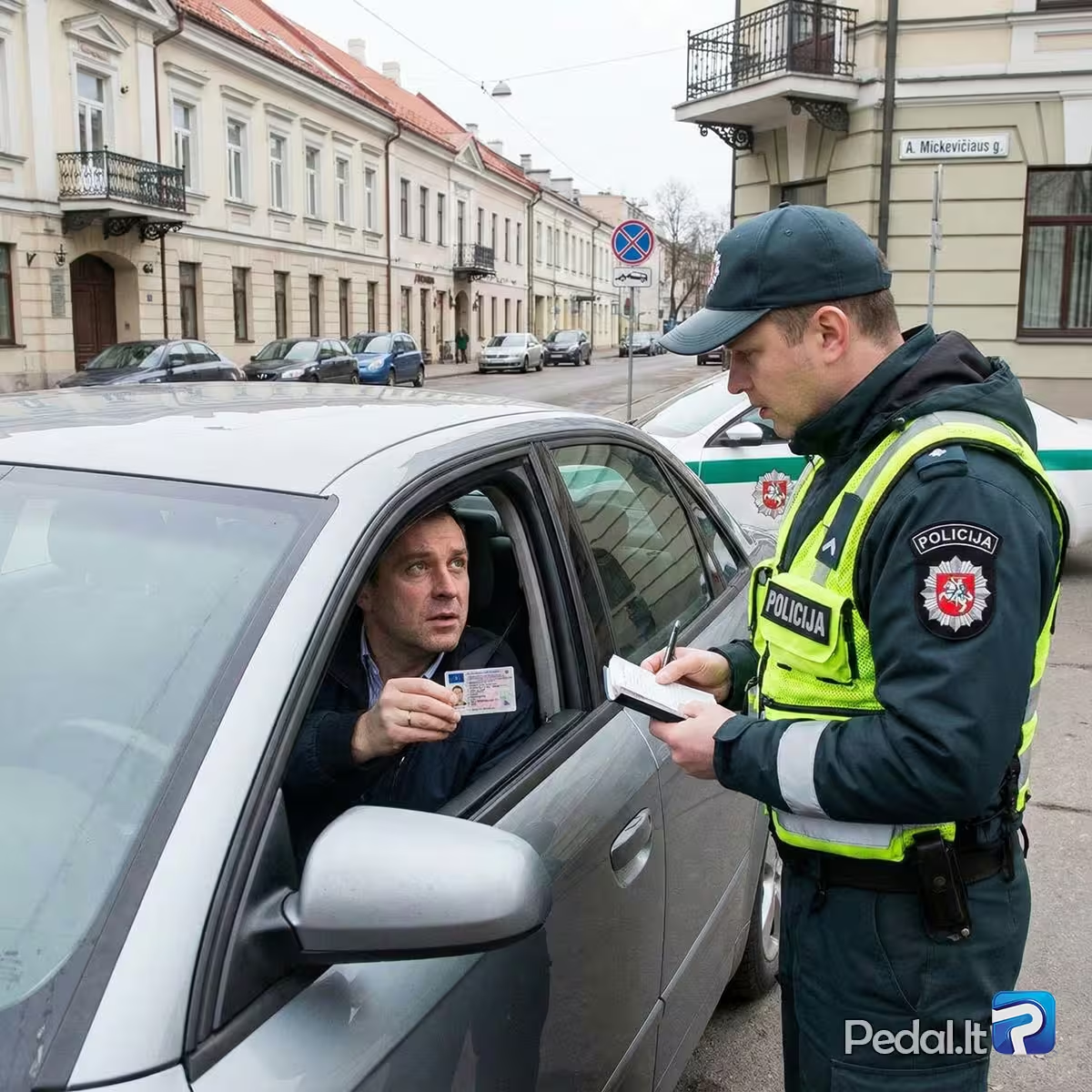
Is a person without a valid driving licence in the Republic of Lithuania permitted to drive (as opposed to only learning to drive) a motor vehicle?
Driving licences issued in Lithuania, in other EU Member States, and in certain other countries are recognised in Lithuania. This question, however, asks whether a person may drive in Lithuania without a valid driving licence (including one issued abroad). The correct answer is “No”.
LAW ON ROAD TRAFFIC SAFETY — Article 13(1): Persons who do not have the right to drive a motor vehicle, tractor, or self-propelled work machine; who are intoxicated; who are under the influence of narcotic, psychotropic or other psychoactive substances; or who have not taken the legally required daily rest must not drive. In addition, a person who is fatigued or ill must not drive if doing so could endanger road safety. A vehicle must not be entrusted to a person affected by any of the factors listed above or who is not authorised to drive that type of vehicle.
1. No — they are not permitted to drive.
2. Yes — they are permitted to drive.
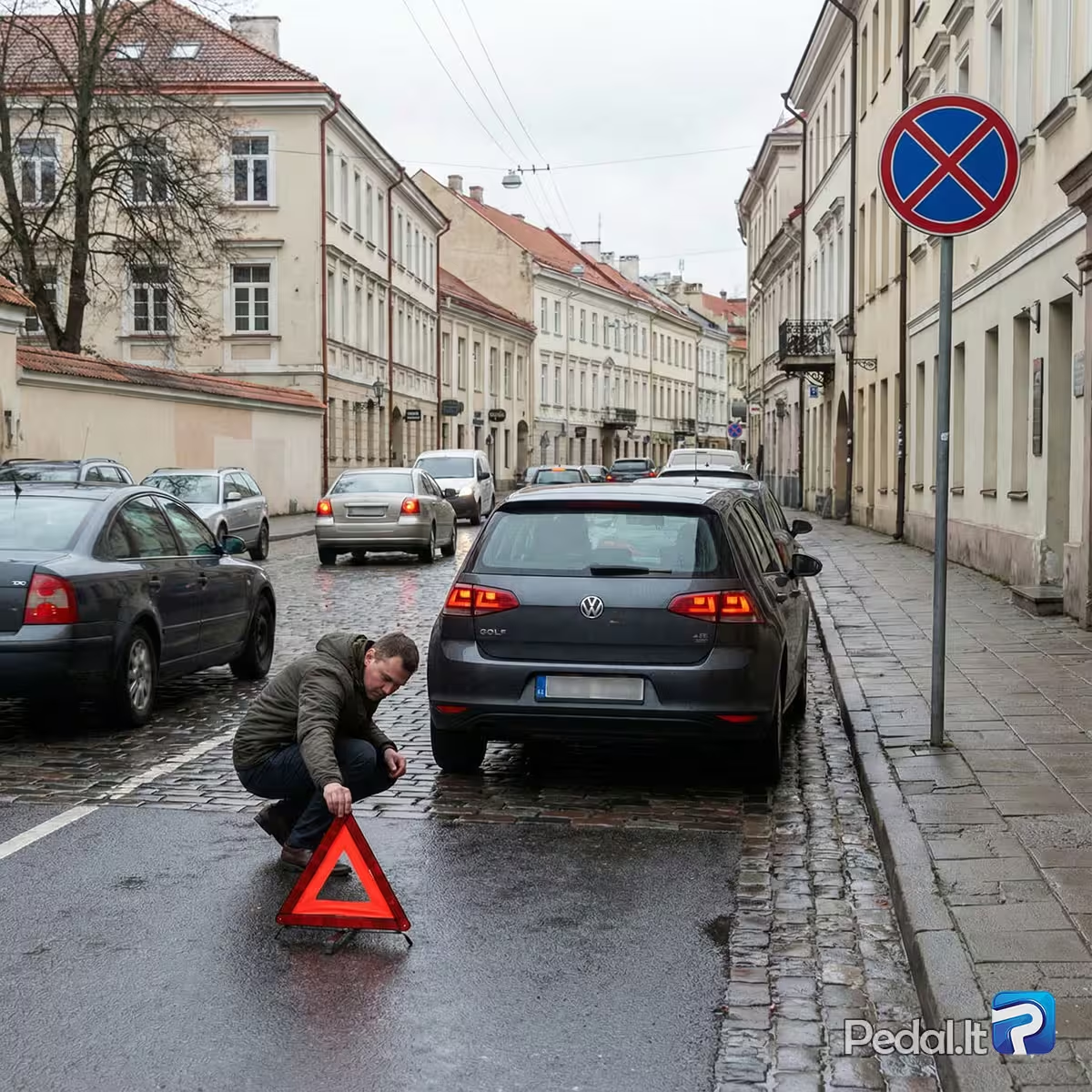
What must you do if you are forced to stop inside a settlement where stopping (parking) is prohibited and the hazard warning lights are not working?
RTR 92. If the emergency warning light system is not fitted or is defective and an emergency stop is required where stopping or parking is prohibited, in the event of an accident, or where the stopped vehicle would be visible to other road users from less than 100 metres, the driver of a motor vehicle (other than a motor moped or a motorcycle without a trailer), a tractor, or a self-propelled machine must immediately place an emergency stop sign on the carriageway side opposite to the direction of travel: in settlements, not closer than 25 m, and outside settlements, not closer than 50 m from the stopped vehicle. If at least one rear position lamp is defective and the hazard warning lights do not work while driving in darkness or poor visibility, an emergency stop sign must be attached to the rear of the vehicle in order to continue driving.
RTR 151. When a vehicle is forced to stop where standing or parking is forbidden, drivers must switch on hazard warning lights if available and/or place a warning triangle on the road as specified in Paragraph 92 of the Rules, and remove the vehicle from the road as soon as possible. If drivers intend to stop on unlit road sections at night or in poor visibility and hazard warning lights are unavailable or inoperable, the vehicle must be parked off the carriageway. If this is impossible, the place must be marked as specified in Paragraph 92 of the Rules. JB
1. Place a warning triangle at least 25 m from the stopped vehicle.
2. Attach a red flag to the vehicle.
3. Switch on the dipped headlights.
4. Stop another vehicle and ask for assistance.
Which of the following distances to a vehicle ahead would be unsafe?
RTR 126. The driver must maintain a following distance at speed sufficient to avoid colliding with the vehicle ahead if it brakes, and must leave a lateral gap to ensure traffic safety. It is recommended that the following distance be at least the distance covered in two seconds, or at least half the speedometer reading converted into metres; for example, at 70 km/h the distance should not be less than 35 m, unless traffic conditions require otherwise. Drivers of motor vehicles, tractors and self‑propelled machinery, when overtaking pedestrians or when overtaking or passing cyclists or drivers of electric micromobility vehicles, must leave a lateral clearance of at least 1.0 m if their speed does not exceed 50 km/h, and at least 1.5 m if their speed exceeds 50 km/h. The requirement to maintain the specified lateral distance does not apply on single‑lane roads.
1. Less than the distance covered in two seconds.
2. Less than the distance covered in five seconds.
3. 30 m
4. 50 m
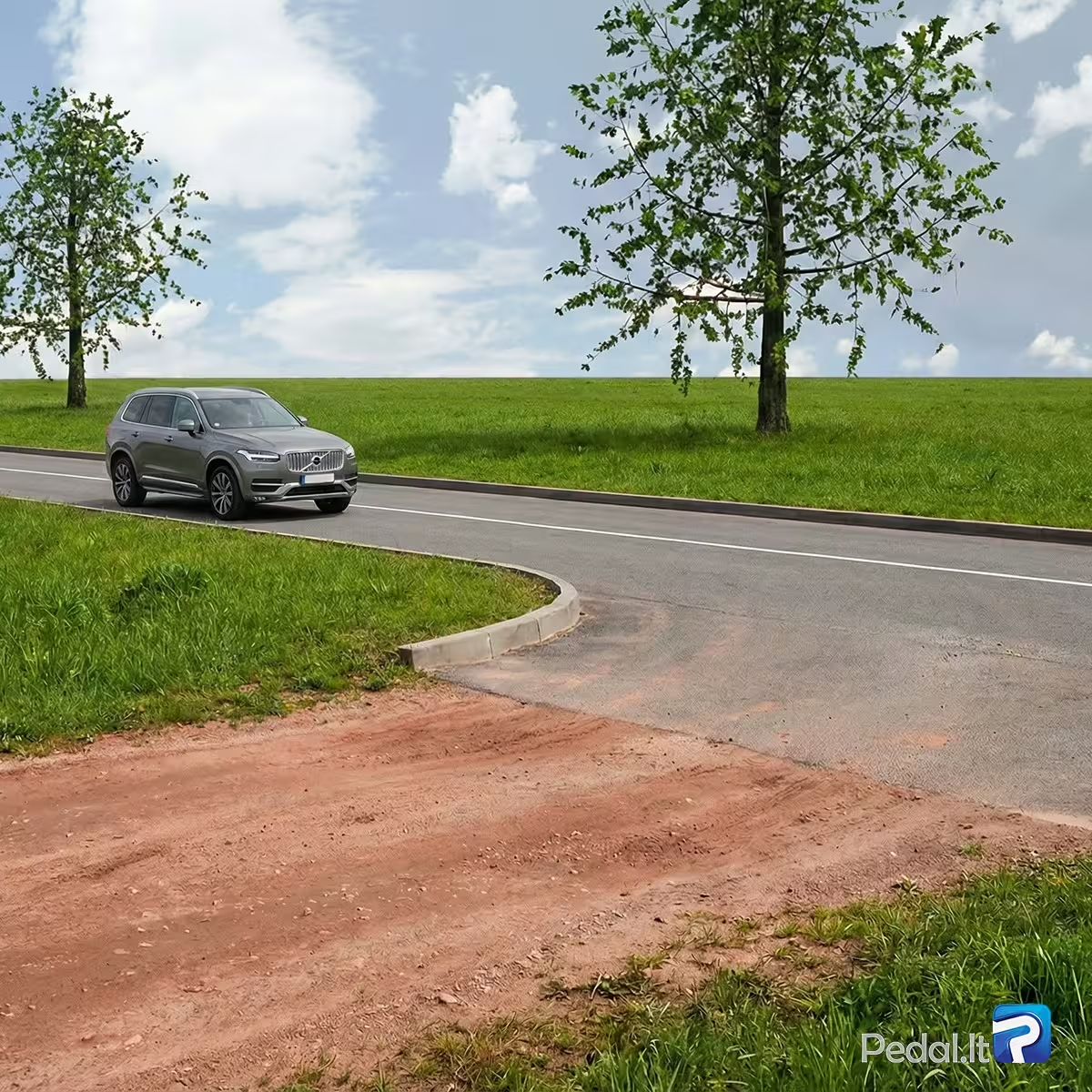
Which road is the main road at this intersection?
RTR 3.14. The main (priority) road is: a road marked with the 'Priority Road' sign, an 'Intersection with a Side Road' sign, a 'Side Road from the Right' or 'Side Road from the Left' sign, or designated as a 'Motorway' or 'Road for Motor Vehicles' in relation to the intersecting or joining road; a road in relation to another road marked with 'Give Way', 'STOP', or 'End of Residential Area' signs; a paved road (concrete, asphalt, or cobblestone) in relation to an improved unpaved road (macadam or gravel) or a dirt road (forest, field, or similar road); and an improved unpaved road in relation to a dirt road. A paved or improved unpaved section of a side road immediately before an intersection does not make that side road equivalent to the intersecting or joining road. There is no priority road at intersections controlled by traffic signals. JB
1. The road with a gravel surface.
2. Both roads are equivalent.
3. The road with an asphalt surface.
Are you required to signal before changing lanes?
RTR 82. A driver must indicate intended maneuvers using the vehicle's right or left direction indicators, or by arm signals if the indicator lights are unavailable or inoperative. Specifically: 82.1 before starting to move and before stopping; 82.2 before changing lanes, before and after overtaking, before and after passing an obstruction, before turning right or left, before making a U‑turn, and before leaving an intersection where vehicles must circulate around a central point. JB
1. Yes — you must signal.
2. No — you are not required to.
3. Only if other road users are nearby.
When must cargo be marked with identification signs and illuminated during darkness or reduced visibility?
Any part of a load that protrudes beyond the vehicle's lateral profile, however slightly, must be marked. Specifically, loads extending more than 0.5 m beyond the vehicle's sides must be identified (Annex 4, §12). Extremities projecting more than 1 m beyond the front or rear of the vehicle, any parts extending laterally beyond the vehicle, and the extremities of vehicles wider than 2.6 m must display distinctive markers: square plates 400 mm on a side with alternating diagonal reflective stripes 50 mm wide in white and red. These plates must be mounted between 0.4 m and 1.6 m above ground level. During darkness or poor visibility, vehicles with protruding points must also show lights on those points: white at the front, amber on the sides, and red at the rear. JB
1. When the load projects more than 0.5 m beyond the rear of the vehicle.
2. When the load projects more than 1 m beyond the front or rear of the vehicle.
3. When the load projects more than 0.5 m beyond the side of the vehicle.
4. When the load projects any distance beyond the vehicle's sides.
.avif)
What does a continuous yellow line painted along the edge of the carriageway indicate?
RTR Annex 3.1.4: A continuous yellow line along the carriageway edge indicates areas where stopping or parking is prohibited; it may also be used to mark lanes affected by roadworks. Vehicles must not cross this line. When a yellow continuous line is used together with white lane markings, drivers must obey the yellow line. RTR Annex 3.1.27: A yellow zigzag line marks a section or side of the road where stopping and parking are prohibited along the entire length of the zigzag.
1. Areas where only parking is prohibited.
2. Areas where both stopping (standing) and parking are prohibited.
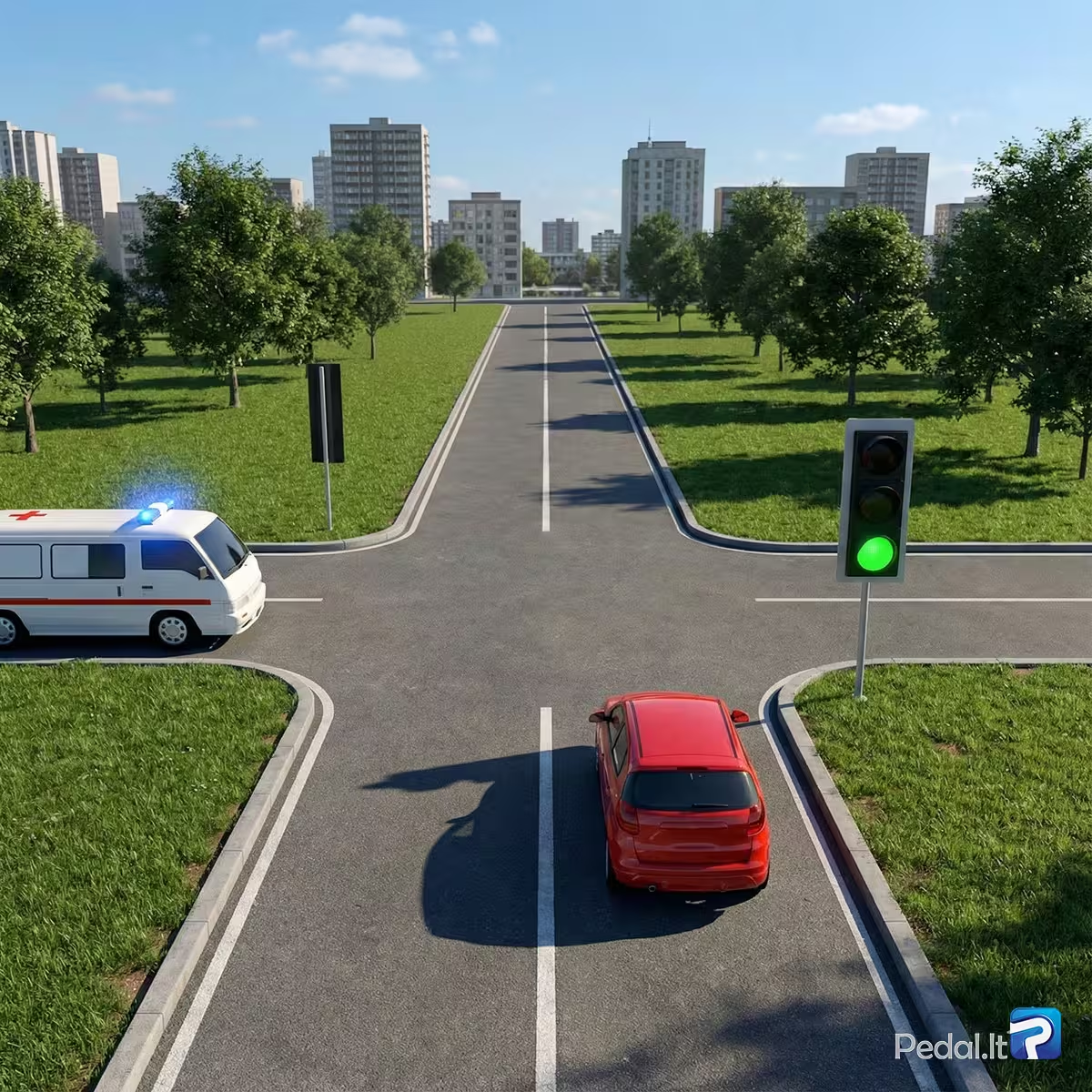
If, in this situation, a vehicle approaches the intersection with blue and red flashing lights and its special audible signals activated, the driver of the red car:
RTR 12. Road users must immediately yield to approaching special vehicles that are using blue-and-red (or only blue) flashing lights and special audible signals, and to vehicles escorted by them. Road users shall form an emergency corridor and yield as follows: 12.1 On a road with a single lane in one direction, drivers must stop on the right hard shoulder if available; if there is no hard shoulder, they must stop close to the right-hand edge of the carriageway. 12.2 On a road with two or more lanes in the same direction, vehicles in the far-left lane shall move as close to the left (the appropriate edge of the carriageway designated for that direction) as possible and stop; vehicles in lanes to the right of the far-left lane shall move as close to the right (toward the right-hand edge of the carriageway or the hard shoulder) as possible and stop. 12.3 On a road with a central reservation, only drivers travelling in the same direction must comply with the requirements specified in paragraphs 12.1 and 12.2. JB
1. He will proceed without yielding to anyone because he has a green light.
2. He must yield to the special vehicle.
A vehicle has nearly completed an overtaking maneuver while another vehicle is approaching in the oncoming lane. What should you do?
The Driver Behaviour Manual states: If another vehicle's overtaking endangers or inconveniences traffic in the oncoming lane, the driver of the vehicle being overtaken must try to prevent a hazardous situation by: (1) reducing speed; (2) moving to the side; (3) stopping if necessary. Section 128: If there is an obstruction or traffic safety is at risk, the driver must slow down and, if required, bring the vehicle to a complete stop or go around the obstruction (if it can be seen), provided this can be done without endangering other road users. Section 135: Drivers must not: 135.4. decelerate sharply for reasons other than safety.
1. Apply the brakes.
2. Maintain your current speed.
3. Ease off the accelerator.
4. Increase your speed.
What must you do first before overtaking?
RTR 136. Drivers should avoid unnecessary overtaking maneuvers. Before overtaking, drivers must take extra precautions and ensure that: 136.1 no driver following has already begun to overtake them; 136.2 the driver of the vehicle to be overtaken is not signaling a left turn; 136.3 the portion of the lane required for overtaking is clear and the maneuver will not obstruct oncoming traffic or pedestrians on the carriageway; 136.4 a safe distance from the vehicle being overtaken will be maintained throughout the maneuver; 136.5 after overtaking, the driver can safely return to the original lane without obstructing the overtaken vehicle.
1. Ensure the road ahead is clear.
2. Shift to a lower gear.
3. Increase your speed.
4. Reduce your speed.
In low-visibility conditions, a driver should select a speed so that the stopping distance is:
Stopping distance is the distance a vehicle covers from the moment the driver becomes aware of an obstacle until the vehicle comes to a complete stop.
1. Shorter than the length of the visible road ahead.
2. Longer than the length of the visible road ahead.
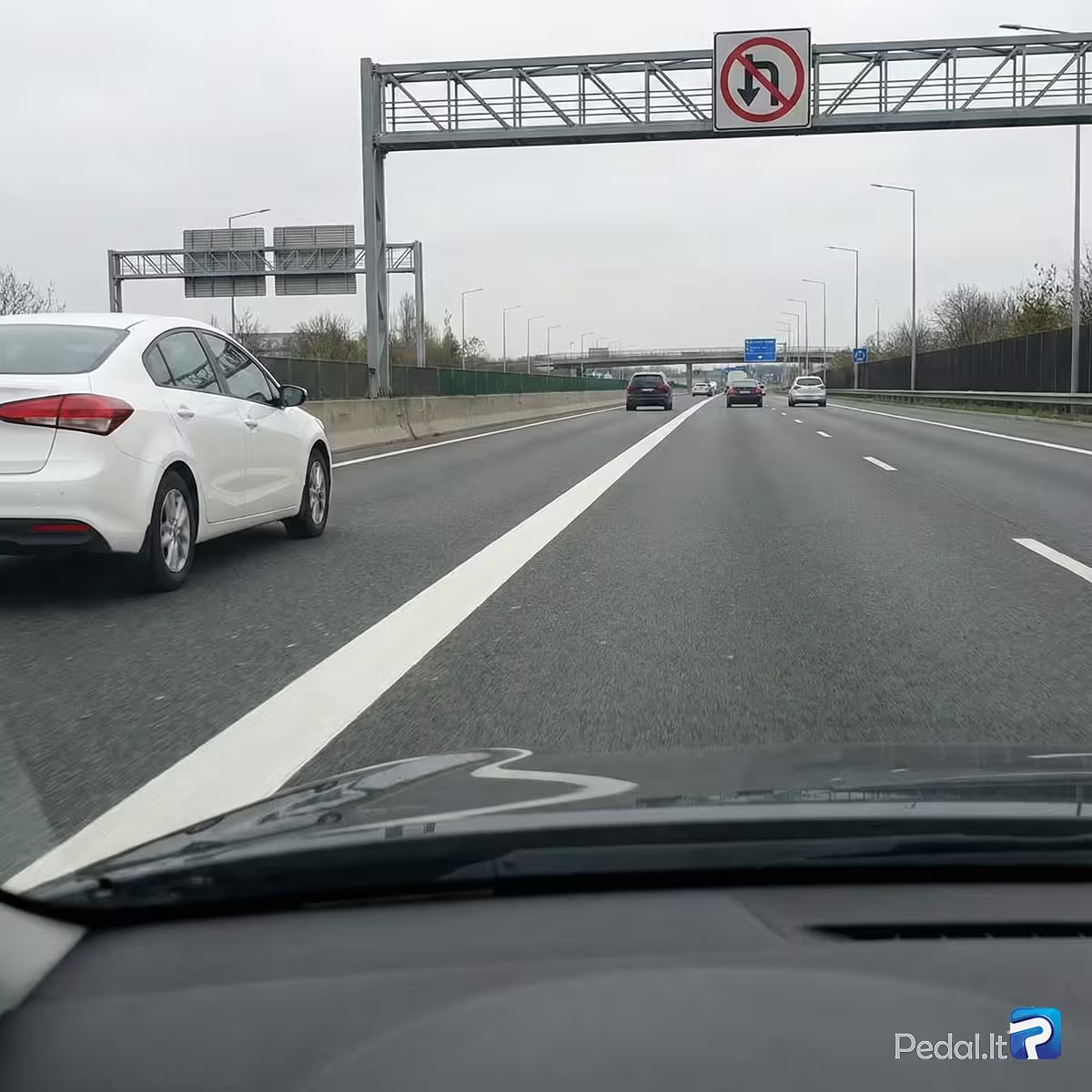
Is it permitted to cross a wide continuous road marking?
RTR 174. On roads designated as Motorway or Motor Vehicle Road the following are prohibited: 174.2 standing or parking except in designated parking areas; RTR Annex 3 1.2. A BROAD CONTINUOUS LINE marks the edge of the carriageway and the boundaries of sections where entry is prohibited on motorways and highways; it separates traffic lanes reserved for public-service vehicles and delineates lanes from bus stops. Vehicles must not cross this line unless it marks the edge of the carriageway. JB
1. Crossing is permitted.
2. Crossing is permitted only when the line denotes the edge of the carriageway.
3. Crossing is permitted to bypass an obstacle when the line separates a lane reserved for shuttle (route) transport.
Is it permitted to drive on winter tyres during the summer season?
According to the traffic regulations, vehicles fitted with studded tyres must not be used from April 10 to October 31. Therefore, winter tyres without studs are permitted during that period. However, using summer tyres is recommended in warm conditions. If winter conditions persist, the Minister of Transport and Communications may issue an order extending the permitted use of studded tyres.
1. Yes — winter tyres without studs are permitted.
2. No — that is prohibited.
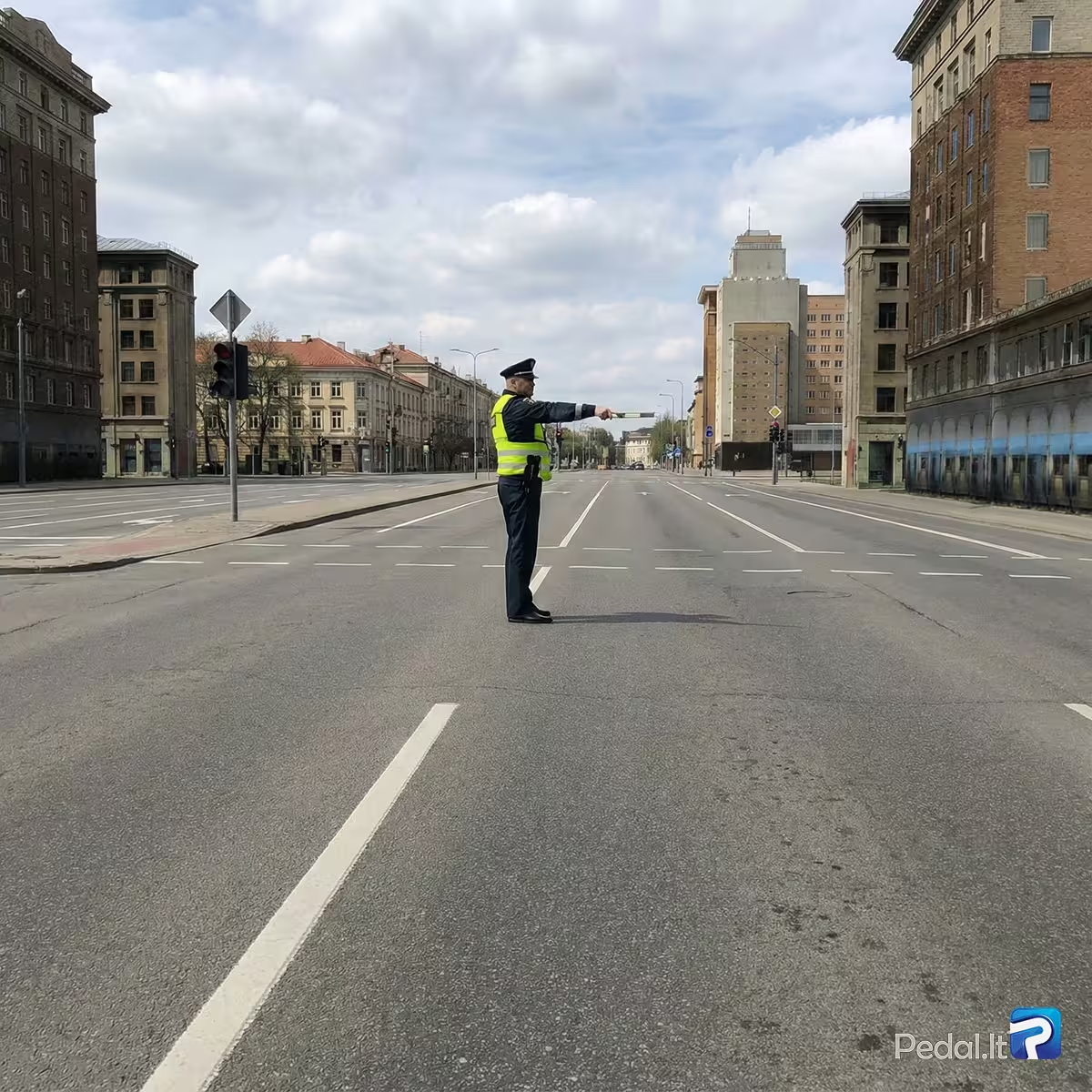
If you are located to the traffic officer's right and the officer's right arm is extended forward, which directions are you permitted to proceed in?
77.2. Right arm extended forward: 77.2.1. Vehicles to the officer's left may proceed in any direction; 77.2.2. Vehicles in front of the officer may proceed only to the right; 77.2.3. Vehicles behind the officer and those on his right must not proceed.
1. To the right.
2. Straight ahead.
3. You are not permitted to proceed.
4. To the left or make a U-turn.
Are drivers permitted to take part in vehicle races that are organized illegally on streets and roads?
23. Drivers must not take part in vehicle races that are organized illegally.
1. Yes, they are permitted.
2. No, they are not permitted.
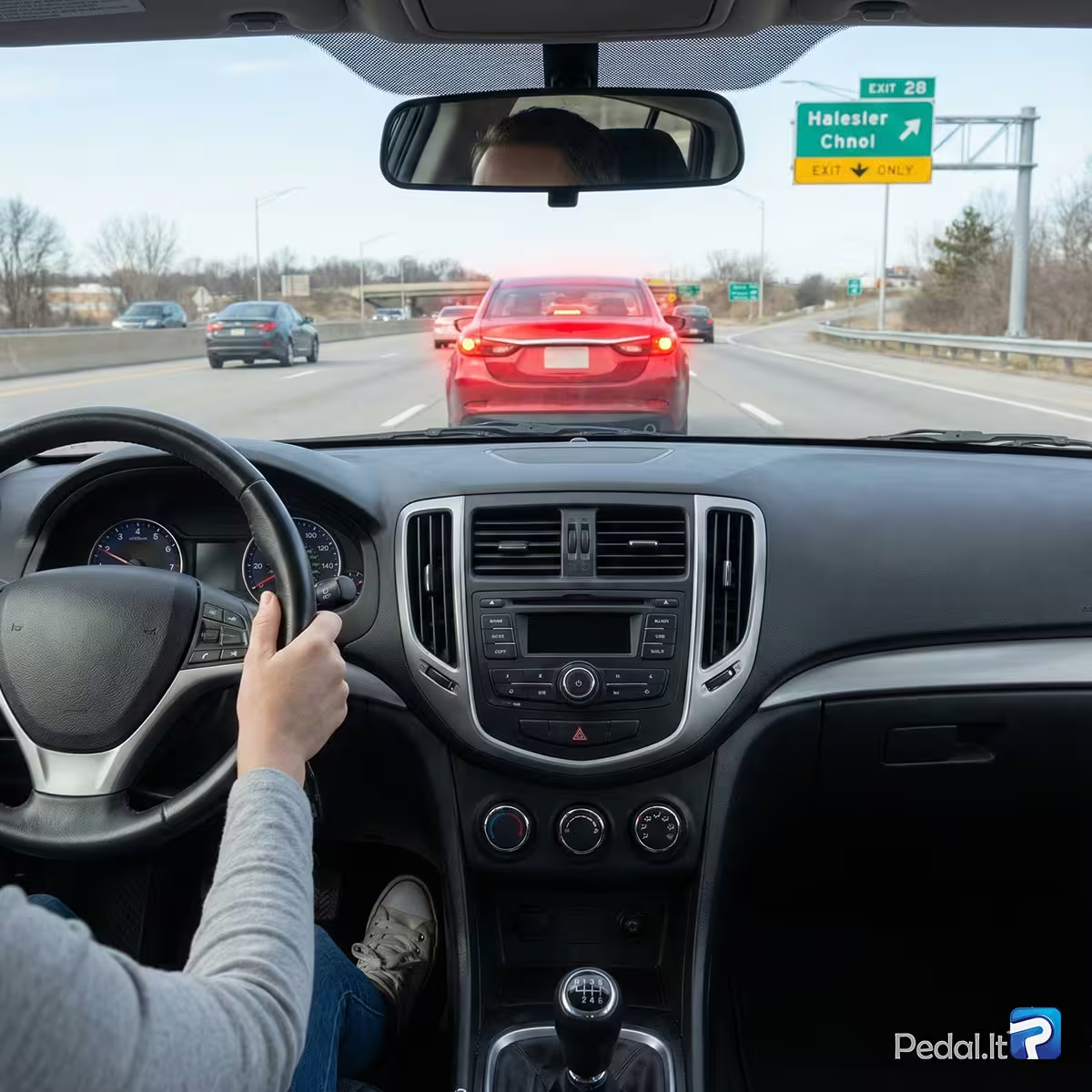
What should you do if you notice a vehicle braking in the distance ahead?
Explanation of terms: • To brake – press the brake pedal; the car slows down rapidly and stops before the expected obstacle. • To release the accelerator pedal – take your foot off the gas; the car gradually slows on its own but does not come to a complete stop and continues moving. • To drive without changing speed – keep the accelerator position the same; the car continues at a constant speed. RTR 128. If there is an obstruction or traffic safety is at risk, the driver must reduce speed or, if necessary, bring the vehicle to a complete stop or steer around the obstruction (if it can be seen) without creating a hazard for other road users.
1. Apply the brakes.
2. Take your foot off the accelerator and be prepared to brake.
3. Maintain your current speed.
If there are no posted speed limit signs, when must you drive at a speed not exceeding 50 km/h?
129. The maximum speed limit within built-up areas for all vehicles is 50 km/h.
1. If diversion signs are present.
2. If a solid yellow line is present.
3. If pedestrian refuge islands are present.
4. Within built-up (urban) areas.
1 of 30 Task
Time left: 00:00:00
1
2
3
4
5
6
7
8
9
10
11
12
13
14
15
16
17
18
19
20
21
22
23
24
25
26
27
28
29
30