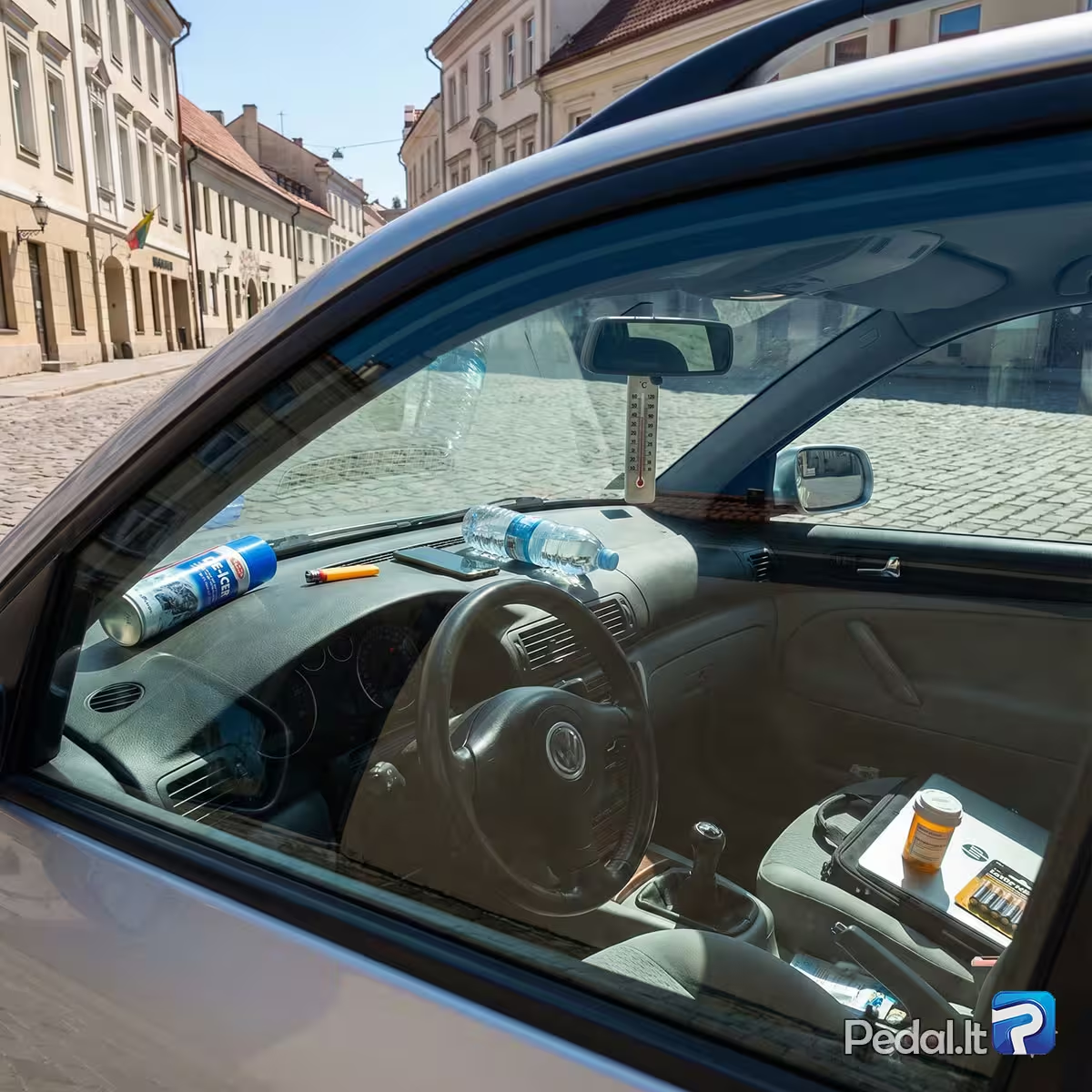
Which items must not be left in a vehicle?
Vehicle documents should not be left in the vehicle, as they can be readily used by thieves. Valuable items must not be left in plain view inside the vehicle because they may attract opportunistic burglaries. Leaving liquids, such as soft drinks, inside the vehicle does not compromise its safety. (RTR 147) A driver may leave the vehicle unattended only after ensuring it cannot move on its own and that unauthorised use is prevented.
1. Vehicle documents (registration and insurance papers).
2. Valuable items left in plain view inside the vehicle.
3. Liquids (e.g., soft drinks).
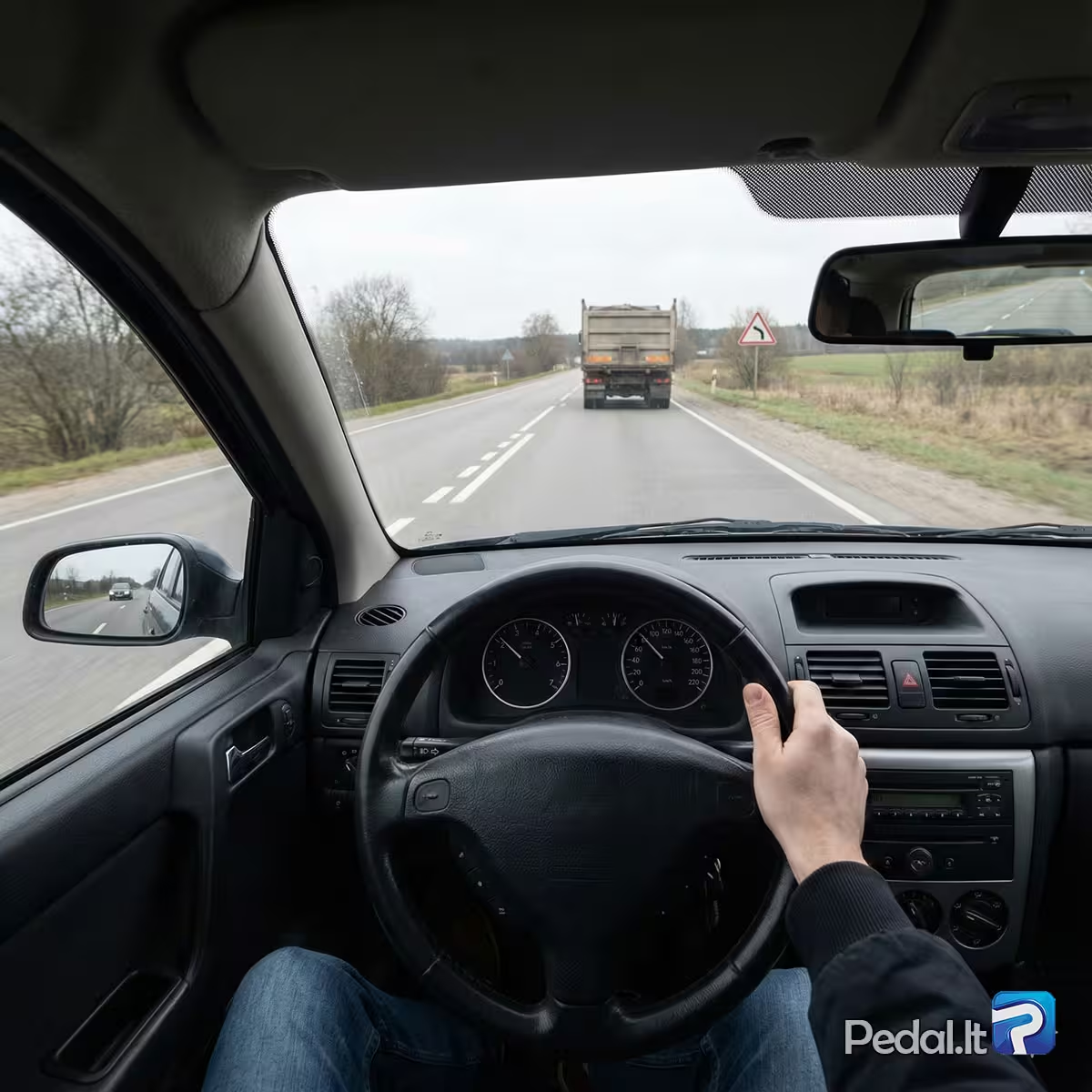
Before overtaking, drivers must ensure that:
RTR 136. Drivers should avoid unnecessary overtaking manoeuvres. Before overtaking, drivers must exercise extra caution and ensure that: 136.1 no driver following has already begun to overtake them; 136.2 the driver of the vehicle to be overtaken is not indicating a left turn; 136.3 the section of lane required for the overtaking manoeuvre is clear and the manoeuvre will not obstruct oncoming traffic or pedestrians on the carriageway; 136.4 a safe distance from the vehicle being overtaken can be maintained during the manoeuvre; 136.5 after completing the overtaking manoeuvre they will be able to return safely to the original traffic lane without obstructing the overtaken vehicle.
1. The road ahead is clear and the overtaking manoeuvre can be completed safely
2. No vehicle is approaching from the opposite direction
3. No vehicle behind has already begun overtaking
Which of the following most accurately defines a vehicle keeper?
LAW ON ROAD TRAFFIC SAFETY Article 2. §84. "Vehicle keeper" shall mean a person in possession of and using a vehicle by virtue of ownership, trust, lease, hire, or another lawful basis.
1. A person driving a vehicle owned by someone else while the vehicle owner (the document holder) occupies the passenger seat.
2. A person who possesses a vehicle and uses it by virtue of ownership, trust, lease, hire, or another lawful basis.
3. A person driving someone else’s vehicle when the vehicle owner (the document holder) is not present.
4. Any individual who is simply driving a vehicle.
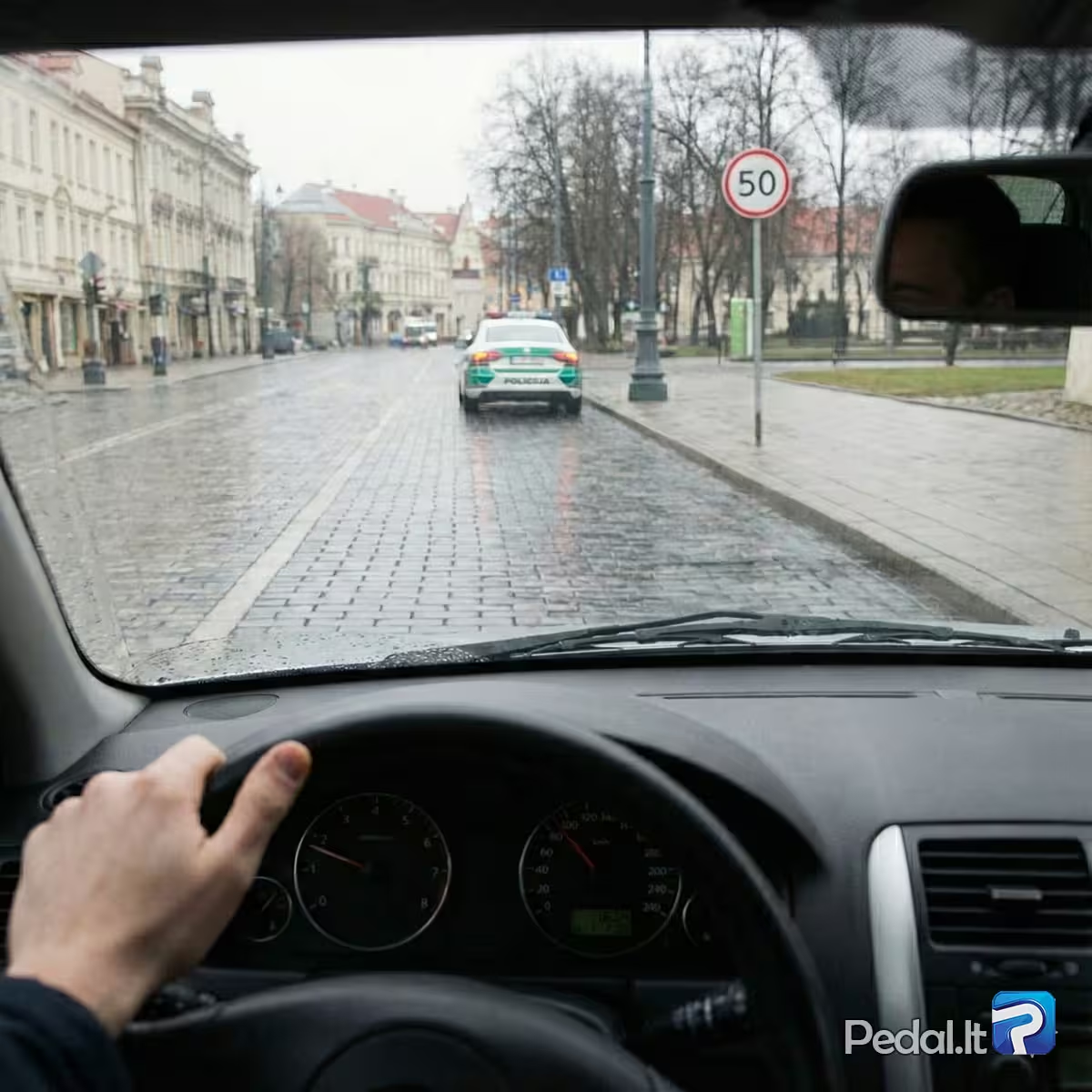
What should you do in this situation if you are driving 10 km/h above the speed limit?
When you see traffic sign 636 — Automatic traffic control (part of the Advanced Traffic Management System) and you are traveling 10 km/h above the speed limit, ease off the accelerator so your speed drops to the legal limit and you avoid a possible fine. Sign 636 indicates a road section monitored by fixed automatic devices. The first version of the sign warns of devices that detect various traffic rule violations (except speed violations); the second version denotes a section where fixed devices record speed limit violations and, where technically feasible, other infringements.
1. Brake suddenly.
2. Ease off the accelerator pedal.
3. Maintain your current speed.
Where does fog typically form?
Fog typically forms over and near bodies of water, and in humid, low-lying areas.
1. Near lakes.
2. Near rivers.
3. In marshy or swampy areas.
4. In low-lying sections of roads.
Under what circumstances are drivers prohibited from operating a vehicle?
IV 15. It is prohibited to drive vehicles that are not in good condition or that fail to meet the applicable technical requirements. Before setting off, the driver of a motor vehicle, tractor, or self-propelled vehicle must ensure the vehicle is in proper condition and is equipped with a warning triangle, fire extinguisher, first-aid kit, and any other items mandated for that vehicle type. The driver must also monitor the vehicle's technical condition during the trip. If the vehicle breaks down while driving and ceases to meet technical requirements, and repairs on-site are impossible, the driver may proceed—taking all necessary precautions—to the nearest parking area or repair facility, except in cases specified in paragraph 234 of these Rules.
1. When the engine has not yet warmed up to its optimal operating temperature.
2. When the vehicle's fuel tank is not full.
3. When the vehicle is not in roadworthy condition.
4. When the vehicle does not meet the required technical standards.
A vehicle driving ahead of you on the motorway has switched on its hazard warning lights and keeps driving. What does this indicate?
91. If a vehicle is equipped with hazard warning lights, they must be used: 91.7 when other road users should be warned of an obstruction or hazard.
1. There is an obstruction or hazard ahead.
2. Police are ahead.
3. They are indicating that they intend to turn around.
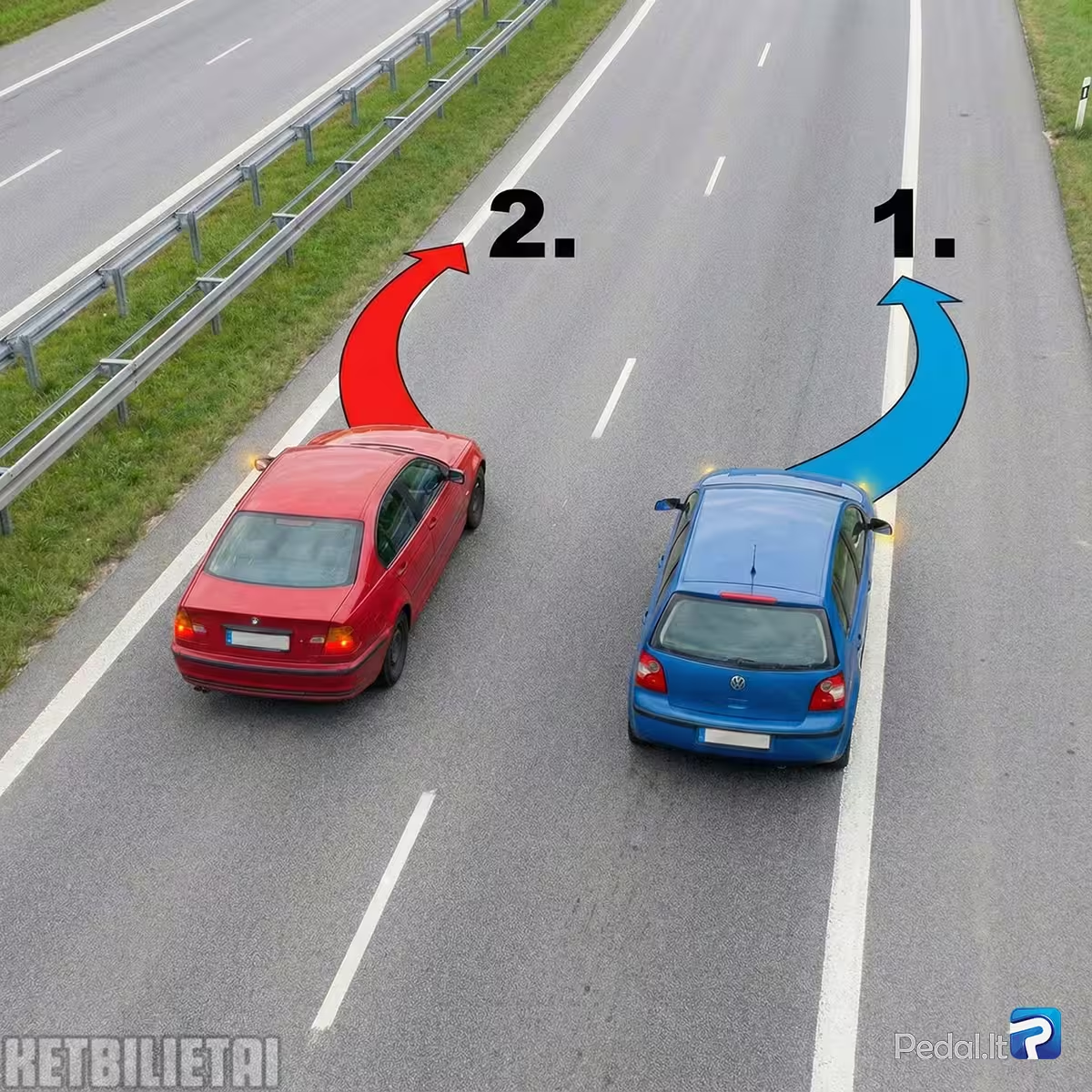
On which side of the road is stopping permitted?
RTR 141. Vehicles may stand or park on the right-hand side of the road, as close as possible to the right edge of a hard shoulder, or at the carriageway edge if no hard shoulder exists. When entering or leaving the hard shoulder, the driver must not endanger other road users. If a cycle lane is installed along the right edge of the carriageway, drivers may stand or park adjacent to that cycle lane.
1.1. A NARROW CONTINUOUS LINE separates traffic flows in opposite directions and prohibits driving in the lane for oncoming traffic on the marked section of road; it also marks the edges of traffic lanes, sections of the carriageway into which entry is prohibited, the limits of vehicle parking spaces and the carriageway edge. At road sign No. 413 "Pedestrian and bicycle path" it separates the part of the path intended for bicycle traffic from the part intended for pedestrian traffic. Crossing this line is prohibited, except where it marks the carriageway edge or the boundary of a parking space.
1. On the right side of the road.
2. On the left side of the road.
3. Stopping is prohibited.
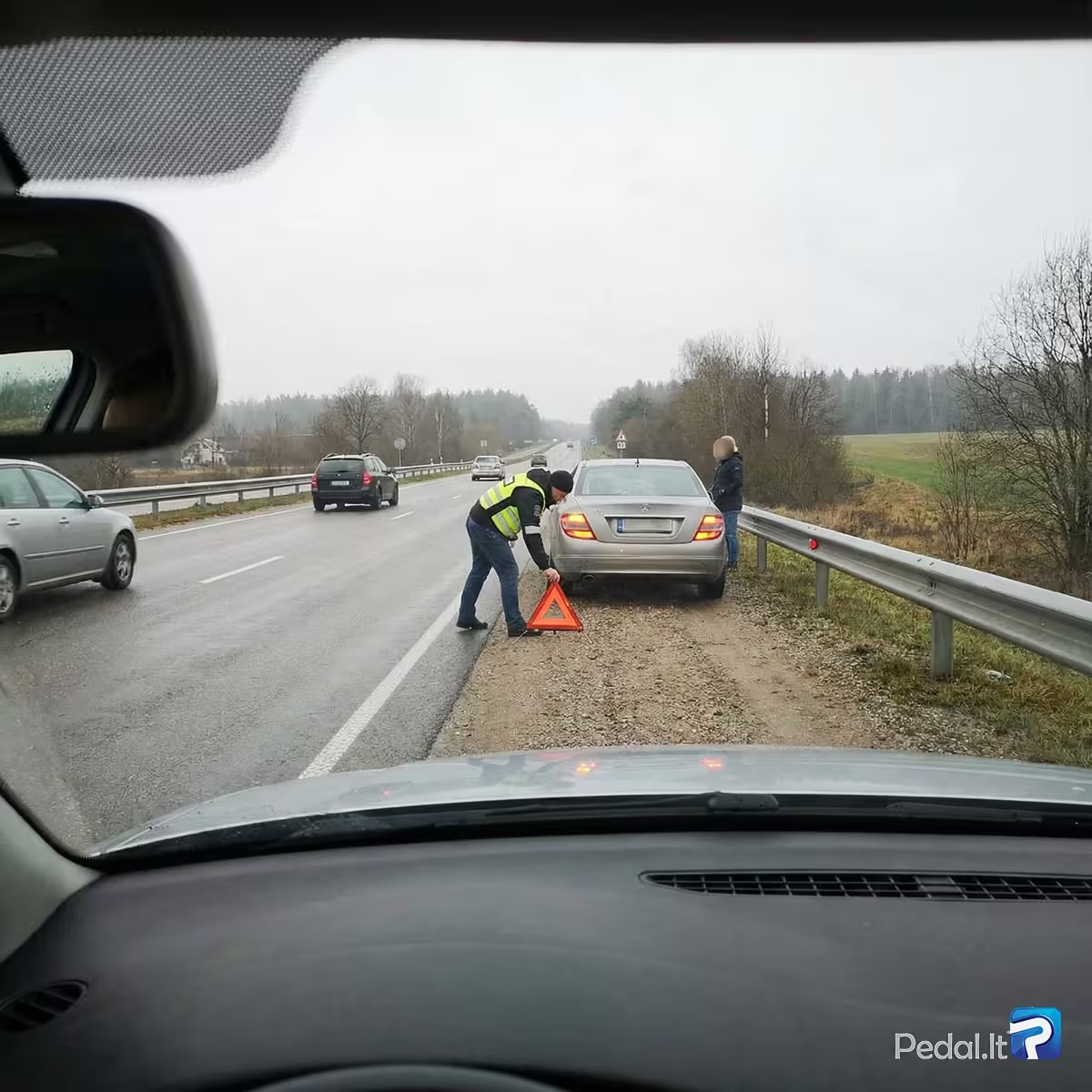
A vehicle has broken down on the road. What is the safest action to take?
1. Have the vehicle removed from the roadway as soon as possible using a tow truck (rigid towing).
2. Turn on your hazard lights and wait beside the vehicle.
3. Try to push the vehicle to the side of the road.
4. Stop and attempt to repair the vehicle while still on the roadway.
What is the purpose of seat belts?
In a road accident, a seat belt keeps the driver and passengers restrained in their seats and prevents ejection from the vehicle, even during a rollover. Occupants who are not restrained are often ejected and may be crushed by an overturned vehicle, frequently suffering severe injuries or death. Seat belts also help reduce the severity of injuries by distributing crash forces across the body's stronger, less vulnerable areas.
1. Seat belts distribute the forces produced in a road crash across the body's less vulnerable areas.
2. In a road collision, seat belts keep the driver and passengers secured in their seats.
Which of the following are warning signals?
RTR 81. Warning signals include: using turn and brake lights (arm signals may be used), sounding the horn, switching the headlights on and off, activating hazard warning lights or flashing amber beacons, and placing a warning triangle on the road or attaching it to the vehicle.
1. Brake light signal.
2. Indicating a turn using an arm signal.
3. Horn signal.
4. Switching the headlights on and off.
5. Placing a warning triangle on the road.
In which situations may drivers of emergency vehicles exercise priority when operating with blue and red flashing lights and special audible signals?
Drivers of special (emergency) vehicles — such as ambulances, police, and fire service vehicles — may use blue and red (or only blue) flashing lights and special audible signals when necessary to: (1) save human life or health; (2) protect property; (3) ensure public order and traffic safety; (4) apprehend persons suspected of offences; or (5) escort or accompany official delegates and protected persons. Flashing lights must be visible in all directions (360°). While using these signals, drivers of special vehicles may disregard certain traffic rules specified in the Regulations, provided they do not jeopardize traffic safety and only after ensuring that other road users are giving way. They must drive cautiously and avoid creating danger to other road users. Other road users are required to give way immediately to such vehicles so they can pass safely and quickly. The right of way also applies to drivers of vehicles being escorted by special vehicles.
1. When doing so does not endanger traffic safety.
2. After confirming that other road users are yielding to them.
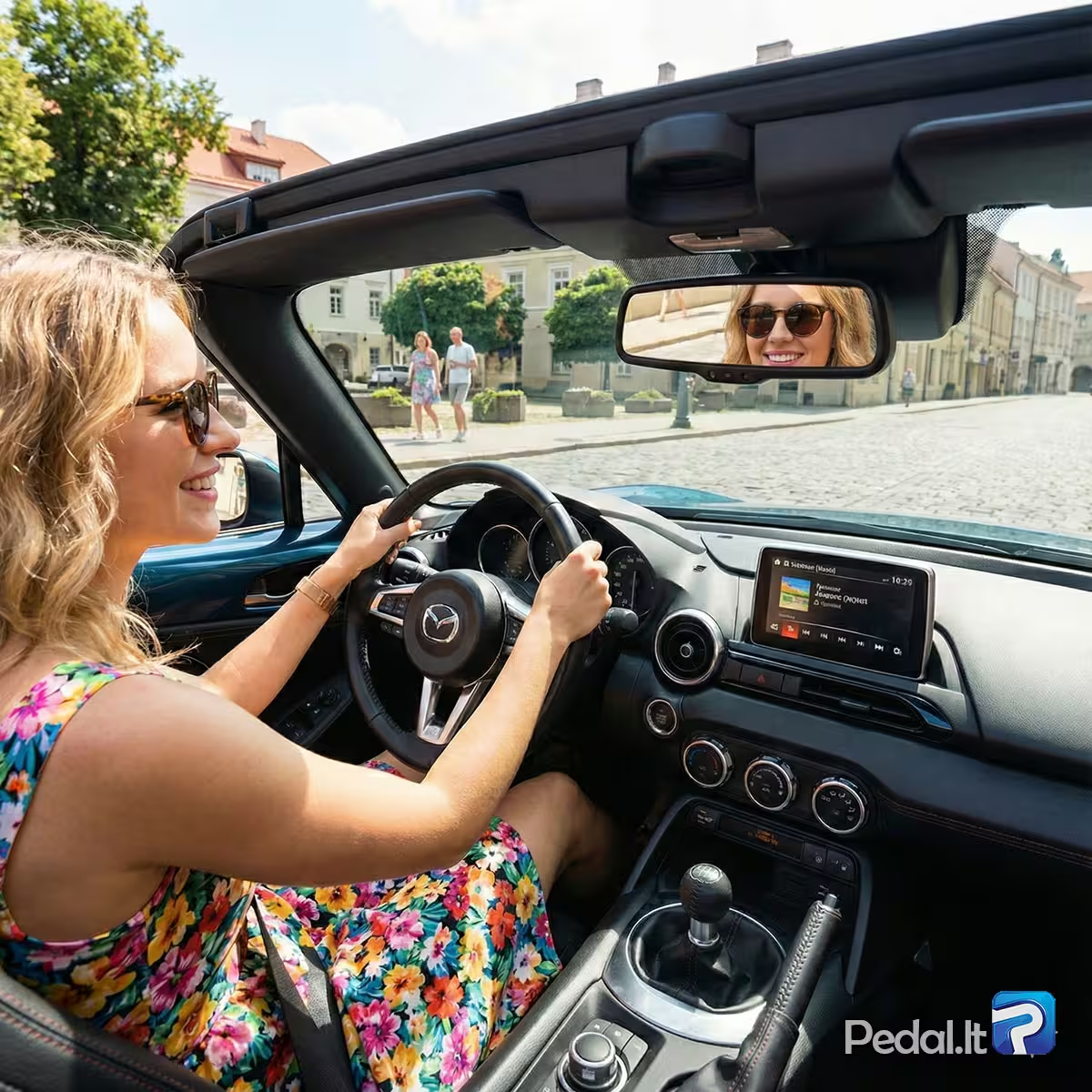
When driving safely, you must:
Always make safety your priority. That means thinking ahead, planning your actions, and anticipating the behavior of other road users.
1. Anticipate the actions of other road users.
2. Driving slightly above the speed limit.
3. Stay closer to the edge of the road.
4. Driving well below the maximum permitted speed.
Which factors can reduce a driver's attention while driving?
1. Engaging in a heated or intense conversation with a passenger.
2. Experiencing strong emotions (e.g., joy, anger, or hatred).
3. Listening to an engaging radio programme.
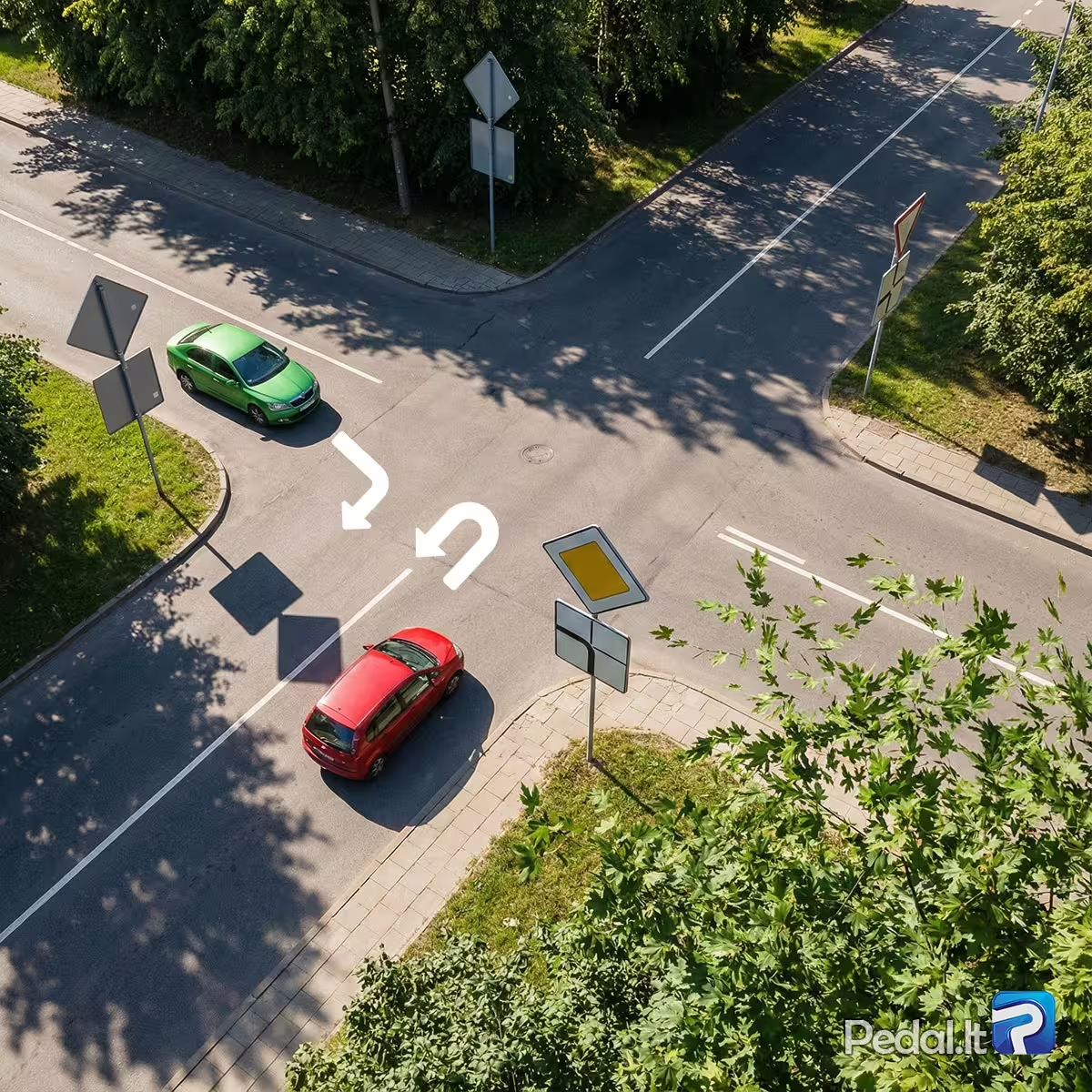
The driver of the red car is about to make a U-turn. Does he have the right of way?
When turning, the driver of the red car must yield to any vehicle coming from the opposite direction on a road of equal priority that is approaching from the right (the green car). Once the red car has already entered the intersection, the green car is considered an obstacle. At intersections where the main road changes direction, the priority-to-the-right rule applies (RTR 157). When turning left or making a U-turn, a driver must yield to oncoming vehicles on an equally important road that are going straight or turning right — and, where overtaking is permitted, also to vehicles that are overtaking.
1. Yes — he has the right of way.
2. No — he does not have the right of way.
Why is it dangerous to suddenly increase engine speed while driving on a slippery road?
If you press the accelerator suddenly on a slippery road, the driving wheels may start to spin, further smoothing and polishing the wheel track on the slippery surface. This reduces traction; as a result the tires can lose grip more quickly and the vehicle may skid or slide sideways.
1. The vehicle may skid sideways.
2. The engine may stall.
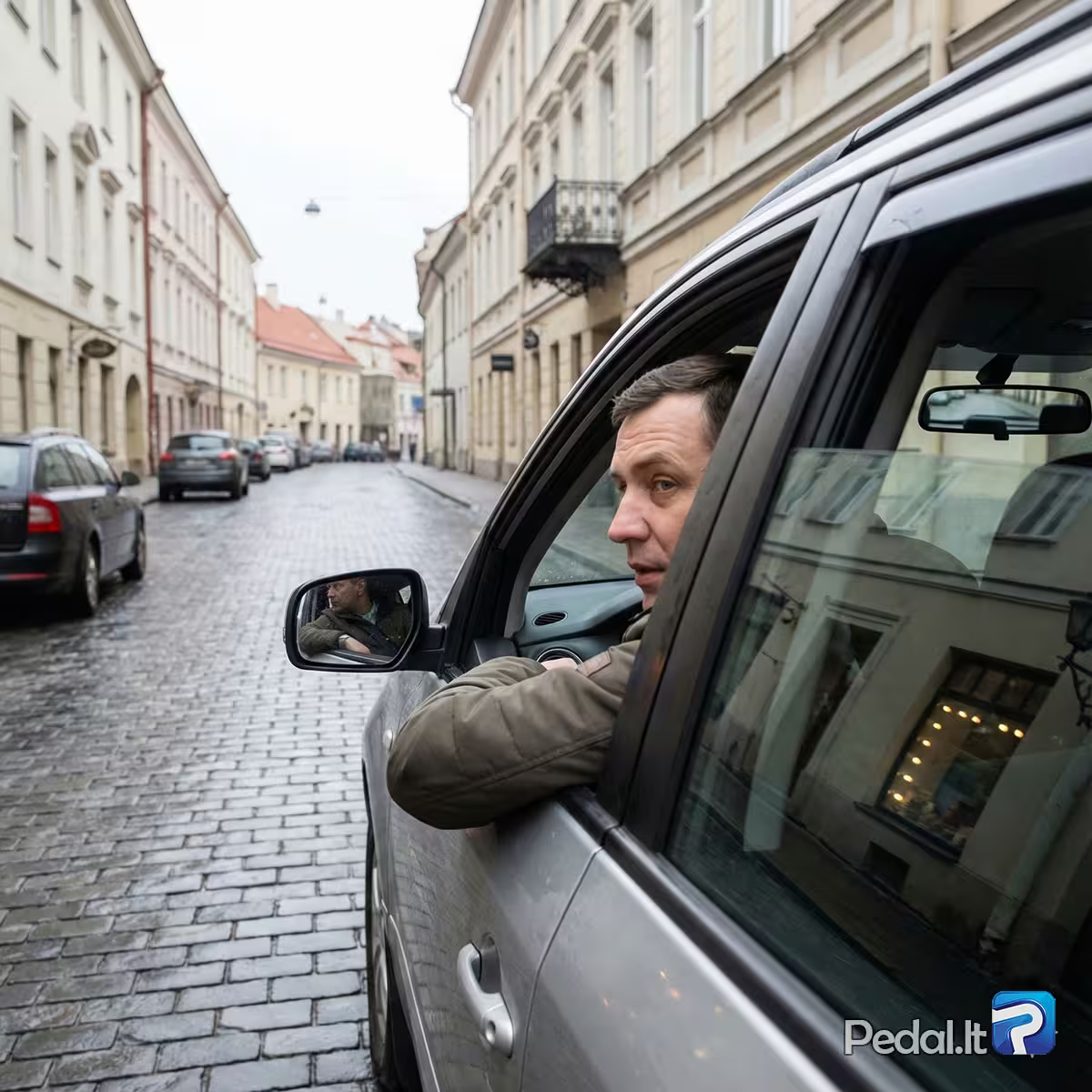
What must a driver do when reversing?
Note: If the steering wheel is turned sharply while reversing, the front of the vehicle can swing to the side and strike obstacles or other road users. When reversing, a driver must give way to other road users.
1. The driver must give way to other road users.
2. The driver must use the horn.
3. The driver must make sure that there are no obstructions behind the vehicle.
4. Do not obstruct other road users ahead.
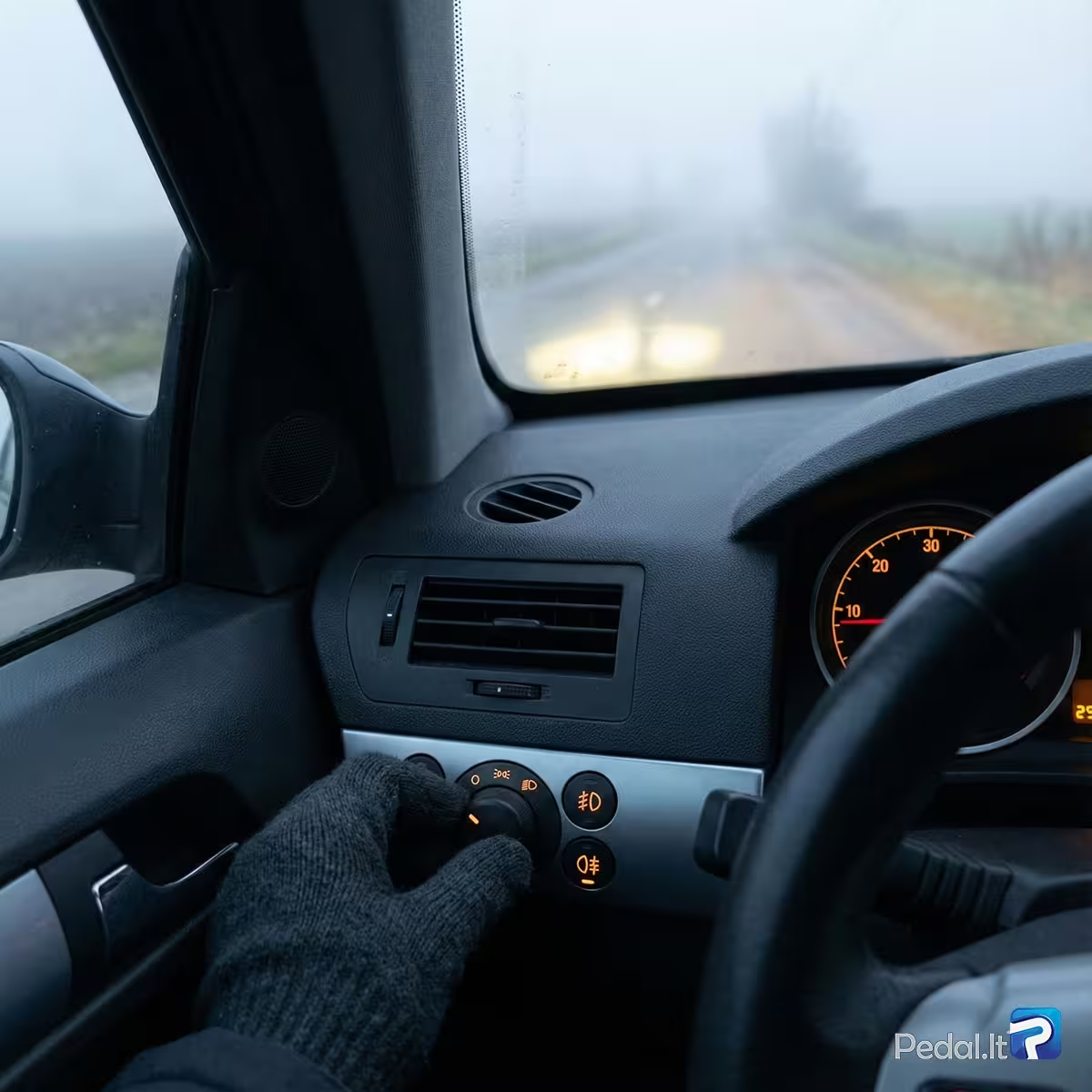
Fog lamps must be capable of being switched on:
Technical requirements for vehicles operated on a road, Chapter IV, Paragraph 22: If fog lamps are fitted, they must only be capable of being switched on and off using an appropriate switch when the position lamps are switched on. Additionally, fog lamps must be capable of being switched off independently of any other lights.
1. When the main-beam (high‑beam) headlamps are switched on.
2. When the position (parking) lamps are switched on.
3. Only when the position lamps are switched on; they must be able to be turned off independently of any other lights.
4. When the dipped‑beam (low‑beam) headlamps are switched on.
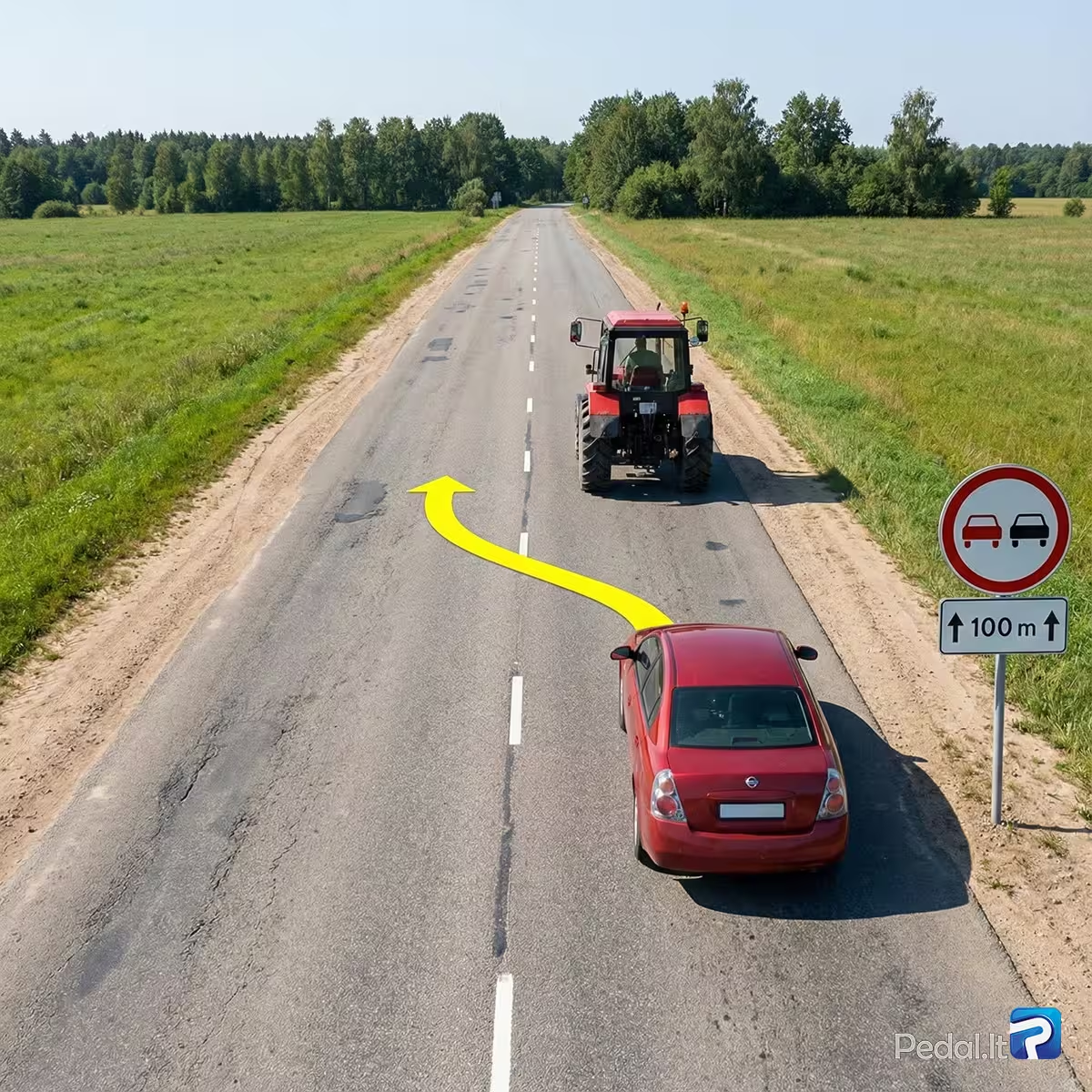
Is overtaking permitted?
Although the road sign normally prohibits overtaking, overtaking vehicles traveling at speeds under 30 km/h is permitted provided it can be done safely. Road sign 325 — “Overtaking prohibited” forbids overtaking, except for individual vehicles (or individual vehicle combinations) traveling at speeds under 30 km/h. Road sign 805 — “Validity zone ahead” indicates the length of the zone beyond the sign during which a hazardous road section or other associated signs remain in effect.
1. No — overtaking is prohibited.
2. Yes — overtaking is permitted if the tractor is traveling at less than 30 km/h.
What must drivers do if stopped by an inspecting officer?
RTR 16. A driver must stop the vehicle when ordered by an inspecting officer. The driver of a motor vehicle, tractor or self-propelled vehicle shall carry, and upon request of the inspecting officer present, a valid driving licence or a document certifying the right to drive tractors and/or self-propelled vehicles or military equipment (including tactical and logistical vehicles) or their combinations with trailers; the vehicle registration documents; the certificate of the compulsory roadworthiness test and the report of the most recent technical inspection for vehicle categories M2, M3, N2, N3, O3, O4 and wheeled tractor categories T1b, T2b, T3b, T4.1b, T4.2b, T4.3b, T5; the certificate (policy) of compulsory motor third-party liability insurance; and any other documents required by the laws of the Republic of Lithuania and these Rules (except in cases where the Law on Road Traffic Safety exempts the driver from carrying certain documents). The driver must also allow the inspecting officer to check the readings of validated meters that record driving time and rest periods. Documents shall be presented without leaving the vehicle. The driver may leave the vehicle only with the inspecting officer's permission. RTR 91. If hazard warning lights are fitted in a vehicle, they must be switched on: 91.3. when the vehicle is stopped by an inspecting officer;
1. Exit the vehicle only with the inspecting officer's permission.
2. Present the requested documents to the inspecting officer without leaving the vehicle.
3. Exit the vehicle and deliver the documents to the inspecting officer.
4. Stop the vehicle at the location indicated.
5. Turn on the vehicle's hazard warning lights.
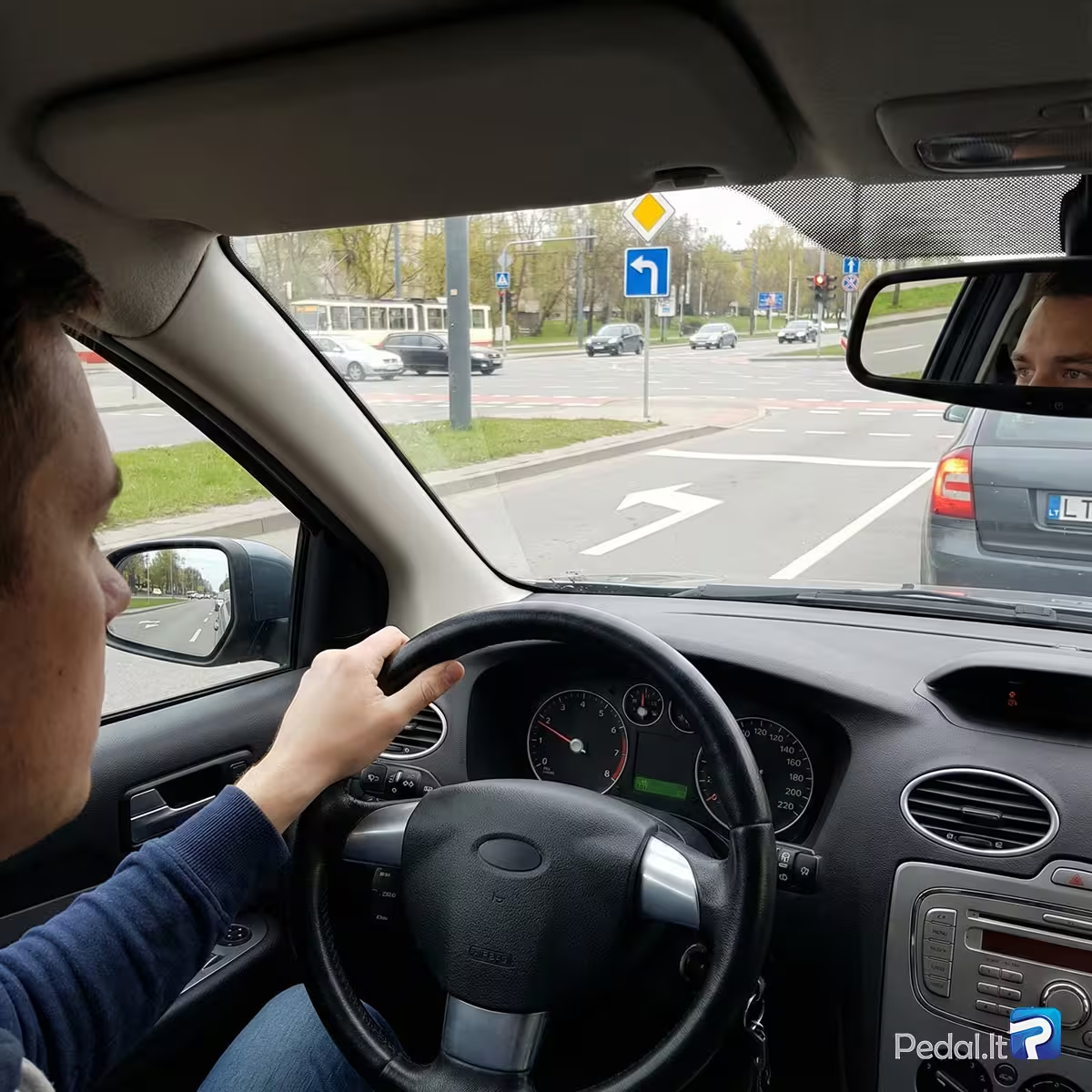
A driver intends to make a left turn. According to the road safety rules used in the driving theory exam, which is the correct sequence of actions?
1. Activate the left turn signal, then check surrounding traffic, and then perform the turn.
2. Ensure the road and traffic are clear, then activate the left turn signal, and finally execute the turn.
3. Execute the turn first and then switch on the turn signal.
4. Activate the left turn signal and immediately commence the turn.
.avif)
Which vehicle will pass through the intersection first? (The green traffic light applies to the red car.)
RTR 163. When driving in the direction indicated by an arrow displayed in the supplementary section of a traffic light together with an amber or red signal, the driver must yield to road users coming from other directions who have a traffic signal permitting them to proceed, except as provided in Paragraph 163-1. 163-1. When making a U-turn at an intersection controlled by traffic lights, the driver must yield to road users from other directions who are permitted to proceed by a traffic signal. JB
1. The red car will pass the intersection first.
2. The black car will pass the intersection first.
What does a flashing white traffic light at a level crossing indicate?
RTR 73. Traffic light signals have the following meanings: 73.10. A flashing white light used at level crossings means that vehicles may proceed after ensuring that no rail-borne vehicle is approaching the level crossing;
1. It prohibits traffic from proceeding.
2. It permits traffic to proceed after ensuring that no rail-borne vehicle is approaching the level crossing.
3. It permits traffic only if you can cross the level crossing before the approaching train arrives.
Under what conditions is it prohibited to drive a vehicle?
It is prohibited to drive a vehicle if the main brake is inoperative, as this creates a danger to road safety. According to technical requirements, tyres mounted on the same axle must be of the same type and have identical tread patterns. Tyres with different tread patterns can cause instability under braking and reduce traction, creating a road safety risk; therefore driving such a vehicle is prohibited. RTR 234. A driver must not operate a motor vehicle, a tractor, or a self-propelled machine with: 234.1. a defective foot brake (the driver cannot stop the vehicle); 234.2. a defective steering mechanism (the driver cannot control the vehicle); 234.3. a defective coupling device between the vehicle and a trailer; 234.4. a defective windscreen wiper on the driver's side in snow, rain, or fog; 234.5. faulty front left-side lamps (dipped-beam headlamp and fog lamp) during hours of darkness or when visibility is poor, or if at least one rear position lamp has failed, hazard warning lights are not functioning (or are switched off), or a warning triangle is not affixed to the rear of the vehicle.
1. When the wheels on the same axle are fitted with different tread patterns.
2. When the engine oil level is too low.
3. When there is low air pressure in the tyres.
4. When the vehicle's foot (service) brake is defective.
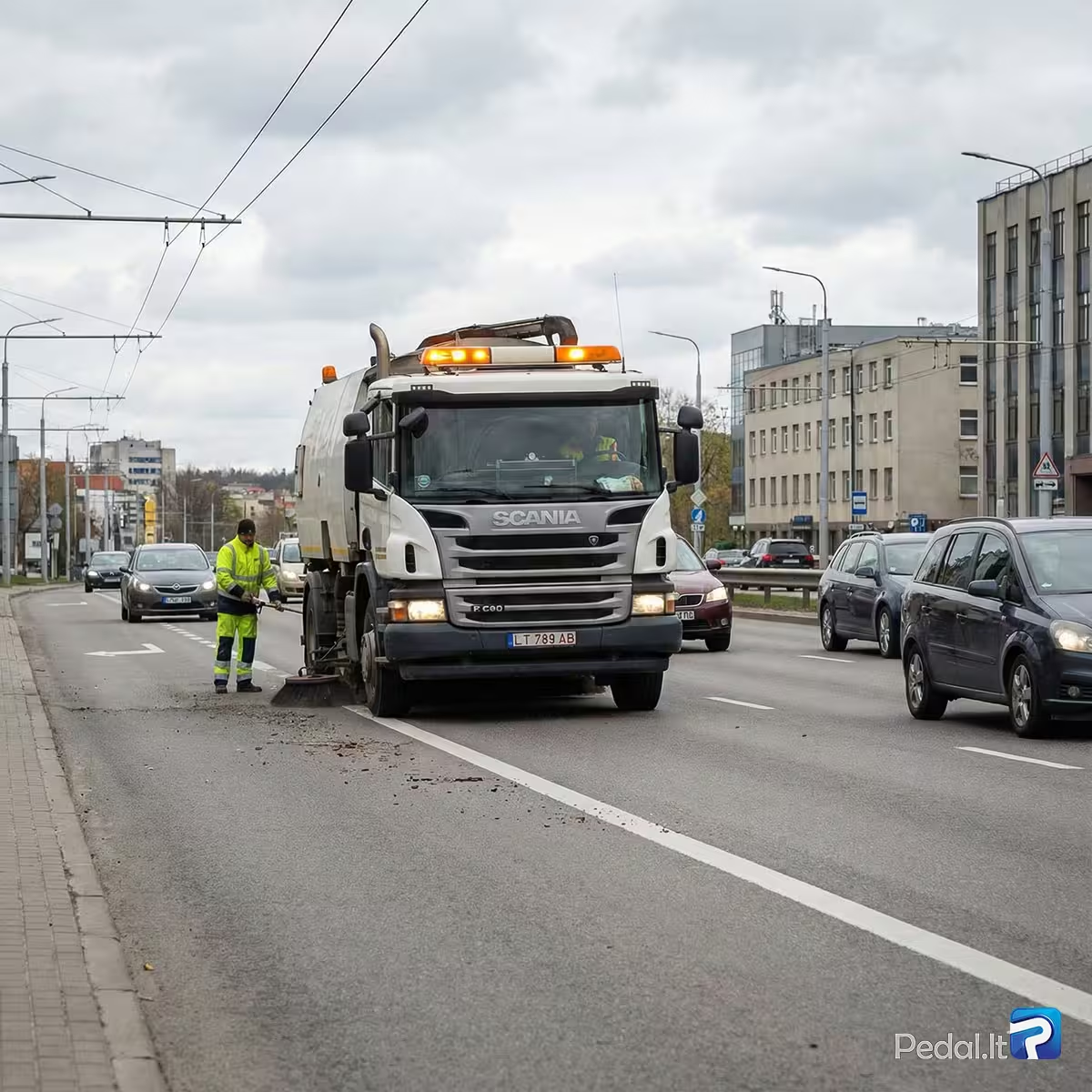
Are drivers of motor vehicles equipped with orange flashing lights permitted to disregard road-marking lines while performing work on the roadway?
Regulation RTR 188: An orange flashing light may be used only when the vehicle obstructs other road users—for example, when the vehicle's loaded or unloaded dimensions exceed permitted limits; when performing work on the roadway; when stopping or standing; when moving at very low speed; when escorting an organized group of cyclists; or when transporting hazardous goods. An orange flashing light does not confer priority; it merely attracts attention and warns other road users of a potential hazard. While driving, standing, or working on the road, drivers of vehicles displaying orange flashing lights must ensure they do not compromise traffic safety.
1. Yes — provided doing so does not jeopardize traffic safety.
2. No — they are not allowed to do so.
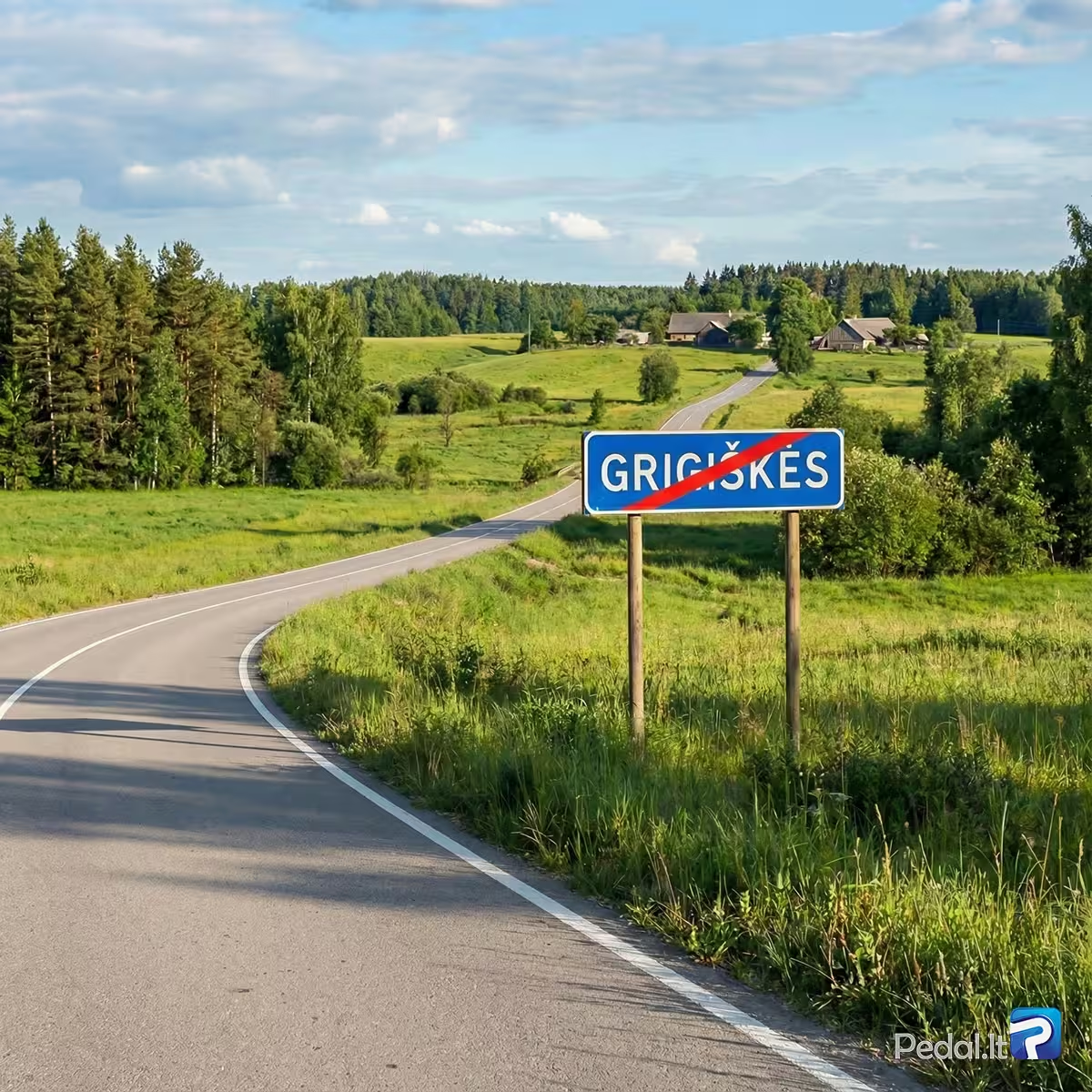
What is the maximum permitted speed for a passenger car on an asphalt- or concrete-surfaced road where this sign applies?
According to the Road Traffic Rules (RTR), a blue sign showing the settlement name in white letters indicates the start of a settlement where the special traffic regulations that normally apply within built-up areas do NOT apply. By contrast, a sign with the settlement name in black letters on a white background marks the start of a settlement where built-up-area traffic rules are in force (RTR 131). The following maximum speeds apply outside built-up areas (RTR 131.1): for passenger cars, light goods vehicles with a permissible maximum mass up to 3.5 tonnes, motorcycles and tricycles — on motorways: 130 km/h from April to October and 110 km/h from November to March; on expressways/highways: 120 km/h from April to October and 110 km/h from November to March; on roads with asphalt or concrete pavement: 90 km/h; on other roads: 70 km/h. See road sign 612: Beginning of a built-up area where special built-up-area rules do not apply. Road sign 613: End of a built-up area (marked by sign 616); it may show the name of another settlement and the distance to it.
1. 70 km/h
2. 80 km/h
3. 90 km/h
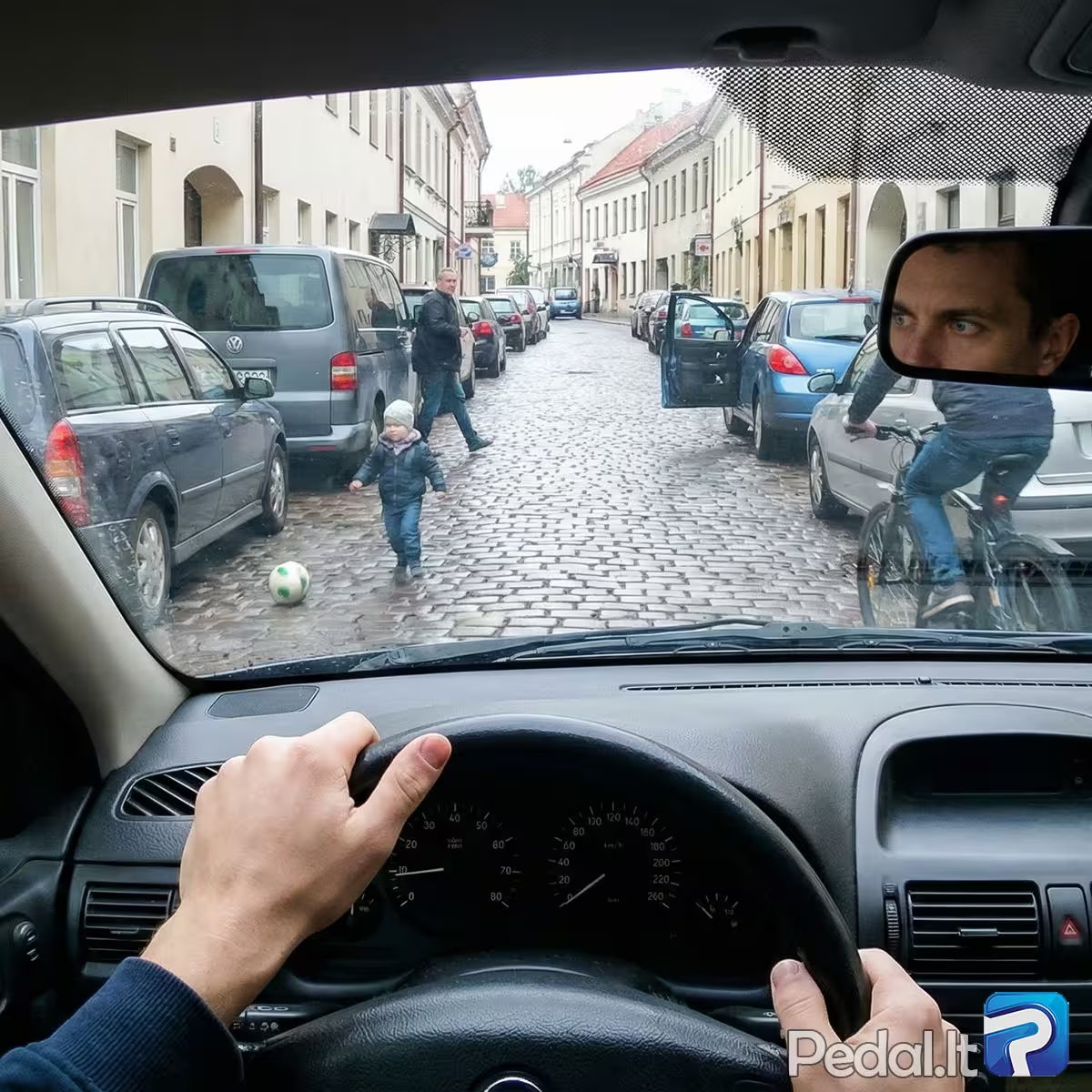
When driving past parked vehicles, you should be particularly alert for:
When driving beside a line of parked vehicles, watch for pedestrians who may step out into the road, drivers exiting their cars, and vehicle doors opening unexpectedly — any of these can cause a collision. 148. The doors of a parked vehicle must not be opened if doing so could create an obstruction or a hazard to other road users.
1. Pedestrians walking between parked vehicles.
2. Drivers exiting their vehicles.
3. Doors of parked vehicles that may open unexpectedly.
4. Children at play who may run into the carriageway.
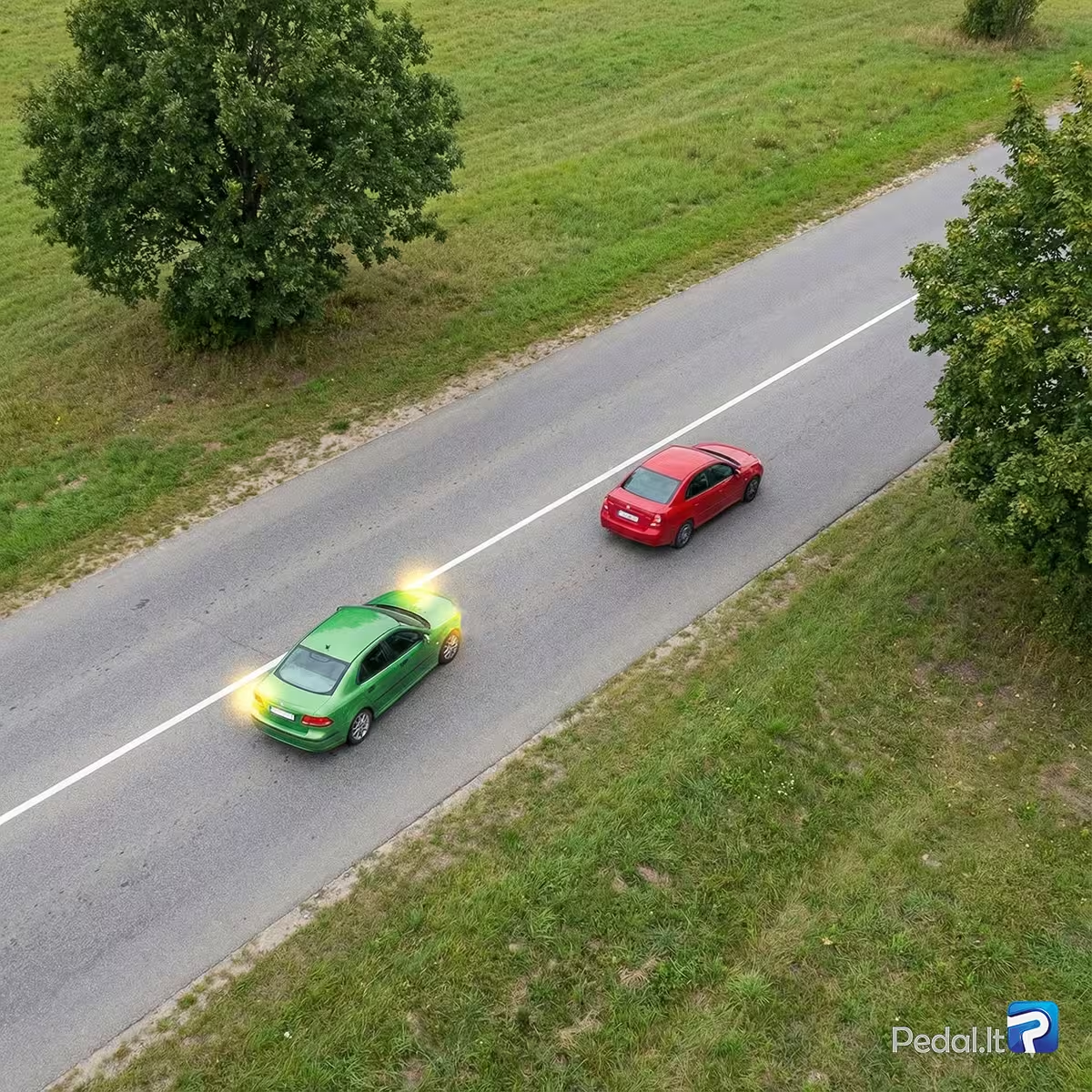
Is the driver of the green vehicle permitted to overtake?
The Road Traffic Rules prohibit crossing a solid line; it does not matter how fast the vehicle you wish to overtake is traveling. Overtaking slow-moving vehicles (traveling under 30 km/h) is allowed only where the 'No Overtaking' sign is in force (within its zone of validity) and there is no solid lane line. http://www.keliueismotaisykles.info/pakeitimai-ir-patarimai/ar-lenkiant-galima-kirsti-istisine-linija RTR Annex 3.1.1. A narrow solid line separates traffic flows in opposite directions and prohibits the use of the oncoming lane on the marked road section; it marks lane edges, areas where access is prohibited, parking space boundaries and the edge of the carriageway; in the case of road sign No 413 'Pedestrian and cycle path', it separates the section reserved for cyclists from the section reserved for pedestrians. It must not be crossed except where it marks the edge of the carriageway or a parking space. RTR Annex 1.325 'Overtaking Prohibited'. Overtaking is prohibited except for single vehicles or single vehicle combinations traveling at less than 30 km/h.
1. Overtaking is permitted.
2. Overtaking is prohibited.
3. Overtaking is permitted if the vehicle being overtaken is traveling at less than 30 km/h.
4. Overtaking is permitted if the vehicle being overtaken is traveling at less than 15 km/h.
What is the purpose of an anti-lock braking system (ABS) in a vehicle?
An anti-lock braking system (ABS) prevents wheel lockup during heavy braking, helping to maintain tire traction and steering control—especially on slippery surfaces. When wheels lock, the vehicle can skid and the driver may lose the ability to steer. ABS modulates brake pressure to preserve grip and directional stability.
1. Because it prevents the wheels from locking during sudden or hard braking, preserving traction and steering control.
2. Because it helps prevent vehicle theft.
3. Because it prevents the vehicle from rolling downhill.
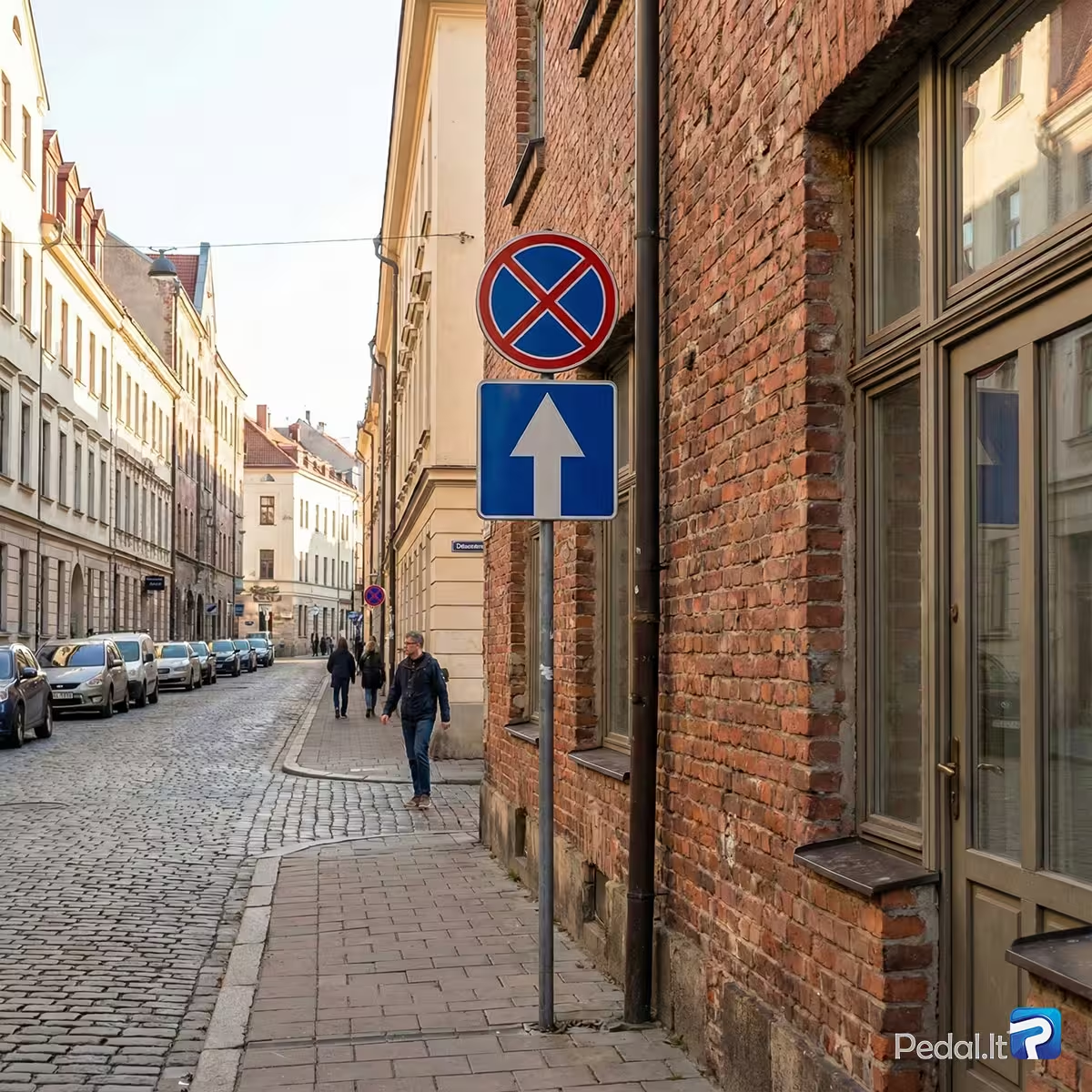
Which of the following actions are permitted on the road beyond these signs?
Traffic rules prohibit reversing only on motorways, expressways and in tunnels; otherwise reversing is allowed. U‑turns are prohibited here because they would require driving against the flow of traffic. RTR Annex 1, III — Restrictive signs: Road sign 332 'No stopping'. Vehicles must not stop or stand on the side of the road where this sign is placed, except for stopping at bus stops. The sign does not apply to vehicles displaying the distinguishing sign 'A person with a disability' or holding a parking card for people with disabilities. If the sign is used in combination with road marking 1.4, the prohibition applies until the end of that marking. RTR Annex 1, V — Special regulation signs: Road sign 503 'One-way traffic' — indicates a road or carriageway where vehicular traffic moves in one direction across the full width.
1. Proceed in one direction.
2. Park vehicles displaying the 'Person with a disability' badge.
3. Make a U‑turn.
4. Reverse (drive backward).
1 of 30 Task
Time left: 00:00:00
1
2
3
4
5
6
7
8
9
10
11
12
13
14
15
16
17
18
19
20
21
22
23
24
25
26
27
28
29
30