Operating a vehicle is prohibited if any of the following applies:
RTR 14. Persons who are not authorized to drive, who are intoxicated, under the influence of narcotic or psychotropic drugs or other psychoactive substances, or who have not taken the legally required daily rest must not drive. Additionally, a person who is fatigued or ill must not drive if doing so could endanger road safety. A vehicle must not be entrusted to anyone affected by the above factors or who is not authorized to operate that class of vehicle. When driving, the driver must comply with any restrictions or conditions indicated on the driving licence.
1. The driver is not authorized to do so.
2. The driver holds valid documents required by the Road Traffic Rules.
3. The driver is intoxicated.
4. The driver is not under the influence of psychoactive substances (e.g., narcotics, medications, or other intoxicating substances).
A vehicle has nearly completed an overtaking maneuver while another vehicle is approaching in the oncoming lane. What should you do?
The Driver Behaviour Manual states: If another vehicle's overtaking endangers or inconveniences traffic in the oncoming lane, the driver of the vehicle being overtaken must try to prevent a hazardous situation by: (1) reducing speed; (2) moving to the side; (3) stopping if necessary. Section 128: If there is an obstruction or traffic safety is at risk, the driver must slow down and, if required, bring the vehicle to a complete stop or go around the obstruction (if it can be seen), provided this can be done without endangering other road users. Section 135: Drivers must not: 135.4. decelerate sharply for reasons other than safety.
1. Apply the brakes.
2. Maintain your current speed.
3. Ease off the accelerator.
4. Increase your speed.
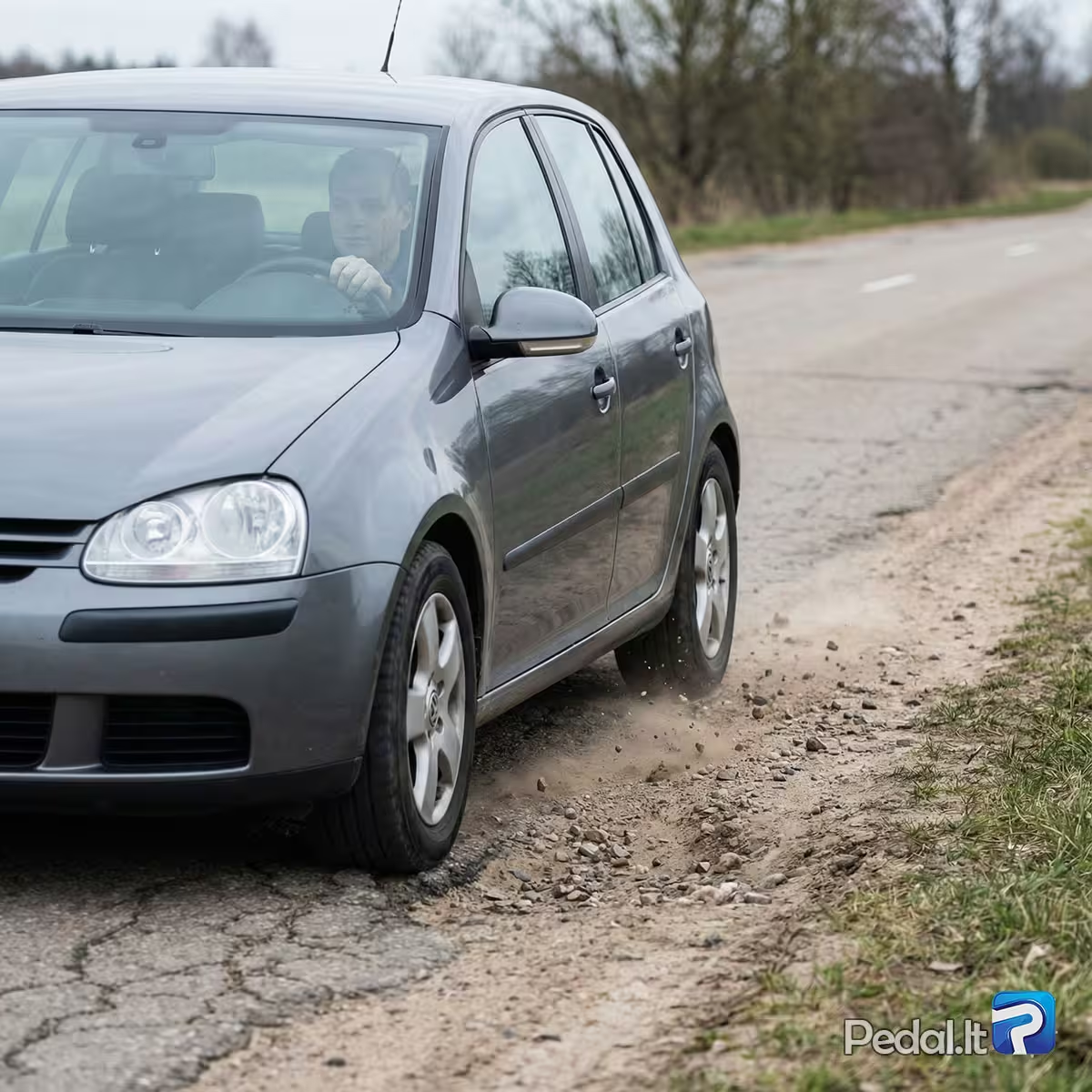
If two wheels of your vehicle move onto the road shoulder while driving, what should you do?
Avoid sudden steering or braking to prevent further instability. Gently accelerate — increasing the driven wheel's RPM will help the wheel regain traction and make it easier to return to the paved road.
1. Apply the brakes and steer back onto the carriageway.
2. Gently accelerate and steer back onto the carriageway.
Can the parking brake be used to slow the vehicle while braking?
The parking brake may be used to help slow the vehicle if the service (main) brakes fail.
1. No — it cannot be used.
2. Yes — in any circumstance.
3. Yes — in an emergency, if the service (main) brakes fail.
Why is a slippery road surface hazardous?
A slippery road surface is hazardous because tyre grip on the pavement is greatly reduced. As a result, stopping distances increase and the vehicle may skid sideways when negotiating a bend.
1. Stopping distance increases.
2. Steering requires more effort.
3. Your vehicle is more likely to skid sideways when cornering.
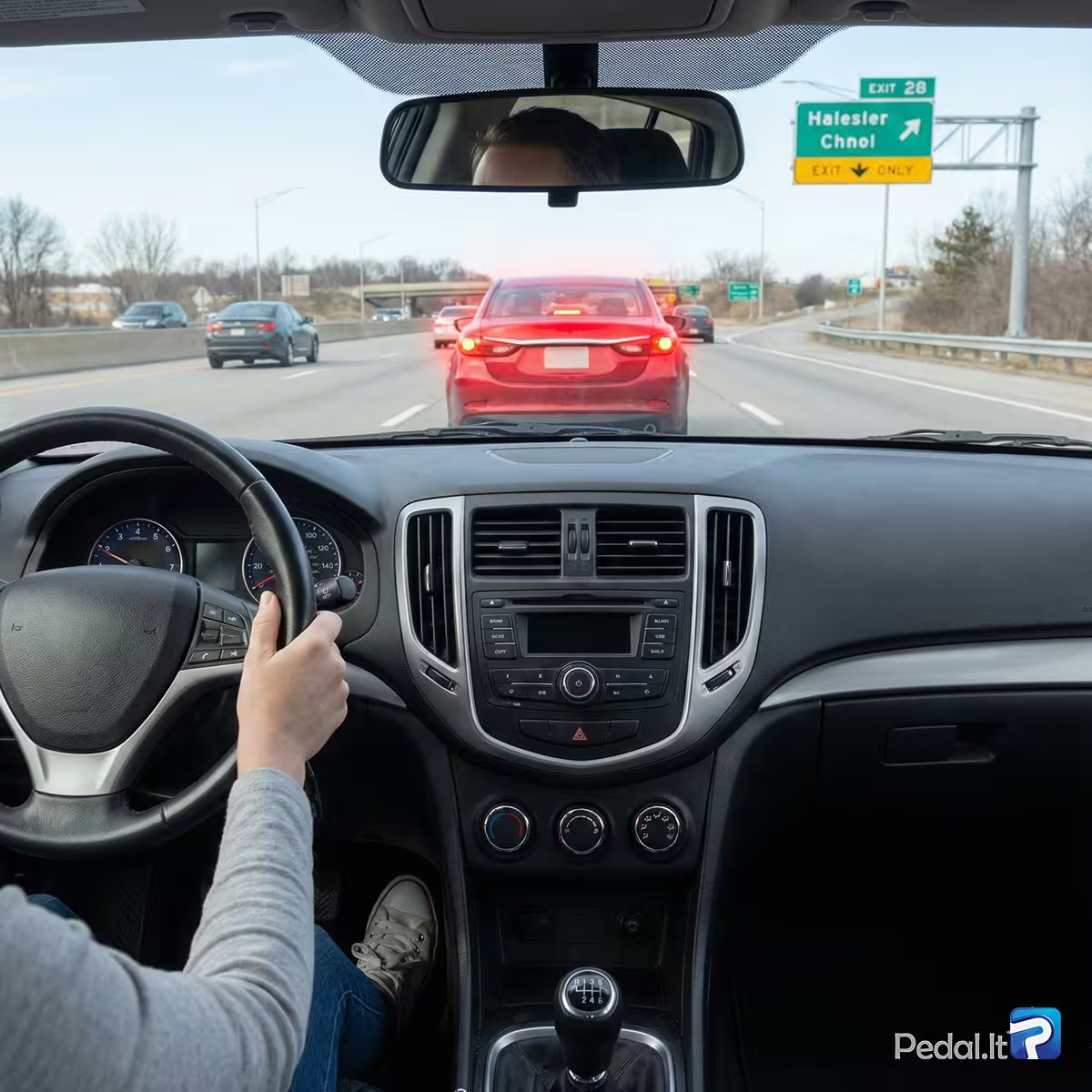
What should you do if you notice a vehicle braking in the distance ahead?
Explanation of terms: • To brake – press the brake pedal; the car slows down rapidly and stops before the expected obstacle. • To release the accelerator pedal – take your foot off the gas; the car gradually slows on its own but does not come to a complete stop and continues moving. • To drive without changing speed – keep the accelerator position the same; the car continues at a constant speed. RTR 128. If there is an obstruction or traffic safety is at risk, the driver must reduce speed or, if necessary, bring the vehicle to a complete stop or steer around the obstruction (if it can be seen) without creating a hazard for other road users.
1. Apply the brakes.
2. Take your foot off the accelerator and be prepared to brake.
3. Maintain your current speed.
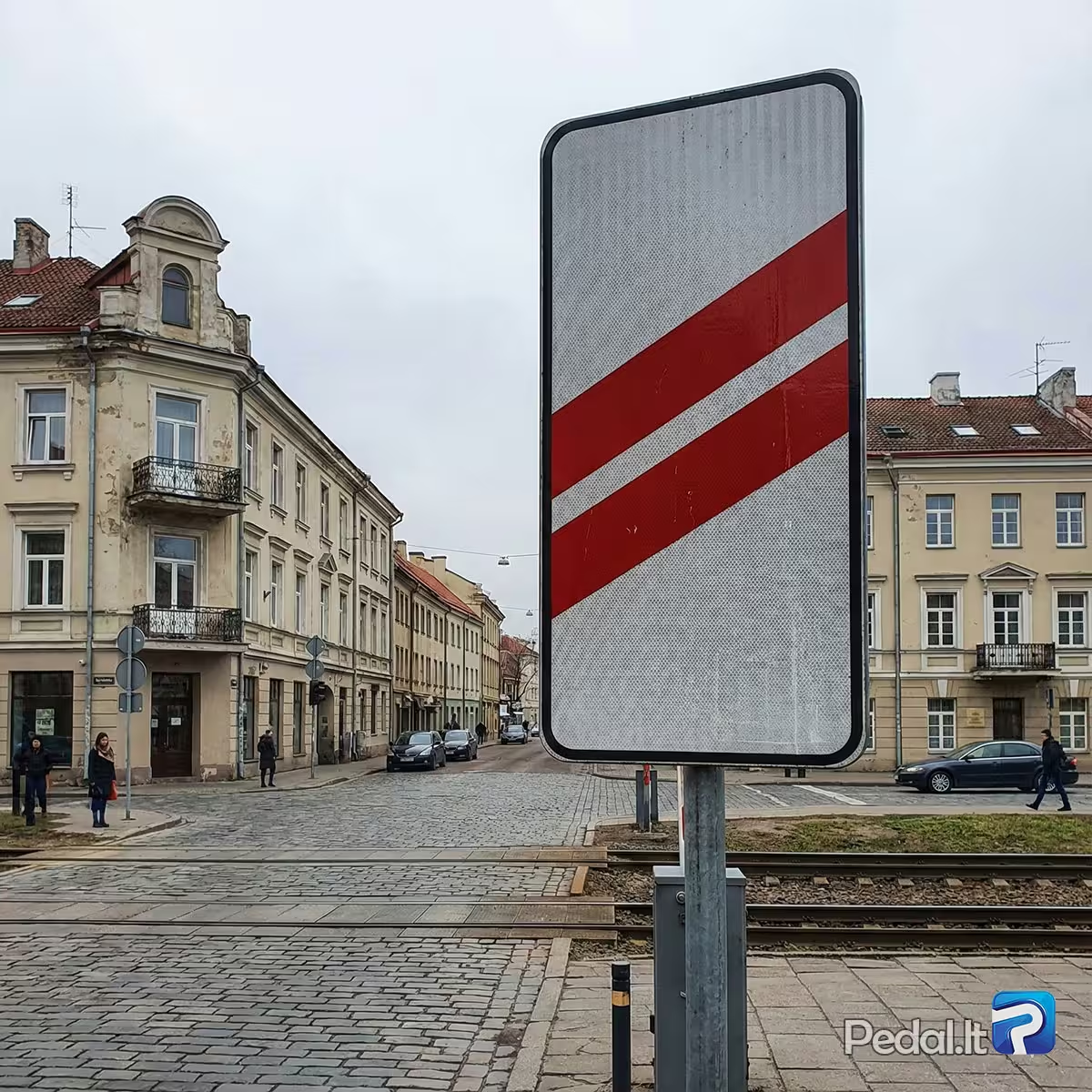
What does this traffic sign indicate?
141. "Level Crossing Ahead" — warns of a railway level crossing ahead located outside a built-up area. The sign is mounted on the right-hand side of the road.
1. It indicates a level crossing ahead located outside a built-up area.
2. It indicates a level crossing ahead located within a built-up area.
Which of the following most accurately defines a vehicle keeper?
LAW ON ROAD TRAFFIC SAFETY Article 2. §84. "Vehicle keeper" shall mean a person in possession of and using a vehicle by virtue of ownership, trust, lease, hire, or another lawful basis.
1. A person driving a vehicle owned by someone else while the vehicle owner (the document holder) occupies the passenger seat.
2. A person who possesses a vehicle and uses it by virtue of ownership, trust, lease, hire, or another lawful basis.
3. A person driving someone else’s vehicle when the vehicle owner (the document holder) is not present.
4. Any individual who is simply driving a vehicle.
Your car begins to skid sideways while braking. What should you do?
If the wheels lock and the car begins to skid while braking, you must release the brake pedal. For example, if you brake hard before a bend and lock the wheels, the vehicle will continue moving in its original direction (straight ahead) despite steering input. That can cause you to run off the road or collide with an obstacle. In that situation you must stop braking — which can be difficult, especially for inexperienced drivers.
1. Press the clutch pedal.
2. Release the brake pedal (stop applying the brakes).
3. Apply the brakes more firmly.
When should you release the throttle and rely on the vehicle's inertia to conserve fuel?
Note: Releasing the throttle is not the same as freewheeling. See 3.4 Control the throttle: 3.4.9 Release the throttle and use the vehicle's inertia before coming to a stop at a predetermined location (for example, at an intersection with a traffic light or at a stop sign) or in similar situations. JB
1. When approaching an intersection with a red traffic light.
2. When driving downhill on a steep slope.
3. When approaching a stop sign.
4. Before coming to a stop at a predetermined location.
Are people using a wheelchair considered pedestrians?
LAW ON ROAD TRAFFIC SAFETY — Article 2, clause 42. "Pedestrian" means a person present on the road who is not inside a vehicle, including a person using a wheelchair, on roller/inline skates, on a skateboard or scooter, walking while leading or pushing a bicycle, moped, or motorcycle, or pulling/pushing a sledge, pram, or other type of carriage. A person performing work on the road shall not be considered a pedestrian.
1. Yes — they are considered pedestrians.
2. No — they are not considered pedestrians.
When making a turn, a vehicle is more stable when it is moving:
Compared with coasting (driving in neutral), driving with a gear engaged provides better control because, even without pressing the accelerator, the engine maintains steady rotational force on the driven wheels. Rapidly reducing speed during a turn can make the vehicle less stable, while increasing speed can make it harder to complete the turn smoothly due to the higher centrifugal force. Choose and maintain an appropriate speed before entering the turn.
1. With the gearbox engaged.
2. With the gearbox disengaged (in neutral).
3. By increasing speed.
4. By reducing speed.
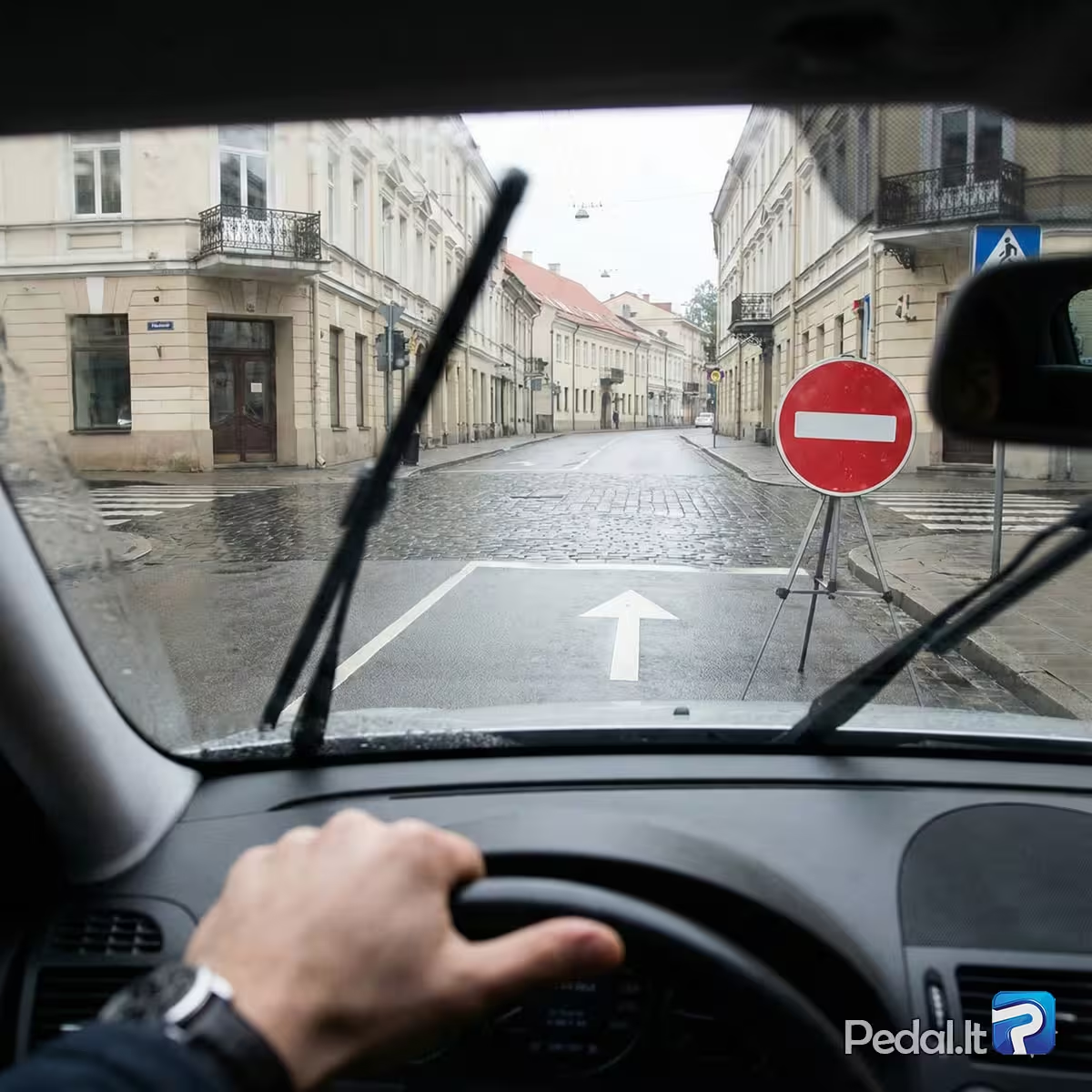
What should you do if road signs contradict the horizontal road markings?
RTR 8. In the Republic of Lithuania, traffic may be regulated only by road signs listed in Annex 1 to the Rules, by variable message signs treated as road signs (examples are given in Annex 2), by road markings specified in Annex 3, by traffic lights, and by signals from traffic officers, as provided for in these Rules and other legal acts governing traffic control. If the requirements of a road sign conflict with those of a road marking, the road sign must be obeyed. When variable message signs are in use, their indications must be followed. Signals given by traffic officers take precedence over traffic lights, road signs, road markings, and the provisions of these Rules. Road users must comply with the signs that apply to them.
1. You should follow the road signs.
2. You should follow the horizontal road markings.
When driving, you must yield to pedestrians when they:
RTR 30. When approaching an uncontrolled pedestrian crossing, a driver must slow down or stop before the crossing to yield to pedestrians who have stepped into any lane, are moving within any lane, or are standing immediately before a lane (at the edge of the roadway) waiting for the opportunity to step into that lane in the direction of the vehicle’s travel or into any lane on a road with one lane in each direction. Drivers must take extra precautions during hours of darkness, when visibility is poor, or whenever a pedestrian crossing is not clearly visible from the driver’s position, and must ensure there are no pedestrians who should be given way at the crossing.
1. Are already on a pedestrian crossing.
2. Are stepping onto a pedestrian crossing.
3. Are standing at the edge of the roadway before a pedestrian crossing and waiting for the opportunity to step onto it.
Which of the following are warning signals?
RTR 81. Warning signals include: using turn and brake lights (arm signals may be used), sounding the horn, switching the headlights on and off, activating hazard warning lights or flashing amber beacons, and placing a warning triangle on the road or attaching it to the vehicle.
1. Brake light signal.
2. Indicating a turn using an arm signal.
3. Horn signal.
4. Switching the headlights on and off.
5. Placing a warning triangle on the road.
Before making a turn, drivers must ensure that:
Before making a turn, drivers must reduce speed and ensure their vehicle does not enter the lane of oncoming traffic or that the rear wheels do not mount the pavement. RTR 108. The turning manoeuvre must be executed so that vehicles do not encroach on the oncoming-traffic lane when entering or leaving the intersection. If a turn is made from a single lane, the driver may choose any lane of the carriageway into which they are turning. If turning is permitted from multiple lanes, drivers must remain in their lane and must not obstruct a vehicle turning from an adjacent lane.
1. Their vehicle does not enter the lane designated for oncoming traffic.
2. The rear wheels of their vehicle do not mount the pavement.
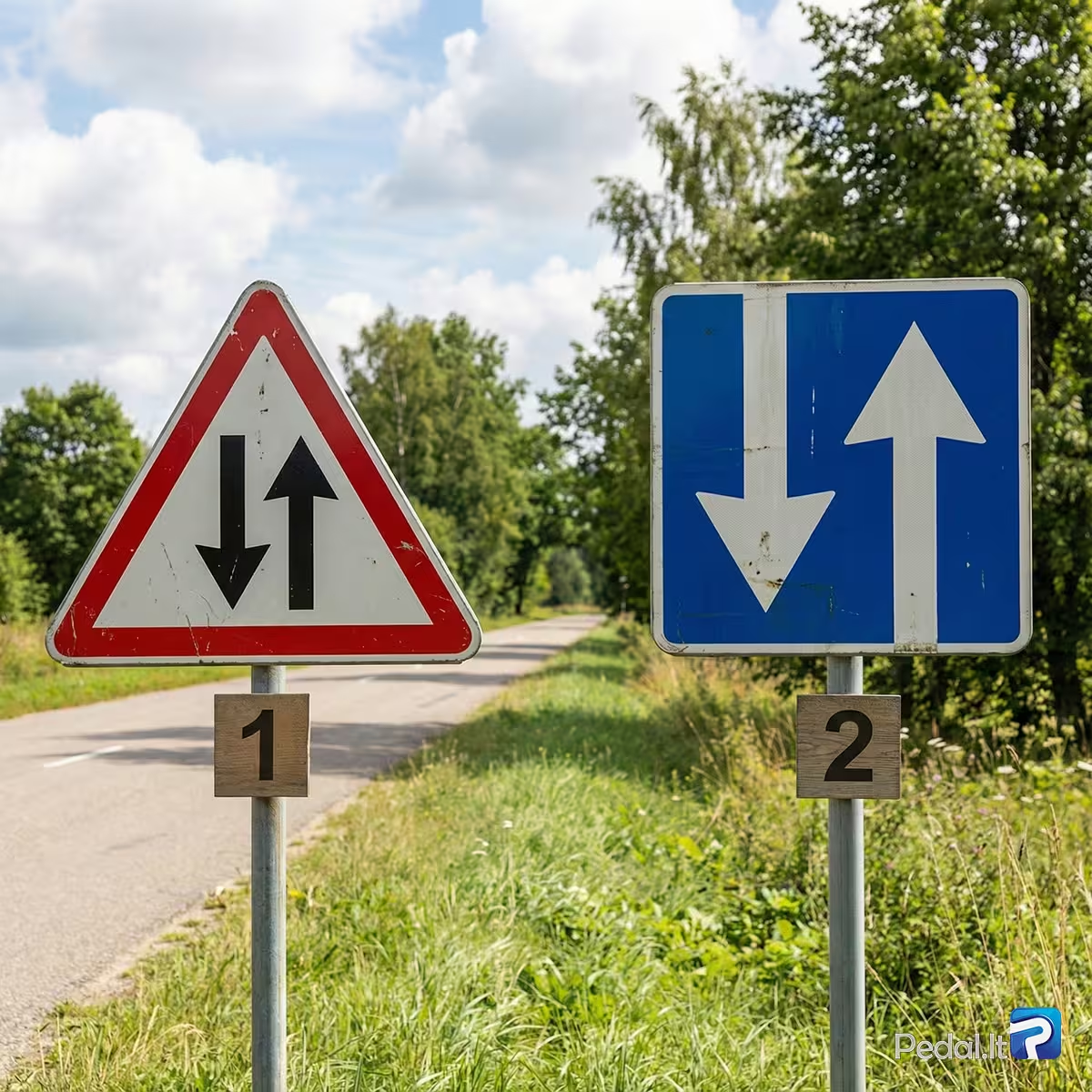
Which sign indicates that the road ahead carries two-way (opposing) traffic?
Warning signs alert drivers to upcoming changes in traffic conditions. Sign 126, 'Two-Way Traffic', indicates the start of a carriageway section with opposing traffic. Sign 504, 'End of One-Way Traffic', is a regulatory sign that marks the end of a one-way traffic section. (RTR Annex 1: 126 and 504.)
1. Sign 1.
2. Sign 2.
Where does fog typically form?
Fog typically forms over and near bodies of water, and in humid, low-lying areas.
1. Near lakes.
2. Near rivers.
3. In marshy or swampy areas.
4. In low-lying sections of roads.
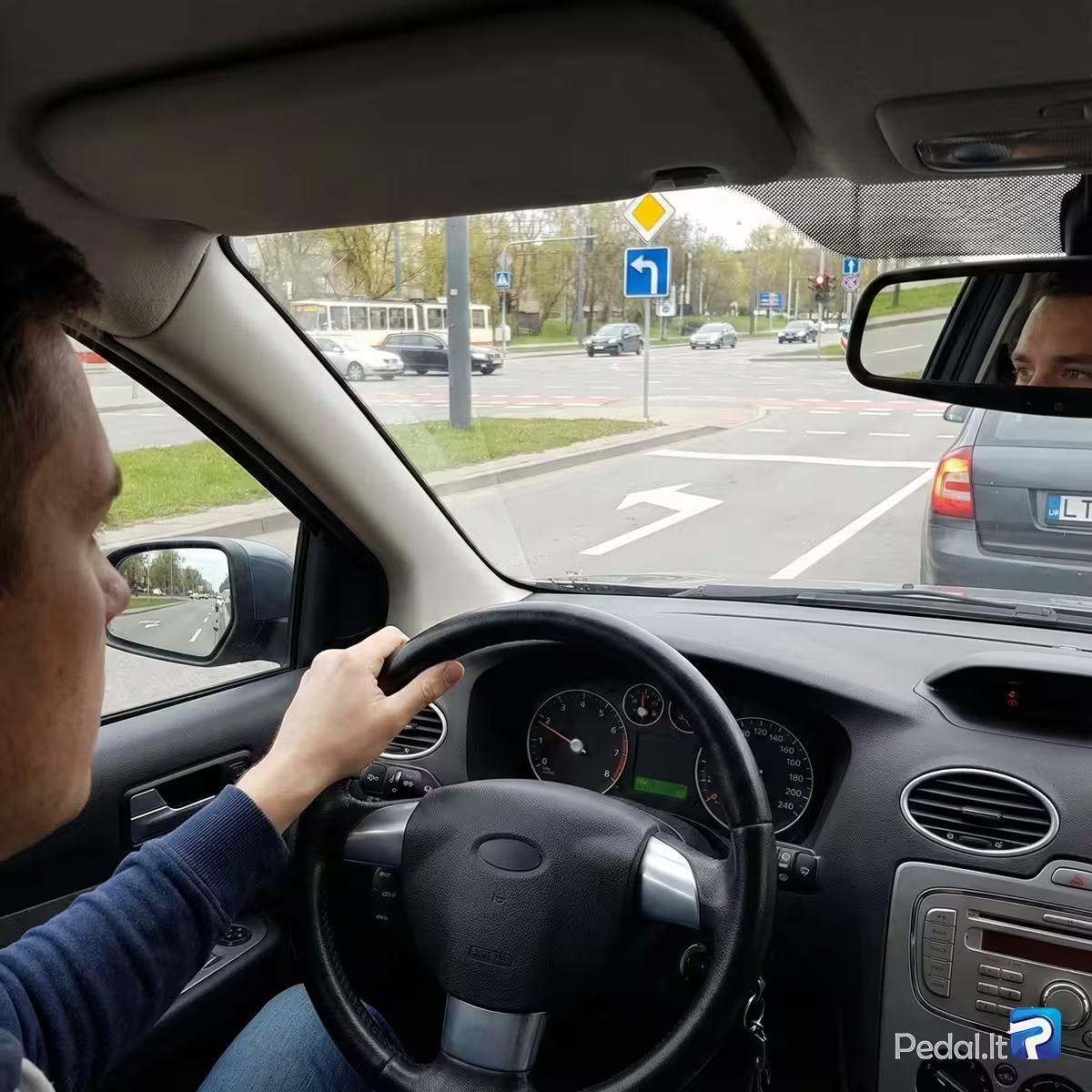
You are approaching a bend in the road:
Drivers approaching a road bend should be aware the bend may be sharper than it appears. Choose a safe speed and the correct road position to avoid entering the oncoming lane. A safe speed depends on all circumstances: weather, road and vehicle condition (including load), driver experience and fitness. According to RTR 127, drivers must not exceed the legal speed limit. When selecting speed, consider the terrain, road and vehicle condition, load, weather and traffic density so you can stop safely for any foreseeable obstacle. Drivers must slow down and stop when conditions require, especially if visibility is poor.
1. You will increase your speed midway through the bend.
2. You will reduce your speed before the bend.
3. You will reduce your speed while in the middle of the bend.
4. You will not change your speed.
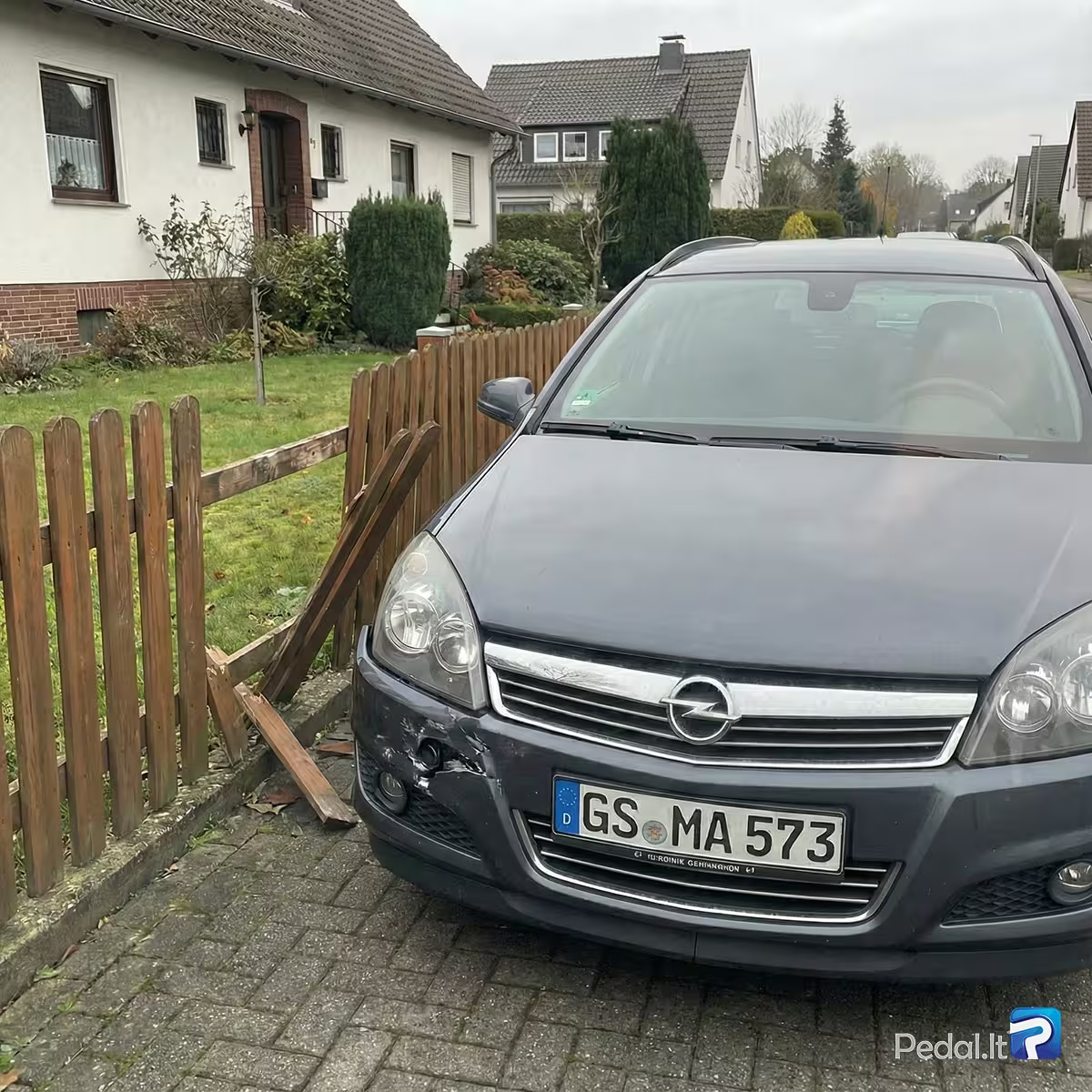
You have damaged the fence of a private property with your vehicle while the owner is absent. What must you do?
1. Leave a note with your contact information and then leave the scene.
2. Attempt to repair the damage yourself if it is safe and feasible.
3. Notify the police and remain at the scene until instructed otherwise.
4. Drive away from the scene because the property owner is absent.
What can cause a vehicle to skid?
Sudden steering wheel movements, improper use of the accelerator, or other actions that do not take the road surface and driving speed into account can cause a vehicle to skid. In general, it is the driver's own actions (for example, sudden braking), not the actions of another driver, that lead to skidding. The driver must choose an appropriate speed and following distance so that the actions of other road users do not endanger the vehicle. 126. The driver must maintain a distance appropriate to the speed, sufficient to avoid hitting the vehicle in front if it brakes, and must leave a lateral gap to ensure traffic safety. It is recommended that the distance to the vehicle ahead be at least the distance covered in two seconds or at least half the speedometer reading converted into metres (for example, at 70 km/h the distance should be at least 35 m), unless traffic conditions require otherwise. Drivers of motor vehicles, tractors and self-propelled machinery shall, when overtaking pedestrians or when overtaking or passing cyclists or drivers of electric micro-mobility vehicles, leave a lateral distance of at least 1.0 m when their speed does not exceed 50 km/h and at least 1.5 m when their speed exceeds 50 km/h. The requirement to maintain the specified lateral distance does not apply on a single-lane road.
1. The driver's actions.
2. An emergency caused by another driver.
How is a road accident defined?
LAW ON ROAD TRAFFIC SAFETY — Article 2, Section 14. A 'road accident' means an incident occurring on a road in public or private areas where a moving vehicle causes death or injury to persons, or damages or destroys at least one vehicle, a load, the roadway, its structures, or any other property at the scene.
1. When the driver of an animal-drawn vehicle falls from the carriage while traveling on a road in public or private territory.
2. When two cyclists collide on a road in public or private territory and one or both sustain injuries.
3. When a pedestrian is struck and injured by a moped on a road in public or private territory.
4. When a vehicle's chassis is damaged after striking a pothole.
5. When property at the scene of a road incident on a road in public or private territory is damaged or destroyed in the presence of a moving vehicle.
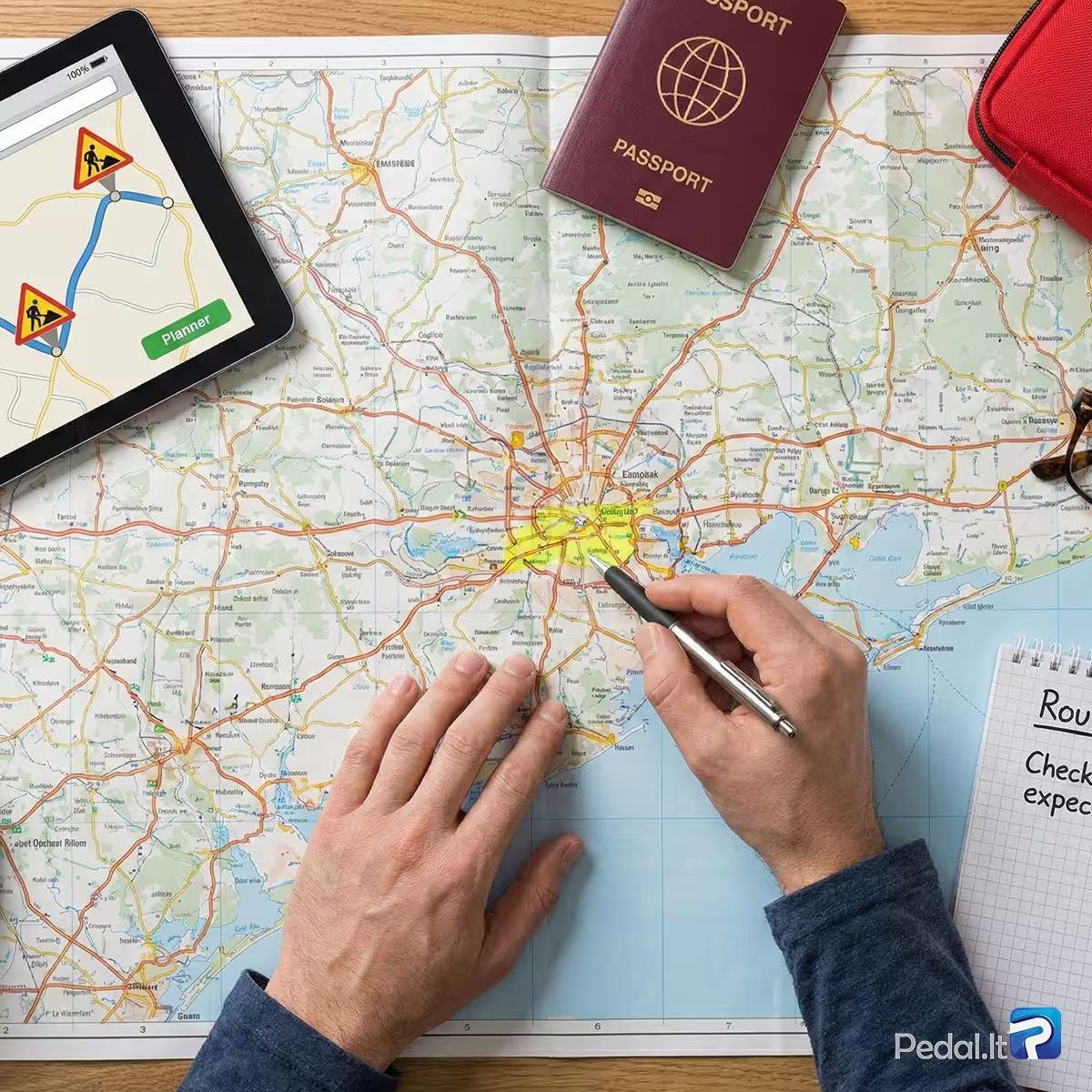
How should you plan your route when travelling a long distance that may include roadworks, border crossings and unexpected events?
JB
1. Estimate the additional fuel required for your journey and plan appropriate refuelling stops.
2. No planning is necessary.
3. Plan your departure time, stops and rest breaks, parking arrangements, and the route your vehicle will follow to the destination.
4. Check the traffic laws and legal requirements of any countries you will pass through.
What should drivers do if they encounter a pothole on the road that cannot be avoided while traveling at high speed?
When you see a pothole, reduce your speed and try to steer around it. If avoidance is impossible and an impact cannot be prevented, release the brakes just before the pothole and straighten the steering — this reduces the chance of damaging the tire or suspension components.
1. Release the brakes just before hitting the pothole.
2. Accelerate before hitting the pothole.
.avif)
What are the fundamental principles of driver conduct?
1. Responsibility and courtesy.
2. Aggressive behavior.
3. Anger.
4. Disrespect toward other road users.
Indicate the maximum permitted speed for learner drivers when driving outside a built-up area on a road with an asphalt surface.
RTR 131. The following speed limits apply outside built-up areas: 131.2. The maximum speed for A1, A2, A or B category vehicles driven by novice drivers, persons learning to drive or taking a practical driving test, and buses (including school buses) is: 100 km/h on motorways; 90 km/h on highways; 80 km/h on roads with asphalt or concrete pavement; and 70 km/h on other roads. JB
1. 50 km/h.
2. 80 km/h.
3. 70 km/h.
4. 90 km/h.
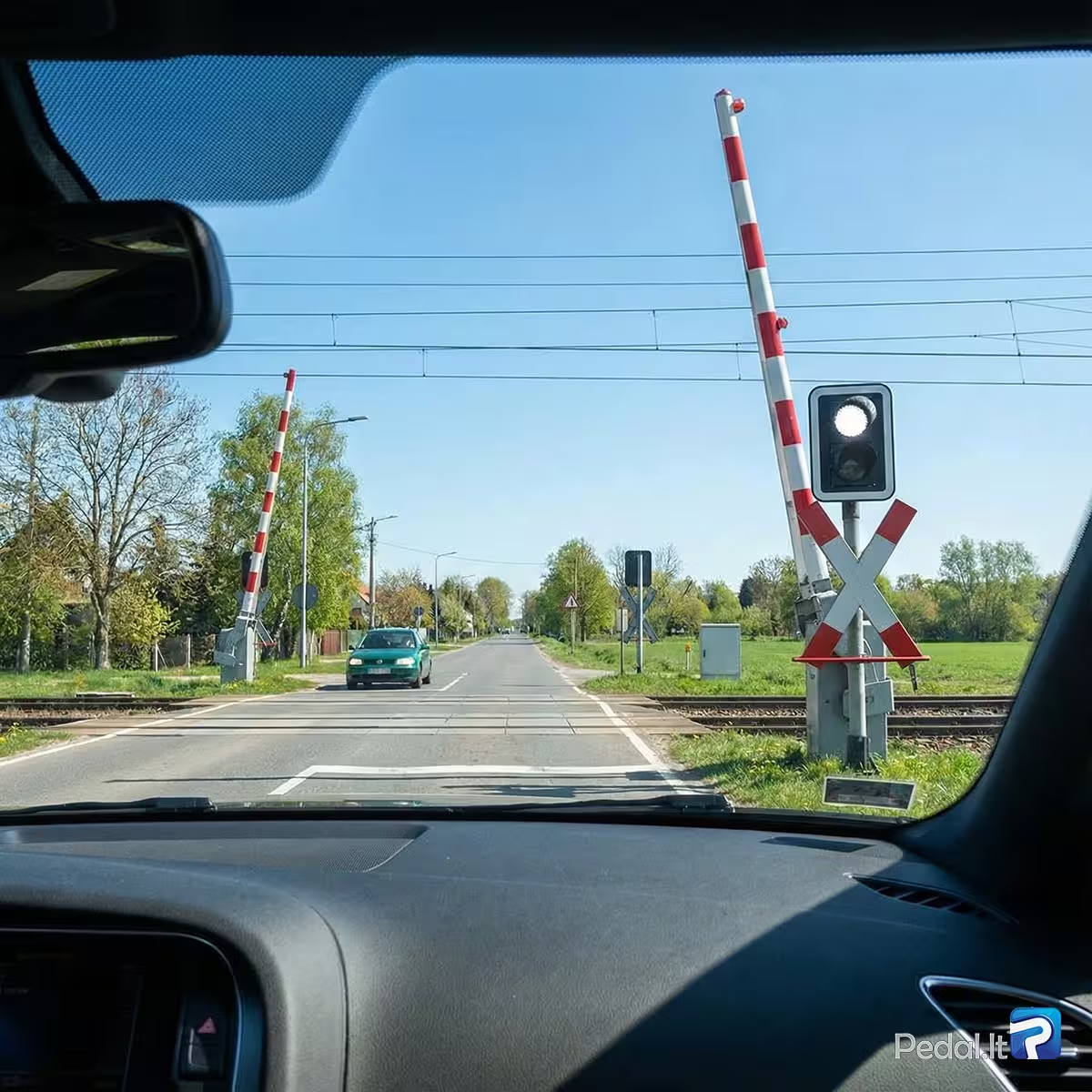
You see a flashing white light and the barrier is fully raised. Are you permitted to cross the level crossing in this situation?
RTR 73. Traffic light signals: 73.10. A flashing white light used at level crossings indicates that vehicles may proceed only after confirming that no rail-borne vehicle is approaching the crossing.
1. Yes — but only after you have verified that no train or other rail vehicle is approaching the level crossing.
2. No — you may not proceed.
How does fatigue affect a driver?
When a driver operates a vehicle while fatigued, their memory and attention are impaired. They take longer to notice signals and assess situations, driving performance declines, reaction times are delayed, and vehicle control deteriorates.
1. Attention diminishes.
2. Fatigue has no effect on driving.
3. Reaction time is delayed.
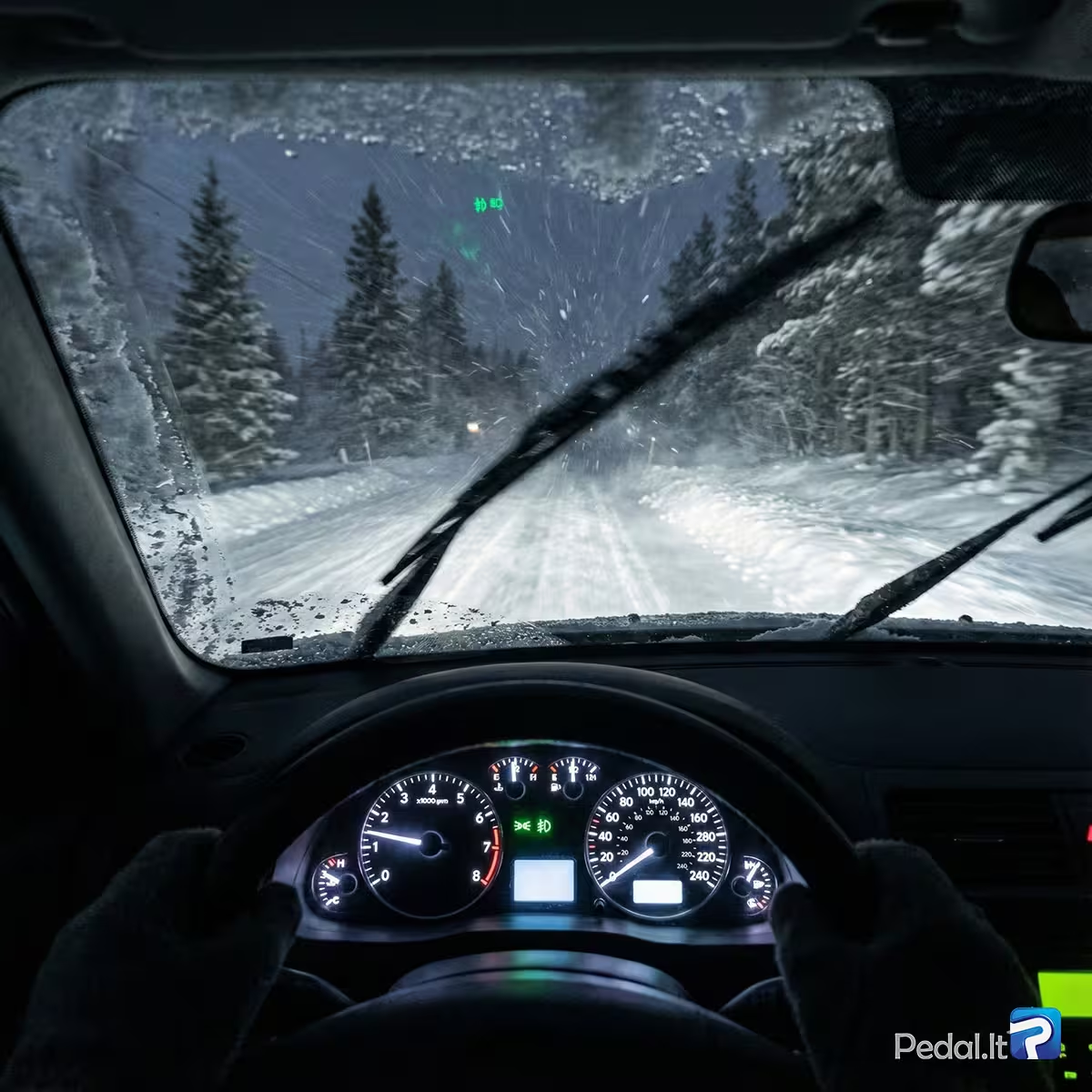
Which exterior lights should be switched on to improve visibility on the road during darkness and when snow is blowing?
When driving at night and during blowing snow, you should switch on the fog lamps together with the dipped-beam (low-beam) headlamps. Using the main-beam (high-beam) headlamps will cause light to reflect off the snow and dazzle the driver. (RTR 98) Fog lamps should only be used when visibility is seriously reduced; the front fog lamps may also be used in the event of failure of the front left dipped-beam headlamp.
1. Fog lamps used together with the main-beam (high-beam) headlamps.
2. Fog lamps used together with the dipped-beam (low-beam) headlamps.
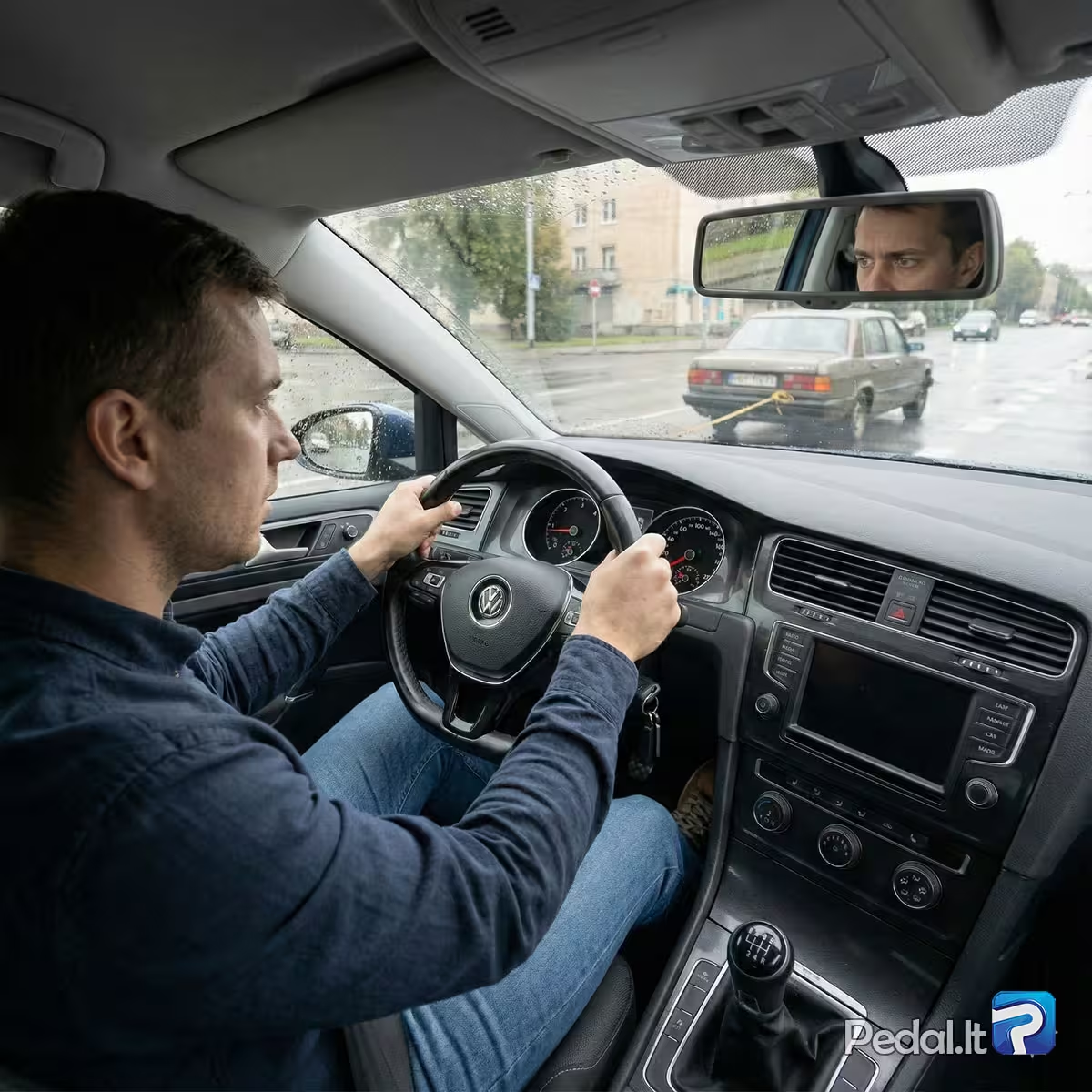
What should a driver be aware of when towing a vehicle whose engine—and therefore its brake servo—is not running?
Consider the effect on braking performance when towing a vehicle whose engine (and thus its brake servo) is not operating.
1. Continue driving as usual.
2. The towed vehicle's braking effectiveness is reduced.
1 of 30 Task
Time left: 00:00:00
1
2
3
4
5
6
7
8
9
10
11
12
13
14
15
16
17
18
19
20
21
22
23
24
25
26
27
28
29
30