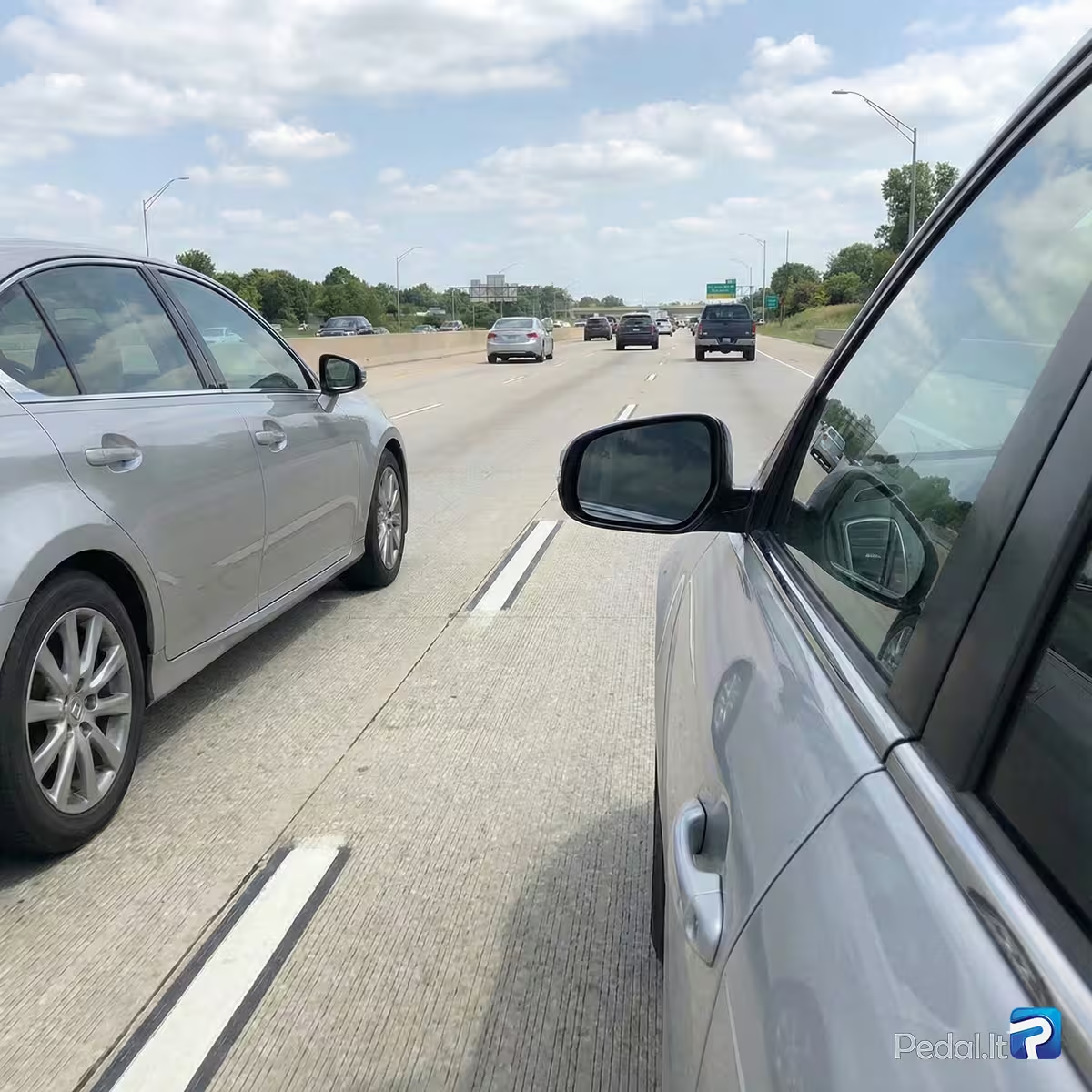
What lateral distance from nearby vehicles is considered safe?
3.17 Choosing a safe distance: operate the vehicle so that: 3.17.3. the distance to other vehicles, whether moving or stationary, is safe relative to any parked vehicle — maintain sufficient clearance to prevent parked vehicles or other obstacles from causing interference. When the vehicle is parked in a parking space, the lateral clearance should permit opening the vehicle's doors.
1. A lateral clearance sufficient to allow the vehicle's doors to be opened.
2. 1 m.
3. 50 cm.
4. 30 cm.
When driving, you must yield to pedestrians when they:
RTR 30. When approaching an uncontrolled pedestrian crossing, a driver must slow down or stop before the crossing to yield to pedestrians who have stepped into any lane, are moving within any lane, or are standing immediately before a lane (at the edge of the roadway) waiting for the opportunity to step into that lane in the direction of the vehicle’s travel or into any lane on a road with one lane in each direction. Drivers must take extra precautions during hours of darkness, when visibility is poor, or whenever a pedestrian crossing is not clearly visible from the driver’s position, and must ensure there are no pedestrians who should be given way at the crossing.
1. Are already on a pedestrian crossing.
2. Are stepping onto a pedestrian crossing.
3. Are standing at the edge of the roadway before a pedestrian crossing and waiting for the opportunity to step onto it.
What are the common signs that a car battery is dead?
Select the signs that indicate the car battery may be dead.
1. When attempting to start the car, the starter motor does not engage or cranks very slowly.
2. When attempting to start the car, the dashboard lights dim or go out.
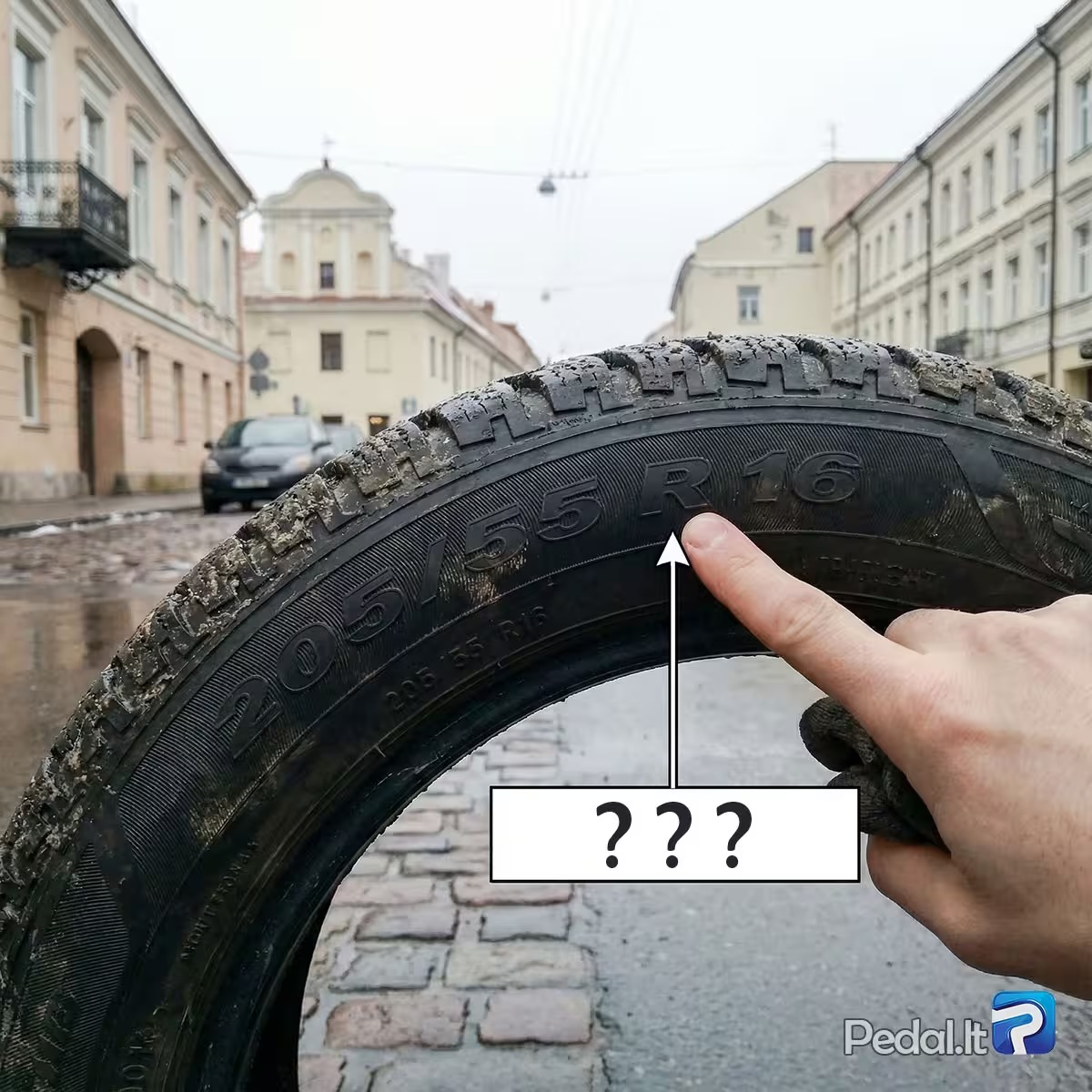
What does the letter 'R' indicate in tyre markings?
The letter 'R' denotes a radial tyre construction. In a radial tyre, the carcass cords run from one bead to the other in a radial direction instead of being wrapped around the bead cores. Thin, flexible crown plies provide the tread area with the required rigidity and flexibility while minimizing elastic deformation.
1. The tyre's construction (radial construction).
2. Tyre diameter.
3. Tyre load index.
You are driving in heavy rain and the steering wheel suddenly becomes very light to turn. What should you do?
If the steering wheel becomes very easy to turn, the vehicle's tyres have likely lost traction on the slippery road surface. In this situation, you must reduce your speed gradually — abrupt throttle changes or hard braking can cause the vehicle to skid or lose control.
1. You will slightly increase your speed.
2. You will gradually release the accelerator.
3. You will brake suddenly to reduce your speed.
4. You will move towards the hard shoulder.
The term "service vehicle" refers to:
RTR 3.1. "Service vehicles" are vehicles owned by companies, institutions, or organisations operating in an area marked by restrictive signs; vehicles belonging to persons who live or work in that area; vehicles delivering goods to that area or collecting goods from it; and taxis or other passenger vehicles providing paid transport to or from that area.
1. Any vehicle used for transporting goods.
2. A vehicle owned by companies, institutions, or organisations operating in an area marked with restrictive signs, or by persons working in that area.
3. A vehicle owned by persons residing in an area marked with restrictive signs.
4. A vehicle delivering goods to an area marked with restrictive signs, or collecting goods from it.
5. Taxis or other passenger vehicles providing paid transport to or from an area marked with restrictive signs.
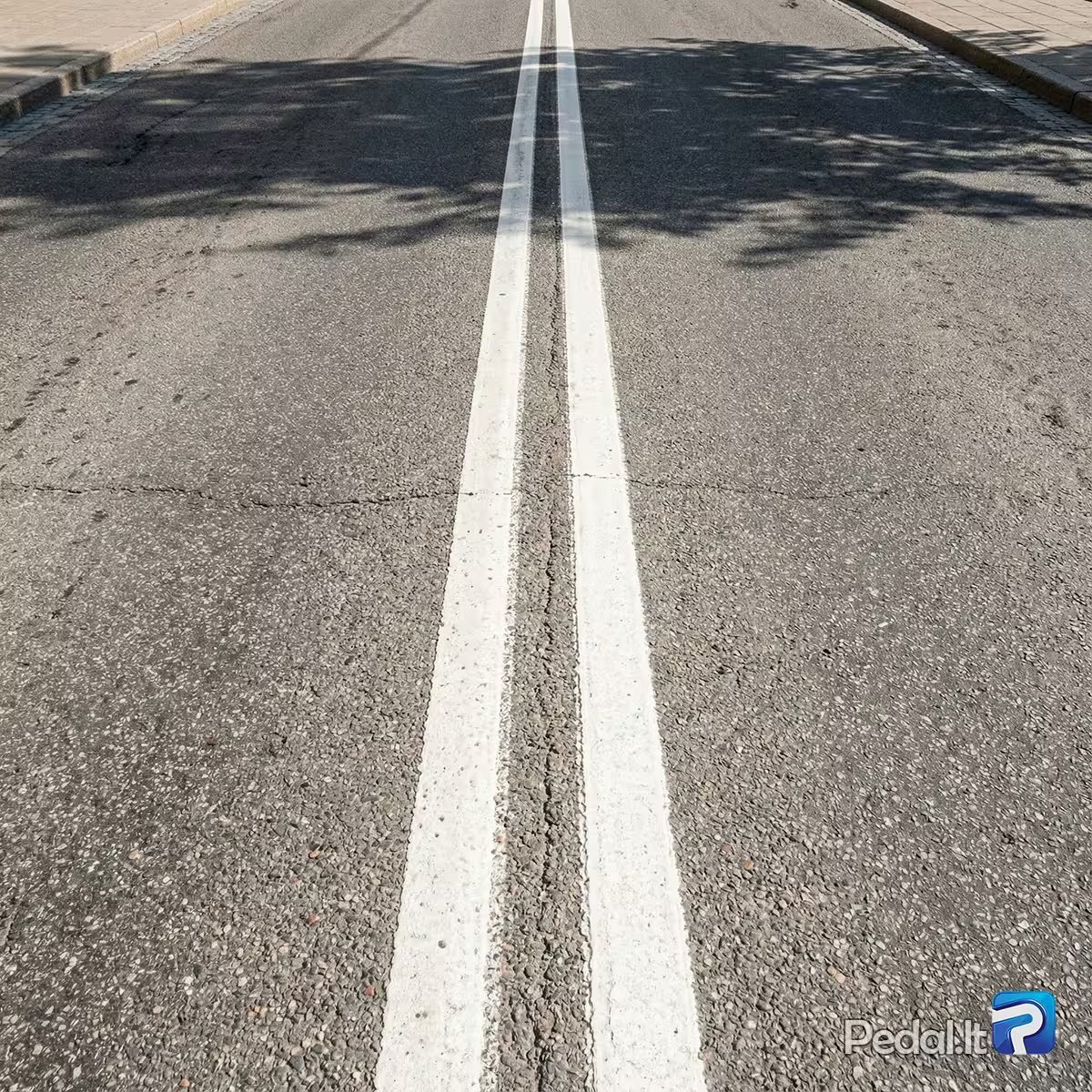
What does this road marking indicate?
On roads with four or more lanes, a double solid line separates opposing traffic flows. It prohibits driving in lanes that carry traffic in the opposite direction on the marked section; vehicles must not cross this line.
1. Crossing this line is prohibited.
2. Crossing the line is only permitted when making a U-turn.
3. Crossing this line is allowed.
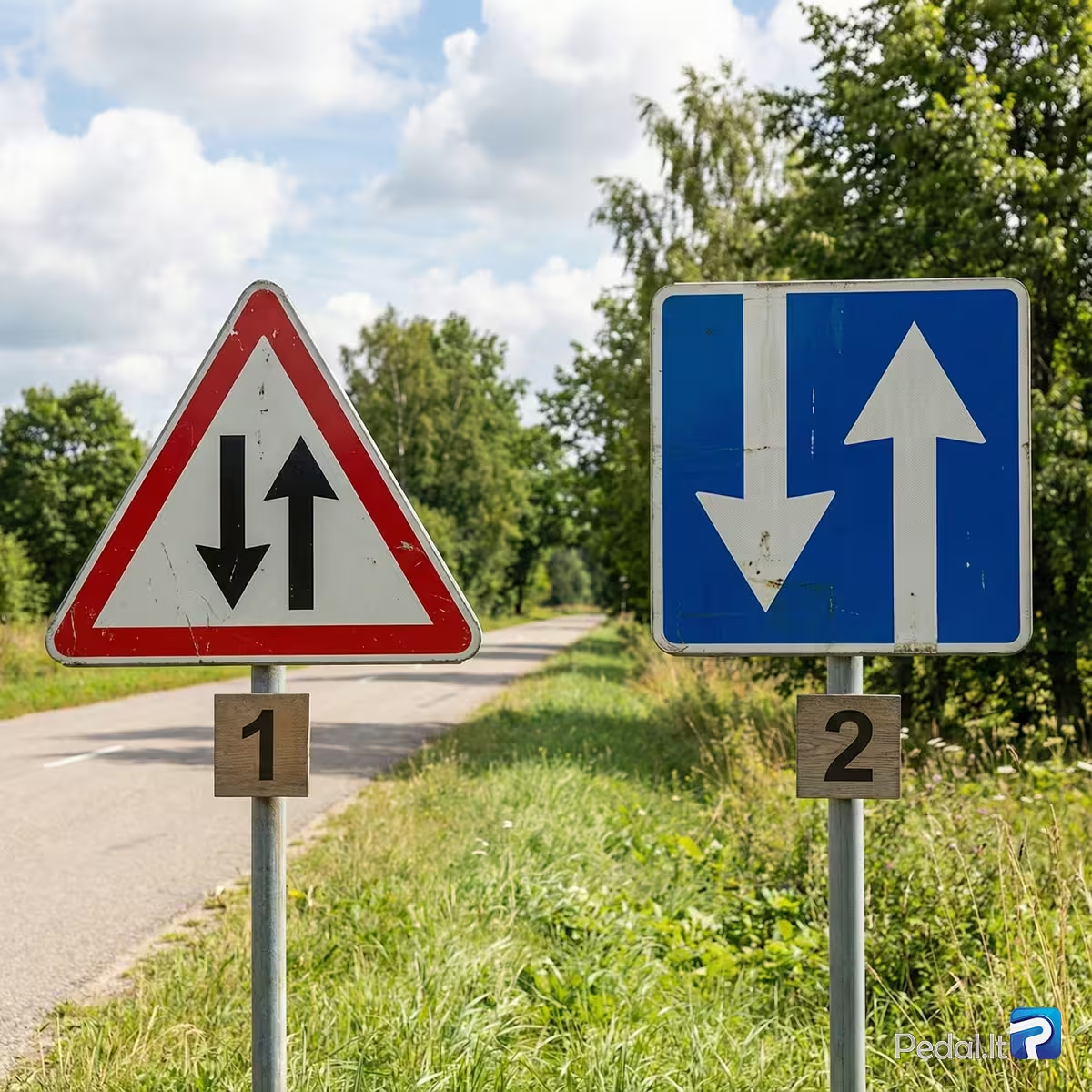
Which sign indicates that the road ahead carries two-way (opposing) traffic?
Warning signs alert drivers to upcoming changes in traffic conditions. Sign 126, 'Two-Way Traffic', indicates the start of a carriageway section with opposing traffic. Sign 504, 'End of One-Way Traffic', is a regulatory sign that marks the end of a one-way traffic section. (RTR Annex 1: 126 and 504.)
1. Sign 1.
2. Sign 2.
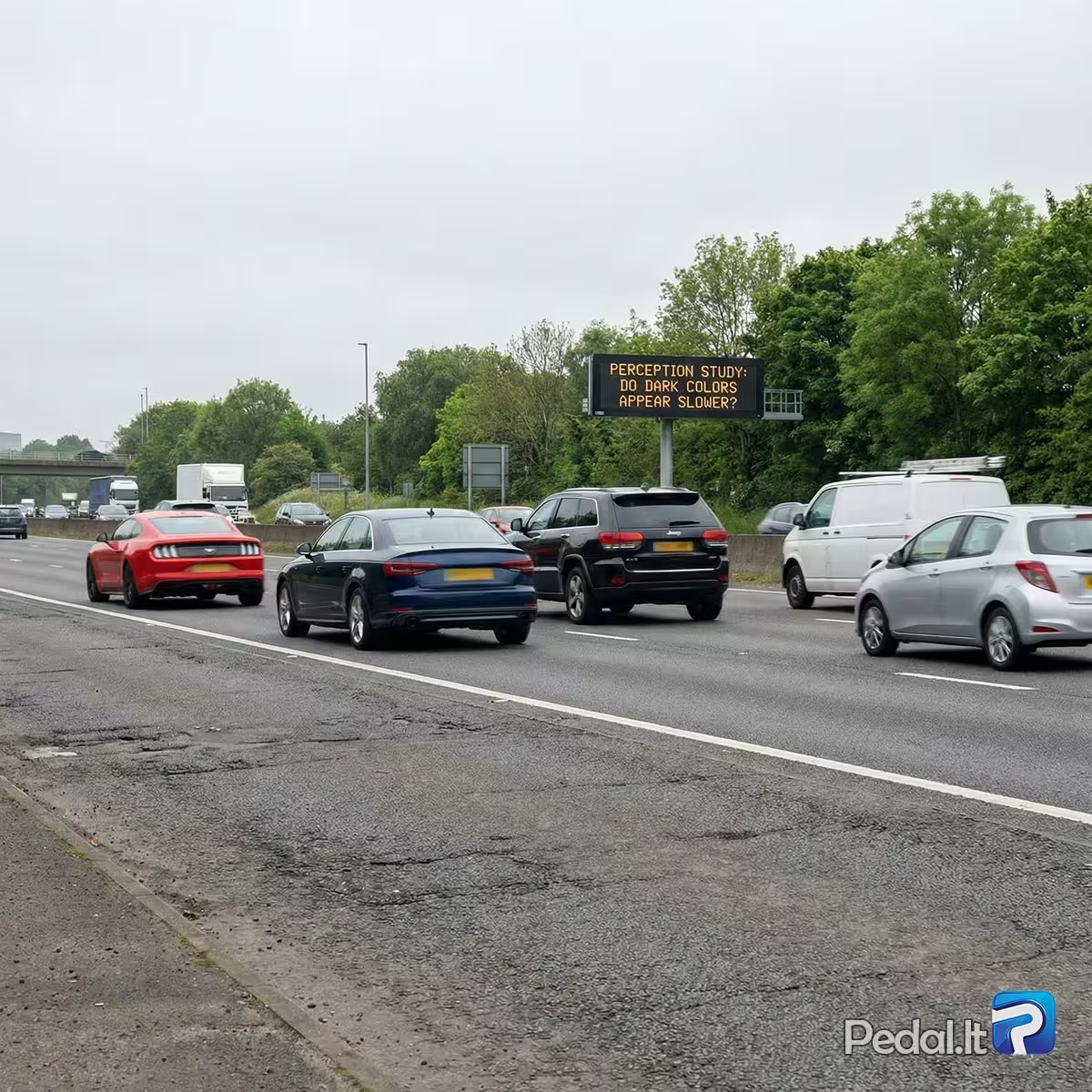
Which colour of vehicle tends to appear to be moving more slowly than it actually is?
Oncoming vehicles painted in dark colours often create the illusion that they are moving more slowly than they actually are.
1. Light-coloured vehicles.
2. Dark-coloured vehicles.
What is the purpose of seat belts?
In a road accident, a seat belt keeps the driver and passengers restrained in their seats and prevents ejection from the vehicle, even during a rollover. Occupants who are not restrained are often ejected and may be crushed by an overturned vehicle, frequently suffering severe injuries or death. Seat belts also help reduce the severity of injuries by distributing crash forces across the body's stronger, less vulnerable areas.
1. Seat belts distribute the forces produced in a road crash across the body's less vulnerable areas.
2. In a road collision, seat belts keep the driver and passengers secured in their seats.
When is the road surface most slippery?
The road surface is most slippery at the start of rain because accumulated dust and oil on the pavement combine with the first drops to form a slippery film.
1. When rain begins.
2. After heavy rain.
3. After puddles have formed on the road.
What should drivers do if they encounter a pothole on the road that cannot be avoided while traveling at high speed?
When you see a pothole, reduce your speed and try to steer around it. If avoidance is impossible and an impact cannot be prevented, release the brakes just before the pothole and straighten the steering — this reduces the chance of damaging the tire or suspension components.
1. Release the brakes just before hitting the pothole.
2. Accelerate before hitting the pothole.
If, because of its large size or for other reasons, a vehicle cannot turn (or turn around) from the edge position, it may perform the turn:
RTR 107. If, because of large dimensions or other reasons, a vehicle cannot turn (or make a U‑turn) from the edge position, it may execute the turn from a location other than the lane edge designated for travel in that direction, provided the manoeuvre does not obstruct other vehicles or create hazards for other road users.
1. At a location other than an intersection.
2. Outside a built-up (urban) area.
3. Not from the edge of the carriageway, provided the manoeuvre does not obstruct other vehicles or create hazards for other road users.
Which vehicle(s) are classified as a public service vehicle?
A minibus is a vehicle with no more than eight passenger seats (excluding the driver’s seat) and a maximum permissible mass not exceeding 3.5 tonnes. It may be used for private or commercial purposes. A scheduled taxi (scheduled minibus) is a public transport vehicle that operates on a fixed route with designated stops and is marked with the sign "Regular transport." A public service vehicle is any public transport vehicle — for example a bus, trolleybus, or shuttle bus — that regularly carries passengers along a specified route with defined stops; the term also includes school buses.
1. Taxi.
2. Minibuses.
3. Public transport vehicles — for example buses, trolleybuses, and shuttle buses — that regularly carry passengers along a specified route with designated stops.
To begin driving uphill, when should the parking brake be released?
If the parking brake is used when starting on an uphill gradient, release it simultaneously with moving off.
1. After you have started moving.
2. Before you start moving.
3. Simultaneously with starting to move.
Which of the following are warning signals?
RTR 81. Warning signals include: using turn and brake lights (arm signals may be used), sounding the horn, switching the headlights on and off, activating hazard warning lights or flashing amber beacons, and placing a warning triangle on the road or attaching it to the vehicle.
1. Brake light signal.
2. Indicating a turn using an arm signal.
3. Horn signal.
4. Switching the headlights on and off.
5. Placing a warning triangle on the road.
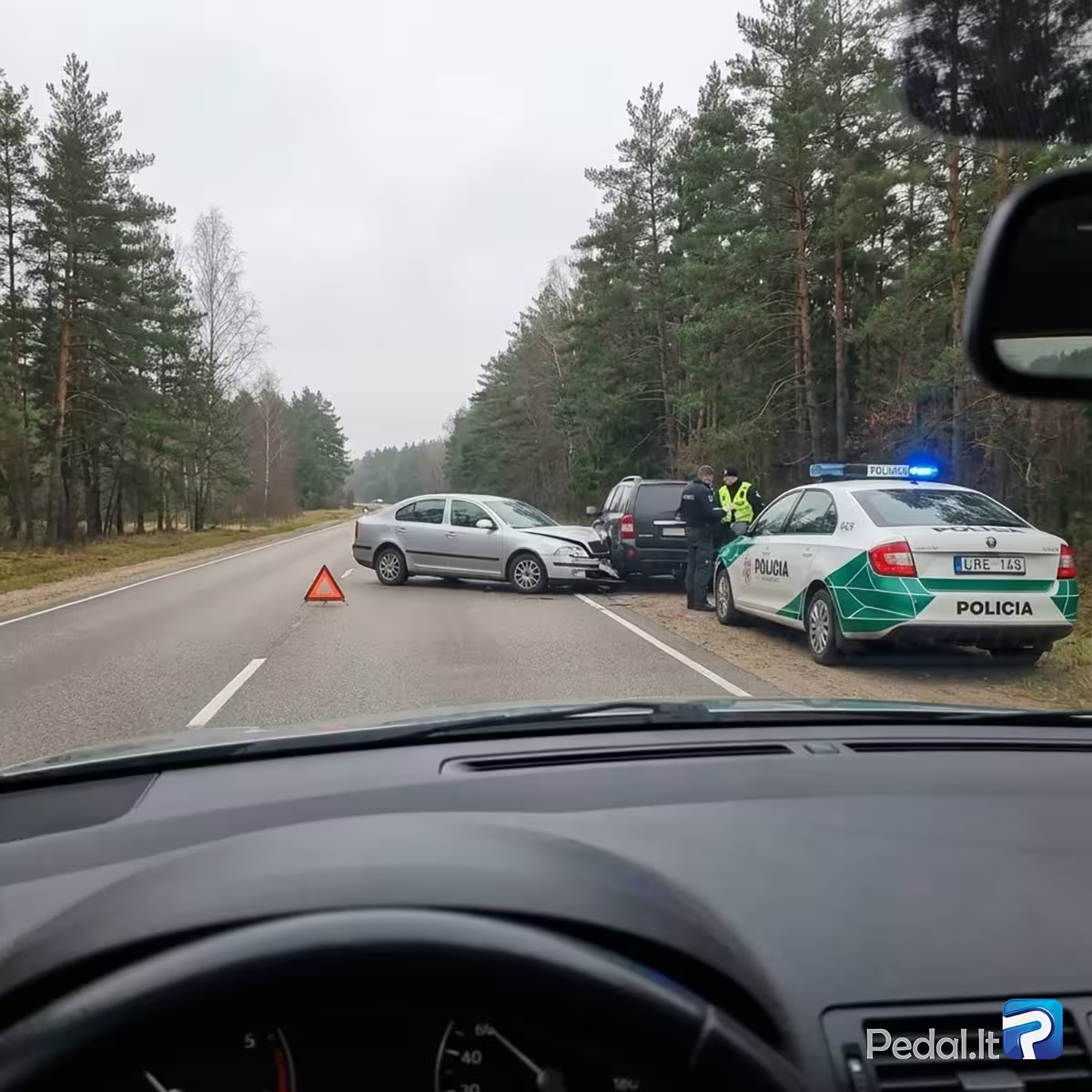
In most cases, those responsible for road accidents in Lithuania are:
According to data from the Lithuanian Road Administration, in 2017 drivers accounted for 68.83% of all individuals found responsible for road accidents.
1. Drivers of motor vehicles.
2. Cyclists (bicyclists).
3. Pedestrians (people on foot).
4. Drivers of animal-drawn vehicles.
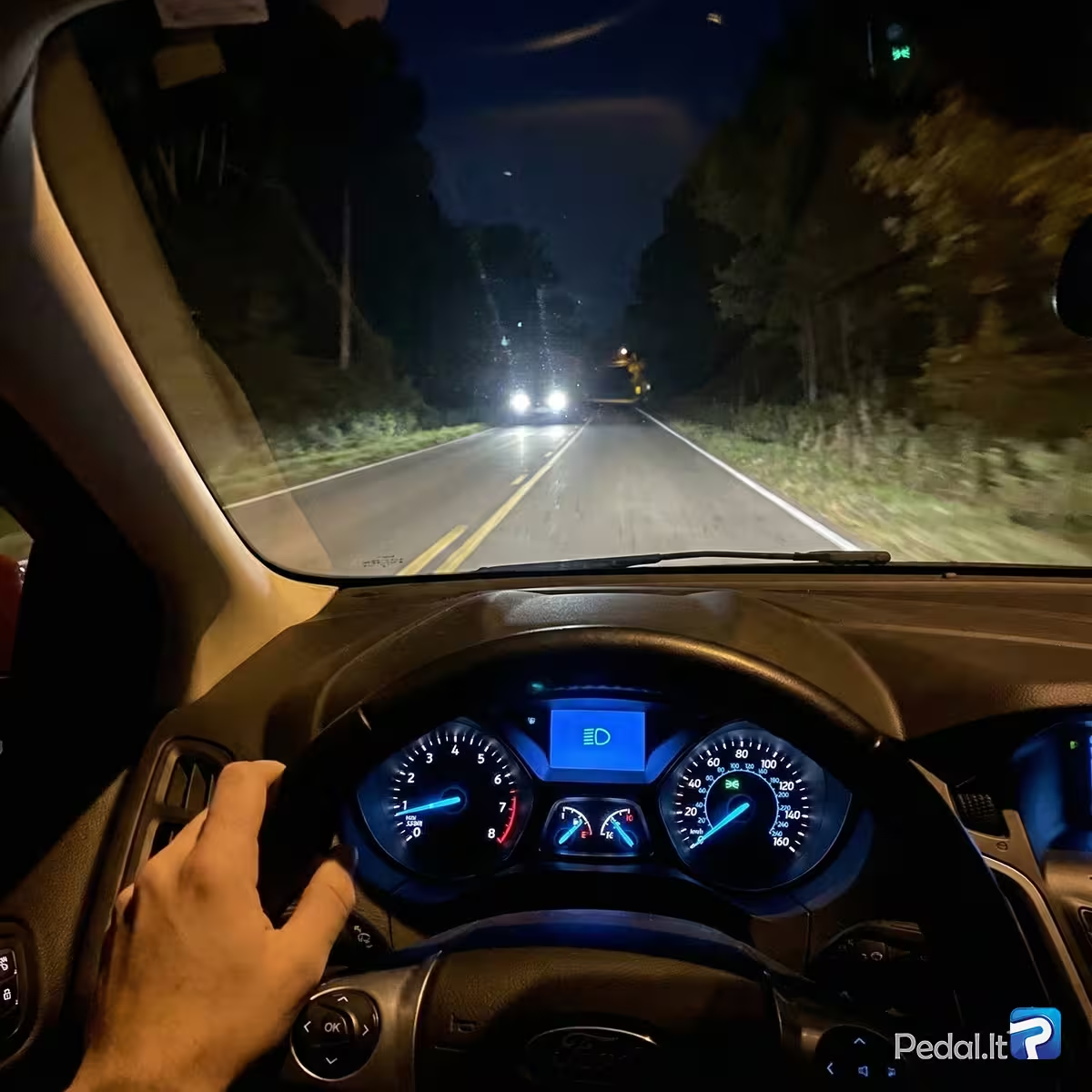
In which situations during hours of darkness must the vehicle's high-beam headlights be switched to low beam?
Regulation RTR 95. During hours of darkness or in conditions of poor visibility, main-beam headlights must be switched to low beam in the following cases: 95.1 on illuminated roads; 95.2 when the distance to an oncoming vehicle is at least 150 m. JB
1. When driving on illuminated roads within built-up areas.
2. When an oncoming vehicle is at least 150 m away.
3. Switching to low beam is optional.
4. When driving on illuminated roads outside built-up areas.
If you brake sharply while driving in heavy traffic:
Braking sharply in heavy traffic is dangerous because drivers following you often do not maintain a safe distance and may collide with your vehicle when you brake suddenly.
1. A vehicle following you may collide with your vehicle.
2. Your brakes could be damaged.
3. That would be a normal braking method.
4. The brake pads might become stuck.
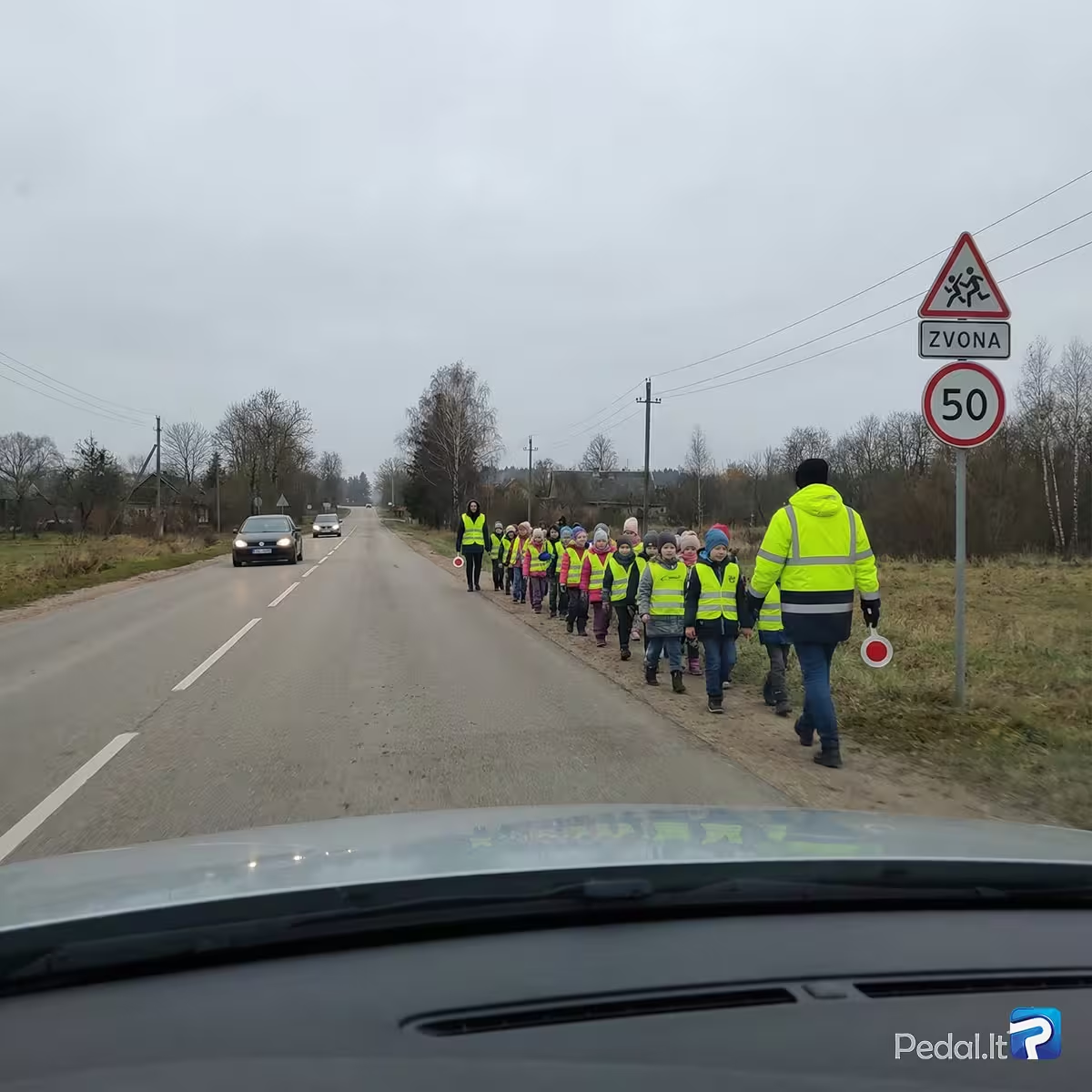
Under what conditions and at what times may an organised group of pedestrians composed of children under 16 be led along the roadside?
RTR 40. An organised group of children under 16, accompanied by at least two adults, may use pavements, footpaths, or the pedestrian side of shared footpath and cycle tracks if available. If none of these facilities are present, the group may walk along the hard shoulder, but only in daylight hours when visibility is good, in no more than two files walking against the flow of traffic, and only when it is safe to do so. Accompanying adults must be positioned at the front and rear of the column and wear high-visibility vests. It is recommended that all children in the organised group wear high-visibility vests when walking along the hard shoulder.
1. During daylight hours and only when visibility is good.
2. In no more than two files, walking against the flow of traffic.
3. At any time of day provided visibility is good.
Which of the following distances to a vehicle ahead would be unsafe?
RTR 126. The driver must maintain a following distance at speed sufficient to avoid colliding with the vehicle ahead if it brakes, and must leave a lateral gap to ensure traffic safety. It is recommended that the following distance be at least the distance covered in two seconds, or at least half the speedometer reading converted into metres; for example, at 70 km/h the distance should not be less than 35 m, unless traffic conditions require otherwise. Drivers of motor vehicles, tractors and self‑propelled machinery, when overtaking pedestrians or when overtaking or passing cyclists or drivers of electric micromobility vehicles, must leave a lateral clearance of at least 1.0 m if their speed does not exceed 50 km/h, and at least 1.5 m if their speed exceeds 50 km/h. The requirement to maintain the specified lateral distance does not apply on single‑lane roads.
1. Less than the distance covered in two seconds.
2. Less than the distance covered in five seconds.
3. 30 m
4. 50 m
Which features ensure a vehicle's active safety?
Difference between active and passive safety:
- Active safety: systems and features that help prevent accidents by improving vehicle control, handling and stability before a collision occurs. These measures operate before an impact and commonly include technologies such as Anti-lock Braking System (ABS), Electronic Brakeforce Distribution (EBD), traction control, correct tyre pressure and adequate tread depth, among others. Active safety also depends on the driver’s condition and behavior — for example, poor ventilation or heating can cause drowsiness or nausea and reduce attention on the road.
- Passive safety: systems and equipment designed to reduce injury and damage during or after a collision. These features are activated in a crash to protect occupants and other road users and include seat belts, airbags, motorcycle helmets, seat-belt reminders, head restraints, crumple zones and other structural or restraint systems that absorb impact and lower the risk of injury.
1. Proper ventilation and heating.
2. Tyre pressure and tread depth.
3. Anti-lock Braking System (ABS).
4. Electronic Brakeforce Distribution (EBD).
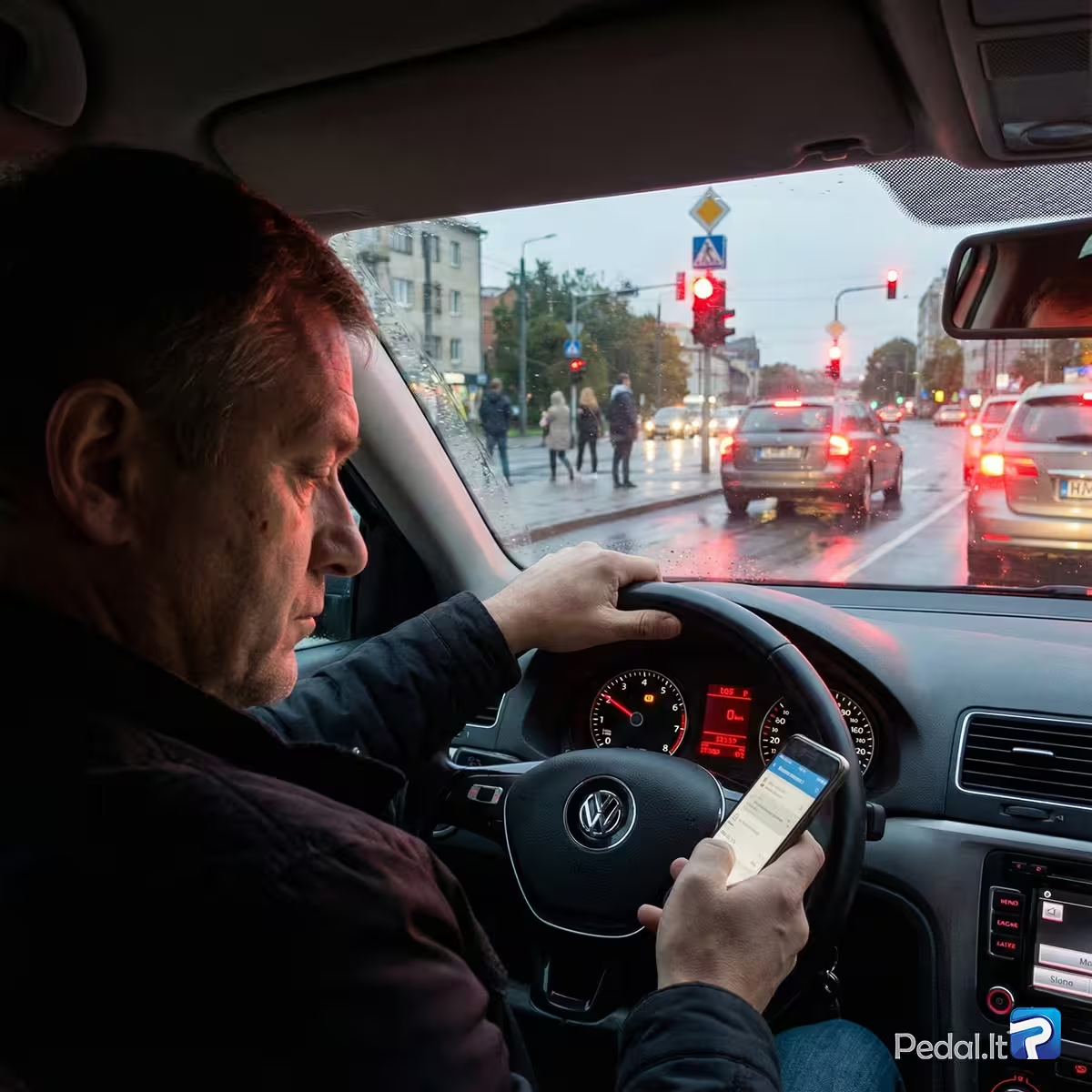
A driver's reaction time is affected by:
The driver's reaction time is delayed by illness, fatigue, or the influence of alcohol or drugs. Distraction and poor concentration while driving also lengthen reaction time, and reaction speed typically decreases with age. RTR 14. Driving is prohibited if you are not authorized to operate the vehicle, or if you are intoxicated or under the influence of narcotic, psychotropic or other psychoactive substances. A person who is tired or ill must not drive if doing so could endanger road safety. A vehicle must not be entrusted to anyone affected by these factors or without the required authorization for that vehicle type. When operating a vehicle, the driver must comply with the requirements shown on their driving licence.
1. Illness.
2. Fatigue.
3. Alcohol consumption.
4. Emotional state.
How is a motorized bicycle defined?
Note that a motorized bicycle must have at least two wheels and an auxiliary internal combustion engine or an electric motor — it is not sufficient for it to have only an internal combustion engine. SEAK Art. 2.40. "Motorized bicycle" — a vehicle with at least two wheels that is powered by the rider’s muscular force using pedals or handlebars and is equipped with an auxiliary internal combustion engine or electric motor with a maximum net power of no more than 1 kW and a maximum design speed of no more than 25 km/h. The auxiliary engine stops providing power when the vehicle reaches 25 km/h. Wheelchairs for persons with disabilities are not classified as motorized bicycles.
1. A vehicle whose maximum net power does not exceed 1 kW and whose maximum design speed does not exceed 25 km/h.
2. A vehicle that is primarily propelled by the rider’s muscular power using pedals or handlebars and is equipped with an auxiliary internal combustion engine or an electric motor.
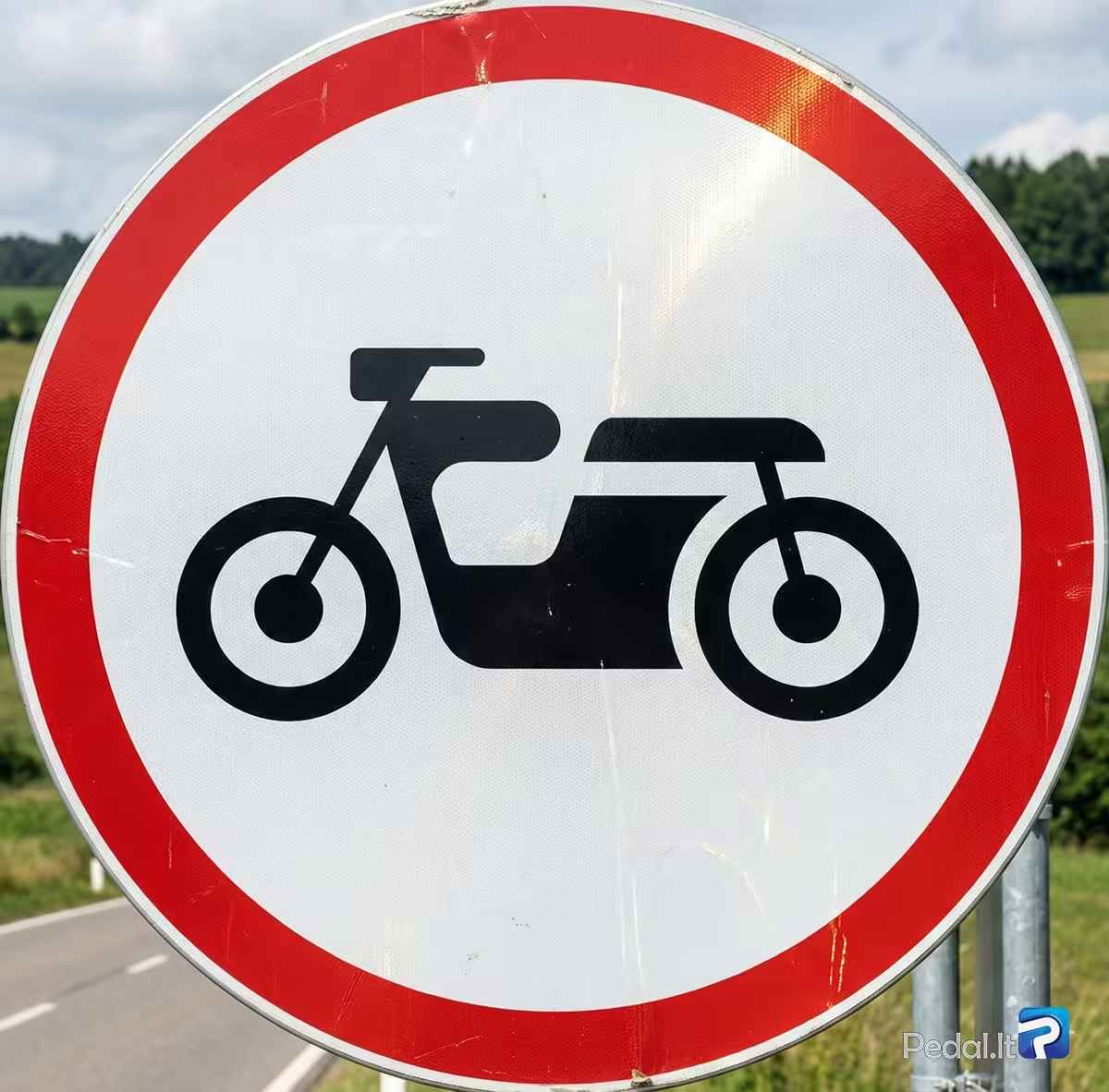
Which motor vehicles are prohibited from entering the area designated by this road sign?
1. Motorcycles (two‑wheeled motor vehicles)
2. Light quadricycles (small four‑wheeled motor vehicles)
3. Mopeds (low‑powered two‑wheel motor vehicles)
4. Bicycles (pedal‑powered two‑wheel vehicles)
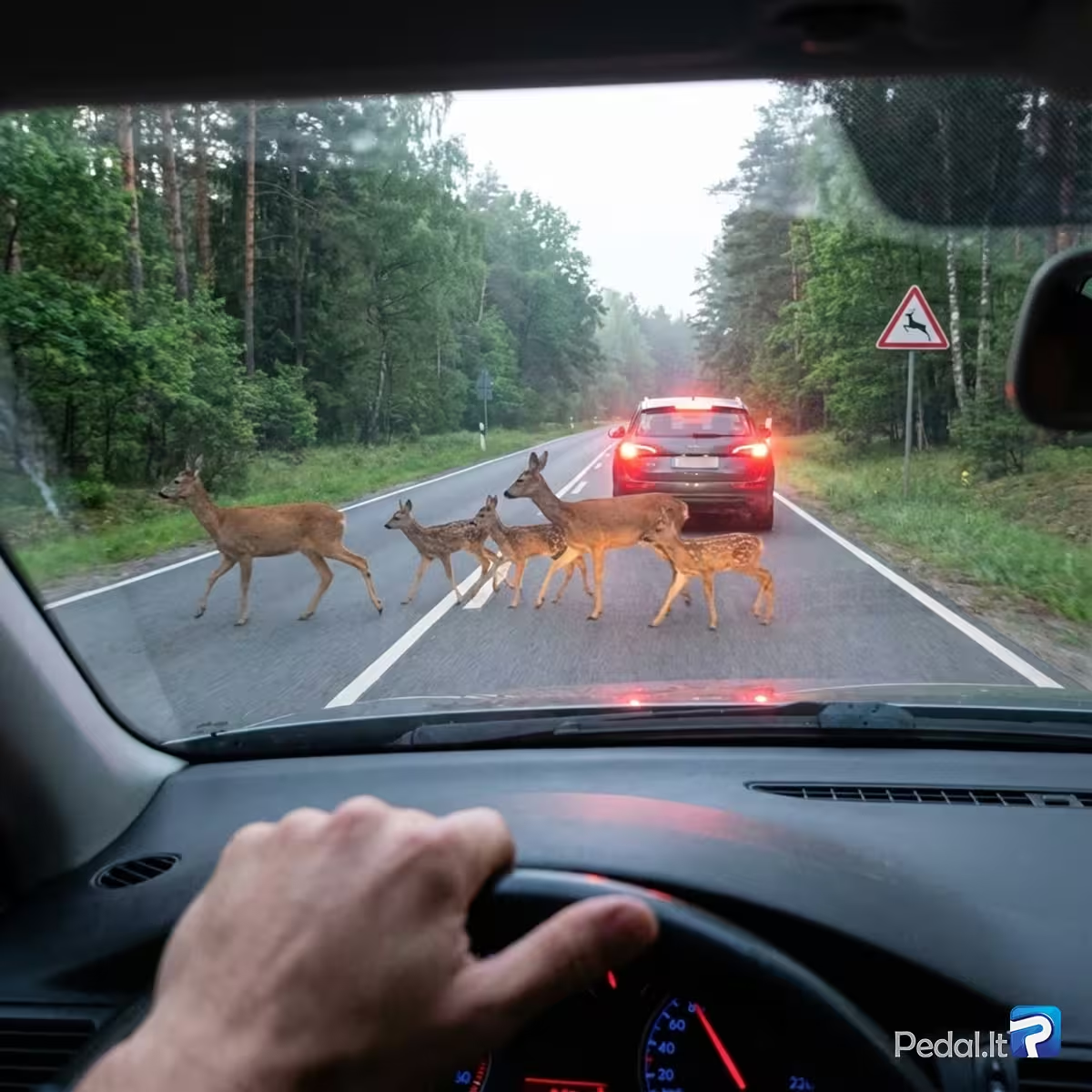
While driving, a group of roe deer crossed the road in front of your vehicle. What should you expect?
Wild animals typically travel in groups. If you see a lone roe deer, deer, or wild boar, others are likely nearby. Herding instincts lead animals to cross roads together rather than individually.
1. The animals may return to the road.
2. A solitary animal may follow the group.
3. It is unlikely that there will be any solitary animals.
Who is authorized to teach someone to drive a category B vehicle?
For more information about learning to drive with a family member: http://www.teises.lt/kaip-gauti-teises/mokymasis-vairuoti-su-seimos-nariu
1. A person who fulfills the requirements for a driving instructor and is authorized, under the prescribed procedure, to work as an instructor at a driving school.
2. A person who has passed the category B practical driving test at the state enterprise "Regitra" in accordance with the prescribed procedure.
3. A person with at least five years of category B driving experience.
4. A family member of the learner who has at least five years of category B driving experience and is not disqualified from driving.
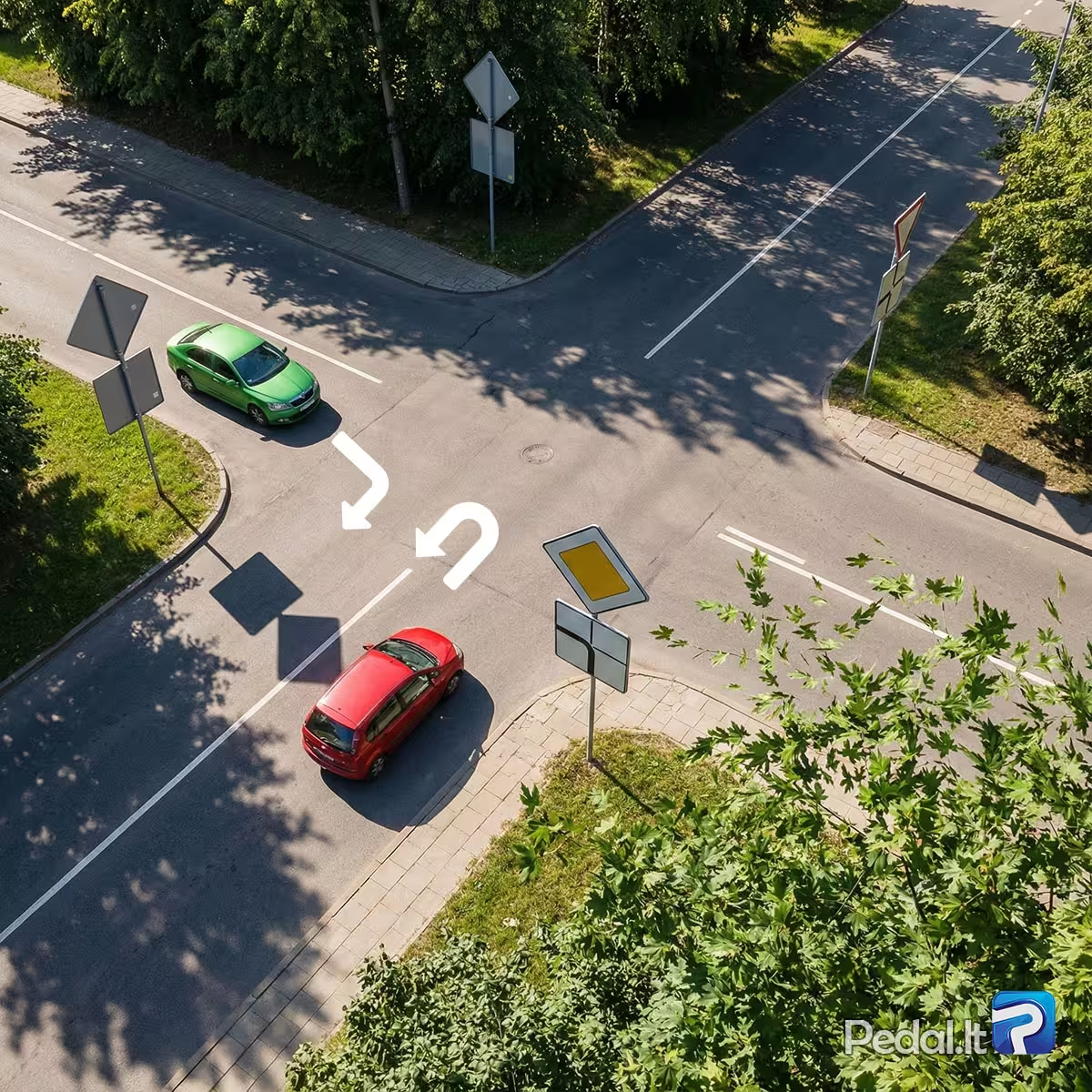
The driver of the red car is about to make a U-turn. Does he have the right of way?
When turning, the driver of the red car must yield to any vehicle coming from the opposite direction on a road of equal priority that is approaching from the right (the green car). Once the red car has already entered the intersection, the green car is considered an obstacle. At intersections where the main road changes direction, the priority-to-the-right rule applies (RTR 157). When turning left or making a U-turn, a driver must yield to oncoming vehicles on an equally important road that are going straight or turning right — and, where overtaking is permitted, also to vehicles that are overtaking.
1. Yes — he has the right of way.
2. No — he does not have the right of way.
Another person may drive your vehicle if:
A driving licence of categories B and BE entitles the holder to drive a passenger car (RTR 14). It is prohibited to operate a vehicle if you do not have the legal right to do so, or if you are under the influence of alcohol, narcotic drugs, psychotropic substances, or other psychoactive substances. A person who is fatigued or ill must not drive if driving could endanger road safety. A vehicle must not be entrusted to anyone who is under the influence of the aforementioned factors or who is not authorized to drive that type of vehicle. When operating a vehicle, the driver must comply with the restrictions and endorsements indicated on the driving licence.
1. The person is at least 18 years old but does not possess a driving licence.
2. The person holds a category BE driving licence.
3. The person holds a category B driving licence.
4. The person holds only a category A driving licence.
Which of the following most accurately defines a vehicle keeper?
LAW ON ROAD TRAFFIC SAFETY Article 2. §84. "Vehicle keeper" shall mean a person in possession of and using a vehicle by virtue of ownership, trust, lease, hire, or another lawful basis.
1. A person driving a vehicle owned by someone else while the vehicle owner (the document holder) occupies the passenger seat.
2. A person who possesses a vehicle and uses it by virtue of ownership, trust, lease, hire, or another lawful basis.
3. A person driving someone else’s vehicle when the vehicle owner (the document holder) is not present.
4. Any individual who is simply driving a vehicle.
1 of 30 Task
Time left: 00:00:00
1
2
3
4
5
6
7
8
9
10
11
12
13
14
15
16
17
18
19
20
21
22
23
24
25
26
27
28
29
30