Which legal act establishes the legal framework governing road traffic safety in the Republic of Lithuania?
Article 1. Purpose and scope. This Law establishes the legal framework for road traffic safety in the Republic of Lithuania. It defines the duties of state and municipal bodies in implementing road safety policy, sets requirements for the training of road users, and specifies the principal rights and obligations of road users, road maintenance authorities, the police, customs officers, and other supervisory officials. The Law also establishes basic requirements for vehicle technical condition, vehicle inspection and registration, and safety standards for road infrastructure, with the objective of protecting the lives, health, and property of road users and others, and of improving conditions for motorized and pedestrian traffic.
1. The Civil Code of the Republic of Lithuania.
2. The Criminal Code of the Republic of Lithuania.
3. The Law on Road Traffic Safety of the Republic of Lithuania.
4. The Code of Administrative Offences of the Republic of Lithuania.
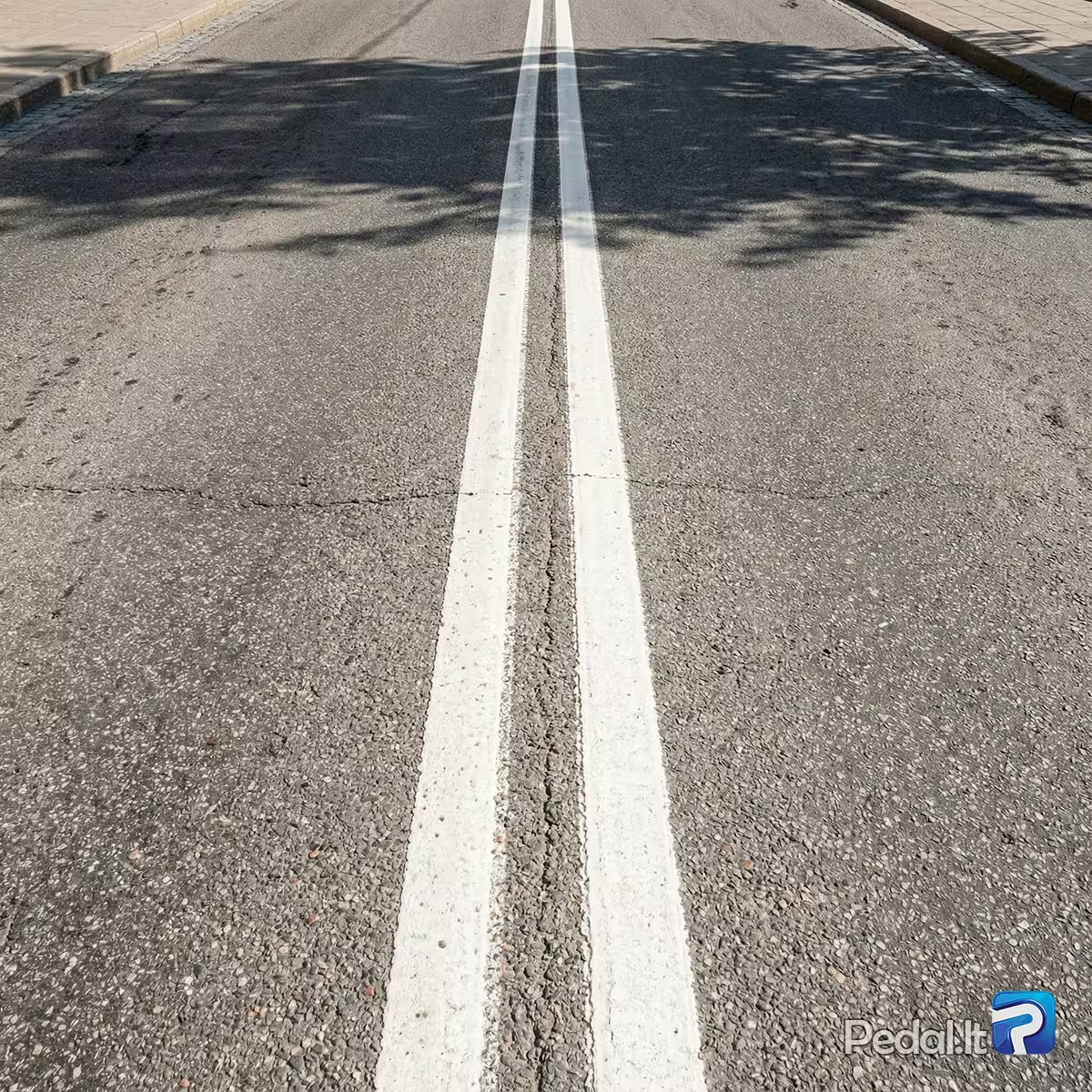
What does this road marking indicate?
On roads with four or more lanes, a double solid line separates opposing traffic flows. It prohibits driving in lanes that carry traffic in the opposite direction on the marked section; vehicles must not cross this line.
1. Crossing this line is prohibited.
2. Crossing the line is only permitted when making a U-turn.
3. Crossing this line is allowed.
.avif)
Which driver will proceed through the intersection first?
RTR 154. At a controlled intersection, drivers on a side road must yield to vehicles on the priority road.
1. The driver of the blue car.
2. The driver of the red car.
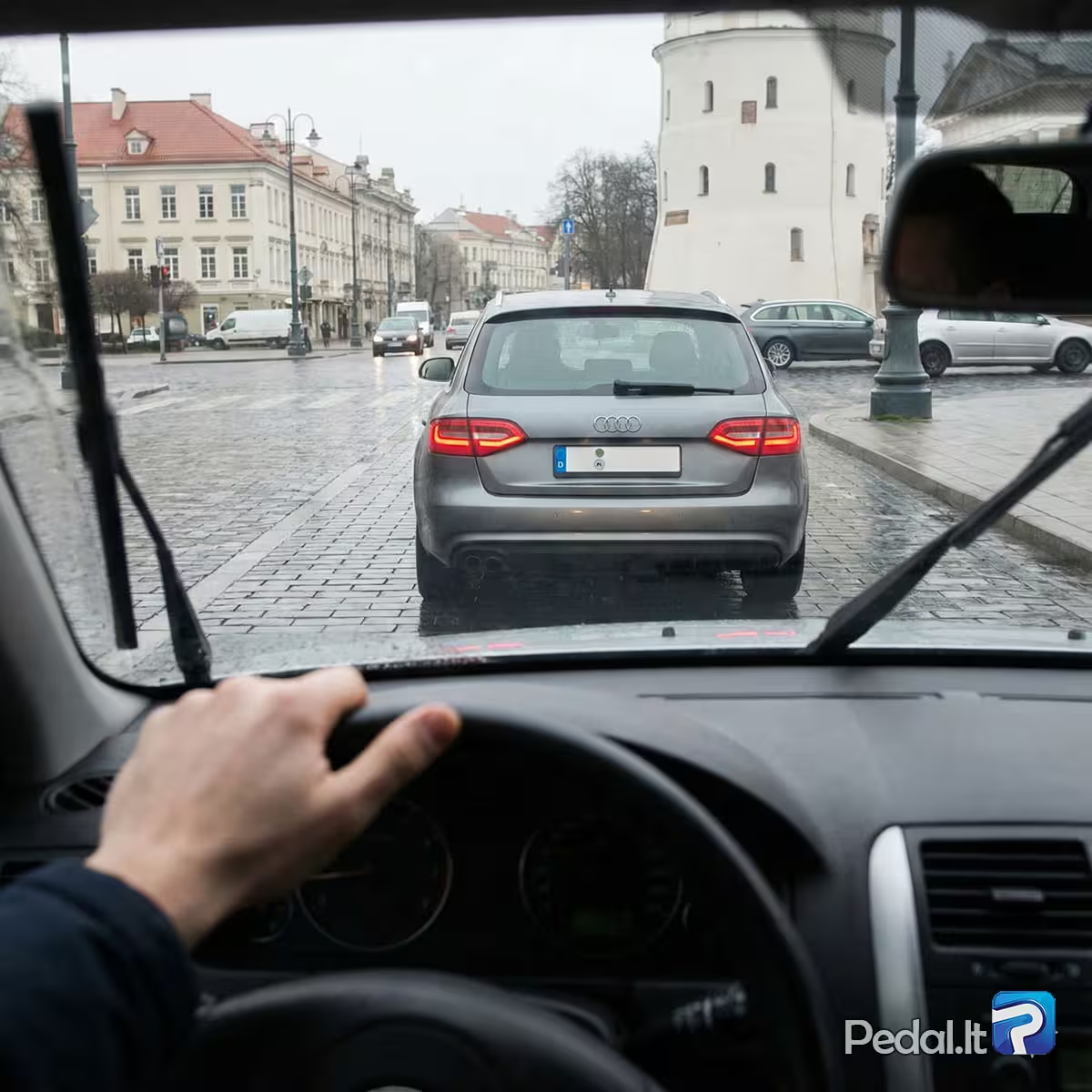
A vehicle with foreign license plates is driving ahead. What might you expect from that vehicle?
Drivers from other countries who are unfamiliar with local roads may have difficulty orienting themselves; they might make unexpected maneuvers, signal late before turns, or brake suddenly.
1. It may make unexpected maneuvers.
2. The driver may signal too late before turning at an intersection.
3. The vehicle may stop suddenly.
.avif)
Which vehicle may proceed in the direction indicated by the arrow?
RTR 77.1. When the traffic officer's arms are extended sideways or pointed downward: 77.1.1. Vehicles located to the officer's left and right may proceed straight ahead or turn right; pedestrians may cross the carriageway. 77.1.2. Vehicles and pedestrians positioned in front of or behind the officer must not proceed. JB
1. First vehicle
2. Second vehicle
3. Third vehicle
What factors should you consider when choosing a safe distance?
A safe distance is the distance a vehicle travels from the moment the driver notices a hazard until the vehicle comes to a complete stop. It depends on vehicle speed, size, braking performance, road type and surface condition, visibility, driver reaction time, and personal characteristics such as temperament. To choose an appropriate distance, you need to know the vehicle's stopping distance.
1. Visibility.
2. The condition of a road surface.
3. Speed.
Under what conditions is it prohibited to drive a vehicle?
It is prohibited to drive a vehicle if the main brake is inoperative, as this creates a danger to road safety. According to technical requirements, tyres mounted on the same axle must be of the same type and have identical tread patterns. Tyres with different tread patterns can cause instability under braking and reduce traction, creating a road safety risk; therefore driving such a vehicle is prohibited. RTR 234. A driver must not operate a motor vehicle, a tractor, or a self-propelled machine with: 234.1. a defective foot brake (the driver cannot stop the vehicle); 234.2. a defective steering mechanism (the driver cannot control the vehicle); 234.3. a defective coupling device between the vehicle and a trailer; 234.4. a defective windscreen wiper on the driver's side in snow, rain, or fog; 234.5. faulty front left-side lamps (dipped-beam headlamp and fog lamp) during hours of darkness or when visibility is poor, or if at least one rear position lamp has failed, hazard warning lights are not functioning (or are switched off), or a warning triangle is not affixed to the rear of the vehicle.
1. When the wheels on the same axle are fitted with different tread patterns.
2. When the engine oil level is too low.
3. When there is low air pressure in the tyres.
4. When the vehicle's foot (service) brake is defective.
.avif)
Which vehicle will pass through the intersection first? (The green traffic light applies to the red car.)
RTR 163. When driving in the direction indicated by an arrow displayed in the supplementary section of a traffic light together with an amber or red signal, the driver must yield to road users coming from other directions who have a traffic signal permitting them to proceed, except as provided in Paragraph 163-1. 163-1. When making a U-turn at an intersection controlled by traffic lights, the driver must yield to road users from other directions who are permitted to proceed by a traffic signal. JB
1. The red car will pass the intersection first.
2. The black car will pass the intersection first.
What is the lowest speed at which a collision can be fatal?
Even at 30 km/h, a collision can seriously endanger the health or life of drivers and passengers. For example, in a head-on collision between two vehicles travelling in opposite directions.
1. 50 km/h.
2. 30 km/h.
3. 80 km/h.
Carrying passengers is permitted in:
Towing a vehicle with a trailer is not prohibited, and carrying passengers in a towed passenger car is allowed. According to RTR 195 and clause 195.4, drivers must not carry passengers inside a towed bus, trolleybus, or in the cargo body of a goods vehicle. If the front or rear of a vehicle rests on a supporting device, no passengers may be inside or in the body of the towed vehicle.
1. Inside a towed bus.
2. Inside a car being towed together with its trailer.
3. Inside a passenger car being towed without a trailer.
4. Inside a car that is being towed with its front lifted on a special support device.
How can you confirm that all the lights on your vehicle are functioning?
Drivers should check that all vehicle lights are working before every long journey and at least once every six months. Properly functioning lights help you assess road conditions accurately and reduce the risk of accidents.
1. Turn on all vehicle lights and, each time you exit the car, walk around it to verify that they are illuminated.
2. You do not need to inspect your car's lights; instead, replace the bulbs every six months.
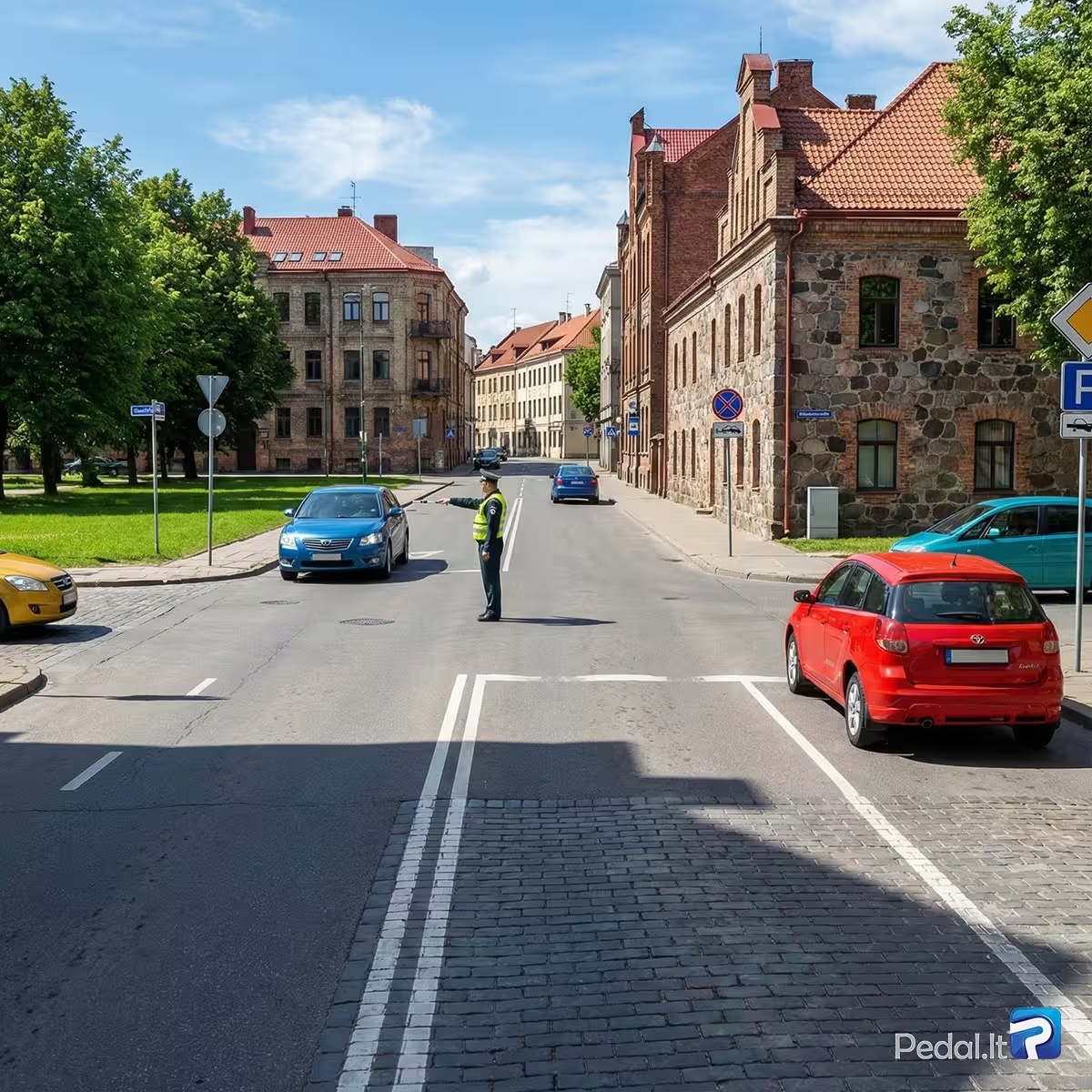
Which vehicles can turn right?
RTR 77.2. Right arm extended forward: 77.2.1. Vehicles on the left side of the traffic officer may proceed in any direction; 77.2.2. Vehicles facing the traffic officer may proceed only to the right; 77.2.3. Vehicles behind the traffic officer and on the right side must not proceed; 77.2.4. Pedestrians may cross the carriageway behind the traffic officer.
1. The red vehicle.
2. The brown vehicle.
3. The blue vehicle.
When driving at night, a car's dipped-beam (low-beam) headlamps may dazzle oncoming drivers if:
Your vehicle may dazzle oncoming drivers for one or more of the following reasons: the headlamps are incorrectly aimed (too high); the headlamps are improperly fitted (not seated correctly in their sockets or the wrong type has been fitted); or the vehicle is carrying a heavy load in the boot or is fully loaded and the headlamps have not been lowered using the headlamp aiming/levelling control (if fitted).
1. The vehicle's headlamps are incorrectly adjusted (aimed too high).
2. The headlamps are improperly installed or the wrong type has been fitted.
3. The vehicle is carrying a heavy load in its boot.
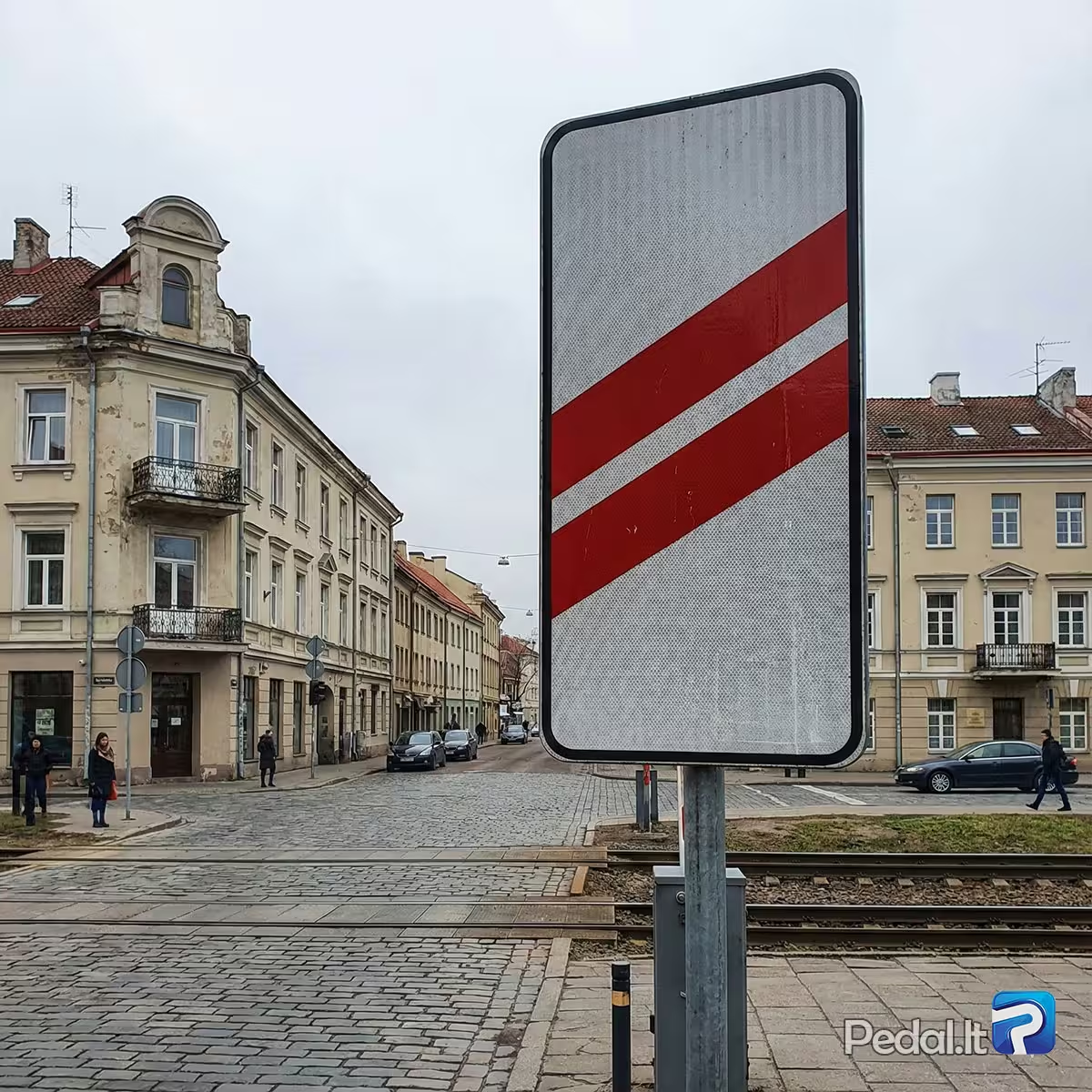
What does this traffic sign indicate?
141. "Level Crossing Ahead" — warns of a railway level crossing ahead located outside a built-up area. The sign is mounted on the right-hand side of the road.
1. It indicates a level crossing ahead located outside a built-up area.
2. It indicates a level crossing ahead located within a built-up area.
The effect of inertia on the vehicle (risk of sliding sideways) when cornering is reduced by:
The higher the vehicle's speed when cornering, the greater the effect of inertia and the higher the risk of the car sliding sideways. Lower speeds reduce inertia and the risk of sliding. A larger turning radius (a gentler curve) also reduces lateral inertial forces.
1. By decreasing the turning radius (making the turn tighter).
2. By reducing vehicle speed.
3. By increasing the turning radius (making the curve gentler).
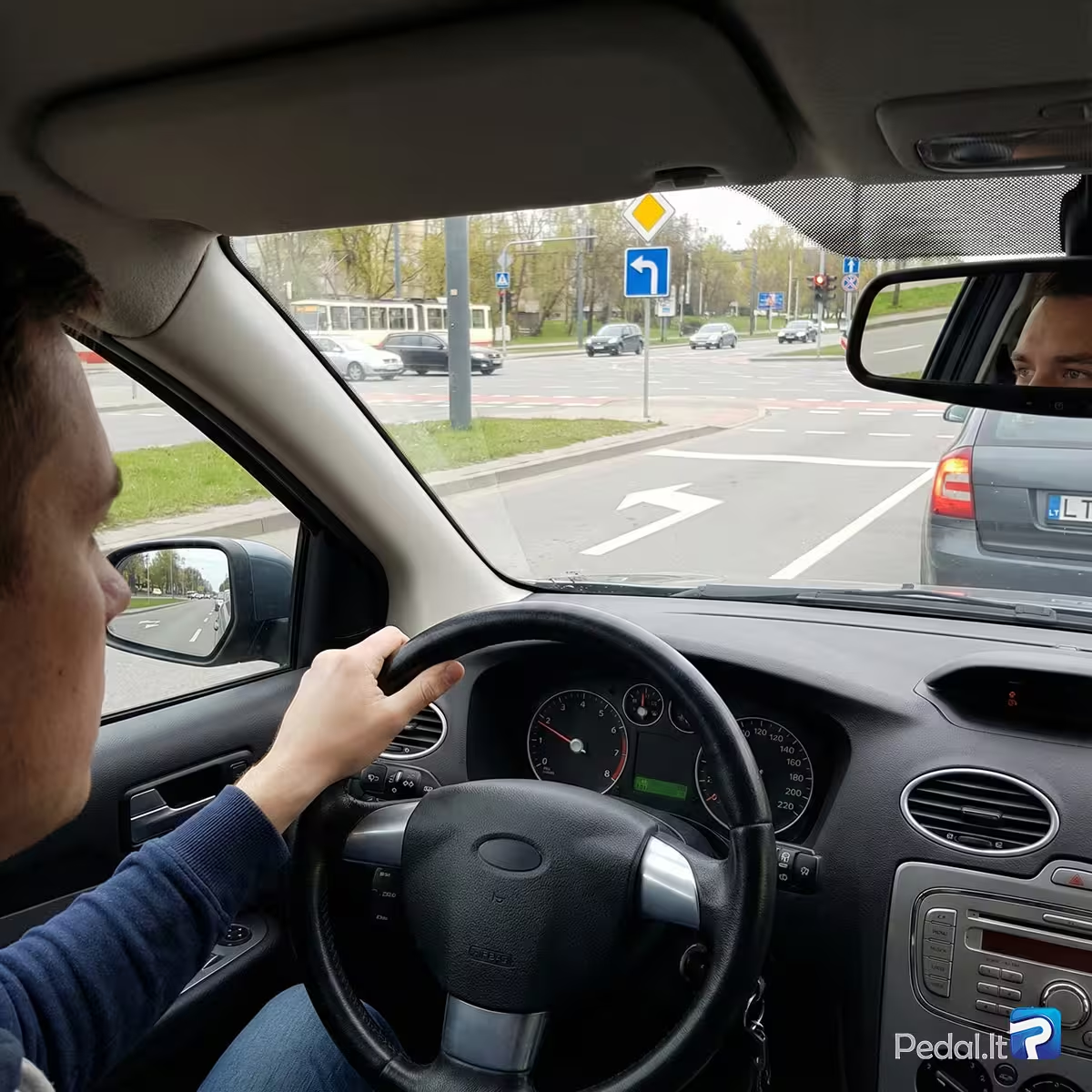
A driver intends to make a left turn. According to the road safety rules used in the driving theory exam, which is the correct sequence of actions?
1. Activate the left turn signal, then check surrounding traffic, and then perform the turn.
2. Ensure the road and traffic are clear, then activate the left turn signal, and finally execute the turn.
3. Execute the turn first and then switch on the turn signal.
4. Activate the left turn signal and immediately commence the turn.
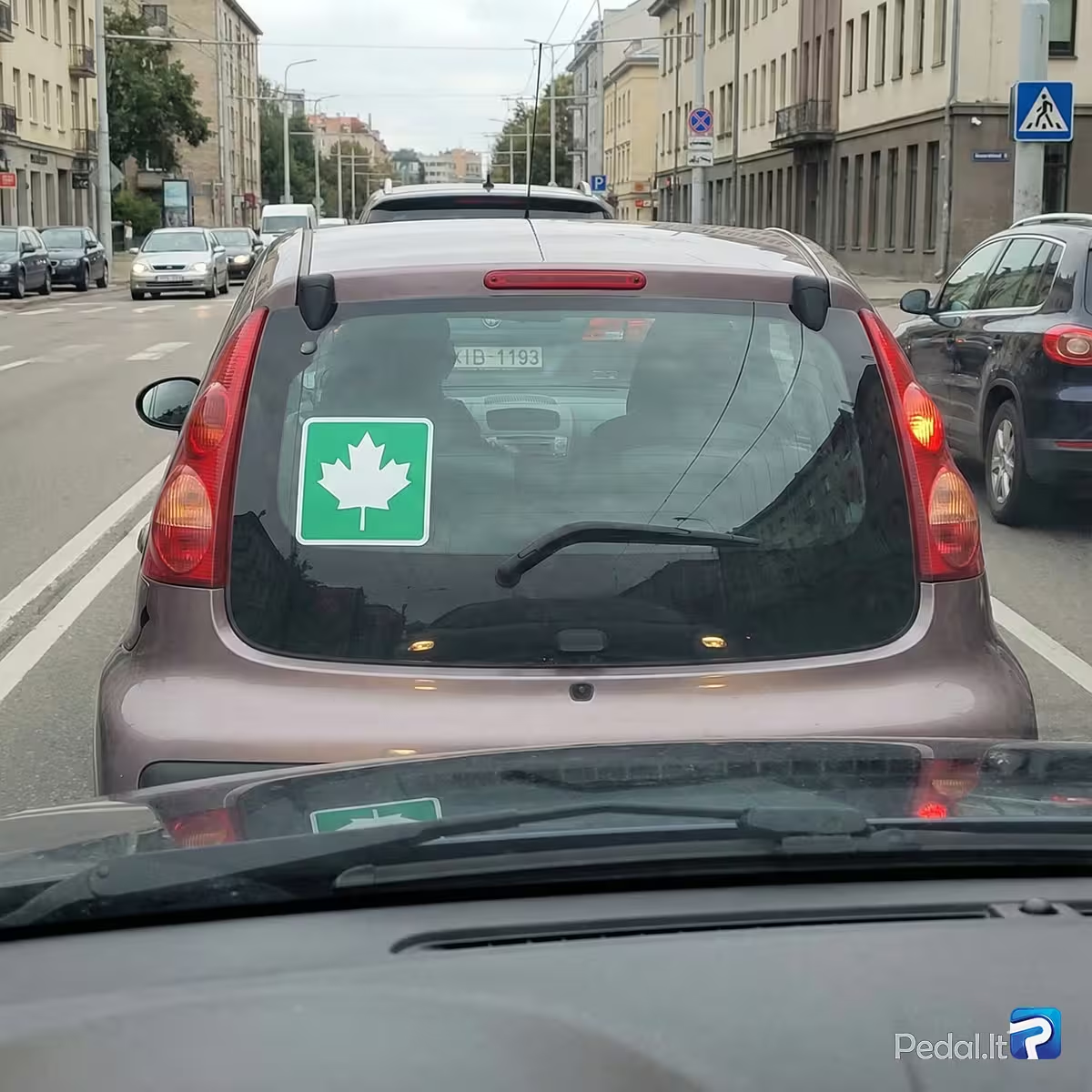
What size distinguishing sign (maple leaf) is permitted on a vehicle driven by a novice driver?
The side length of the 'Maple Leaf' sign must be between 100 mm and 150 mm. Therefore, the correct answers are 100×100 mm and 150×150 mm. A vehicle driven by a novice driver must display, on the left side of the rear, a white square distinguishing sign with a green border and a green maple leaf in the centre. The side length of the square must be between 100 mm and 150 mm, and the border width must be one-tenth (1/10) of the side length.
1. 100 × 100 mm.
2. 150 × 150 mm.
3. 200 × 200 mm.
4. The size of the sign does not matter.
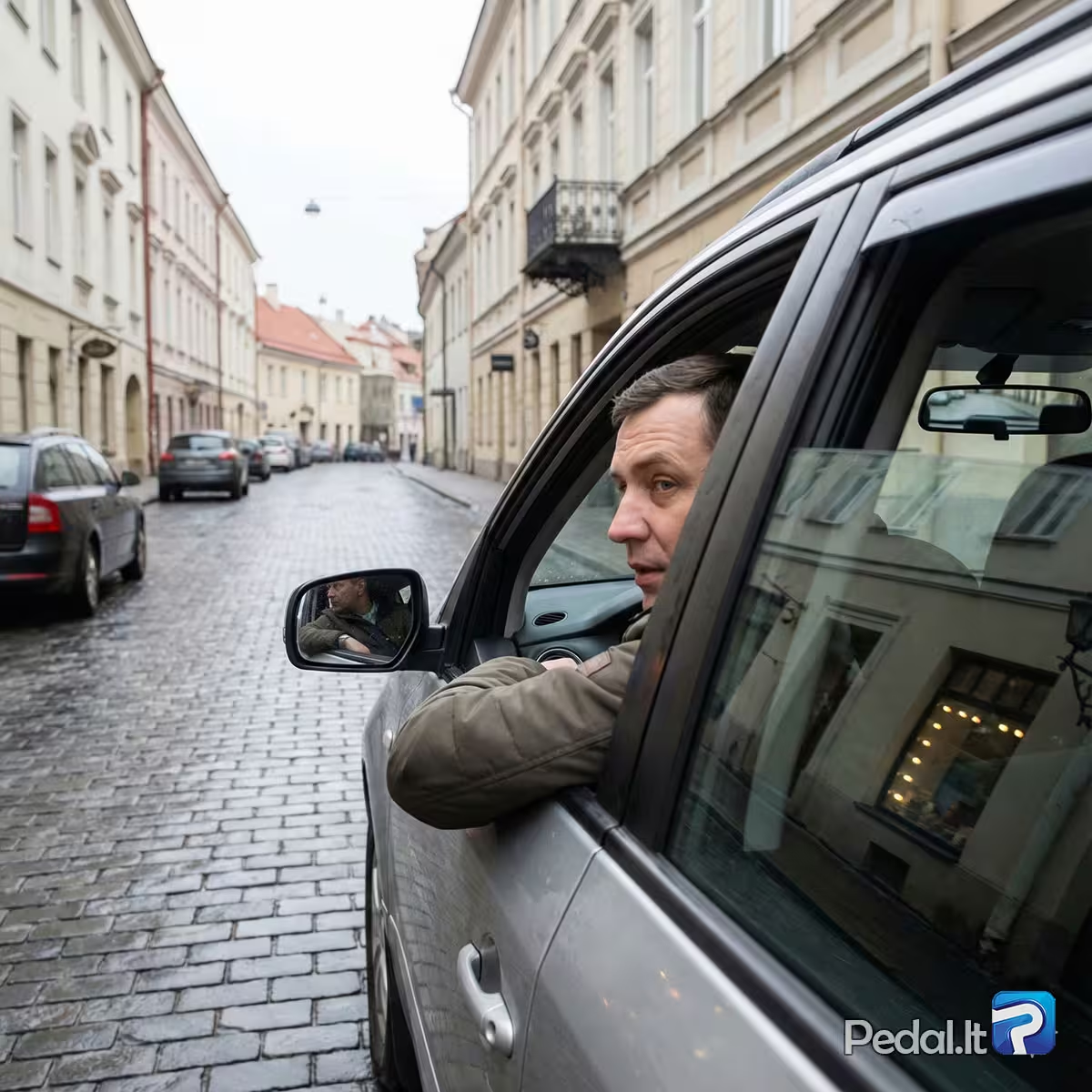
What must a driver do when reversing?
Note: If the steering wheel is turned sharply while reversing, the front of the vehicle can swing to the side and strike obstacles or other road users. When reversing, a driver must give way to other road users.
1. The driver must give way to other road users.
2. The driver must use the horn.
3. The driver must make sure that there are no obstructions behind the vehicle.
4. Do not obstruct other road users ahead.
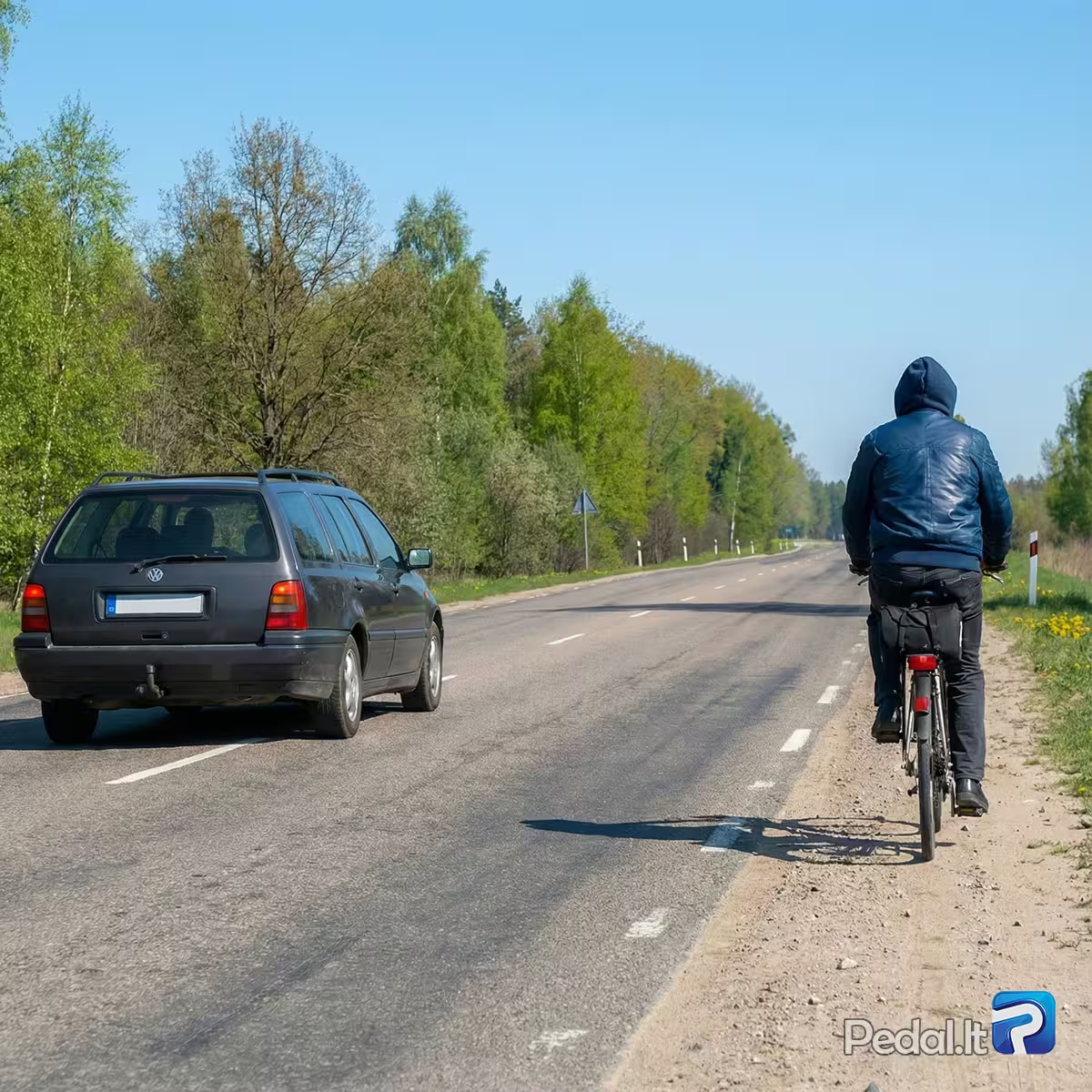
Cyclists must not perform any of the following:
RTR VIII. Rules for Cyclists
64. Cyclists must not:
64.1 Ride on the carriageway except in cases expressly permitted by these Rules.
64.2 Ride on motorways and expressways.
64.3 Ride without holding the handlebars with their hands.
64.4 Carry passengers if the bicycle is not fitted with a designated passenger seat.
64.5 Carry, tow, or push loads that impede control of the bicycle or pose a hazard to other road users.
64.6 Be towed by other vehicles.
64.7 Tow other vehicles, except for trailers specially designed for bicycles.
64.8 Hold on to a moving vehicle while cycling.
64.9 Cross the carriageway by riding over a pedestrian crossing. JB
1. Carrying, towing, or pushing any load that impairs control of the bicycle or endangers other road users.
2. Riding on bicycle paths after dark.
3. Riding in bicycle lanes marked on the sidewalk.
4. Riding at the edge of the carriageway during daylight hours.
Are people using a wheelchair considered pedestrians?
LAW ON ROAD TRAFFIC SAFETY — Article 2, clause 42. "Pedestrian" means a person present on the road who is not inside a vehicle, including a person using a wheelchair, on roller/inline skates, on a skateboard or scooter, walking while leading or pushing a bicycle, moped, or motorcycle, or pulling/pushing a sledge, pram, or other type of carriage. A person performing work on the road shall not be considered a pedestrian.
1. Yes — they are considered pedestrians.
2. No — they are not considered pedestrians.
What should you consider before setting out on a long journey?
Before a long journey, inspect your vehicle for obvious defects that could force you to stop. Avoid overloading the car to improve safety and reduce fuel consumption and wear. Planning your route with a navigation system helps make the trip faster, more efficient, and safer.
1. Performing a roadworthiness check.
2. Checking your tyre pressure.
3. Planning your route using a navigation system.
4. Avoiding overloading your vehicle.
What factors determine the severity of aquaplaning (a layer of water that can form between the tyre and the road surface during rain on asphalt)?
When vehicle speed increases, the layer of water on the road becomes deeper. Heavier rainfall also increases the water layer during driving. On roads with a transverse crown (where the carriageway is higher in the centre), the water layer is thinner because rainwater drains off the surface toward the edges more quickly. On asphalt, a tyre can displace only as much water as the volume available in its tread.
1. Vehicle speed.
2. Rainfall intensity.
3. Tyre tread depth.
4. Tyre height.
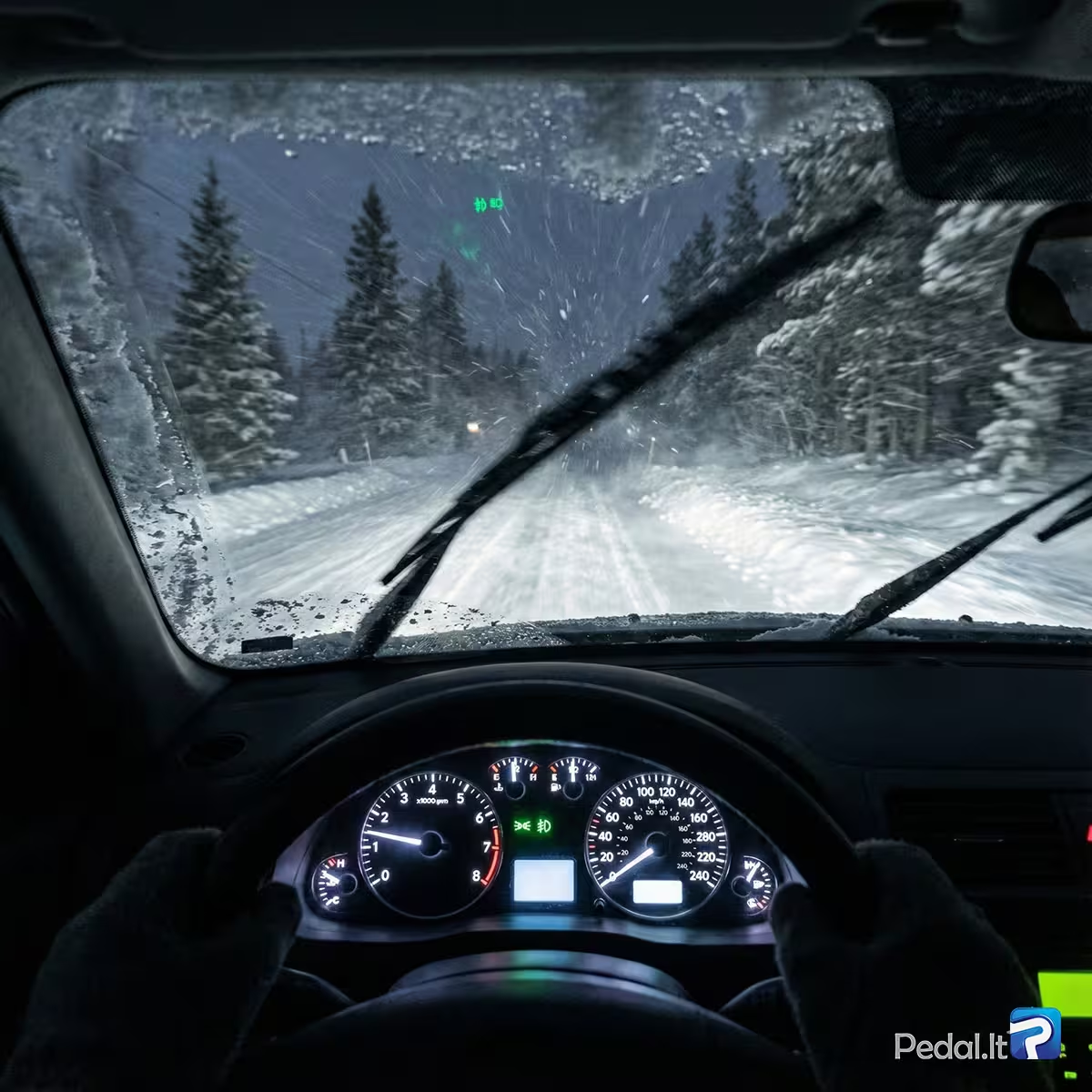
Which exterior lights should be switched on to improve visibility on the road during darkness and when snow is blowing?
When driving at night and during blowing snow, you should switch on the fog lamps together with the dipped-beam (low-beam) headlamps. Using the main-beam (high-beam) headlamps will cause light to reflect off the snow and dazzle the driver. (RTR 98) Fog lamps should only be used when visibility is seriously reduced; the front fog lamps may also be used in the event of failure of the front left dipped-beam headlamp.
1. Fog lamps used together with the main-beam (high-beam) headlamps.
2. Fog lamps used together with the dipped-beam (low-beam) headlamps.
The service brake has failed while you are driving on a motorway. What should you do?
Maintain a speed that allows you to stop the vehicle with the parking brake if necessary. Switch on your hazard warning lights to warn other road users. Drive to the nearest safe place to stop and call roadside assistance.
1. Reduce your speed and switch on the hazard warning lights. If necessary, apply the parking brake gradually. Carefully drive to the nearest safe place to stop and call roadside assistance.
2. Reduce your speed and notify the road police. Continue driving cautiously to your destination. If possible, add brake fluid.
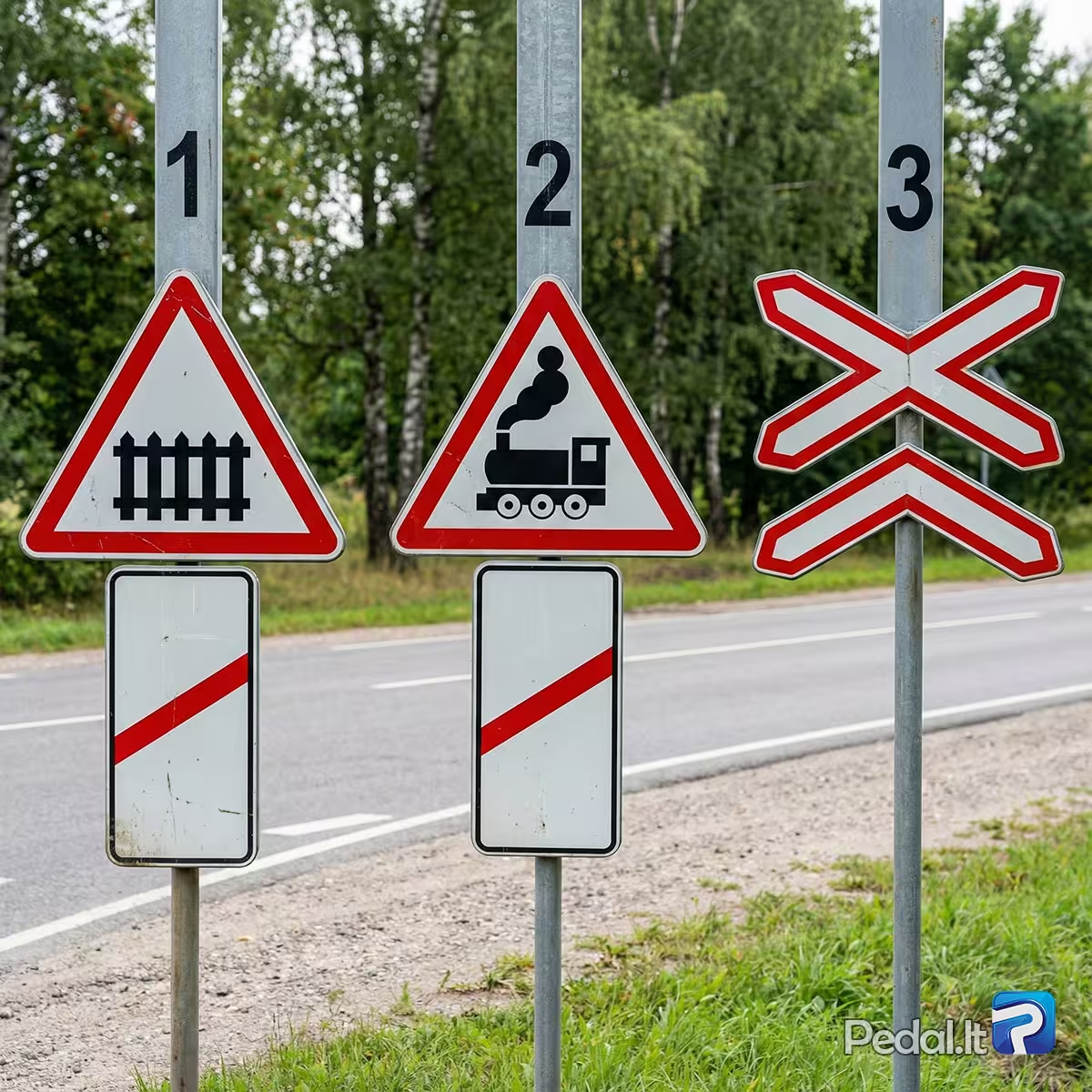
Which road sign indicates that you are approaching a level crossing equipped with a barrier?
Road sign 101 — “Level Crossing with Barrier”: indicates a level crossing protected by a barrier. Road sign 102 — “Level Crossing without Barrier”: indicates a level crossing that has no barrier. Road sign 142 — “Level Crossing Ahead”: warns of a level crossing ahead outside built-up areas; this sign is placed as close as possible to the crossing on the right-hand side of the road. Road sign 139 — “Multi-Track Railway”: indicates a level crossing without a barrier across a railway with two or more tracks.
1. 1.
2. 2.
3. 3.
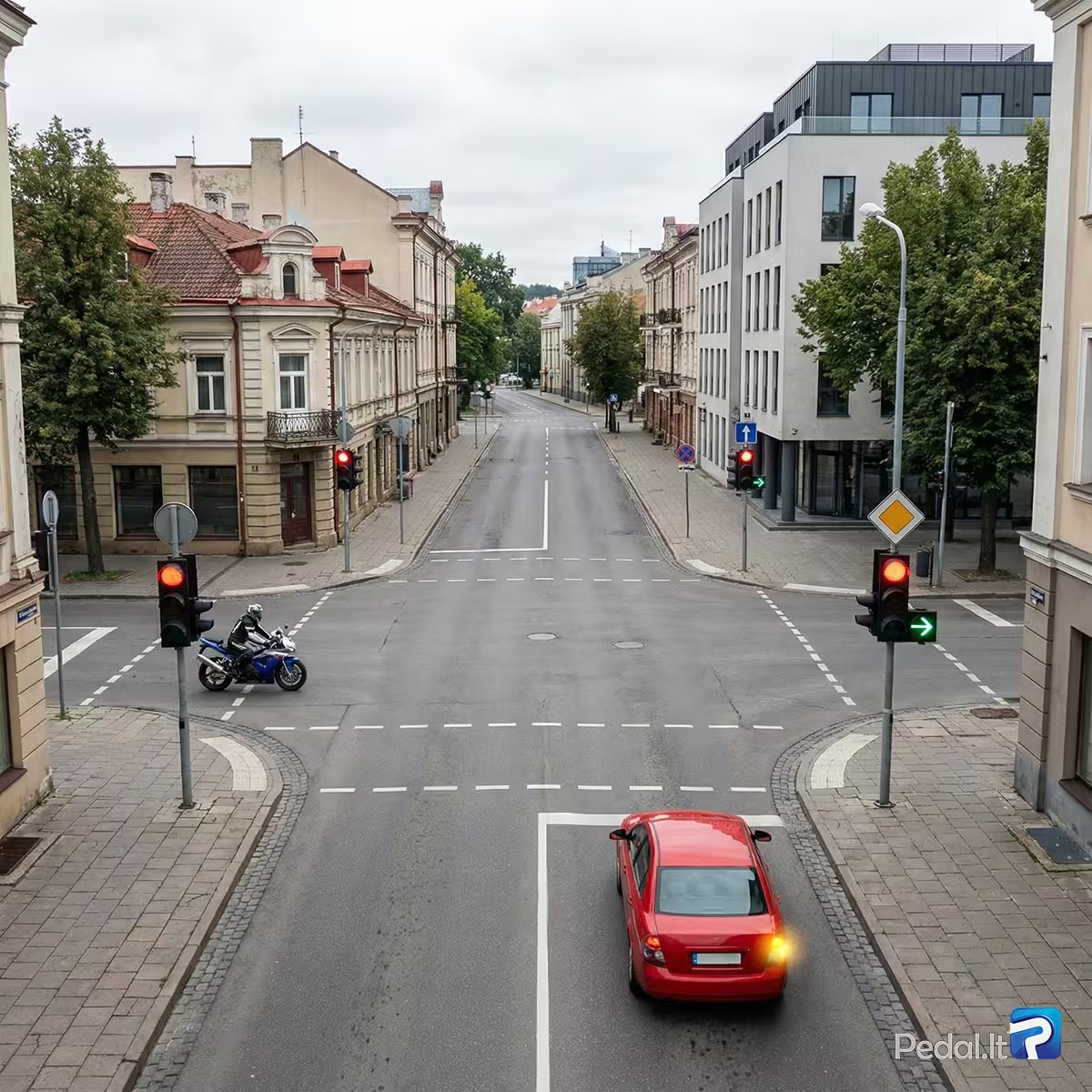
Who has the right of way? (the traffic light is green for the motorcyclist)
RTR 163. When driving in the direction indicated by an arrow illuminated in an auxiliary section of the traffic light together with an amber or red main signal, the driver must yield to road users coming from other directions who have a traffic-light signal permitting them to proceed, except as provided in Paragraph 163-1 of the Rules. RTR 163-1. When making a U-turn at an intersection controlled by traffic lights, the driver must yield to road users coming from other directions who are permitted to proceed by the traffic-light signal. JB
1. The driver of the red car.
2. The motorcyclist.
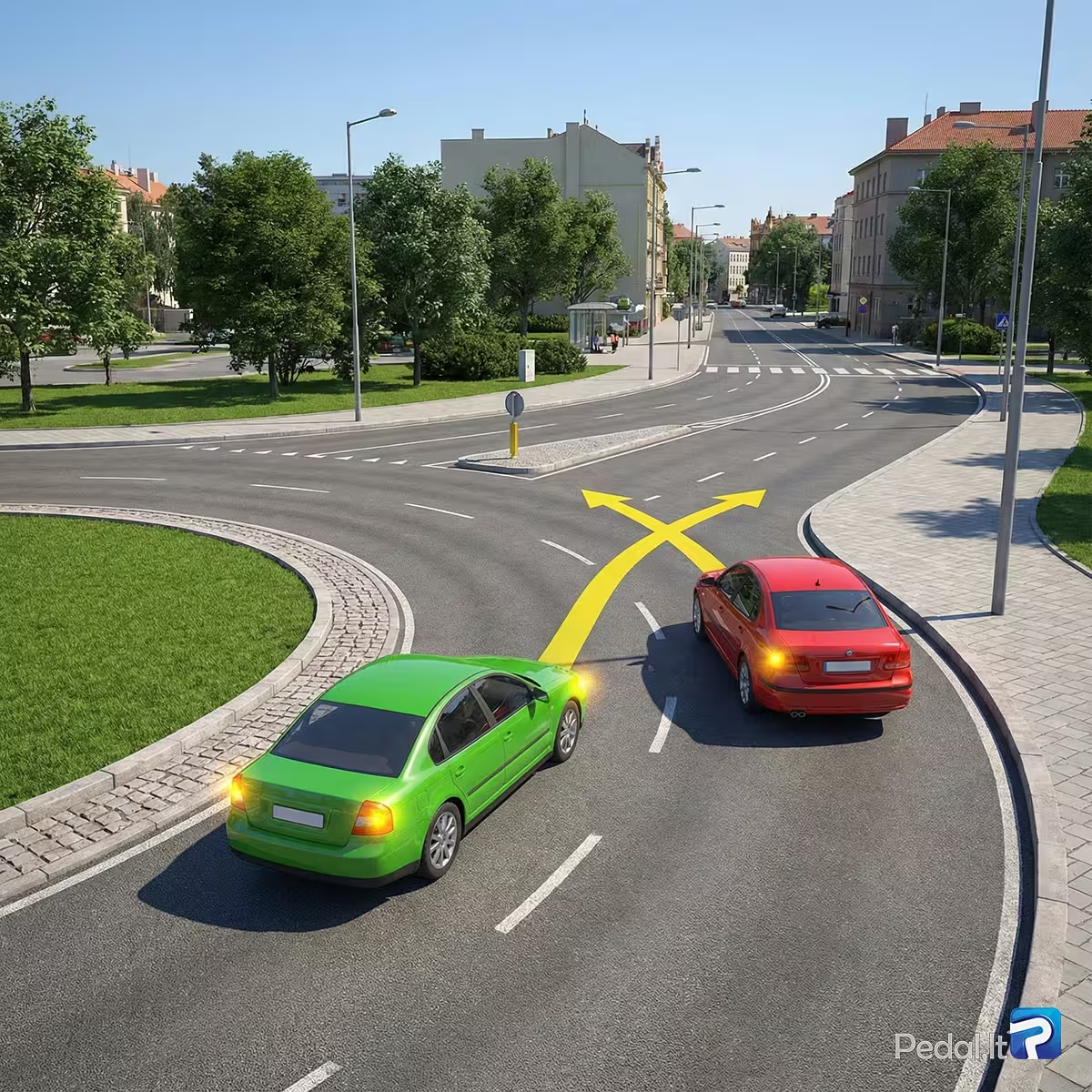
Which driver is violating the traffic rules?
There are no lane direction signs; therefore the driver of the red vehicle may go straight or turn right. When changing lanes, the driver of the green vehicle must yield. RTR 104. When changing lanes, a driver must yield to vehicles moving in the same direction in the adjacent lane. If vehicles moving in the same direction change lanes simultaneously, a driver must yield to the vehicle on the right, except in the cases specified in Paragraph 112 of the Rules. RTR 112. If an acceleration lane is provided for entering the road, the driver must use that lane and merge into the main traffic flow (change lanes and move into the adjacent lane), yielding to vehicles already in that flow or to vehicles changing lanes toward the deceleration lane. RTR 106. Before turning right, left, or making a U-turn (except when entering an intersection with circular traffic), a driver must move in advance to the edge of the carriageway designated for that direction. Road signs and/or road markings may indicate otherwise.
1. The driver of the red vehicle.
2. The driver of the green vehicle.
When is it mandatory to renew or replace a driver's license?
Order No. 1V-328 of the Minister of Internal Affairs of the Republic of Lithuania, dated 10 September 2008, "On Approval of the Rules for Issuing Motor Vehicle Driver's Licences", ch. II, p. 7: A new driver's licence shall be issued when: 7.1 the previous licence expires or has expired; 7.2 the previous licence is lost (misplaced, stolen, etc.); 7.3 the licence is worn out or damaged; 7.4 the personal data entered in the licence has changed; 7.5 the driver's medical condition has changed; 7.6 the applicant wishes to obtain a licence for driving vehicles of another category(ies) or to acquire the right to drive motor vehicles for the first time; 7.7 the applicant wishes to replace an old-model licence with a new model; 7.8 the applicant wishes to obtain a licence in place of one issued by another state; 7.9 the applicant wishes to obtain a licence in place of a destroyed one. SEAK Art. 22(4): Driver's licences are issued for a period not exceeding 10 years, and the right to drive vehicles of categories C1, C1E, C, CE, D1, D1E, D, DE is issued for no longer than 5 years from the date of licence issuance. SEAK Art. 22(5): Novice drivers receive a licence valid for 3 years; after 2 years from issuance they have the right to replace it with a licence valid for 10 years, pursuant to the procedure established by the Minister of the Interior or an authorized institution, without additional driver training, provided that within those 2 years they did not commit traffic offences requiring additional training under the Law on Road Traffic or cause a traffic accident that harmed a road user's health (except where the accident occurred under circumstances excluding criminal liability or where the person is not subject to administrative sanction). A novice driver who committed such an offence or caused such an accident must complete the required additional driver training within one year from the date the relevant resolution (court verdict) takes effect or from the date of enforcement of the administrative order issued after the offence. If the court verdict or criminal order imposes arrest or imprisonment and the sentence is not suspended, the additional training must be completed within one year after completion of the imposed sentence. JB
1. When the personal data on the licence has changed (for example, a change of name or surname).
2. If your place of residence has changed.
3. If you are going abroad.
4. If you drive more than one vehicle.
When may the front fog lamps be used?
Regulation RTR 98: Fog lamps may be used only when visibility is severely reduced. Front fog lamps may also be used if the left front dipped-beam headlamp has failed. According to the Law on Road Traffic Safety, Article 2(5), 'poor visibility' means a situation caused by weather or other phenomena in which road visibility is less than 300 metres, regardless of road characteristics.
1. In fog, when road visibility is 400 metres.
2. When visibility is severely reduced.
3. During rain or snow, when road visibility exceeds 300 metres.
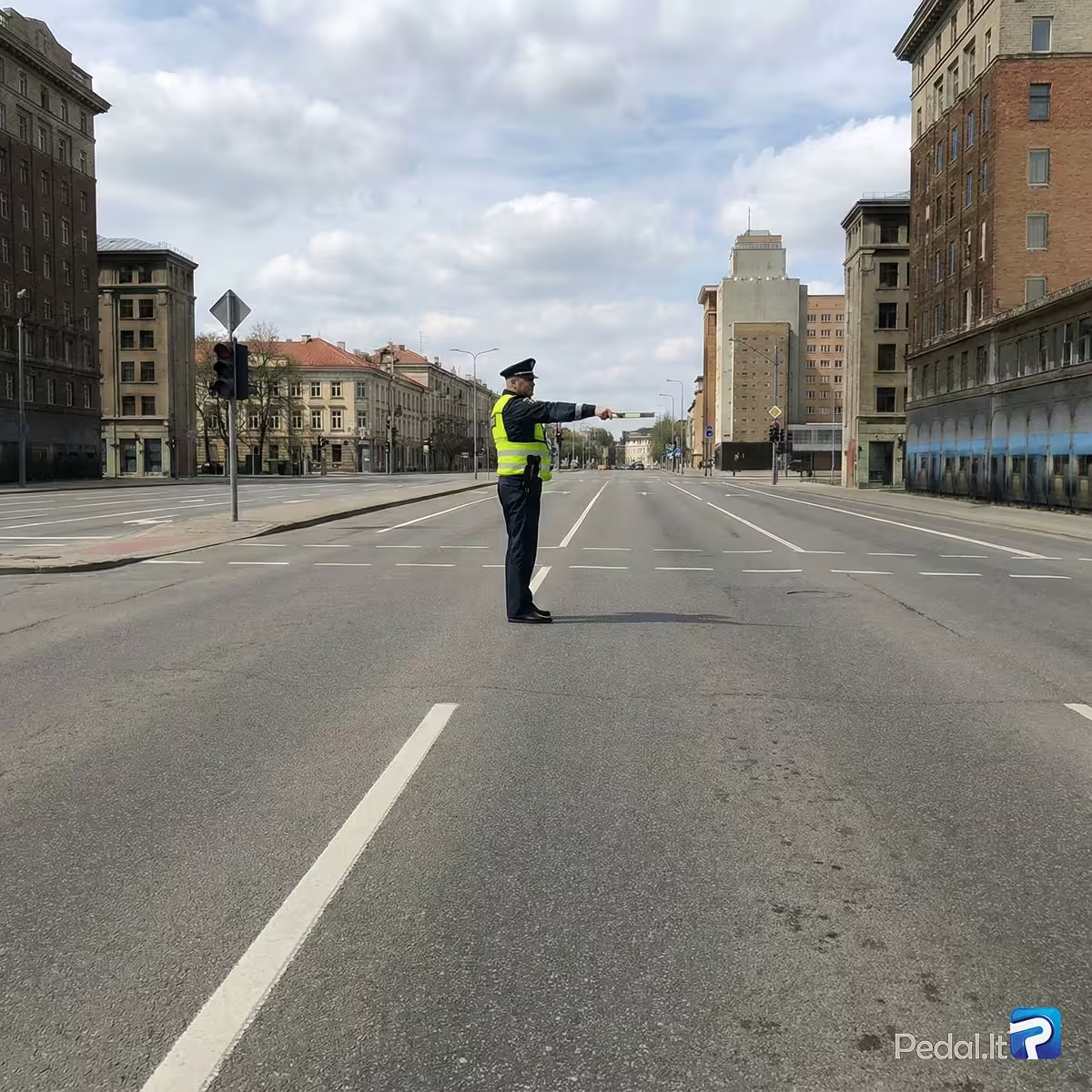
If you are located to the traffic officer's right and the officer's right arm is extended forward, which directions are you permitted to proceed in?
77.2. Right arm extended forward: 77.2.1. Vehicles to the officer's left may proceed in any direction; 77.2.2. Vehicles in front of the officer may proceed only to the right; 77.2.3. Vehicles behind the officer and those on his right must not proceed.
1. To the right.
2. Straight ahead.
3. You are not permitted to proceed.
4. To the left or make a U-turn.
1 of 30 Task
Time left: 00:00:00
1
2
3
4
5
6
7
8
9
10
11
12
13
14
15
16
17
18
19
20
21
22
23
24
25
26
27
28
29
30