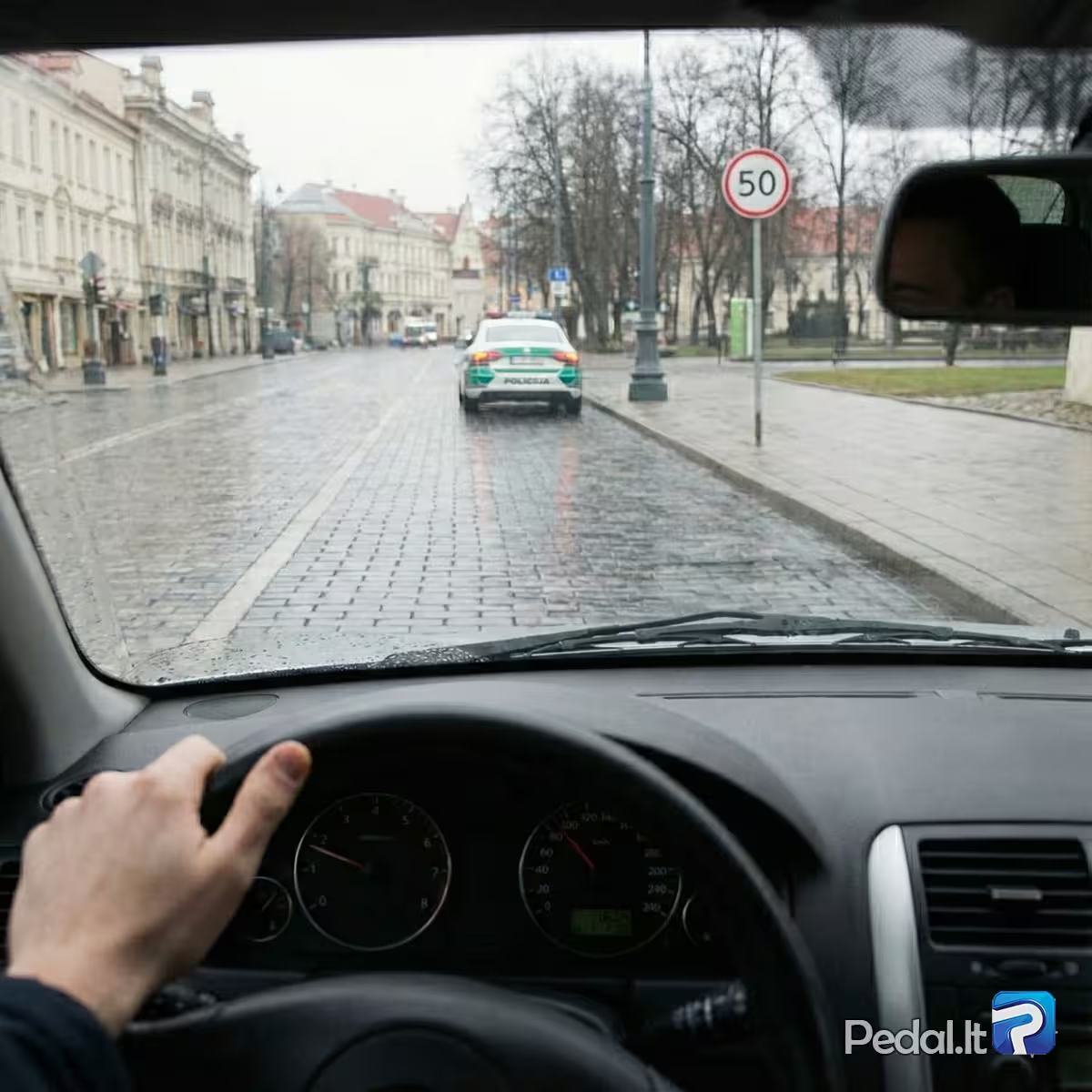
What should you do in this situation if you are driving 10 km/h above the speed limit?
When you see traffic sign 636 — Automatic traffic control (part of the Advanced Traffic Management System) and you are traveling 10 km/h above the speed limit, ease off the accelerator so your speed drops to the legal limit and you avoid a possible fine. Sign 636 indicates a road section monitored by fixed automatic devices. The first version of the sign warns of devices that detect various traffic rule violations (except speed violations); the second version denotes a section where fixed devices record speed limit violations and, where technically feasible, other infringements.
1. Brake suddenly.
2. Ease off the accelerator pedal.
3. Maintain your current speed.
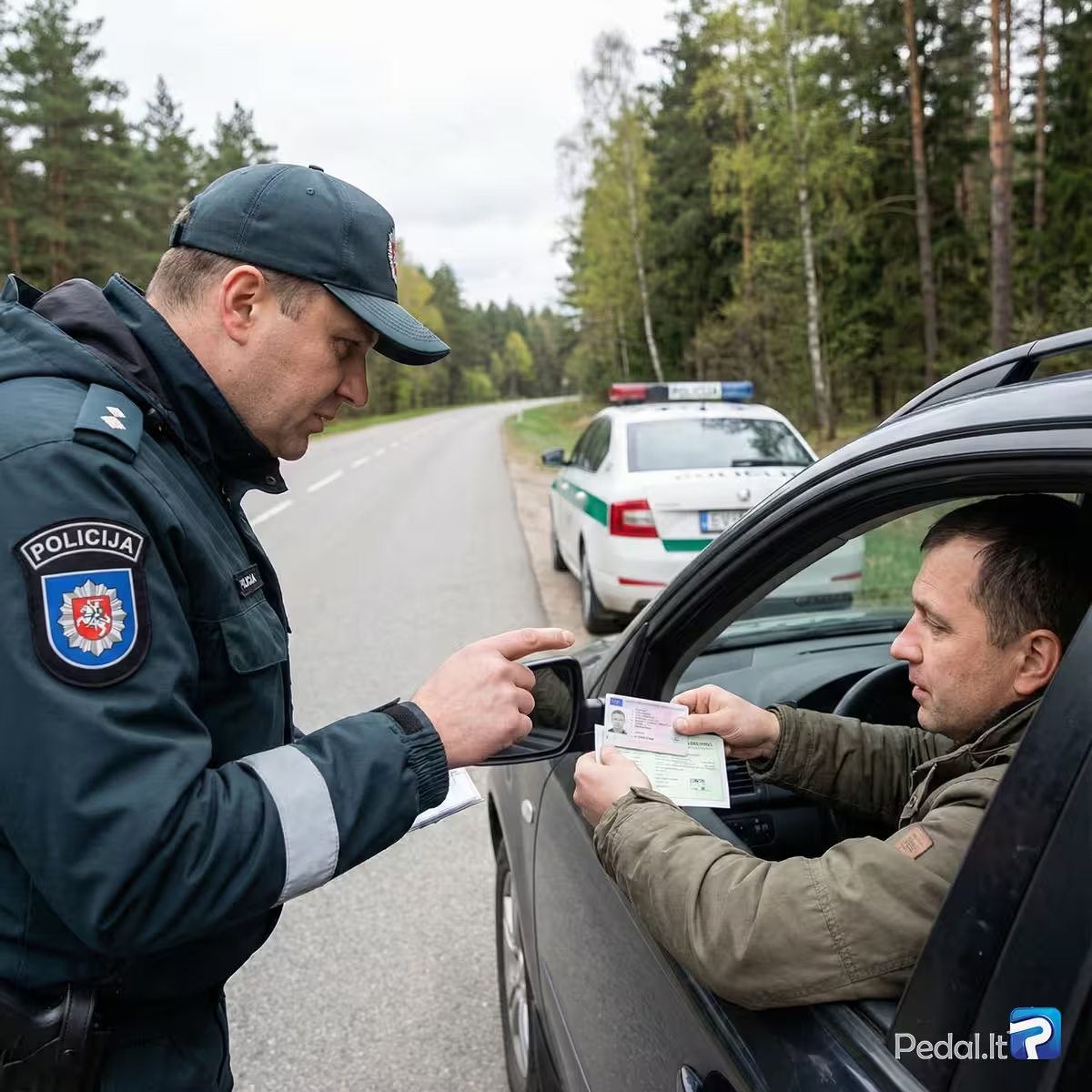
What checks must a driver allow when requested by a police officer?
RTR 17. At the request of a police officer, a driver must submit to tests for alcohol intoxication or for intoxication caused by narcotic drugs, psychotropic substances, or other psychoactive substances, in the manner prescribed by the Government of the Republic of Lithuania. RTR 14. It is prohibited to drive a vehicle if you are not authorized to do so, if you are under the influence of alcohol, narcotic drugs, psychotropic substances or other psychoactive substances. A person who is fatigued or ill must not drive if driving may endanger road safety. A vehicle must not be entrusted to a person who is under the influence of such factors or who is not authorized to drive that type of vehicle. When operating a vehicle, the driver must comply with the conditions specified on the driving licence. JB
1. Alcohol intoxication.
2. Irritability.
3. Fatigue.
4. Intoxication by narcotic drugs.
Is it permitted to drive on winter tyres during the summer season?
According to the traffic regulations, vehicles fitted with studded tyres must not be used from April 10 to October 31. Therefore, winter tyres without studs are permitted during that period. However, using summer tyres is recommended in warm conditions. If winter conditions persist, the Minister of Transport and Communications may issue an order extending the permitted use of studded tyres.
1. Yes — winter tyres without studs are permitted.
2. No — that is prohibited.
How is a "built-up area" defined?
Law on Road Traffic Safety, Article 2, Clause 19: A "built-up area" means an area containing buildings whose roads are marked at the entrances with the road sign "Beginning of Built-Up Area" and at the exits with the road sign "End of Built-Up Area".
1. An area containing buildings whose roads are marked at the entrances with the regulatory sign "Residential Area".
2. An area containing buildings to which additional traffic rules apply and whose roads are marked at the entrances with the sign "Beginning of Built-Up Area" and at the exits with the sign "End of Built-Up Area".
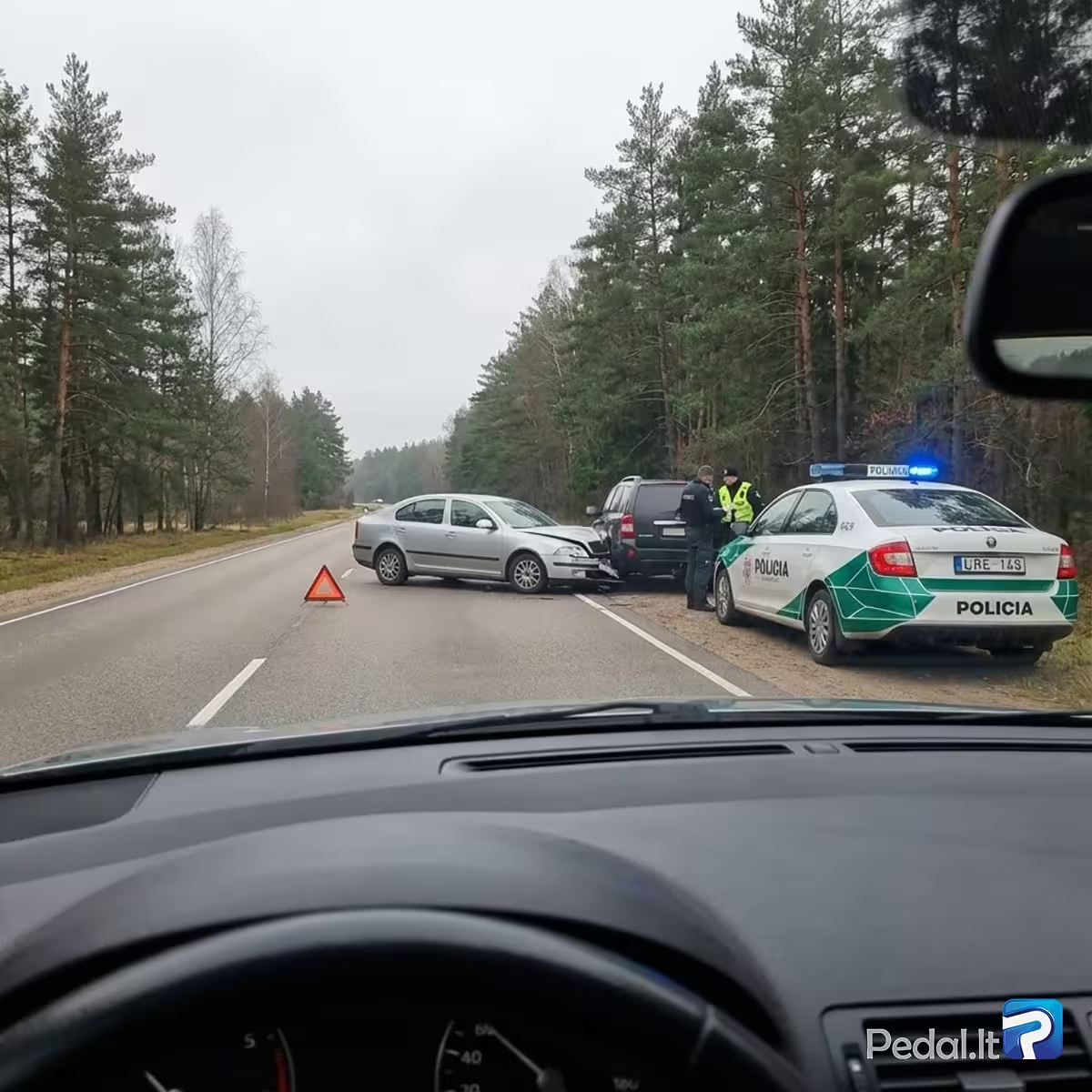
In most cases, those responsible for road accidents in Lithuania are:
According to data from the Lithuanian Road Administration, in 2017 drivers accounted for 68.83% of all individuals found responsible for road accidents.
1. Drivers of motor vehicles.
2. Cyclists (bicyclists).
3. Pedestrians (people on foot).
4. Drivers of animal-drawn vehicles.
.avif)
If you park on an even-numbered day of the month, between which hours must you move the vehicle to the opposite side of the road to comply with parking regulations?
Road sign 334 — “No parking on odd days”. Parking is prohibited on the side of the road where this sign is placed on odd-numbered days of the month. Road sign 335 — “No parking on even days”. Parking is prohibited on the side of the road where this sign is placed on even-numbered days of the month. When signs 334 and 335 are installed on both sides of the road, vehicles must be moved from one side to the other between 19:00 and 24:00 (7:00 pm–12:00 am); during that interval, parking is permitted on either side of the road.
1. From 5:00 pm to 9:00 pm
2. From 7:00 pm to 9:00 pm
3. From 10:00 pm to 11:00 pm
4. From 11:00 pm to 11:50 pm
Which car colors are most visible to other road users?
Light, bright-colored vehicles are most visible to other road users. (JB)
1. Black, gray, or blue.
2. White, orange, or red.
3. Purple or brown.
4. Vehicle color has no effect on visibility.
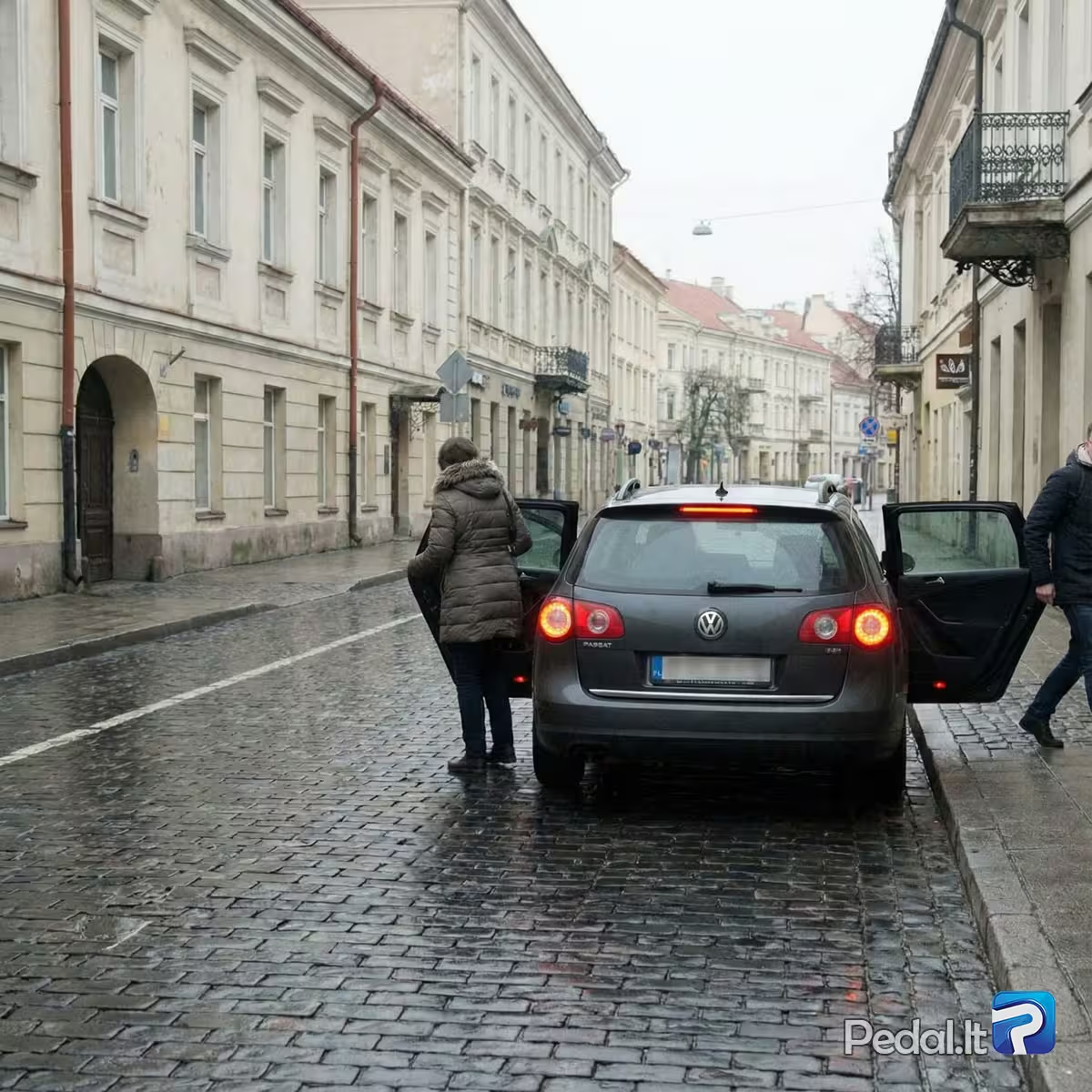
Is it permitted for passengers to board or alight from a vehicle from the roadway side?
Passengers may board or alight from the roadway side only when it is impossible to do so from the pavement (sidewalk) or hard shoulder, and only if it can be done safely without obstructing other road users.
1. It is prohibited.
2. It is allowed.
3. Yes — permitted only when boarding or alighting from the pavement (sidewalk) or hard shoulder is not possible.
What should drivers do when approaching an intersection where the green traffic light is flashing?
According to the Road Traffic Rules (RTR 73.3), a flashing green light permits traffic to proceed but indicates that the green phase is ending and that a prohibitive signal will soon appear. Drivers who try to speed through the intersection — by accelerating or overtaking — take unnecessary risks and may cause an accident. Other drivers may brake suddenly; therefore, to pass the intersection safely while the green light is flashing, drivers must ensure their actions will not obstruct other vehicles and must consider the behavior of drivers behind them, since sudden braking can also lead to collisions. Anticipating the need to stop before the intersection, drivers should reduce their speed.
1. Observe and take into account the actions of vehicles ahead.
2. Accelerate to the maximum allowable speed.
3. Be aware of and consider the actions of drivers behind you.
4. Reduce your speed.
Why is it safer to brake without depressing the clutch while driving downhill?
After releasing the accelerator (engine braking), place your foot on the brake pedal and stop without pressing the clutch. This is the most effective braking method, especially in winter when roads are slippery. Braking with the clutch disengaged reduces stopping effectiveness and vehicle stability, increasing the risk of skidding to the side. JB
1. Braking is more effective.
2. The vehicle remains more stable during braking.
3. The tires will not wear out as quickly.
What should drivers do if they encounter a pothole on the road that cannot be avoided while traveling at high speed?
When you see a pothole, reduce your speed and try to steer around it. If avoidance is impossible and an impact cannot be prevented, release the brakes just before the pothole and straighten the steering — this reduces the chance of damaging the tire or suspension components.
1. Release the brakes just before hitting the pothole.
2. Accelerate before hitting the pothole.
A driver whose vehicle is being overtaken must not:
Using the horn may distract the driver being overtaken but will not prevent the overtaking; they may still accelerate to complete the manoeuvre. Obstructing an overtaking vehicle includes actions such as accelerating, steering toward the overtaking vehicle, blocking the lane, or any other behaviour intended to prevent another driver from passing. RTR 138. The driver of a vehicle being overtaken must not obstruct drivers who wish to pass by speeding up or by any other action. RTR 136. Drivers are advised to avoid unnecessary overtaking manoeuvres. Before overtaking, drivers must take extra precautions and ensure that: 136.1. no driver behind them has already begun to overtake; 136.2. the driver of the vehicle to be overtaken is not signalling a left turn; 136.3. the section of lane required for overtaking is clear and the manoeuvre will not obstruct oncoming vehicles or pedestrians on the carriageway; 136.4. a safe distance from the vehicle being overtaken can be maintained during the overtaking; 136.5. after the overtaking manoeuvre they will be able to return to the same traffic lane safely without obstructing the overtaken vehicle. JB
1. Speeding up or otherwise obstructing a driver who is attempting to overtake.
2. Slowing down.
3. Using the horn.
If the rear of a front-wheel-drive vehicle begins to skid sideways during a turn, how should you respond?
Gradually apply the accelerator and steer smoothly to return the vehicle to the intended line. Slightly increasing front-wheel traction helps counteract the rear's lateral slide, reducing the effect of centrifugal force and stabilizing the vehicle.
1. Lightly apply the brakes and steer into the skid.
2. Ease off the accelerator and steer carefully to return the vehicle to the intended line.
3. Gradually apply the accelerator and steer smoothly to return the vehicle to the intended path.
Which description corresponds to a "Bicycle path"?
Law on Road Traffic Safety, Art. 2, para. 11. "Bicycle path" — a road or part of a road intended for the movement of bicycles, motorcycles and electric micromobility vehicles, marked with appropriate road signs. A bicycle path must be separated from the roadway or its lanes by engineering measures.
1. A portion of the roadway, or a separate path, designated for bicycle and moped traffic.
2. A road or section of road intended for the movement of bicycles, motorcycles and electric micromobility vehicles, marked by appropriate road signs.
3. A portion of the road designated for shared pedestrian and bicycle use.
Reflectors fitted to the rear of a vehicle must be:
Order No. 2B-14 of the Lithuanian Transport Safety Inspection, dated 16 January 2013, regarding amendments to the technical requirements for motor vehicles and their trailers, Chapter IV, point 4.10: Rear non-triangular reflector — red; Rear triangular reflector — red. JB
1. Yellow.
2. Red.
3. White.
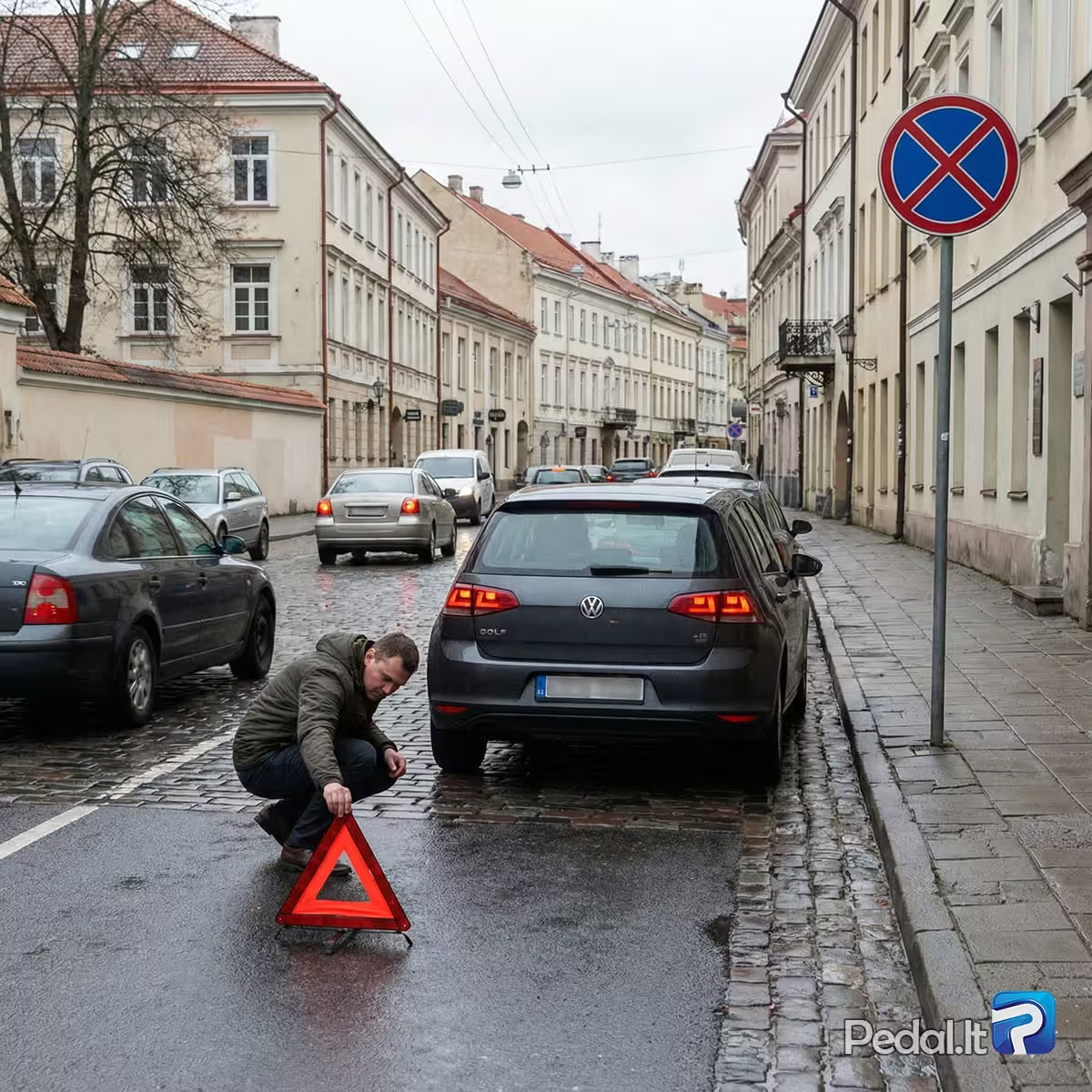
What must you do if you are forced to stop inside a settlement where stopping (parking) is prohibited and the hazard warning lights are not working?
RTR 92. If the emergency warning light system is not fitted or is defective and an emergency stop is required where stopping or parking is prohibited, in the event of an accident, or where the stopped vehicle would be visible to other road users from less than 100 metres, the driver of a motor vehicle (other than a motor moped or a motorcycle without a trailer), a tractor, or a self-propelled machine must immediately place an emergency stop sign on the carriageway side opposite to the direction of travel: in settlements, not closer than 25 m, and outside settlements, not closer than 50 m from the stopped vehicle. If at least one rear position lamp is defective and the hazard warning lights do not work while driving in darkness or poor visibility, an emergency stop sign must be attached to the rear of the vehicle in order to continue driving.
RTR 151. When a vehicle is forced to stop where standing or parking is forbidden, drivers must switch on hazard warning lights if available and/or place a warning triangle on the road as specified in Paragraph 92 of the Rules, and remove the vehicle from the road as soon as possible. If drivers intend to stop on unlit road sections at night or in poor visibility and hazard warning lights are unavailable or inoperable, the vehicle must be parked off the carriageway. If this is impossible, the place must be marked as specified in Paragraph 92 of the Rules. JB
1. Place a warning triangle at least 25 m from the stopped vehicle.
2. Attach a red flag to the vehicle.
3. Switch on the dipped headlights.
4. Stop another vehicle and ask for assistance.
Your car begins to skid sideways while braking. What should you do?
If the wheels lock and the car begins to skid while braking, you must release the brake pedal. For example, if you brake hard before a bend and lock the wheels, the vehicle will continue moving in its original direction (straight ahead) despite steering input. That can cause you to run off the road or collide with an obstacle. In that situation you must stop braking — which can be difficult, especially for inexperienced drivers.
1. Press the clutch pedal.
2. Release the brake pedal (stop applying the brakes).
3. Apply the brakes more firmly.
Which legal act establishes the legal framework governing road traffic safety in the Republic of Lithuania?
Article 1. Purpose and scope. This Law establishes the legal framework for road traffic safety in the Republic of Lithuania. It defines the duties of state and municipal bodies in implementing road safety policy, sets requirements for the training of road users, and specifies the principal rights and obligations of road users, road maintenance authorities, the police, customs officers, and other supervisory officials. The Law also establishes basic requirements for vehicle technical condition, vehicle inspection and registration, and safety standards for road infrastructure, with the objective of protecting the lives, health, and property of road users and others, and of improving conditions for motorized and pedestrian traffic.
1. The Civil Code of the Republic of Lithuania.
2. The Criminal Code of the Republic of Lithuania.
3. The Law on Road Traffic Safety of the Republic of Lithuania.
4. The Code of Administrative Offences of the Republic of Lithuania.
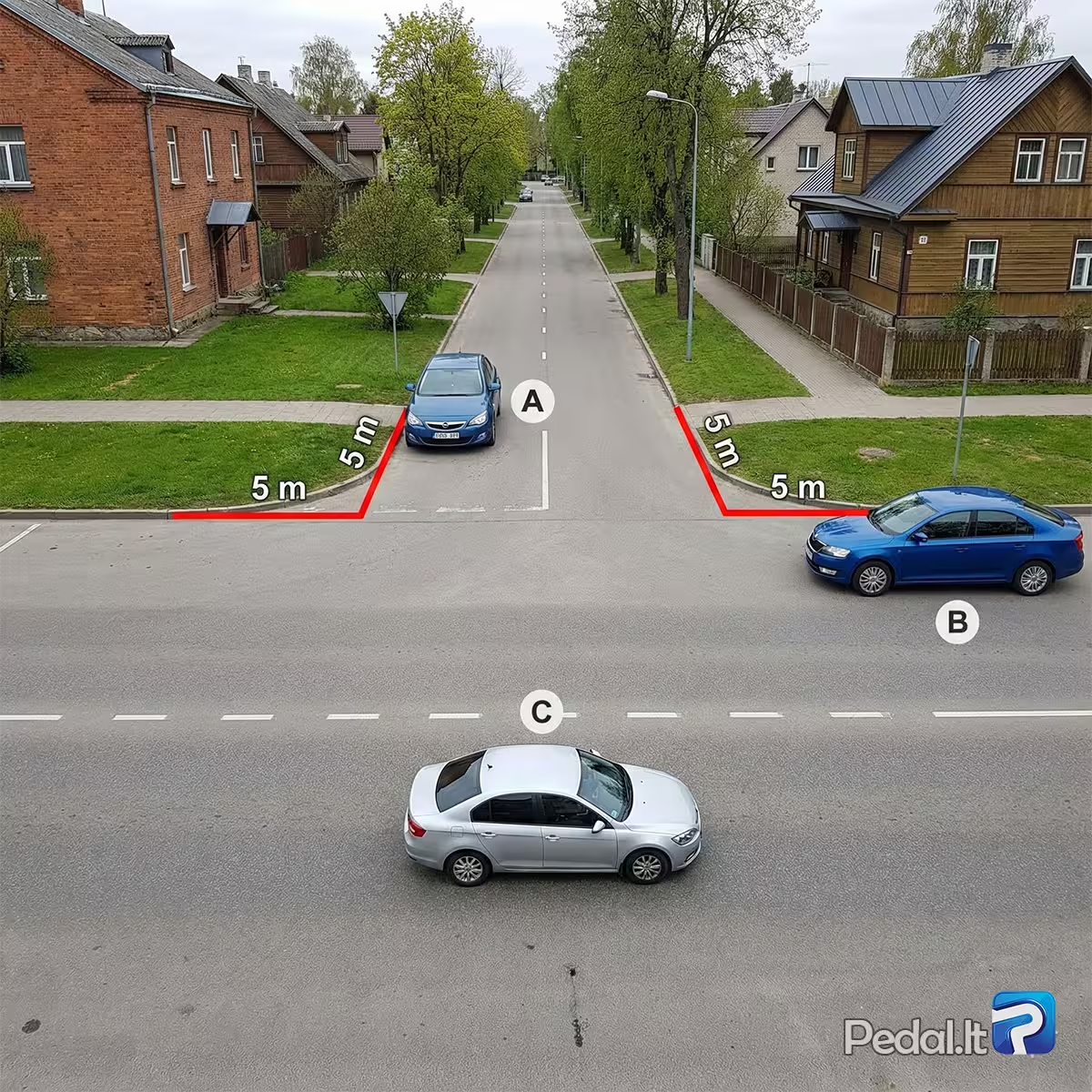
Which vehicles have violated the Road Traffic Rules by stopping at the entrance to the yard?
This is not an intersection but the entrance to a yard. Therefore, vehicle C is not prohibited from parking in this way. RTR 150. Standing and parking shall be prohibited: 150.15 at crossroads and in places where vehicles enter the road from adjacent areas and exit the road to adjacent areas, and within a 5-metre distance from those points (on the side of the road where the entrance/exit is located), except where road signs permit parking.
1. Vehicle A
2. Vehicle B
3. Vehicle C
4. All vehicles are parked correctly.
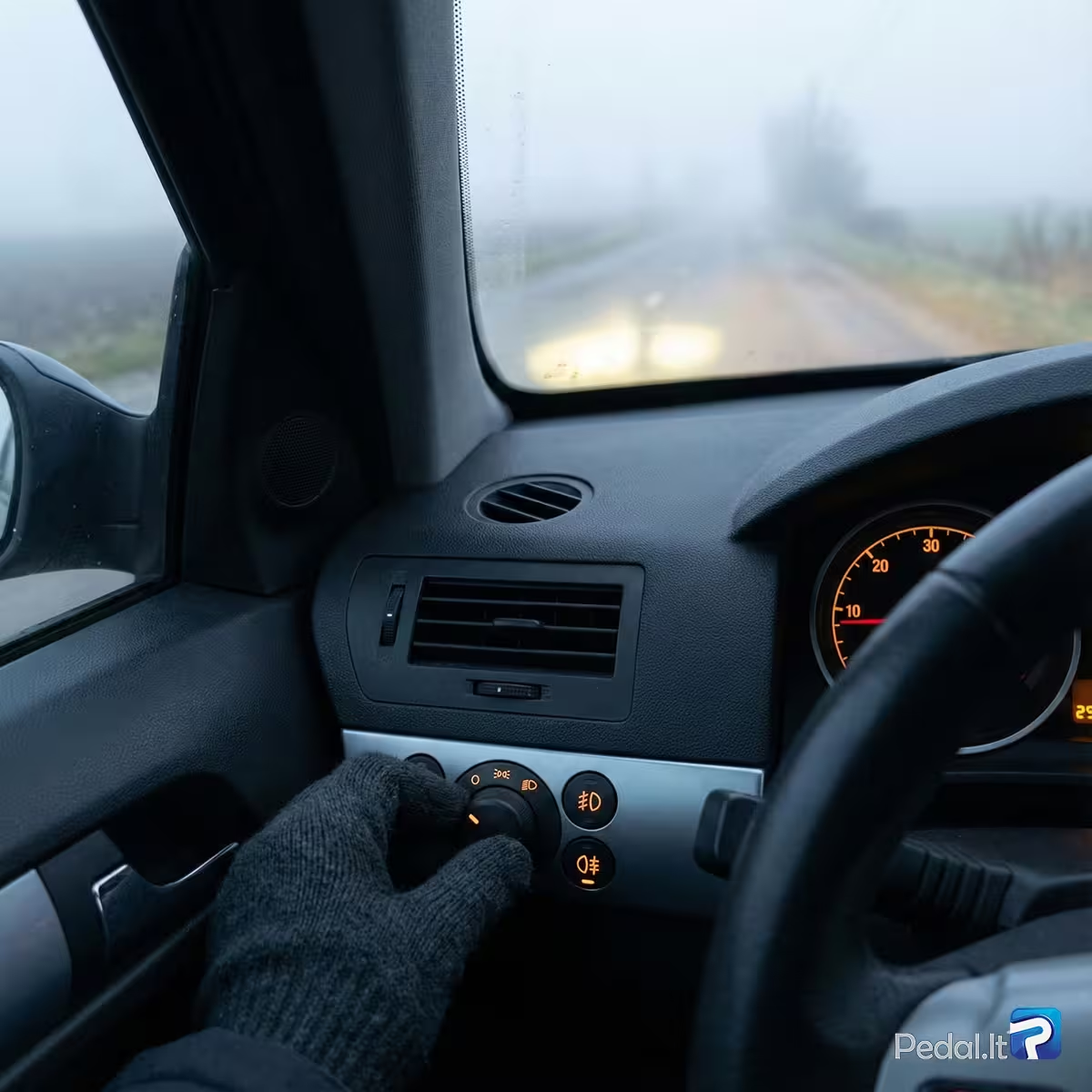
Fog lamps must be capable of being switched on:
Technical requirements for vehicles operated on a road, Chapter IV, Paragraph 22: If fog lamps are fitted, they must only be capable of being switched on and off using an appropriate switch when the position lamps are switched on. Additionally, fog lamps must be capable of being switched off independently of any other lights.
1. When the main-beam (high‑beam) headlamps are switched on.
2. When the position (parking) lamps are switched on.
3. Only when the position lamps are switched on; they must be able to be turned off independently of any other lights.
4. When the dipped‑beam (low‑beam) headlamps are switched on.
The term "service vehicle" refers to:
RTR 3.1. "Service vehicles" are vehicles owned by companies, institutions, or organisations operating in an area marked by restrictive signs; vehicles belonging to persons who live or work in that area; vehicles delivering goods to that area or collecting goods from it; and taxis or other passenger vehicles providing paid transport to or from that area.
1. Any vehicle used for transporting goods.
2. A vehicle owned by companies, institutions, or organisations operating in an area marked with restrictive signs, or by persons working in that area.
3. A vehicle owned by persons residing in an area marked with restrictive signs.
4. A vehicle delivering goods to an area marked with restrictive signs, or collecting goods from it.
5. Taxis or other passenger vehicles providing paid transport to or from an area marked with restrictive signs.
If there are no posted speed limit signs, when must you drive at a speed not exceeding 50 km/h?
129. The maximum speed limit within built-up areas for all vehicles is 50 km/h.
1. If diversion signs are present.
2. If a solid yellow line is present.
3. If pedestrian refuge islands are present.
4. Within built-up (urban) areas.
.avif)
A child is saying goodbye to a friend. What should you anticipate in this situation?
Children close to the road can behave unpredictably. Exercise extreme caution when driving near them — they may run into the carriageway without looking and may not respond to a horn.
1. The child may step into the carriageway without looking.
2. The child may be looking toward the road but still step into the carriageway.
3. The child may step into the carriageway even if you sound the horn to warn them.
You are driving on the road when a vehicle rapidly approaches from behind. The driver has switched on the left-turn indicator and is signaling by flashing the headlights. What will you do?
Even if another driver breaks the rules by overtaking or exceeding the speed limit, you must not endanger other road users — allow that driver to overtake you. 4. Road users shall follow the principle of mutual respect and safety.
1. You will accelerate to increase the distance between the vehicles.
2. You will maintain your speed and prevent the other driver from overtaking you.
3. You will allow the approaching vehicle to overtake you.
4. You will apply the brake pedal to activate the brake lights.
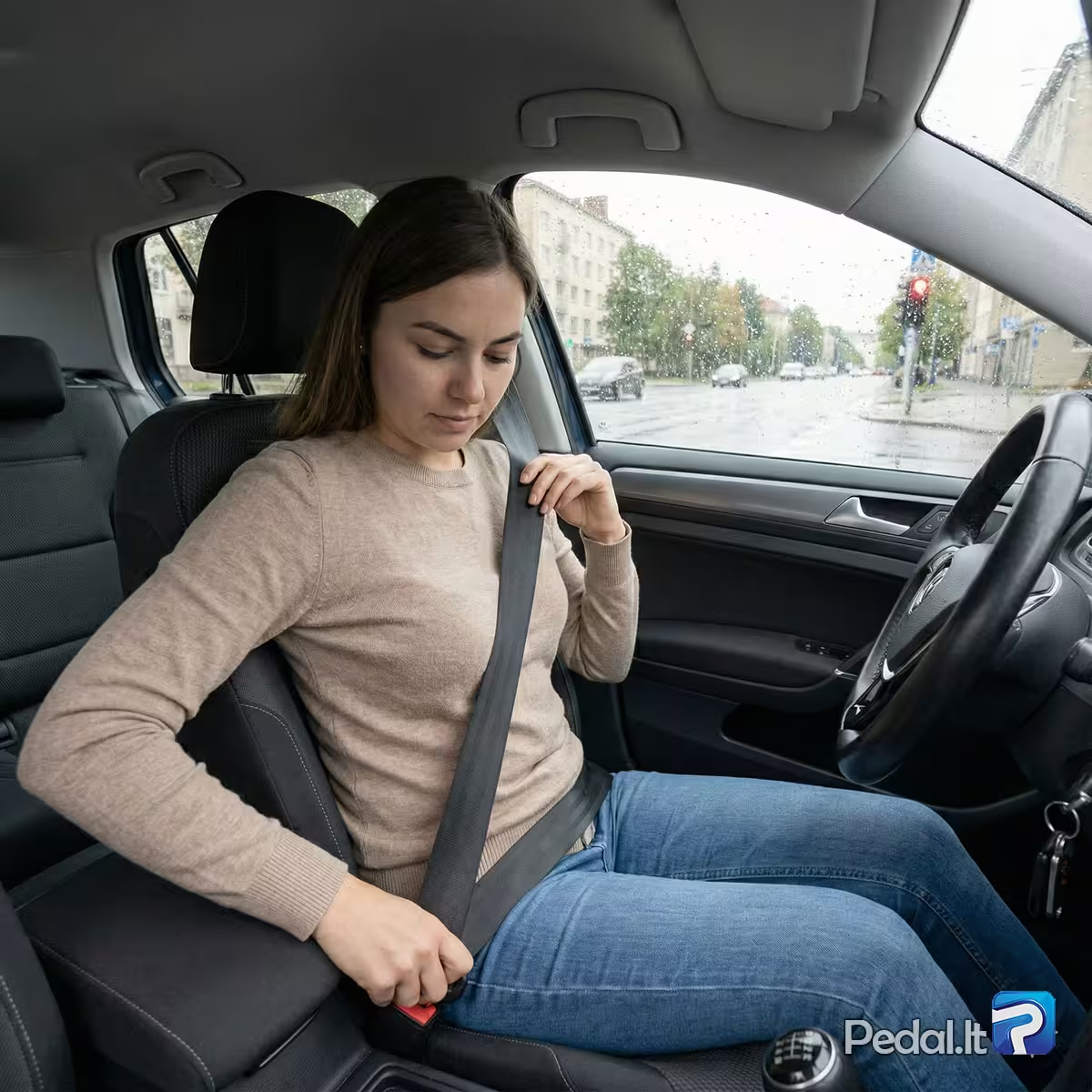
How should the seat belt be fastened correctly?
RTR p. 197. Seat belts must be worn over the shoulder and across the lap, or in the manner specified by the vehicle manufacturer. JB
1. Seat belts must be worn over the shoulder and across the lap, or as specified by the vehicle manufacturer.
2. It is not necessary to wear a seat belt.
Under what circumstances are drivers prohibited from operating a vehicle?
IV 15. It is prohibited to drive vehicles that are not in good condition or that fail to meet the applicable technical requirements. Before setting off, the driver of a motor vehicle, tractor, or self-propelled vehicle must ensure the vehicle is in proper condition and is equipped with a warning triangle, fire extinguisher, first-aid kit, and any other items mandated for that vehicle type. The driver must also monitor the vehicle's technical condition during the trip. If the vehicle breaks down while driving and ceases to meet technical requirements, and repairs on-site are impossible, the driver may proceed—taking all necessary precautions—to the nearest parking area or repair facility, except in cases specified in paragraph 234 of these Rules.
1. When the engine has not yet warmed up to its optimal operating temperature.
2. When the vehicle's fuel tank is not full.
3. When the vehicle is not in roadworthy condition.
4. When the vehicle does not meet the required technical standards.
Which of the following are warning signals?
RTR 81. Warning signals include: using turn and brake lights (arm signals may be used), sounding the horn, switching the headlights on and off, activating hazard warning lights or flashing amber beacons, and placing a warning triangle on the road or attaching it to the vehicle.
1. Brake light signal.
2. Indicating a turn using an arm signal.
3. Horn signal.
4. Switching the headlights on and off.
5. Placing a warning triangle on the road.
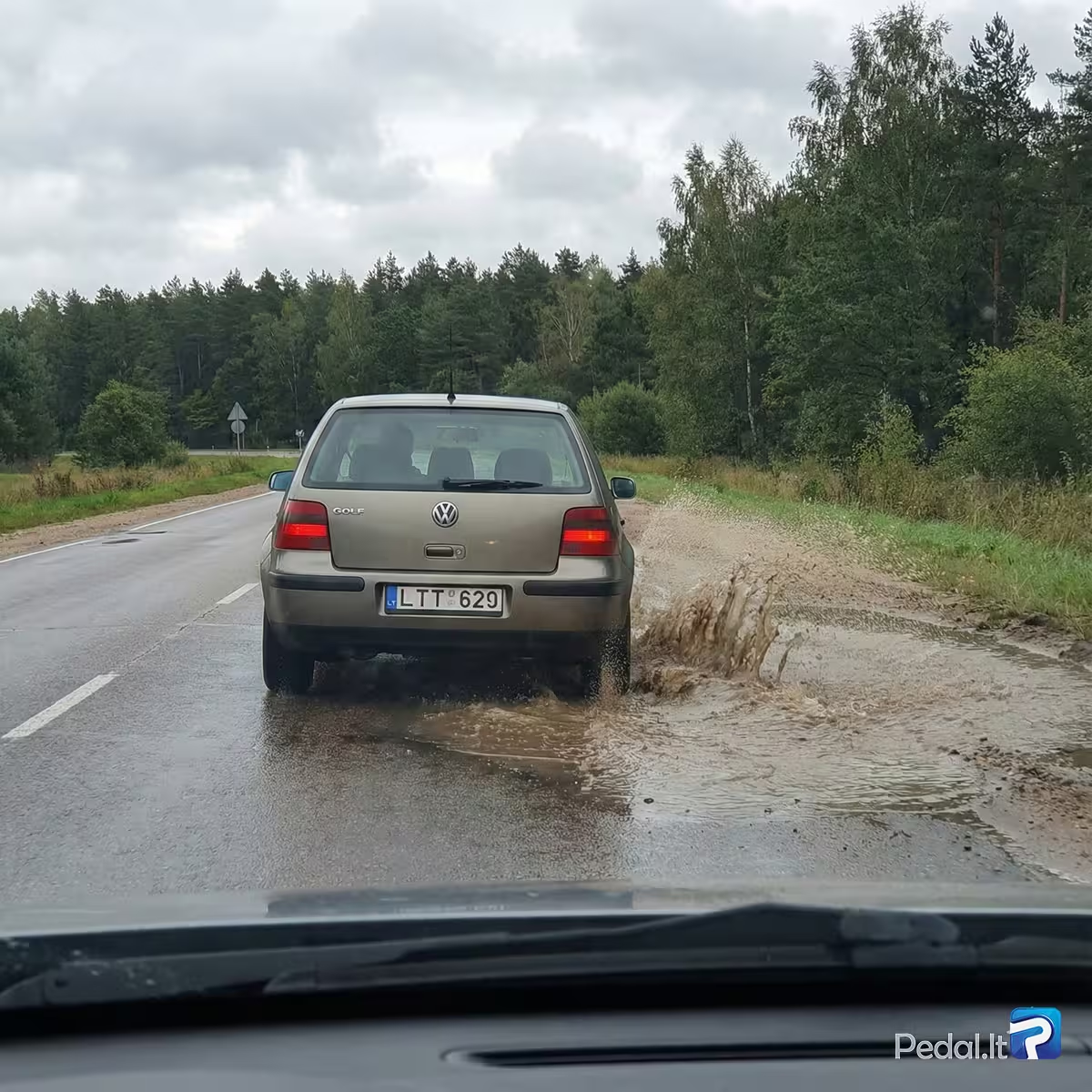
If either the left or right wheel of your vehicle has entered a body of water (for example, a puddle), you must:
When a wheel travels through standing water, the vehicle can aquaplane (ride on a layer of water), causing loss of traction and possible skidding. Hold the steering wheel firmly and gradually reduce speed to regain traction and maintain control.
1. Apply the brakes immediately.
2. Grip the steering wheel firmly.
3. Increase your speed.
You are on the right side of the road and are about to start moving. A goods vehicle is behind you. What should you take into consideration?
101. Before starting to move, changing lanes, or otherwise altering course, drivers must ensure the manoeuvre is safe and give way to other road users (i.e., avoid creating obstructions).
1. You may not notice vehicles traveling in the same direction that are approaching or about to overtake you.
2. Other drivers may fail to see your left‑turn indicator.
If you are forced to stop outside a built-up area where stopping is prohibited and your hazard warning lights are not working, what must you do?
RTR 92. If the vehicle's hazard warning lights are absent or defective and an emergency stop is required where stopping or parking is prohibited, in the event of an accident, or when the stopped vehicle would be visible to other road users from less than 100 metres, the driver of a motor vehicle (excluding a motor moped and motorcycles without a trailer), a tractor, or a self-propelled machine must immediately place an emergency stop sign on the side of the carriageway opposite the direction of travel: within settlements not less than 25 m, and outside settlements not less than 50 m from the stopped vehicle. If at least one rear position lamp is defective and the hazard warning signal is not working when driving in darkness or poor visibility, an emergency stop sign must be affixed to the rear of the vehicle in order to continue driving.
1. Attach a red flag to your vehicle.
2. Place a warning triangle 50 m behind the stopped vehicle.
3. Stop another vehicle and request assistance.
4. Turn on your dipped-beam headlights.
1 of 30 Task
Time left: 00:00:00
1
2
3
4
5
6
7
8
9
10
11
12
13
14
15
16
17
18
19
20
21
22
23
24
25
26
27
28
29
30