How can you conserve fuel and reduce environmental pollution?
Carrying a 100 kg load in city driving increases fuel consumption by about 0.5 L per 100 km. The air conditioner consumes approximately 0.5–1.0 L/100 km; a fan consumes about 0.08–0.3 L/100 km; the radio about 0.06–0.21 L/100 km; modern audio systems about 0.2–0.7 L/100 km. JB
1. Remove unnecessary items from the vehicle before driving.
2. Use the air conditioner only when necessary.
3. Use electrical accessories only when necessary.
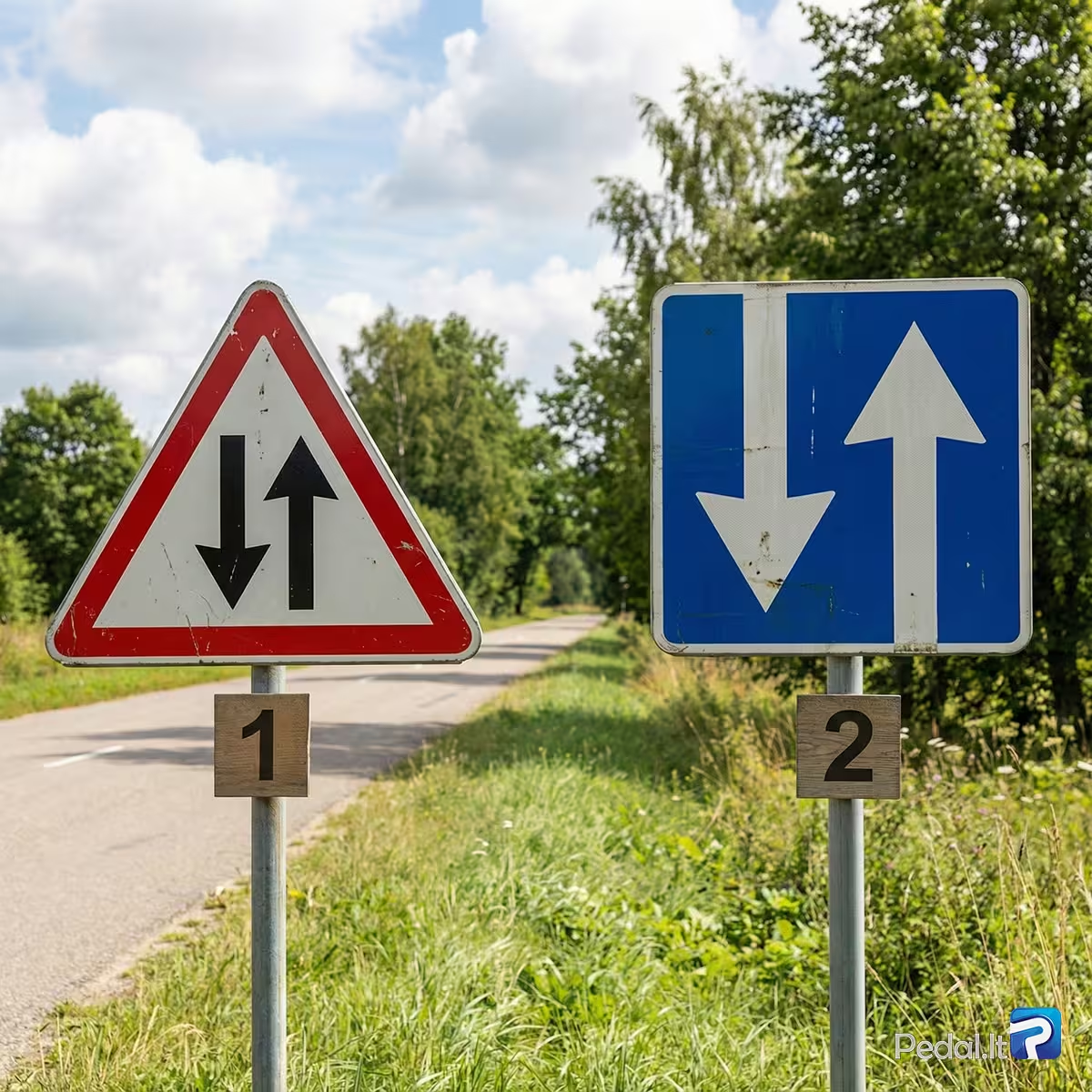
Which sign indicates that the road ahead carries two-way (opposing) traffic?
Warning signs alert drivers to upcoming changes in traffic conditions. Sign 126, 'Two-Way Traffic', indicates the start of a carriageway section with opposing traffic. Sign 504, 'End of One-Way Traffic', is a regulatory sign that marks the end of a one-way traffic section. (RTR Annex 1: 126 and 504.)
1. Sign 1.
2. Sign 2.
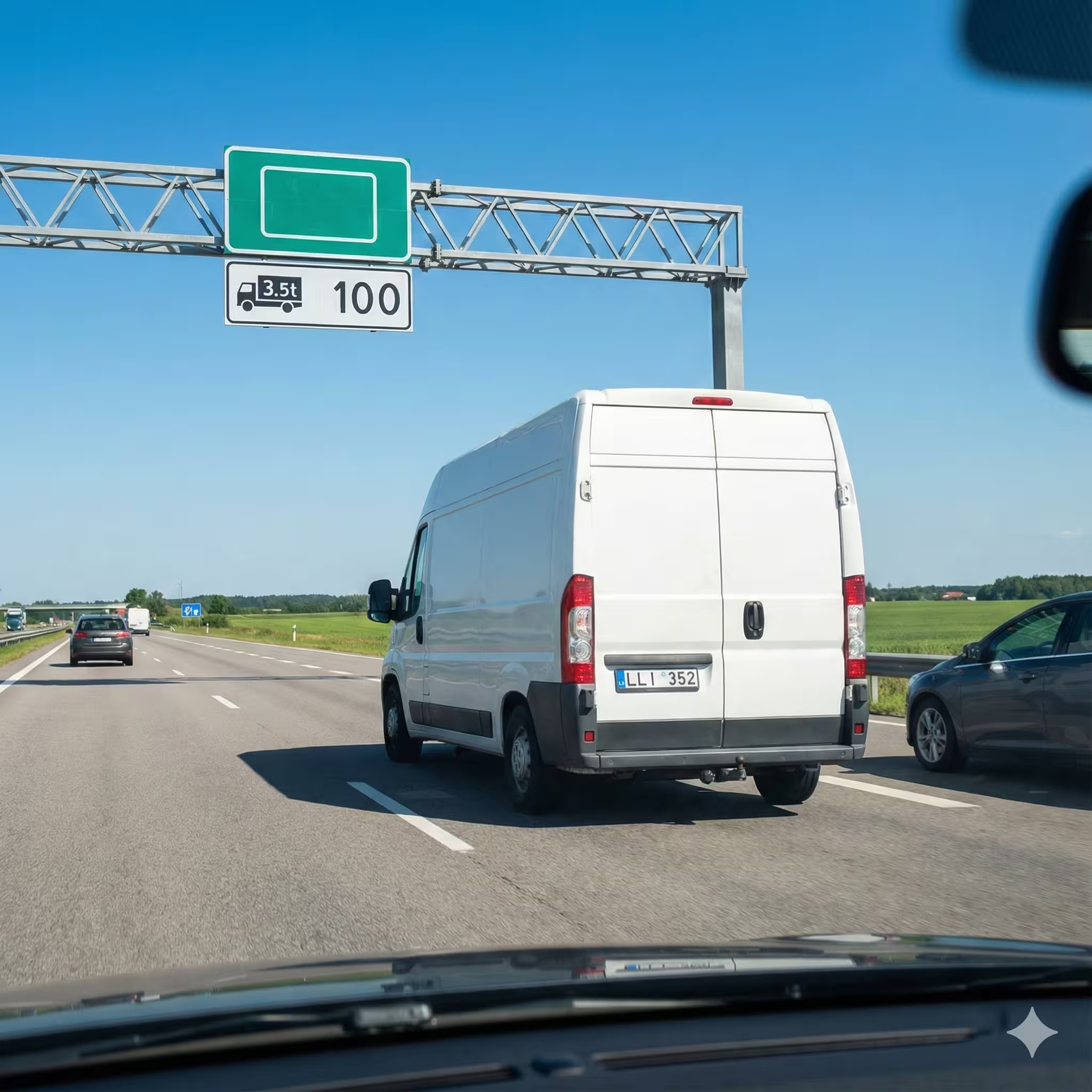
What is the maximum speed limit on motorways in summer for goods vehicles with a permissible maximum weight of 3.5 tonnes?
According to rule 131.1: On motorways, from April to October the maximum speed for passenger cars, goods vehicles with a permissible maximum weight up to 3.5 tonnes, motorcycles, and tricycles is 130 km/h, and from November to March it is 110 km/h. On expressways (highways) the limit is 120 km/h from April to October and 110 km/h from November to March. On roads with asphalt or concrete pavement the limit is 90 km/h, and on other roads it is 70 km/h.
1. 90 km/h
2. 100 km/h
3. 110 km/h
4. 130 km/h
Your vehicle's dipped-beam headlamps are on during daylight. Drivers in the oncoming lane keep switching their main beams to dipped beams (flashing their headlights). What does this indicate?
If other drivers switch their headlights from high beam to low beam (flash) during the day, it may indicate that your low beams are excessively bright or misaligned and are dazzling other road users. This is dangerous because dazzled drivers can become disoriented and cause accidents. If you notice that drivers often flash their lights as they pass you, it is a sign to have your vehicle's lighting checked and, if necessary, adjusted. 81. The warning signals are as follows: using turn and brake light signals (signals may also be indicated by hand); sounding the horn; switching headlights on and off; using hazard warning lights; turning on flashing orange hazard lights; and placing a warning triangle on the road or attaching it to a vehicle.
1. You must switch on your main-beam (high) headlamps.
2. You must switch on your position (parking) lamps.
3. Your vehicle's headlamps are misaligned or aimed too high and are dazzling other road users.
What should drivers do if they encounter a pothole on the road that cannot be avoided while traveling at high speed?
When you see a pothole, reduce your speed and try to steer around it. If avoidance is impossible and an impact cannot be prevented, release the brakes just before the pothole and straighten the steering — this reduces the chance of damaging the tire or suspension components.
1. Release the brakes just before hitting the pothole.
2. Accelerate before hitting the pothole.
Which vehicle is considered an automobile?
Law on Road Traffic Safety, Article 2, paragraph 2. An automobile is a motor vehicle designed to travel on roads to carry goods and/or passengers or to tow other vehicles, excluding motorcycles, light quadricycles, quadricycles, power quadricycles, mopeds, tricycles, tractors, and self-propelled machines. Automobiles also include trolleybuses, which are non-rail vehicles powered by overhead electric cables. JB
1. Designed for towing other vehicles.
2. Designed for road use and for transporting goods.
3. Designed for road use and for transporting passengers.
4. Motorcycles, tractors, and self-propelled machines.
5. Non-rail electric vehicles powered by overhead electric cables — trolleybuses.
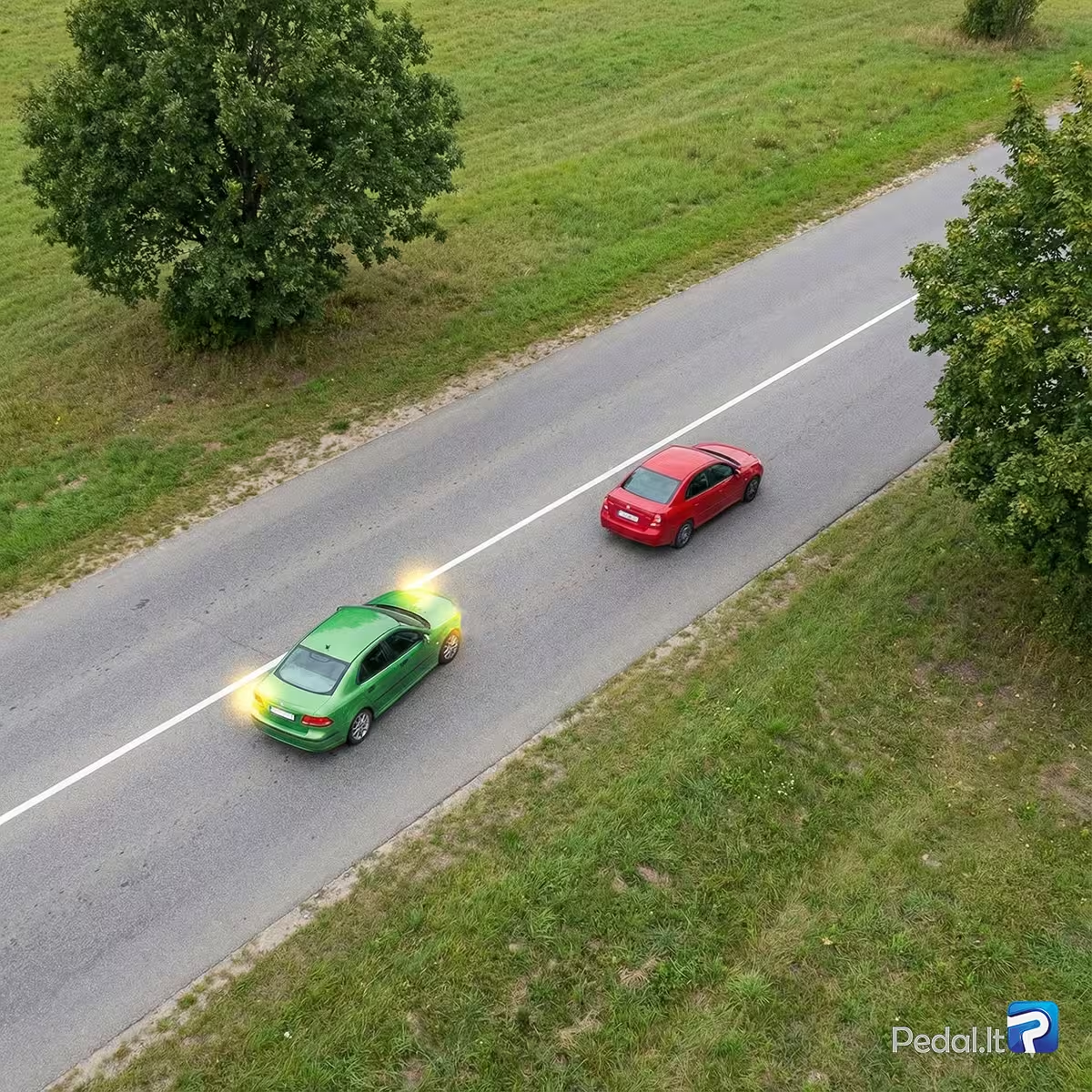
Is the driver of the green vehicle permitted to overtake?
The Road Traffic Rules prohibit crossing a solid line; it does not matter how fast the vehicle you wish to overtake is traveling. Overtaking slow-moving vehicles (traveling under 30 km/h) is allowed only where the 'No Overtaking' sign is in force (within its zone of validity) and there is no solid lane line. http://www.keliueismotaisykles.info/pakeitimai-ir-patarimai/ar-lenkiant-galima-kirsti-istisine-linija RTR Annex 3.1.1. A narrow solid line separates traffic flows in opposite directions and prohibits the use of the oncoming lane on the marked road section; it marks lane edges, areas where access is prohibited, parking space boundaries and the edge of the carriageway; in the case of road sign No 413 'Pedestrian and cycle path', it separates the section reserved for cyclists from the section reserved for pedestrians. It must not be crossed except where it marks the edge of the carriageway or a parking space. RTR Annex 1.325 'Overtaking Prohibited'. Overtaking is prohibited except for single vehicles or single vehicle combinations traveling at less than 30 km/h.
1. Overtaking is permitted.
2. Overtaking is prohibited.
3. Overtaking is permitted if the vehicle being overtaken is traveling at less than 30 km/h.
4. Overtaking is permitted if the vehicle being overtaken is traveling at less than 15 km/h.
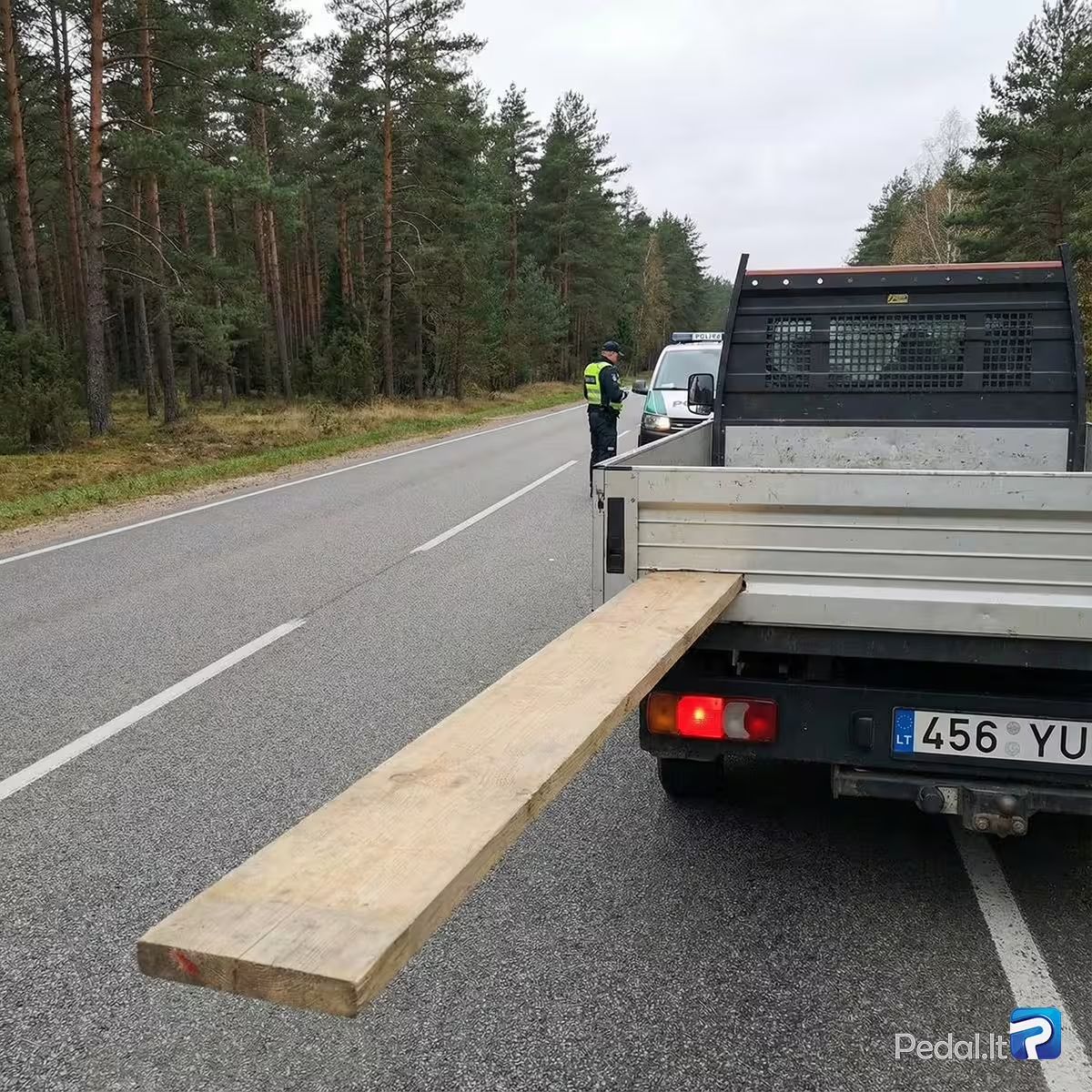
What is the maximum distance a load may extend beyond the rear of a vehicle without requiring marking?
Paragraph 210 of the Road Traffic Rules states that a load must be marked if it extends more than 1 metre beyond the front or rear of the vehicle. A load that extends up to and including 1 metre may remain unmarked; any extension beyond 1 metre must be marked. RTR 210: Any motor vehicle carrying a load which extends beyond the front and rear of the vehicle by more than 1 m or beyond the side of the vehicle must have the extremities of the load marked as provided for in Annex 4 to these Rules.
1. 0.5 m.
2. 1 m.
3. 1.5 m.
Your car veers to one side only while braking (it travels straight when not braking). What is the likely cause?
Incorrect tyre pressure usually causes the vehicle to pull to one side during normal driving, not only when braking. If the car only pulls while braking, uneven braking is the likely cause — for example, a seized caliper, sticking pads, or poor adjustment causing one side to brake harder. Low brake fluid will reduce braking effectiveness or cause pedal problems, but it typically does not make the car swerve to one side only when braking.
1. Tire pressures are incorrect or uneven.
2. The wheel brakes are applying unevenly.
3. Brake fluid level is insufficient.
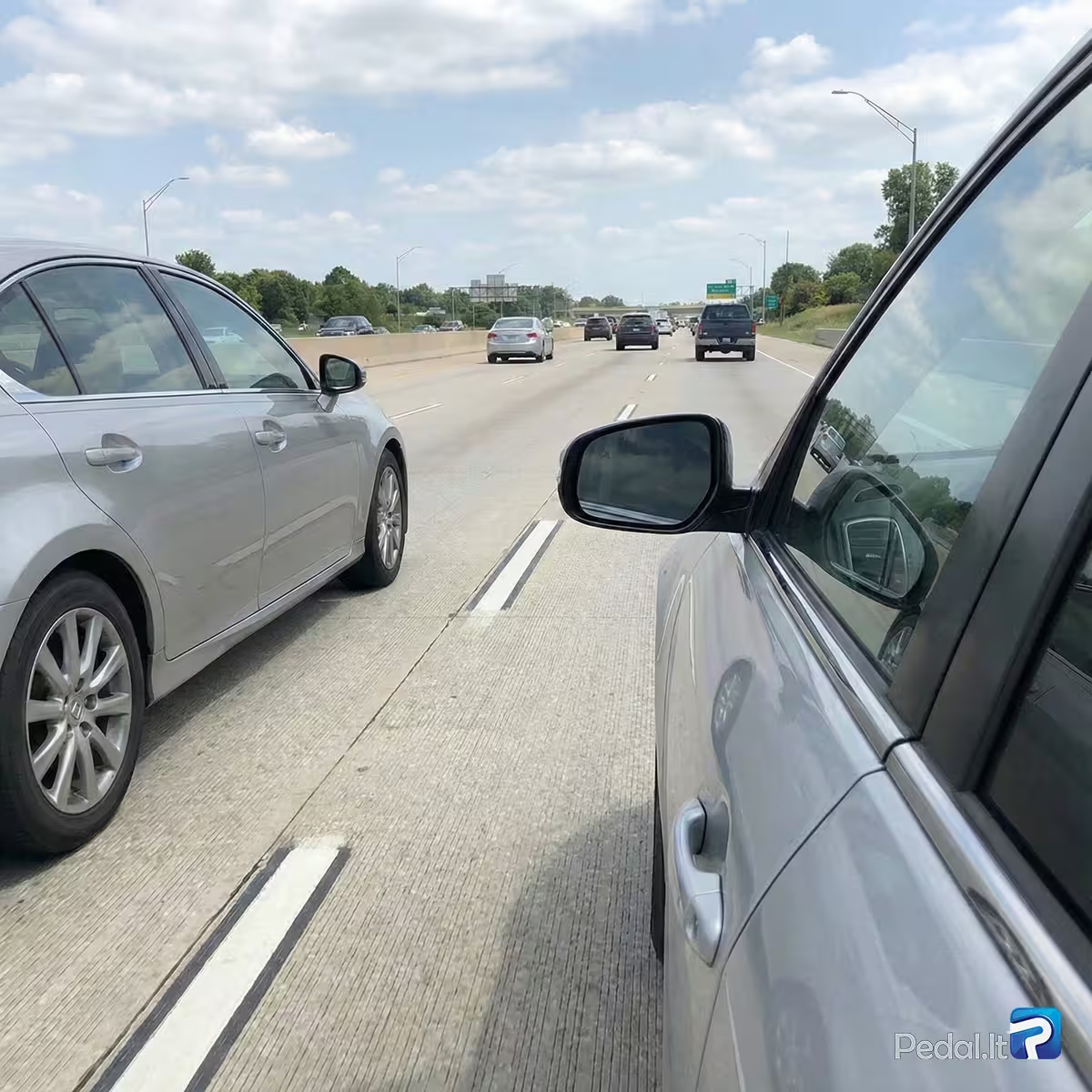
What lateral distance from nearby vehicles is considered safe?
3.17 Choosing a safe distance: operate the vehicle so that: 3.17.3. the distance to other vehicles, whether moving or stationary, is safe relative to any parked vehicle — maintain sufficient clearance to prevent parked vehicles or other obstacles from causing interference. When the vehicle is parked in a parking space, the lateral clearance should permit opening the vehicle's doors.
1. A lateral clearance sufficient to allow the vehicle's doors to be opened.
2. 1 m.
3. 50 cm.
4. 30 cm.
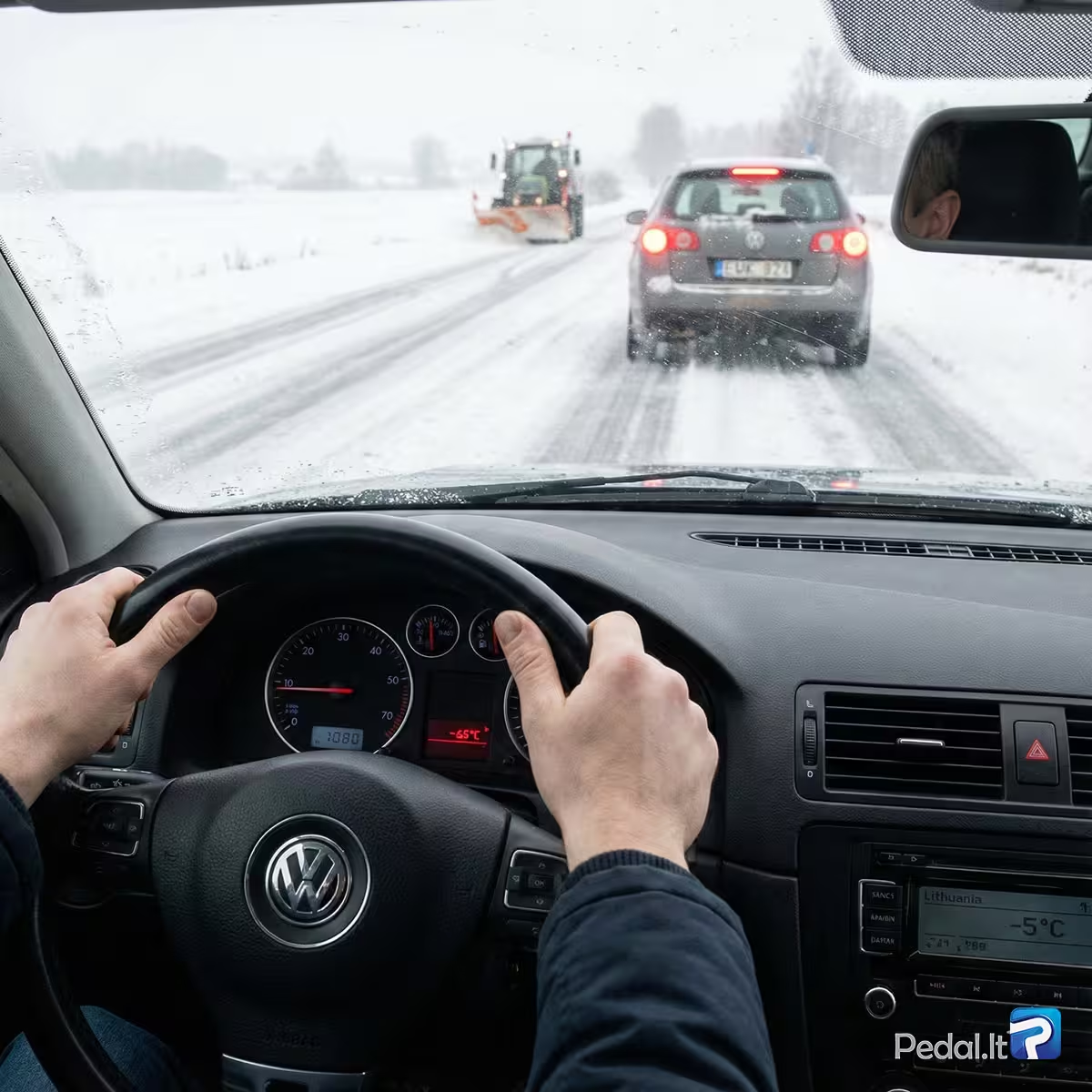
Which factor is considered the primary risk when driving on snowy roads?
1. Driver error (human factor)
2. Adverse weather conditions
3. Slippery road surface
Which of the following symptoms are characteristic of long-term cannabis use?
Symptoms associated with long-term use become more pronounced with continued consumption. The most serious psychiatric complication is cannabis‑induced psychosis. Users may experience dramatic mood swings, perceptual distortions, anxiety, and aggression. In people with preexisting mental illness, even brief exposure to cannabis can trigger psychosis. Men who begin heavy cannabis use at an early age have an increased risk of developing schizophrenia.
1. Psychiatric disorders.
2. Irritability.
What is the colour of the road sign labelled 'Place of Interest'?
629. 'Place of Interest' sign. Indicates the name of a cultural or historical site of interest. The sign has a brown background.
1. Blue.
2. Green.
3. Yellow.
4. Brown.
Are you required to signal before changing lanes?
RTR 82. A driver must indicate intended maneuvers using the vehicle's right or left direction indicators, or by arm signals if the indicator lights are unavailable or inoperative. Specifically: 82.1 before starting to move and before stopping; 82.2 before changing lanes, before and after overtaking, before and after passing an obstruction, before turning right or left, before making a U‑turn, and before leaving an intersection where vehicles must circulate around a central point. JB
1. Yes — you must signal.
2. No — you are not required to.
3. Only if other road users are nearby.
What can cause a vehicle to skid?
Sudden steering wheel movements, improper use of the accelerator, or other actions that do not take the road surface and driving speed into account can cause a vehicle to skid. In general, it is the driver's own actions (for example, sudden braking), not the actions of another driver, that lead to skidding. The driver must choose an appropriate speed and following distance so that the actions of other road users do not endanger the vehicle. 126. The driver must maintain a distance appropriate to the speed, sufficient to avoid hitting the vehicle in front if it brakes, and must leave a lateral gap to ensure traffic safety. It is recommended that the distance to the vehicle ahead be at least the distance covered in two seconds or at least half the speedometer reading converted into metres (for example, at 70 km/h the distance should be at least 35 m), unless traffic conditions require otherwise. Drivers of motor vehicles, tractors and self-propelled machinery shall, when overtaking pedestrians or when overtaking or passing cyclists or drivers of electric micro-mobility vehicles, leave a lateral distance of at least 1.0 m when their speed does not exceed 50 km/h and at least 1.5 m when their speed exceeds 50 km/h. The requirement to maintain the specified lateral distance does not apply on a single-lane road.
1. The driver's actions.
2. An emergency caused by another driver.
Which vehicles may a driver with a category B driving licence operate?
LAW ON ROAD TRAFFIC SAFETY Article 23. Categories of motor vehicles and the minimum driving age: 1. Categories of motor vehicles and their combinations with trailers are as follows: 6) Category B: vehicles with a maximum permissible mass not exceeding 3,500 kg designed and constructed to carry no more than eight passengers, excluding the driver; these vehicles may be coupled with a trailer whose maximum permissible mass does not exceed 750 kg; they may also be coupled with a trailer whose maximum permissible mass exceeds 750 kg, provided that the maximum permissible mass of the combined vehicle does not exceed 4,250 kg; a vehicle combination with a maximum permissible mass exceeding 3,500 kg (including a trailer with a maximum permissible mass exceeding 750 kg) may be driven only after passing a skills and behaviour test at the state enterprise "Regitra". LAW ON ROAD TRAFFIC SAFETY Article 22. Granting the right to drive motor vehicles, tractors, self-propelled machines: 12. Persons who are at least 24 years old, who have at least 2 years of driving experience in category B vehicles and who have completed practical driving training for category A1 vehicles in accordance with the procedure established by the Ministry of Transport or its authorised institution, are granted the right to drive category A1 vehicles in the territory of the Republic of Lithuania. As a result, the driver's licence does not explicitly state entitlement to drive category A1 vehicles; instead, the national code set by the Ministry of the Interior is shown next to the category B marking.
1. Passenger cars and motorcycles.
2. Passenger cars only.
3. Any vehicle with a maximum permissible weight up to 3,500 kg designed and built to carry no more than eight passengers (excluding the driver).
4. A category A1 motorcycle after completion of the required practical training.
When are drivers permitted to brake on a pedestrian crossing?
According to traffic regulations, there are no specific locations where braking is prohibited. Braking is necessary to ensure road safety; therefore drivers must brake whenever required.
1. When it is necessary to prevent a traffic accident.
2. When they see the brake lights of the vehicle ahead.
3. When they need to stop after the pedestrian crossing on the right-hand side of the road.
4. It is forbidden to brake on a pedestrian crossing in all circumstances.
In which situations must a driver report a road accident to the police?
If a road accident results only in property damage and the owner of the damaged property is not present at the scene and cannot be contacted, the road user involved must immediately notify the owner or, if that is not possible, report the accident to the police.
XXIX. Obligations of Road Users in the Event of a Road Accident (paras. 219–222)
219. In the event of a road accident, every driver involved or any other road user must:
219.1. stop immediately without creating further danger to other road users and mark the accident scene as required by subparagraph 91.2 and paragraph 92 of these Rules;
219.2. take all possible measures to ensure safety at the scene, and if the police are called, avoid (without endangering traffic) altering the circumstances of the accident and preserve the traces and evidence of the collision;
219.3. at the request of other road users involved, present a valid identity document or driving licence and a certificate (policy) of compulsory motor third-party liability insurance to identify the insurer;
219.4. if a person has been injured or has died in the accident, report the accident to the police and remain at the scene, or after notifying the police return and wait for them, except where the police permit departure or where the casualties or the person reporting the accident require immediate first aid;
219.5. take all necessary measures to provide first aid to the casualties, call an ambulance or, if calling an ambulance or transporting casualties to a medical facility by other means is impossible, carry them to the nearest medical facility in a private vehicle unless such transport would endanger their life or health.
222. If a road accident causes only property damage and the victim is not present at the scene, the road user involved must immediately notify the victim or, if that is not possible, the police.
1. When the accident caused only property damage and the owner of the damaged property is not present at the scene and cannot be reached.
2. When there is a dispute or disagreement about the circumstances of the accident.
3. When a person has been injured as a result of the accident.
4. When a person has died as a result of the accident.
The term "service vehicle" refers to:
RTR 3.1. "Service vehicles" are vehicles owned by companies, institutions, or organisations operating in an area marked by restrictive signs; vehicles belonging to persons who live or work in that area; vehicles delivering goods to that area or collecting goods from it; and taxis or other passenger vehicles providing paid transport to or from that area.
1. Any vehicle used for transporting goods.
2. A vehicle owned by companies, institutions, or organisations operating in an area marked with restrictive signs, or by persons working in that area.
3. A vehicle owned by persons residing in an area marked with restrictive signs.
4. A vehicle delivering goods to an area marked with restrictive signs, or collecting goods from it.
5. Taxis or other passenger vehicles providing paid transport to or from an area marked with restrictive signs.
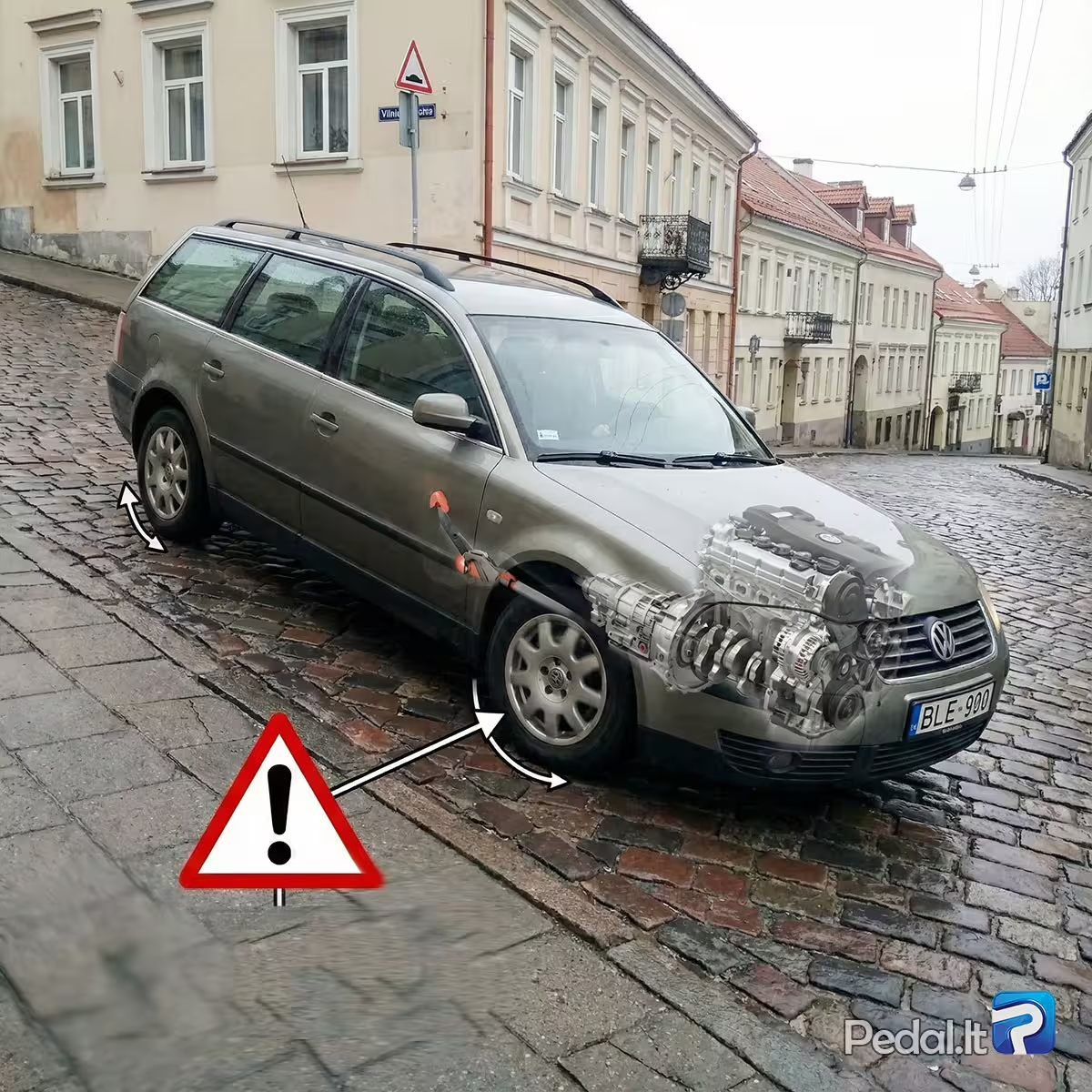
When parked on a downhill slope, leaving a diesel vehicle in gear is hazardous because:
If a vehicle is left in gear and begins to roll downhill, certain older diesel engines may rotate and start automatically.
1. The transmission or gearshift mechanism can be damaged.
2. An older diesel engine may start automatically.
3. There is no danger.
Which of the following should you avoid to prevent unnecessary noise?
Driving smoothly and courteously helps prevent unnecessary noise. Sudden engine revving, hard braking or wheel lock-up produce loud sounds that disturb others. Slamming vehicle doors or using the horn without cause breaches public order. These actions not only create noise pollution but also demonstrate irresponsible driving behaviour.
1. Avoid sharply increasing engine revolutions (sudden revving).
2. Avoid slamming the vehicle door shut.
3. Avoid using the horn without a valid reason.
4. Avoid braking by locking the wheels.
Which of the following are warning signals?
RTR 81. Warning signals include: using turn and brake lights (arm signals may be used), sounding the horn, switching the headlights on and off, activating hazard warning lights or flashing amber beacons, and placing a warning triangle on the road or attaching it to the vehicle.
1. Brake light signal.
2. Indicating a turn using an arm signal.
3. Horn signal.
4. Switching the headlights on and off.
5. Placing a warning triangle on the road.
What must you do on an unlit road at night when repairing your car?
RTR 151. If a vehicle is forced to stop where standing or parking is prohibited, the driver must switch on the hazard warning lights if available and/or place a warning triangle on the road as specified in Paragraph 92 of the Rules, and remove the vehicle from the road as soon as possible. If the driver intends to stop on unlit sections of road during the hours of darkness or when visibility is poor, and the hazard warning lights are not available or are inoperative, the vehicle must be parked off the carriageway. If that is impossible, the stopping location must be marked as specified in Paragraph 92 of the Rules.
RTR 92. If the emergency light signalling system is not fitted or is defective and an emergency stop is required where stopping or parking is prohibited, in the event of an accident, or where the stopped vehicle would be visible to other road users from less than 100 metres, the driver of a motor vehicle (other than a motor moped or a motorcycle without a trailer), a tractor or a self-propelled machine must immediately erect an emergency stop sign on the side of the carriageway opposite the direction of travel: in built-up areas not closer than 25 m, and outside built-up areas not closer than 50 m to the stopped vehicle. If at least one rear position lamp is defective and the emergency light signal does not work when driving in the dark or in poor visibility, an emergency stop sign must be affixed to the rear of the vehicle in order to continue driving.
Law on Road Traffic Safety art. 13.14. The driver of a motor vehicle, tractor or self-propelled machine who stops at night on an unlit road or in conditions of poor visibility, except in designated parking spaces, must wear a high-visibility vest with reflective elements.
JB
1. Switch on the hazard warning lights (emergency flashers).
2. Place a warning triangle on the road if the hazard lights are unavailable or inoperative.
3. Wear a high-visibility vest with reflective elements.
4. Station a person to warn other drivers by waving their arms.
During hours of darkness or in conditions of poor visibility, a load projecting up to 1 metre beyond the side of a vehicle must be marked:
Any load that projects laterally, even slightly, must be marked. During hours of darkness such a load must be indicated by lights. Loads projecting beyond the sides of the vehicle must always be marked; loads projecting beyond the front or rear do not always require marking. According to RTR 210 and Annex 4: loads extending more than 1 m beyond the front or rear of the vehicle, or projecting laterally beyond the vehicle's outer edge, must be marked as specified in Annex 4.12. Extreme edges of loads that extend more than 1 m beyond the vehicle's dimensions, or that project even minimally to the side, as well as extreme edges of vehicles wider than 2.6 m, shall be marked with distinguishing panels — 400 mm square plates with alternating reflective white and red diagonal stripes 50 mm wide. These panels must be mounted between 0.4 m and 1.6 m above ground level. During hours of darkness or in poor visibility such vehicles must also display lights in the designated positions: white at the front, orange at the sides, and red at the rear.
1. Marked with high-visibility flags.
2. Marked with lights: white at the front, orange at the sides, and red at the rear.
3. Marking is not required.
Reflectors fitted to the rear of a vehicle must be:
Order No. 2B-14 of the Lithuanian Transport Safety Inspection, dated 16 January 2013, regarding amendments to the technical requirements for motor vehicles and their trailers, Chapter IV, point 4.10: Rear non-triangular reflector — red; Rear triangular reflector — red. JB
1. Yellow.
2. Red.
3. White.
Which actions are permitted for a driver to attract the attention of other road users when overtaking them outside built-up areas?
Outside built-up areas, a driver may warn others when overtaking by flashing the high or low beams (provided this does not dazzle other road users) or by sounding the horn. Within built-up areas, flashing the lights is permitted if it does not dazzle others; sounding the horn is prohibited except when necessary to avoid a traffic accident. RTR — 89.
1. A driver may repeatedly switch the headlights on and off to attract attention.
2. A driver may sound the vehicle's horn to attract attention.
3. A driver may switch on the hazard warning lights.
Who is responsible for ensuring that children transported in a motor vehicle use the appropriate installed and correctly fitted restraint systems?
RTR 203. A driver must ensure that children transported in a motor vehicle use the appropriate installed and correctly fitted restraint systems. JB
1. The children being transported.
2. The parents or legal guardians.
3. The foster parents.
4. The driver of the vehicle.
When driving a motor vehicle equipped with seat belts, may a rear-seat passenger travel without wearing a seat belt?
Only the driver may be exempt from wearing a seat belt within built-up or residential areas (for example, when maneuvering in a parking lot). RTR 196. All drivers and passengers must wear seat belts when travelling in vehicles equipped with them. If a bus is fitted with seat belts, visible informational signs reading "Fasten Your Seat Belt" must be displayed in front of, on, or next to every seat. It is recommended that all bus passengers be informed of the seat belt requirement verbally or by audiovisual means before the journey begins. RTR 198. Persons driving a vehicle in reverse or manoeuvring in a parking area within a built-up area are exempt from wearing seat belts. RTR 205. Persons who, for serious medical reasons, hold special permits issued by competent authorities are exempt from wearing seat belts; these permits must include an expiry date. JB
1. Yes — but only if the passenger holds a special medical exemption certificate issued by the competent authorities.
2. Permitted when driving within built-up areas.
3. Permitted only with the driver's consent.
4. Permitted when driving in residential zones.
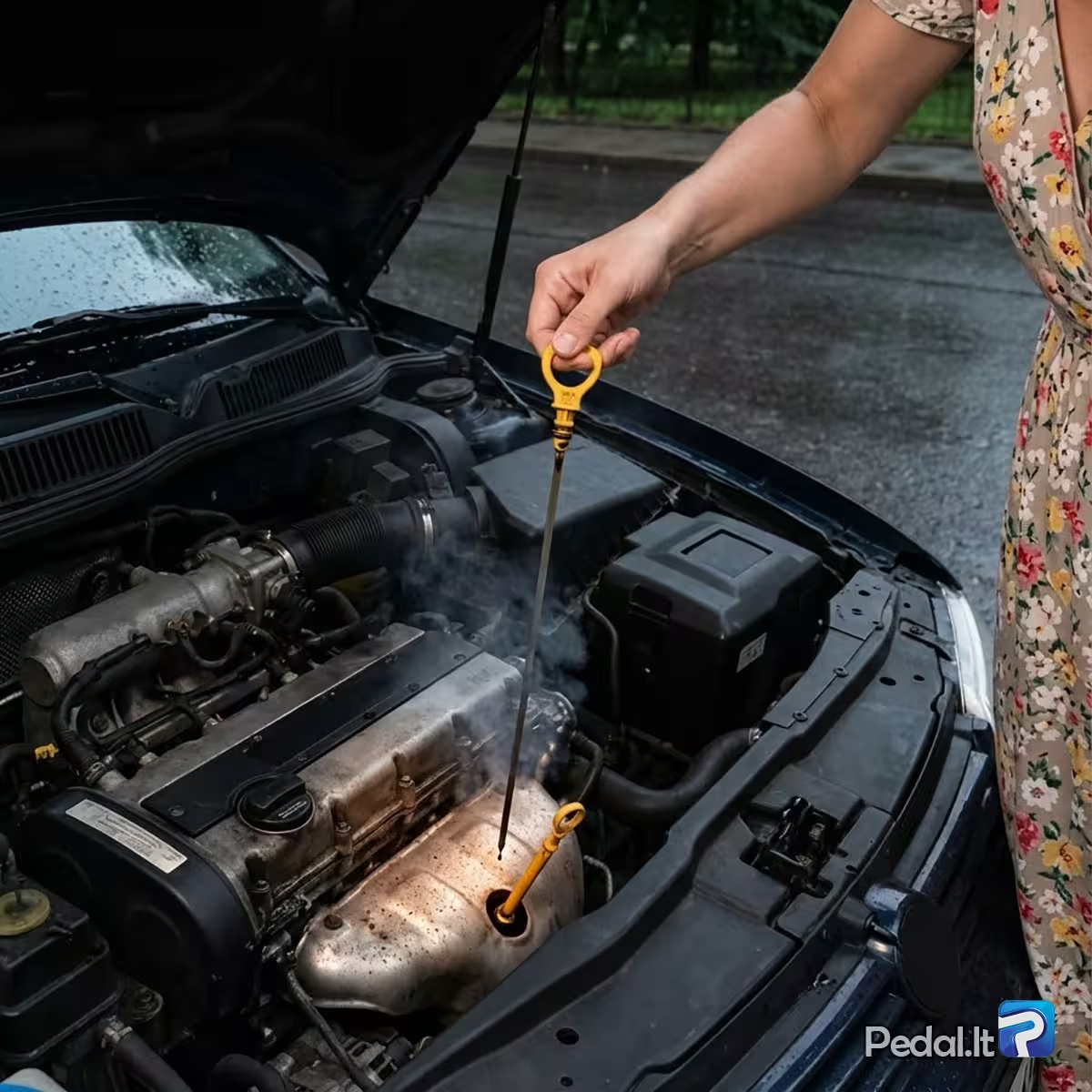
How dangerous is a low engine oil level?
When engine oil is low, internal components receive less lubrication, causing increased wear and overheating; this accelerates deterioration and can lead to engine failure.
1. Fuel consumption will be reduced.
2. The engine may suffer serious damage or fail.
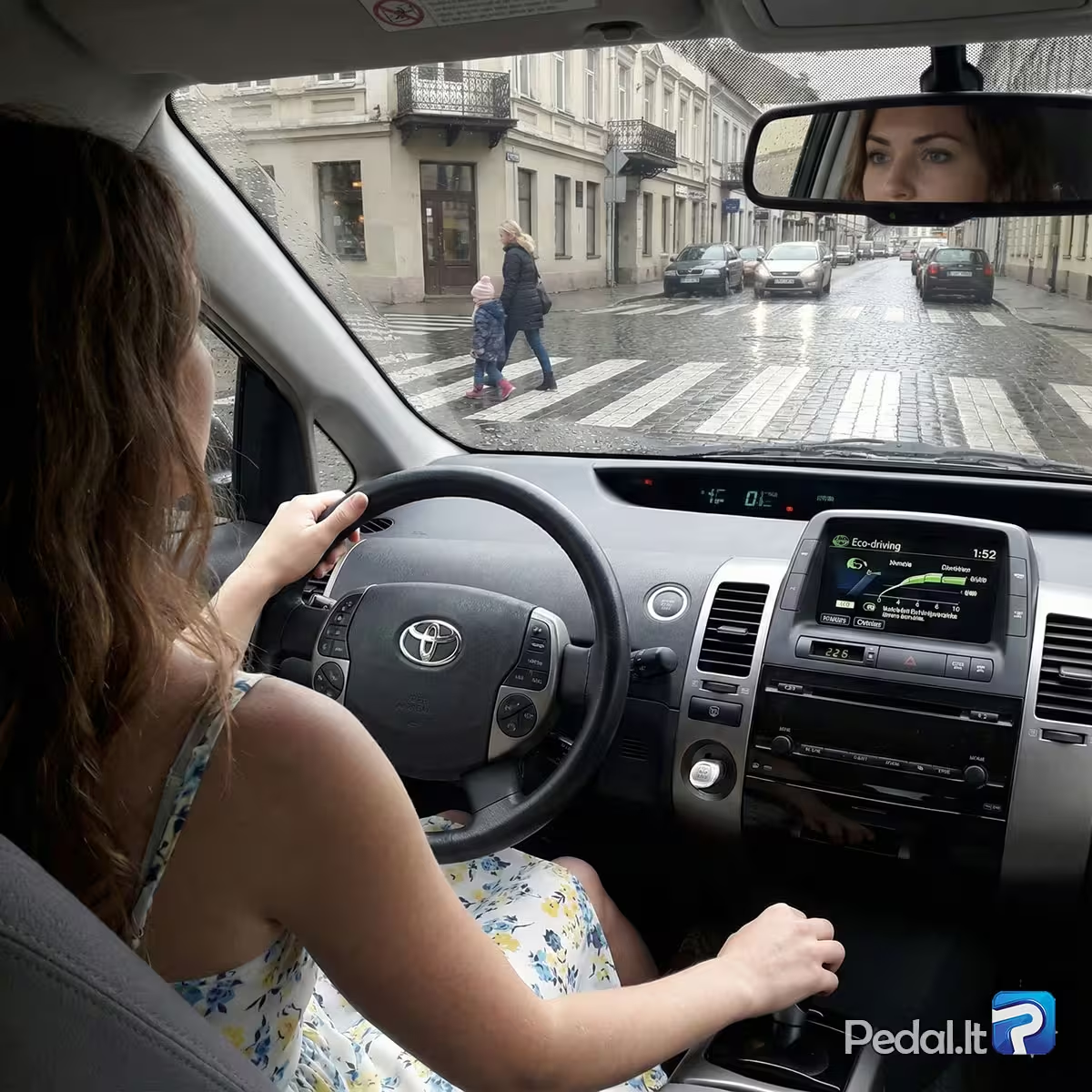
What should you do when approaching the pedestrian crossing?
Stationary vehicles positioned before a pedestrian crossing restrict visibility. Drivers must exercise extra caution and may continue only after confirming that no pedestrians entitled to right of way are at the crossing. (RTR 30.) When approaching an uncontrolled pedestrian crossing, a driver must reduce speed or stop before the crossing to give way to pedestrians who have already entered any lane, are walking in any lane, or were standing immediately at the carriageway edge waiting to step into a lane in the direction of the vehicle’s travel—or into any lane on a road with one lane in each direction. Drivers must be especially careful at night, in poor visibility, or whenever the crossing is not clearly visible from the driver’s position, and must ensure there are no pedestrians who should be given way.
1. You should reduce your speed.
2. If necessary to verify that no pedestrians are present, you will stop before the crossing.
3. You will pass the stationary vehicle at the permitted speed because you do not see any pedestrians on the crossing.
1 of 30 Task
Time left: 00:00:00
1
2
3
4
5
6
7
8
9
10
11
12
13
14
15
16
17
18
19
20
21
22
23
24
25
26
27
28
29
30